
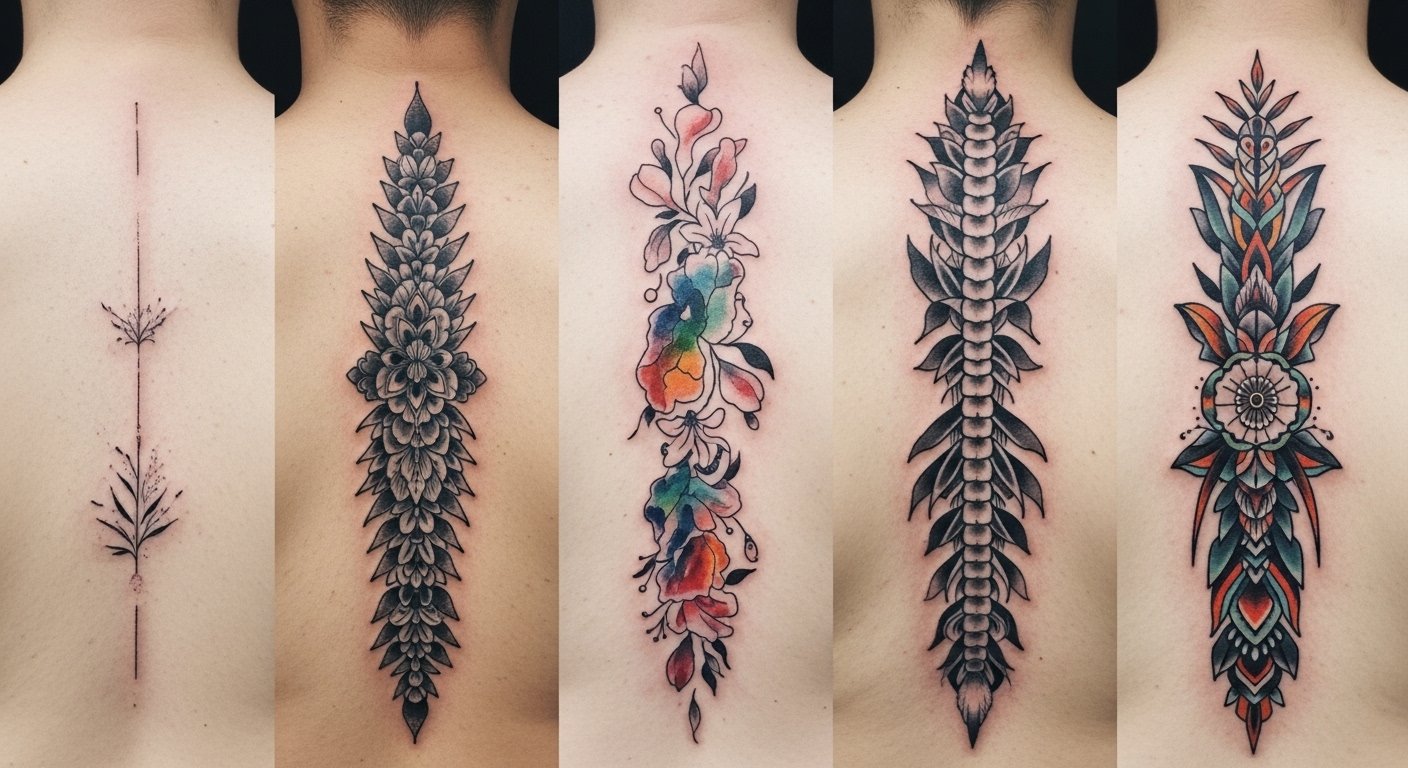
I spent months planning my spine piece. The problem I kept running into was not picking a pretty design. It was picking one that actually holds up on the spine and matches the way my body moves. These 26 spine tattoos are styles I have seen heal well in real life, the ones artists still recommend in 2026, and a few unexpected directions people tend to skip.
This list focuses on vertical spine placements from the cervical area down to the lumbar region. I wrote this for people who want a column piece or a central accent between shoulder blades. From what I have seen, fine line and blackwork remain popular, while micro-realism and ornamental pieces are trending as durable choices.
1. Fine Line Botanical Column on Upper Spine
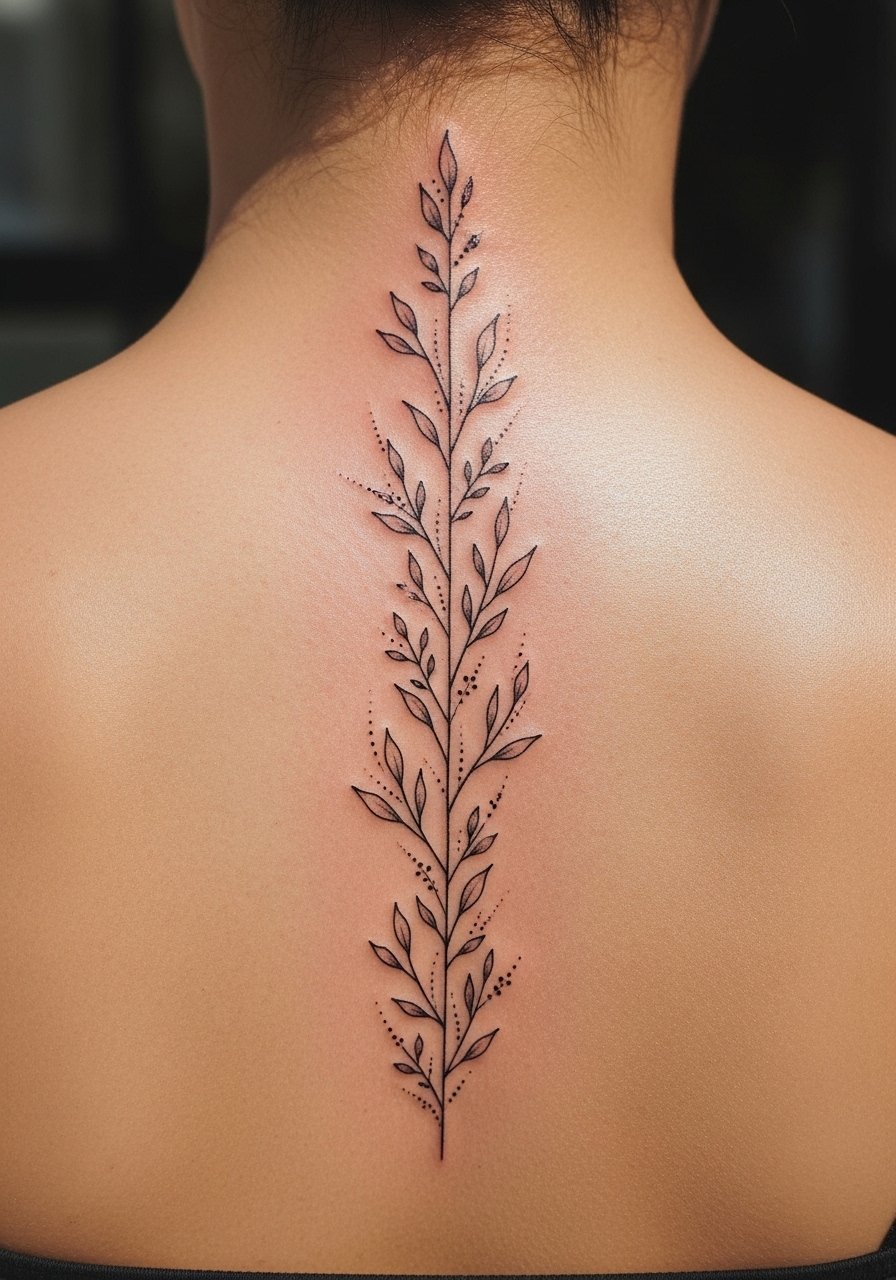
I first saw this on a friend and I loved how delicate it read under a low-back shirt. Fine line botanical work pulls focus without shouting. Expect a 3 to 4 hour session for a 6 to 8 inch column. Pain is moderate, higher near the cervical vertebrae. During consultation tell your artist you want resilient line weight, not brittle ultra-fine lines. From what I have noticed, ultra-thin lines tend to blur faster on the spine. Ask for slightly stronger single-pass lines and conservative spacing between leaves. Healed at six months the contrast is softer but still readable. A common mistake is requesting too many tiny details in a narrow column. That will age into a smudge.
2. Single Needle Script Column on Mid Spine, Word "Breathe"
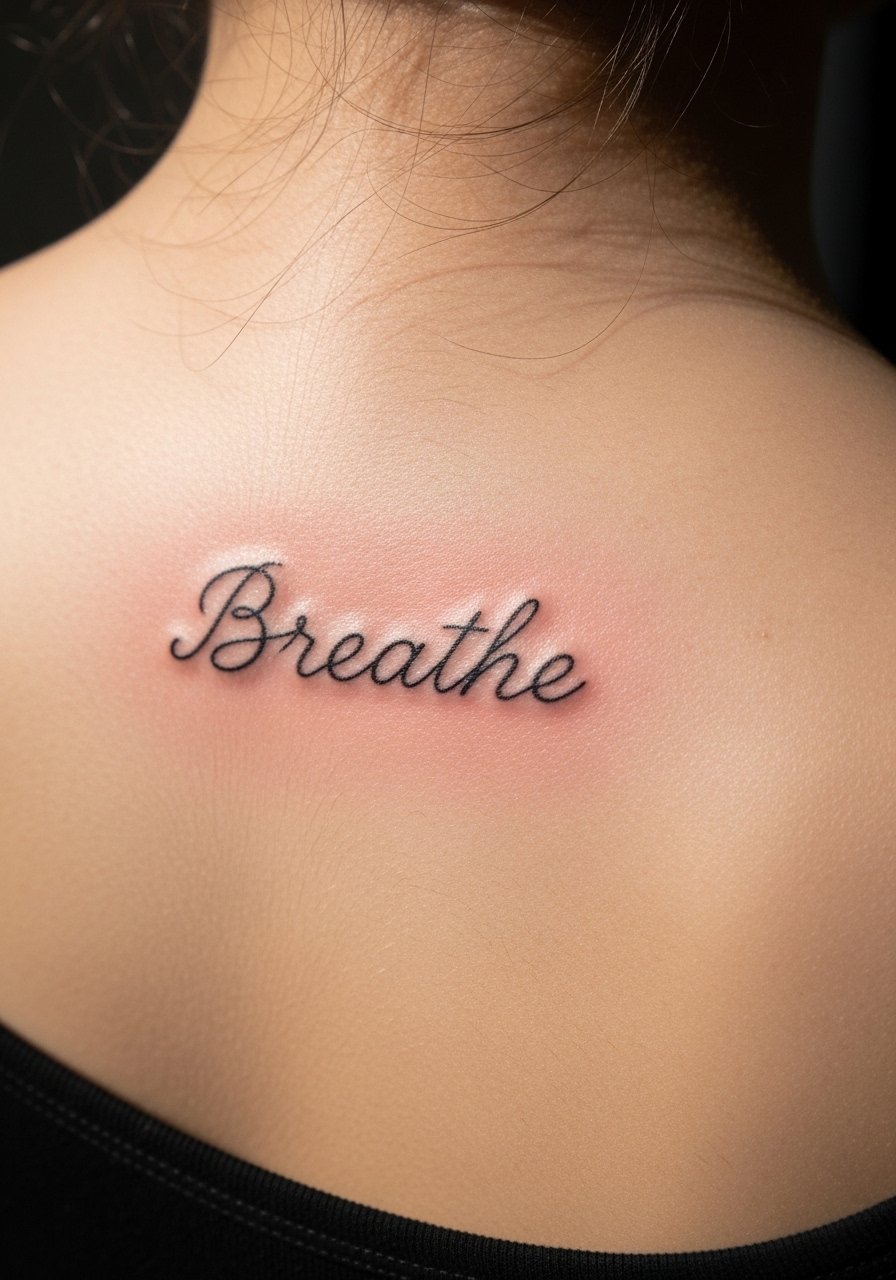
Fair warning, script along the spine shows every wobble. I chose the word "Breathe" for my own piece after practicing posture work. Single needle gives a refined look but it fades faster. Plan for a 1 to 2 hour session if you want a 4 to 5 inch word. Tell your artist you want consistent letter spacing and to stencil it twice on your skin for placement checks. From what I have seen, script heals differently on convex versus flat areas. A word over a shoulder blade will pull and widen. If you want longevity ask for slightly bolder strokes and avoid micro cursive loops. The biggest mistake is making the letters too small.
3. Blackwork Geometric Spine Column on Full Spine
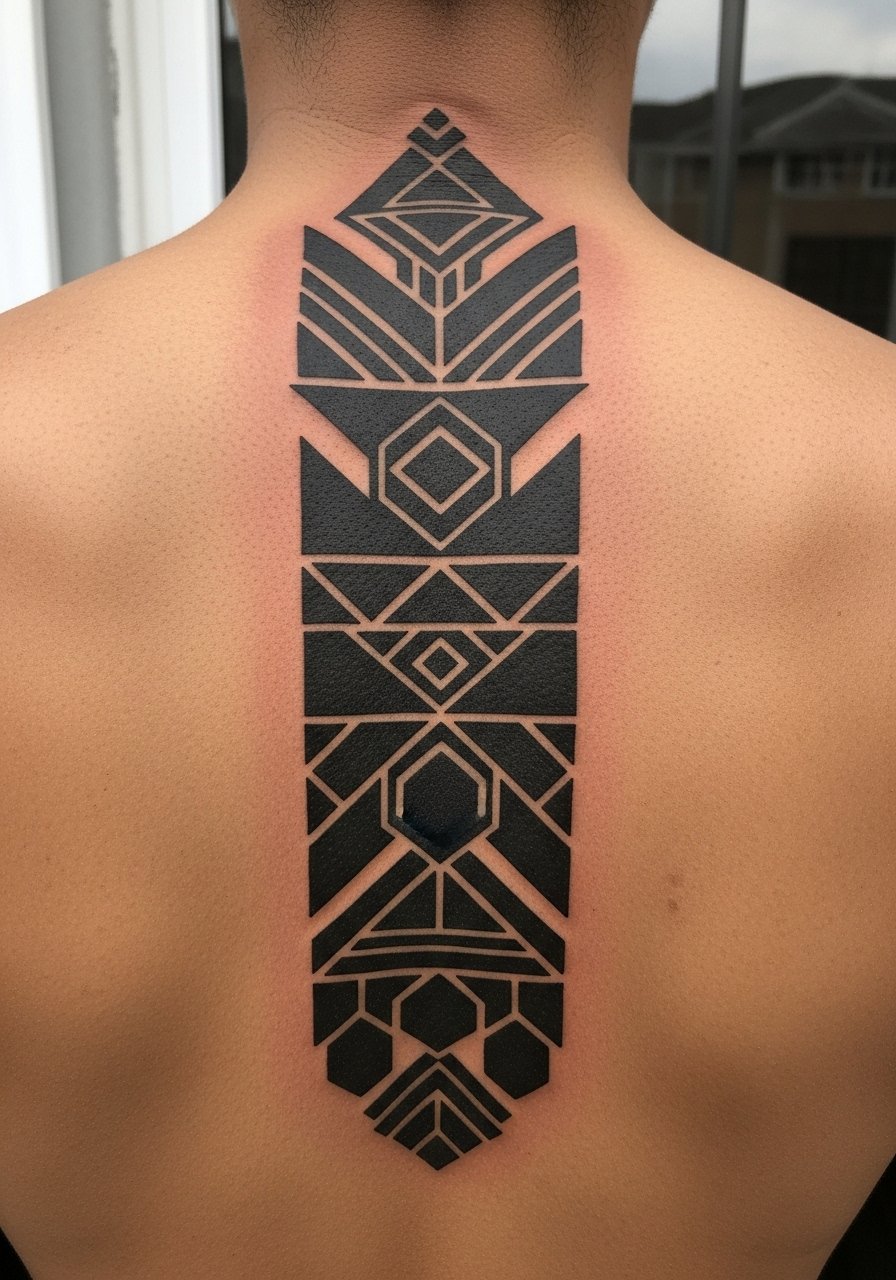
There is something about stacked geometry that reads from across a room. I noticed this style holds up well because bold fills resist blurring. Expect multiple sessions. A full-spine geometric column can take 4 to 8 hours split across two visits. Pain ramps up at the lower back vertebrae. During your consult ask for test blocks to check how flat black will sit on your skin tone. From what I've gathered, large solid areas can feel denser during healing. A common oversight is going too small with intricate shapes. Give the pattern room and allow consistent negative space so lines stay crisp years later.
4. Micro-Realism Moth on Thoracic Spine
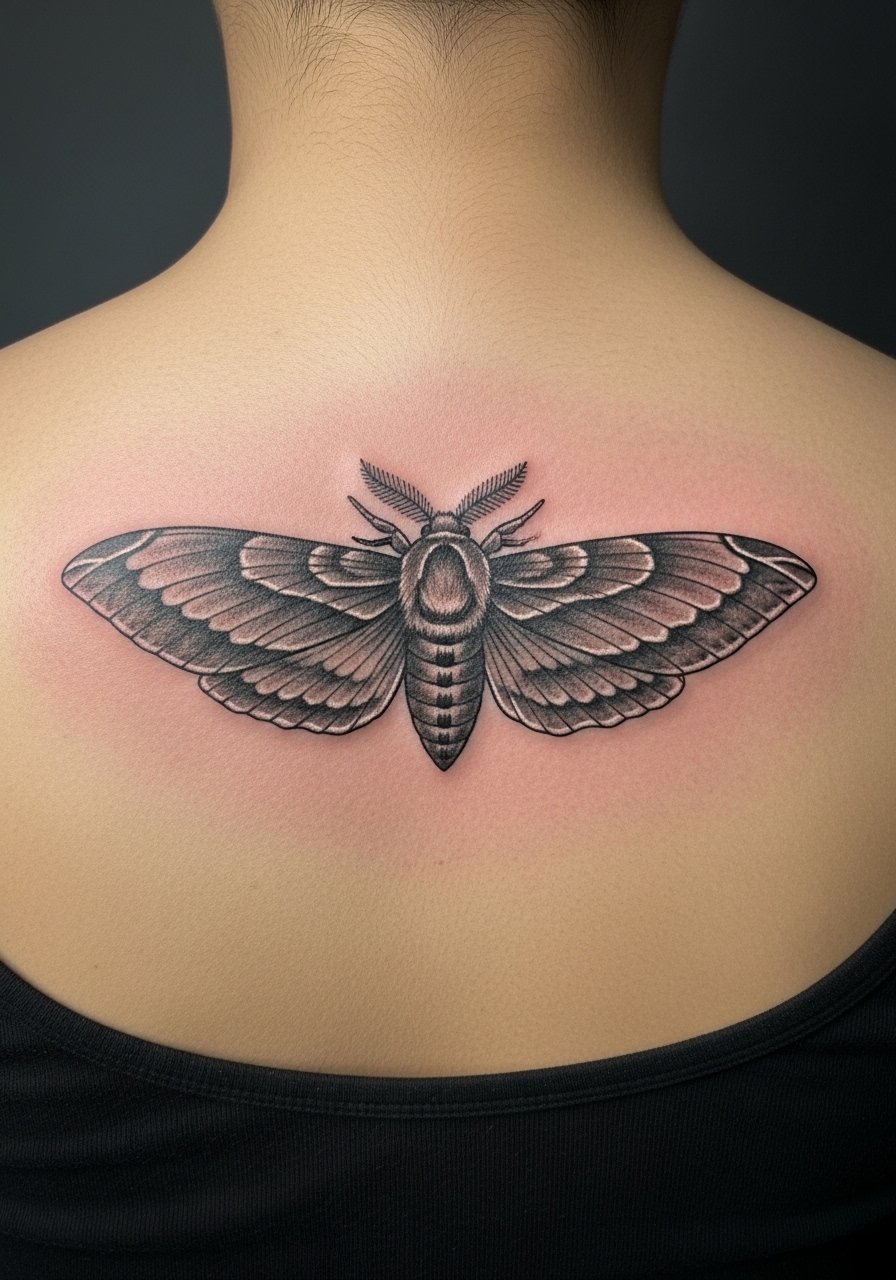
I fell in love with a moth I saw on a fellow collector. Micro-realism looks stunning on the thoracic spine because the flat plane shows the shading. Session time is usually 2 to 3 hours for a life-sized moth. Pain is moderate. Tell your artist you want reference photos and ask them to map the wing curvature to your spine. From what I have seen, overly contrasty micro details look heavy when healed. Ask for softer transitional shading up front. A mistake I often see is asking for micro realism smaller than 3 inches. Too small and the texture dissolves into gray.
5. Traditional Floral Column on Lower Spine
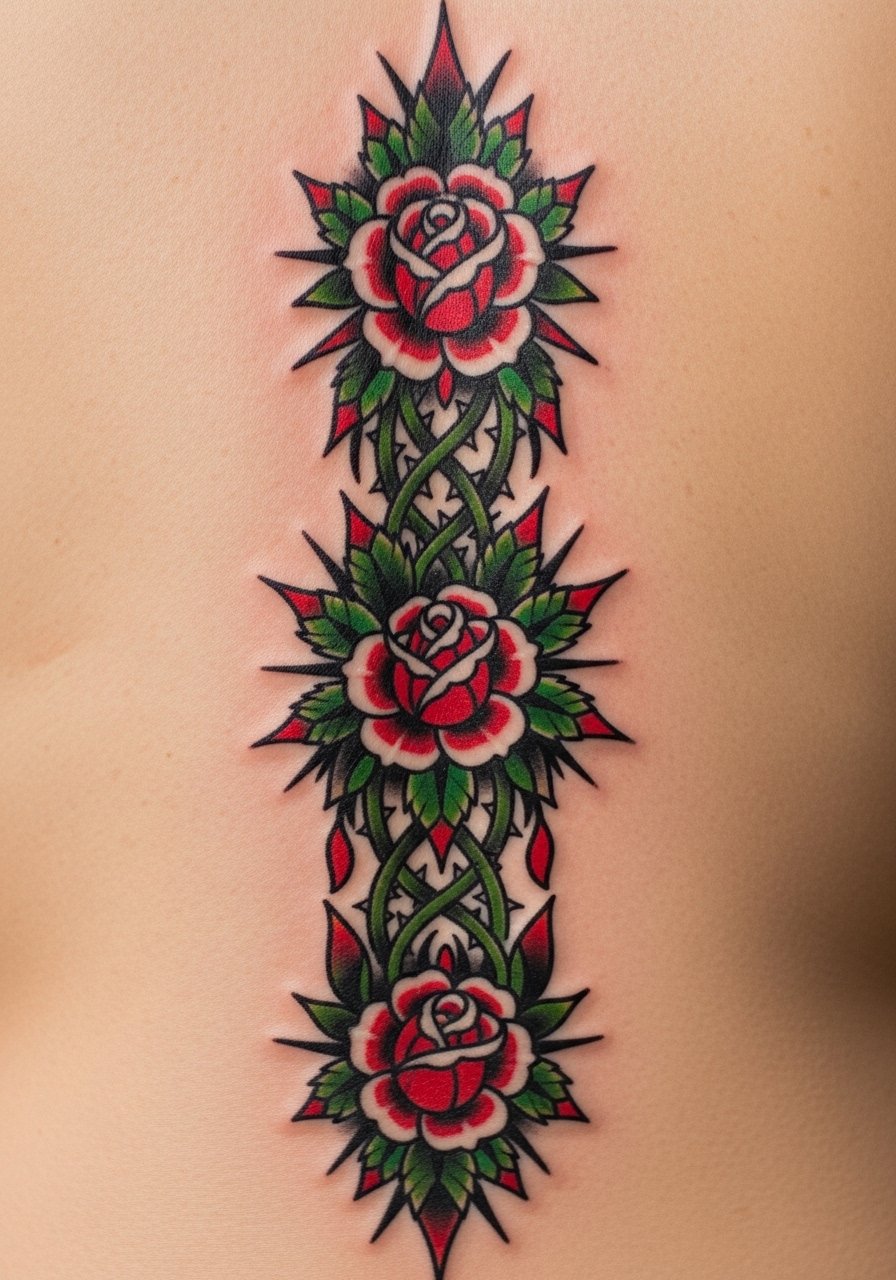
I noticed classic traditional work reads reliably on the lower spine. Bold outlines and saturated colors last longer in that area. A lower spine floral column usually takes 2 to 4 hours. The lower spine is less painful than the cervical region but still sensitive near the tailbone. Tell your artist you want veteran line weight and full color filling. From what I have seen, overly detailed shading in traditional pieces can blur; keep the color blocks clean. Healed color holds well if you protect it from sun. A common mistake is asking for tiny shaded petals. Stick to bold shapes for longevity.
6. Watercolor Cherry Blossoms on Upper Spine
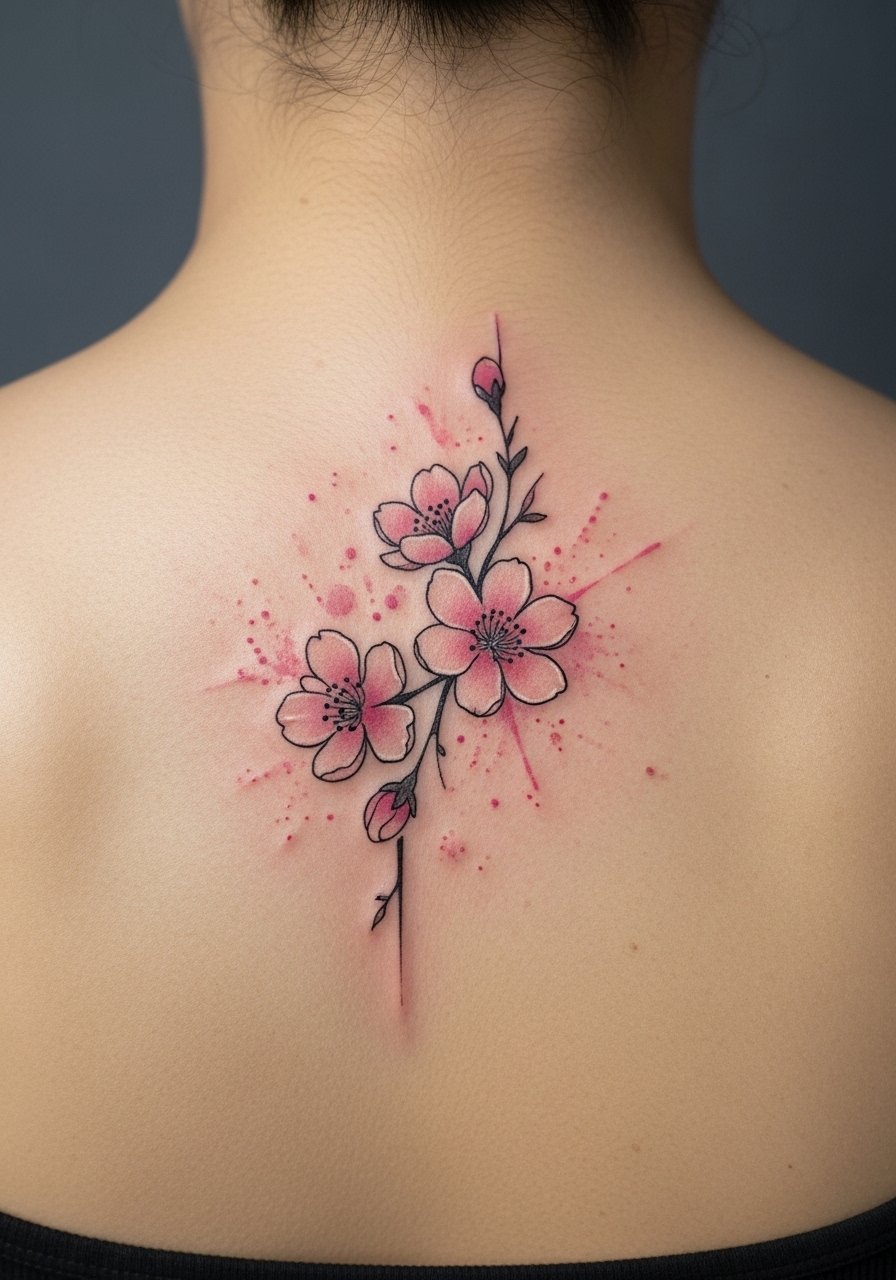
Most watercolor tattoos look ethereal fresh. I have noticed they can age into muted washes if not nailed by the artist. For watercolor cherry blossoms on the upper spine expect a 2 to 3 hour session. Pain is higher near the neck. In consultation ask how the artist seals color saturation. From what I've seen, watercolor needs slightly more pigment density to avoid turning into a faint stain after two years. Ask for a healed touch-up plan. The common mistake is relying on pure wash without anchor lines. Small anchor strokes help the piece remain legible as it settles.
7. Mandala Dotwork Vertical on Mid Spine
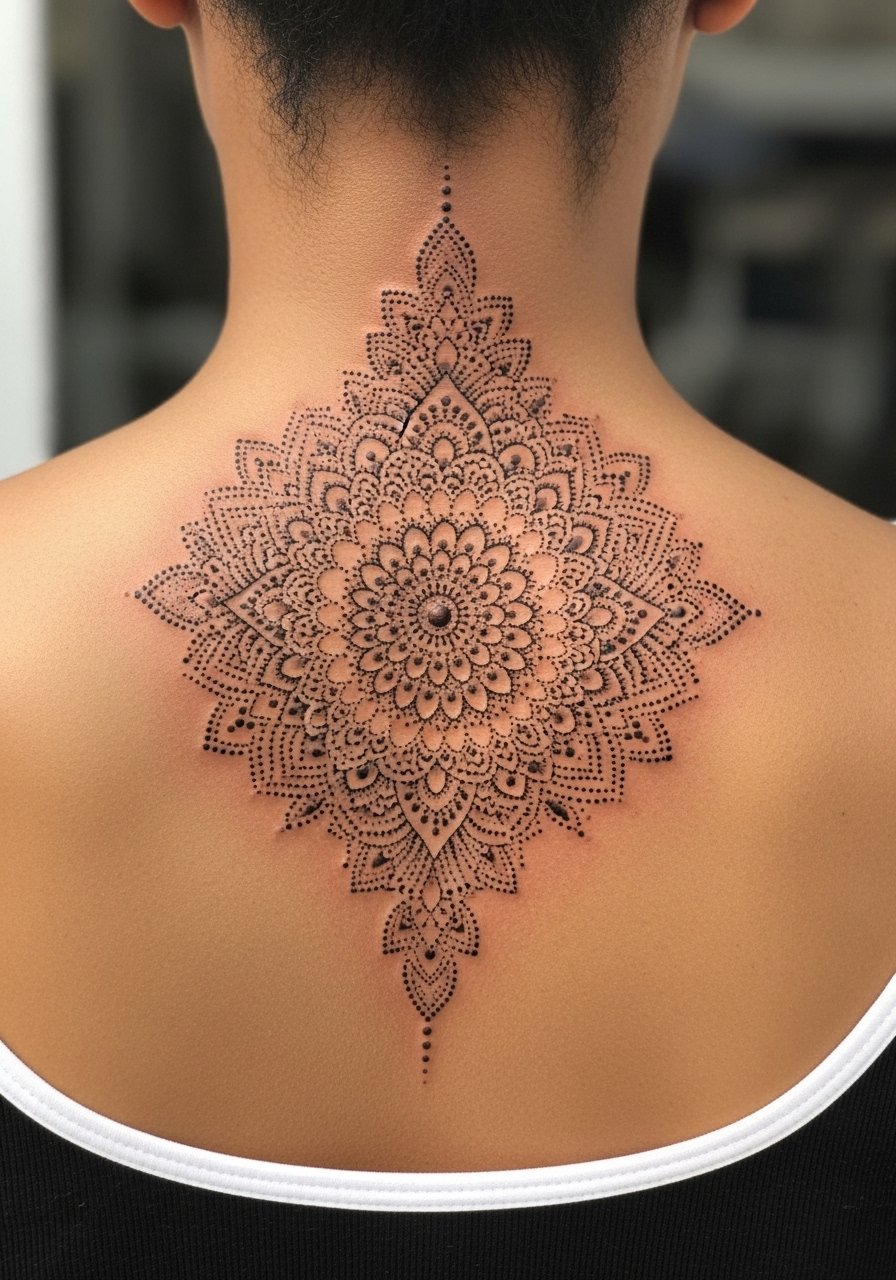
When I first saw this on a convention table I was surprised at the texture. Dotwork mandalas are meditative and fit the mid spine well. Sessions vary from 2 to 5 hours depending on scale. Pain is steady because of repeated passes. Tell your artist the dot density you want. From my experience, too dense dotwork can scar and lose definition. Ask for negative space channels and varying dot sizes to preserve contrast. At six months the mandala should still read, but fine dots will soften by year two. People often ask for a full solid black fill under dotwork. That removes the texture and flattens the design.
8. Minimalist Arrow Line on Cervical Spine
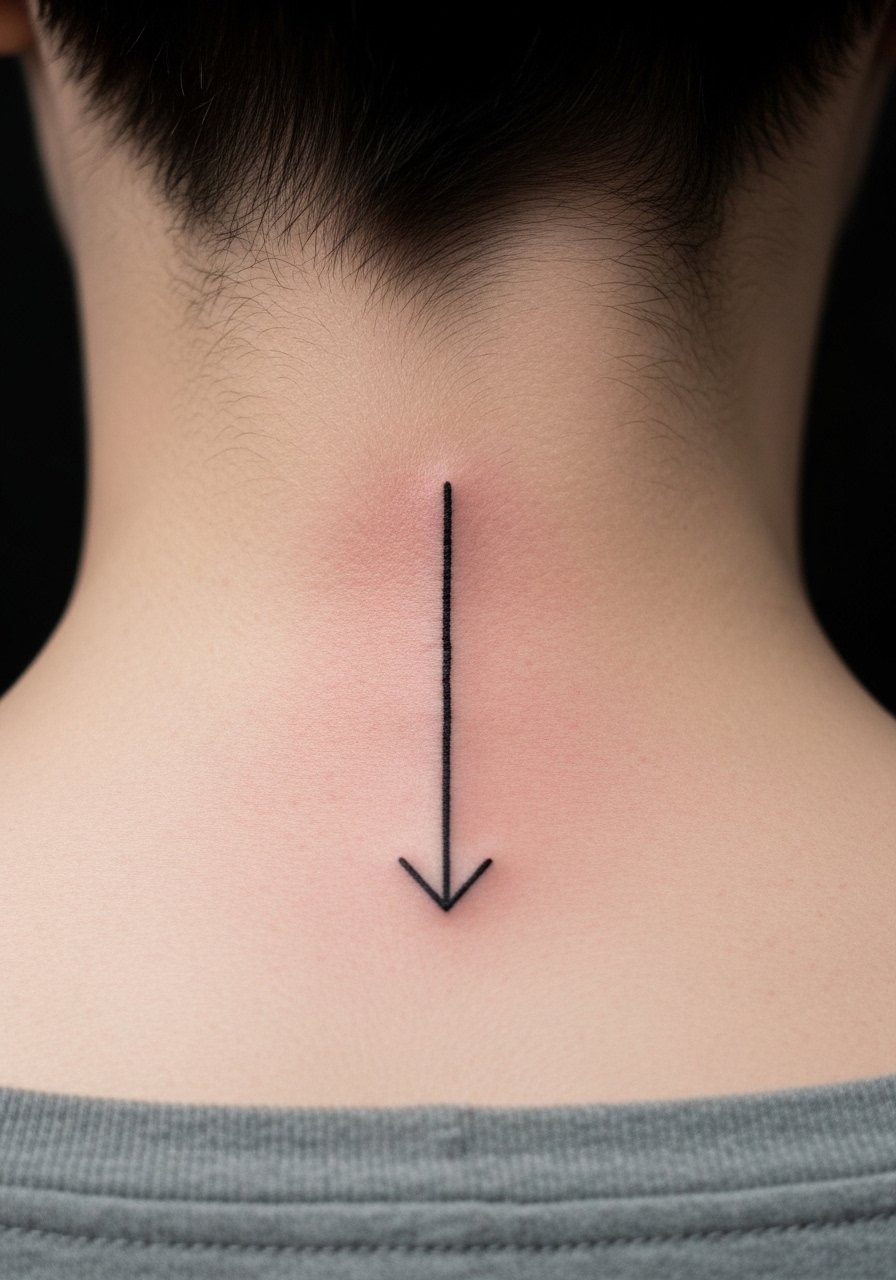
I sketched an arrow for myself after a travel stint. Cervical spine tattoos are bold because they sit near the neck. A minimalist arrow takes 30 to 60 minutes. Expect higher pain and more movement sensitivity. During consultation ask about direction and length, and have your artist stencil and photograph it in motion. From what I've seen, thin single lines near the neck blur faster, so ask for a slightly stronger line weight. A common mistake is picking a design too long for the cervical curve. Keep it proportional.
9. Ornamental Spine Jewelry Blackwork on Full Spine
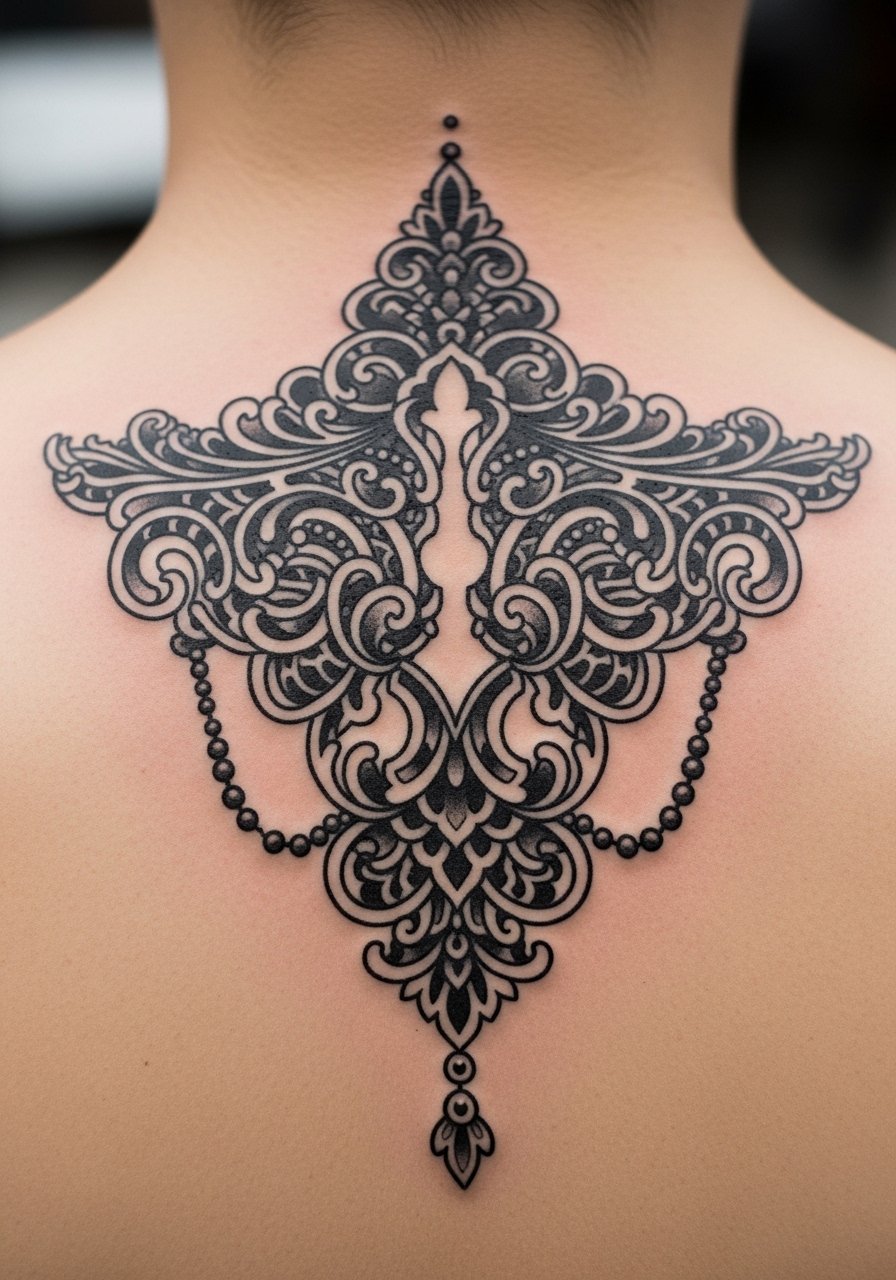
There is a jewelry vibe to ornamental blackwork. I saw this on a client who wore a backless dress and it read like a necklace. Full spine ornamental pieces often need 3 to 6 hours. Pain varies along the column. Tell your artist you want symmetry and show multiple references for bead spacing. From what I have noticed, tiny dots and chains can fill in if too small. Ask for stronger anchor lines around beads and leave breathing room between elements. Healed, the piece maintains its silhouette but fine chain links will soften. Avoid asking for micro chains under 1 mm.
10. Spine Portrait Micro-Realism Near Upper Spine
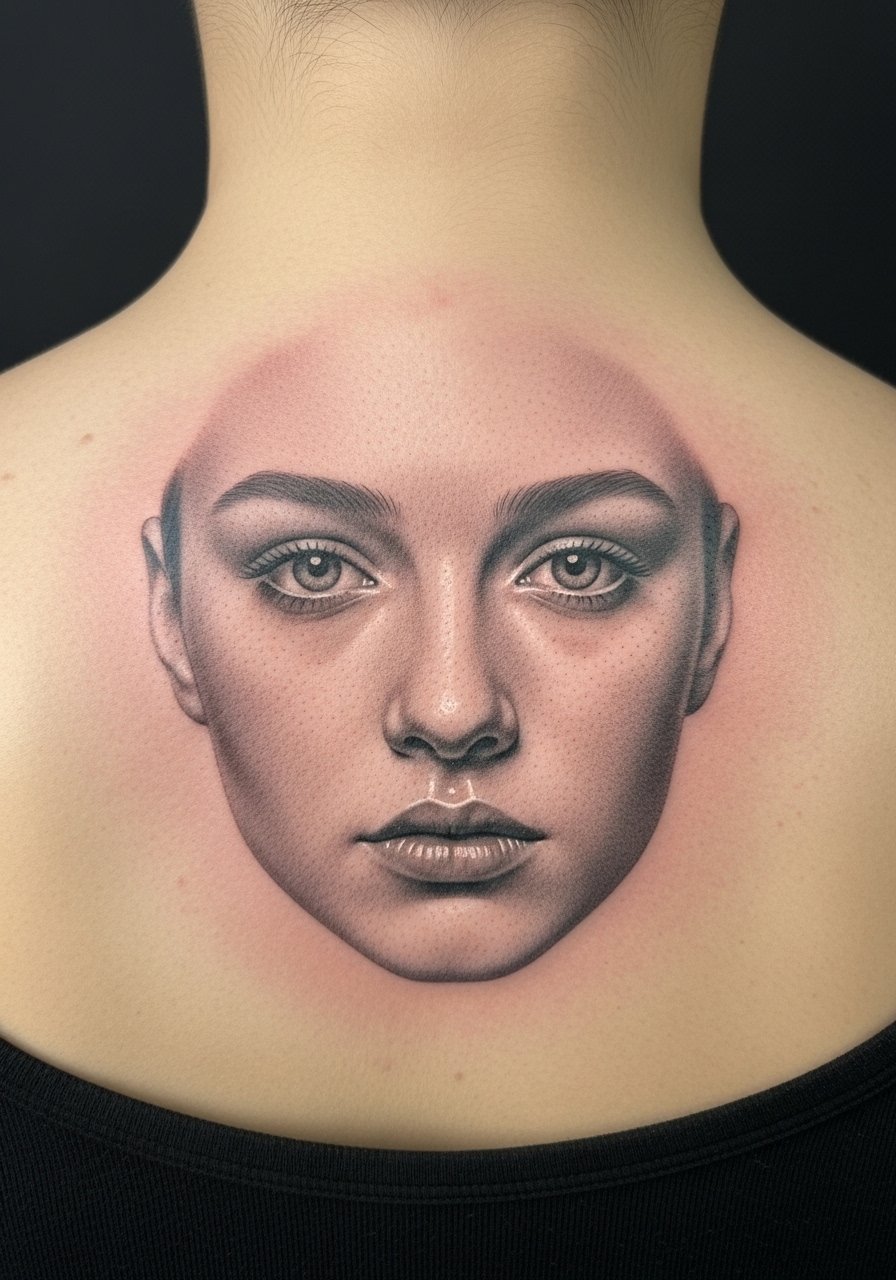
I once saw a portrait placed along the spine and it felt intimate. Portraits on the spine require a highly skilled artist and typically run multiple sessions. Expect touch-ups. Pain is moderate to high. During consult bring high-resolution photos and specify how you want contrast handled. From what I've seen, portraits with too much minute contrast at small sizes turn into gray blobs after a few years. Ask for slightly larger scale and for the artist to plan for a future touch-up. People sometimes choose family photos with blurred detail. Choose a crisp reference.
11. Celtic Knot Blackwork Column on Lower Spine
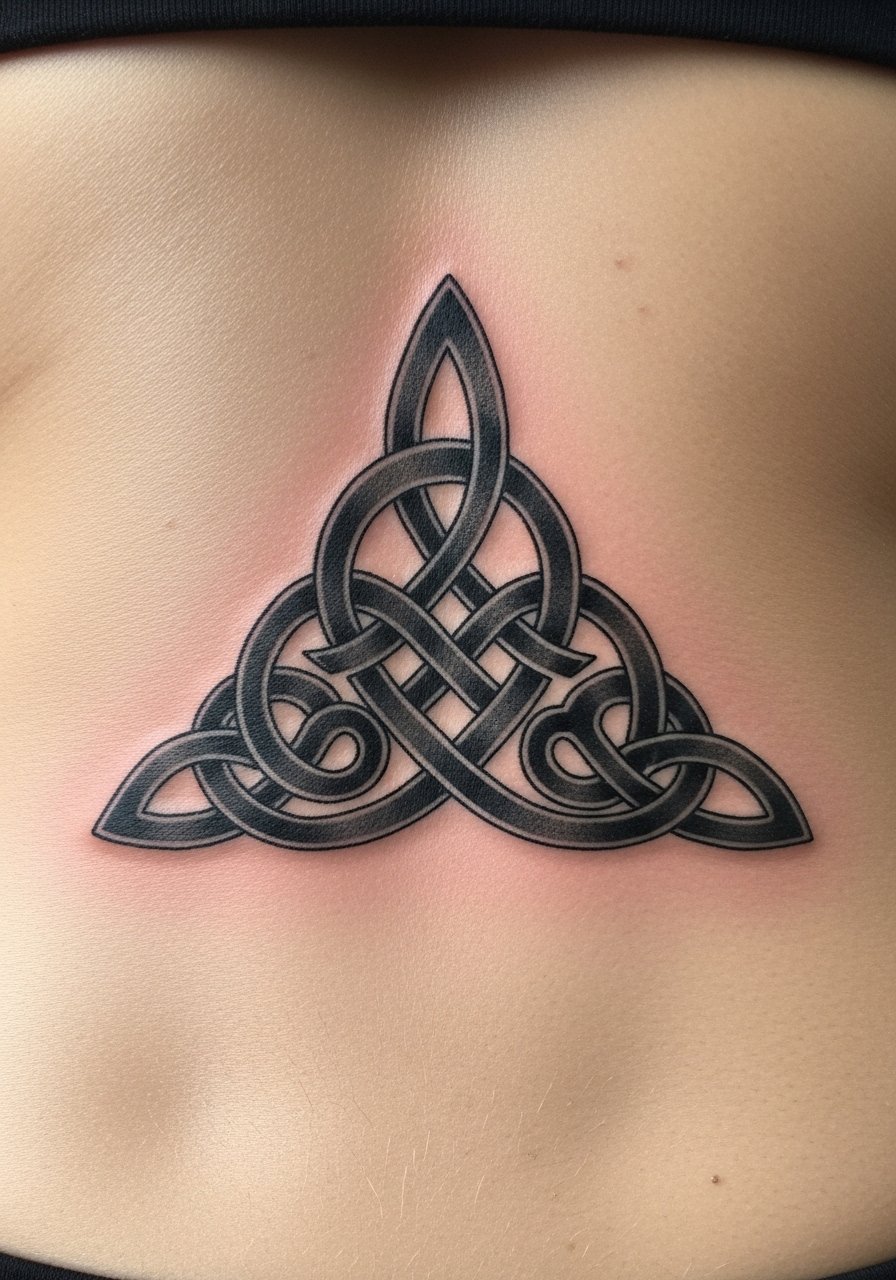
I grew up near Celtic art and this pattern felt natural for a lower spine anchor. Knots require precise mapping because the spine moves. Sessions are usually 2 to 4 hours. Pain is manageable on the lower back. Tell your artist you want consistent line spacing and ask them to fit knots to your lumbar curve. From what I have seen, uneven tension or wrong scale makes knots collapse visually when healed. A common mistake is compressing the pattern into a narrow band. Give it width for longevity.
12. Neo-Traditional Animal Column on Mid Spine
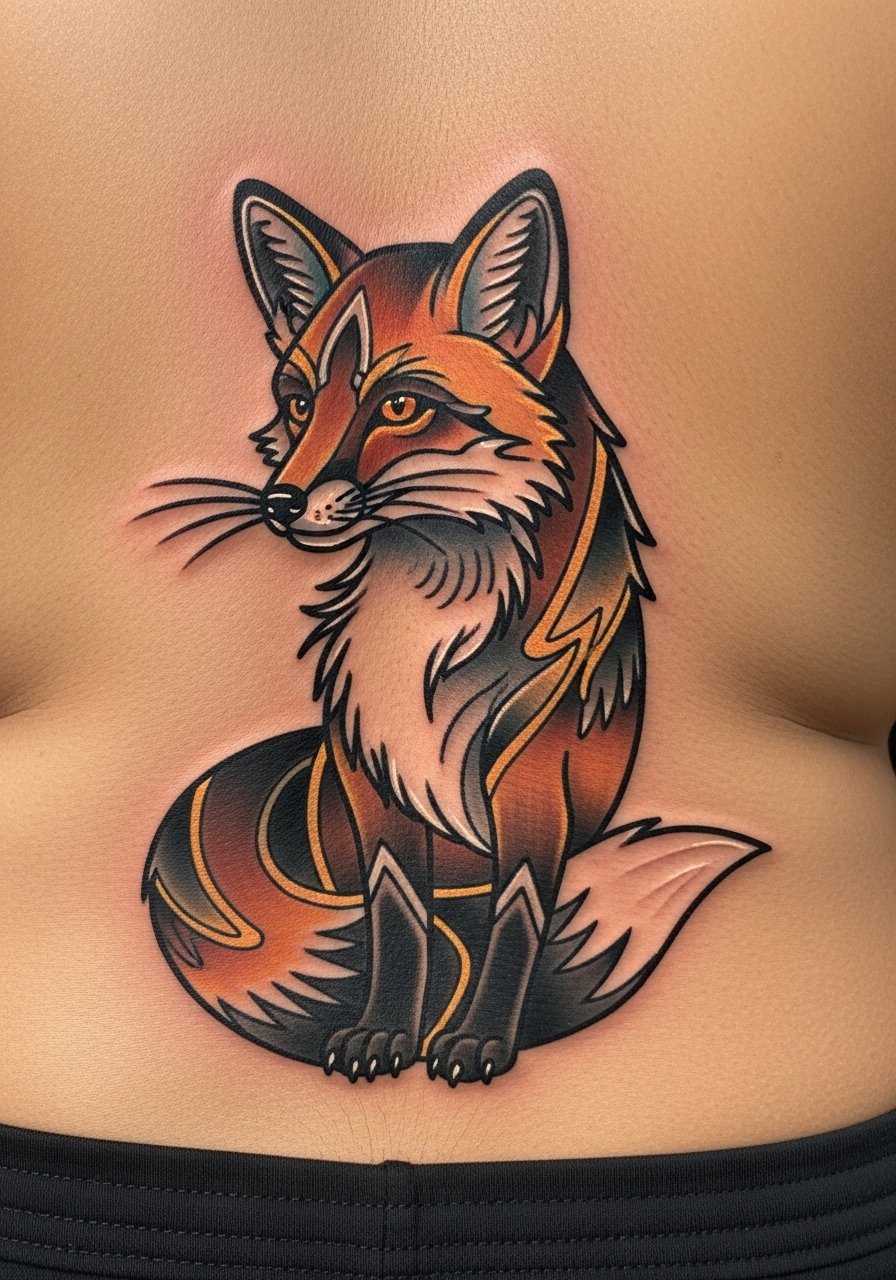
I noticed neo-traditional animals read well as vertical columns because the subject can be elongated. A mid-spine fox usually takes 2 to 3 hours. Pain is moderate. During the consult explain which colors you want saturated and ask about healed swatches on similar skin tones. From what I have seen, neon-like colors tend to fade quicker unless packed densely. Ask for color layering and a plan for sun protection. The mistake I see is over-detailing facial fur in a narrow space. Keep shapes bold so the character remains identifiable.
13. Botanical Spine With Color Accents on Full Spine
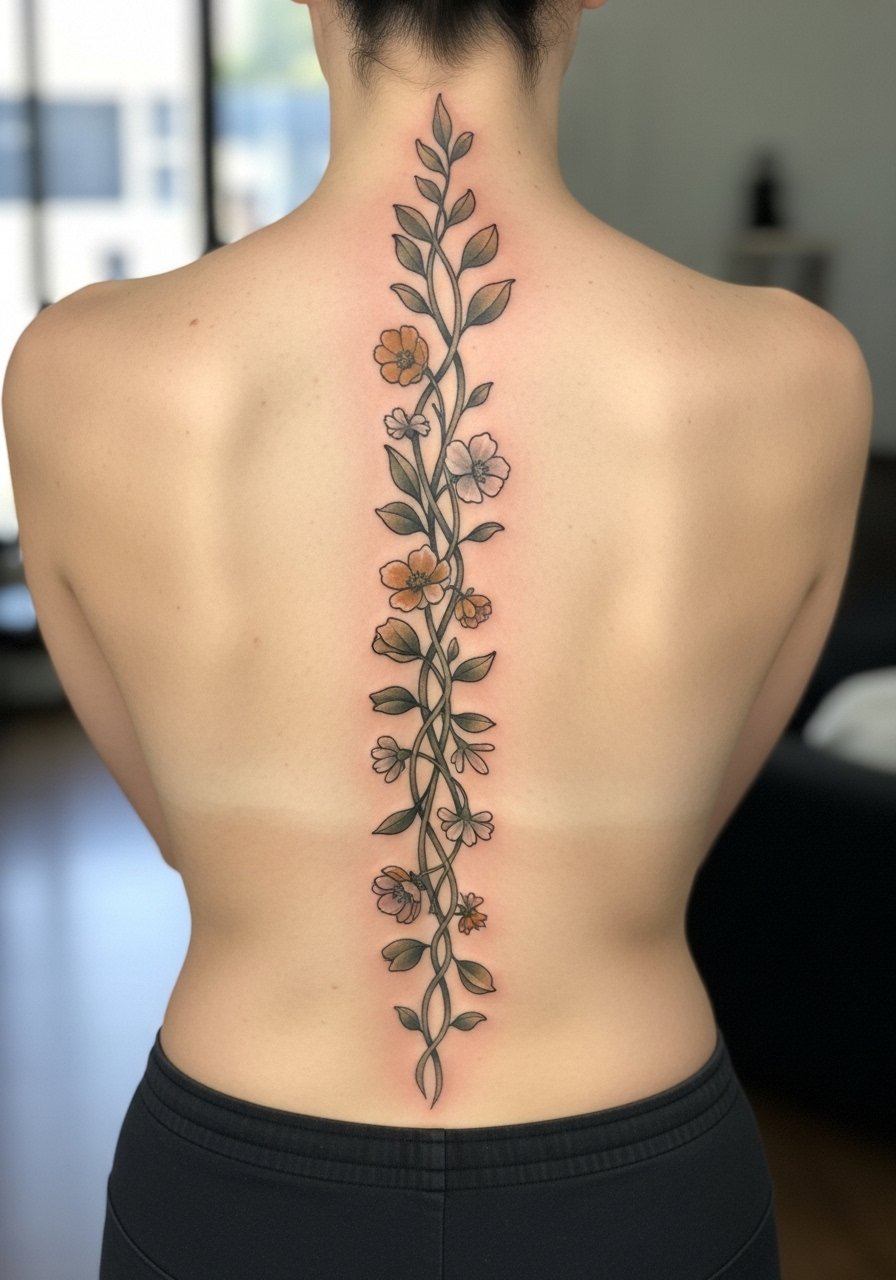
I tried a color accent column once and liked how subtle pops break up blackwork. Full-spine botanicals with color highlights take 3 to 5 hours. Pain varies by level. Tell your artist if you want the color to be an accent or the main focus. From my experience, small color dots can disappear if placed over thin lines. Ask for layered color fills that sit inside bold outlines. After one year color will soften. A mistake is adding metallic or pastel shades that bleed into skin undertones. Choose pigments known to hold.
14. Barcode or Coordinates Minimalist Column on Lower Spine
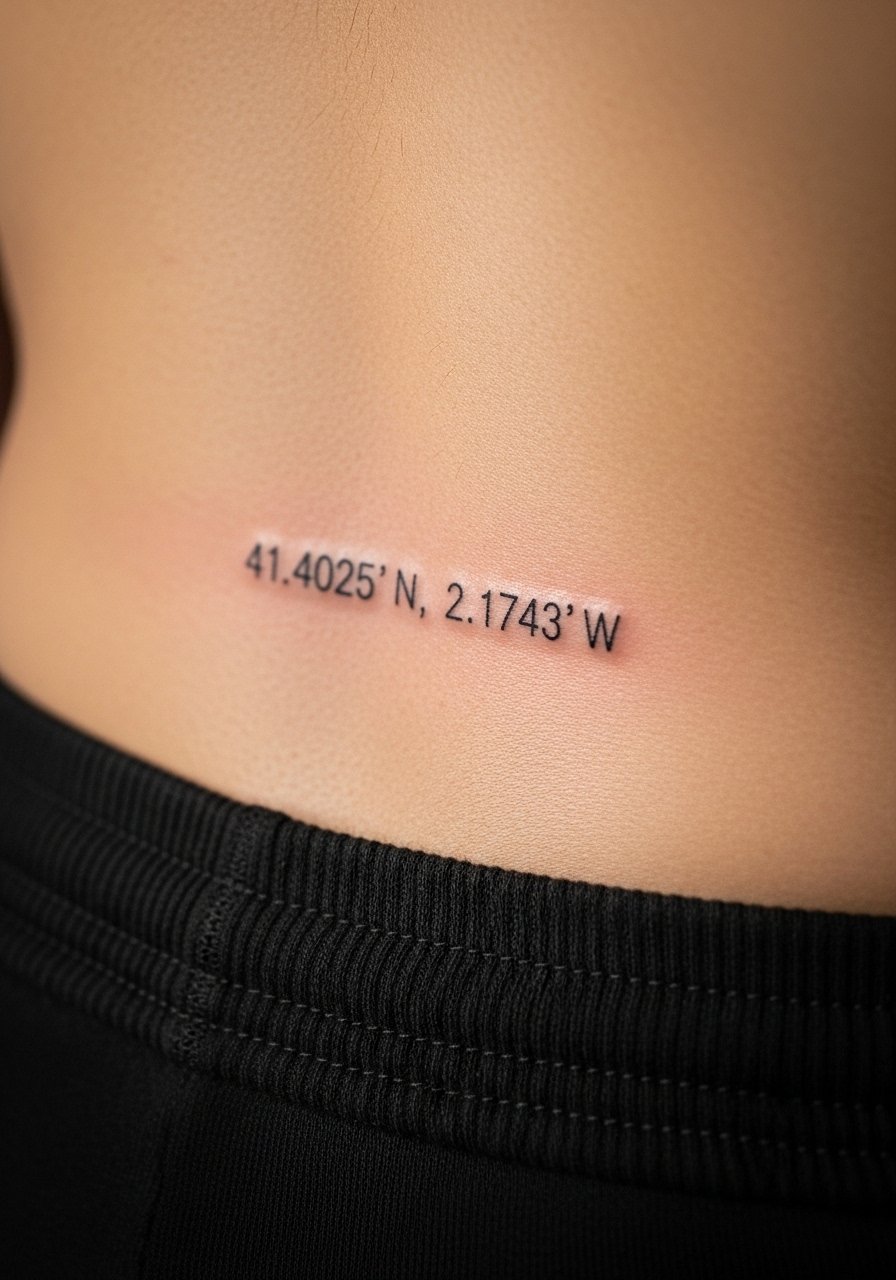
I like tattoos that tell a story. Coordinates on the lower spine make a private statement. Keep the digits legible by making the script slightly larger than you think. Session time is under an hour for a short line. Pain is lower on the lumbar area but you might feel pressure near the tailbone. Tell your artist to stencil the numbers and let you check them sitting and standing. From what I've seen, tiny numerals blur first. A common error is using a hairline font. Pick a clean monospace and ask for firm strokes.
15. Spine Script Ladder of Words in Typewriter Font
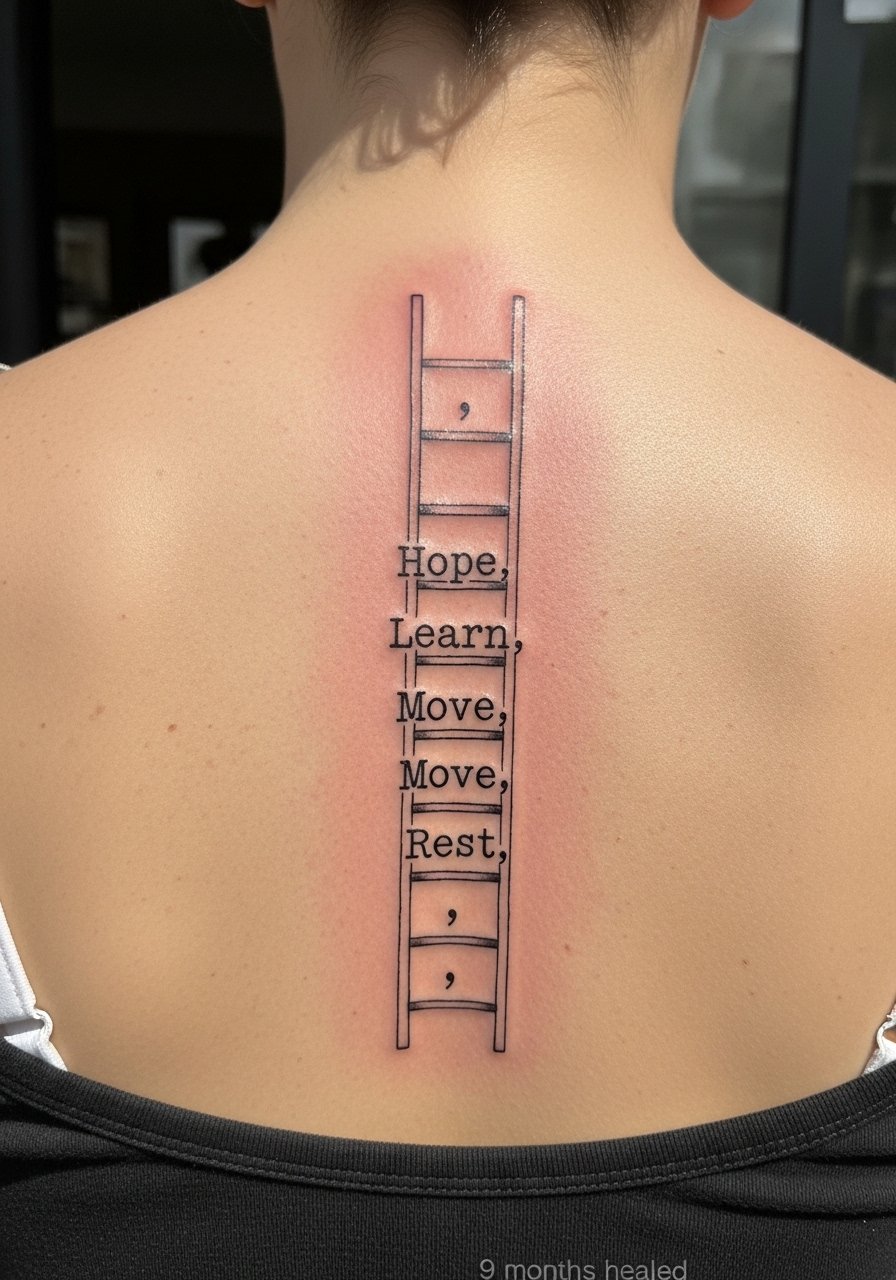
I once requested stacked words down my spine and it changed how I move. Words stacked require clarity. Anticipate a 1 to 2 hour session. Pain varies by vertebral level. When you consult ask for font proofs on your back in different sizes. From my observation, lowercase tiny letters blur faster along the spine. Ask your artist to space lines intentionally and to bold the first and last letters slightly if you want long-term legibility. Avoid ornate fonts with thin serifs.
16. Spine Floral Blackwork with Negative Space
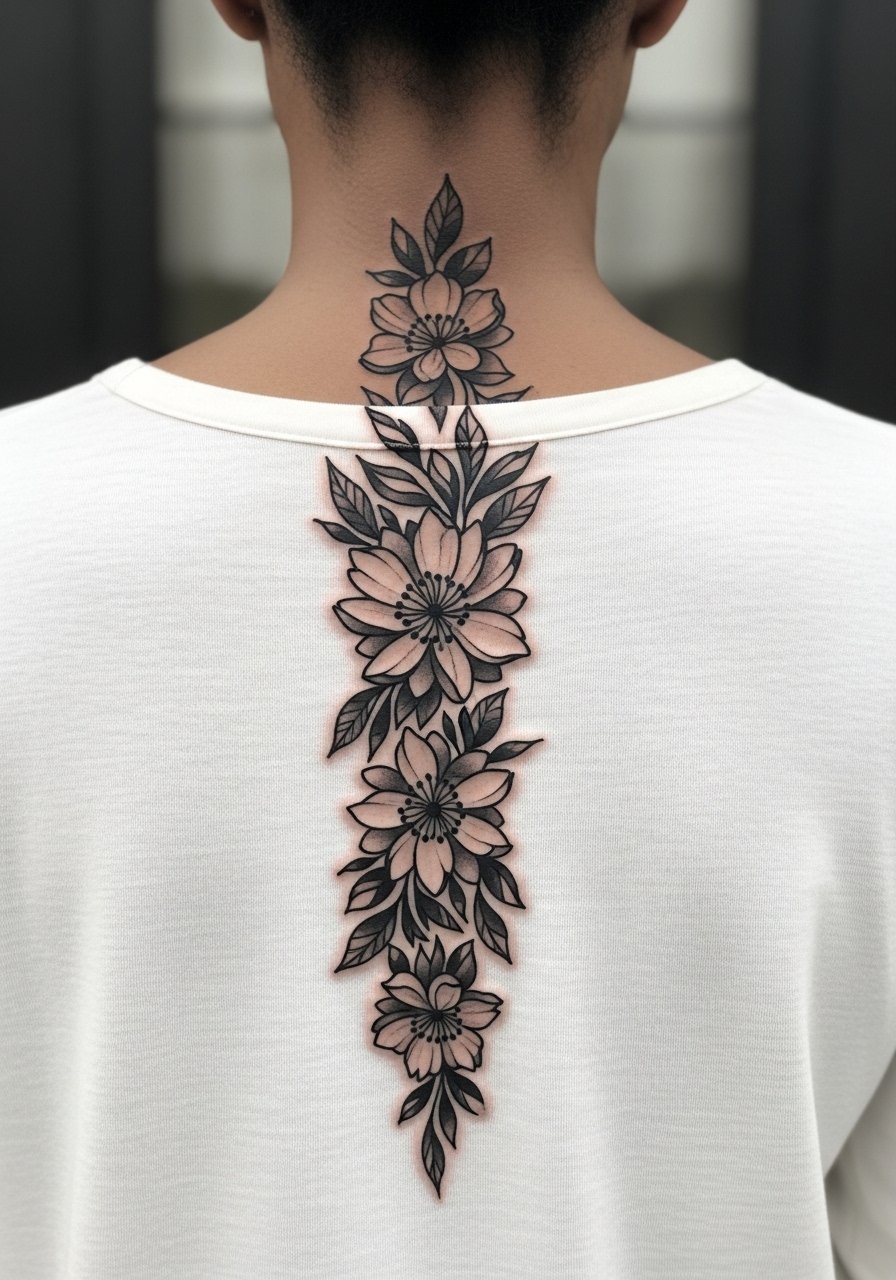
I picked a negative space floral because I wanted bold contrast without excessive color. This style resists blurring when the black anchors are large. Expect 2 to 4 hours. Pain is moderate. Tell your artist exactly where you want the negative space pockets. From what I've noticed, too many tiny negative areas fill in as skin stretches. Ask for clear solid shapes and leave bigger hollows. At one year contrast will remain strong. A mistake is trying to combine micro dots inside negative areas. That detail will not last.
17. Spine Constellation Linework on Upper Spine
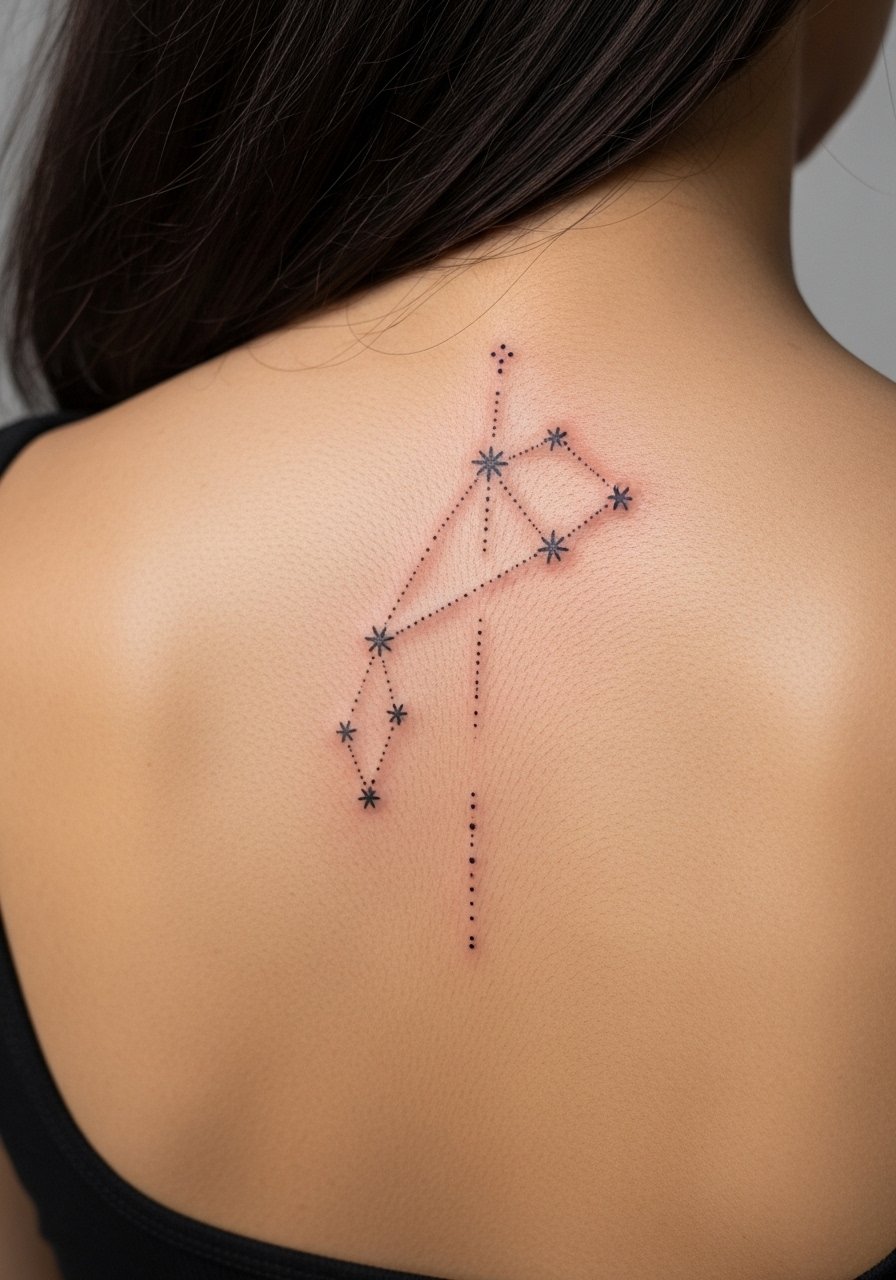
I remember looking up constellations on a rooftop and wanting that remembered on my skin. Constellation linework is subtle and intimate. A small design takes 30 to 60 minutes. Pain is higher near the neck. Tell the artist exactly which stars you want and whether to use solid dots or tiny circles. From what I have seen, minuscule star dots fade first. Ask for slightly larger star points and for the artist to plan dot spacing so the pattern reads when healed. The main mistake is choosing stars so small they blur into a faint line.
18. Abstract Brushstroke Black Ink Column on Full Spine
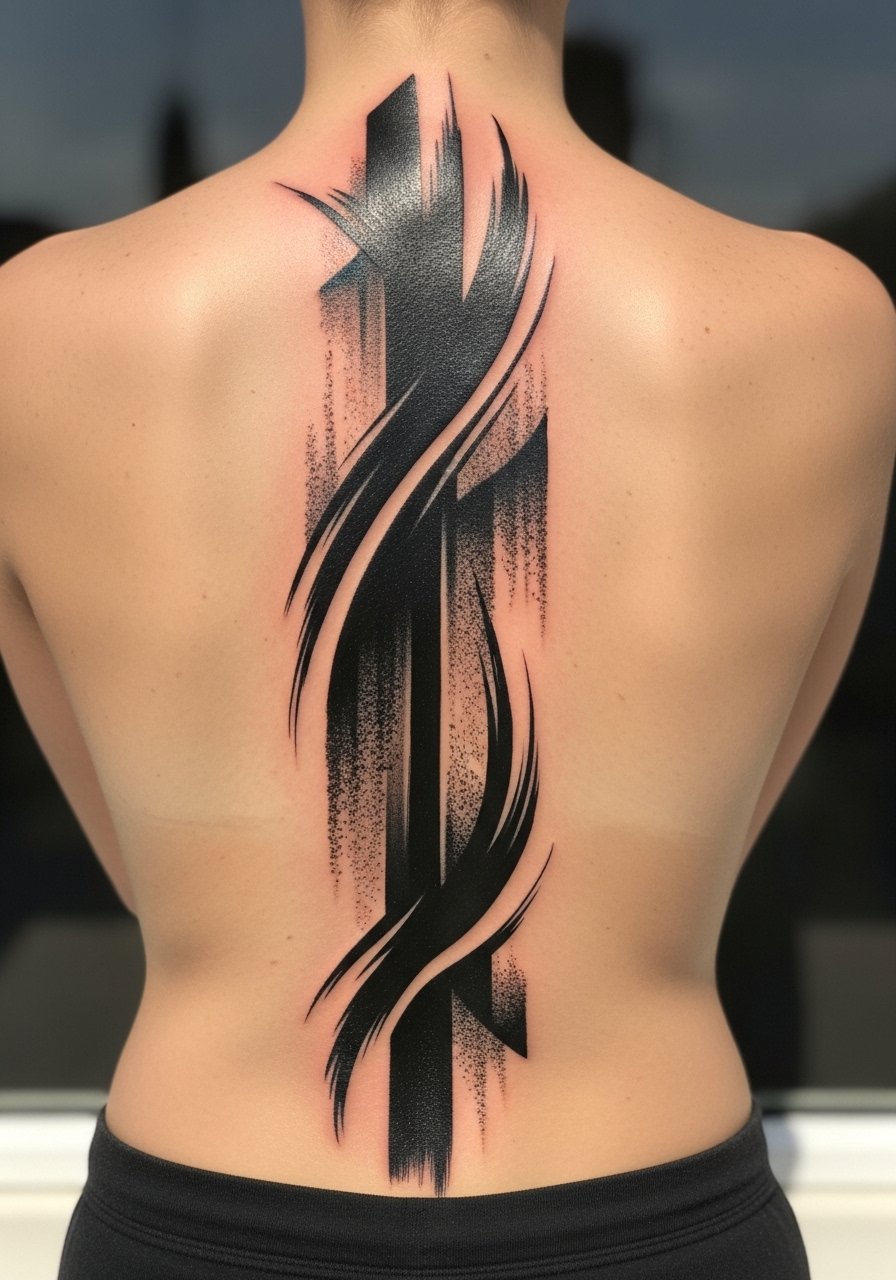
I was drawn to an abstract brushstroke piece that looked like calligraphy. Brushstroke columns play with motion and fit the spine naturally. Sessions vary by size but expect 2 to 4 hours. Pain fluctuates along the spine. During consultation bring photos of ink flow and explain which edges you want sharp. From what I've seen, very thin flicks soften after healing. Ask for intentional thicker anchors so the motion stays readable. People sometimes ask for overlapping micro strokes. That blurs. Keep fewer, bolder marks.
19. Spine Script Latin Phrase "Memento Mori" in Blackletter
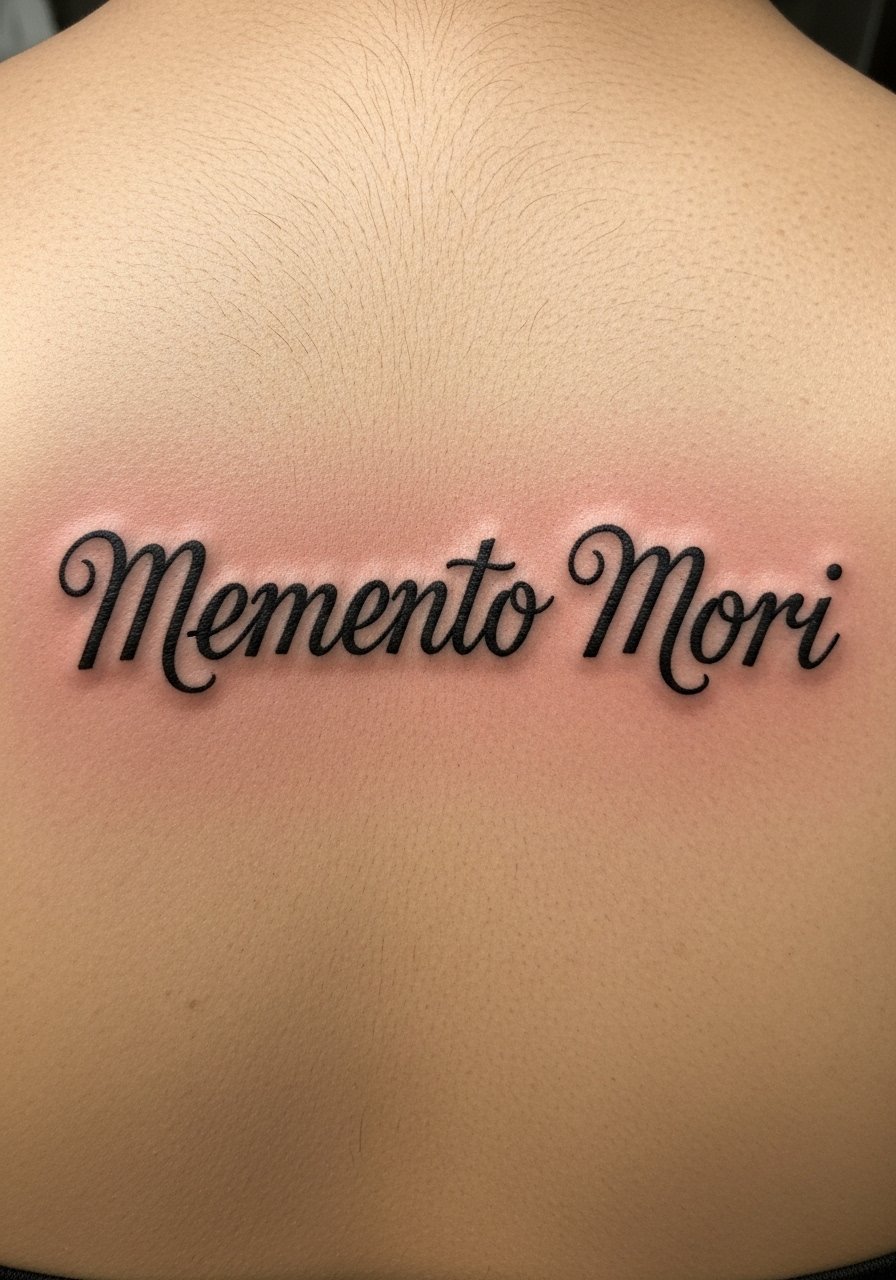
I chose a Latin phrase for a personal reminder. Blackletter makes the phrase dramatic and readable when sized properly. A phrase like "Memento Mori" takes 1 to 2 hours. Pain varies by placement. When you consult give the exact phrase and preferred letter spacing. From what I have noticed, ornate blackletter with tiny flourishes loses those flourishes with time. Ask for slightly thicker letter stems and reduced micro ornamentation. A common misstep is requesting very dense text on a narrow column. Increase line height for clarity.
20. Spine Floral Vine That Wraps to Ribs
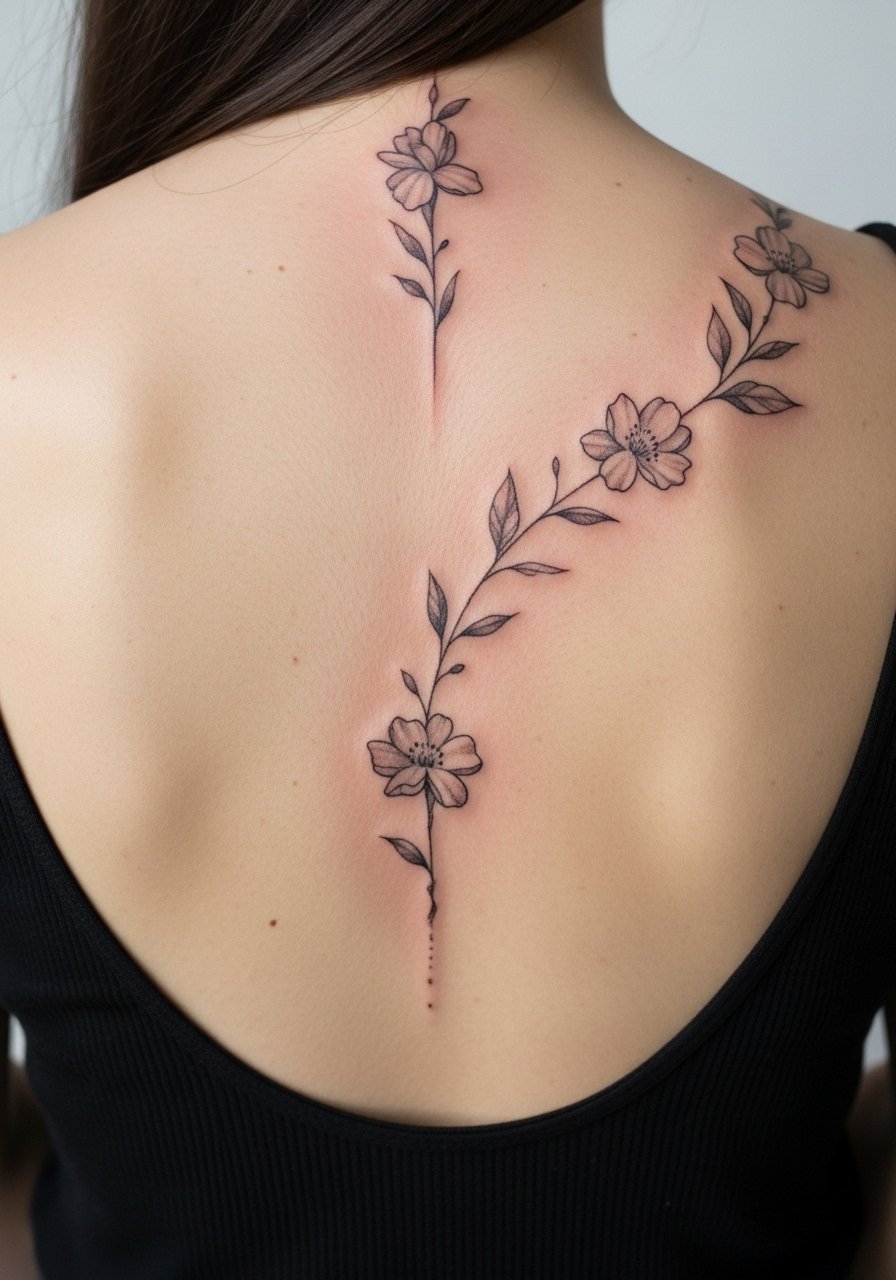
I saw a vine that curled from the spine onto the ribs and it looked alive with movement. Designs that wrap need consideration for body curvature and motion. Expect 3 to 5 hours across two areas. Pain increases on the ribs. Tell your artist where you want the wrap to anchor so it flows with breathing. From my experience, wrap designs that ignore rib expansion will gap when you move. Ask for flexible placement and a mock-up while breathing. A mistake is planning a perfectly straight vine across a curved surface.
21. Spine Arrow Quiver with Tiny Symbols on Lower Spine
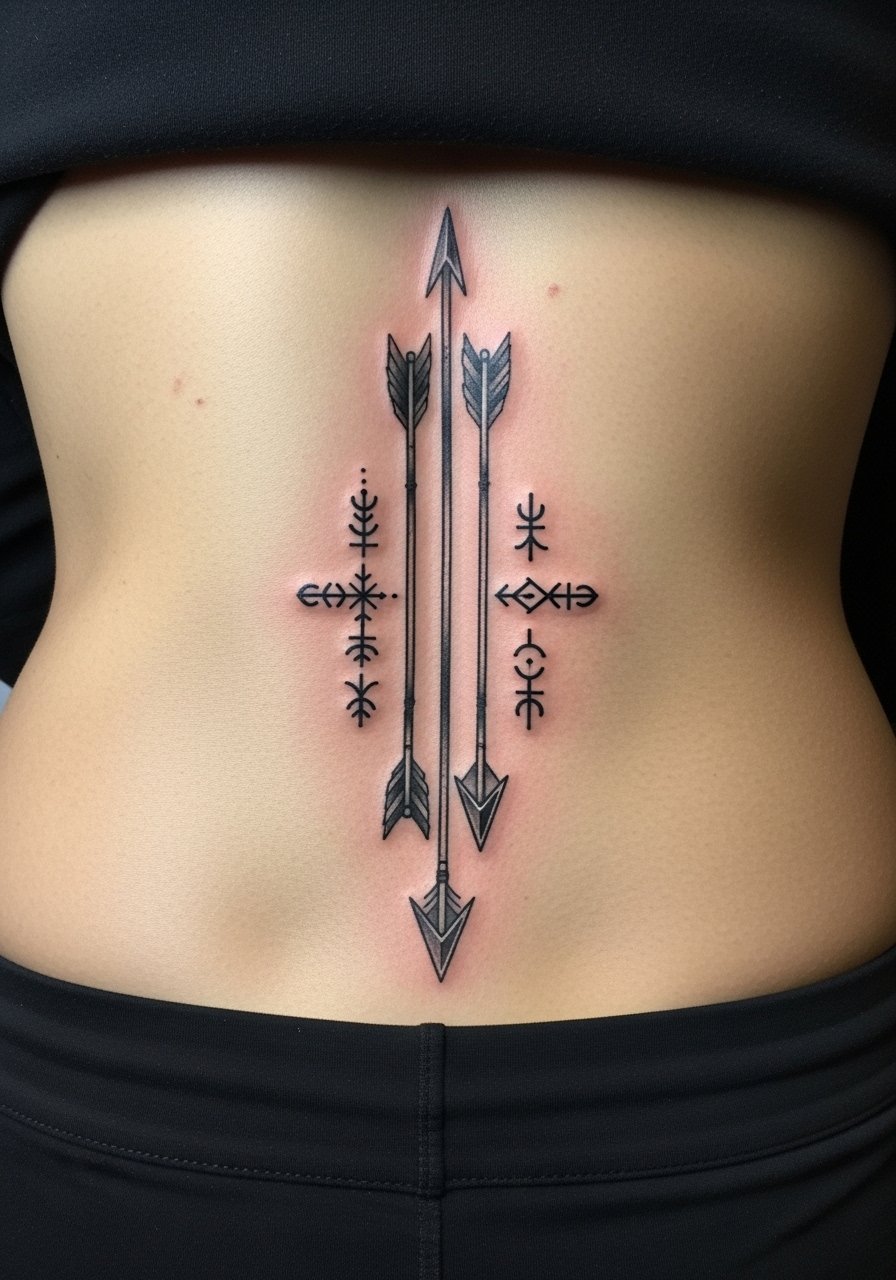
I liked the storytelling in a quiver column with tiny symbols as personal tokens. A piece like this is usually 1 to 3 hours. Pain is moderate on the lower back. During consult pick symbols that will still read at small scales. From what I have seen, pictograms under 6 mm become indecipherable over time. Ask for slightly larger symbols and clear spacing. Also discuss color if you want symbols highlighted. The common mistake is cramming too many tokens in a tight column.
22. Spine Script in Cursive With Red Accent Underline
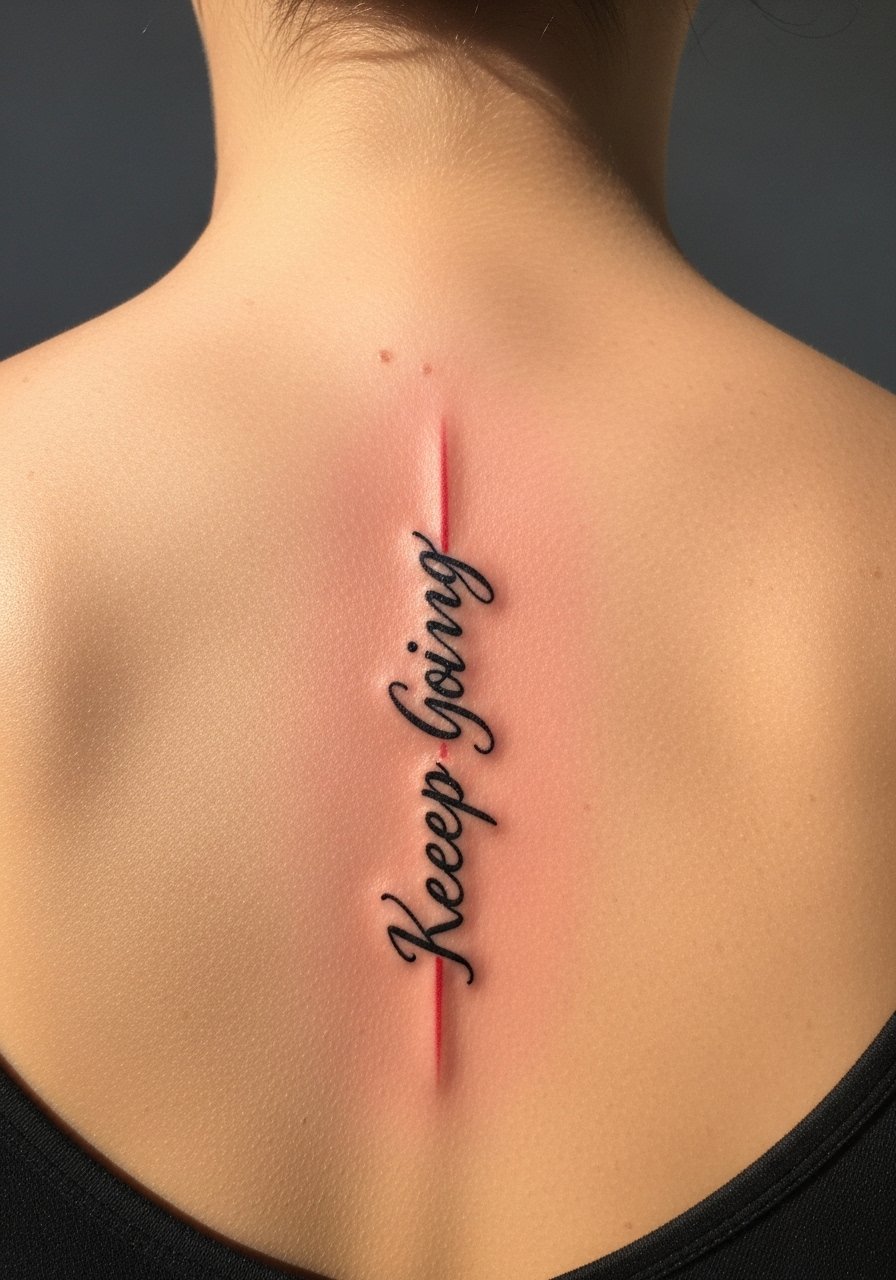
I saw a cursive spine piece with a red underline and it added personality. Cursive needs rhythm. Session time is 1 to 2 hours. Pain is higher near the mid-thoracic area. Tell the artist if you want the underline saturated or faded. From what I've noticed, red pigments can heal softer depending on skin tone. Ask for a pigment known to hold, and plan a small touch-up if the underline fades. People sometimes ask for neon reds that lose vibrancy quickly. Pick classic red tones for better staying power.
23. Spine Tribal Column With Modern Negative Space
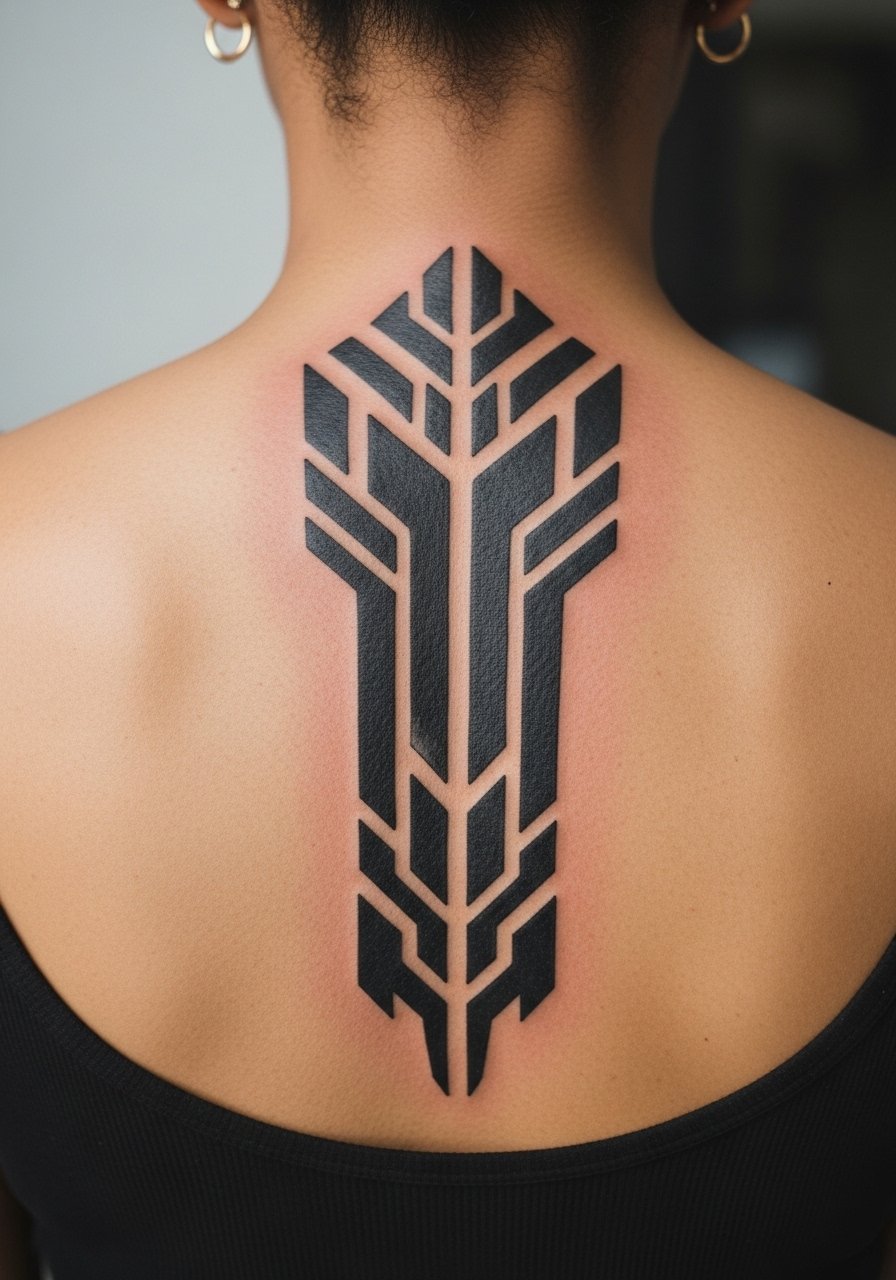
I appreciate updated takes on tribal motifs that use negative space thoughtfully. Bold tribal columns age well. Sessions are 2 to 4 hours. Pain varies. When you meet your artist bring clear references and explain cultural sensitivity. From what I've seen, mixing multiple tribal aesthetics in one piece muddles meaning. Keep the vocabulary consistent. Large black blocks can feel heavy during healing but remain legible later. The frequent mistake is overcomplicating a modern tribal with tiny filler patterns.
24. Spine Floral Watercolor With Fine Line Anchors
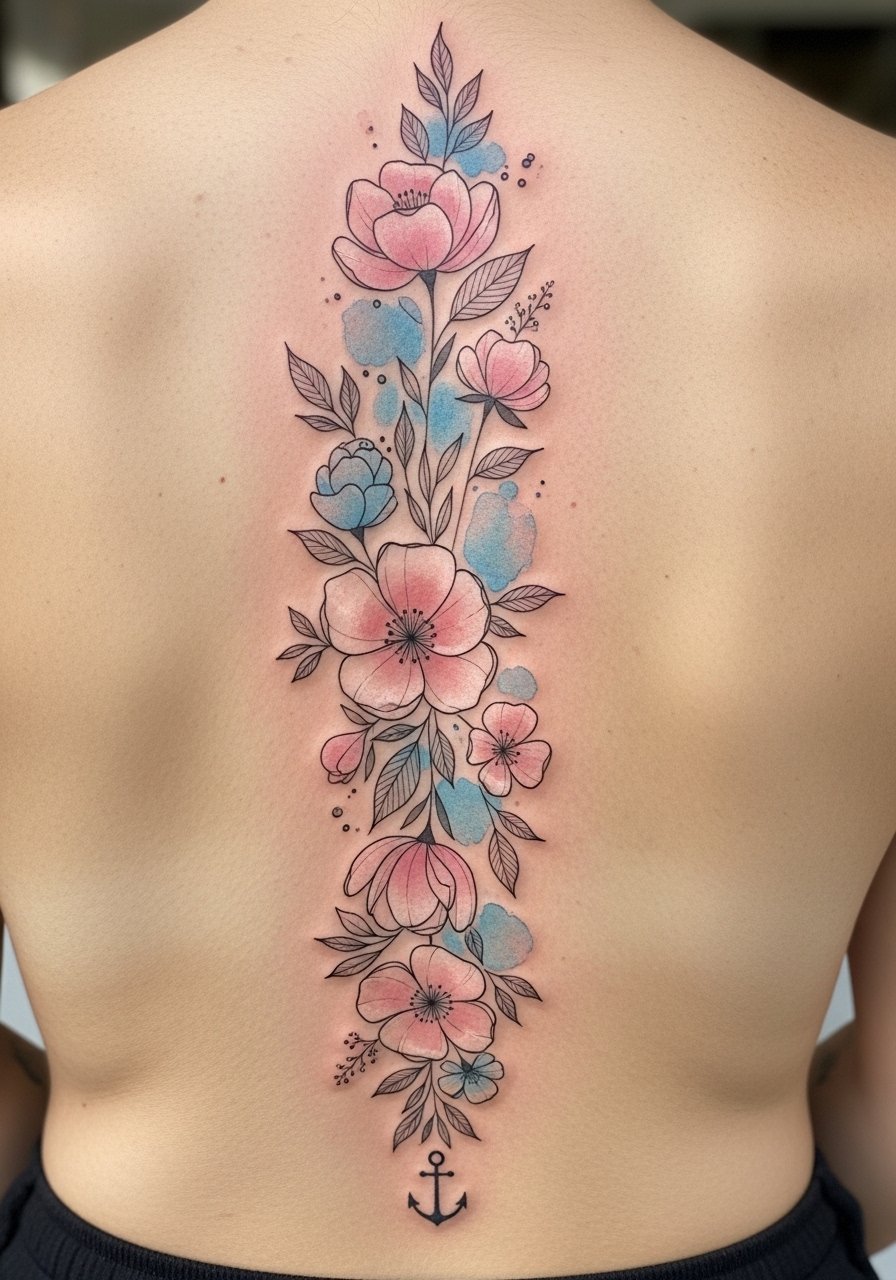
I like pairing watercolor washes with fine line anchors because the lines retain structure as the color softens. A medium piece requires 2 to 3 hours. Pain is moderate. During consult show how much bleed you accept in the wash. From what I've gathered, pure watercolor without anchors fades into a soft stain. Ask for thin anchors that will keep the composition readable as the colors settle. A mistake is expecting pastel washes to appear vivid long term without dense pigment packing.
25. Spine Geometric Floral Hybrid on Mid-Lower Spine
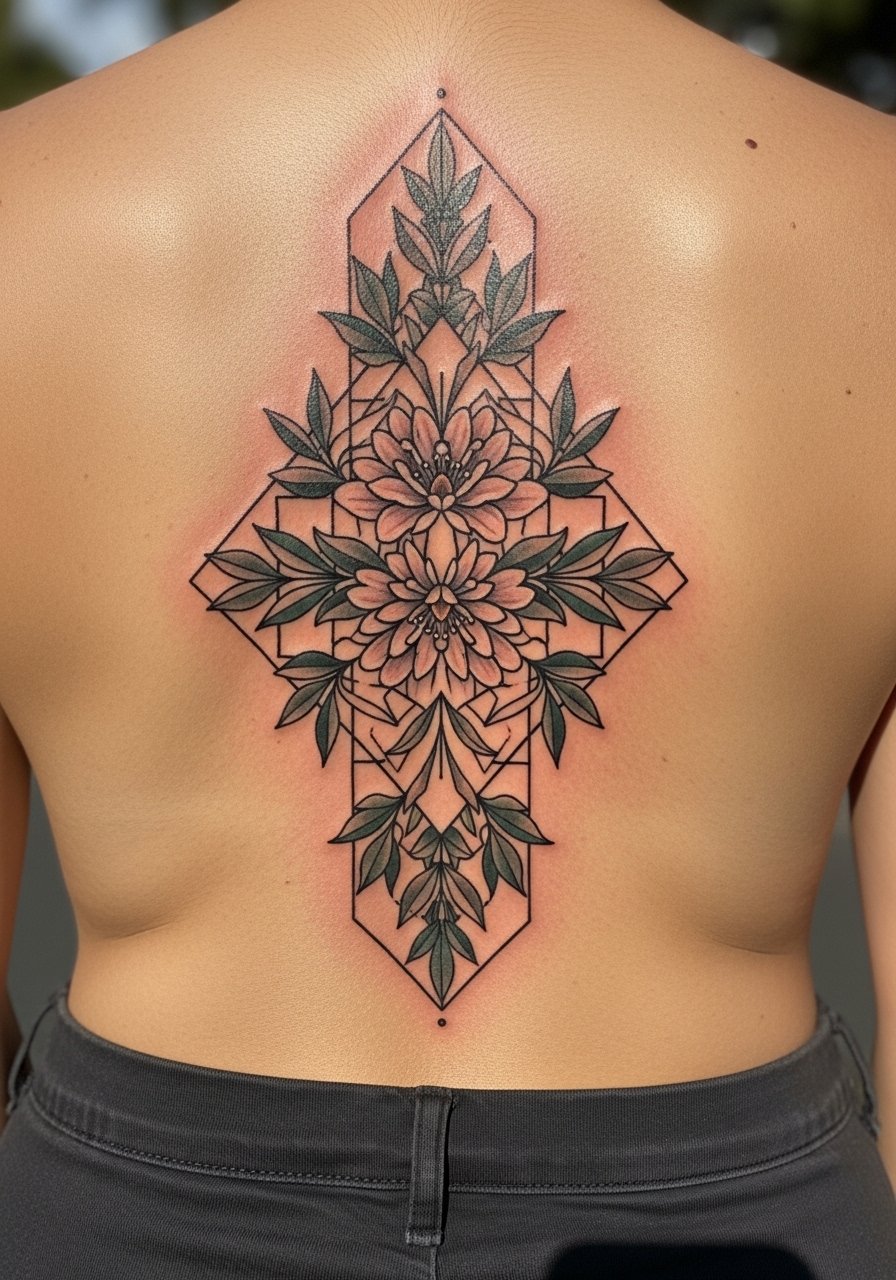
I combined geometry and florals for a balanced look and I liked how the shapes framed each bloom. A hybrid piece takes 2 to 4 hours. Pain is moderate to high depending on lumbar involvement. Tell your artist which element you want to dominate, geometric or organic. From what I have seen, letting geometry anchor the design keeps flowers from softening into indistinct marks. People often try to overlay too many petals over strict frames. Keep the frames legible and allow the florals to breathe.
26. Spine Minimal Dot Ladder Tapering to Tailbone
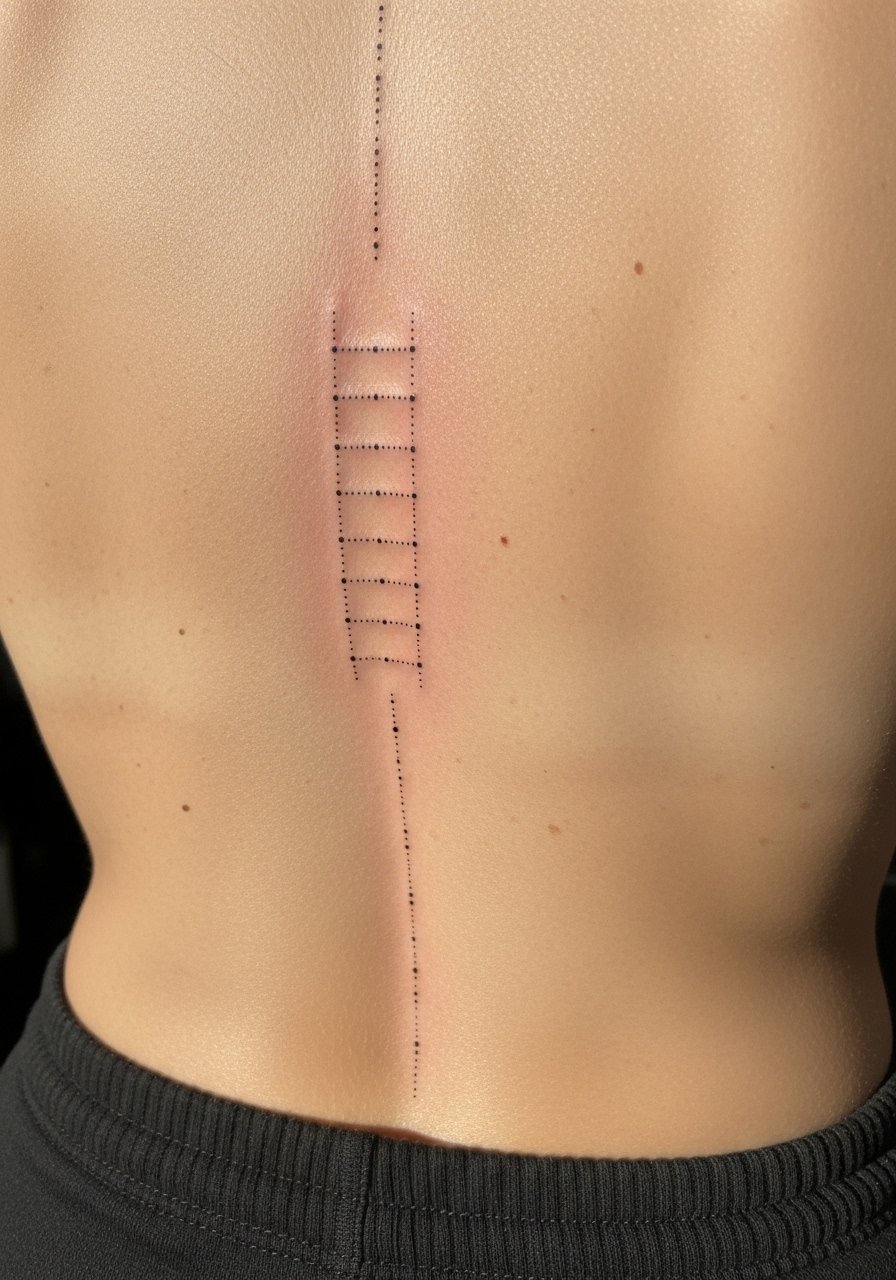
I saw a dot ladder that felt like Morse code for my own milestones. Minimal dot ladders are subtle and meditative. Expect 30 to 90 minutes. The pain increases slightly near the tailbone. During consultation decide on dot size and spacing. From what I've observed, micro dots closer than 4 mm will merge over time. Ask for graduated dot sizes so the ladder maintains rhythm as it heals. A common mistake is wanting uniform micro dots across a long column. Gradation helps perception and longevity.
Tattoo Prep and Aftercare Essentials
Aftercare Essentials.
Aquaphor Healing Ointment, 14oz tube. Industry standard for the first 3 to 5 days. I use a thin layer at night.
Saniderm Transparent Adhesive Bandage, 6-inch roll. Second skin healing method. Every artist I've talked to recommends it for 24 to 72 hours.
CeraVe Fragrance-Free Moisturizing Lotion, 16 oz. Daily moisturizer for days 4 to 14. I prefer the pump bottle for hygiene.
Dr. Bronner's Unscented Castile Soap, 32 oz. Gentle cleanser for rinsing twice a day the first week. Dilute a small drop with water.
Before Your Appointment.
Numbing Cream with 5% Lidocaine, 30g. Apply 30 to 45 minutes before your session only if your artist approves. Some artists prefer no numbing.
Tattoo Stencil Transfer Paper, A4 Pack. Useful if you want to test placement at home before your appointment.
Long-Term Maintenance.
SPF 50 Sunscreen Stick For Tattoos, Travel Size. Use on healed tattoos whenever they see sun. I carry one to the beach.
Mad Rabbit Tattoo Balm, 2 oz. Long-term maintenance for vibrancy. Artists I know recommend it for healed pieces.
Hustle Butter Deluxe, 5 oz. Vegan alternative that works during healing and after. Smells better than most aftercare.
Optional Comfort Items.
Tattoo Numbing Spray, 4 oz. Handy for touch-ups or very sensitive areas, use only with your artist's consent.
Hydrocolloid Bandages, Large Size. Good alternative to Saniderm for small to medium tattoos.
Frequently Asked Questions
Q: Will a fine line botanical spine tattoo blur into a smudge after two years?
A: From what I've seen fine line botanicals can soften, especially on the spine where skin moves. Ask your artist for slightly stronger line weight and increased spacing between tiny leaves. If you want to extend longevity consider a small annual touch-up and daily SPF application like SPF 50 Sunscreen Stick For Tattoos, Travel Size.
Q: Do watercolor spine tattoos need different aftercare than traditional ones?
A: I have noticed watercolor needs more pigment density to hold color. Aftercare is similar but I ask artists to pack color a touch heavier and to schedule a touch-up at 3 to 6 months. Use gentle cleansing like Dr. Bronner's Unscented Castile Soap, 32 oz in the first week and then a light moisturizer.
Q: How painful is a full-spine blackwork geometric piece compared to a small cervical arrow?
A: In my experience a full-spine blackwork session is longer and builds discomfort over time. A cervical arrow is short and sharp because of nerve proximity. Plan short breaks and discuss pacing with your artist. If you want numbing, bring Numbing Cream with 5% Lidocaine, 30g but only use it with artist approval.
Q: For text down the spine, what font choices avoid early blurring?
A: Clean monospace or slightly bolder serif fonts work better. From what I've seen, thin cursive and micro serifs blur first. Ask your artist for proofs on your skin and choose a font with thicker stems or reduced ornamentation. If you plan to use an underline colored accent, consider a pigment like those used in Mad Rabbit Tattoo Balm, 2 oz for long-term color care.
Q: I want a wrap from spine to ribs. What movement issues should I expect?
A: Wrapping designs must account for breath and torso expansion. I recommend the artist stencil the design while you breathe in and out. From my experience, anchors that follow muscle lines hold better. Keep details away from areas that crease when seated.
Q: What aftercare product should I bring to my session and use immediately after?
A: Bring what your artist recommends, but I have personally used Saniderm Transparent Adhesive Bandage, 6-inch roll when advised. For nights I prefer Aquaphor Healing Ointment, 14oz tube applied thinly. Use soap like Dr. Bronner's Unscented Castile Soap, 32 oz for gentle cleansing.