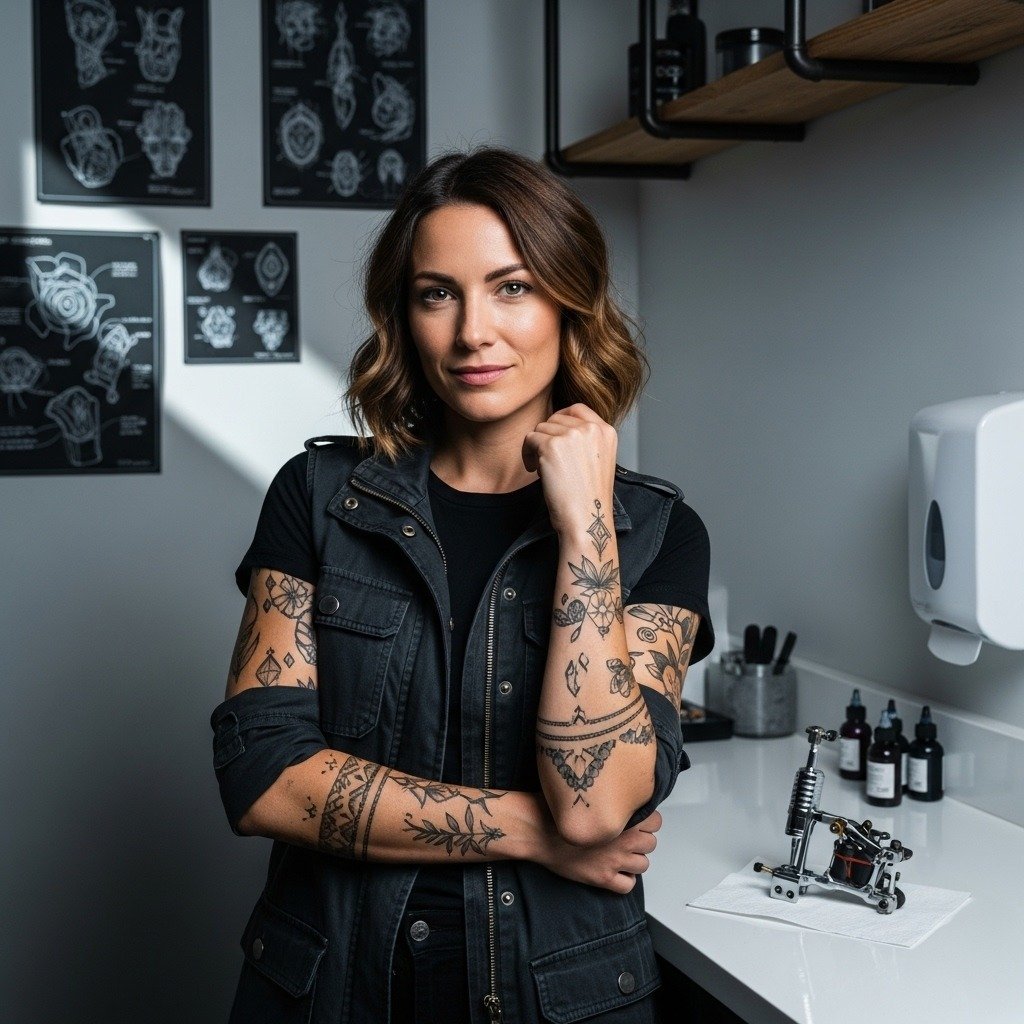
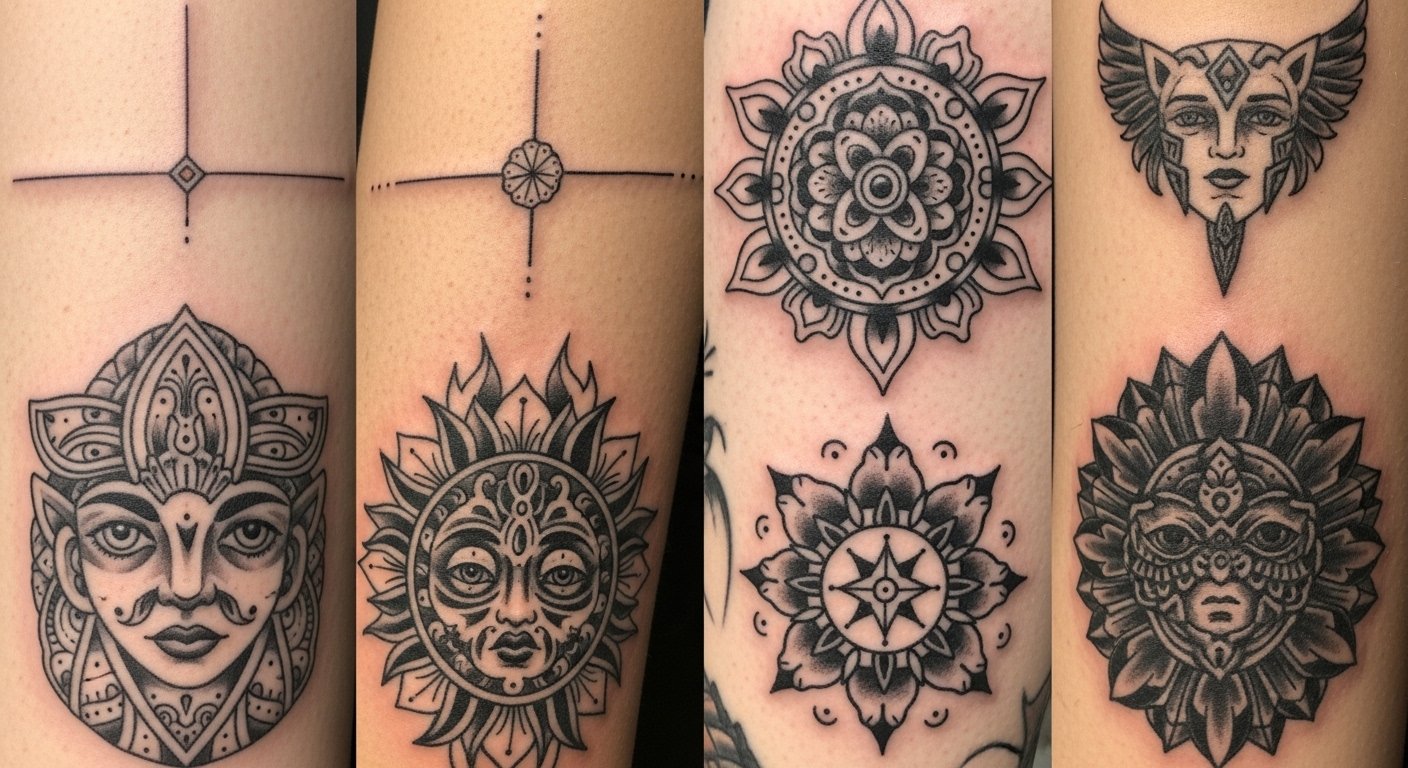
I spent months narrowing down Chinese-inspired tattoo ideas that actually hold up healed, rather than just looking good on a fresh Instagram post. I wanted pieces with cultural weight and designs that age well on real skin. These 24 options mix script, symbols, and pictorial motifs I keep seeing in studios in 2026, plus a few under-the-radar takes I think deserve more attention.
This list focuses on script, pictorial, and seal-style Chinese tattoos. Placements range from inner forearm to chest and ribs. From what I've seen, calligraphy and seal impressions are trending, but bold blackwork and micro-realism still win for longevity.
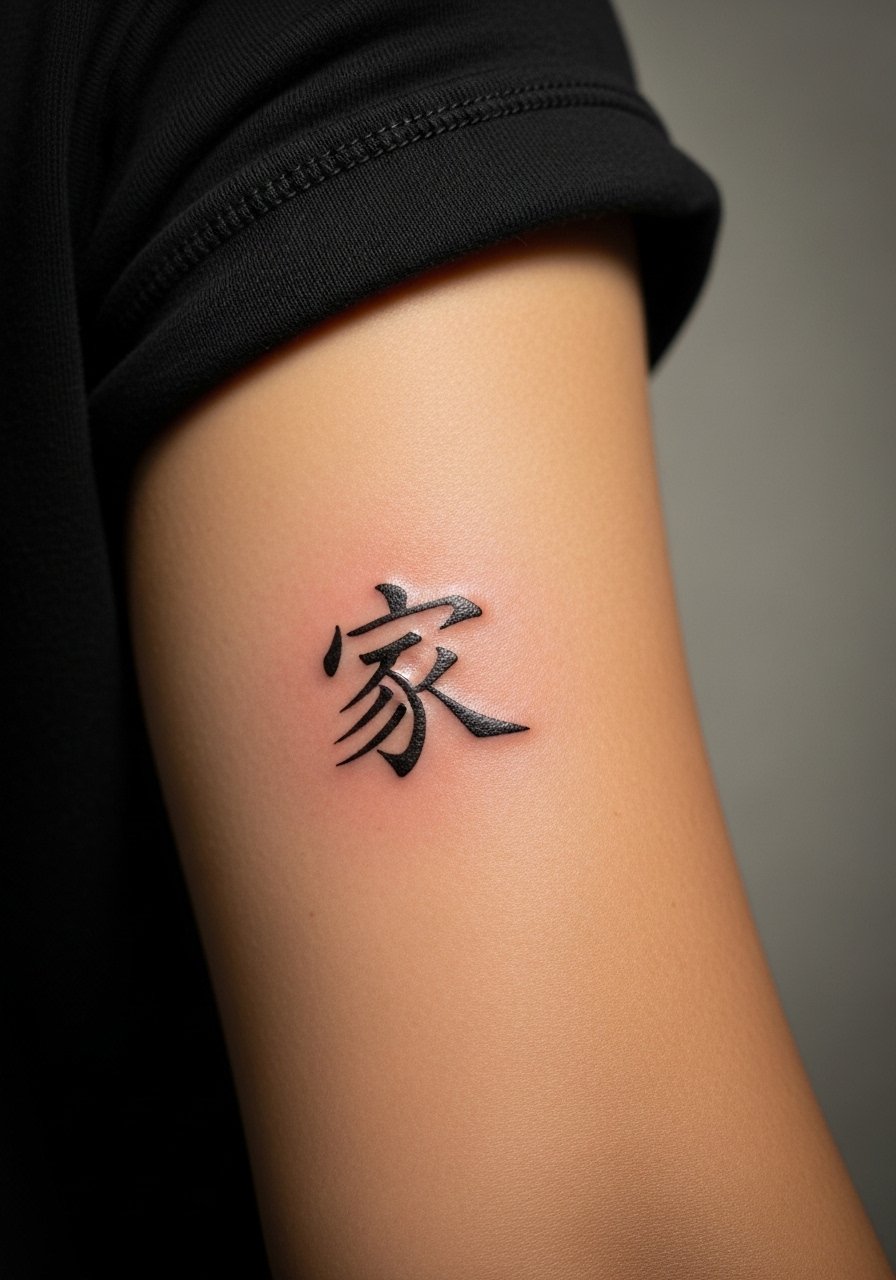
1. Fine Line Chinese Character "家" on Inner Forearm
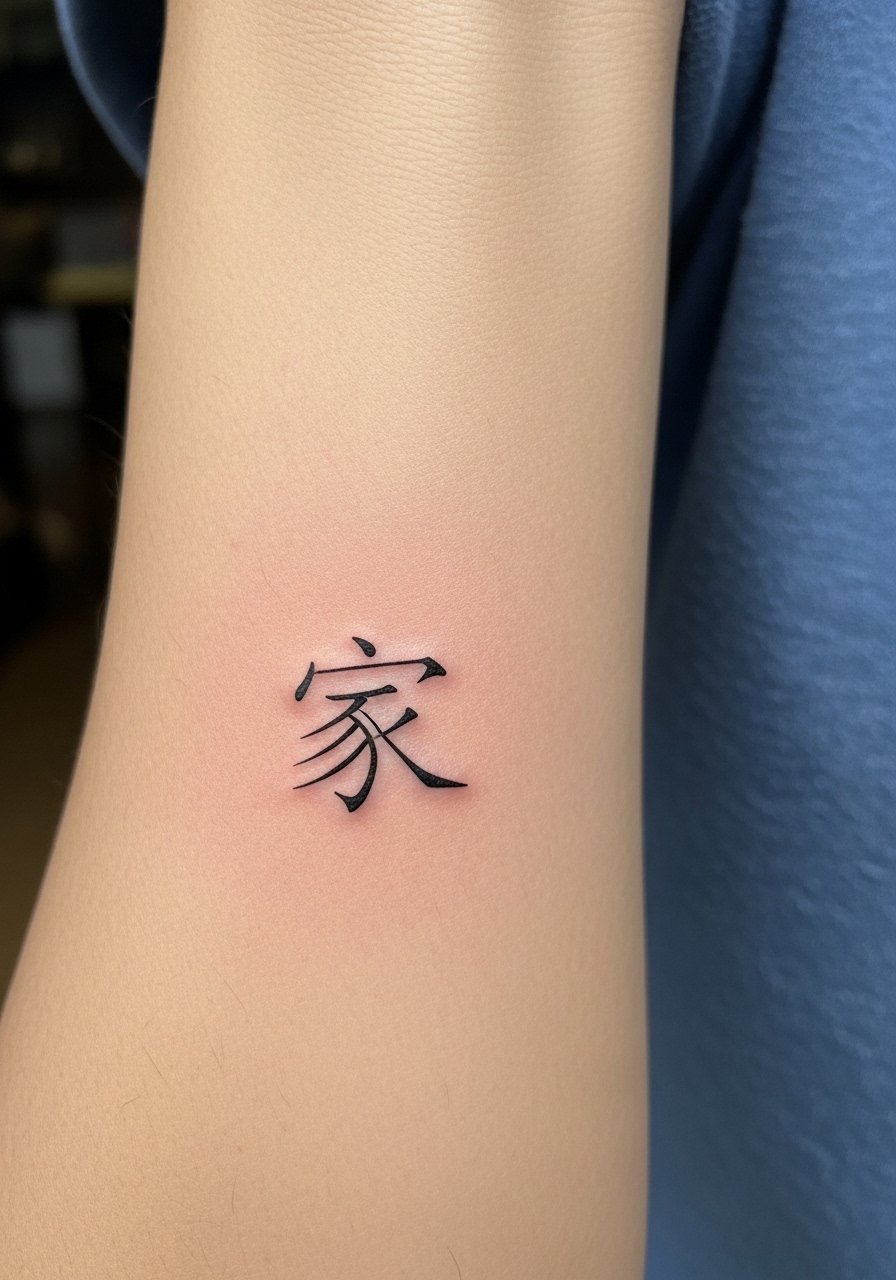
I first saw a "家" tattoo on a friend who wanted a discreet family reminder. Fine line works here because the character's negative space reads well on the forearm. Pain is low, maybe a 2 out of 10 for me. Expect a 45 to 90 minute session. Ask your artist for slightly bolder line weight than the reference if you want it to last. From what I've observed, ultra-thin strokes blur fastest. A common mistake is asking for brush-thin calligraphy without adjusting scale. At six months the lines settle. At two years the thinnest lines may feather. Tell your artist you want crisp terminals and consistent stroke width. If you prefer protection during the first days, Saniderm can help. Aquaphor Healing Ointment, 14oz tube works for me at night.
2. Blackwork Dragon Panel on Upper Arm
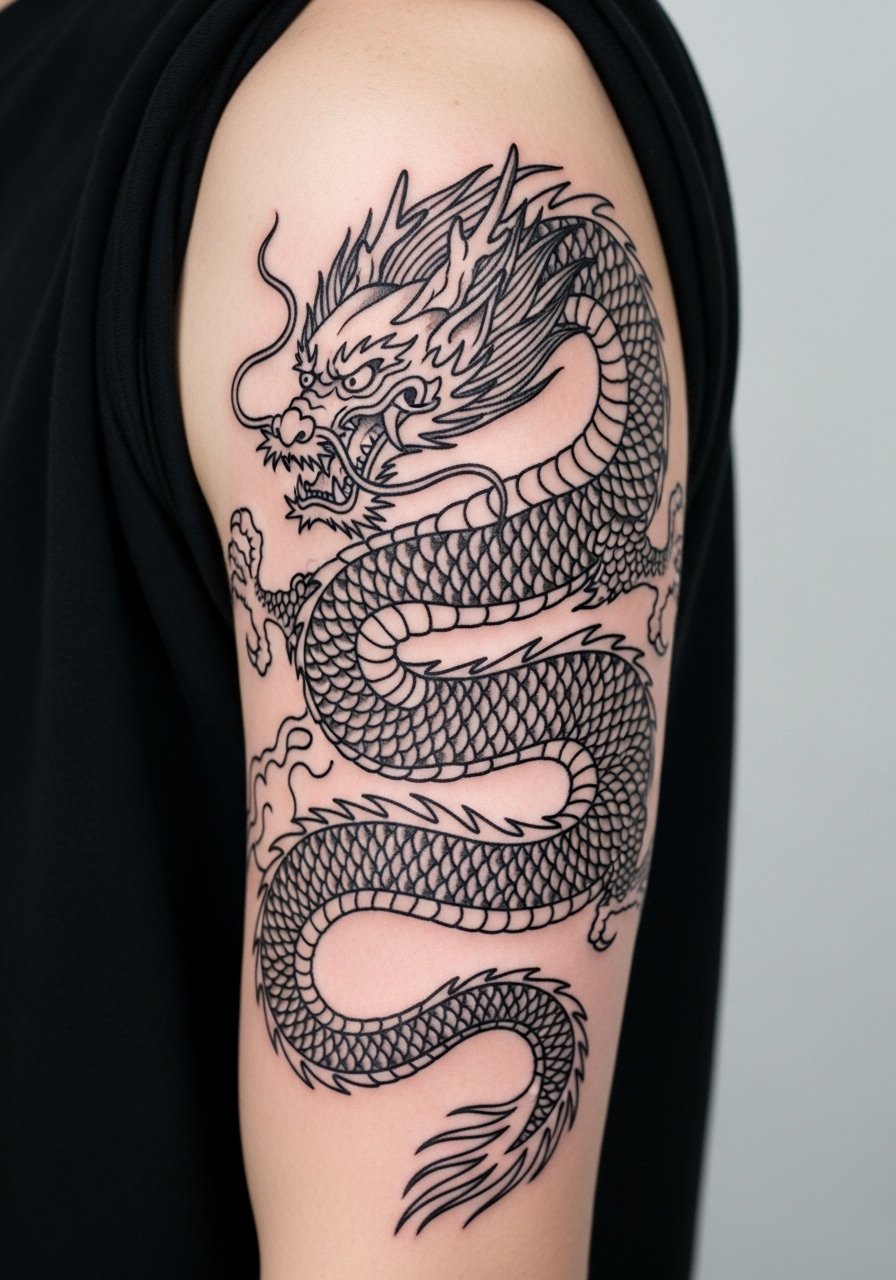
Fair warning, an upper arm dragon can go big fast. I like blackwork dragons for their boldness and readability from across the room. Session time varies, usually two to four hours for a medium panel. Expect moderate pain. This style ages very well because heavy black holds. A bad version uses too many tiny scales, which blur into a grey patch after a few years. Ask your artist to prioritize negative space between scales and to keep scales slightly larger than the photo you like. Tell them you want dense black fill but clean edgework. Healed color stays strong. Avoid asking for ultra-fine shading inside the scales if you want longevity.
3. Micro-Realism Koi With Chinese Waves on Calf
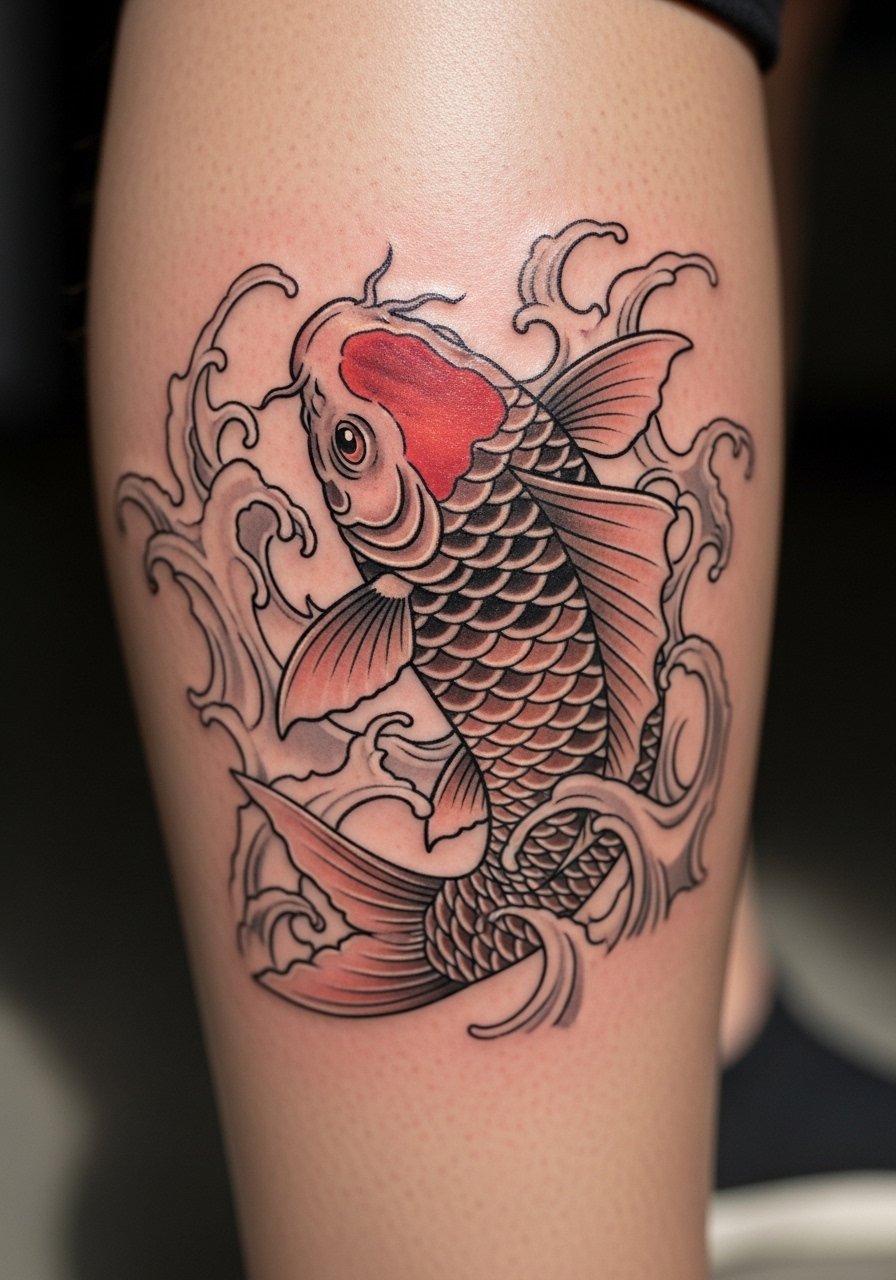
I picked up this idea after seeing a few portfolios at a convention. Micro-realism koi reads beautifully on the calf because the curved canvas complements the fish. Pain is medium. A single-session calf piece takes two to three hours. Color koi can lose a bit of saturation by year two. The common mistake is cramming too many tiny highlights. Ask for a mix of saturated base color and slightly larger white highlights so the mirror effect survives healing. If you plan to show it off at the beach, protect it with an SPF stick after healing. SPF 50 sunscreen stick for tattoos, travel size is one I carry.
4. Traditional Phoenix Chest Panel With Peony Accents
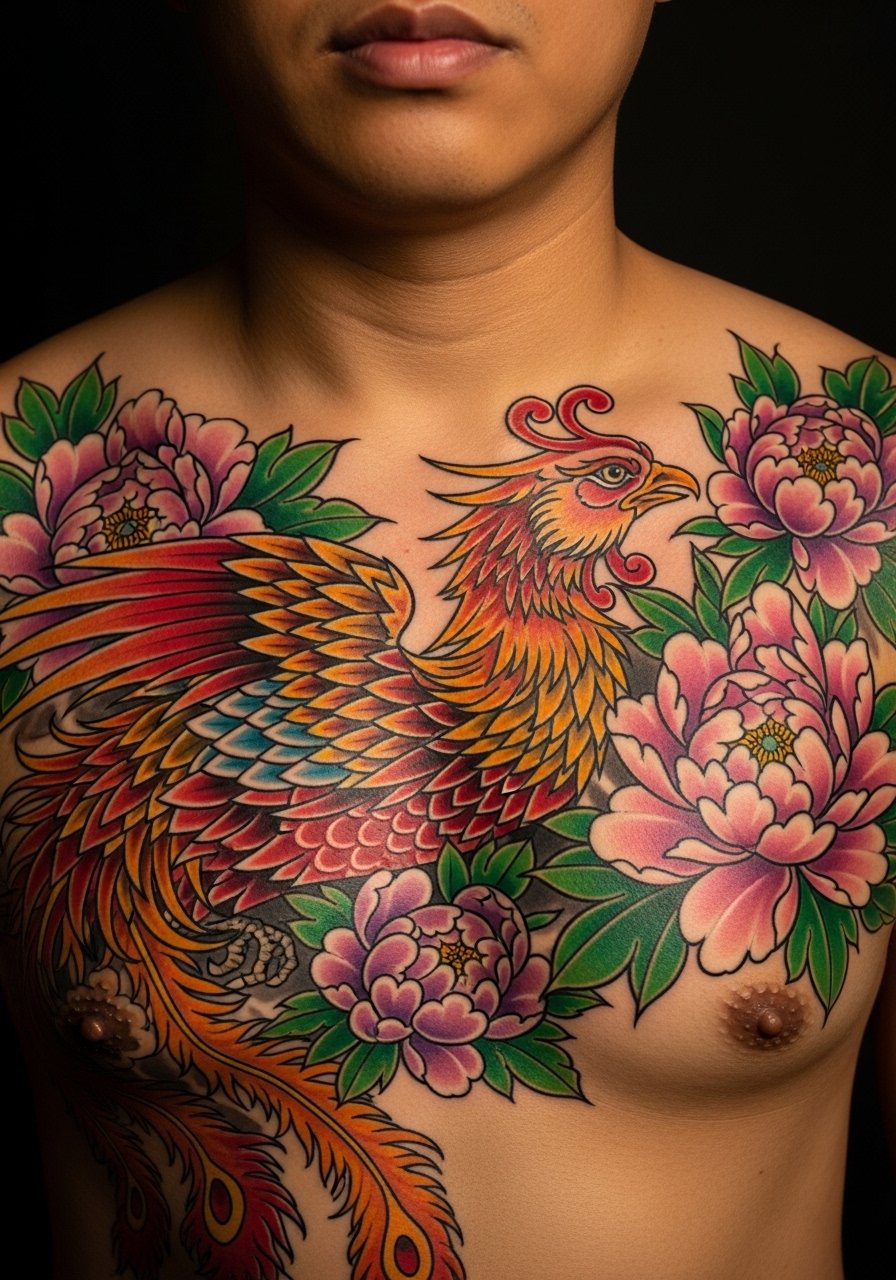
There is something about a phoenix across the chest that feels ceremonial. I saw this in a studio where a collector wanted rebirth symbolism. Expect higher pain near the sternum. Multiple sessions are common, often two sessions of three hours. Traditional thick outlines help this one age well. A common error is over-detailing the feathers in tiny strokes. Ask your artist for bold outlines with layered color blocks. Healed, the piece keeps silhouette and contrast. For chest placements, sleeping position can affect scab formation. I use a thin layer of Aquaphor at night for the first three nights.
5. Watercolor Plum Blossom on Shoulder Blade
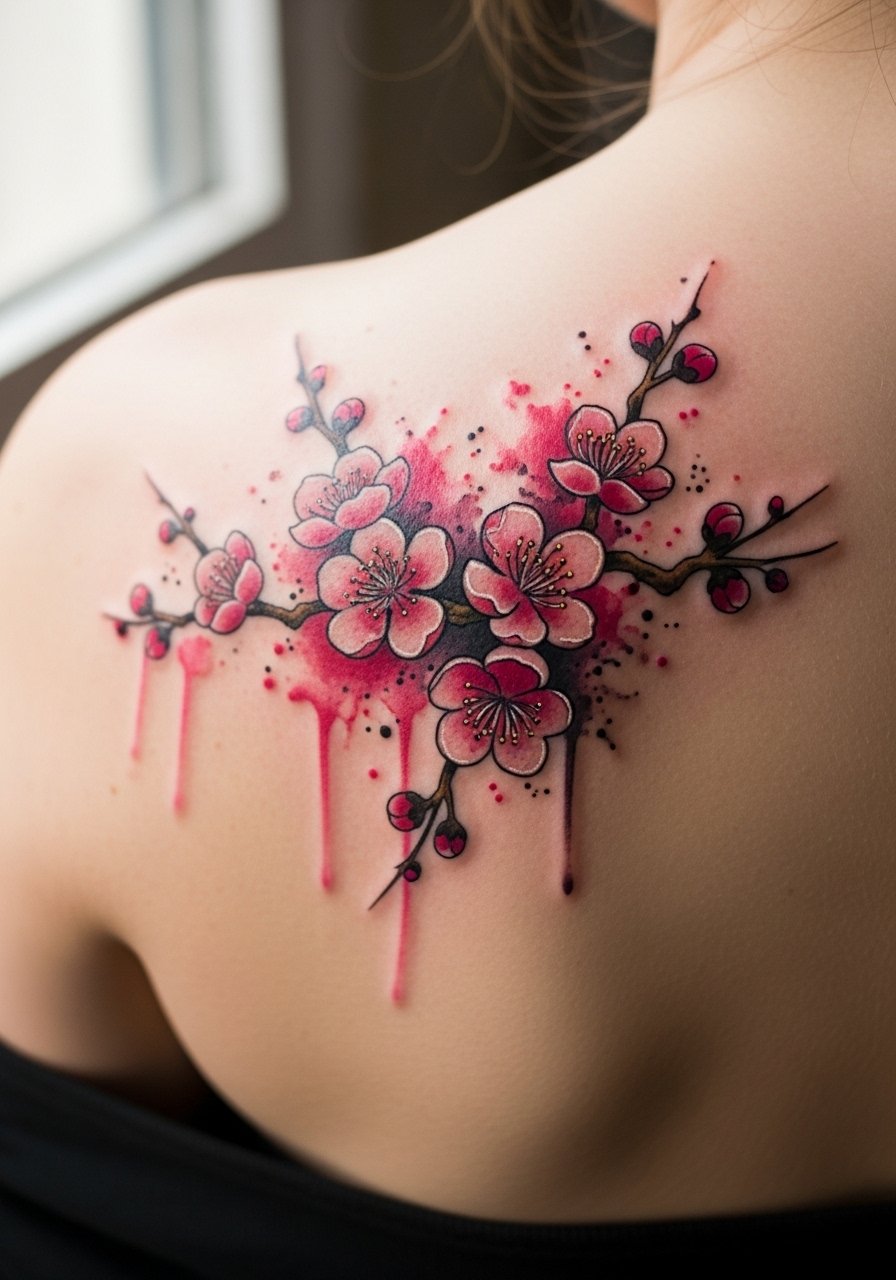
Most watercolor tattoos from five years ago washed into soft blurs. I like this take because the blossoms are anchored with a fine-line outline. Shoulder blade is great for larger washes and has lower pain. Session time is usually 90 to 150 minutes. If you want longevity, ask your artist to keep a light outline under the wash. The mistake I see is relying solely on wash without structure. At six months colors soften. At two years the wash will be more muted. Bring reference photos that show outline weight you like. For aftercare, a fragrance-free lotion is key while it peels.
6. Seal-Stamp Red Chop on Inner Wrist
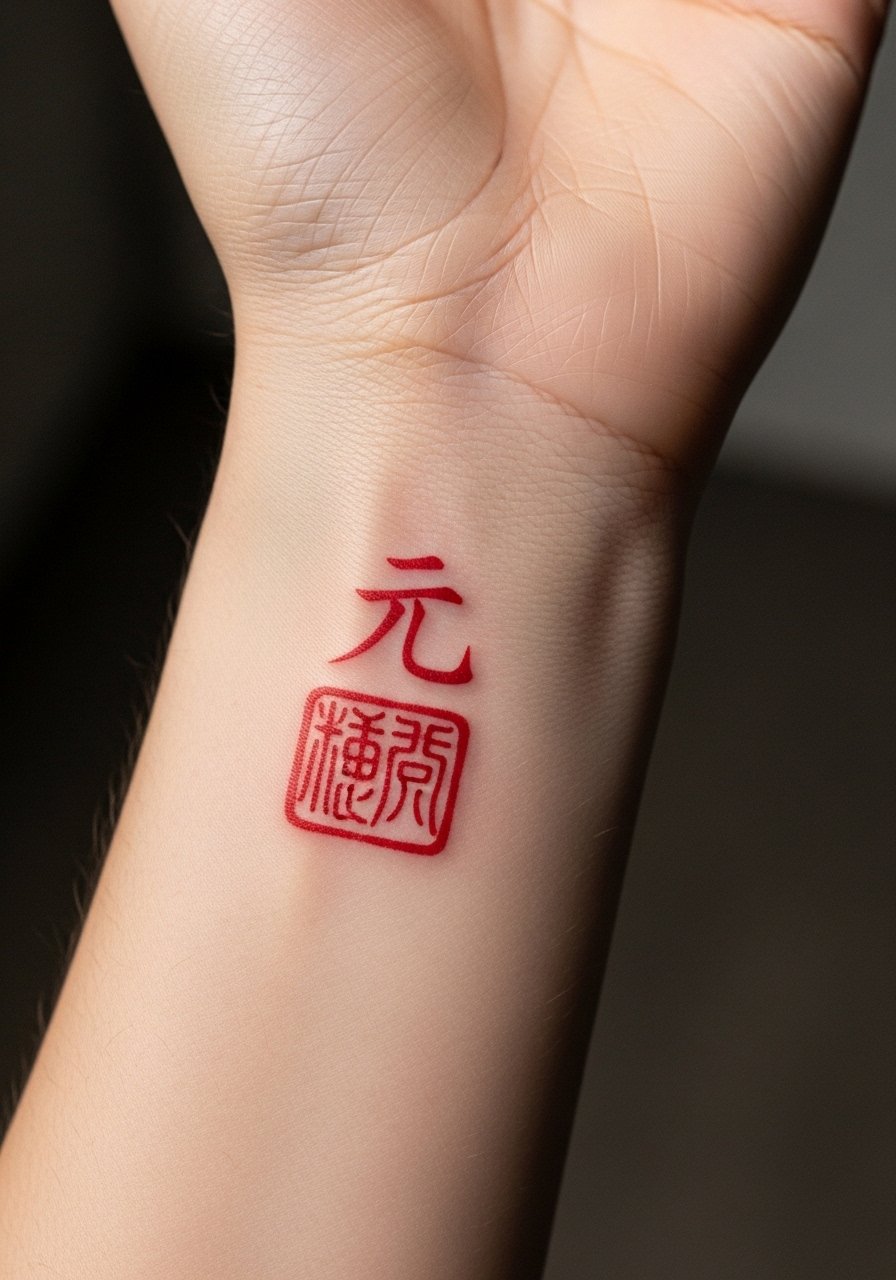
I noticed the seal-stamp trend on collectors who want something discreet and culturally rooted. The wrist hurts a bit more, around a 4 out of 10 for me. Sessions are short, often 30 to 60 minutes. Seal script requires an artist comfortable with blocky negative space. Artists I trust will stencil the exact characters first. A mistake is scaling the seal too small, which loses the carved look as lines spread. At one year the red often softens. Ask the artist for a slightly larger size than you think. If you want true red, bring references of healed red seals. I find that Hustle Butter applied sparingly after week one keeps the red lively.
7. Brush-Style Calligraphy "勇" on Ribcage
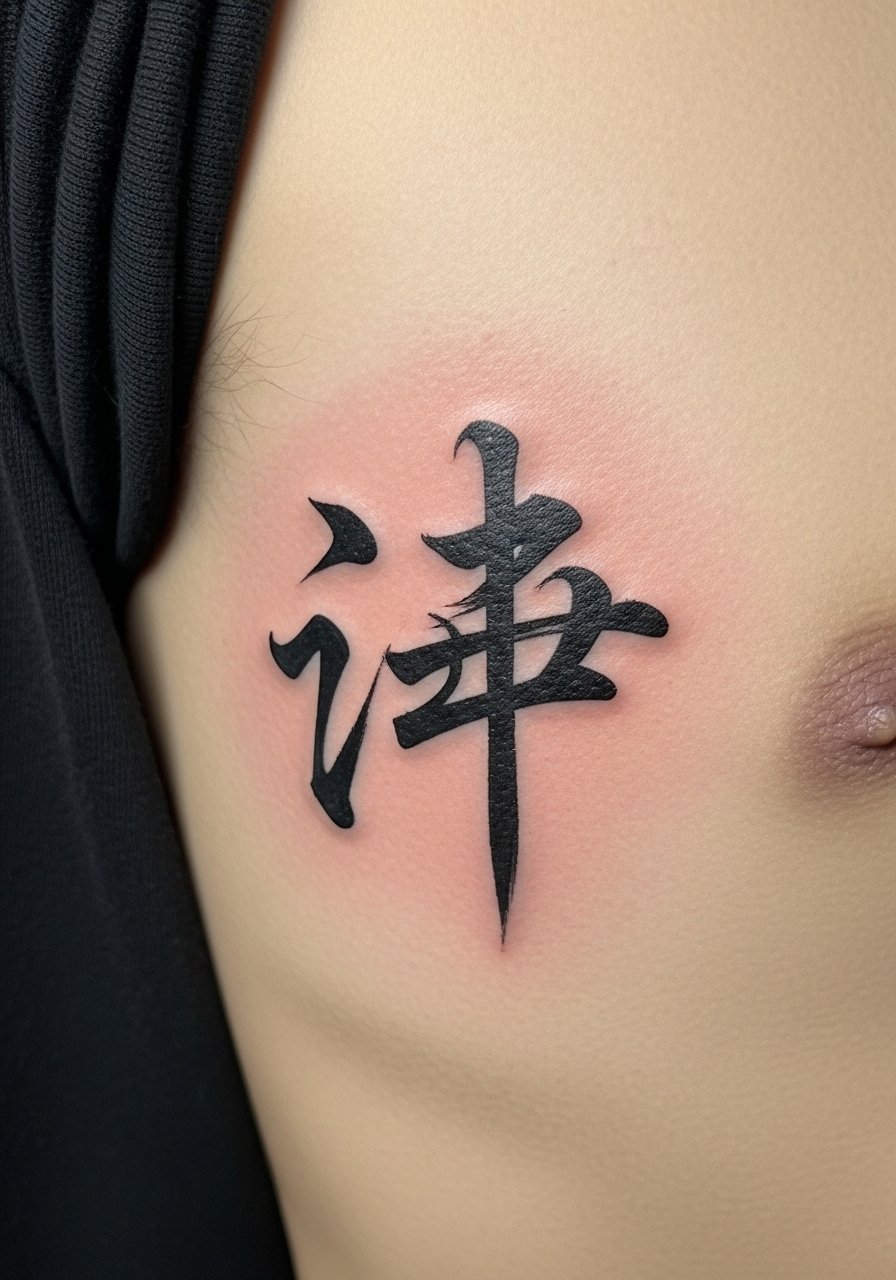
Fair warning, the ribcage is painful. For me it was a 7 to 8. But brush-style calligraphy looks dramatic there. Expect one long session or two shorter ones. Tell your artist you want visible brush strokes, not a printed version. The biggest mistake is tiny script placed on ribs without enough scale. Healed, the thicker strokes hold while the ultra-thin flicks fade. At six months the character looks softer but still powerful. If you want the brush effect without losing detail, ask for controlled negative space in the thicker strokes. Keep your torso movement calm during the first week.
8. Neo-Traditional Tiger Thigh Panel
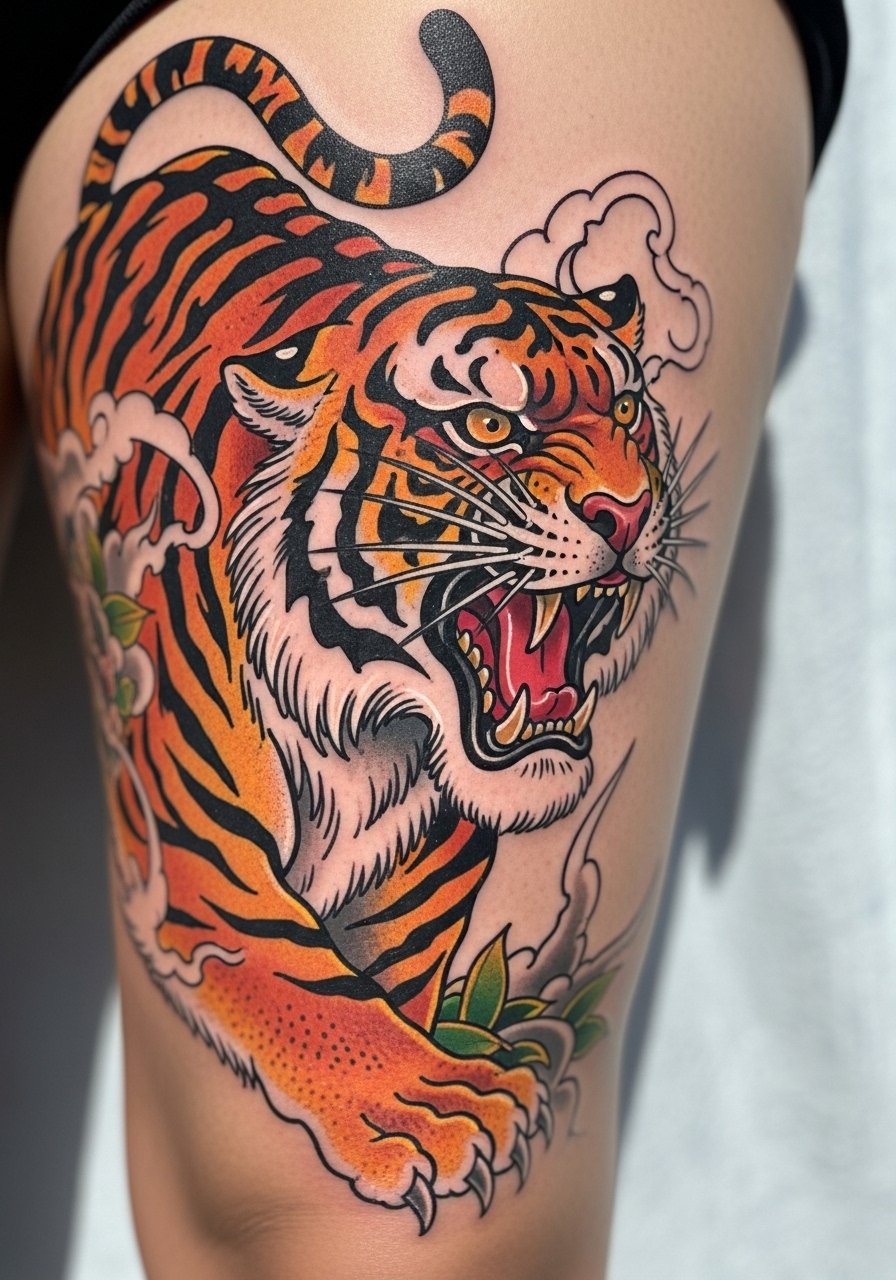
I chose a thigh tiger after seeing how well heavy black and color sit on that canvas. Pain is moderate around a 4 to 5. Session time is usually two sessions of two hours. Neo-traditional styling with bold outlines keeps the motif readable even after a few years. A mistake is over-detailing the fur with tiny lines. Ask your artist for contrast between flat color areas and textured strokes. Thigh placement also lets you go large without distortion. At two years the orange may mellow but the outline will remain solid.
9. Minimalist Chinese Zodiac Symbol Behind Ear
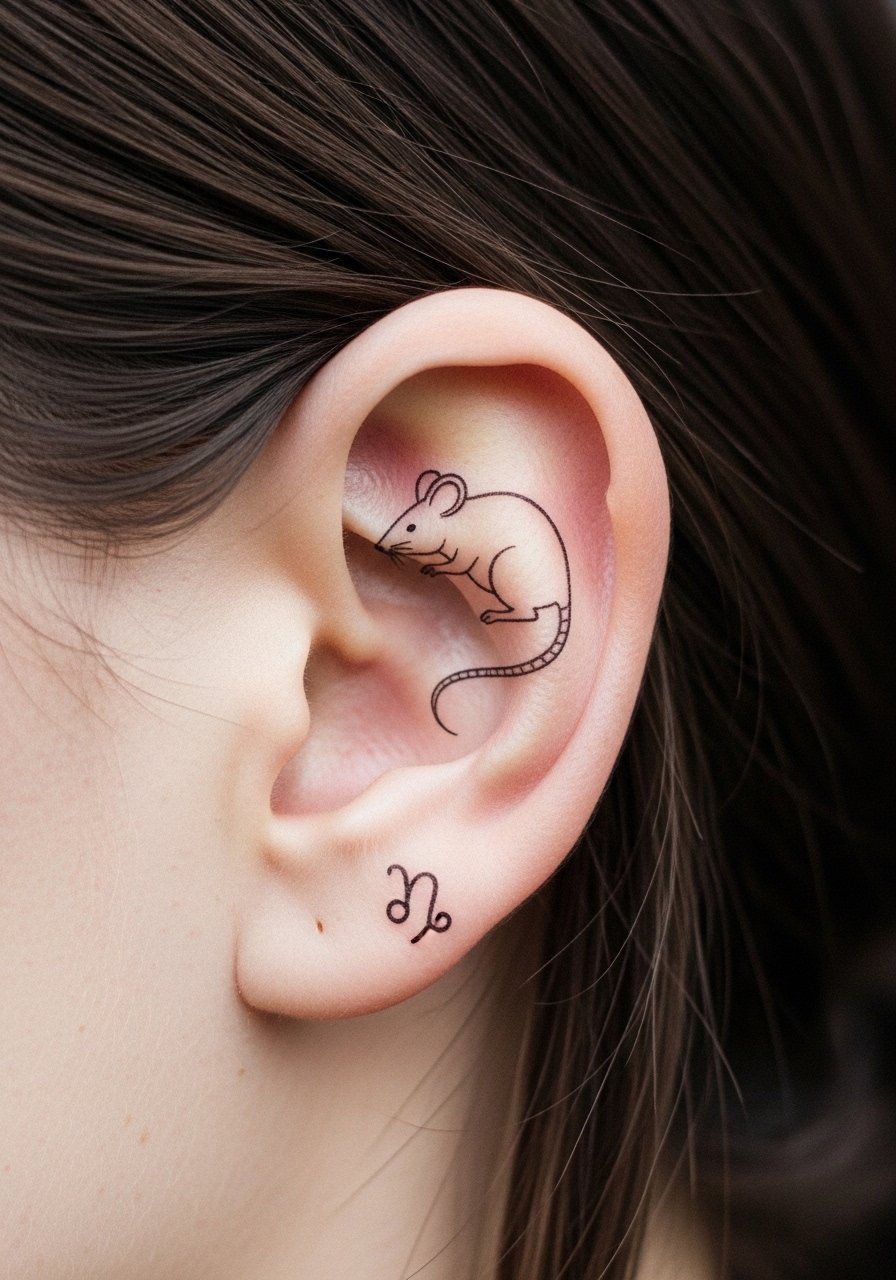
I first noticed small zodiac glyphs behind the ear on people who wanted private meaning. Pain is sharp but short for me. These are quick sessions, 20 to 40 minutes. Minimalist lines heal fast but can blur if too fine. The error I see is requesting hair-thin lines at a tiny scale. Ask for slightly thicker strokes and for the artist to space elements wider than the photo. Healed, the symbol will sit subtly. For longevity, consider moving it slightly forward on the mastoid where skin moves less.
10. Blackwork Guardian Lion on Shoulder Cap
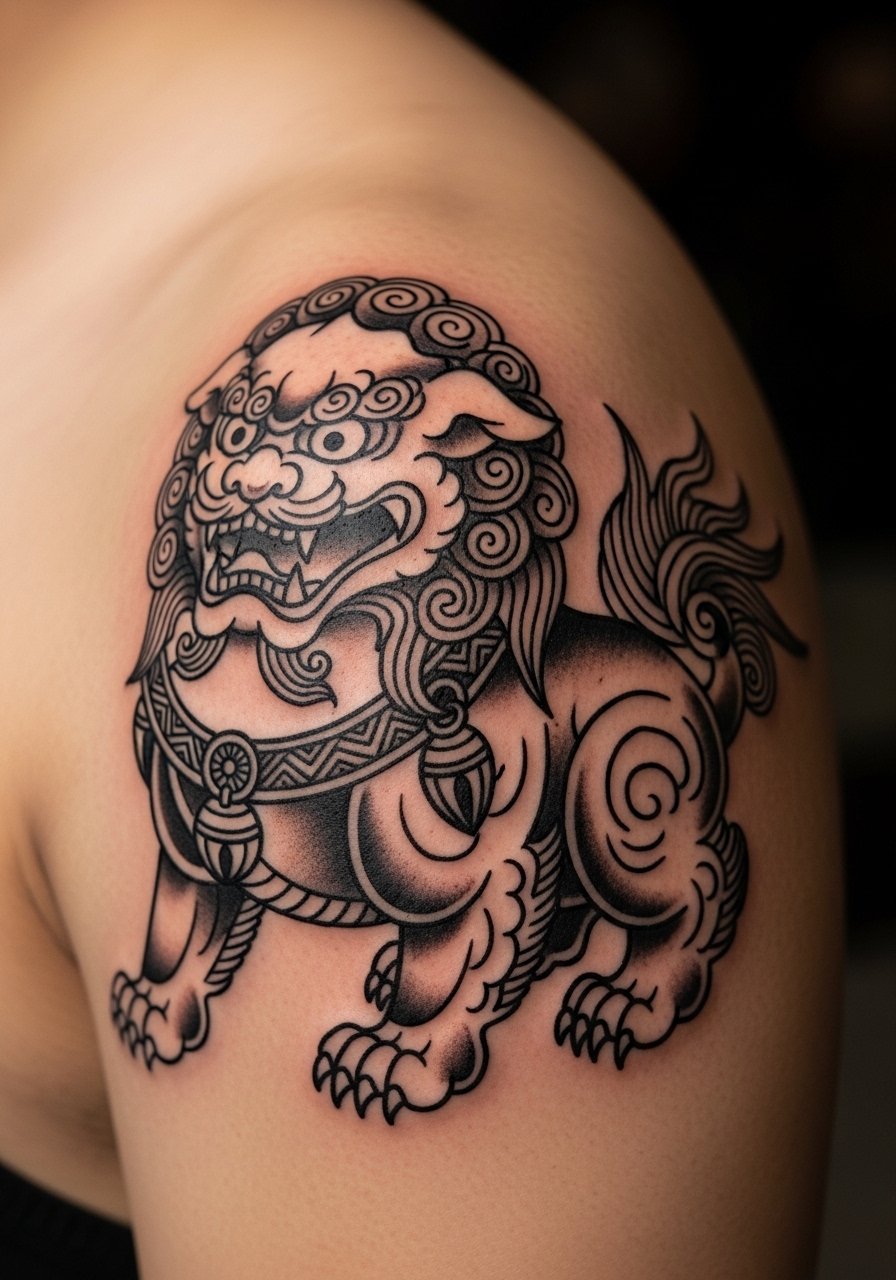
I saw this design on a client who wanted protection symbolism. Shoulder cap is low on the pain scale for me. Large black fills age really well here. A common mistake is over-texturing the mane with tiny dots. Instead, ask your artist to use bold negative shapes and reserved dotwork. Session times vary. At two years the black holds and the silhouette reads clean. If you want that stone-statue look, ask the artist for crisp edges and heavy weight on outer contours.
11. Fine Line Lotus on Ankle
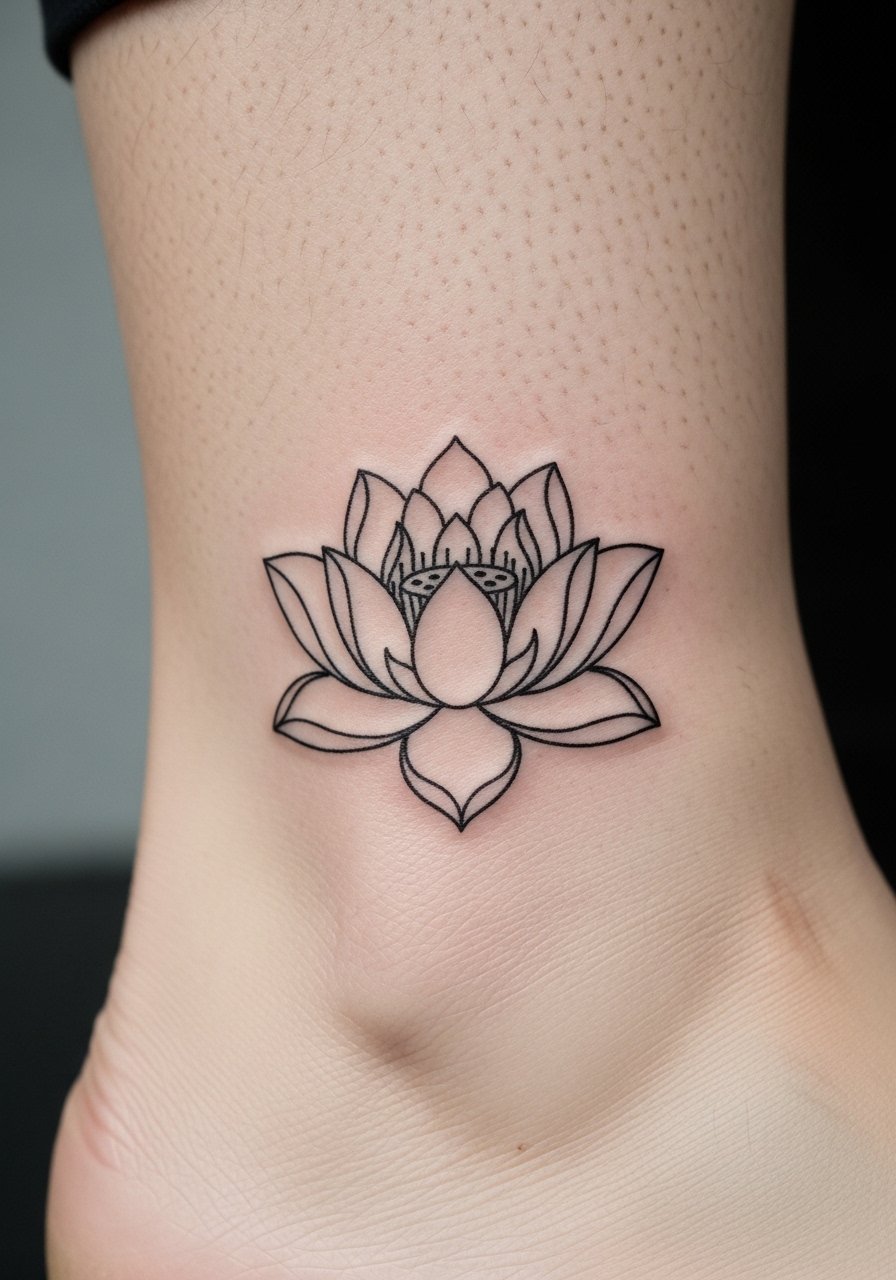
The ankle is tender. I rate it a 5 out of 10. I like lotus for its symbolic growth and the ankle suits vertical designs. A small piece takes 30 to 60 minutes. The common mistake is making the petals too thin. At six months, ultra-thin petal tips can soften. Ask for slightly thicker petal edges and clear petal separation. If you plan on frequent sock wear during healing, adjust banding to avoid scabbing. A fragrance-free lotion is my go-to once the initial scab falls.
12. Micro-Realism Portrait of Ancestor on Chest
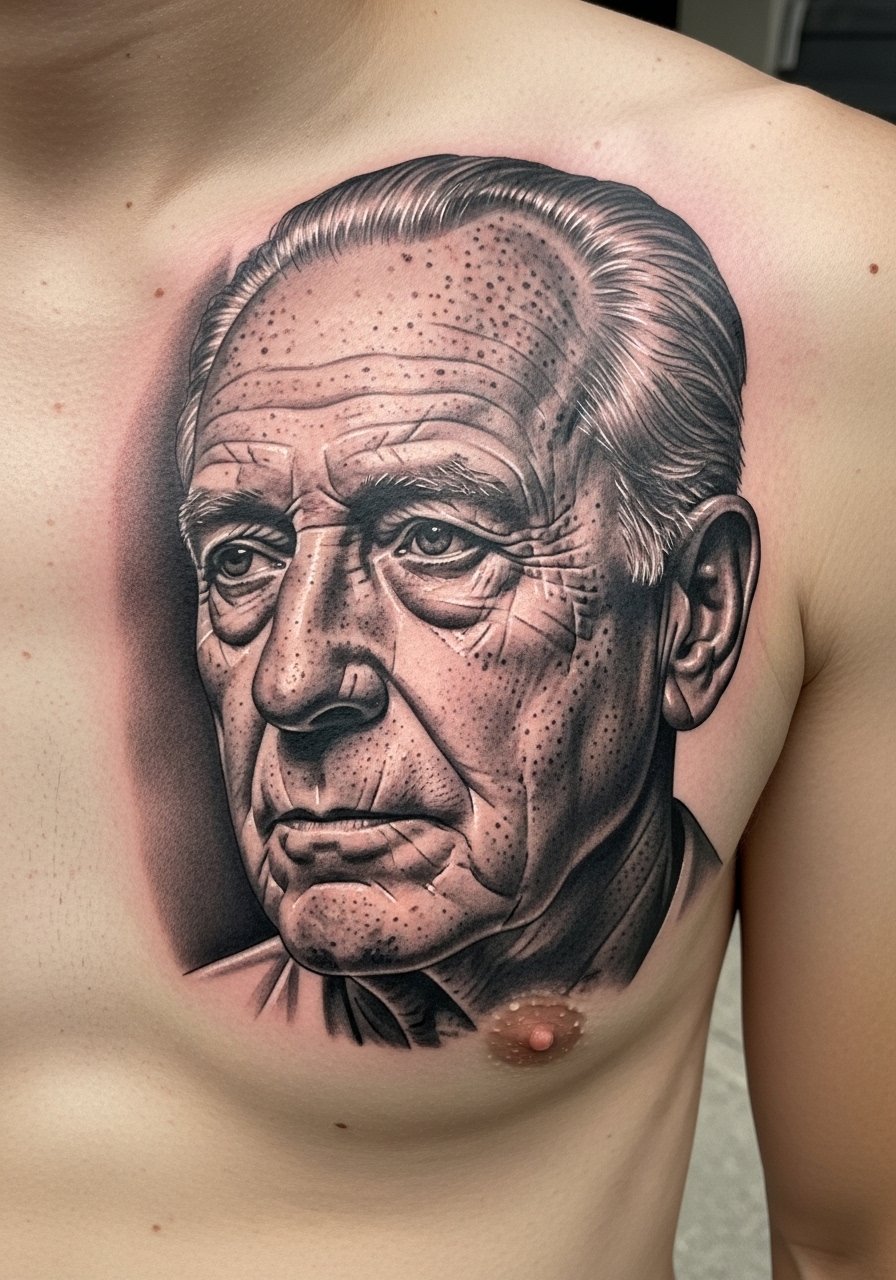
I saw an ancestor portrait that read more like a photograph than a tattoo. Chest placement adds intimacy and higher pain. Micro-realism requires an artist who does faces well. A single portrait session can be three to five hours. Real mistakes include using too small a scale or low-contrast reference photos. Healed, tiny mid-tone details can soften. Ask for a balance of sharp focal points and softer surrounding shading. Bring high-resolution photos and point out the facial features you want emphasized.
13. Geometric Yin Yang on Sternum
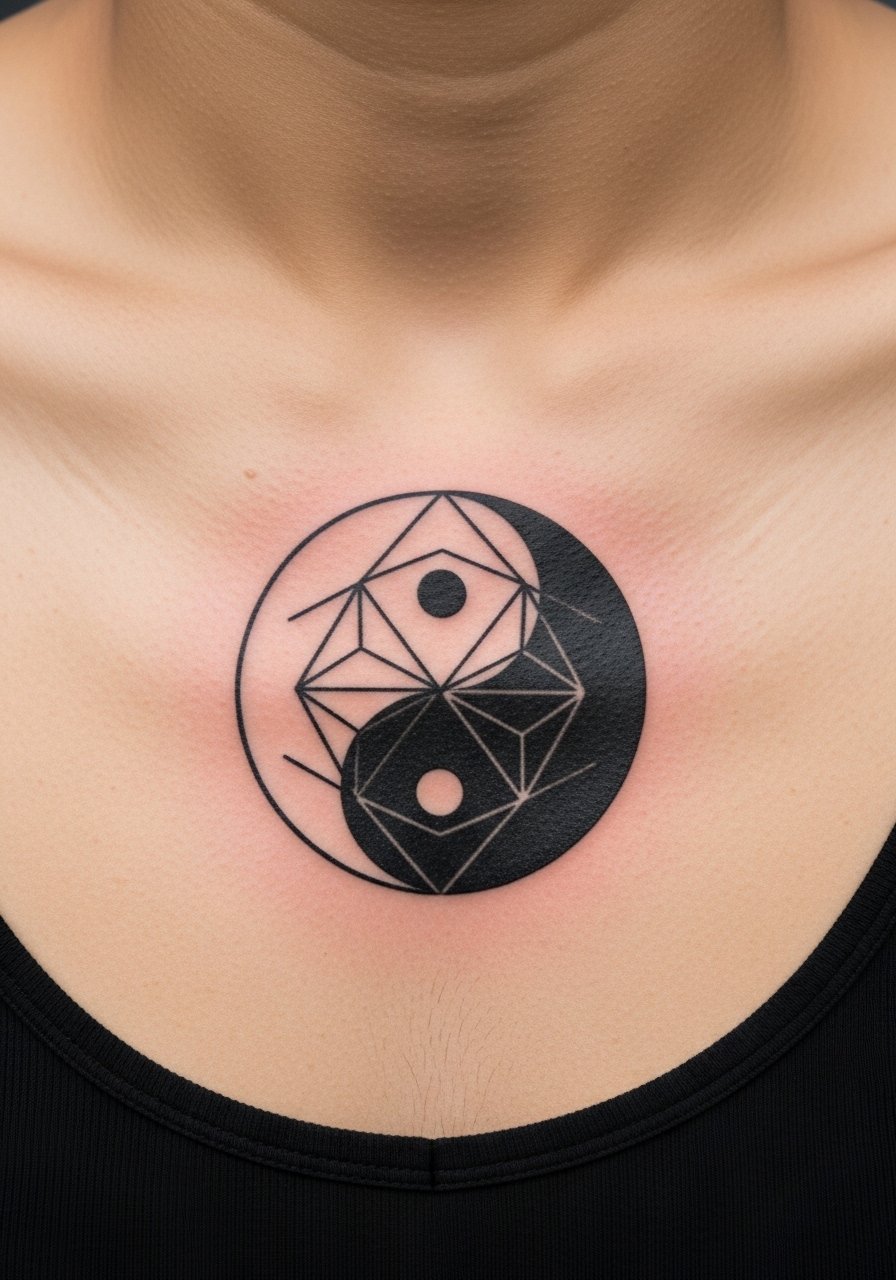
When I sat with an artist about this one, they warned me the sternum is finicky. Pain is high. Symmetry matters here. The geometric treatment ages well because it relies on bold shapes. A common error is asking for hairline symmetry without a mirrored stencil check. Bring multiple references and request a stencil check while standing. Healed, the black and negative space remain readable. Keep in mind chest movement during healing can slightly affect sharpness.
14. Watercolor Crane On Ribcage With Script
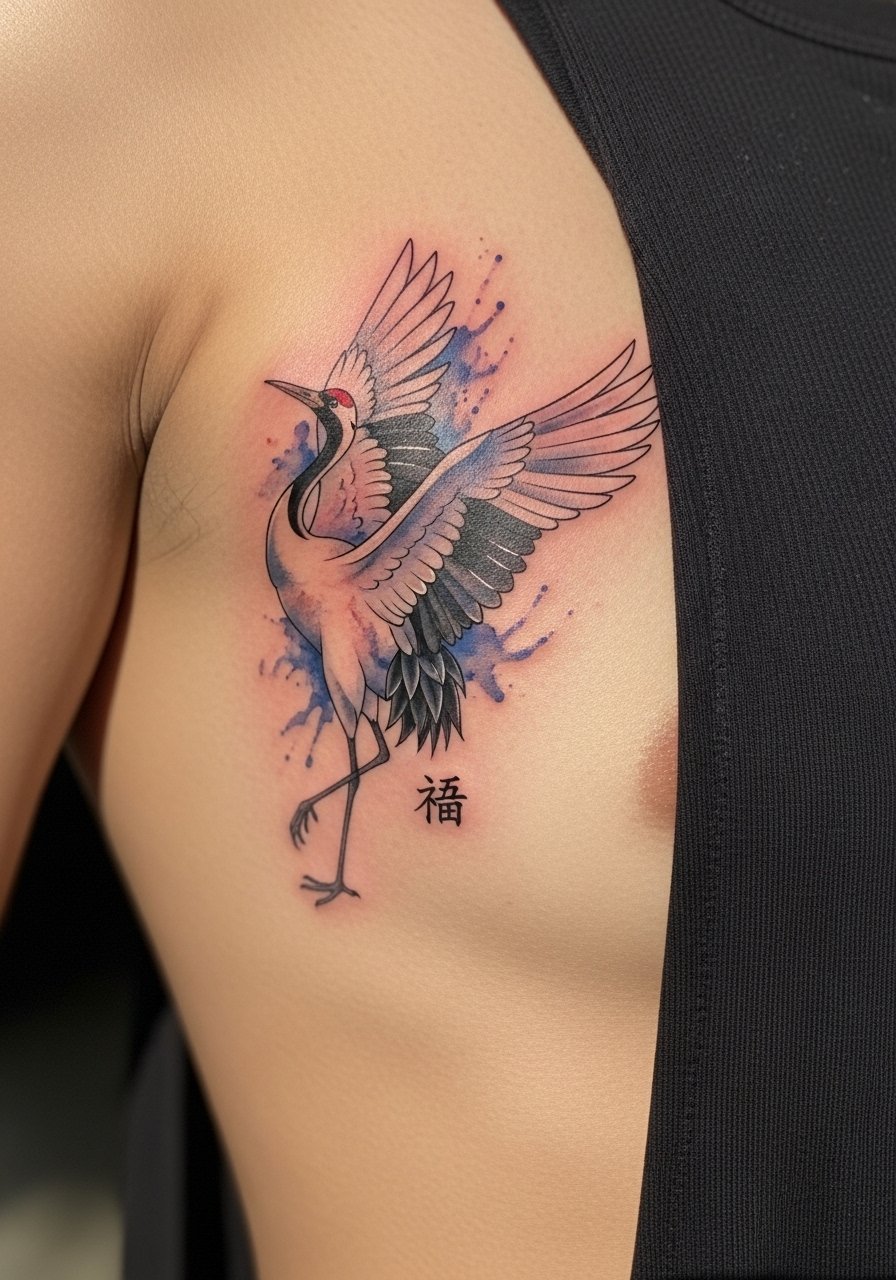
I love the crane for longevity symbolism. Ribcage pain is high but the visual payoff is strong. The watercolor technique here needs an underlying fine-line structure. A mistake is relying solely on bleeding washes. Ask your artist to anchor the crane with subtle fine-line edges and to carefully place the script "缘" at a legible size. Healed, the washes will soften. Keep stretching and heavy cardio light for 48 hours after to avoid excess movement at the site.
15. Seal Script Family Name On Inner Bicep
I recommended this to someone who wanted a private family mark. Inner bicep is moderately painful for most people. The seal script looks bold when scaled properly. A common mistake is making the stamp too narrow. Have your artist increase size slightly and check the stencil with you flexing. Healed, the blockiness keeps clean. If you want an authentic seal feel, ask for a subtle textured fill rather than flat red. I prefer to wait two weeks before heavy lifting.
16. Black Ink Bamboo Vertical on Rib Side
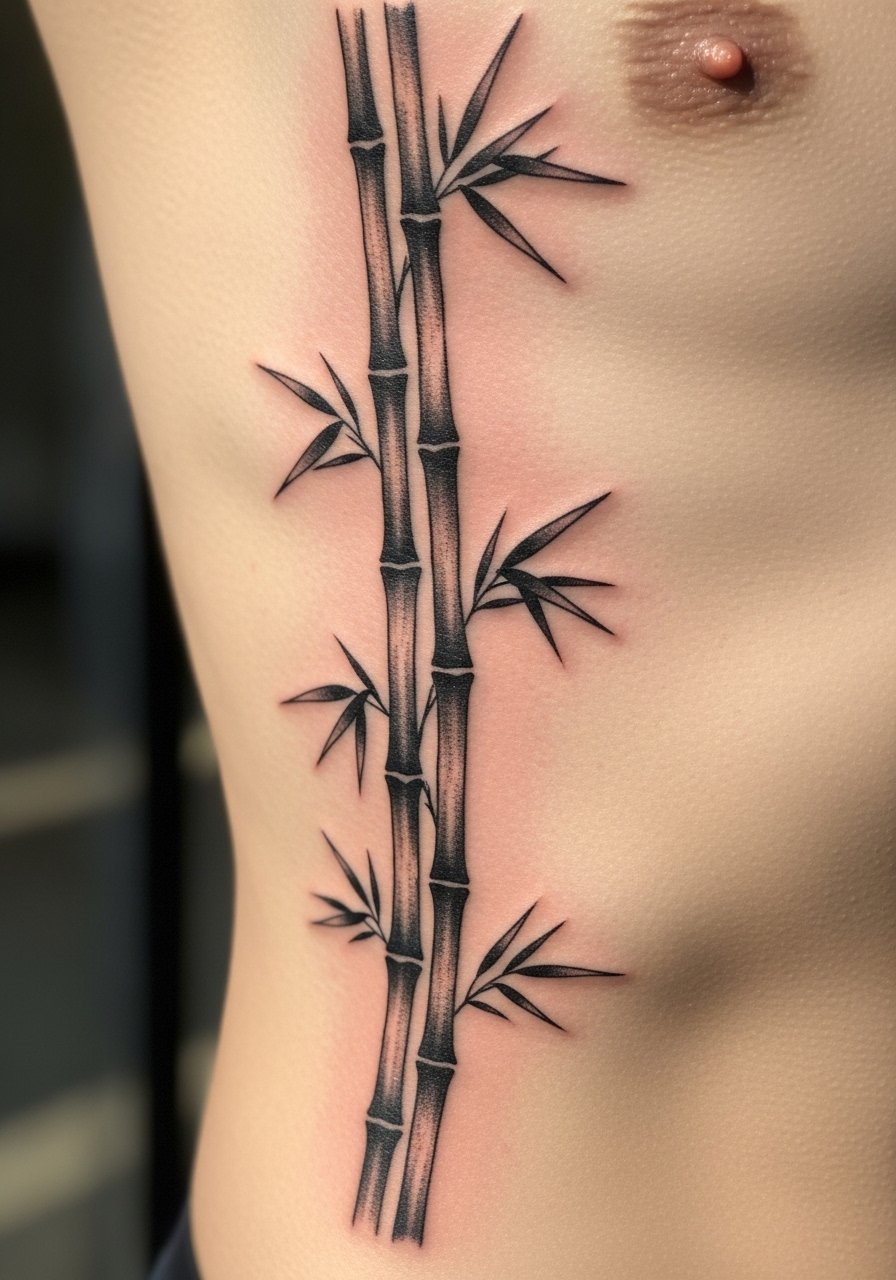
Bamboo reads as resilience. Rib side hurts, painful but worth it for some. The verticality suits the rib curve. Sessions are often split to manage pain. Beware overly intricate leaf detail. From what I've seen, simple clean strokes hold best. Ask your artist for bold main stalks and selective leaf detail. At one year the silhouette remains. This is great if you want a nature motif with clear lines that age well.
17. Red Ink Seal With Name "Luna" On Wrist
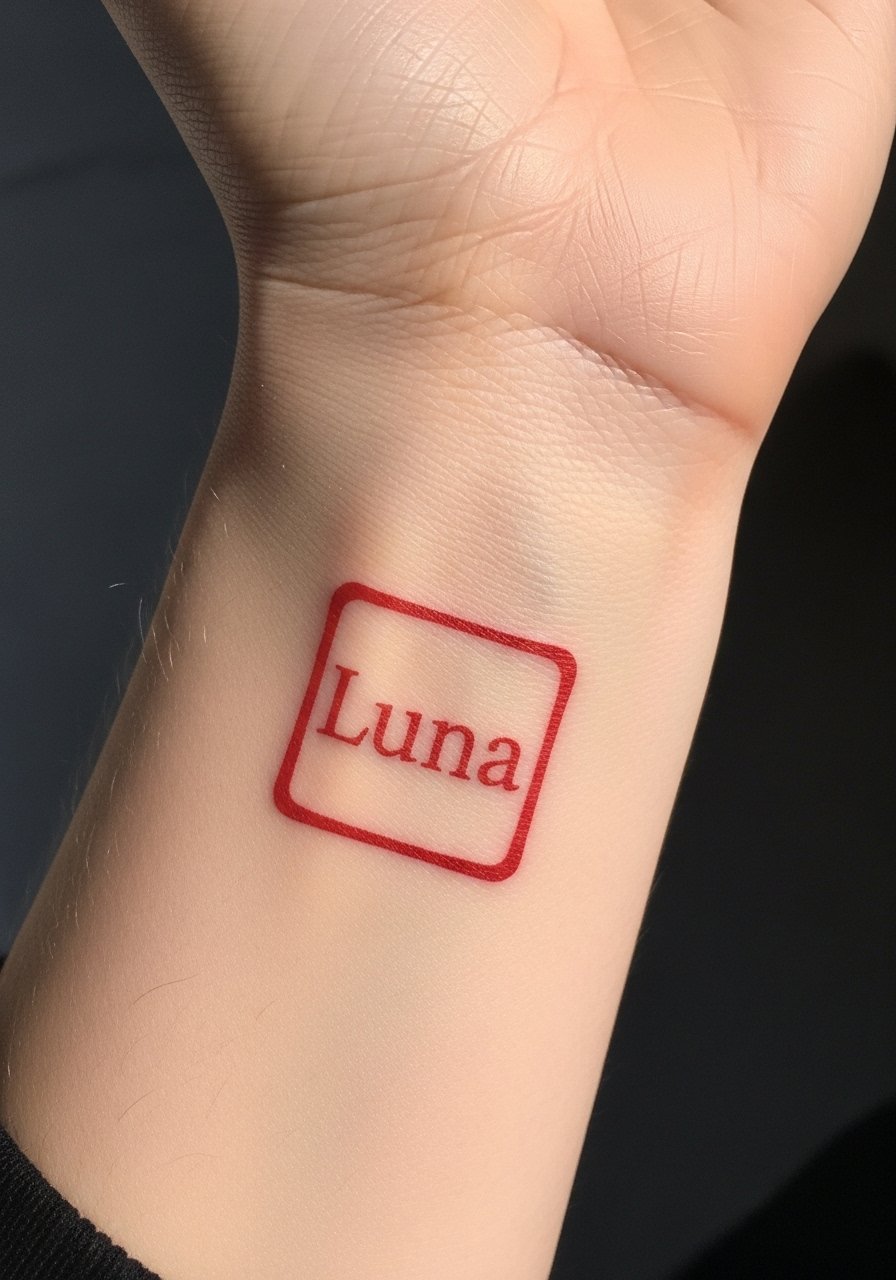
I included a hybrid where Latin script sits inside a Chinese-style seal. Wrist pain is mild. Seal red fades differently than black. The mistake is making the letters too small. Write the name "Luna" clearly when you bring references. Healed, the red softens but keeps the form. Ask for crisp negative space around the letters. If you want strong red, plan on a touch-up after a year.
18. Blackwork Chinese Opera Mask On Upper Back
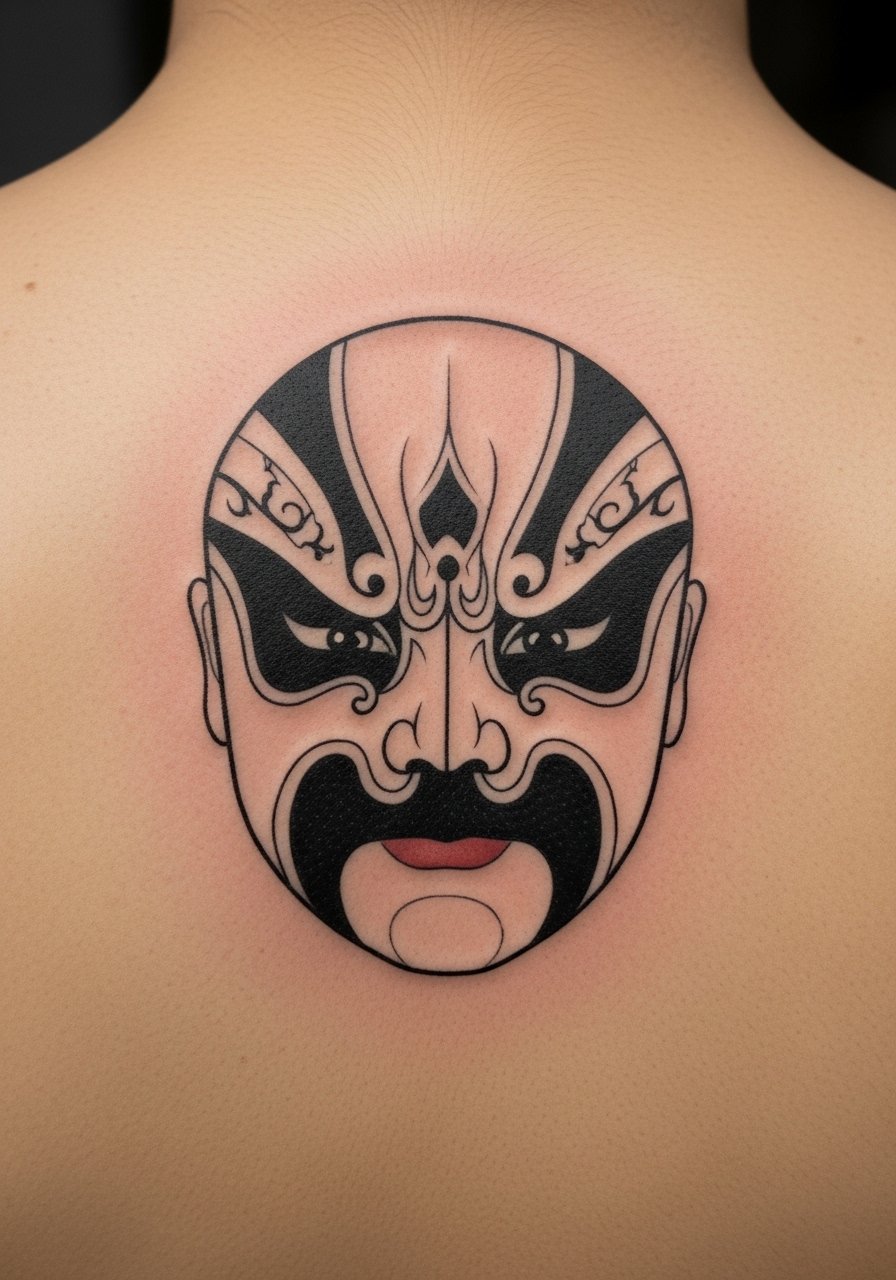
I spotted a Peking opera mask that read like an emblem. The upper back is a forgiving canvas for bold shapes. Pain is low to moderate. Blackwork suits the stylized features of the mask. The common error is adding tiny ornamental lines that blur. Ask your artist to emphasize silhouette and to keep inner detailing slightly larger. This holds up well. At two years the mask's face still reads clearly.
19. Fine Line "愛" Behind Ear In Tiny Script
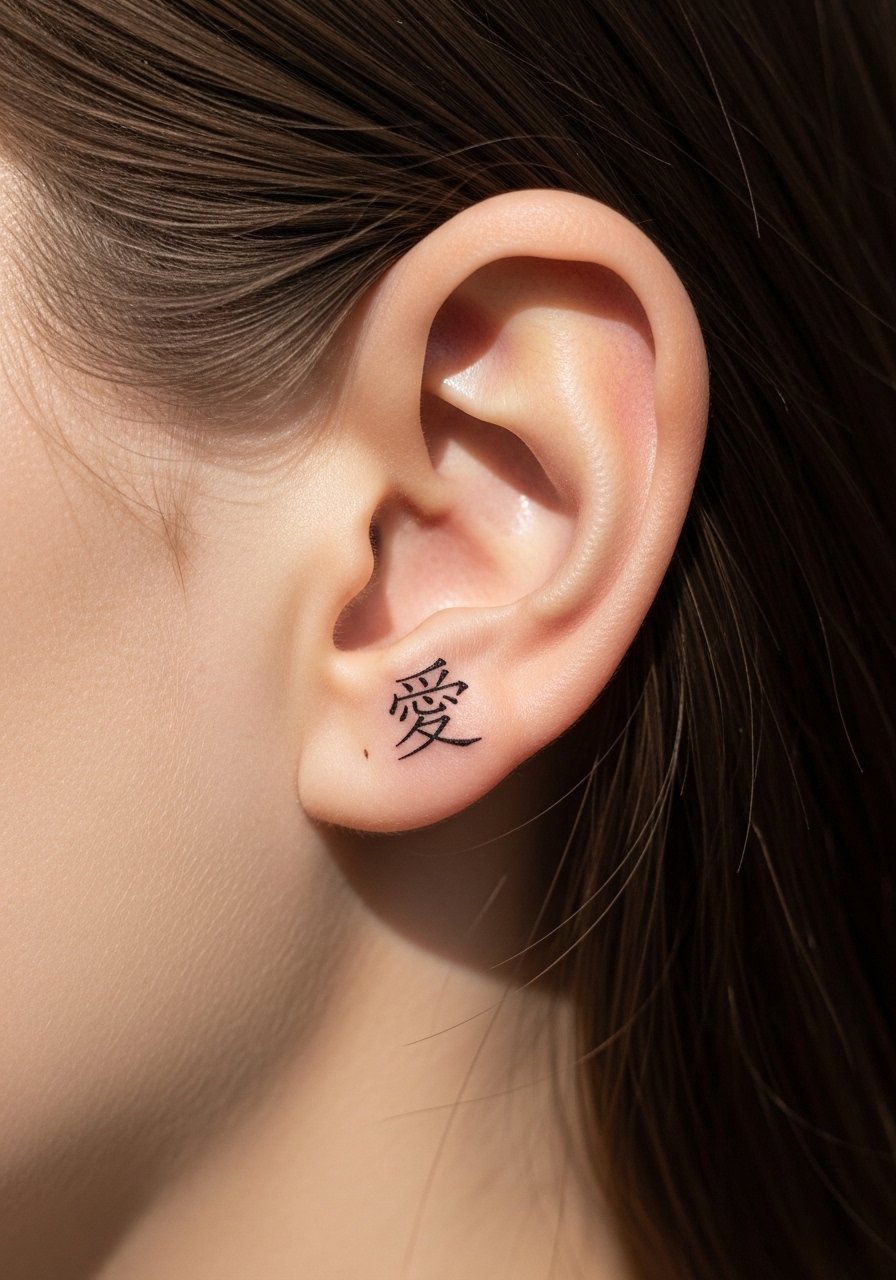
I like tiny behind-ear scripts for private reminders. Pain is sharp but quick. If you want this small, ask for slightly reinforced terminals so the top serif does not vanish. A mistake is requesting a hairline stroke at a micro scale. Healed, the character sits subtle and legible if scaled right. Keep hats and collars away from the area during the first week.
20. Neo-Classic Peony Sleeve On Full Arm
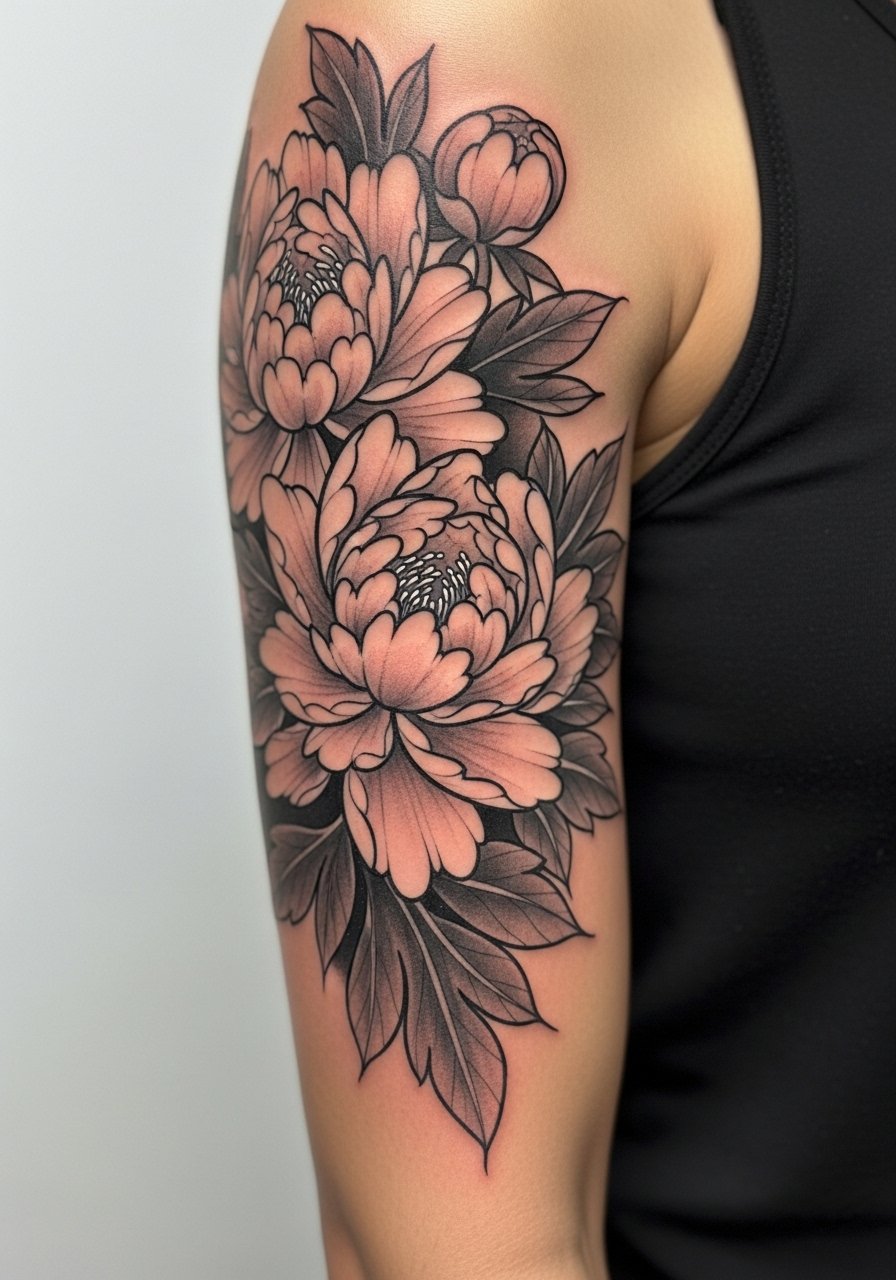
I saw a full-arm peony sleeve that mixed Chinese floral motifs with western composition. The outer arm is tolerable pain and great for a multi-session sleeve. A common mistake is adding too many tiny filigree elements. Ask your artist for a mix of bold floral masses and simplified filler. Healing across multiple sessions needs careful aftercare between appointments. At two years the composition stays readable if outlines are maintained.
21. Small Compass With Chinese Characters On Foot
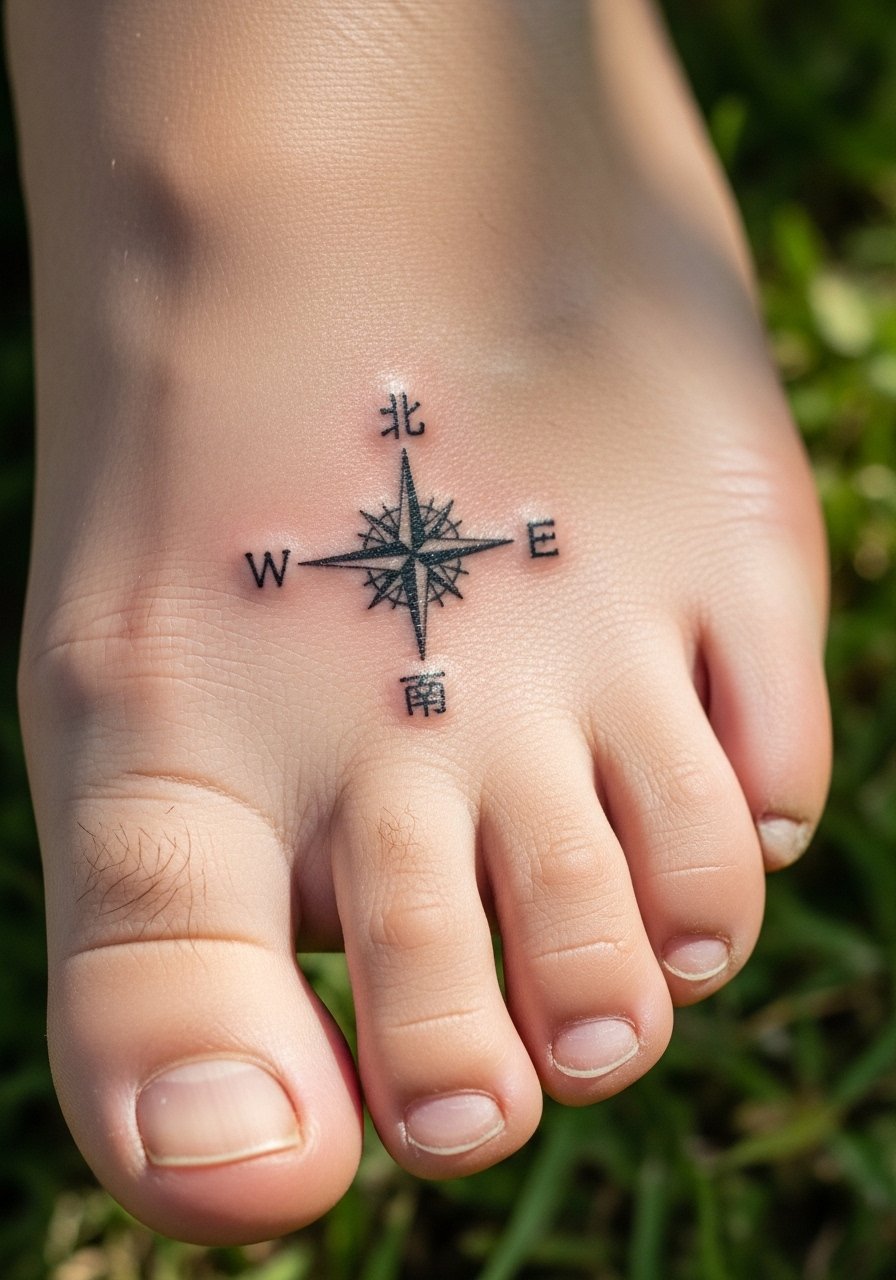
Feet hurt. I tell clients it's a 6 to 7 for me. But I like small symbolic pieces there. The error is placing tiny characters too close to each other. Make each character "北" "东" "南" "西" large enough to survive foot wear. Healed, foot tattoos can blur faster due to friction. Plan for touch-ups and protect with bandaging while shoes are new. Ask the artist to space elements and to advise on healing socks.
22. Dotwork Mountain Range With Chinese Script On Spine
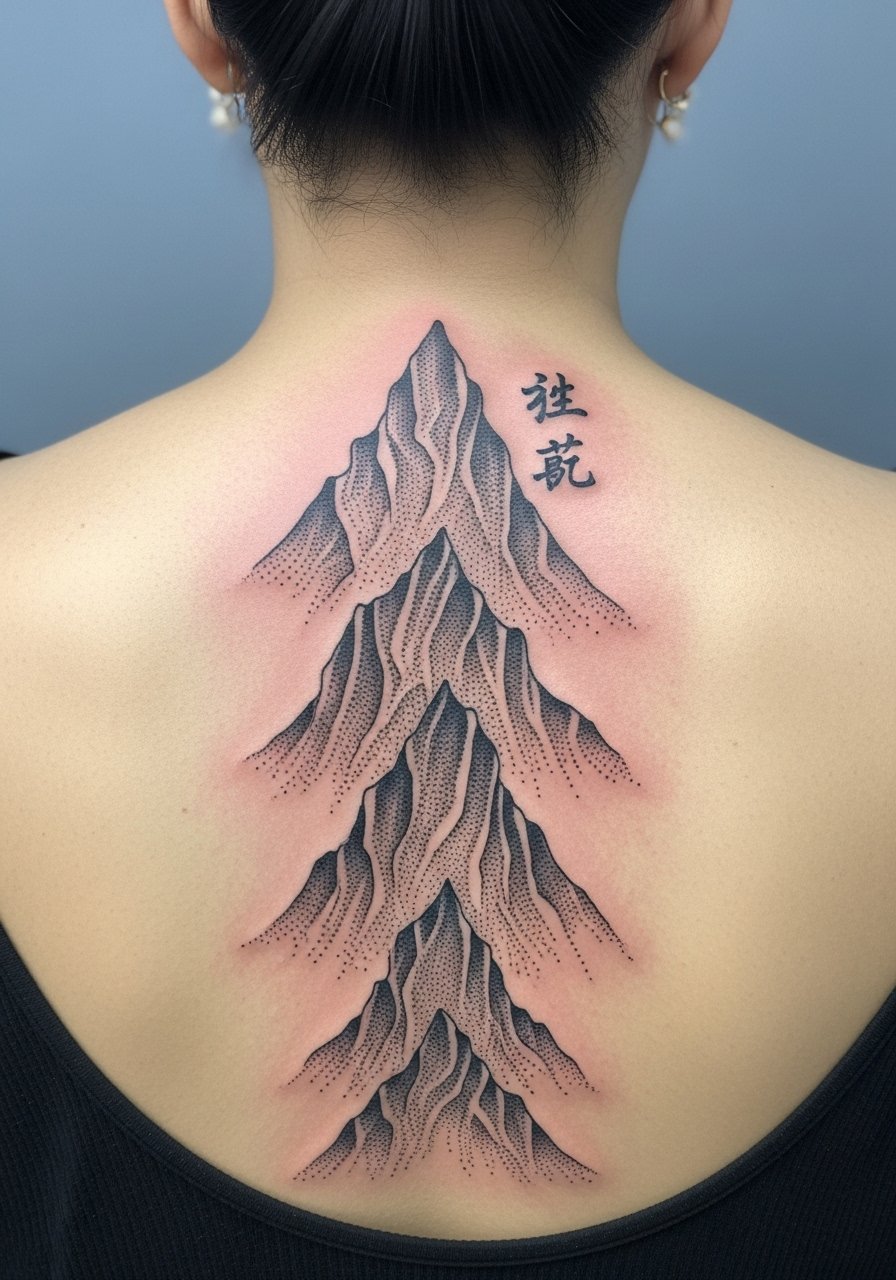
I recommended this to a friend who wanted an understated spiritual piece. Spine work is painful at the bone. Dotwork reads beautifully there because the negative space forms contours. Session time is split. Avoid requesting ultra-dense stippling that creates heavy scab. Ask for gradient dot density and a clear focal top. Healed dotwork can look softer but the overall silhouette remains. For spine placements, plan on layered sessions.
23. Old-School Chinese Map Panel On Thigh
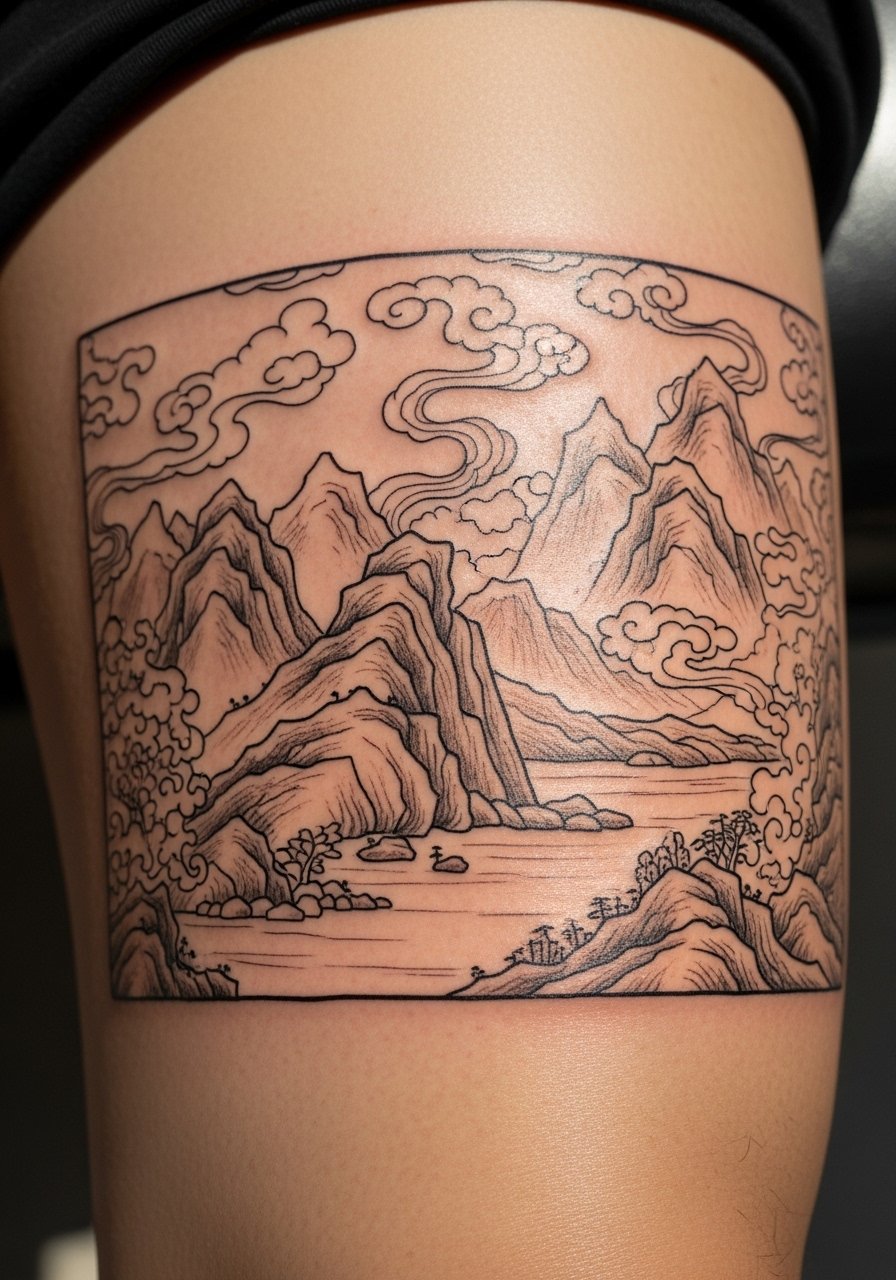
I found this while browsing portfolios of artists who do illustrative pieces. The thigh lets you go wide and detailed without distortion. Pain is moderate. The mistake is tiny linework representing waves and ridges. Ask for bold landform outlines with simplified texture lines. Healed, the map still reads. For larger narrative panels like this, reserve space for breathing room between elements.
24. Small Romanized Pinyin Script "Yuan" On Finger
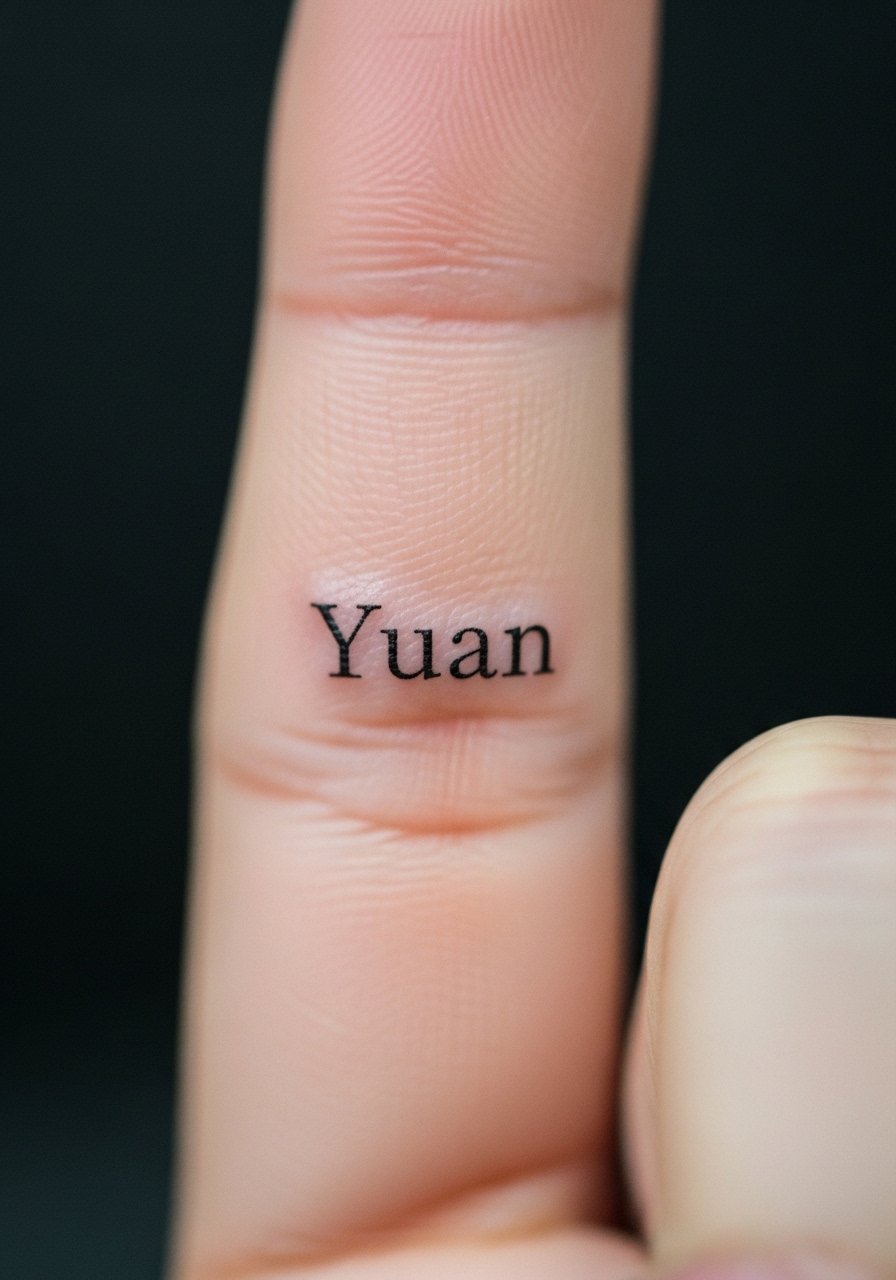
Finger tattoos are notoriously high maintenance. I see many people want a tiny pinyin word like "Yuan" for fate or connection. Pain is sharp and the skin there sheds often. A common mistake is choosing tiny serif lettering that becomes illegible. Ask for slightly thicker lower-case letters and accept that finger work often needs touch-ups after a year. Keep the design simple and avoid heavy shading on fingers.
Tattoo Prep and Aftercare Essentials
- Aquaphor Healing Ointment, 14oz tube. Industry standard for first 3 to 5 days. I use a thin layer at night.
- Saniderm Transparent Adhesive Bandage, 6-inch roll. Second skin healing method. Every artist I've talked to recommends it for the first 24 to 72 hours.
- CeraVe Fragrance-Free Moisturizing Lotion 16 oz. Daily moisturizer for days 4 to 14. I prefer the pump bottle for hygiene.
- Dr. Bronner's Unscented Castile Soap 32 oz. Gentle cleanser for rinsing twice a day the first week. Dilute a small drop with water.
- Hustle Butter Deluxe 5 oz. Vegan option that helps during healing and for long-term skin hydration.
- Mad Rabbit Tattoo Balm 2 oz. Long-term maintenance for vibrancy. Artists I know recommend it for healed pieces.
- SPF 50 Sunscreen Stick Travel Size. Use on healed tattoos whenever they see sun. I carry one for beach days.
- Numbing Cream 5% Lidocaine 30g. Apply 30 to 45 minutes before your session only if your artist approves. Some artists prefer no numbing.
- Saniderm Starter Packs 3 Pack. Good if your artist supports second-skin healing for larger pieces.
- Hydrocolloid Bandages Large 10 Pack. Useful for spot protection and flare-ups during healing.
- Tattoo Stencil Transfer Paper A4 Pack. If you want to test placement at home before your appointment.
- Fragrance-Free Antibacterial Soap Bar 4 oz. Handy for travel and short trips during the first week.
Frequently Asked Questions
Q: Will fine line Chinese characters blur into unreadable marks if I get a full sleeve of them?
A: From what I've seen, fine line characters blur faster when too many are packed tightly. For a sleeve, I tell clients to increase character scale slightly and to mix in negative space and bolder stroke characters. Ask your artist for varied line weight across the sleeve so focal characters remain crisp at two years.
Q: Do watercolor-style Chinese flowers need different aftercare than traditional blackwork?
A: In my experience, watercolor pieces heal similarly at first. The main difference is you should avoid heavy exfoliation on watercolor pieces for longer because pigment sits more in the upper dermis. Use a fragrance-free moisturizer like CeraVe Fragrance-Free Moisturizing Lotion 16 oz after peeling. I also carry a sunscreen stick for healed watercolor to limit fading.
Q: For ribcage calligraphy, how many sessions and how long until healed enough to swim?
A: Most ribcage calligraphy fits in one session of one to two hours. From what I've been told by artists, wait at least two weeks before swimming in chlorinated pools or the ocean. I usually recommend waiting until scabs are fully gone and the skin is smooth to the touch, often around three weeks for ribs due to movement.
Q: Should I use Saniderm on a seal-stamp style wrist tattoo?
A: I've noticed many artists recommend Saniderm for wrist seals because it prevents excessive rubbing and reduces scab thickness. If your artist approves, apply it for 24 to 72 hours and then switch to a gentle cleanser and a thin layer of healing ointment at night.
Q: How do I tell my artist I want an authentic seal script look without cultural mistakes?
A: Bring clear references of the exact seal characters you want. I've found artists appreciate when clients specify the precise characters and the historical style, like seal script versus clerical script. Ask for a stencil preview and request small adjustments. If cultural accuracy matters, mention that you want the characters verified. Some studios will consult a calligrapher for complex phrases.
Q: Will finger and wrist Chinese script survive without touch-ups?
A: From what I've observed, fingers and wrists face higher friction and often need touch-ups within 12 to 18 months. If you want longevity, accept slightly larger scale and thicker strokes. Use a fragrance-free lotion while healing and avoid constant rubbing. If you want alternatives, consider inner forearm placement for similar visibility but better retention.
Q: What should I ask about when booking a micro-realism ancestor portrait in Chinese style?
A: Ask how many hours the artist expects and whether they prefer a high-resolution photo. I always bring multiple photos showing different angles. Request a focus point, like eyes, to be rendered with the sharpest contrast. Also ask about touch-up policy for portraits because tiny detail can soften over time.