I spent months bookmarking lion tattoos before I actually committed to one. The problem I kept running into was knowing which style would still look good after two years, not just the day it was fresh. What follows are 27 lion tattoo ideas that I vetted by talking to artists, seeing healed pieces, and testing what ages well on real skin.
This list focuses on styles that read well in a room, placements that work for both first-timers and collectors, and ideas that age gracefully. I leaned into fine line, blackwork, micro-realism, and a few unexpected angles artists are starting to push in 2026. From what I've seen, placement choices make or break how lion designs look over time.
1. Traditional Lion Bust on Chest
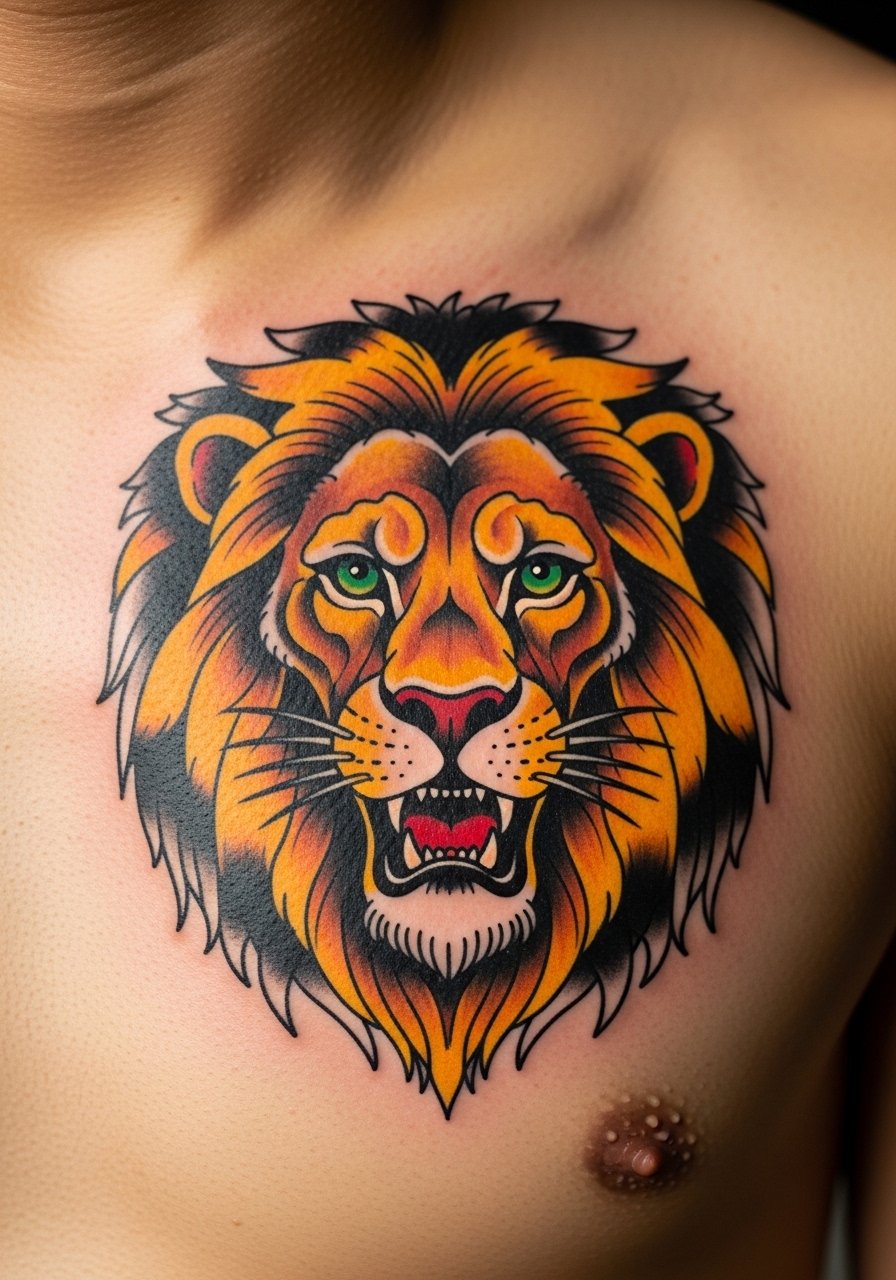
I first saw this on a friend who wanted something that still read through shirts. Traditional line weight and saturated color give strong contrast. Chest feels like a 5 out of 10 on my pain scale. Expect a single 2 to 4 hour session for a medium bust. Tell your artist you want bold outlines and solid black fills so the lion stays legible when healed. A common mistake is making the face too small on the chest. If the face is tiny it loses detail as it fades. Healed looks keep the mane bold, but color can soften after two years if you skip sunscreen.
2. Fine Line Lion Portrait on Inner Forearm
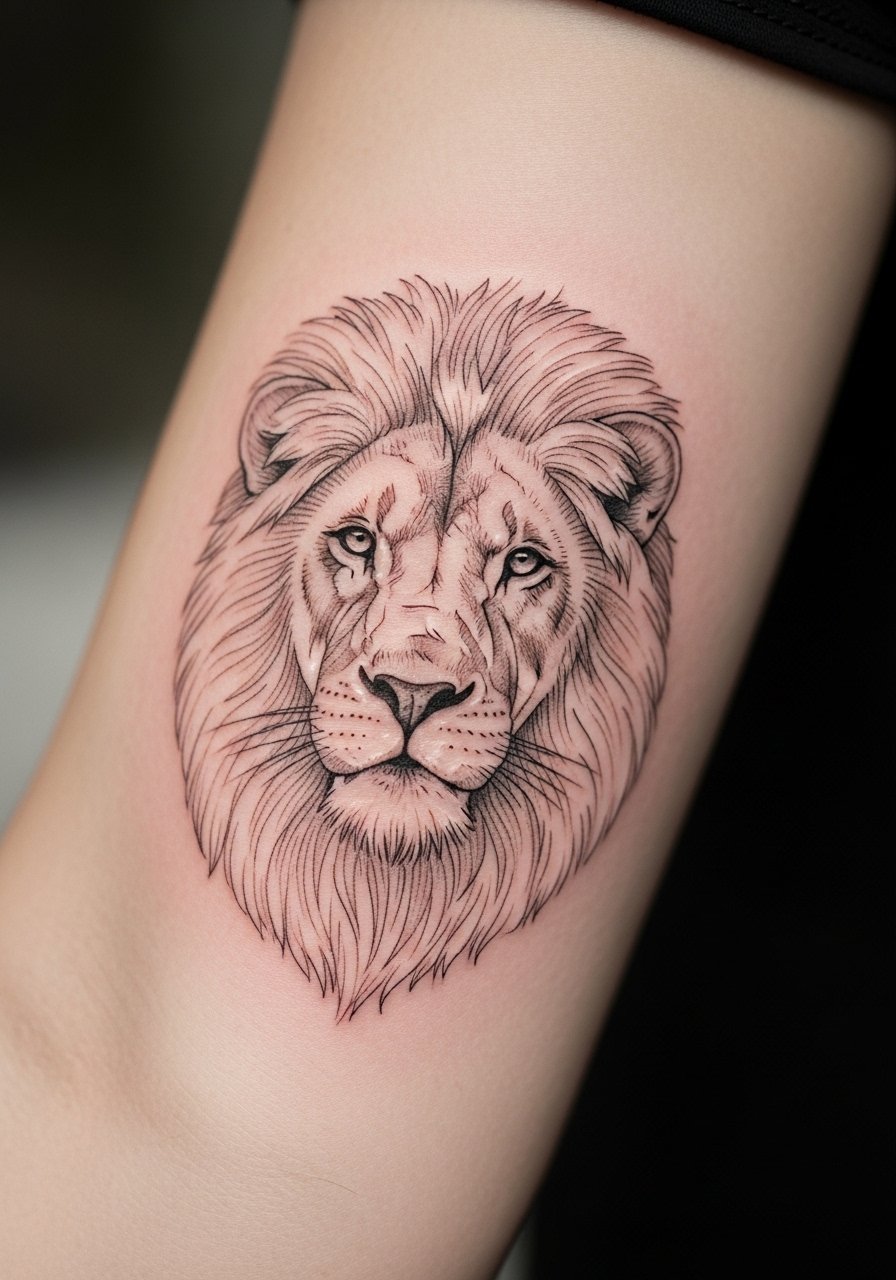
I noticed fine line portraits can be fragile if drawn too thin. For the inner forearm I asked my artist for slightly heavier hair strokes. Pain is low, about a 3 out of 10, so you can go detailed in one session under two hours. Ask for reference photos showing the exact line weight you want. Many people request ultra-fine detail and end up with blurring at two years. This version keeps contrast by mixing fine hair strokes and medium-weight contour lines. It heals with soft edges, so expect crisper look fresh and a slightly softer appearance after the first year.
3. Blackwork Geometric Lion on Upper Back
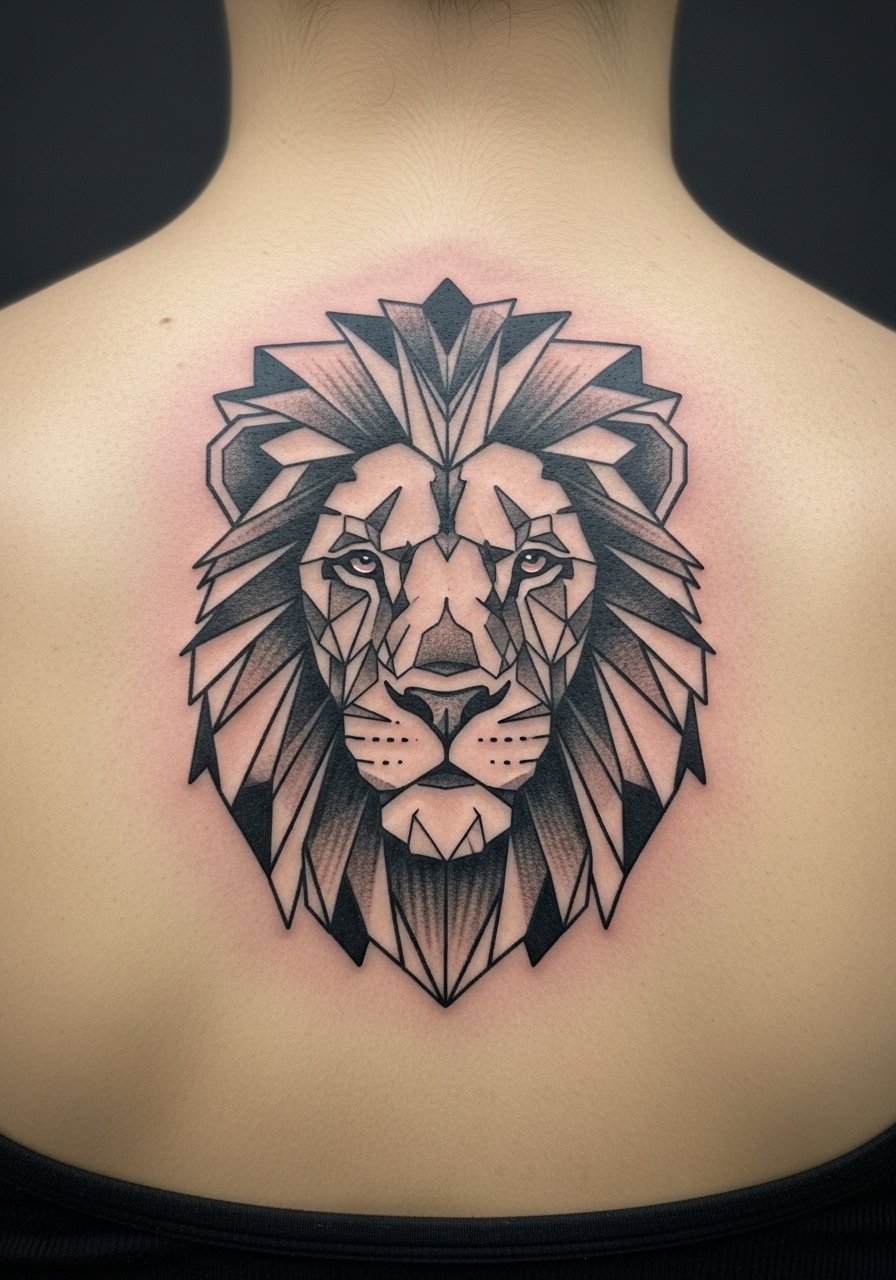
I first saw geometric lions at a convention and liked how they read at a distance. Upper back tolerates large black fills without worrying about movement. Pain is moderate, around 5 out of 10 for me, and expect a 3 to 5 hour session depending on size. Tell your artist you want clean negative space and crisp intersections. People often request tiny geometric panels and regret it because lines need breathing room. Healed, the black holds well, but small parallel lines on fleshy areas can merge over time. This style is great if you want bold, long-lasting contrast.
4. Micro-Realism Lion Cub on Inner Wrist
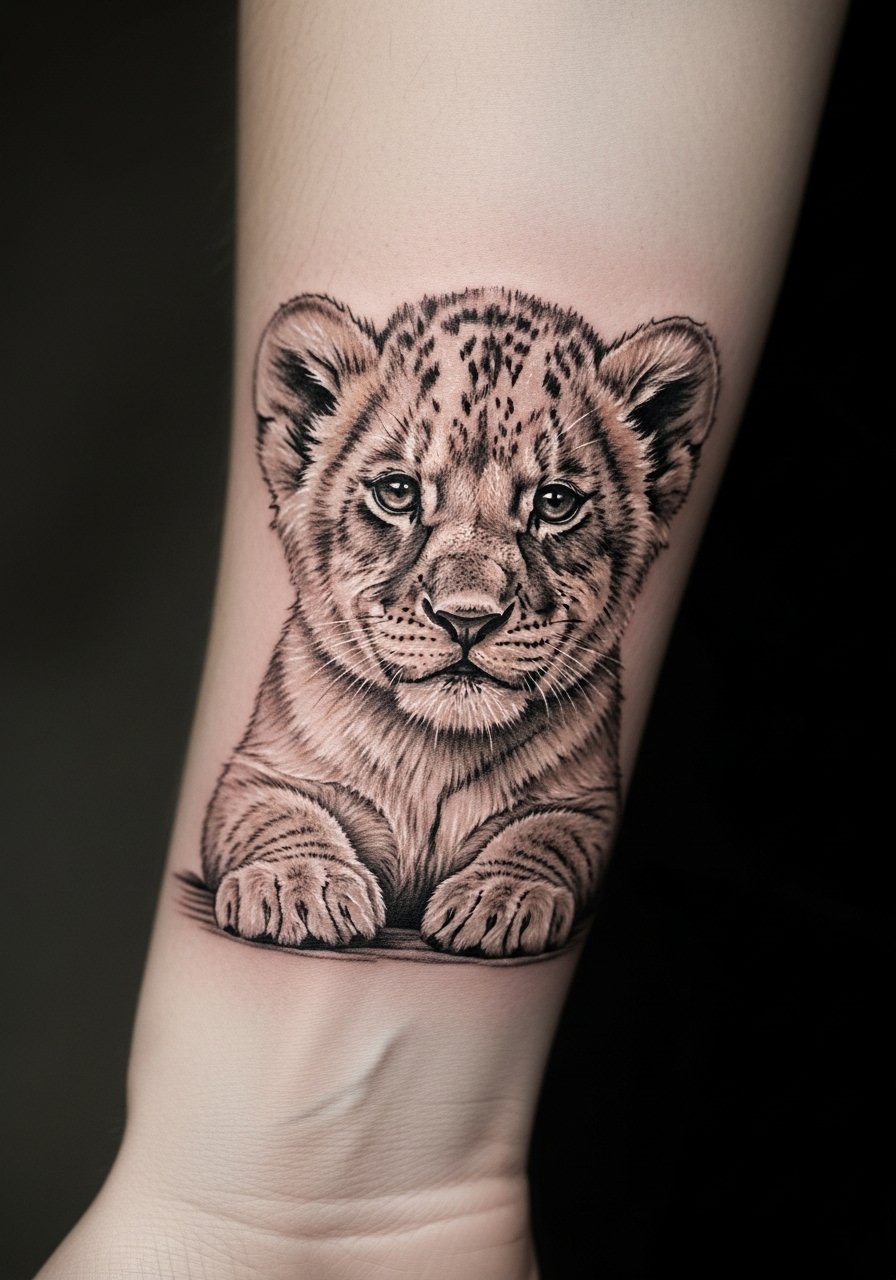
Fair warning, wrist tattoos are one of the trickier placements for micro-realism because skin moves. The wrist pain hits around 6 out of 10 for me. A small cub takes 1 to 2 hours. Ask your artist to slightly simplify tiny facial features so they do not blob as they heal. A common mistake is squeezing too much facial detail into a small wrist piece. At six months you will see softness that wasn't there fresh. If you want a small, intimate piece, this is a great pick, but expect touch-ups at year two.
5. Dotwork Mandala Lion on Ribcage
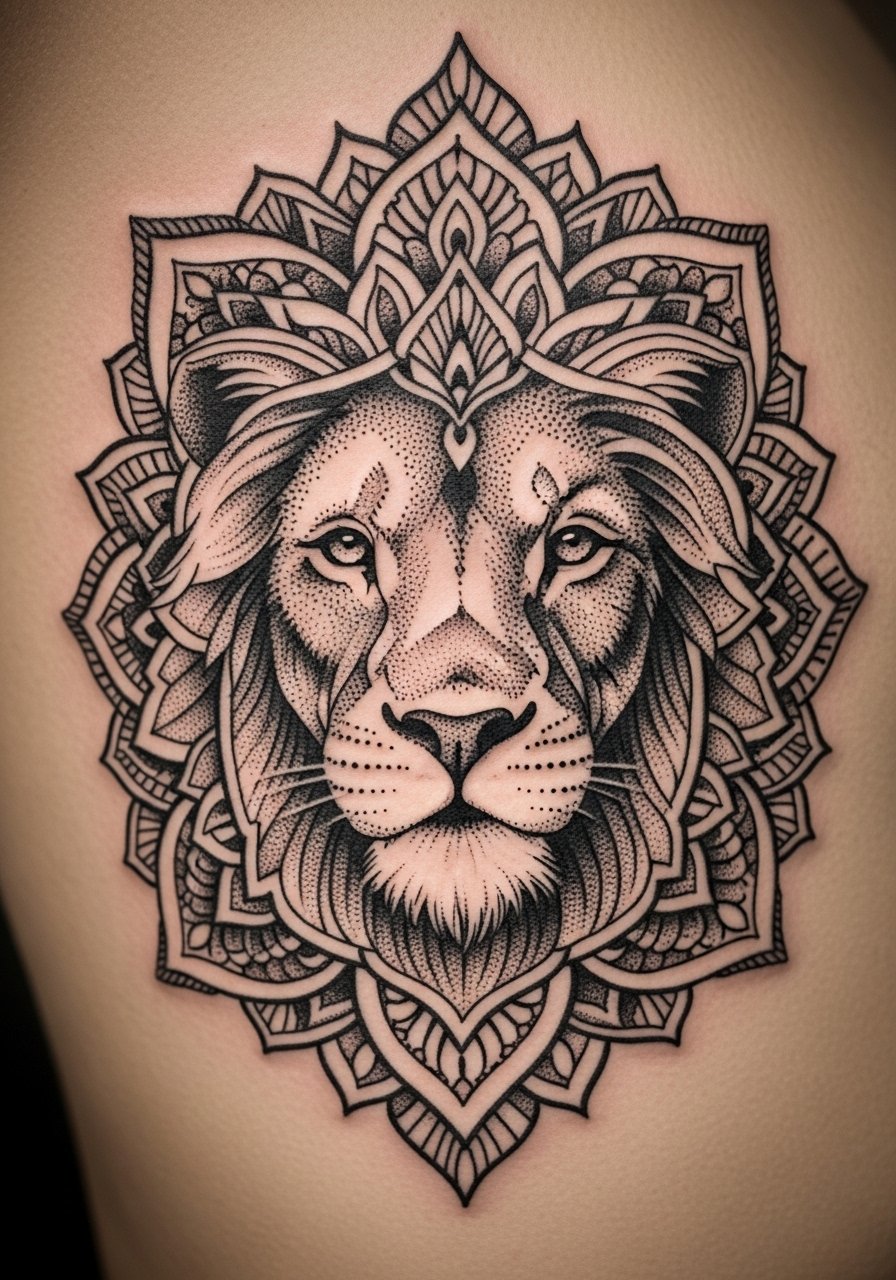
Fair warning about ribcage pain. I rate it an 8 out of 10. The result is worth it if you want a statement that hides under clothes. Dotwork stippling needs patience in the session and often fits into 2 to 4 hours or multiple sittings. Tell your artist you prefer denser dots in shadows and lighter dots in highlights so it ages with subtle texture. A mistake I see is starting with overly tight dot density. If dots sit too close they can merge after a year. Healed, stipple lines soften but still read as texture if done with spacing in mind.
6. Minimalist Line Lion Behind Ear
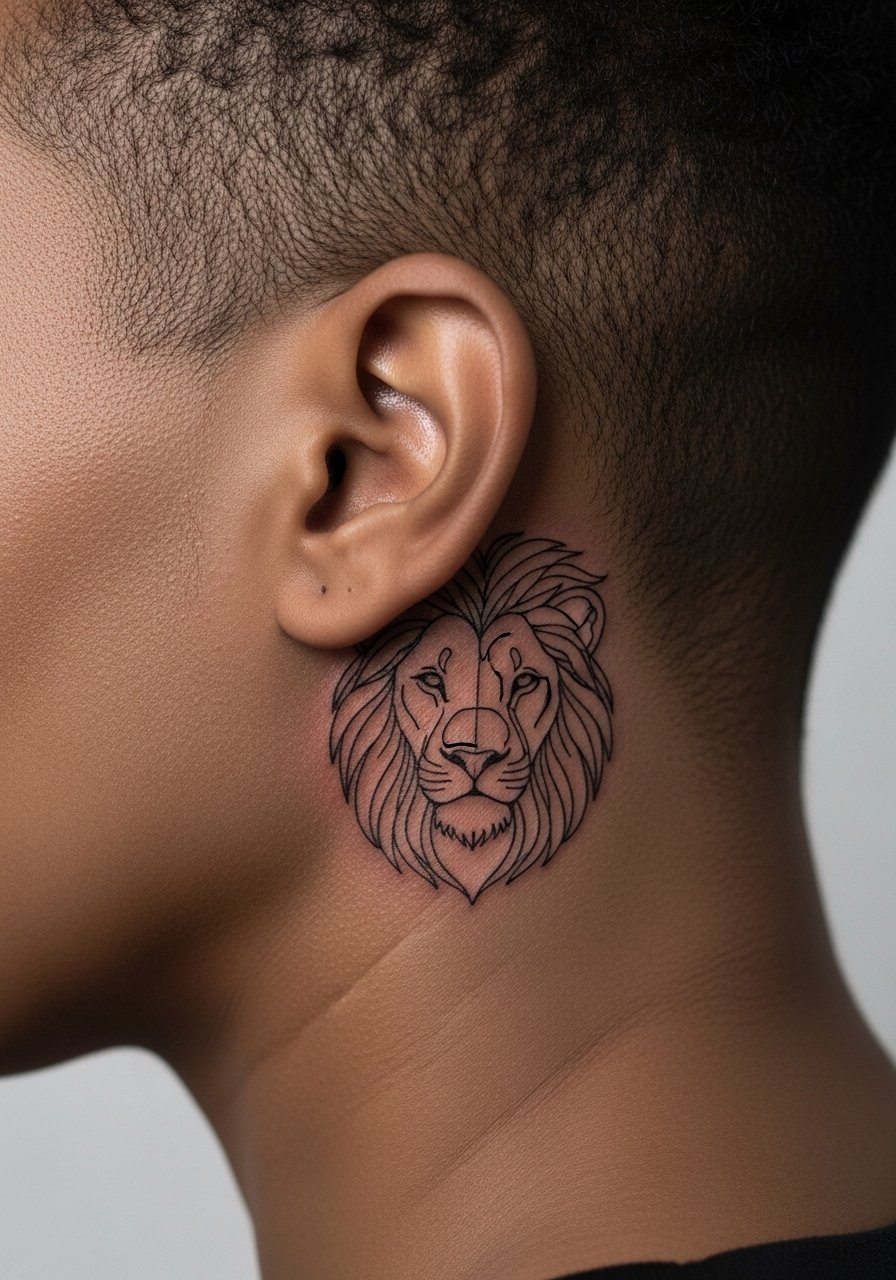
I first tried a small behind-the-ear lion as a test of commitment. Pain is short and sharp, about 4 out of 10. This piece can be done in under an hour. Ask for slightly heavier single-line weight than you think you need. The most common mistake is choosing too thin a stroke. Thin single lines can vanish into skin texture after 6 to 12 months. For this placement, keep the design very small but bold enough to stay legible. It looks crisp fresh and settles into a softer ribbon after a year.
7. Neo-Traditional Lion With Floral Mane on Thigh
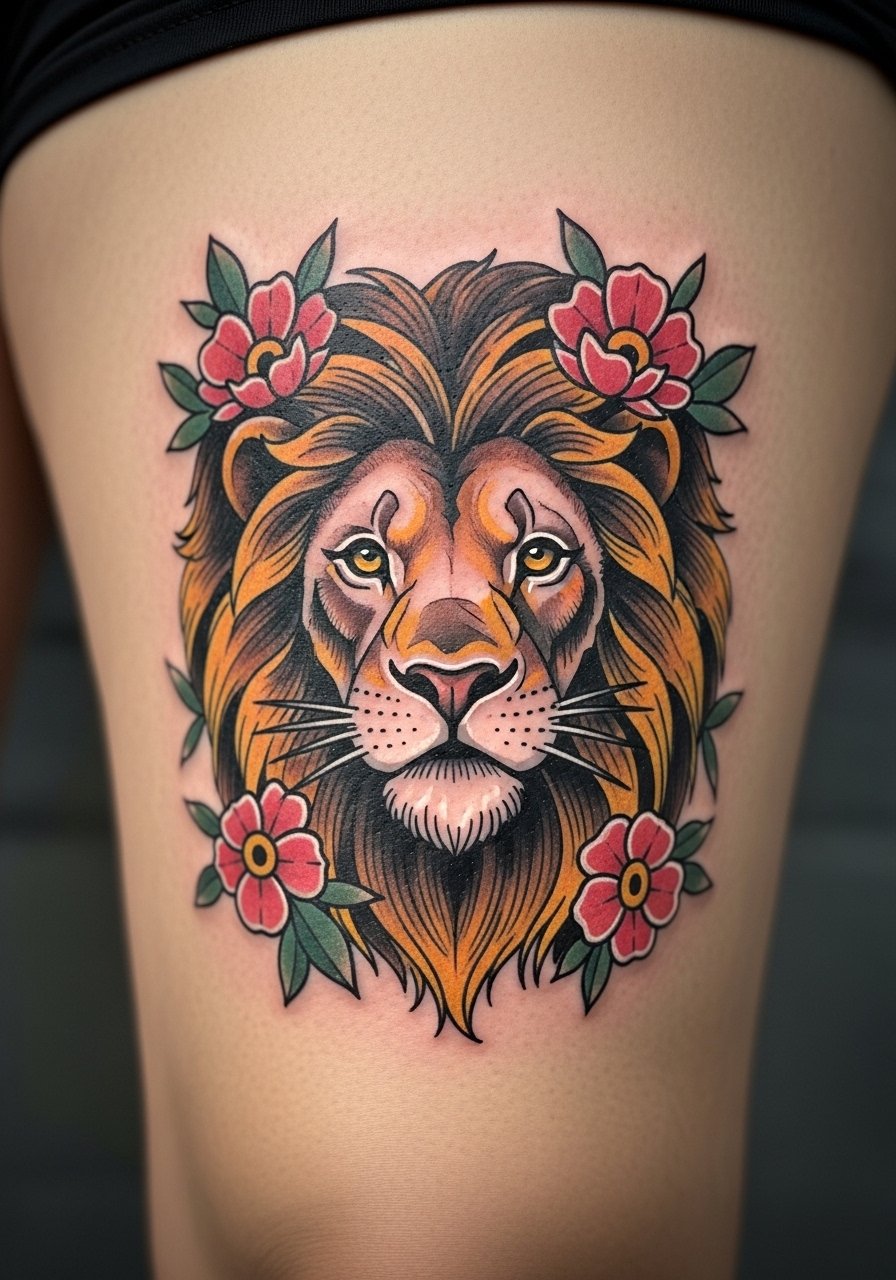
I saw this on someone who wanted classical symbolism with feminine accents. The thigh tolerates color well. Pain is a 4 out of 10 and a medium piece runs 2 to 5 hours. Tell your artist specific flowers you like and the color saturation you want. A common error is packing too many small petals. Tiny floral details can blur. Healed color tends to soften, but solid color blocks hold well on the thigh if you use sunscreen when exposed. This style gives dramatic visual impact while aging gracefully.
8. Split-Realism Lion and Skull on Upper Arm
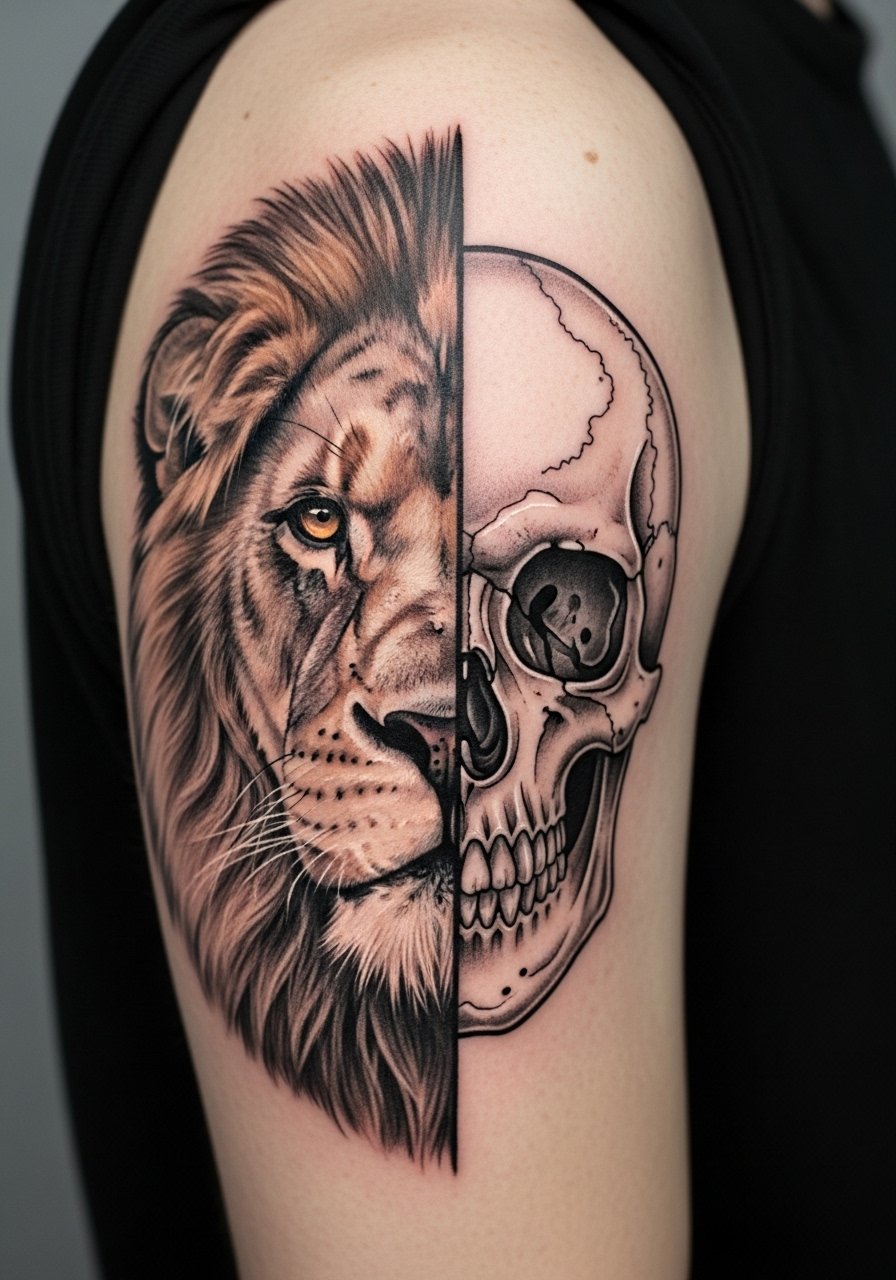
I love split realism because it plays with contrast. Upper arm is forgiving, pain around 4. This piece usually needs a 3 to 5 hour session or two. During consultation, show your artist the level of facial detail you want on the lion side and how you want the skull stylized. A common mistake is mismatched shading styles. If realism and stylized elements are at odds the piece feels disjointed. Healed, realistic shading softens and the skull remains graphic, so plan for a slightly softer portrait after one year.
9. Fine Line Crowned Lion on Sternum
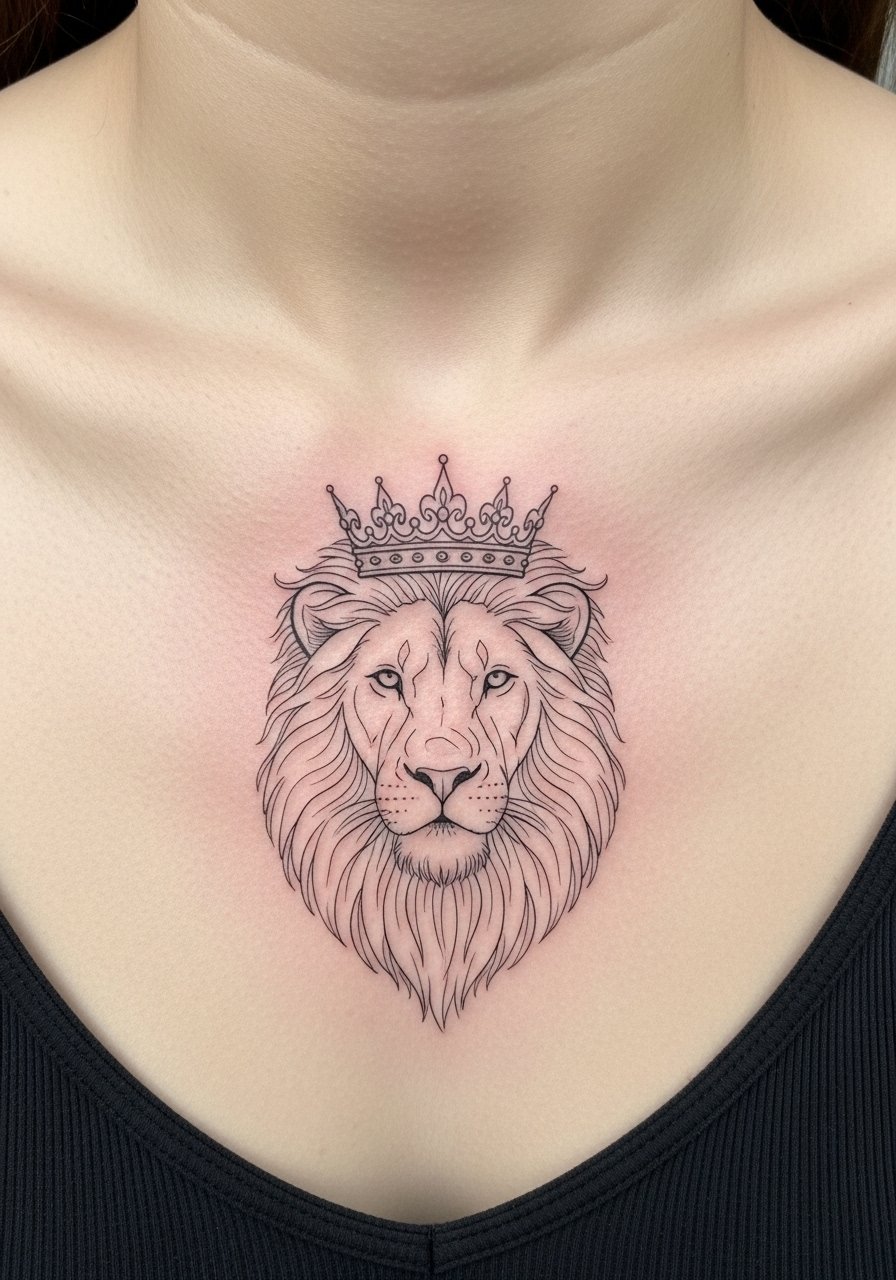
Sternum tattoos are a higher pain area. I rate it a 7 out of 10. Fine line crowned designs read regal but need careful spacing to avoid blurring over the breastbone. Expect 2 to 3 hours. Tell your artist you want contrast between crown details and mane strokes. A common mistake is placing too many micro details in the crown. Those tiny jewels often become indistinct. After six months the overall look softens. If you want crisp ornamentation, plan for a slightly bolder crown than the initial concept.
10. Geometric Negative Space Lion on Calf
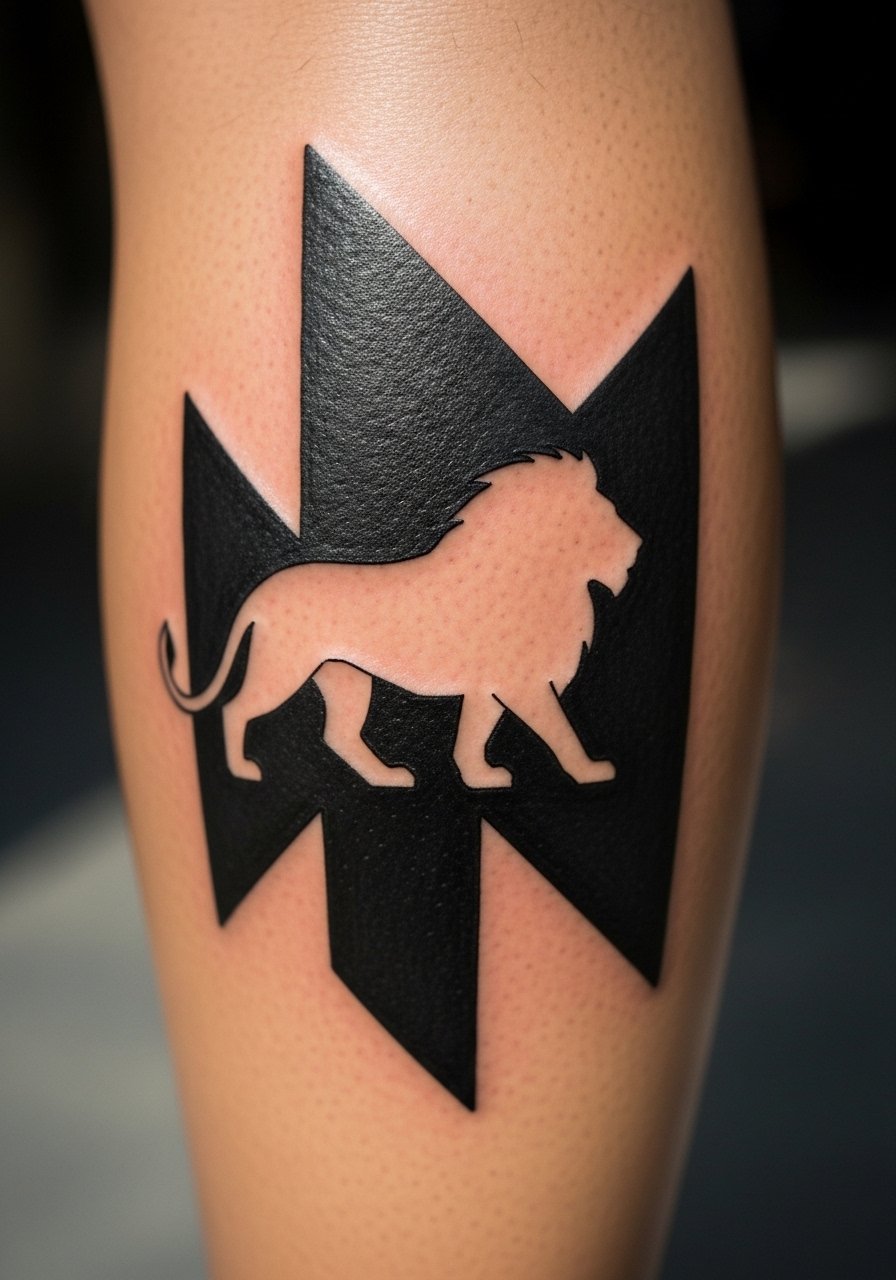
I recommend the calf for geometric pieces because it holds flat and heals predictably. Pain is about 4. Most projects fit into 2 to 3 hours. Ask your artist to map negative spaces on skin before inking so the silhouette balances. A mistake I see often is making the negative space too narrow between black blocks. Those gaps can fill in over time. Healed, the blackwork remains bold but small tightly packed elements may soften, so keep shapes substantial.
11. Watercolor Mane Accent With Black Lion Face on Shoulder
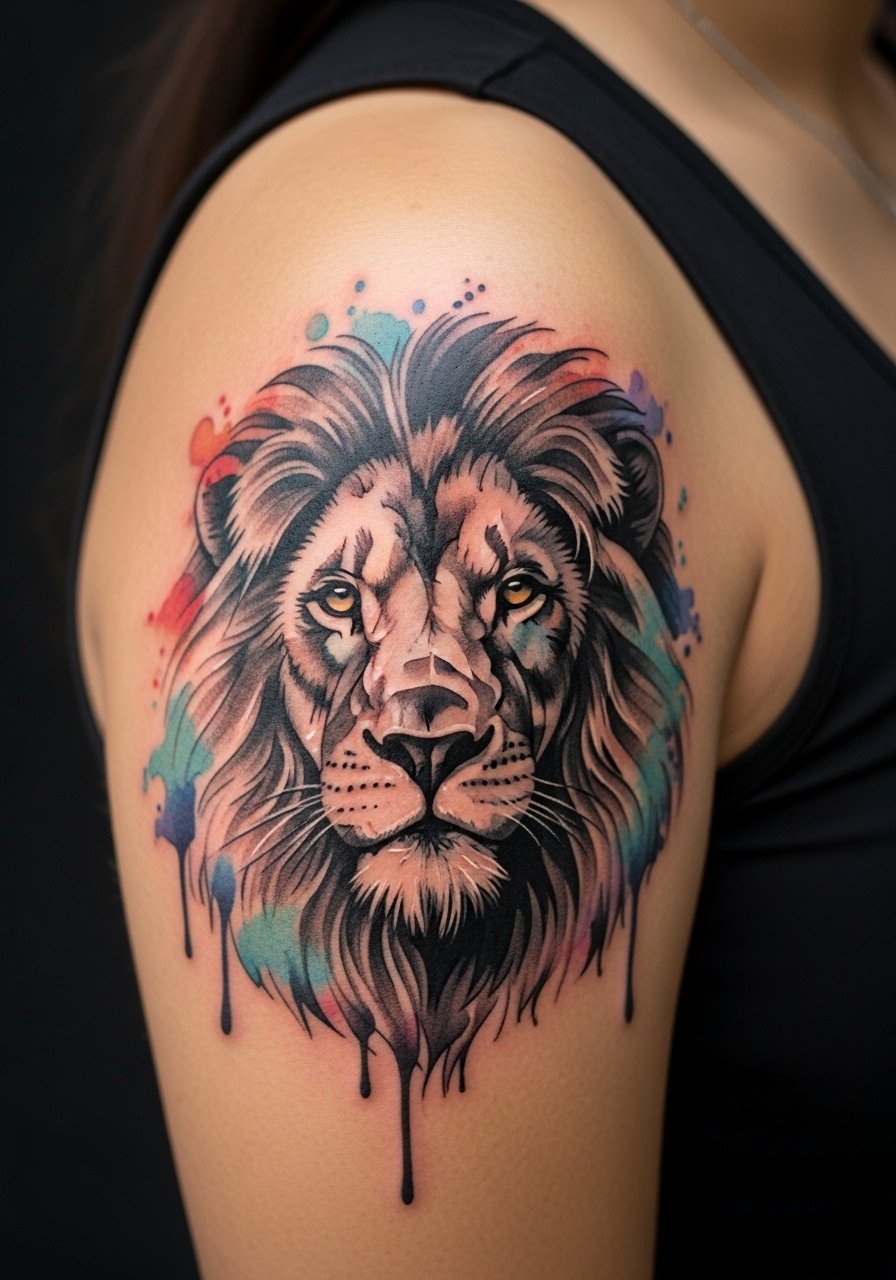
I love watercolor accents when paired with solid black portraits. Shoulder pain is moderate, around 4. A single session of 2 to 3 hours will do for medium pieces. Tell the artist you want the watercolor to sit behind the black so it reads as accent, not overload. The common mistake is over-saturating with watercolor. Those pigments tend to fade spotty after a year. Healed, the black preserves contrast while the watercolor becomes a soft wash. I recommend a touch-up in year two if you want the color vibrant.
12. Micro-Realism Eye of a Lion on Collarbone
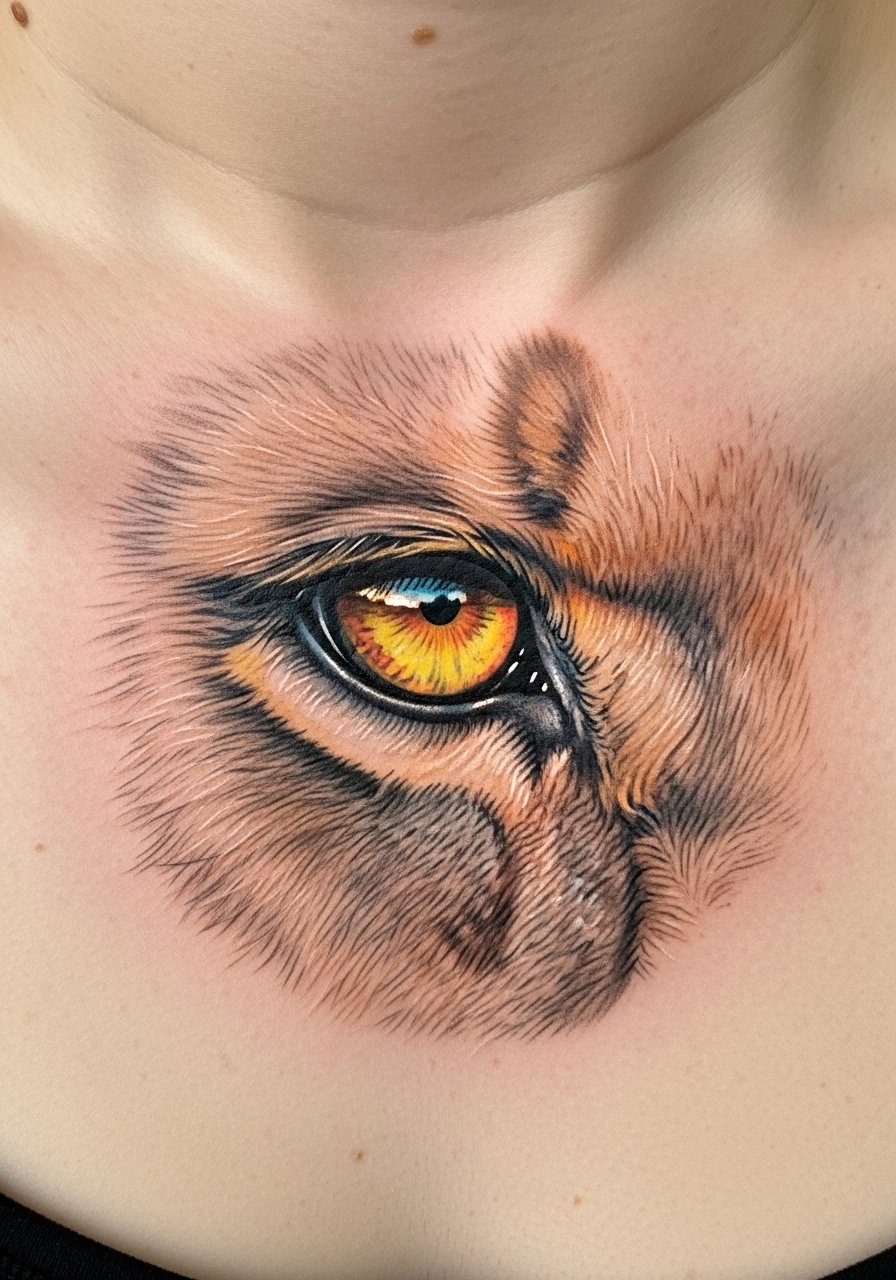
Collarbone is a sensitive zone, pain near 6 out of 10. An eye-sized micro-realism piece is a 1 to 2 hour session. For consultation bring extreme close-up references. The main mistake is asking for hyperfine detail that does not translate well on thin skin. Healed, sharpness will soften in highlights and darks remain, so expect a small loss of midtone contrast. This placement gives an intense, watchful result that still reads after healing if kept slightly simplified.
13. Blackwork Mane Sleeve on Full Arm
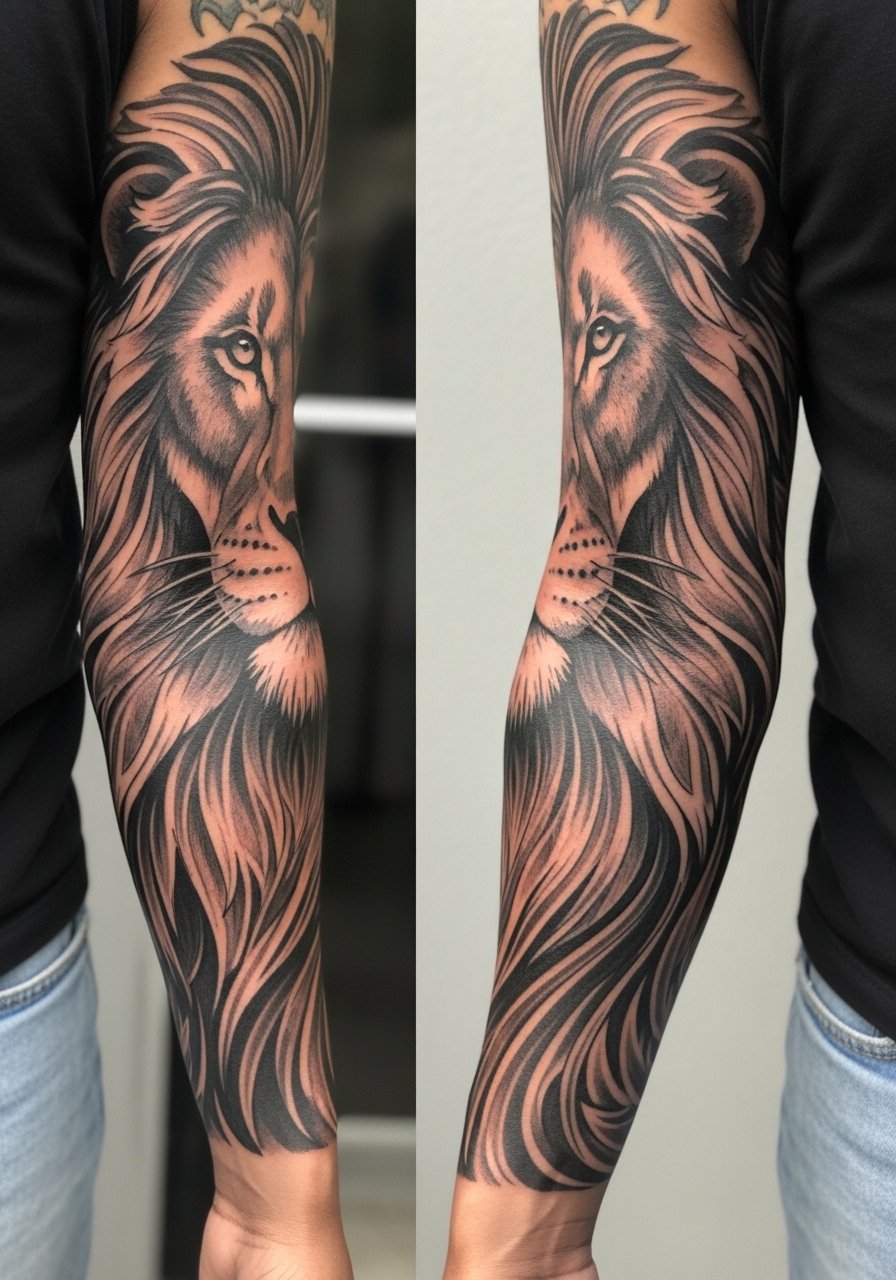
I watched an artist build one of these over three sessions. Full arm sleeves need planning and time. Pain varies across the arm from 3 to 7 out of 10. This is a multi-session job, often 6 to 12 hours total. Tell your artist your vision for negative space and flow so the mane wraps the arm. A mistake I see is inconsistent line weight across sessions. That makes the sleeve patchy. Healed, rich blackwork holds longest. Keep it out of prolonged sun to prevent patchy fading.
14. Neo-Japanese Lion With Wind Bars on Back
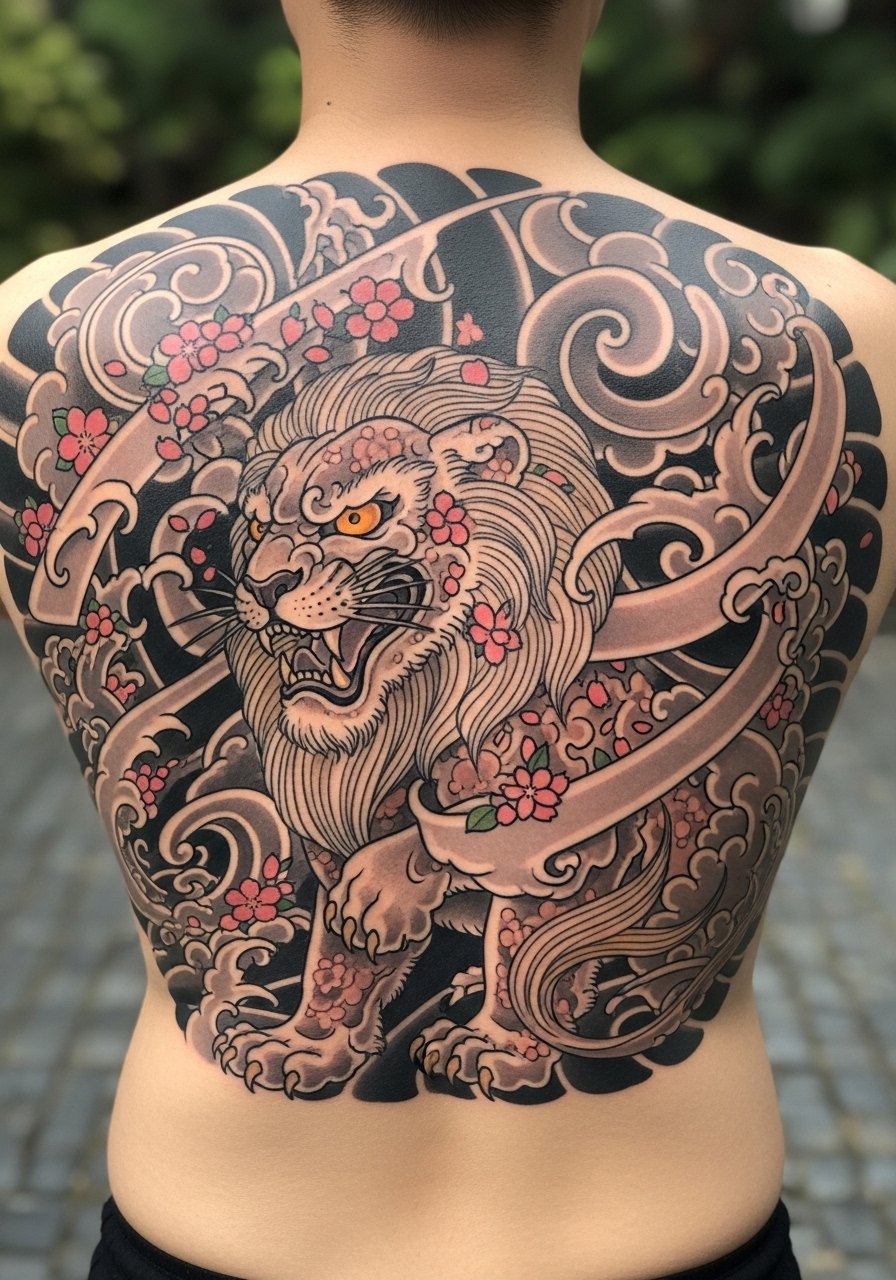
I fell for this style at a mural-influenced shop. The back gives room for full composition. Pain is moderate to high depending on spots, 5 to 7. This often takes multiple long sessions. During consultation, bring reference for wind bars and color palette. People make the mistake of underplanning background flow. If bars cut through the face it can read messy once healed. Healed pieces keep dramatic outlines, but you might want a touch-up in two years for color vibrancy.
15. Minimalist Geometric Paw Print on Ankle
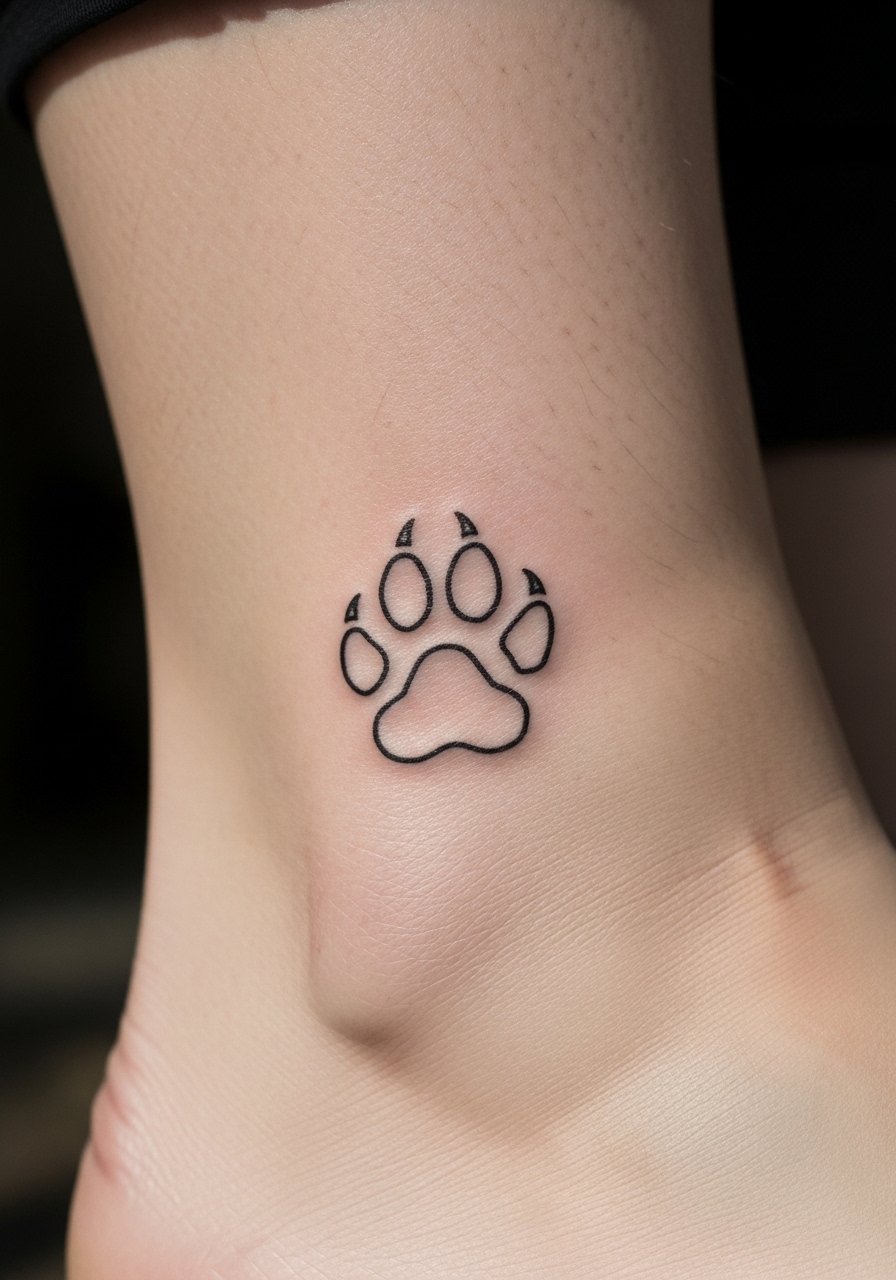
Ankle tattoos can be deceptively painful, about 6 out of 10. This minimalist geometric paw takes under an hour. Ask your artist to scale the paw so the pads do not get smaller than a centimeter each. Tiny pads tend to blur into one shape after a year. Healed, minimal designs settle nicely and look like small icons. If you want this visible regularly, plan for sun protection to keep lines crisp.
16. Black and Gray Full Back Lion Scene
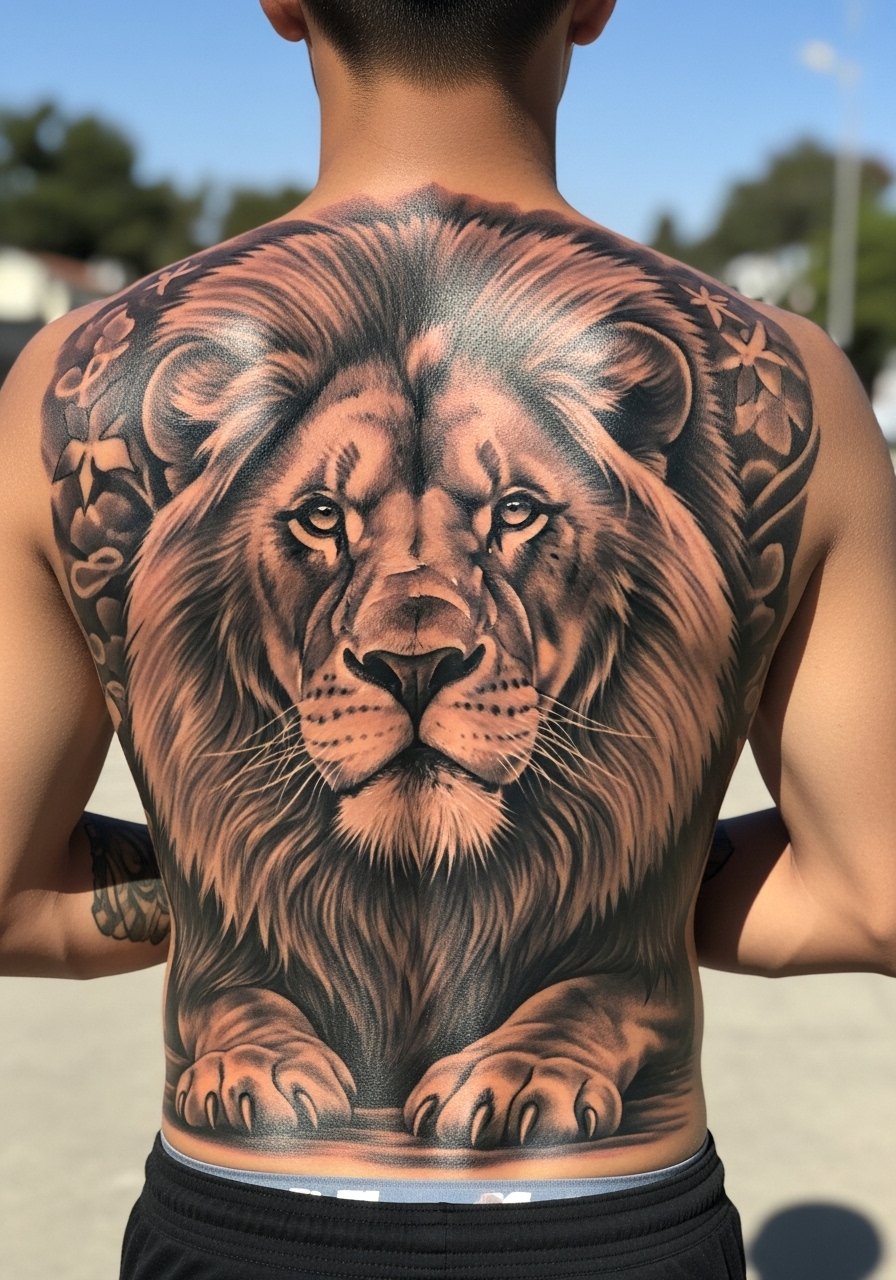
I remember watching the first shading pass for a backpiece like this. It transforms over multiple sessions. Pain varies widely across the back, 4 to 8. This is a multi-day project, 8 to 20 hours total. Tell your artist you want depth in layers and ask to see healed portfolios. A common mistake is over-detailing background elements that compete with the lion. Healed shading softens so keep primary contrast in the lion's face. Expect maintenance touch-ups in year three.
17. Linework Silhouette on Ribcage With Script "Memento Mori"
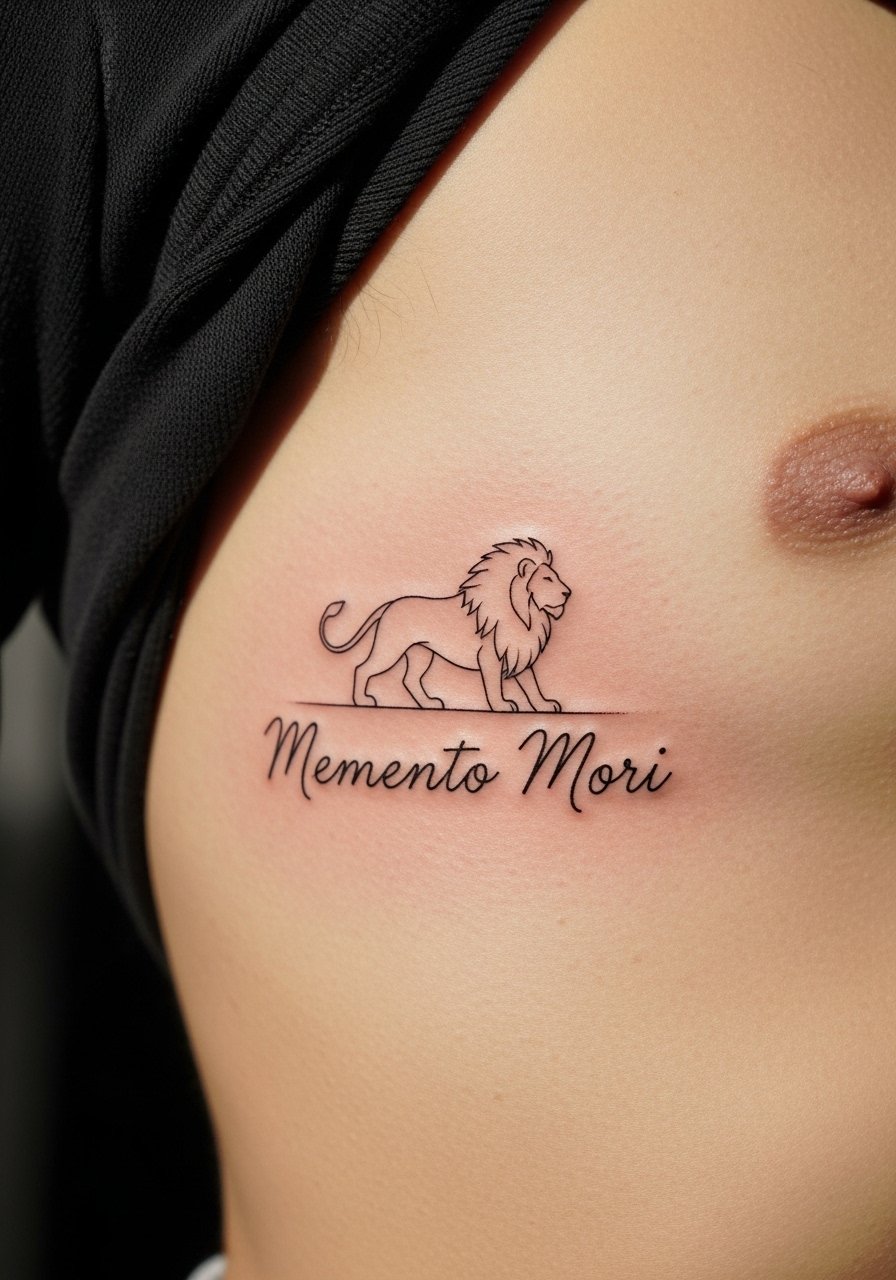
Fair warning about ribcage pain, I rate it 8 out of 10. This combines a silhouette and a short phrase. Ask for slightly bolder script than you imagine. Tiny script can blur on curved chest areas. People often underestimate how much to scale script. Healed, the silhouette keeps form and the script will soften a little. If you want the phrase to stay crisp, plan for a touch-up after the first year.
18. White Ink Subtle Lion on Sternum
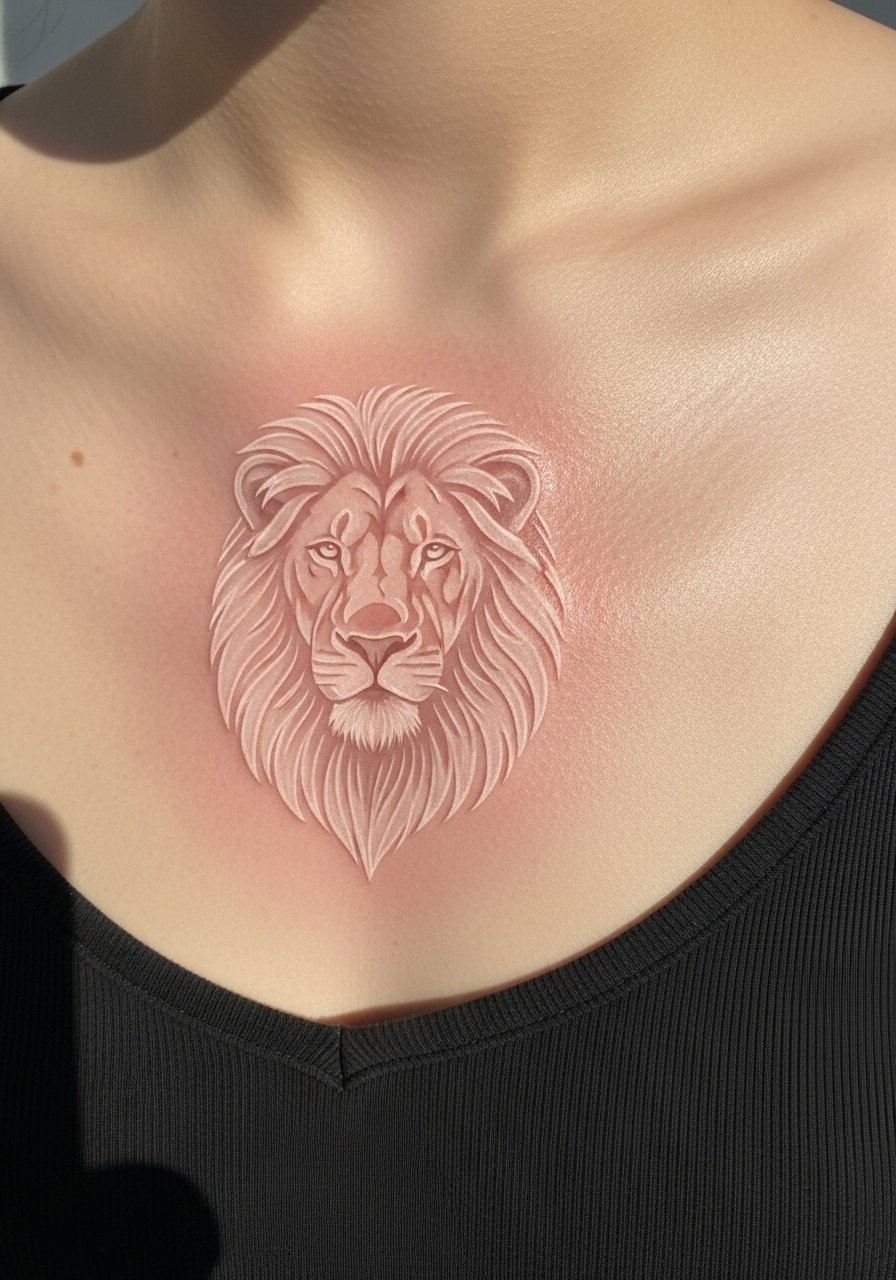
I experimented with white ink once to test subtlety. Sternum placement gives a soft, intimate effect. Pain is a 7 out of 10. White ink tends to fade faster and can yellow on some skin types. Tell your artist you want white as highlight only, layered over soft gray. The mistake is relying on white alone for definition. Healed, white will be faint and often needs color reinforcement. This is for people who want subtlety rather than bold contrast.
19. Abstract Linework Lion Across Fingers
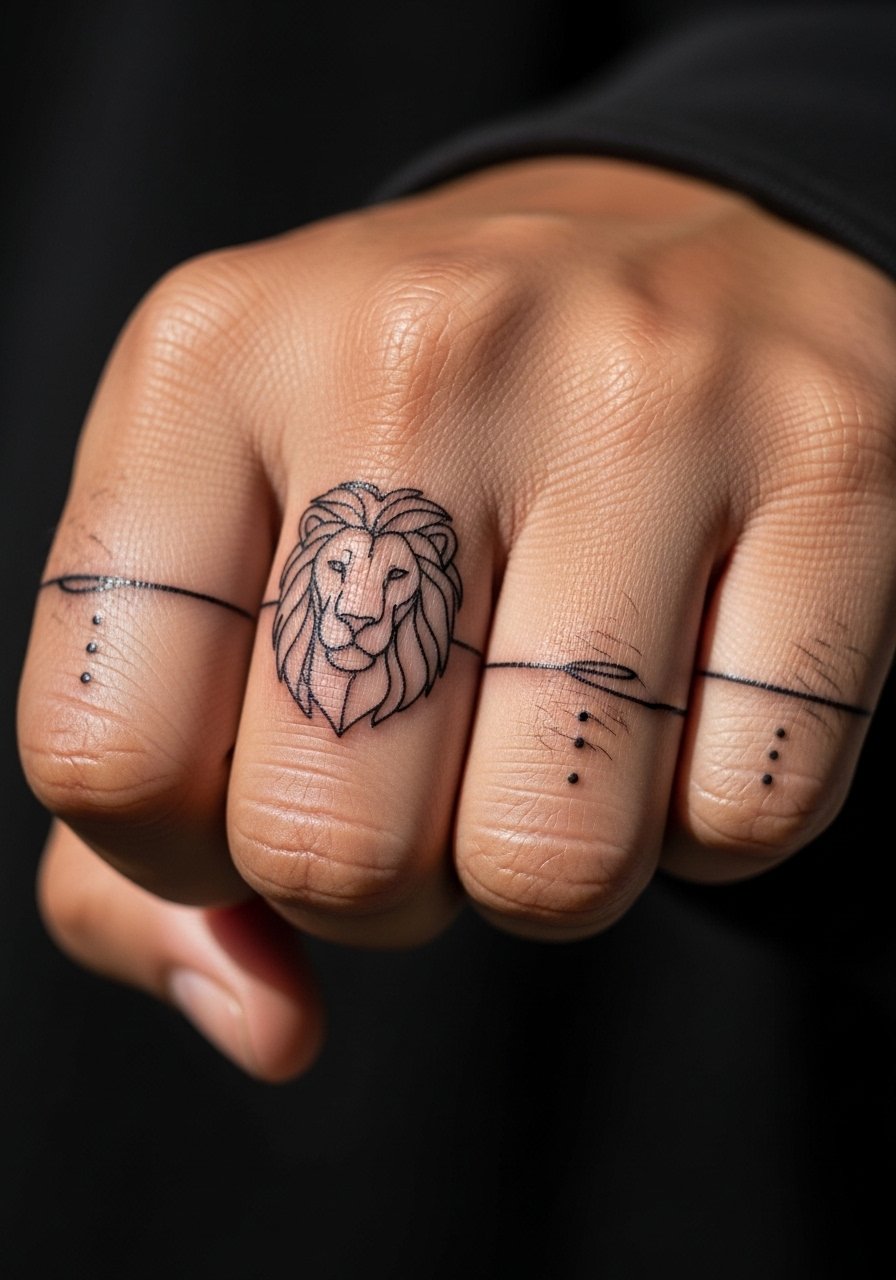
Finger tattoos age fast, I warn people that fingers are a high-maintenance placement. Pain is sharp, about 6 out of 10, and sessions are short. Ask the artist to use slightly thicker line weight and plan for frequent touch-ups. A common mistake is placing too much detail on small canvas areas like fingers. Healed, the lines will fade and blur faster than other placements. If you want a finger set, accept the upkeep and choose bold simple marks.
20. Neo-Realism Lion With Color Glow on Calf
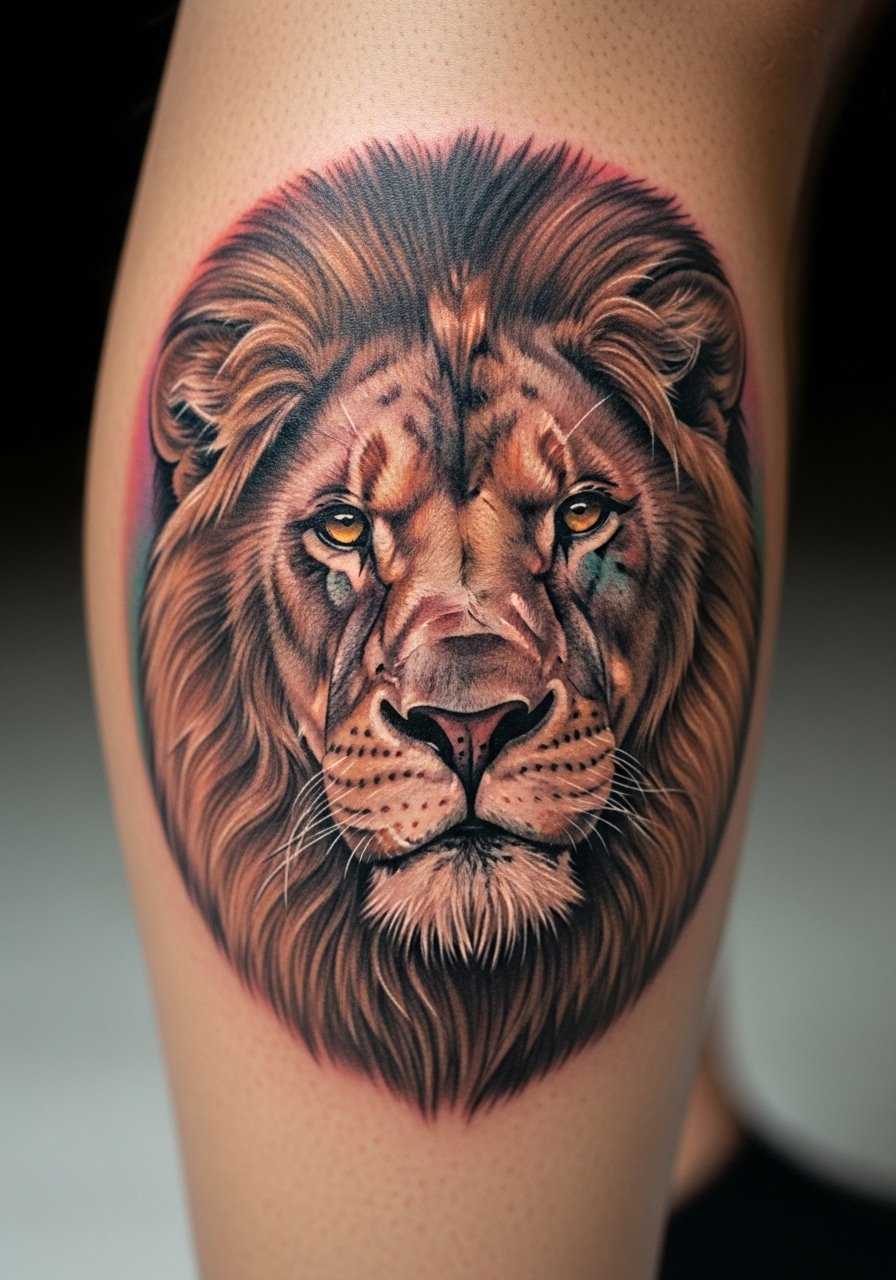
I saw one of these that used a warm orange halo to lift the portrait. Calf is forgiving and heals predictably. Pain is about 4. Sessions run 2 to 4 hours. Tell your artist you want the color to act as atmospheric glow, not a full wash. People often ask for bright glows and end up with patchy fading after a year. Healed, the glow becomes a soft aura. If you want lasting vibrancy, plan a color refresh in two years.
21. Dotwork Half Sleeve With Constellation Mane
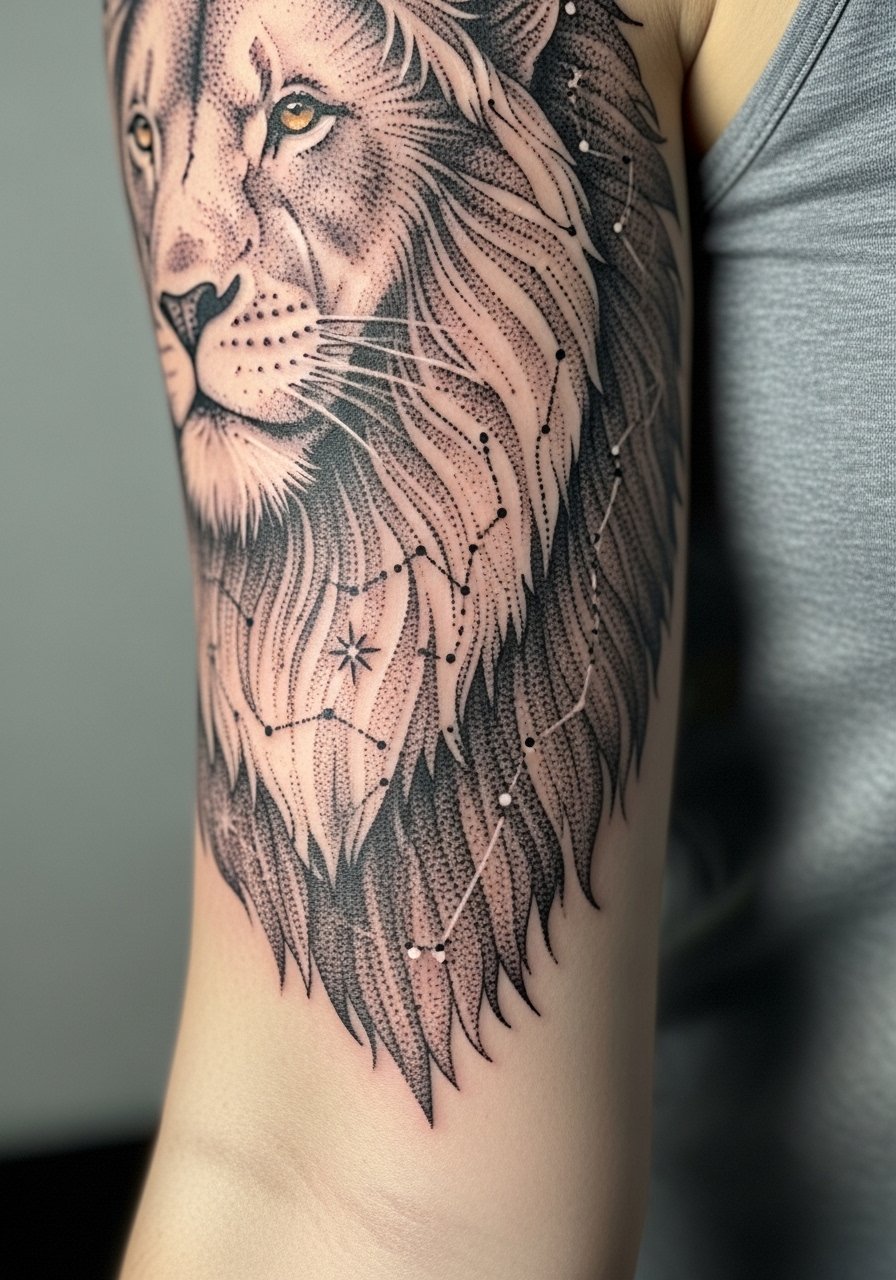
I discovered this style in underground tattoo forums. The half sleeve allows pattern play while keeping the lion central. Pain ranges from 3 to 7 depending on the inner arm. Multiple 2 to 3 hour sessions are common. Ask the artist about dot spacing. Too-tight dot matrices can merge. Healed, the stippling holds if spaced correctly and the constellation effect stays delicate. This one stands out as a modern take collectors like.
22. Small Realistic Lion Paw on Chest Near Heart
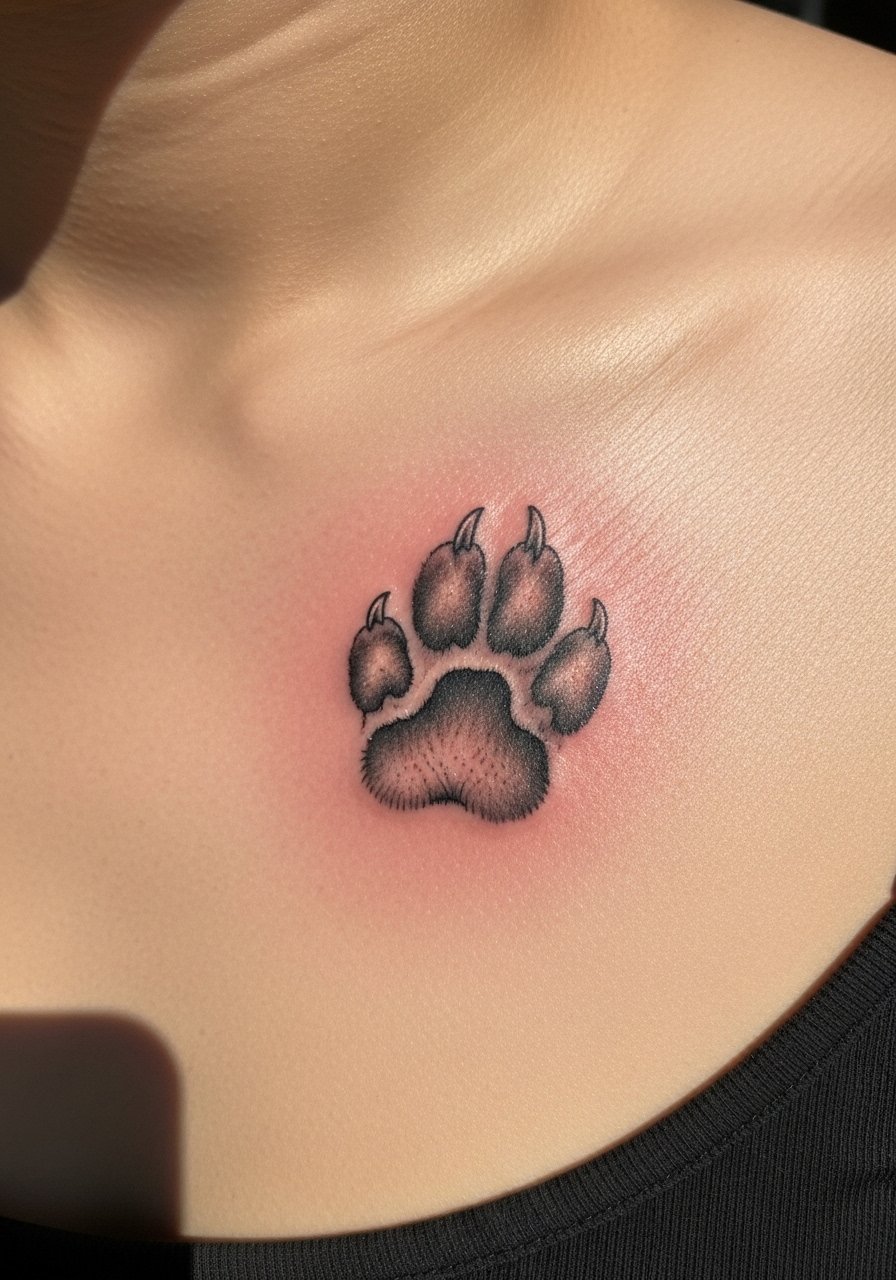
I put mine near the heart for symbolism. Chest pain depends on placement, mine was a 6. Small paw prints can be done in under an hour. Tell your artist the scale you want and to avoid overly fine claw lines. The frequent mistake is squeezing too much anatomy into a postage-sized piece. Healed, small realist paws soften, so keep the main paw pads slightly larger to retain shape over time.
23. UV Reactive Mane Accents on Shoulder Blade
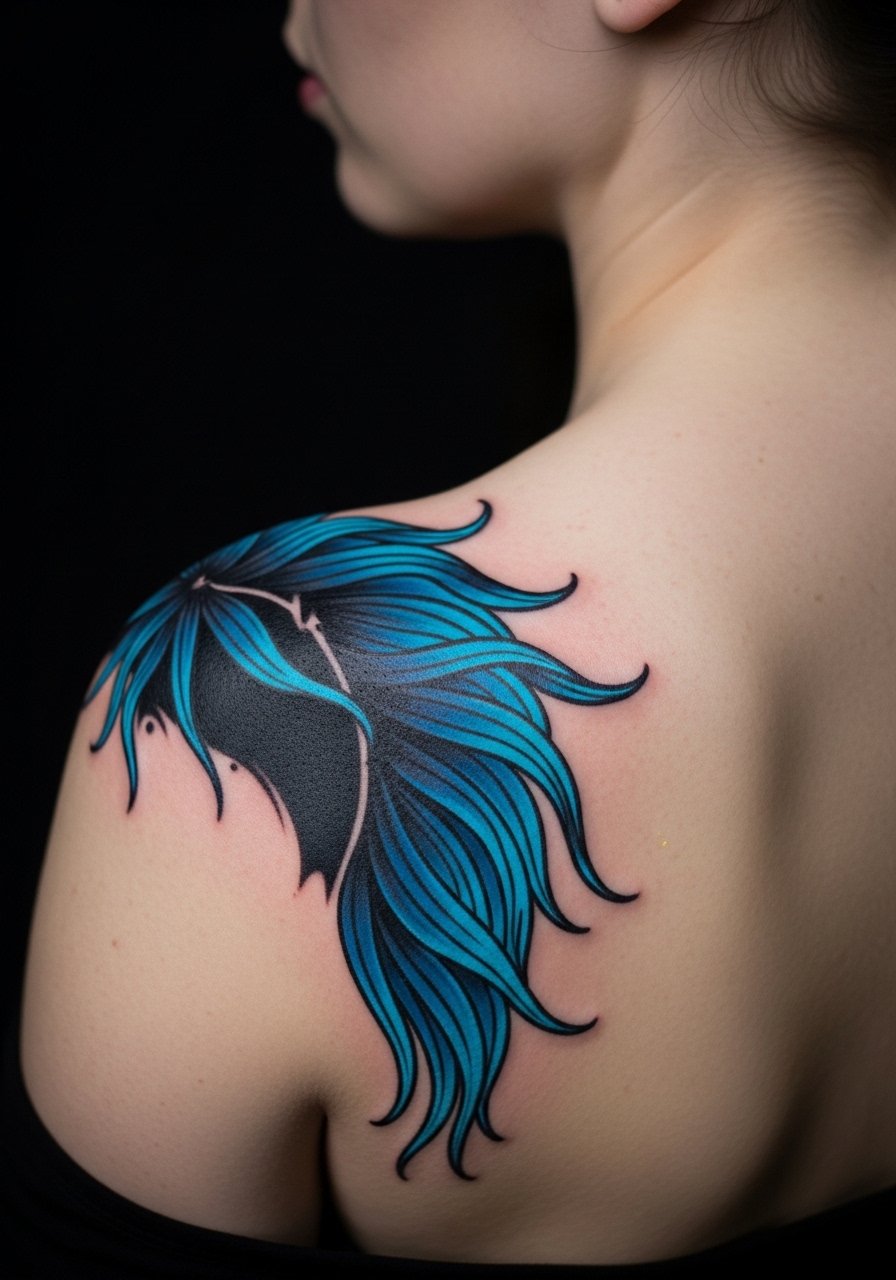
I asked for UV highlights once as a background accent. Shoulder blade tolerates it well. Pain sits around 4. UV pigments are fun and subtle in daylight and pop under blacklight. Tell your artist you want the UV isolated from essential outlines. A common mistake is relying on UV for main contrast. UV fades faster and can be patchy. Healed, the UV holds enough for occasional shows, but plan not to rely on it for main legibility.
24. Geometric Mandala Crown on Head of Femur Thigh
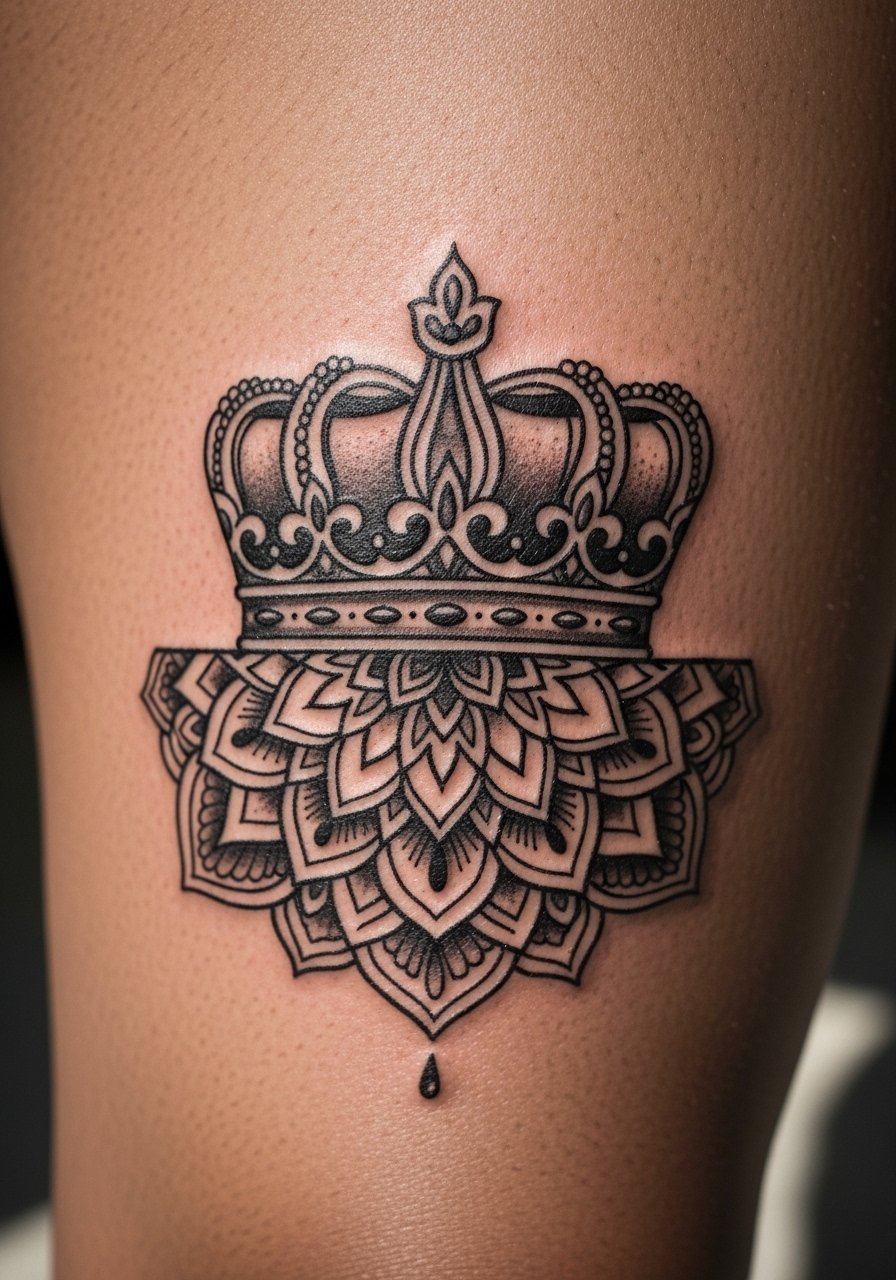
I recommended this to a client who wanted hidden symbolism. Upper thigh is low pain, around 3. A detailed mandala crown needs 2 to 4 hours. Ask for spacing that allows the mandala to breathe on a curve. The mistake is making rings too tight. They can blur into a single shaded band after healing. Healed, mandala lines remain decorative but you may want a touch-up to sharpen outer rings.
25. Stylized Line Art Lion on Rib to Hip Curve
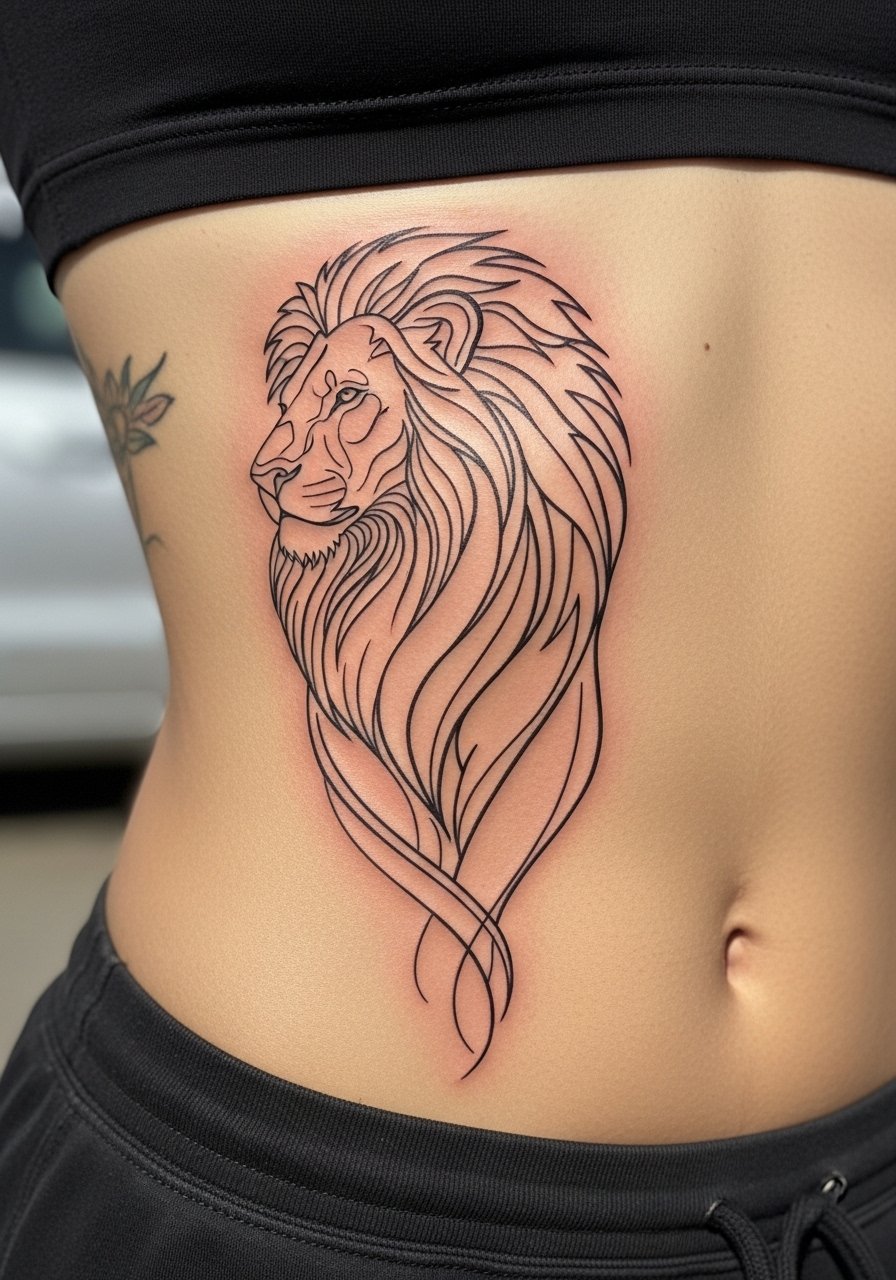
I recommended this for people who want movement. Rib to hip is painful, rating 8 out of 10 at points. This elongated piece takes multiple sittings. Tell the artist to map the flow over your curves so the line reads when standing. A mistake I see is cutting the flow with too many breaks. Healed, continuous lines can thin so ask for a slightly heavier main line. The result feels dynamic and wearable.
26. Minimalist Geometric Lion On Sternum With Dot Stars
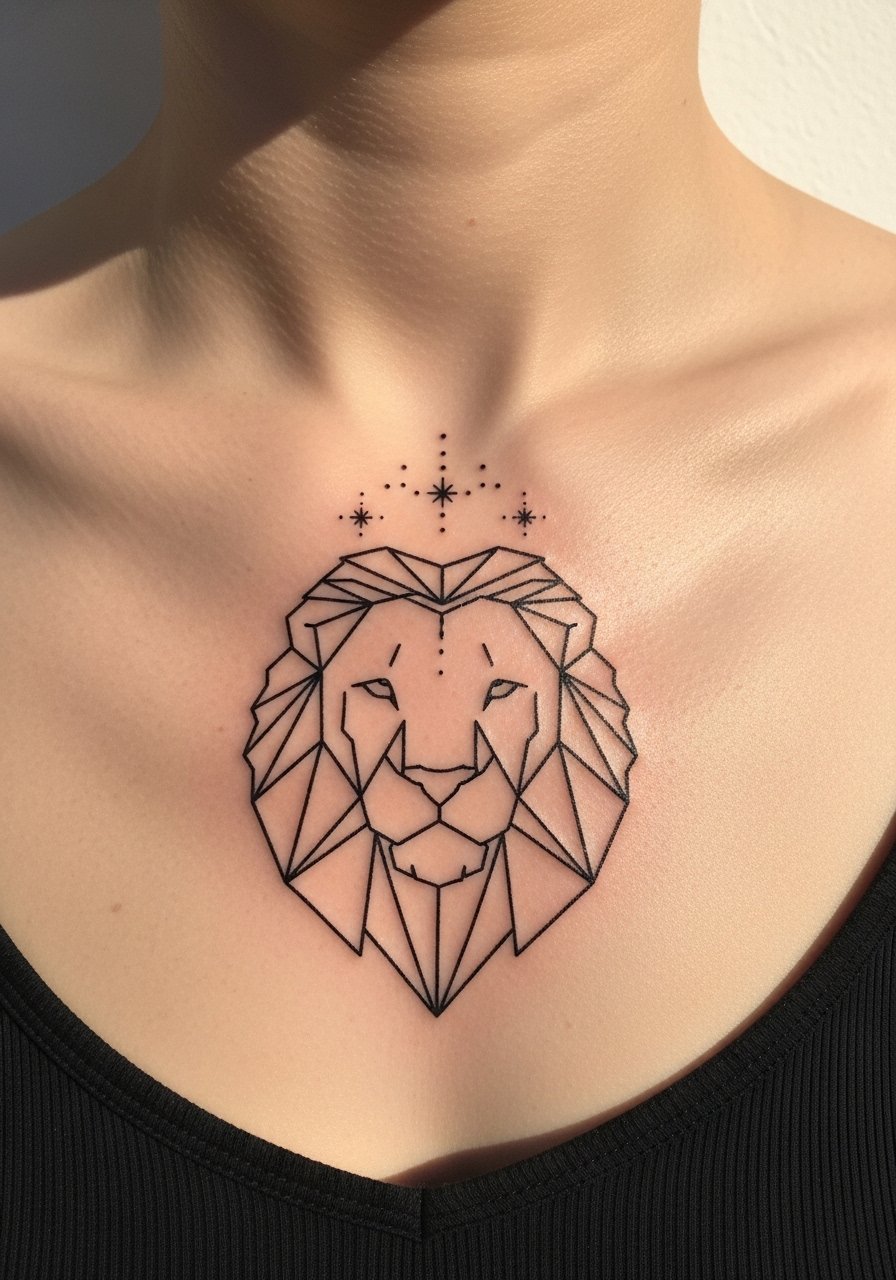
I sketched this after seeing minimal placements trending. Sternum pain is a 7 out of 10. Small geometric shapes and dot stars are quick inking sessions. During consult ask for dot spacing that survives density change with time. The common mistake is cramming many small dots near sternum creases. Healed, dots can fade unevenly there. This design reads modern and clean when spaced properly.
27. Realistic Lion Eye With Tear Drop on Wrist
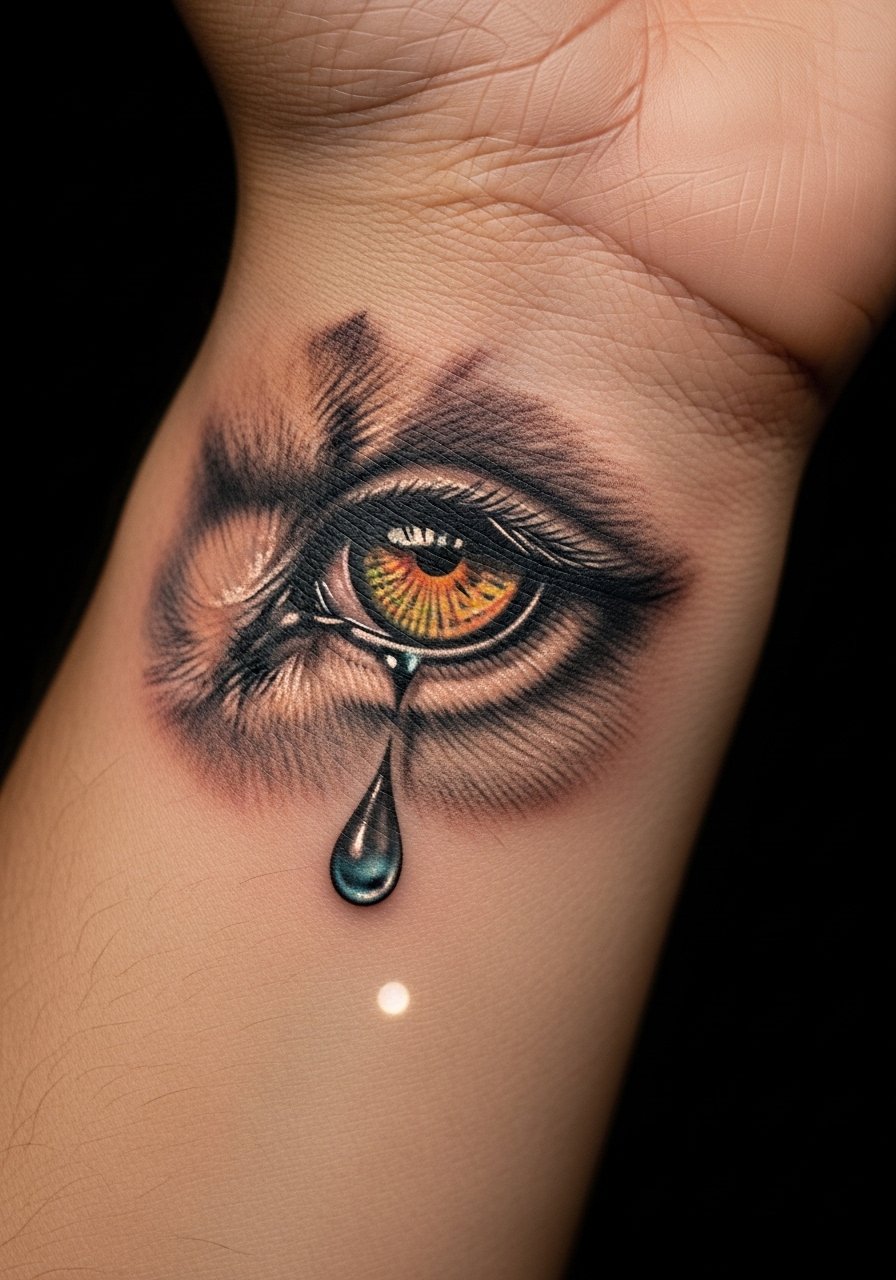
I see people gravitate to single-eye pieces for emotional impact. Wrist pain is about 5. A small realistic eye can be done in 1 to 2 hours. Tell your artist whether you want the tear to be a dark drop or a white highlight. A common mistake is over-rendering lashes that merge into blur. Healed, the eye keeps focus but small highlights may soften. This choice reads intimate and keeps a strong narrative.
Tattoo Prep and Aftercare Essentials
Aftercare choices determine how these lion tattoos age. From what I've gathered, artists I trust lean toward second-skin products to start, gentle cleansers for day two through seven, and fragrance-free moisturizers after the scabs settle.
Aftercare. Aquaphor Healing Ointment, 14oz tube. Industry standard for the first 3 to 5 days. I use a thin layer at night.
Second skin. Saniderm Transparent Adhesive Bandage, 6-inch roll. Many artists recommend it for the first 24 to 72 hours.
Daily lotion. CeraVe Fragrance-Free Moisturizing Lotion, 12 oz. Use after the first week when the scabs fall.
Gentle wash. Dr. Bronner's Unscented Castile Soap, 32 oz. Small drop diluted for twice-daily cleansing in week one.
Topical balm. Mad Rabbit Tattoo Balm, 2 oz. For long-term vibrancy on healed pieces.
Alternative balm. Hustle Butter Deluxe, 5 oz. Vegan option I see artists recommend for both healing and maintenance.
UV protection. SPF 50 Sunscreen Stick, travel size. Use on healed tattoos whenever they see sun. I carry one for beach days.
Numbing option. Numbing Cream with 5% Lidocaine, 30g. Apply 30 to 45 minutes before a session only if your artist approves.
Bandage alternative. Hydrocolloid Bandages, Large Size Pack. Good for small touch-ups and blister-like spots.
Comfort spray. Tattoo Numbing Spray, 4 oz. Handy during long sessions if your artist permits.
Stencil tools. Tattoo Stencil Transfer Paper, A4 Pack. Useful if you want to test placement at home before booking.
Aftercare kit. Complete Tattoo Aftercare Kit with Ointment and Soap. Good as a backup if you prefer a ready set.
I usually follow Saniderm for the first 48 hours. From what I've seen, people who start with a thin ointment layer under second skin have fewer crusting issues. Most artists I talked to recommend avoiding heavy creams in the first three days. For healed touch-ups, I use a small amount of Mad Rabbit or Hustle Butter. Carry SPF every time a healed tattoo will be in sun.
Frequently Asked Questions
Q: Will fine line lion portraits blur into one another if I get a full sleeve?
A: I've noticed fine line elements can merge on full sleeves if the artist keeps everything ultra-thin. Ask your artist to mix line weights so primary contours use a medium line and secondary hair strokes stay finer. That contrast makes the portrait readable at six months and at two years. If you want maintenance, plan for a small touch-up at year two.
Q: Do watercolor mane accents need different aftercare than classic blackwork?
A: In my experience the initial aftercare is similar, but watercolor pigments tend to fade unevenly. I recommend protecting watercolor areas from sun aggressively with an SPF stick. Use gentle cleansers in week one and switch to a fragrance-free lotion by day four. If you see patchy fading after a year, a color refresh is common.
Q: How should I ask for blackwork geometric negative space so it holds up?
A: Show your artist examples and request clear negative spacing in the stencil stage. I've seen negative gaps that are too narrow and later fill in. Tell the artist you want those gaps at least a few millimeters wide for longevity. Also ask them to keep main black blocks substantial rather than thin parallel lines that can blur.
Q: What aftercare product is best for a new ribcage dotwork mandala?
A: For dotwork on ribs I use Saniderm the first 24 to 72 hours. Then I switch to a light application of Aquaphor Healing Ointment, 14oz tube for nights during the first five days. For daytime moisturizing after scabs fall, I prefer a pump bottle of CeraVe Fragrance-Free Moisturizing Lotion, 12 oz.
Q: Do UV reactive highlights affect long-term pigment stability on a realistic portrait?
A: From what I've seen UV pigments are best used as accents, not primary tonal values. They can fade faster and cause unevenness if relied on for main shading. Ask your artist to layer UV over solid black or color that carries the form. Expect to refresh UV spots if you want them bright at shows.