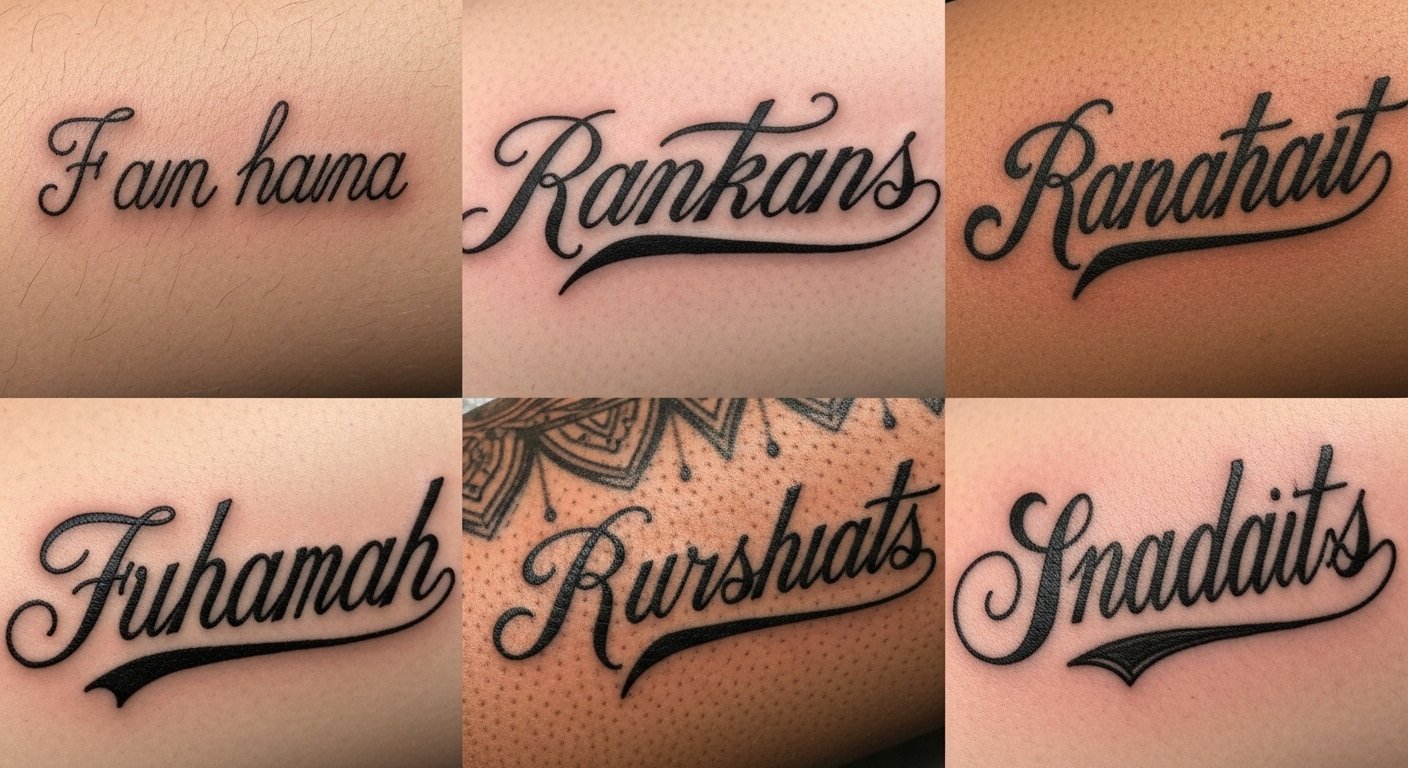
I spent months saving screenshots of script tattoos before I realized the real problem: script can look delicate and perfect fresh, but only certain styles age gracefully. These 26 flowing script ideas focus on styles and placements that stay readable and elegant once healed. They helped me choose my own wrist piece.
Quick context: This list centers on flowing script and calligraphic styles — fine line, brush script, neo-traditional lettering, and mixed-media script. These designs work across wrists, ribs, forearms, collarbones, and thighs. Trends for 2025 emphasize readable, timeless wording and minimal flourish rather than tiny unreadable fonts (Statista: ~30% of U.S. adults report at least one tattoo; see sources below). Older-script revival and safe-aftercare practices are trending now (sources: Statista, Pew Research).
Sources:
- Statista — Share of U.S. adults with at least one tattoo (2021): https://www.statista.com/statistics/1031635/share-of-us-adults-with-tattoos/
- Pew Research — Tattoo prevalence by age groups (summary): https://www.pewresearch.org/
Fine Line Single-Word Wrist Script (Fine Line + Inner Wrist)
Style/Technique: Fine Line / Script
Pain Level: Low-Medium (3/10)
Session Time: 30–60 minutes
Best For: First tattoo, meaningful single word
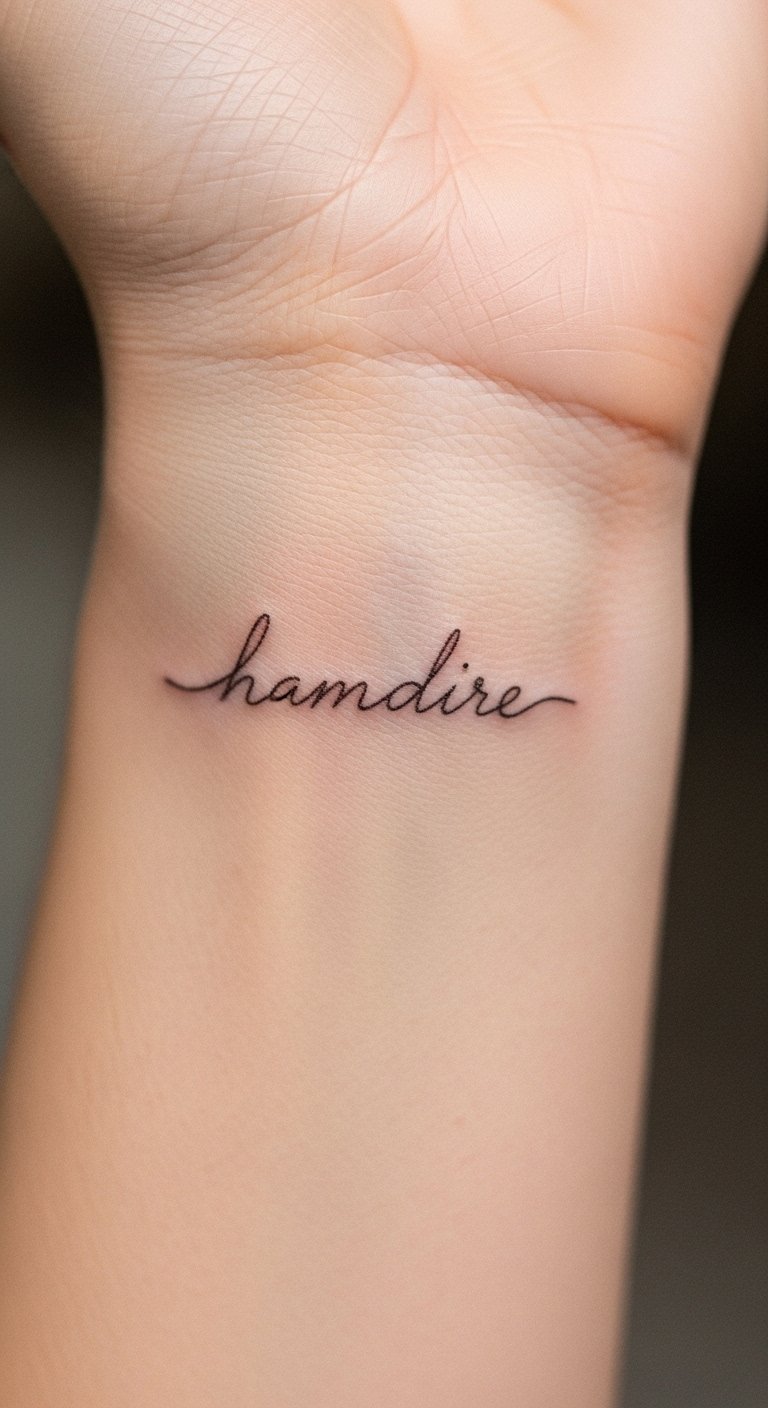
I loved this for my first piece. Fine-line script reads intimate on the inner wrist. It feels delicate but needs expert work—ask for slightly thicker hairlines where skin stretches. Expect mild soreness and quick surface healing in 1–2 weeks. Avoid tiny fonts; healed lines can blur if letters are too thin. Use fragrance-free lotion while healing and daily SPF once healed. This style reads timeless and minimalist.
Flowing Collarbone Calligraphy (Brush Script + Collarbone)
Style/Technique: Brush Script / Calligraphy
Pain Level: Medium (4/10)
Session Time: 1–2 hours
Best For: Visible statement, elegant neckline
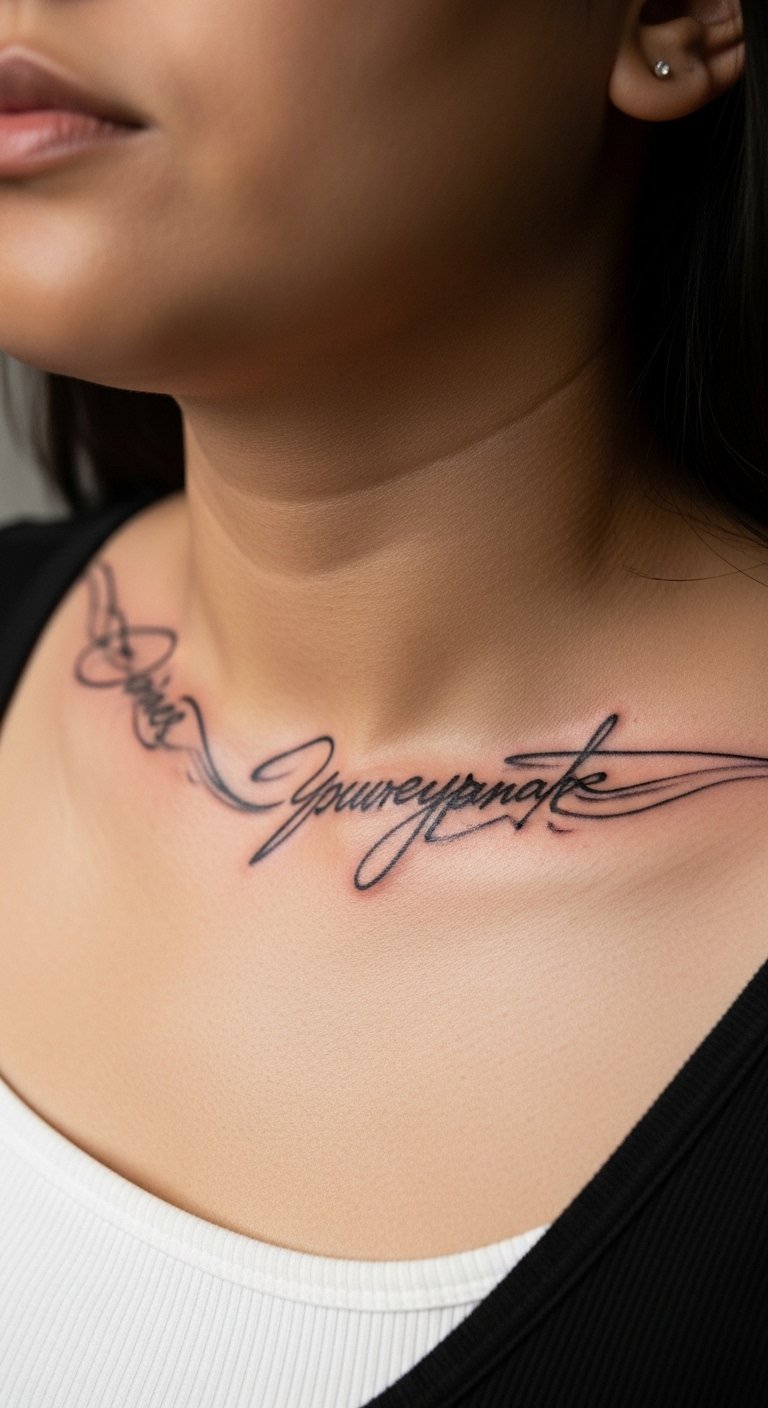
Brush calligraphy follows collarbone curves beautifully. The placement lets the letters breathe. Pain is moderate because of thin skin over bone. Heals in 2–3 weeks on the surface but avoid heavy clothing rubbing. Ask your artist for thicker downstrokes to keep the script readable as it ages. This style is timeless but shows line weight changes over years.
Minimalist Ankle Script Band (Minimalist + Ankle)
Style/Technique: Minimalist / Script Band
Pain Level: High (6/10)
Session Time: 45–90 minutes
Best For: Discreet, easy to hide
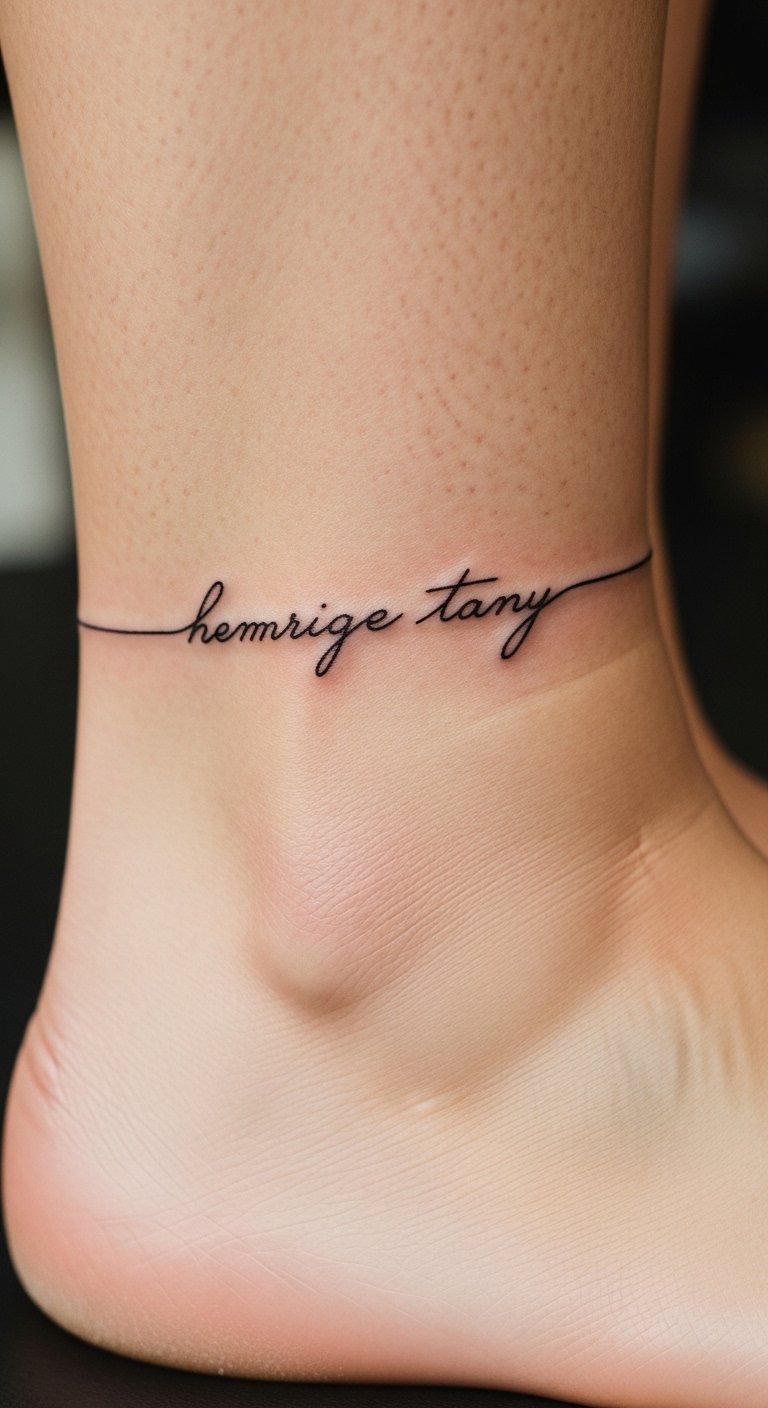
An ankle script band looks refined but can sting—thin skin and bone mean higher pain. Lines settle into the skin and sometimes soften within months. Keep the font slightly bold so letters don’t merge. Healing can be slower if shoes rub the area; avoid tight footwear for the first week. This is a subtle, meaningful option for someone wanting a discreet, timeless line.
Ribcage Quote in Cursive (Elegant Cursive + Ribcage)
Style/Technique: Elegant Cursive / Script Quote
Pain Level: High (7-8/10)
Session Time: 1–3 hours
Best For: Personal, larger text, hidden with clothing
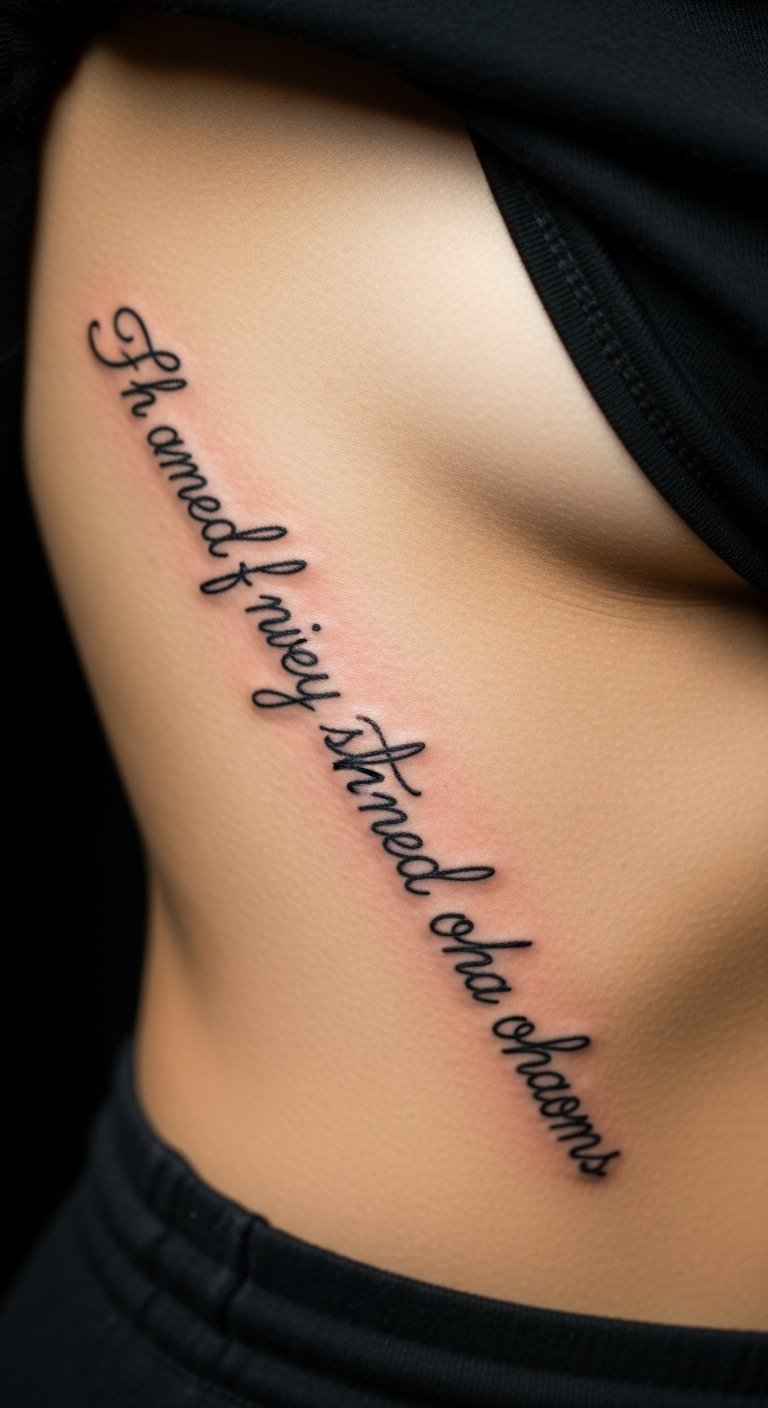
A rib quote reads intimate and stays hidden when you want. Pain is high because ribs are sensitive; expect longer sessions and breaks. Healing needs gentle care—no tight clothing or strenuous movement. Script here looks gorgeous when spaced well; overcrowding letters leads to blurring. Choose an experienced fine-line artist who spaces letters for long-term legibility.
Inner Forearm Full-Name Script (Classic Script + Inner Forearm)
Style/Technique: Classic Script / Readable Lettering
Pain Level: Low-Medium (3/10)
Session Time: 1–2 hours
Best For: Readable tribute, high visibility
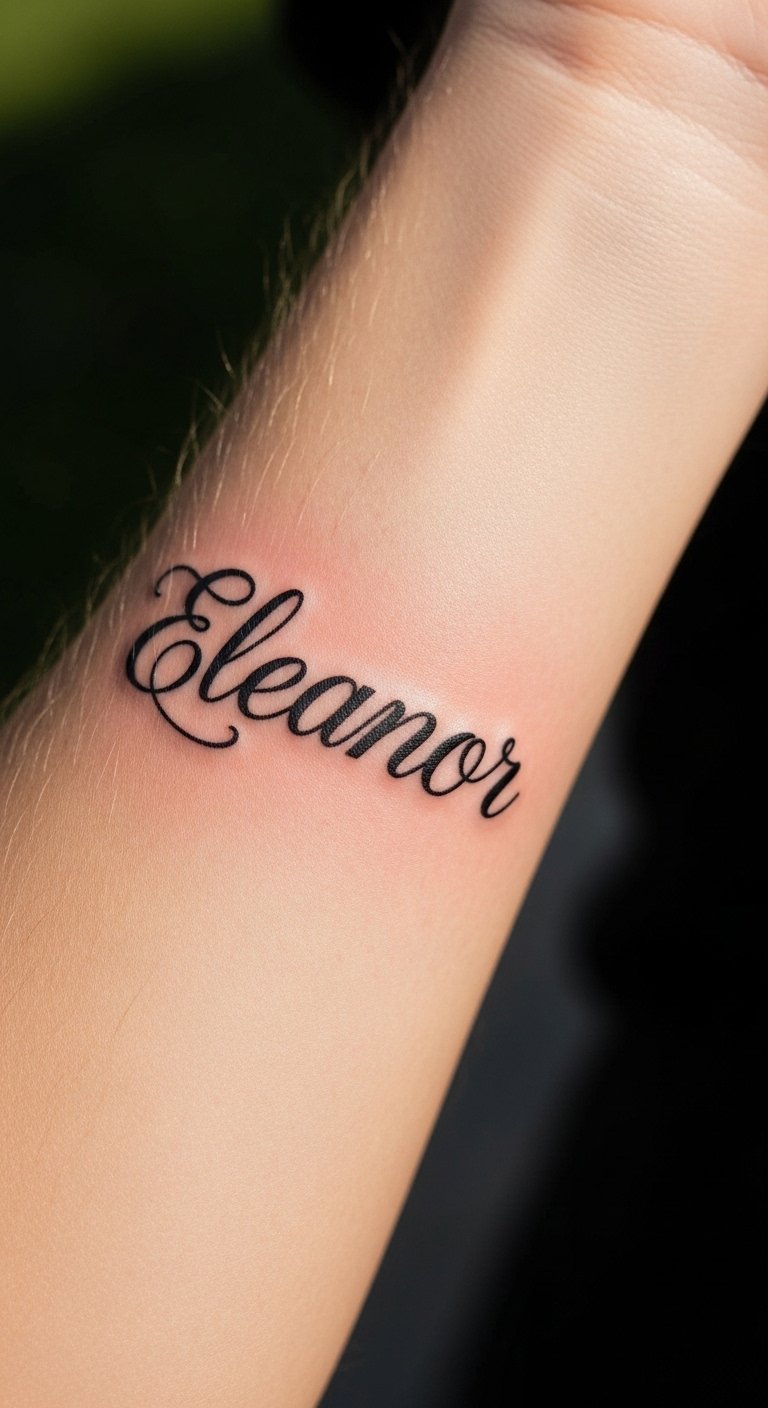
The inner forearm is forgiving for script. Pain is lower and healing is straightforward. Classic readable lettering ages well if letters have solid stems. Avoid overly ornate flourishes that can merge in 1–2 years. I found this placement great for showing friends and for frequent reading. Moisturize and use SPF to preserve contrast.
Behind-Ear Tiny Script (Micro Script + Behind Ear)
Style/Technique: Micro Script / Minimalist
Pain Level: Medium (4-5/10)
Session Time: 20–40 minutes
Best For: Hidden, delicate accent
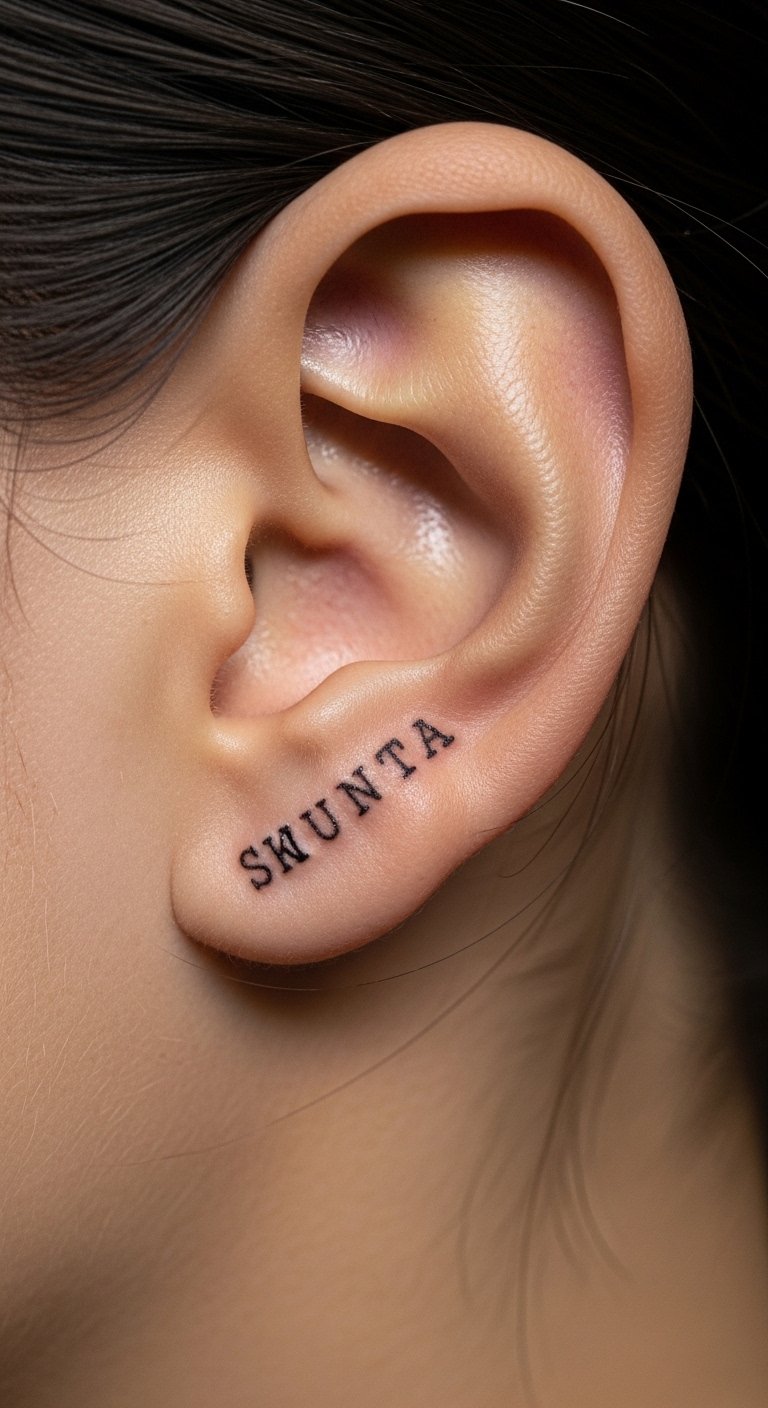
Behind-ear script is discreet and intimate. It can sting due to thin skin but heals quickly. Tiny letters are tempting but risk blurring—stick to short words and thicker lines. This is a good test for tolerating needle buzz and a subtle way to wear meaningful text. Keep hair and sweat away while it closes.
Script Wrapped Around Finger (Script Band + Finger)
Style/Technique: Script Band / Small Script
Pain Level: High (7/10)
Session Time: 30–60 minutes
Best For: Symbolic band, visible daily reminder
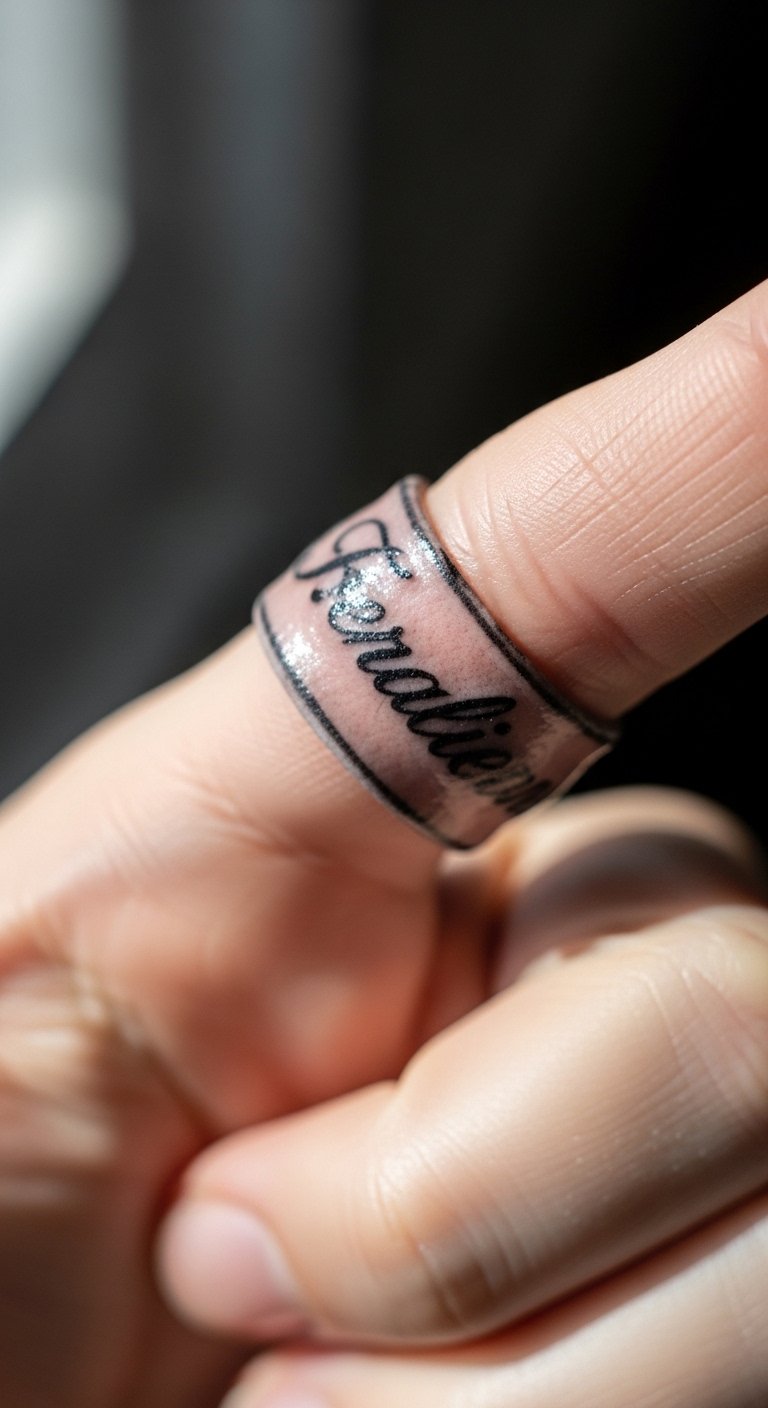
Finger script looks delicate but ages fastest. Hands get lots of sun and washing, so letters can blur. If you want this, choose bold, simple lettering and accept possible touch-ups later. Pain is higher and healing slower due to movement. I only recommend short text—initials or a tiny word—and commitment to long-term maintenance.
Script Along Spine (Vertical Script + Spine)
Style/Technique: Vertical Script / Calligraphic
Pain Level: High (7-8/10)
Session Time: Multiple sessions
Best For: Dramatic, body-flow piece
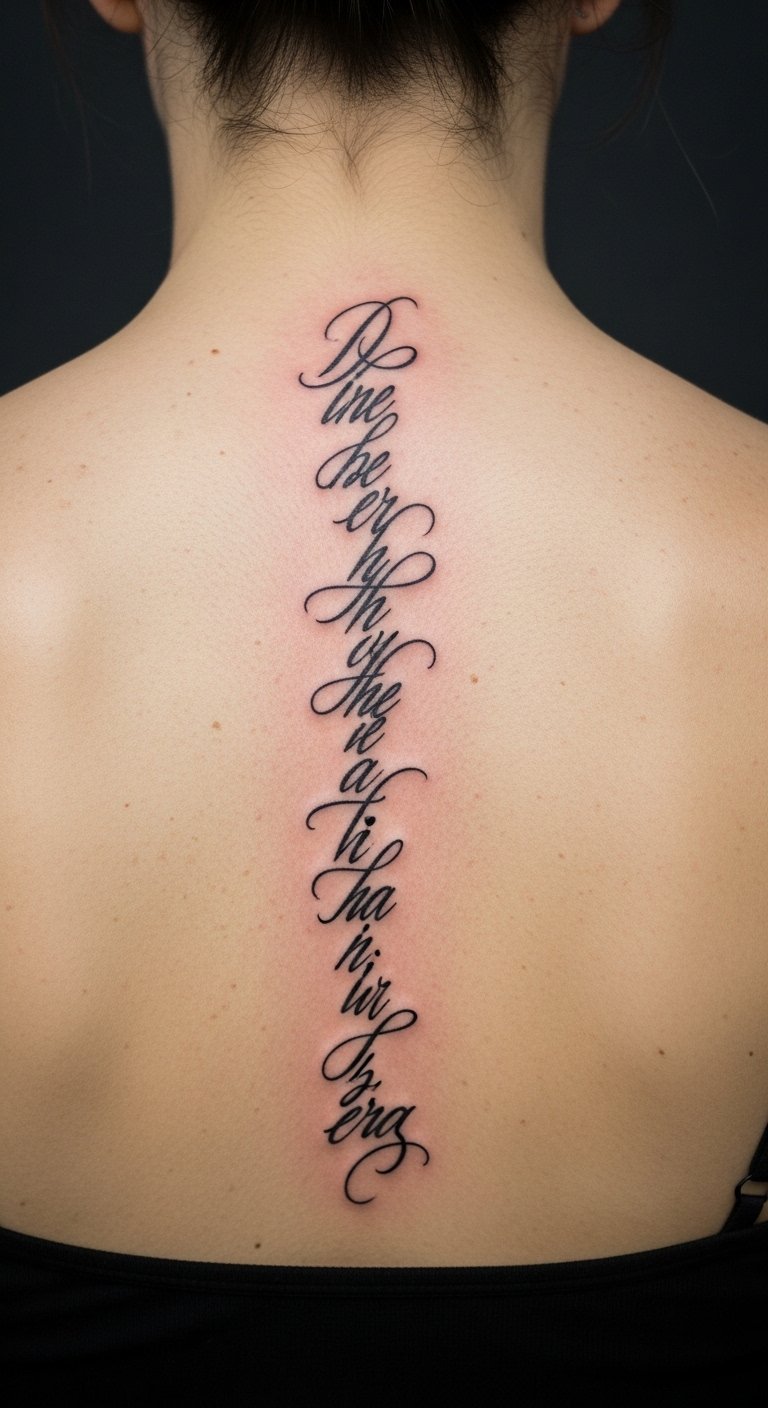
Spine script makes a dramatic statement and follows natural lines. Pain can be intense on vertebrae. Sessions may be split. Healed result is striking if spacing is generous. Avoid tiny flourishes that will blend. Skincare is critical because this area gets less sun but more clothing friction. Ask for durable downstrokes.
Thigh Long Script Line (Long Script + Outer Thigh)
Style/Technique: Long Script / Flowing Line
Pain Level: Low-Medium (3/10)
Session Time: 1–2 hours
Best For: Larger quotes, coverable
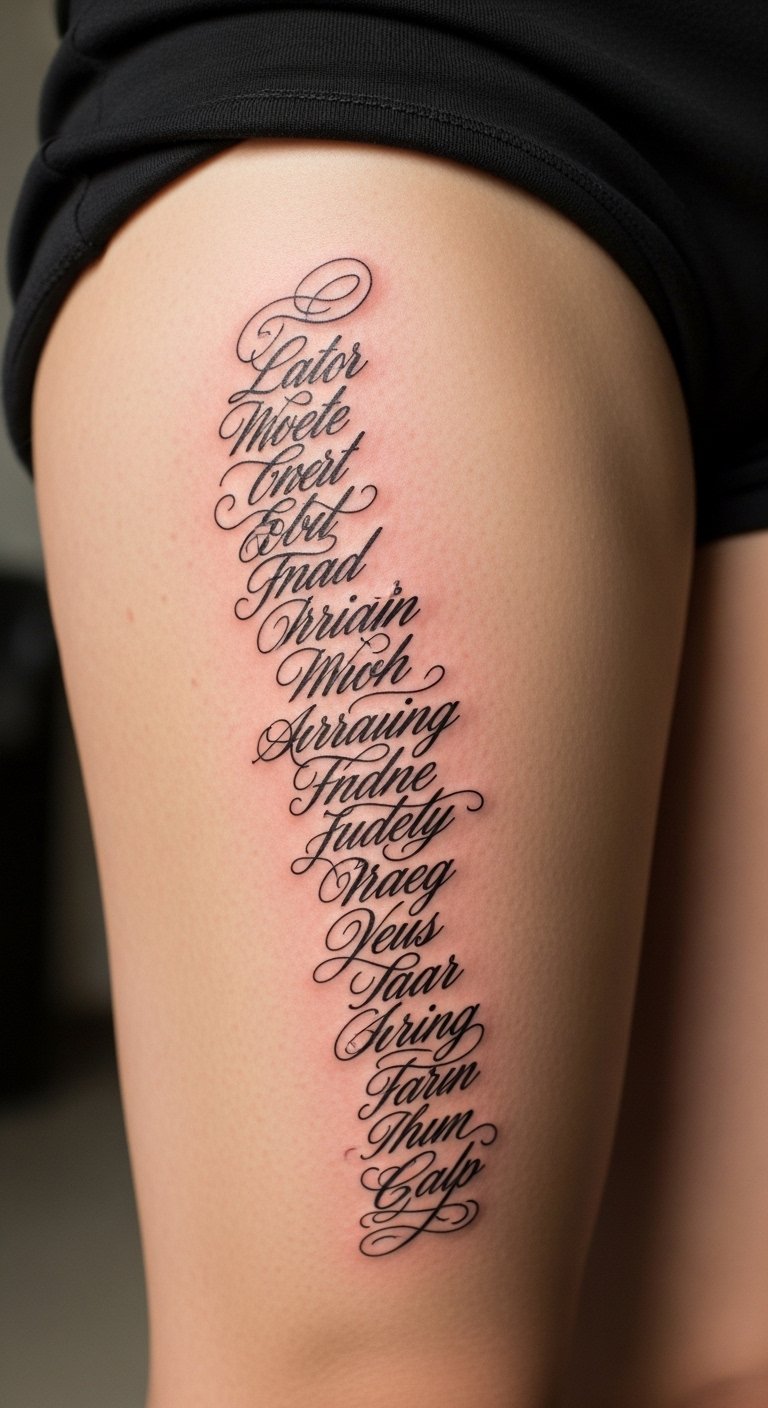
The outer thigh is forgiving and low-pain, great for longer quotes. Lines retain shape well because skin is stable here. Healing is easy if you avoid tight clothing. This placement is perfect for someone who wants a larger script hidden under shorts or skirts. Choose slightly heavier ink weight for lasting readability.
Curved Script Around Wrist Cuff (Cursive Cuff + Outer Wrist)
Style/Technique: Cursive / Wrist Cuff
Pain Level: Low-Medium (3-4/10)
Session Time: 45–90 minutes
Best For: Daily visibility, accessory-like
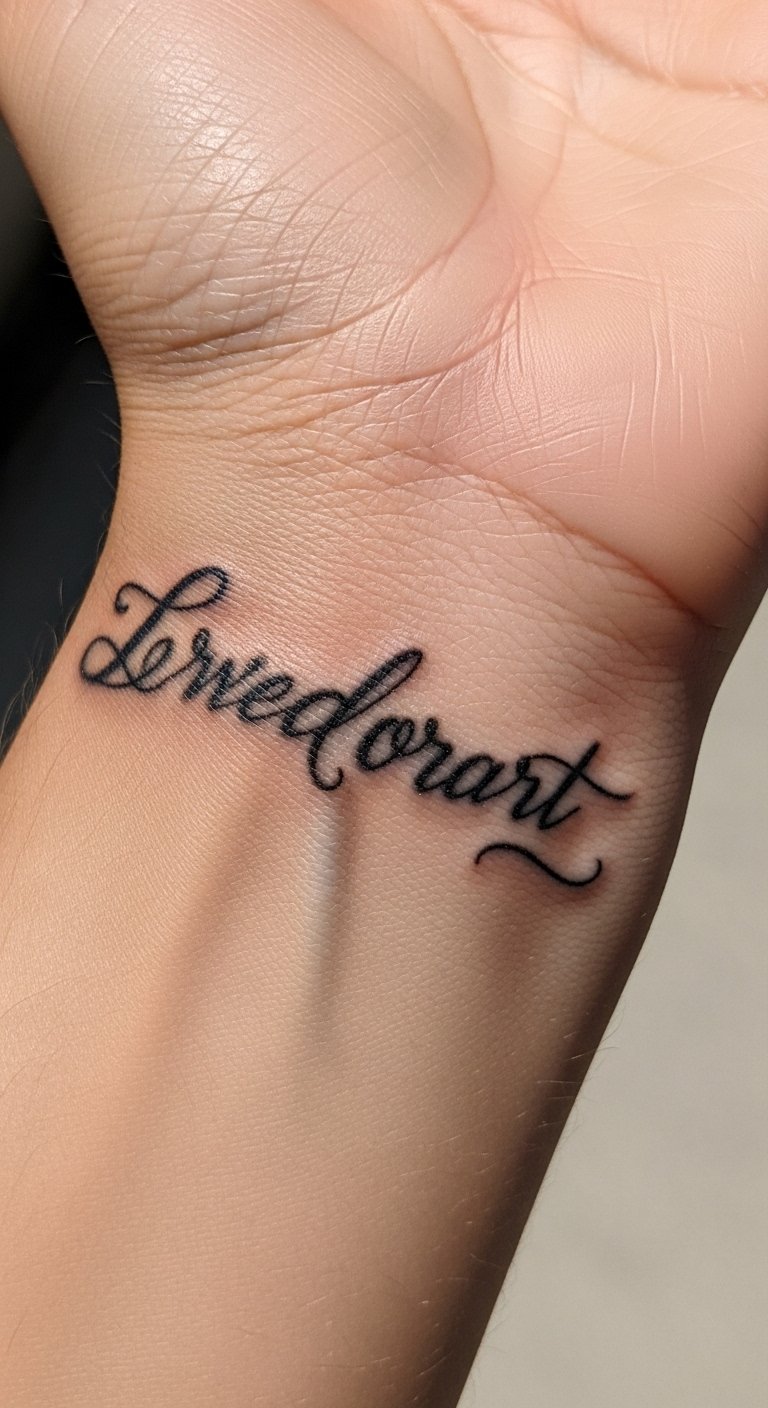
A wrist cuff reads like jewelry. It’s visible, so pick wording you’ll still like in a decade. Sun and washing fade wrist tattoos faster; SPF and moisturization help. Pain is manageable. Keep strokes slightly bold so daily wear doesn’t turn letters into a blur. This feels elegant and wearable with any outfit.
Script Mixed With Botanical Flourishes (Script + Fine Line Botanical, Forearm)
Style/Technique: Fine Line Script + Botanical
Pain Level: Medium (4/10)
Session Time: 1–3 hours
Best For: Feminine, decorative but readable
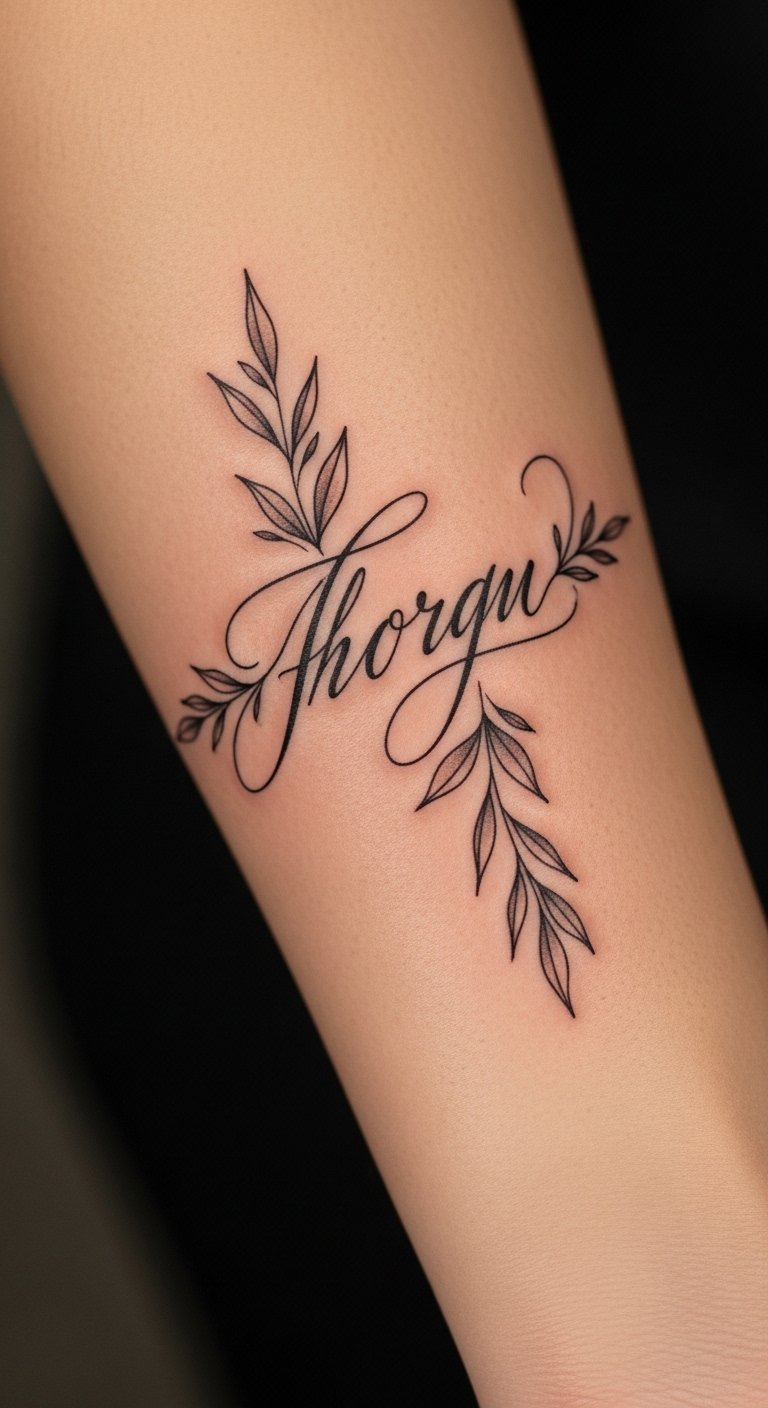
Combining script with botanicals softens the text and gives visual interest. The forearm is ideal—low pain and stable surface. The trick is balancing ornamentation so the words remain readable. Healing is typical; keep plants inked lightly to avoid heavy scabbing. This style feels organic and timeless when spaced well.
Single-Line Continuous Script (Continuous Line + Ribcage/Back)
Style/Technique: Continuous Single-Line / Minimalist
Pain Level: Medium-High (5-7/10)
Session Time: 1–2 hours
Best For: Artistic, flowing statements
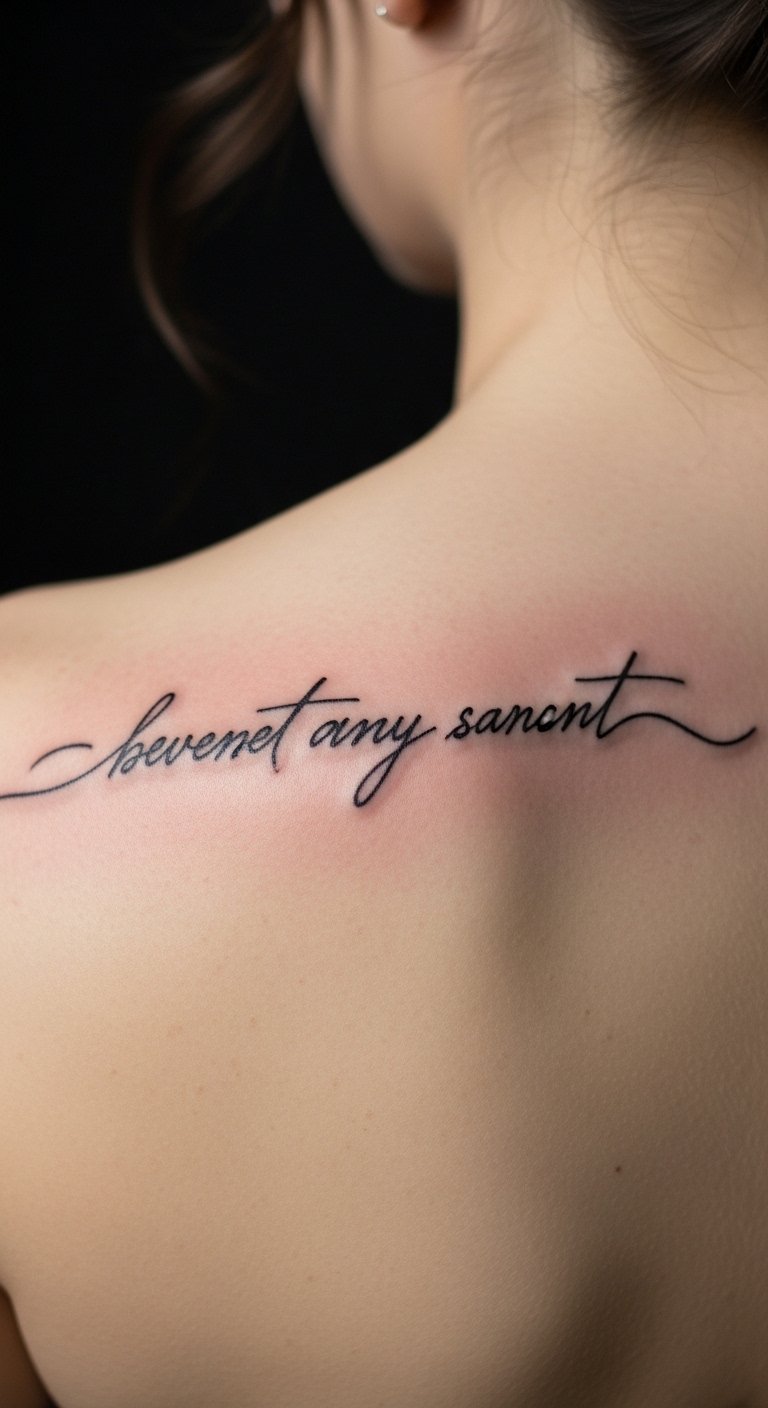
A continuous line creates motion. It reads like handwriting and feels modern. But thin continuous strokes can blur; request slightly increased line weight and generous spacing. Pain varies by placement. This looks especially striking on the upper back or ribcage and ages into a subtle, artistic mark.
Script Over Scar Tissue (Adaptive Script + Scar Cover)
Style/Technique: Adaptive Script / Scar-Friendly
Pain Level: Varies (3-8/10)
Session Time: 1–2 hours (consult first)
Best For: Camouflage, personal reclaiming
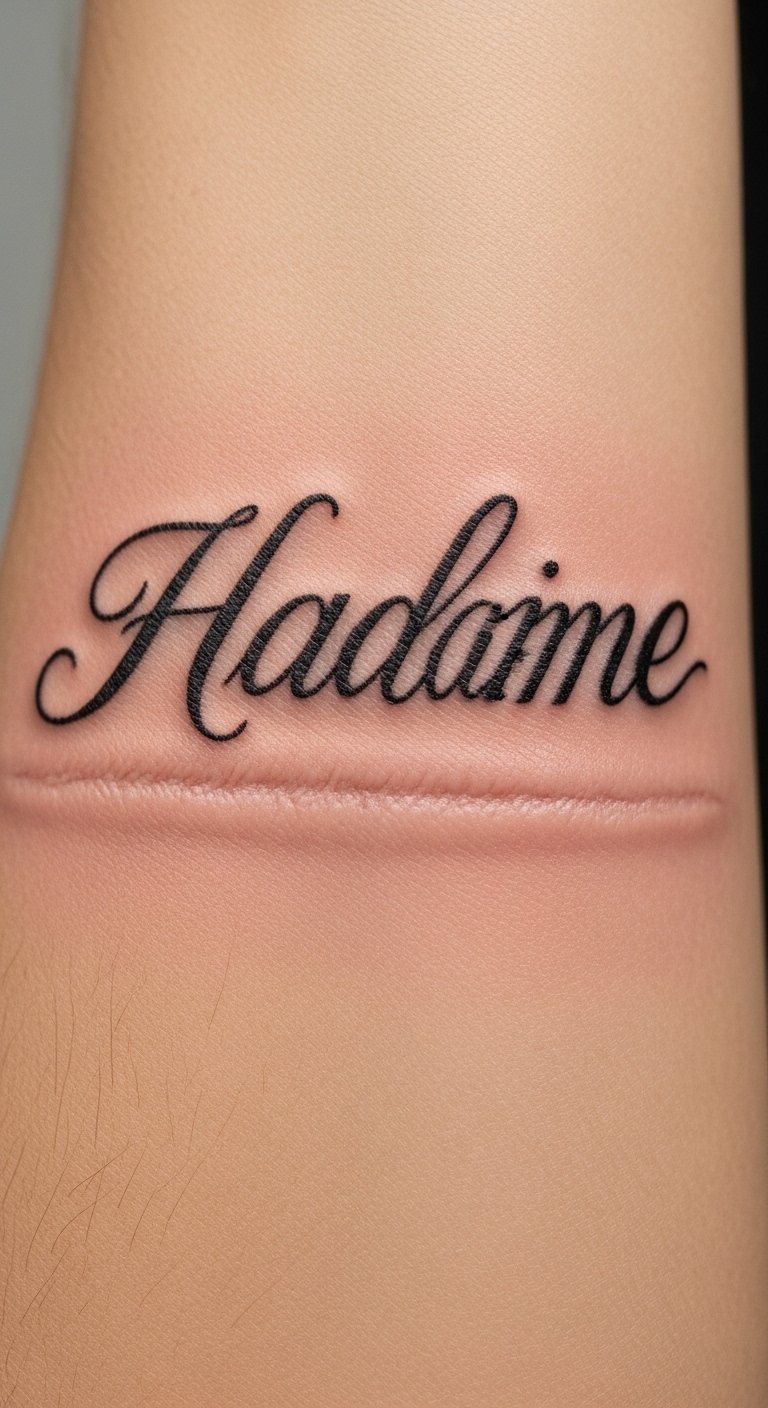
Script over scars can be meaningful. Not all scars accept ink the same—artist skill matters. Expect variable pain and ink uptake. I recommend booking a consult and seeing healed examples from the artist. Use larger, slightly bolder letters and avoid tiny details. Healing can take longer where tissue is different.
Neo-Traditional Script With Drop Shadow (Neo-Traditional + Upper Arm)
Style/Technique: Neo-Traditional / Script With Shadow
Pain Level: Low-Medium (3-4/10)
Session Time: 1–3 hours
Best For: Bold readability, retro vibe
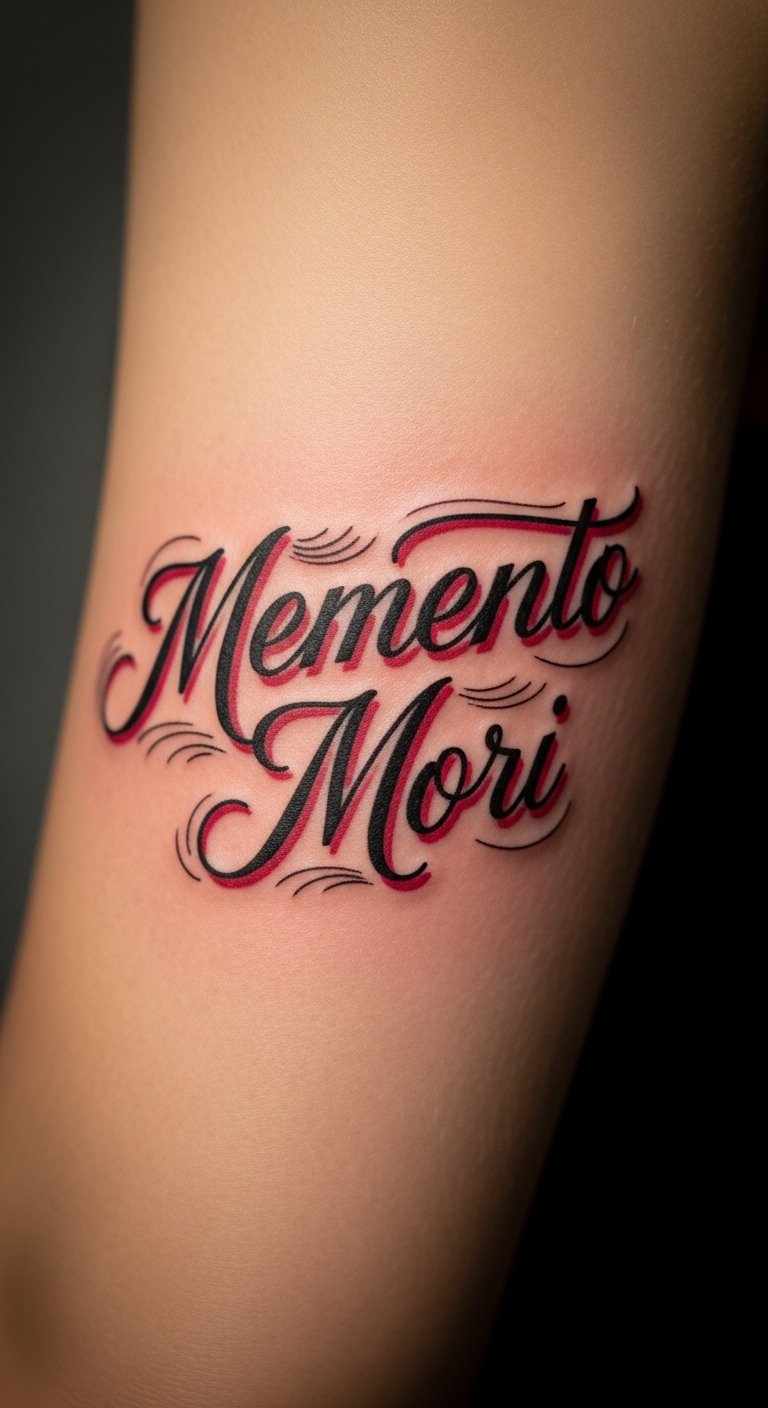
Drop-shadowed script adds depth and keeps letters legible over time. The upper arm is forgiving and shows slow fading. This style leans classic and reads well from a distance. Ask for clean, consistent strokes and moderate shading to avoid muddying. It’s a reliable choice if you want script that stands out.
Micro-Script Along Hairline (Micro Script + Nape)
Style/Technique: Micro Script / Delicate Placement
Pain Level: Medium (4/10)
Session Time: 20–40 minutes
Best For: Hidden, tiny reminders
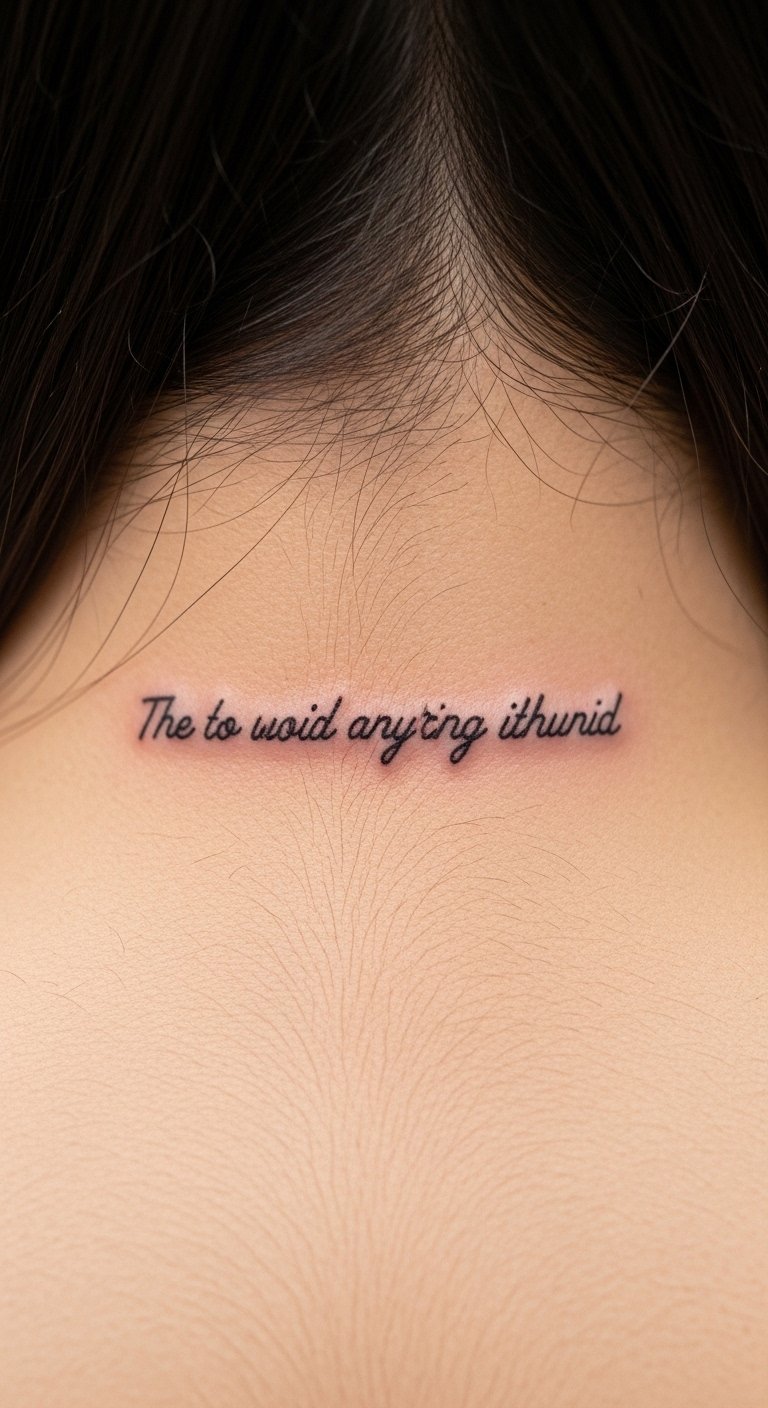
Micro script at the nape is hidden until desired. Lines can blur over time if too thin. Keep wording very short and use slightly bolder lines than you’d expect. Healing is quick if hair and sweat are managed. This is subtle and intimate.
Upper Chest Anchor Script (Bold Script + Upper Chest)
Style/Technique: Bold Script / Statement
Pain Level: Medium (4-6/10)
Session Time: 1–2 hours
Best For: Centered statement pieces
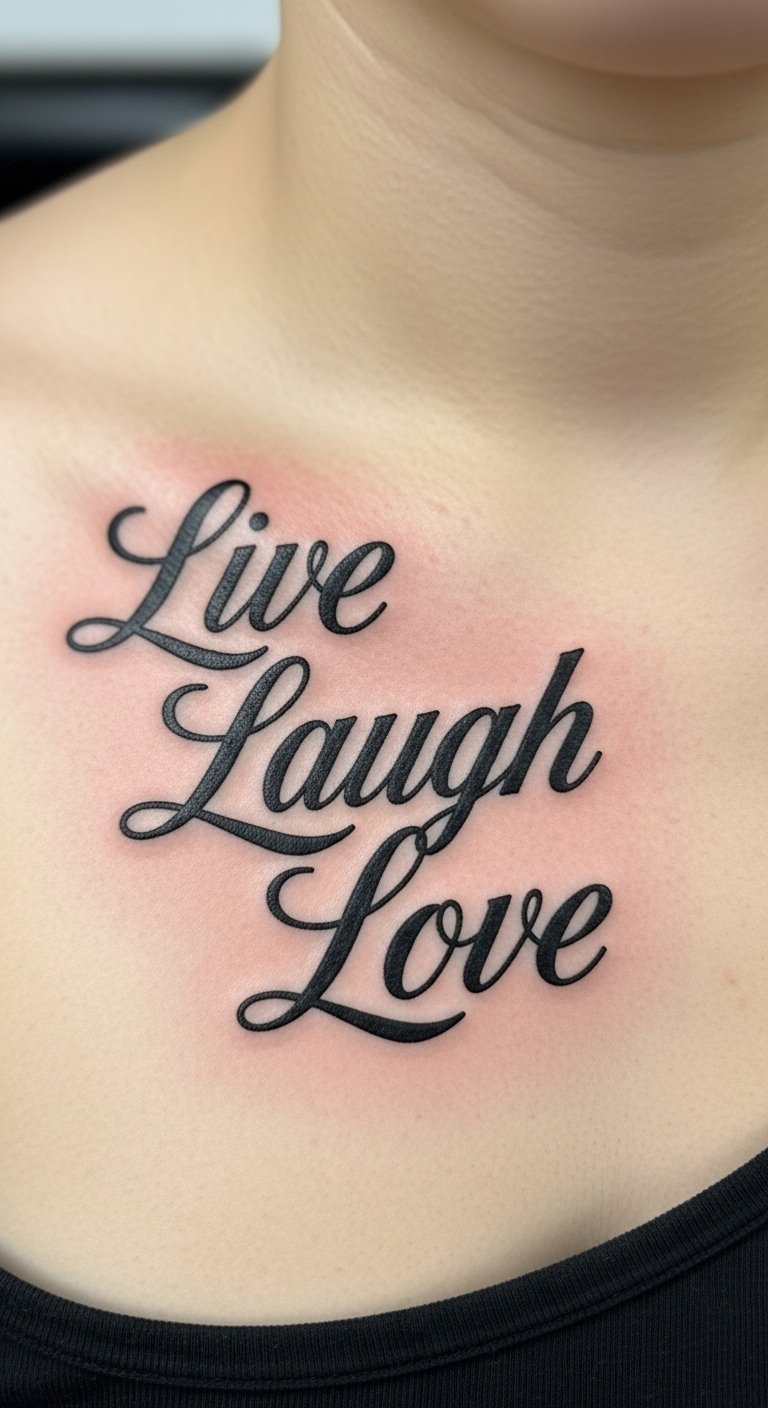
Centered chest script makes a statement and handles bold strokes well. The area tolerates moderate pain. Choose thick stems and clean spacing to ensure long-term legibility. This placement is visible with low necklines and durable over time when protected from sun.
Script With Watercolor Accent (Script + Watercolor Wash, Forearm)
Style/Technique: Script + Watercolor
Pain Level: Low-Medium (3-4/10)
Session Time: 1–2 hours
Best For: Artistic, colorful support
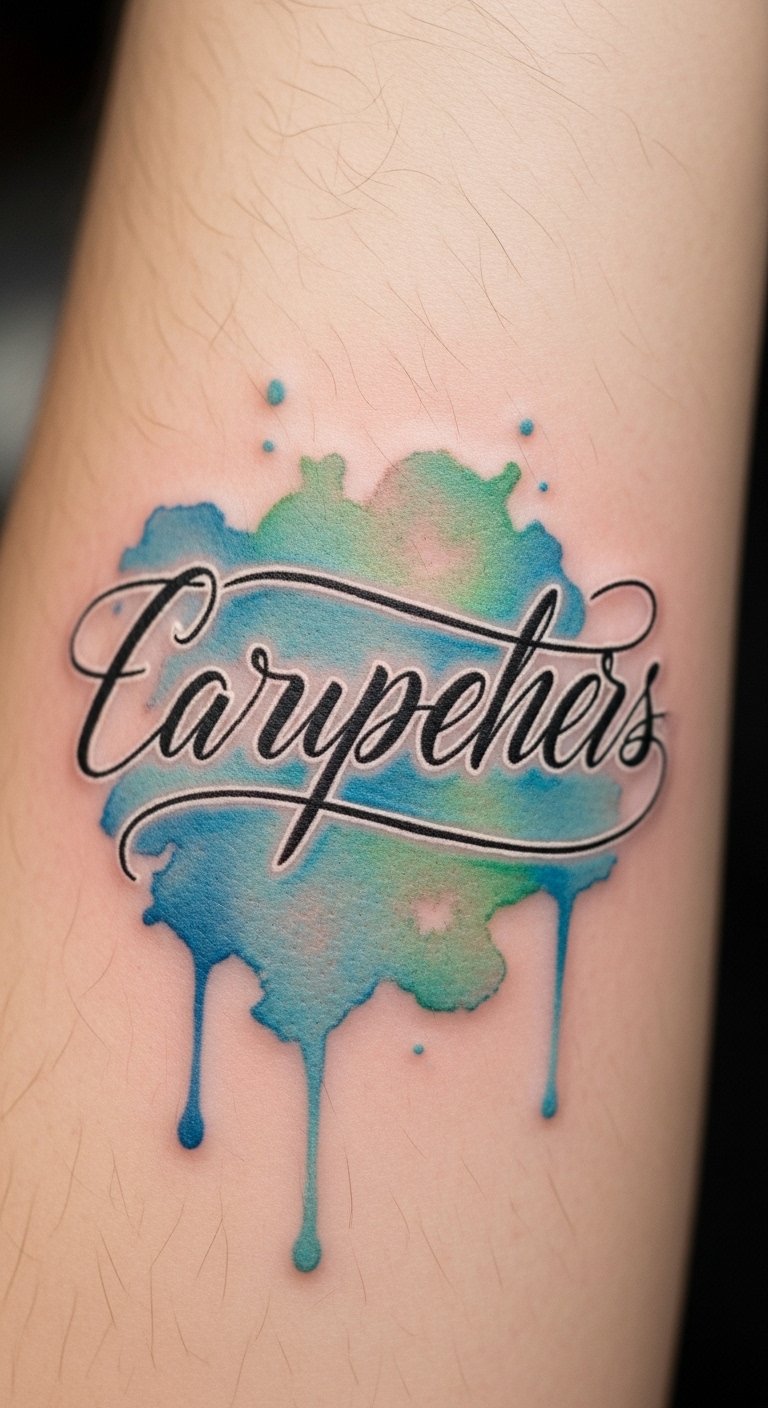
Watercolor behind script adds color without compromising legibility if the script is solid black. Colors fade faster, so use them as accents. Forearm placement is ideal. Expect gentle soreness and follow color-specific aftercare. This combination reads modern and emotive.
Script Inside Elbow Curve (Curved Script + Inner Elbow)
Style/Technique: Curved Script / Contour Fit
Pain Level: High (7/10)
Session Time: 45–90 minutes
Best For: Personal, contoured text
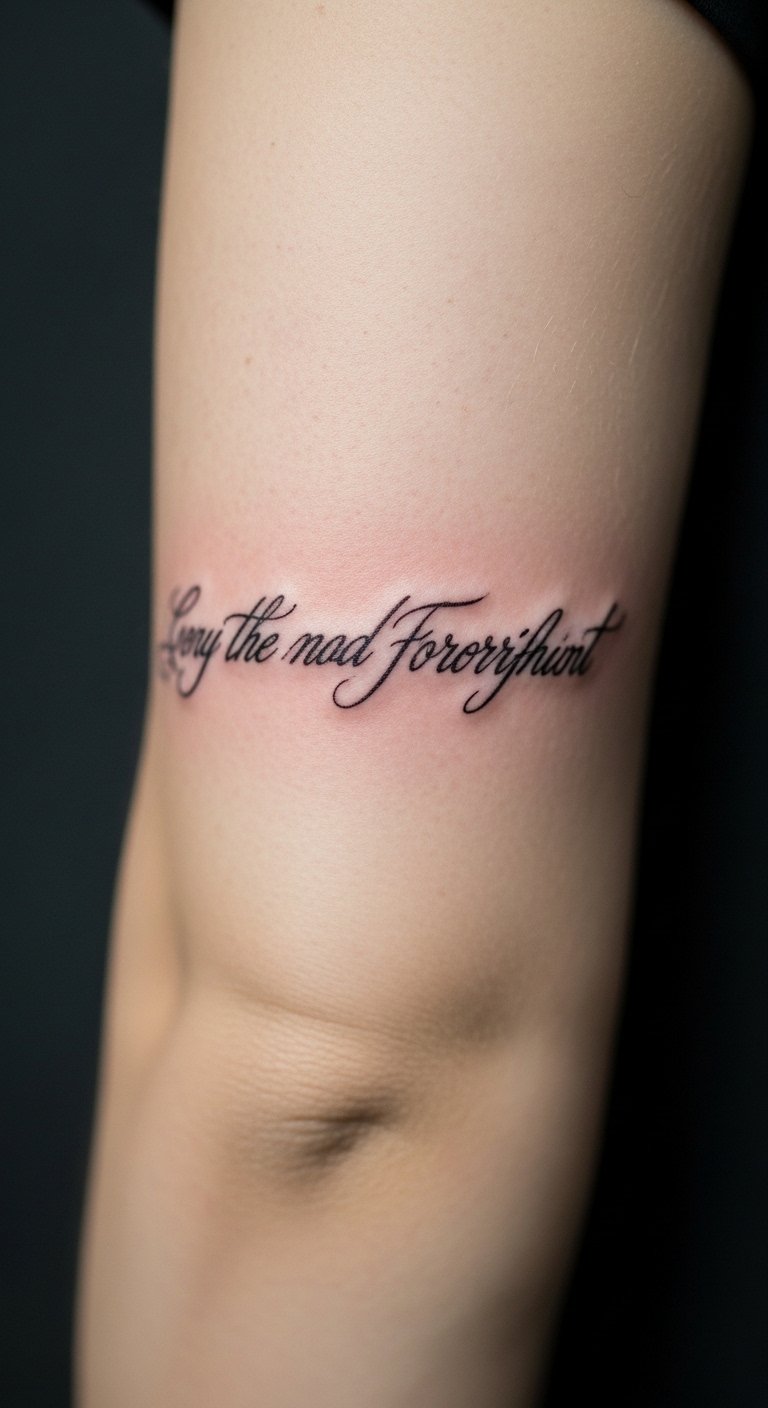
Inner elbow is mobile and can be painful. Lines here need to account for stretching; artists should avoid super thin strokes. Healing takes care to prevent cracking from movement. This placement feels private and moves with the body—great for a phrase that follows your bend.
Script With Geometric Backing (Script + Geometric, Shoulder Blade)
Style/Technique: Script + Geometric / Mixed Media
Pain Level: Medium (4/10)
Session Time: 1–2 hours
Best For: Modern contrast, visible art
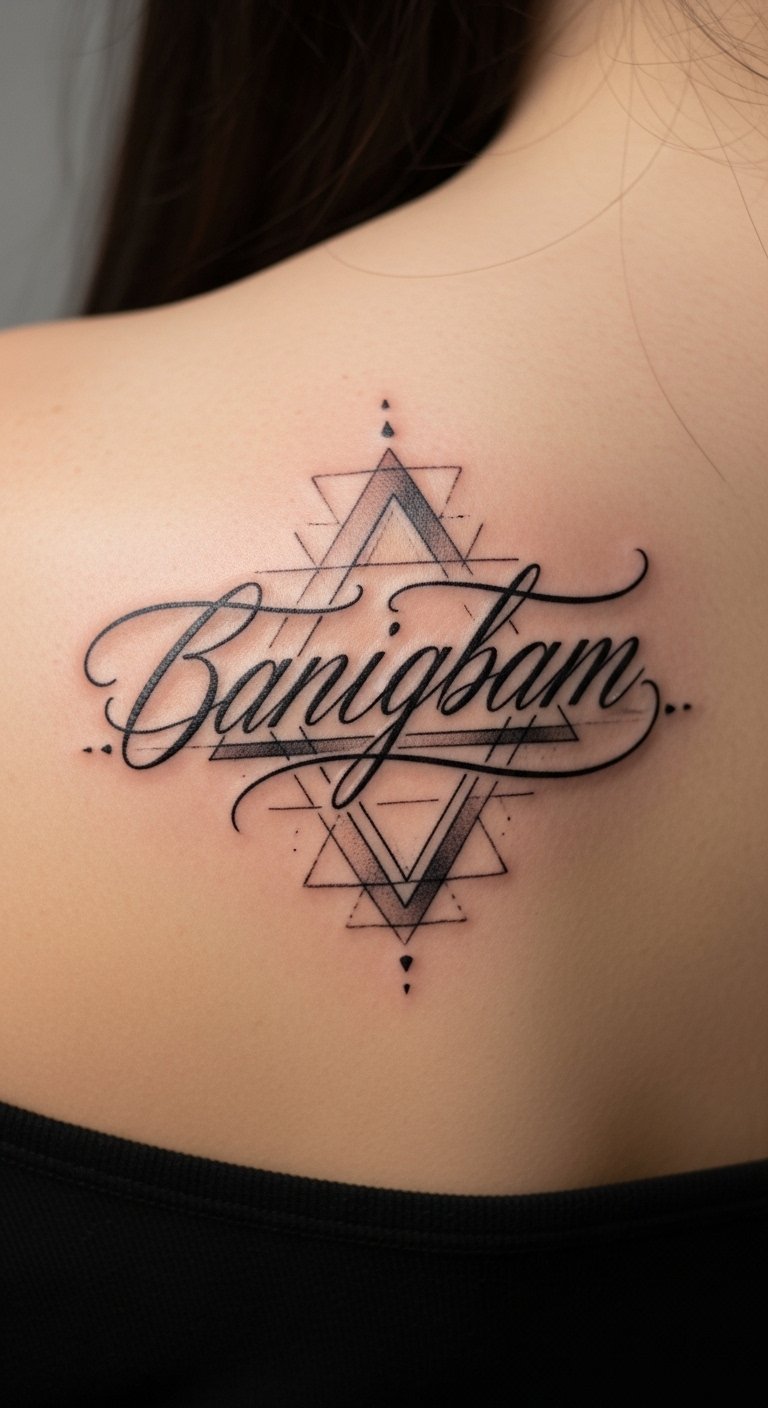
Pairing script with geometric shapes gives modern structure. Shoulder blade is low-pain and heals well. Keep the script bold against the shapes so letters remain dominant. This pairing is a fresh angle many artists are exploring now.
Script Wrapped Around Sternum (Sternum Script + Centered)
Style/Technique: Centered Script / Sternum
Pain Level: High (7-8/10)
Session Time: 1–3 hours
Best For: Bold, body-central text
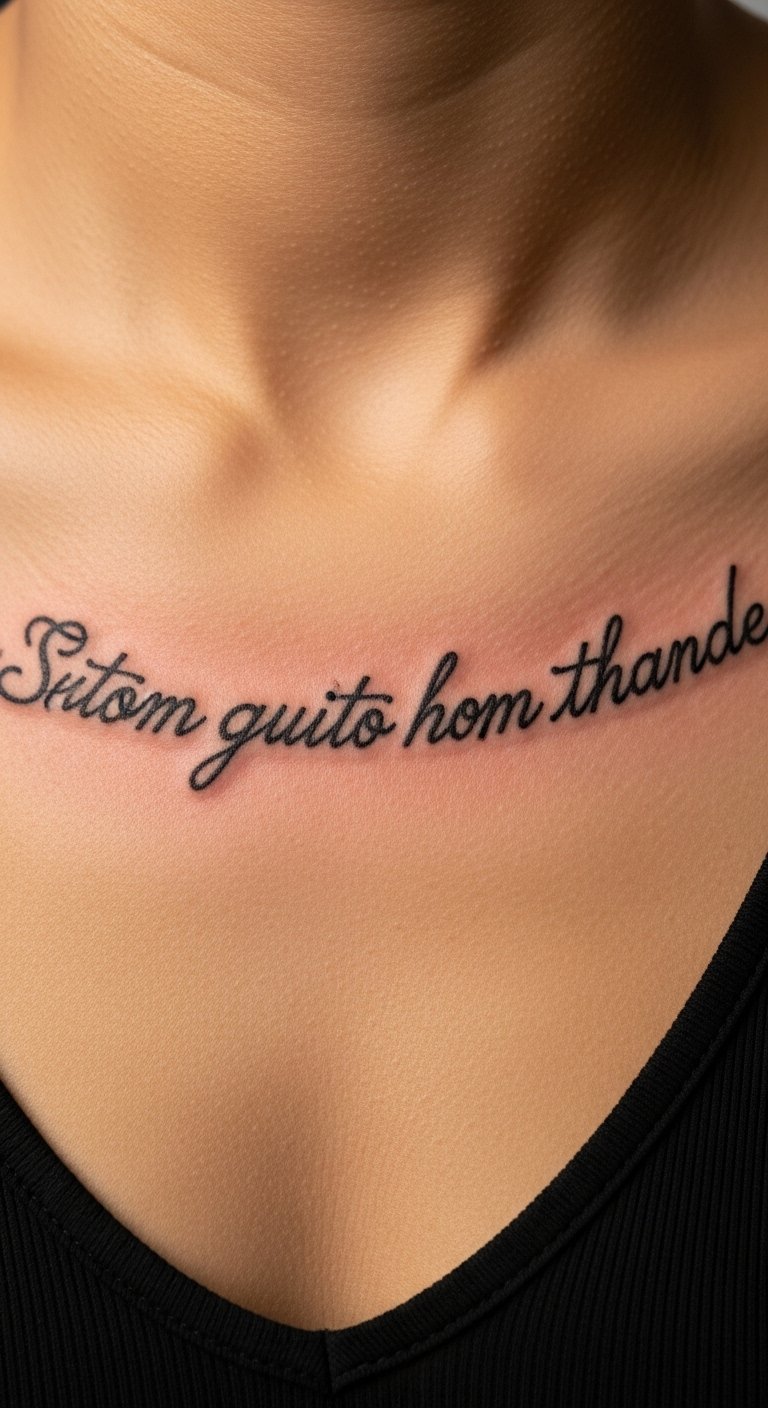
Sternum text looks dramatic but can be painful. Lines need weight to remain legible with movement and breathing. Expect recovery that limits upper-body strain for a few days. Choose clear lettering and give letters some space.
Script Along Spine Of Finger (Tiny Vertical Script + Side Finger)
Style/Technique: Tiny Vertical Script / Finger Side
Pain Level: High (7/10)
Session Time: 20–40 minutes
Best For: Subtle, tactile reminders
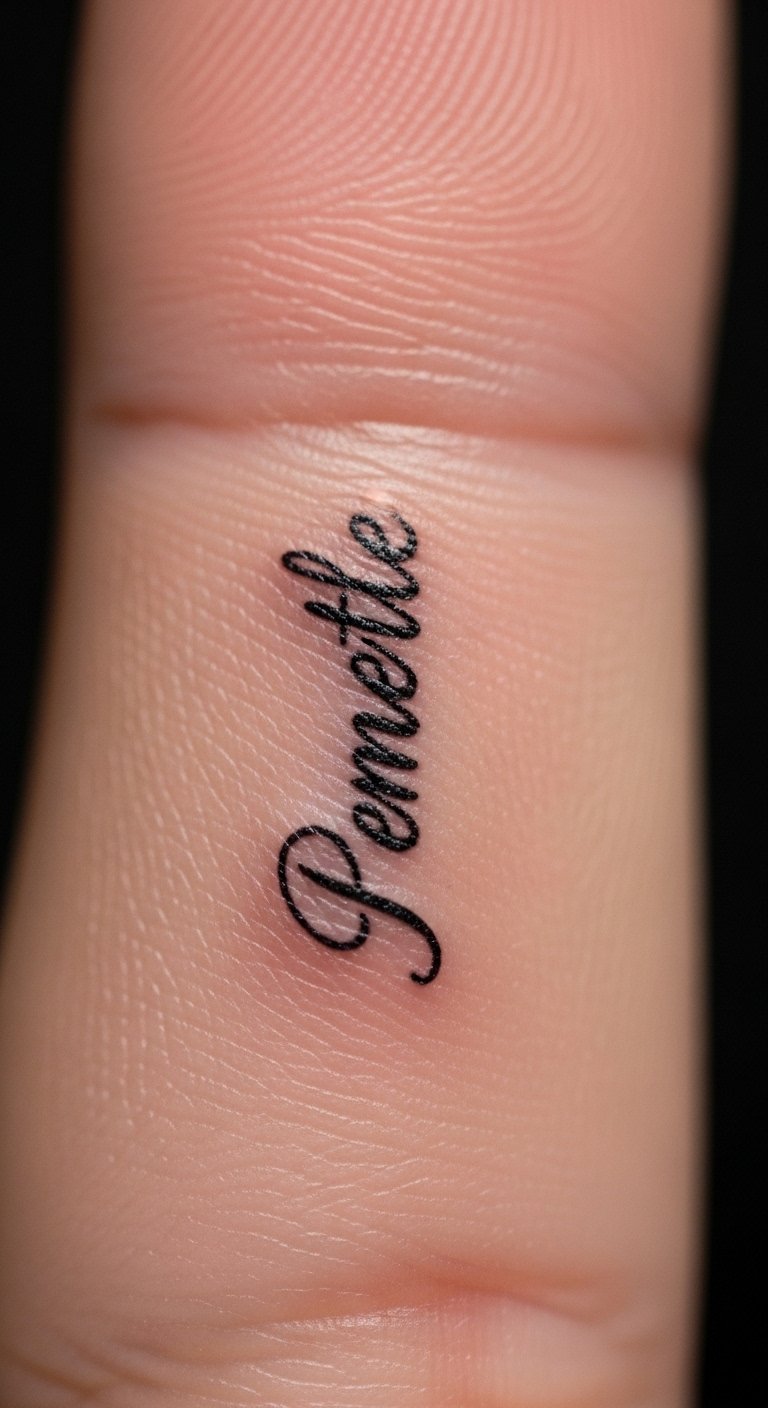
Side-finger script is tactile and minimal. It’s prone to fading and needs touch-ups. Keep text extremely short and bold enough to survive frequent use. Pain is sharp but quick. This is a modern, discreet option.
Script With Illustrative Shadow (Script + Illustration, Calf)
Style/Technique: Script + Illustrative Shadow / Calf
Pain Level: Low (3/10)
Session Time: 1–2 hours
Best For: Readable, decorative
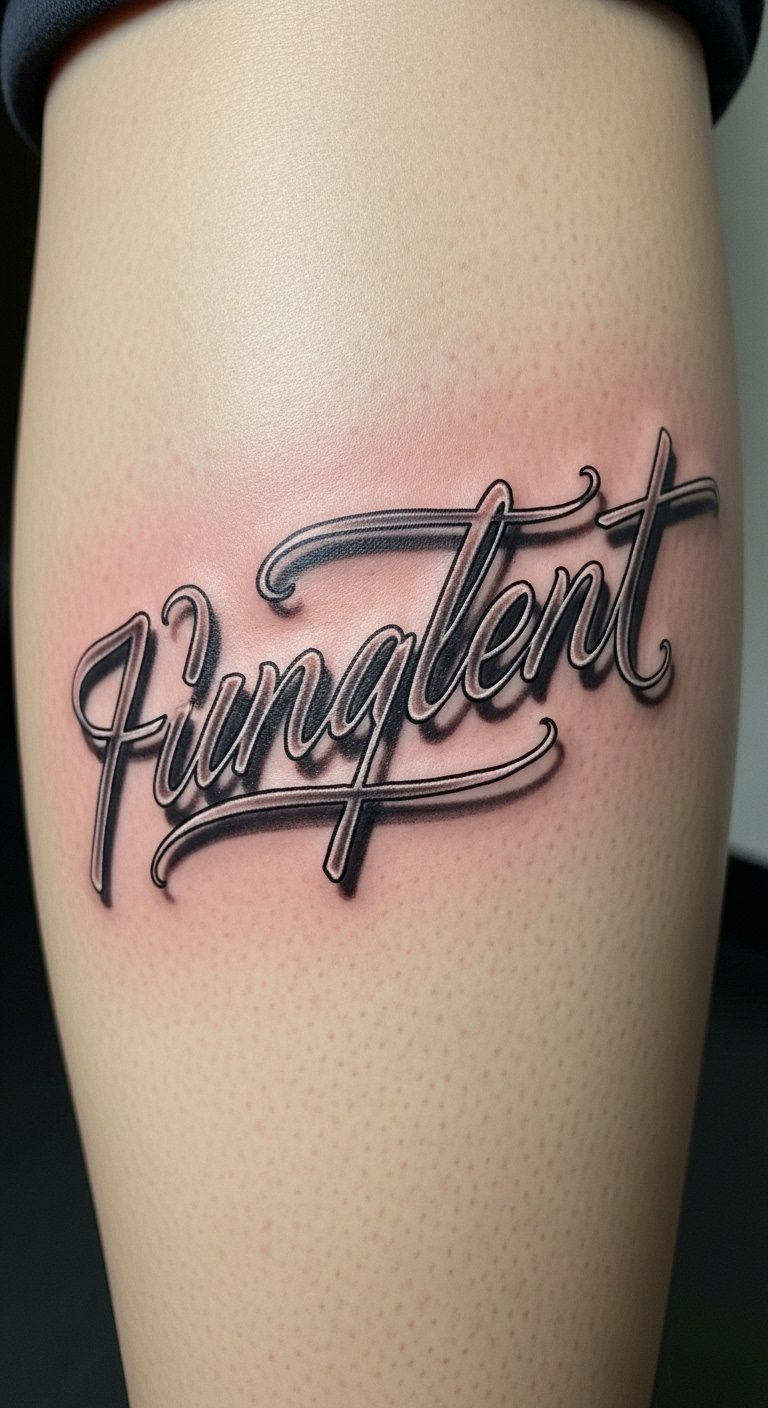
Calf script handles illustrative shadowing well and stays legible long-term. Low pain and easy healing. This placement is excellent for longer phrases with decorative shading that ages nicely.
Script In Native Alphabet (Script + Non-Latin Characters, Upper Arm)
Style/Technique: Script / Non-Latin Script
Pain Level: Low-Medium (3-4/10)
Session Time: 30–90 minutes
Best For: Cultural scripts, personal heritage
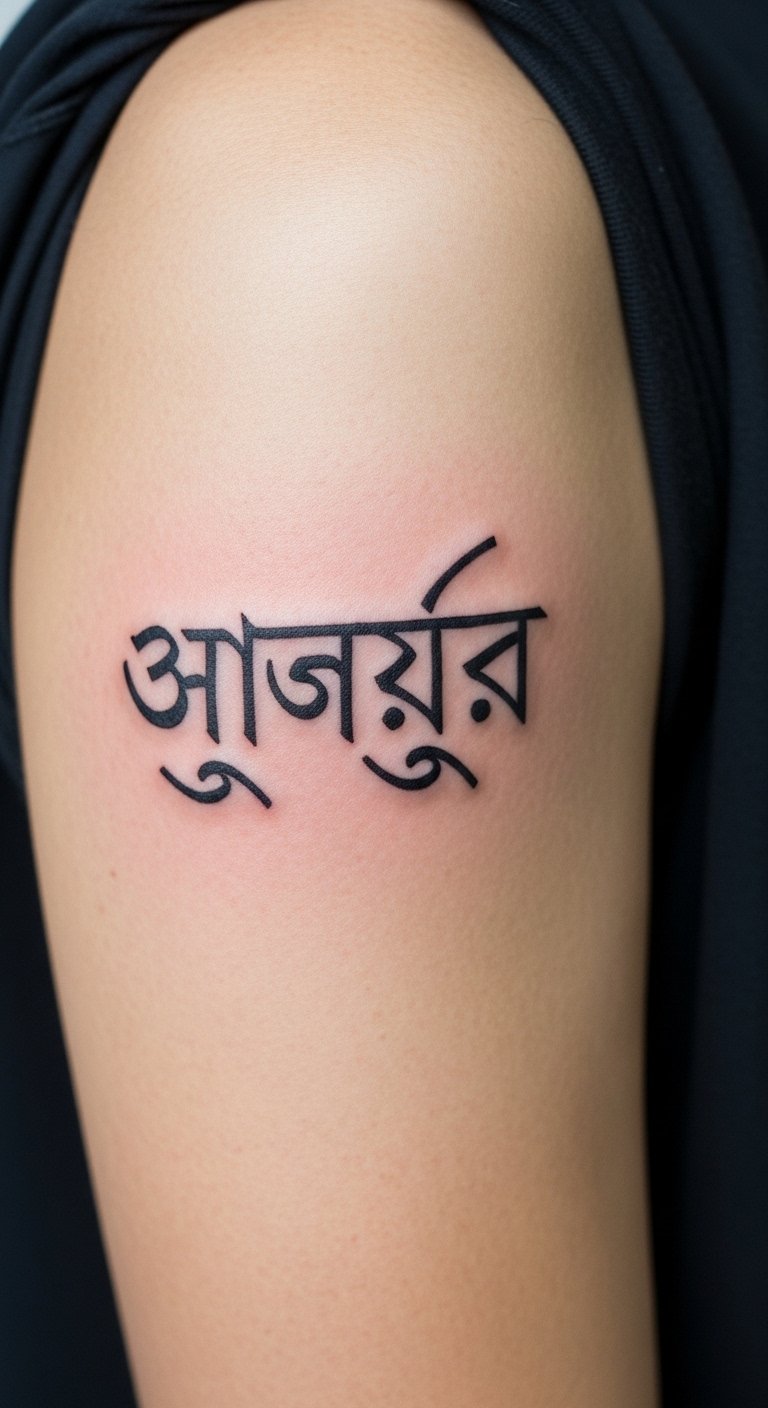
Using native or non-Latin scripts can carry deep meaning. Ensure accurate translation and an artist experienced in that script to preserve stroke order and balance. Upper arm placement is forgiving. Healed examples are essential—characters read differently as they settle.
Script With Negative Space (Negative Space Script + Ribcage)
Style/Technique: Negative Space / Script Cut-Out
Pain Level: High (7/10)
Session Time: 1–2 hours
Best For: High-contrast, modern look
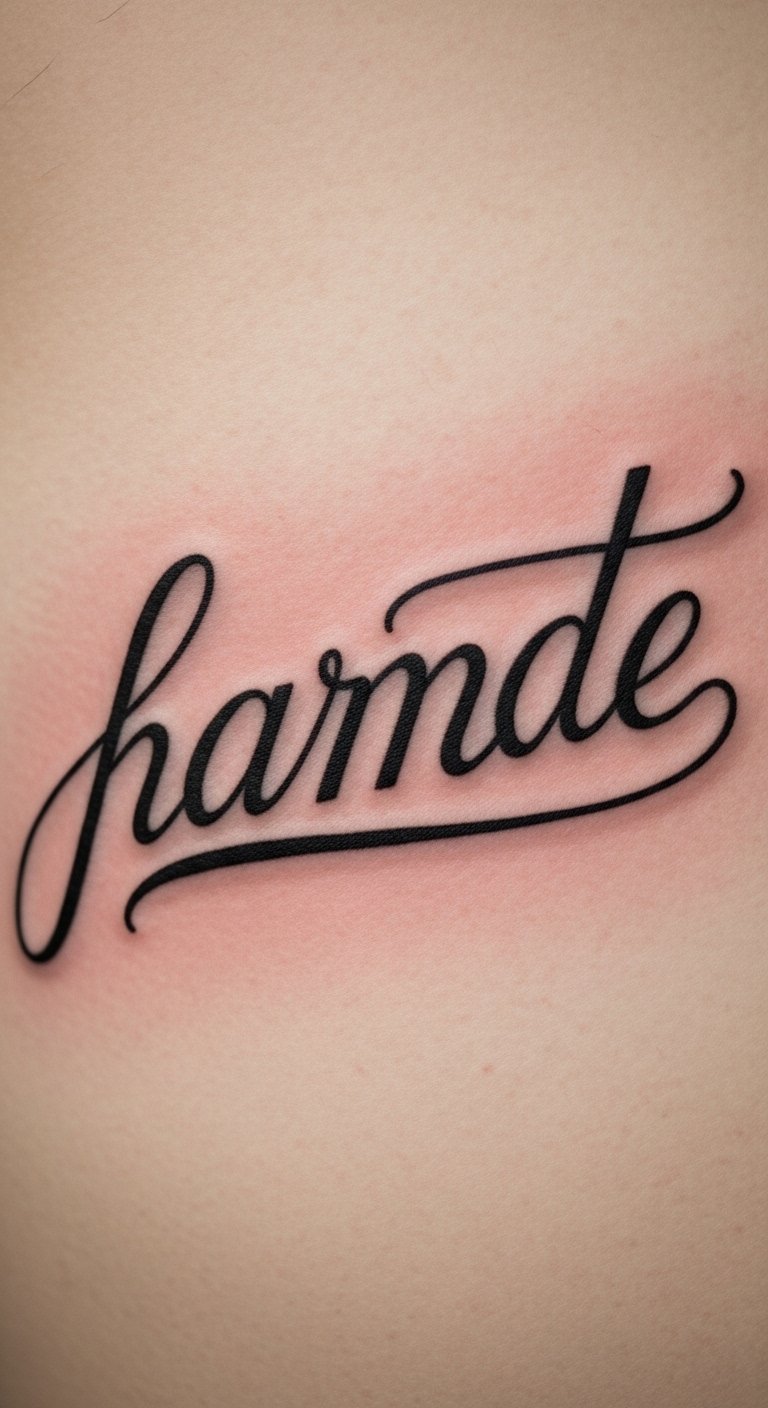
Negative-space script uses surrounding ink to “carve” letters. It reads bold but needs an expert for crisp edges. Ribcage placement demands pain tolerance. This look is unique and ages with striking contrast when done well.
Script Overlaid On Image (Script + Portrait Overlay, Thigh)
Style/Technique: Script Overlay / Mixed Media
Pain Level: Low-Medium (3-4/10)
Session Time: Multiple sessions
Best For: Personalized art, portrait combos
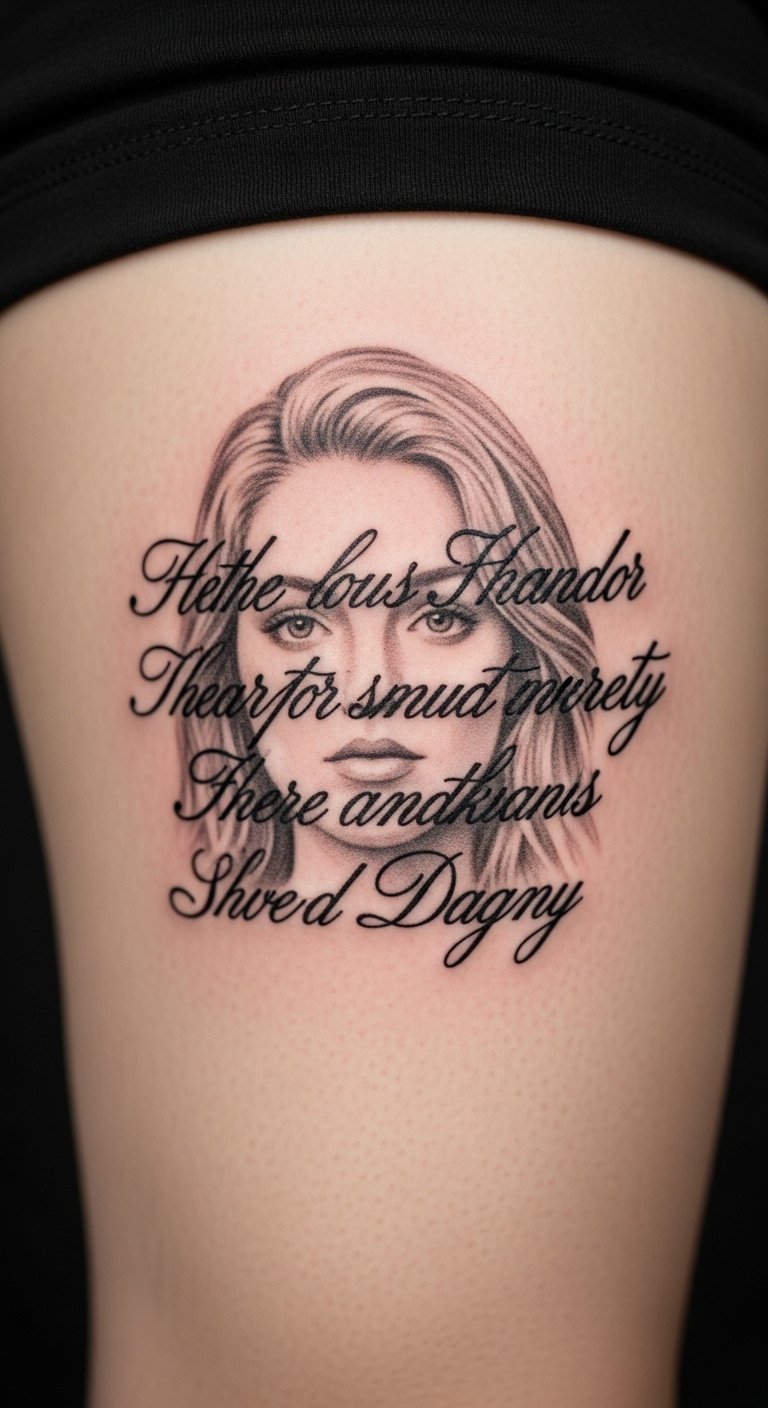
Overlaying script on portraits requires planning so letters don’t get lost. Thigh is a forgiving canvas. Expect multiple sessions. When done right, the text reads as a caption to the image and keeps its emotional weight.
Small Script On Inner Lip (Micro Script + Inner Lip)
Style/Technique: Micro Script / Oral Placement
Pain Level: High (8/10)
Session Time: 10–20 minutes
Best For: Ultra-hidden, ephemeral
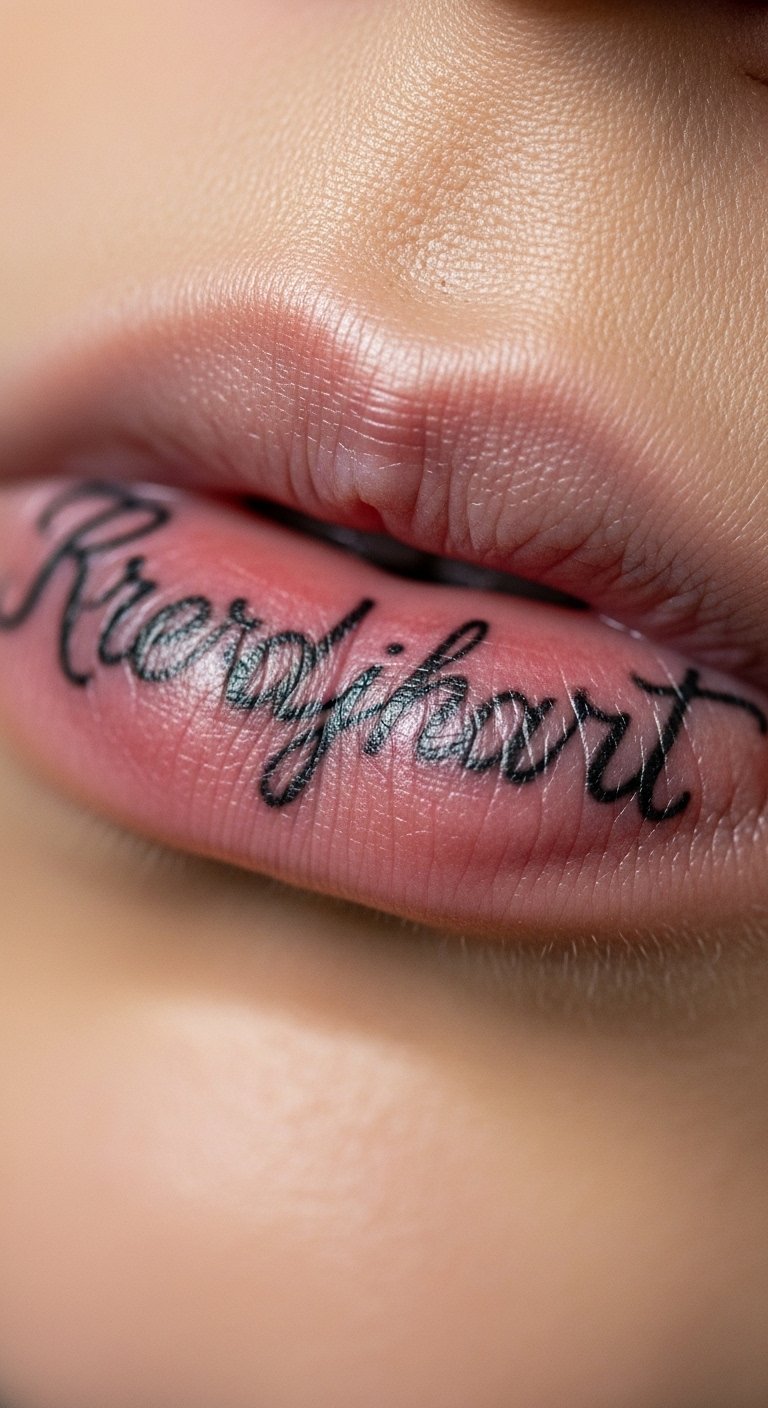
Inner-lip script is tiny and hidden but fades fast due to mucous membrane turnover. It’s often short-lived and may need touch-ups. Pain is sharp but quick. Consider it if you want a very private text and accept maintenance.
Script With Metallic Ink Accent (Script + Metallic Accent, Wrist)
Style/Technique: Script + Metallic Accent / Accent Ink
Pain Level: Low-Medium (3-4/10)
Session Time: 30–60 minutes
Best For: Subtle shine, special effect
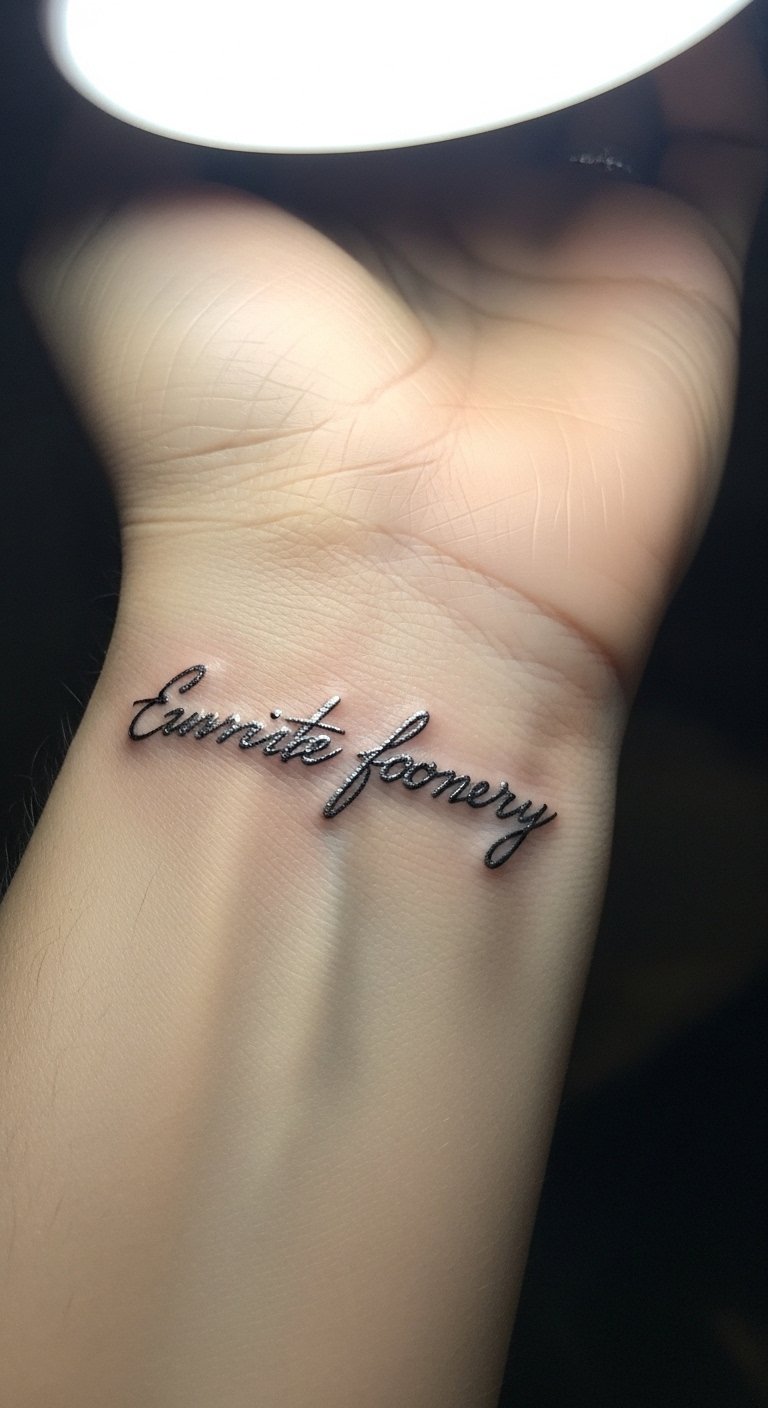
Metallic accents can add flash but may fade differently than black. Use as light highlights behind solid black script. Not all artists work with metallics, so ask about healed examples. Healing is standard; protect from sun to retain sheen.
Script Tattoo As A Signature (Signature Script + Upper Chest)
Style/Technique: Signature-Style Script / Personal Mark
Pain Level: Medium (4/10)
Session Time: 30–90 minutes
Best For: Personalization, heirloom feel
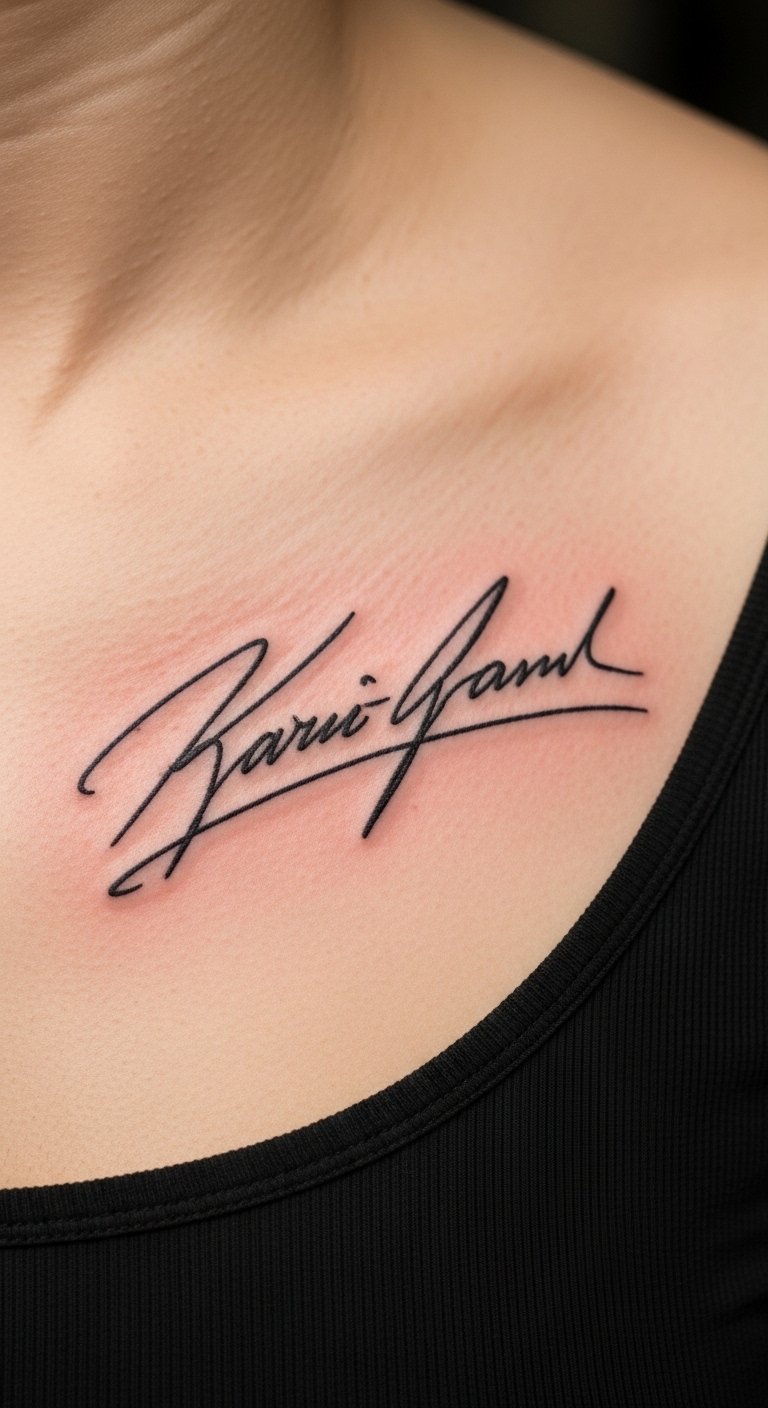
A signature tattoo feels intimate—like wearing handwriting. Ensure the original is crisp and the artist translates pen pressure into durable strokes. Upper chest is good for visibility and longevity. Avoid tiny flourishes that blur.
Tattoo Prep and Aftercare Essentials
Aftercare/healing products I actually used or saw artists recommend:
Aftercare Essentials:
- Aquaphor Healing Ointment, 14 oz tube — Use first 3–5 days as recommended
- Saniderm Transparent Adhesive Bandage, 6-inch Roll — Second-skin healing method many pros recommend
- CeraVe Fragrance-Free Moisturizing Lotion, 12 oz — For days 4–14
- Dr. Bronner's Unscented Castile Soap, 32 oz — Gentle cleaning
Before Your Appointment:
- Lidocaine Numbing Cream 5% — Use only if artist approves, 30–45 min prior
- Stencil Transfer Paper Pro Pack — For personal mock-ups
Long-Term Maintenance:
- SPF 50 Sunscreen Stick for Tattoos — Prevents UV fading
- Mad Rabbit Tattoo Balm, 2 oz — Long-term vibrancy
- Hustle Butter Deluxe, 4 oz — Vegan aftercare option
Optional Comfort Items:
- Tattoo Numbing Spray — For touch-ups or sensitive areas
- Hydrocolloid Bandages (Large Pack) — Alternative to Saniderm for small spots
I list sizes and brands I’ve used. Artists routinely mention Aquaphor and Saniderm as reliable; Hustle Butter and Mad Rabbit are recommended for ongoing care.
Frequently Asked Questions
Q: How bad does a script tattoo actually hurt?
A: Pain depends on placement. Outer arm/forearm = about 3/10. Ribcage, sternum, fingers = 7–8/10. It’s more an endurance of buzzing and scraping. For sensitive spots, consider numbing cream with 5% lidocaine if your artist agrees.
Q: What if I regret a word or phrase later?
A: Sit with wording for months. If unsure, place it where it’s easily covered (thigh, ribcage). Removal exists but is a long process—treat the decision as long-term.
Q: How do I keep script from fading and blurring?
A: Sunscreen is the biggest prevention. Use an SPF 50 stick daily. Also moisturize regularly and keep letters bold enough to survive slight blurring.
Q: Can I work out after getting a script tattoo?
A: Wait 48–72 hours minimum. For high-movement areas (elbow, knee), wait longer to avoid stretching scabs. Keep it clean with gentle soap like Dr. Bronner’s Unscented Castile.
Q: Do scripts look different on different skin tones?
A: Yes. High-contrast black ink reads best across tones. Bright pastels may mute on deeper skin. Ask to see healed examples on similar skin.
Q: How long does a script tattoo take to fully heal?
A: Surface healing is 2–3 weeks. Full skin remodeling can take 2–3 months. The first week is most critical—keep it clean, moisturized, and protected with products like Aquaphor.
Conclusion
Script tattoos reward patience and planning. Start with a clear word or phrase, pick a placement that suits your lifestyle, and prioritize legibility over tiny flourishes. For healing, I rely on Saniderm and Aquaphor early, then SPF long-term. Which script style are you leaning toward?