
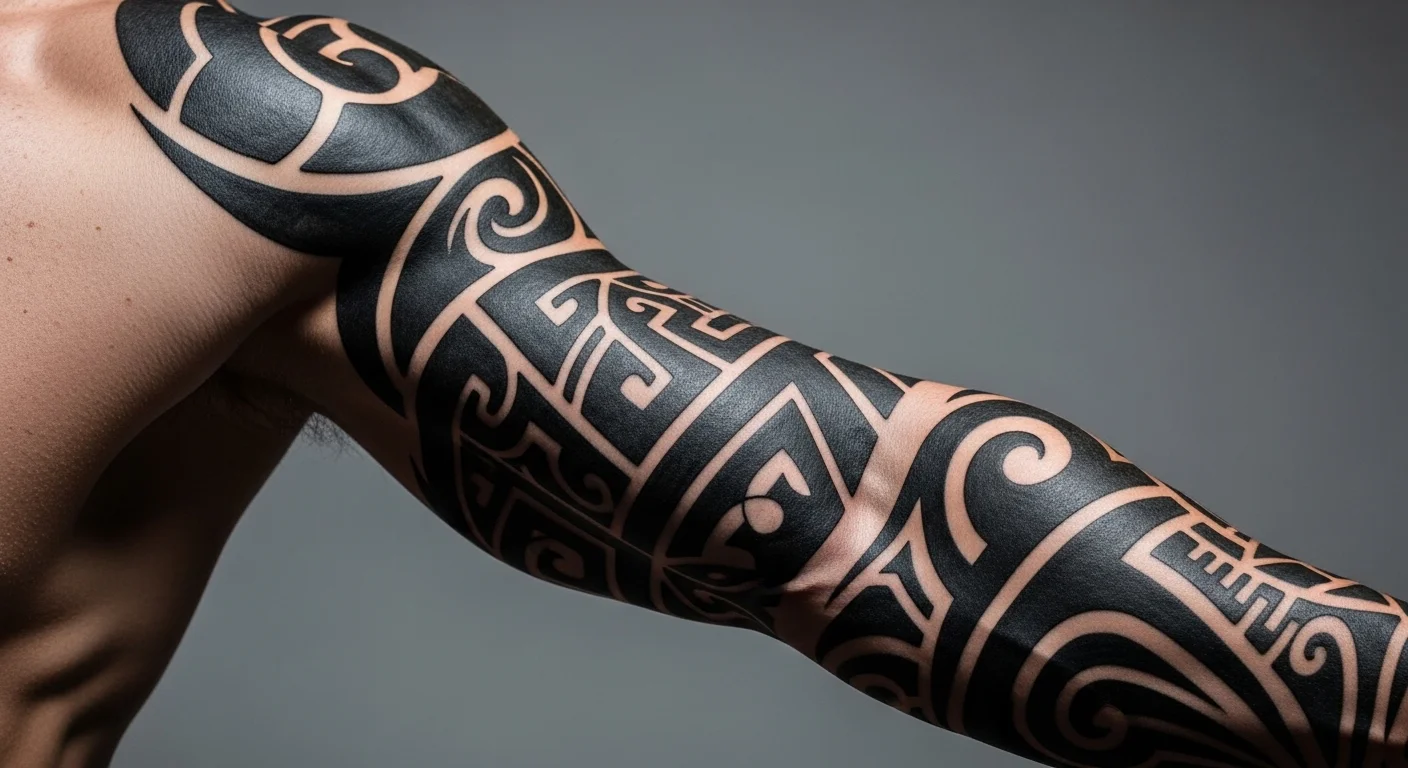
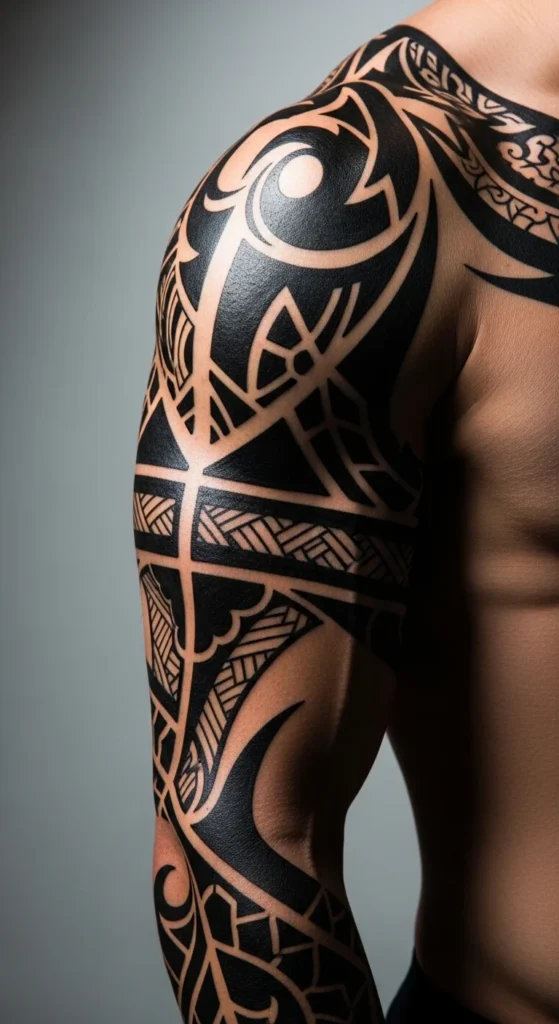
Tribal tattoos carry heritage, status, and protection in many cultures. From Polynesian motifs to neo-tribal blackwork, these designs are more than decoration. They can speak about family, courage, and big life passages. At the same time, there are real questions around cultural respect and who should wear what. This guide gives you raw, bold ideas while reminding you where they come from. Use it to shape a design that fits your story, your budget, and your comfort level—without copying sacred patterns that belong to specific communities.
1. Polynesian Shoulder Panel With Flowing Lines
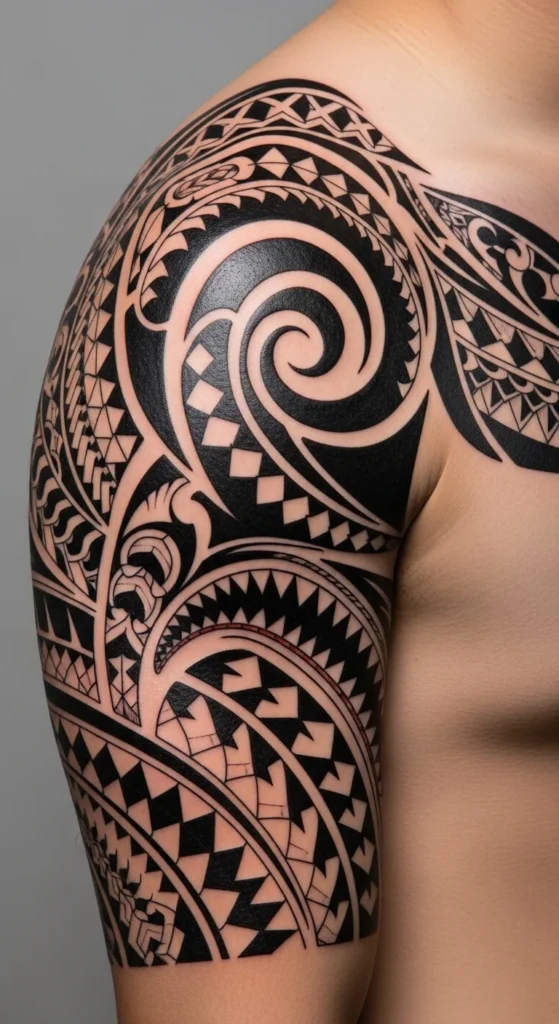
A shoulder panel inspired by Polynesian tribal work wraps around the top of the arm and flows onto the chest or back. The curved panels echo muscle lines, so even simple patterns feel strong. To keep this design respectful, avoid copying full traditional layouts symbol by symbol. Instead, talk with an artist who understands Polynesian structure and ask for a custom piece that shares the same flow without claiming a specific family pattern.
On a budget? Start with the front of the shoulder only, then expand later over the bicep or chest. You can sketch rough shapes at home using thick markers on tracing paper and tape them over your shoulder to test how the flow feels. Focus on line direction and negative space. Let the artist refine details so the final tattoo fits your body rather than forcing a design meant for someone else.
2. Neo-Tribal Blackwork Full Sleeve
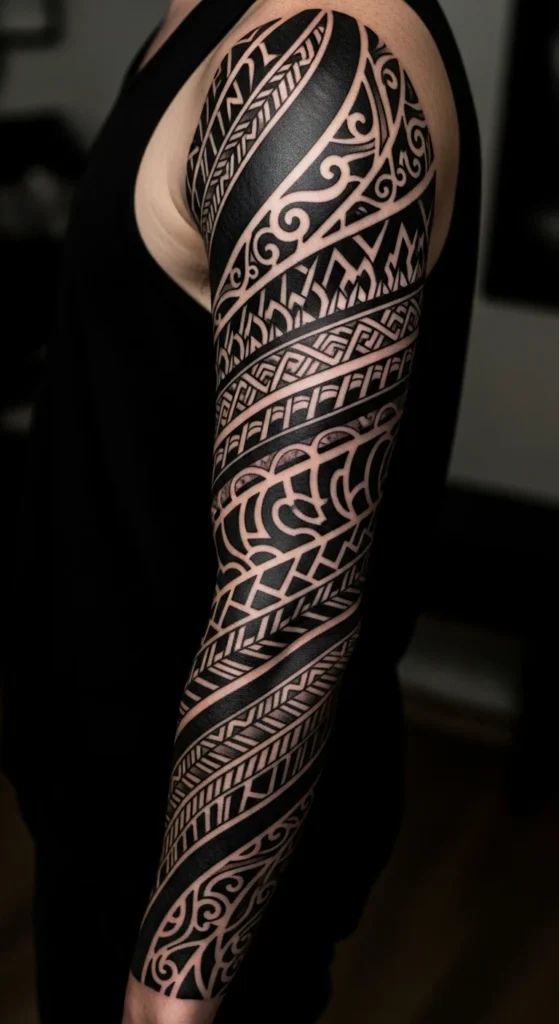
A neo-tribal sleeve keeps the bold black patterns but adapts them for modern style. Think strong shapes, abstract arcs, and thick negative-space channels rather than direct copies of cultural motifs. This is ideal if you love tribal energy but don’t want to step into sacred territory.
You can build the sleeve in sections to manage cost. Start with one or two large panels on the upper arm. Add forearm elements in later sessions. At home, print photos of neo-tribal arms and trace the layout, then erase any specific cultural symbols like enata or tiki figures. Leave only abstract curves and angles.
Share those rough ideas with a blackwork artist and ask them to customize the flow for your arm length and muscle lines. This way, your tattoo feels personal and powerful without borrowing stories that are not yours.
3. Tribal Chest Plate for Warrior Energy
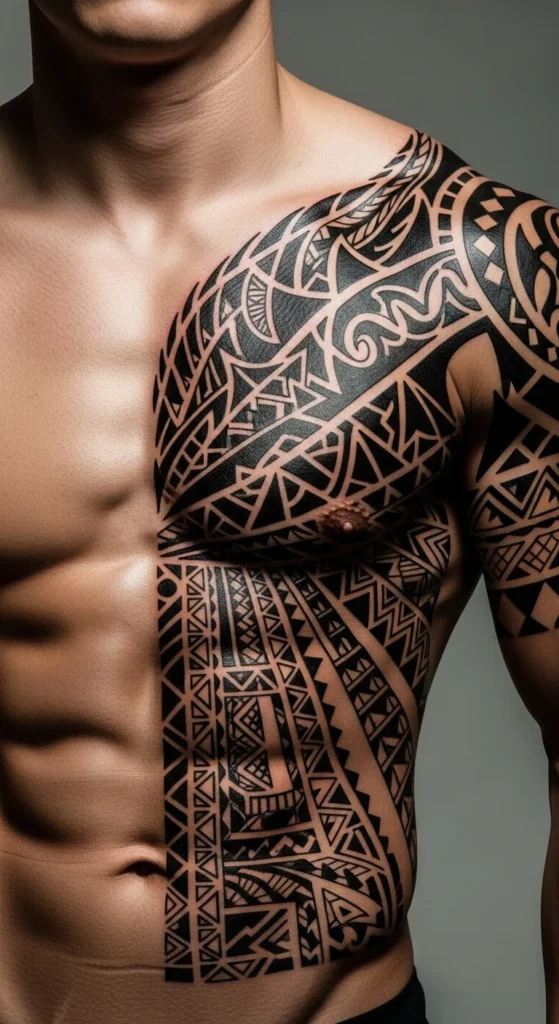
A tribal chest plate gives a strong, armor-like look. One side of the chest, running from sternum to shoulder, usually works best. Thick black bars, triangle clusters, and soft curves can echo combat gear without copying traditional chest pieces reserved for certain cultures.
To keep it budget-friendly, start with a single side panel instead of a full chest. Add extra patterns later as you save. You can design a simple version yourself by drawing slanted stripes from the center of your chest toward the shoulder, then adding smaller shapes between them.
Before committing, cut those shapes out of black paper and tape them in place. Look in a mirror and check how they move when you breathe or raise your arms. Bring photos of that mock-up to your artist. They can turn your paper armor into a tattoo layout that feels strong but still respectful.
4. Shark Teeth Motif for Strength
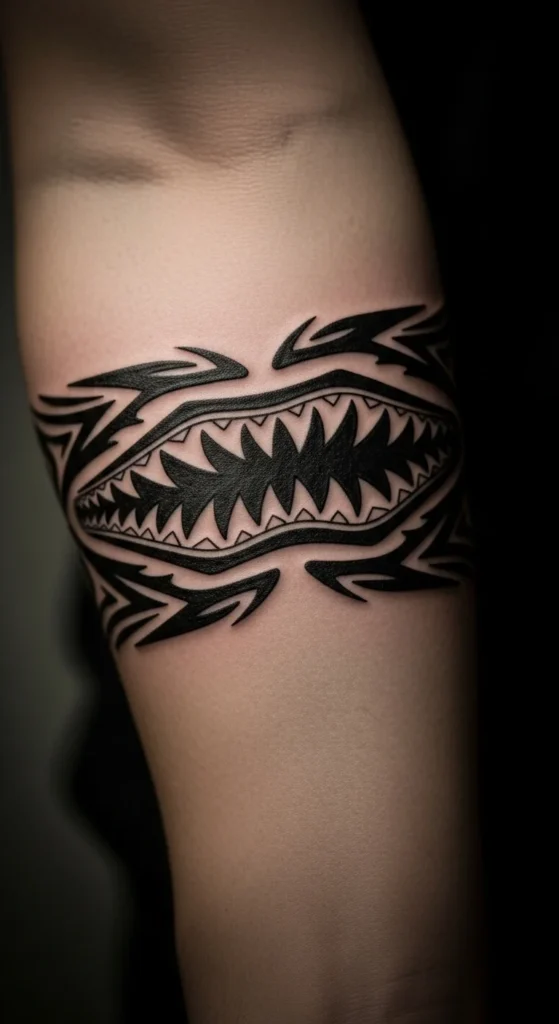
Shark teeth, or niho mano, often stand for strength and adaptability in Polynesian designs. You can use a simplified shark tooth band on the forearm, calf, or upper arm. To stay within cultural lines, treat the shapes as general symbols of resilience, not as a full traditional pattern.
A simple budget trick: keep the band slim. A narrow strip of repeating triangles takes less time than a heavy, stacked layout. Use a ruler and black marker at home to draw triangles on a strip of paper, then wrap it around your arm to test thickness and spacing.
Ask your artist to adjust the angles so they follow your muscle shape. You can also leave small gaps of skin between clusters to reduce fill time. The result is a strong graphic piece that still leaves room for future additions.
5. Turtle Shell Tribal Design on Calf
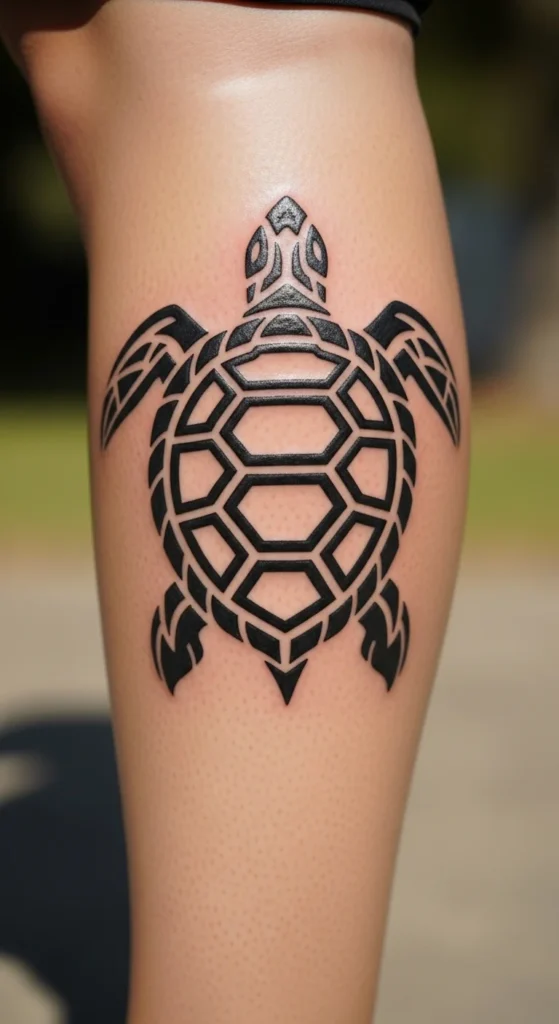
Turtle tribal symbols often speak about endurance and safe passage. A calf piece shaped like a turtle with tribal segments inside the shell gives you a clear focal point. You can use general shell-style grids and arcs rather than copying a culture’s exact pattern.
To keep cost low, keep the outer turtle outline simple and let most of the detail stay within the shell. You can draw a turtle at home, divide the shell into sections, then fill each section with easy patterns like stripes, chevrons, or dots.
Bring that sketch to your artist as a starting point. They’ll tweak lines to match your calf shape. This approach gives you a strong symbol without stepping on designs that belong to specific communities like Taino or Polynesian groups.
6. Tribal Backpiece With Rising Panels
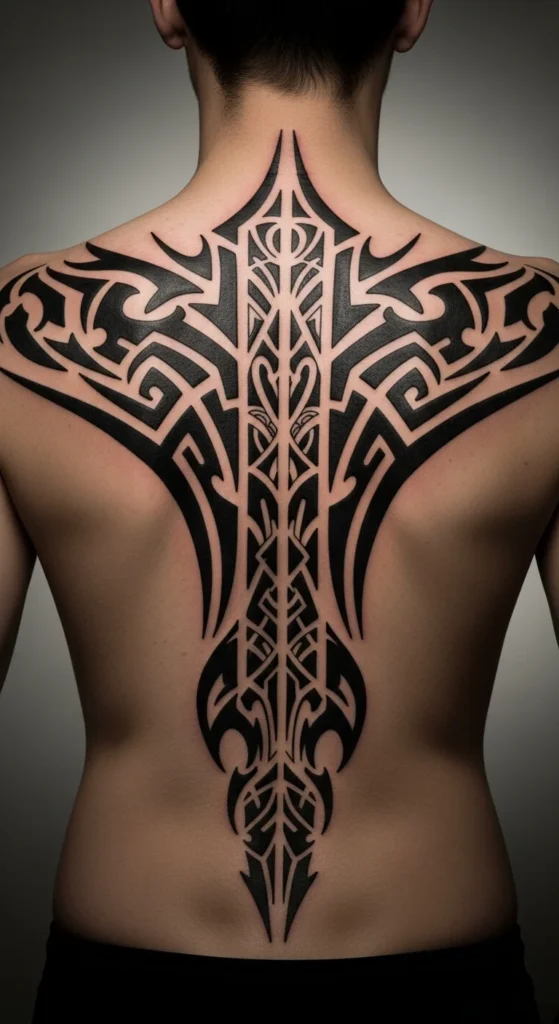
A full backpiece gives your artist a lot of space to work with stacked panels and flowing curves. Instead of one giant block of black, consider several vertical lanes rising along the spine and expanding outward. That keeps the design readable from distance and easier to grow over time.
Start on a budget by doing only the center spine panel. Later, add side panels that stretch toward the shoulder blades. At home, fold an A4 sheet into three long strips, draw rough patterns on them, and tape them down your back to test spacing. Have someone take a photo for you.
When you visit the shop, discuss what you want the tattoo to say—courage, family, survival—without naming it as any specific tribe’s pattern. Ask the artist to build abstract geometry rather than literal cultural symbols.
7. Samoan-Inspired Flow Without Copying Pe’a
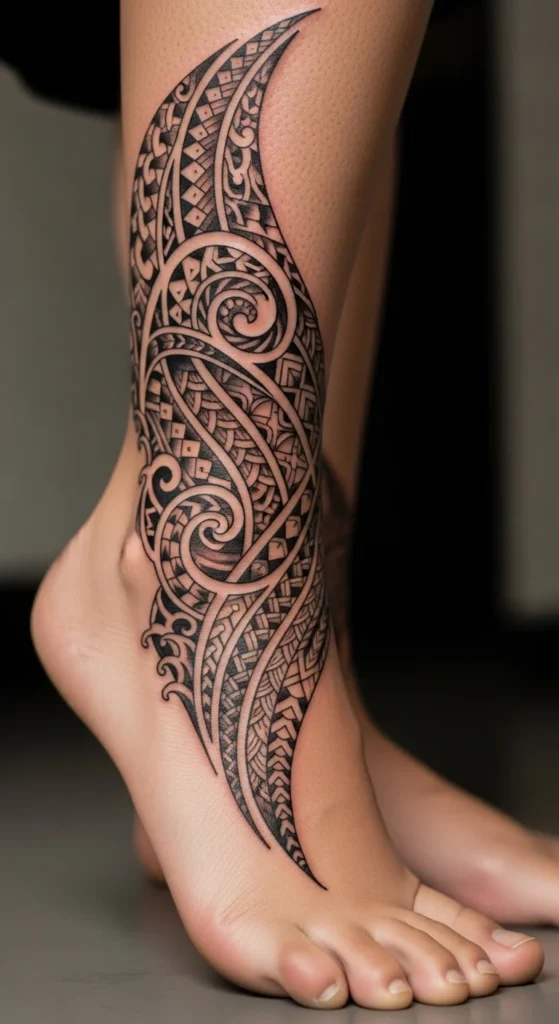
Traditional Samoan pe’a is a sacred practice tied to history and community. Copying it directly is not respectful. You can, however, work with the overall idea of flowing bands around the hips and ribs without calling it pe’a or copying traditional layouts.
Talk openly with your artist about respect. If they have experience with Samoan clients or training, ask for guidance. Keep your design more abstract: curved bands, triangle clusters, and negative-space strips that follow your waistline.
To keep costs down, start with one side of the torso only. Use masking tape at home to mark where you want lines to travel. Then draw over a printed photo of your body, sketching simple blocks of black. This process gives you a rough roadmap while staying away from sacred, lineage-based designs.
8. Maori-Inspired Arm Flow Without Moko
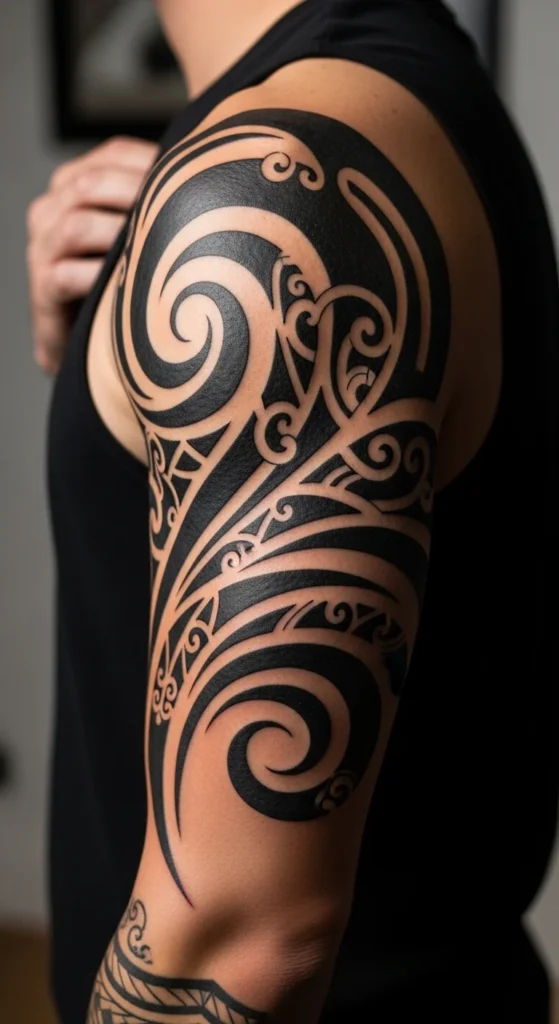
Maori moko on the face and head is deeply tied to genealogy and is not for non-Maori to copy. If you like the flowing spiral energy often seen in Maori art, keep it on the arm or leg and talk with your artist about staying away from moko layouts.
Focus on general spiral movement and curved bars, not on copying specific koru patterns. Keep your language in the studio honest: say you’re inspired by the sense of motion, not claiming cultural marks. To keep the session affordable, start with the upper arm only and keep shading limited.
You can sketch loose spirals on a printed arm photo, then let the artist design the final version. This keeps respect in place while still giving you a tribal-style flow.
9. Tribal Armband for Subtle Strength
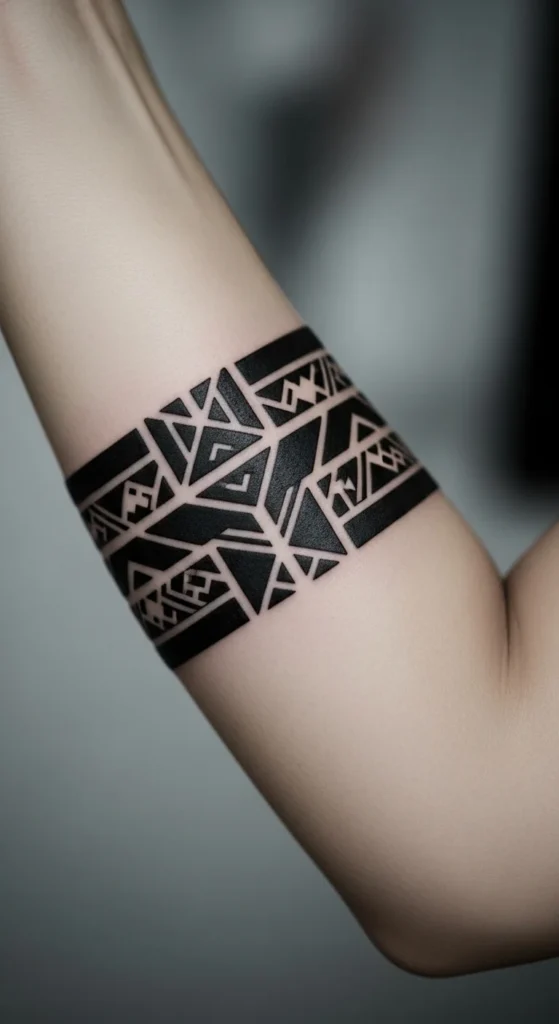
The classic tribal armband still works when done with care. Instead of a dated 90s look, aim for cleaner geometry and more thoughtful spacing. A single band with repeating shapes and a small area of negative space can feel current and grounded.
On a tight budget, this is one of the best options. It’s smaller, faster, and easy to extend later. At home, cut a strip of paper, draw patterns on it, and wrap it around your arm to test thickness. Adjust until it feels right when you flex.
Ask your artist for bold lines so the band ages well. You can also keep the back of the arm simpler, with fewer shapes, to reduce time while still getting a strong front view.
10. Tribal Wrist Patch for Everyday Reminder
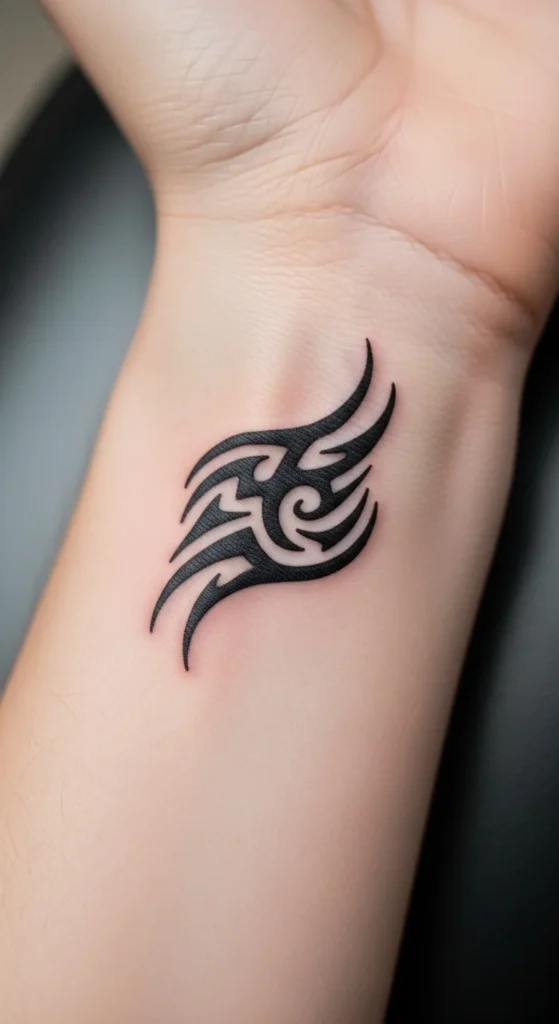
A small wrist patch gives you tribal energy in a low-commitment way. Think of a single symbol—like a stylized wave, claw, or sun segment—built out of tribal-style lines. It doesn’t need to be tied to a specific culture to feel meaningful.
This is very wallet-friendly. Many artists can finish a small wrist symbol in under an hour. To plan it, draw a few simple shapes on sticky notes and place them on your wrist. Check which shape you still like after a few days.
Ask the artist to keep the lines thick enough to hold shape over time. Blackwork on the wrist moves a lot, so clarity matters. You end up with a small, daily reminder of strength or calm that doesn’t push into sacred territory.
11. Tribal Leg Wrap for Long Flow
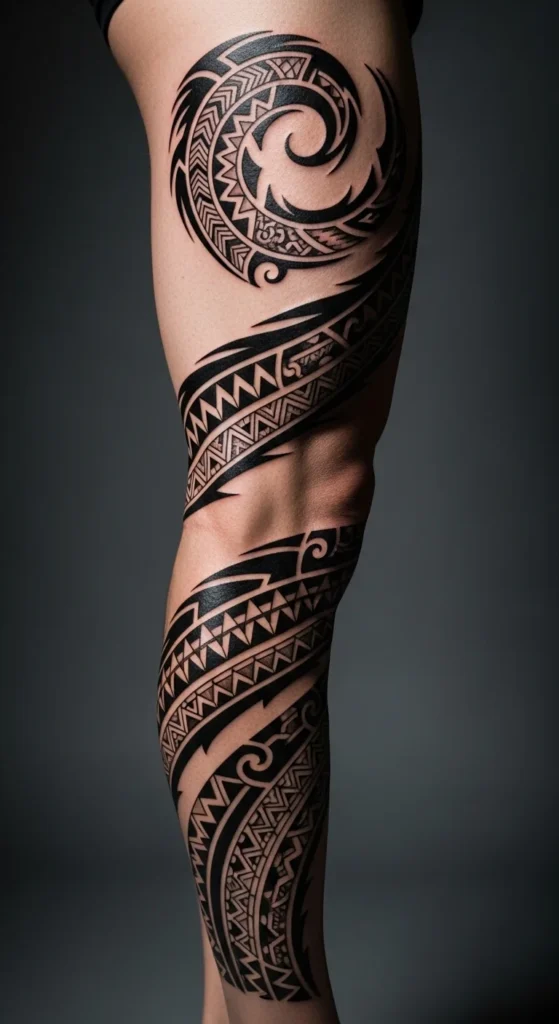
A leg wrap lets tribal patterns spiral from thigh to calf. This placement offers room for large shapes and smooth movement. It’s ideal if you like full-sleeve energy but want to keep your arms free for work or family reasons.
On a budget, take it in stages. Begin with a thigh panel. Later, extend it downward like a ribbon of blackwork. You can mark the route with masking tape and have a friend photograph your leg. Draw patterns directly on the photo to test different flows.
Share those mock-ups at the studio and ask your artist how to keep the wrap comfortable for walking and sitting. This kind of design feels strong while staying easy to hide when needed.
12. Tribal Spine Line With Stacked Symbols
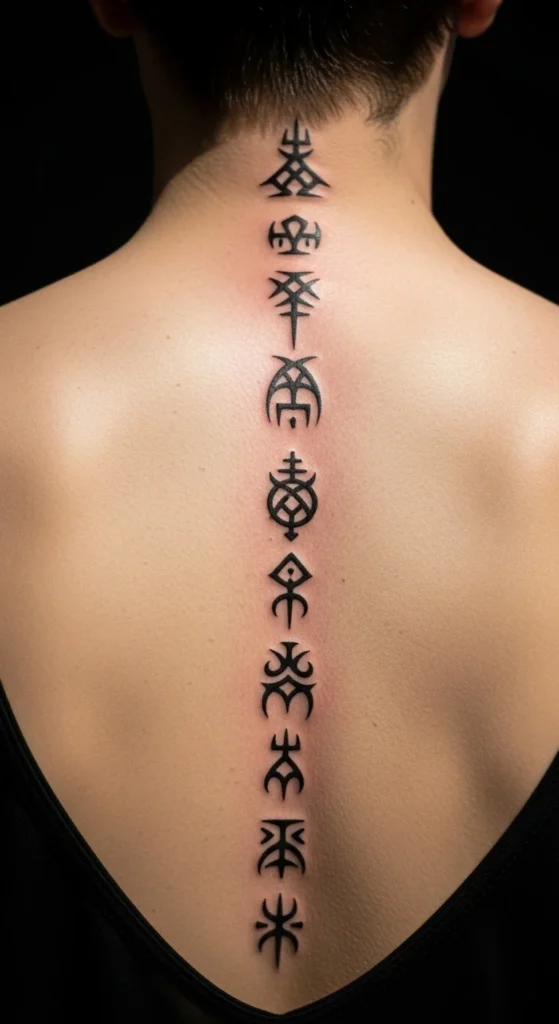
A spine line of small tribal-style symbols gives a quiet, centered look. Think of stacked shapes—triangles, arcs, sun segments—placed from neck base down to lower back. Each symbol can mark a moment, value, or stage in life.
You can spread the work across several sessions. Start with three symbols in the upper back, then add more as life milestones happen. A simple planning trick is to draw small shapes on sticky dots and place them along your spine. Have someone take a picture so you can check spacing.
Keep each symbol graphic and simple so healing is smoother. Black, solid shapes usually read best on the spine and age well across years of movement.
13. Tribal Sun Motif on Shoulder Blade
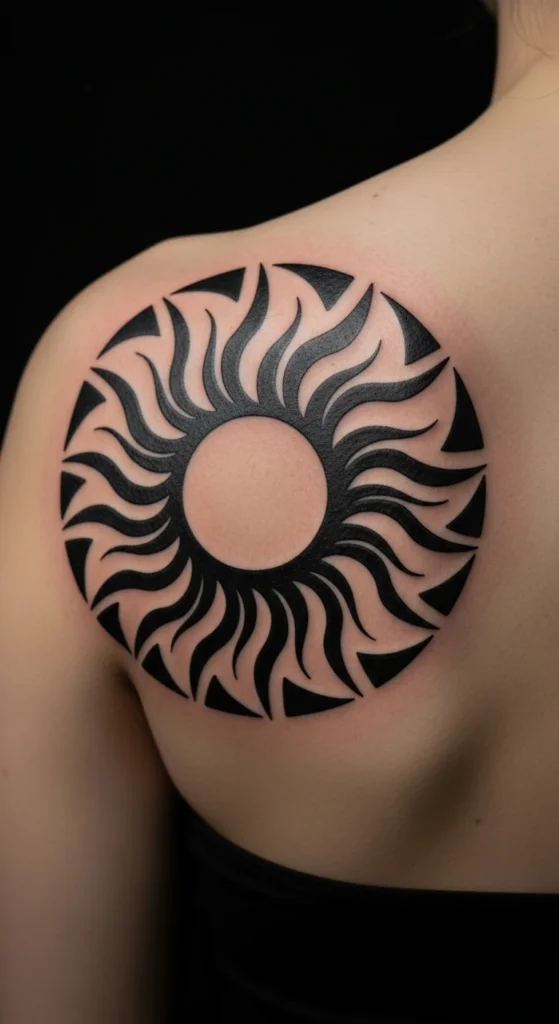
A tribal sun on the shoulder blade feels raw and direct. A circular center with pointed rays or curved lines gives a strong symbol without tying to one specific tribe. This can stand for life, energy, or survival—your meaning, your story.
To keep cost light, use simple solid rays instead of layered patterns. Draw a circle on paper, add rays with a marker, then cut it out and tape it on your shoulder blade. Take photos from different angles.
Ask your artist to adjust ray length so they match your back shape. A well-placed sun can later connect into a bigger backpiece if you decide to grow the design around it.
14. Tribal Hand Patch With Respect
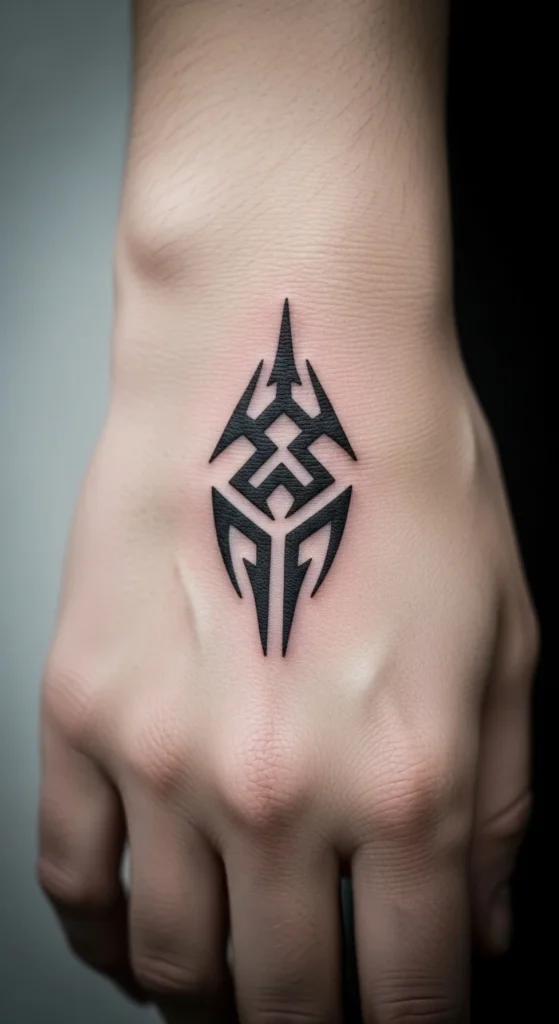
Hand tattoos carry a lot of visibility. Some cultures use hand or finger tribal work as ceremonial marks, so move with care. If you are not from those cultures, stick to abstract symbols or simple black shapes rather than copying specific designs.
Start small—a single patch on the back of the hand or just above the knuckles. This is cheaper, quicker, and easier to live with at work. To test the feeling, draw the design with a washable marker and wear it for a couple of days.
Talk honestly with your artist about cultural respect. Ask if any of your reference images are too close to sacred work. Adjust before anything permanent happens. That simple conversation keeps your design bold without causing harm.
15. Tribal + Flower Fusion Sleeve
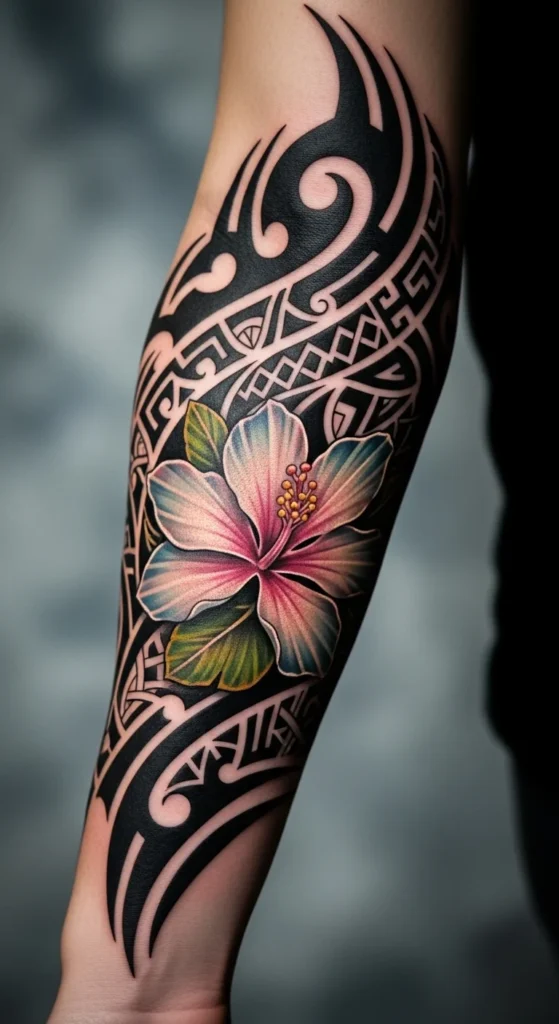
Tribal plus floral work is a popular neo-tribal direction. Bold black lines wrap around petals or frame a single bloom. This contrast feels raw and gentle at the same time. To stay respectful, keep your patterns abstract and avoid copying cultural panels directly.
Work with your artist to choose one flower that matters to you—maybe a birth flower or plant tied to your hometown. Then add sweeping tribal-style curves around it. You can build this up over time, starting with a forearm section before going near the elbow or upper arm.
Simple budgeting move: let the flower sit as linework only at first. Color, if you want it, can wait for a later session when you’re ready.
16. Tribal Wolf or Animal Head Design
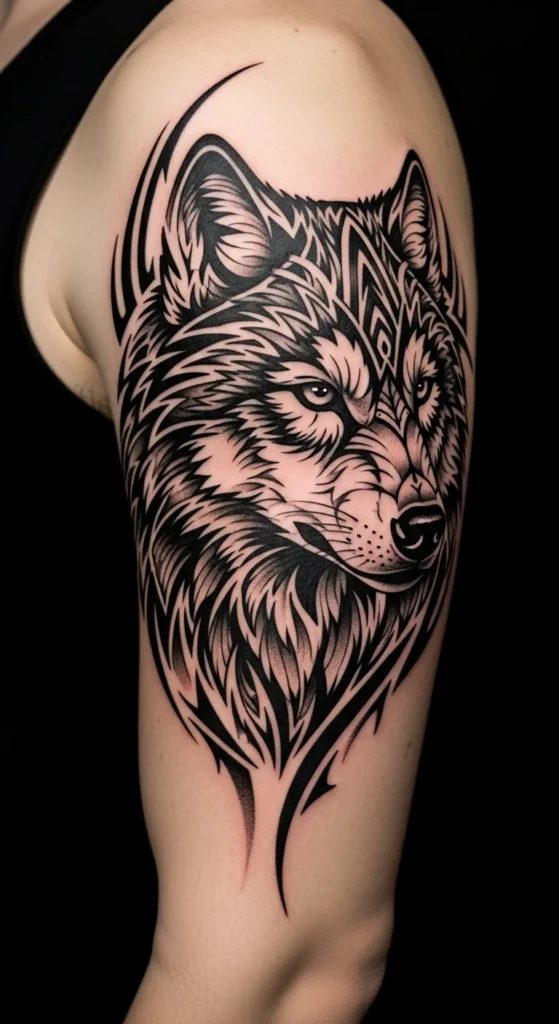
Animal heads built with tribal-style lines give you a clear symbol—wolf, lion, eagle—without borrowing cultural layouts. The key is to treat tribal lines as a graphic style, not as a direct copy of any one group’s pattern.
Choose an animal that genuinely reflects your story. Print a silhouette, lay tracing paper on top, and sketch bold angled lines inside the outline. Keep everything black so the final tattoo feels solid and unified.
On a budget, place the animal on the upper arm or calf where there’s enough flat space for details. Ask the artist to simplify your sketch so the lines stay readable from a distance. This gives you a fierce focal point tied to your own meaning.
17. Tribal Cross With Black Panels
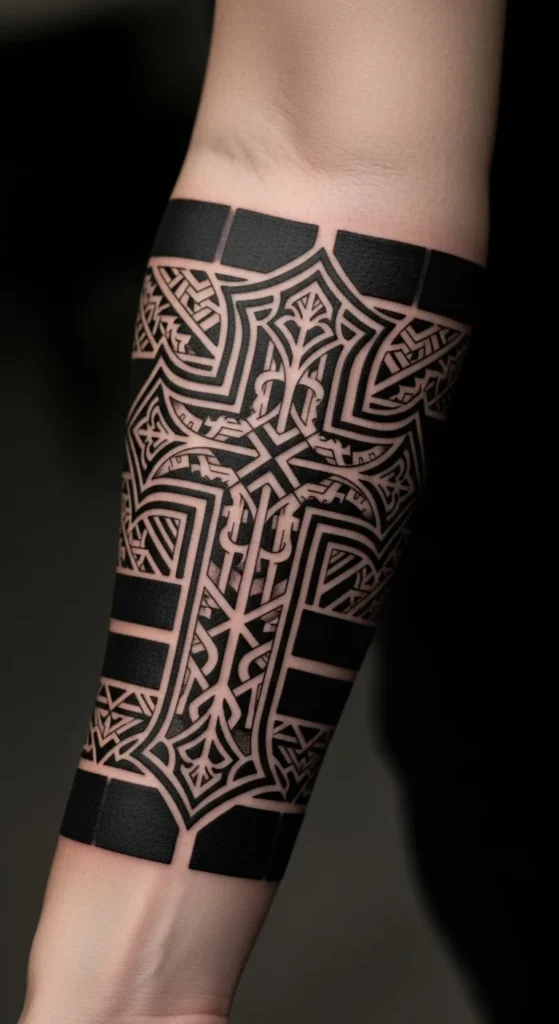
For some people, faith and tribal-style art come together in a cross filled with blackwork panels. The outline stays simple: a cross shape on the forearm, chest, or back. Inside, your artist fills segments with stripes, teeth-like shapes, or curves.
This approach is budget-friendly because the outline is simple and the interior can be built over multiple sittings. Start with basic linework inside the cross. Later, you can darken certain sections or add more patterns.
If you want to test layout at home, cut a cross from paper and draw basic patterns inside. Rotate it across different body spots—inner forearm, upper chest, side ribs—until one feels natural. This way, your tattoo holds personal spiritual meaning without copying another culture’s sacred cross design.
18. Small Tribal Symbols for Fingers
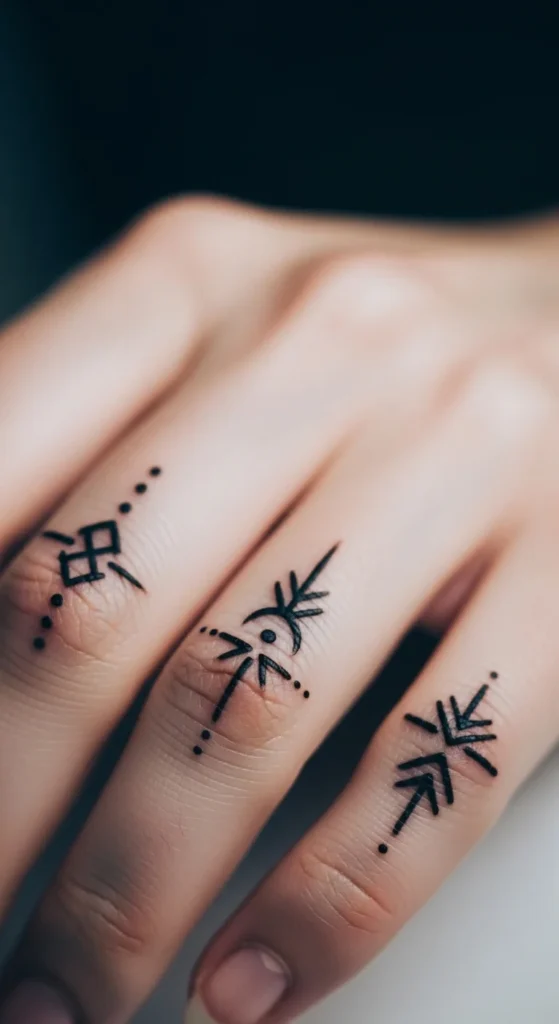
Finger tattoos are trendy but also very public. Instead of borrowing exact tribal finger layouts used by specific communities, focus on minimal lines and dots that echo tribal style. Think tiny chevrons, single stripes, or small dots near joints.
These are quick and often cheaper per piece, though many artists charge a minimum per session. To test them, draw symbols on your fingers with a fine marker and see how they look when you type, cook, or hold your phone.
Ask your artist about fading. Fingers can blur over time, so simple shapes work best. This route gives you a hint of tribal energy while staying modest and adaptable to your everyday life.
19. Tribal Shoulder-to-Bicep Wave
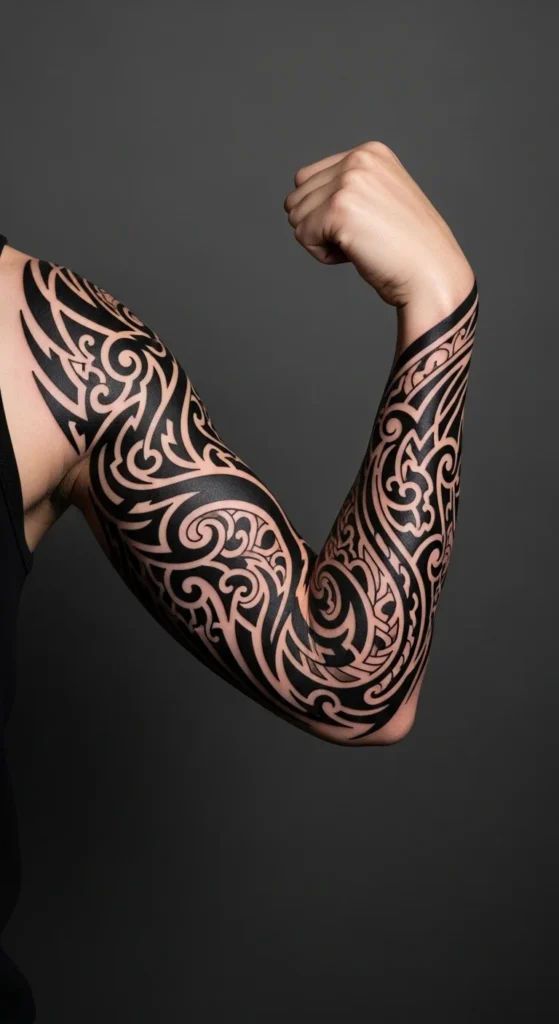
A wave of blackwork that starts on the shoulder and rolls onto the bicep feels fluid and strong. This suits people who want bold coverage without committing to a full sleeve yet. The design can include broad arcs, triangle clusters, and negative spaces that echo water movement.
To plan cheaply, draw waves on a clear plastic sheet and hold it over your shoulder and arm in the mirror. Adjust the curve until it follows your muscles well. Bring that to your artist as a loose concept.
Ask for clear black fill in only some sections to save time. You can always darken more areas in future sessions. This piece works as a solid base if you later decide to extend into a full arm project.
20. Tribal Hip Panel With Flowing Edge
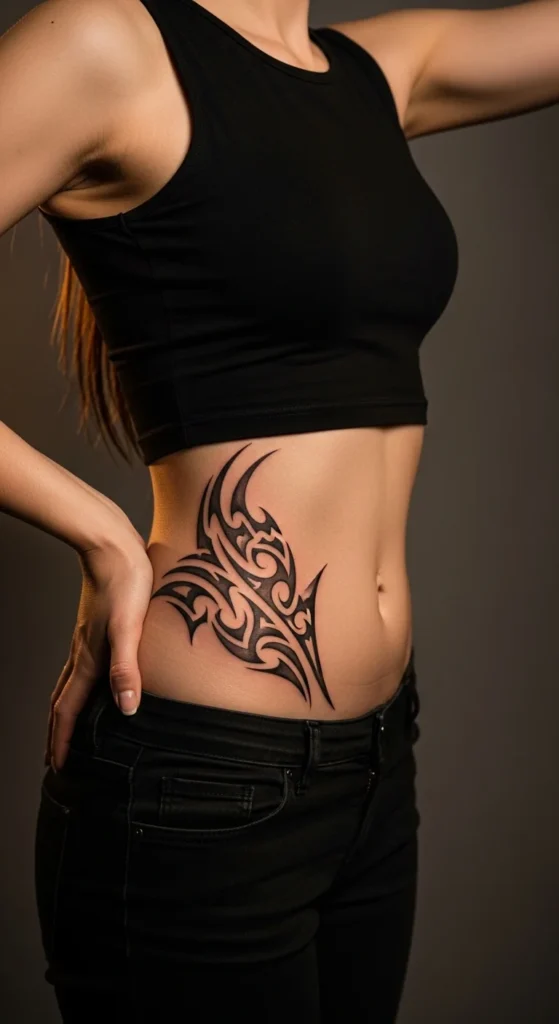
A hip panel gives you a powerful tattoo that stays easy to cover. Curved edges follow your waistline and can stretch toward the ribs or thigh. This can feel empowering while staying private.
To keep costs manageable, ask for a single bold panel rather than a full wrap. Use a curved line of tape on your hip to mark the top edge, then draw simple block shapes below it on a printed photo. This helps you see how far down the design should go.
Talk to your artist about clothing rub and healing. They may suggest slightly higher placement so waistbands don’t scrape the area. The result is a strong piece of blackwork that sits close to your center of gravity and feels grounded.
21. Tribal Collarbone Accent
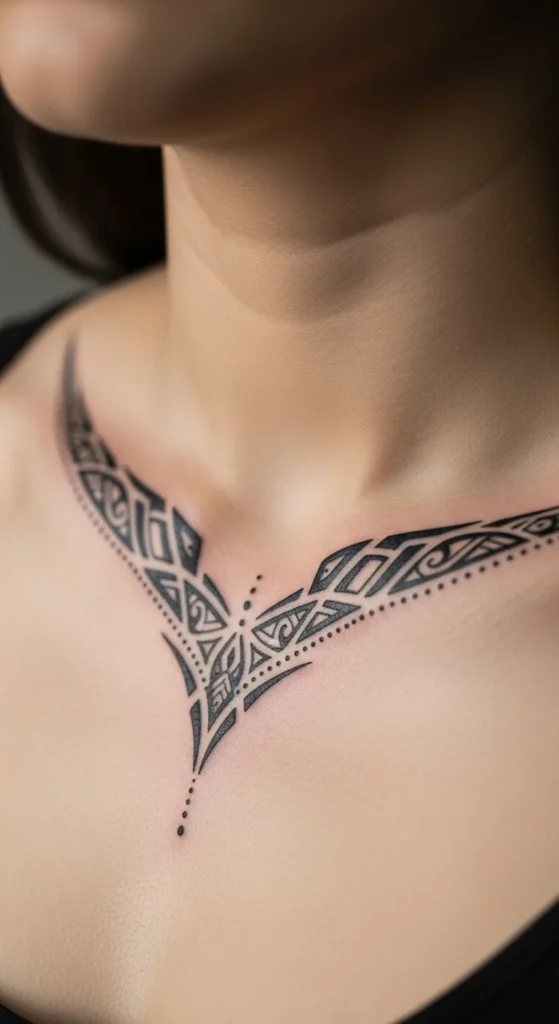
A collarbone accent uses a thin streak of tribal-style lines that follow the natural bone curve. It’s subtle but still carries that ancient energy. Short chevrons, arcs, or a repeating tooth-like pattern can be enough.
On a budget, this is a smart pick. The shape is narrow and doesn’t need layers of shading. At home, draw on masking tape, lay the tape along your collarbone, and take a selfie. Adjust until the line feels balanced when your shoulders move.
Ask your artist to keep the design simple so it still reads clearly when you wear different necklines. This is a good choice if you want something visible but not overwhelming.
22. Tribal Shoulder Cap Rosette
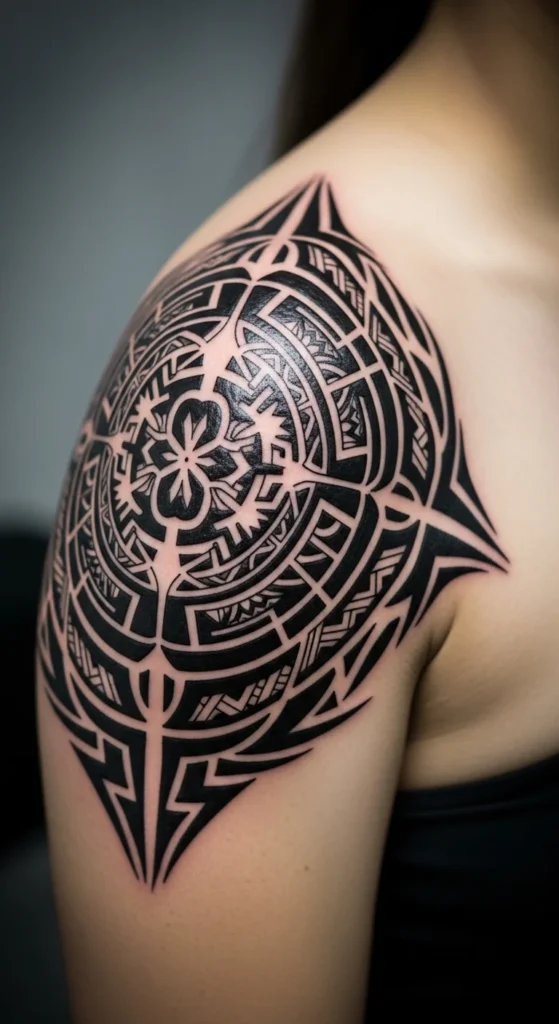
A rosette-style tribal piece centered on the shoulder cap mirrors the natural round shape of that joint. Think circle-based layers: teeth shapes, arcs, and small gaps of skin. It looks strong from every angle and can later connect into a sleeve.
Keep costs sensible by starting with only two or three rings of pattern. You can always add more as money and time allow. To design at home, trace a circle onto paper, draw two layers of patterns, and cut it out. Tape it to your shoulder and check how it sits in a mirror.
Bring those tests to your artist and let them adjust details to match your arm size. This compact shape has a strong graphic impact without requiring a marathon session.
23. Tribal Thigh Patch for Big Canvas
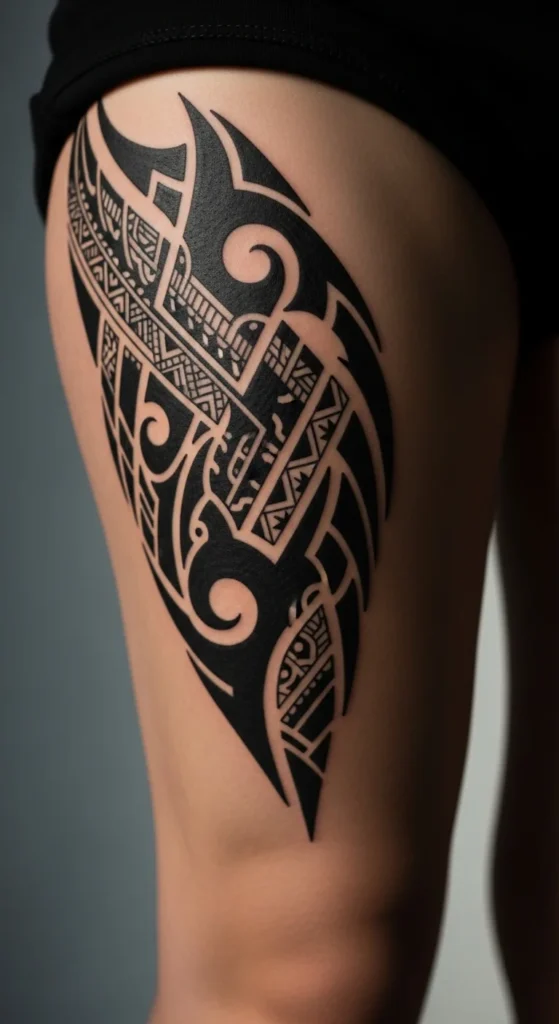
The side of the thigh is a large, flat area that works well for a tribal patch. You can go big here without running into bone-heavy spots like knees or ankles. Big black shapes and angular lines show clearly even from far away.
Planning tip: outline a big rectangle on your thigh with washable marker, then fill it with simple patterns on a photo. Keep some skin-only zones to create contrast. This reduces tattoo time and looks more dynamic.
Talk with your artist about session length. You might split the piece into two or three visits to keep pain and cost manageable. Later, you can connect this thigh patch to a hip panel or leg wrap if you want more coverage.
24. Respect Rules: Heritage-Only Tribal Patterns
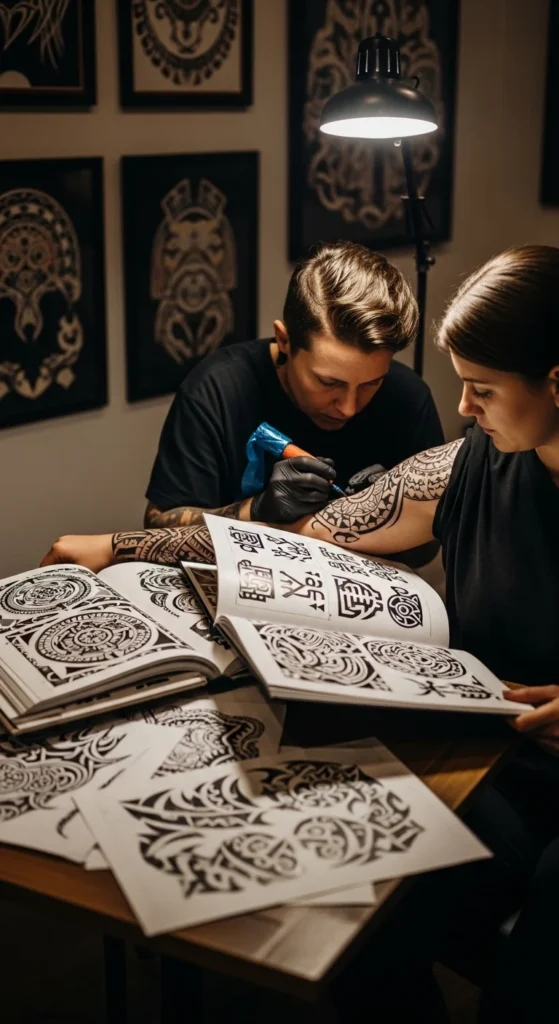
Some tribal patterns are not for everyone. Maori moko, certain Polynesian and Samoan layouts, Haida designs, and other heritage-specific marks carry genealogy, rank, and ceremony. Wearing those without the background can hurt people who live that culture.
Before you choose any tribal tattoo, talk honestly with your artist about where your reference images come from. Ask if any are tied to a specific community. If they are, step back. Choose abstract blackwork or neo-tribal patterns instead.
You can still honor strength, family, and courage through general shapes, personal symbols, and custom layouts. The simple act of asking “Is this respectful?” makes your tattoo feel stronger. It carries your story without taking someone else’s.
Conclusion
Tribal tattoos carry stories of survival, courage, and connection that stretch back many generations. When you approach them with respect, they can also carry your story—your hardships, your wins, your heritage, or your chosen path. Use these ideas to think about placement, size, and meaning at the same time as budget and comfort. Sketch at home, talk openly with your artist, and stay away from patterns that belong to specific communities unless they are yours. That way, the black lines on your skin feel raw, honest, and truly yours for life.