
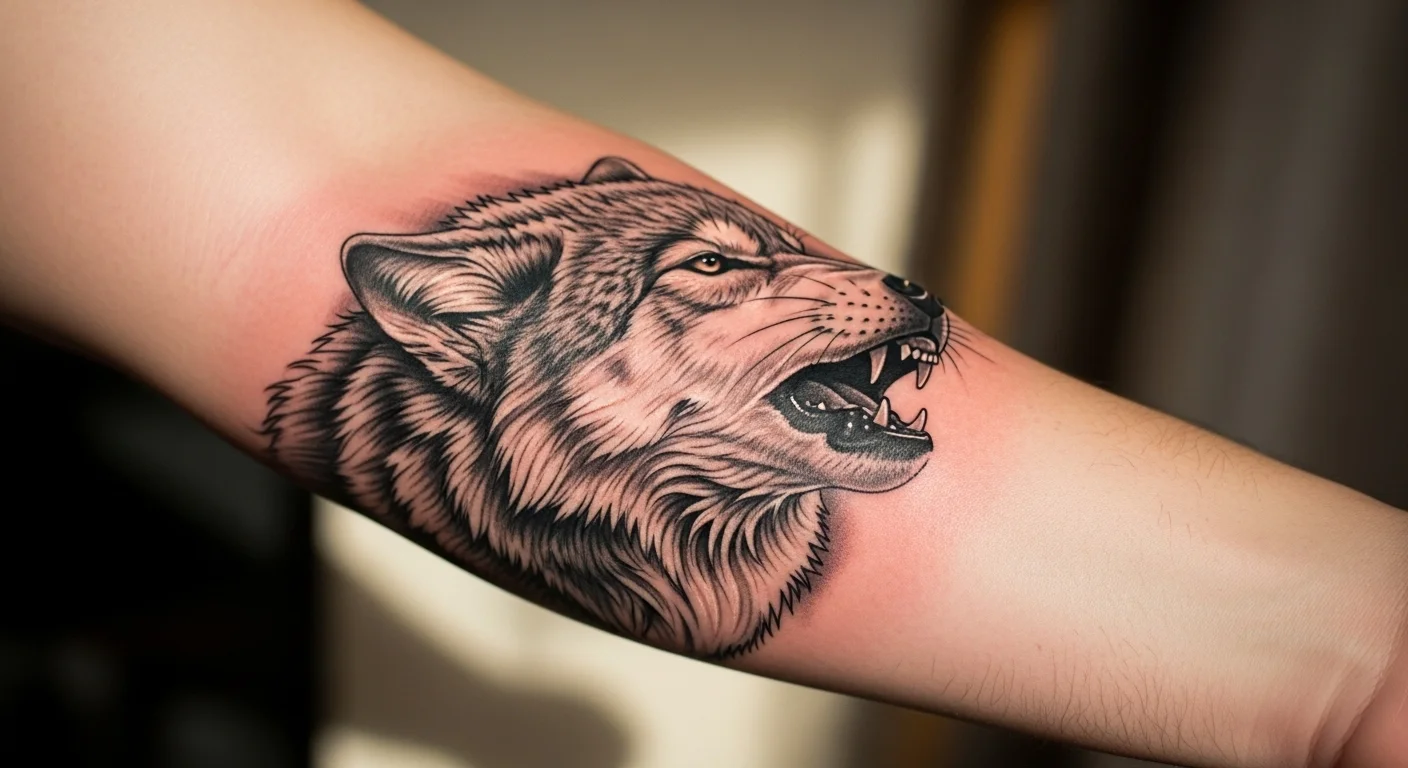
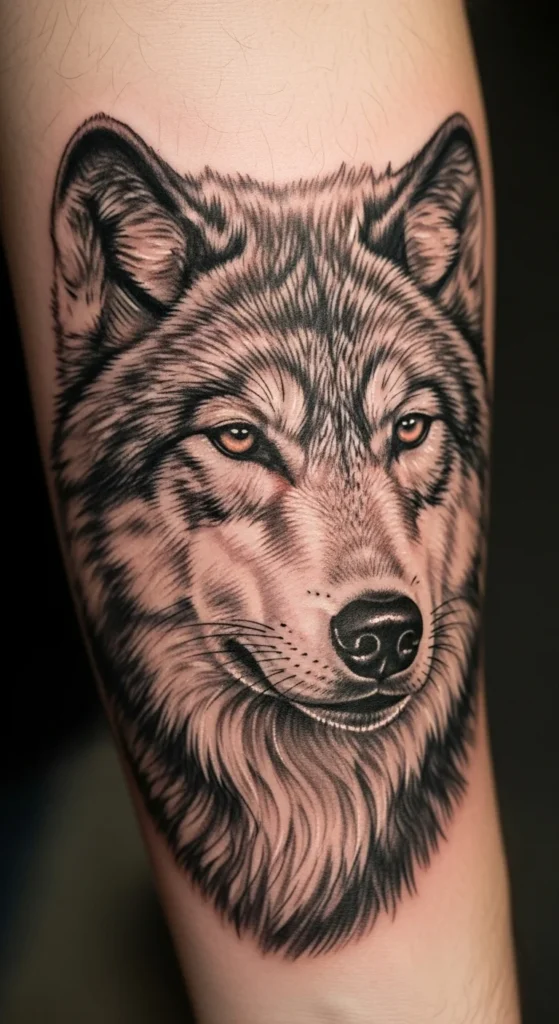
Wolf tattoos carry a calm kind of power. They stand for loyalty, quiet confidence, and the wild part of you that refuses to break. From lone wolves to full pack scenes, designs can show independence, family ties, or inner struggle. Whether you want a tiny symbol of resilience or a full forearm story, these ideas help you shape a wolf tattoo that feels personal, practical, and realistic for your budget and pain tolerance.
1. Moonlit Howling Wolf Forearm
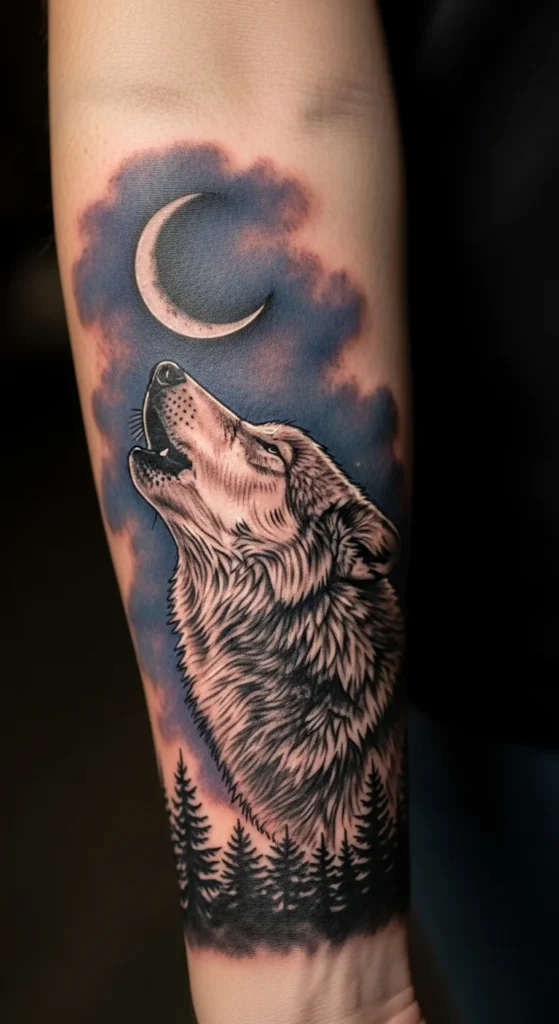
A howling wolf under a moon is perfect if you connect with freedom, intuition, or quiet late-night thoughts. The forearm gives enough space for the snout, open mouth, and a small sky scene without turning into a full sleeve.
To keep cost low, go for black and grey with light shading around the moon. Skip tiny stars and stick to a few bold ones.
At home, print a silhouette of a howling wolf and a crescent moon. Tape them to your forearm in different positions—stacked, side by side, or overlapping—to see what feels balanced.
Ask your artist to focus detail on the wolf’s face and neck fur. The sky can stay softer and more abstract.
Forearm pain usually sits in a low to mid range, so most people handle this fine with short breaks. Wash gently, pat dry, and use a thin layer of unscented lotion while it heals.
2. Lone Wolf Shoulder Portrait
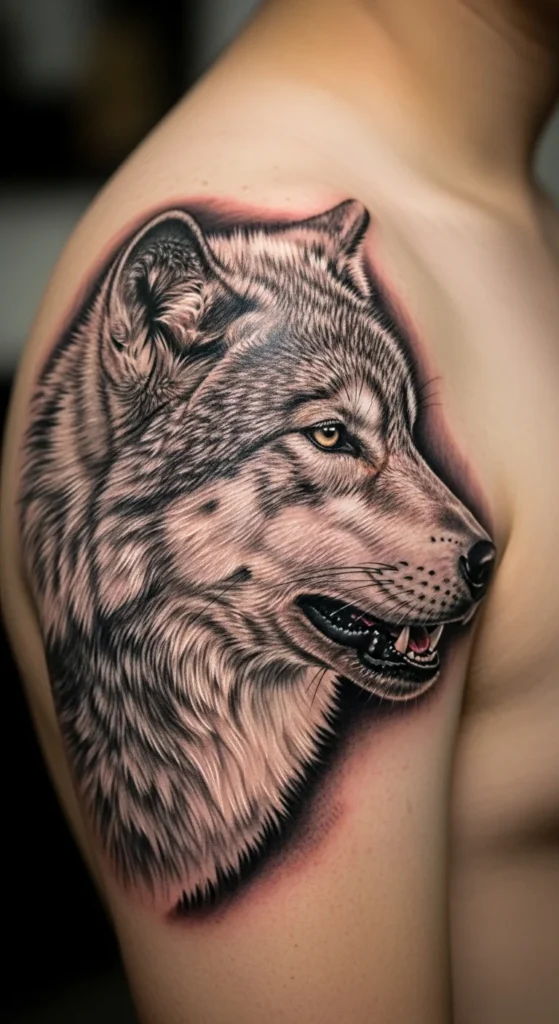
A lone wolf on the shoulder fits people who like their own path. It shows independence without shouting about it. The rounded shoulder shape frames a profile view very well.
If you’re on a budget, choose a mid-sized portrait rather than a full shoulder-to-chest piece. A focused head and upper neck is enough.
DIY planning: print a wolf profile in three sizes. Tape each one to your shoulder and check the mirror while your arm hangs relaxed and when you lift it. You’ll notice which size still looks clear.
Ask your artist to keep the background minimal—a bit of soft shading or a simple circle behind the head. Less background means fewer hours.
Shoulder tattoos usually heal smoothly. Wear loose shirts for a couple of weeks, and avoid heavy backpack straps that press directly on the area.
A healed lone wolf sits quietly under your clothing and shows up only when you want it to.
3. Pack Loyalty Wolves Back Piece
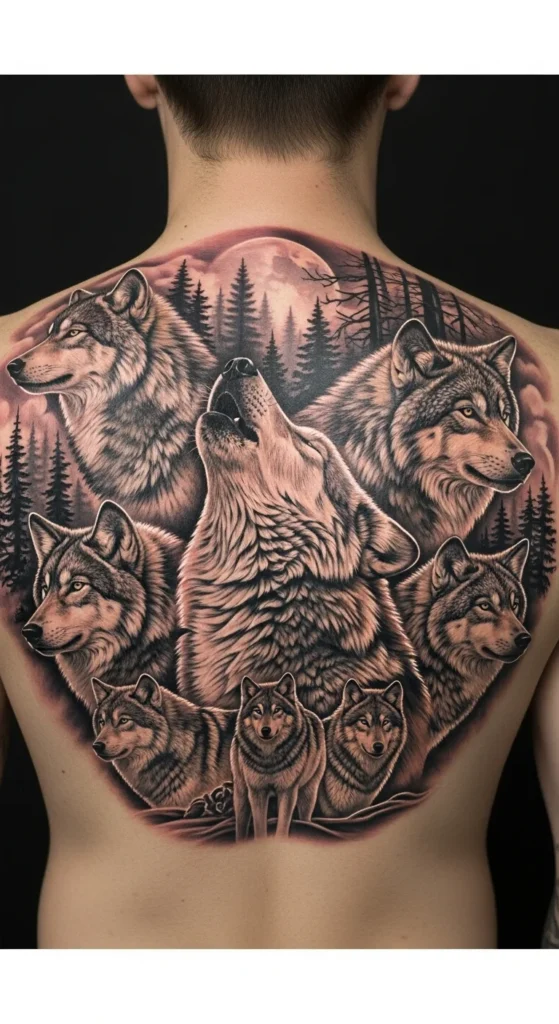
If family or close friends feel like your pack, a multi-wolf back tattoo can tell that story. You can use different wolf poses to represent different people: one watchful, one howling, one relaxed.
To manage budget, start with two wolves on the upper back. Leave room for more if your pack grows or you want extra detail later.
DIY idea: on a big sheet of paper, sketch three simple wolf silhouettes in a loose arc across the top. They don’t need to look perfect. This gives your artist a layout to refine.
Ask them to keep the background light—maybe faint trees or a hint of mist instead of a full forest. That keeps sessions shorter.
Back tattoos take some patience to heal. Sleep on your side if you can, use soft bedding, and avoid tight sports bras or backpacks pressing on the area.
Over time, this piece becomes a quiet reminder that you never walk alone, even on hard days.
4. Alpha Wolf Chest Guardian
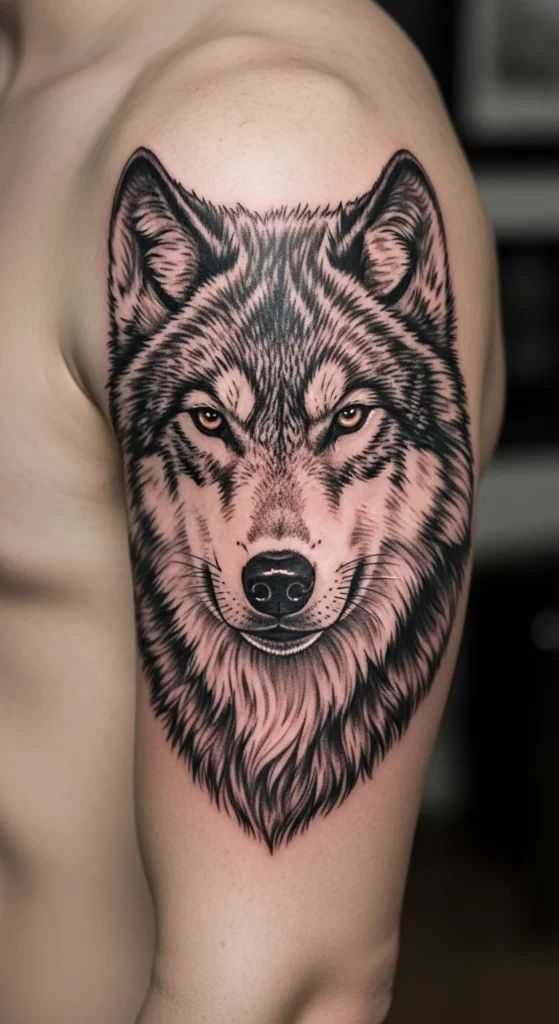
A centered alpha wolf on the chest feels like a personal shield. The eyes sit close to the heart, which matches the idea of courage and guidance.
Chest tattoos can be intense, especially over the sternum. To keep it manageable, start with an outline and light shading in one session. Add deeper contrast later if you want more drama.
At home, cut an oval out of paper for the wolf face and hold it over your chest in front of a mirror. Move it slightly up or down to see what lines up with your build.
Ask your artist to keep fur detail tight near the eyes and nose, then loosen it toward the outer mane. That gives depth without endless hours of micro lines.
Wear button-up or loose t-shirts during healing. Avoid heavy bench presses and chest workouts until the tight feeling calms down.
Once healed, the wolf sits there like quiet armor under your clothes.
5. Geometric Wolf Head on Inner Forearm
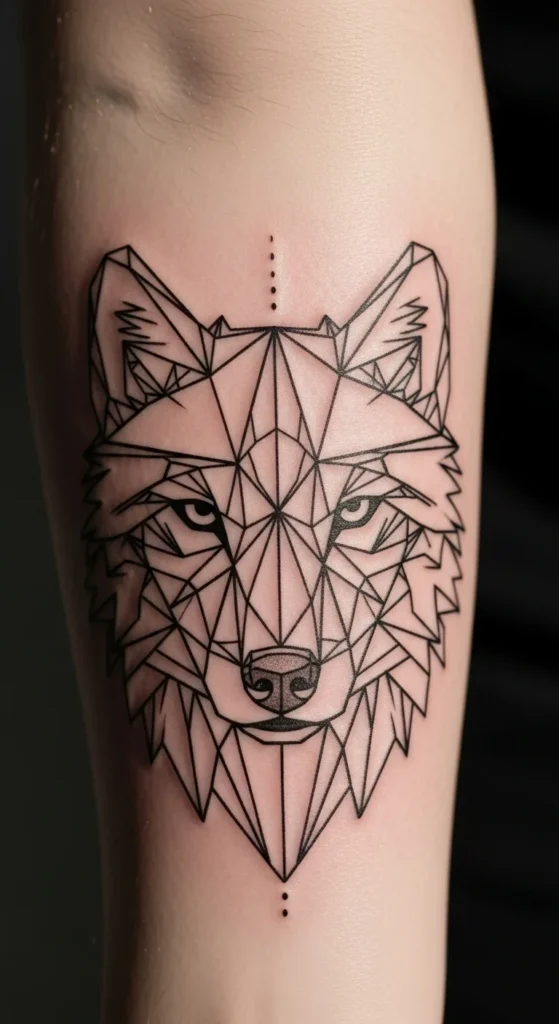
A geometric wolf head suits you if you like clean lines and modern design. The inner forearm is perfect for vertical symmetry and easy visibility.
To keep the cost friendly, pick a line-work only design with a few key triangles and shapes instead of full dotwork shading.
DIY planning: grab graph paper and lightly sketch a wolf face using triangles for cheeks, a diamond for the nose area, and angled shapes for ears. It doesn’t have to be perfect—your artist will refine it.
Ask them to align the center line of the design with the center of your forearm so it sits straight when your palm faces up.
Forearm healing is usually smooth. Keep it out of direct sun, avoid tight watch straps over the area, and moisturize lightly.
This tattoo reads clearly from a distance and still looks calm and subtle up close.
6. Tribal Wolf Half-Sleeve
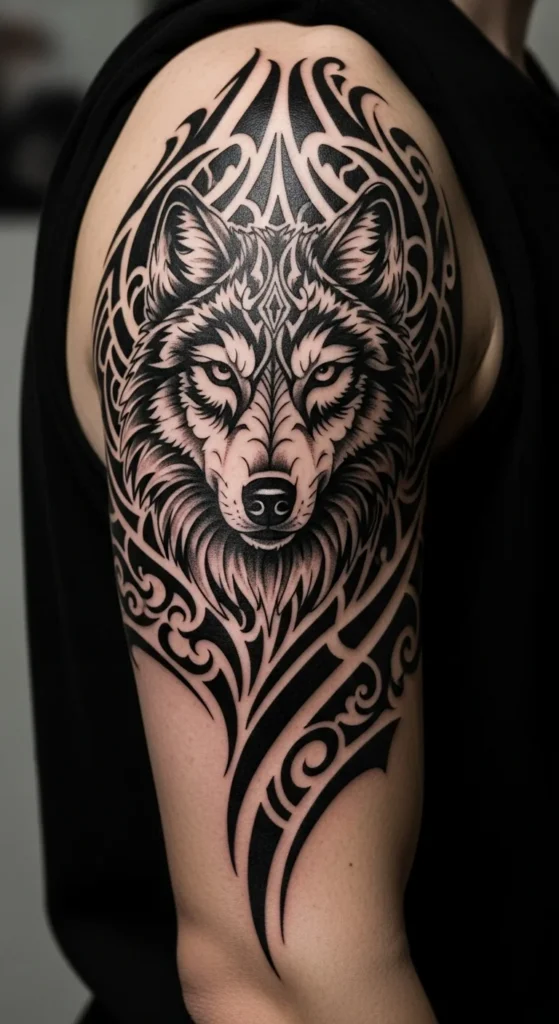
A tribal wolf half-sleeve delivers strength through pattern rather than realism. Thick black shapes hold up well over time and look clear even from across a room.
If you want to save money, keep the patterns large and bold instead of filling every gap with tiny swirls. The arm still looks full without extra hours.
DIY idea: draw a simple wolf head outline on paper and surround it with curved shapes that flow around it. Wrap the page around your arm to get a rough sense of how the shapes move.
It helps to talk with your artist about any cultural meanings that matter to you. They can adjust patterns so they feel respectful and fitting.
Healing a half-sleeve means being gentle with shirts and gym sessions for a few weeks. Choose soft fabrics and skip heavy barbell work that drags across the area.
In the end, the patterns and wolf mark you as someone who carries their strength quietly but clearly.
7. Wolf and Moon Upper Arm Scene
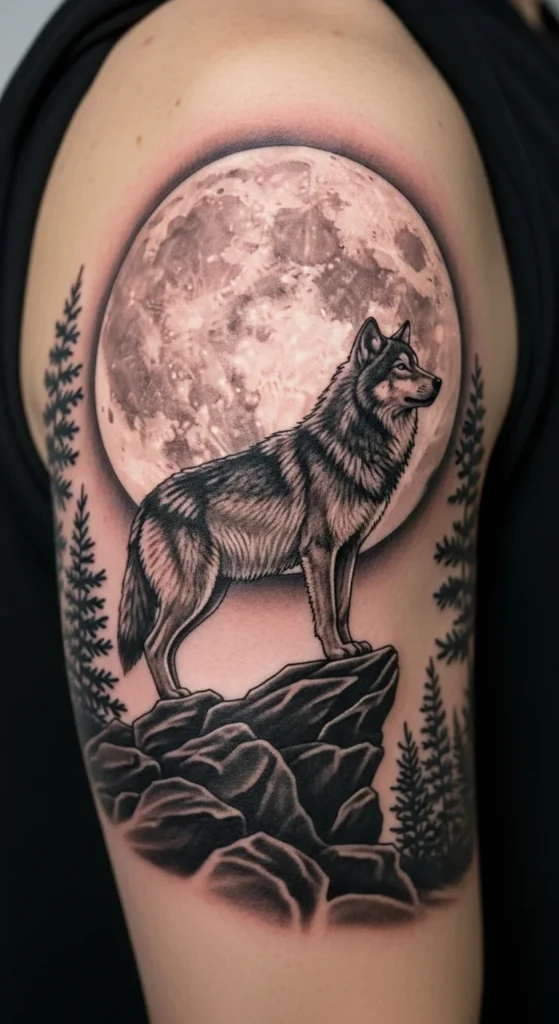
A wolf with a full moon on the upper arm feels like a calm night story on your skin. It works whether the wolf is howling, standing still, or walking.
To keep the session reasonable, ask your artist for a simple horizon line, a rock, and a large moon, with only a few dark trees in the background.
DIY planning: sketch a circle for the moon and a small rock shape, then draw a silhouette wolf on top. Move these shapes around on paper until the proportions feel right.
Ask for stronger contrast between the moon and wolf so it still reads clearly from a distance. You can do this all in black and grey without expensive color work.
Upper arms tend to heal easily as long as you avoid rough seams and tight sleeves. T-shirts in soft fabric are your friend here.
This design whispers about wild places and quiet nights every time you catch it in the mirror.
8. Wolf and Rose Thigh Tattoo
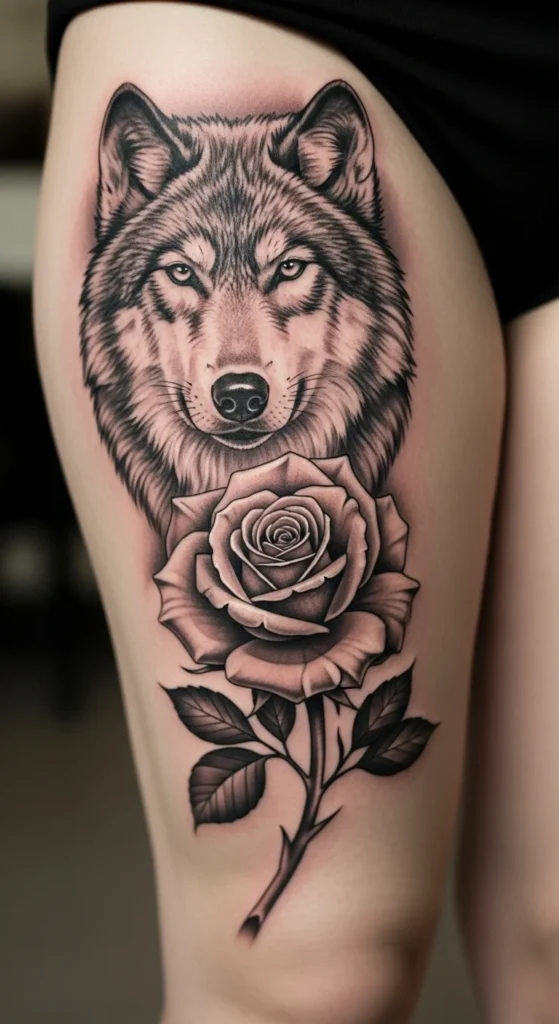
A wolf and rose on the thigh creates a strong but soft contrast. The wolf stands for courage and instinct, while the rose hints at love, loss, or personal growth.
The thigh gives enough room for a detailed face and a full flower without squashing everything together.
To keep cost manageable, choose one main rose instead of a whole bouquet. Line-work and light shading go a long way.
DIY idea: draw a circle for the wolf head and another for the rose, then place them diagonally on paper. Hold the sheet to your thigh and check how they follow the leg line.
Ask your artist to angle the design so it still looks good when you sit. A slight tilt usually helps.
Wear loose shorts or soft leggings during healing. This area is easy to hide but moves a lot when you walk, so gentle aftercare matters.
9. Good and Evil Dual Wolves
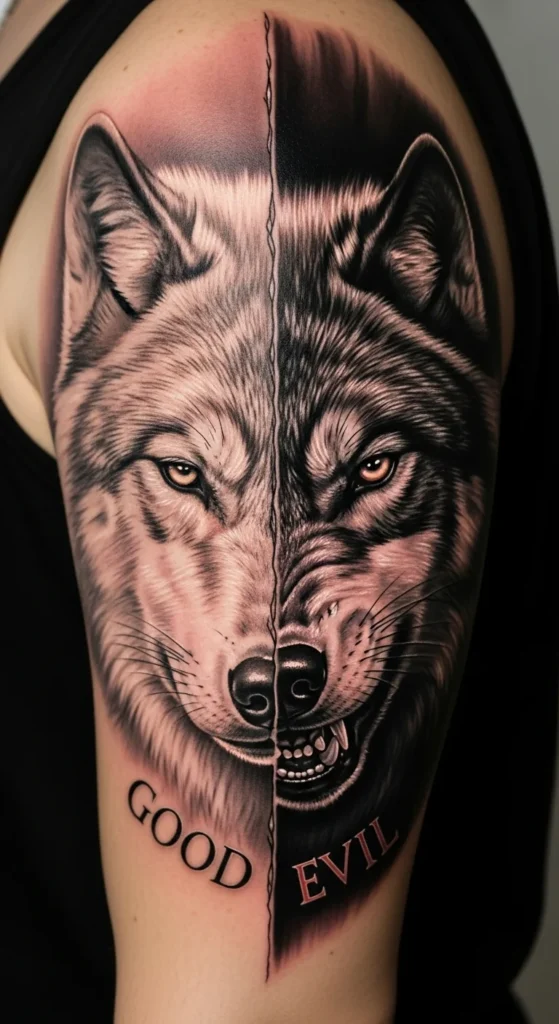
Two wolves facing each other—one light, one dark—speak to inner conflict and the sides of you that pull in different directions. It’s a popular idea for people who have walked through tough changes.
Upper arm, chest, or upper back are ideal for this design so both heads stay clear.
To manage budget, keep the design black and grey and use shading to show contrast instead of full color. Light fur, dark fur, and a simple dividing line do the job.
DIY planning: sketch two wolf profiles facing inward on paper. Shade one more heavily. This sketch helps your artist see how strong you want the contrast.
You can ask for softer eyes on the “good” side and sharper features on the “shadow” side. Small tweaks change the whole mood.
Healing is similar to other mid-sized pieces. Gentle cleansing, light lotion, and staying away from direct sun will help both wolves age well.
10. Fire and Ice Elemental Wolves
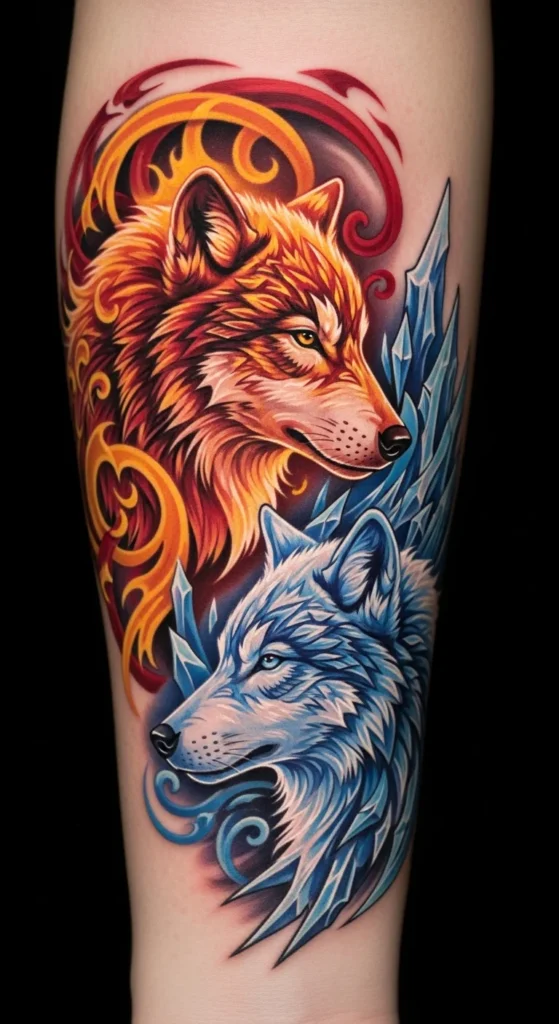
Fire and ice wolves work well if you often feel caught between emotion and calm logic. One wolf carries heat and passion, the other cold focus.
Forearm, calf, or thigh placements allow both sides to show clearly without feeling crowded.
Color does raise cost, but you can keep it manageable by using limited palettes: warm reds and oranges on one side, cool blues on the other, with the wolves themselves in black and grey.
DIY idea: draw two basic wolf heads on paper and use colored pencils or markers to sketch flames around one and angular ice shapes around the other. This gives your artist a clear starting point.
Ask them to keep the wolves similar in size so the design feels balanced.
Healing colorful pieces calls for extra sun care. After it heals, a simple habit of sunscreen on the tattoo when outside can keep those colors alive longer.
11. Wolf Skull Blackwork
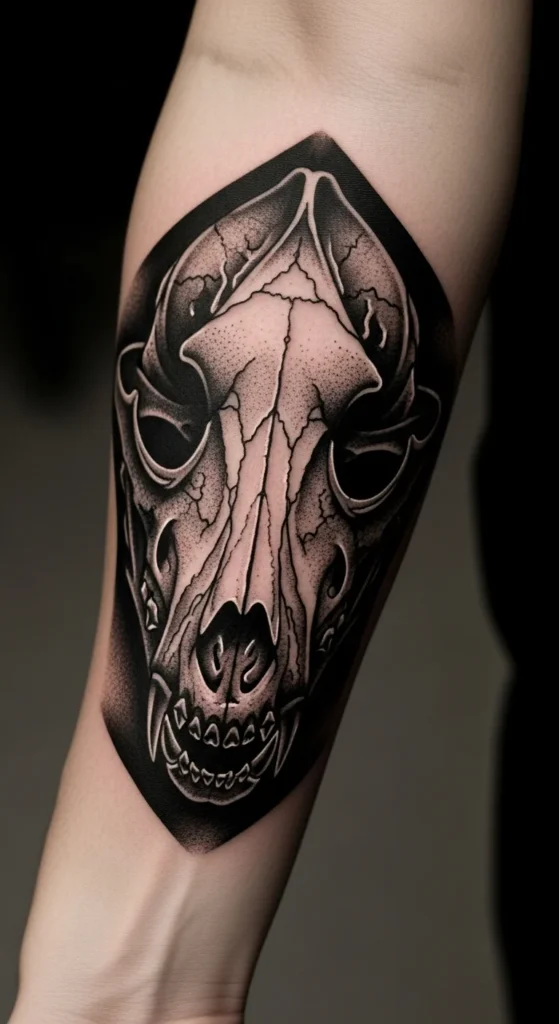
A wolf skull in blackwork feels raw and honest. It acknowledges mortality and survival without sugarcoating anything.
Forearms, calves, and upper arms handle this style well. Strong black lines and fills stand out and age nicely if cared for.
To keep cost friendly, avoid heavy stippling over large areas. Solid blacks and clear line-work are faster and still striking.
DIY planning: print a wolf skull reference image and trace the main shapes—eye sockets, snout, teeth—while simplifying small details. Your artist can refine it into a tattoo-ready outline.
Ask for clear negative spaces (untouched skin) so the skull doesn’t become one dark block.
Healing a blackwork piece can involve more flaking, so resist picking. Let the skin shed on its own, use mild soap, and pat dry.
In the end, the skull reads like a calm reminder of everything you’ve lived through and everything you still protect.
12. Dreamcatcher Wolf Back or Thigh
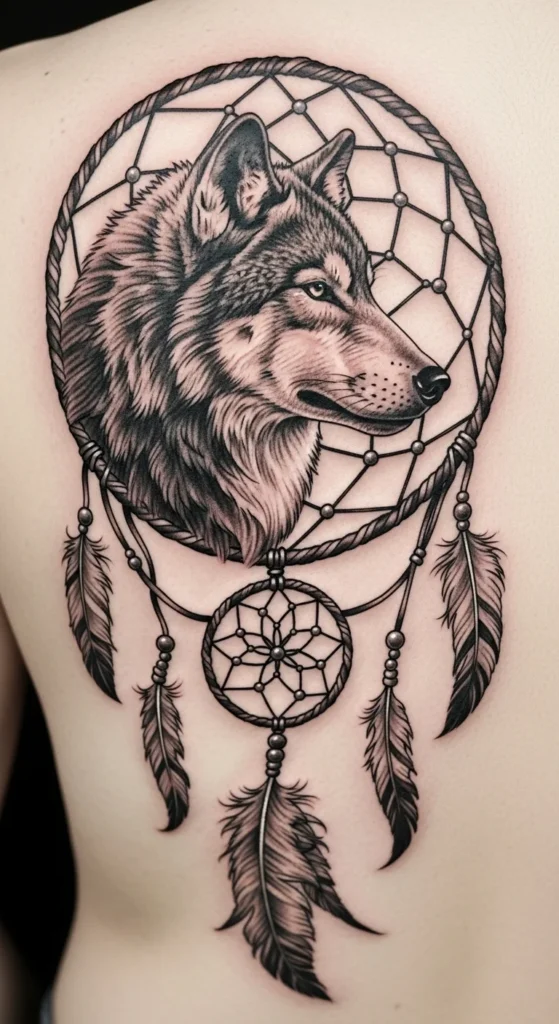
A dreamcatcher wolf mixes protection, intuition, and guidance. Many people connect this idea with guarding their sleep or filtering out bad energy.
Upper back or thigh placements give enough room for the hoop, wolf face, and hanging feathers.
To keep the price workable, pick a single hoop and limit the feather count. Each feather adds time, especially when shaded.
DIY idea: draw a circle on paper for the dreamcatcher, sketch simple web lines inside, and add a wolf face at the top or center. Then add a few feathers in different lengths.
Bring this rough map to your tattooer and ask them to adjust for your body’s shape.
Healing across the back calls for soft shirts and careful sleeping positions. For the thigh, loose shorts are ideal.
Over time, this piece can feel like a quiet guard on your back or leg.
13. Forest Wolf Forearm Sleeve Starter
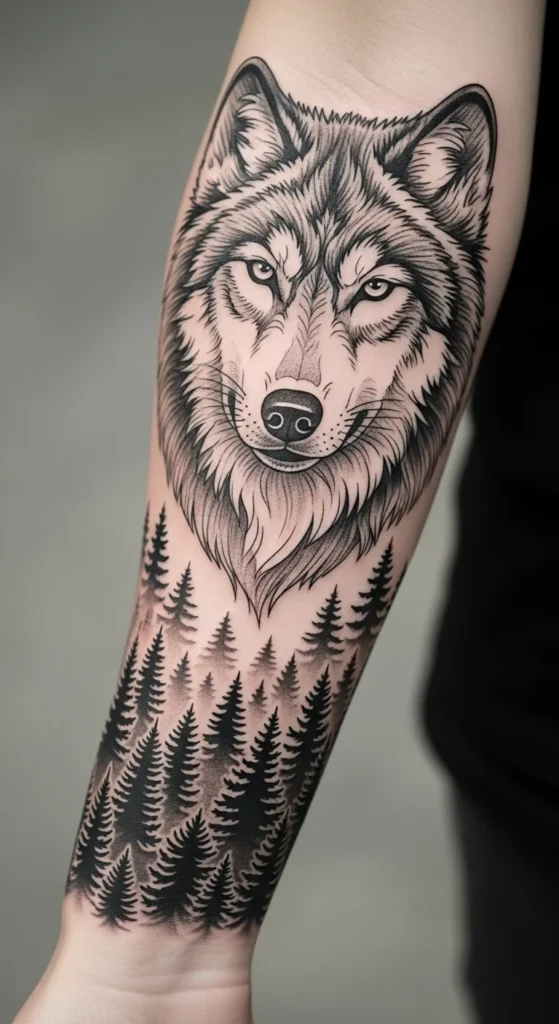
A forest wolf on the forearm works as a great starter for a longer sleeve. The wolf can sit at the top while trees and mist drift downward.
To keep costs in check, focus on one detailed wolf head and simple tree silhouettes below. You can fill in more scenery later.
DIY planning: on paper, draw a wolf head in the top half and simple triangle trees in the lower half. Hold this strip against your arm to check the flow.
Ask your artist to use lighter shading in the trees so the wolf stays the main focus.
Forearm healing is usually straightforward. Just avoid tight cuffs and rough jacket sleeves during the first few weeks.
When you’re ready for more ink, you can add mountains, moon phases, or other animals around the existing design without starting from zero.
14. Feminine Smoke or Soul Wolf
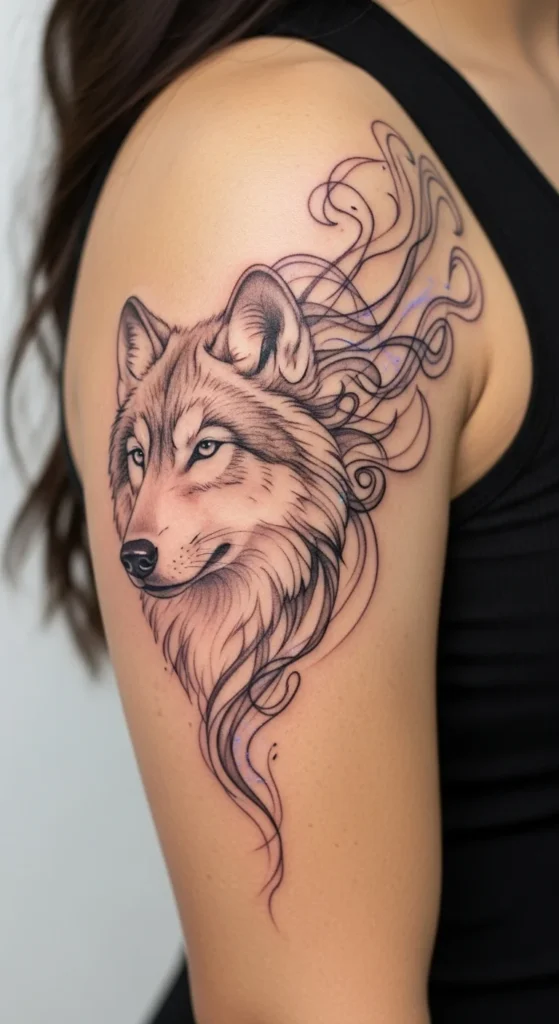
A smoke-style wolf feels airy and subtle. It’s popular with people who want a spiritual or feminine twist without heavy, sharp edges.
Upper arms, thighs, and ribs work well because they give room for flowing lines.
To keep the session affordable, let the artist use loose smoke shapes instead of super tight detail. The wolf’s eyes and nose can be sharp while the rest drifts out into soft forms.
DIY idea: draw a small wolf head on paper, then drag a pencil or charcoal outward to mimic smoke. Even a rough attempt helps you show the mood you like.
Ask for soft shading instead of solid black blocks so the tattoo stays light and airy.
Healing is gentle as long as clothing doesn’t rub too much. Choose soft fabrics and skip tight waistbands that cross the area.
The final look feels like a quiet spirit animal sitting just under your skin.
15. Watercolor Howling Wolf
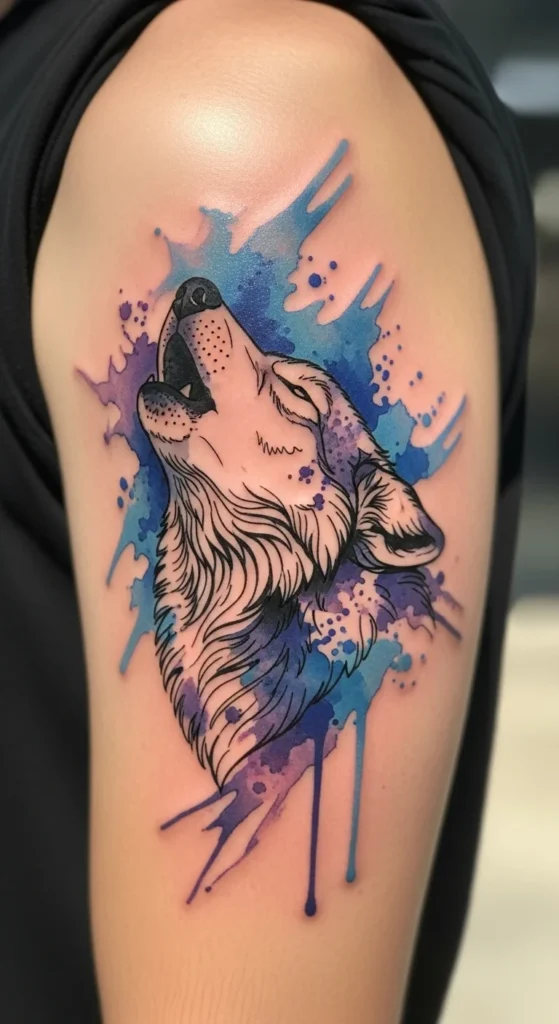
A watercolor howling wolf adds emotional color to a classic motif. The ink can suggest storms, calm skies, or shifting moods.
Because watercolor takes layering, pick a medium size so details don’t blur. Upper arm, calf, or outer thigh are good choices.
To save money, choose two main colors instead of a full rainbow. For example, blue and purple for calm strength, or red and orange for intensity.
DIY planning: sketch a simple wolf outline and then brush watercolor or diluted ink behind it on paper. You’ll see whether you prefer splashes on one side or both.
Ask your artist to keep the wolf lines dark enough to stand out against the washes.
During healing, keep the tattoo out of direct sun. Color tattoos love sunscreen once healed; a little care keeps your washes looking rich for years.
16. Minimal Fine-Line Wolf Outline
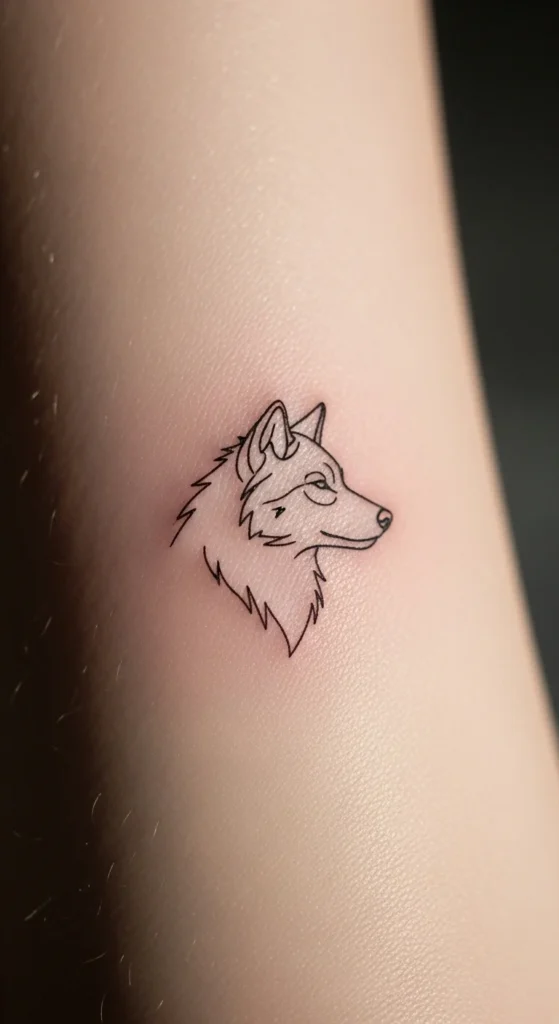
A fine-line wolf outline works if you prefer subtle tattoos or if this is your first piece. A few clean strokes can suggest a snout, ears, and neck without heavy shading.
Wrist, ankle, collarbone, or behind the ear are all great spots for this style.
This idea is kind to your budget because sessions are quick and ink use is minimal.
DIY idea: grab a pen and try drawing the wolf with as few lines as possible on paper. Once you find a version you like, trace it again in bolder lines and bring that sketch to your artist.
Ask them to adjust line thickness so it ages well. Lines that are too thin can fade faster, so a tiny bump in width helps.
Healing is usually fast. Just keep the area clean and avoid jewelry or tight bands rubbing across it until the skin settles.
17. Wolf Paw or Track Ankle Tattoo
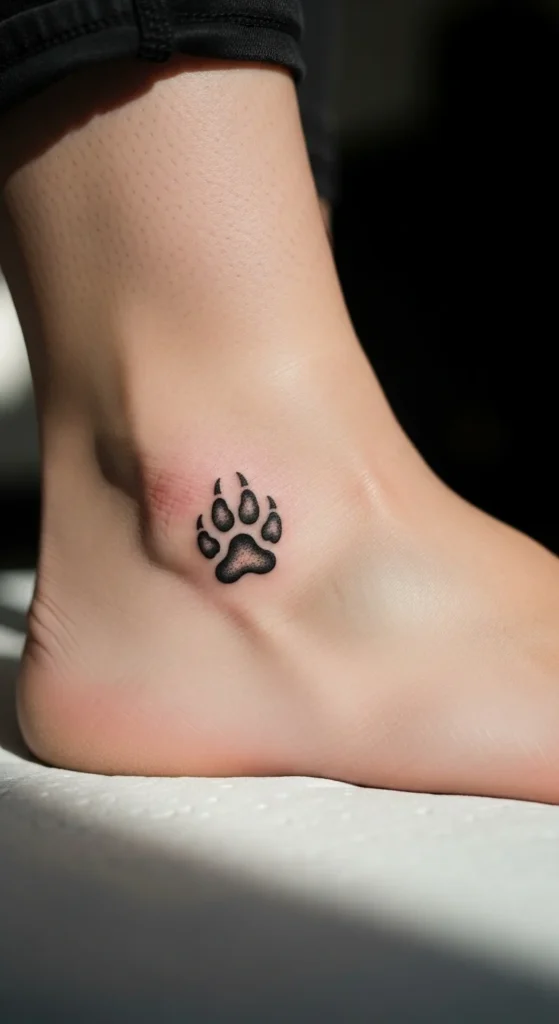
A wolf paw or track on the ankle is a quiet way to carry wolf symbolism without a full portrait. It can mark a journey, a memory, or a promise to keep moving forward.
This design is small, which keeps both session time and cost low.
DIY planning: print a wolf paw reference and outline it lightly on your ankle with a washable marker. Try different angles—toward the foot, up the leg, or slightly diagonal.
Ask your artist to keep the shapes clear and not too tiny, so they stay readable as the tattoo ages.
Because ankles can feel a bit sharp, the quick nature of this design helps. The discomfort doesn’t last long.
Wear loose socks or no socks during healing so the edge doesn’t rub. Once healed, the paw peeks out whenever you wear sandals, sneakers, or cropped pants.
18. Cybersigilism Glitch Wolf
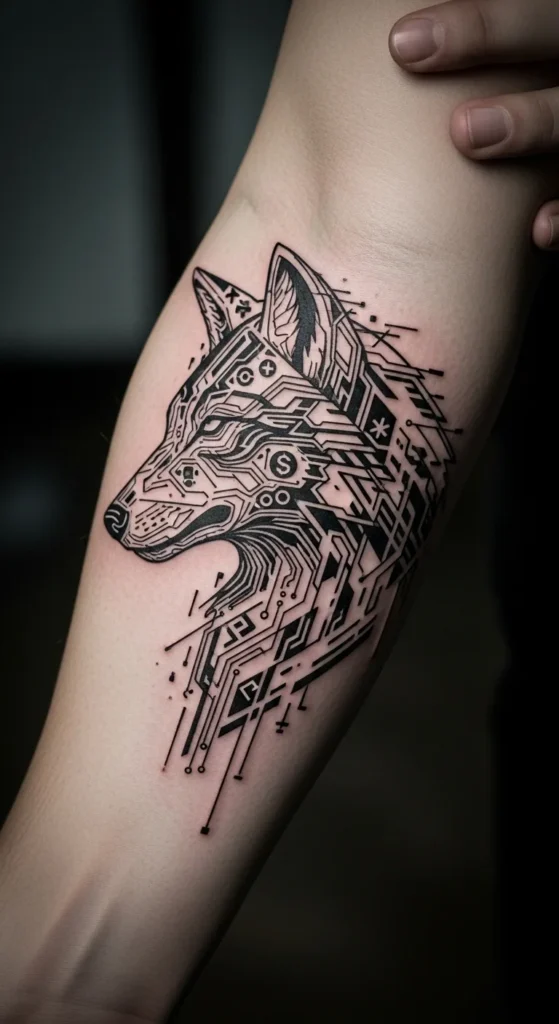
A cybersigilism wolf mixes wild energy with tech-inspired graphics. Lines may jump, repeat, or fracture like a digital glitch.
Forearms, calves, or upper arms give these patterns room to read clearly.
To keep cost within reach, limit the amount of layering. Ask the artist to focus on a tight main wolf shape with a few glitch lines instead of covering the entire limb.
DIY idea: print a wolf outline and draw offset copies of the same line slightly to the side, like a shadow. Add a few broken segments and small symbols along the cheek and neck.
Bring that messy sketch to your artist; they’ll turn it into something tattoo-ready.
Healing is similar to other line-heavy tattoos. Good aftercare keeps every stroke sharp: gentle washing, no harsh scrubbing, and light lotion.
This design works well if you feel like your wild side lives inside a world of screens and signals.
19. Wolf and Mountain Landscape
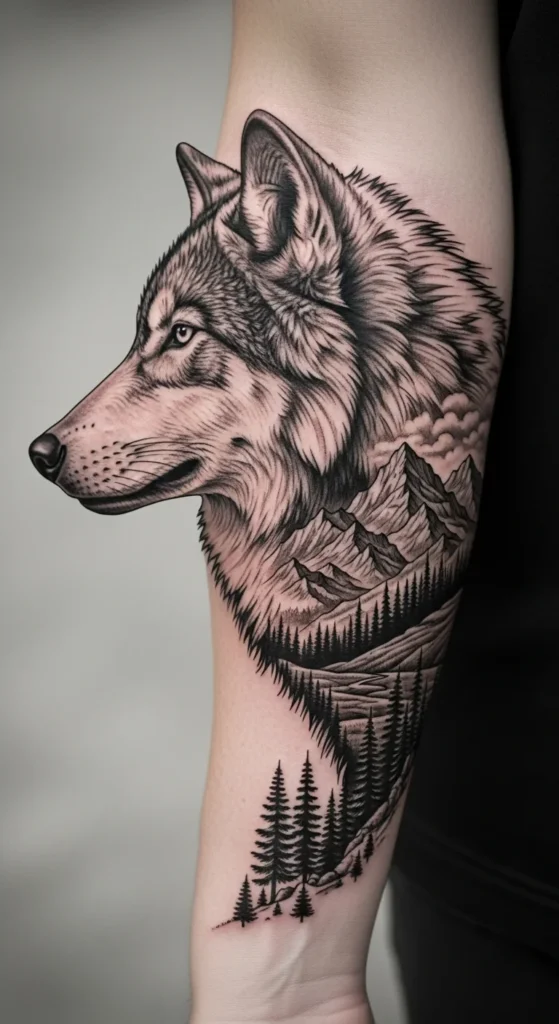
A wolf with mountains and trees woven into its fur tells a story about nature, travel, or a place you call home.
Outer forearm, calf, or thigh placements work well. The longer shape gives room for the wolf and the landscape.
To manage budget, keep the mountains simple and bold. Clear peaks and a few tree silhouettes say enough without extra detail.
DIY planning: on paper, outline a wolf profile and then divide the body into segments. In one area, sketch mountains; in another, trees. Your artist can smooth this into a cohesive design.
Ask for strong contrast between the wolf outline and the scenery inside so everything stays readable.
Healing times match most medium pieces: about a few weeks for early phases, with the tattoo settling over a month or so.
The finished look feels like carrying your favorite wild place with you every day.
20. Alpha Wolf with Pack Silhouette
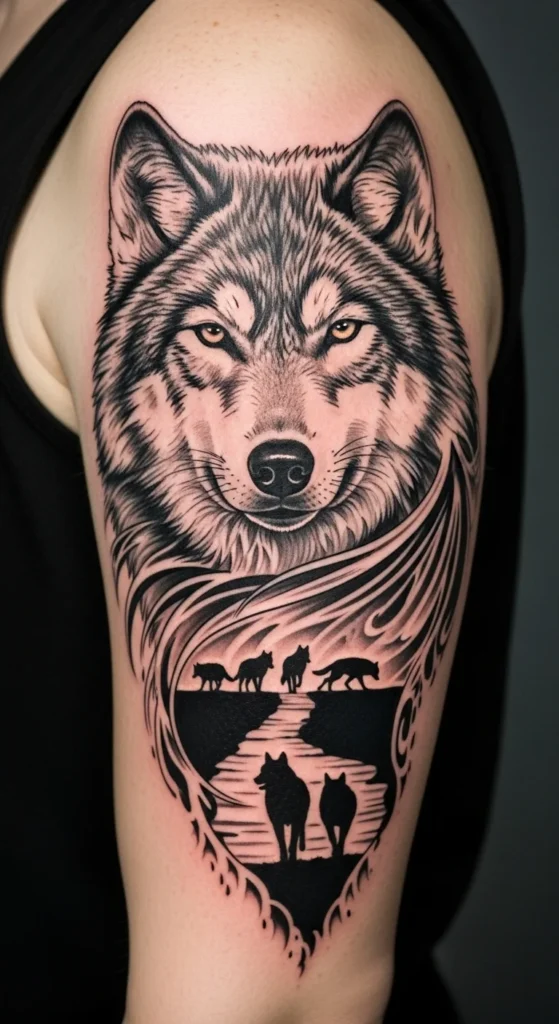
An alpha wolf with a small pack silhouette lets you show leadership and loyalty in one design. The main head shows your inner strength; the tiny figures stand for those you protect.
Upper arm, thigh, or chest are ideal so small silhouettes don’t blur.
To keep things affordable, have the artist draw a single detailed head and simple shadow wolves as silhouettes. Little detail is needed on those smaller shapes.
DIY idea: draw a big wolf head and then sketch a thin line under it as a hill. Add small wolf shapes walking along the line.
Ask your artist to keep enough negative space around the silhouettes so they stay clear as the tattoo ages.
Healing requires the usual gentle wash and lotion routine. Once the peeling stage passes, the design reads like a quiet story about how you lead and who you stand beside.
21. Jewel or Mandala Wolf Symmetry
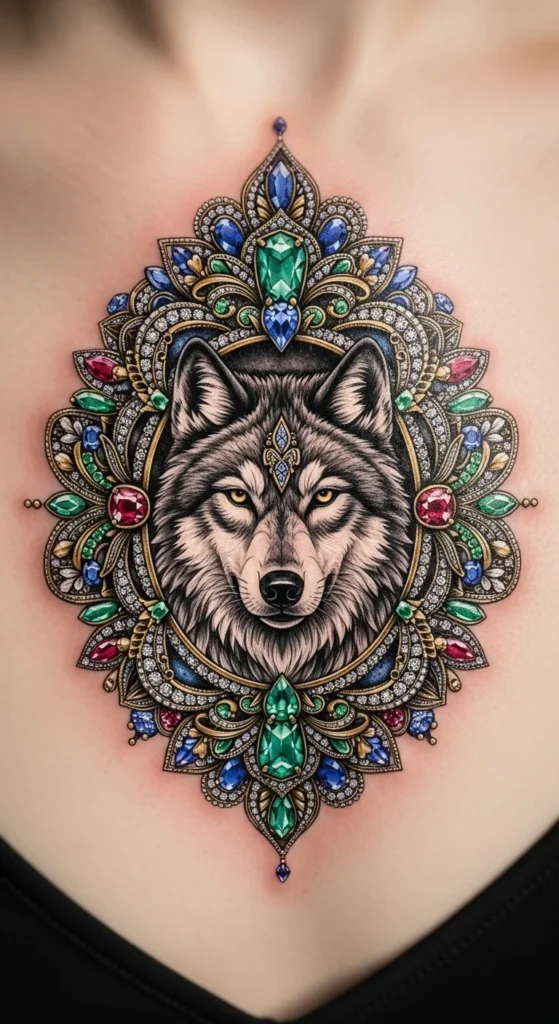
A mandala or jewel-framed wolf combines wild energy with calm symmetry. It works well if you like spiritual or meditative designs.
Sternum, upper chest, or upper arm placements let the symmetry line up nicely with your body.
To keep sessions manageable, ask for one main mandala layer instead of many. The wolf face in the center should carry most of the detail.
DIY planning: draw a circle for the wolf and simple repeating petals around it. Even simple shapes give your artist a sense of what you like.
Talk about how tight or loose you want the frame. Some people prefer intricate petals; others like bolder, larger shapes.
Healing across the chest or sternum can feel a little tender, so choose soft clothing and be patient with stretching.
When finished, this design feels calm and grounded, like a personal symbol you can center yourself on.
22. Wolf and Compass Direction Piece
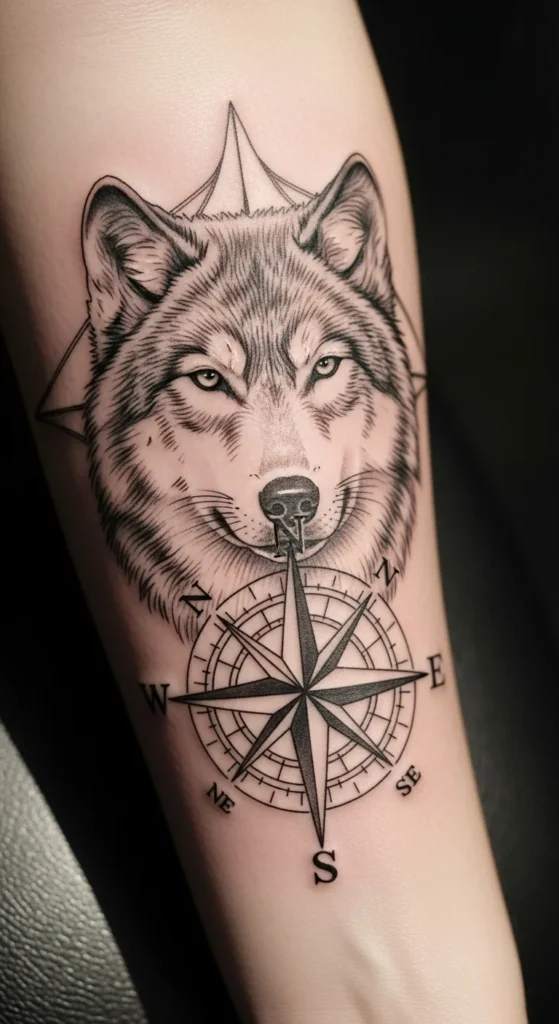
A wolf with a compass suits people who tie their strength to direction, travel, or life choices. The wolf represents instinct, the compass represents the path.
Forearms and calves are perfect here; the vertical shape fits the compass and head.
To keep budget under control, pick a simple compass rose with clear points and minimal decoration. Let the wolf carry the detail.
DIY idea: sketch a basic compass, place a wolf profile above or beside it, and see which layout you prefer. Use a cup or lid to draw the compass circle.
Ask your artist to line the compass up with the center of the limb so it doesn’t look crooked.
Healing is straightforward. Just avoid rough sports gear or tight sleeves dragging across the new ink until the flaking phase is over.
This tattoo acts as a quiet reminder that you choose your direction, even when the route feels confusing.
23. Wolf Ribcage Profile
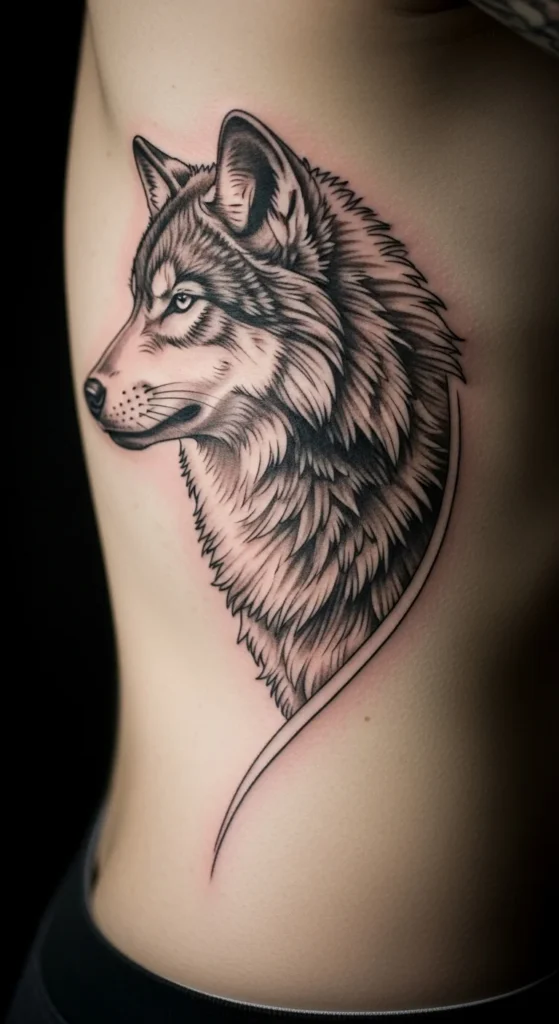
A wolf profile along the ribs is personal and intense. The area sits close to bone, so many people link this placement to emotional growth and courage.
To keep the pain time shorter, choose a medium-size design with one wolf and light shading. Save large backgrounds or extra animals for another spot.
DIY planning: ask a friend to trace a rectangle on paper shaped roughly like your rib area. Sketch a wolf head or full body that follows the long vertical flow.
You can also test placement by drawing a simple outline on your side with a washable marker and taking photos in a mirror.
Talk with your artist about breaks. Short, planned pauses make high-sensitivity zones much easier.
Wear loose tops during healing and avoid tight sports bras or chest straps that cut across the tattoo. Once healed, the wolf stays hidden under clothes until you decide to show it.
24. Wolf Wrist or Hand Mark
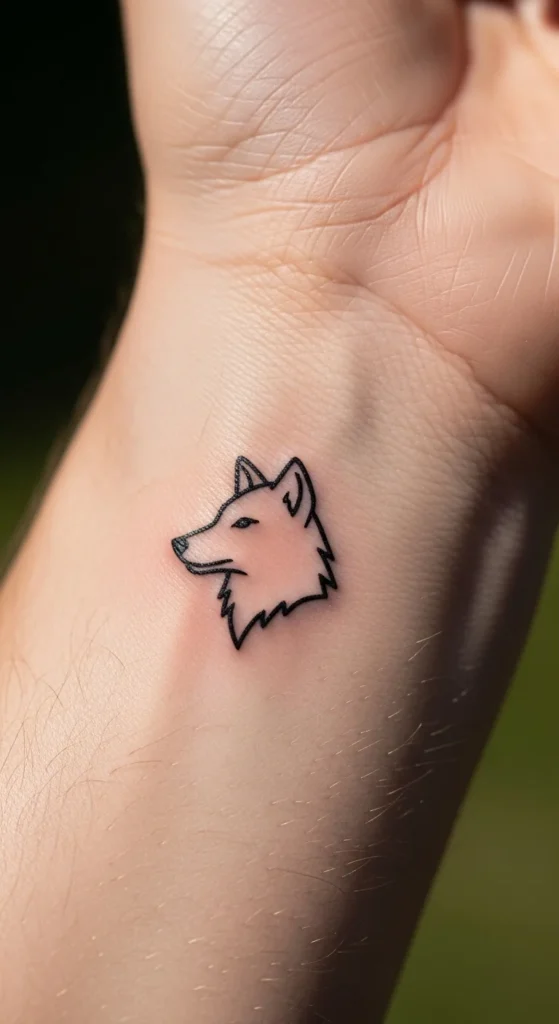
A small wolf mark on the wrist or hand works if you want a daily reminder of inner strength where you can always see it.
Because hands fade faster, you might start on the wrist to test how you feel about constant visibility.
Stick to a simple wolf head, symbol, or track rather than a full scene. Strong shapes age better on moving skin.
DIY planning: draw the design on your wrist with a pen and live with it for a day at home. Notice how you feel seeing it each time you wash your hands or use your phone.
Ask your artist about their touch-up policy before you commit, particularly for hand placements.
Healing here demands clean habits: wash your hands gently, avoid harsh cleaning agents where possible, and moisturize lightly.
Once settled, this small mark becomes a quiet personal emblem you carry through every part of your day.
25. Wolf Eye Close-Up
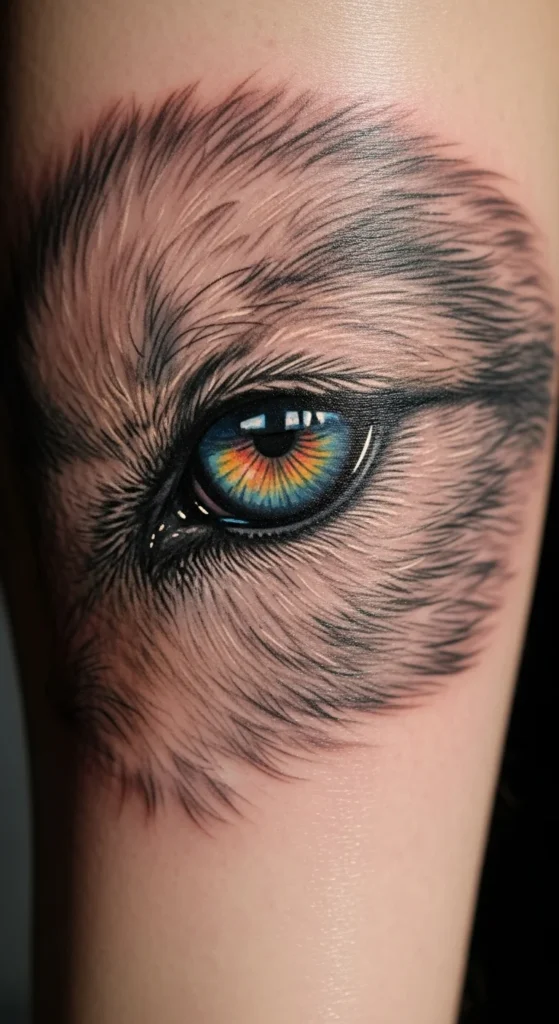
A single wolf eye feels intense yet minimal. It suggests watchfulness, awareness, and the part of you that sees more than you say.
Inner forearm or calf placements let you keep the eye at a comfortable size so details stay crisp.
To keep cost sane, let the artist focus on the eye and a ring of short fur. Extra background is optional.
DIY planning: zoom into a wolf eye photo on your screen and screenshot it. Print it in a few sizes and tape each one to your chosen spot. Pick the one that still looks sharp from a few steps away.
Ask whether a hint of color in the iris would help the eye stand out, or if you prefer pure black and grey.
Healing is similar to other small-medium tattoos. At first, the area may look milky; once the top layer peels, the detail comes through clearly.
This tattoo works well if you like symbolism that feels personal but doesn’t shout.
Conclusion
Wolf tattoos suit people who value quiet strength, loyalty, and the freedom to walk their own path. Whether you connect with a small fine-line outline, a family pack on your back, or a fire-and-ice pair on your arm, you can shape the idea to match your budget, pain comfort, and lifestyle. Use these concepts as starting points: sketch them, print references, and talk them through with a skilled artist. Then choose one design and let your wolf story live on your skin.