
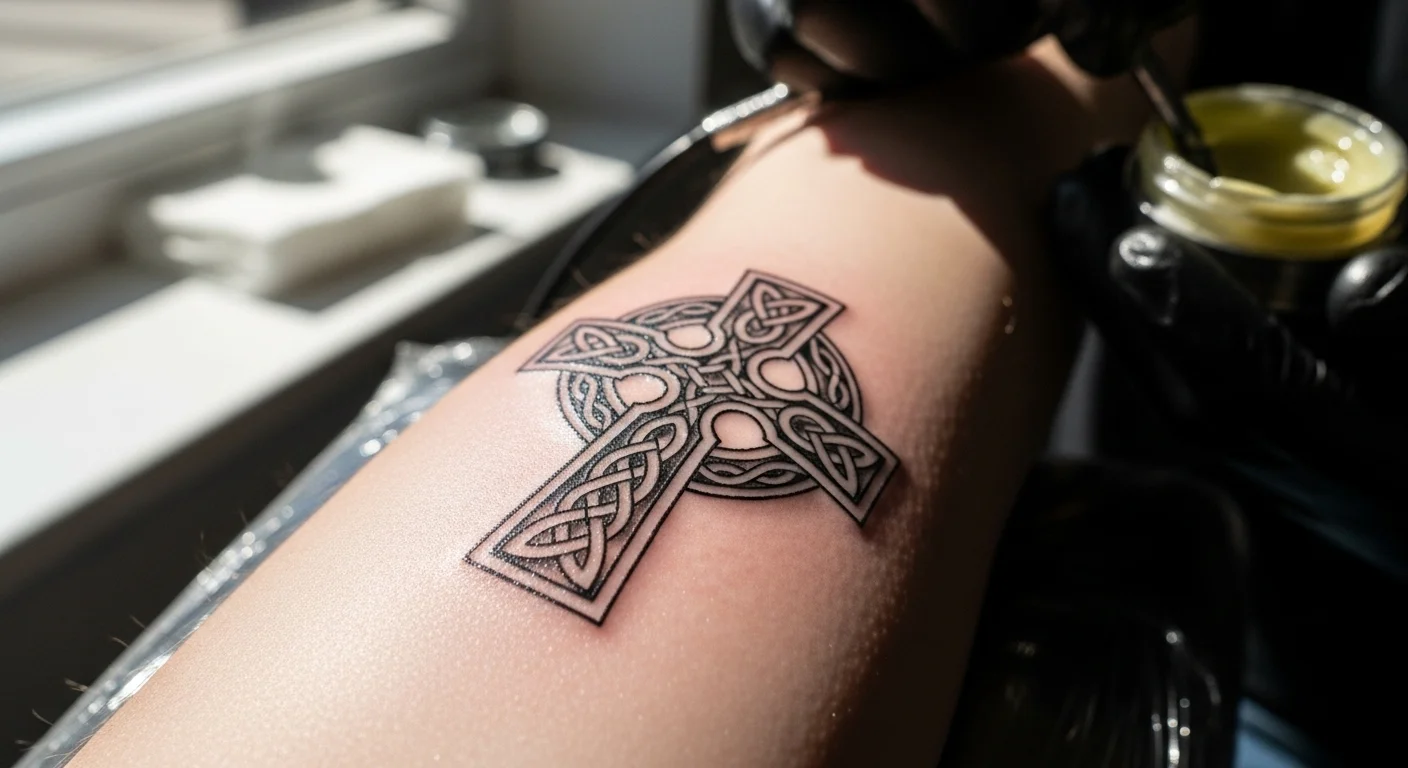
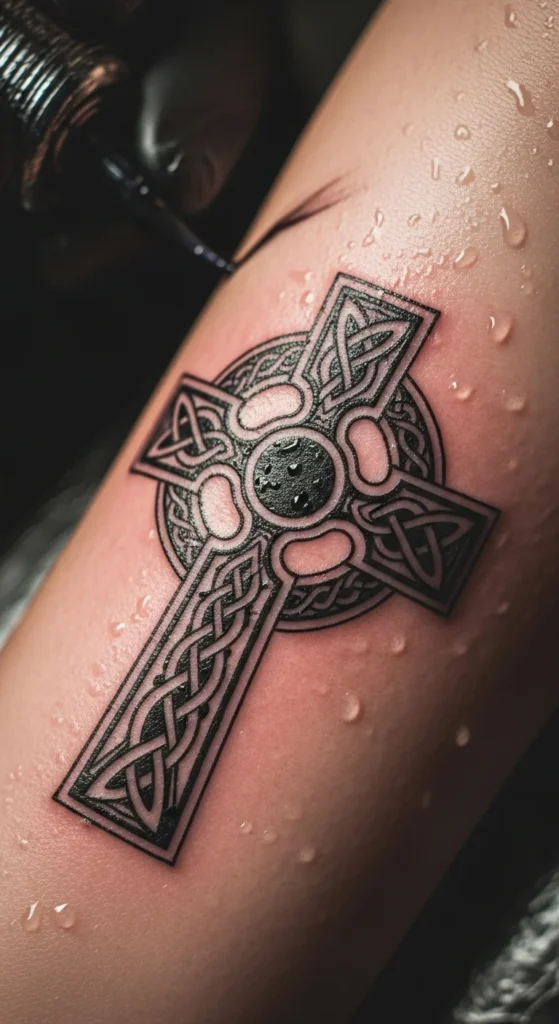
Celtic cross tattoos carry history, faith, heritage, and personal meaning all at once. Whether someone connects to Irish ancestry, spiritual symbolism, or the artistry of knotwork, these designs create pieces that feel personal. This guide offers creative ideas anyone can use to shape a meaningful tattoo—simple, bold, or detailed—without feeling overwhelmed. Each list item helps you visualize options, find practical ways to customize them, and explore budget-friendly steps before committing.
1. The Classic Celtic Cross With Knotwork
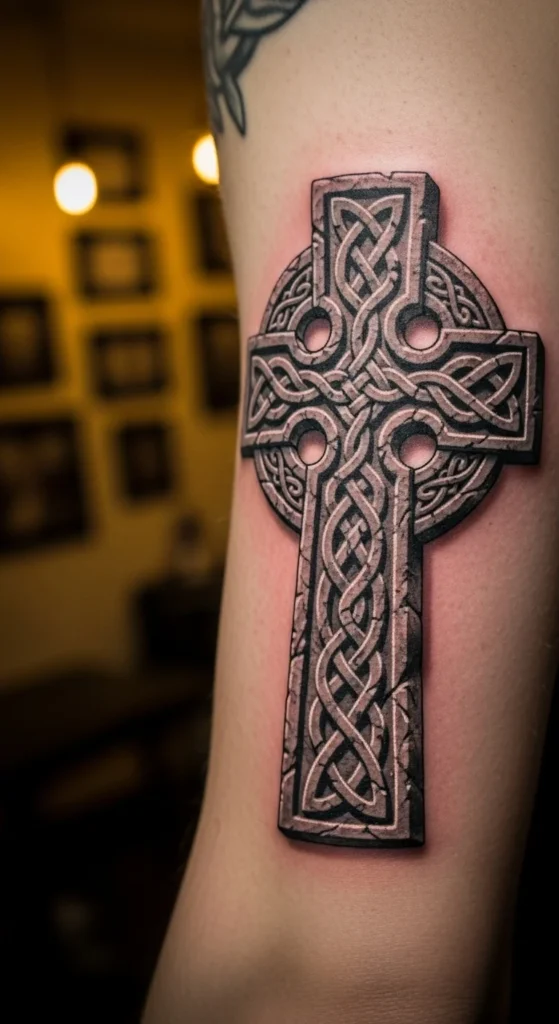
A classic knot-filled Celtic cross works well if you want something timeless. It sits nicely on an upper arm, shoulder, or calf. Shorter lines and repeating loops make it look polished without needing heavy shading. If you want to keep costs down, ask your artist to use simple linework instead of textured effects. Bring a printed sketch you like, or sketch a version yourself using a pencil and grid paper. Knotwork can look complicated, but you can start with basic loops and let your artist refine them. If you prefer a sharper look, choose bold outlines. For a softer style, thin lines create a lighter feel. Add a circle behind the cross for the old Celtic structure. You can also personalize the inside knots with shapes that remind you of family, faith, or nature. The design adapts well to any size, so you won’t need a huge session to make it meaningful.
2. The Weathered Stone Celtic Cross
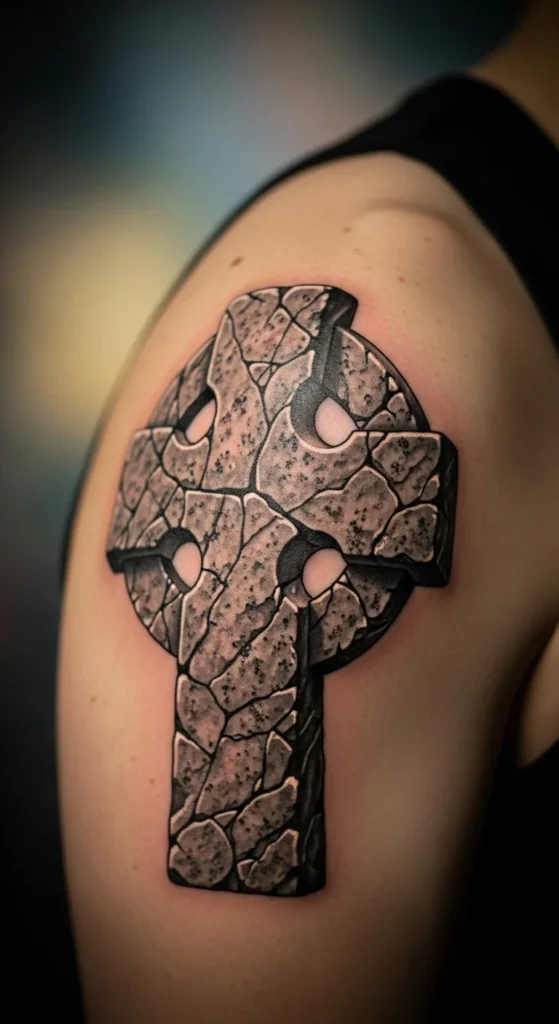
A weathered stone cross makes the tattoo feel ancient, almost like it’s standing in an old Irish field. You can keep the design simple by using light shading instead of heavy texture. Ask your artist for softer gradients to lower the cost and time. A small version looks good on the upper arm, but a larger one on the back or thigh gives room for “cracks” and worn surfaces. If you want a DIY approach before going to the studio, study real stone textures in outdoor photos and sketch broken edges or small chips. It helps you communicate what kind of aging you want. Adding a faint mossy look with light green ink can give it an earthy mood, though black-and-gray alone works great. This design carries a grounded energy and is easy to make personal without overwhelming your budget.
3. Celtic Cross With Braided Circle
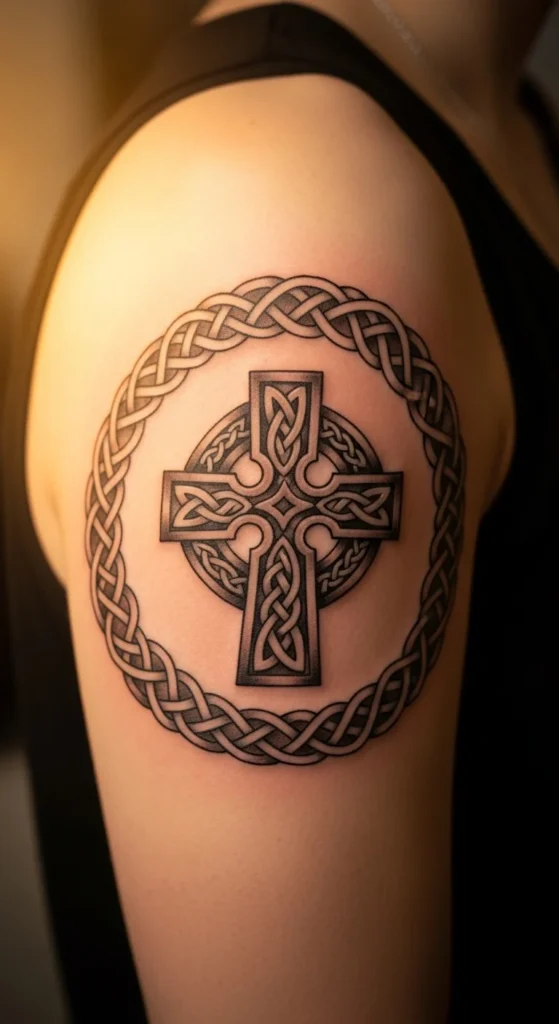
A braided circle around the cross adds movement without making the tattoo busy. It works on almost any placement—chest, back, or even wrist if scaled down. To keep things affordable, choose a single-shade braid instead of layered shading. Before getting it inked, practice drawing a simple rope pattern on paper. Even uneven sketches help your artist understand your preferred tightness of the weave. A thicker braid makes the tattoo bold, while a thinner one gives it a delicate look. You can also leave a small gap in the braid as if it’s intentionally “unfinished,” giving the symbol a sense of personal story. This style blends structure and flow, making it easy to connect with.
4. The Irish Heritage Celtic Cross
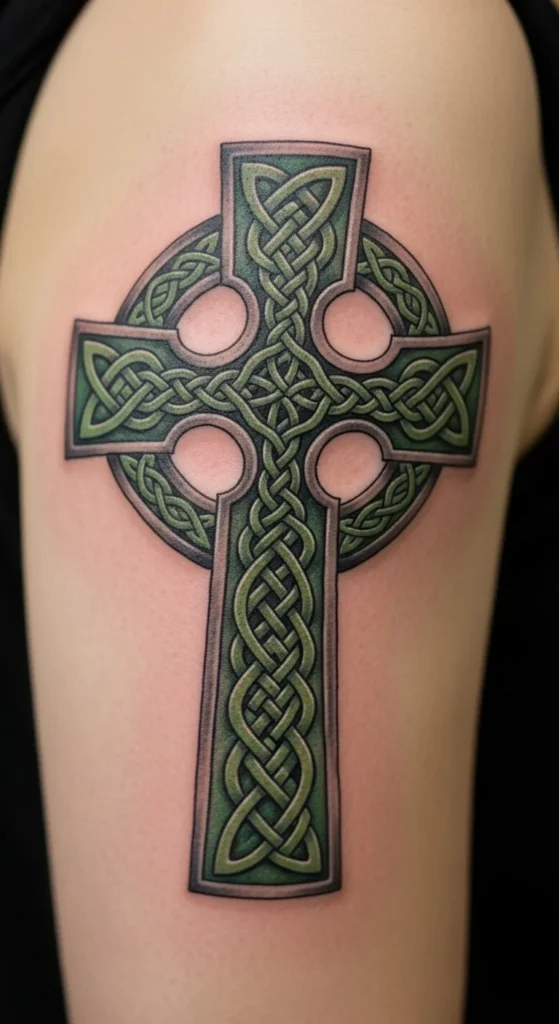
This design often includes tiny details like small shamrock shapes or spirals within the arms of the cross. Even with color, the tattoo can stay budget-friendly by using soft touches instead of full saturation. If you want to prepare at home, gather a few reference photos of Irish art or old stone carvings. Notice the curves and repeating patterns, then sketch a few options. You don’t have to be perfect—just give your artist a direction. Green ink works nicely, but black-and-gray alone still carries the heritage feel. This type of tattoo feels personal for people who want to honor family roots or cultural pride.
5. The Minimal Line Celtic Cross
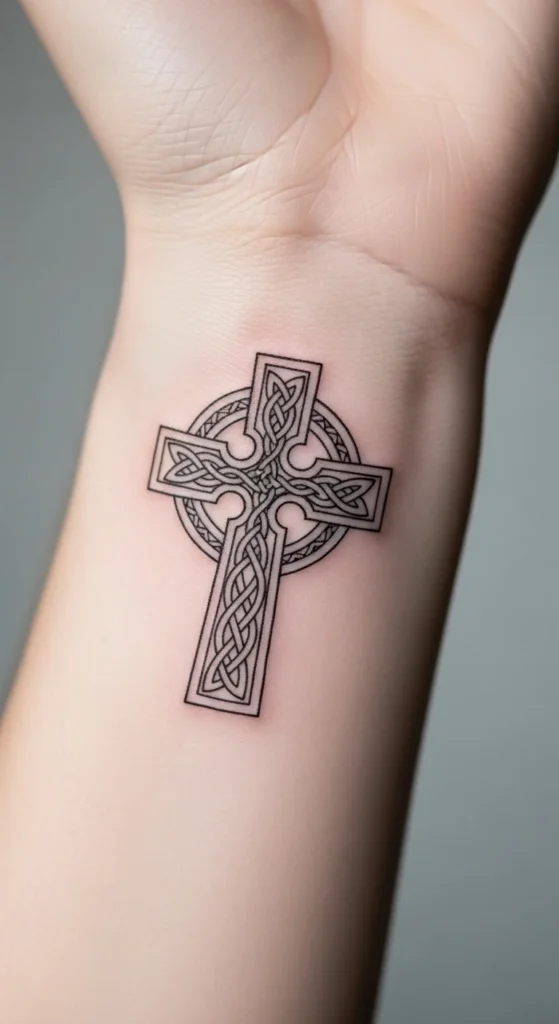
If you want something subtle, a thin-line cross is perfect. This version uses straight lines, gentle loops, and almost no shading, which keeps both time and cost low. It also heals quickly. Draw a simple cross on paper using a ruler, then add tiny loops or micro-knots inside each arm. Minimal styles work best in small sizes—wrist, ankle, or behind the ear. Budget-wise, this is one of the most accessible options. You can personalize it with a small dot, circle, or initial hidden in the linework. Even with its clean look, it still carries strong symbolism and connection to history.
6. Celtic Cross With Radiating Light
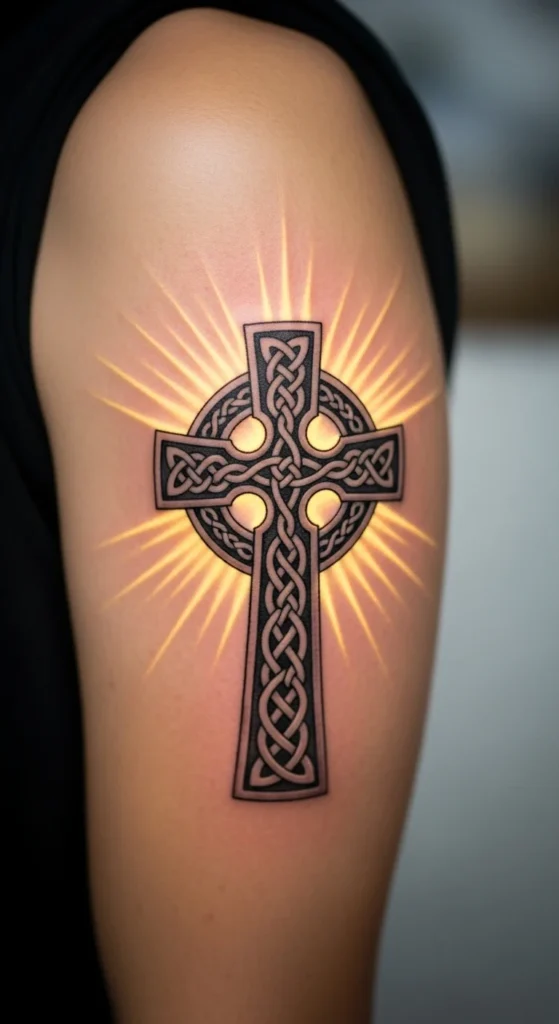
Adding rays gives the cross a peaceful, uplifting character without going overboard. Keep the rays simple—thin lines spaced evenly—so you avoid extra shading charges. Before visiting your artist, sketch a circle with lines extending outward like sunbeams. This gives them a clear idea of your preferred spacing. If you want a more gentle look, fade the rays so they almost disappear toward the outer edges. This style works well on the forearm, chest, or shoulder. The design offers a calm and steady presence, making it easy to carry meaning without extra complexity.
7. Celtic Cross With Family Initials
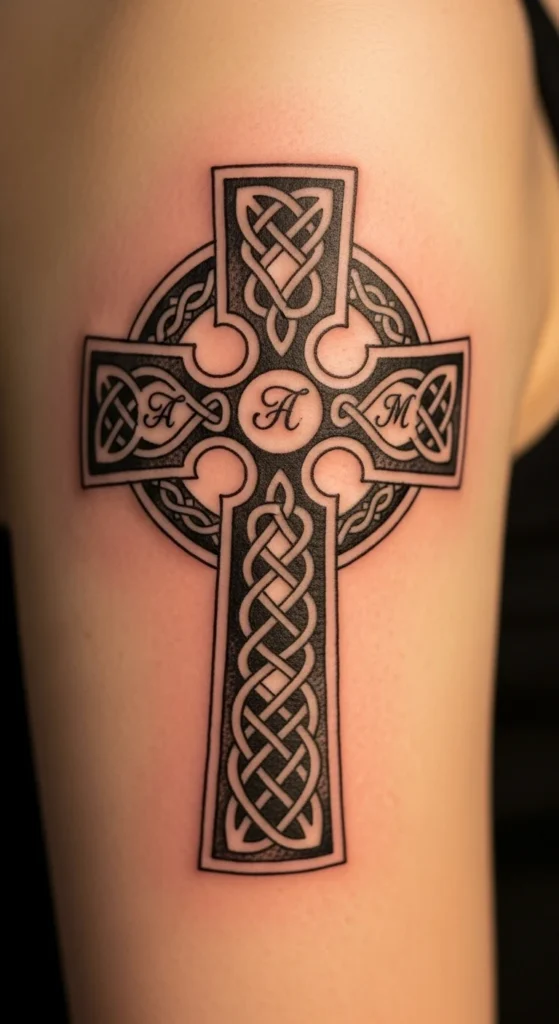
This style turns the tattoo into a personal tribute. You can place initials inside the loops or at the center circle. Choose small, clean lettering so it blends with the knots rather than standing out too strongly. If you’re keeping things budget-friendly, stick with black ink and skip extra shading. Before visiting the artist, print your initials in different fonts and cut them into tiny squares to test placement on a drawn cross. It helps you see what looks balanced. This design works well on the arm or upper back—anywhere with enough space for clean lettering.
8. Celtic Cross With Floral Accents
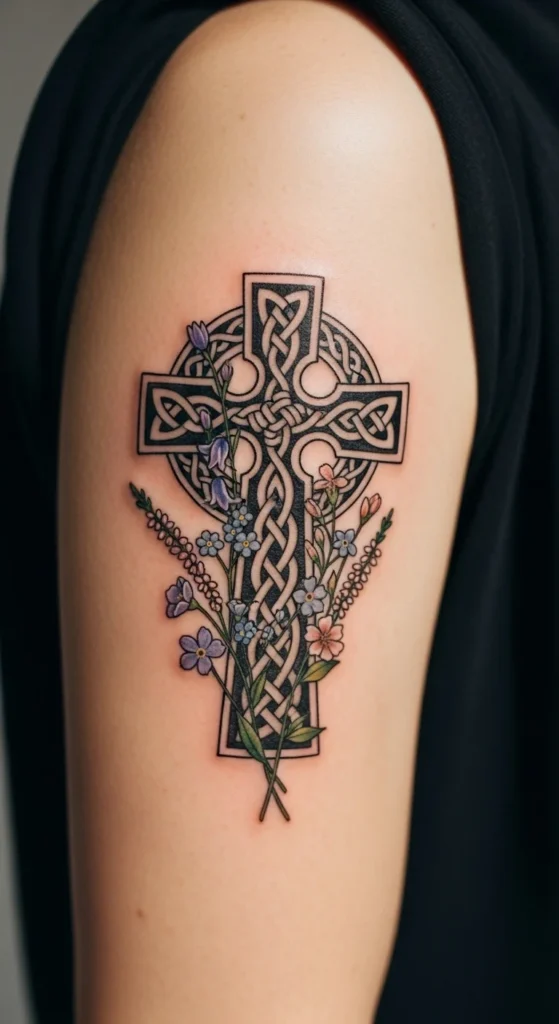
Adding flowers softens the cross and gives the piece a gentle feel. Think small wildflowers, vines, or leaves that wrap lightly around one arm of the cross. You don’t need heavy detail to make it look nice. Start by sketching simple petals or leaves at home so your artist knows your preferred shape. Keep the floral additions small to maintain a clean structure. You can choose black-and-gray or add a tiny hint of color. Even small blossoms can bring emotional meaning—growth, memory, or new beginnings.
9. The Gaelic Spiral Celtic Cross
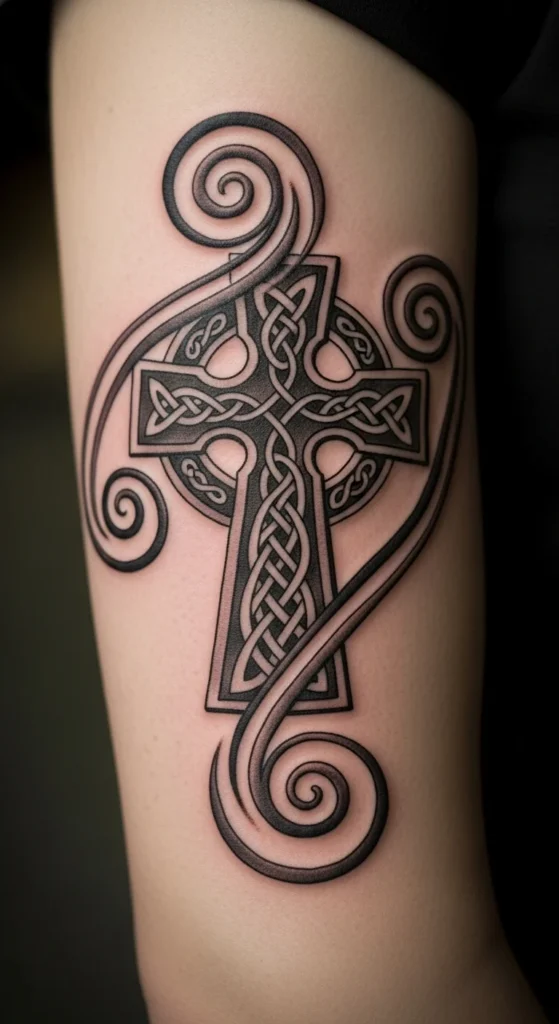
Spirals appear in ancient Irish carvings and bring a flowing, organic energy to the tattoo. They fit naturally into the arms of the cross and pair well with knotwork. Create a DIY version by tracing spirals on paper until you find a swirl pattern you like. You can keep the lines bold or thin, depending on how much contrast you want. This design fits best on medium-size placements like the shoulder, thigh, or chest. It has a balanced look that feels calm and steady.
10. The Shadowed 3D Celtic Cross
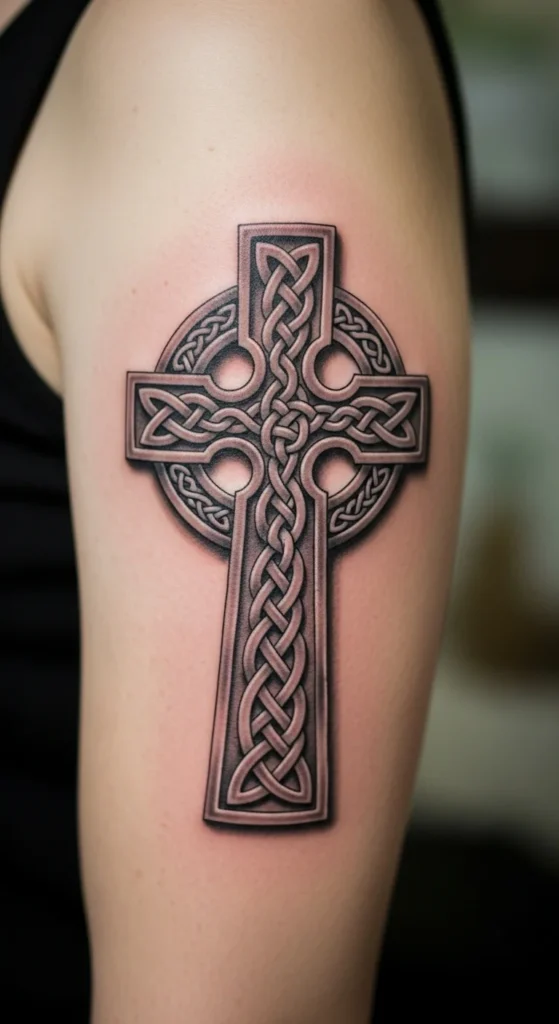
A soft 3D effect gives the tattoo dimension without requiring heavy shading. Ask your artist for gentle gradients instead of thick shadows to keep the design lighter. If you’re exploring ideas at home, study how objects look when light hits them from the side. Sketch a simple shadow shape along one edge of a drawn cross. This helps you communicate the effect you want. A 3D look stands out on the upper arm or calf. Even with simple shading, it creates depth and presence.
11. Celtic Cross With Mountains
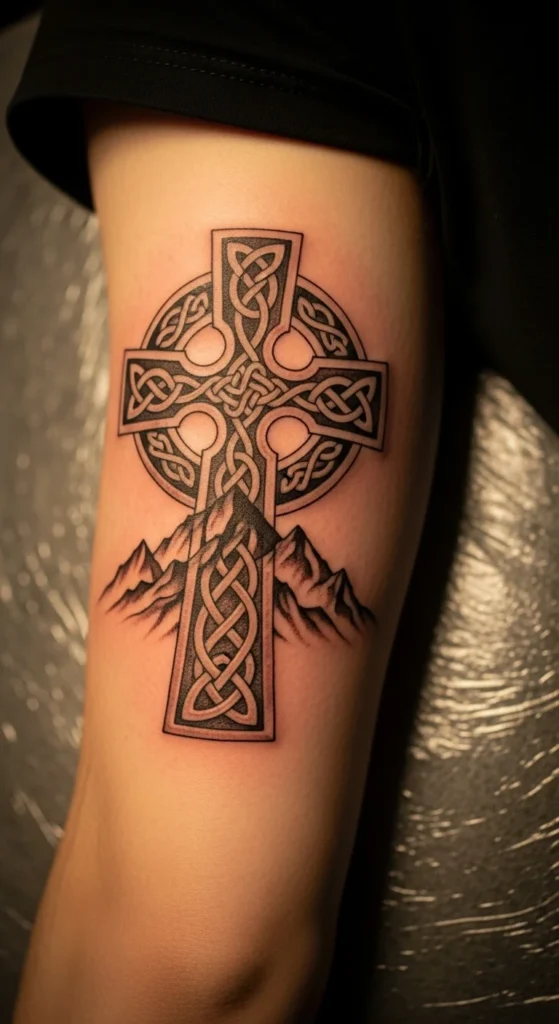
This version blends nature and heritage. The mountains can be simple—just a few clean lines forming peaks. That keeps the tattoo affordable and easy to maintain. If you enjoy drawing, sketch mountains with straight strokes and experiment with how high they sit behind the cross. A faint horizon line can add grounding. This design works great for people who connect to travel, struggle, or personal growth. Place it on the forearm or upper arm for a balanced composition.
12. Celtic Cross With Waves
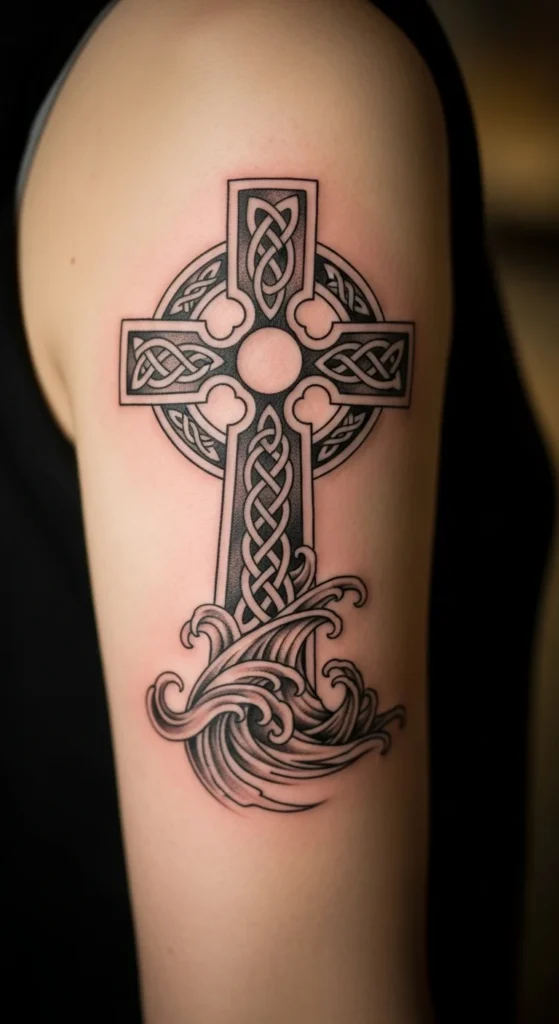
Waves bring movement to the tattoo without overwhelming the structure. You can ask your artist for simple curved lines that taper at the ends. It keeps the piece clean and cost-friendly. Try drawing loose S-shapes at home to find a wave pattern you like. This design connects well with themes of resilience or emotional grounding. It suits the forearm, back, or ribs. Even small waves can tell a powerful story.
13. The Ancestral Stone Cross
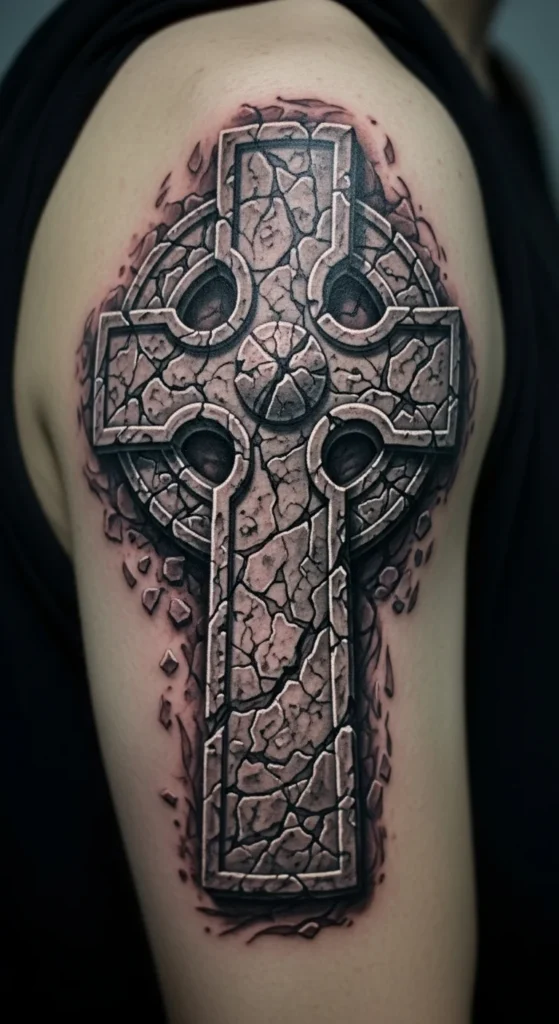
If you enjoy old-world imagery, this design creates a sense of history. Soft shading makes it look like an ancient carving. To stay within budget, keep the cracks light and avoid heavy texture. Before your session, find photos of old Celtic stone crosses and print a few. Circle the parts you like—weathering, angles, or patterns. Bring those notes to your artist so they can shape the style. This tattoo fits well on the shoulder or back.
14. Celtic Cross With Birds
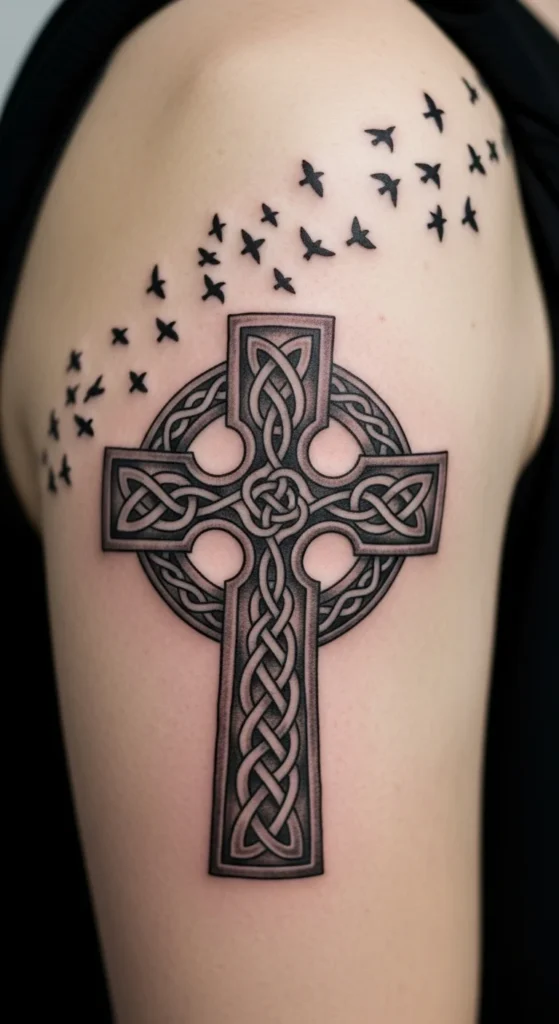
Birds add a sense of freedom and direction. They don’t require much detail—just a few V-shapes with slightly curved wings. This makes the tattoo affordable and easy to maintain. You can sketch small bird silhouettes on paper and test where they look best around the cross. The birds can symbolize a loved one, hope, or transition. This design sits nicely on the upper arm, ribs, or shoulder blade, giving the birds room to “fly” outward.
15. The Celtic Cross With Fire Motif
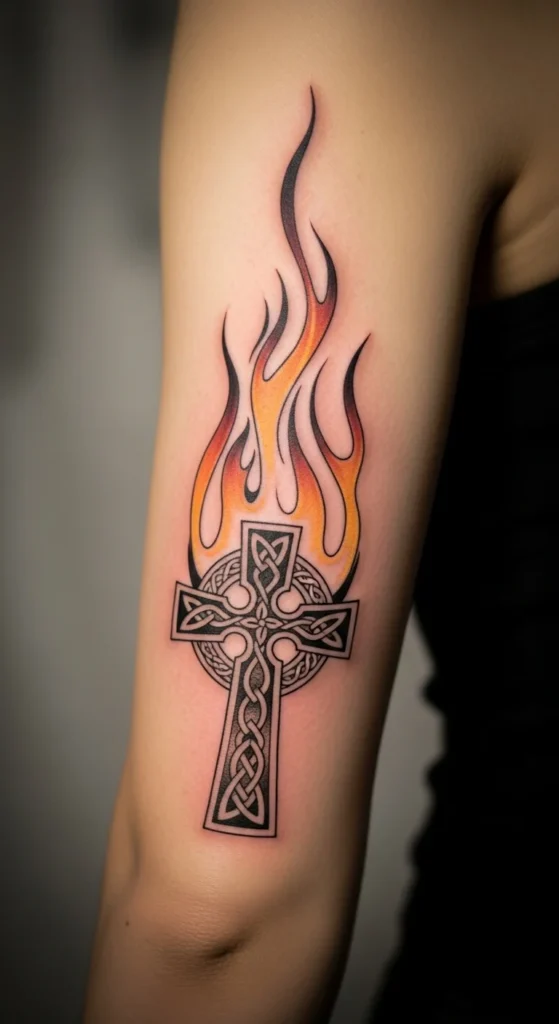
Fire adds intensity but doesn’t have to look aggressive. You can keep the flames subtle—just curved lines that taper upward. This lowers shading time and keeps the tattoo smooth. Try drawing flame shapes with a single stroke at home; it helps you understand what style feels right. This design suits people who connect with transformation or perseverance. It works well on medium to large placements like the thigh or upper arm.
16. Celtic Cross With Celtic Animals
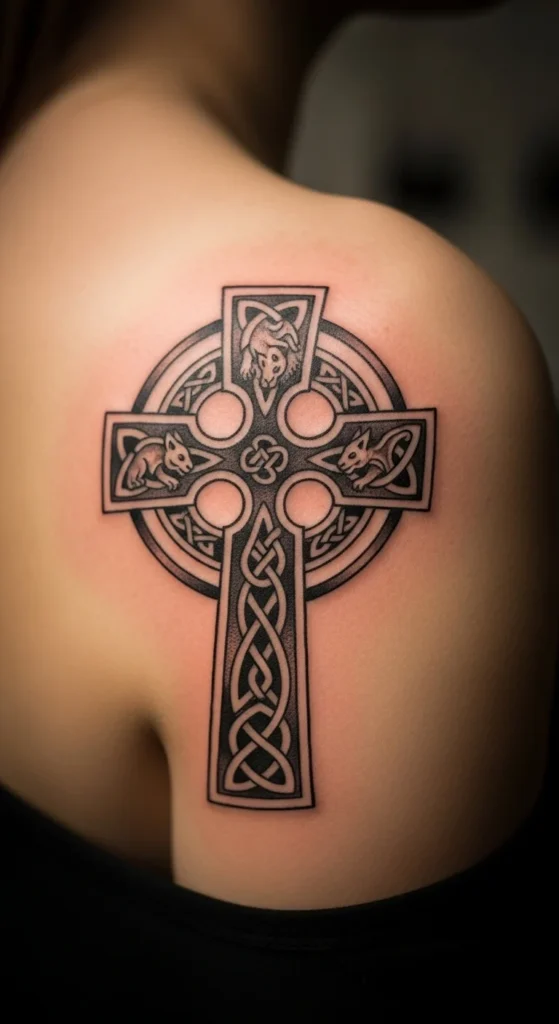
Celtic animals—like hounds, birds, or serpents—often appear in ancient designs. You don’t need full animal portraits; simple knot-like shapes hint at their presence. This keeps the tattoo clean and affordable. Bring a couple of reference images to your artist and mark the parts you like. Even tiny animal shapes can add depth and personal meaning. This style works best on areas with enough room for the details to be readable.
17. The Broken-Edge Celtic Cross
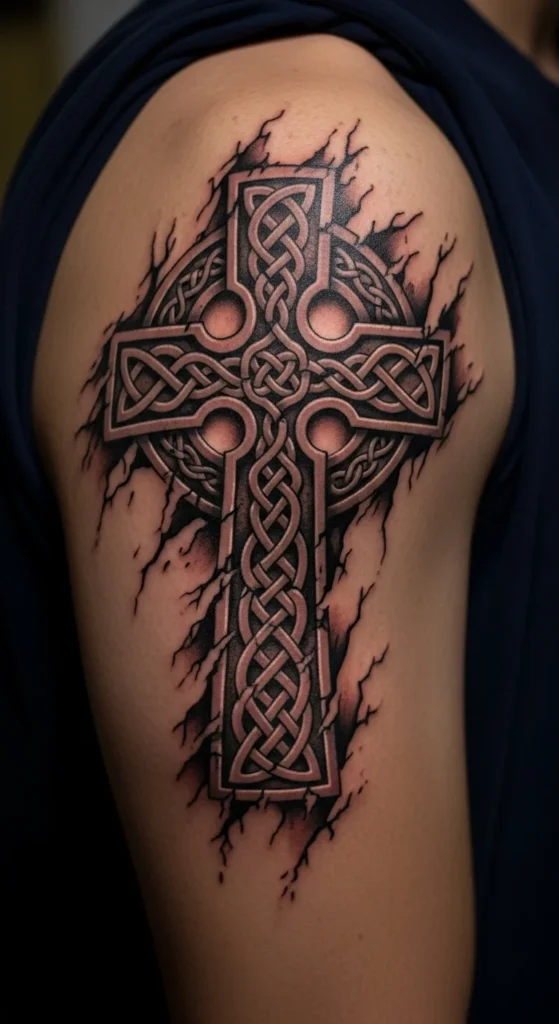
This design suggests resilience and survival. The edges look chipped, as if the cross has weathered time. It doesn’t require heavy shading—just a few sharp lines and angles. If you want to prepare beforehand, sketch your cross and “break” small sections of it using jagged strokes. You can choose how worn or strong it appears. This makes the tattoo ideal for people who relate to struggle and endurance. Placement works well on the arm or upper back.
18. Celtic Cross With Halo Ring
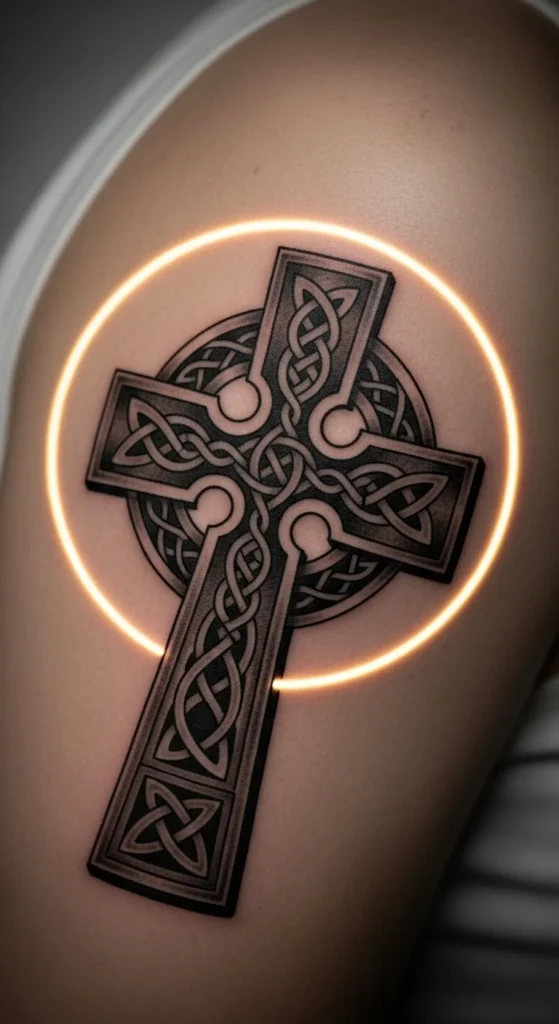
A halo ring adds calmness and balance. Keep the ring light and thin for a gentle effect. This reduces shading time and cost. You can draw a circle at home and test how far it should extend beyond the cross. A wider ring gives a softer mood; a tight one feels more structured. This design fits well on the chest, shoulder, or forearm. It’s simple but meaningful.
19. The Interwoven Ribbon Celtic Cross
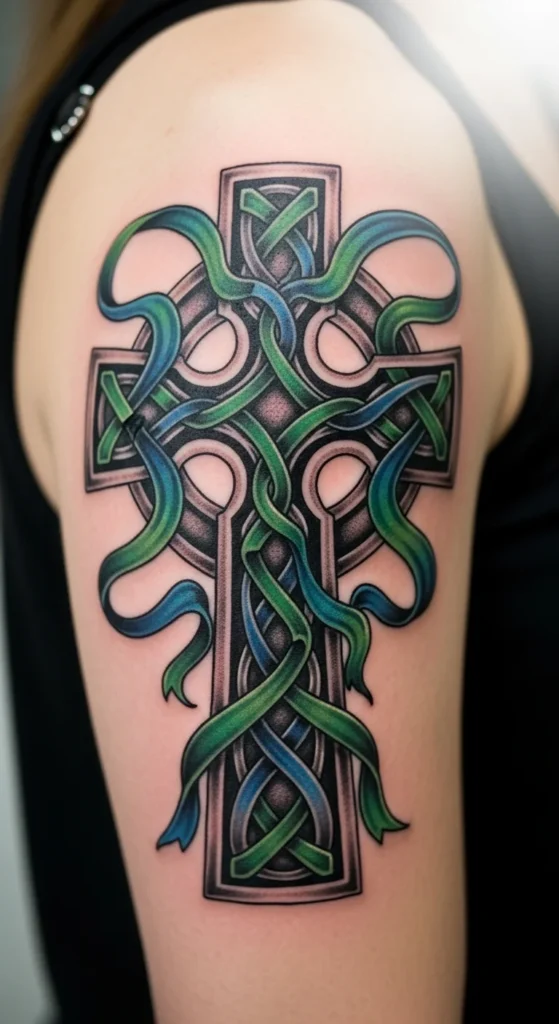
Ribbons add movement and a personal touch. They can symbolize memory, faith, or support. Keep the ribbon simple—one or two flowing strands—to avoid extra shading. Draw a ribbon at home by making soft wave lines, then place it diagonally across a sketched cross. This helps you show your artist the flow you like. This design works well on arms and thighs, where the ribbon can curve naturally.
20. The Celtic Cross With Tree Roots
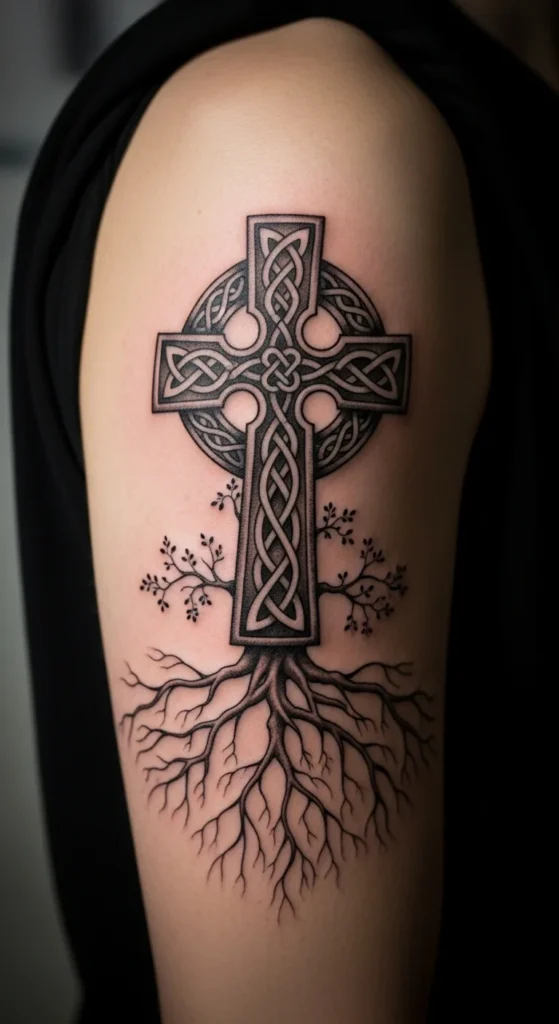
Roots symbolize grounding and connection. They don’t need to be detailed—thin lines branching outward are enough. You can sketch roots by drawing straight lines that split into smaller branches. A simple approach keeps costs low and maintains a clean design. This tattoo suits people who value ancestry, stability, or personal growth. It works great on the forearm, calf, or ribs.
21. Celtic Cross With Moon Phases
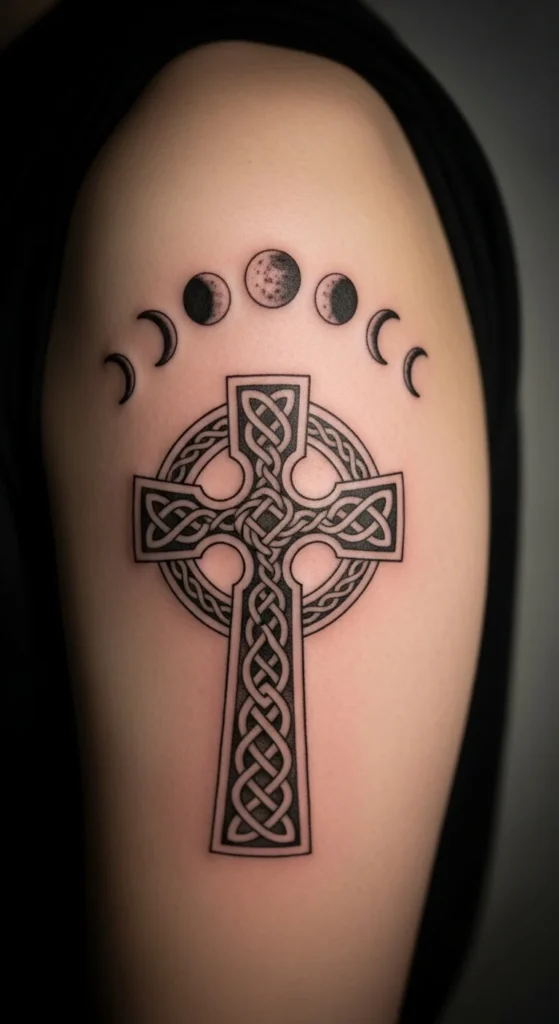
Moon phases pair beautifully with the symbolic nature of the cross. They can represent cycles, healing, or change. To keep the tattoo simple, use small crescent and full-moon shapes with minimal shading. Try drawing the phases on paper to test the spacing. This design fits nicely on the forearm, spine, or upper arm. It feels peaceful and balanced without requiring extra detail.
22. The Celtic Cross With Shield Shape
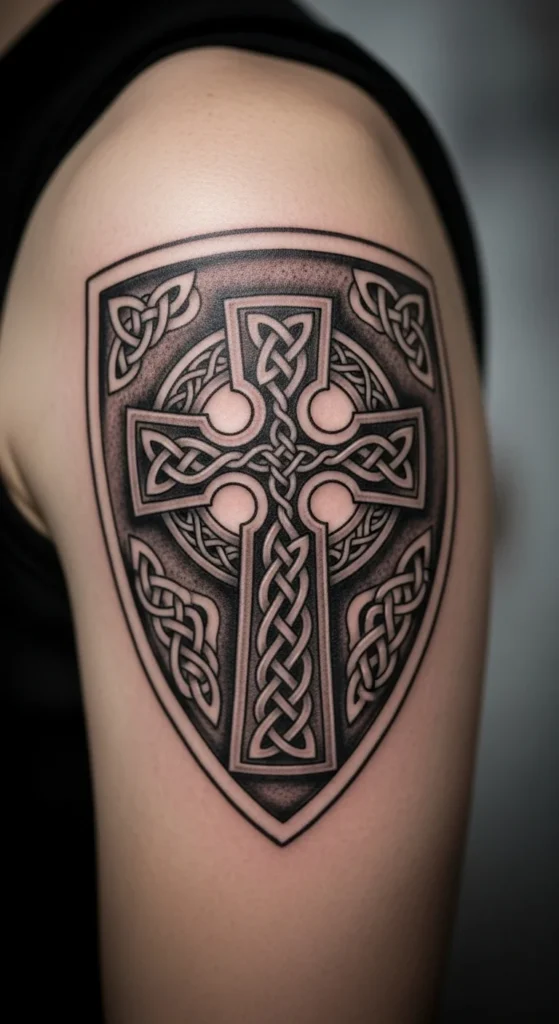
A shield outline gives the tattoo a protective tone. The outline can be thin and simple, keeping the tattoo cost-friendly. At home, draw a cross and place a shield around it. You can test different shapes—rounded, pointed, or straight-edged. A shield makes the tattoo feel solid without needing extra shading. This style works well on the upper arm, back, or chest.
23. The Woven Armor Celtic Cross
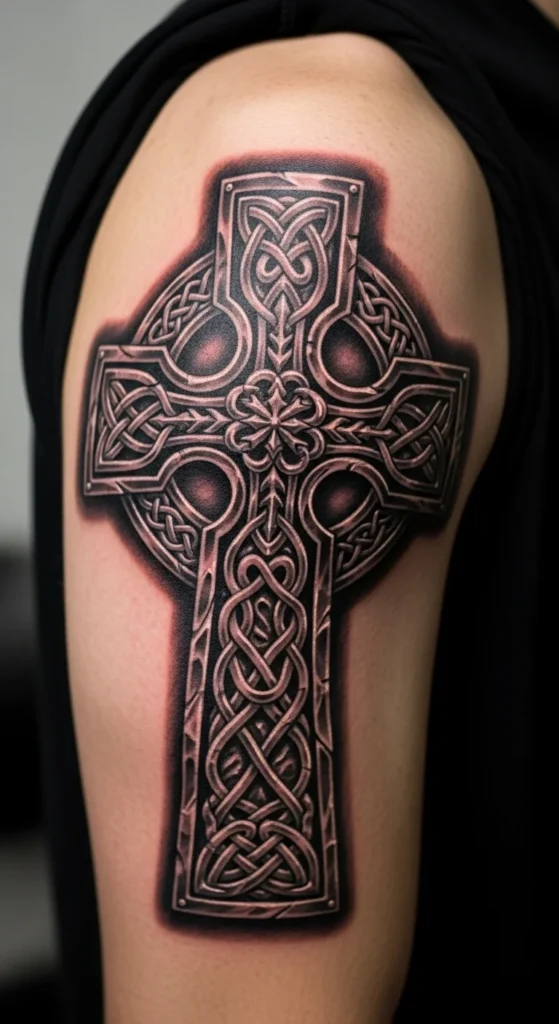
This version is inspired by ancient armor plates. You don’t need heavy detail—light shading gives the impression of metal. Bring a few reference textures to your artist and point to the sections you like most. A small version works fine, but a larger version on the upper arm or thigh lets the design breathe. It feels strong without being overwhelming.
24. The Rising Dawn Celtic Cross
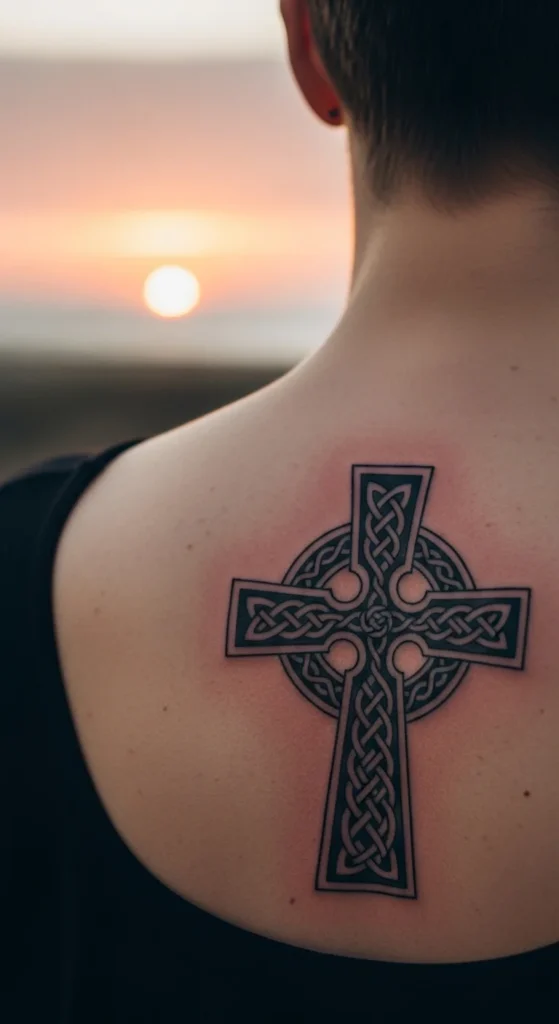
A sunrise behind the cross brings a hopeful feeling. You can use simple gradient shading or keep it monochrome. Draw a half-circle behind your sketched cross and add thin lines upward to mimic morning light. It adds symbolism without requiring extra detail. This tattoo sits nicely on the chest, back, or forearm and has a peaceful, steady presence.
Conclusion
Celtic cross tattoos offer endless possibilities—simple, bold, personal, or symbolic. Each idea above gives you clear ways to customize your tattoo without overcomplicating it or stretching your budget. Whether you’re honoring heritage, expressing faith, or marking a chapter of your life, you can shape a design that feels authentically yours. Start with a small sketch, bring clear notes to your artist, and let the meaning guide the final piece.