
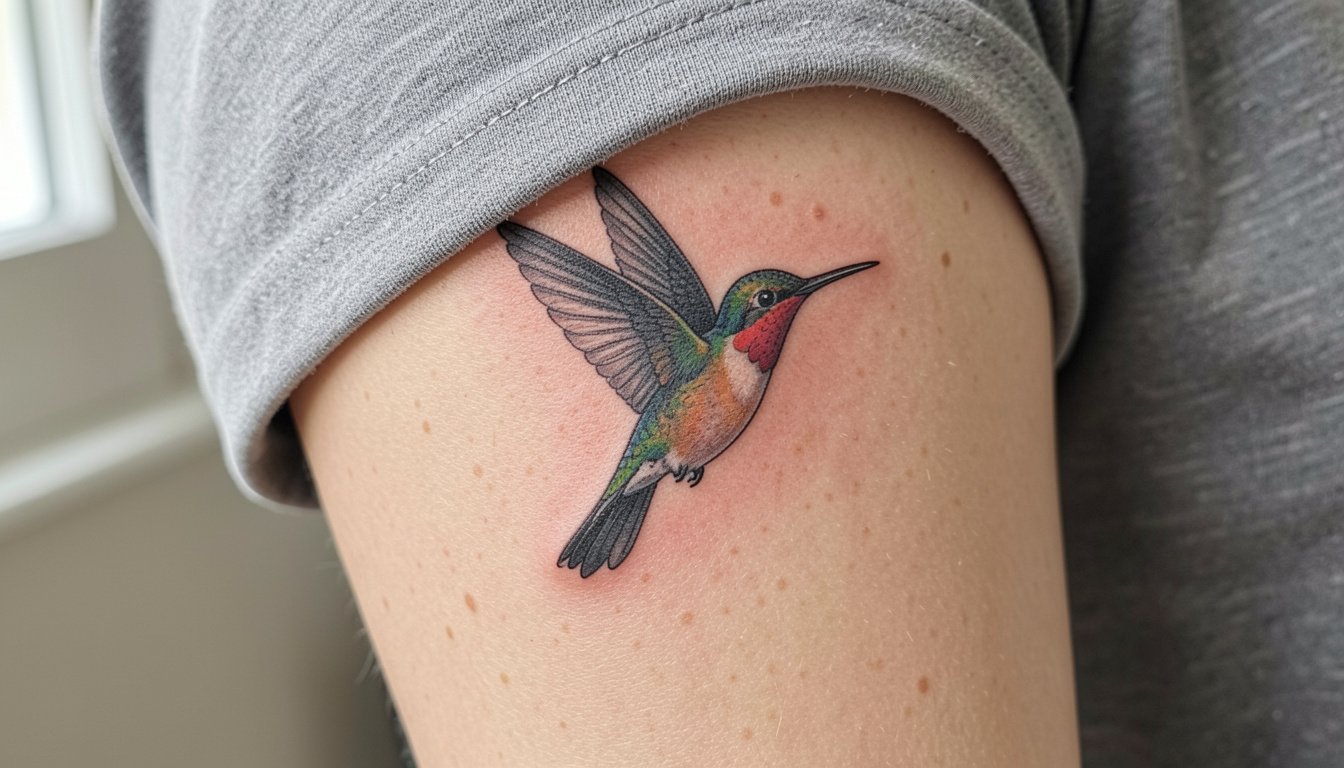
The watercolor hummingbird that still looks clean five years later often started with a clear black anchor and selective color, not a full-bleed wash. People assume watercolor must be all soft edges, but controlled saturation and thoughtful spacing keep the motion without turning into a bruise. Below are fresh takes that balance fluttery color with structural choices that help the design age.
1. Watercolor Hummingbird with Soft Floral Spray

Watercolor wings and floral sprays give a lively, airy look, but the design must include a bit of black structure so it reads after healing. One camp says watercolor fades faster and soft edges blur because pigment sits more superficially in the dermis. The other camp argues watercolor lasts when artists build a clean outline and layer color sparingly. Discuss precise lineweight for the wing tips so the feathers still read at two and five years. Common mistake is compressing tiny petals into a wash. For session comfort wear a loose tank top and bring a slip or strapless bra if the shoulder sits near the strap line. This placement usually takes one session of 60 to 120 minutes and may need a light touch-up at 12 to 18 months.
2. Fine Line Hummingbird with Minimal Leaves

Fine single-needle work reads as delicate at first, but size matters for long-term clarity. One camp warns that fine line on areas that stretch or move can blur within a few years. The other camp says the technique holds if you slightly increase spacing and pick thicker single-needle contours where needed. Size this at least three inches from beak tip to tail if you want feather detail to age well. Tell the artist to keep internal shading stippled not filled, and avoid packing color into petal edges. For showing this off, pair with a rolled-cuff linen shirt that frames the inner forearm. Expect a 45 to 90 minute session and a possible small touch-up after the first year.
3. Blackwork Hummingbird Shoulder Piece
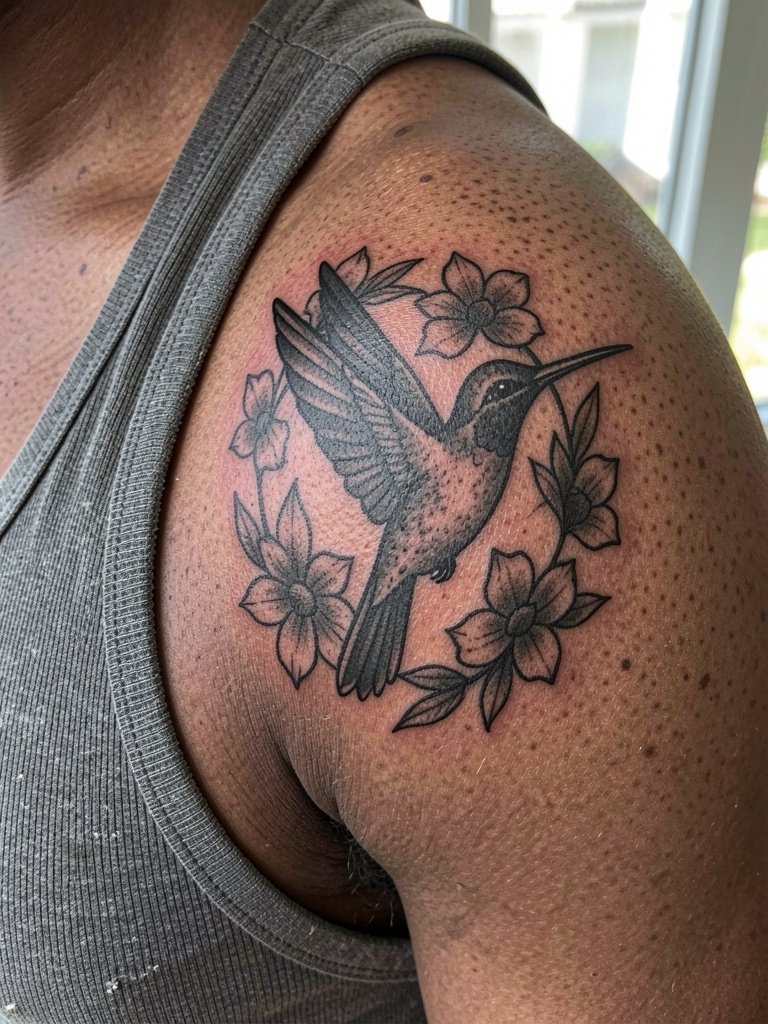
Blackwork gives a high-contrast silhouette that ages predictably. Choose bold linework and broad areas of saturation to reduce blowout risk on shoulder skin. A common mistake is over-detailing small feathers inside dense black; the details vanish as the piece heals. Talk about saturation depth and stipple shading in the floral frame so the blooms keep texture without muddying. This placement tolerates longer sessions, so expect two passes for a medium shoulder piece. For warm-weather outfits, try off-shoulder tops to show the composition without straps cutting across it.
4. Realistic Illusion Hummingbird on Outer Forearm
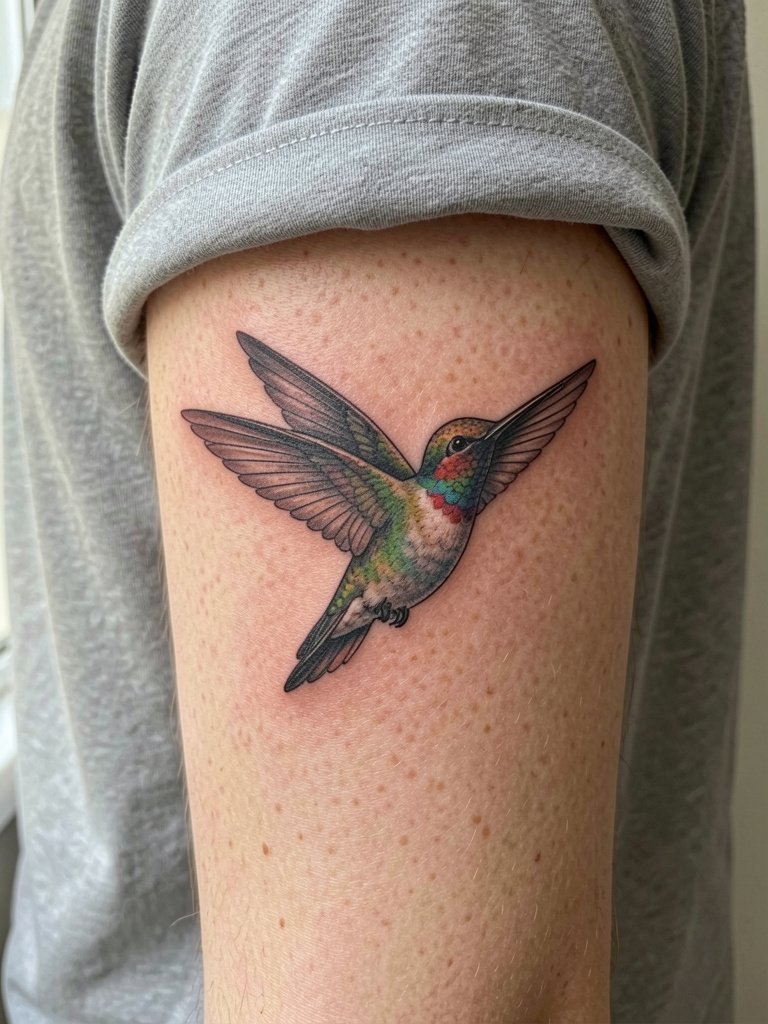
Micro-realism concentrates detail and saturation, so sizing and line clarity are critical. If you want lifelike feathers, make the piece palm-sized or larger. Discuss reference photos that show feather direction at the scale you want. The session can be lengthy and feels like steady buzzing with occasional breaks, so plan a light, high-protein snack and comfortable sleeve access. Avoid cramming script or tiny flowers right next to the bird; negative space preserves the illusion. For work-friendly styling, a relaxed blazer with sleeves pushed up keeps the forearm visible without overexposure. Expect at least one touch-up within 12 months for color saturation.
5. Hummingbird with Roses on Wrist or Forearm
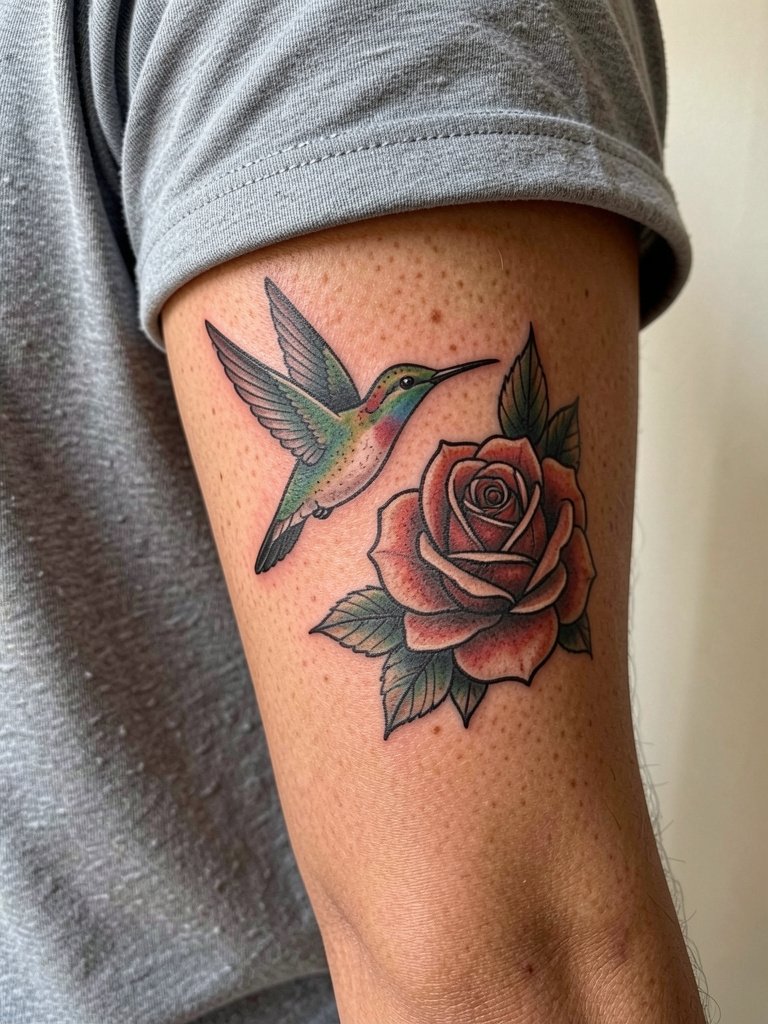
A floral pairing anchors the hummingbird and makes composition feel intentional. The biggest mistake is packing tiny rose petals into a wrist piece. Increase scale slightly so petals and stamen hold. Ask for dot work in shadowed areas rather than soft wash so contrast survives. Wrist pieces face extra friction from bracelets and washing, so remove jewelry during healing and expect a lighter session of 45 to 90 minutes. To show it off, use a thin bangle bracelet on the opposite wrist rather than stacking on the tattooed side. Plan for a possible touch-up at the one-year mark.
6. Watercolor Hummingbird with Quote on Inner Forearm
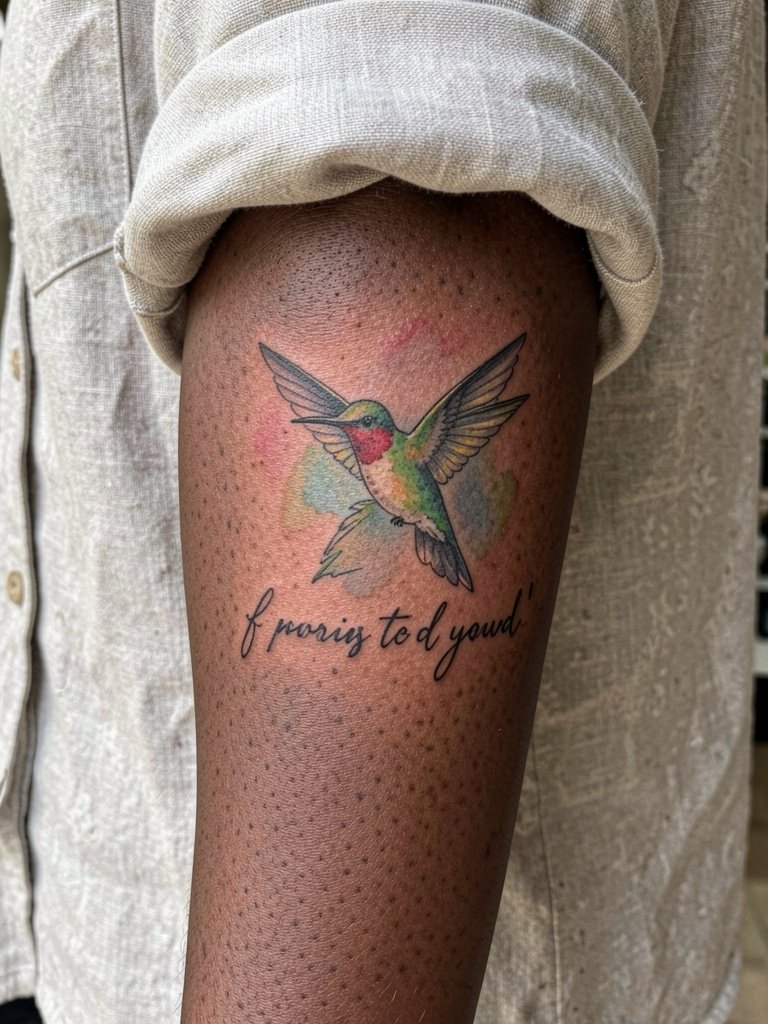
Combining watercolor with script amplifies personalization, but line clarity around the lettering must be protected. One camp argues full washes can obscure small script as color settles. The other camp suggests placing the script on a clean black baseline with color as background so the words remain legible. Specify exact word spacing and font size so the script reads at a glance. During the session, keep the arm palm-up and relaxed. For wardrobe, roll sleeves to a clean cuff linen look that frames the inner forearm. This piece usually takes one session of 60 to 90 minutes and may need a small touch-up to the script after healing.
Studio Day Prep
The inner forearm and wrist pieces above need easy access and minimal fabric rubbing while healing, so a few kit items smooth the session and first week.
- Stencil transfer paper kit. Lets you preview line placement on the skin, which helps for wrist and forearm stencils discussed in ideas above.
- Topical numbing cream. Applied before a sensitive forearm or wrist session reduces discomfort without changing the artist's machine work.
- Thin protective film roll. Useful for covering ankle or wrist pieces during the first day of heavy activity.
- Fragrance-free gentle body wash. Cleanses healing areas without irritating fresh pigment on shoulder and forearm work.
- Healing ointment. A thin layer during the first 48 hours helps protect fine line and watercolor details while the skin seals.
7. Mini Monochrome Hummingbird for the Wrist
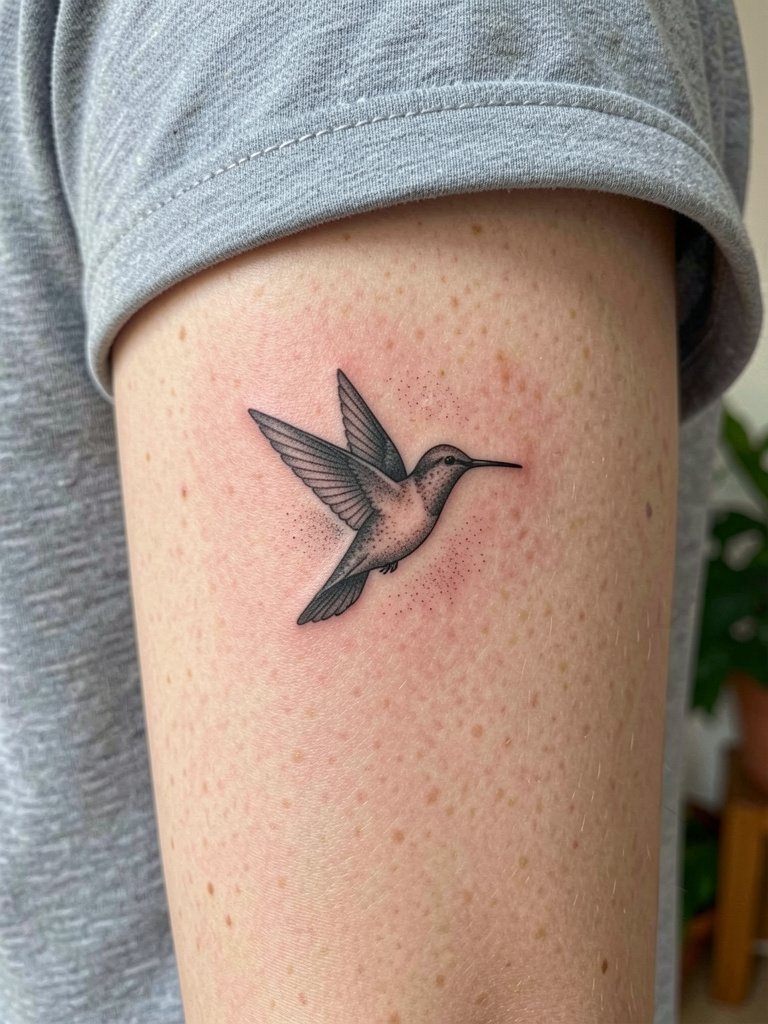
Tiny monochrome pieces are discreet but they ask for breathing room. The common mistake is shrinking a design below the needle's readable limit. Size this so the beak, eye, and primary feather shafts are clear. Ask for slightly bolder contour lines around the wing to resist early softening. Wrist skin endures a lot of movement and washing, so expect some early softening and a likely touch-up at nine to twelve months. For session wear, choose short sleeves and remove bracelets. Keeping the tattoo wrist visually uncluttered works best with a minimalist watch on the opposite wrist.
8. Hummingbird and Flowers, Shoulder to Upper Arm Wrap
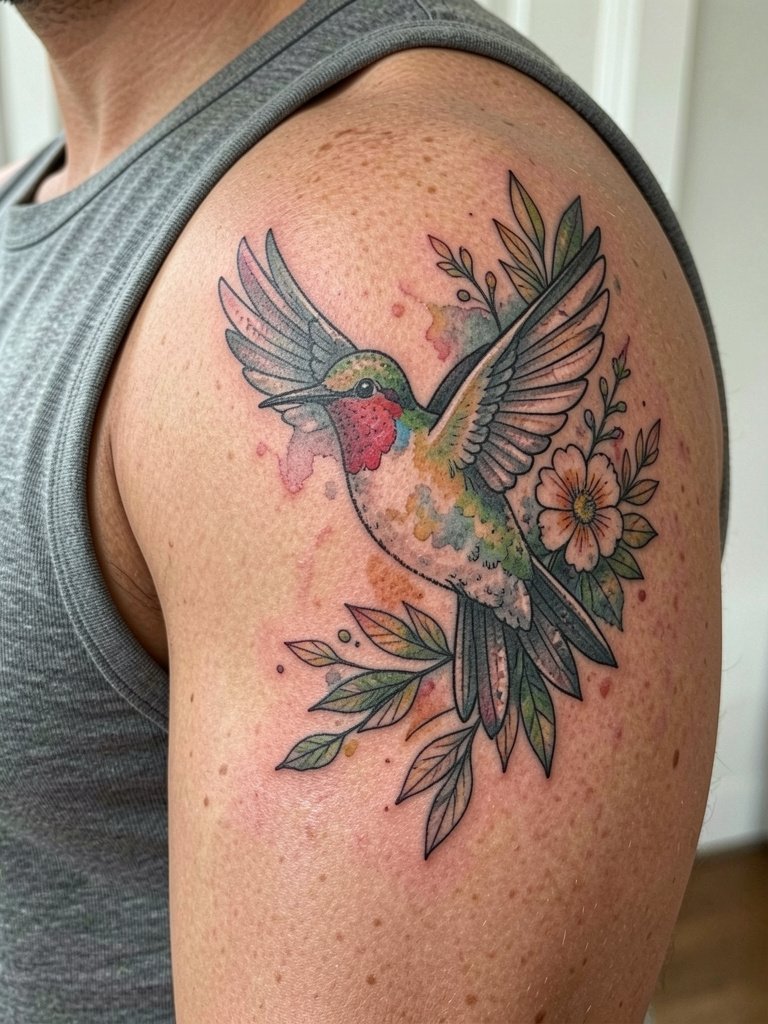
A wrap composition reads well in sleeveless clothing and lets the bird appear mid-flight around natural curves. Plan the motion path with the artist so the wing interacts with muscle shape rather than hiding inside a fold. Mistakes include overusing tiny leaf veins that disappear with healing. This type of shoulder-to-arm work commonly needs two sessions and can be heavier on saturation. For showing it off, pair with a muscle tank or sleeveless tee for summer. Touch-ups may be required at the one to two year mark for color refresh.
9. Hummingbird with Vines or Leaves on Outer Forearm
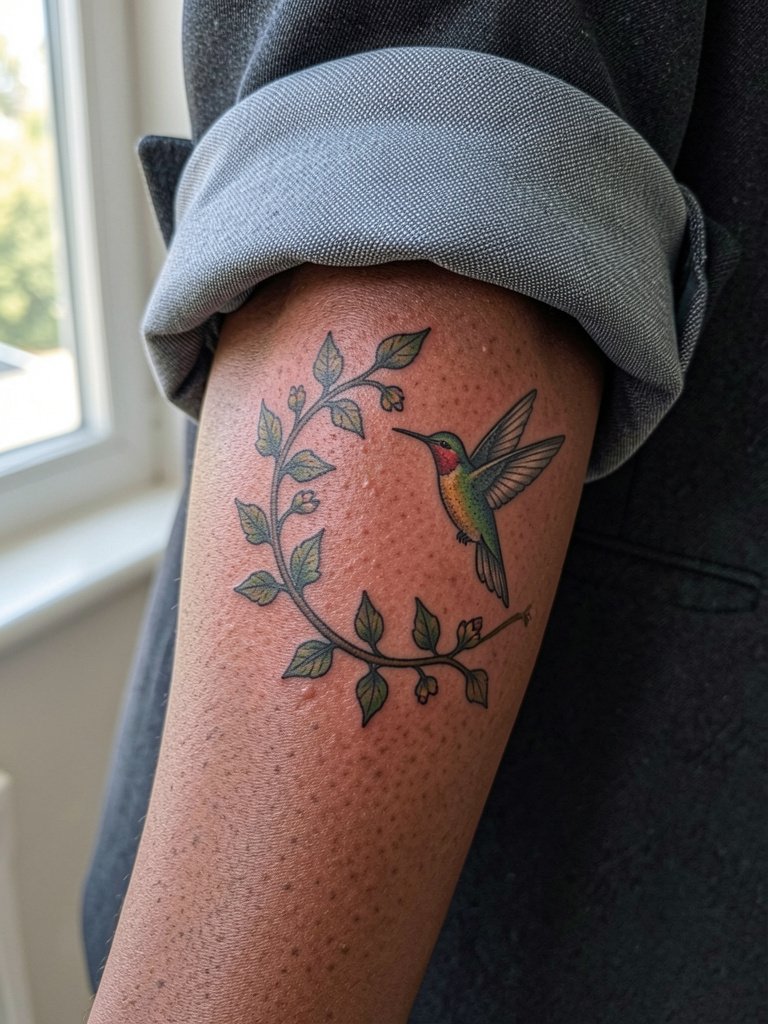
Natural framing with vines keeps the eye moving so the bird feels in motion. Discuss negative space so the vine does not crowd the wing leads. Outer forearm placement is forgiving for detail, but avoid micro lettering next to the vine junctions. Session time is moderate and the area tolerates longer passes. Styling-wise, a white button-up shirt with sleeves pushed to the elbow shows the forearm without risking sun exposure. Plan for light touch-up if color seems to lose punch after winter months.
10. Small Memorial Hummingbird at the Collarbone
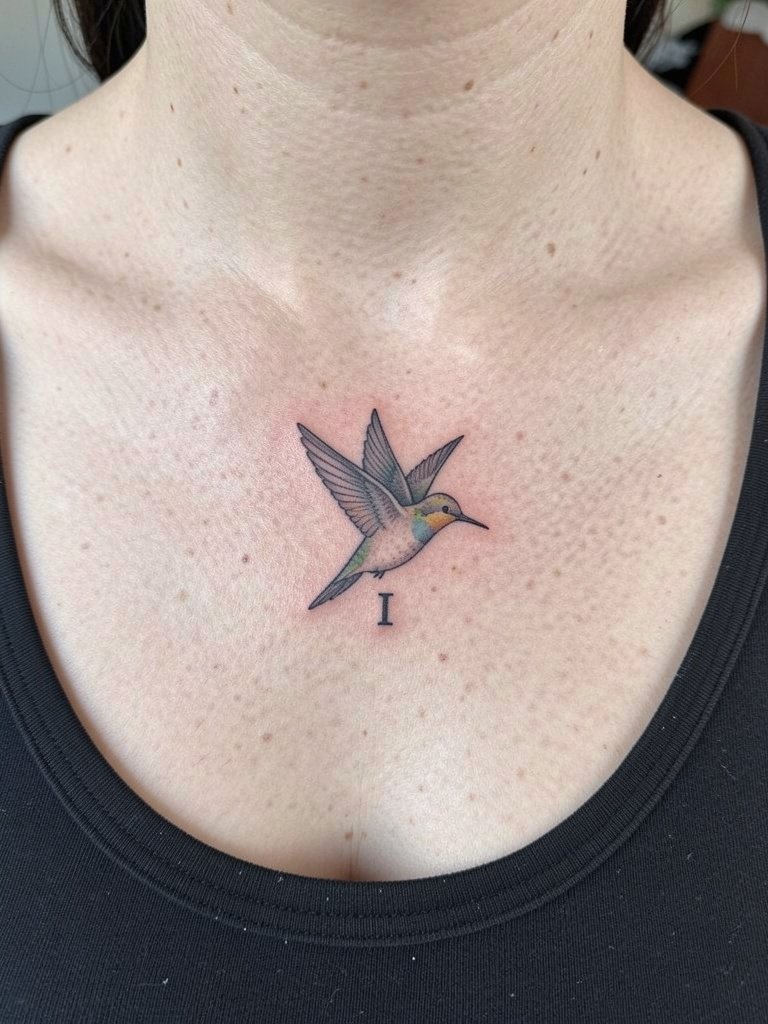
Memorial small pieces need careful type sizing and contrast so initials or dates remain legible. Avoid thin cursive that slims to illegibility; choose a small serif or slightly bolder script. Collarbone skin sits near clothing edges, so plan clothing that keeps the area from constant rubbing during healing. For evening wear, scoop neck tops and layered delicate chains frame the piece. The session is short but placement can be sensitive near bone, so expect brief discomfort. A single touch-up within the first year is common to keep the initials crisp.
11. Hummingbird with Dreamcatcher Motif on Upper Arm
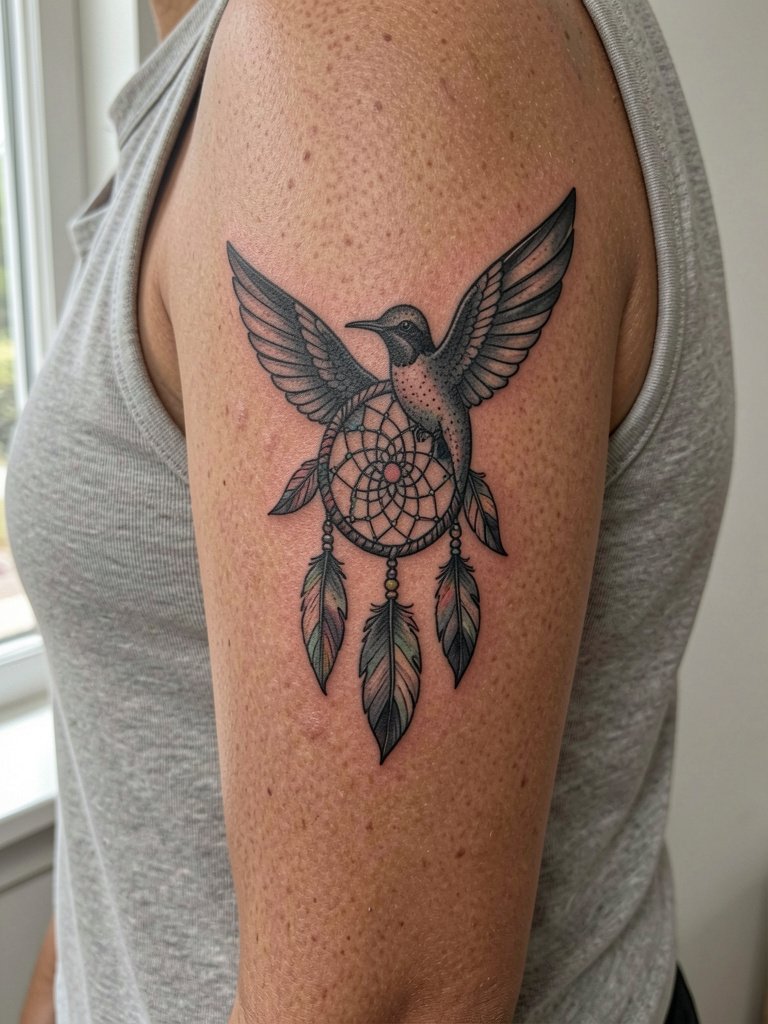
Ornamental work pairs well with the upper arm because the canvas is wide. The main mistake is adding tiny beadwork and tassels that blur together. Specify which dreamcatcher elements you want emphasized and ask for dot work instead of soft washes in the tassels for longevity. Upper arm flesh tolerates saturated black, so this design can lean into contrast for visual longevity. During the session wear a sleeveless top to allow unimpeded access. Expect one to two sessions and a possible touch-up in the second year if fine beads soften.
12. Hummingbird Paired with Phoenix Motif, Shoulder Blade
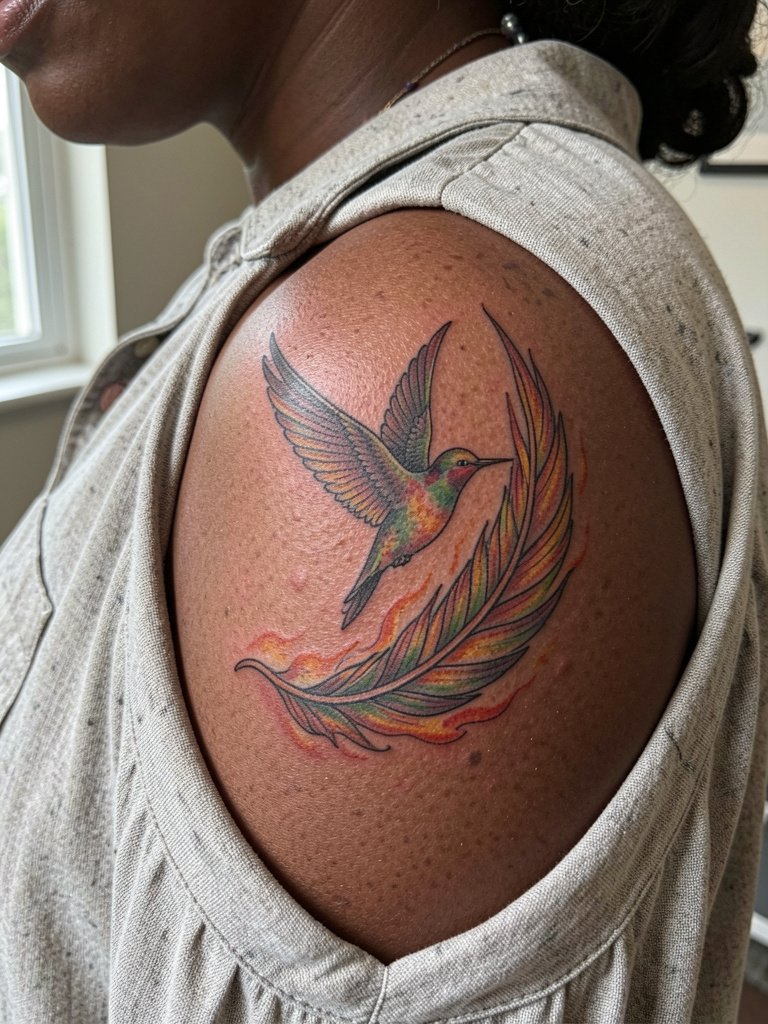
Combining motifs elevates symbolism but ask for a clear hierarchy so the hummingbird does not vanish next to phoenix flourishes. A common error is equal saturation across both elements which flattens the reading. Ask the artist to deepen saturation in the phoenix feather while keeping the hummingbird slightly lighter so the bird still reads as lighter and more delicate. The shoulder blade is a forgiving canvas for larger compositions and usually requires two sessions. For showing the piece try square-neck tanks or open-back dresses that let the shoulder blade sit in frame.
13. Delicate Hummingbird on the Ankle
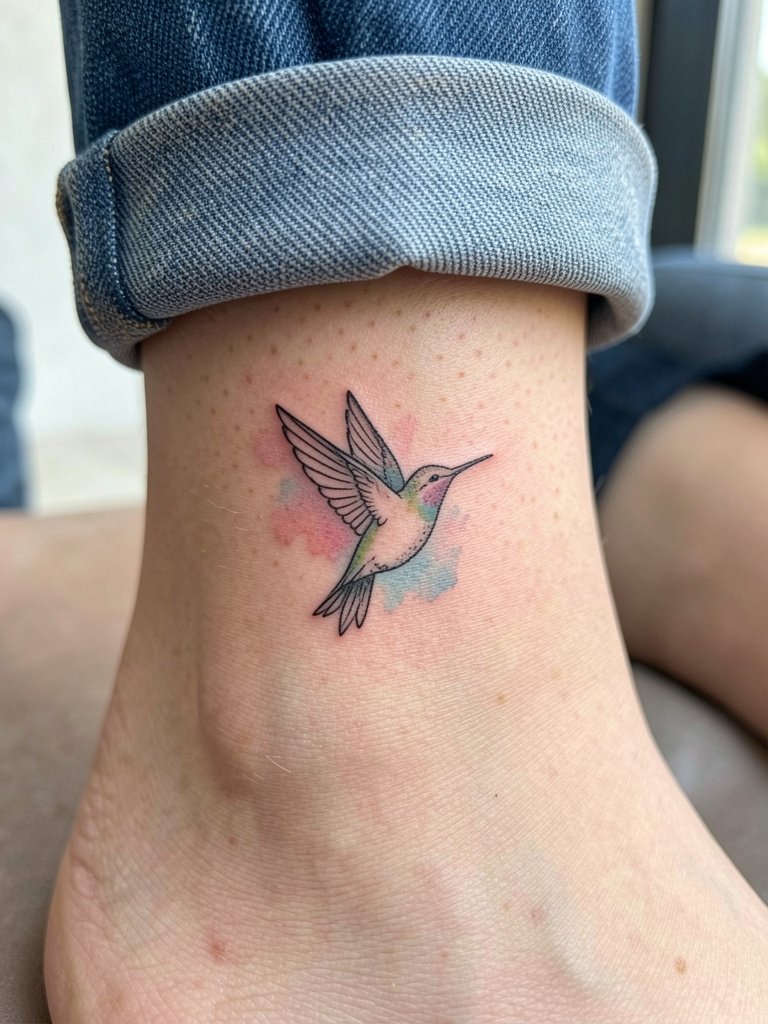
Ankle tattoos suffer friction from footwear and socks, so choose a clean silhouette instead of delicate internal filigree that will fade first. One mistake is placing ultra-fine feather lines along the joint. Ask for a compact composition away from high-friction zones. For session wear rollable trousers or shorts so the artist can access the ankle without pressure. The piece heals best when you switch to open sandals for the first week. For styling, cropped jeans or strappy sandals frame the ankle tattoo nicely. Expect a single short session and a likely touch-up after the first season of footwear abrasion.
14. Hand or Wrist Micro-Realism Hummingbird

Hand and wrist tattoos require specialized experience because the skin is thin and exposed. Professional considerations include discussing fading risk and the likelihood of multiple touch-ups, and picking pigment strategies that compensate for constant washing. Many shops treat hand work only after reviewing healed examples of similar pieces. If you choose this placement, plan for frequent touch-ups and a longer initial session to place saturation correctly. Keep rings simple during healing or remove them completely. The session feels more abrasive on the bone-heavy tops of hands, so shorter passes with breaks are common.
15. Tiny Hummingbird on the Ribcage or Side Torso
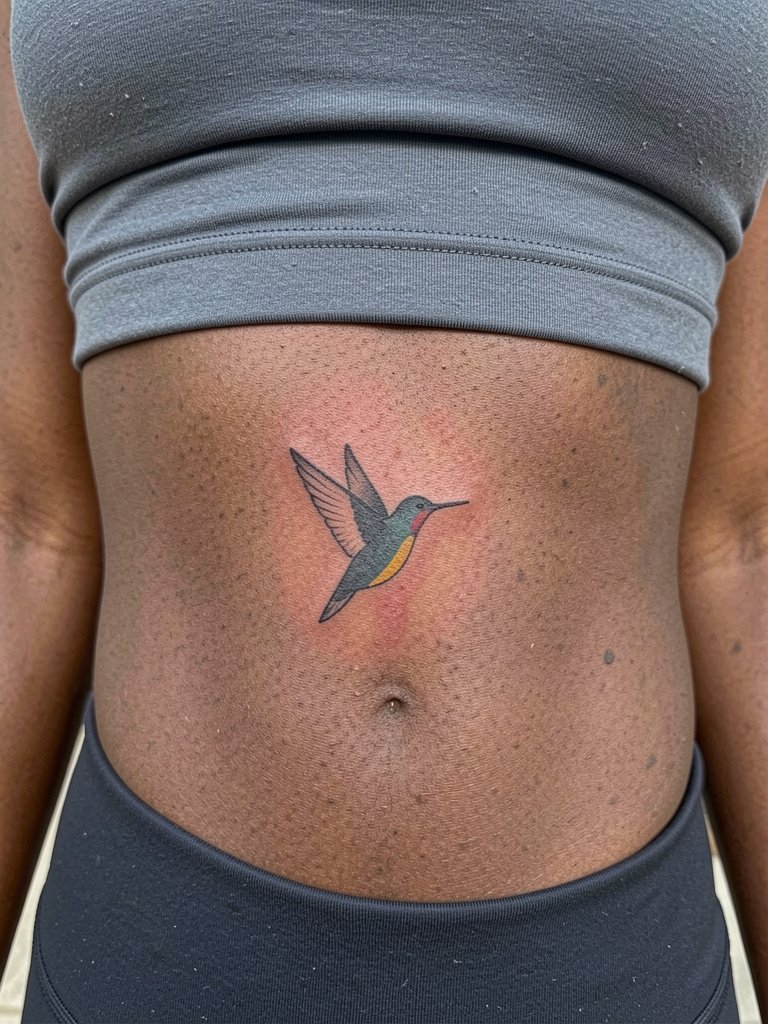
Ribcage placements can be gorgeous but they spark a debate about fine line longevity. One camp says the continual stretch and compression on ribs blurs ultra-fine strokes within two years. The other camp counters that with slightly heavier line weight and wider spacing the work can settle cleanly, and they point to healed portfolios to support that view. If you prefer dainty work, size it slightly larger than your initial instinct and ask for spaced contour lines. Pain is higher here than on the forearm, and the session can require steady breathing control. For session clothing, wear a sports bra or fitted bandeau to give the artist access while staying covered. Expect one session for a small rib piece and a likely touch-up in the first 18 months.
Frequently Asked Questions
Q: How do watercolor hummingbirds hold up on darker skin tones?
A: On medium to dark skin tones contrast matters more than exact hues. Ask for stronger linework or deeper saturation under the watercolor wash so the bird silhouette reads after healing. Artists who show healed work on a range of skin tones are the ones to prioritize when booking.
Q: Where should I look to find artists who post healed watercolor hummingbirds without naming individuals?
A: Search style plus subject hashtags on social platforms and filter by location to find nearby portfolios. Try combinations like #watercolortattoo and #hummingbirdtattoo, then look for posts labeled healed or for highlight reels that show pieces six months or older. Reddit style threads also point to real-world healed examples and pricing realities.
Q: What should I wear to a shoulder or collarbone session?
A: Wear an off-shoulder or scoop-neck top that exposes the area without being pulled aside. For shoulder pieces a loose button-front shirt that unbuttons easily works well for entry and modesty during the session.
Q: Will a tiny hummingbird need touch-ups soon?
A: Very likely yes if it is under two inches and contains fine interior detail. Small scale compresses features and increases the chance of early softening. Plan for at least one touch-up within 9 to 18 months, and size the design slightly larger for longevity.
Q: How do I balance wanting watercolor color with concerns about fading?
A: Choose a hybrid approach that pairs watercolor washes with a modest black or dark grey structure. That gives you the soft motion you want while protecting edges and key features as pigment settles over time.