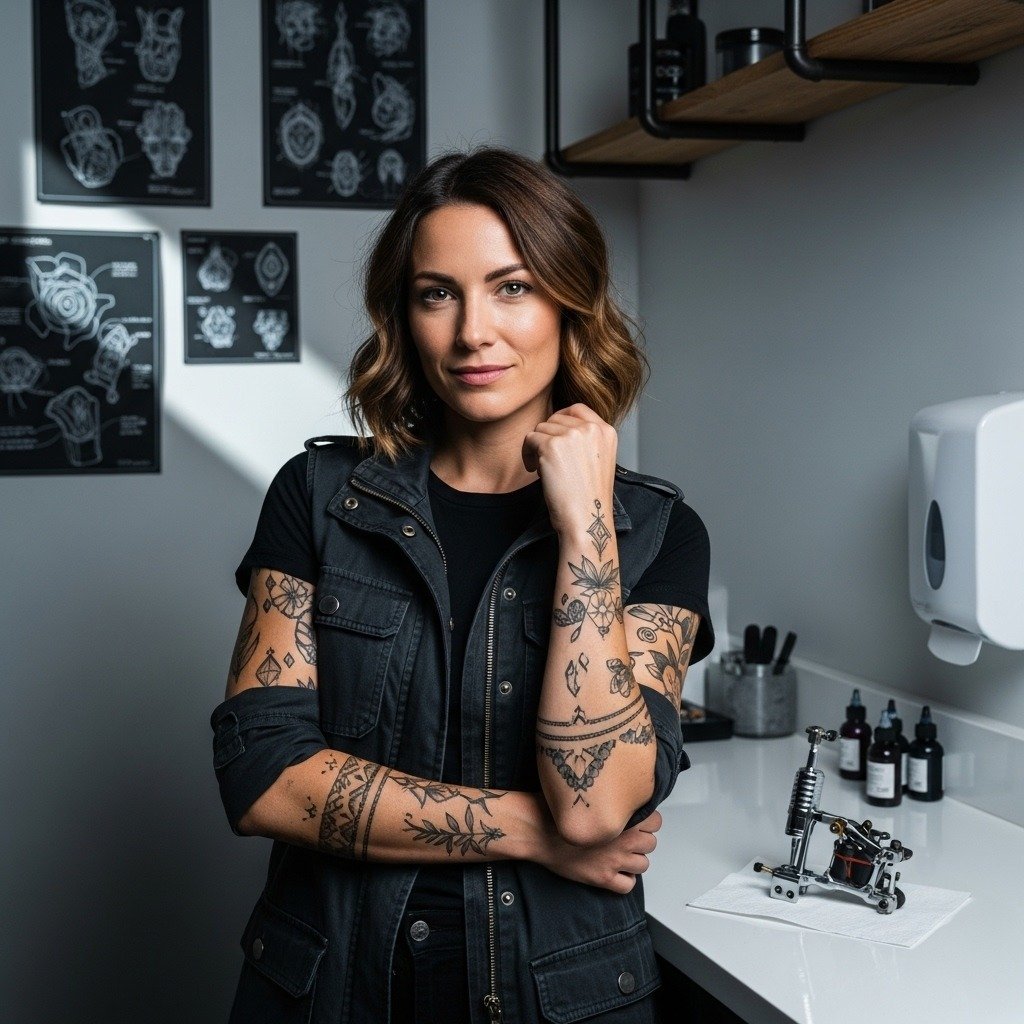
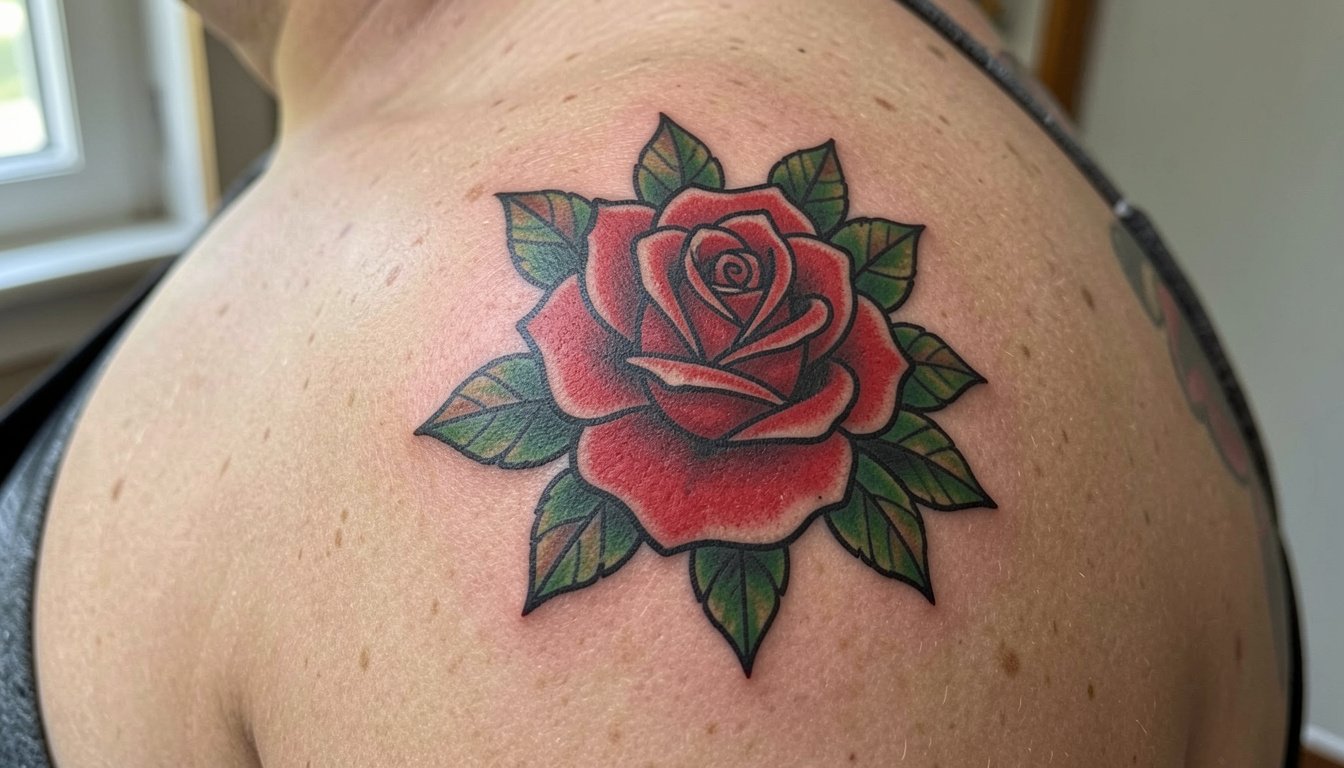
A small, bright red rose can look crisp for a year and then soften into a washed-out smudge if it was placed too small or the linework sat too shallow. Bigger traditional roses with thick black outlines and saturated red often keep shape longer, but they take longer in the chair and can sting more. Read this with an appointment in mind and you will see size, placement, and ink saturation choices that help a red rose stay recognizably floral for years.
1. Tiny Single-Bud on Inner Wrist
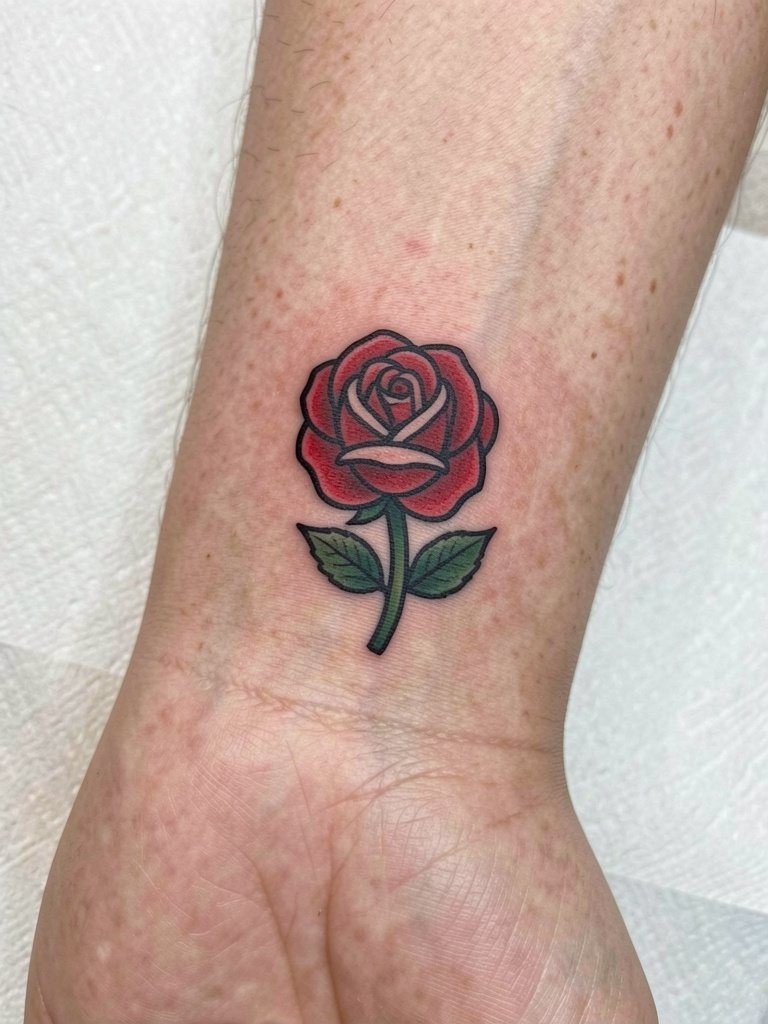
A tiny traditional rose on the inner wrist reads as a classic starter piece. I recommend this when you want a compact symbol and you accept annual touch-ups. Ask for a slightly heavier outline than your reference so linework resists early blur. The common mistake is requesting single-needle detail at this size, which usually softens into fuzz by year two. Expect a 30 to 45 minute session for stencil placement and shading. The wrist gets a lot of sun and washing, so plan touch-ups around year one for saturation. For the appointment wear a loose long-sleeve you can roll up easily, like a soft linen-sleeve tee.
2. Classic Bloom on Outer Forearm
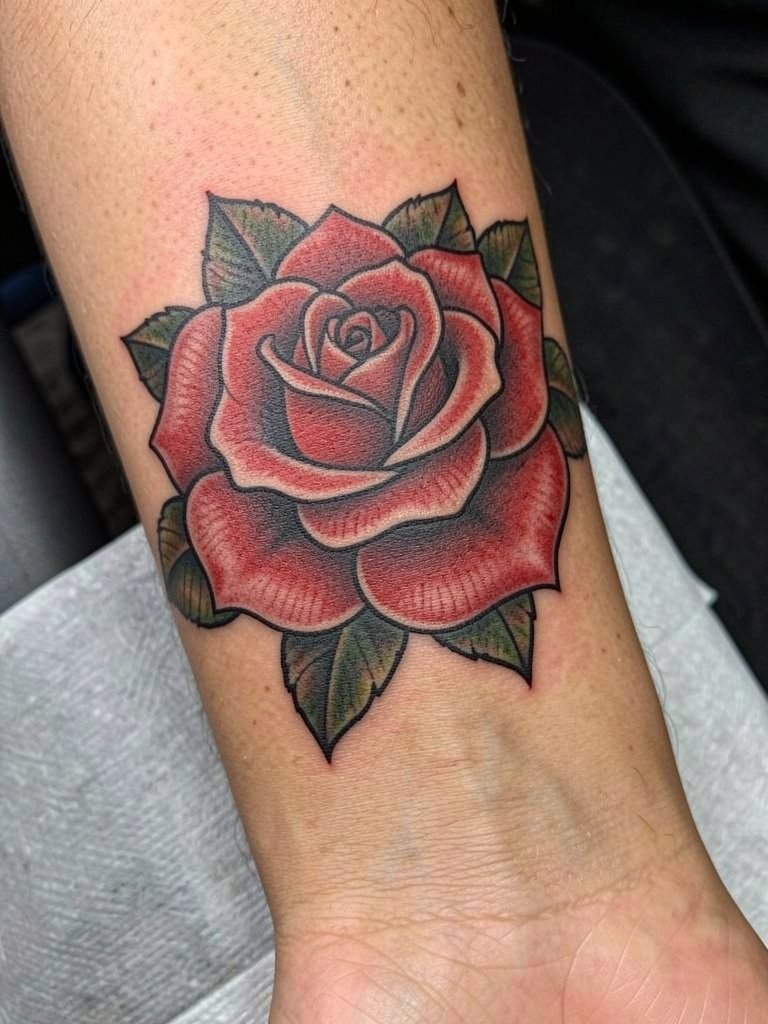
This placement suits people who want the rose visible without daily exposure that shortens ink life. I steer clients to a four-inch composition instead of a two-inch one because the extra room lets the petals keep shape as the skin ages. Bring two reference photos at different scales so the artist can show how the petals read at three inches versus five. Outer forearm sessions feel moderate in pain and often finish in one longer sitting of 90 to 120 minutes. For showing the piece off wear rolled sleeves or short-sleeve linen shirts that frame the art.
3. Traditional Rose Over the Heart
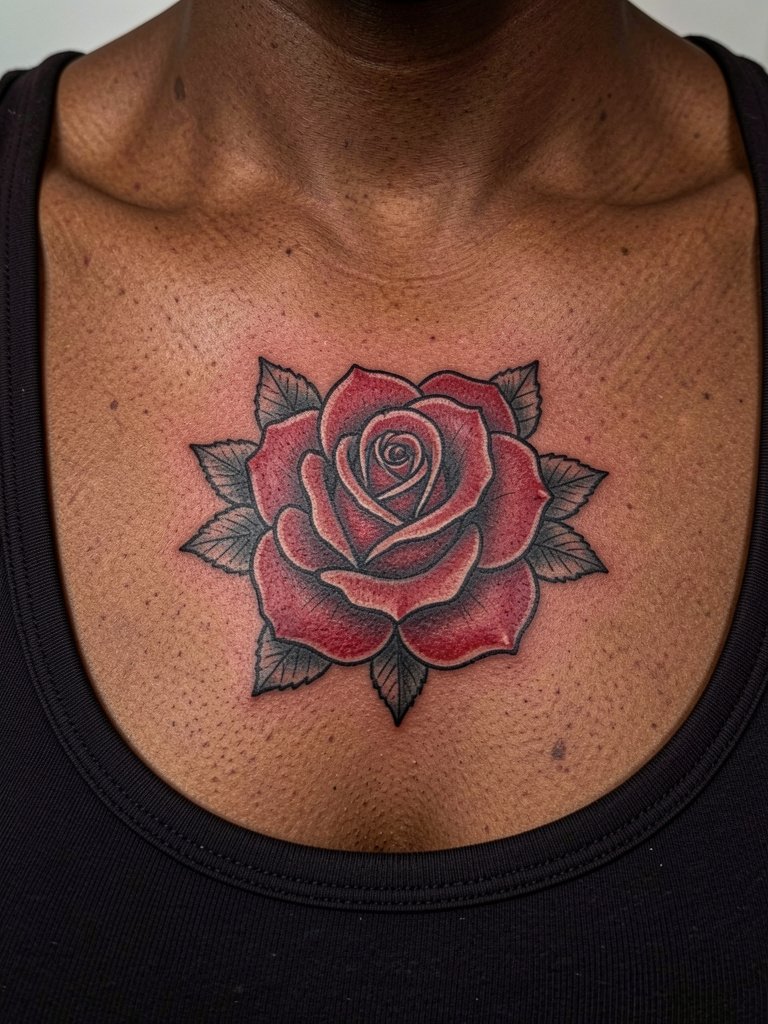
Chest pieces age differently than limbs. One camp favors dense traditional saturation here because it keeps the petals distinct despite movement. The other camp prefers lighter, more spaced linework arguing the chest skin stretches and may soften denser fills. If you prefer bold longevity, request heavier outlines and full saturation. If you want a gentler look, ask for slightly wider petal spacing and softer grey shading. Expect higher pain near the sternum and a two to three hour session for a medium rose. For the appointment wear a scoop-neck top that gives clear access without tugging at the fabric.
4. Mini Red Rose Behind the Ear
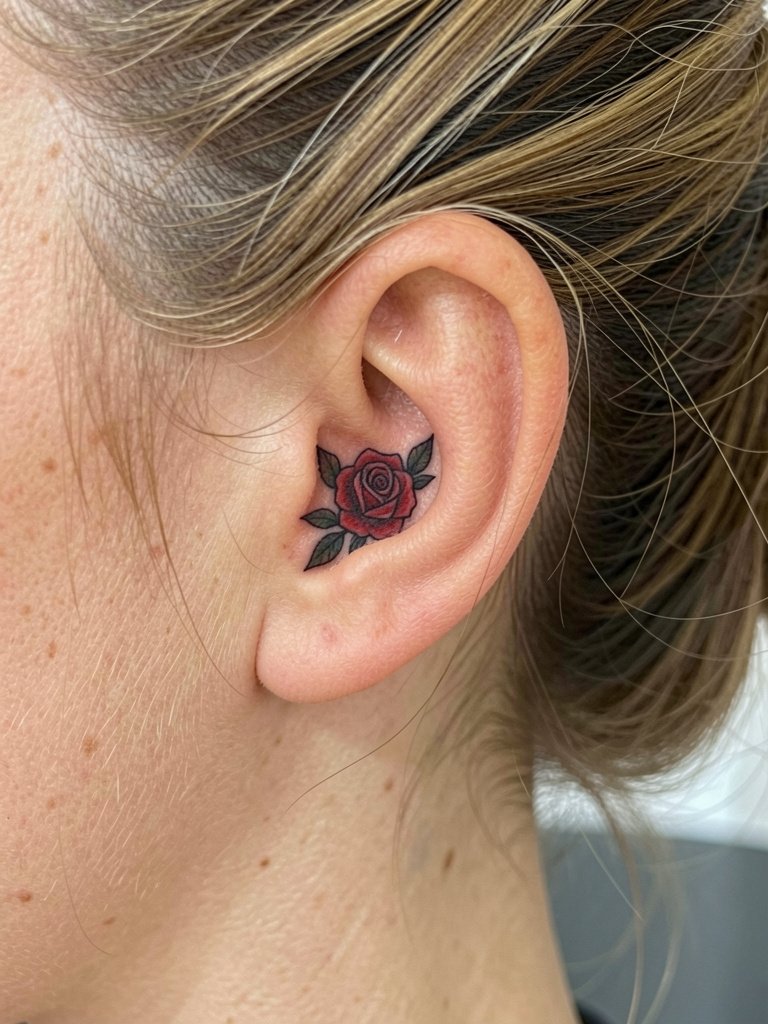
Behind-the-ear roses make for discreet accents that read like jewelry. The biggest mistake is asking for too much tiny fill in that tiny space. Request a compact silhouette with bold perimeter line and minimal inner detail so the shape stays legible. Sessions are brief, often 20 to 40 minutes, and the skin there is thin so expect sharper sensation. Healed results at six months show crisp outlines, but if inner shading is dense it can fade into a flat red by year three. Pair this with subtle stud earrings or a high ponytail to keep the motif visible and neat. Note that this placement needs an artist comfortable with small detail near delicate skin.
5. Wrapped Stem on the Side Rib
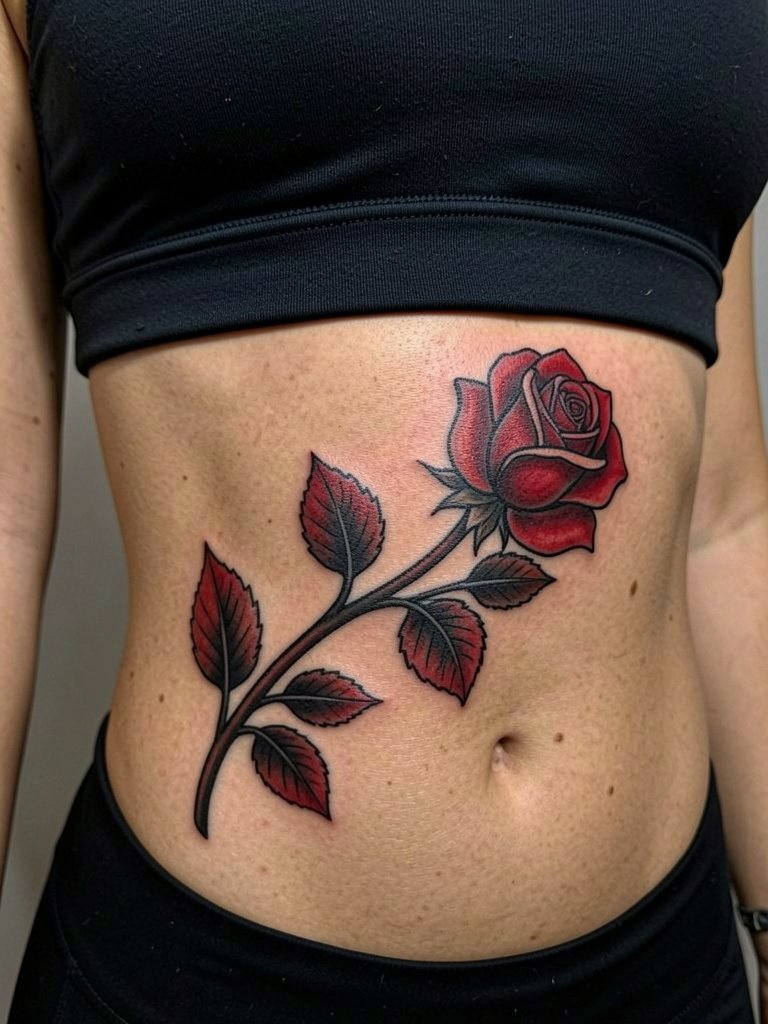
Rib roses look dramatic but they come with a predictable healing pattern. Fair warning, the ribcage is sensitive and the session will feel intense in bursts. One camp insists small, delicate roses work fine on ribs if the needle depth is exact. The other camp says the skin there moves too much and recommends bolder outlines and larger petal spacing to avoid blurring. If you favor longevity over delicacy, ask for a two to three inch rose with confident black contour. Sessions can run from two to four hours depending on scope. For the studio wear a fitted cropped top that provides access while staying comfortable during breath-heavy work. Sensitive placement note, ribs often need extra aftercare time and possibly a touch-up in year two.
6. Bold Shoulder Blade Blooms
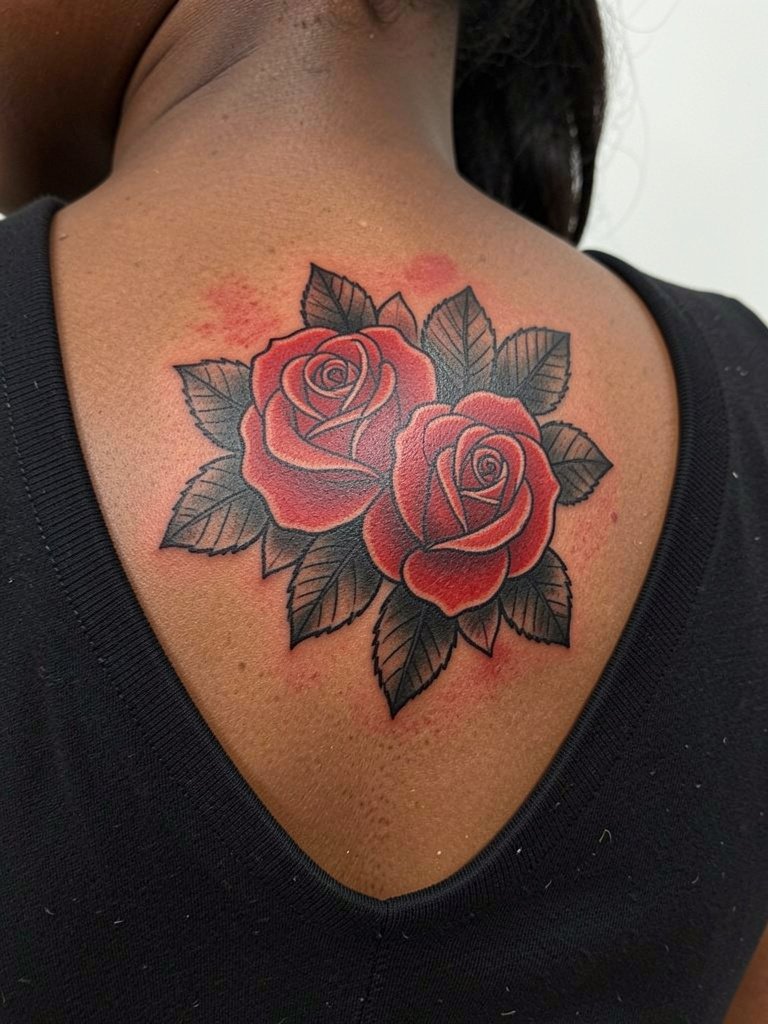
Shoulder blade roses sit well for larger compositions that flow into a sleeve later. I recommend this if you want a design that still reads from a distance and tolerates occasional sun exposure. Ask the artist to orient the leaves along the shoulder curve so the petals do not warp when you move. The session can be one long two to three hour block or split into two. For showing the work, pair the placement with open-back dresses or wide-neck tops that frame the blooms without rubbing the area. Sensitive placement note, the back heals well but check how sleeping positions might press on fresh ink.
Session Day Picks
The wrist, ribs, and shoulder pieces above have different access needs, so a few carefully chosen items smooth the appointment and the first week.
-
Skin-safe stencil transfer kit. Lets you preview how a rose wraps on curved skin before the needle starts, which helps with placement decisions for the forearm and shoulder pieces.
-
Topical numbing cream. Applied per instructions about 45 minutes before eases the sting on ribs and sternum without flattening linework.
-
Thin protective film roll. Useful for covering small wrist and hand roses during the first day when friction is highest.
-
Fragrance-free gentle body wash. Cleanses healing skin without stripping saturation, helpful for shoulder and chest areas.
-
Aquaphor healing ointment. Thin layers over the first three days help prevent scabbing that can pull pigment from small petals.
7. Old-School Dagger and Rose on Upper Arm
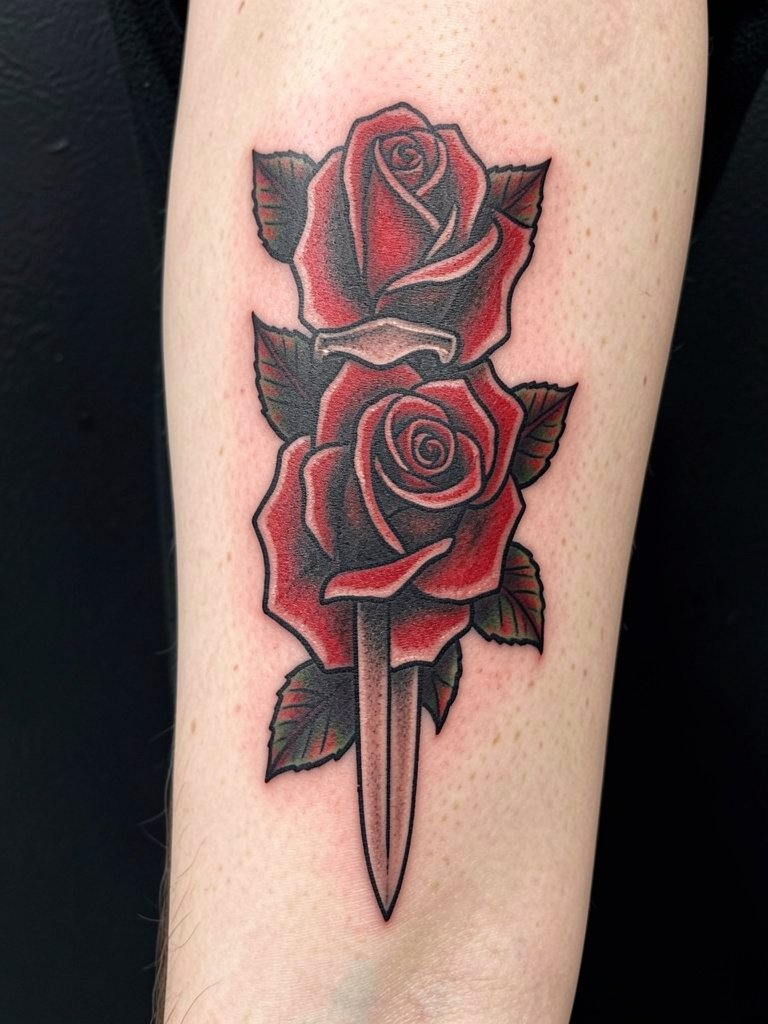
Combine symbols for a narrative piece that still reads at arm length. This pairing favors bold black outlines that protect the negative spaces of the petals against blowout. A common error is over-detailing the dagger handle when the composition is under four inches wide. Ask for simplified handle elements and prioritize clear separation between blade and petals. A single session of 90 to 150 minutes typically covers linework and flat fills. This placement tolerates sun better than the wrist but will show fading without sunscreen. Styling tip, this piece pairs well with rolled short sleeves and vintage leather jackets for a classic look.
8. Ankle Rose with Subtle Stem
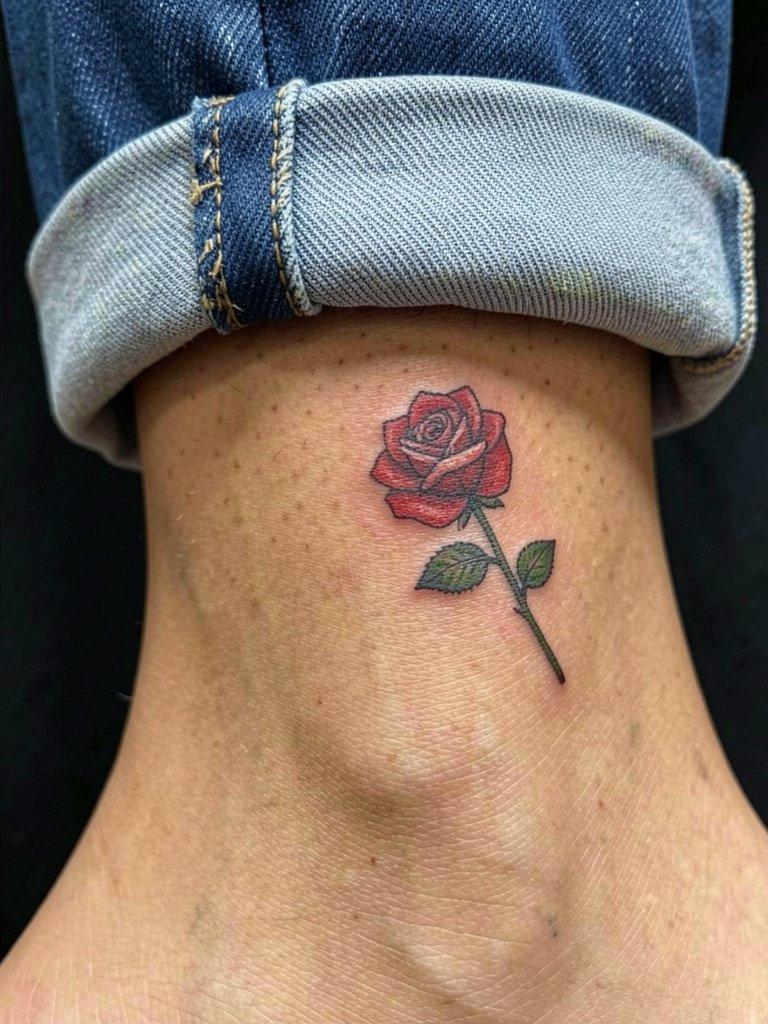
Ankle roses are charming but they face a lot of friction from shoes and socks. The most common mistake is requesting intricate inner petal shading at a tiny scale, which fades quickly. Request a compact silhouette with bold outer line and modest inner fill to maximize longevity. The session is short, usually under an hour, and the area can sting sharply during shading. For the first week avoid rubbing from socks and consider swapping to ankle-exposing footwear. Pair the finished piece with rolled jeans or cropped trousers to show the bloom without extra wear.
9. Clustered Roses on the Thigh
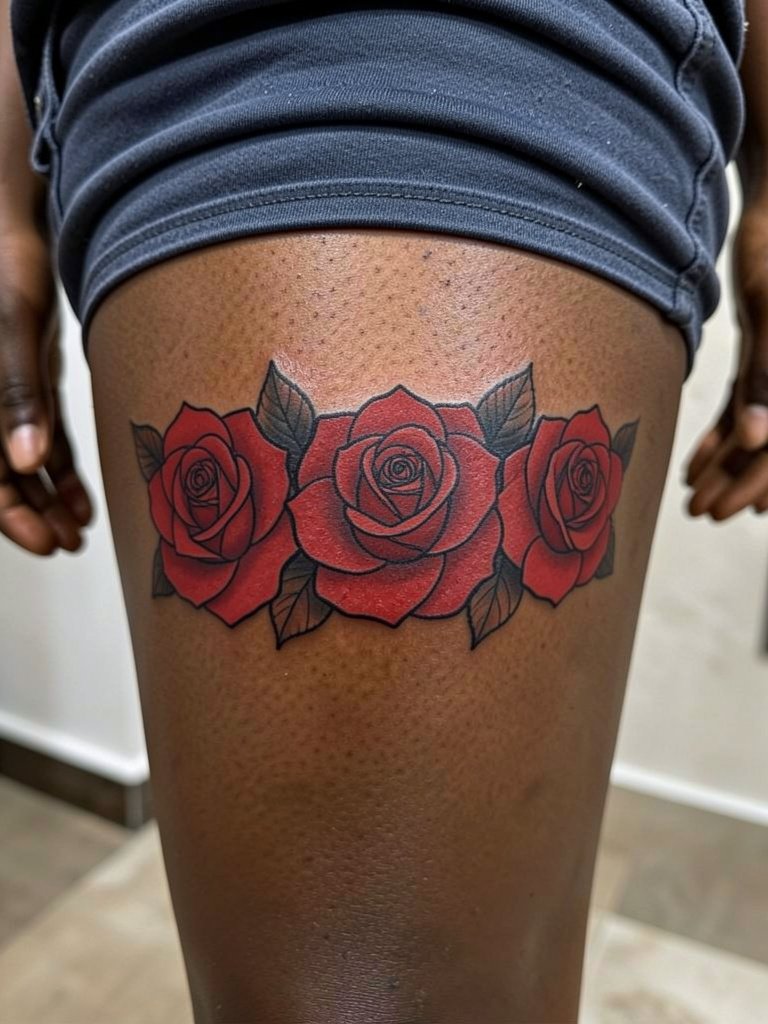
Thigh clusters let you scale up without the visibility concerns of chest or arm pieces. I recommend spacing the blooms so each petal cluster has room to breathe, which helps in five-year photos. Sessions can be split; a three-rose cluster may take two sittings of two hours each. One frequent error is compressing three blooms into a small footprint, which blurs as the skin stretches. For the session wear loose shorts that allow the artist to work comfortably without fabric shifting, such as drawstring linen shorts. Sensitive placement note, inner-thigh roses require an artist experienced with sensitive skin and privacy.
10. Ring Finger Micro Rose
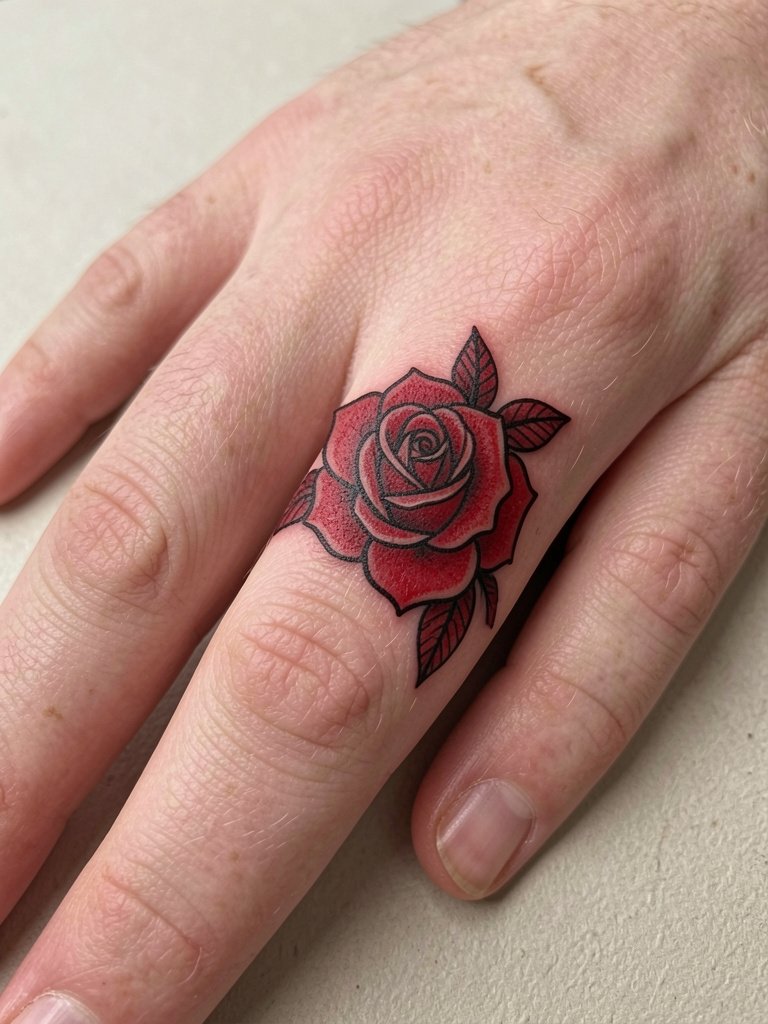
Finger tattoos are high maintenance because skin there regenerates rapidly and receives constant hand use. One camp argues micro traditional pieces can hold if the linework is heavier and touch-ups are expected. The other camp warns that fingers almost always need yearly touch-ups and sometimes fail entirely. If you want a finger rose, ask for a bold silhouette and accept a realistic touch-up schedule. Sessions are short but painful and healing can be fussy. For showing off choose rings that let the tattoo peek out without rubbing, like thin stacked bands. Finger roses age faster than hand or forearm pieces.
11. Collarboneside Rose Accent
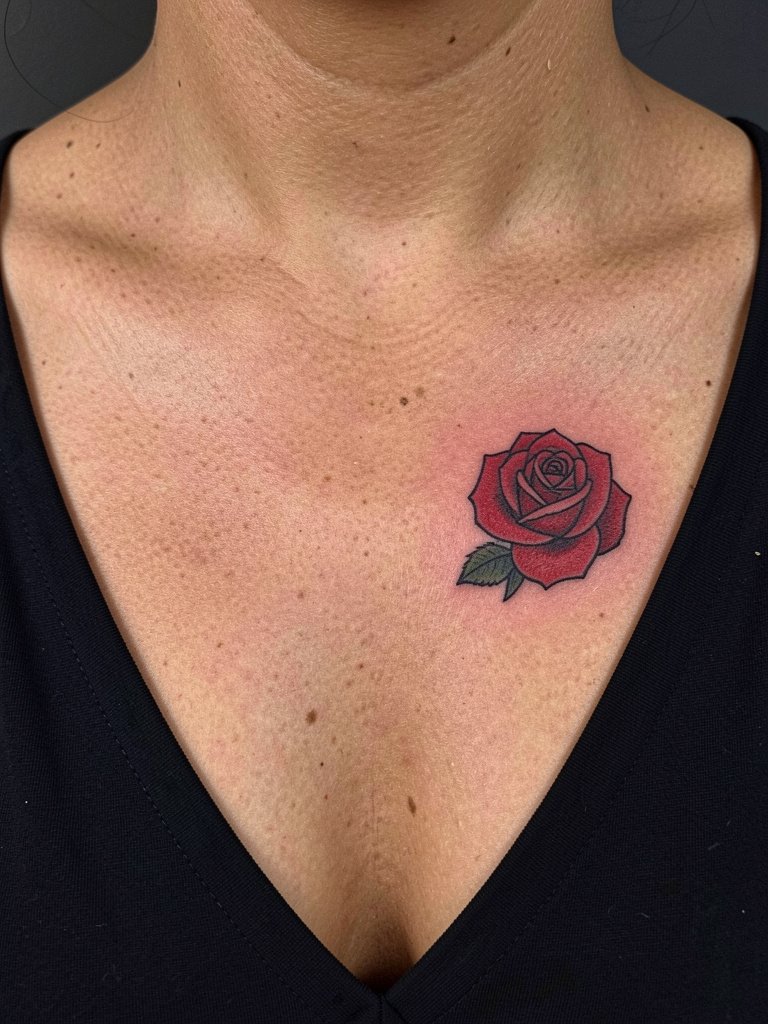
A side-collarbone rose is visible and elegant when framed by clothing. The common mistake is requesting delicate internal linework that the collarbone skin does not preserve well. Ask for confident outer linework and modest grey shading under petals to preserve contrast. Sessions are moderate in discomfort and usually 45 to 75 minutes. For wear, open-neck tops and delicate necklaces keep attention on the motif without irritating the area. Plan for a touch-up at year two if you notice softening in the petal edges.
12. Sleeve-Ready Rose Cluster on Outer Bicep

This layout is built to expand into a half sleeve. I advise spacing each bloom so future connecting elements like leaves or banners can be added without compressing the design. The common session approach is to do the linework first and schedule color fills later. Sessions range from two to four hours depending on saturation. For showing the piece, short sleeves and muscle-revealing tank tops frame the outer bicep effectively. Use a reference of multiple healed photos so the artist can plan the negative space for future additions.
13. Neo-Traditional Rose with Banner on Chest
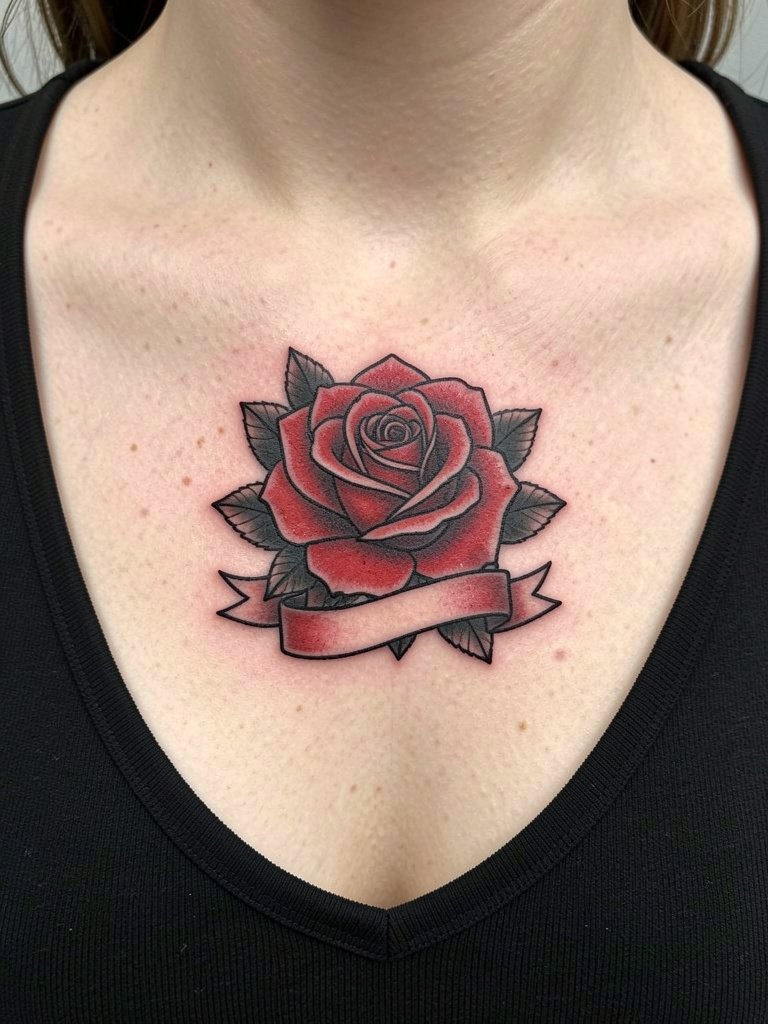
A banner adds name or date without crowding the petals when proportioned right. The biggest mistake is shrinking the banner so the text becomes unreadable after a year. Specify the exact lettering you want and ask for a preview at the intended scale. Chest skin can take color well but moves with respiration, so heavier outlines protect the interior fills. Session time depends on lettering detail and fill, usually one to two hours. For wear choose scoop or wide-neck tops that reveal the banner cleanly.
14. Knuckle Rose Duo
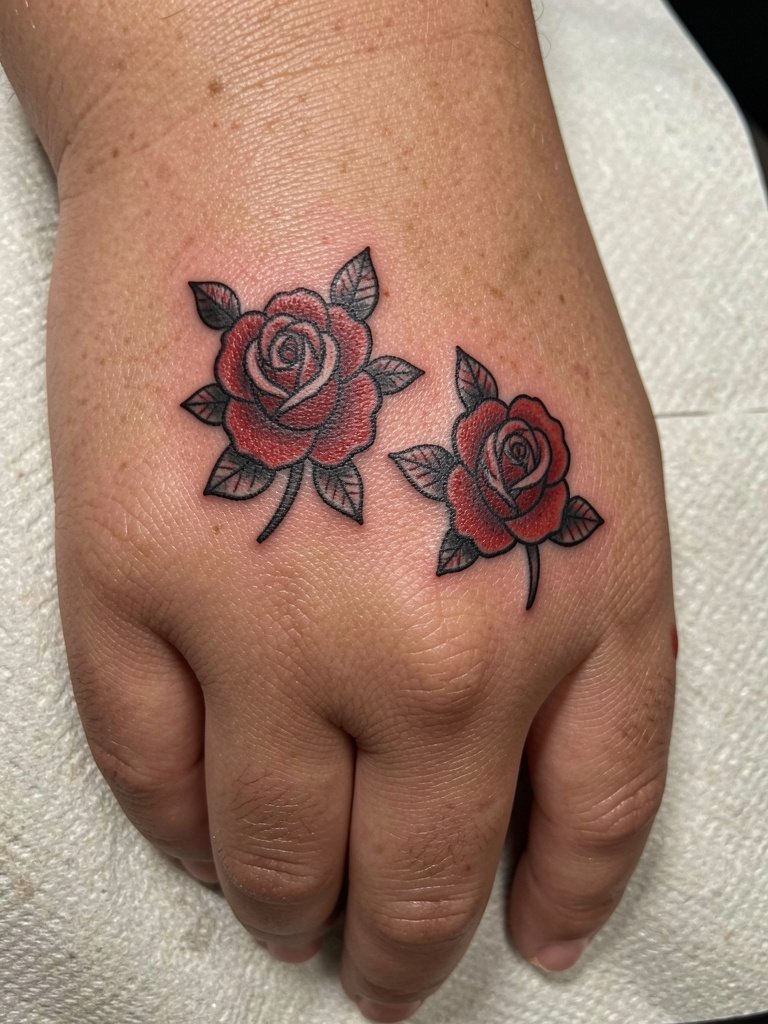
Knuckle work creates strong visual language but it divides opinion in the community. One camp says knuckles are fine for saturated traditional motifs if you commit to yearly touch-ups and accept faster fading. The other camp argues knuckles are structurally poor for longevity and should be avoided for small text or micro detail. If you pursue knuckle roses, pick bold outlines and expect a touch-up window around year one. Sessions are quick and sharp. For showing without overexposure, consider chunky rings that complement the tattoos and protect them from direct wear.
15. Watercolor-Adjacent Red Rose with Bold Outline
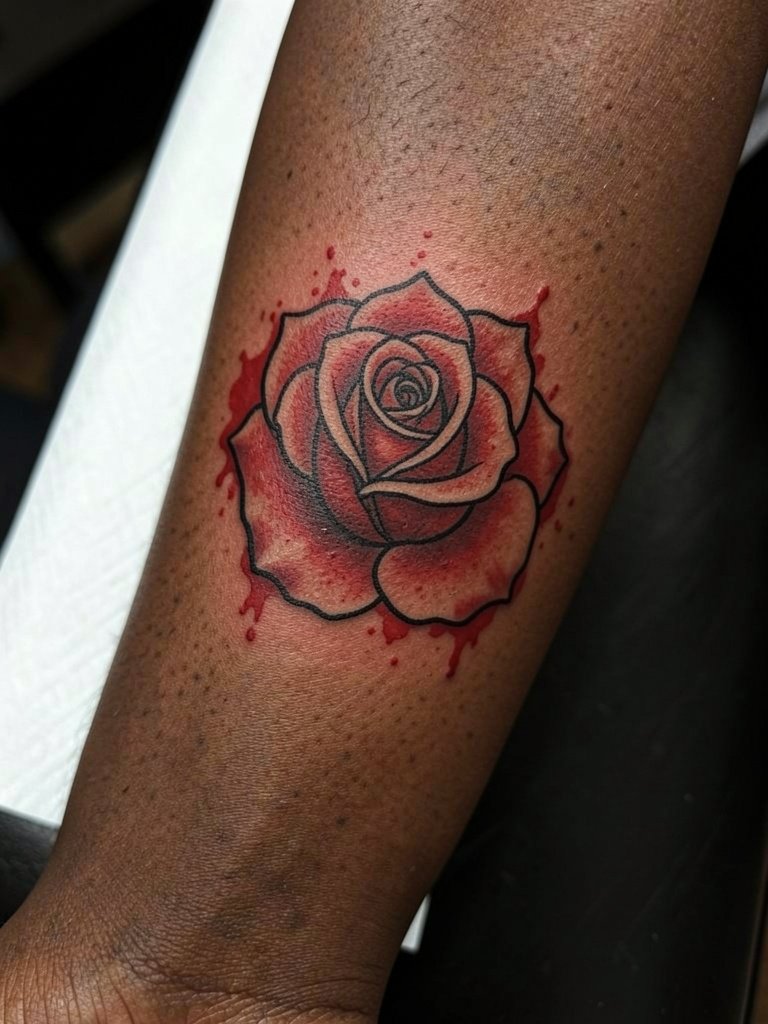
If you like the watercolor aesthetic but worry about longevity, the hybrid approach works well. The outline protects the petal shapes while painterly washes add motion. Ask the artist to keep the watercolor-like spills light and away from the outer perimeter to avoid early feathering. Sessions are generally longer due to shading complexity, often two to three hours. For wear, pair with rolled sleeves and soft neutrals that let the color pop without clashing. Plan a touch-up after the first year to deepen any areas that soften.
16. Thigh Wrap Rose Band

A wrap band on the thigh makes a bold statement that remains private if you prefer. The common mistake is compressing too many small elements into the wrap which causes visual muddle when healing. Request clear focal roses and generous negative space to allow the band to breathe. Sessions can be split across multiple visits to manage discomfort. For the studio wear loose shorts that are easy to move for access and sit without pressing on fresh ink. This placement tolerates larger saturation and usually requires fewer early touch-ups than fingers or ankles.
17. Single Rose on the Calf
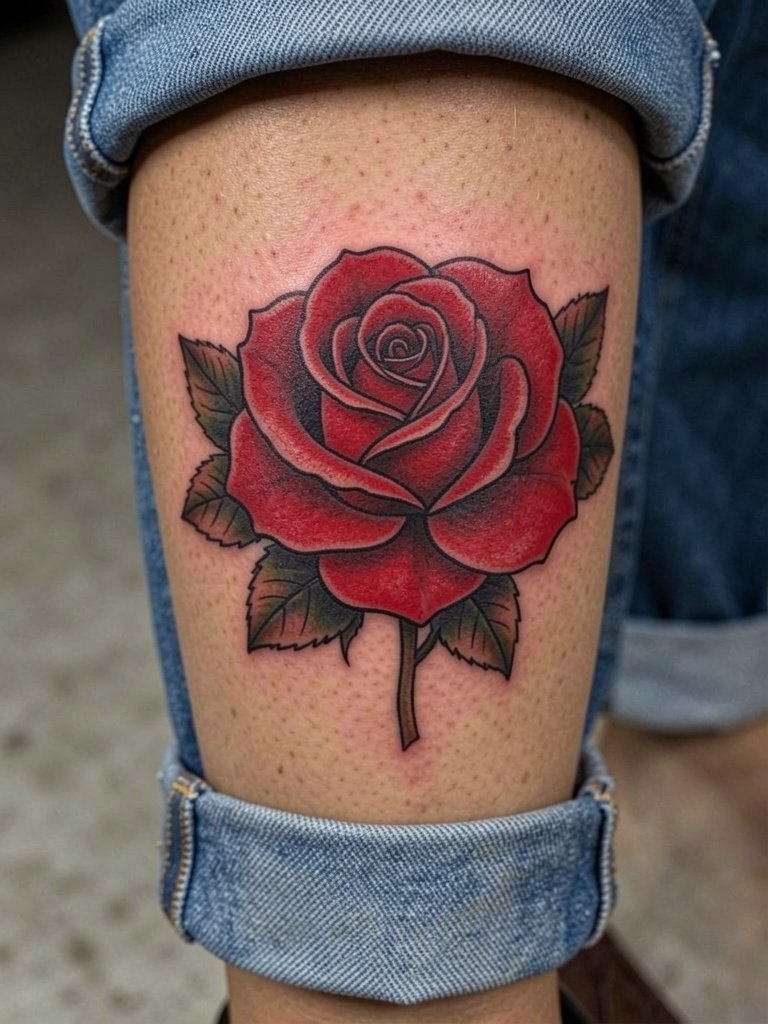
Calf roses age predictably because the area is rarely sunburned and does not see constant friction. I recommend this placement if you want scale without the social visibility of forearm or chest work. Common mistakes include over-detailing in small pieces and not planning for future leg work. A medium rose here is often completed in a single two-hour session. For showing off, wear cropped denim or midi skirts that make the bloom visible without rubbing. Touch-up needs tend to be lower for calf pieces compared with hands and feet.
18. Sternum-Centered Red Rose
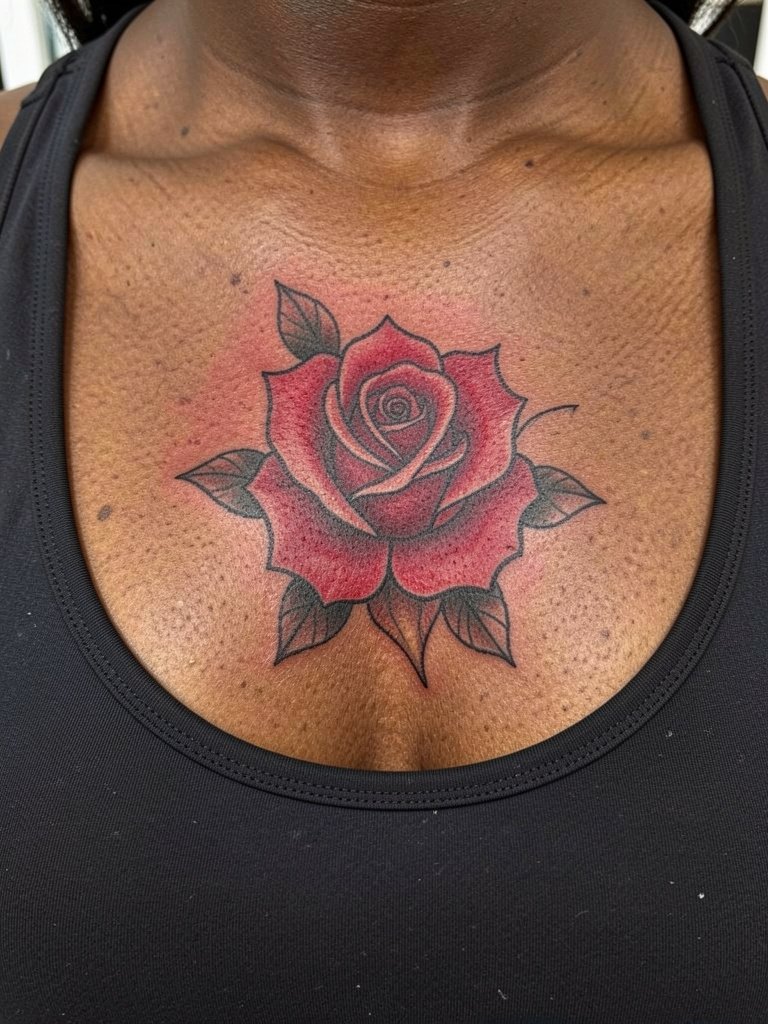
Sternum roses can be striking and intimate. The skin in this zone moves with breathing and daily posture so I recommend strong outlines and a slightly larger scale than you might assume. The frequent error is requesting micro shading under the breast crease which often blurs. Sessions are painful for many and can take two to four hours for saturation. For the appointment wear a supportive fitted top that stays put and avoids shifting over the fresh tattoo. Sensitive placement note, sternum work benefits from an artist experienced with chest anatomy.
19. Traditional Rose with Script Banner on Wrist
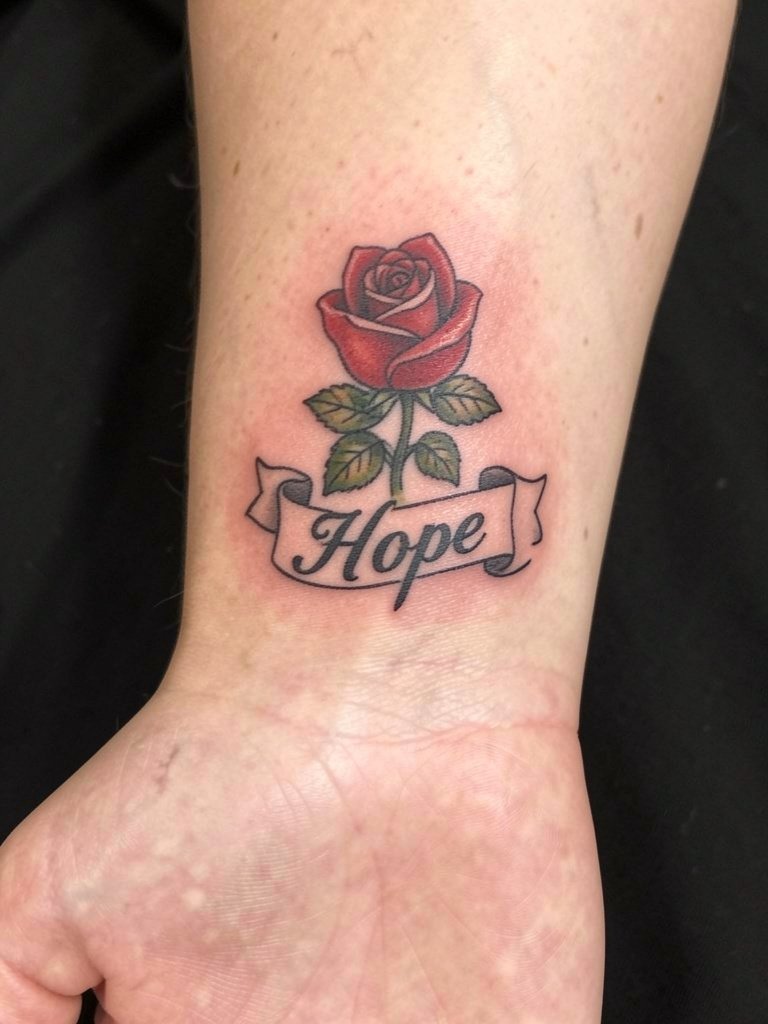
Wrist banners require careful scaling so the lettering remains legible. The common mistake is choosing a script that reads well in print but is too thin for skin that moves and is washed frequently. Specify the exact word and preview it at the final scale. Expect a 45 to 90 minute session for the rose plus lettering. For showing off, delicate bracelets or a watch can frame the wrist rose without rubbing against the fresh ink. Plan to revisit the lettering after the first year if the fine strokes soften.
20. Shoulder-to-Chest Single Stem
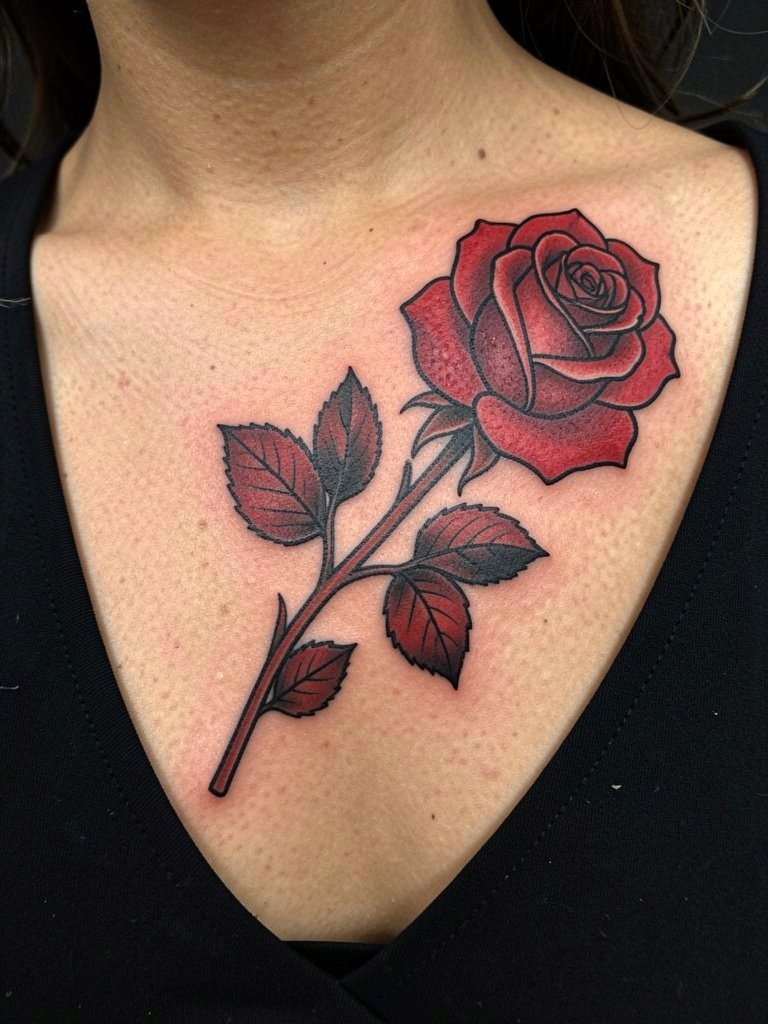
This flow emphasizes motion and can be scaled without losing petal definition. The placement moves with shoulder motion so I advise heavy contour around the petals that face high-movement zones. A common error is making stems too thin, which allows them to thin further with wear. Sessions for a full shoulder-to-chest stem usually take two to three hours. For wear, sling dresses and off-shoulder tops frame the piece elegantly while minimizing rubbing. Expect touch-ups in years two to three if you frequently sun-expose the chest.
21. Petite Rose on the Nape
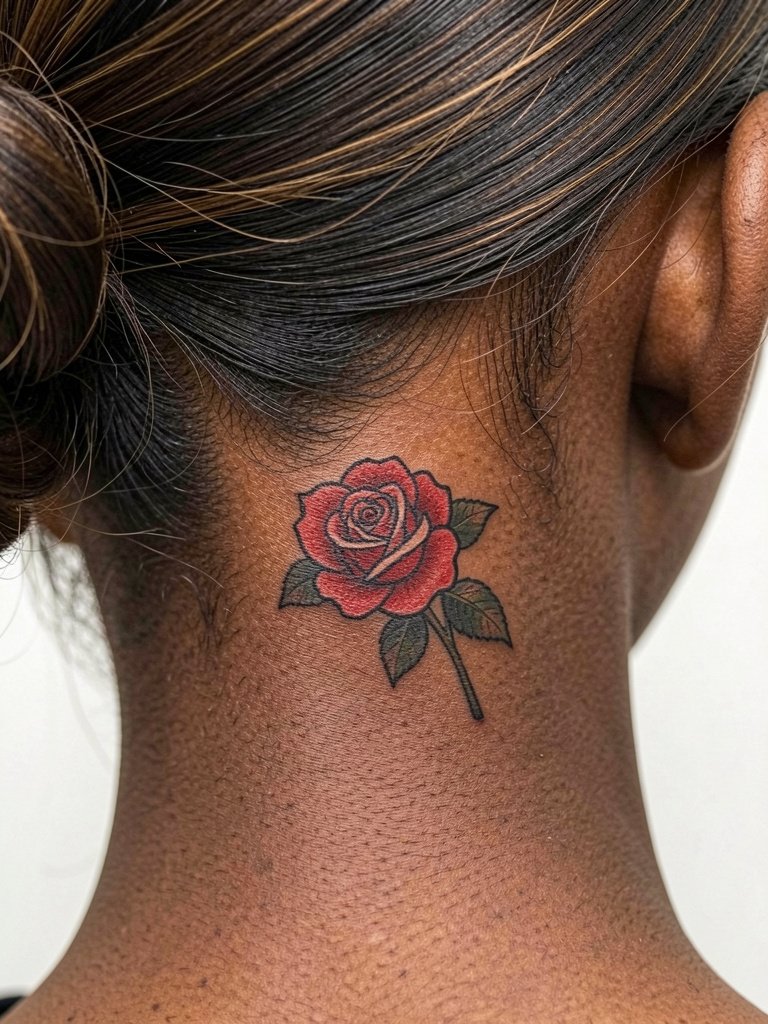
Nape roses are subtle and private when your hair is down, and visible when styled up. A frequent mistake is over-detailing the inner petals which the thin nape skin will not preserve. Choose a compact design with a bold perimeter and minimal internal stipple. Sessions are brief, usually under an hour, and the area can be sensitive especially near hair follicles. For showing the tattoo, simple updos or clips work better than tight buns that tug at skin. Discuss ink migration tendencies with the artist to set expectations for touch-ups.
22. Geometric Frame Around a Rose
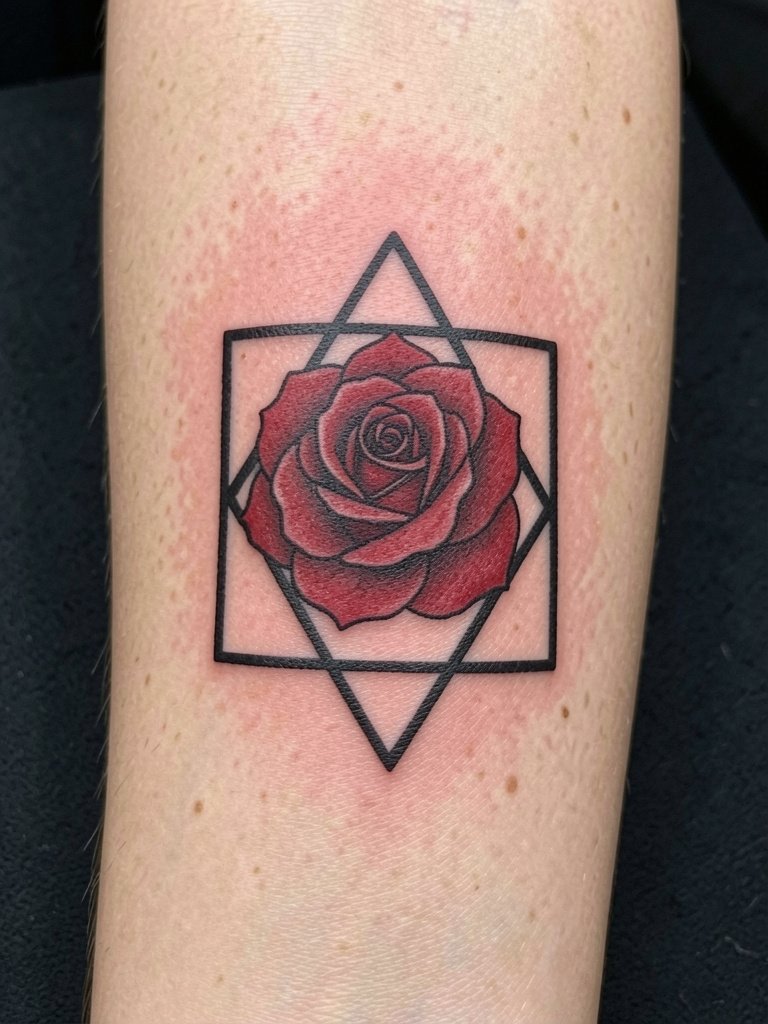
Pairing geometry with a traditional rose modernizes the motif while preserving legibility. The common mistake is tightening the geometric frame so it crowds the petals. Ask for a frame that sits a hair away from the outermost petals to let the rose breathe. Inner forearm placements are prone to sun exposure if you wear short sleeves, so factor in sunscreen habits into your color longevity plan. Sessions for combined line and color work take about two hours. For outfits, choose rolled sleeves and lightweight shirts that place the piece in view without constant friction.
23. Red Rose with Thorns on the Shoulder
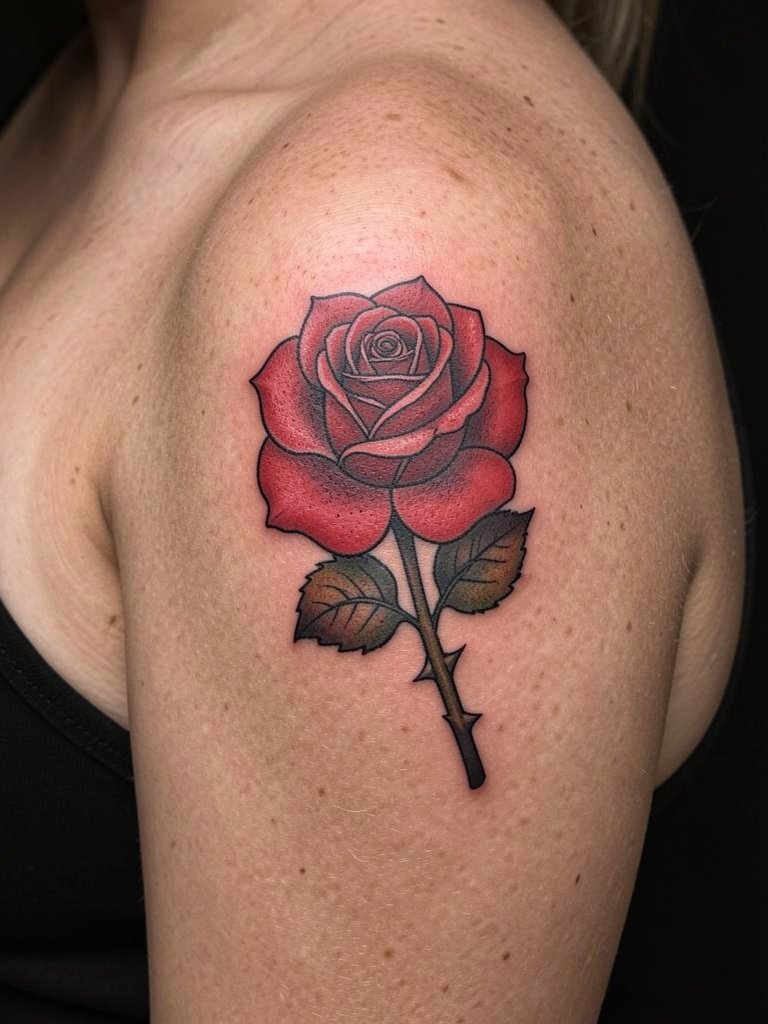
Adding thorns brings a sharper edge to a classic motif, but extra small linework near thorns can blur if crowded. Request the thorns as separated, slightly larger shapes so they maintain contrast against the petals. Shoulder skin tolerates color well and sessions for this mid-sized rose are usually 60 to 90 minutes. For showing off choose sleeveless tops or tank dresses. If you plan to expand into an upper-arm composition later, ask the artist to orient thorn direction to flow into future elements.
24. Small Rose on the Back of the Hand
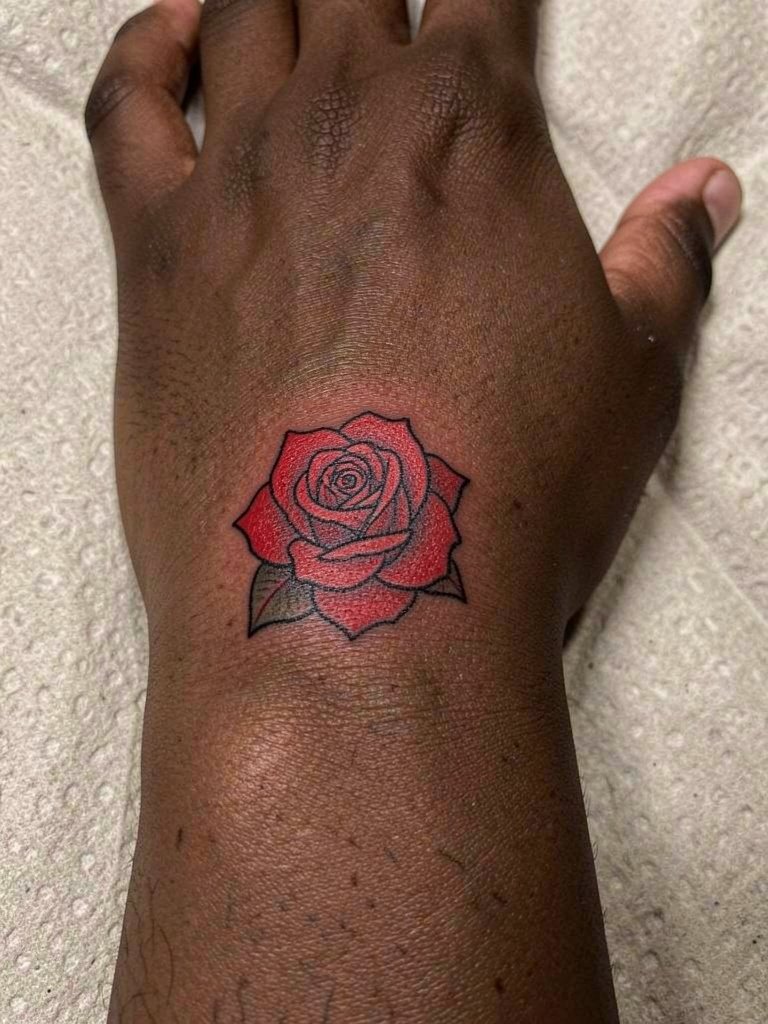
Back-of-hand roses are highly visible and subject to rapid fading due to sun and frequent washing. The usual mistake is choosing fine internal detail at a tiny scale, which disappears quickly. If you want hand work, pick bold outer shapes and accept that touch-ups will be more frequent. Sessions are fairly quick but can sting. For showing the piece, consider bracelets or rings that frame the tattoo without constant abrasion. Be realistic that saturation will soften faster than forearm or calf placements.
25. Heartfelt Rose Over a Scar
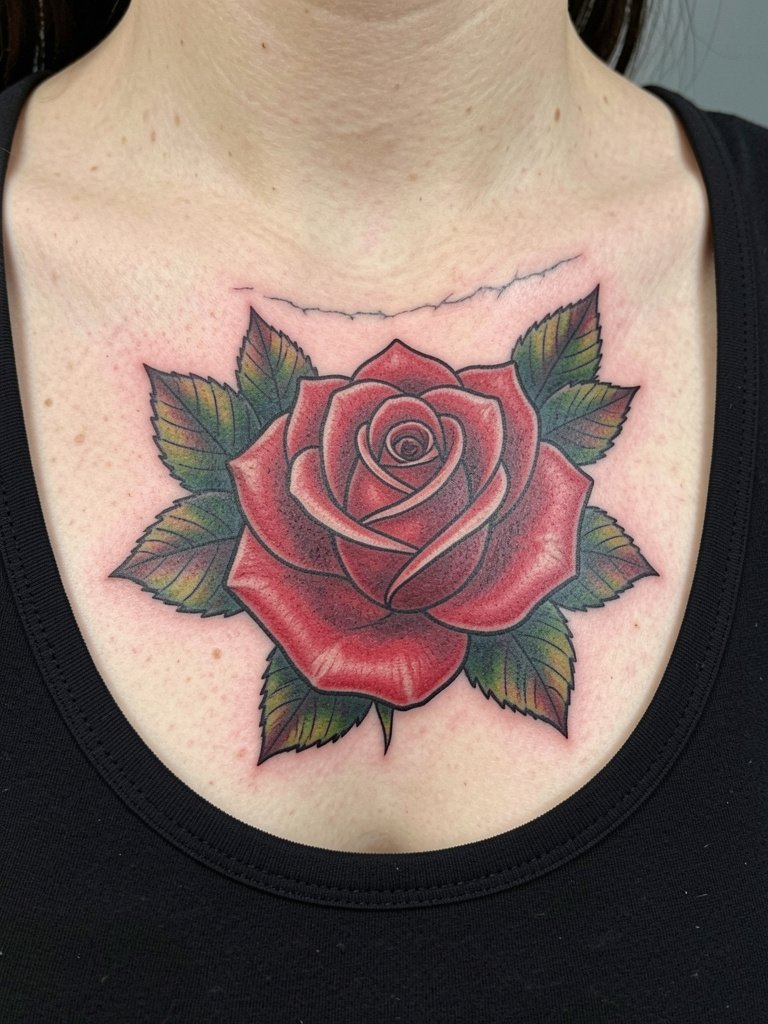
Tattoos over healed scars can be meaningful but require honest planning. Scar tissue absorbs ink differently so the artist may recommend bolder lines and larger petals to camouflage texture changes. The common mistake is expecting identical saturation over scarred skin. Sessions may need extra passes and the healing can be slower. For the appointment wear a comfortable scoop-neck top that allows the artist to work without stretching the scarred area. Check with an experienced artist about realistic touch-up expectations for scar work before booking.
26. Single-Petal Accent on the Rib Side

A single-petal accent can work when you want minimalism with nods to tradition. Rib placement carries higher pain, and detail can blur if the petal is too narrow. I advise a slightly broader shape and a bold edge to keep the silhouette clear as the skin moves. Sessions are short but intense. For the studio wear a cropped top that stays comfortable without shifting. This minimal approach ages like a small full rose if the perimeter is treated confidently by the artist.
27. Back-of-Neck Stemmed Rose
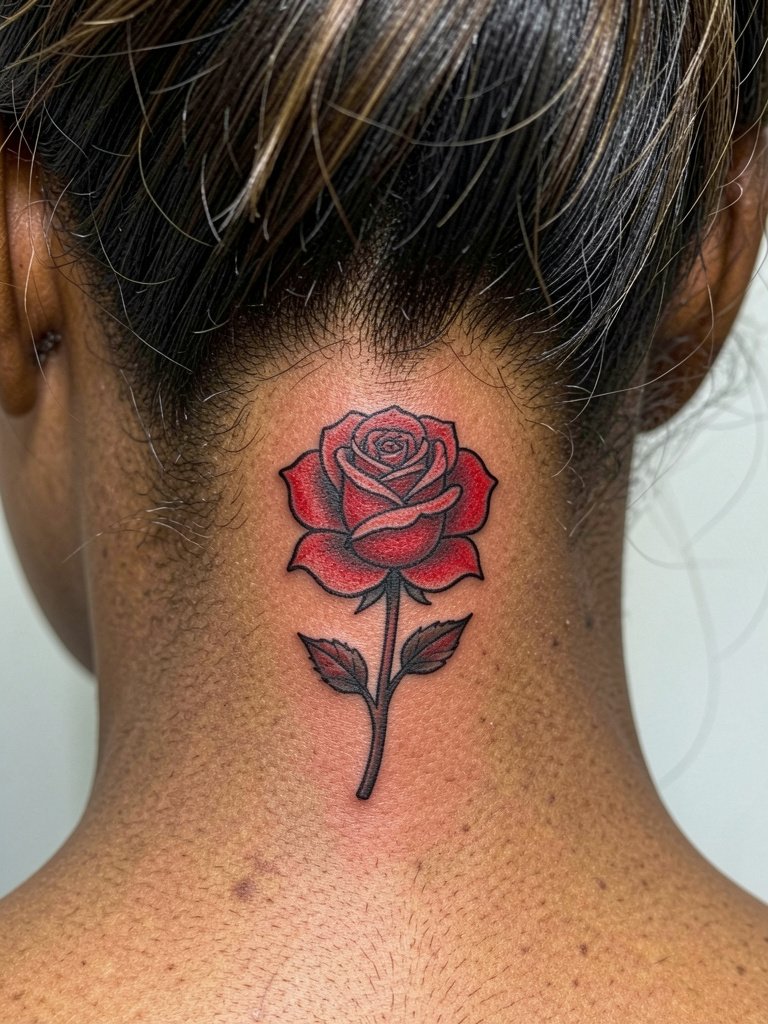
Nape stems are discreet and lend themselves to vertical compositions. The mistake people make is asking for too much internal detail in a compact vertical shape, which blurs when the skin creases. Request bold perimeter work and minimal internal shading. Sessions are usually under an hour and tolerance varies. For showing the piece choose hair styles that alternate between up and down. Expect lower sun exposure here so pigment retention is generally good, but hair products can affect early healing so shield the area during the first week.
Frequently Asked Questions
Q: How should I size a red rose so it still reads as a rose in five years?
A: Size up slightly from what looks fine on-screen. A three to four inch bloom with bold perimeter line and measured internal spacing helps petals keep definition as the skin ages. If you prefer a smaller piece, accept a realistic touch-up plan and ask the artist to widen linework by a hair.
Q: Are small red roses riskier for blowout than larger traditional roses?
A: Small, tightly detailed roses carry higher blowout risk because the ink sits closer to adjacent tissue. Larger compositions with confident black outlines spread pigment across more skin which reduces localized migration. Discuss spacing during the stencil review so the artist can set a safe perimeter.
Q: Where can I find healed examples and portfolios without naming specific artists directly?
A: Search platform tags and keywords that match your interests, for example try hashtags that combine style and subject, use location filters on social media to see nearby healed shots, and browse portfolio sites with keyword filters for "traditional red rose healed." Reddit threads often include candid healed photos across skin tones, which helps set realistic expectations.
Q: How long is a typical touch-up timeline for traditional red roses?
A: Plan to revisit around the one-year mark for small pieces and around two to three years for larger saturated work if you want deep color long-term. Hands and fingers usually need more frequent refreshes, often annually. Personal habits like sun exposure and moisturizing affect that timeline.
Q: What should I wear to the studio for different rose placements?
A: For shoulder, back, and chest pieces wear a wide-neck or scoop-top that stays put. For ribs and sternum choose a supportive fitted top that does not shift. For legs pick loose shorts that do not press on the area. A useful item is a loose drawstring linen pant for lower-body access and comfort.
Q: Is it offensive to use certain rose variations tied to cultural imagery?
A: If a rose design borrows elements from another tradition or religious symbol, acknowledge the origin and ask the artist to avoid sacred iconography being used superficially. Many artists will adapt motifs respectfully or suggest alternative compositions that honor the original context.