
Someone I know spent months bookmarking coordinate tattoos across shop portfolios before deciding the real problem was picking a placement that would still read clearly five years from now. After time in five shops across Brooklyn and conversations with an artist who specializes in fine line work, I learned small coordinates work best when the numbers have room to breathe. Below are compact coordinate ideas that solve common aging and blowout concerns and make it easy to brief an artist.
1. Fine Monospace on the Inner Wrist

Someone I know first saw this style on a friend's wrist and booked the next week. Inner wrist coordinates in a fine monospace font read as tidy micro text and work best when the numbers are about 10 to 12 mm long. Tell your artist you want slightly looser kerning so the digits do not blur together as the skin moves. Pain is low to moderate and a session is usually one short appointment. Common mistakes are asking for fonts that are too thin or requesting cramped spacing. Expect touch-ups at year two to three if you wear watches or bracelets that rub the area.
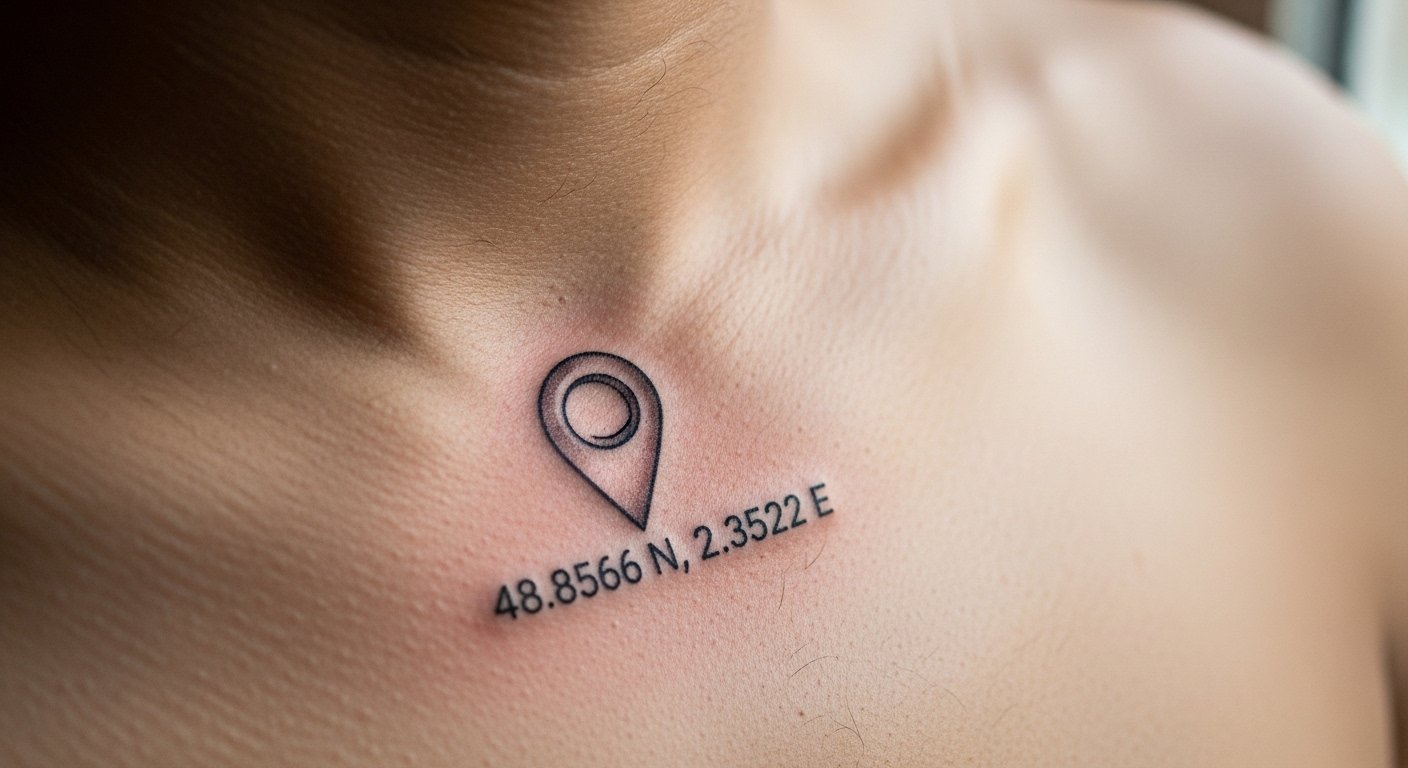
2. Tiny Pin and Coordinates Behind the Ear

Fair warning, behind the ear is a sensitive spot with thin skin and a short session time. The advantage is discreet placement that peeks out at certain angles. Ask your artist for a slightly bolder pin outline with the coordinates in a clear monospace so the numbers hold up. A common error is making the text too small because it looks legible in a photo but blurs on actual skin. Expect the area to feel sore for a few days and prepare to book a touch-up within two years if the digits soften.
3. Inner Forearm Line of Coordinates

Most watercolor trends fade badly, so a clean fine line coordinate across the inner forearm is a practical swap. I recommend asking for slightly heavier linework than the paper reference because forearm skin stretches and flattens with movement. This placement is low pain and reads well from across a room, which makes it a good choice if you want the numbers visible. The mistake people make is asking for hairline text that looks fragile. With proper spacing you should see clear digits at six months and expect a light touch-up around year three.
4. Ankle Wrap Coordinates with Tiny Heart
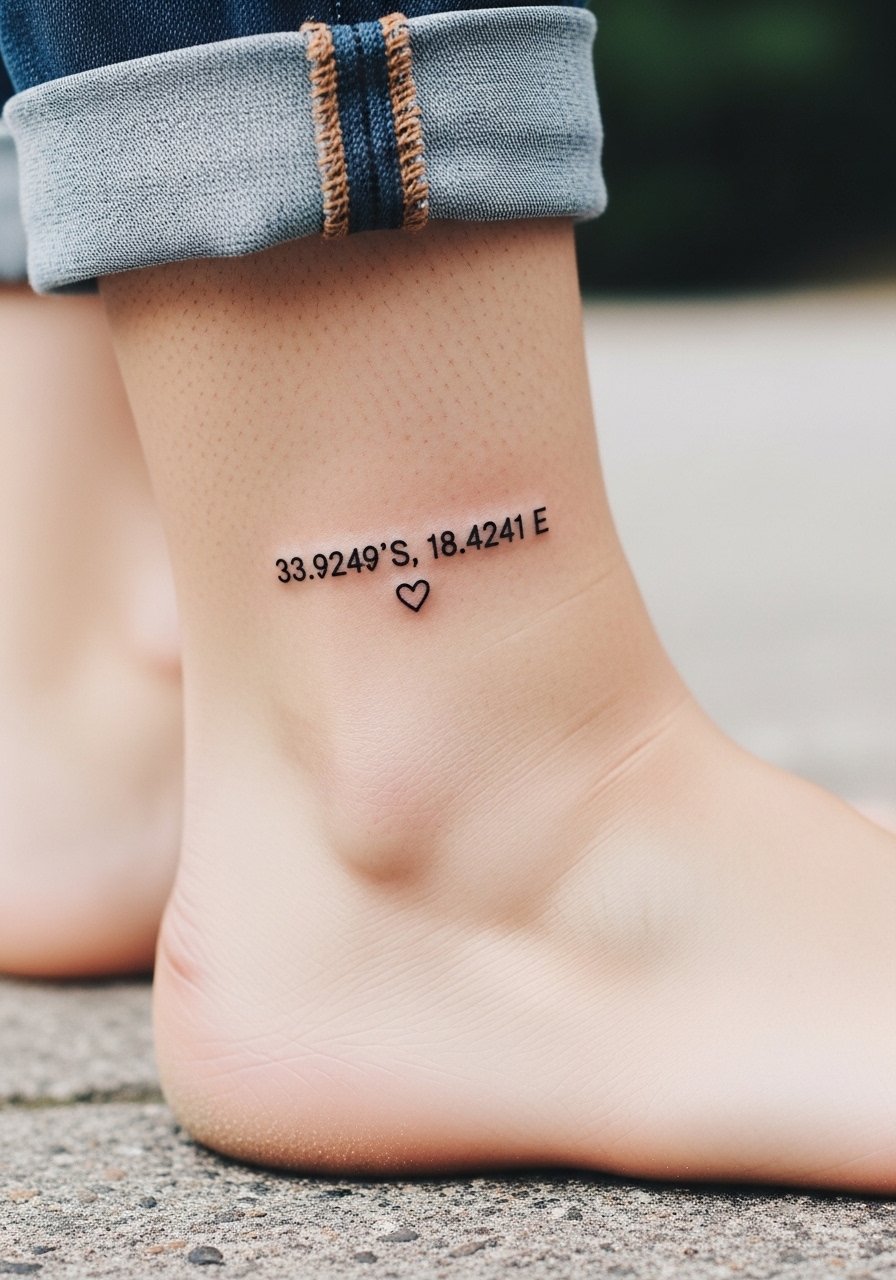
There is something about ankle placements that feels private but easy to show. The outer ankle tolerates small text well if you give the numbers room and avoid very thin strokes. When you consult, bring photos that show the font at actual size so the artist can advise on line weight. Pain is moderate because of bone proximity and the session is short. A frequent mistake is placing text too close to ankle bones where motion causes early blurring. Plan on a touch-up if you wear anklets or shoes that rub the area.
5. Fine Line Coordinates on the Rib Cage
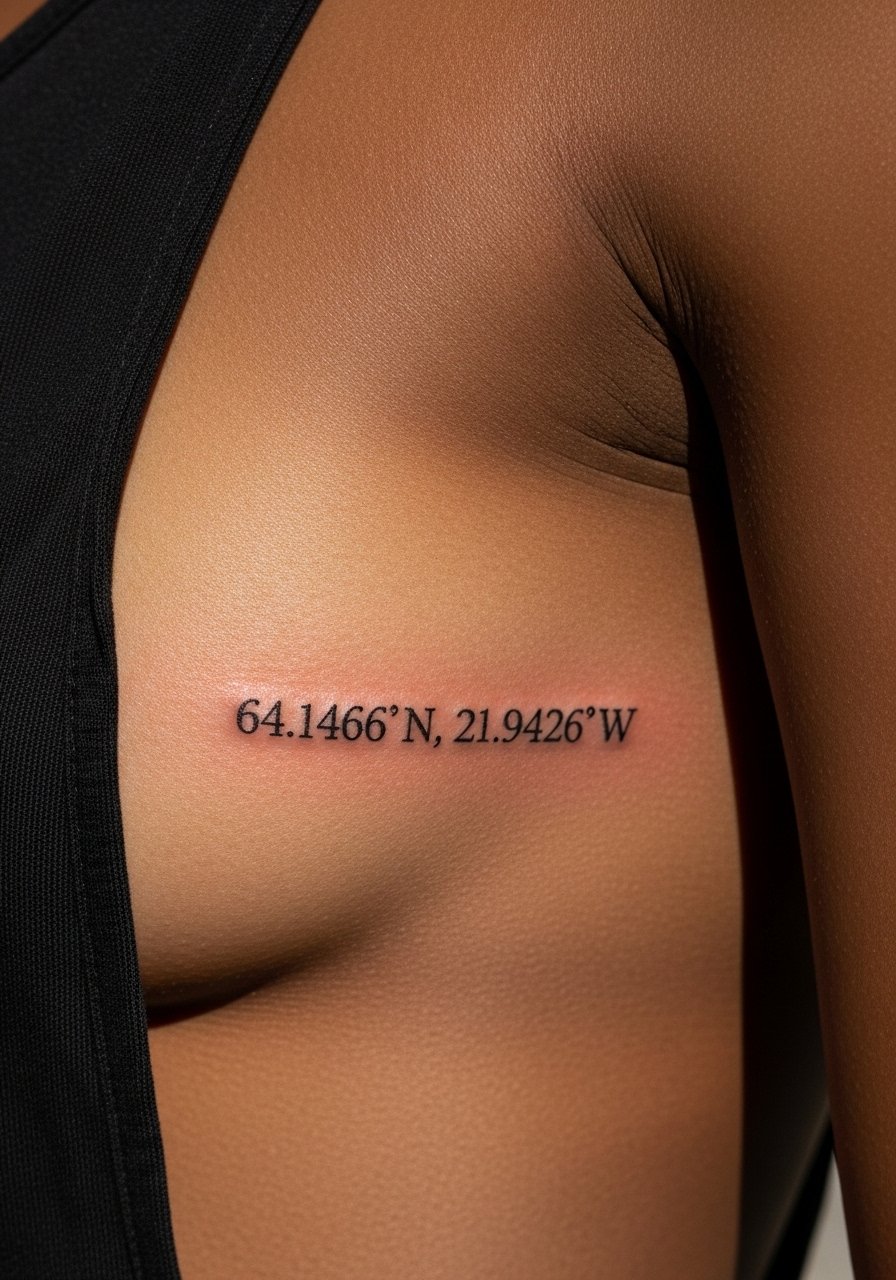
Artists split on ribs into two camps. One group says fine line on the ribs blurs quickly because the skin stretches with breathing and weight changes. The other group argues that with controlled needle depth and slightly wider spacing the lines settle fine. If you prefer fine text here, ask your artist which camp they fall into and show examples of healed ribs from their own portfolio. Pain is high for this spot and sessions are short but intense. Expect that ribs often need a touch-up sooner than the forearm if you choose very thin lettering.
6. Micro Coordinates on the Ring Finger

When you sit down with your artist for a finger coordinate, bring realistic scale images. Fingers are prone to rapid fading because of skin turnover and constant use. Ask for slightly bolder numerals and expect a higher likelihood of needing touch-ups within a year. Hand and finger tattoos still affect hiring in some industries, so think about career considerations before committing. Sessions are short but may sting more than wrist work. The common mistake is assuming a tiny font will last; plan for maintenance.
7. Inner Bicep Micro Coordinates in Stipple Shading
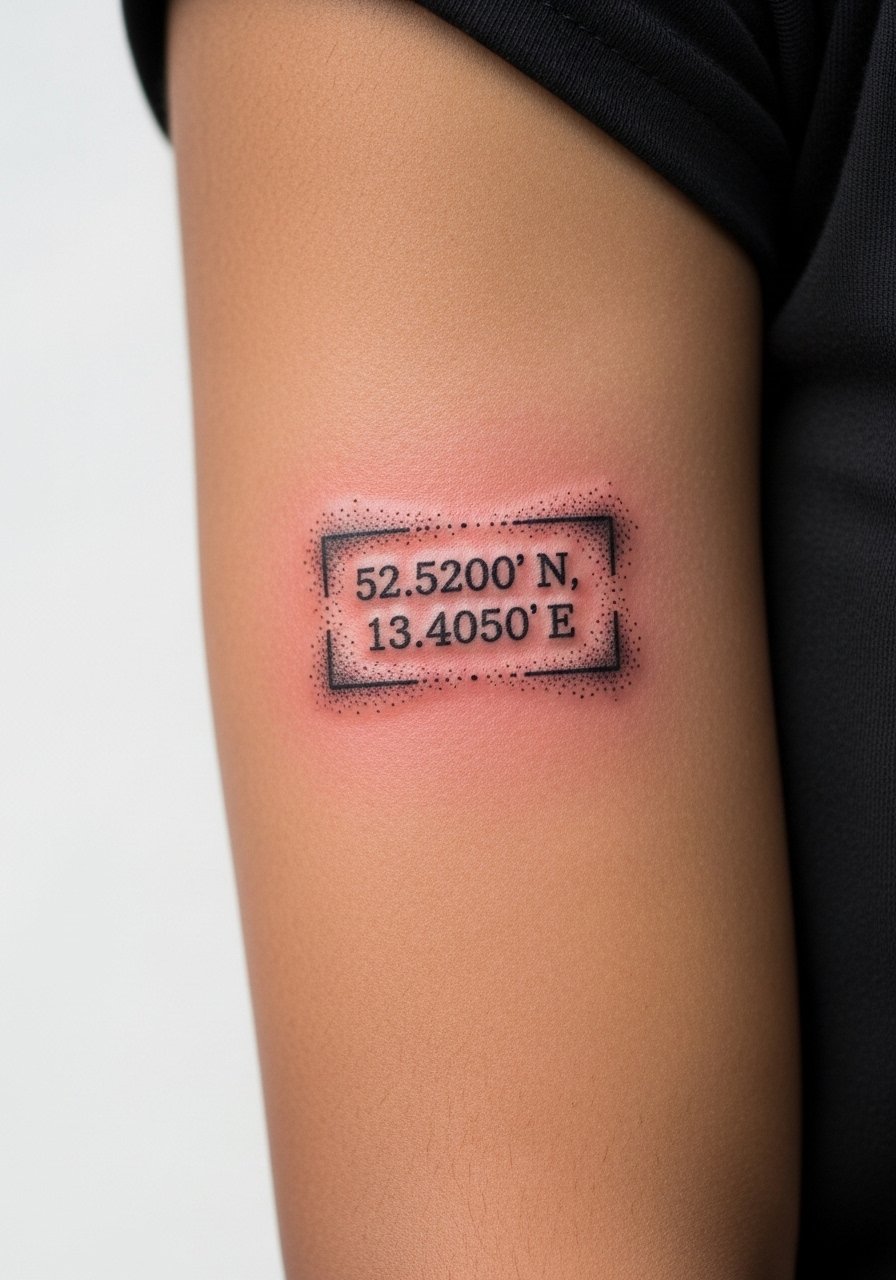
When a client wants something private yet easy to show, the inner bicep is a reliable option. Stipple shading gives a soft backdrop that helps the numerals stand out without heavy color that can migrate. During your consultation specify depth and shading density so the dots do not become a muddy area as the skin ages. Pain is moderate and the session usually fits into a single visit. A typical mistake is asking for dark fill behind tiny numbers which can overwhelm the digits over time. Expect a touch-up at year three in most cases.
8. Tiny Compass Rose with Coordinates on the Upper Arm

There is practical value in combining a tiny compass with coordinates if you want a bit of iconography without losing clarity. The outer upper arm tolerates more saturated work so the compass can have slightly darker outlines while the numbers stay crisp. Tell your artist you want the compass to read simply and to avoid heavy fill that could cause the numbers to blur. Pain is low and the session is quick. A common mistake is overcomplicating the compass at a tiny scale. A light touch-up after two to four years keeps both elements legible.
9. Nape of Neck Hidden Coordinate Line
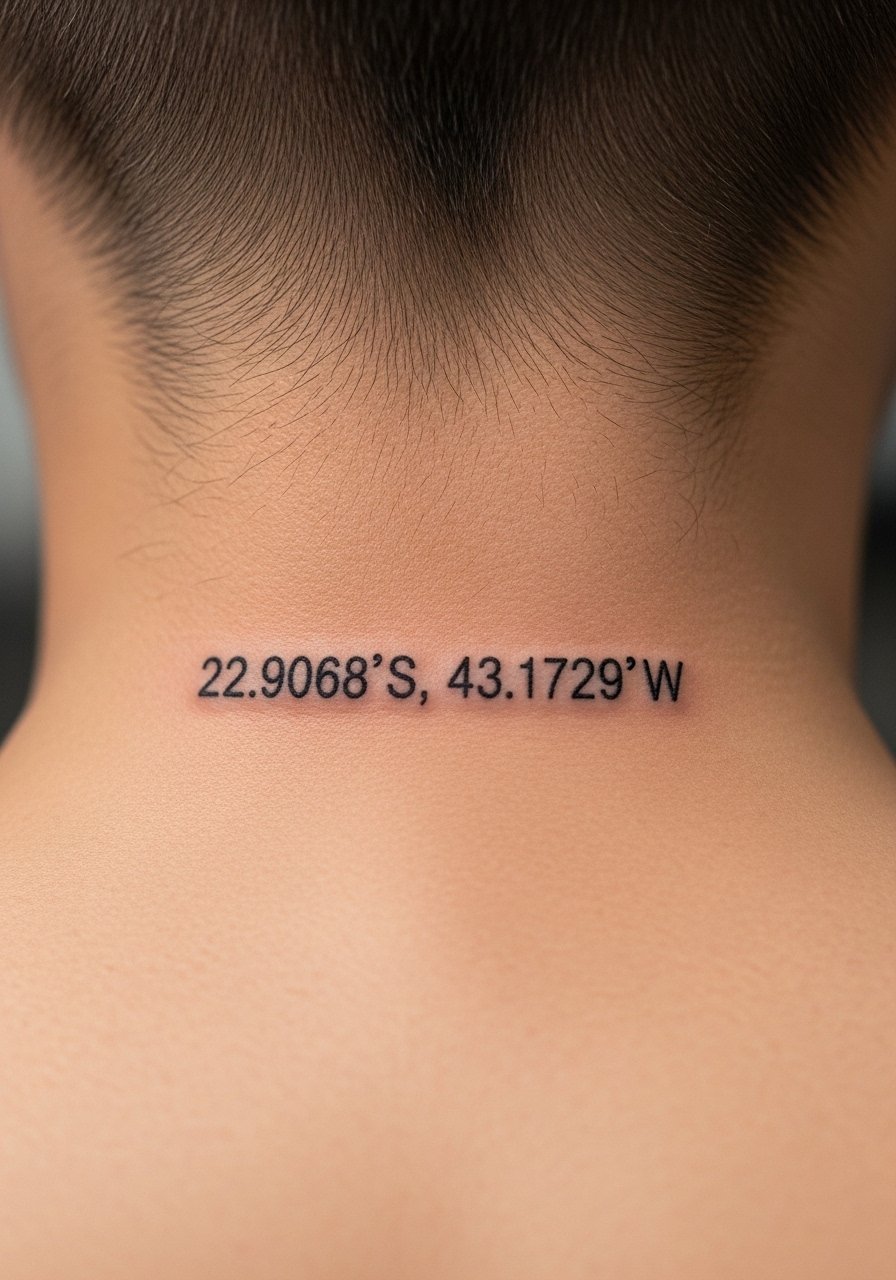
Visual impact is subtle for a coordinate at the nape because it appears only when hair is up. Ask for a clear monospace face and request that the artist test spacing on a curved skin area. The nape can feel more tender than the upper arm and sessions are short. A mistake is placing the text where clothing collars will constantly rub it. For people who want a secret marking this spot ages well if you avoid very fine hairline numerals. Expect a touch-up by year three if you wear high collars often.
10. Calf Band Coordinates with Dot Work Accents

A calf band allows the numbers to breathe and gives the artist room to use dot work accents that highlight the text. In a consultation, show photos of healed dot work from the artist so you know their stipple density. Pain is low and the session time is moderate. The frequent error is compressing the digits into a narrow band where movement causes early softening. Calf skin holds ink well and you may not need a touch-up as soon as finger or rib placements.
11. Shoulder Blade Minimal Coordinates in Single Line
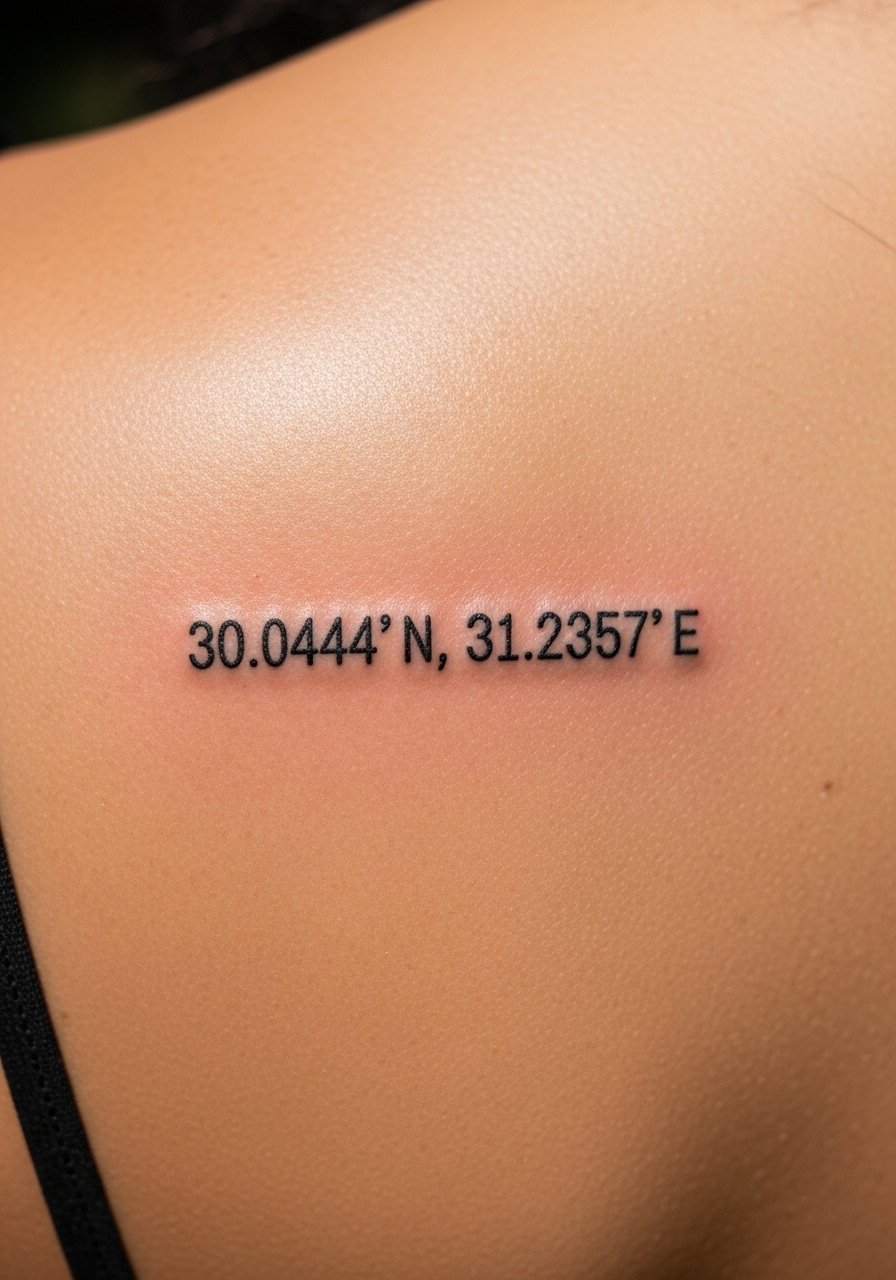
There is a quiet confidence to a slim coordinate across the shoulder blade because it sits on a flat surface and rarely sees friction. When briefing your artist mention you want even stroke weight and a slight increase in font size over what looks good on paper. Pain is low and most of the work fits into a short session. A common oversight is asking for text too close to the scapula curvature which can distort digits. This placement often keeps crisp lines longer than wrist or rib placements.
12. Sternum Coordinates with Negative Space Bar
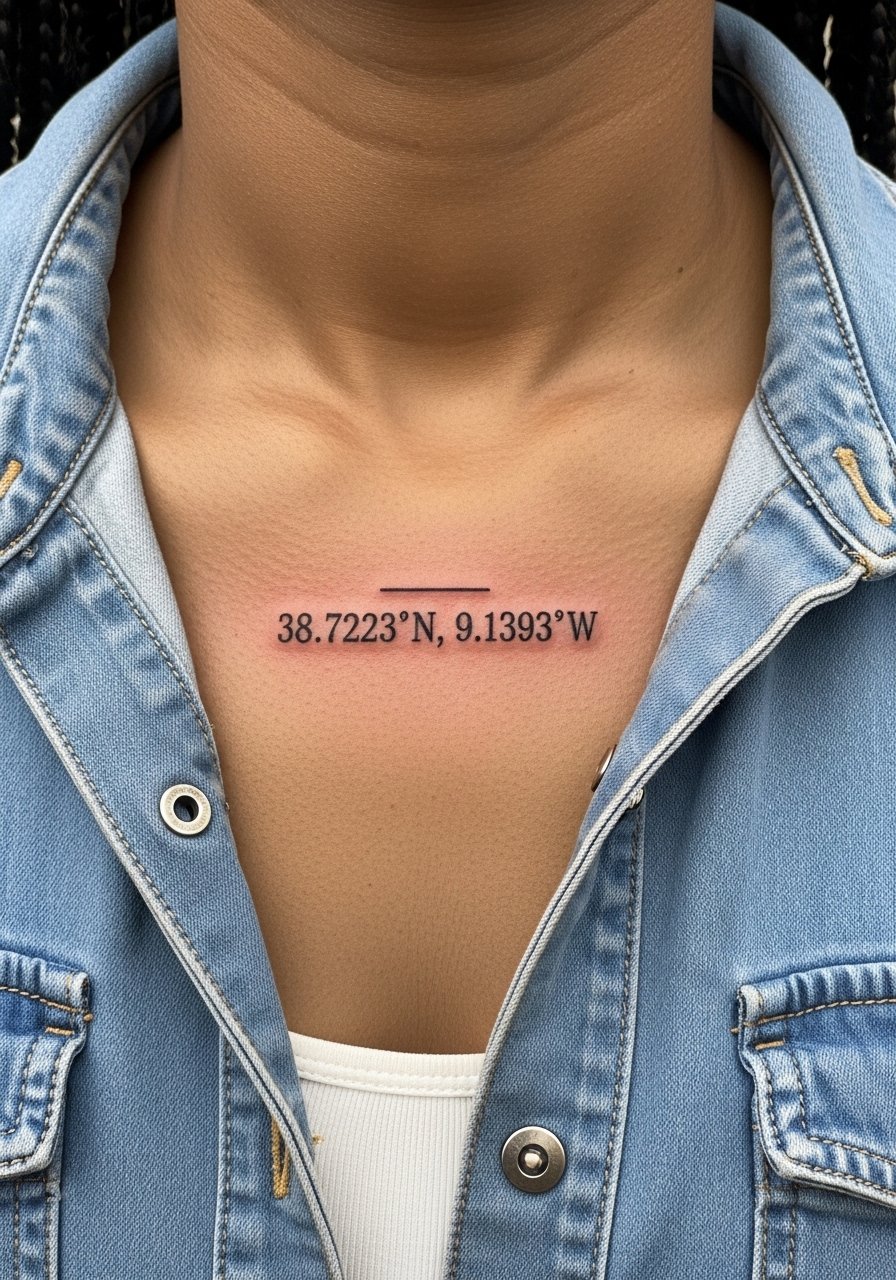
The sternum is a sensitive placement and can be intense in terms of pain and healing. If you choose this spot bring references that show healed sternum pieces so the artist can advise on spacing and depth. Some clients like the negative space bar above the numbers to anchor the design, while others choose plain text for simplicity. Hand this one to an artist with documented healed work on chest areas. Expect soreness for several days and plan for a possible touch-up at year two.
Tattoo Prep and Aftercare Essentials
Lightweight fragrance-free balm for daily moisturizing. Use this after peeling subsides to keep the area supple without clogging pores. It helps with tightness during later stages of healing.
Gentle antibacterial foaming cleanser, fragrance-free. Clean the tattoo gently twice a day for the first week to remove ointment residue and sweat.
Medical-grade second skin bandage, 4×6 inch roll. Occlusive bandages work for people who need to reduce friction during sleep or activity.
Silicone scar sheet for later-stage care. If a raised area appears after healing a silicone sheet can help flatten it over months.
Mineral sunscreen stick SPF 50. Sunscreen is the single most important long-term protection to prevent fading once your tattoo is fully healed.
Fragrance-free moisturizing lotion with ceramides. Use this after the initial healing phase to maintain skin hydration and ink saturation.
Aquaphor Healing Ointment. Use sparingly in the first 48 hours if your artist recommends an occlusive. This is the one mainstream product I include because some artists prefer it for the immediate post-ink window.
Every tattoo is different. Always follow your artist's specific aftercare instructions. Consult a dermatologist if you have skin concerns or unusual healing issues.
I should note two common controversies so you can plan. One camp prefers occlusive dressings like medical film for the first few days, while the other camp favors gentle soap and air drying, also called dry healing. Another debate divides artists on topical numbing creams. One group uses them in controlled doses to help clients tolerate sessions. The other group avoids them because of concerns about swelling and inconsistent ink uptake. Ask where your chosen artist stands before you book.
Frequently Asked Questions
Q: Will fine monospace numbers on the wrist blur into each other over time?
A: It depends on font, spacing, and your daily wear. I have seen wrists hold monospace text well when the artist spaces digits a touch wider than the photo reference. Plan for a possible light touch-up around year two if you wear watches that rub the area.
Q: Are rib cage coordinates a bad idea because of skin stretching?
A: Artists are split on ribs. One camp says ribs are high risk for early blur because of breathing and weight changes. The other camp says careful needle depth and slightly larger spacing make fine line options viable. Ask to see healed ribs in the artist's portfolio and expect higher pain and a possible earlier touch-up.
Q: How should I phrase my request to get clear tiny coordinates on my finger?
A: Tell your artist you want slightly bolder numerals and increased spacing compared with a paper mockup. Fingers shed skin quickly so plan for maintenance. Also mention your lifestyle so the artist can adjust placement away from knuckle creases.
Q: Does aftercare differ if I use an occlusive dressing versus dry healing?
A: Both camps have reasons for their approach. Occlusive dressings reduce friction and can keep the area cleaner in the first two days. Dry healing relies on gentle cleansing and air exposure. Follow your artist's protocol because they know how their technique interacts with each method.
Q: When can I start using sunscreen on a coordinate tattoo?
A: Only after the tattoo is fully healed, which usually means no open skin and no scabs. A mineral sunscreen stick is easy to apply precisely. Protecting healed ink from UV is the most effective way to slow fading.