
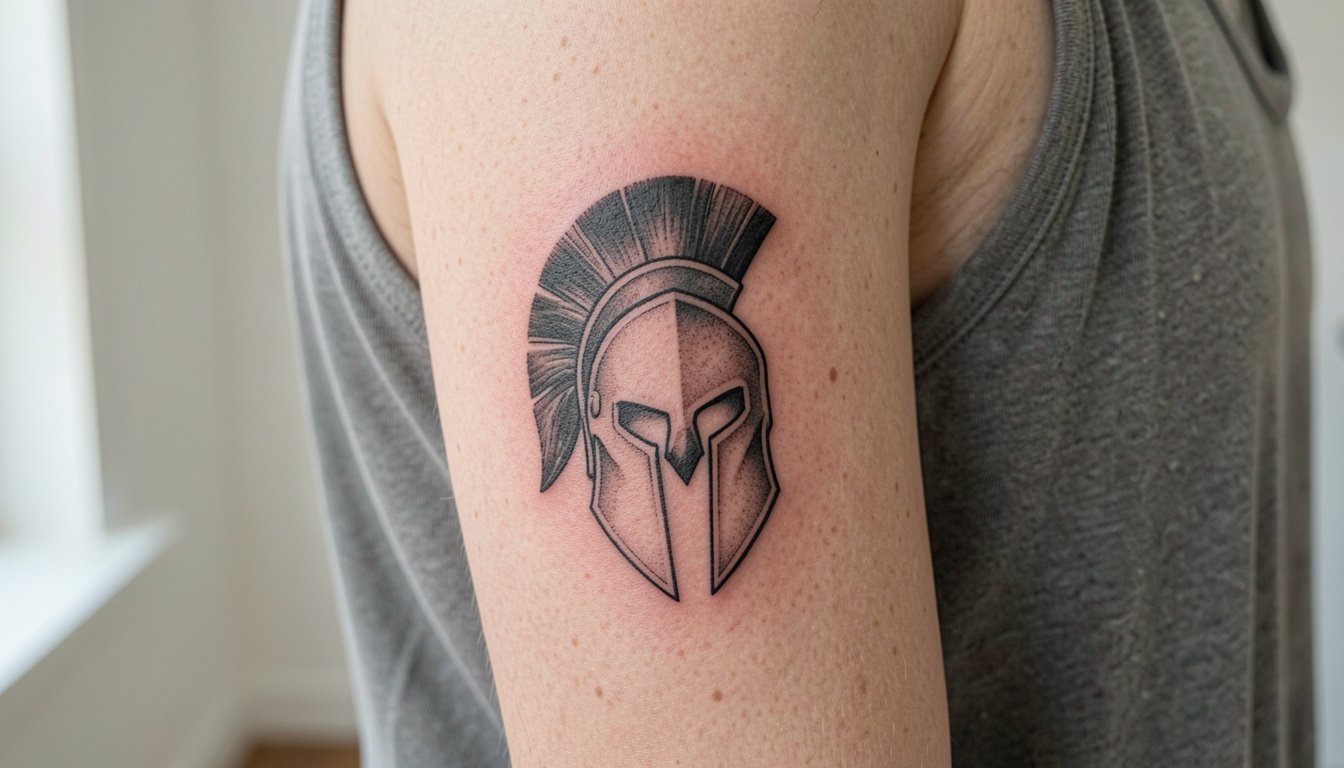
Bold, saturated Spartan shields and crested helmets tend to hold their presence over time more than fragile single-needle portraits. Spartan motifs work best when the design accounts for skin movement and everyday abrasion, not just initial detail. Pick a scale and line weight that match your placement and lifestyle, and the result keeps reading for years. First up is a small inner-forearm helmet that proves the point.
1. Minimalist Spartan Helmet on Inner Forearm
This compact helmet reads like a stamp for someone who wants Spartan imagery without a full sleeve. I recommend a hair heavier single-needle line weight than the reference image, because the inner forearm eats the finest detail by year two. Session time is usually 45 to 90 minutes depending on shading. Expect mild soreness and light scabbing in the first week. A common mistake is asking for every crest line to be micro-fine, which blurs with motion. For showing it off, roll a lightweight linen sleeve up and pair it with a loose tank top so the inner forearm is visible during warm months.
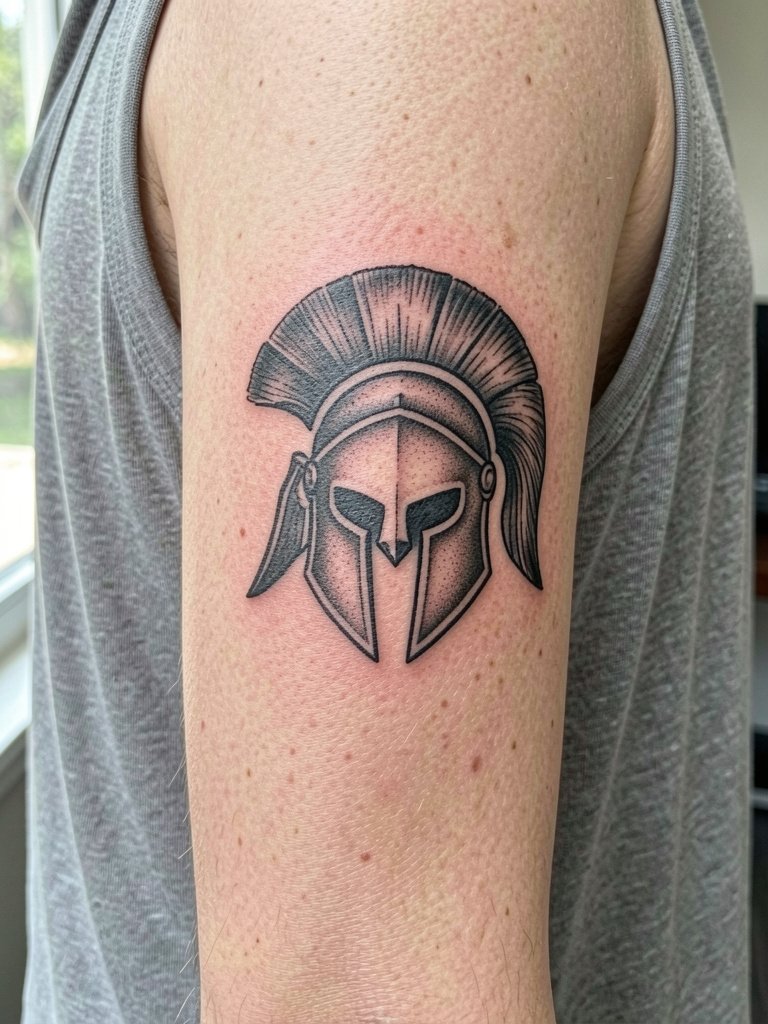
2. Bold Shield on Outer Shoulder
A circular shield with heavy outer linework reads from across a room and ages into a strong silhouette. This placement handles saturated blackwork well, and a 60 to 120 minute session is typical. Pain level is modest because the shoulder has flesh over bone. One mistake is compressing intricate crest details into the center, which becomes a muddy patch as it ages. Request solid black saturation and a slight margin of negative space around iconography to preserve clarity. For evenings, show it off with a rolled-sleeve shirt that stops just above the shoulder so the curve of the shield sits cleanly against the skin.
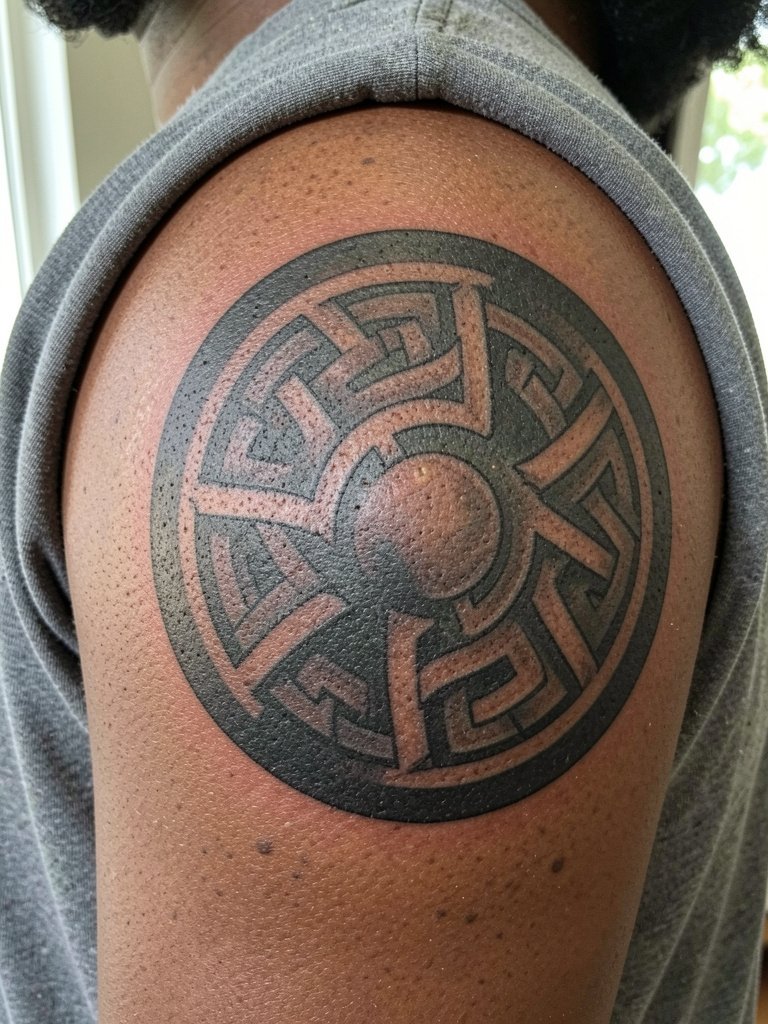
3. Spartan Crest Vertical on Sternum
This vertical crest uses strong black bars and dot-work to avoid softening in high-motion skin. Plan on two sessions if you want extra stippling detail. Sternum pieces can be tender during tattooing and demand an experienced hand because the skin there shifts with breathing. One common error is insisting on ultra-fine filigree centered over the sternum; that detail often fades into texture. Ask for defined contrast zones and rounded negative space so the crest reads as a column even at five years. When booking, wear a fitted sports bra or bandeau so the artist has clear access, or bring a low-profile sports bra to keep the area exposed cleanly.
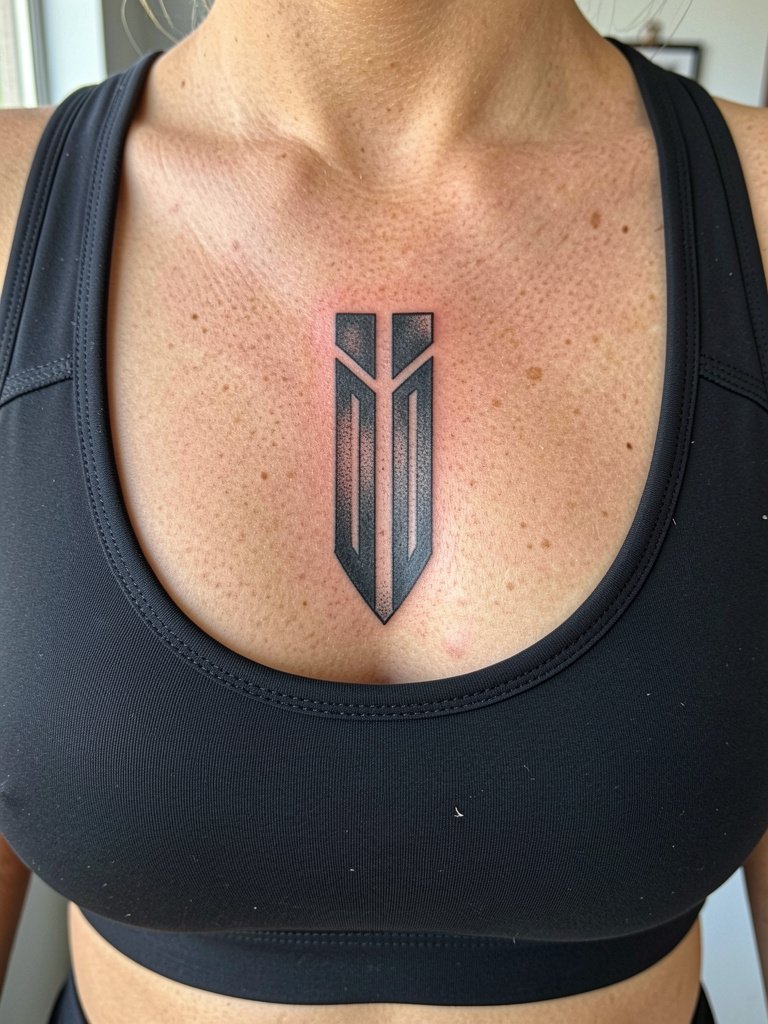
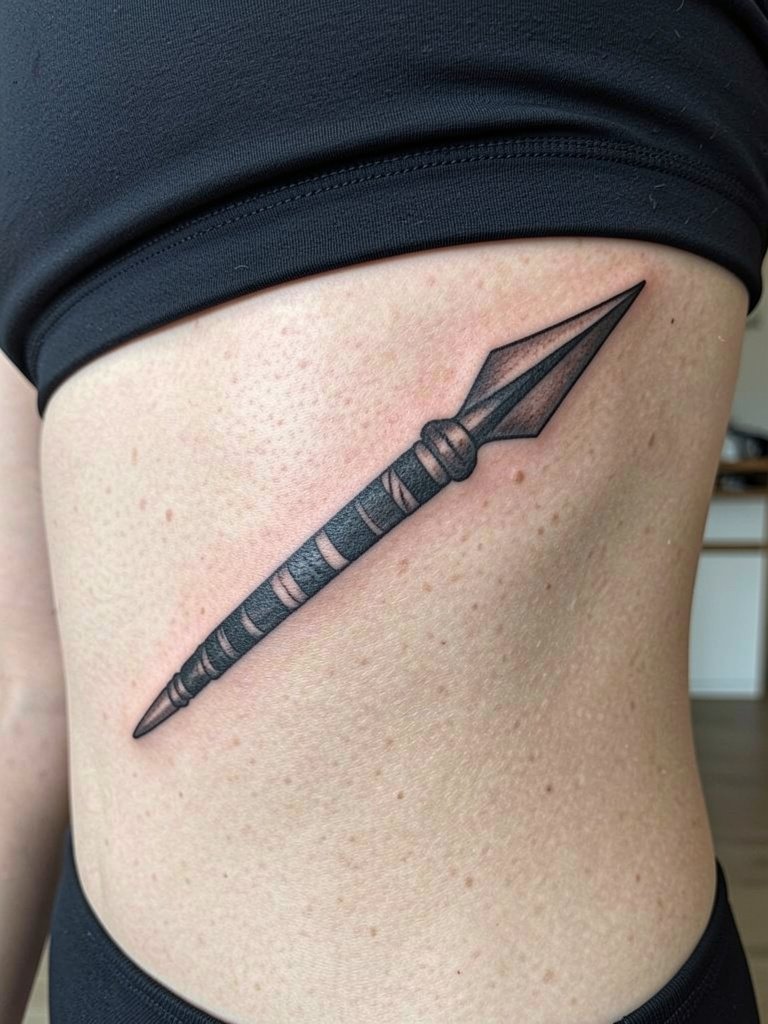
4. Spartan Spear Sleeve Accent Along Ribcage
Long, vertical spear elements look dramatic along the ribs but are prone to stretching and friction. One camp of artists argues that fine line along the ribs will blur within two years, especially where skin flexes. The opposing camp says that with proper needle depth and slightly wider spacing, the lines settle fine and last well. If you choose this corridor, plan for a two-hour session per segment and expect higher pain during inking. Avoid stacking tiny details near the lower ribs where clothing rubs. For the appointment, wear a cropped tee with high-waisted jeans so the artist can access the ribs without you disrobing fully.
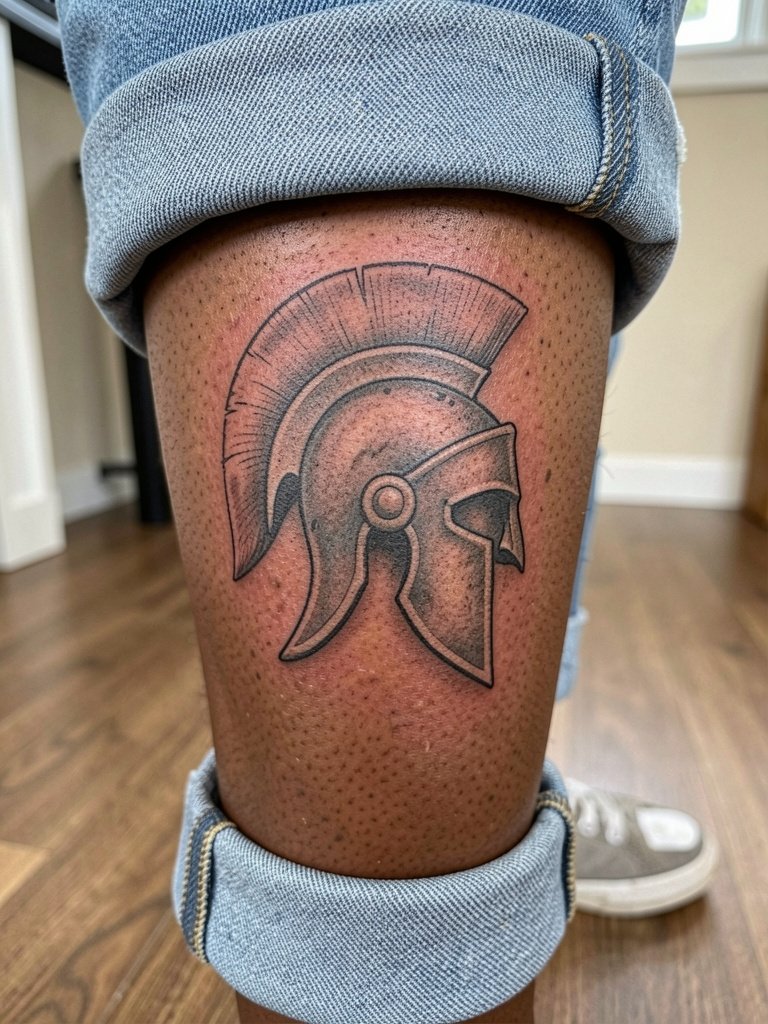
5. Spartan Helm Profile on Calf
A helmet profile on the calf benefits from thicker linework and broader shading to survive footwear abrasion and movement. Sessions are comfortable for most, because the calf is muscular and tolerates long sessions. Common mistake is packing tiny detail into the cheek guard and expect it to hold under sock friction. Use a bolder silhouette and ask for a subtle mid-tone wash rather than tiny hatch marks that will feather. For showing the design, cuffed jeans or drawstring linen pants work well, the ankle break keeps attention on the calf rather than the shoe.
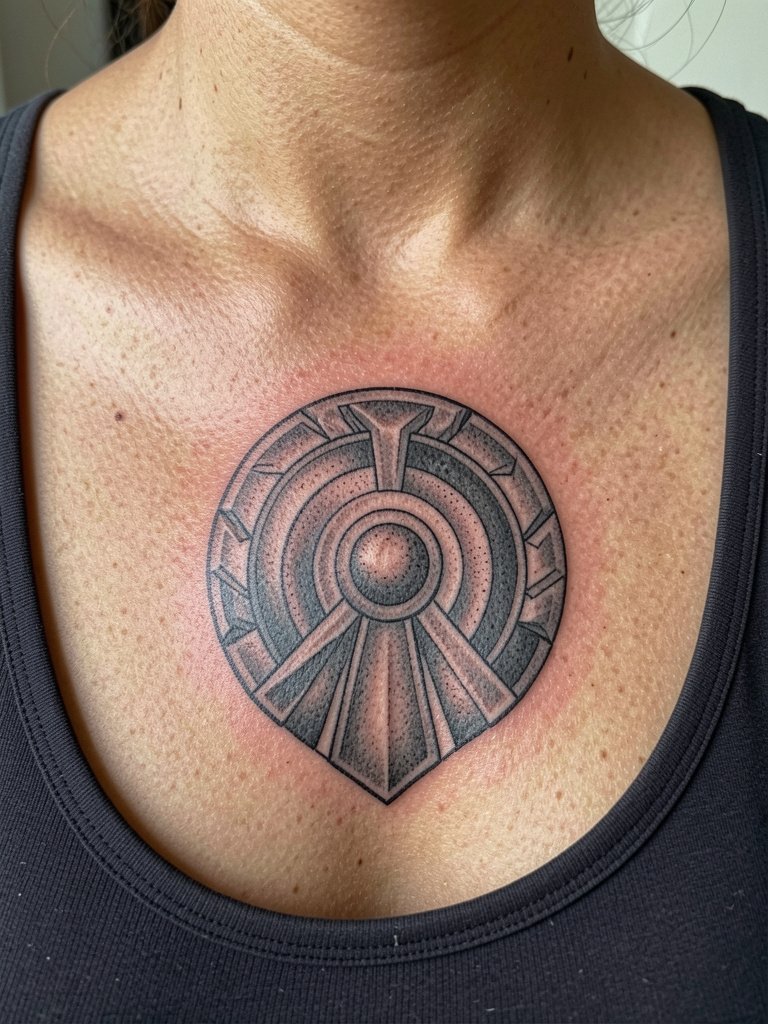
6. Geometric Spartan Shield on Chest
A stylized geometric shield centered on the upper chest reads as a badge when paired with bold line anchors. Chest skin sits differently than shoulder skin so spacing matters more than micro detail. Expect a 90 to 150 minute session. Avoid filling every negative space with tiny dots, which age into texture. For a cleaner display, wear scoop-neck tees that naturally reveal the upper chest. Pair with a scoop-neck cotton tee so the shield sits in the shirt's natural neckline during casual wear.
Pre-Session Essentials
These items smooth the first week and are especially helpful for forearm, shoulder, and chest placements shown above.
-
Stencil transfer paper kit. Helps you and the artist preview the helmet and shield placements on skin before committing to linework.
-
Topical numbing cream. Applied about 45 minutes before a sensitive sternum or rib session eases the first pass without altering ink saturation.
-
Thin protective film roll. Useful for calf and wrist pieces to prevent friction from clothing during the first two days.
-
Fragrance-free gentle body wash. Cleans the area during showers without stripping the fresh ink.
-
Aquaphor healing ointment. Apply a thin layer in the first 48 hours to lock moisture without suffocating the needle channels.
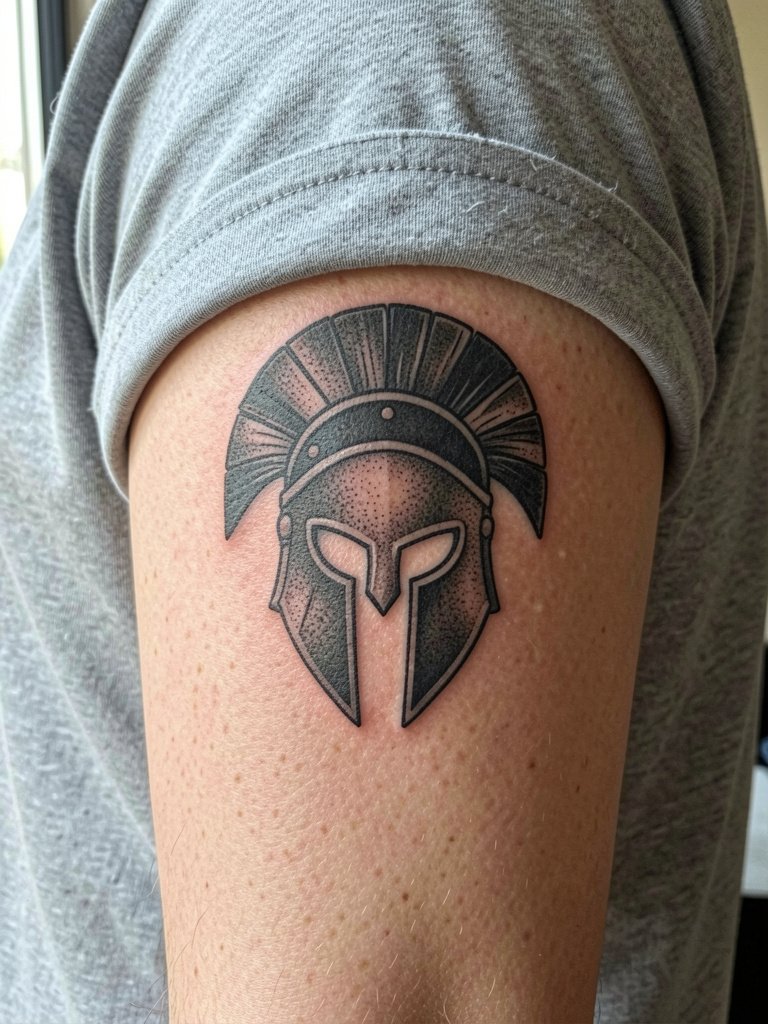
7. Spartan Helmet Mosaic on Upper Arm
This mosaic-style helmet mixes flat black panels with stipple texture to create depth without tiny flourishes. The upper arm tolerates solid fills and handles 90 to 180 minute sessions well. A common error is compressing cross-hatching into small spaces where it will soon soften. Specify a clear foreground helmet and background negative fields so the silhouette survives touch-up intervals. For casual days, short sleeves highlight the upper arm; a classic short-sleeve tee with a mid-weight cotton works nicely to frame the piece.
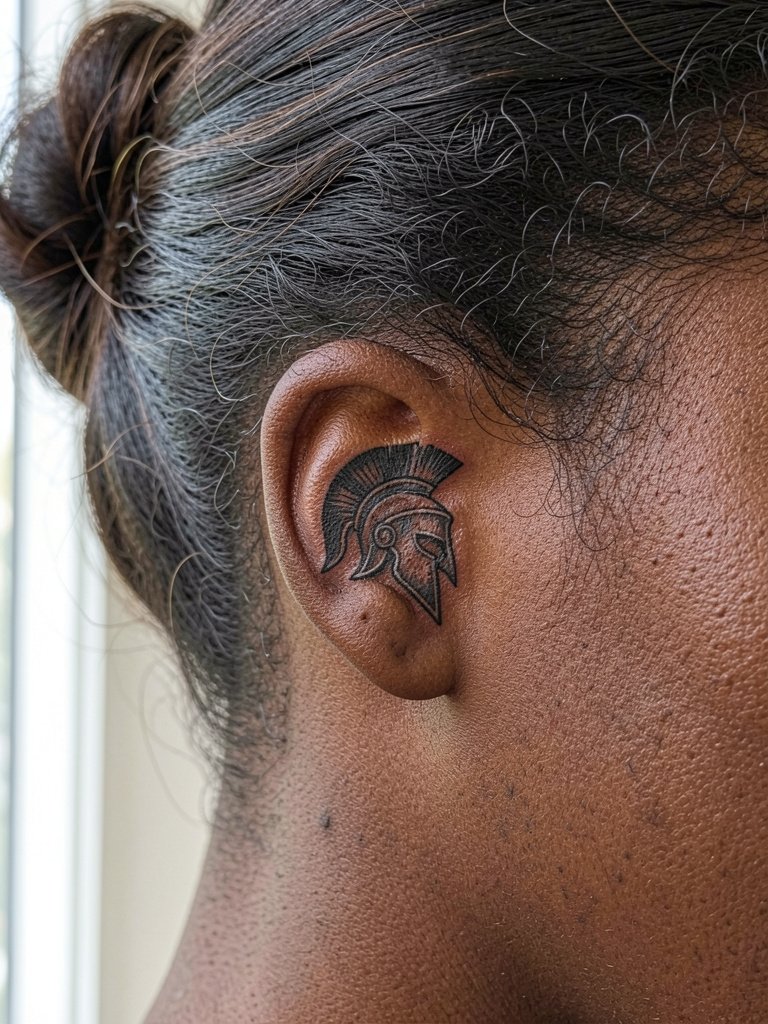
8. Small Spartan Icon Behind the Ear
A tiny helmet silhouette behind the ear is a discreet nod to the motif but requires exact line crispness. Tattooing behind the ear needs a steady hand and fine placement. The area heals quickly but can show slight spreading in two years. Avoid detailed ornamentation that will lose clarity. For appointments, pull your hair into a natural updo that keeps the area exposed, or consider a simple hair clip to hold hair away without tugging at the site. Note that anyone doing neck or behind-ear work should have portfolio examples of healed pieces in similar skin tones.
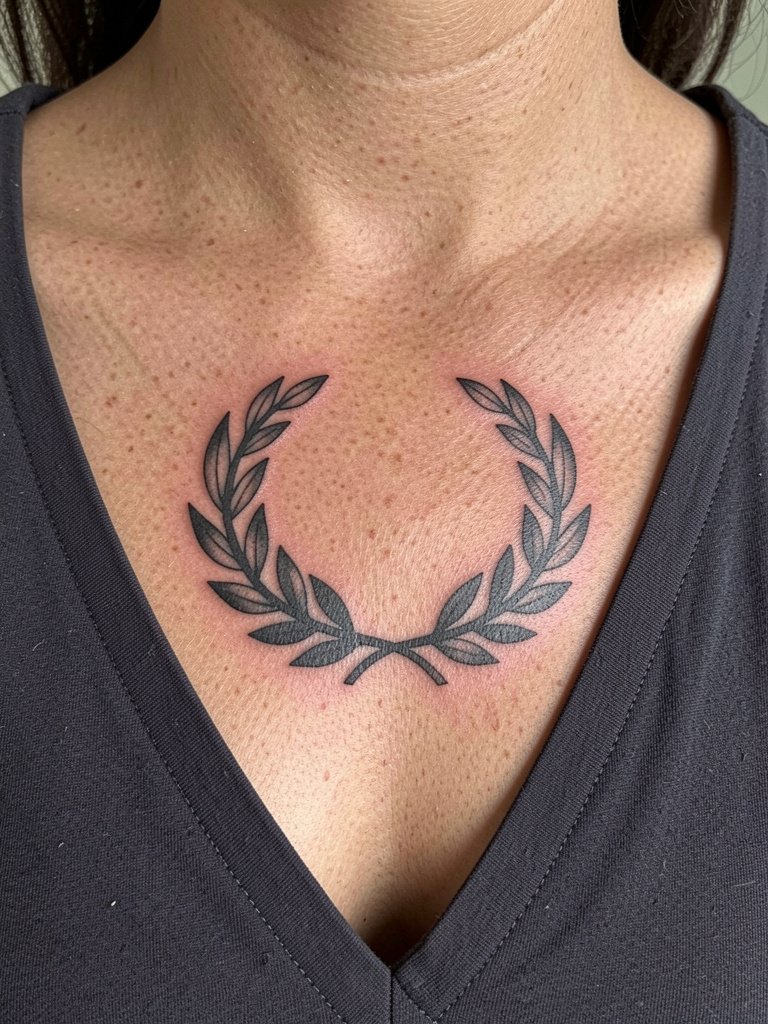
9. Spartan Laurel Wreath Collarbone Accent
A laurel wreath with a Spartan twist sits along the collarbone and frames the neck visually. Collarbone pieces move with shoulder motion so line spacing must be generous. Expect a 60 to 120 minute session and some soreness when sleeping on the side. The biggest mistake is micro-lettering inside the wreath that fades into texture. Ask for open spaces between leaves and slightly stronger anchors at the stem points. A wide V-neck shirt keeps the collarbone visible without exposing the chest, and a wide V-neck button tee shows the curve of the laurel well.
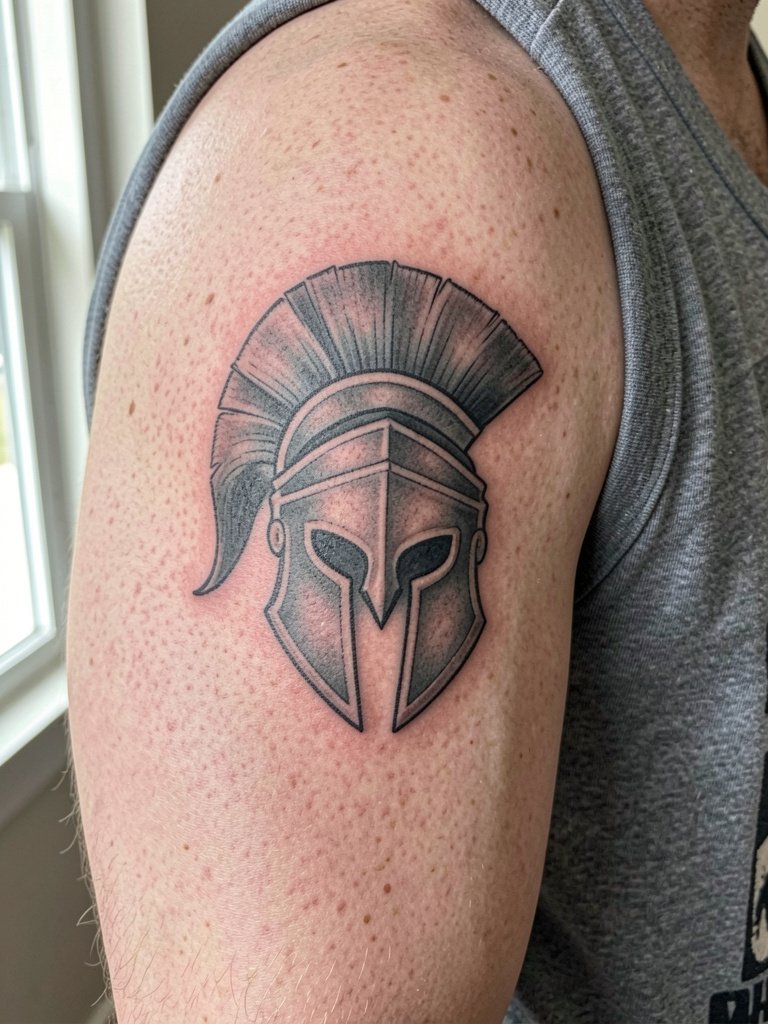
10. Spartan Helmet Sleeve Focal Piece on Outer Bicep
This is a mid-sized focal helmet that anchors a larger sleeve. Outer bicep skin tolerates heavier shading and reads well from a distance. Session time varies by detail but plan for at least two hours for a focal anchor. A common error is placing too many fine elements around the cheek plate which steals contrast from the main helmet. Instead, ask for bold outline anchors and broader grey washes to separate background elements. For layering, short sleeves or tank tops show the bicep; try a muscle tank that keeps the shoulder visible while framing the bicep.
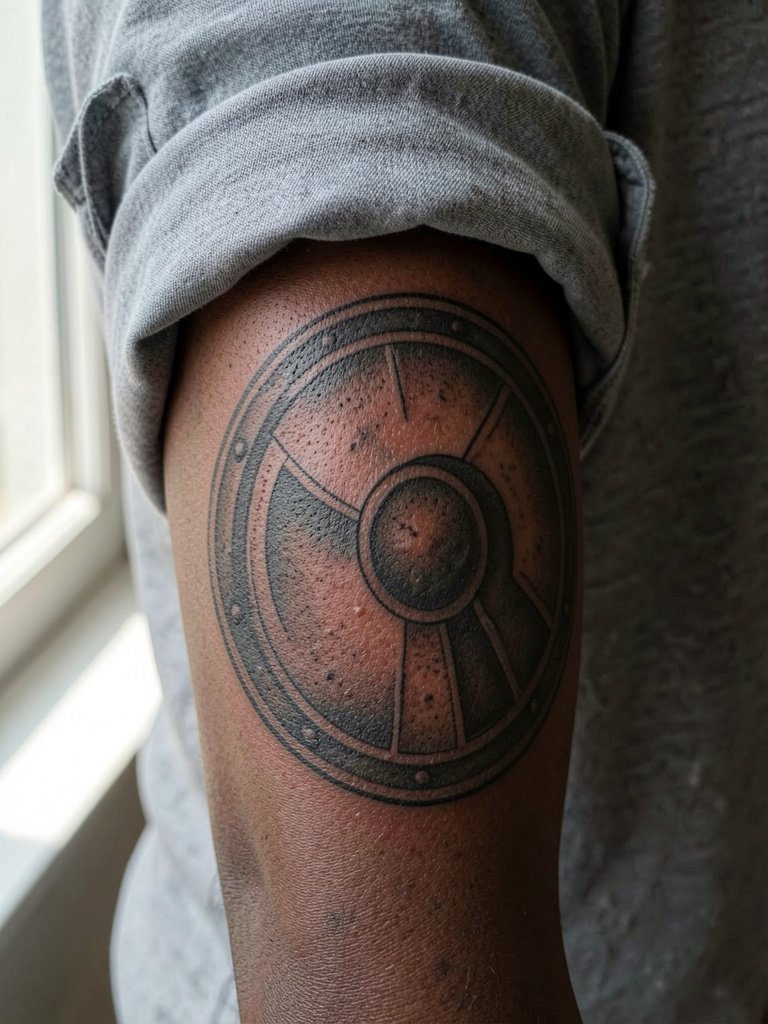
11. Spartan Shield Half-Sleeve Wrap
A wrap-around shield motif that sits on the outer forearm and curves toward the elbow uses negative space to preserve detail over time. Forearm skin is forgiving but gets frequent sun exposure which can fade saturation if not protected. One common oversight is omitting a UV-protection plan. Schedule a touch-up at 12 to 18 months if you want the contrast maintained. For daily visibility, wear rolled long sleeves in breathable fabric during colder months and consider a lightweight UV shirt when outdoors.
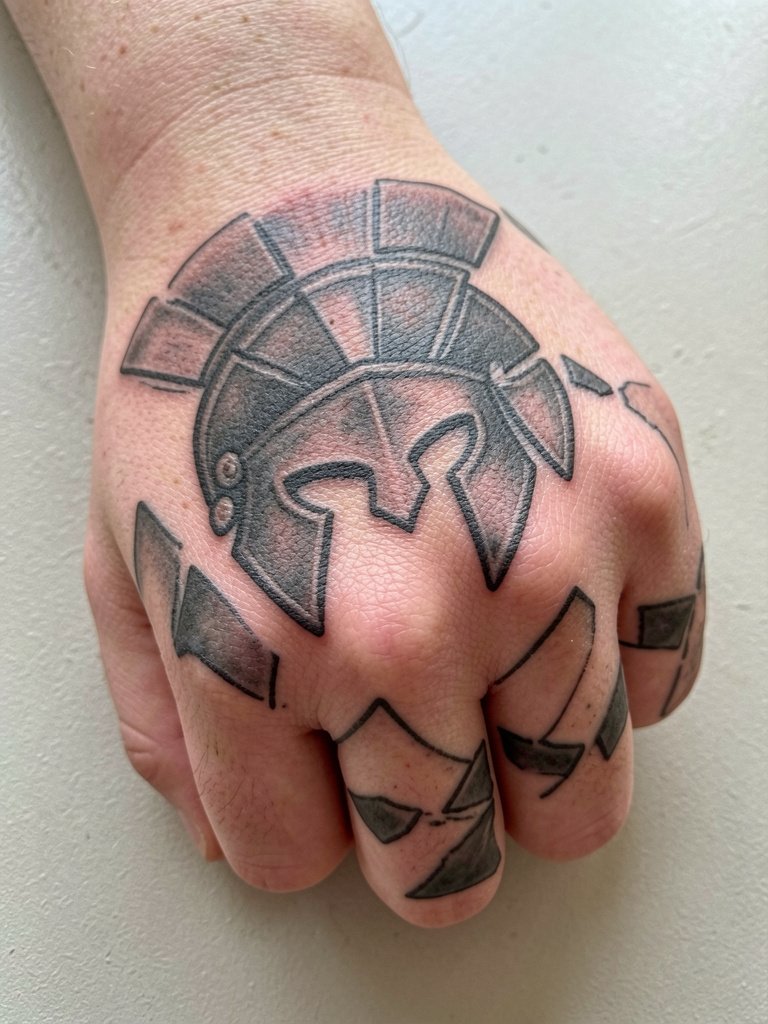
12. Spartan Fragmented Helmet for Hand or Knuckles
Small fragments of a helmet on the hand or knuckles need bold anchors because these placements heal differently and rub against clothing constantly. Hands are high-risk for early fading and occasional touch-ups. The typical session is short but may require multiple passes. Avoid hairline filigree on knuckles. Instead, ask for compact shapes with thick borders and limited interior detail so the forms remain legible. For the session, wear gloves-free clothing and bring a pair of thin slip-on shoes so you can stay comfortable during multiple short passes.
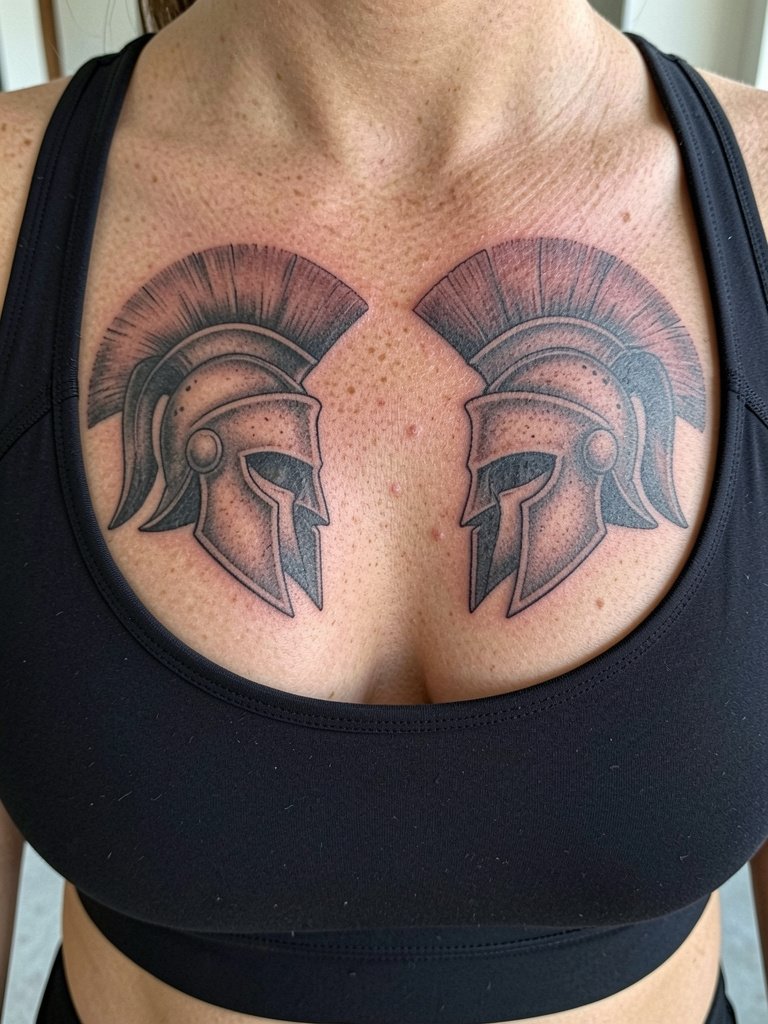
13. Spartan Helmet Pair on Chest Across Sternum
A mirrored pair of helmets flanking the sternum creates symmetry but increases session time and aftercare complexity. Plan for two sessions to keep session fatigue low. A mistake is packing too much micro-shading between the helmets; the result can look congested after healing. Leave a clear chest channel of negative space between the pair to help long-term readability. Sleep position matters in early healing, so prepare to sleep elevated or on your back for the first few nights.
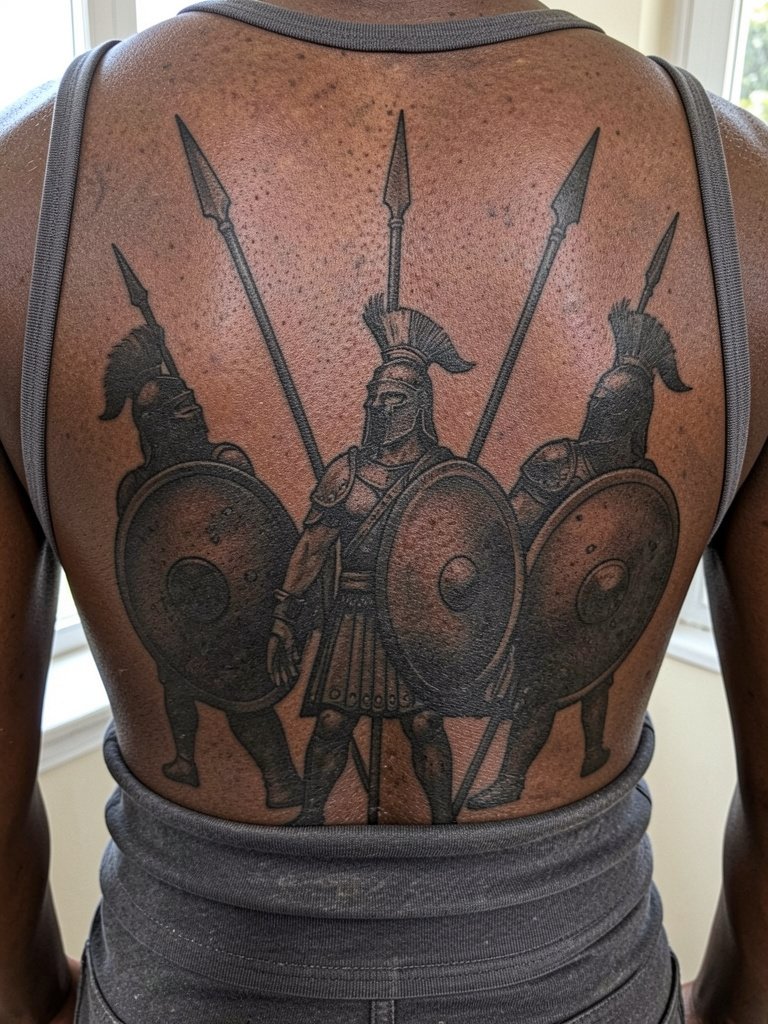
14. Large Spartan Back Piece with Hoplite Scene
A large back panel with hoplite silhouettes and negative-space spears reads as a mural when done in bold blackwork. Back skin tolerates long sessions but may require 2 to 4 sittings. The common error is overloading with tiny figures that flatten into texture at distance. Design the scene with clear foreground figures and simplified background spears so the composition holds up. For appointments, wear low-rise jeans and a fitted cropped tank to expose the lower back without disrobing. A low-rise fitted tank keeps the area accessible while preserving modesty.
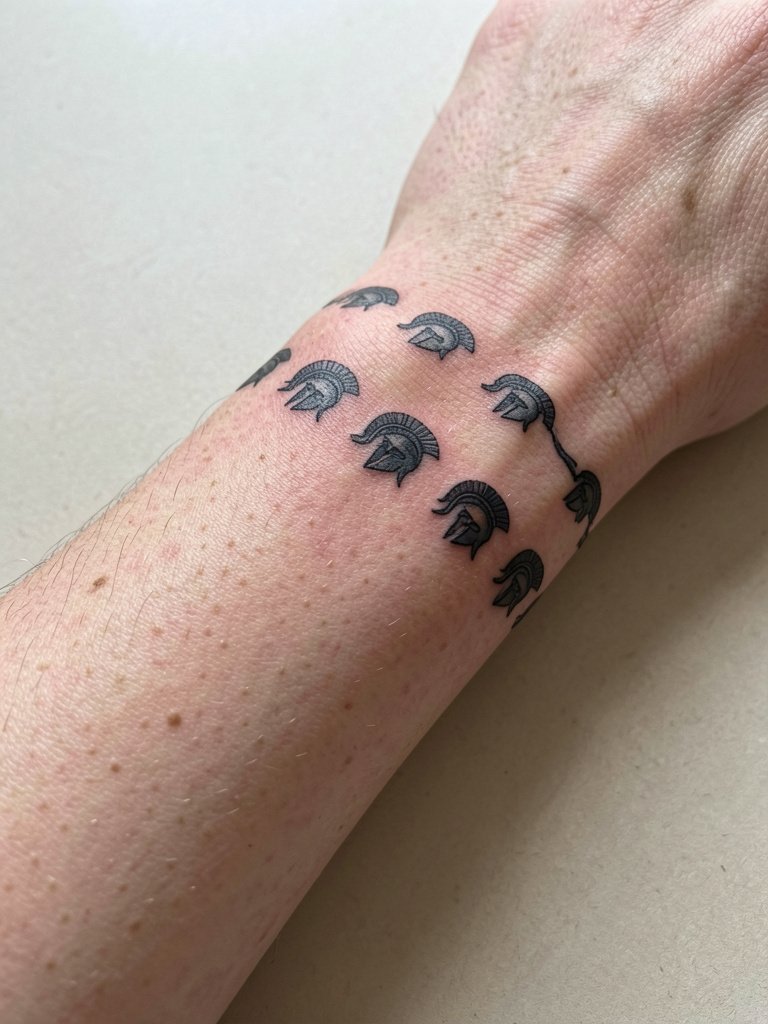
15. Spartan Minimalist Band Around Wrist
A slim band with helmet motifs repeated around the wrist is a subtle way to carry the theme. Wrists rub and wash often so thicker anchors win over micro detail. Expect a 30 to 60 minute session and consider a follow-up check at one year. The mistake is using tiny script inside the band which will fade quickly. For everyday wear, cuff shirts or bracelets draw the eye; a narrow cuff bracelet pairs cleanly with this look.
16. Spartan Shield Patch on Thigh
A shield-style patch on the outer thigh ages well because thigh skin rarely rubs against clothing in ways that distort ink. Sessions can be long with comfortable breaks because the thigh gives the artist a stable canvas. A common misstep is cramming thin radial lines toward the center which will soften. Leave room for touch-up if you want crisp radial contrast in five years. For the session, slip into a pair of modest athletic shorts that the artist can roll up without displacing the waistband.
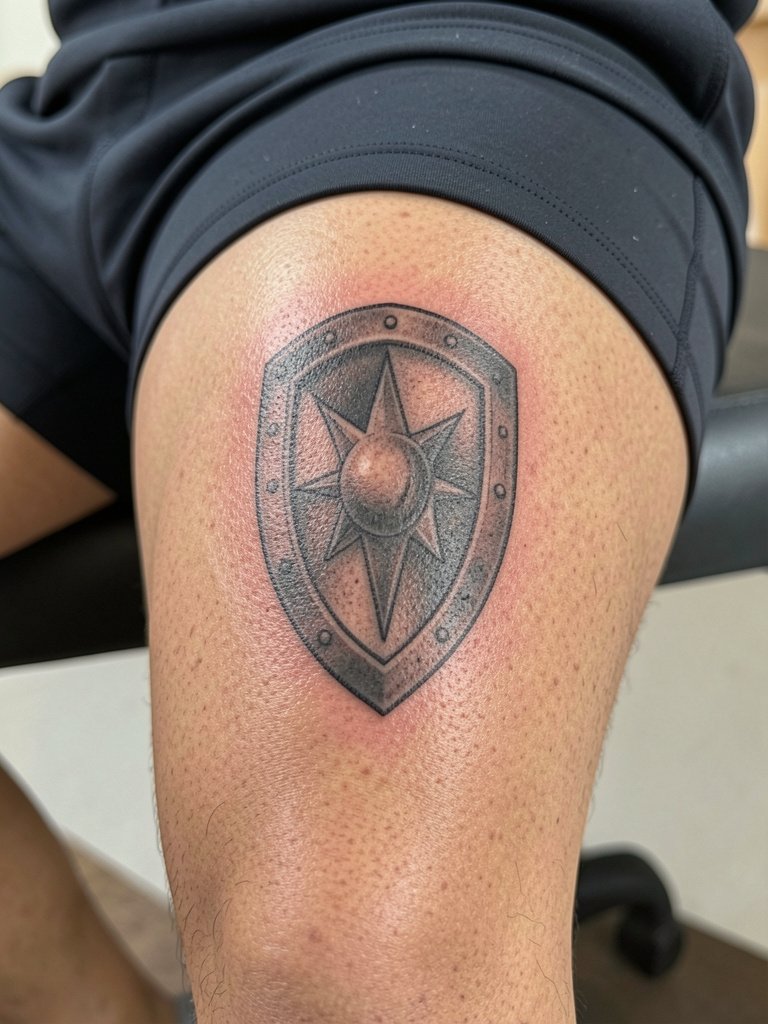
17. Spartan Crest Finger Accent
A single crest tick on the side of the finger can be charming but expect frequent touch-ups because fingers lose pigment quickly. Sessions are short but the longevity is limited. Avoid tiny cross-hatching here. Instead, use a compact black wedge design that stays bold. If you want a long-term solution, move the motif to the upper finger where the skin is thicker. For daily activities, be mindful of soaking the area in water frequently for work or hobbies.
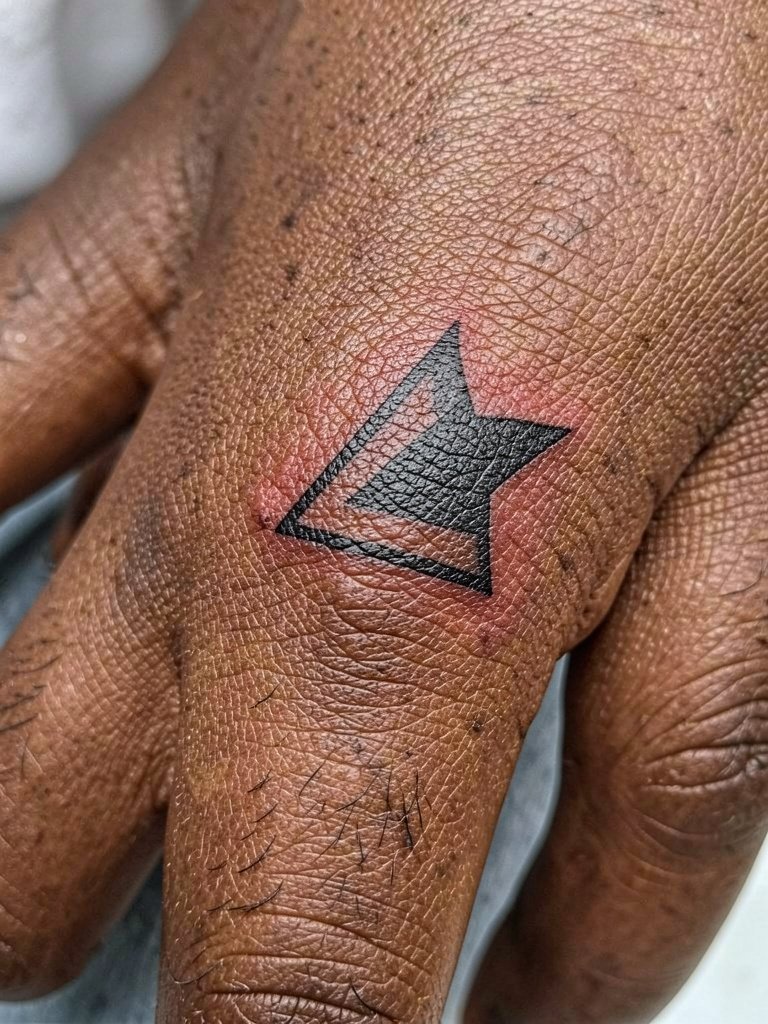
18. Negative-Space Spartan Helmet on Ribcage
Using negative space to outline a helmet on the ribs creates a ghosted look that survives motion well. Ribs are painful for many people and require careful session pacing. Artists split on whether fine-line ribs blur more than bold work. One group says the stretch and breathing motion causes blurring within two years. The other group argues that slightly wider spacing and careful depth prevent that problem and produces durable healed work. If you choose ribs, plan for shorter sessions, bring snacks, and allow two or more sittings to complete the piece.
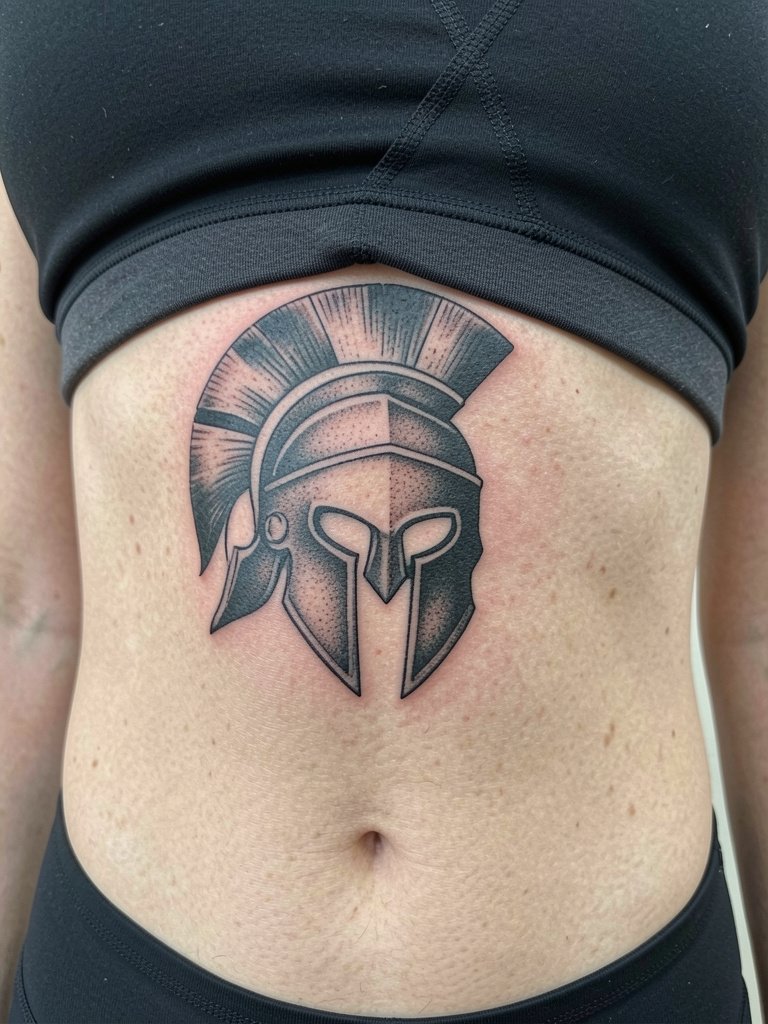
19. Spartan Helmet in Dot-Work on Upper Back
Dot-work helmets use stippling to suggest metal texture without crisp lines, which can soften gracefully over time. Upper back sessions can be multiple hours but the skin there keeps pigment well. A common mistake is using too-large dots that merge quickly. Ask for controlled stipple gradients and anchor dots at contrast points to keep the shape. For show-off looks, backless or racer-back tops reveal the piece; try a racer-back tank to keep the design visible for summer outfits.
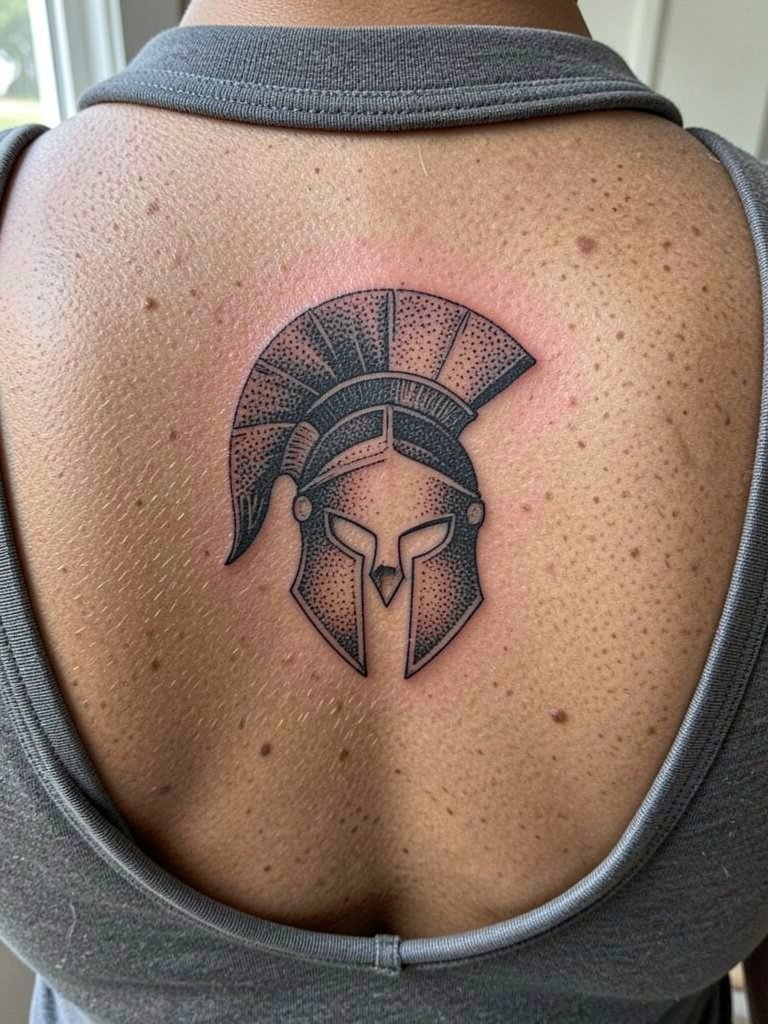
20. Spartan Helmet Micro-Realism on Chest Pocket Area
A micro-realism helmet pocket on the chest uses tight contrast but must be scaled for the skin plane. Chest skin smoothness favors tiny highlights when scaled properly. The main error is demanding photoreal detail in a space too small for needle resolution. Instead, request simplified highlights and a tiny dark anchor to keep the realism readable. Expect a 60 to 120 minute spot session. For casual framing, wear open-collar shirts where the pocket sits naturally visible.
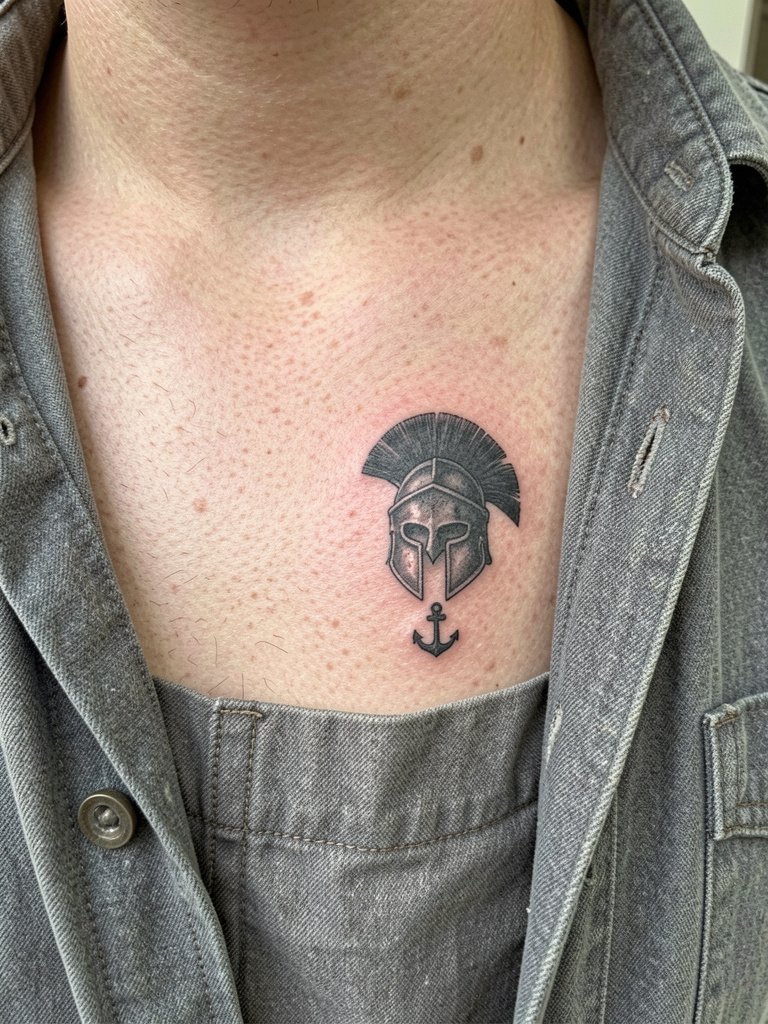
21. Spartan Spear Cluster on Forearm
A cluster of spearheads down the forearm works well as a linear motif and benefits from heavier anchors near the wrist. Forearm skin sees a lot of sun so UV protection influences long-term color and contrast. The frequent mistake is placing all spears the same size, which flattens the rhythm. Vary scale and keep stronger line weight near high-friction points. For sessions, roll up a breathable long-sleeve that the artist can move without tugging and consider a breathable roll-up sleeve shirt.
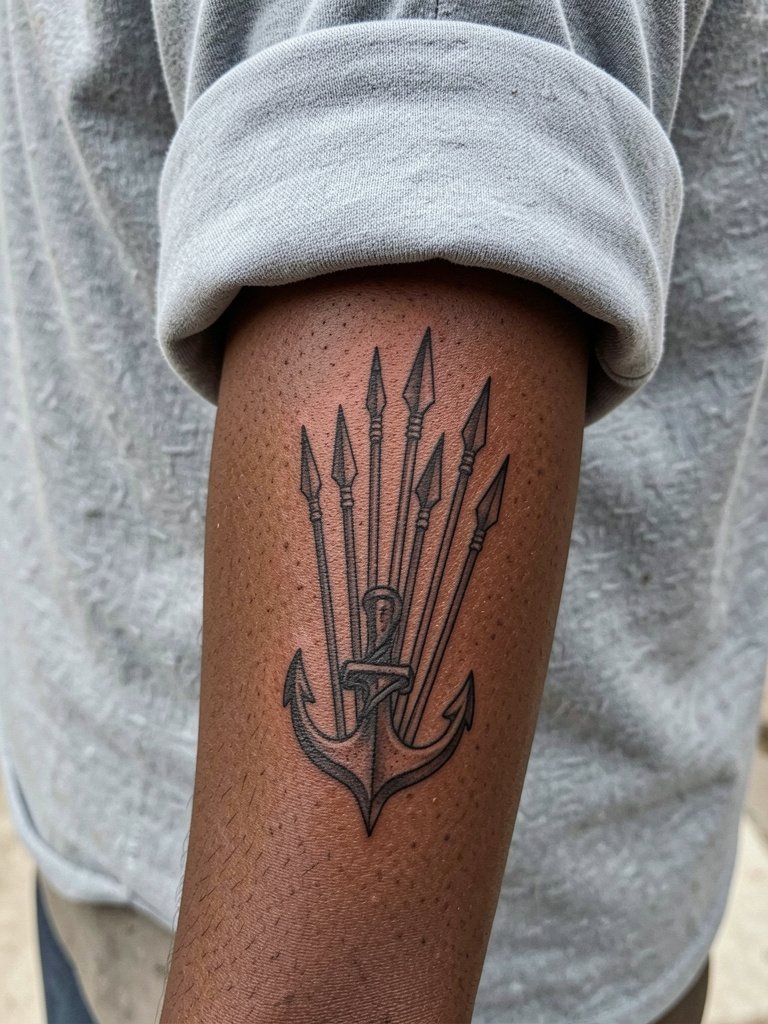
22. Spartan Linear Band on Bicep
A horizontal linear band with Spartan motifs across the bicep can act like an armband and ages predictably with heavier anchors. The bicep is a forgiving site and the session is comfortable. Avoid packing micro-detail inside the band edges that will smear with muscle movement. Instead, ask for clear foreground and background contrast and leave a small breathing line between repeat icons. Short sleeves that end at mid-bicep show this piece cleanly; pair with a mid-sleeve cotton shirt for a casual look.
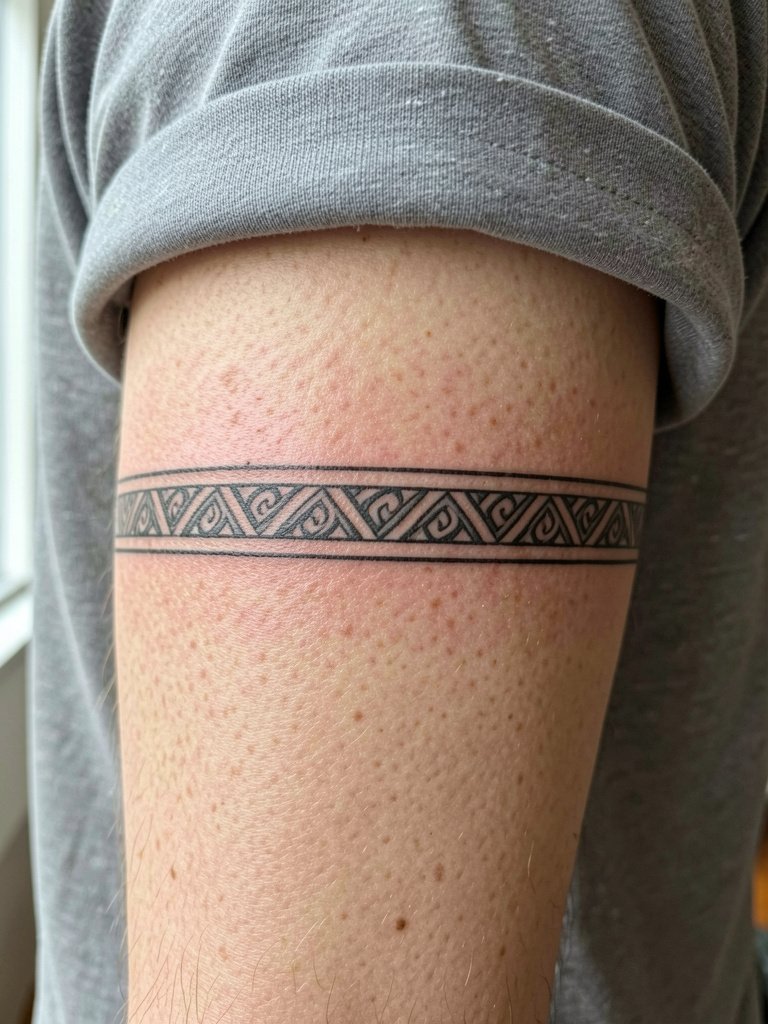
23. Spartan Helmet in Negative Space on Upper Thigh
Negative-space helmet work on the upper thigh benefits from less daily abrasion and keeps detail longer. Thigh flesh handles long sessions and allows for larger composition. A common error is adding too-dense background textures that compete with the negative silhouette. Keep the helmet silhouette clear and use background tones to lift it. For the appointment, wear easy shorts or a skirt that the artist can work around without shifting clothing, and bring comfortable seating for long sessions.
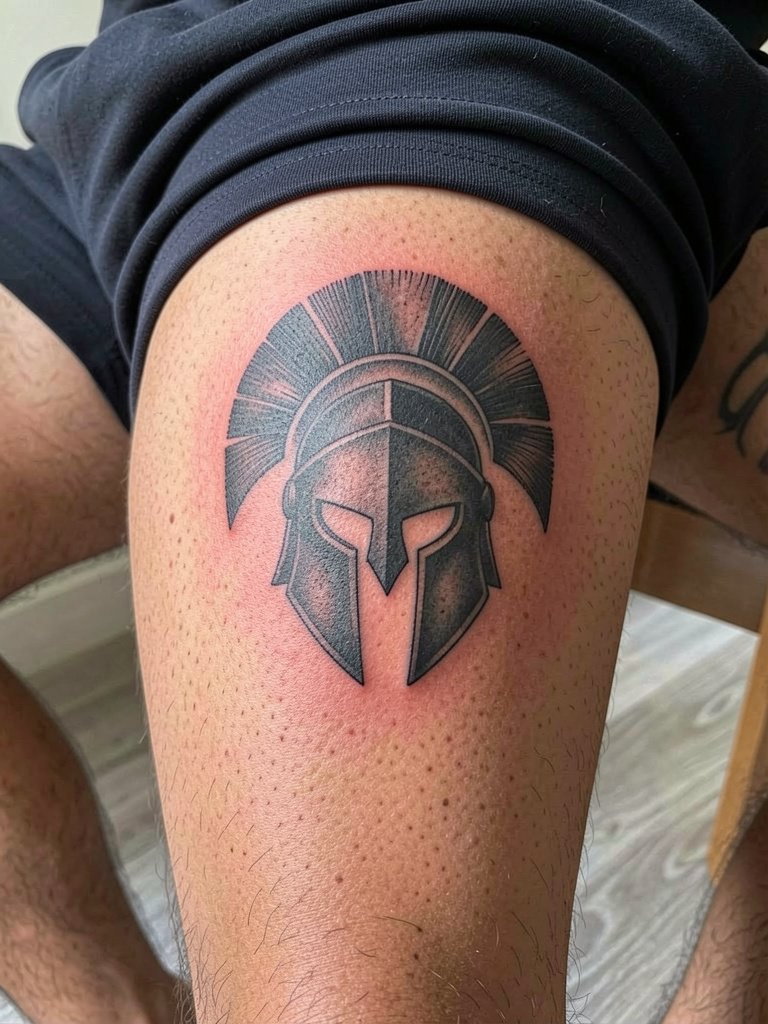
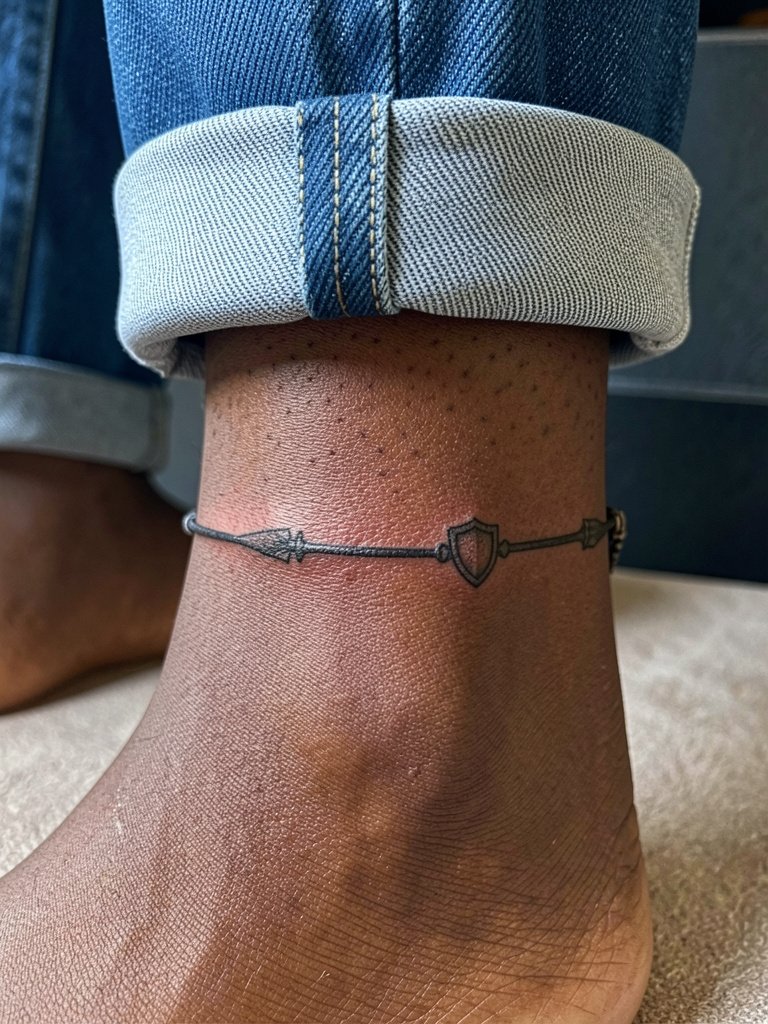
24. Spartan Spear and Shield Anklet
A small anklet of spear tips and a tiny shield around the ankle uses bold anchors to survive shoe friction. Ankles scuff more than most think so limit delicate elements. Sessions are short but usually require a protective film for the first days. For footwear, roll jeans or wear skirts that end above the ankle to show the piece; a light ankle boot that sits below the tattoo lets you display it in cooler seasons.
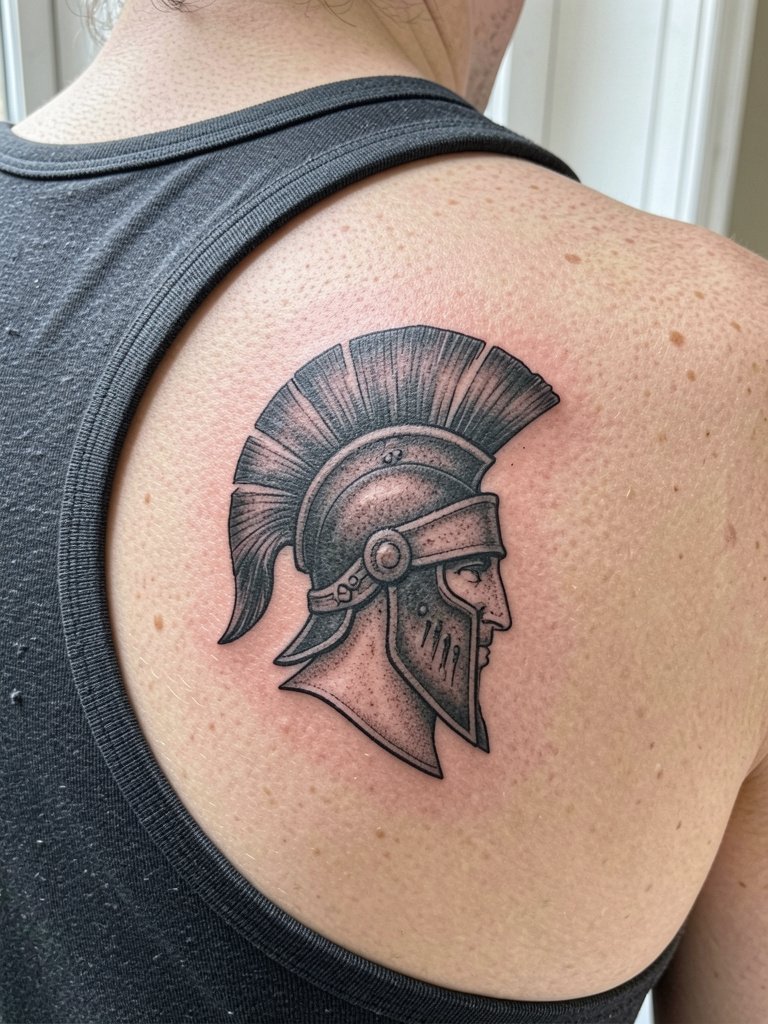
25. Spartan Crest Over Shoulder Blade
A crest that sits on the shoulder blade translates well into clothing that exposes the upper back. Shoulder blade motion can shift the composition so anchor the crest with thicker outlines and keep interior detail minimal. Plan for a single long session or two medium sessions. Avoid tiny dots along the edge that can disappear with movement. For show-off outfits, racer-back or backless tops pair best with the placement.
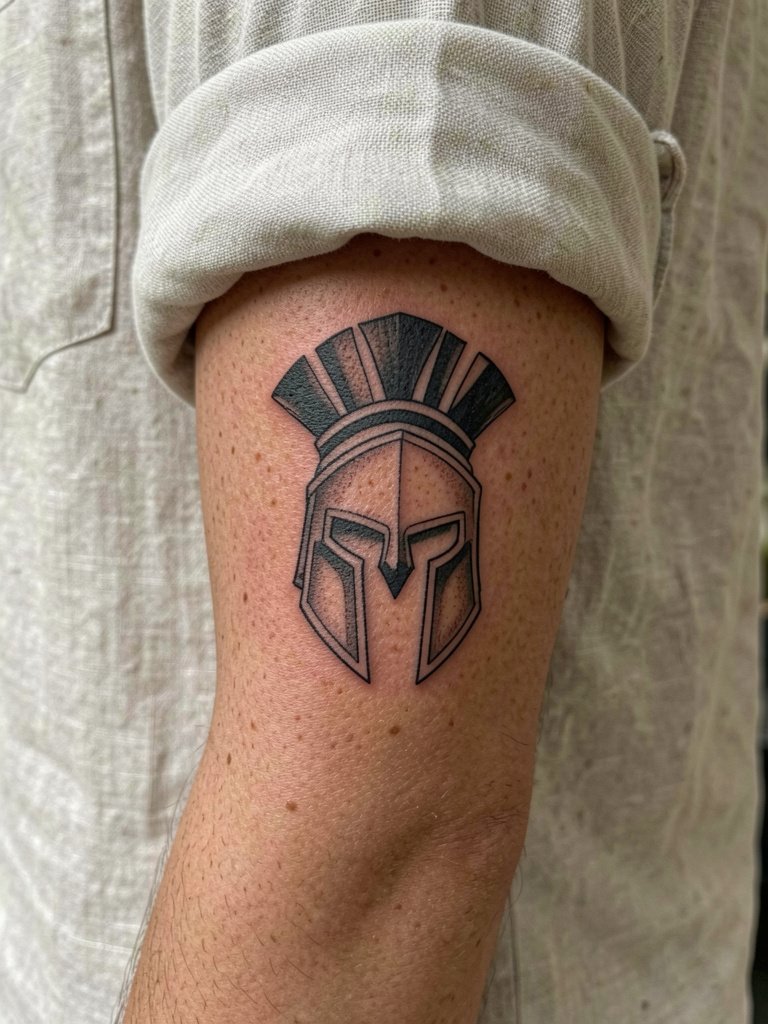
26. Spartan Fragmented Geometric Sleeve on Lower Arm
A geometric fragmented helmet wraps the lower arm with strong black triangles and negative bands to prevent detail loss. The lower arm tolerates saturation well but is exposed to sun and friction. The error is stacking too many micro-geometric elements that merge into a gray tone. Favor bold planes and clear transitions. For wardrobe, cuffed shirts or short sleeves expose the lower arm; try a rolled-cuff linen shirt that keeps the forearm visible and complements the sharp geometry.
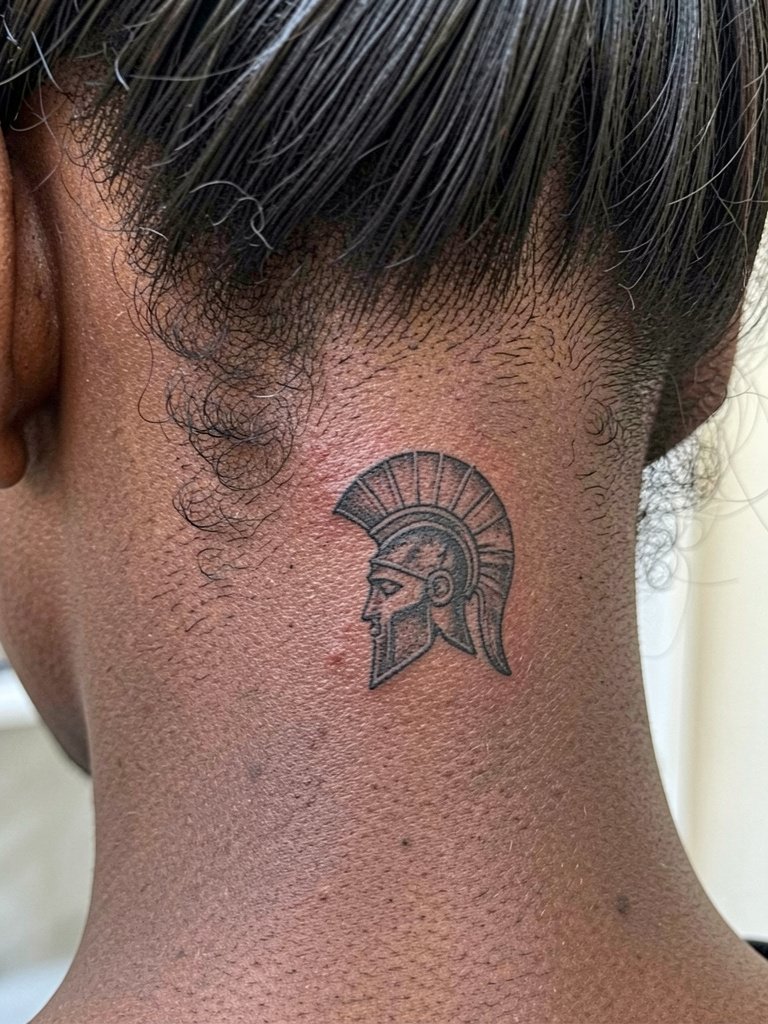
27. Spartan Crest Neck Nape Accent
A small crest placed at the nape anchors necklines and looks intentional behind short hair. Neck work needs precise placement and a portfolio of healed neck pieces from the artist. The common mistake is choosing micro-script or thin ornaments that blur with hair movement and sweat. Keep lines slightly heavier and ask for a touch-up plan at the one-year mark. For showing it off, choose shirts with a low nape or wear your hair up in a casual style.
Frequently Asked Questions
Q: Will a Spartan helmet tattoo still look good after five years?
A: It depends on size, line weight, and placement. Bold blackwork helmets and shields usually retain their silhouette longer than ultra-fine single-needle portraits, especially on high-motion areas. If longevity is the goal, request stronger anchors and plan a touch-up around year one or two to refresh saturation.
Q: How do I find healed examples and portfolios without naming artists directly?
A: Search platform tags and keywords, filter by location, and compare healed shots in different skin tones. Try searching hashtags like #SpartanTattoo and #HopliteInk, use city filters on Instagram and TikTok, and browse portfolio sites for the keywords "healed blackwork" and "shield tattoo." Reddit threads and community photo threads often link to healed albums you can use for reference.
Q: Are there placements to avoid for detailed Spartan linework?
A: Yes. Fingers, palms, and very thin areas like the side ribs are prone to pigment loss and spreading with ultra-fine detail. If you want detail, choose the outer shoulder, thigh, or back and scale the intricacy to the skin's texture. Also plan for sun protection because UV exposure fades contrast over time.
Q: What should I wear to the appointment for chest, rib, or thigh work?
A: Choose clothing that gives the artist access without active disrobing. For ribs or sternum wear a fitted sports bra or bandeau that stays in place. For thigh work, bring modest athletic shorts. In cooler weather, a zip-front hoodie that is easy to remove and put back on keeps you comfortable during breaks.
Q: Is there cultural sensitivity I should consider with Spartan imagery?
A: Spartan imagery is historical Greek symbolism. Use it respectfully as a cultural or historical reference and avoid co-opting modern political or extremist symbols that sometimes borrow ancient iconography. If your design blends motifs from other cultures, research origins and avoid mixing sacred or tribal elements in ways that strip context.
Q: How often do Spartan tattoos need touch-ups?
A: Frequency varies by placement and lifestyle. High-friction areas like hands and fingers may need touch-ups every 6 to 18 months. Forearms and shoulders often go longer, commonly needing refreshers at 1 to 3 years. Treat touch-ups as normal maintenance, not a sign of failure, and plan them into your long-term care.
Q: Can I combine Spartan elements with other historical or mythic symbols?
A: Yes, but be deliberate about composition so the imagery does not compete. Pairing a Spartan helmet with a laurel wreath or geometric shields can work when you choose a single textural approach, such as all blackwork or a controlled stipple. Discuss scale and spacing in advance so each symbol holds its ground.