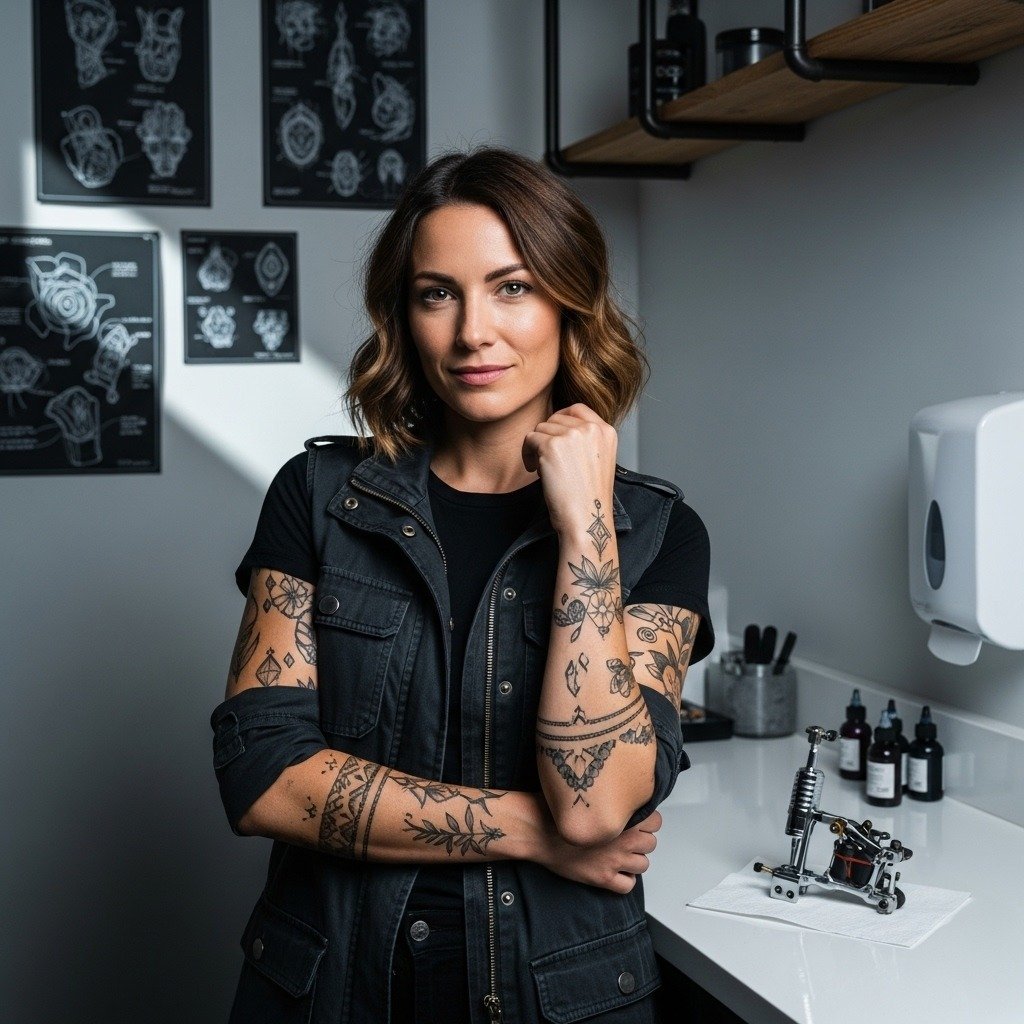
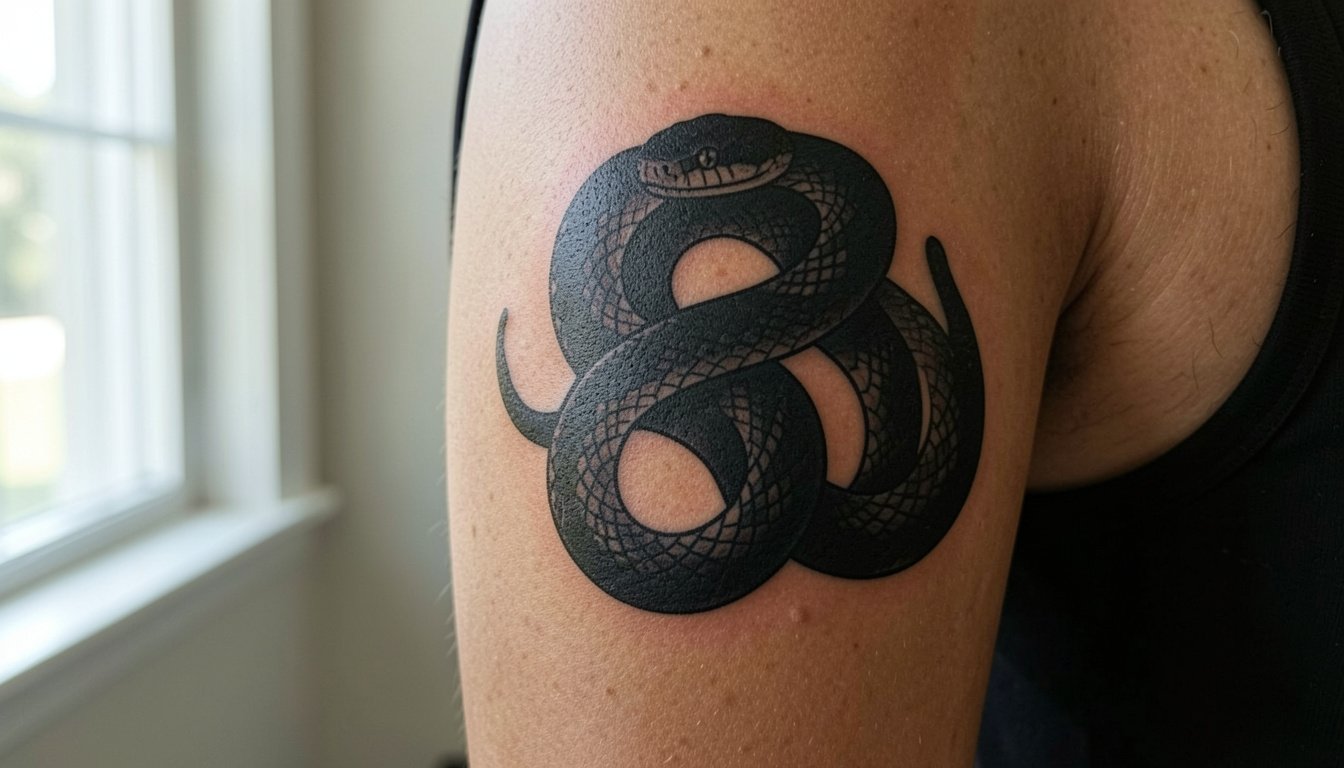
Small, coiled, or sprawling, snake tattoos ask a lot from linework and spacing. Too-fine detail on thin skin often softens into a gray blur after a couple of years, while designs that respect scale and negative space hold their clarity. I walk through 27 practical takes on serpent imagery, from single-needle forearm pieces to sleeves, with placement notes, aging expectations, and outfit pairings that actually show the work off.
1. Fine-Line Single-Needle Serpent on Inner Forearm
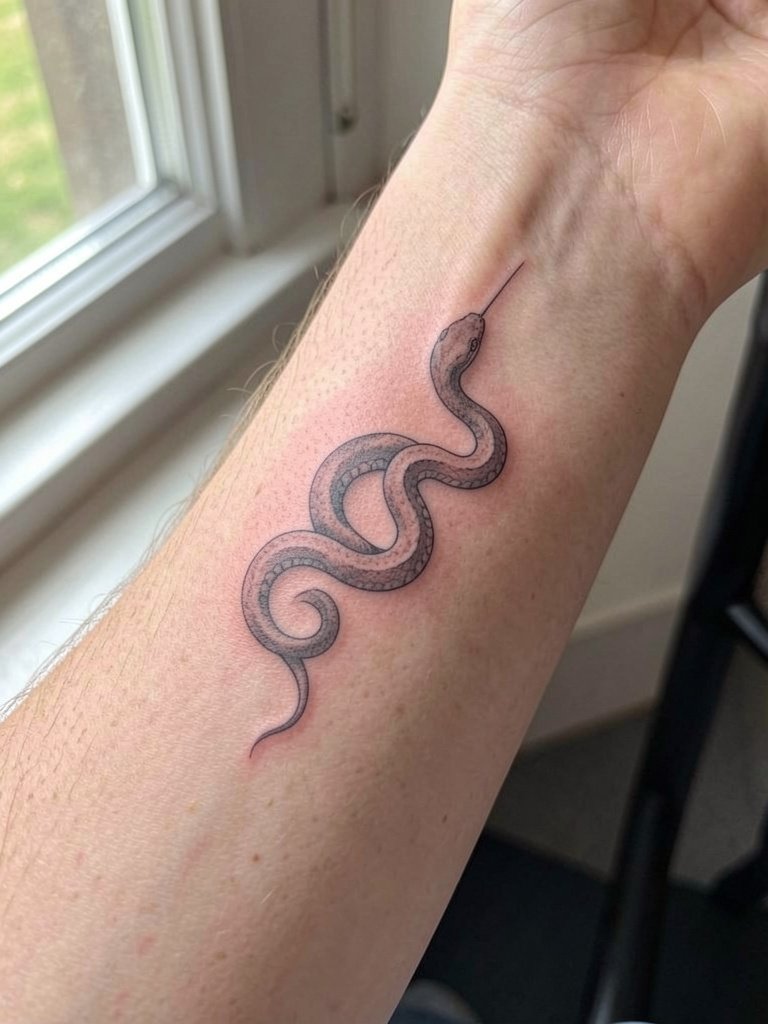
Fine single-needle snakes read elegant at first but the inner forearm eats the tiniest detail. For lasting clarity, bump up line weight slightly and allow breathing room between coils so stipple shading does not merge. Expect a one to two hour session, moderate pain, and a likely touch-up around year two for thin lines. Wear a lightweight linen shirt to show the forearm without rubbing the healing skin. A common mistake is asking for microscopic scales too close together, which blurs into gray at five years.
2. Blackwork Coiled Serpent Upper Arm Sleeve
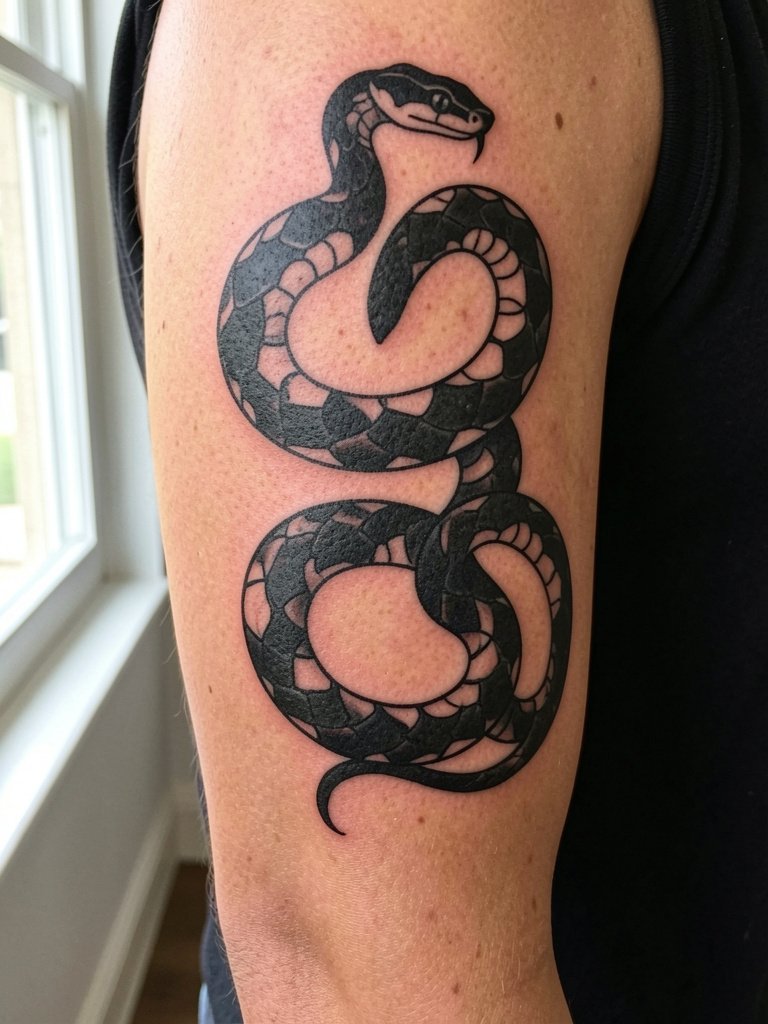
Bold blackwork tolerates wear and reads from a distance, making this a smart choice if you want longevity. Sessions run longer, often multiple passes to saturate the ink and blend solid blacks with subtle whip shading. Pain is moderate on the outer arm. For showing off the wrap, go with a sleeveless denim vest to keep the silhouette visible without constant sun exposure. Plan a touch-up at year three only if you want edge sharpening.
3. Neo-Traditional Snake and Dagger on Bicep
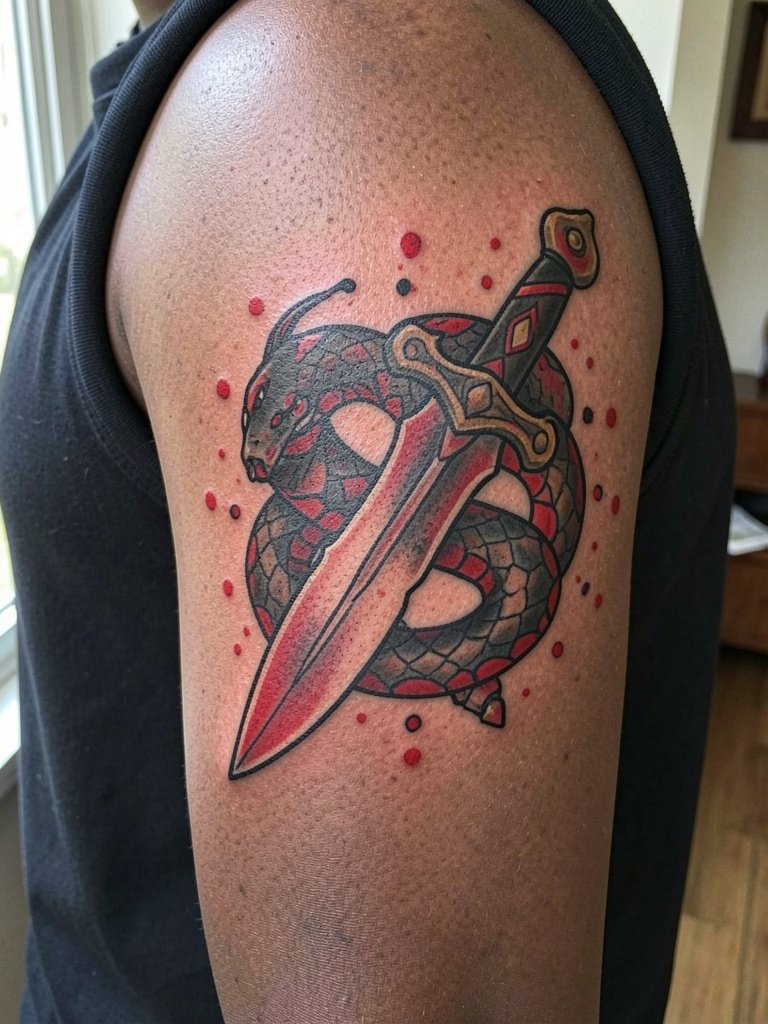
Neo-traditional gives you strong linework plus color saturation, which helps scales and details survive years of movement. Biceps take shading well and the session can run two to four hours depending on color layers. Ask for color placement that avoids sun-facing planes to minimize fading. For nights out when you want the bicep visible, a short-sleeve oxford shirt with sleeves rolled works well. Avoid loading too many tiny highlights that will soften with time.
4. Micro-Realism Snake Eye on Calf

Micro-realism reads intimate up close and asks for precise stipple shading to make scales pop. The calf is forgiving for detail but watch for long sessions if coverage grows. This placement feels like a mid-range pain, and the session will usually include a break to check how fine shading settles. A common mistake is requesting tiny white highlights that fade quickly. Opt for deeper contrast during the session so the piece still reads after fading.
5. Minimalist Wrapped Wrist Band Snake
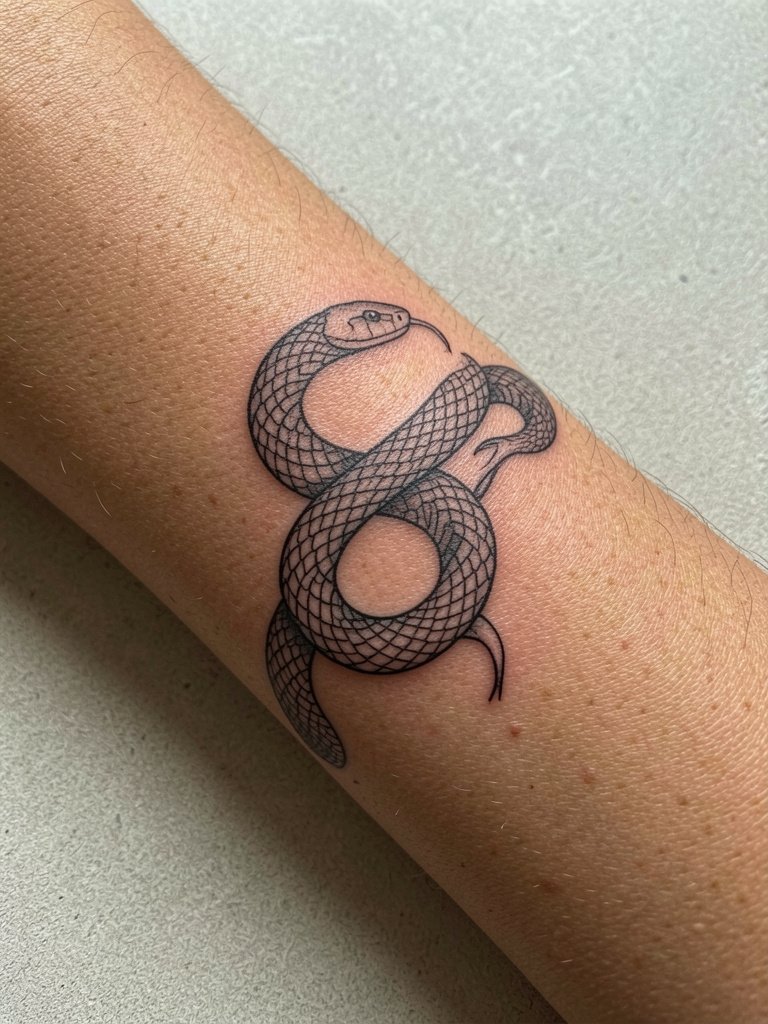
Wrist tattoos face constant washing and friction, so a minimalist band benefits from slightly bolder linework than a forearm single-needle. Expect a short session, sharp but quick pain, and a higher chance of a touch-up in year one. For showing the wrap, pair it with a slim leather bracelet that complements the band without rubbing during healing. Avoid asking for micro textures around the wrist where skin motion will blur them first.
6. Geometric Snake Interlaced with Mandala Back Piece

Combining geometry with dot work creates visual interest that scales well across a back piece. Sessions are long and often split across days to build stipple shading without overworking tissue. The shoulder blade skin takes holding linework well, but plan touch-ups around natural movement points. For wardrobe that frames the piece, a wide-back tank top keeps the area visible without abrasion. Avoid packing too many tiny geometric elements into a small back patch.
Before You Book
The forearm, wrist, and bicep examples above heal differently from ribs and hands, so a few session-day items smooth the appointment and the first week.
-
Stencil transfer paper kit. Lets you preview exact linework placement on curved forearms and around the wrist before the needle touches skin.
-
Hush numbing cream. Applied 45 minutes before can ease first-pass nerves for sensitive placements like the inner wrist without compromising linework.
-
Tattoo barrier film roll. Useful for covering small ankle or wrist pieces through the first shower without trapping moisture.
-
Fragrance-free gentle body wash. Cleanses healing ink without added fragrances that irritate thin linework.
-
Aquaphor healing ointment. Thin application in the first few days helps prevent scabbing that obscures fine detail.
7. Small Ankle Snake with Tail Detail
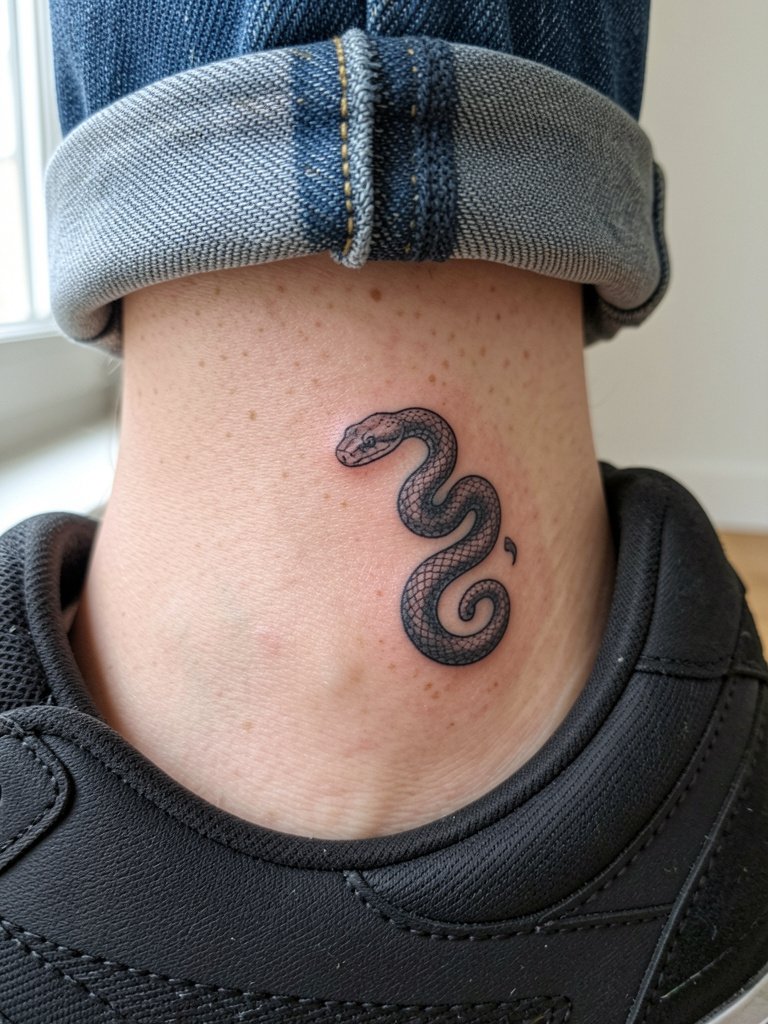
Ankle pieces face boot and sock friction, so silhouette clarity beats tiny scales here. Expect a short session and sharp local pain when the artist moves over bony areas. Keep lines slightly thicker than you might want at day one to preserve detail after the first year of wear. For the session, wear low-profile shoes and jeans that roll up easily. A common error is centering ultra-fine filigree right on the ankle bone where blowout risk rises.
8. Neo-Japanese Snake on Shoulder Blade

Neo-Japanese scales and flowing anatomy read well across the shoulder blade, and the composition benefits from movement with the shoulder. Sessions are medium to long, and the area holds saturated blacks and color reliably. Ask for scale flow that follows muscle direction so the snake looks dynamic when you move. For outfits that lift the shape, a wide-back tank top frames the work without sun damage. Avoid asking for tiny internal detail that will soften across the scapula over time.
9. Tiny Finger Snake Line Work
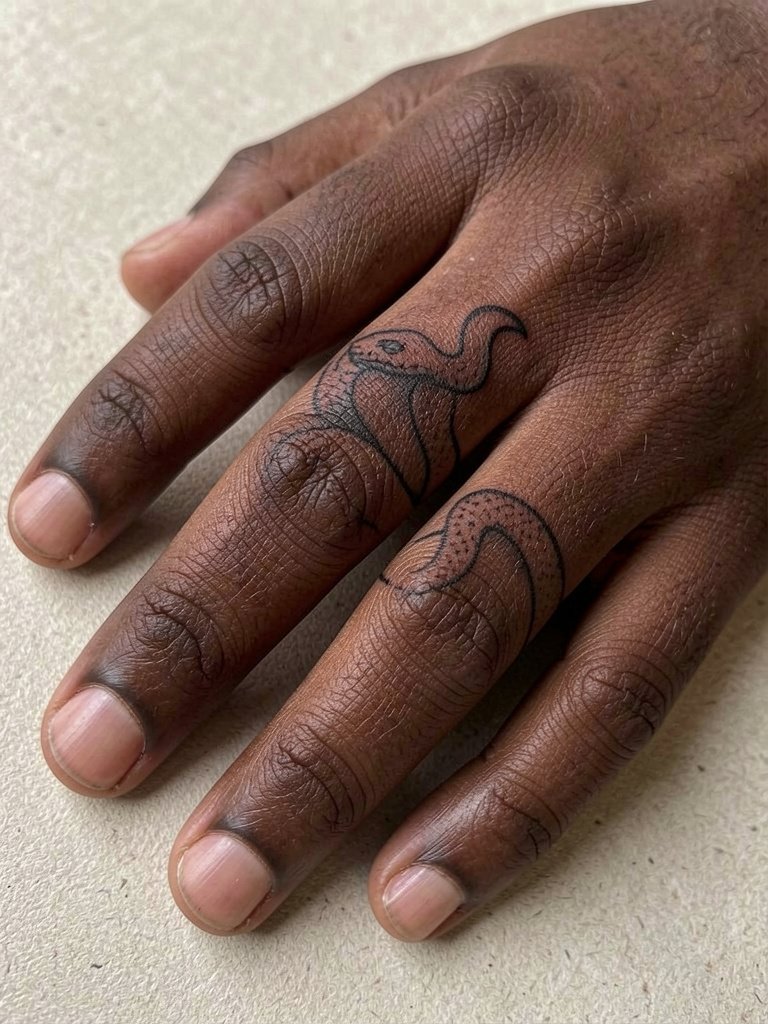
Hand and finger tattoos are visible but notoriously high maintenance because of constant washing and friction. One group of artists warns that rings and daily hand use cause early fading and blowout. The other group says heavier saturation and planned touch-ups make hand pieces viable and consistently crisp. If you choose this spot, expect multiple small sessions and touch-ups as part of the plan. Professional consideration note, pick an artist experienced with hands, because technique matters more here than on calmer skin.
10. Scaled Realism Thigh Piece

The thigh provides a canvas for realism and dense texture without much motion disruption. Sessions can be long and will need breaks to keep saturation even. Expect moderate pain and a well-healed look that lasts years with proper sun protection. For showing the piece, choose a mid-thigh cut short that keeps the tattoo visible while avoiding waistband friction during healing. Avoid packing micro details into very small thigh patches that will lose contrast over time.
11. Ouroboros Curve on the Sternum
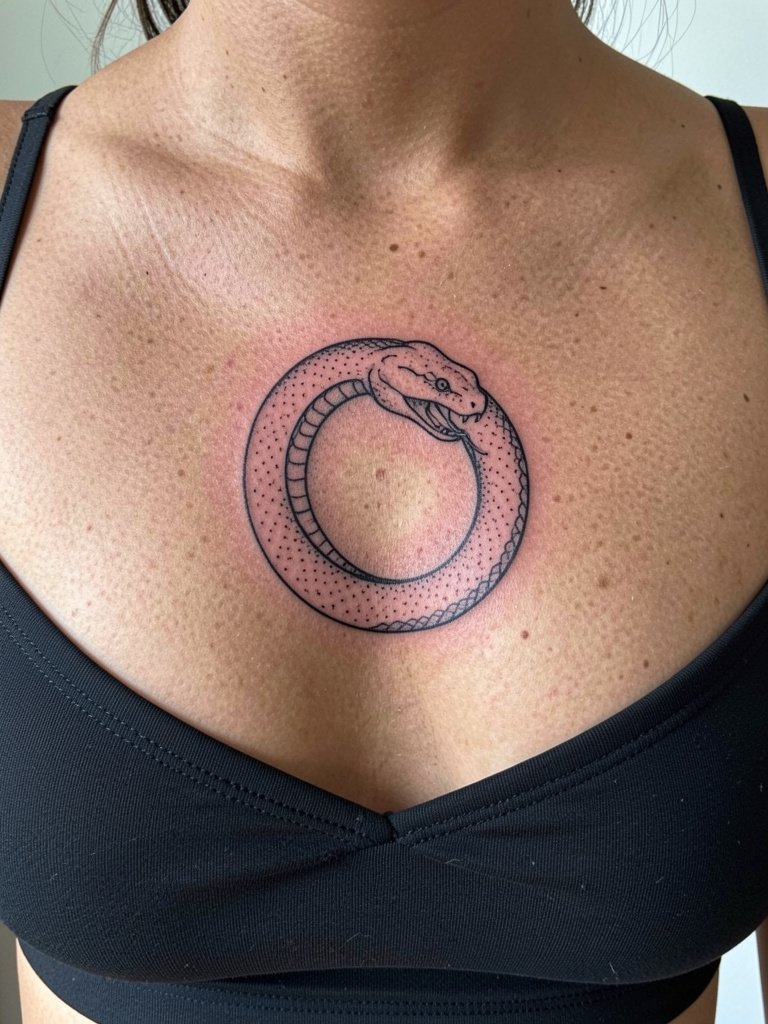
Sternum pieces sit on skin that stretches with breathing and movement, which affects fine lines. One camp argues that single-needle work here blurs because the skin flexes and the needle never sits consistently. The opposing camp says cautious depth and slightly wider spacing make chest scripts and sigils settle well, and they point to healed photos as evidence. Expect a multi-hour session with higher sensitivity. Specialized artist experience helps greatly on central chest placements where symmetry and depth control matter.
12. Dot Work Serpent Along Collarbone
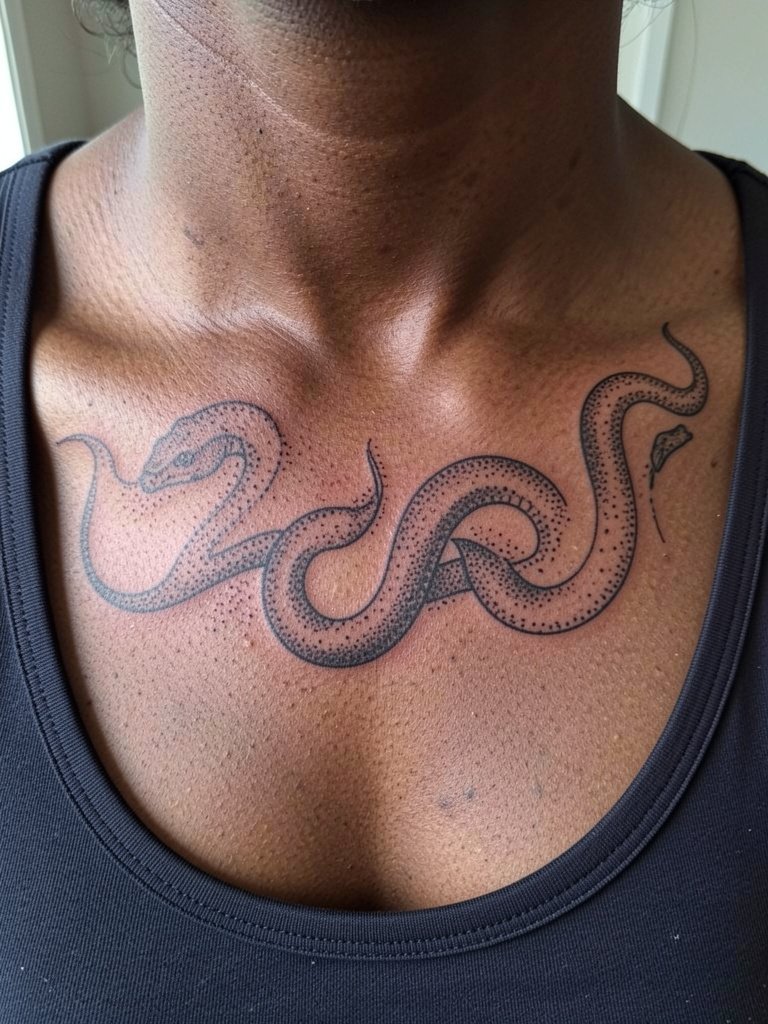
Collarbone tattoos read well when contour follows the bone line, but thin dots need room to avoid merging. Dot work requires patience and careful depth control. Sessions are shorter if the design is linear, but expect a touch-up to refresh stippling after one to two years. For showcasing, a scoop-neck tee reveals the collarbone without constant sun exposure. A frequent error is squeezing dense stipple near the bone where motion will soften the texture.
13. Arm Band Tribal Snake
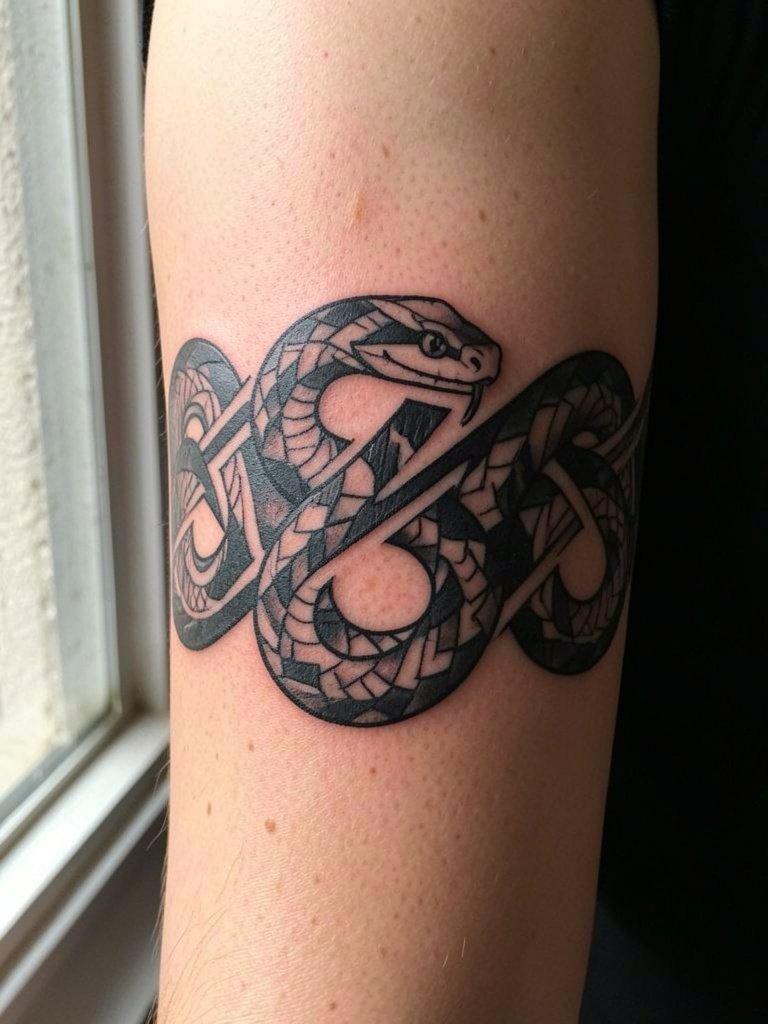
A tribal arm band uses thick linework that stands up well over time, especially on the bicep. Sessions are quick and pain is moderate. Plan the band with enough gap for muscle expansion so the pattern does not distort when you flex. Avoid ultra-thin interior detailing which becomes noisy after healing. Ask for a mock-up wrapped around an arm model so you see how negative space behaves on rounded surfaces.
14. Watercolor Serpent with Floral Accents Outer Forearm
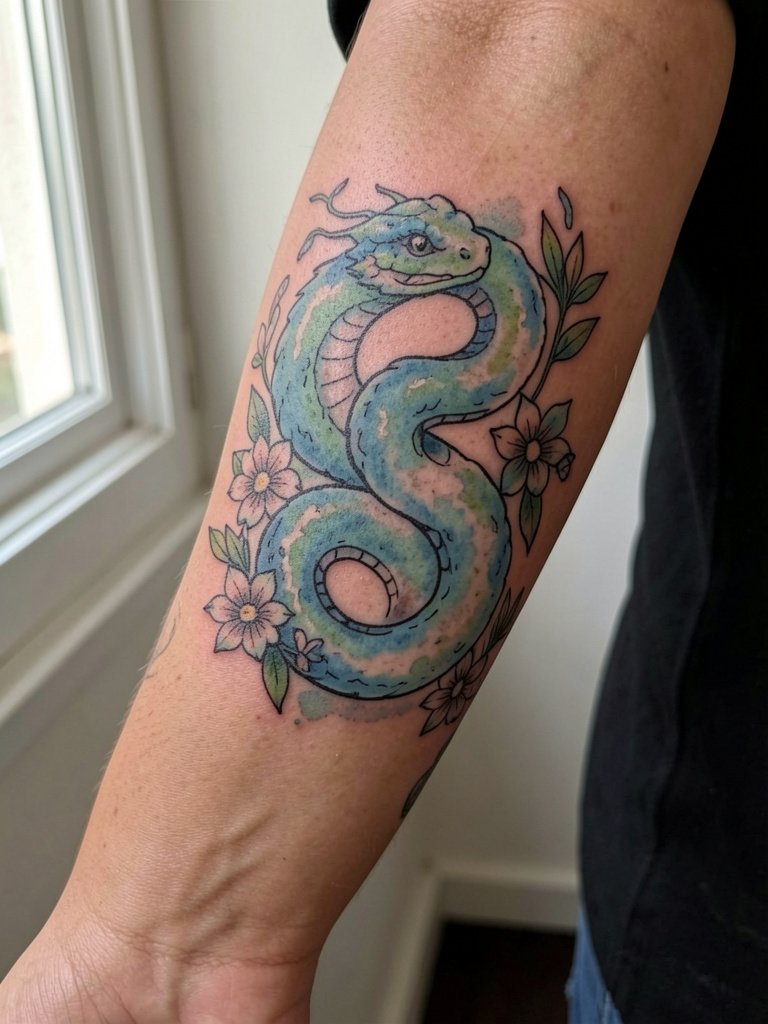
Watercolor effects can be beautiful when combined with strong anchor lines so the wash does not become a faded bruise later. Outer forearm tolerates color and shows it well with short sleeves. Expect a session that alternates linework and color layering to build saturation without overworking. For evenings out, wear a rolled-sleeve linen shirt to let the forearm peek through. A common mistake is relying on sparse outlines and expecting the color to maintain structure as it fades.
15. Minimal Black Ribbon Snake Behind the Ear
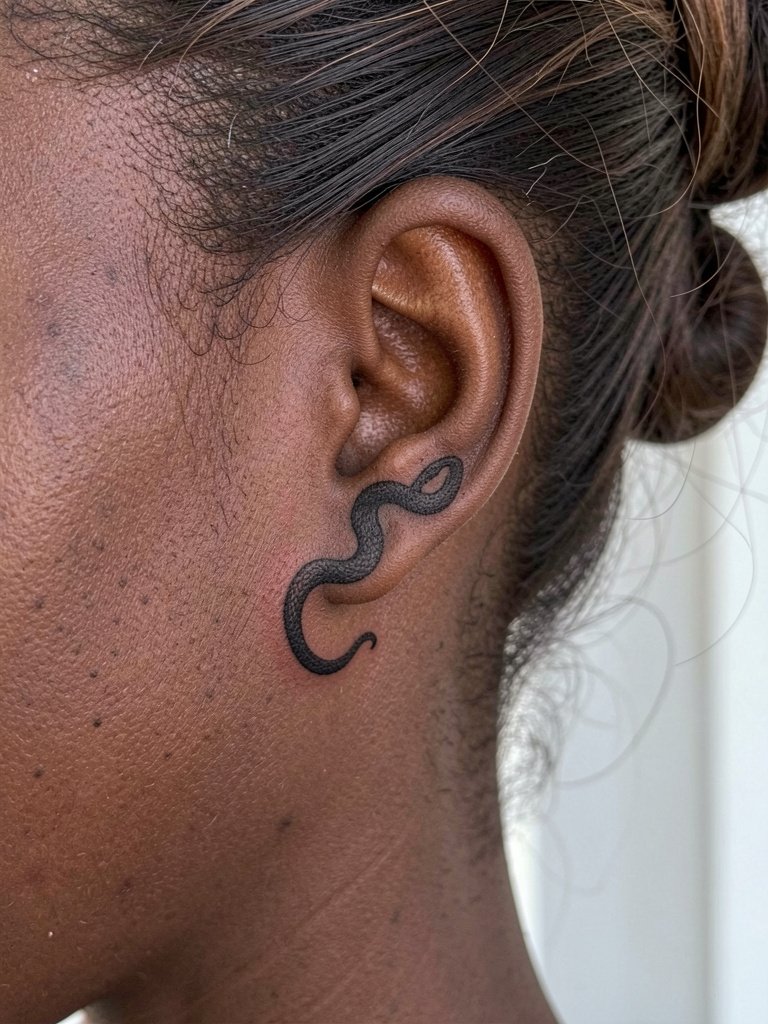
Behind-the-ear placements are discreet and heal quickly, but they need an artist comfortable working on small curved surfaces. The area is sensitive and the linework must account for hair growth and shampooing frequency. Session time is short, though the surface takes less saturation. Professional consideration note, confirm the artist has healed examples behind the ear. Avoid ultra-fine flourishes that disappear under a hairline within a year.
16. Red-and-Black Contrast Snake Across the Chest

Color contrast gives a chest piece presence that can age more gracefully than faint washes. Some artists caution that red pigments can fade faster and sometimes react differently on varying skin tones. Another group maintains that choosing high-quality pigments and layering color smartly keeps saturation even for years. Sessions are longer due to color packing. For wardrobe that frames the sweep, try a wide V-neck shirt to reveal composition without sun overexposure.
17. Tiny Retro Machine Tattoo on Upper Arm
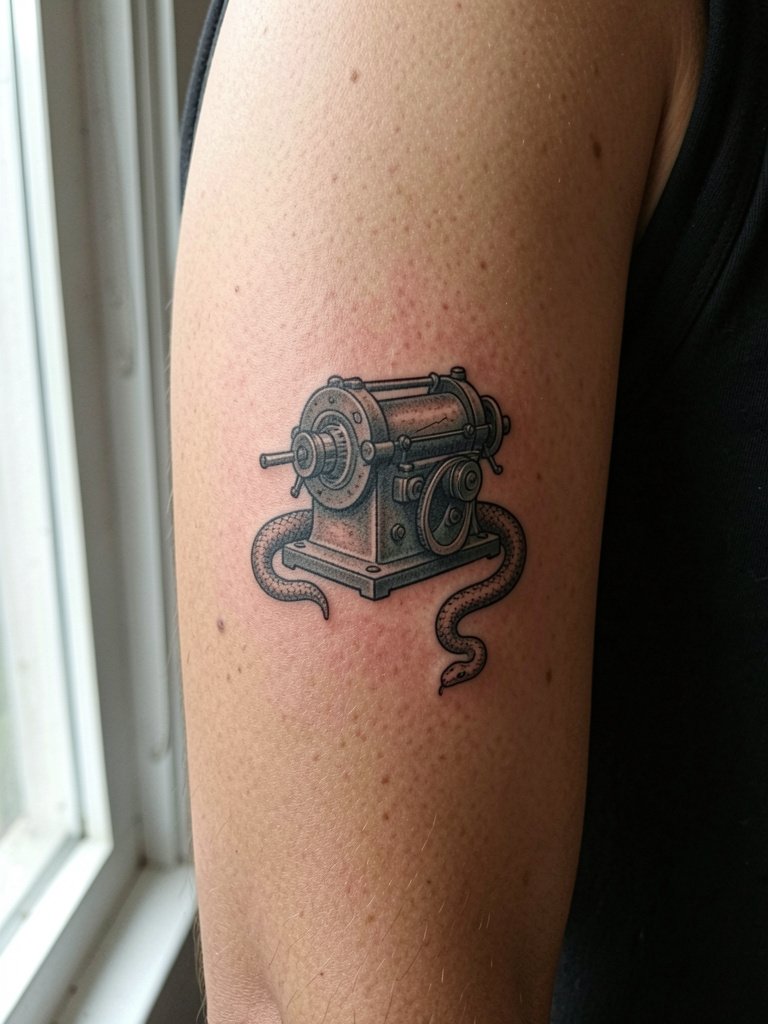
Small retro motifs pair well with snakes as a secondary element that adds narrative. The upper arm holds tiny pieces well as long as the artist maintains crisp linework. Session length is short and pain is mild. If you want a vintage feel that stays readable, focus on contrast rather than micro-detail. Avoid stacking too many small components into one compact spot without tested spacing.
18. Intertwined Serpents Full Sleeve Linework

Sleeves demand planning because line rhythm and negative space make or break long-term legibility. Expect many hours across several sessions to build consistent linework and saturation. Discuss where you want heavier lines to age into focal points as the skin moves. For showing the sleeve without sun damage, a short-sleeve cotton shirt keeps it visible while avoiding UV exposure. Avoid overloading every inch with identical texture that will read as noise from a distance.
19. Serpent Down the Spine Lower Back
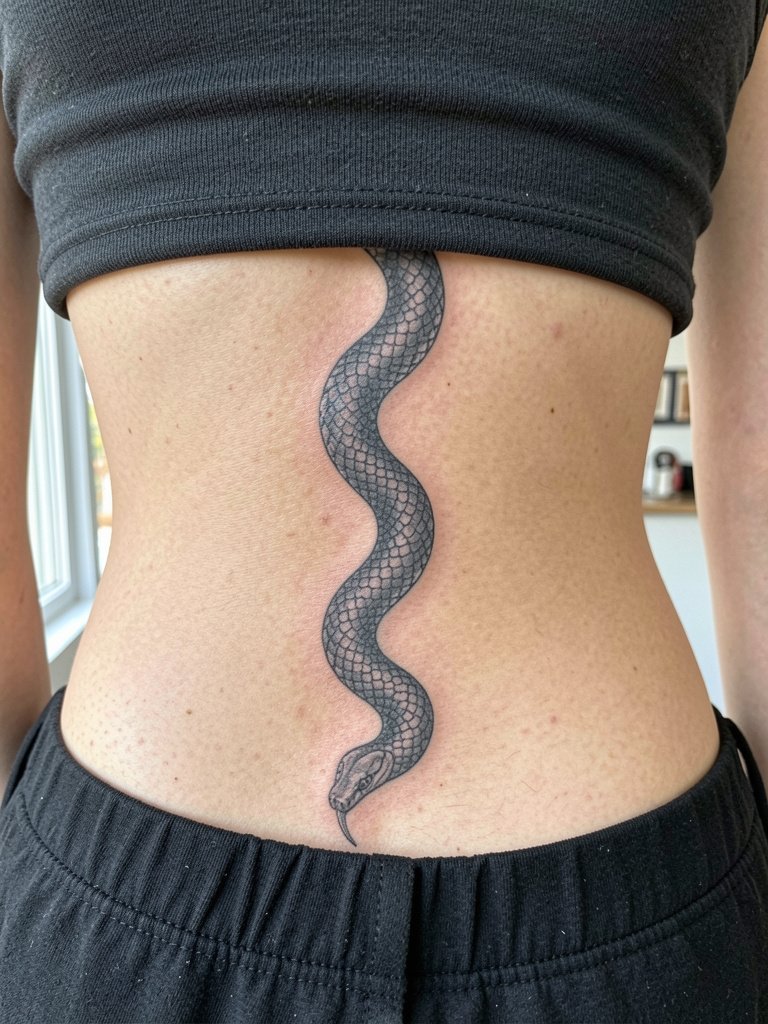
Spine pieces look striking when centered and balanced, though the lower back sees waistband friction during healing. Sessions vary from medium to long, and sitting or prone positioning matters for comfort. Expect moderate pain and scheduling that accommodates healing between passes. For sessions, wear low-rise jeans that are fully zipped and buttoned in their normal position so the artist can access the lumbar area. Avoid asking for extremely fine internal scale work near the waistband where abrasion blurs detail.
20. Geometric Serpent over the Knee Cap
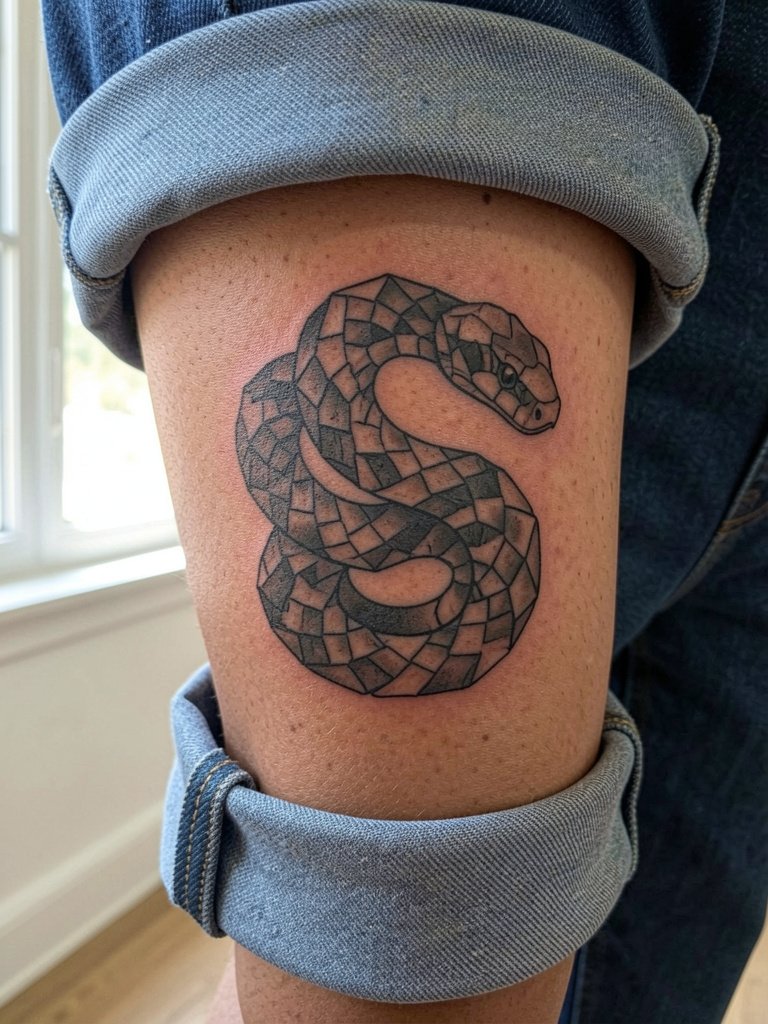
Knee tattoos are high-motion areas and require bold shapes to remain coherent. The kneecap moves and stretches, so geometric blocks work better than tiny textures. Sessions are uncomfortable when the needle crosses thin patches, and you should expect multiple short passes instead of one long sitting. For recovery, avoid tight knee-high boots in the first two weeks. A common mistake is asking for micro detail across the patella where flexion distorts the ink.
21. Stylized Egyptian Cobra on Calf

A cobra with stylized hood lines reads well down the calf where movement is minimal relative to joints. Sessions are moderate, and the area holds saturated blacks and color. For daytime showing, pair with casual shorts that stop above the calf. Consider scale direction so the hood reads correctly from the room rather than only on close inspection. Respect cultural origin by acknowledging traditional motifs and adapting them respectfully.
22. Chain-Link Snake Encircling Ankle

Ankles demand simpler silhouettes to resist early wear from shoes and socks. Expect a quick but precise session. A frequent error is asking for extremely fine interlocking links that fray into gray under constant abrasion. For showing the band without irritating the area, use low-cut shoes and rolled jeans. Keep spacing between links slightly wider to retain definition after a year.
23. Colored Realism Snake Head on Bicep
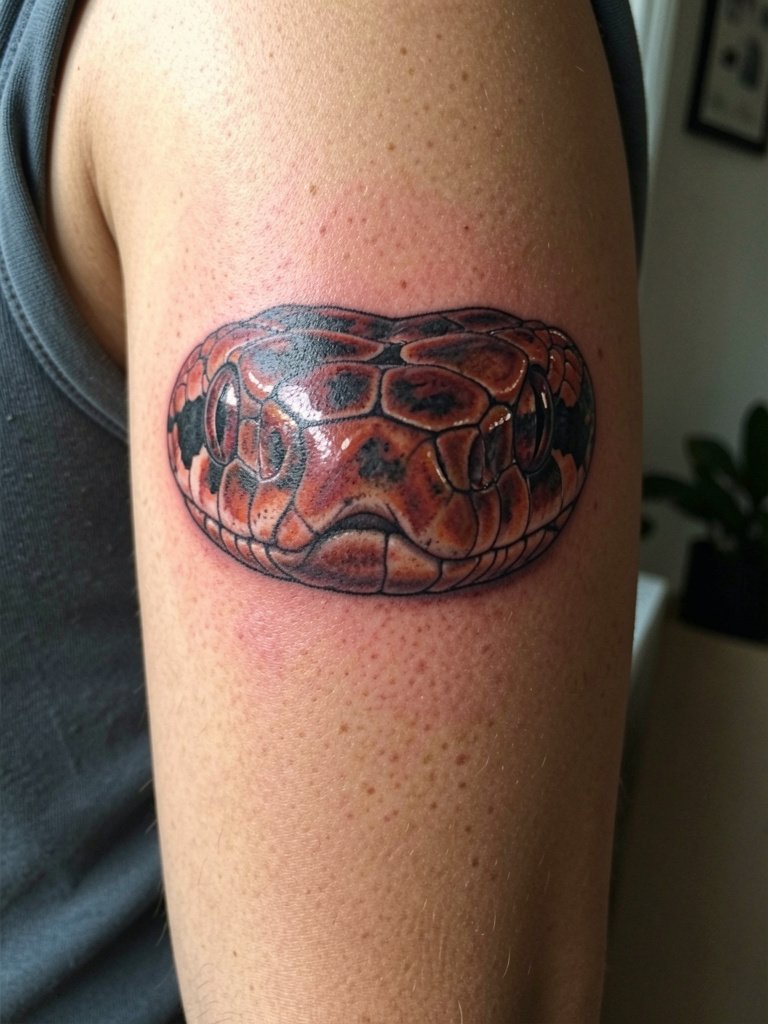
Color realism puts emphasis on saturation and contrast so the eye remains legible over time. Sessions are longer to build layers and check color balance on your skin tone. For showing the portrait, consider a rolled-sleeve tee that frames the bicep. A common mistake is skimping on midtones which makes the head read flat after pigment migration.
24. Minimal Script with Tiny Snake on Ribcage

Ribcage pieces are polarizing in technique because the skin moves and flexes with breath. One camp says fine-line rib tattoos blur within two years because the skin stretches and needle depth varies with each pass. The other camp argues that slightly increased line weight and conservative spacing let fine scripts settle and remain legible, and they will show healed photos spanning multiple years. Sessions on the ribs are usually intense and may need numbing strategies plus shorter passes. Expect a touch-up timeline planned in advance.
25. Band of Scales Around the Wrist

A scale band reads well when outer edges are bold and inner scale detail is simplified. Session time is short and pain localized. For displaying the wrist band without rubbing during healing, pair it with a thin cuff watch that sits above the ink line. Avoid asking for micro beveling inside each scale that will soften first.
26. Traditional Sailor Snake on Outer Calf
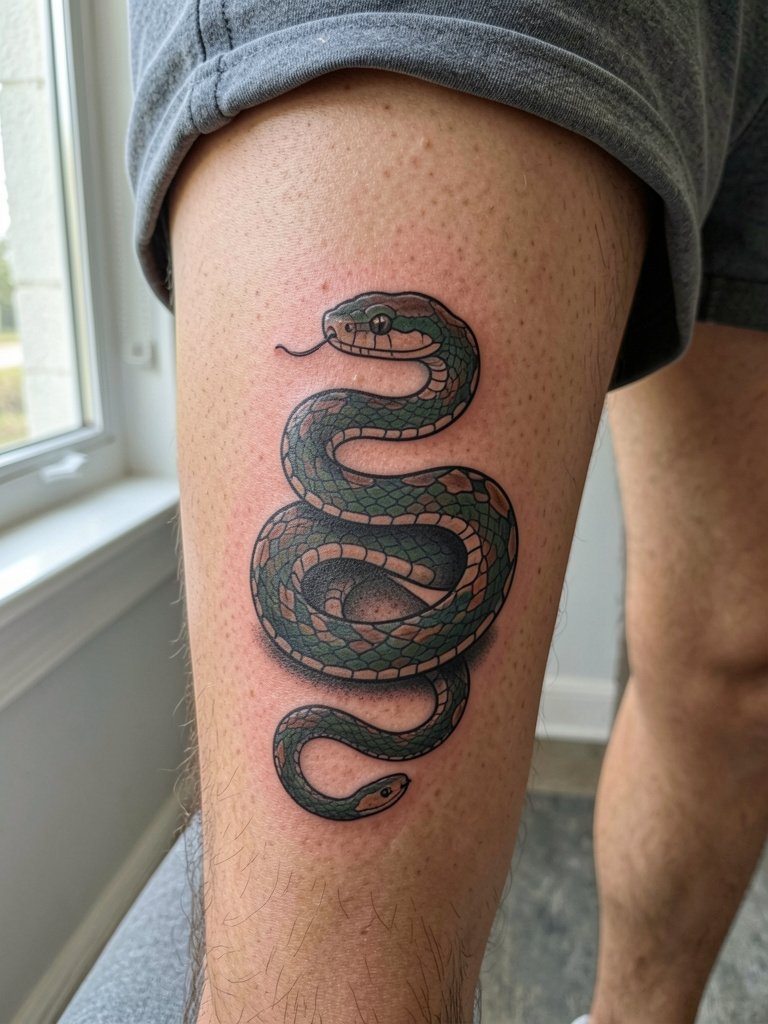
Old-school sailor motifs favor thick outlines and flat color that age predictably. Calf placements keep traditional fills looking solid for many years with minimal touch-ups. Sessions are comfortable and straightforward. A typical mistake is over-complicating the classic with micro shading that blends into the solid fills. For footwear that reveals the work, choose shorts and low socks that avoid rubbing the healing ink.
27. Vertical Minimal Neck Snake from Behind Ear to Nape
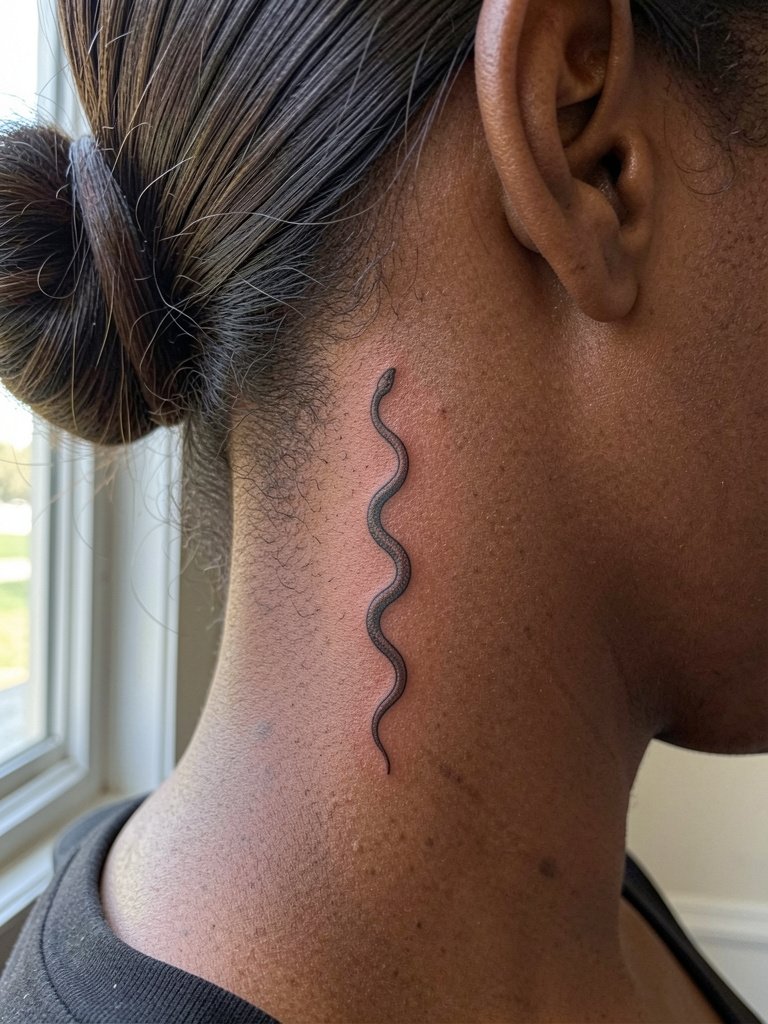
Neck and nape placements read well with vertical flow that follows hairlines. Sensitivity is higher, and artist experience on the nape is crucial. Sessions are usually concise, but healing requires care with shampoos and collars. For styling, an updo or short haircut shows the line when you want it visible, so try a stylish hair clip for events. Avoid micro-detail near the hairline that hides under regrowth.
Frequently Asked Questions
Q: How do I choose between fine line and bold blackwork for a snake design?
A: Consider where the tattoo will sit and how often it will rub against clothing. Fine line shines on calmer skin like the inner forearm if spacing is increased, while bold blackwork resists blowout better in high-friction zones like the ankle and hand.
Q: Will a chest or ribcage snake require more touch-ups than an arm piece?
A: Rib and chest placements often require earlier touch-ups because skin moves with breathing and chest expansion. Plan for at least one scheduled touch-up and discuss line weight adjustments that balance initial aesthetics with long-term legibility.
Q: Where can I find healed examples and portfolios without naming specific artists?
A: Search platform tags that combine style and placement phrases, for example #snakeblackwork, #ribcagesnakes, or #necktattoohealed with your city filter. Also browse tattoo portfolio sites and community threads for healed galleries across different skin tones.
Q: What should I wear to an appointment for a shoulder or back snake piece?
A: Wear loose or cropped tops that let the artist access the area without disrobing. A wide-back tank top is a reliable option because it exposes the shoulder blade and upper back while staying in a normal worn position.
Q: Are colored snake tattoos harder to maintain on darker skin tones?
A: Color visibility depends on pigment choice and saturation rather than skin tone alone. Some pigments show differently, so ask for color mock-ups on healed photos of similar skin tones and allow for intentional contrast choices rather than expecting exact palette matches.