

A friend spent six months scrolling through phoenix galleries before she realized the real problem was not the art. It was knowing which small styles actually hold up, how much a tiny bird will hurt on different spots, and where to find an artist who does small, detailed birds well. I talked to artists at five shops across Brooklyn and saw the healed pieces that prove which choices age best. Start here for 15 practical small phoenix tattoos that work for beginners.
1. Fine line phoenix outline on the inner wrist

Someone I know first saw this on a coworker and booked right away. The inner wrist is low on flesh and rates around a 4 out of 10 for pain. Ask for slightly thicker primary contour and more breathing room between lines so the design does not blur into a smudge after a year. A common mistake is making the whole bird too small with hairline details. Expect a 30 to 45 minute session for a clean outline and plan a touch-up around year one if line edges soften. This version reads delicate without sacrificing future clarity.
2. Watercolor phoenix feathers on the ankle
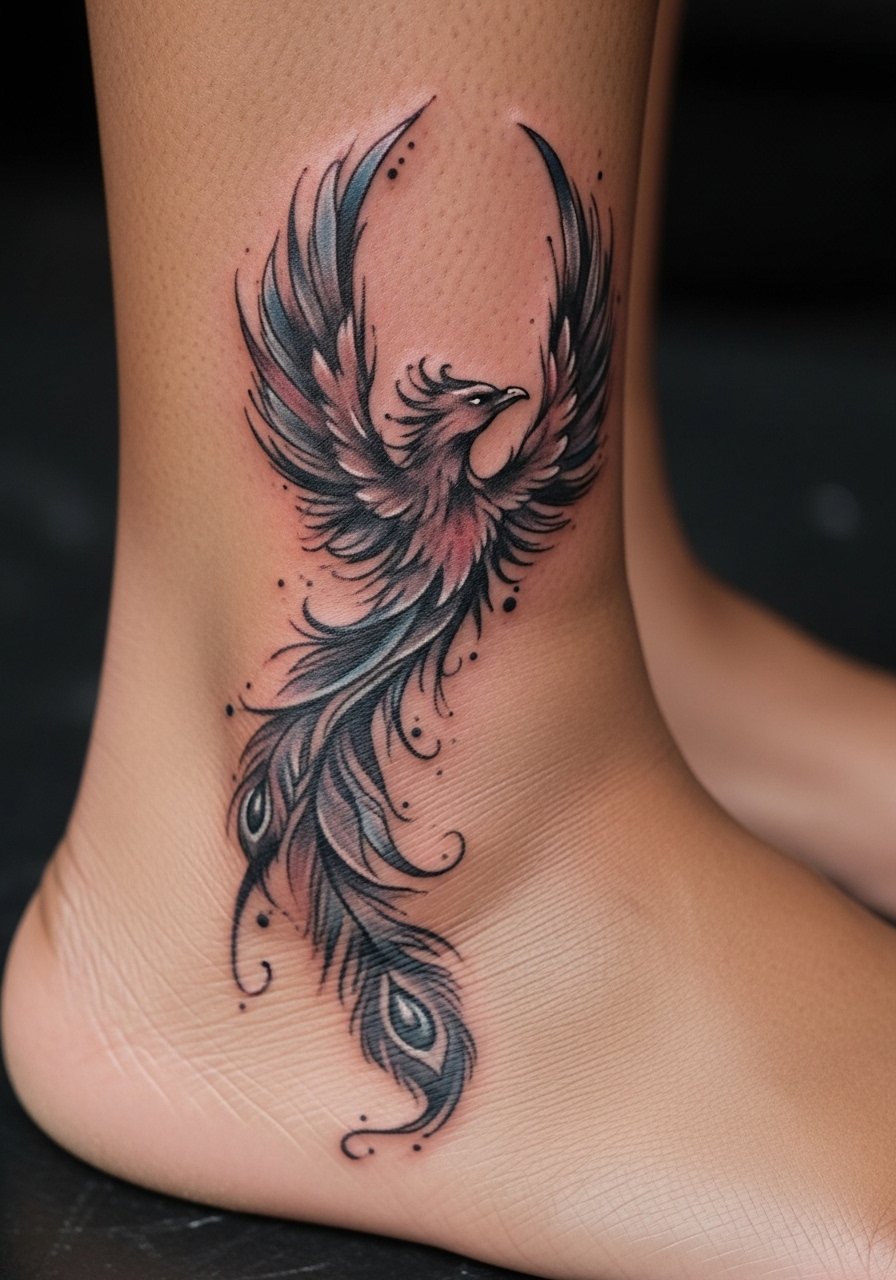
The watercolor camp loves the painterly look but artists split on longevity. One camp says vibrant washes keep a soft, alive look for years, while the other camp warns small washes can fade into blotches. If you prefer color, tell your artist to pair loose washes with shadowing in muted tones so the design retains form as colors soften. Ankle sessions feel like intermittent pinching and take 45 to 90 minutes depending on color layers. Plan for a touch-up at year two if you want the palette to stay fresh.
3. Black and gray phoenix rising on the forearm
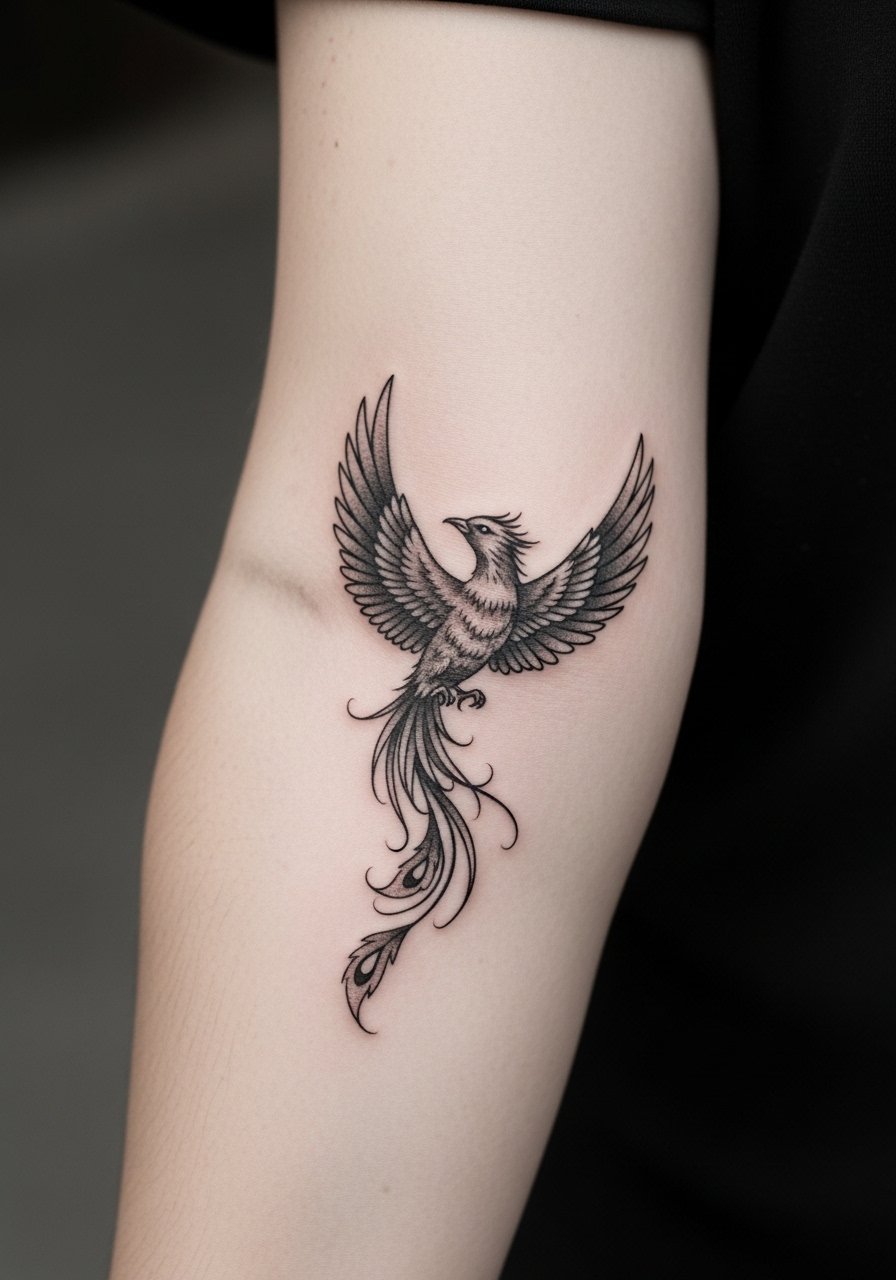
There is something about subtle gradients and stipple shading that reads like a small work of art on the forearm. Pain is moderate at five out of ten because the forearm holds flesh well. Ask for smooth stipple shading instead of heavy gradients when you want detail without a heavy block of ink. This style tends to age evenly and stays readable at three years if saturation is balanced. Sessions usually run 60 to 90 minutes. A common mistake is asking for too much tiny detail in a very small canvas.
4. Heavy blackwork phoenix on the shoulder
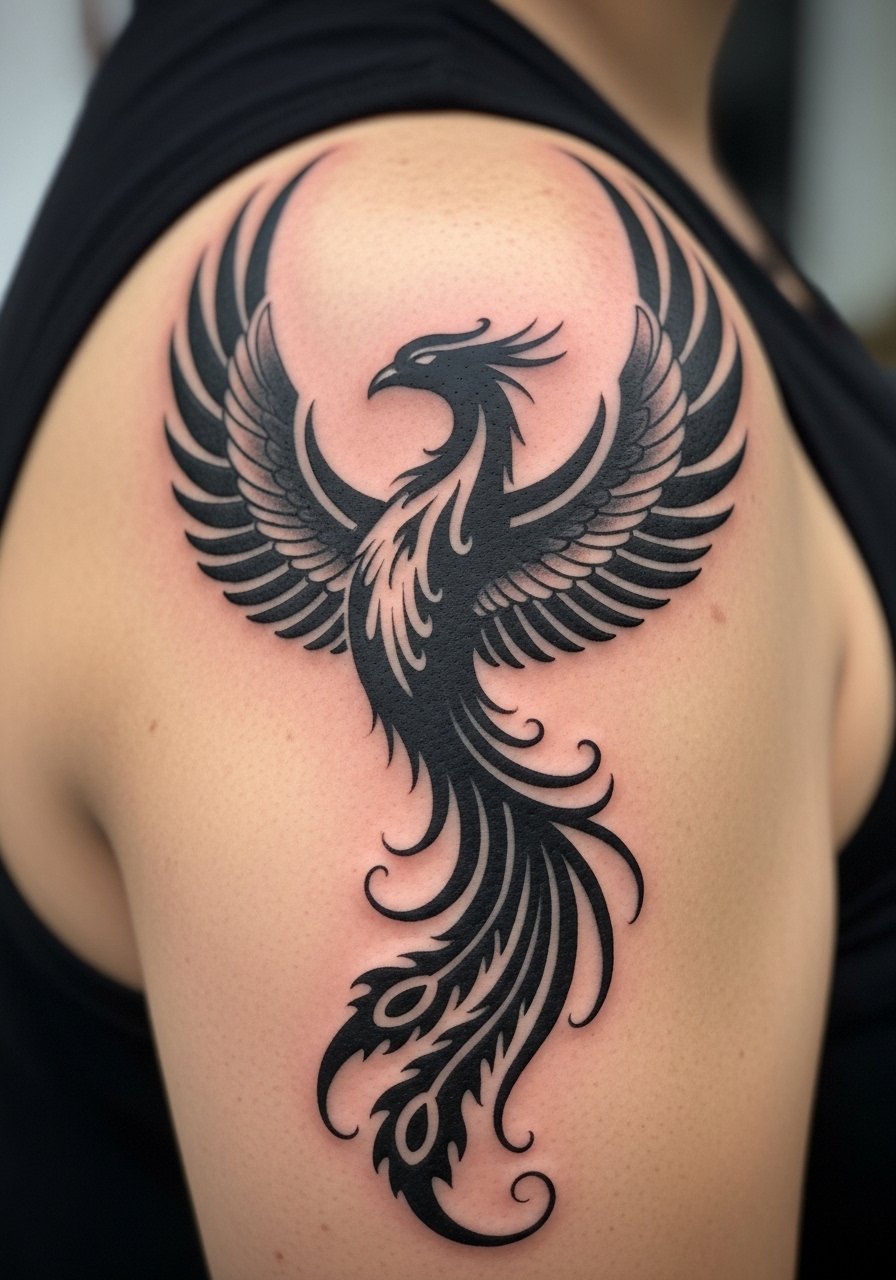
Bold black fills are making a comeback because they resist fading and read well on darker tones. Shoulder tattoos are comfortable to sit for and rate around a 3 out of 10 for pain. Tell the artist you want strong negative-space feathers so the bird reads even if the fill loses a touch of saturation. A single session of 60 to 90 minutes will do most small blackwork pieces. People sometimes pick too many tiny flourishes inside the black, which muddies contrast as it heals.
5. Traditional phoenix tail on the upper back
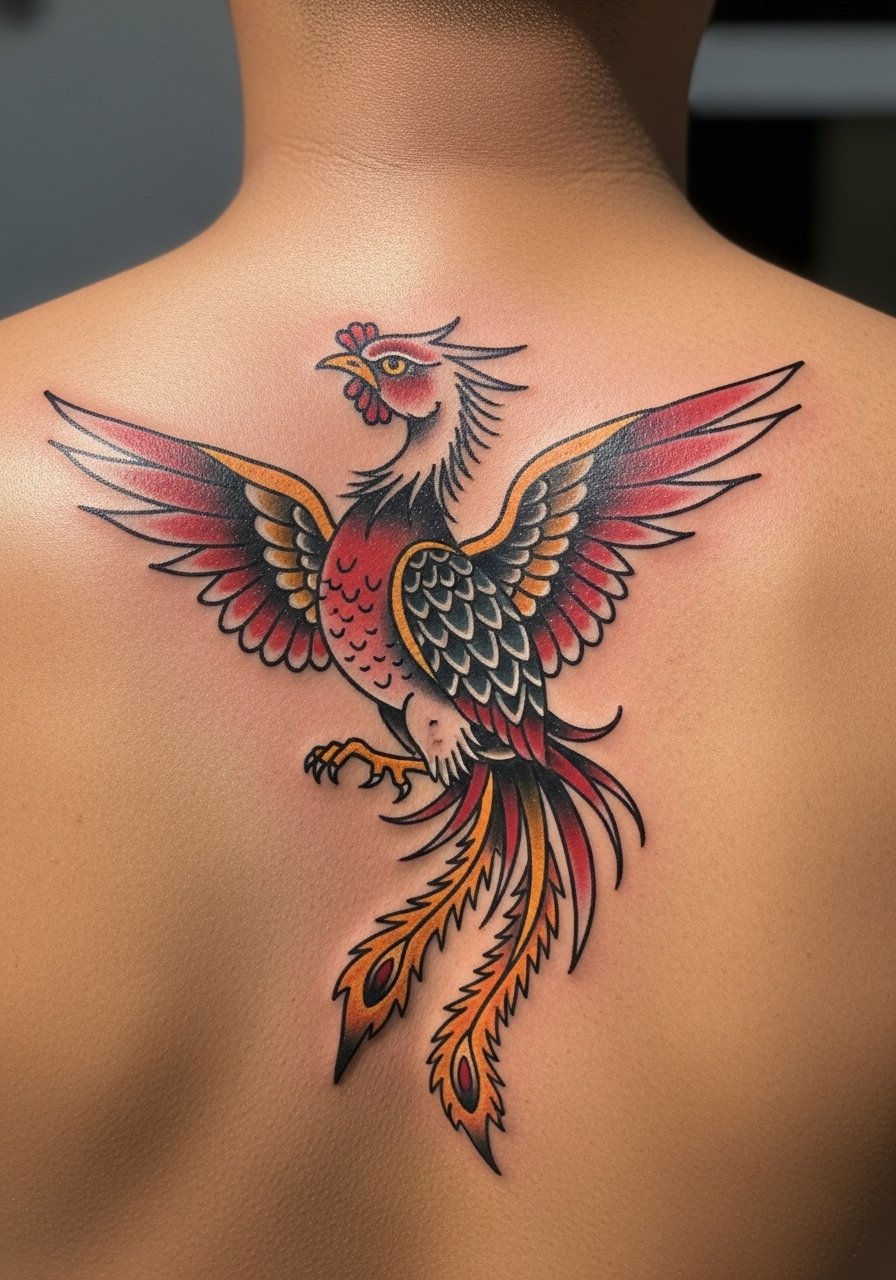
Traditional flash adapts well to compact back pieces because bold outlines and strong color sit well on small scales. Upper back pain is low and sessions can be 60 to 120 minutes. In the consultation, bring flash references that show the exact tail curve you want and ask for the outline weight to be consistent with the color fill. Traditional ages predictably and often needs less frequent touching than feathered watercolor. A standard mistake is shrinking a flash design until the color blocks lose separation.
6. Linework phoenix wings on the inner thigh

Fair warning, the thigh shifts with weight and activity so plan placement with your body in motion. Inner thigh pain varies by person and can be a 5 to 7 on most scales. Request slightly more spacing between parallel lines during the sit so the wings do not blur into a single band over time. This one is great for someone who wants concealability but also wants their piece to remain distinct. Sessions run 45 to 90 minutes depending on size and symmetry work.
7. Neo-traditional phoenix head on the calf
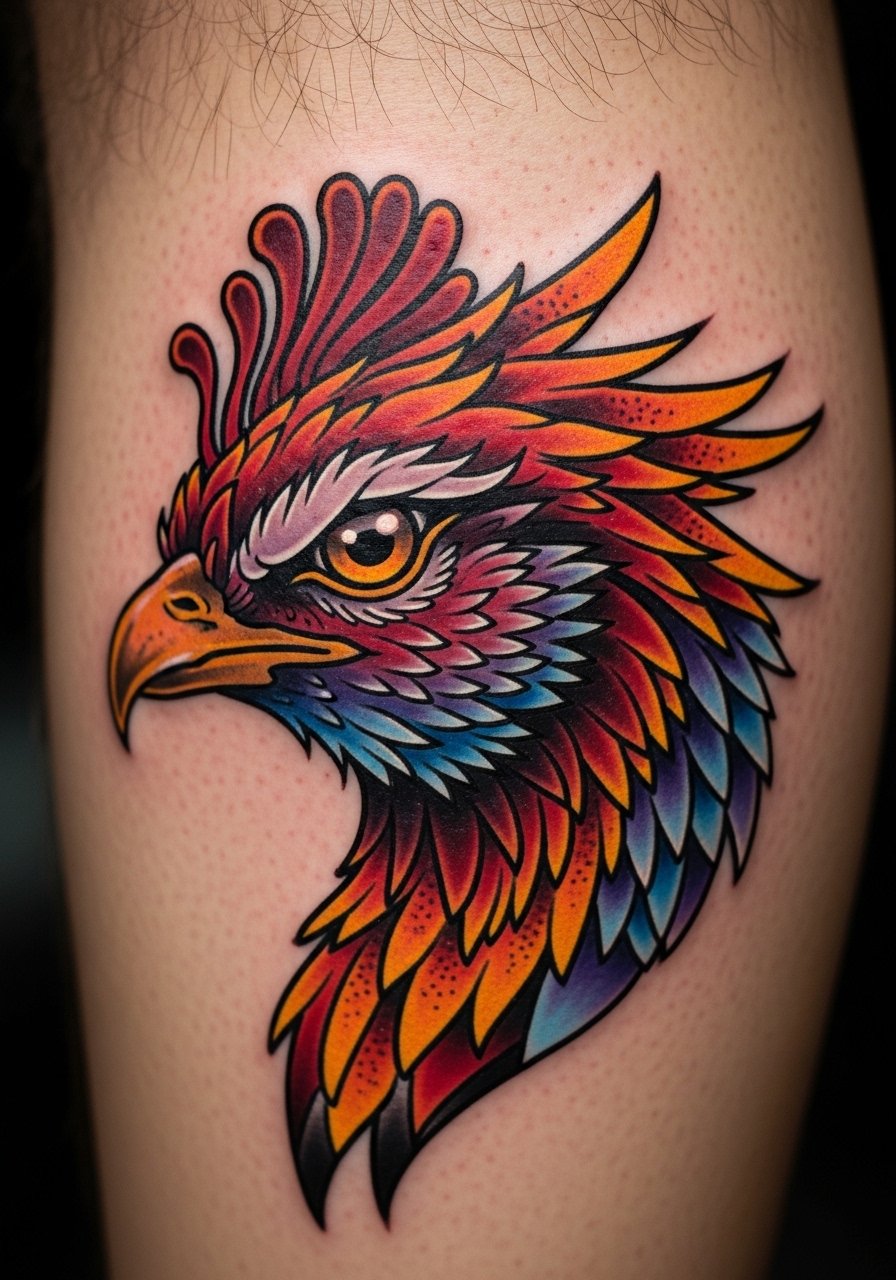
A stylized head with bold outlines and color accents reads well at medium size on the calf. Calf sessions are comfortable with low pain and typically last 60 to 120 minutes. Bring reference photos that show the exact eye shape and be explicit about color placement around the beak. Neo-traditional hold up well because the outlines protect color. Artists sometimes over-detail the eye in a small piece which ends up muddy after healing.
8. Ornamental phoenix tail on the ribcage

Fair warning, the ribcage is a 7 out of 10 on most pain scales. That said, ornamental tails can tuck into curves and look like jewelry. Ask for thicker primary lines and less ultra-fine filigree so the pattern stays legible as skin shifts. Sessions may be split into two shorter appointments because of pain. A common mistake is packing too many tiny decorative dots into a small rib area, which can merge over time. For sensitive placements like ribs, discuss breaks and breathing techniques with your artist.
9. Micro-realism phoenix eye on the collarbone

Micro realism demands precision and the collarbone can be bony and tender. Expect pain around six out of ten for collarbone work. Tell the artist you want a tiny focal point rather than a surrounding texture field so the eye retains intensity. This piece looks striking healed at six months and at two years if shading is compact and contrast is strong. Session time is often 45 to 75 minutes. The real mistake is crowding the eye with additional tiny elements that compete with the focal detail.
10. Tribal phoenix silhouette on the outer ankle

Tribal silhouettes read clean and bold on the ankle and are low in healing fuss. Ankle pain is variable and often rates 4 to 6 because of proximity to bone. Specify that you want a single confident silhouette with clear negative space so the shape remains distinct as edges soften. This style is forgiving in small sizes because the silhouette does the heavy lifting visually. Sessions tend to be 30 to 60 minutes and the worst mistake is tiny jagged points that blur into an unrecognizable shape.
11. Ignorant style phoenix burst on the outer forearm
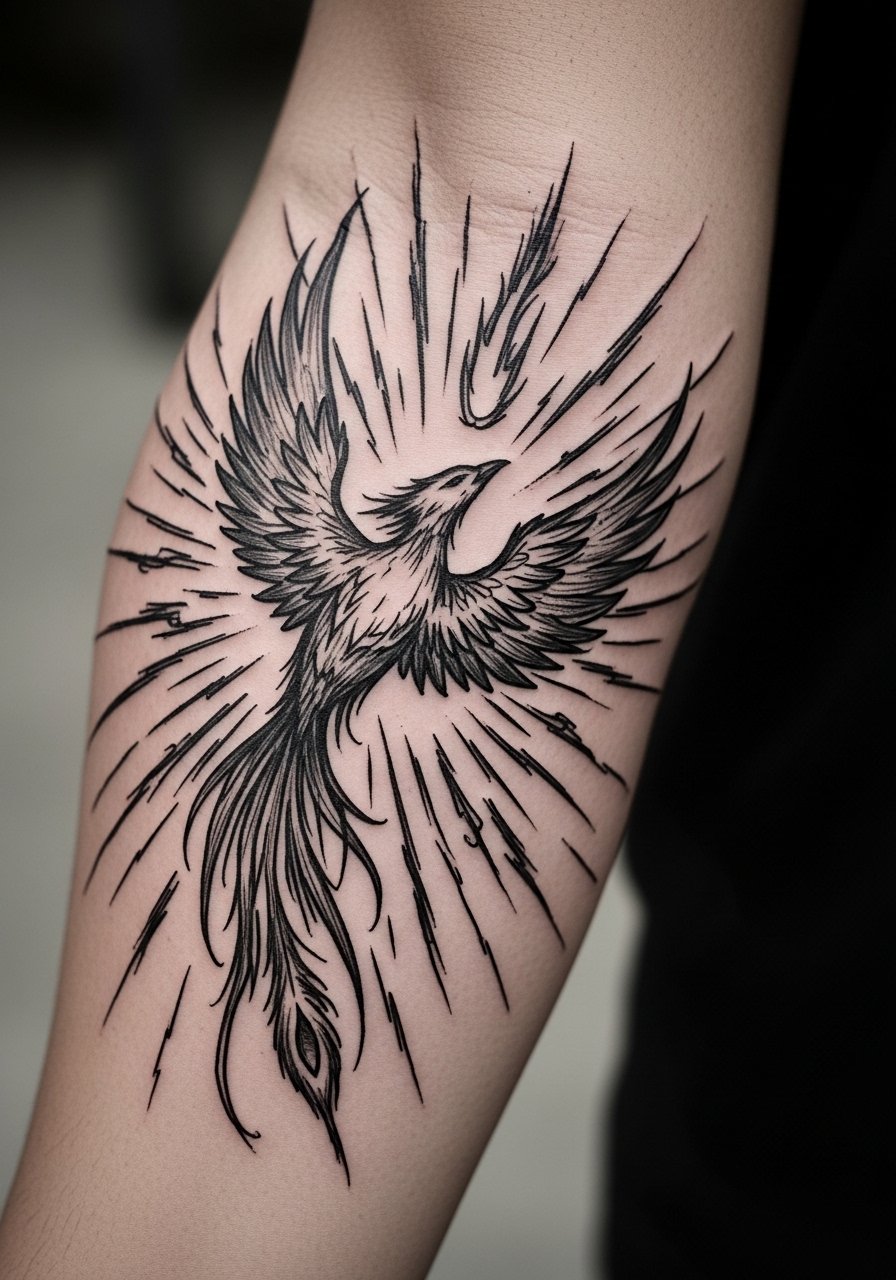
Ignorant style is raw and playful, and it hides imperfections by design. The outer forearm is a friendly spot for first-timers with pain around a 3 out of 10. During consultation, say you want sketchy, expressive strokes rather than precise contour so the artist can lean into the aesthetic. This type of design ages with character because rough edges read as intentional even when they soften. Sessions are usually short, 30 to 60 minutes. A frequent error is asking for too much tiny detail within the scribble, which defeats the style.
12. Minimalist phoenix outline behind the ear

Behind-the-ear placements are sensitive and visible when you tuck hair back. Pain is modest but the skin there is thin so lines can blur if they are hairline. Ask the artist to use a slightly bolder single-needle contour and to preview placement with a sticker so you can see how it moves when you turn your head. Sessions are fast, often 20 to 40 minutes. Professional note, ear-area work requires experience because the skin and cartilage behave differently.
13. Micro feather on the side of a finger
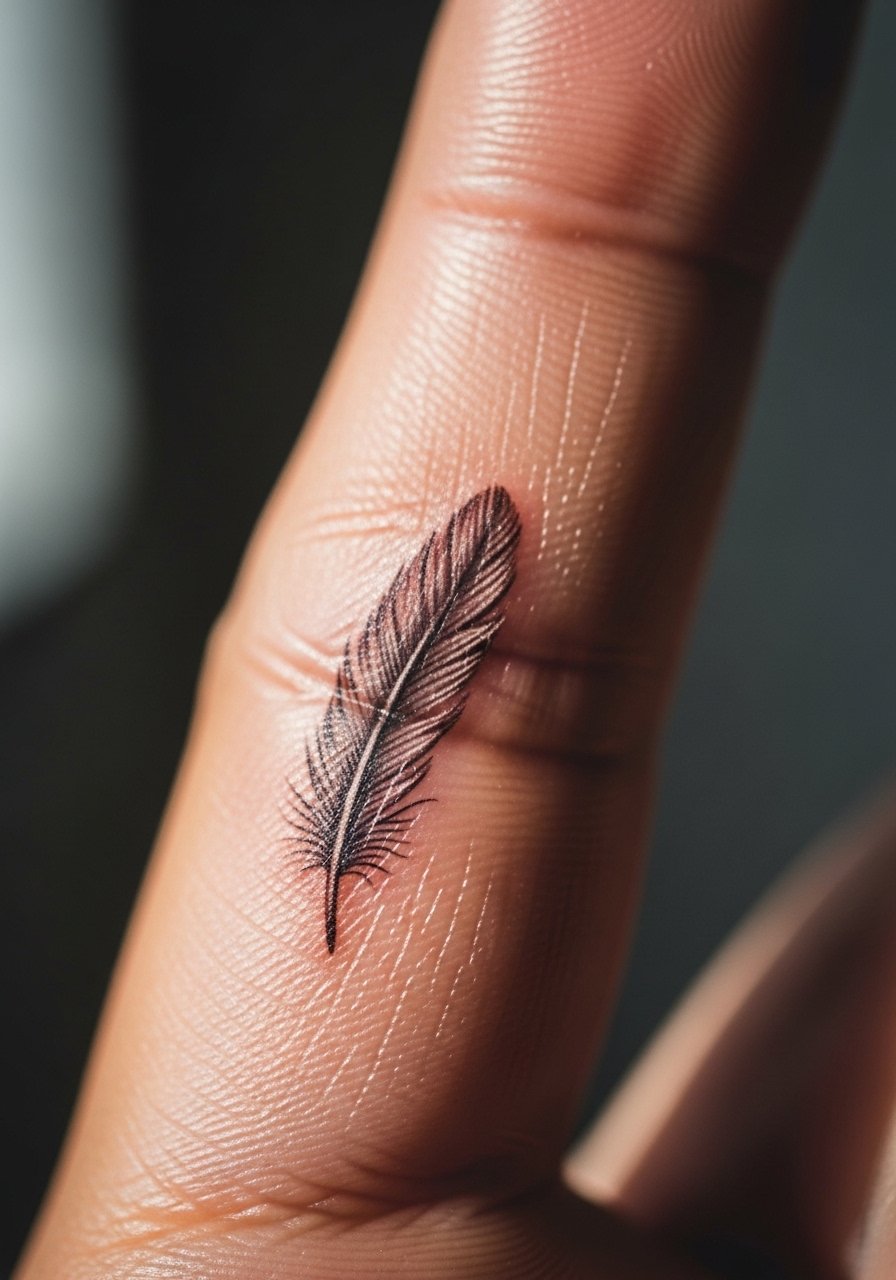
Finger tattoos are trendy and they test longevity. Finger skin takes ink poorly and friction from rings and washing speeds fading. If you go for a feather, request a slightly simplified silhouette so there is less fine detail to migrate. Expect a quick, sharp session under 30 minutes and realistic touch-ups every 12 to 18 months. Hand placements can affect hiring in some fields, so think through professional considerations before booking.
14. Small phoenix starter flash on the upper bicep

A small flash piece on the bicep is a reliable way to start a sleeve later on. Bicep pain is low and sessions usually last 45 to 90 minutes. Tell the artist you want the design to read as a single module that can be expanded outward, and ask for clear margins on one side to allow future work to attach cleanly. This approach avoids the common mistake of a design that feels stuck when you add more. Expect even aging because the bicep sees less daily abrasion.
15. Phoenix tail ornamental filler near the hip
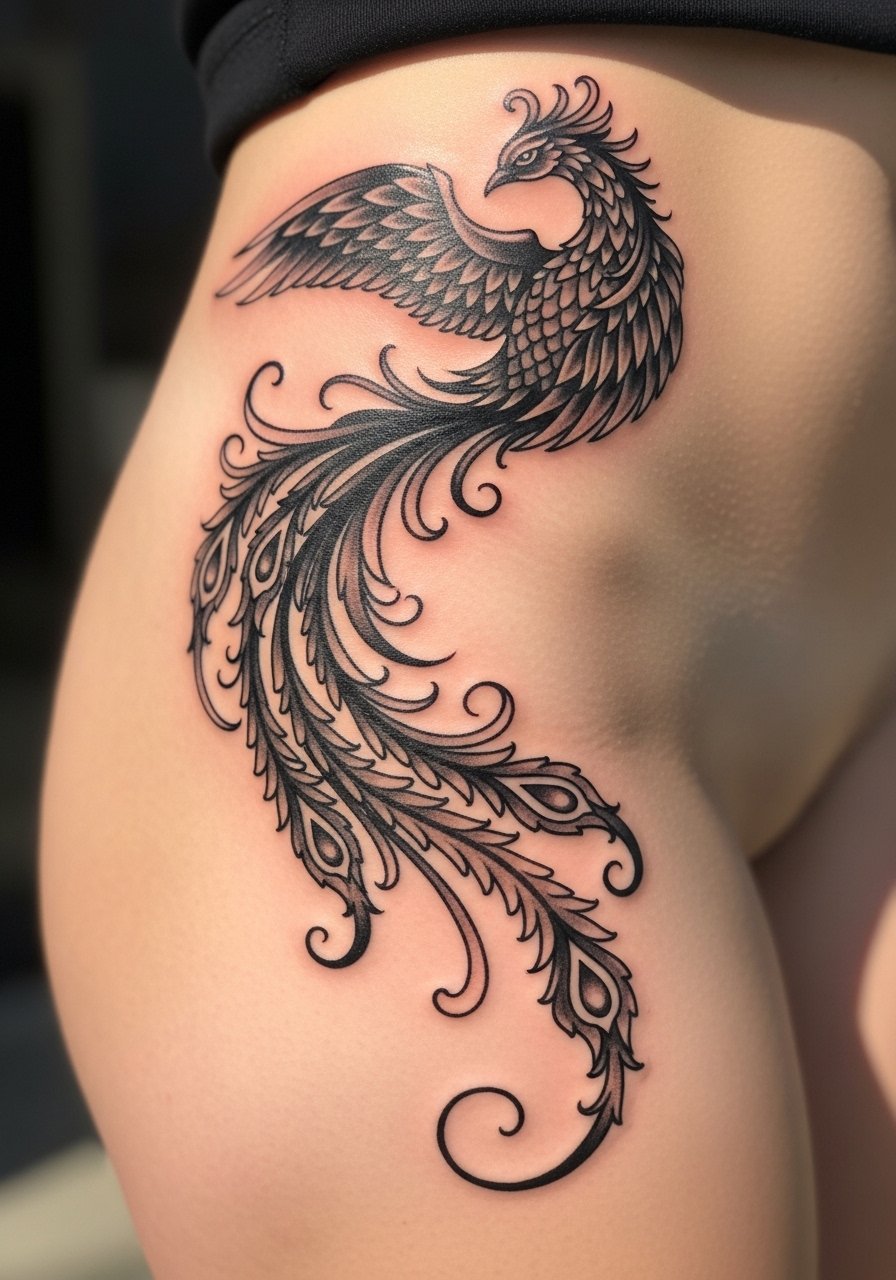
Hip placement moves with clothes and body shape so plan your exact placement while standing and sitting. Pain on the hip ranges 5 to 7 depending on proximity to bone. For a tail filler, ask for bolder anchor lines with lighter decorative elements inside them so the tail maintains shape as the skin stretches. Sessions may be split and touch-ups are normal after weight change or pregnancy. The biggest mistake is over-detailing the filigree in a tight area where elements will merge.
Tattoo Prep and Aftercare Essentials

Fragrance-free healing balm, travel size. A gentle balm for the first few days keeps scabs supple. Use sparingly and follow your artist's wear schedule.
Medical-grade second skin bandage, individual sheets. Great for overnight protection or when you need a waterproof seal for a day. It reduces rubbing and prevents early scab loss.
Gentle pH-balanced foaming cleanser. Use to clean the area twice a day for the first week. Avoid scrubbing.
Lightweight fragrance-free lotion. A non-greasy moisturizer that helps long-term hydration after the initial healing phase.
Silicone scar sheets, small size. Some people use these months later to help even out texture on raised healed areas. Discuss with your artist first.
Alcohol-free sunscreen stick for healed tattoos. UV is the biggest ink killer I've seen. Use on healed tattoos anytime you will be in the sun.
Aquaphor Healing Ointment, small tub. This is the one mainstream product I mention. It works well for many people but some prefer lighter balms if they break out.
Soft non-abrasive clothing for the first week. Clothing that does not rub the tattoo speeds comfortable healing.
Every tattoo is different. Always follow your artist's specific aftercare instructions. Consult a dermatologist if you have skin concerns or unusual healing issues.
Frequently Asked Questions
Q: If I want a fine line phoenix on my wrist, how often should I expect to need touch-ups?
A: In my experience fine line pieces on wrists often need a touch-up within one to three years because wrist skin and daily friction affect edges. Ask your artist about planned touch-up windows during the consultation and budget for a simple session every few years if you want crisp lines long term.
Q: Do watercolor ankle phoenixes need different aftercare than blackwork versions?
A: Yes, watercolor pieces benefit from strict sun avoidance while the colors settle and from lighter, non-occlusive balms so pigment does not migrate. Blackwork can tolerate slightly heavier balms early on because the pigment is denser, but sun protection is important for both styles once healed.
Q: Which small phoenix placements are least likely to blur into a single shape over time?
A: Areas with thicker, more stable skin like the outer forearm, upper shoulder, and bicep tend to maintain edge definition. Thin or high-friction spots such as the inner wrist, fingers, and ribs are more prone to line spread. Tell your artist where you want the piece and ask for line weight and spacing recommendations based on that area.
Q: I want a tribal phoenix on my ankle but I have dark skin. What should I ask the artist to make it pop?
A: From what I have seen, request bolder primary outlines and consider negative-space accents so the silhouette contrasts against darker tones. Ask to see healed examples on similar skin tones and plan a short touch-up to deepen contrast if needed.
Q: Are there style choices that help a small phoenix age more gracefully if I plan to add a sleeve later?
A: Yes, choosing a design with clear anchor lines and intentional negative space makes expansion simpler. Ask the artist to leave a deliberate margin on one side for future work and to avoid overly tiny filler that will compete with later pieces.
Q: How should I find an artist who actually does small phoenix micro-realism or ignorant style?
A: Use style-specific hashtags and local location tags, check directories like Tattoodo, and look through Booksy or similar booking apps. I have found reliable results by searching "[city] small phoenix tattoo" and by browsing healed photos to confirm how a style holds up on real skin.
Q: My budget is tight. Can I reasonably get a small phoenix under a studio minimum?
A: Pricing varies widely and some shops have minimums that push small pieces upward. Try smaller reputable studios or guest spots where artists take walk-ins for compact work. Be clear about size and detail so the artist can give a realistic quote before you sit.