
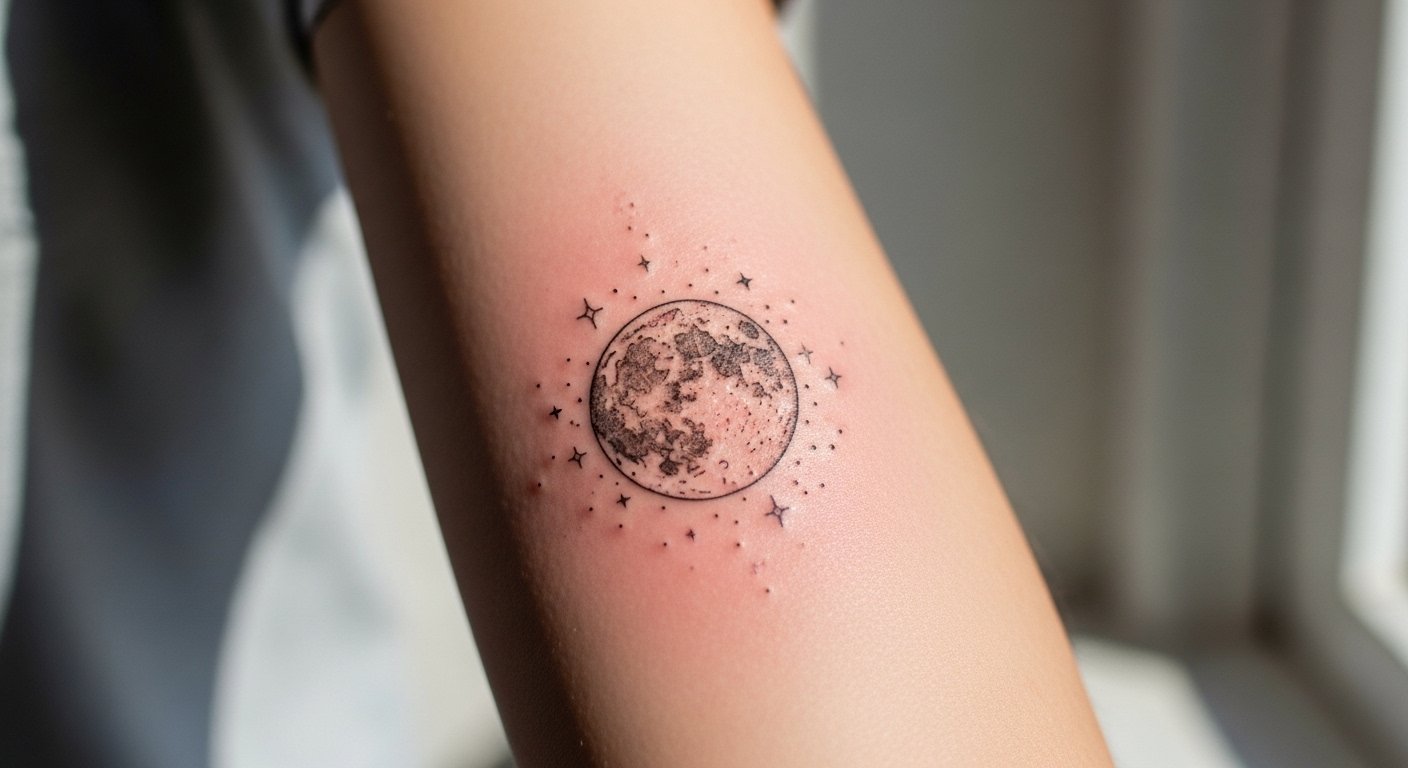
Someone I know spent months saving designs and still booked the wrong style for their skin. They learned the hard way that line weight, placement, and aftercare matter more than picking the prettiest picture. I visited five shops across Brooklyn and talked with artists who specialize in small work, and the moon motifs I kept recommending are the ones that age cleanly. Below are 25 small moon tattoos with notes on placement, aging, and what to tell your artist to get the result you want.
1. Minimalist Crescent on the Inside of the Wrist
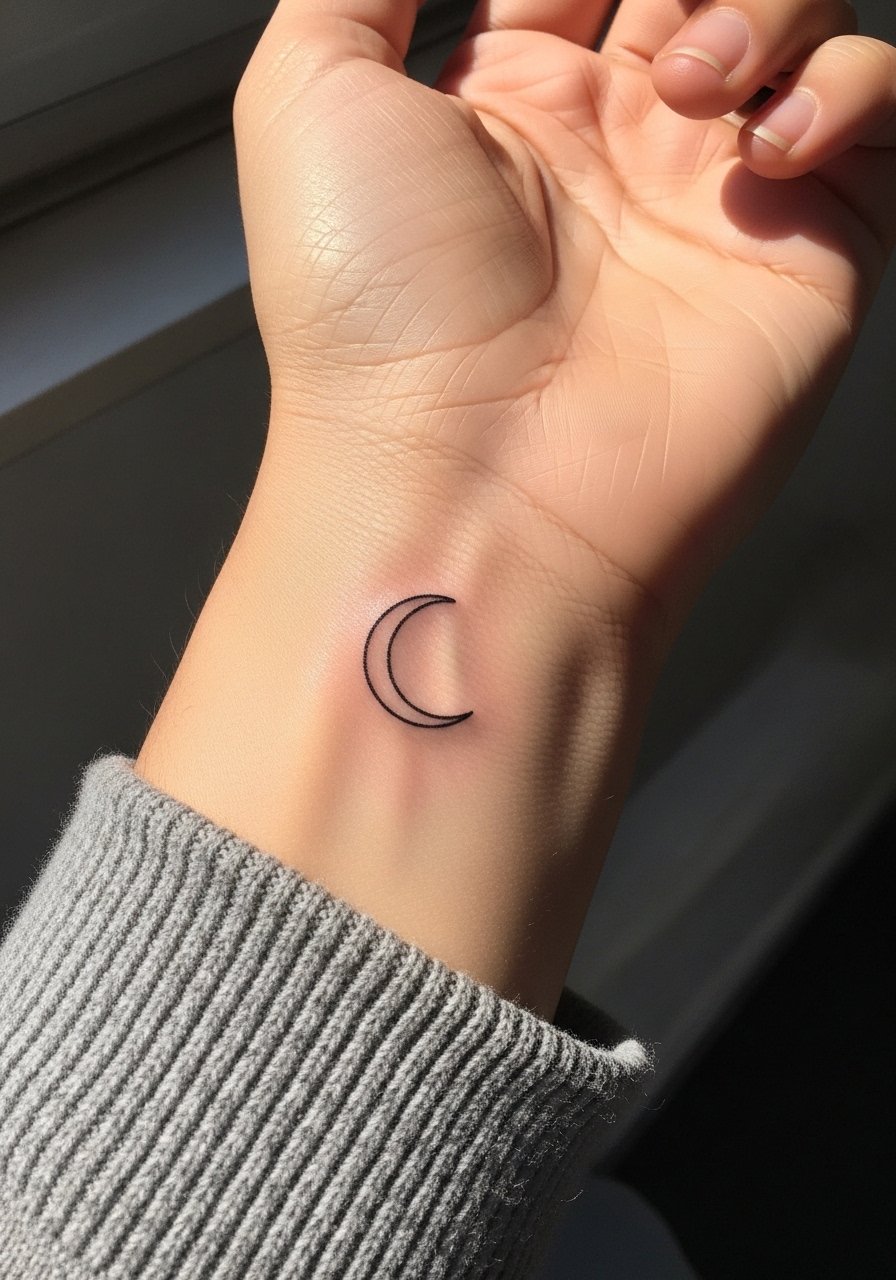
Someone I know first saw this on a friend and booked the same placement without asking about scale. For a wrist crescent, tell your artist you want slightly thicker linework than a hairline so the curve holds at year two. Pain is low to moderate and a session is often under 30 minutes. A common mistake is placing the crescent too small toward the bone where blowout is more likely. At six months the line will soften slightly, and at two years you may want a light touch-up if you want the original contrast back. Best for people who want a discreet daily reminder.
2. Fine Line Full Moon with Tiny Stars Behind the Ear
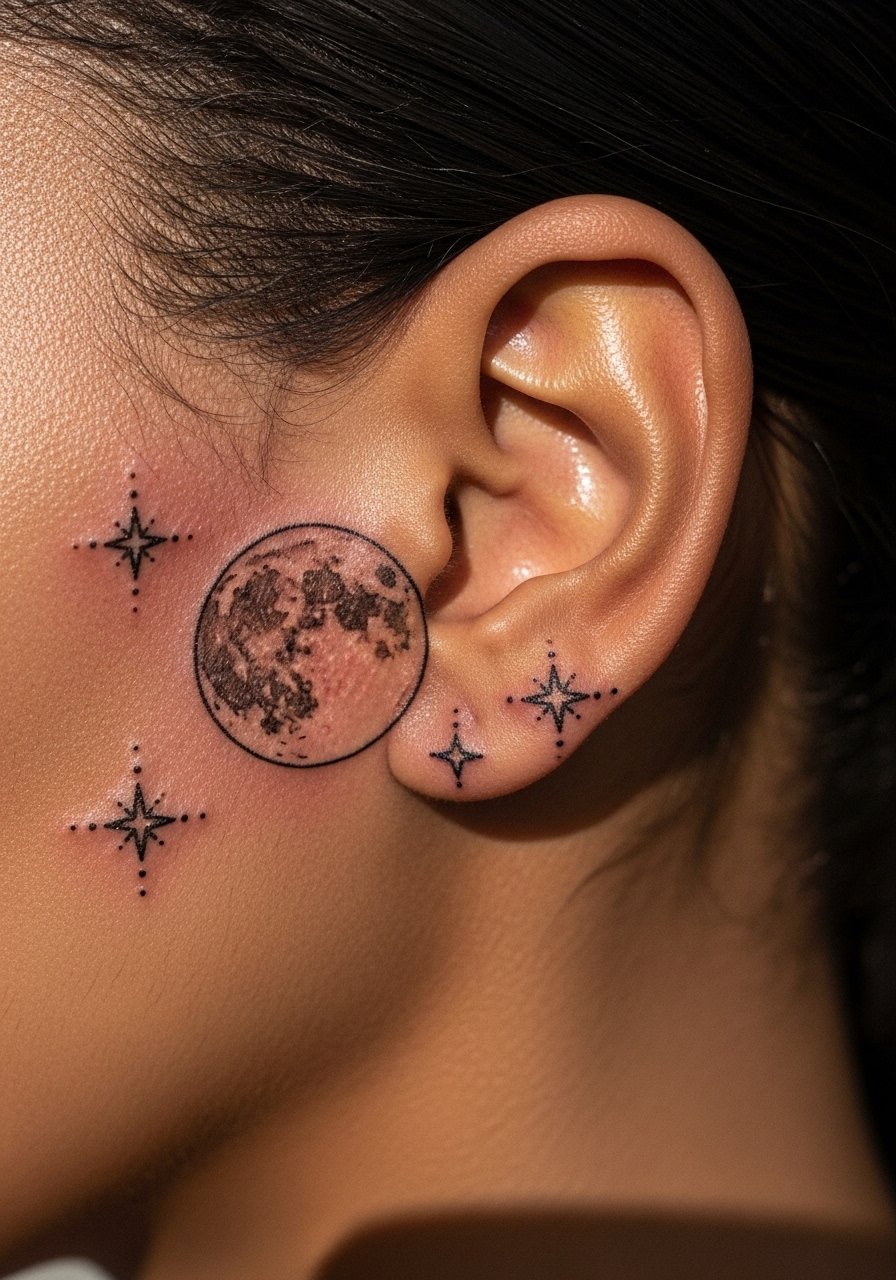
Fair warning. Behind the ear has thin skin so pain is a 4 out of 10 for most people. This placement keeps the design private but visible with hair up. Ask for lighter needle depth and spaced stars so the negative space breathes, and expect a quick 20 to 40 minute session. One camp of artists says fine line in that spot holds well if ink is placed slightly deeper. The other camp worries about migration there. Ask your artist where they stand before booking. At two years you may notice dot-work softening, and a touch-up at year three is common.
3. Tiny Blood Moon on Shoulder Cap in Micro-Realism
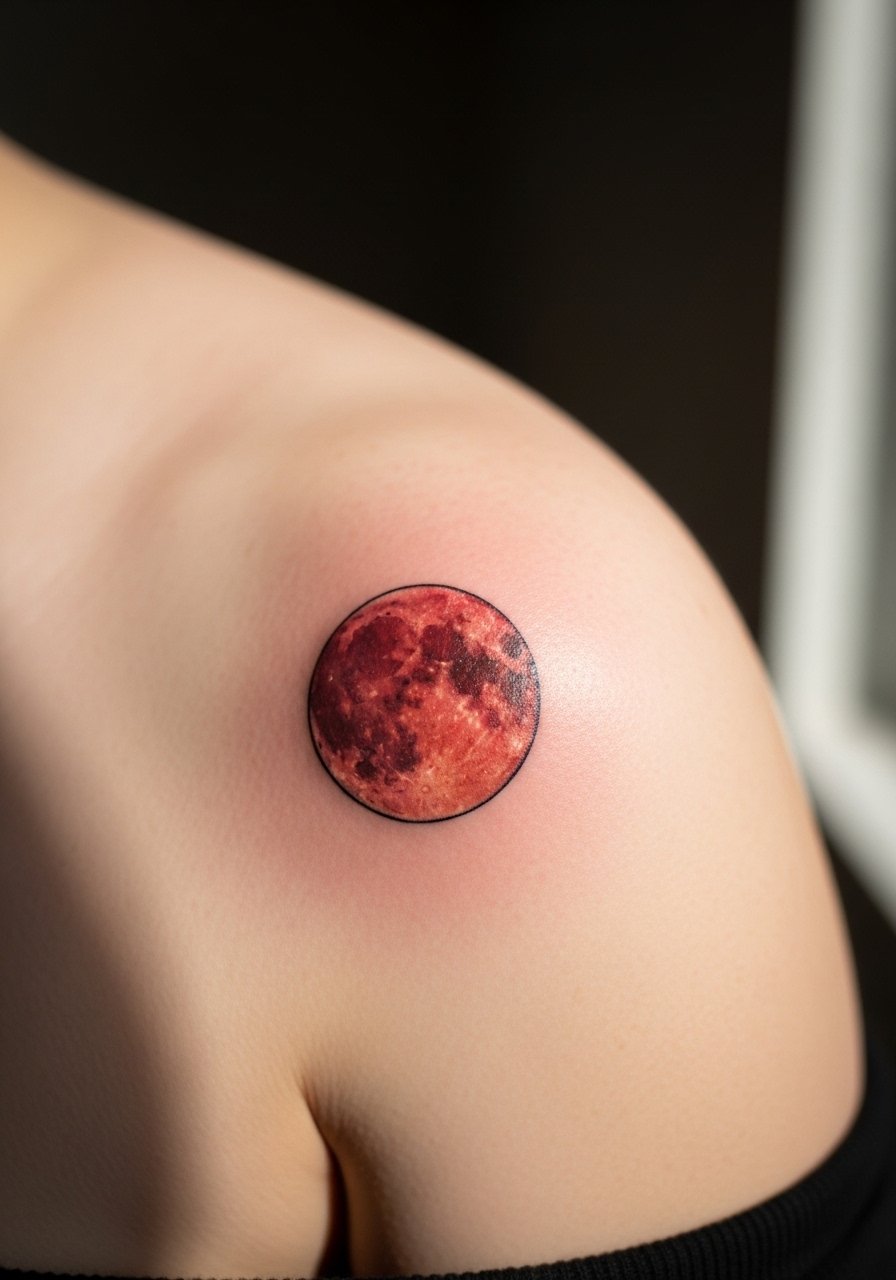
I recommend this when you want drama without size. The shoulder cap gives flat space so micro-realistic color can sit without distortion. Tell the artist you want a compact one-inch design with muted red saturation so it ages without looking like a bruise. Session time is typically 45 minutes to an hour. A real mistake is asking for neon red which fades unevenly. Expect the red to soften by year two and plan a color refresh if you want the original depth. Shoulder pain is low but collarbone approaches a higher end of the scale.
4. Crescent with Tiny Clouds and Sun Rays on the Ankle

Most watercolor-style cloud fills age poorly at ankle because of friction from socks and shoes. This version uses fine line clouds and simple sun rays to avoid heavy saturation. Tell your artist to keep negative space under the clouds and to avoid packed shading at the edge. Ankle sessions are short but healing can feel tight and irritated for a week. Expect softening at six months, and a touch-up around year two if you wear shoes that rub the area. This design reads well on both light and darker skin tones when contrast is prioritized.
5. Sailor-Motif Crescent with Anchor on the Side of the Hand
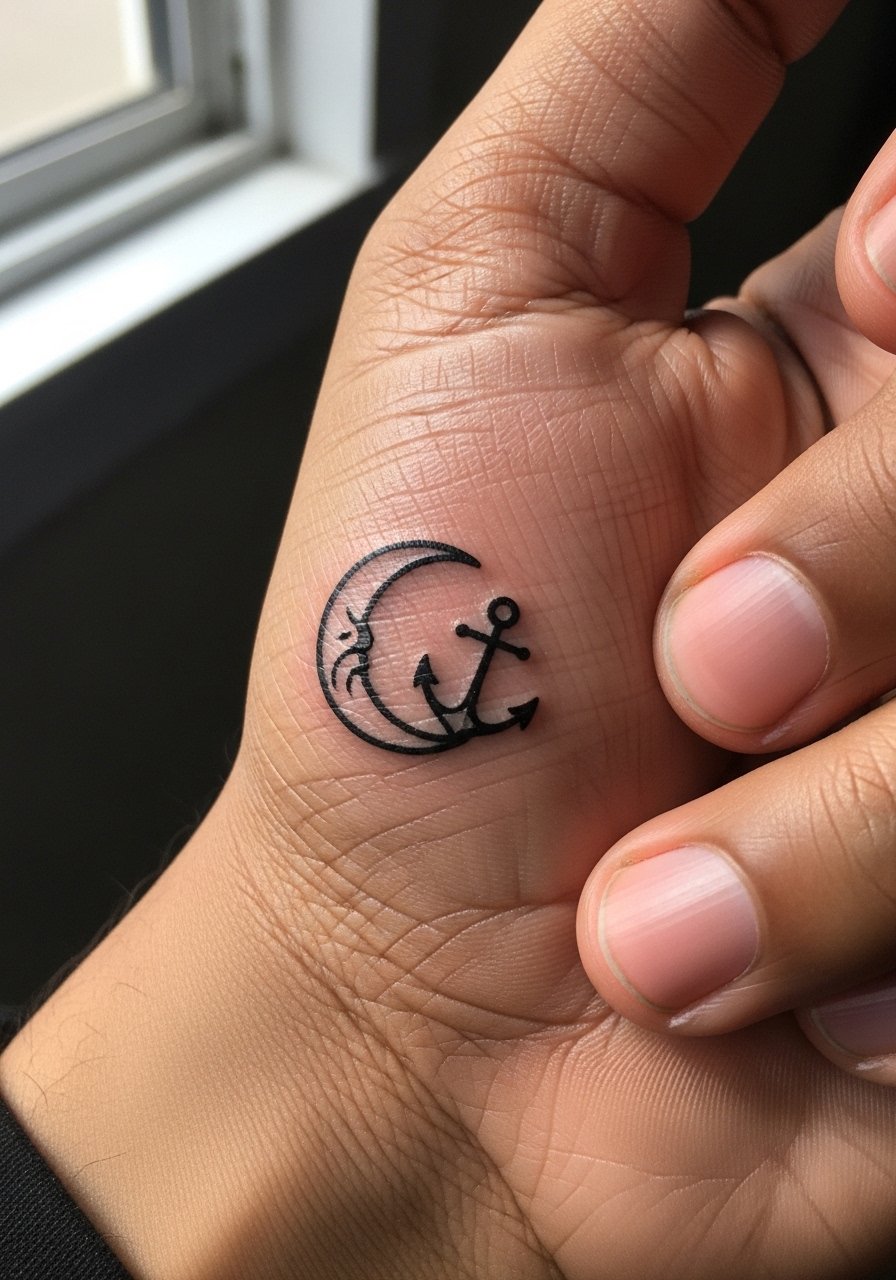
Hand tattoos still affect hiring in some industries, so think about career path before committing. The side of the hand takes more wear and the ink can blur faster. Ask for slightly bolder outlines and allow the artist to simplify tiny details so the anchor and crescent stay legible. Hand sessions are brief but healing is active, and you may need a touch-up within a year. The most common mistake is asking for tiny intricate shading on the hand. If you want longevity pick bold, simple silhouettes for this placement.
6. Geometric Crescent Silhouette Behind the Thumb
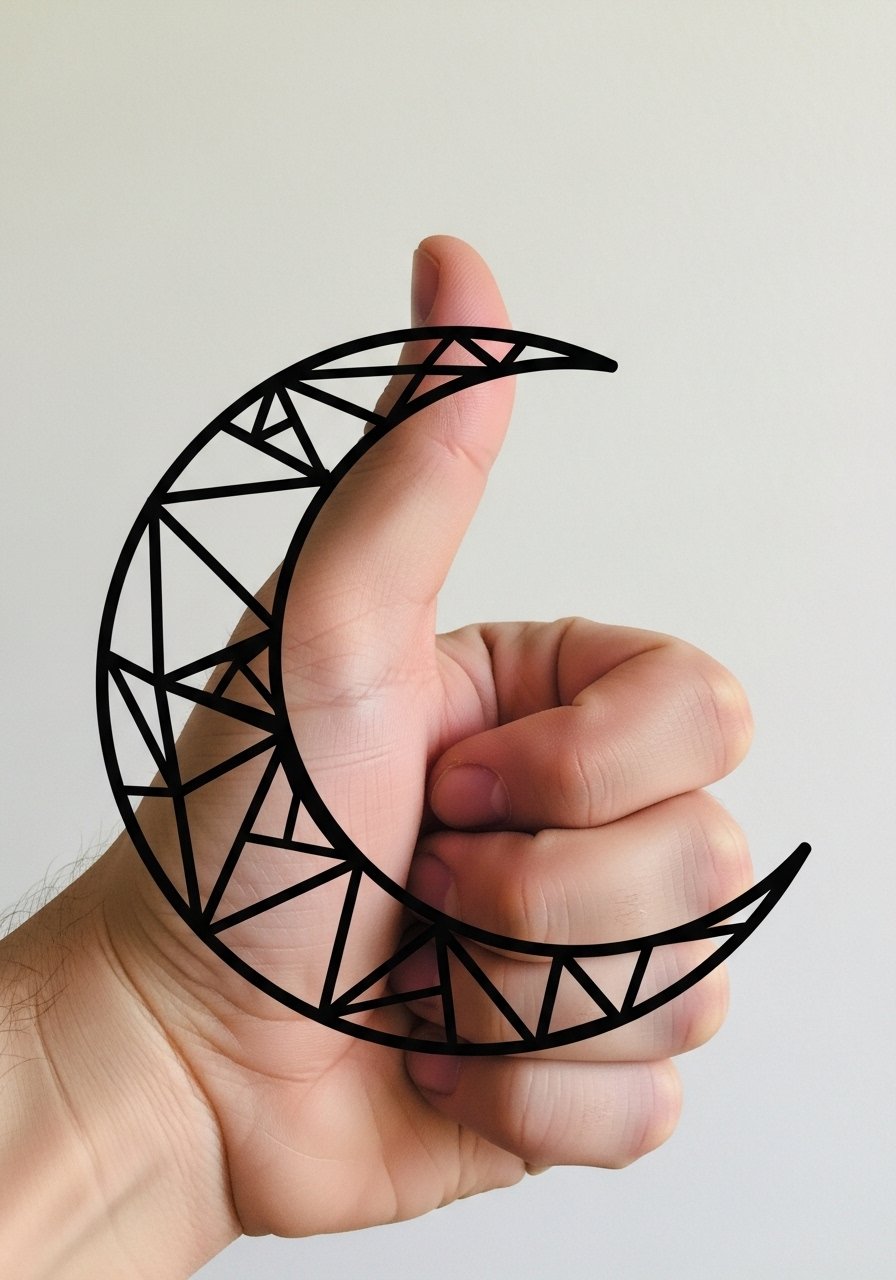
When you want trend-forward geometry, give the design breathing room. The area behind the thumb is small so insist the artist scales the shapes larger than your phone reference. Pain is moderate and the session is usually under 30 minutes. A common aging issue is packing shapes too close together which leads to muddiness at year two. Ask for slightly more space between elements and for bold linework where geometric edges meet. Expect a touch-up at year two to restore crisp contrast if you expose the area to constant washing.
7. Watercolor Moon with Roses on the Forearm

Visual impact is strong with color on the forearm because it reads from a distance. For a small watercolor moon, tell the artist you want soft edges with controlled saturation around the roses so the pigment does not spread. Forearm sessions can run forty minutes to an hour depending on color. Color fades differently across pigments, and reds and pinks often require earlier refreshers. A mistake I see is asking for fully saturated watercolor without a clear outline which ages into an amorphous patch. Keep some contour or dot-work to anchor the composition.
8. Smiling Moon with Tiny Planet and Dot Stars on the Wrist
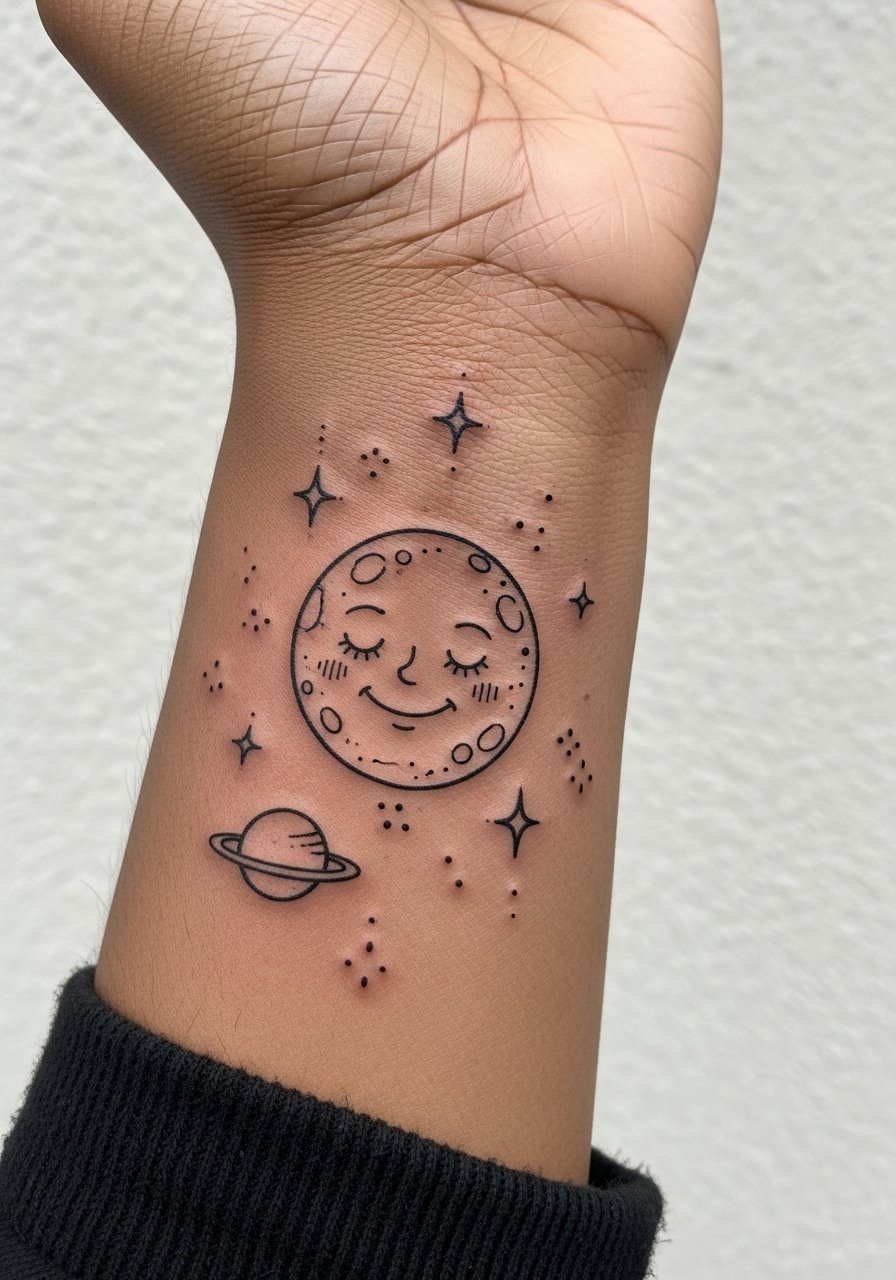
There is a real charm to adding a small face and planet, and wrist placement makes it feel casual. Bring reference photos that show the exact face expression you want and specify dot sizes for the stars. Pain is mild and session time is short. The frequent mistake is asking for ultra-thin facial lines which disappear; ask for slightly bolder facial lines so the expression reads at six months. If you want it fully discreet keep the size under one inch and avoid dense shading around the features.
9. Tiny Crescent on the Finger Edge
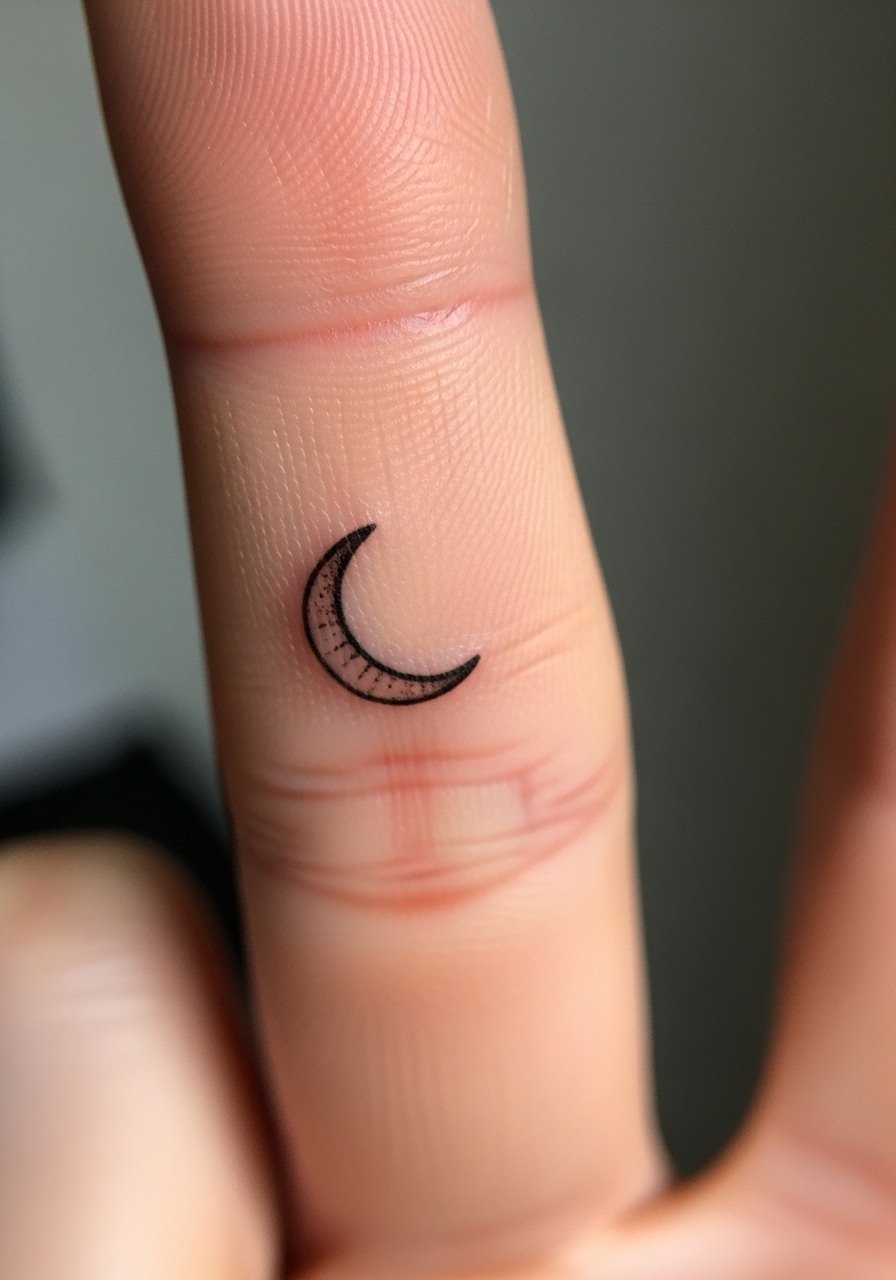
The finger is a high-maintenance spot. Most artists will warn you the life expectancy of finger tattoos is shorter. Expect a quick but sometimes painful session and plan on a touch-up within 12 to 18 months. Tell your artist you are okay with a slightly thicker contour rather than hairline strokes to minimize early fading. The common mistake is wanting too much micro-detail on the finger. Keep the crescent silhouette simple and accept that frequent touch-ups are part of the deal.
10. Starry Crescent with Dot-Work on the Inner Arm
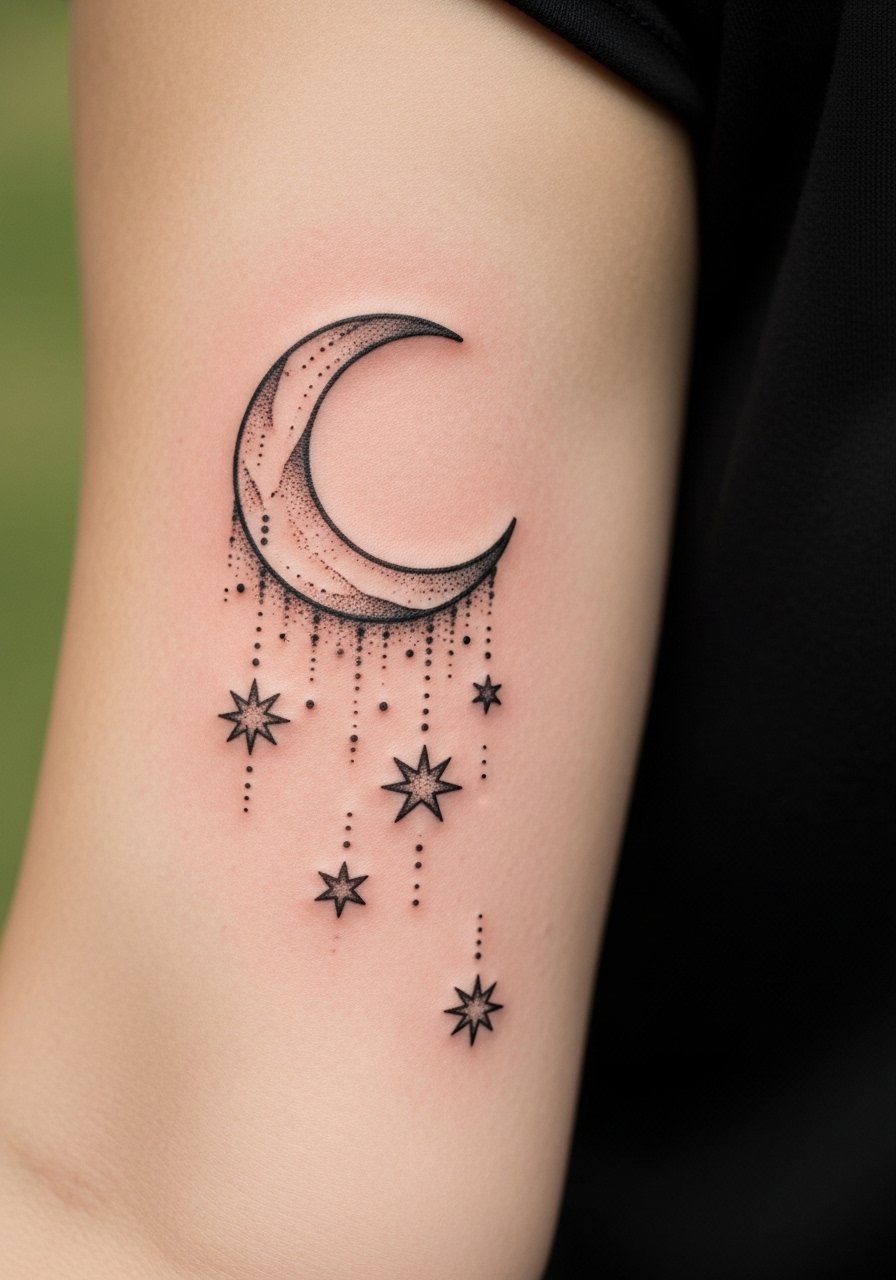
When you want texture without heavy ink, stipple dot-work adds soft depth. Place this on the inner arm where the skin stretches less and dot-work holds longer. Ask the artist for evenly spaced dots and a clear spacing plan so the stippling does not clump. Session time is moderate and pain is low. A common mistake is asking for too-dense stippling which can read as patchy after healing. At two years expect the dot-work to soften and consider a touch-up if you want to restore the original grain.
11. Elegant Moon Phases in a Linear Forearm Row
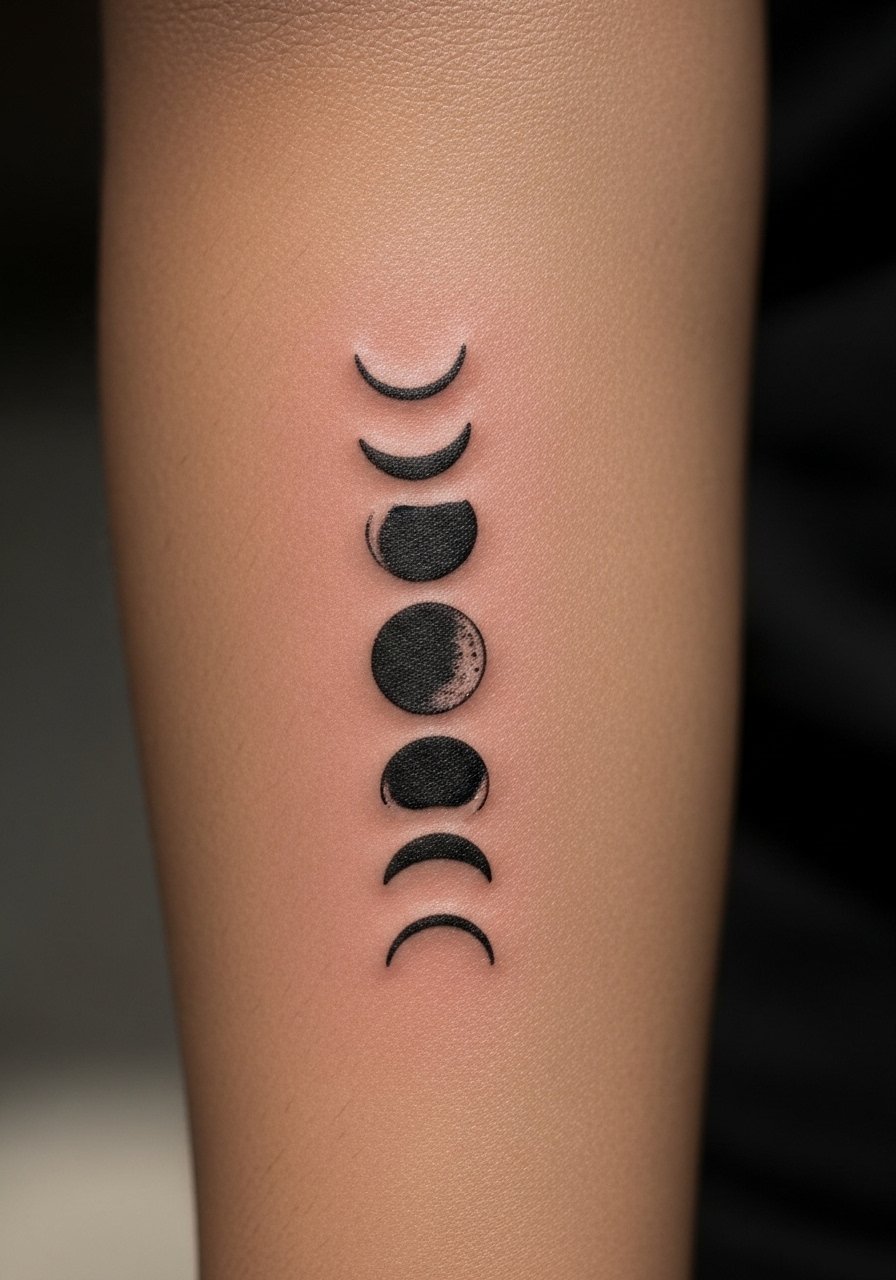
There's a reason phased linear pieces are popular among people who like storytelling. For forearm placement ask for consistent spacing and balanced sizing so that each phase reads at a glance. Sessions can take from 30 minutes to an hour depending on length. A mistake I often see is packing phases too small which causes early blending. At five years expect some softening between phases and plan a touch-up around year three if you want high contrast preserved. This layout works well when you want a compact narrative that stretches with the arm.
12. Minimal Geometric Outline on the Ankle
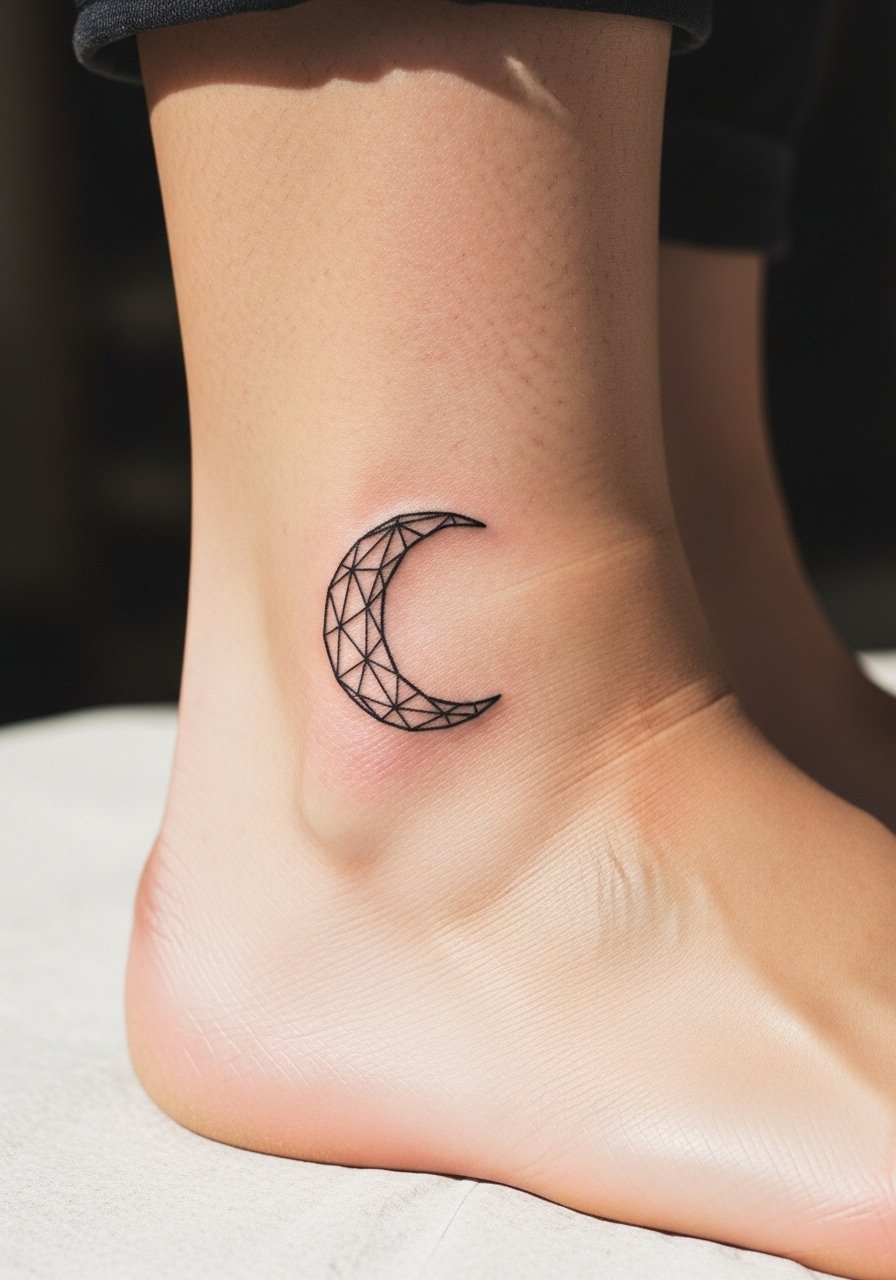
The ankle is a good place for small geometry because it is easy to cover when necessary. Tell the artist you want square corners softened slightly so the natural movement of the ankle does not pull the geometry out of shape. Pain around the ankle is moderate and the session is quick. The aging issue is friction from footwear. A common mistake is choosing ultra-fine vectors with no breathing room. Keep the outline simple and allow for a light touch-up after a couple of years.
13. Smiling Crescent Paired with Tiny Script on the Collarbone

When text is involved make sure the exact word is set in the image prompt and in your notes. Collarbone placement has a stronger pain profile and sessions can sting around the bone. Ask for slightly bolder script than your reference and for adequate spacing between the crescent and the word so both elements age independently. A frequent mistake is choosing overly thin script that blurs within a year. Expect softening and consider a light touch-up if you want crisp letters at year two.
14. Micro-Realistic Lunar Crater on the Upper Arm
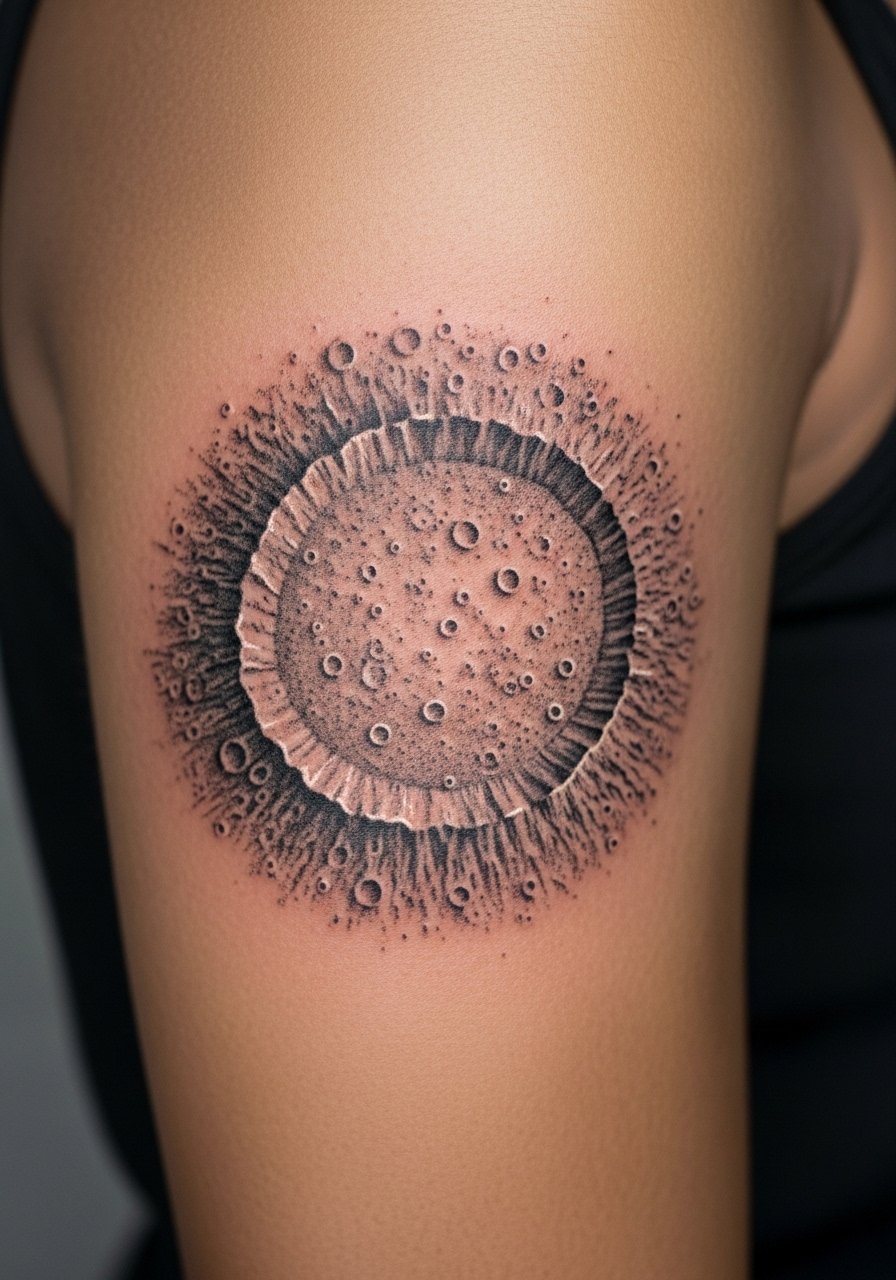
If you want a tiny study of texture this is a good pick because the upper arm holds detail well. Tell the artist to prioritize stipple and subtle contrast rather than heavy gray wash. Session time is moderate and pain is low. A common error is asking for strong gray fills in a micro piece which can turn blotchy. At six months the texture should settle nicely, and at three to five years expect gradual flattening of the highlights. Plan a touch-up if you want to restore crisp crater edges.
15. Crescent and Leaves on the Side of the Ribcage

Fair warning. The ribcage is higher on pain for most clients, often a 7 out of 10. Artists split on fine line here. One camp argues the skin stretch blurs lines within two years. The other camp says with correct needle depth and spacing the lines can stay clean. Ask your artist which camp they fall into and for examples of healed ribs in their portfolio. A common mistake is requesting hairline strokes at the rib. If you want longevity pick slightly more robust linework or set expectations for a future touch-up.
16. Small Crescent Integrated into a Geometric Owl on the Calf
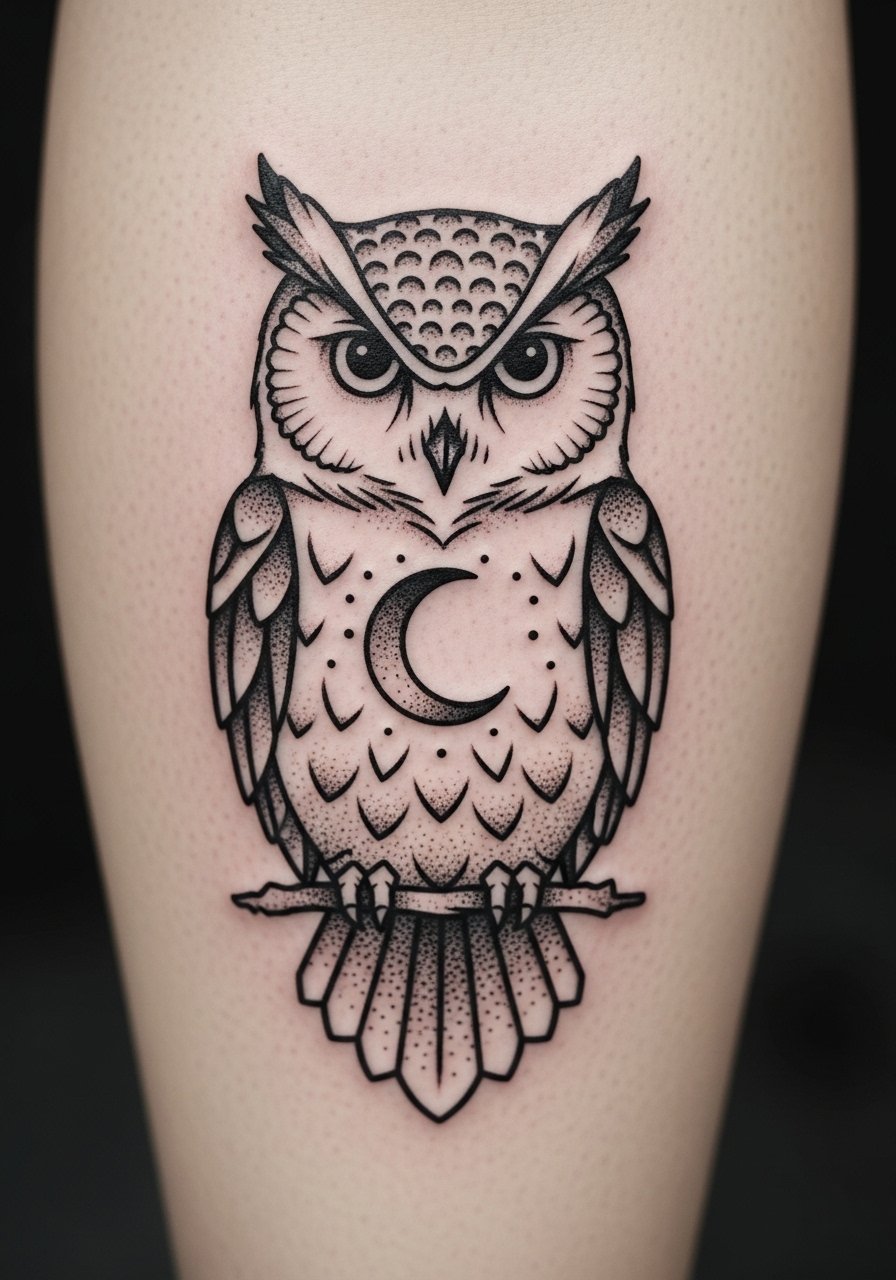
Mixing an animal motif with a moon gives narrative without size. The calf provides enough flat canvas for crisp geometry and allows the crescent to become a negative space element. Bring reference images showing the owl geometry you like and tell the artist where the crescent should sit. Calf sessions are comfortable and can run an hour with breaks. A mistake is crowding the owl with minute details; keep the geometry bold to maintain clarity at two years. This composition is friendly to people who want something distinctive but compact.
17. Watercolor Halo Moon on the Thigh
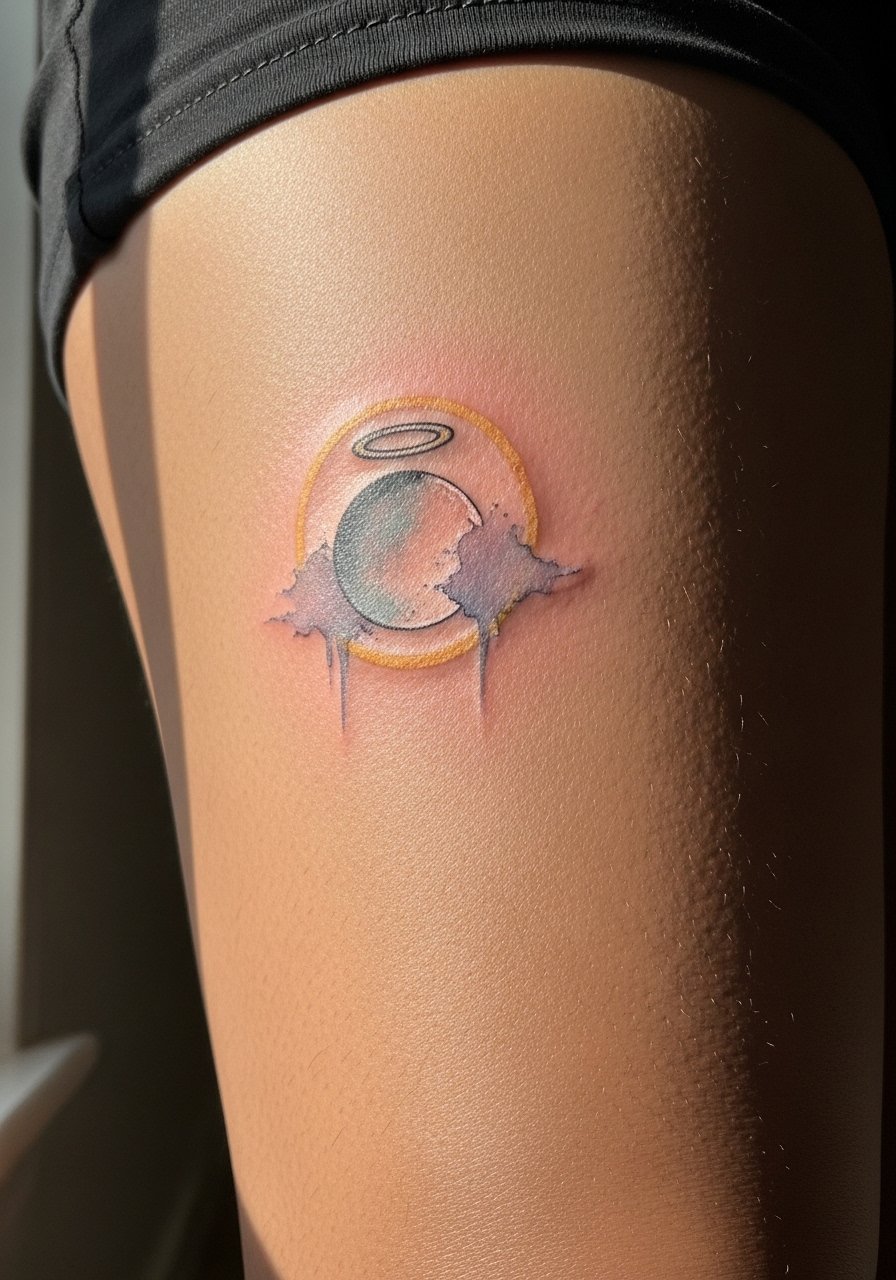
Thighs tolerate color well and give artists a forgiving surface for soft washes. Ask for controlled edges and limited saturation near the outline so the wash does not drift during healing. Thigh sessions are longer but pain is usually low. A common mistake is asking for fully saturated neon washes at small scale. Expect color to shift and soften at six months and plan for a refresh at two to three years if you want vibrance maintained. This placement works for people who want coverable color.
18. Tiny Full Moon on the Back of the Neck
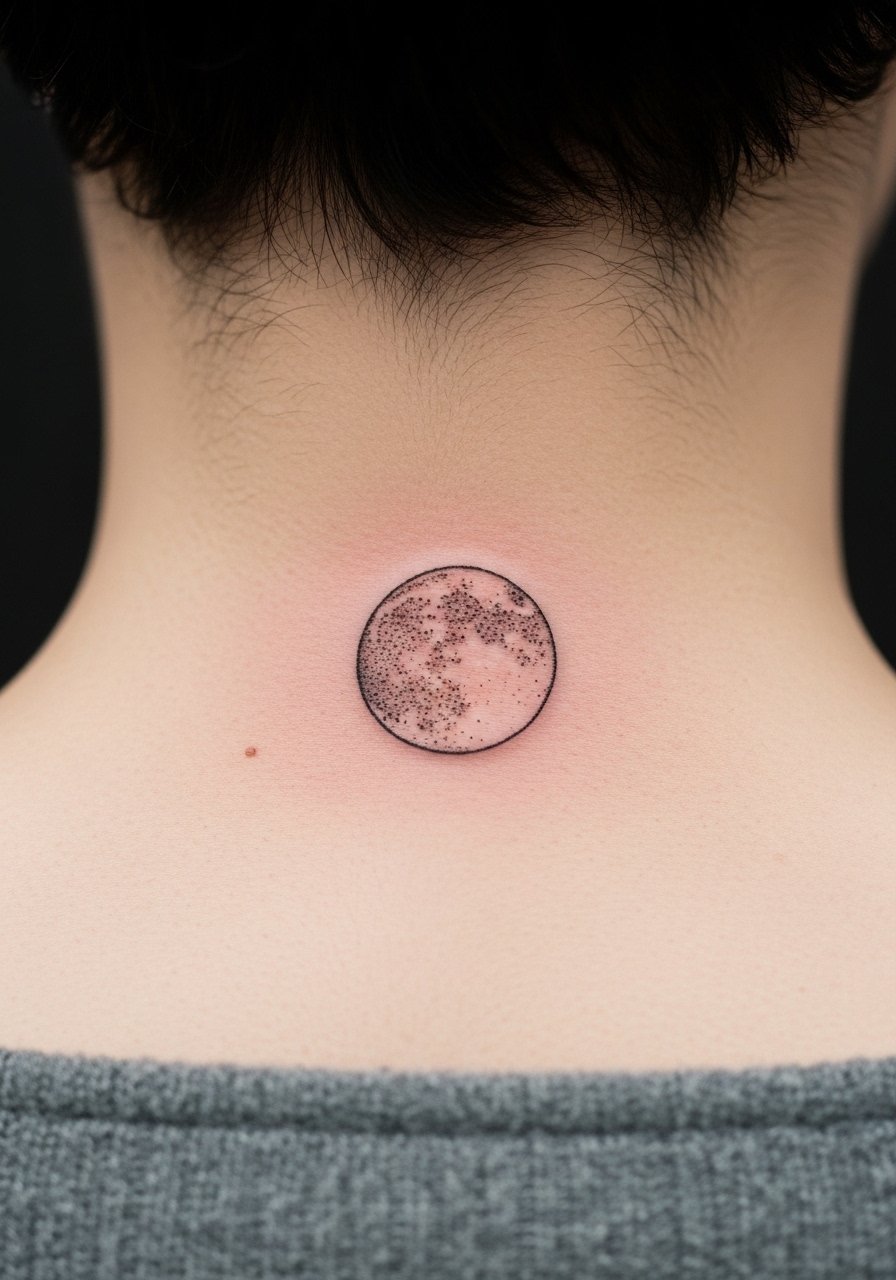
Neck tattoos can be visible with certain hairstyles so consider visibility before booking. The back of the neck is a quick session but healing may itch as hair grows back. Tell the artist you want a clear outline and a light stipple to suggest surface texture rather than heavy fills. A mistake I often see is wanting micro shading that blurs into hair follicles. Expect softening at year two and consider a small touch-up if you want the original contrast. If career concerns exist pick the nape for covert placement.
19. Crescent with Tiny Planets on the Inner Wrist

The inner wrist is a classic spot for small story pieces. Ask your artist for consistent dot sizes for the planets and to set the crescent slightly larger than your first reference. Sessions are short and pain is mild, but wrist skin moves a lot so spacing matters. A common mistake is packing elements too tightly which causes early merging. At six months the planets may look softer and a touch-up at year two helps reestablish crisp separation. This design is great if you want a compact motif that reads as part of a personal collection.
20. Lunar Linework with Whip Shading on the Shoulder Blade

There's something satisfying about a small piece that follows shoulder contours. Whip shading gives a soft gradient without heavy saturation which is ideal for small moons. Tell your artist to keep shading sparse and directional so the crescent does not look like a smudge later. Shoulder blade sessions are comfortable and healing is straightforward. A mistake is asking for dense shading in a micro area. At two years expect gentle softening and plan a touch-up only if you want higher contrast.
21. Crescent Halo with Fine-Line Rays on the Sternum
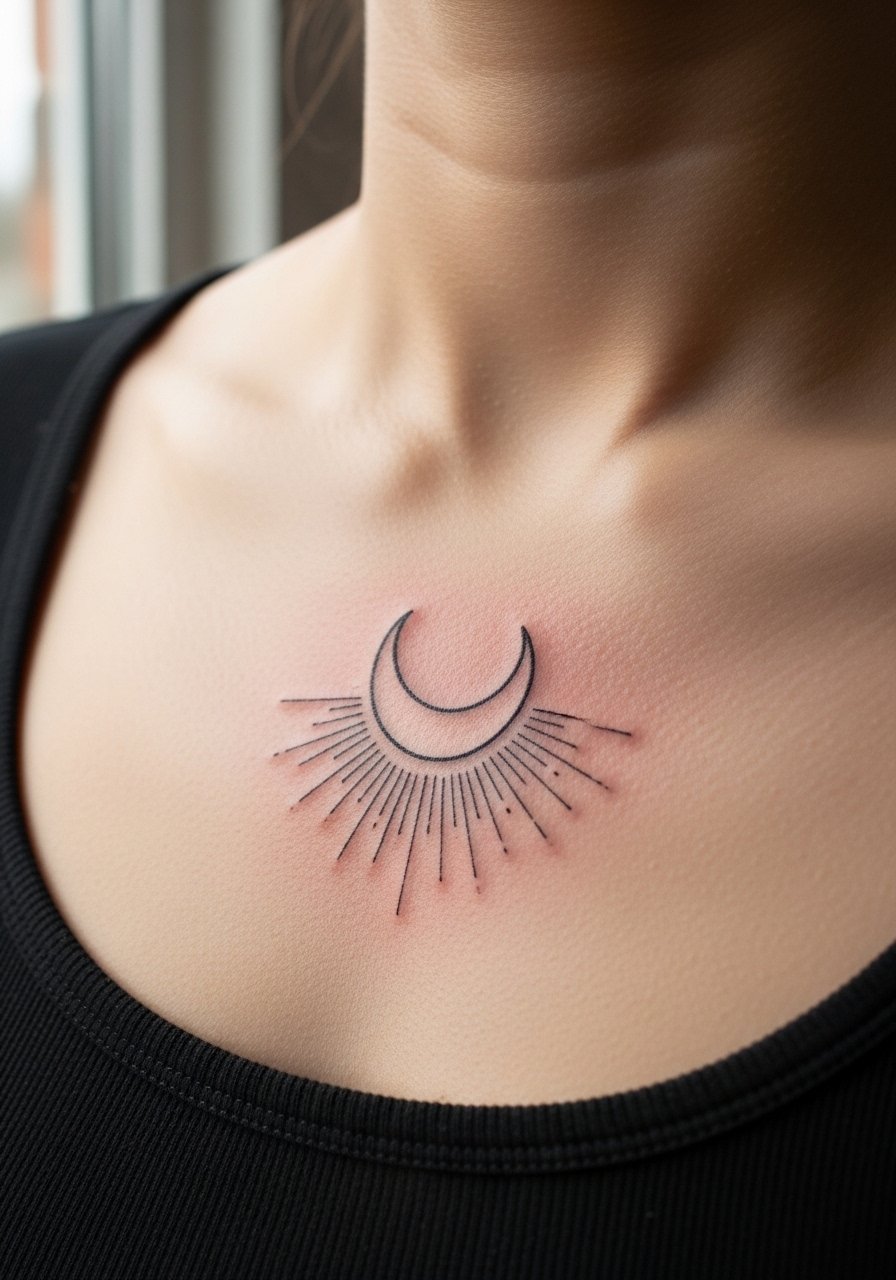
Sensitive placement note. Sternum work needs an artist comfortable with that area, and sessions can be more painful. For a small sternum piece ask for slightly stronger line weight near the bone to prevent early break-up. One mistake is requesting too much micro-detail over the sternum. Healing can take longer due to clothing contact, so plan accordingly. Expect softening at one to two years and a potential touch-up if you want the original brightness restored.
22. Crescent and Minimal Mandala Accent on the Upper Thigh

This design nods to patterned origins. If you are sensitive to cultural context this pattern traces to mandala-inspired geometry, so consider slight variations rather than direct replicas. Thigh placement is forgiving for detail. Ask for spacing that avoids very tight dots inside the mandala to keep it readable after healing. Sessions are moderate in length and pain is usually low. The common error is overcomplication at small scale. Expect the mandala dots to soften and plan a touch-up if you want the original precision.
23. Small Lunar Glyph on the Collar of the Foot

Foot tattoos see a lot of wear and the collar area rubs against shoes. For durability ask the artist to simplify the glyph and avoid super-fine lines that will blur. Sessions are quick but healing can be fiddly because of shoe pressure. A frequent mistake is underestimating how much touch-up this area needs. Expect fading in the first year and plan to refresh if you want the symbol to remain bold.
24. Moon Phase Ring Around the Wrist
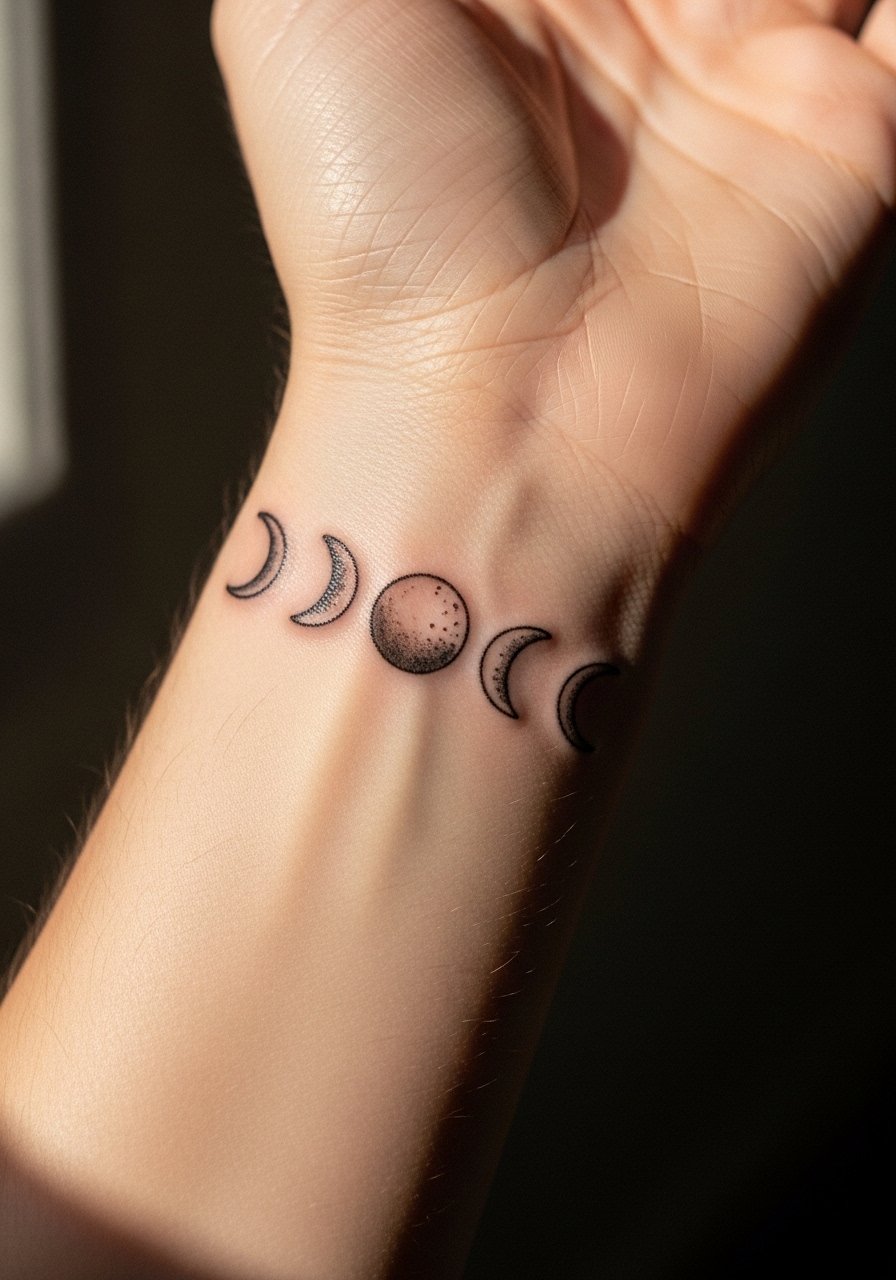
There is a neat effect when phases wrap a wrist because the band reads as jewelry. When booking ask for consistent spacing and for the artist to map the placement so the seam falls where you want it. Sessions can take a bit longer because of curve and placement. A mistake is choosing too many tiny phases which leads to crowding and early blending. At two years expect subtle softening and consider a touch-up if you want the original clarity.
25. Crescent Incorporated into a Small Constellation Behind the Knee
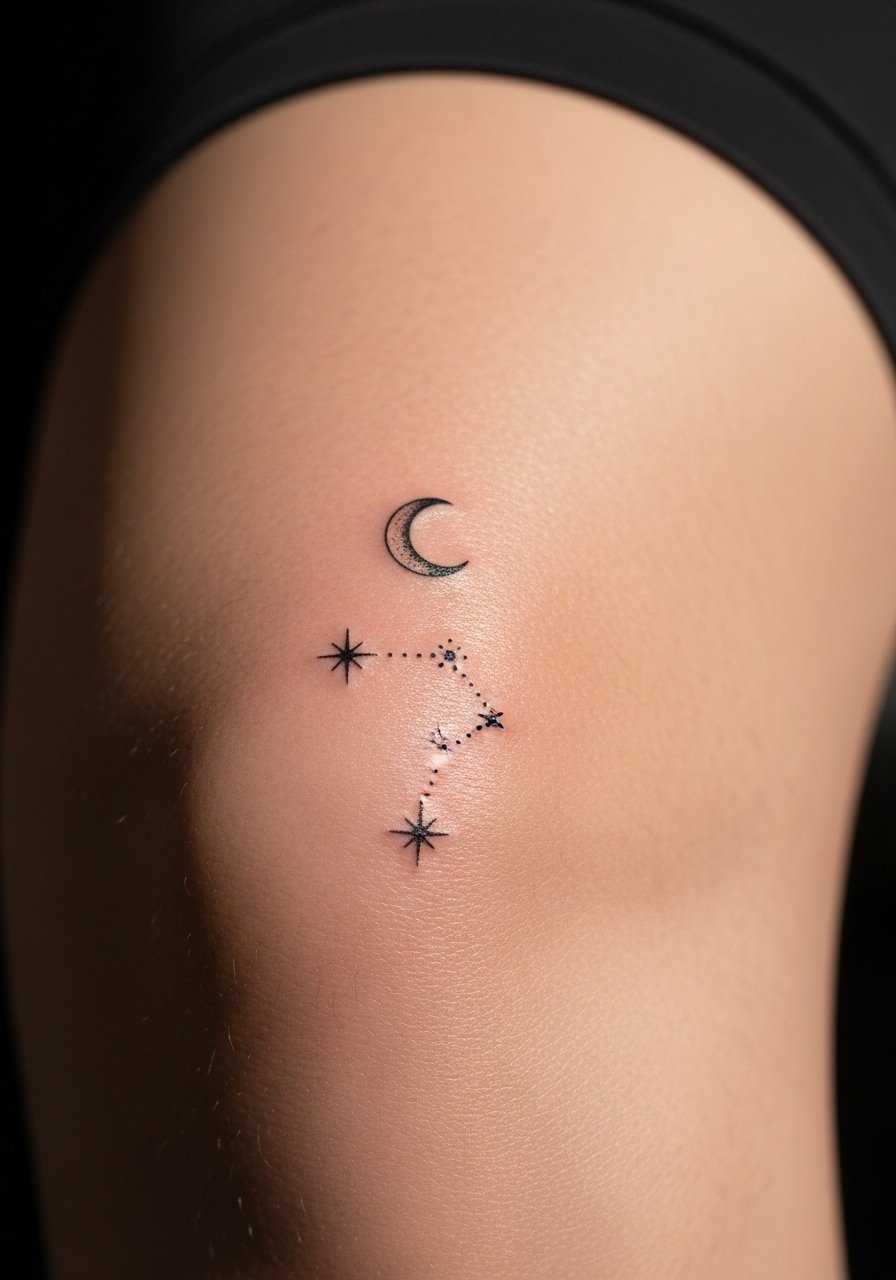
Sensitive placement note. Behind the knee moves a lot so healing involves frequent flexing. Ask your artist to map the constellation to move with the bend rather than across it. Sessions are short but the area can be uncomfortable during healing. A common mistake is placing too many dots that become indistinct. Expect some softening at six months and plan for a touch-up if you want the original crisp dots restored.
Tattoo Prep and Aftercare Essentials

Fragrance-free healing balm for tattooed skin. Use this sparingly after the initial wash to keep the area hydrated without clogging pores. Apply a thin layer for the first week during the peeling phase.
Saniderm medical adhesive bandage. A single-use occlusive dressing can reduce scab formation and protect fresh ink while you sleep. This is the one mainstream product listed here and it works differently than balms for certain healing styles.
Gentle antibacterial foam cleanser. Use a mild soap for the first week and pat dry with a clean towel. Avoid scrubbing and use lukewarm water.
Lightweight non-comedogenic moisturizer. After the peeling phase switch to a light lotion to maintain skin elasticity and color saturation.
Medical-grade second skin bandage roll. Useful for larger small pieces or if you need extra protection during travel or workouts.
Low-irritant mineral sunscreen SPF 30+. Protect healed tattoos from UV exposure which accelerates fading. Apply generously to exposed ink after the healing window.
Hydrocolloid blister pads. These are handy for localized scab protection and keep the area moist while easing discomfort.
Tattoo-safe cleansing wipes for travel. Good for quick cleanups when you are out and cannot wash the area immediately.
Every tattoo is different. Always follow your artist's specific aftercare instructions. Consult a dermatologist if you have skin concerns or unusual healing issues.
Frequently Asked Questions
Q: Will fine line moon tattoos behind the ear blur faster than on the forearm?
A: It depends. Behind the ear has thinner skin and more movement so very hairline strokes can soften sooner. If you want longer-lasting detail ask for slightly stronger line weight and examples of healed work in that placement before booking.
Q: How should I adapt a watercolor moon design if I want better longevity?
A: Ask your artist to limit saturation at the edges and to include subtle line anchors or dot work around the color. That keeps the wash from bleeding into an undefined shape and reduces the need for early touch-ups.
Q: Are micro-realistic red tones like a blood moon riskier on darker skin tones?
A: Reds and oranges can read differently across tones. If you have darker skin, request muted warm shades and layered saturation that the artist can test in a small area. Expect color shifts over time and plan for a possible refresh.
Q: Do finger and hand moons require a different aftercare routine than forearm pieces?
A: Yes. Hands and fingers face constant washing and friction so keep them protected during the first week, avoid soaking, and expect earlier touch-ups. Using a light occlusive dressing at night can help preserve early pigment.
Q: If I want an exact script with a moon on my collarbone how should I prepare the text for the artist?
A: Provide the exact word in the format you want the tattoo to show, such as "Breathe" in lowercase, and include clear reference photos of the script weight. Ask the artist to slightly thicken any script thinner than a hairline so it remains legible after healing.