
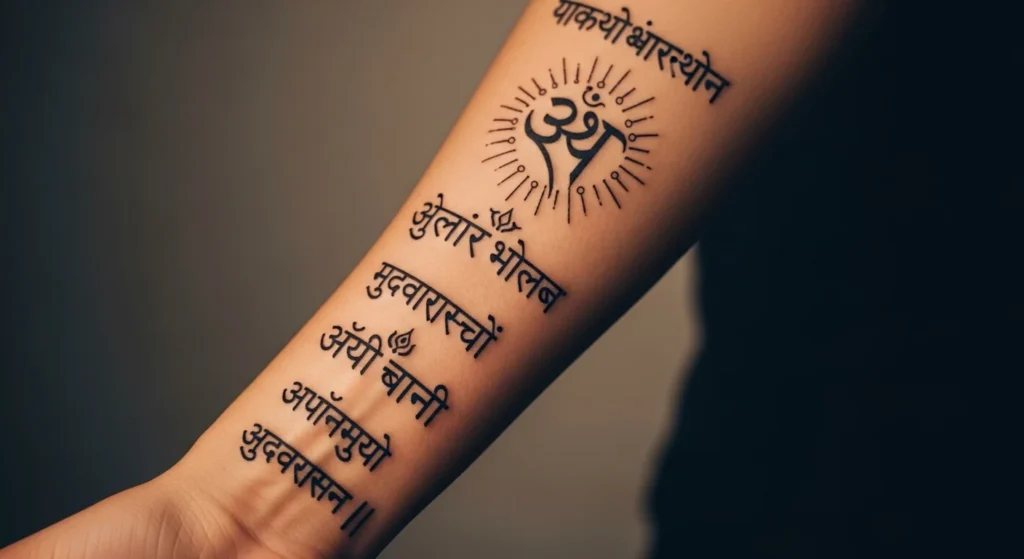
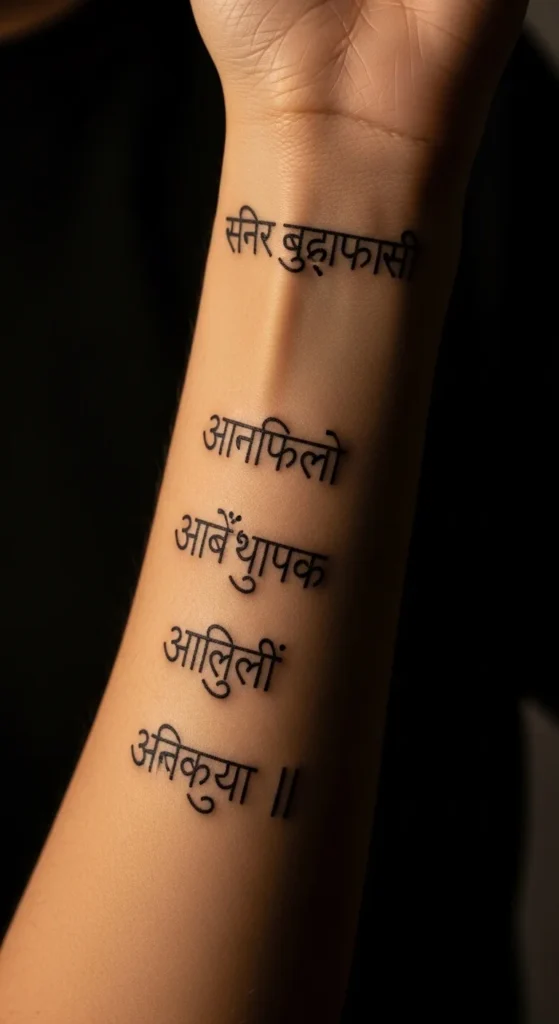
Sanskrit tattoos attract people who want more than random symbols. They reach toward inner peace, yoga philosophy, and old mantras that still feel relevant today. If you’re searching phrases like “best Sanskrit mantra tattoos” or “accurate Devanagari designs,” you’re probably worried about script mistakes, cultural respect, and placement that fits your lifestyle. This list walks through focused ideas, simple layouts, and money-saving ways to test each design before you commit, so your tattoo feels intentional, personal, and accurate on the skin.
1. Om: The Classic Sacred Symbol

Om is the sound many people meet first in yoga or meditation. As a tattoo, it works well for those who want something small yet spiritually loaded.
Keep it simple if you’re on a budget. A single Om on the wrist, sternum, or back of the neck in clean black ink takes little time in the chair. Print a few Om designs from trusted Sanskrit resources, cut them out, and tape them on different spots at home. This helps you pick size and placement without spending anything.
If you want a slightly larger piece later, you can build around it with a lotus, rays, or a circle line. For accuracy, ask a native reader or a Sanskrit-focused design service to check the shape of each curve. A five-minute review can save you from a lifetime of awkward corrections.
2. Om Shanti: Two-Word Peace Mantra

Om Shanti joins the universal sound with a word for deep peace. For many, it matches a daily meditation habit or a wish to calm down after stressful periods in life.
An easy layout is to stack the two words vertically on the inner forearm. This keeps the script readable and gives you a long, elegant line. To test it, print the phrase in several sizes, then tape it to your arm and take phone photos from different angles. You’ll see quickly if letters feel too cramped.
If cost is a concern, stick to plain black fine line. Skip extra shading or decorative flourishes for now. You can always add a thin border or small dots later during a touch-up session. Before tattoo day, share your reference with someone who reads Devanagari so you know spacing and spelling are correct.
3. Shanti: Single-Word Calm on Skin

Sometimes one word is enough. Shanti on its own works for anyone who wants a daily reminder to breathe, slow down, and respond instead of react.
For tight budgets, small finger or side-of-hand tattoos are quick sessions. Start by writing “Shanti” in Devanagari on sticky notes. Wrap them around your finger or slide them along your collarbone to see how the word bends with your body. Check the size in a mirror and with your phone camera. If the letters look too tiny, scale up a little; tiny script can blur over time.
You can pair Shanti with a minimal dot or tiny wave above or below the word, but keep decoration light so the script stays easy to read. Ask your artist about line thickness suitable for fingers, because that area can fade faster than others. Accuracy always comes first, so have the word double-checked by a fluent reader before ink touches skin.
4. Lokah Samastah Sukhino Bhavantu: Global Compassion Line
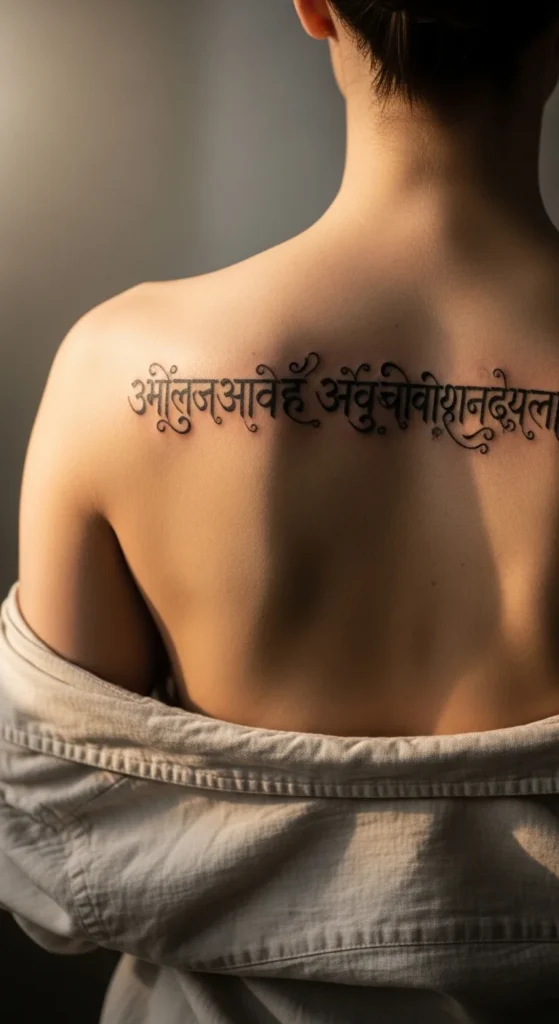
This mantra is often translated as a wish for all beings to be happy and free. It speaks to activists, yoga teachers, and anyone who wants their ink tied to service and compassion.
Because the phrase is long, the upper back or ribcage works well. To keep costs under control, keep it to one straight line in clean black ink. Use a text editor to type the mantra in Devanagari, then print it at different widths. Tape each version across your back or ribs with help from a friend, and take photos. This shows how it fits under shirts and sports bras.
If you’re worried about cultural respect, spend time learning the meaning, pronunciation, and source before tattoo day. Write it in a notebook, say it aloud, and sit with it during meditation. Finally, send your chosen version to a Sanskrit translation service or native reader for one last review. Script mistakes in long mantras are common, so a double-check feels wise.
5. Ahimsa: Non-Violence Reminder

Ahimsa reflects a commitment to non-violence toward yourself, others, and the planet. It pairs naturally with vegan or yoga lifestyles but can also stand for kinder self-talk.
A slim Ahimsa tattoo along the collarbone or inner arm keeps it close to your heart and in your daily line of sight. To plan cheaply, use a fine-tipped pen to write the script on your skin. Wear it for a day at home to see how you feel watching it in the mirror. Does it still feel right at night? If yes, you’re closer to ready.
Ask your artist for fine line work and clear spacing between letters so the word stays legible. If you want extra symbolism, you can add a tiny leaf or paw print later in a second session. Before committing, ask online Sanskrit language communities or a professional designer to confirm that your chosen Ahimsa script is correct and not based on a random font mashup.
6. Satya: Truth Inked Close to the Chest

Satya stands for truth—living honestly with yourself and others. For some, it marks a season of dropping masks and speaking more openly.
A small Satya tattoo near the heart line feels fitting. To keep costs low, design a single-word script in black with no shading. Print different fonts recommended for Devanagari and tape them over your chest to compare. Take photos relaxed and with your shoulders raised to see how the word moves with your breathing.
If modesty matters, shift the design higher or slightly toward the shoulder so it hides under most shirts. You can also place Satya along a rib line instead. When finalizing, share your chosen image with a Sanskrit-savvy person and ask them to check every letter. Bring that same printout to your appointment so the artist has a clear reference and doesn’t try to redraw the script from memory.
7. Karma: Cause-and-Effect Geometry
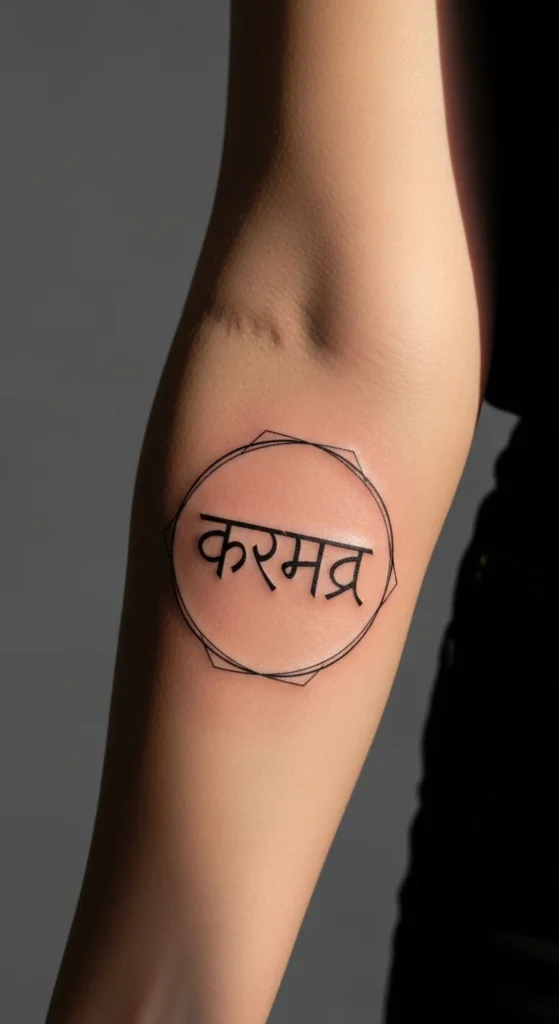
Karma is everywhere in pop culture, but the Sanskrit version adds a direct link back to its roots. It can remind you that actions carry results, and that small steps today shape tomorrow.
A simple layout is the Sanskrit word centered inside a circle or triangle on the forearm or calf. To plan at home, draw a circle on paper, write Karma in Devanagari inside, and cut it out. Move this paper around your arm to find a spot that feels natural. This saves design rework time during your session.
If you want to keep the tattoo affordable, ask your artist to use only linework. No shading, no color, just clear script and a clean shape. For extra meaning, you can leave a tiny gap in the circle to show that growth is continuous, not closed off. As always, send your script to a trusted translator so you avoid the common mistake of mixing Hindi and Sanskrit spelling by accident.
8. Prem: Love in Devanagari Script
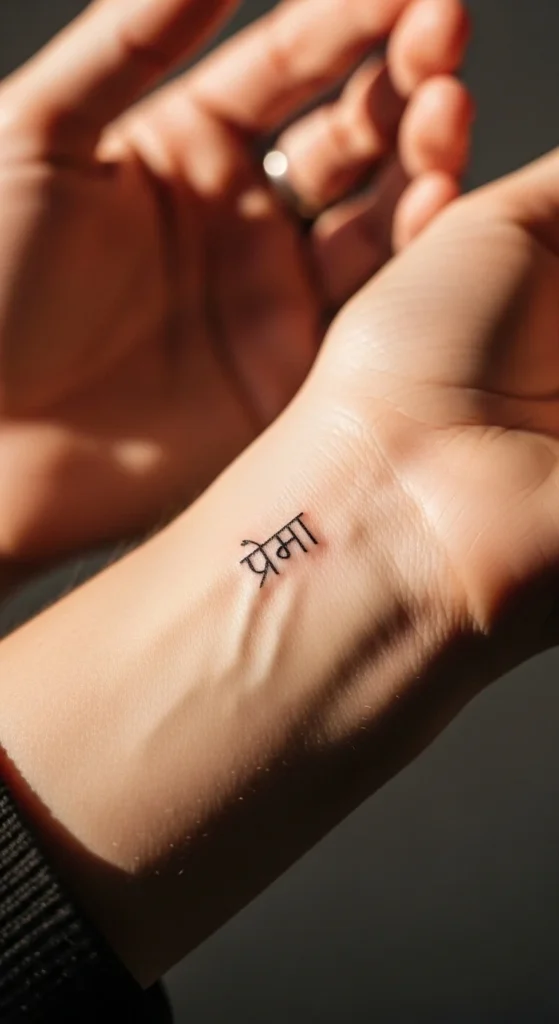
Prem simply means love—romantic, spiritual, or universal, depending on your story. It’s a gentle choice for couples, parents, or anyone healing from old hurts.
Because it’s short, Prem works nicely on the wrist, along the thumb, or near the ankle. You can keep costs down by skipping extra symbols and sticking to clean script. To test the feeling, draw Prem in Devanagari with eyeliner on your wrist, then live with it for a day. See how it looks during work, workouts, and daily tasks.
Couples can each place Prem differently to reflect personal style. One partner might pick the ribcage while the other chooses the wrist. If you’re nervous about matching fonts, have one designer create both versions so they share the same visual language. Before tattoo day, make sure a native reader checks the word, since small curve errors can change meaning.
9. Bala: Strength for Everyday Life

Bala points to strength—not just in muscles, but also in character and resilience. It’s a good pick for people recovering from illness, heartbreak, or any hard season.
A slim Bala tattoo along the side of the forearm can be both discreet and easy to show when you want. To test placement, print the word in several sizes and tape it where the forearm narrows. Bend and twist your arm in a mirror to see if letters warp too much. If they do, slide the design slightly inward or upward.
For a money-conscious approach, choose black linework only. Leave out complex shading or extra icons for now. Once you’re certain you love it, you can add a small lightning line, mountain outline, or heartbeat curve in a future session. Always have script checked carefully—Sanskrit letters can look similar to untrained eyes, and one tiny stroke can change the whole word.
10. Gayatri Mantra: Radiant Sun Sleeve

The Gayatri Mantra calls on divine light and clarity. For some, it marks a serious spiritual commitment rather than a casual trend.
Because it’s long, this mantra suits a sleeve, rib piece, or large back design. To keep things manageable, break the mantra into stacked lines rather than one long strip. Print each line, cut them into strips, and tape them around your arm or across your ribs. This lets you experiment with spacing for free before you ever book time.
If a full sleeve is beyond your budget, start with one or two lines and a small sun symbol. You can add more lines later, building the mantra over time as life allows. Always get script from a reliable source, not a random image site. Many online examples contain missing or swapped letters. Consider paying a specialist who designs Sanskrit tattoos to create a custom layout that honors the mantra’s structure.
11. Hare Krishna Mantra with Floral Surround

The Hare Krishna mantra speaks to devotion and a path toward spiritual freedom. As a tattoo, it suits those who connect with bhakti traditions or simple heart-based practice.
To keep it practical, choose a key section of the mantra instead of every repetition. This shortens tattoo time and leaves room for breathing space around the letters. A forearm layout with light lotus outlines around the script works nicely. You can test this by tracing the phrase on tracing paper and drawing simple flowers around it. Tape it to your arm and see how much space it covers.
If cost is a concern, ask for petals drawn in thin outline only, without shading. This keeps the focus on the mantra. Before inking, talk to a practitioner or teacher who knows the chant. Make sure you feel comfortable with the phrase and its use on your body, especially if you are not part of the tradition.
12. Bhagavad Gita Verse for Guidance
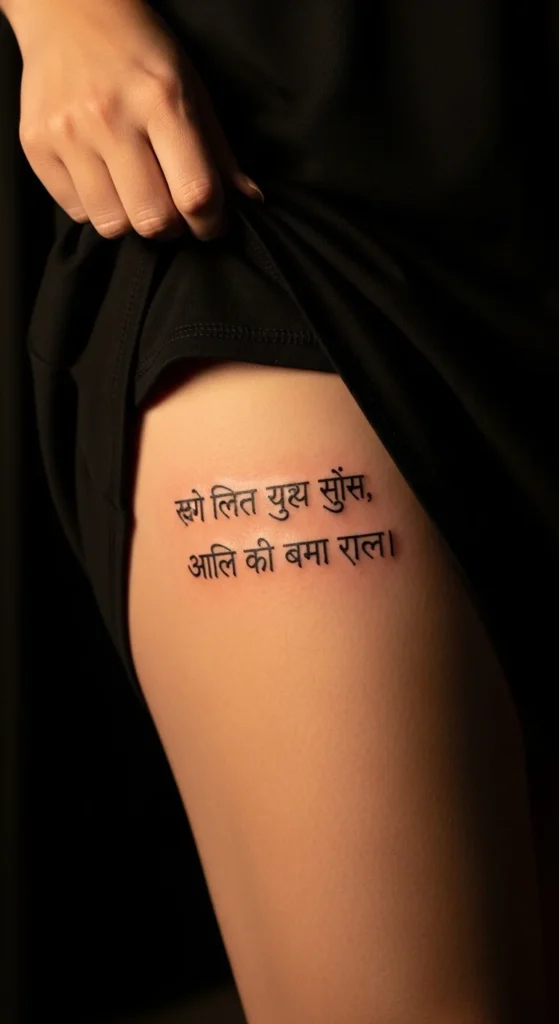
Many people find a single verse from the Bhagavad Gita that carries them through tough decisions. As a tattoo, one short verse or a key line can serve as a daily reminder.
Because Gita verses can be longer than simple mantras, the thigh, calf, or ribs give enough space. To plan, write the verse in Devanagari using a reliable source, then print and cut into strips. Tape each strip where you want the text to fall and walk around your home. Sit, stand, and squat to see how the lines stretch.
To keep cost realistic, limit the verse to two or three lines. You can always add decorative borders later. Check accuracy with someone trained in Sanskrit, not just general Hindi. Also decide how public you want this tattoo to be. Thighs hide easily under clothing, which some people prefer for spiritual text.
13. Chakra Names Along the Spine

If you work with energy centers in yoga, spine-aligned chakra names in Sanskrit can create a clean map along your back.
Start by listing the chakra names you want—maybe all seven, or just a few. Type them in Sanskrit script using a trusted converter and print them out. Cut each name into a separate piece and tape them down your spine with help from a friend. Adjust spacing so each word sits comfortably between shoulder blades, mid-back, and lower back. This DIY step costs nothing and will clarify how big each word should be.
For a budget-friendly session, keep everything in fine black line. Skip color circles until later. If you’re nervous about all seven at once, begin with just three—perhaps Anahata, Ajna, and Sahasrara—and add more over time. Always confirm spellings with a Sanskrit teacher or translator; chakra names are often misspelled online.
14. Yama or Niyama Word Stack
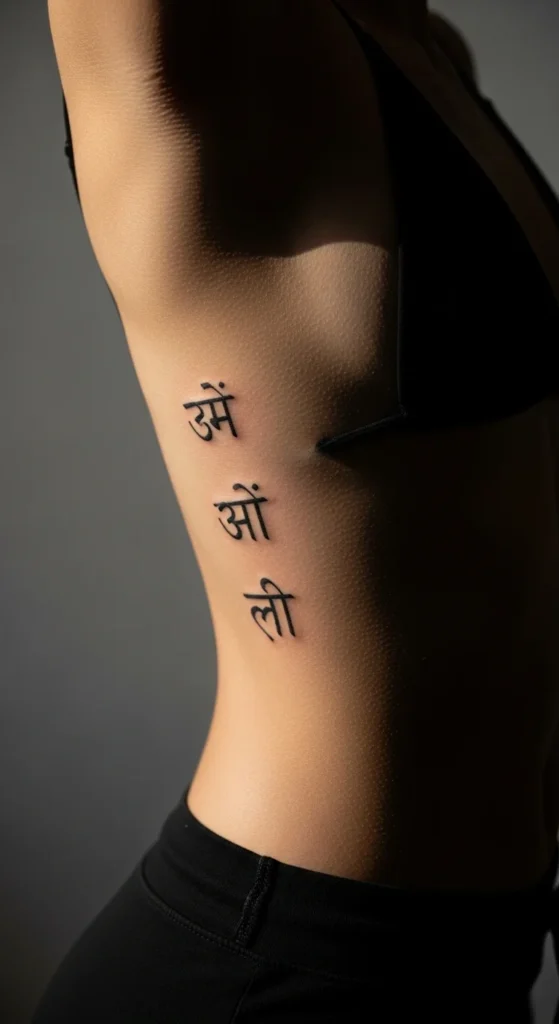
Yoga ethics—yamas and niyamas—work well as a set of tattoos. Words like Ahimsa, Satya, Aparigraha, or Svadhyaya can be stacked vertically as a personal code.
To keep it simple, pick three words that feel most relevant right now. Design them as a vertical stack on the ribs or side torso. Use a word processor to align them, print, and tape the strip to your side. Raise your arms, twist, and breathe deeply while checking in the mirror. If letters collide or curve too much, adjust your spacing.
Budget tip: start with just one or two ethics, then add more later as you grow into them. Keep the style consistent: same font, same line weight, same ink color. This helps future additions feel cohesive. Again, accuracy is everything here—mixing up letters can change meanings completely.
15. Svadhyaya: Self-Study Script
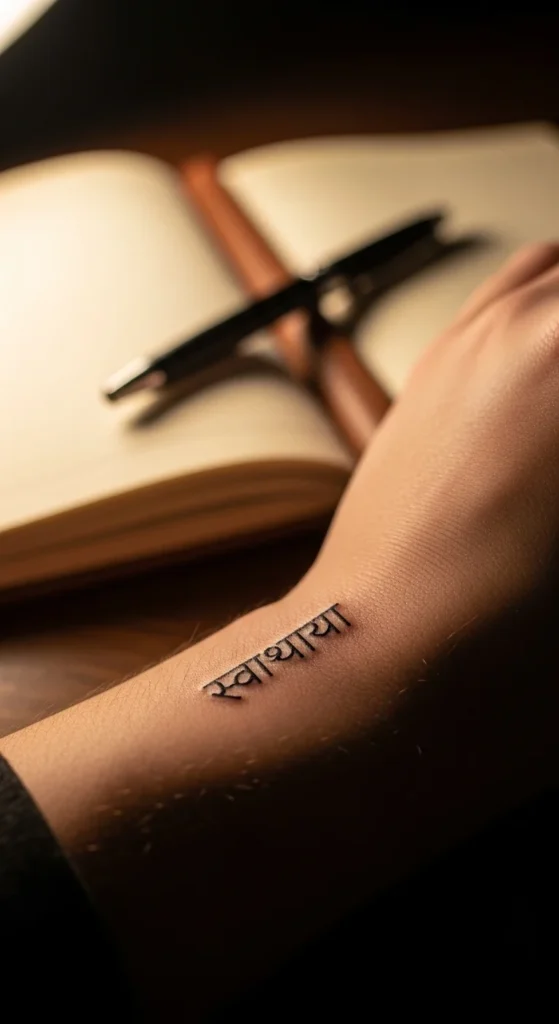
Svadhyaya points to self-study and reflection. Many people who journal or work with therapy gravitate toward this term.
A side-of-hand or inner forearm placement fits nicely, since you see it when writing or holding a book. Grab a pen and draw the script in that area as a test. Use your phone to check how it looks in photos, because others will often see it at that angle.
For cost control, keep it as pure script without extra lines. You can later add a tiny book outline, candle, or eye icon in another sitting. Because Svadhyaya is less commonly tattooed than Om or Karma, double-check the spelling with multiple resources. Consider reaching out to a Sanskrit calligrapher service to create one clear, custom version you can keep forever.
16. Ganesha Mantra for Obstacles

Ganesha is often called remover of obstacles. Pairing his mantra with a minimal elephant head suits people starting new careers, projects, or healing paths.
To keep it budget-friendly, ask your artist for a simple outline of an elephant head above a short mantra line. Avoid heavy shading or large ornamental borders. Print a mockup and tape it to your upper arm or calf. See if the proportions feel balanced.
If you want additional meaning, you can later add small ladders, steps, or paths around the design. But start with a clean base. Check the mantra through trusted sources—many tattoo examples online swap Hindi and Sanskrit or misplace dots. If you’re outside the culture, spend time learning who Ganesha is, so your tattoo feels like a relationship, not just decoration.
17. Om with Lotus Wrist Band

Combining Om with a lotus gives a simple story: sound and awakening rising from muddy waters. People who connect spiritual practice with real-world struggle often like this pair.
An easy layout is Om on the inner wrist, with a few lotus petals curving around like a partial band. To test, draw the band with eyeliner or a fine marker and wear it for a day. Watch how it looks when you type, drive, or hold a cup. If petals feel too busy, erase a few and leave more skin showing.
For a wallet-friendly version, keep to black linework without color. Make sure the Om remains the central focus; petals should not crowd the script. Bring printed references of both accurate Om and lotus shapes to your artist so they don’t improvise on such symbolic elements.
18. Watercolor Sanskrit Mantra

Watercolor tattoos in India and beyond often feature Sanskrit words floating over soft color clouds. This style works well when you want both script and painterly energy.
To plan, choose a short mantra like Shanti, Prem, or Bala. Print the word and lightly paint watercolor patches behind it on paper. This lets you test color combinations before involving ink. Show your favorite version to your artist so they can use it as a guide.
If money is tight, ask for minimal color—just one or two light shades—and keep the patch small. The script should stay clear and dark so it stands out. Make sure your artist has examples of healed watercolor tattoos in their portfolio, since this style can spread if applied too heavily. Script accuracy still matters as much as ever, so confirm it separately from the color decisions.
19. Mehndi-Inspired Sanskrit Frame
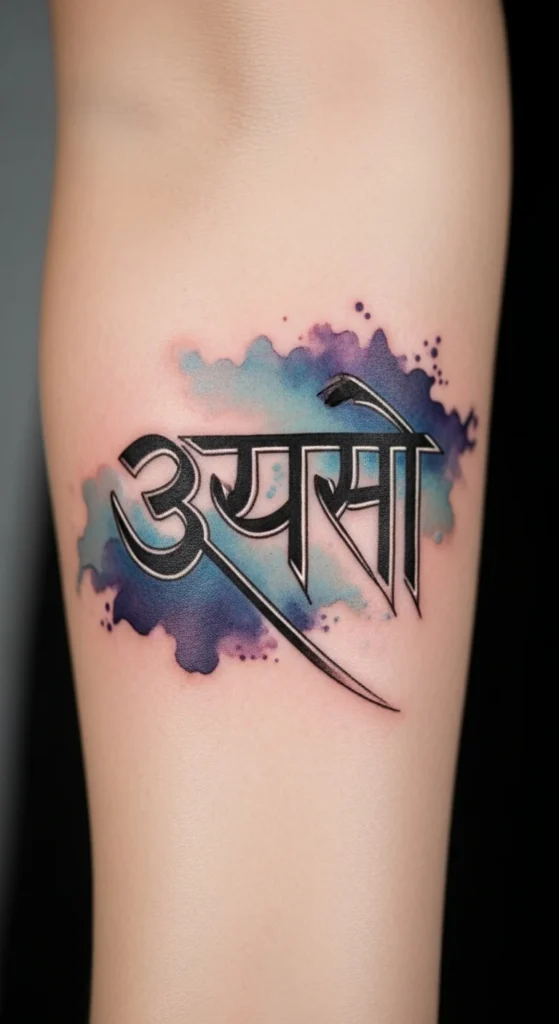
If you love henna patterns, you can frame a Sanskrit word with mehndi-style lines. This approach suits people with South Asian roots or those who feel close to the culture and want a respectful nod.
Choose one central word—maybe Ahimsa, Satya, or Prem—and keep that as the anchor. Around it, sketch simple paisley, petals, and dots, but hold back from overfilling every corner. Too many details raise cost and can blur over time.
Test the layout by drawing the frame in actual henna first. Wear it for a week, watch how it fades, and notice whether the central word still feels strong. Bring photos of your favorite henna patterns to the tattoo appointment so your artist has specific shapes to follow. Always keep focus on the script, not just the decoration.
20. Fine Line Wrist Mantra

Fine line Sanskrit is trending, especially for younger clients and first tattoos. One clean word on the wrist can be a quiet daily anchor.
Pick a short mantra or value—Karma, Satya, Bala, or Shanti work well. Ask your artist about their thinnest needle options and check healed photos of similar work. To test size, draw a line on your wrist where the word should sit, then write the script along it and snap photos. If you can’t read it easily from arm’s length, increase the height slightly.
This style is usually quick, which keeps cost modest. Avoid placing the script too close to the hand crease, where lines move constantly. A small shift higher on the forearm often ages better. Script verification stays non-negotiable: have at least one fluent reader confirm the word before you book.
21. Handwritten Calligraphy Custom Script
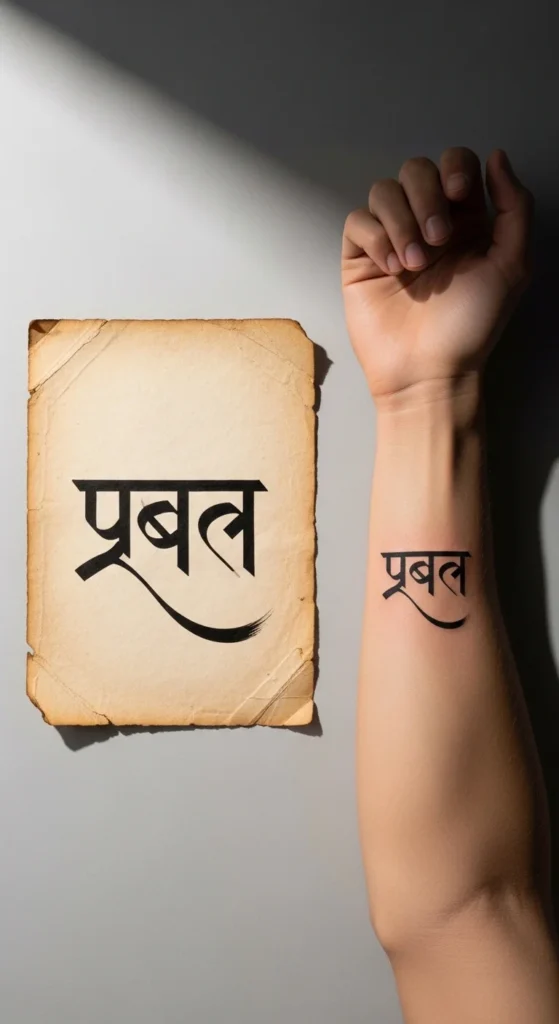
Many Sanskrit tattoo fans now work with calligraphers who design one-of-a-kind script layouts. The result looks more like artwork than a generic font.
Pick your word or phrase and reach out to a specialist who understands both Devanagari and body placement. This can be done online and usually costs less than fixing a mistake later. Ask the artist to send you high-resolution files of the script. Print them at actual tattoo size and tape them to different body spots.
Once you’re happy, bring those exact prints to your tattoo appointment. Ask your tattoo artist to transfer them directly rather than redrawing the letters. This protects the calligrapher’s careful proportions. While this path adds a small design fee upfront, it often reduces guesswork in the studio and helps you feel relaxed during the session.
22. Script + Symbol Couples Tattoo
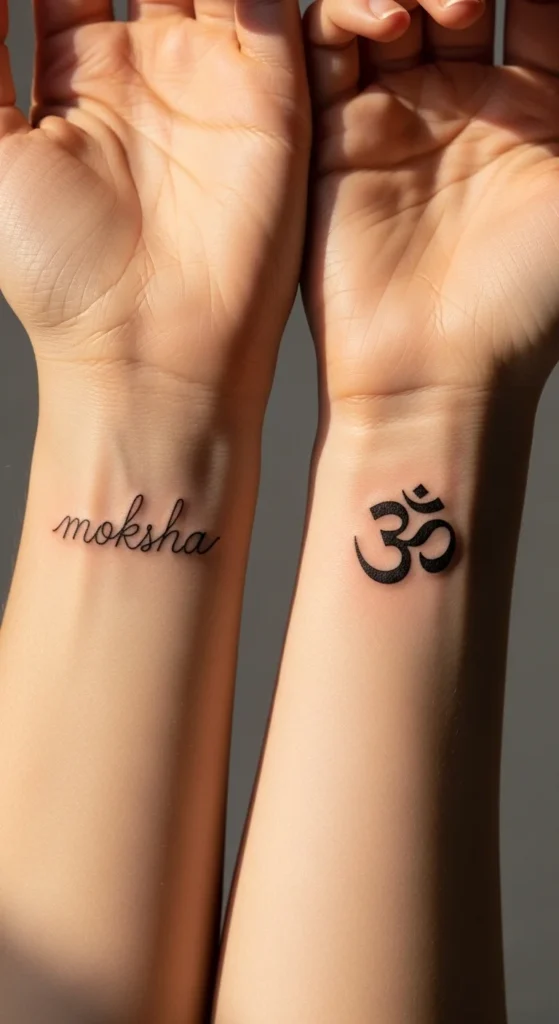
Couples often like matching tattoos but don’t always want identical designs. Sanskrit script on one partner and a matching symbol on the other can solve this.
For example, one person gets “Prem” in Devanagari, while the other wears a small heart-lotus outline. Or one partner inks “Ahimsa,” while the other chooses a tiny animal paw or leaf. To plan at home, sketch paired designs on paper and hold them next to each other. Take photos with both wrists or ankles lined up to check balance.
To keep expenses manageable, stick to thin black line and keep each tattoo small. The shared meaning matters more than size. Double-check that both partners feel informed about the word’s origin and meaning, especially if one is less familiar with Sanskrit traditions.
23. Corrected Celebrity Sanskrit Remake
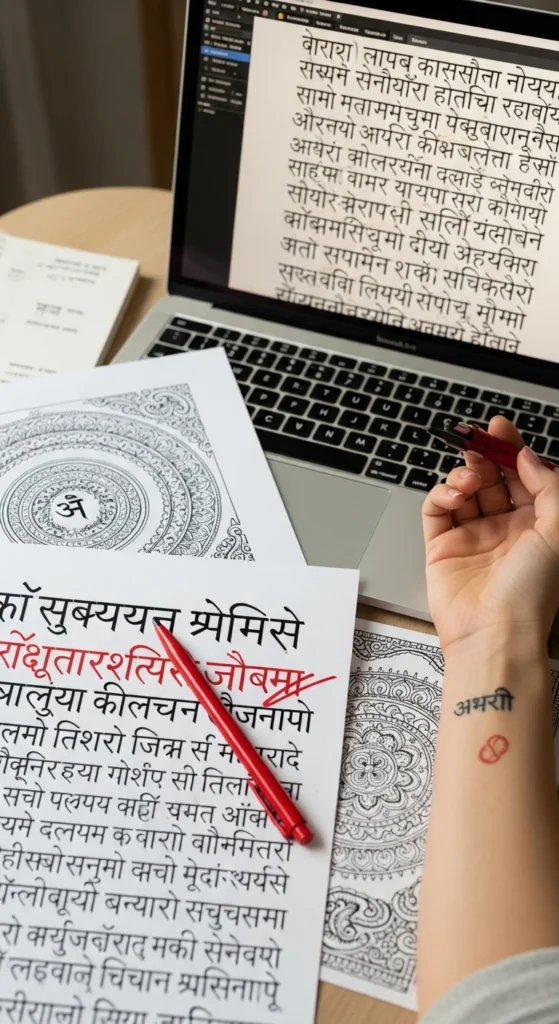
Many celebrity Sanskrit tattoos went viral for the wrong reasons: spelling errors, odd grammar, or half-translated quotes. Some people now get “fixed” versions as a quiet response.
If a celeb tattoo inspired you, do not copy it blindly. Instead, find the original Sanskrit source—maybe a verse from the Gita or a short mantra. Work with a translator and calligrapher to create a corrected, authentic version. Print that phrase and place it in the spot you have in mind: forearm, ribcage, or back.
Budget tip: choose only the key line that moves you, not the full passage. This shortens the tattoo and reduces cost. The goal here is personal meaning, not fandom. When friends ask about it, you can talk about what it means to you now, rather than repeating a celebrity story.
24. Translation Verification Tattoo Plan
Because Sanskrit tattoos can go wrong so easily, some people treat translation and verification as part of the design itself. They build a little process around it.
Before picking any word, create a file with screenshots from at least two trusted sources, side by side. Ask a fluent friend, teacher, or paid translator to comment directly on that file. Keep all corrections visible. This costs less now than laser sessions later.
You can also write the chosen phrase by hand on your skin several times over a week. Each time you draw it, compare it to your verified reference to catch small letter slips. By the time you sit in the tattoo chair, your eyes will know what looks right. This “verification ritual” becomes part of your story with the tattoo, not just a boring step.
25. Tiny Starter Sanskrit Tattoo (Test Placement)

If you’re new to tattoos or to Sanskrit script, starting tiny is a smart way to test both your pain tolerance and your long-term comfort.
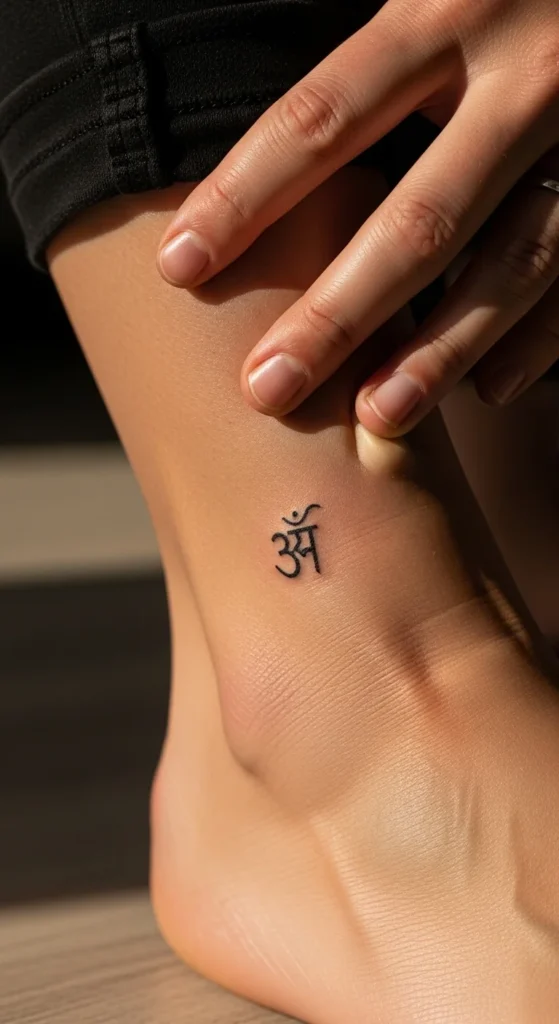
Pick a short symbol like Om, or a small word such as Prem or Bala. Choose a low-pressure spot: near the ankle bone, behind the ear, or on the side of the wrist. Use temporary tattoos or henna to try the design for a week. Notice whether you still feel connected to the meaning after seeing it daily.
A micro tattoo usually costs less and takes little time. Still, don’t rush translation. Even tiny script deserves full care. If you enjoy living with this first piece, you can later add matching words up the arm or leg, slowly building your own Sanskrit story over time.
Conclusion
Sanskrit tattoos can carry mantras, ethics, and stories that stay with you long after the session ends. When you choose words with care, verify every letter, and give yourself time to test placements with paper or henna, the result feels thoughtful instead of random. Pick one idea from this list that speaks to your current stage of life, research it well, and sketch a simple layout at home. When you finally sit in the chair, you’ll know exactly why that mantra belongs on your skin.