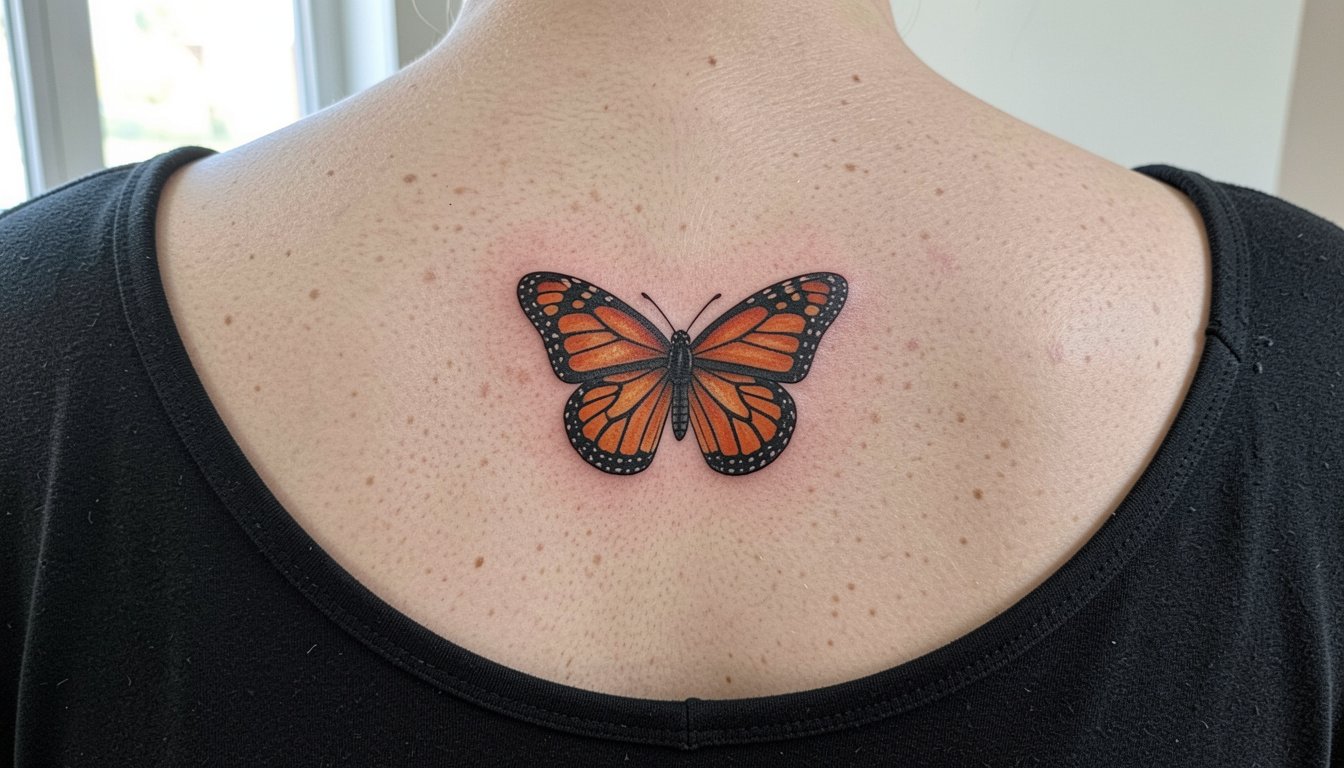
Trends favor tiny monarchs on wrists and behind-the-ear spots, but those placements face heavy wear, rubbing, and sun that wash out detail fast. Pain, blowout risk, and fading will shape which realistic approach you choose. This list leans toward realistic techniques and placements that keep wing veins and orange saturation readable over time while noting when a bolder treatment is the smarter call.
1. Inner Forearm Realistic Monarch with Open Wings
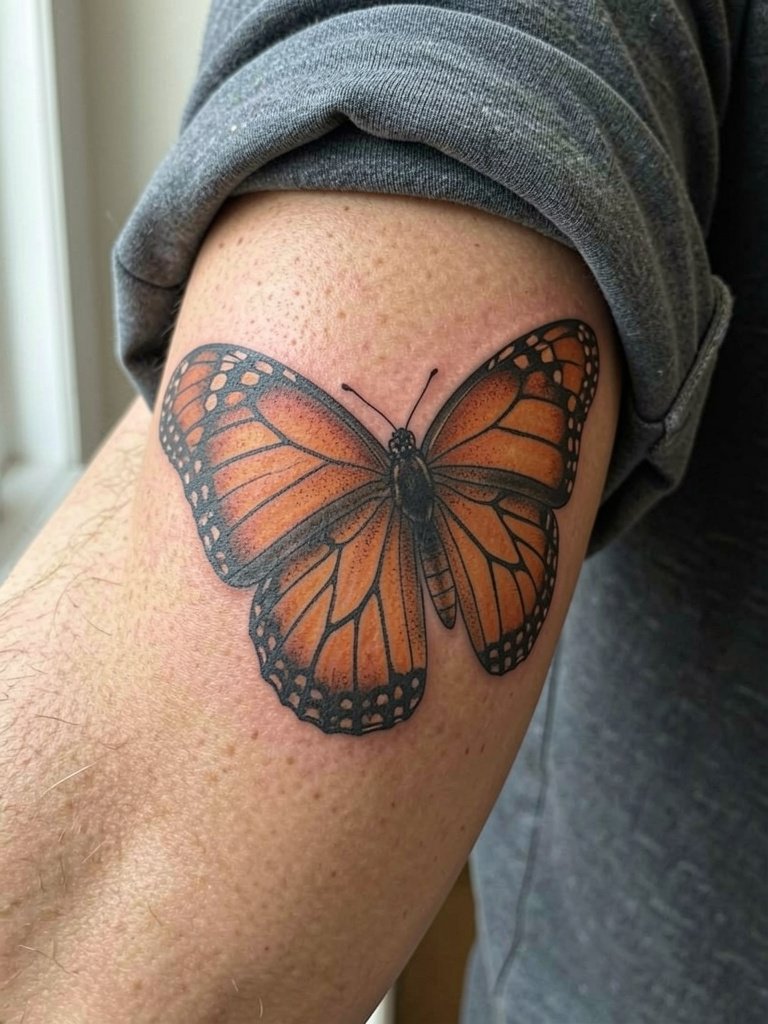
This placement shows off the monarch's wing span and linework without extreme friction. For a realistic look, ask for defined vein linework with slightly heavier outer lines so the silhouette reads as the color softens after a year. Expect a one to two hour session, moderate pain on the underside of the forearm, and a touch-up at 12 to 18 months to refresh saturation. Common mistake is requesting single-needle micro detail too small for the forearm width, which blurs faster. Wear rolled sleeves in the weeks after healing to avoid constant rubbing and show the piece off with short-sleeve shirts and a linen short-sleeve button-up when you want it visible.
2. Wrist Wrap Monarch in Micro-Realism
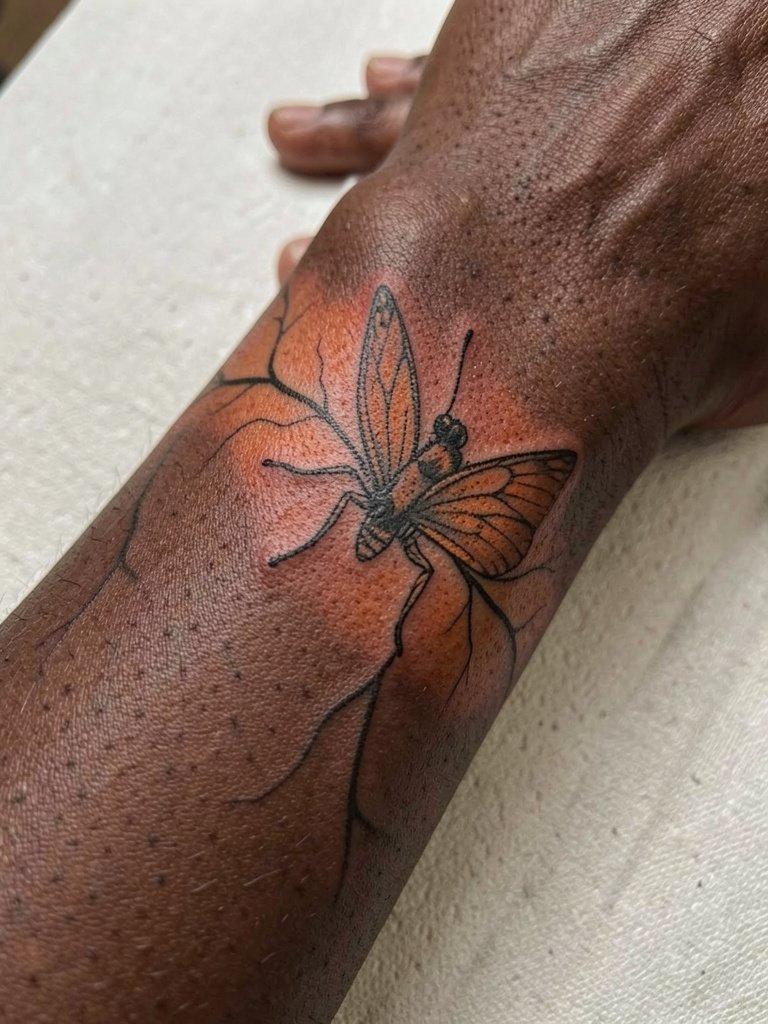
The wrist is high-friction and often fades fastest, so this micro-realism wrap works best with slightly bolder outer lines and conservative single-needle inside detail. Session time is short, under an hour, but expect more frequent touch-ups. Blowout risk is real here, so ask the artist to place slightly thicker vein segments and allow spacing in the wing spots. Pain is higher than forearm but tolerable. For appointments wear a short-sleeve tee and a loose bracelet-style watch so the artist has clear access and you can test visibility with accessories.
3. Collarbone Monarch with Subtle Shadowing
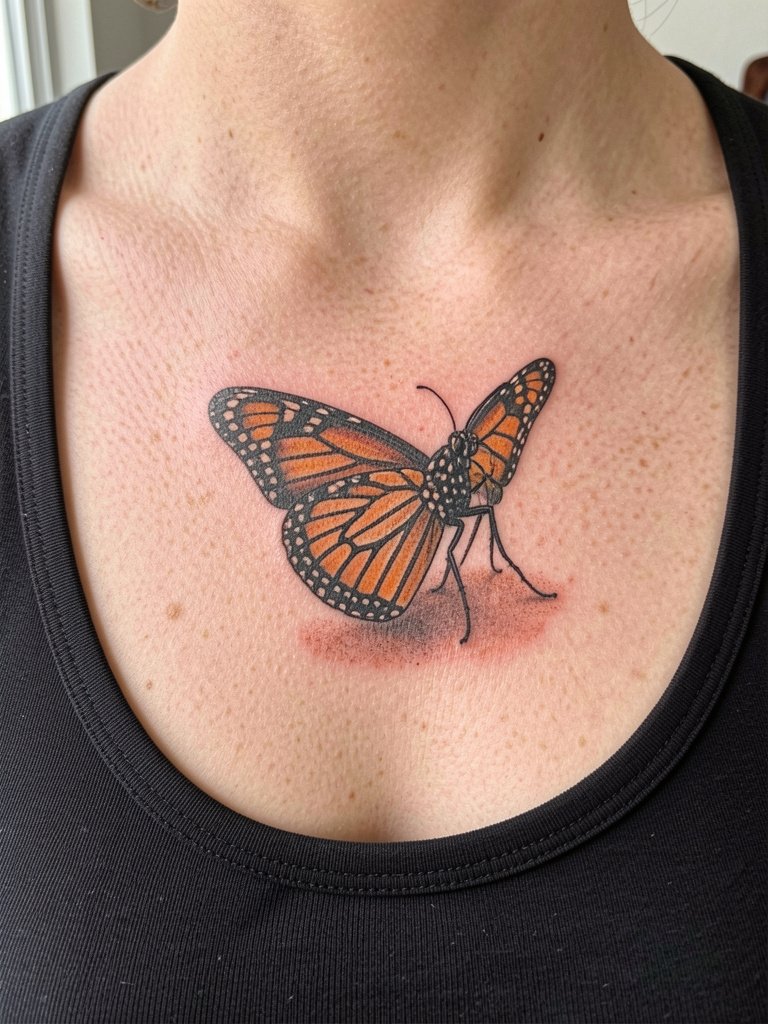
The collarbone spot gives movement to the wings and reads beautifully with minimal shadowing. Pain is a medium to high depending on bone prominence, and sessions run around one to one and a half hours. To keep the orange from washing out, request moderate saturation rather than sheer watercolor fills. A common mistake is asking for tiny filigree near the clavicle where bone causes the needles to skip, so specify solid body saturation with delicate inner veins. Wear open-neck tops like a wide V-neck linen tee to highlight the piece without rubbing the area during healing.
4. Thigh-Side Monarch with Stipple Shading

This lateral hip placement gives a low-friction canvas for stipple shading and strong saturation that ages well. Session time is typically one and a half to two hours with mild to moderate pain. Ask for denser saturation along the wing margins and lighter stippling inside the wings for depth that holds through sun exposure. A frequent error is making the design too small relative to the hip curves, which compresses the veinwork. For show-off outfits choose low-rise waistlines or high-slit skirts like a flowing midi with side slit to frame the wing without covering it.
5. Sternum Monarch with Negative Space
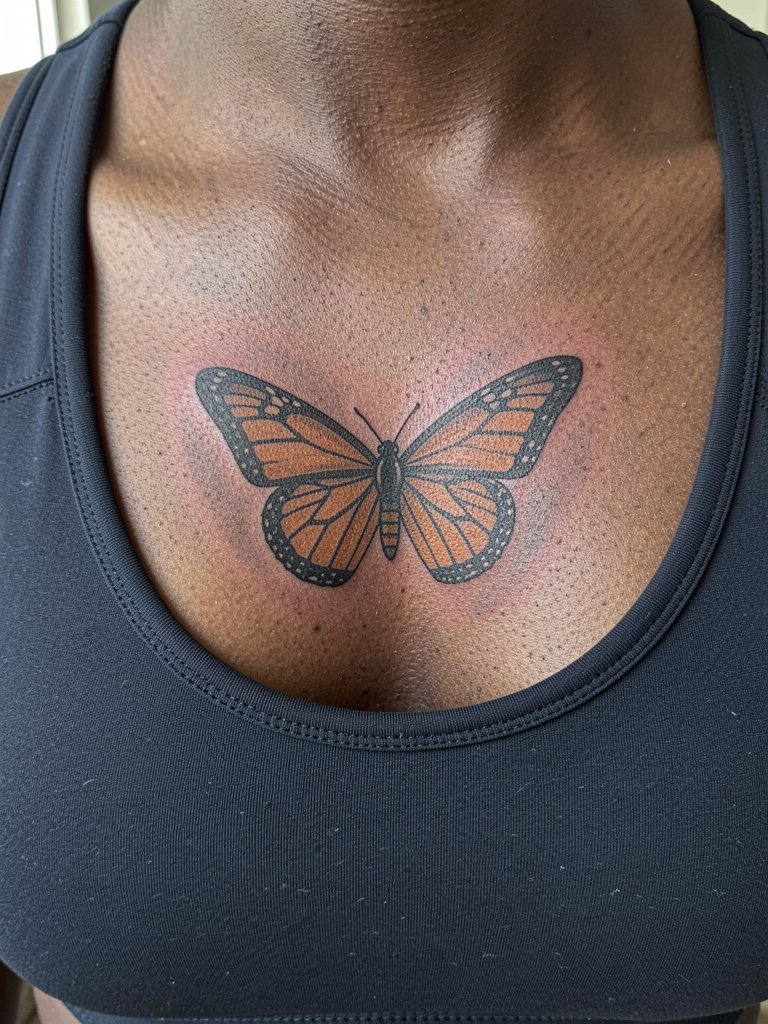
Sternum placements take longer to heal and require specialized experience because of curvature and motion from breathing. Pain tends to be higher here and sessions may be split. Request slightly wider spacing between wing veins and conservative saturation near the breast crease to avoid early pooling. Artists disagree about single-needle detail on sternum. One camp argues that tight single-needle work blurs quickly in this flexing area. Another camp says expert depth control and spacing let single-needle hold up. Respect either outcome by choosing an artist experienced with chest curvature. For session wear bring a fitted sports bra or bandeau for easy access and modest coverage.
6. Ankle Monarch Landing on a Flower
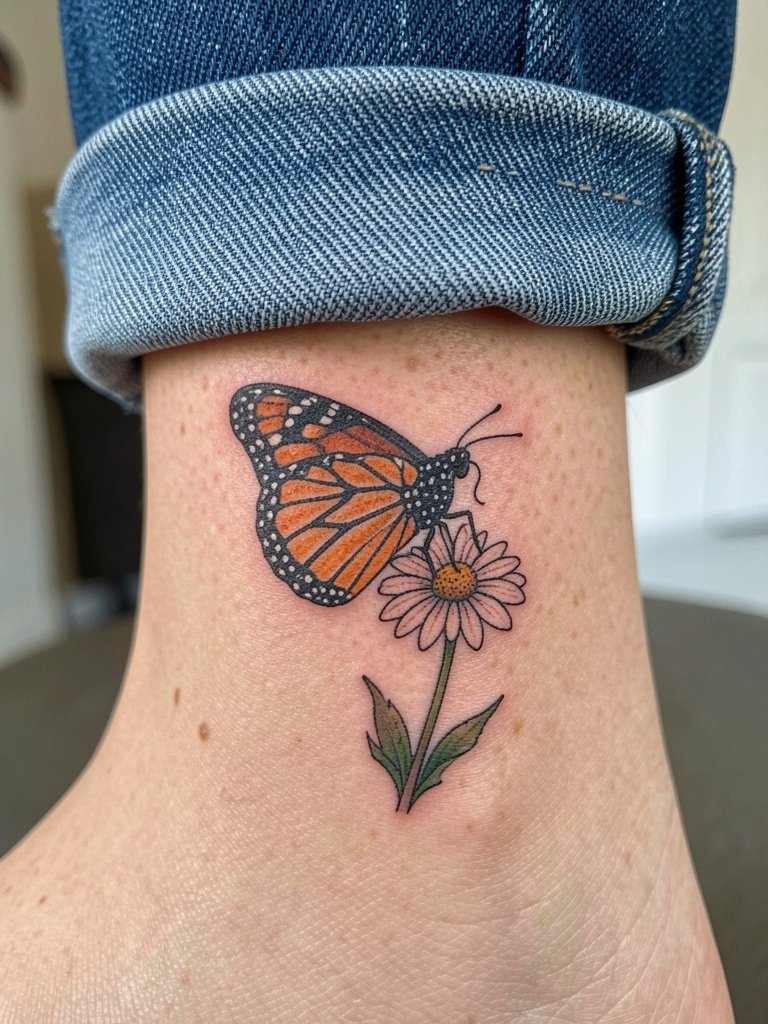
Ankle pieces are charming but suffer from constant friction and shoe rubbing. For longevity, request bolder outer lines around the wings and slightly muted inner shading so touching up keeps the original look. Expect a short session under an hour, higher sensitivity near the malleolus, and potential touch-ups at the one year mark. Common mistake is tiny detail on the joint that blows out. For session footwear wear slip-on shoes or sandals and bring a pair you can tie loosely so the artist can access the area without pressure. When showing it off, pair with cropped trousers or rolled cuff jeans to keep the ankle visible.
Session Day Picks
The forearm, collarbone, and ankle placements above have different access needs and friction profiles, so three kit items smooth the session and the first week of healing.
-
Stencil transfer paper kit. Lets you preview how the monarch will sit on curved areas like the collarbone and lateral hip before any ink goes in.
-
Topical numbing gel. Applied as directed before chest or sternum sessions eases sensitivity for longer sittings without affecting linework when used correctly.
-
Thin protective film roll. Handy for low-irritation coverage on ankles and wrists during the first days when friction is highest.
-
Fragrance-free gentle body wash. Gentle cleansing without perfumes helps keep orange pigments from being stripped during showers.
-
Aquaphor Healing Ointment. A thin layer for the initial 48 hours locks in moisture for realistic color fields that need to settle before scabbing.
7. Calf Monarch in Motion

Calf placements are forgiving and great for medium-to-large realistic monarchs. Linework holds well because skin is thicker and less prone to sun exposure if you cover it. Sessions are comfortable and can run one to two hours with low to moderate pain. A practical consultation point is mapping wing tip curvature to the calf muscle so the monarch curves with movement. Avoid asking for very fine antennae that are thinner than the surrounding hairs since they may blur. For daytime reveal wear midi skirts or cycling shorts and pair with a linen midi skirt to show the art without constant sun stress.
8. Behind-the-Ear Tiny Monarch in Single-Needle
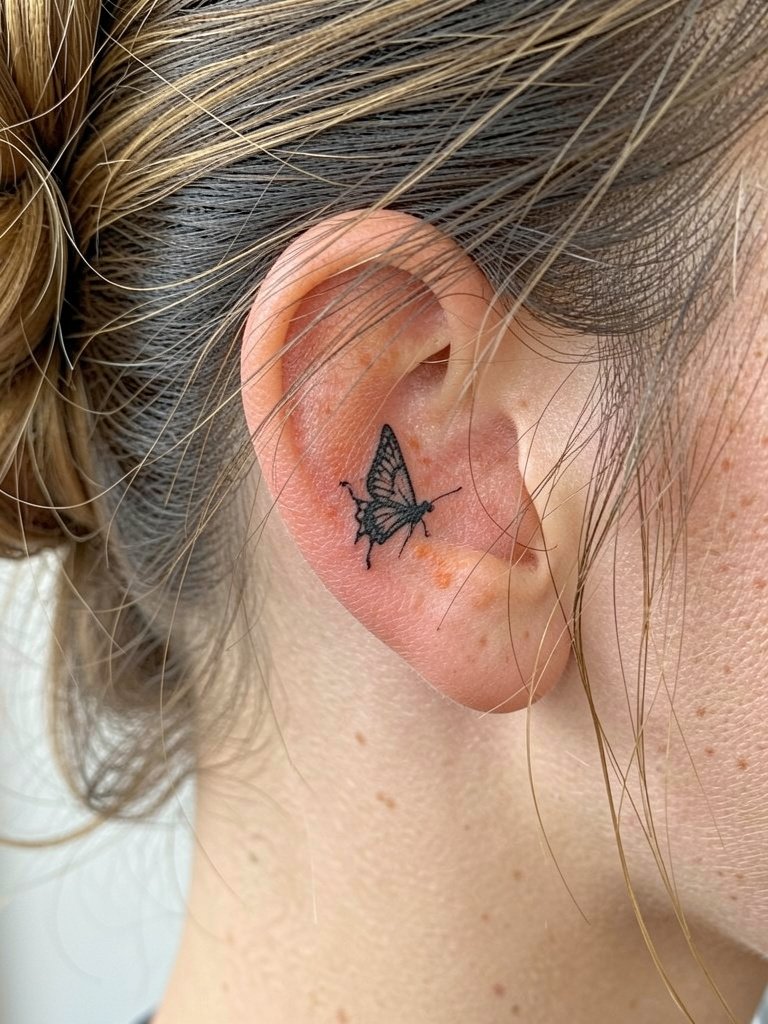
Behind-the-ear monarchs are delicate and best done as simple silhouettes or minimal vein hints. Pain is low to moderate, session under 45 minutes, but the area is mobile and small so expect the need for touch-up sooner than on limbs. Ask for slightly heavier outlines around the wings to lock the tiny shape against natural healing. A common mistake is requesting full-color wings in this tiny zone, which often fades into patchy orange. For a discreet reveal wear hair updos or headbands like a simple fabric scrunchie that keeps hair away without tugging the healing area.
9. Ribcage Realistic Monarch with Flowing Antennae
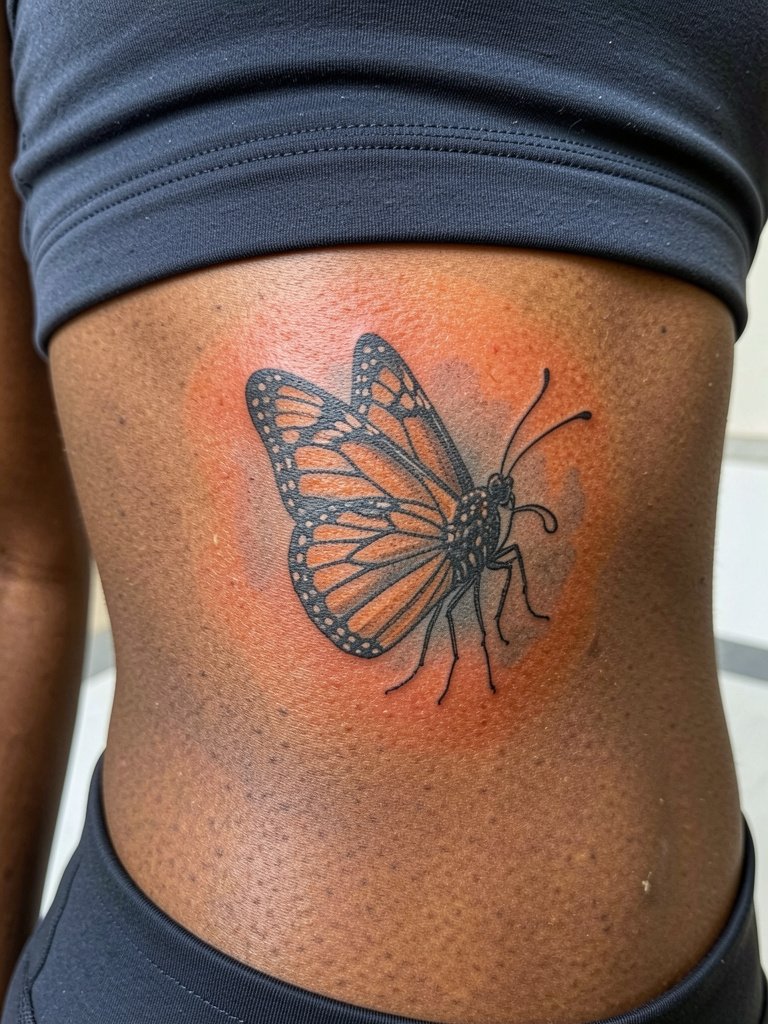
Ribcage pieces flex constantly and can be painful. Sessions often split into multiple sittings and require careful depth control for fine linework. Artists are split on fine-line ribs. One camp says the skin stretch blurs single-needle lines within two years, especially near the breast crease. The other camp says with slightly wider spacing and controlled depth, fine lines can settle cleanly and show great detail. If you prefer long-lasting wing veins, request moderate line weight and conservative spacing rather than ultra-fine single-needle veins. For the session wear a fitted crop top so the artist can access the ribs without fabric movement.
10. Back Shoulder Blade Monarch Pair
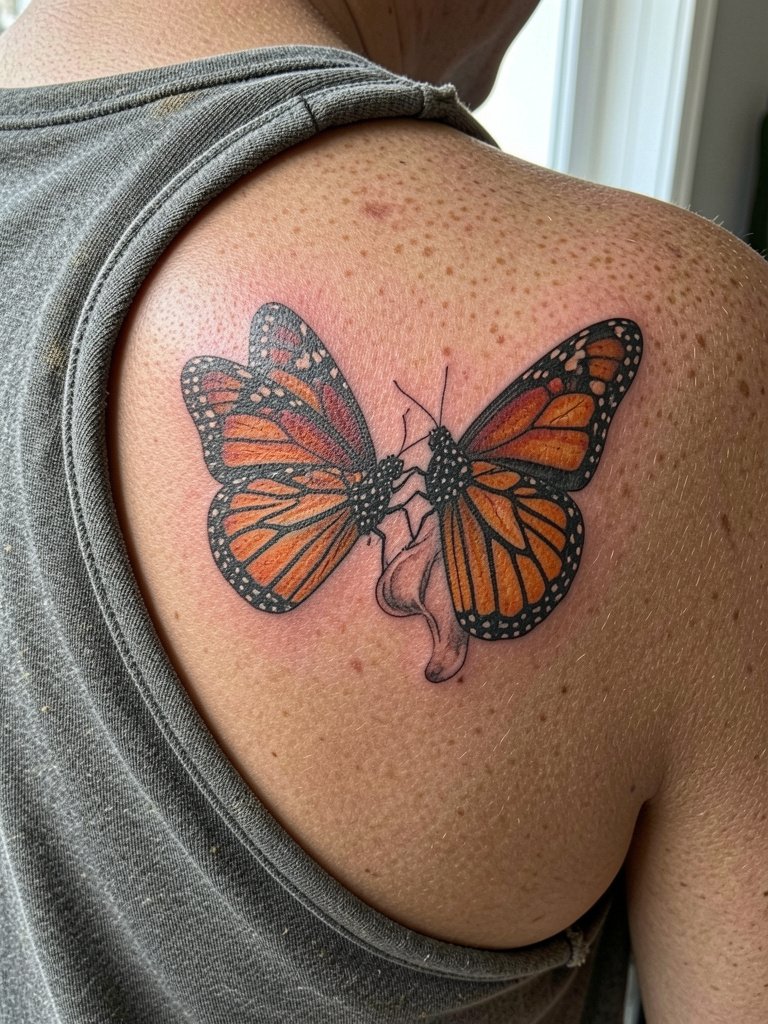
The shoulder blade is ideal for slightly larger realistic compositions and layered wing detail because it avoids year-round sun exposure if you choose. Sessions can be two to three hours and pain is moderate since muscle cushions the needles. Discuss how the pair moves with shoulder range so wing tips do not distort when you lift the arm. A mistake is centering both butterflies too close to the spine where stretching causes blur. For outfits that complement the placement, choose open-back tops or strappy dresses such as an open-back slip dress that frame the artwork.
11. Finger Tip Monarch Accent
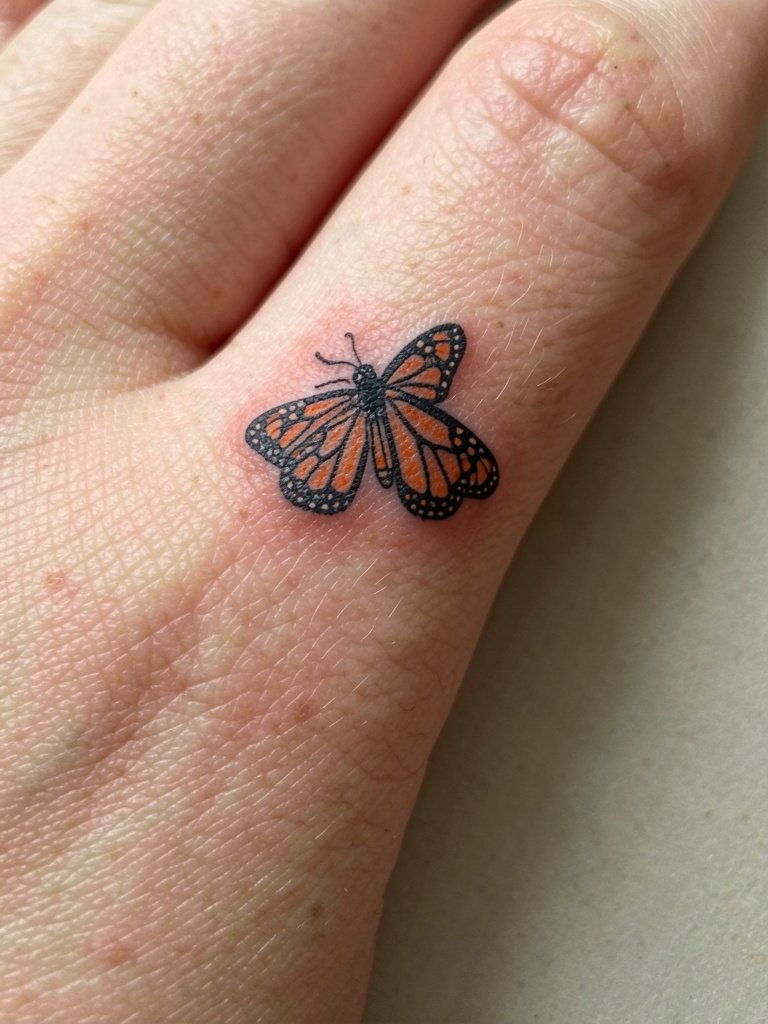
Finger tattoos face the highest touch and wash frequency and often need frequent touch-ups. For a fingertip monarch, favor bold outer shapes and minimal interior veins so the silhouette remains readable. Expect a very short session but plan for a touch-up at six to twelve months. Common mistake is insisting on micro-realism here, which smooths out with daily use. For the appointment wear rings removed and bring a jewelry travel pouch so nothing interferes with the area during inking.
12. Realistic Monarch with Dew Drops on the Thigh
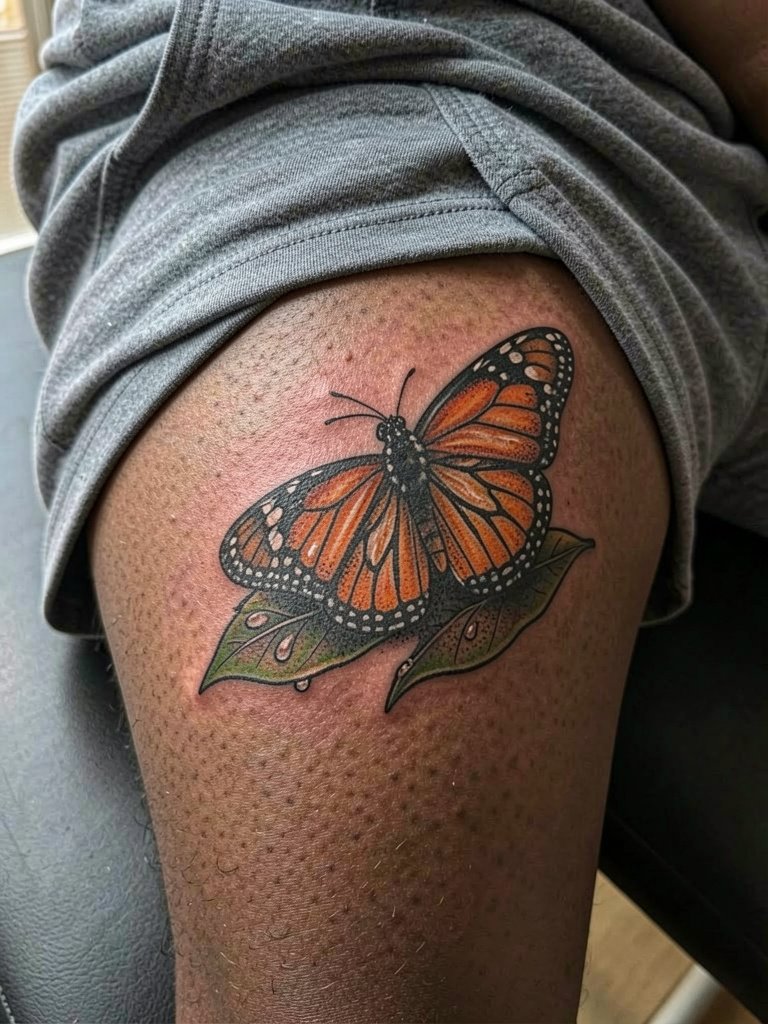
The upper thigh is low-friction and great for detailed realism including dew highlights. Sessions are comfortable and can take two hours or more, with mild pain and excellent color retention. Ask for slightly denser saturation where the wing margins meet the body so the orange reads well if you prefer less frequent touch-ups. Avoid placing tiny white highlights too close to heavy flesh folds where they can disappear during healing. For revealing looks, choose mid-thigh skirts or shorts like a pair of tailored bike shorts that keep the piece visible without daily sun exposure.
13. Minimalist Back-of-Neck Monarch
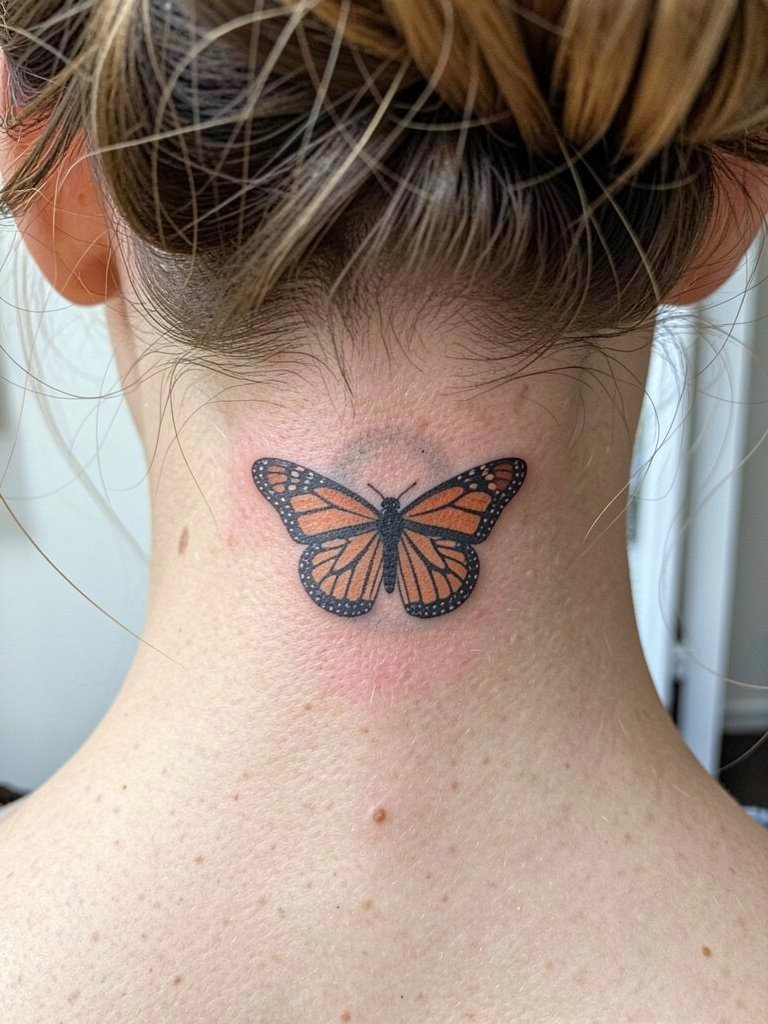
The nape is discreet and shows well with pulled-back hair. Pain is low to moderate and sessions are short. Note that sun exposure while wearing low-back haircuts can fade color, so plan for sun protection. A common mistake is requesting ultra-fine veins in this area; choose slightly stronger linework so the shape persists. For hair-up days use simple accessories like a neutral hair claw clip to keep the tattoo visible and free from irritation while healing.
14. Realistic Monarch Sleeve Accent Piece
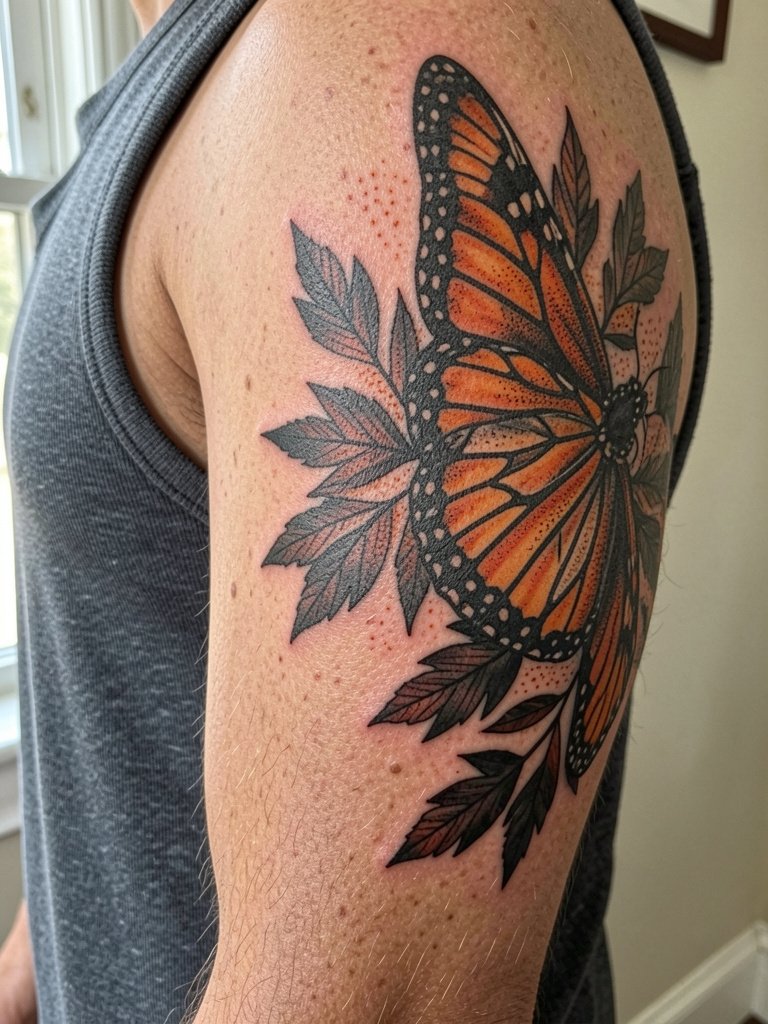
Integrating a monarch into a sleeve gives context and protection for color retention. Session blocks vary with size; expect multiple sessions and moderate pain across the upper arm. Ask the artist to plan the monarch as a focal point with surrounding negative space so the wings do not get lost when the sleeve grows. A mistake is overloading surrounding elements that compete with the butterfly. For a polished look, wear sleeveless shirts or a muscle tank to display the work between sessions.
15. Sternum Accent with Micro Dot Work
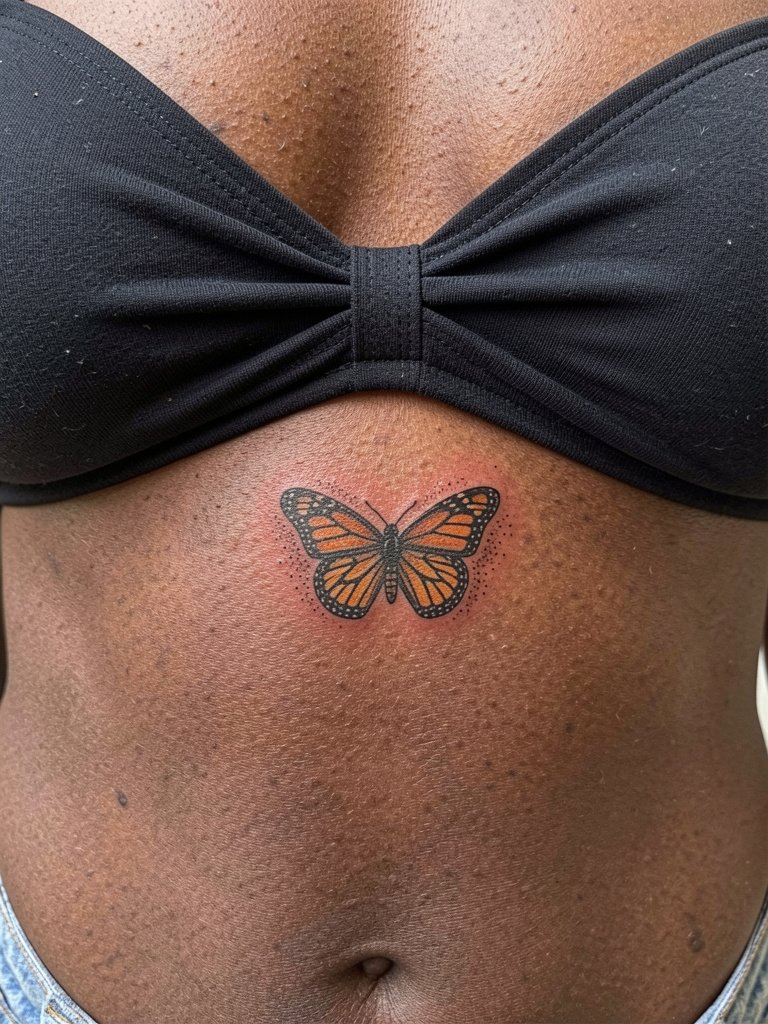
Micro dot work on the sternum can look delicate and structured if planned around natural curves. Sessions are sensitive and may be split; pain can be medium to high. To reduce blurring, ask for heavier outer border lines and controlled dot density. A pitfall is insisting on ultra-fine dots directly over the sternum where motion causes merging. For session comfort choose supportive, fitted undergarments that can be left in place during work so you feel secure.
16. Realistic Monarch on the Lower Back
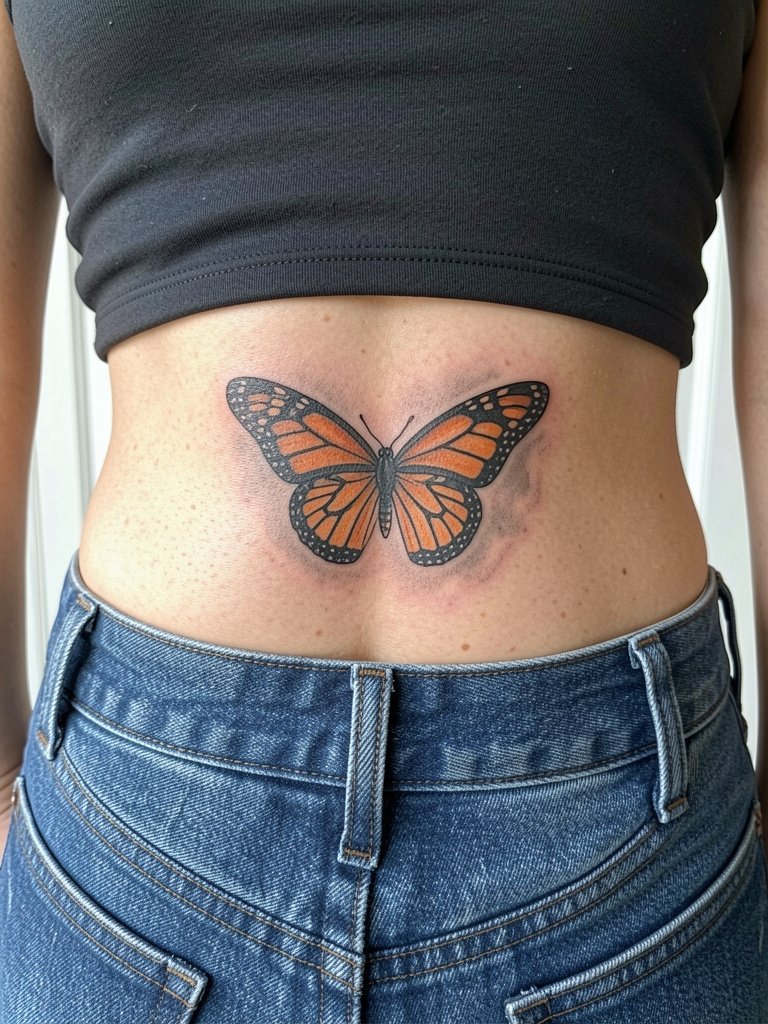
Lower back is low-friction and supports larger realistic work with minimal daily wear. Sessions are comfortable and can take multiple hours. For longevity, request slightly denser pigmentation at the wing margins and moderate shading toward the body. A common error is placing the design too low where waistband friction causes fading, so map the placement relative to common clothing lines. When showing the area off wear low-rise jeans or crop tops like a cropped tank top.
17. Realistic Monarch Over a Scalp Scar
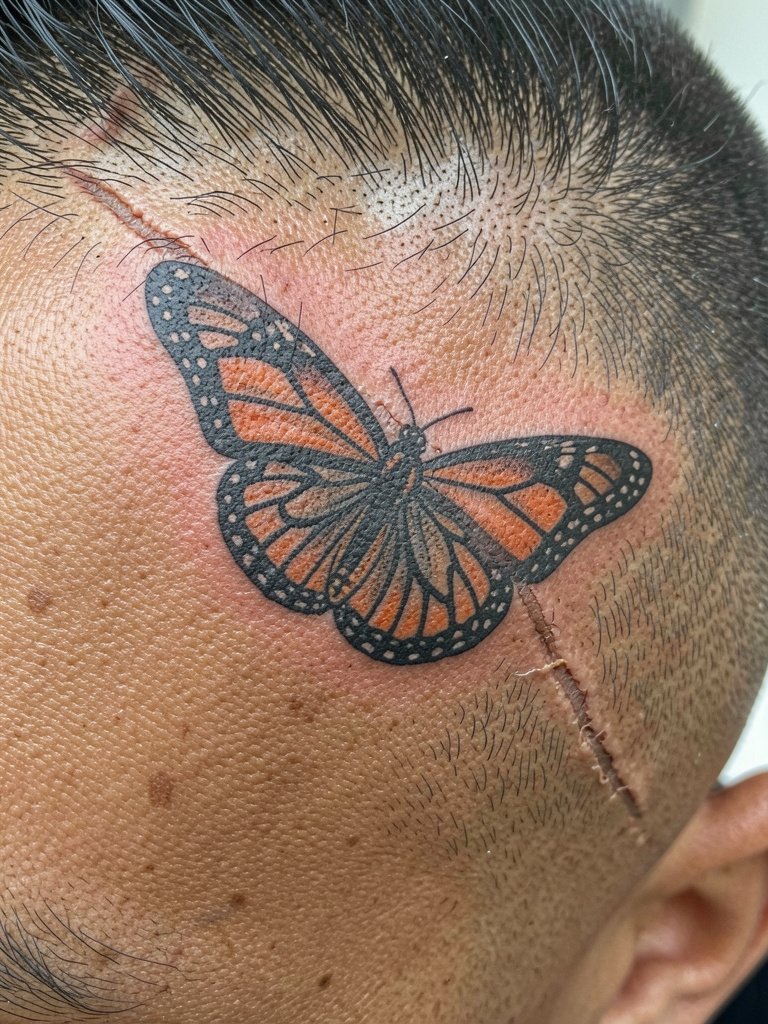
Tattooing scar tissue requires an artist experienced with variable skin density because scars absorb ink differently and can leave patchy saturation. Sessions may be longer and require touch-ups tailored to healed results. Tell the artist the exact scar age and texture so they can plan line weight and saturation accordingly. A mistake is assuming standard healing timelines apply; scars can take longer to settle. For discrete presentation keep hair length in a style that does not rub the area and consider headwear that does not press on the ink during early healing.
18. Realistic Monarch with Geometric Backdrop
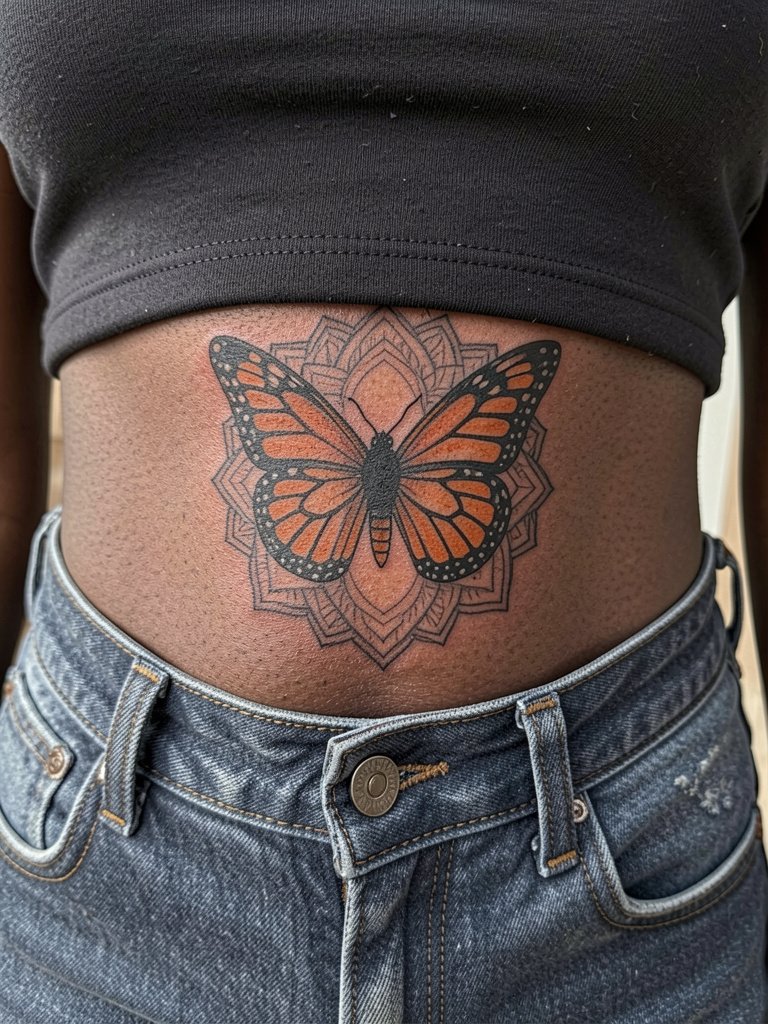
Pairing realism with geometry can frame the monarch and reduce the visual impact of any future fading by relying on bold backdrop lines. Sessions will be longer than single-piece spots and may need two sittings. Discuss how tight the geometric lines should be so they do not crowd the wings. A common mistake is over-detailing the backdrop at the same scale as the monarch, which makes the butterfly read smaller. For outfit pairing, choose high-waisted skirts or crop tops like a high-waist skirt so the composition can be displayed.
19. Realistic Monarch on the Palm Edge Accent
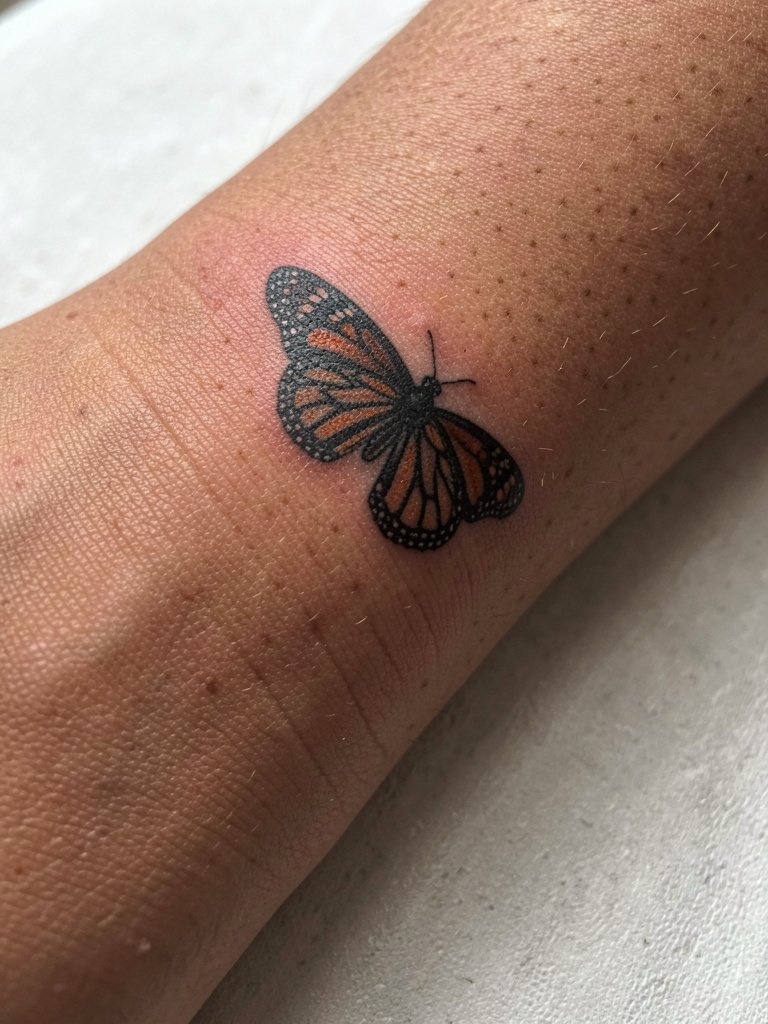
Palm-edge tattoos are high-maintenance because skin there regenerates rapidly and ink fades quickly. For this location, favor bold silhouettes and avoid intricate interior veins. Sessions are short but multiple touch-ups are the norm. A common misstep is expecting palm-edge detail to last like arm work. If you want longevity, plan for yearly refreshes and choose thicker borders. For daily wear consider gloves or barrier protection during heavy manual work until healed.
20. Realistic Monarch with Gold Leaf Accent (Non-metallic Color)
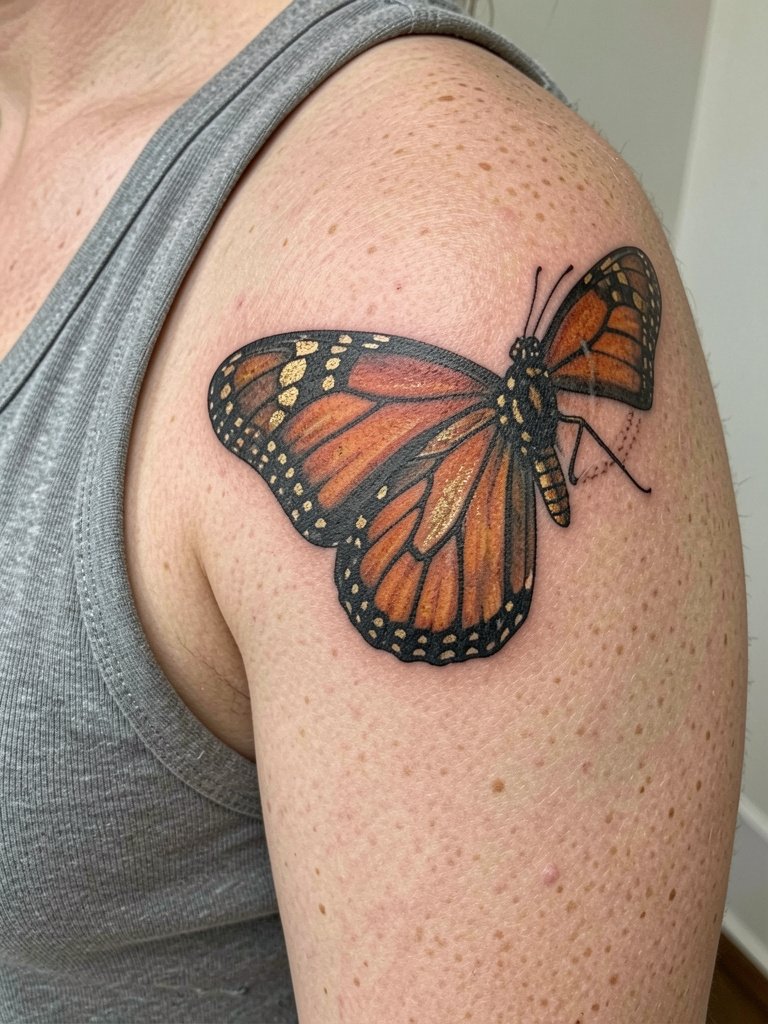
Subtle metallic-toned inks can add a shimmer effect but require careful consultation about pigment reactivity and long-term fading. Sessions are standard for shoulder work with mild pain. Ask the artist for a healed-sample reference of the exact ink so you know how it looks after settling. A typical mistake is assuming all gold inks age like standard pigments; their reflectivity can dull over time. Show-off pairing includes sleeveless tops or off-shoulder dresses like an off-shoulder blouse.
21. Realistic Monarch Cluster on the Rib-to-Hip Curve
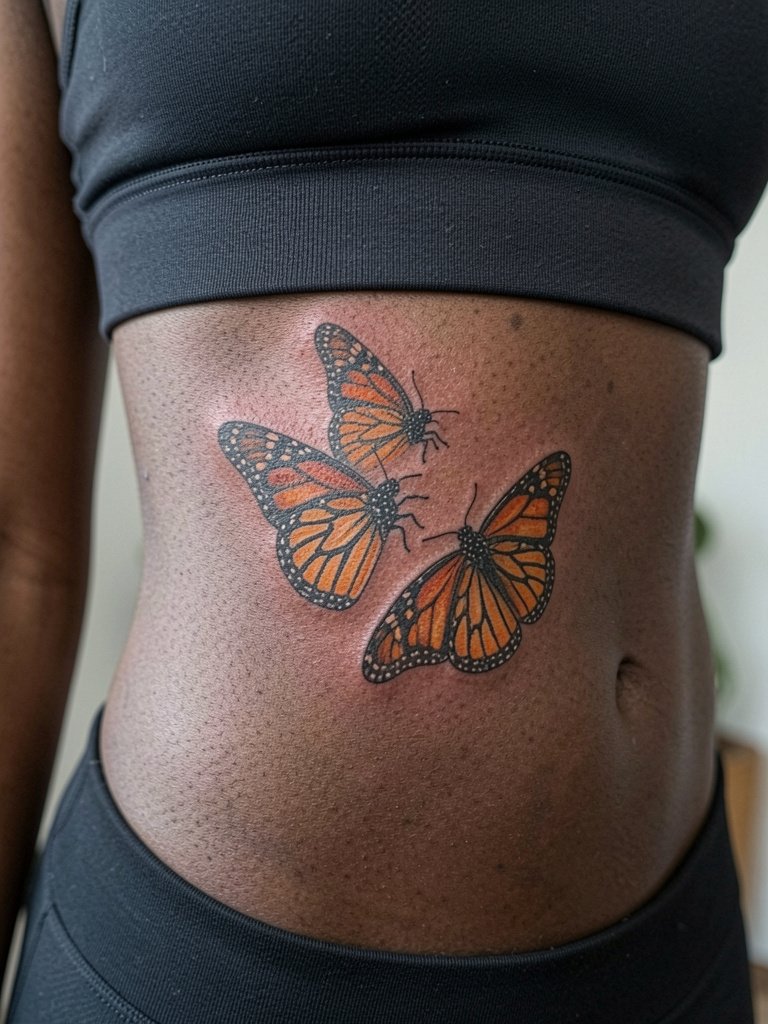
Flowing clusters that follow body curves make for dynamic composition and help hide small shifts as skin ages. Sessions will be multiple and can be painful on the ribs; breaks during the appointment help manage discomfort. Make sure the artist spaces the cluster so the wings do not merge when the torso twists. A mistake is compressing multiple butterflies into a narrow band where details compete. For styling, low-rise bottoms and crop tops such as high-waisted shorts show off the curve elegantly.
22. Realistic Monarch with Lettering Name Tag
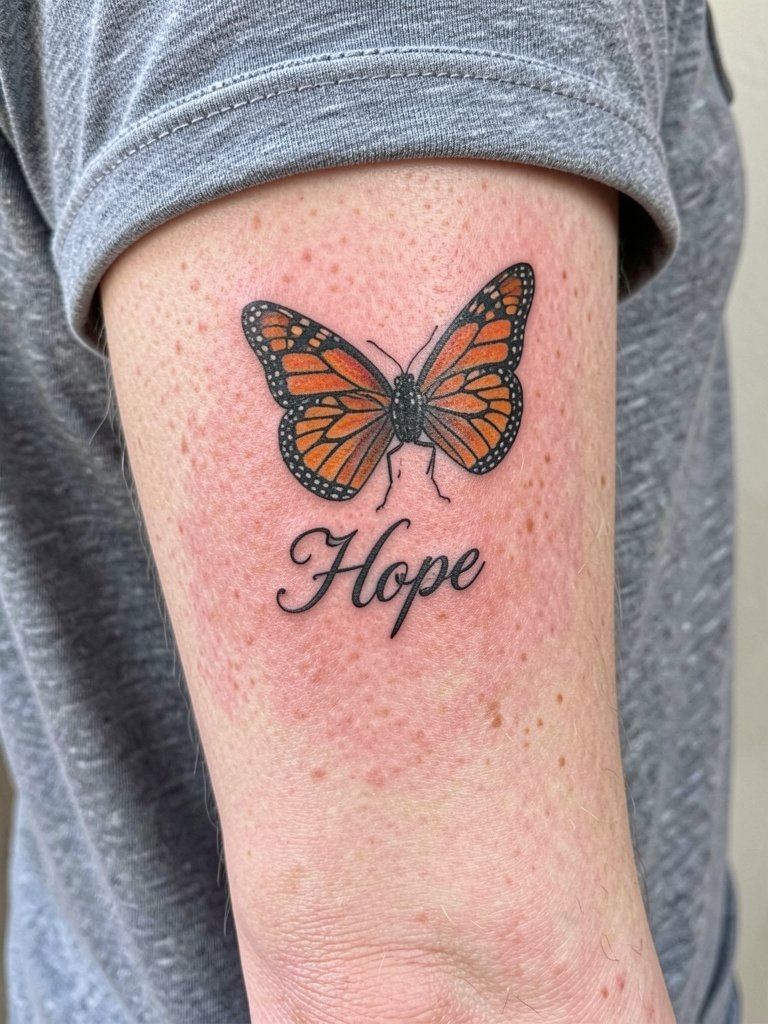
Combining a monarch with a small script name creates a meaningful focal point but adds complexity for legibility on the wrist. Ask for the name in a legible script at a slightly larger scale than your initial reference so it holds through daily wear. Expect short sessions but plan a touch-up for text at the one-year mark. Avoid ultra-tiny lettering that becomes illegible. For jewelry pairings try a thin cuff or minimalist bracelet like a delicate metal cuff that complements the wrist art without rubbing.
23. Full-Back Realistic Monarch Spread
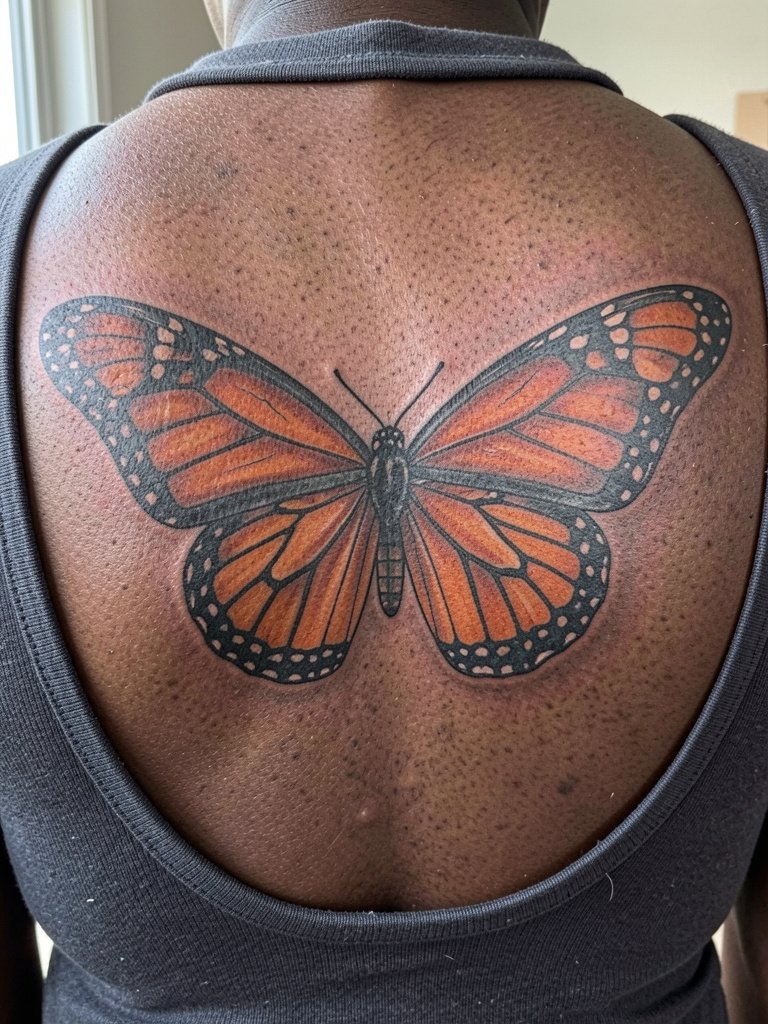
A full-back spread gives the ultimate canvas for realism and longevity because the skin there is stable and less exposed to daily abrasion. Sessions are long and will be scheduled over multiple days with moderate pain. Discuss a phased plan so wing saturation is consistent across sessions and the artist can match pigment exactly. A typical mistake is under-saturating the outer wings to save time, which makes touch-ups obvious. For show-off pieces, pair with open-back gowns or tops like an open-back evening dress for events.
Frequently Asked Questions
Q: How painful is a realistic monarch compared across placements mentioned here?
A: Pain varies by placement. Inner forearm and calf tend to be low to moderate. Sternum, ribs, and areas over bone like collarbone are higher. Sessions on thicker-skinned zones like the calf or upper back are longer but usually more comfortable than rib or sternum sittings.
Q: Which realistic approach holds up best long term, single-needle micro realism or denser saturation with bolder outlines?
A: There are two camps. One group prefers single-needle micro realism for ultra-fine vein detail and argues that precise technique preserves the light look. The other group favors slightly bolder outlines and richer saturation because that approach keeps shape and contrast as pigment spreads and fades. Practically, a hybrid approach with clear outer lines and delicate inner veins often balances longevity and realism.
Q: How often will I need touch-ups for placements like the wrist, finger, and ankle?
A: High-friction spots usually need touch-ups sooner. Fingers and palms can need refreshing as often as every six to twelve months. Wrists and ankles typically need a touch-up around the one-year mark and then sporadically after that depending on sun and wear.
Q: Where can I find healed examples and discovery pathways without naming specific artists?
A: Search platform hashtags and portfolio keywords to find healed shots across skin tones. Try hashtag searches on Instagram and TikTok such as #MonarchTattoo, #RealisticButterflyTattoo, plus location filters for your city. Tattoo community subreddits and portfolio sites can surface healed timelines and different skin-tone outcomes.
Q: What should I wear to my appointment for placements like sternum, ribcage, or hip?
A: For chest and sternum wear a fitted sports bra or bandeau that stays in place. For ribs and hip pick a cropped top and low-rise bottoms so the artist can expose the area without you pulling fabric during the session. Comfortable loose layers that you can remove or adjust easily are best.
Q: How does sun exposure affect monarch orange saturation and what protection helps?
A: Sun is a primary driver of pigment fading. After healing, use broad-spectrum sunscreen on visible placements when exposed to sunlight. Clothing like long sleeves or hats also helps. For display outfits choose fabrics and styles that limit direct UV on the tattoo during peak sun hours.
Q: Are there cultural or sensitivity concerns with monarch imagery I should consider?
A: Monarch butterfly imagery is broadly used, but if you plan to pair the monarch with culturally specific symbols, research respectful sourcing and attribution. Be mindful when mixing traditional motifs from other cultures and avoid appropriating sacred symbols without clear understanding and permission.