
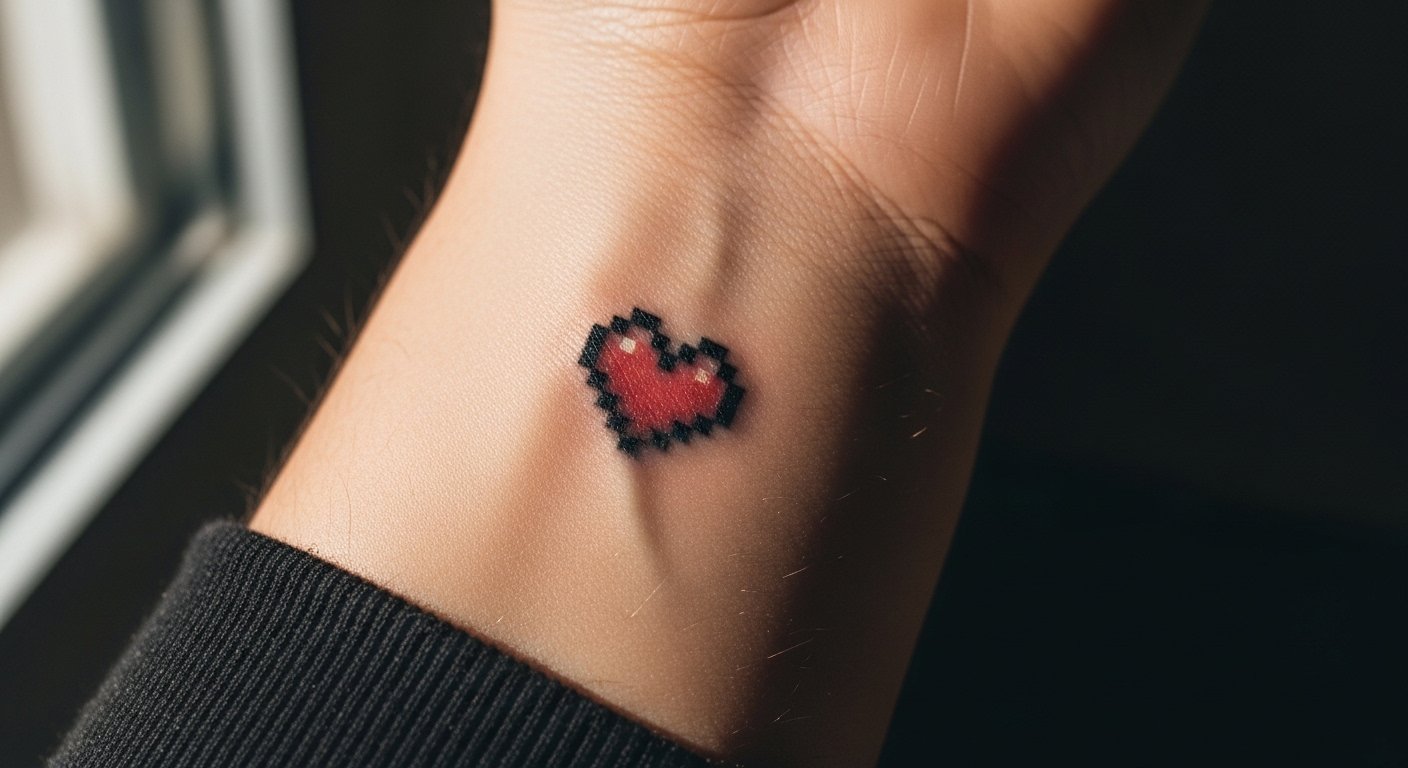
Someone I know spent months scrolling through galleries only to realize the real problem was not picking an icon. It was choosing a pixel scale, placement, and aftercare plan that would still look crisp after a few years. Fade on fingers, tiny pixels blurring on darker tones, and unclear touch-up timelines kept coming up in conversations with artists at five shops across Brooklyn. Small icons often land in the 80-400 range while full collages can approach 1,000. Below are 20 pixel gaming tattoo ideas with practical notes on how they heal, where they last best, and what to ask your artist.
1. Pixelated Pikachu on Outer Arm

Someone I know first saw this on a friend and booked the same placement. Ask for slightly larger pixel blocks so the yellow saturation reads clearly from a short distance. Tell your artist you want blocky pixels rather than soft gradients, and bring a reference showing exact pixel size. Typical session time is short and the outer arm is forgiving on blowout risk. The common mistake is asking for micro pixels that melt together after a year. At six months the yellow may look softer, and expect a touch-up near year two if saturation fades. This is great for a first pixel that still reads across a room.
2. Pixel Heart on Inner Forearm

Fair warning: the inner forearm sees a lot of friction from sleeves and watches, so size matters here. I recommend a slightly larger heart with clear square blocks to avoid early blur. In a consultation, specify pixel block size and request bold single-color fills rather than thin gradients. At six months edges soften a bit, and by year three small hearts can need a light touch-up to keep corners crisp. This placement is low on pain and easy to show or hide. A common mistake is insisting on the tiniest version possible, which rarely stands the test of daily wear.
3. Pixelated Pacman on Upper Arm

Most people opt for the outer or upper arm to keep negative shading sharp. When you sit with the artist, point to examples that use negative space in the pixels and ask them to mark the pixel grid. The popular misstep is using tiny pixels in a negative-shade design, which leaves the gray areas looking patchy after healing. Expect a single session and a low pain level. After one year the contrast holds better on the upper arm than on the wrist. If you plan a sleeve later, make sure the Pacman scale fits with future blocks.
4. Micro 8-Bit Game Controller on Wrist

The wrist reads well for micro icons but is tough for longevity. Artists split into two camps on wrist micro work. One camp says tiny pixels on the wrist blur within 12 to 18 months because of constant movement and thin skin. The other camp says precise needle depth and slightly enlarged blocks make micro wrist pixels last. Ask where your artist stands before booking and see healed examples on wrists similar to your skin tone. For a wrist micro, plan on a possible touch-up at year one. Also note wrist tattoos can show in professional settings, so factor that into placement decisions.
5. Pixel Mario on Forearm

There is something about full-color pixel characters on the forearm that reads instantly. Bring clear references for the exact palette and ask for individual color blocks rather than blended fills. The forearm lets the linework breathe, which lowers blowout risk compared with hands. A common mistake is squashing the design into too small a square. At two years color saturation will soften, and most people schedule a touch-up around year two to restore primary reds and blues. If you plan a sleeve, discuss scale so Mario sits with future icons.
6. Single-Pixel Dot Icons Behind Ear

When you go micro behind the ear, expect a quick but sensitive session. The skin there moves and heals oddly, so ask your artist to map the dots on your body during consultation. The typical mistake is designing overly complex icons in micro dot formations. Behind-ear micro dots age by losing sharp corners first, so pick a symbol that still reads when softened. This location is discreet and heals fast, but plan a possible touch-up at year two. If you work in a conservative environment, remember this spot hides under hair.
7. Pixel Zelda Symbol on Shoulder Blade

When you want a symbolic pixel, the shoulder blade gives room for clean pixel grids and preserves saturation. Tell the artist you want the emblem to read from both close-up and a few feet away, and ask them to suggest pixel block sizes. A common mistake is using delicate pixels on rounded shoulder tissue, which can stretch and distort with movement. At six months the symbol will look stable, and most people do not need a touch-up until year three. For visibility on darker tones, consider stronger contrast or a thin black border around color blocks.
8. Retro Arcade Scene Collage on Thigh

There is visual impact in a small scene that groups icons, but this requires planning. When you talk to the artist, outline which characters must be the focal points and which are background pixels. The thigh is good for medium-large pixel collages because it reduces blowout risk and lets the artist use slightly finer blocks. A common error is packing too many tiny elements into one panel. Sessions will likely span two to three sittings depending on size. Healed, the collage holds contrast well if pixels are not too fine.
9. Game Over Text on Inner Wrist

Text needs exact pixel measurements to stay legible. Specify the exact text "GAME OVER" in uppercase block font when booking. Ask the artist to stencil the height of each pixel and to avoid tiny letters that merge. The inner wrist is a high-motion area, so text can lose crispness faster than on the forearm. Expect a touch-up around year one to keep edges sharp. This placement is simple and iconic, and a clear stencil saves regrets later.
10. Pixel Super Mario Full Character on Calf

A calf piece reads big without needing a sleeve, and it tolerates layered sessions well. For this, bring both the reference and a note about scale so colors keep solid saturation. A typical mistake is requesting extra-fine pixels on curved calf muscle, which can warp as skin moves. Session time varies but expect one to two sittings. At two years the reds and blues may mute slightly, and a touch-up can bring saturation back. If you travel, use discovery pathways like local convention listings to find artists who show healed calf pixel work.
11. Pixel Coin Stack on Side Rib

Fair warning: the rib is a higher-pain spot for many people, but coins along the rib curve look great if the pixels are spaced to accommodate breathing and movement. Ask the artist to map pixel spacing on your body when you inhale, so the stack does not distort. Artists debate fine work on ribs. One side argues thin pixels blur due to skin stretch. The other side says correct depth and spacing make ribs fine for crisp work. Get examples and decide after you see healed ribs on similar body types. Plan for a potential touch-up at year two.
12. Pixel Stipple-Shaded Sword on Forearm

There is a neat contrast when dot work and pixel blocks combine. Tell your artist you want stipple shading behind solid pixel blocks so the edges keep their square look. A typical mistake is blending dot work into pixel edges without a clear separation, which blurs after healing. The forearm tolerates this hybrid well and pain is modest. After one year, stipple areas may need a touch-up more often than solid blocks. If you plan more armor or weapon icons, keep consistent pixel block sizes for cohesion.
13. Pixel Pocket Monster Sprite Collage on Upper Arm

There is room on the upper arm to cluster several character sprites and still keep each pixel block readable. When you consult the artist, prioritize which sprite must be largest and ask them to arrange the grid so negative space breathes between icons. A common mistake is cramming too many sprites in a small square. At two years color saturation may soften, but upper-arm placement usually keeps edges crisp longer than hands. If you plan a themed sleeve later, use this cluster as a starter panel.
14. Pixel Heart Rate Monitor Line on Sternum

The sternum gives a dramatic centerline but requires an artist comfortable with chest curvature. Tell them you want each pixel to align with the body plane rather than a flat grid. Note that chest tattoos can feel more intense during the session. Expect some stretching if you change body mass, and plan availability for a touch-up at year two. This placement is intimate and may require a specialist who has healed examples on chest placements. Consider career implications before committing.
15. Pixel Loading Bar on Wrist

A loading bar is a clever nod to gaming that plays well on the wrist or forearm. Ask for a bold block fill and specify how many pixel segments are filled so it reads cleanly. The mistake I see often is making segments too thin, which leads to muddy edges. This micro graphic is quick to do, but expect fading on the wrist and a likely touch-up in the first two years. If you want a subtle version, choose bolder pixels rather than tinier detail.
16. Pixel Sword and Shield Pair on Calf

There is a practical advantage to pairing icons on the calf for balance and future expansion. Tell your artist you want mirrored scale and matching pixel block sizes so they read as a set. A common error is mismatched scaling that makes the pair look off-balance from a distance. Calf placements are lower on blowout risk and accept moderate detail. After two years, color may lose pop, and a touch-up restores saturation. If you travel for work, use search tags to find artists who show healed calf pairs.
17. Pixel Monochrome Skull on Upper Chest

There is a visual punch to a single-color pixel skull on the upper chest. In consultation, ask for a tested grid so shoulders and muscle movement do not stretch key pixels. The biggest mistake is asking for tiny pixels across an area that flexes with facial expressions and posture. Session pain is moderate and the chest can need a light touch-up after a couple of years. If you plan to add more chest panels, keep pixel block sizes consistent for an even look.
18. Pixel Compass on Ankle

The ankle is a fine spot for compact icons but it rubs against socks and shoes. Ask your artist to make the compass slightly larger and to place it where clothing will not abrade it. The common mistake is choosing micro pixels that fade fast from constant friction. Expect a quick session and a potential touch-up at year one if you wear anklets or tight socks frequently. This spot is subtle and heals quickly with careful aftercare.
19. Pixel Patchwork Starter for Sleeve on Bicep

When you want to build a gaming sleeve over time, start with a patchwork of small pixel blocks on the bicep that can be linked later. Tell the artist you plan future panels and ask them to leave consistent spacing for connecting blocks. A frequent mistake is inconsistent pixel scales that make later additions feel disjointed. The bicep is forgiving on blowout risk and the work tends to age well. Discuss a long-term plan during booking so future sessions align with the original grid.
20. Custom Pixel Scene from a Favorite Game Moment on Back

When you ask for a custom scene, bring screenshots and note the exact moment you want captured. A smart consultation covers scale, focal point, and which colors must remain saturated. The typical mistake is trying to cram a long sequence into a small panel. For back pieces expect multiple sessions and a lower risk of blowout because the canvas is large. Healed, medium-sized scenes usually hold contrast for several years, and a touch-up after a year or two keeps the focal colors vibrant.
Tattoo Prep and Aftercare Essentials

Fragrance-free gentle foaming cleanser for tattoos. Use during the first week to remove excess plasma and avoid fragranced soaps that irritate fresh ink.
Lightweight fragrance-free balm for daily topical hydration. Apply thin layers as directed to keep pixels from drying into scabs that flake unevenly.
Medical-grade second skin bandage, single-use sheets. Good for larger pixel panels where moisture balance speeds healing.
Silicone scar sheets for later smoothing. Use months after healing if raised texture affects block edges.
Antibacterial saline wound spray. Helps gentle cleansing without rubbing.
Lightweight mineral SPF stick for tattoos after healed. Protect pixels from UV fade once your skin is fully healed.
Silicone-based long-wear moisturizer for daily maintenance. Keeps saturation looking fresh over years.
Comfortable compression sleeve for limb placements. Wear briefly if recommended by your artist to limit friction during early healing.
Every tattoo is different. Always follow your artist's specific aftercare instructions. Consult a dermatologist if you have skin concerns or unusual healing issues.
Frequently Asked Questions
Q: Will tiny pixel tattoos on fingers blur faster than those on the forearm?
A: Yes, fingers are high-wear areas with thin, constantly moving skin. From what I've seen, fingers commonly need touch-ups within a year. If you want finger pixels, pick larger blocks and accept that a yearly refresh may be part of the plan.
Q: How do I tell an artist I want pixels that hold up on darker skin tones?
A: Be specific about contrast and saturation when you book. Ask to see healed examples on skin tones similar to yours and request slightly larger pixel blocks plus stronger black outlines to preserve readability. Discovery pathways like local studio listings and community threads can surface portfolios with diverse healed examples.
Q: Are there aftercare products that help pixel tattoos keep sharp edges longer?
A: A fragrance-free balm during the initial healing and mineral SPF after full healing help most. I find the lightweight fragrance-free balm linked above is good for daily hydration without clogging pores. Use sunscreen consistently on healed work to slow UV-driven fade.
Q: How much should I plan for touch-ups on a pixel sleeve versus individual icons?
A: A sleeve with dense pixels may settle unevenly and often needs planned touch-ups at years two to five, depending on placement and sun exposure. Single icons on upper arms or calves typically hold longer before a touch-up is needed.
Q: Can I design a custom pixel scene from a specific game moment without copyright issues?
A: Custom scenes inspired by gameplay moments are usually fine as personal tattoos, but exact copyrighted logos or art may be sensitive for commercial reproduction. If you want a public flash sheet later, ask the artist about their stance. For private body art, most artists will adapt a scene into an original pixel composition.
Q: Do hand or face placements require special artist experience?
A: Yes. Hand and face work needs an artist with healed examples on those placements. Those areas have higher fade and social implications, so pick someone who shows long-term healed photos and discusses touch-up plans. Trust your artist if they decline the placement, and ask about their healed portfolio and approach.