
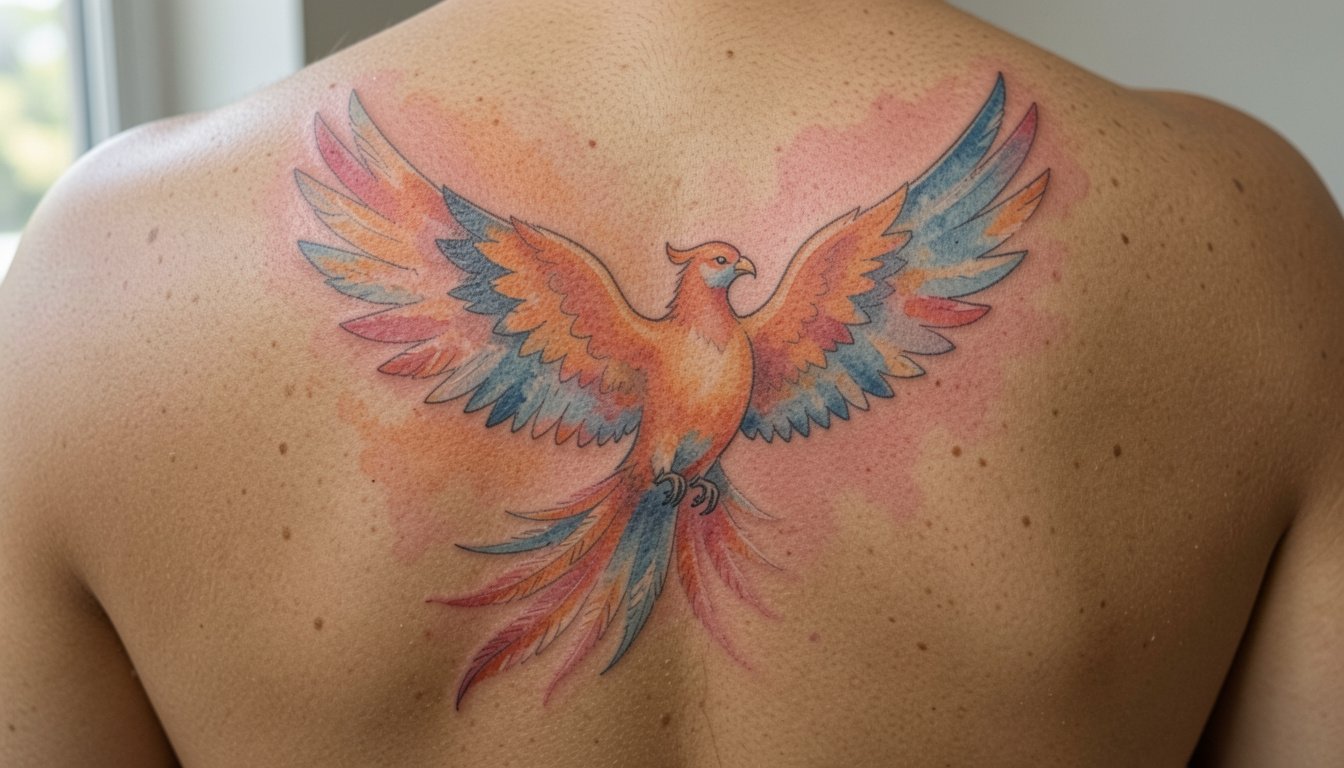
Phoenix tattoos keep showing up in saved folders because the symbol reads like recovery made visible, but the pieces that still look crisp after a few years are rarely the exact ones that trend on social feeds. Bright watercolor spreads and single-needle filigree photograph beautifully right away. If longevity matters to you, think in terms of line weight, placement movement, and whether you want saturated color that will need sunscreen to stay vivid.
1. Minimalist Black Phoenix on Inner Forearm
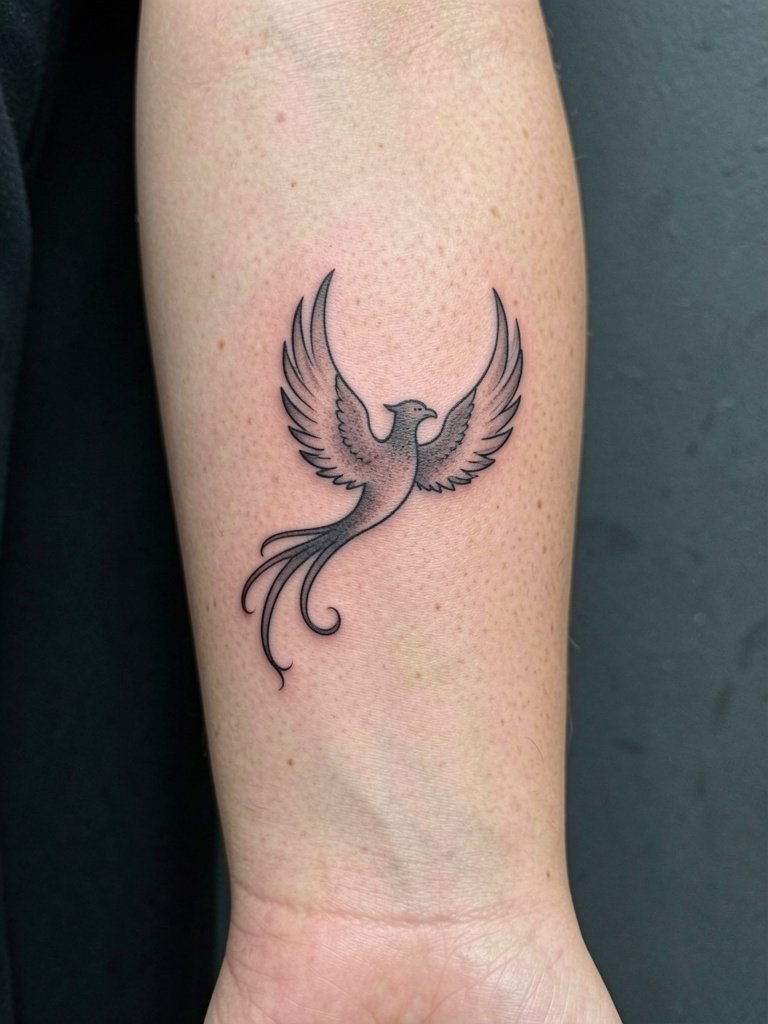
A small black phoenix on the inner forearm reads elegant and stays readable without heavy color. I recommend this if you want visibility without a long session and if your daily life requires occasional covering. Specifics to bring to your consultation include an exact width for the silhouette and a reference showing the tail length at three inches and five inches so you can see how it scales. Common mistakes are shrinking a silhouette into a thin twig of linework and expecting single-needle detail to survive heavy wrist movement. Expect one session around 45 to 90 minutes, low to moderate pain, and a likely touch-up at one year to re-saturate the outline.
2. Watercolor Phoenix Across Upper Back
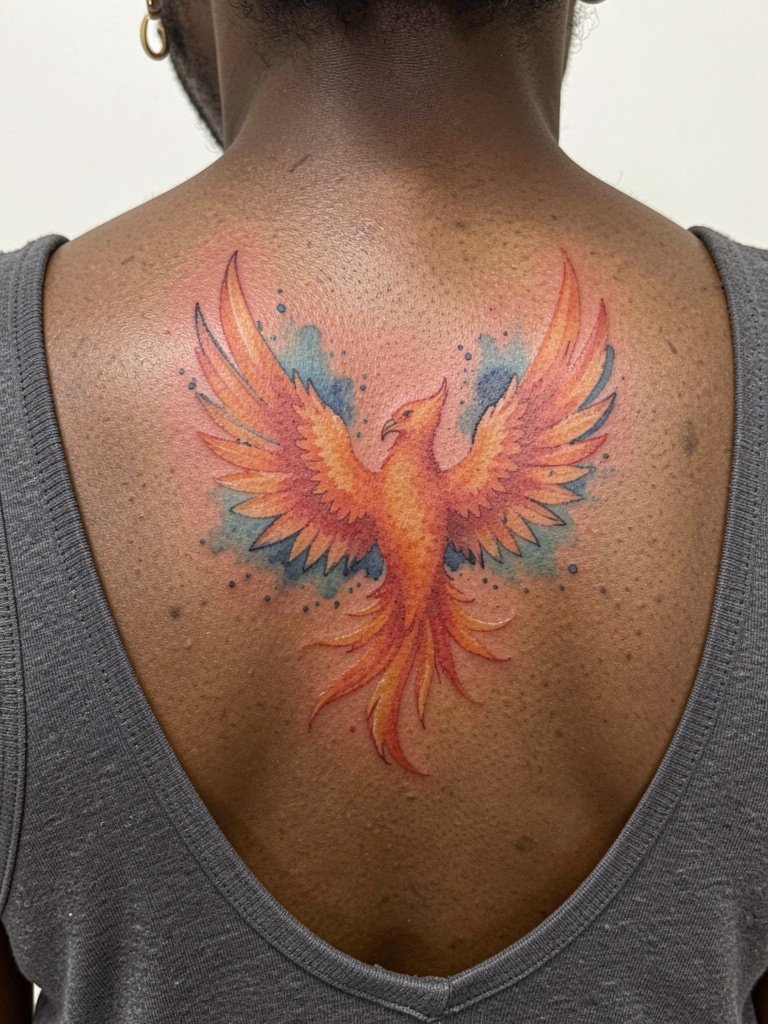
Camp A critics say watercolor phoenix tattoos look striking at first but the soft washes are vulnerable to fading and often need more maintenance. Camp B advocates argue watercolor can age well when artists anchor the design with contrast and a few clean outlines. Choose this only if you accept the trade-off between immediate visual impact and the need for regular sunscreen and occasional touch-ups. During the consult bring healed examples with similar palette on similar skin tone. For the session wear a button-front shirt so you can remove it without rubbing the fresh area. Expect mid-level pain because of shoulder blade proximity and sessions that might stretch across two appointments.
3. Fine Line Phoenix Rising on Inner Forearm
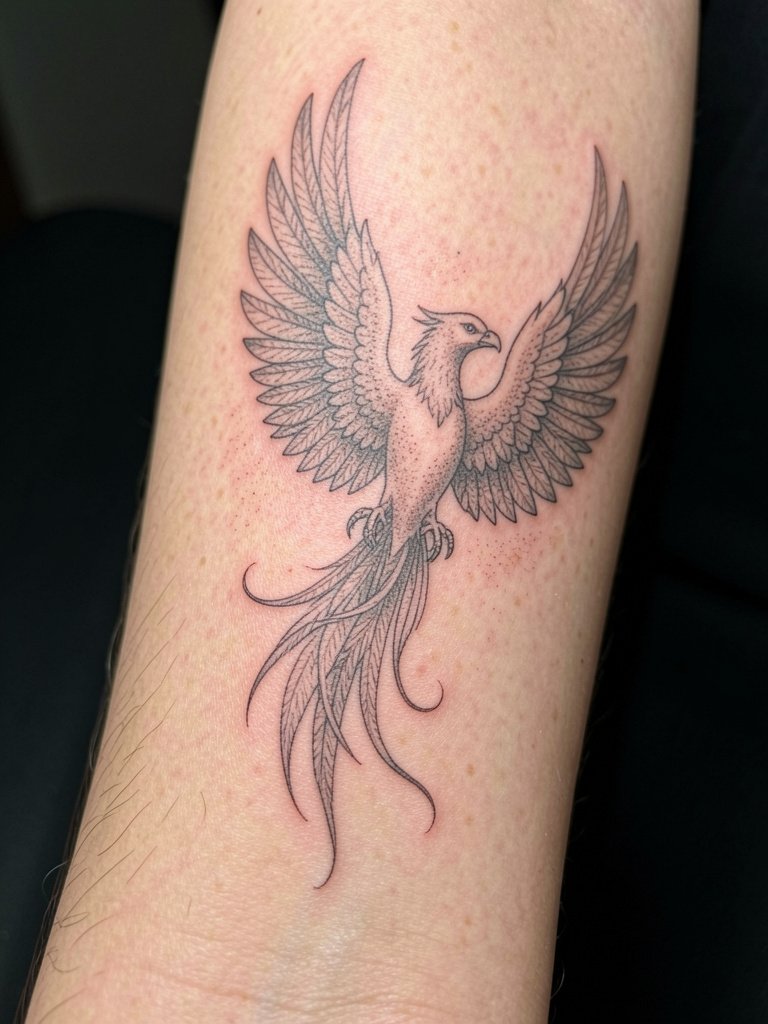
Fine line phoenixes on the inner forearm look refined, and they work when the composition gives feathers breathing room. A practical tweak to ask for is modestly thicker feather stems than the Pinterest reference so the lines do not blur into mush under movement. People often request ultra-thin single-needle detail and then discover early softening. This placement has low blowout risk but moderate motion stress, so expect one session about 60 to 90 minutes and a possible touch-up at 12 to 18 months for crispness. Pair this design with rolled cuffs and neutral knit tops to highlight the palm-up view and use the session tip of wearing a loose button shirt so you can roll sleeves up easily. Rolled sleeve shirt
4. Phoenix Rising From Flames on the Hip
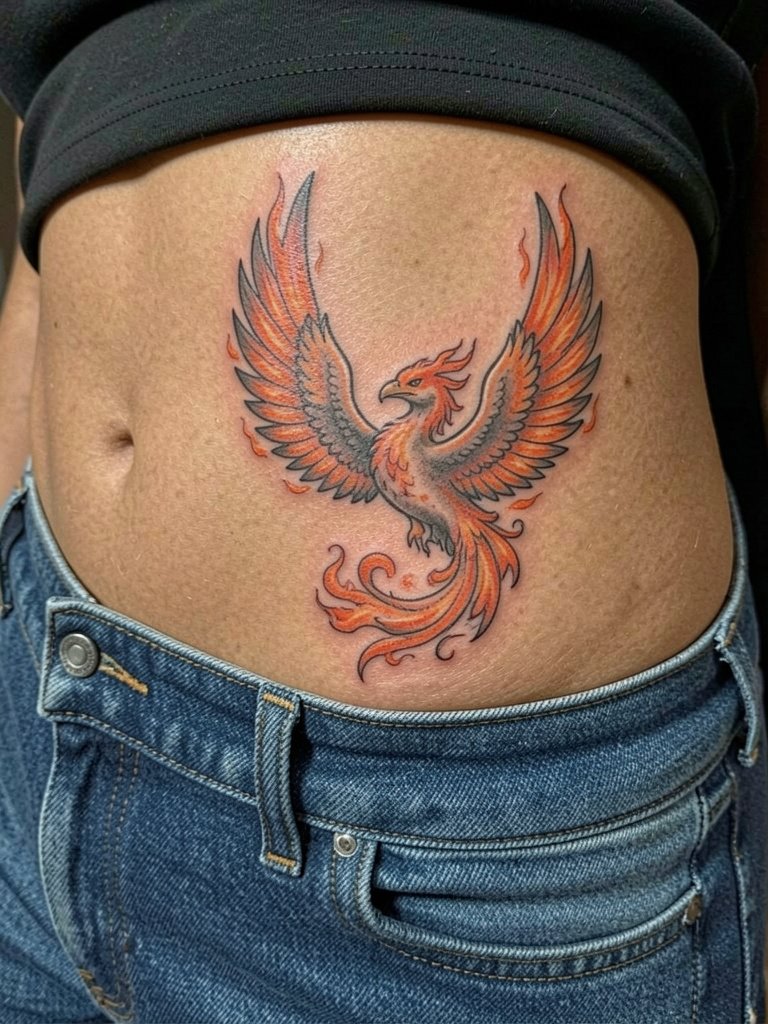
The curve of the lateral hip lends itself to motion-focused phoenix compositions that feel intimate and body-aware. Tell the artist the exact curve you want the tail to follow so it does not end up half on the waistline. A common mistake is compressing too much feather detail into a narrow hip strip which then reads like noise after healing. Session-wise this is moderate pain and usually one or two sittings depending on color saturation. For showing off, high-waisted jeans or a side-slit dress frame the arc beautifully while you heal; wear loose shorts to your appointment so the artist can access the area without fabric friction. High waisted bikini bottoms
5. Feminine Phoenix With Floral Accents on the Back
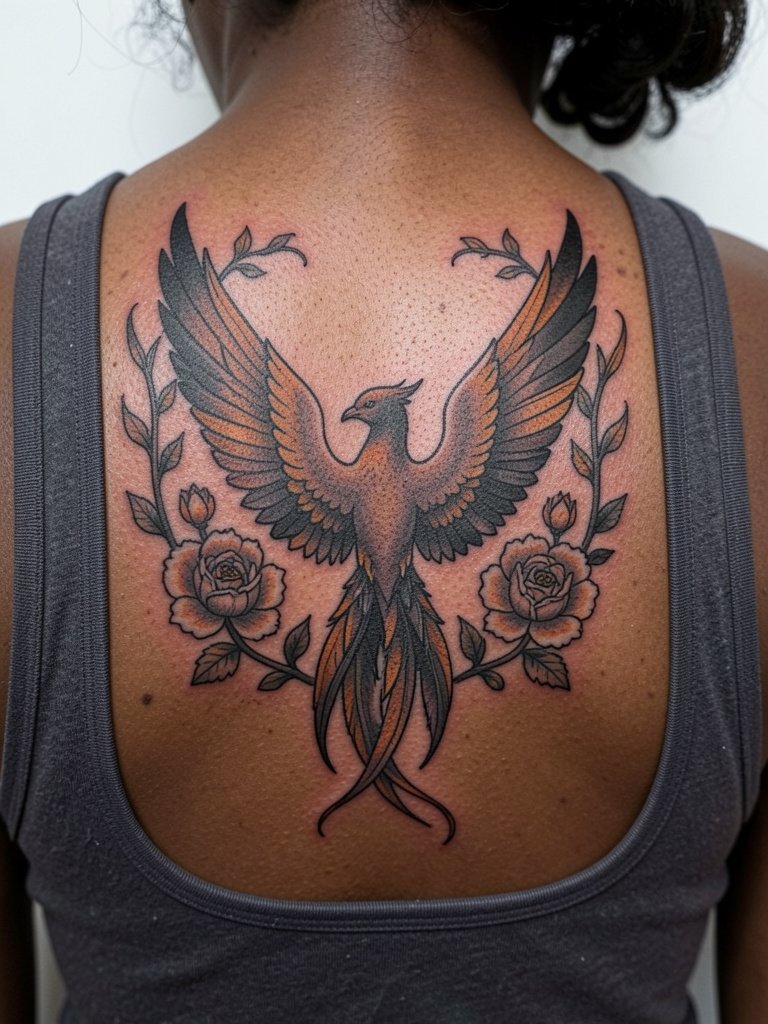
Flowers can soften a phoenix while keeping the bird as the focal point if used as framing elements rather than the main subject. In your consultation show two reference images: one that focuses on feather flow and one that shows the floral framing you like so the artist can balance scale. A frequent error is letting the blooms dominate a medium-sized bird, which makes the phoenix read as filler rather than integrated composition. Large back pieces like this usually need multiple sessions. For wardrobe pairings choose open-back tops or racerback tanks to reveal the shoulder blade spread. Wear a button-front shirt to the appointment for easy removal with minimal rubbing.
6. Geometric Feminine Phoenix on the Forearm
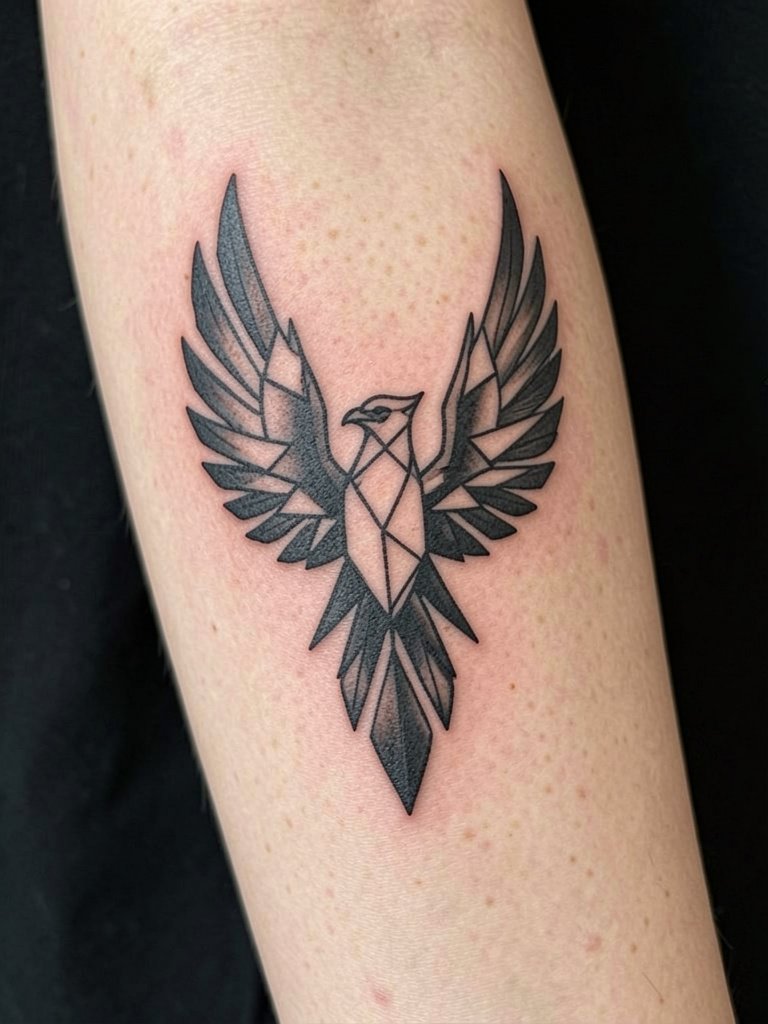
A geometric approach modernizes the phoenix myth without relying on heavy color. This style benefits from clear spacing between elements so the geometry maintains its read at years two and five. The biggest mistake is scaling the geometry too small so that shapes merge when healed. Talk specifics about minimum line spacing and where negative space should be left so the pattern does not fill in. Expect a single session of about 90 minutes for a medium forearm piece. For showing the work, sleeveless tanks and cropped jackets keep the wing architecture visible. Sleeveless tank top women
Heal Smart
The six placements above include high-visibility forearm and more intimate hip and back pieces, so a few targeted supplies smooth the first week and protect color afterward.
- TattooMed aftercare cream search. A thinner aftercare cream can be helpful for people who find petroleum-based balms too occlusive during the initial healing window.
- Bepanthen tattoo aftercare search. A healing ointment alternative some people favor in the early days when they want a non-greasy finish.
- Tattoo butter alternative search. Richer balms that are not heavily scented help with dryness once peeling finishes.
- Micellar gentle cleanser search. A gentle wash avoids stripping fresh ink and supports cleaner scab shedding.
- Mineral sunscreen for tattoos search. A mineral SPF is important for protecting color phoenixes from UV fade once fully healed.
7. Tiny Phoenix Wrist Tattoo
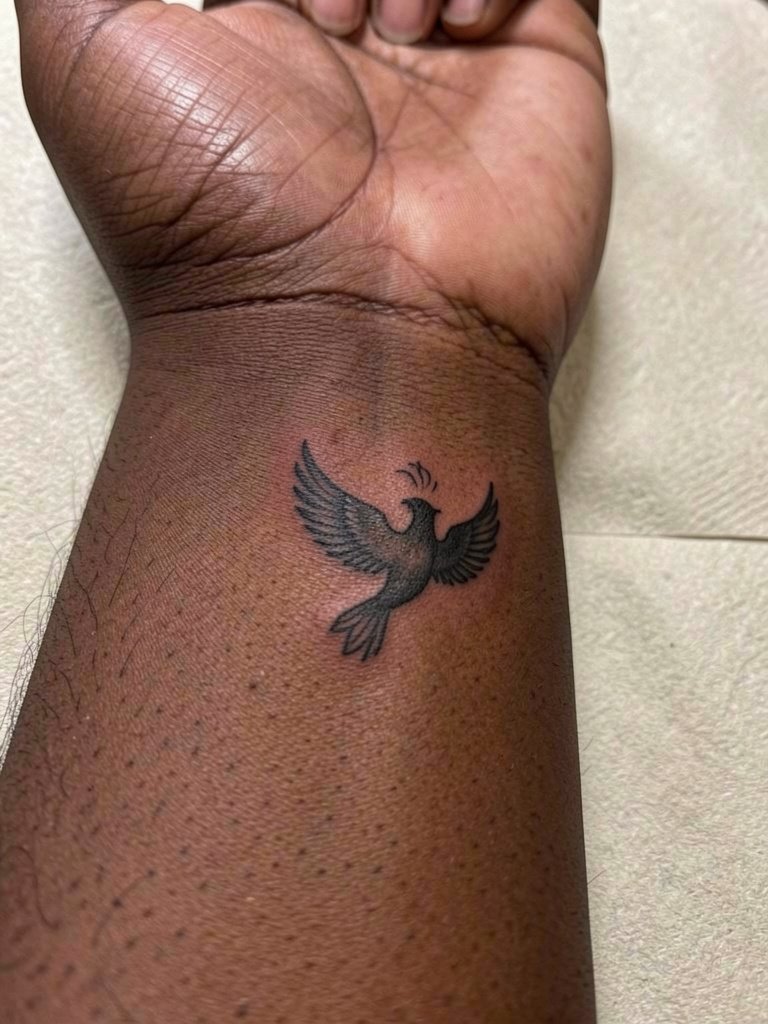
Wrist tattoos are visible and intimate, good for someone who wants a daily reminder without a big commitment. Because the wrist sees constant movement and washing, modestly thicker linework helps the tiny bird last beyond the first year. The common mistake is cramming too many details into a coin-sized area which will blur. For your consultation bring a scaled mockup at true size so you see grain and spacing. Session pain is low to moderate. Stackable thin bracelets on the opposite wrist frame the piece nicely. For the appointment wear a short-sleeve tee and remove any watch or bracelet on the tattooed wrist. Short sleeve tee women
8. Tiny Ankle Phoenix Tattoo
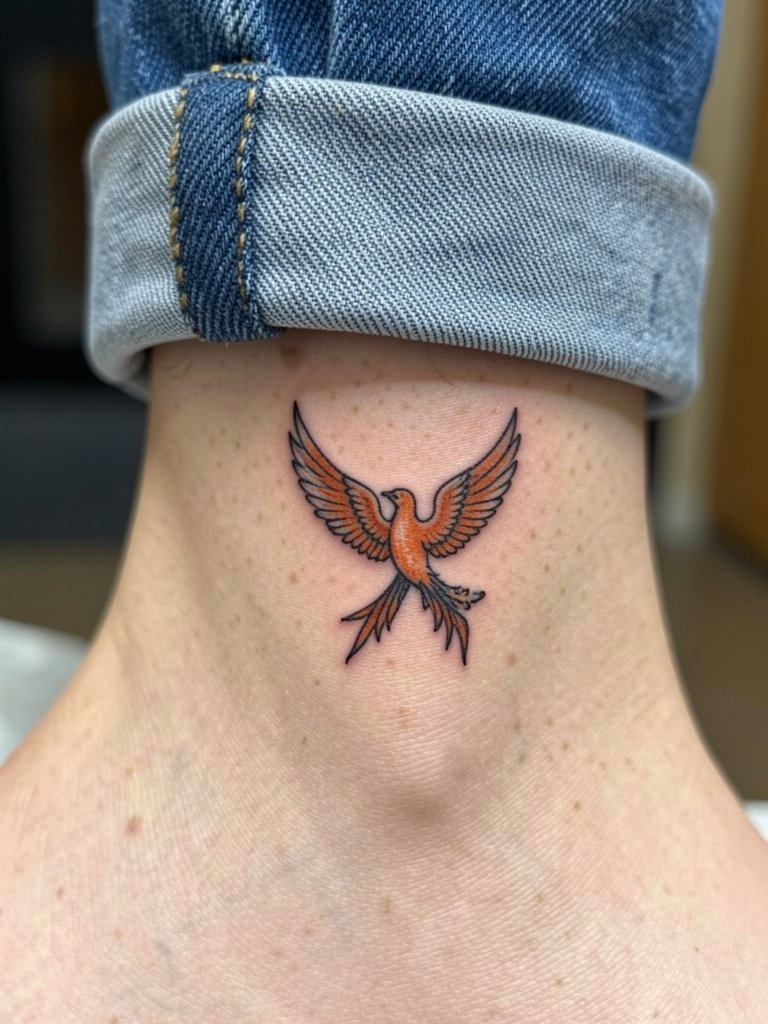
Ankle placements are discreet and wear well under footwear if you want to hide at work. The ankle experiences abrasion from socks and shoes, so keep the design clear and avoid tiny stipple that can break up with friction. A frequent error is putting extremely delicate shading in the ankle crease which can fade unevenly. Expect one brief session and low to moderate pain. Cropped jeans or strappy sandals show this piece off in summer. For the appointment roll pants up and avoid tight socks for the first week. Cropped straight jeans women
9. Phoenix With Wings Raised on Inner Forearm
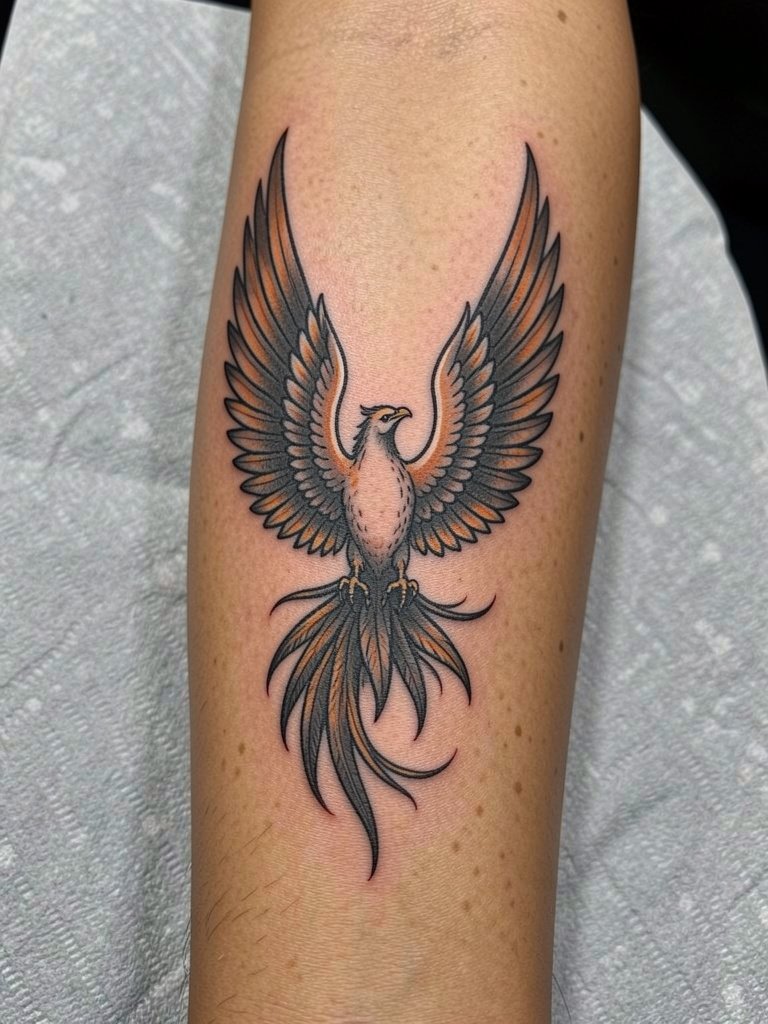
When the phoenix wings point upward the forearm becomes a natural runway for motion, but detail needs breathing room. A practical instruction to the artist is to set feather spacing so each plume keeps at least two millimeters of negative space. One mistake people make is asking for dense feather layering in a narrow vertical field which ends up muddied after healing. Expect one to two hours of work and a touch-up at 12 months for saturation. Pair this look with neutral knit tops and rolled cuffs to keep the silhouette clear. Neutral knit top women
10. Phoenix and Flame Composition for the Rib Area
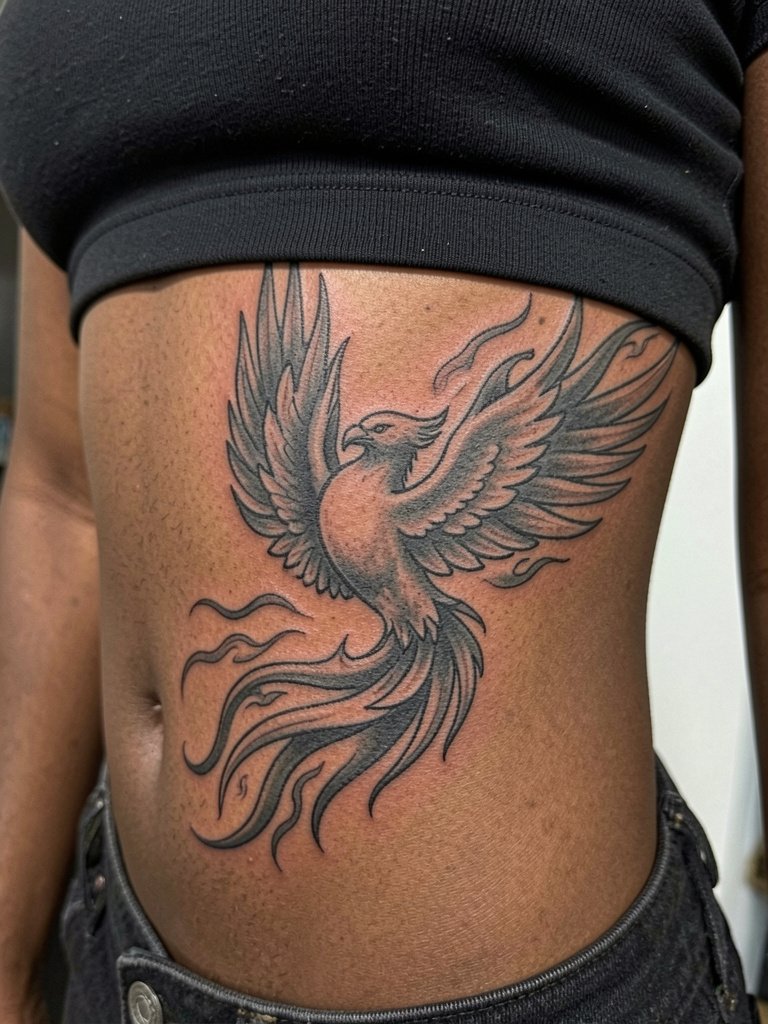
Fine line on ribs splits artists into two camps. One camp warns that skin stretch and breathing motion blur ultra-fine lines within two years, especially when work sits close to the breast crease. Another camp says that with proper needle depth and slightly wider spacing fine line can settle nicely on ribs, and they will point to healed photos as proof. If you favor thin detail here ask the artist to show healed rib shots with the same line weight. Expect a higher pain level and one to two sessions. For the session wear a sports bra or a fitted top that can be moved aside without pulling.
11. Color Phoenix Forearm Tattoo
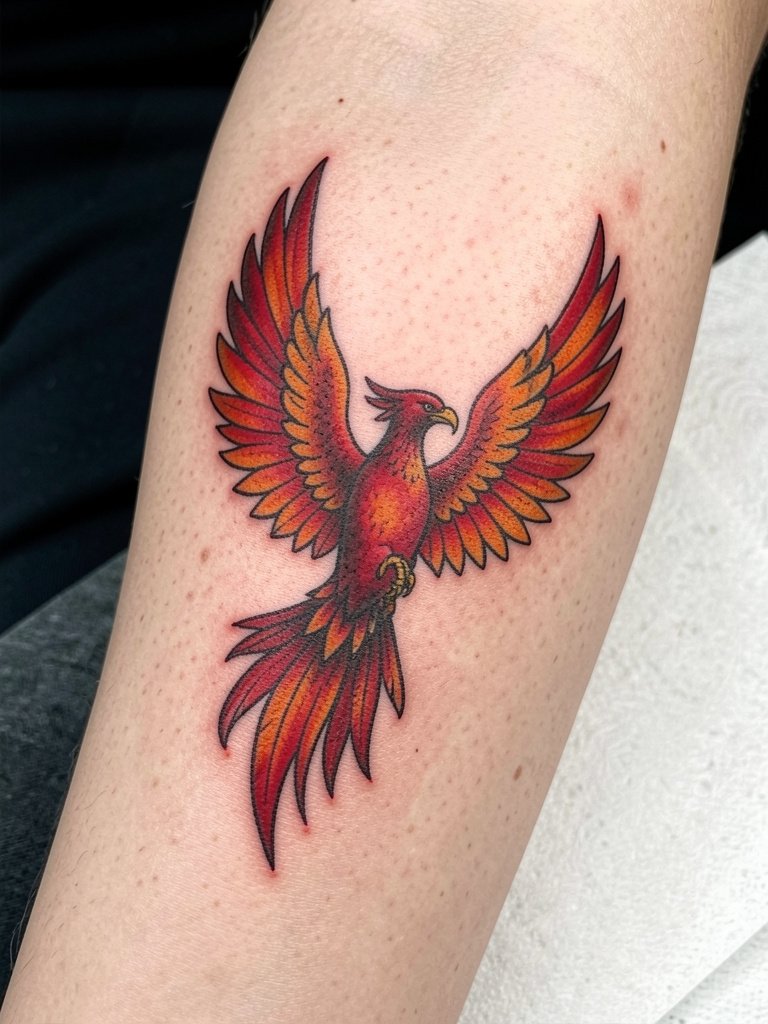
Saturated color foregrounds the phoenix myth and reads even from a distance, but color demands care. The trade-off is that bright reds and oranges will need mineral SPF once healed to keep saturation. To get strong color ask the artist about layering strategy and how many passes they plan for saturation without overworking skin. A common mistake is thin color fills that lack anchoring outlines which fade into a bruise-like look. Sessions are moderate in pain and often require two passes for full saturation. For styling choose short sleeves or cropped jackets to reveal the vibrant wing spread. Open-back tank women
12. Rebirth Phoenix With Quote and Floral Accents
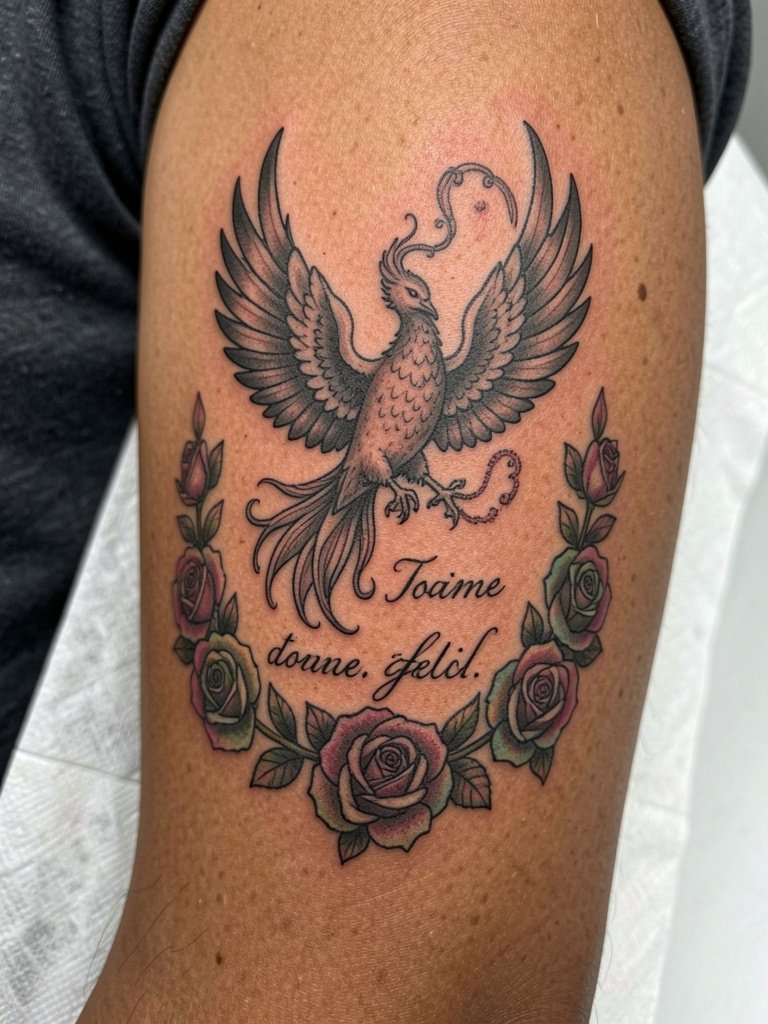
Adding a short script and floral accents personalizes the phoenix without swallowing the bird. Avoid long phrases in small script which will blur; instead pick a one- to three-word phrase and show the exact font you want at the exact final size. The frequent error is asking for a long quote in delicate script that needs to be read from close up. Plan for one session and a likely touch-up for the lettering at one year. This placement pairs well with sleeveless blouses and delicate chain necklaces for days you want the piece visible. Bring two reference fonts so the artist can show how each reads at true scale.
13. Large Phoenix Across Upper Arm and Shoulder
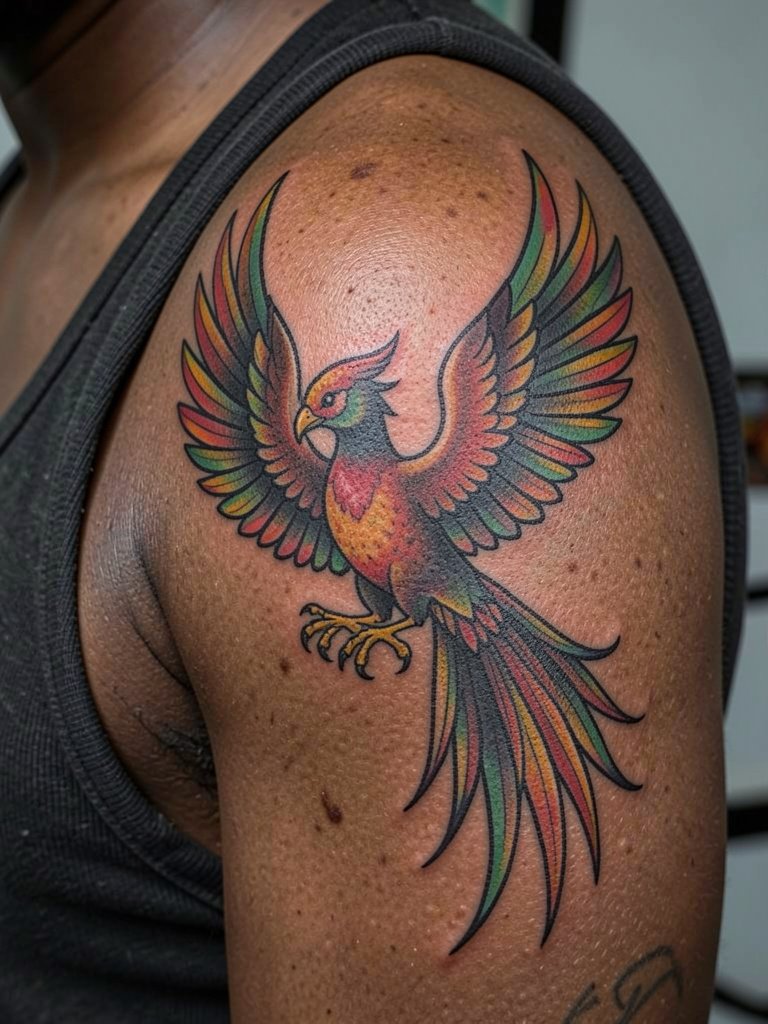
A shoulder-spanning phoenix frames the cap and works for someone who wants a bolder, athletic silhouette. The key consultation detail is how the wing will wrap over the deltoid and whether you want the wingtip to curl toward the back or the chest. Mistakes include pushing too much small detail onto the rounded shoulder cap which turns into indistinct texture. This likely needs one to three sessions depending on scale and color. For showing it off choose off-shoulder tops and sleeveless blouses. Wear a tank top to the appointment so the artist can work without fabric interference. Off shoulder top women
14. Small Phoenix With Flowing Feathers on the Collarbone
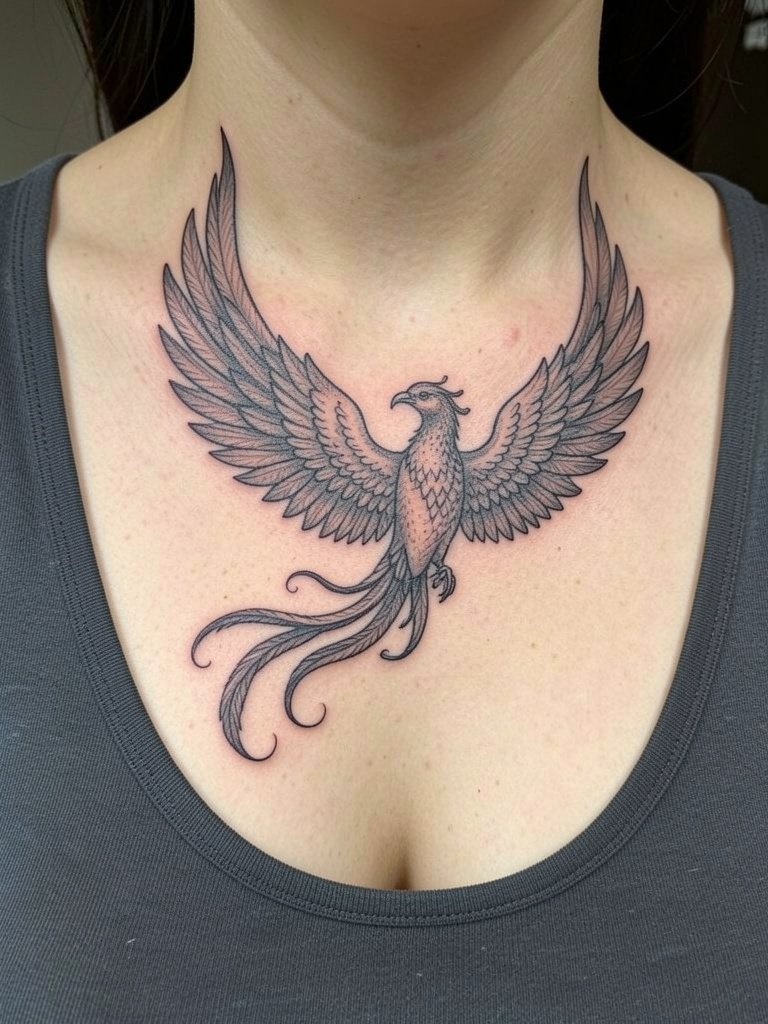
The clavicle line flatters graceful, decorative phoenix compositions but is a high-movement area. I suggest requesting a hairline that's a touch heavier than a single-needle reference so the piece reads over time. People often mistake small decorative details for safe tiny work, and the result can be softening of the filigree. Expect one session under an hour and a light to moderate pain rating. For wardrobe, scoop necks and delicate chains frame the design. Attend your session in strapless or wide-neck tops so the artist has clear access without tugging at fabric.
15. Stylized Blackwork Phoenix on the Back
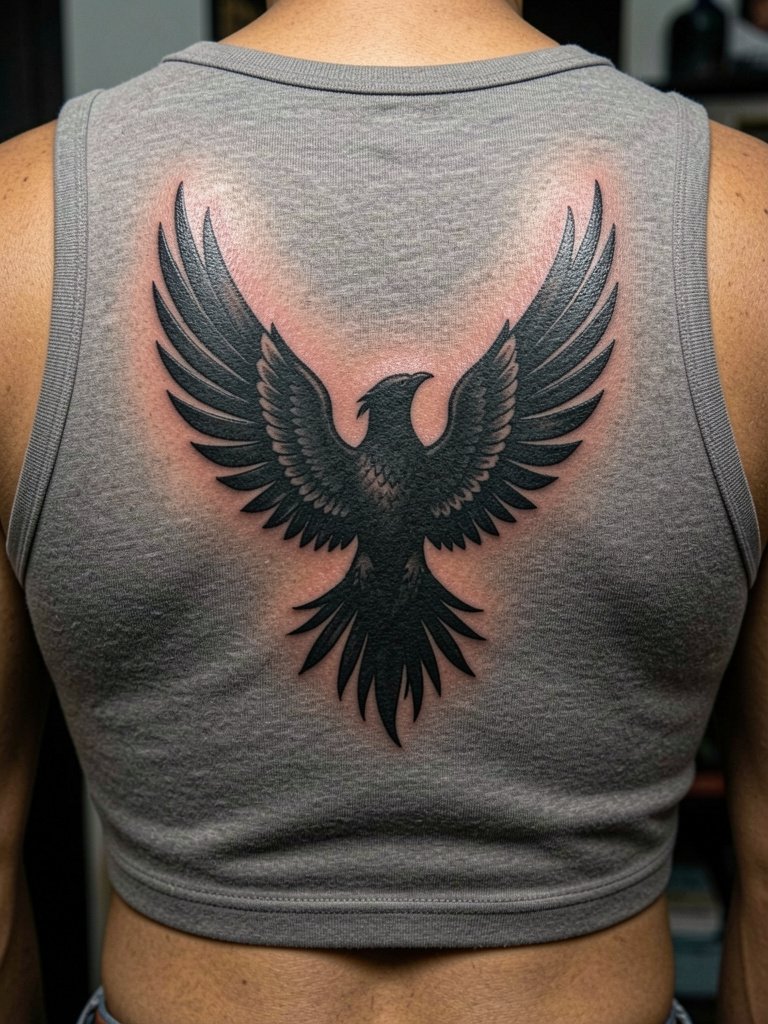
Blackwork phoenixes age into strong graphic statements and often outlast colorful variants in perceived clarity. The design requires a larger canvas because dense black needs room to breathe without risk of skin texture making fills patchy. A typical mistake is shrinking a blackwork concept down to a small size where the large fills read poorly. Sessions are longer and can be one to multiple sittings, and touch-ups for solid saturation are common at two to three years. For wardrobe choose backless dresses or open-back tops to reveal the silhouette. Wear a button-front shirt to the appointment for easy removal.
16. Micro-Realism Phoenix on the Wrist
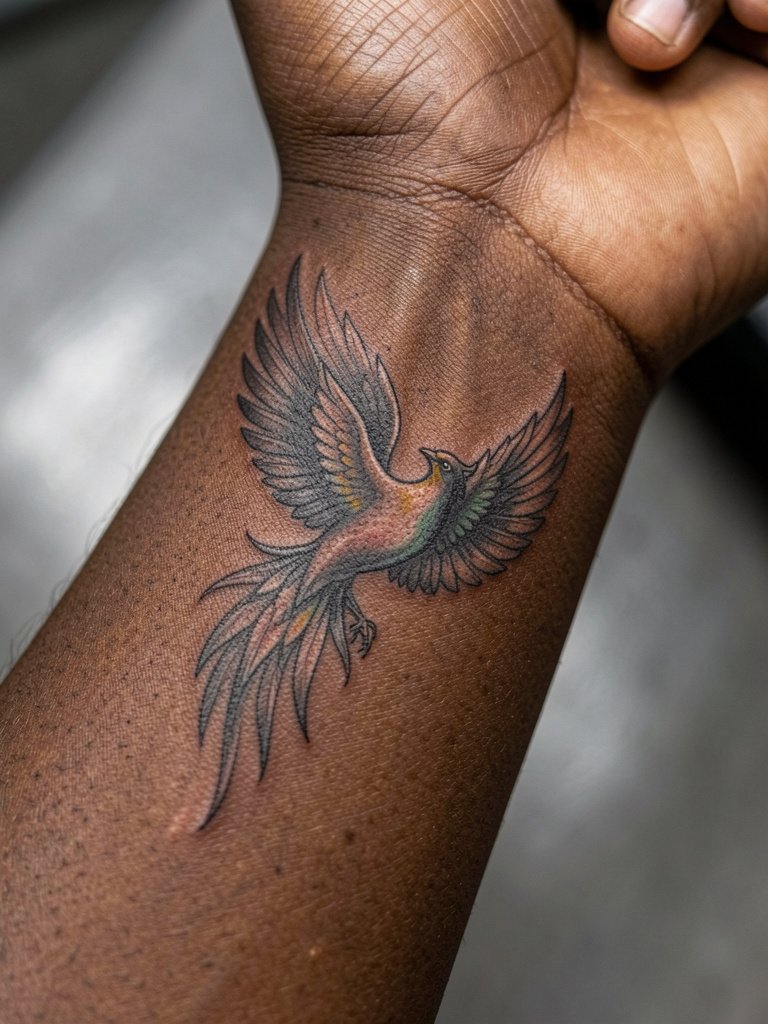
Micro-realism wrists look delicate up close but are high-risk for early softening due to constant wash and friction. If you want micro detail here ask for simplified shading planes rather than tiny stipple gradients so the image keeps its shape. The common error is demanding photo-level detail at a size that cannot safely hold it. Expect a short but focused session and a probable touch-up within 12 to 18 months. Stack thin bracelets on the opposite wrist to balance the look. Remember to remove jewelry from the tattooed wrist on session day.
17. Stipple-Shaded Phoenix on the Upper Arm
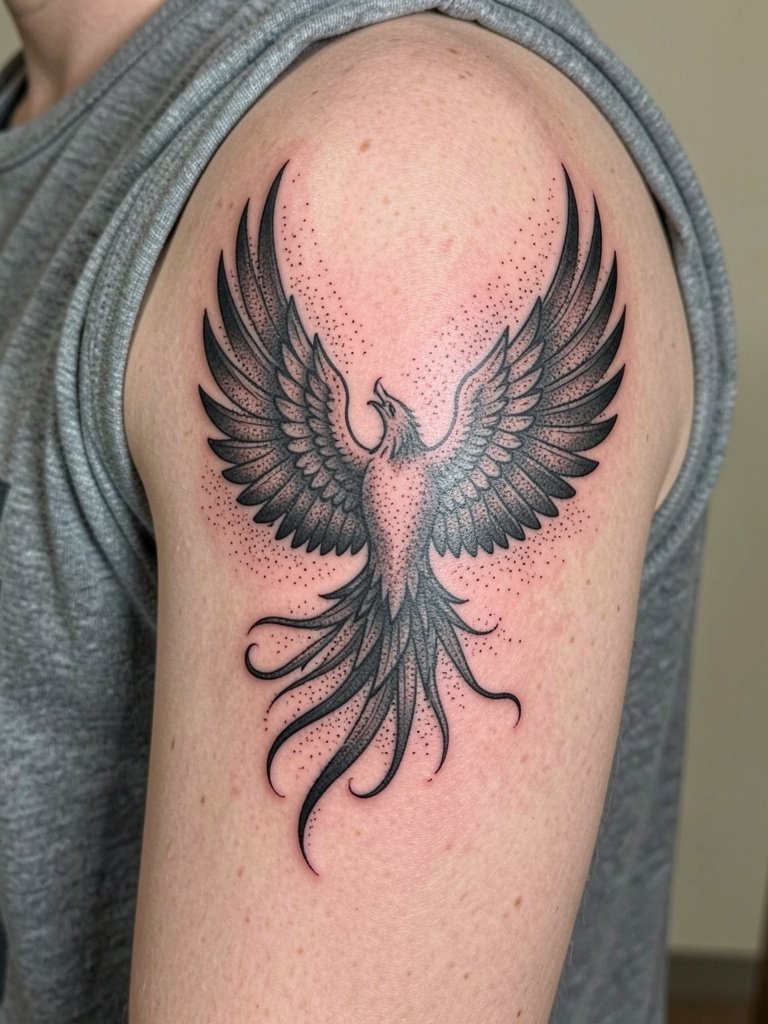
Stipple shading gives a soft dimensionality without heavy color. Ask the artist about dot density and whether they plan tighter dots near edges to prevent fading into blur. A mistake is requesting excessively fine stipple in a small patch that will not hold on oily or textured skin. Sessions are moderate length and can often be completed in one sitting for medium pieces. For showing the work, sleeveless blouses and structured tank tops highlight the dot work. Wear a loose short-sleeve shirt to the appointment so the artist can work comfortably.
18. Neo-Traditional Phoenix Thigh Piece
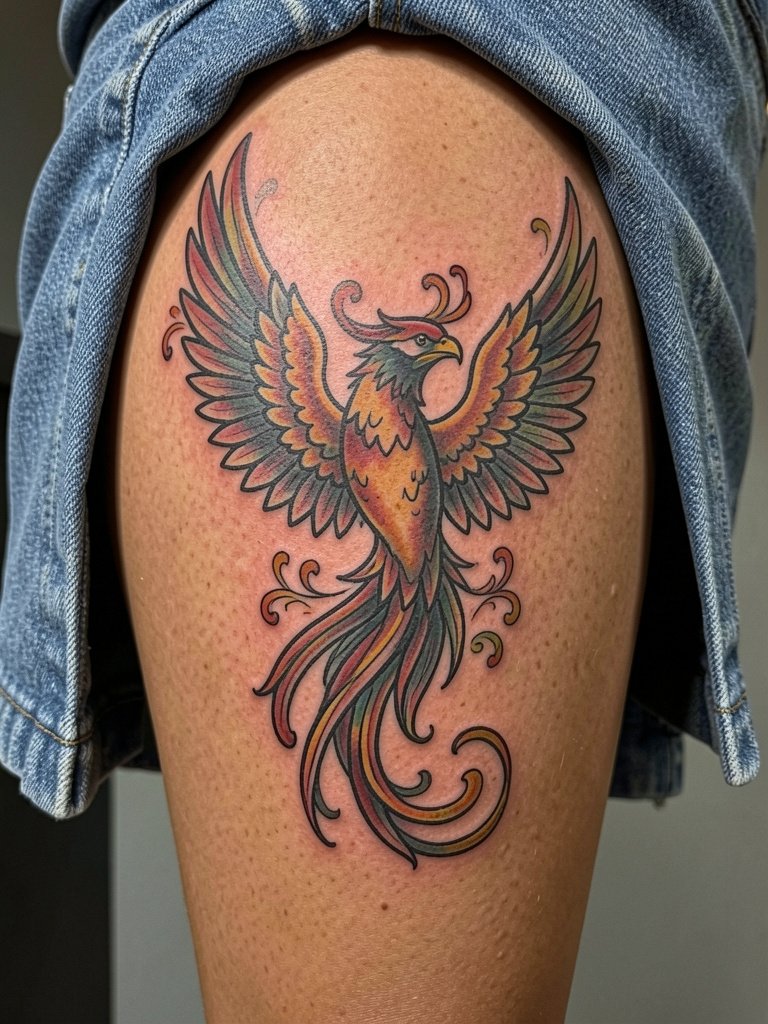
The outer thigh is forgiving for larger neo-traditional compositions because it offers a flatter, stable canvas. Discuss how much negative space you want around the bird so the piece does not look cramped when you sit. People sometimes pack too many decorative elements into the thigh field which then competes with natural leg movement. Sessions are usually comfortable and can be split across two sittings for larger pieces. For showing off, high-waisted skirts and bikini bottoms frame the work nicely. Wear loose shorts or a skirt to the appointment so the area is accessible.
19. Single-Feather Phoenix Behind the Ear
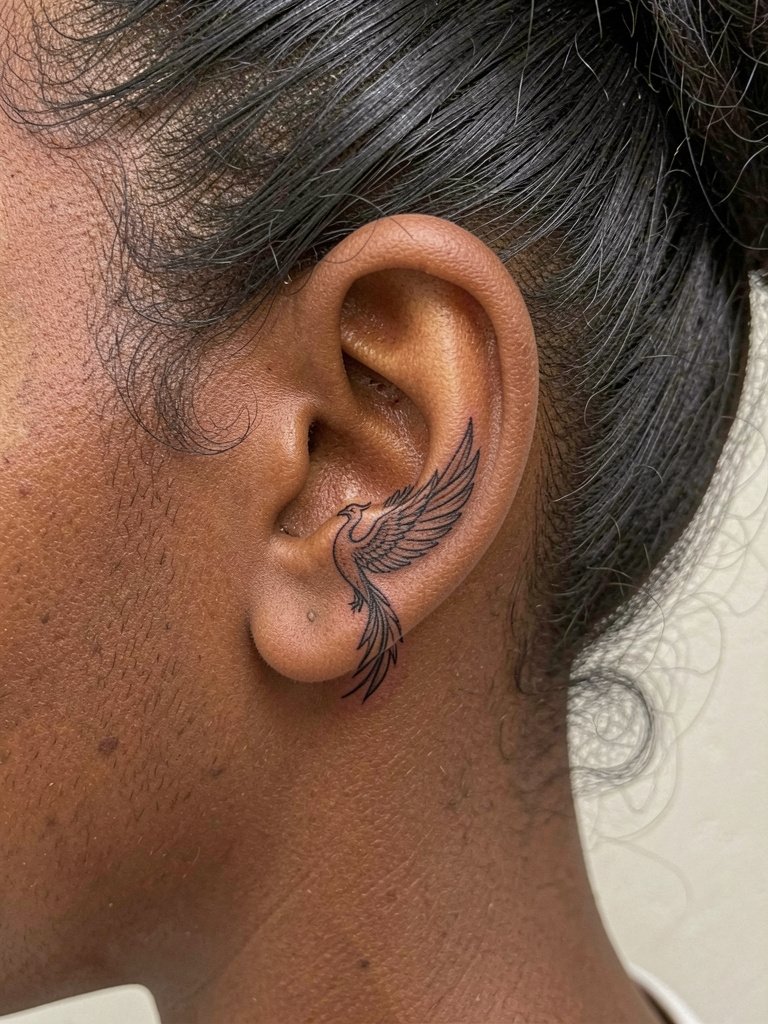
Behind-the-ear placements require precision and a design that will hold at small scale. Ask the artist to increase the primary stem thickness slightly to preserve contrast. The frequent mistake is using too many tiny cross-hatches which can blur into texture. Pain is low to moderate and sessions are brief. This spot pairs with short hair or updos that expose the nape. For the session pull hair into a tidy updo so the artist can work without hair in the field.
20. Phoenix Chest Piece Below the Clavicle
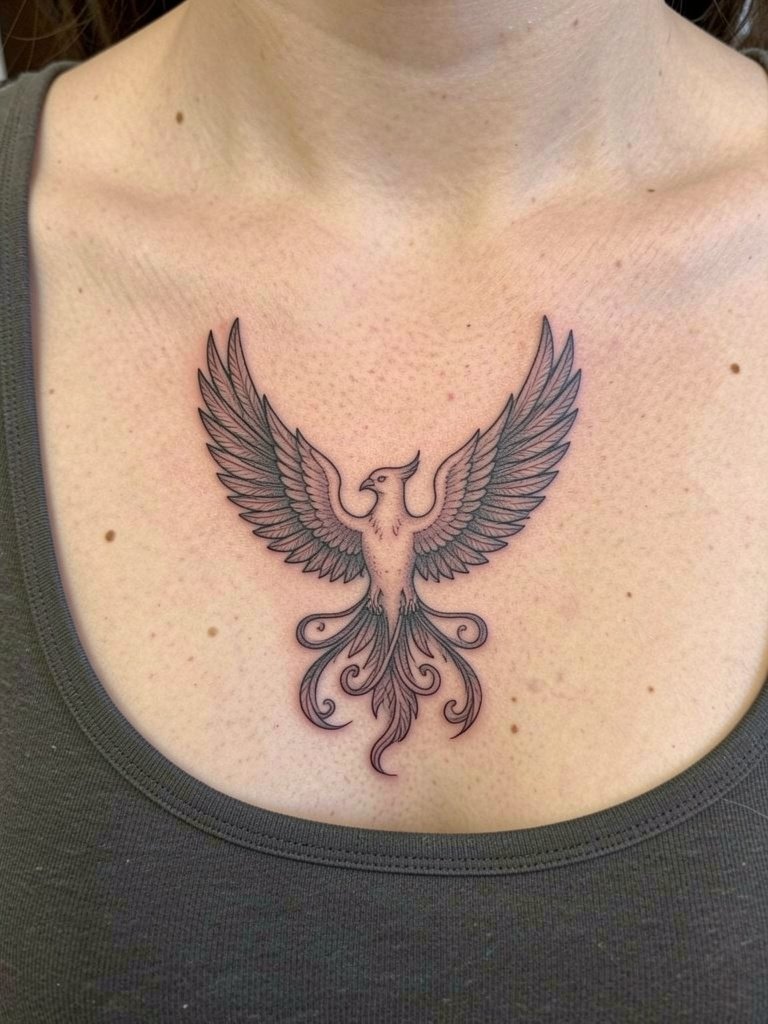
Sternum-adjacent pieces read intimate and decorative when they respect collarbone anatomy. Tell the artist whether you want the feather flow to angle toward the shoulder or toward the sternum because that choice changes the overall posture. Mistakes include crowding the area with delicate filigree that becomes indistinct when skin moves. Sessions are moderate to high on pain depending on proximity to the bone and breathing patterns. For showing off, scoop necks and square neck tops work well. Wear a strap-friendly top that can be moved aside without gaping.
21. Arm Band Phoenix Around the Bicep
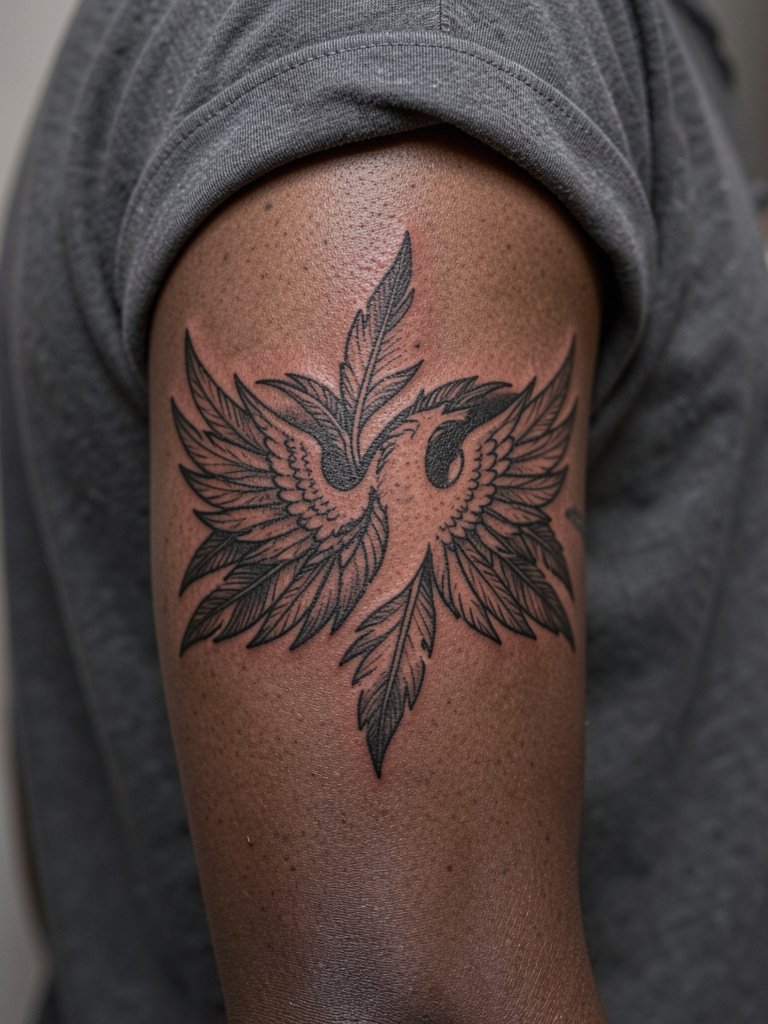
An arm band uses repetition to create a wearable phoenix motif that reads like jewelry. When discussing the plan share exact circumference measurements so the repeat aligns perfectly around your arm. A frequent error is uneven spacing that shows seam lines when the band wraps. Expect one to two hours depending on size and moderate pain. This pairs well with sleeveless tops and thin bracelets on the opposite wrist. Wear a short-sleeve tee you can easily roll up for the session.
22. Ribcage Phoenix With Elongated Feathers
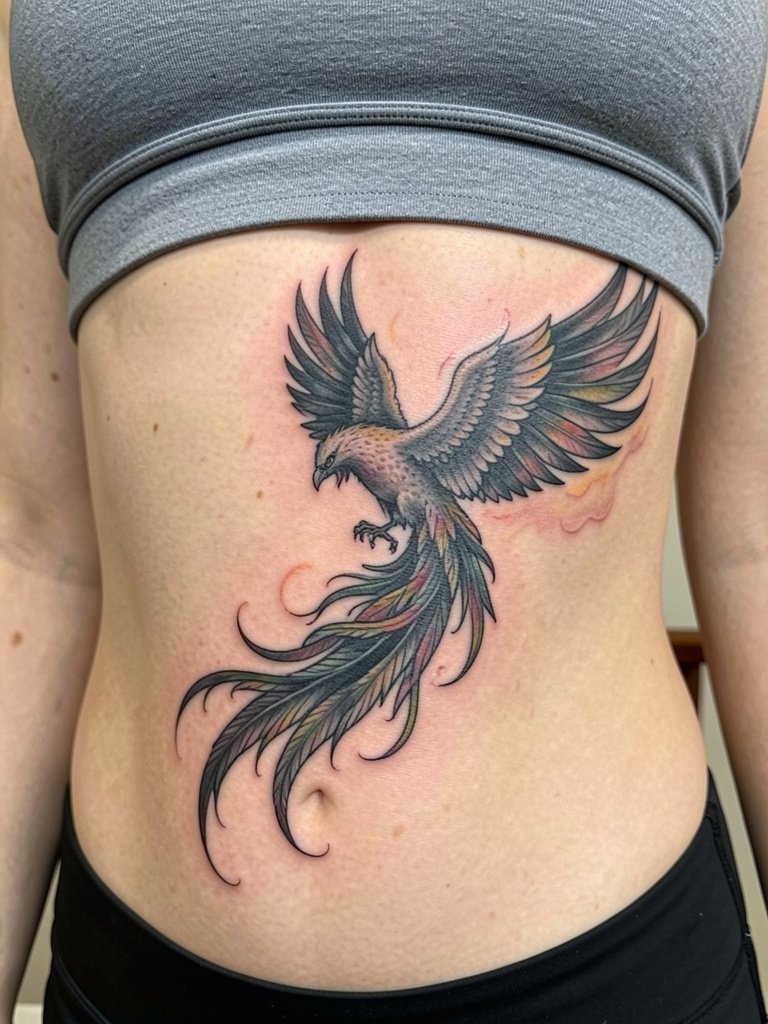
Rib placements reward patience because the body's curve enhances flight. One common mistake is cramming too many tiny feathers into limited vertical space which softens with healing. If you want elongated feathers, show the artist how long you want each plume at true size so spacing and movement read naturally. Sessions are higher on the pain chart and often require two sittings. For the session wear a sports bra or a fitted top that can be lifted without rubbing the area.
23. Collarbone Chain Phoenix With Negative Space
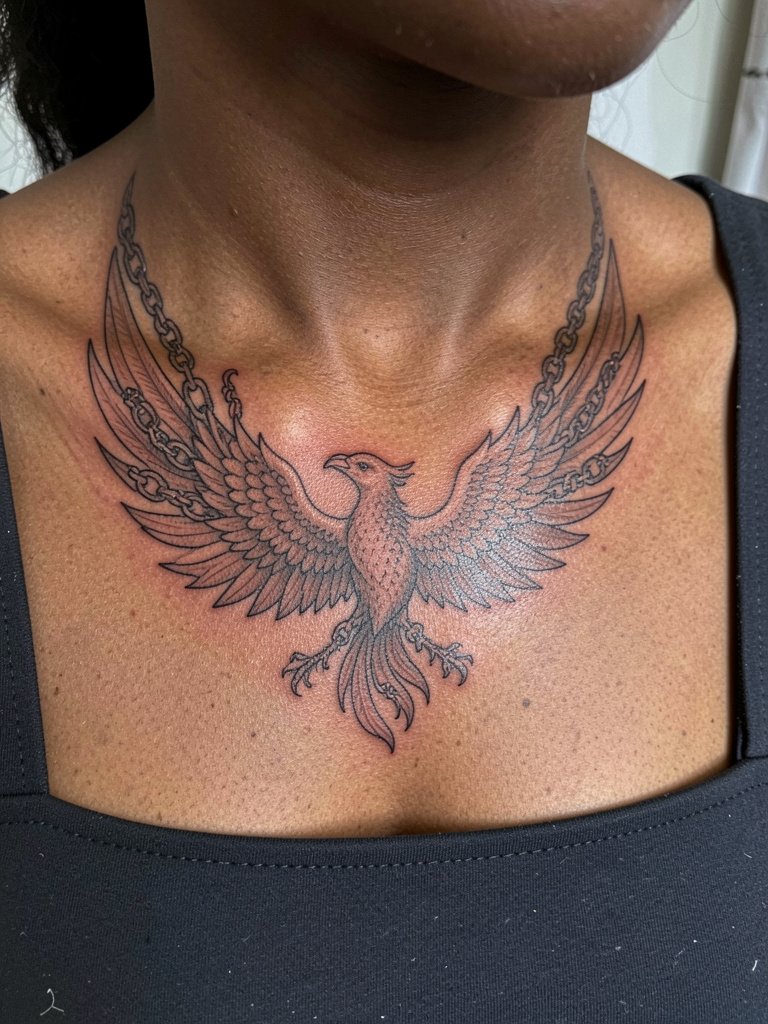
Using negative space as a chain detail along the clavicle gives the design a decorative edge without over-inking delicate skin. The artist should map out the negative gaps and show you a stencil at real scale so you can confirm visibility. A common misstep is expecting tiny gaps to remain crisp without leaving enough space. Expect a short to moderate session and a touch-up at 12 to 18 months. Pair with square-neck tops and delicate chains. Wear an off-shoulder or strapless top to the appointment to allow unobstructed access.
24. Intimate Lateral Hip Phoenix Curving Toward the Thigh
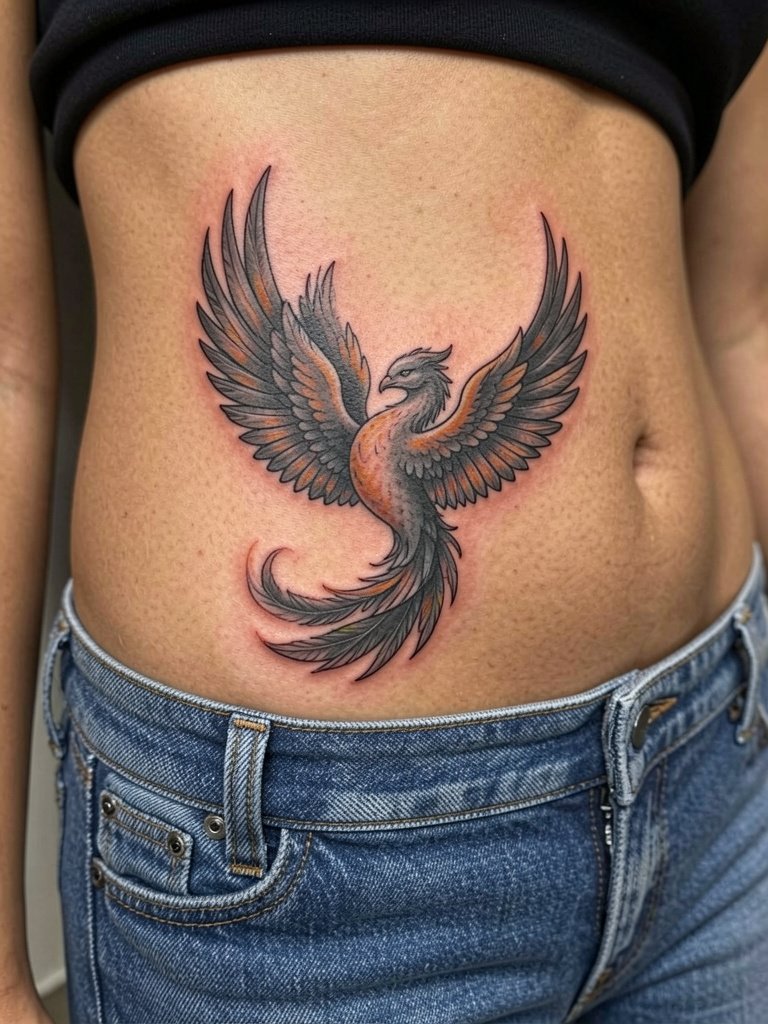
Hip pieces like this feel intimate and suit curved phoenix poses. Be explicit about how far the feathers will travel toward the thigh so nothing sits right on the waistband line. The common error is placing too much detail flush to elastic which rubs during recovery. Expect one to two sessions with moderate pain. For showing off choose high-waisted jeans or side-slit dresses and for the appointment wear loose shorts or a skirt that can be moved without fabric friction.
25. Full-Back Dramatic Phoenix With Flames
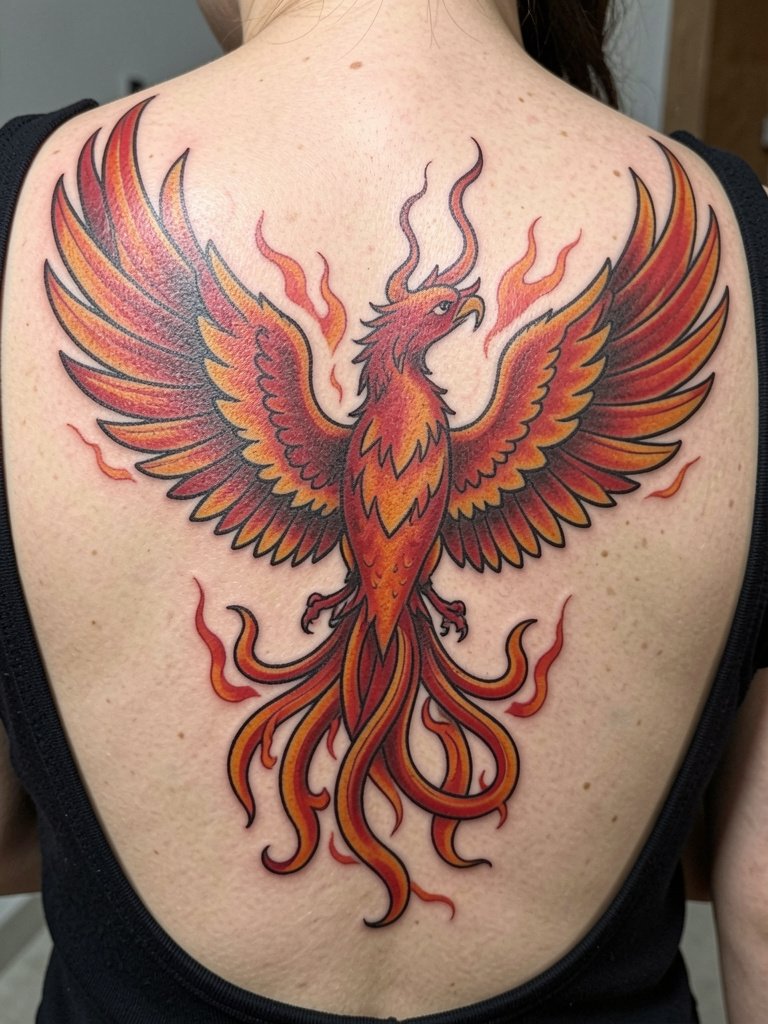
Full-back phoenixes create a dramatic rebirth composition and give artists room for feather architecture. One frequent planning oversight is underestimating session count. Large color pieces often need multiple, long sessions to avoid overworking skin. When you book, discuss session length, breaks, and a realistic touch-up timeline. Expect higher cost and multiple sittings. For wardrobe, backless dresses and open-back tops highlight the spread. Bring comfortable layers for the studio and plan clothing that pulls over the head rather than off to avoid brushing fresh ink.
26. Black and Gray Ornamental Phoenix on the Upper Thigh
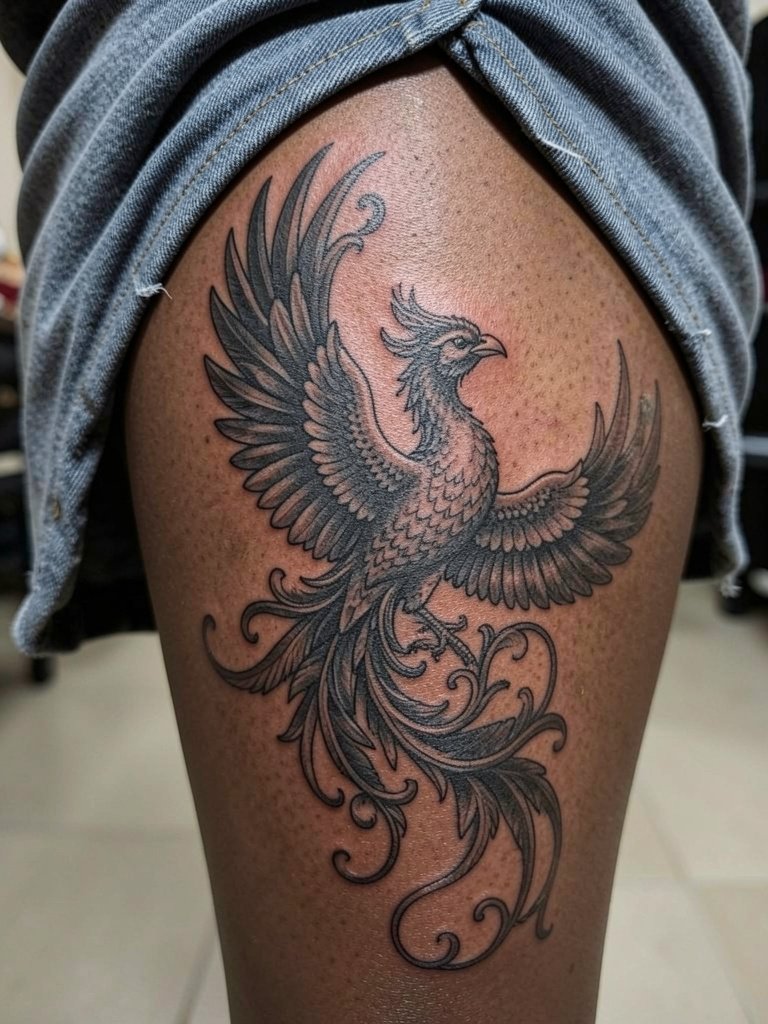
Black and gray works as a durable alternative to bright color while keeping decorative detail. If you have darker skin tones ask the artist about contrast strategies so stipple and shading read clearly. A mistake is copying a light-skin contrast palette directly which can lose midtone definition. Sessions vary by size and are often more comfortable on the thigh than on bony placements. For showing off choose skirts or high-cut swimwear. Wear loose shorts to the appointment for comfortable access.
27. Geo-Abstract Phoenix Along the Spine
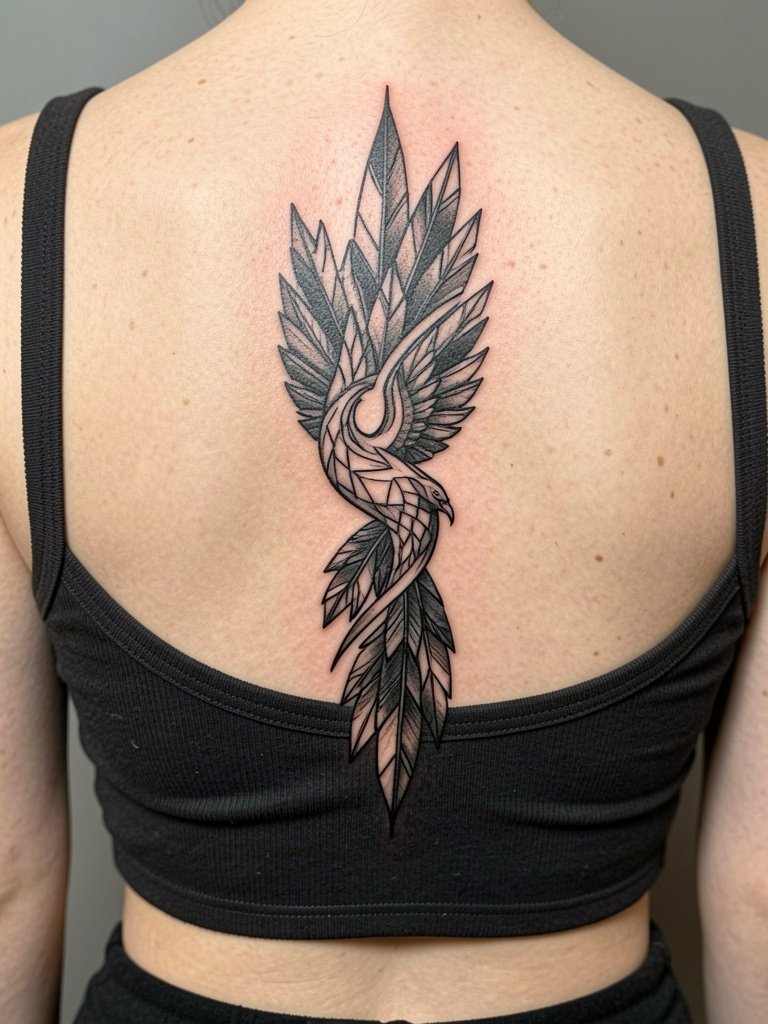
A columnar design down the spine reads architectural and modern, and it benefits from a precise grid during stencil placement. Ask the artist for a spine alignment check so the pattern sits centered. The common mistake is assuming tiny geometric joins will hold; give the negative space room or shapes will bleed together with time. Expect multiple passes and moderate pain on the bone line. For wardrobe, backless or low-back tops show the centerline. Wear a button-front shirt so you can remove it without touching the fresh ink.
Frequently Asked Questions
Q: How do I find artists and healed examples for phoenix tattoos without naming artists?
A: Search hashtags like #phoenixtattoo, #phoenixtattooideas, and #finelinetattoo on Instagram and TikTok while using the location filter for your city to find nearby portfolios. Pinterest is useful for saved placement mockups and filtering by style, and Reddit threads in r/tattoos and r/tattooadvice often include user-shared healed photos you can ask about in DMs.
Q: Will a watercolor phoenix hold color on darker skin tones?
A: Watercolor can show beautifully on darker skin, but it depends on contrast and saturation choices. Request healed examples from the artist on similar skin tones and ask them to anchor washes with darker contrast or minimal outlines so the color reads longer.
Q: How much should I expect to book for time and touch-ups for a medium forearm phoenix?
A: A medium forearm phoenix usually fits into a one to two hour session depending on color, and many people schedule a touch-up around the one-year mark to refresh linework or saturation. If you want heavy color saturation expect two sessions and a more realistic touch-up timeline.
Q: Is fine line safe for ribs or collarbone placements?
A: Artists split into two camps on this. One camp says ultra-fine lines on ribs and collarbone blur too quickly because of skin movement and thinner tissue. The other camp maintains fine line can work if the spacing is widened slightly and the artist controls needle depth. Look at healed examples and ask for adjustments that prioritize line weight and spacing.
Q: What should I wear to appointment day for different phoenix placements?
A: Wear clothing that gives easy, non-irritating access to the area. For shoulders and upper back choose a button-front shirt, for hips and thighs wear loose shorts or a skirt, and for the chest pick a wide-neck or strap-friendly top. If you plan to show the piece after healing, a fitting open-back top or a scoop-neck shirt will frame it well.
Q: How does color compare to black and gray for long-term maintenance?
A: Color phoenix tattoos feel vibrant and thematic but need ongoing sun protection and occasional touch-ups to maintain saturation. Black and gray tends to hold its contrast longer and can be a more low-maintenance choice if you prefer less follow-up care.
Q: What are realistic touch-up expectations for tiny versus large phoenix tattoos?
A: Tiny designs usually need earlier touch-ups because fine detail softens faster under friction and washing. Large pieces often require multi-session saturation work up front and occasional color refreshes later, but their scale often helps them age more gracefully in visual terms.