

Someone I know spent months saving references and then froze at the counter because they could not tell which mountain style would actually age well on their skin. Fine line fading, watercolors muting, and placement that stretches with weight changes kept coming up in conversations. The list below pulls the mountain looks artists keep recommending now and explains when to pick each one so you leave the shop confident.
1. Fine-line mountain silhouette on the forearm
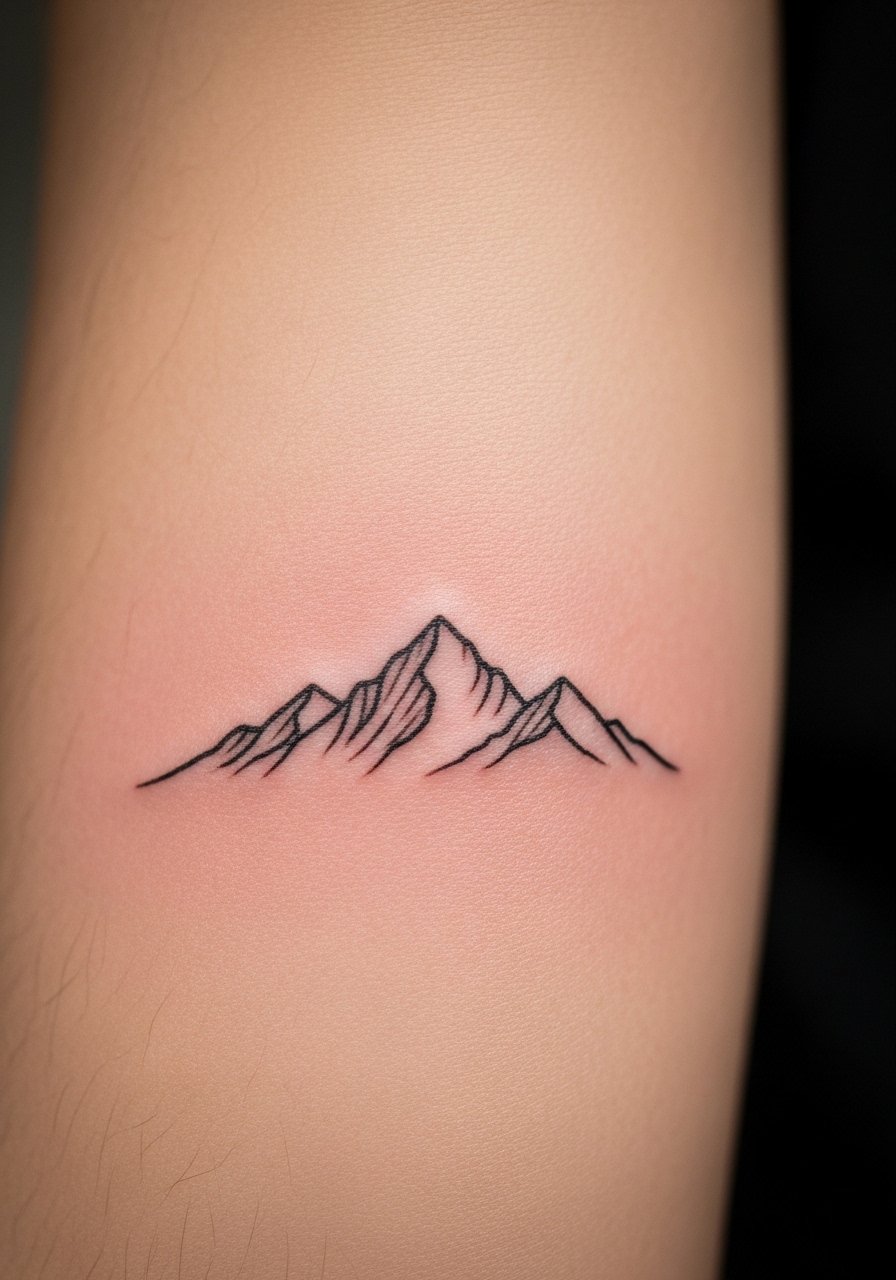
Someone I know first booked a fine-line forearm piece because it reads as subtle travel ink. Tell your artist you want a single-needle feel with slightly thicker contour at the base so the peaks keep shape as the ink settles. Common mistake is asking for ultra-thin lines and then placing the design over soft tissue, which leads to blurring in 18 to 24 months. Pain is moderate for the forearm and most sessions last under an hour. Expect touch-ups around year two if you want the original crispness back. Ask to see healed forearm photos in the artist portfolio before booking.
2. Watercolor mountain landscape on the shoulder

Fair warning, shoulders take color beautifully but they see sun a lot. When you consult, bring reference images showing the exact palette you want and ask about pigment brands and layering. Artists split on watercolor longevity. One camp says bright washes mute faster than blackwork. The other camp argues careful saturation and punchy contrast keep colors readable for years. If you want longevity, ask for small areas of black outline to anchor washes. Sessions usually run one to two hours and pain is low to moderate. Expect color to soften at six months and cool slightly after two years.
3. Minimalist mountain with a compass on the wrist

When you sit down with your artist for this wrist piece, show the exact compass style you want, otherwise proportions get lost on a small canvas. The wrist is high-visibility and has a higher chance of fading from sun and friction. Most sessions are quick, often under 45 minutes, and the pain is sharp but brief. A common error is cramming too much detail into under two inches. Ask for simplified compass points and slightly stronger outer lines so the mountain still reads at a glance after a year. Plan a possible touch-up at year one.
4. Neo-traditional eagle over mountains on the thigh
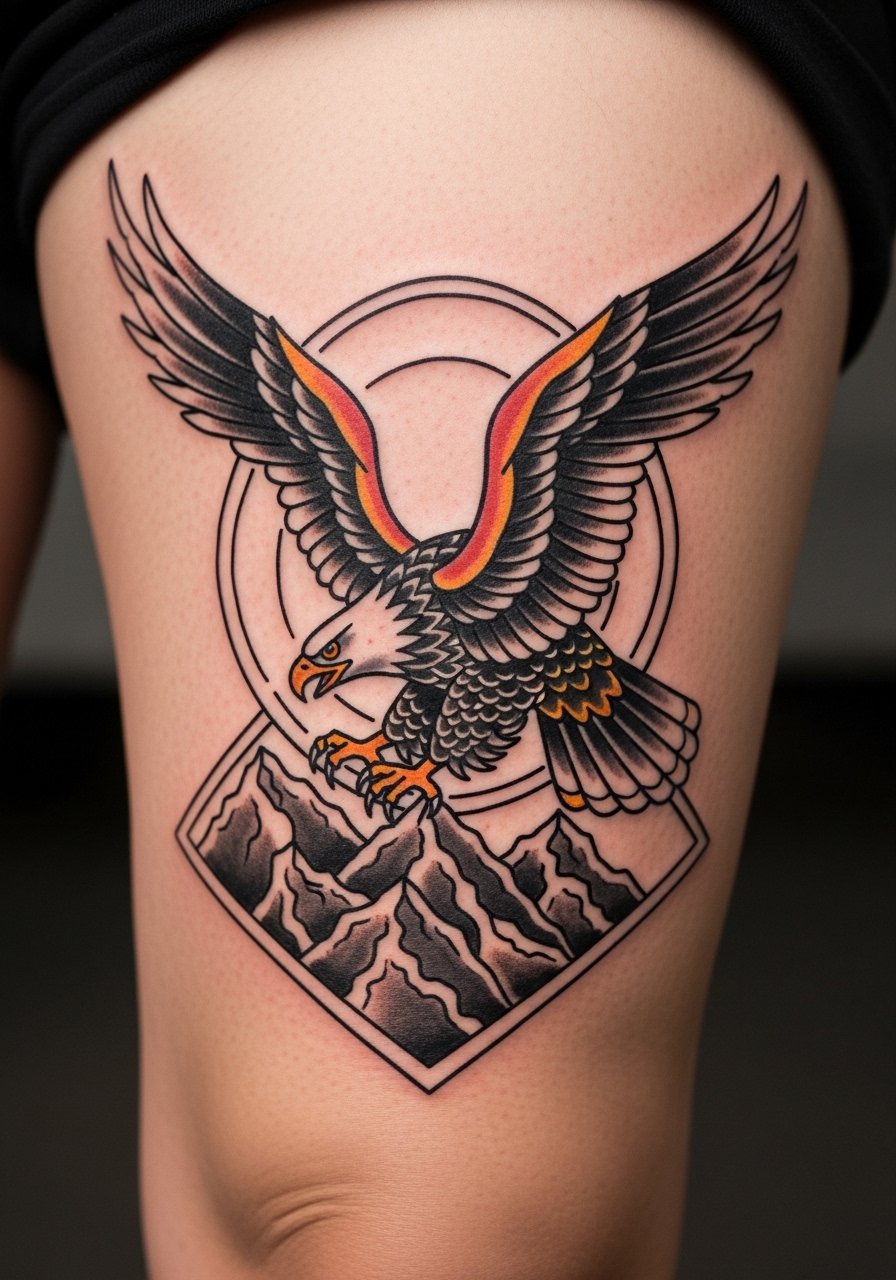
There is something about a neo-traditional eagle layered above peaks that reads like a badge of independence. Thigh pieces let an artist work larger so linework keeps crisp edges as the skin shifts. Sessions can be multiple and range from call-back shading days to full-color fills. Expect moderate pain due to muscle under the skin and longer sessions of two to three hours. A real mistake is requesting tiny neo-traditional details on a small area. Give the design room and ask how the eagle's wings will flow with your thigh contours.
5. Fine-line mountain framed by vines on the ankle
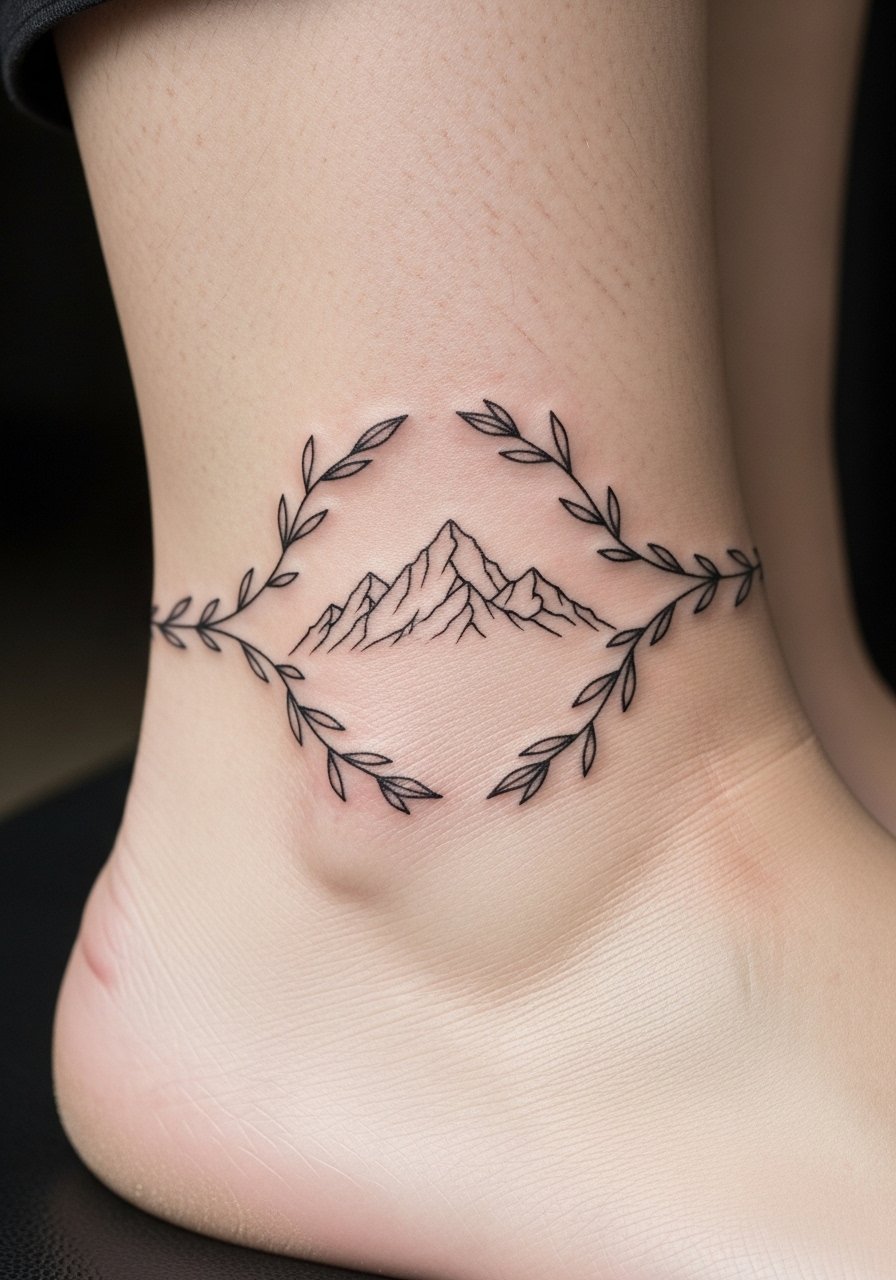
Most vine-framed ankle tattoos read as feminine without adding heavy color. The ankle is bony and the pain score is higher than the calf. If you want lines to last, ask your artist for slightly bolder vine anchors and thinner internal stems so the silhouette keeps contrast as it heals. A common version that ages poorly is too-dainty vine stems placed directly over bone, which softens into a blur. Sessions are usually one hour. Expect touch-ups in two to three years, especially where footwear rubs the area.
6. Watercolor flower and mountain blend on the ribcage
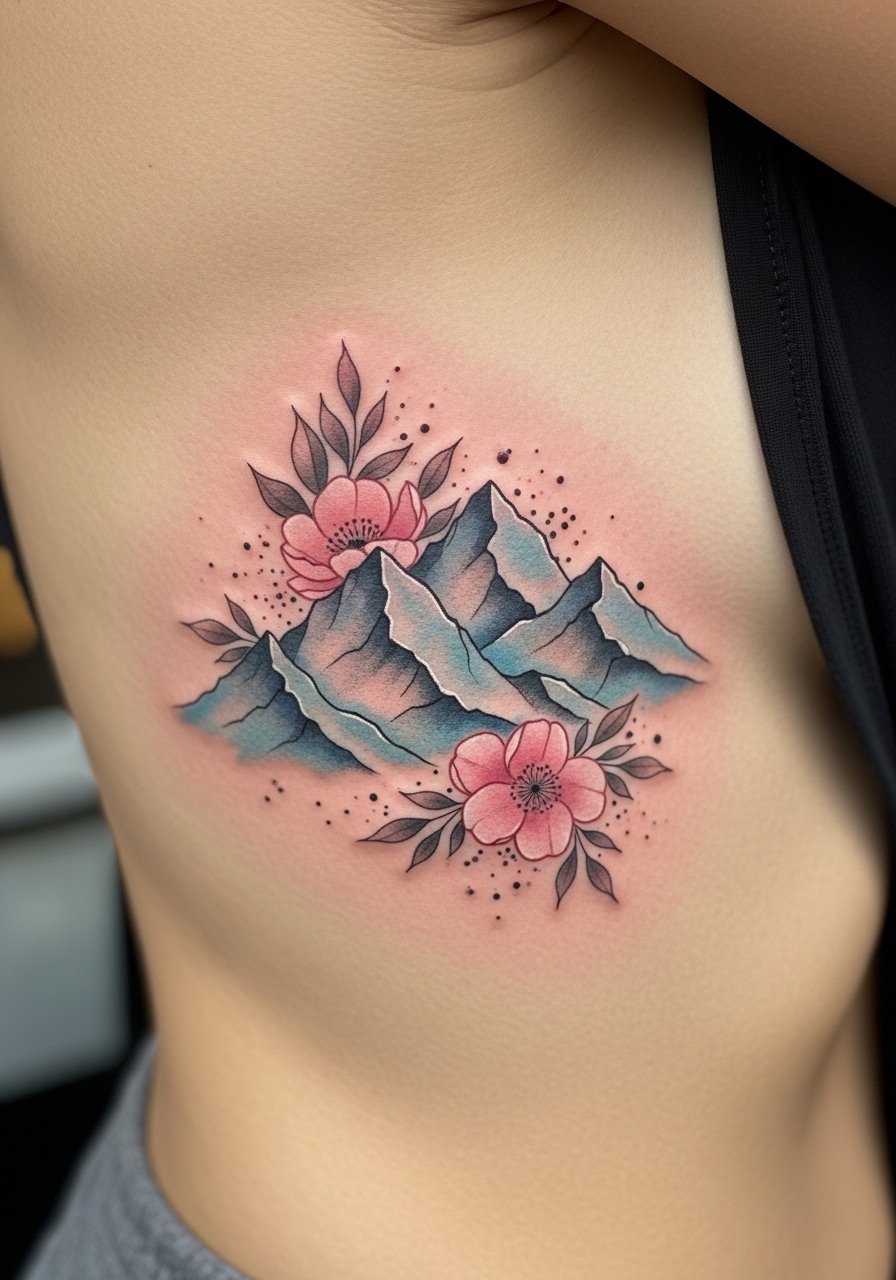
Most watercolor pieces on the ribs are gorgeous when fresh but this placement is painful. The ribcage registers higher on pain charts and sessions are often split into two shorter appointments. Artists debate whether ribs are a good zone for fine line color. One side argues the constant stretch and movement dulls pigment faster. The other side says careful layering and healed contrast preserve the art. If you pick this, tell the artist you accept staged sessions and want reference photos of healed rib work. Expect muted color by year two and a touch-up option if you want vibrancy later.
7. Geometric mountain with sun on the collarbone

The collarbone is a high-impact placement that shows geometry clearly. The biggest mistake with geometric work is going too small which makes the shapes bleed together after healing. Ask for slightly larger negative spaces and clear anchor points so the sun and peaks stay distinct. Sessions are often under an hour for small geometric pieces and the pain ranges from moderate to higher depending on bone proximity. Expect crisp lines at six months and possible softening by year three. If you want this read as hopeful symbolism, request the sun as a separate negative-space element.
8. Blackwork nebula mountains on the upper arm
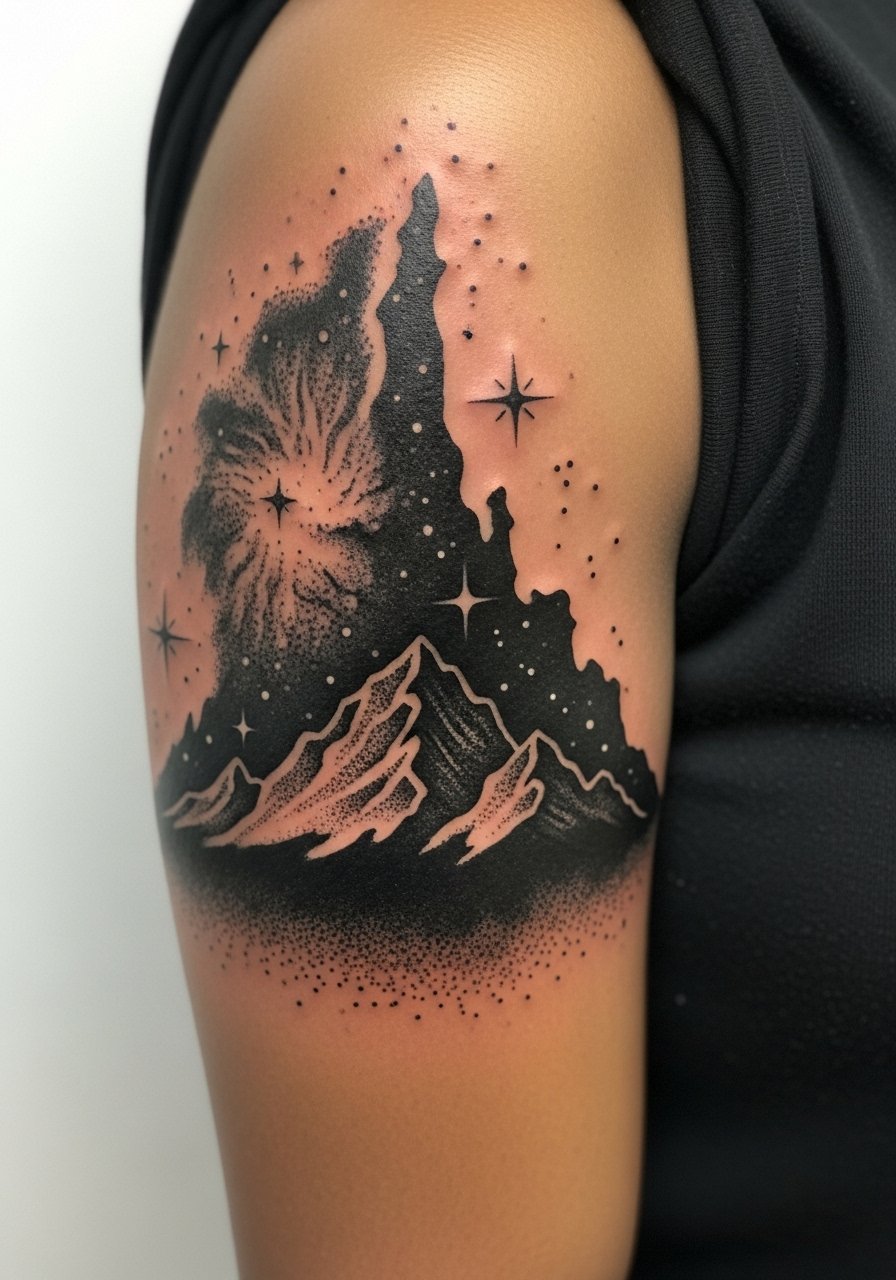
There is a growing crowd choosing cosmic blackwork over mountainous silhouettes because the contrast reads across tones. When you ask for nebula effects, specify stipple shading and dot work rather than soft washes so contrast stays over time. Upper arm seats pigment well and pain is generally low. Sessions can be longer due to dense black fills, so plan for two to three hours. A common error is asking for subtle gray washes only, which look flat on darker skin tones. Tell the artist you want high saturation areas balanced by dot work and negative space.
9. Micro-realism single peak on the finger

Finger tattoos are intimate and they fade faster because of constant use and skin turnover. Hand placement affects job impressions in some industries, so think about career impact before committing. Micro-realism on a finger needs extra line spacing and a plan for a touch-up in 6 to 12 months. The session is short and pain is high for the finger. Common mistakes include asking for tiny shading that will vanish within a year. Ask your artist how they handle fingertip regeneration and what their touch-up policy is.
10. Ornamental mountain with lantern on the shoulder blade
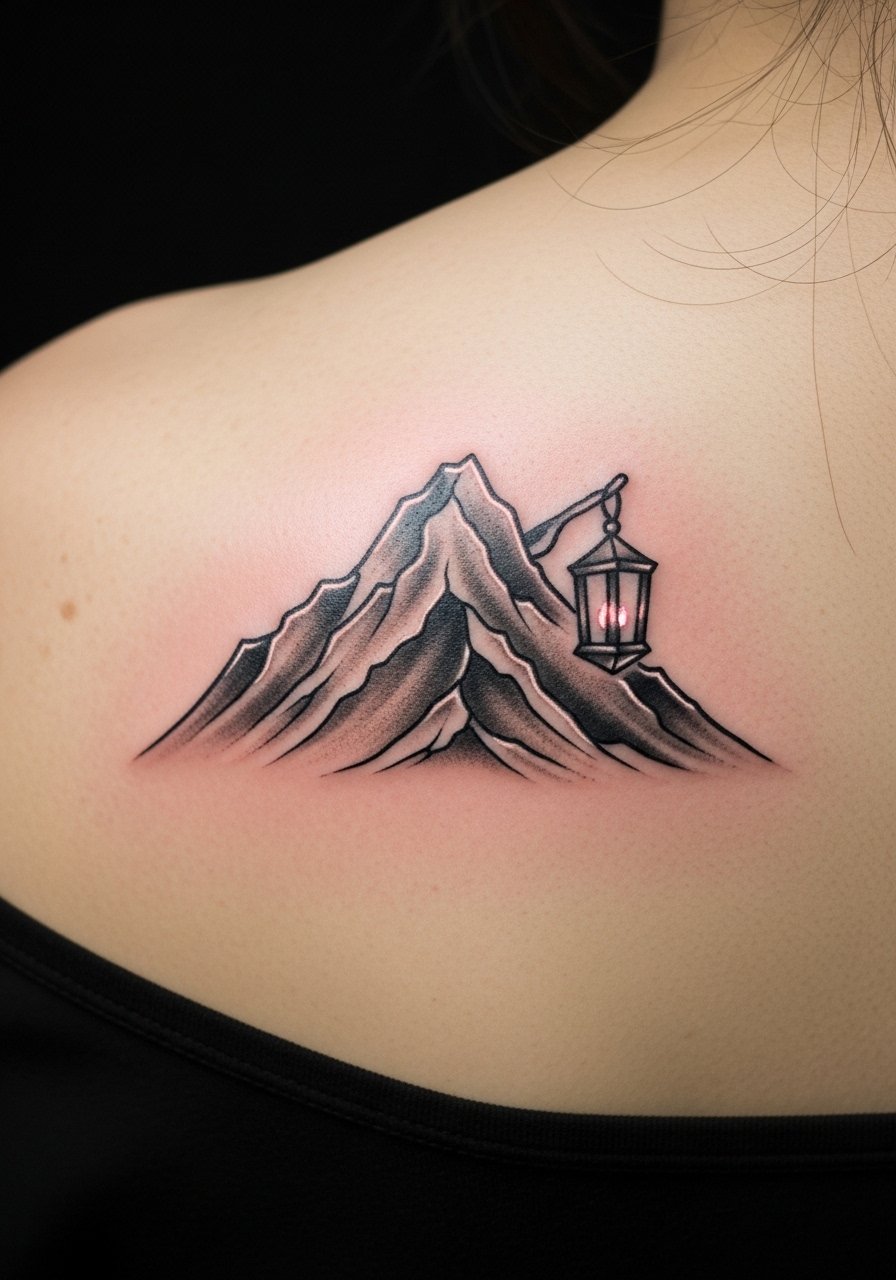
There is a quiet symbolism to a lantern set among peaks that reads as guidance. Shoulder blade placement lets ornamentation breathe along the scapula curve so details do not compress with movement. Sessions are moderate and you may need two sittings for shading and glow. A frequent misstep is over-detailing the lantern at small scale. Ask for a slightly larger lantern and higher contrast between its glow and surrounding shading. Healing at six months usually shows soft edges and by two years the glow tones mellow but remain readable.
11. Traditional mountain with trees and river on the calf
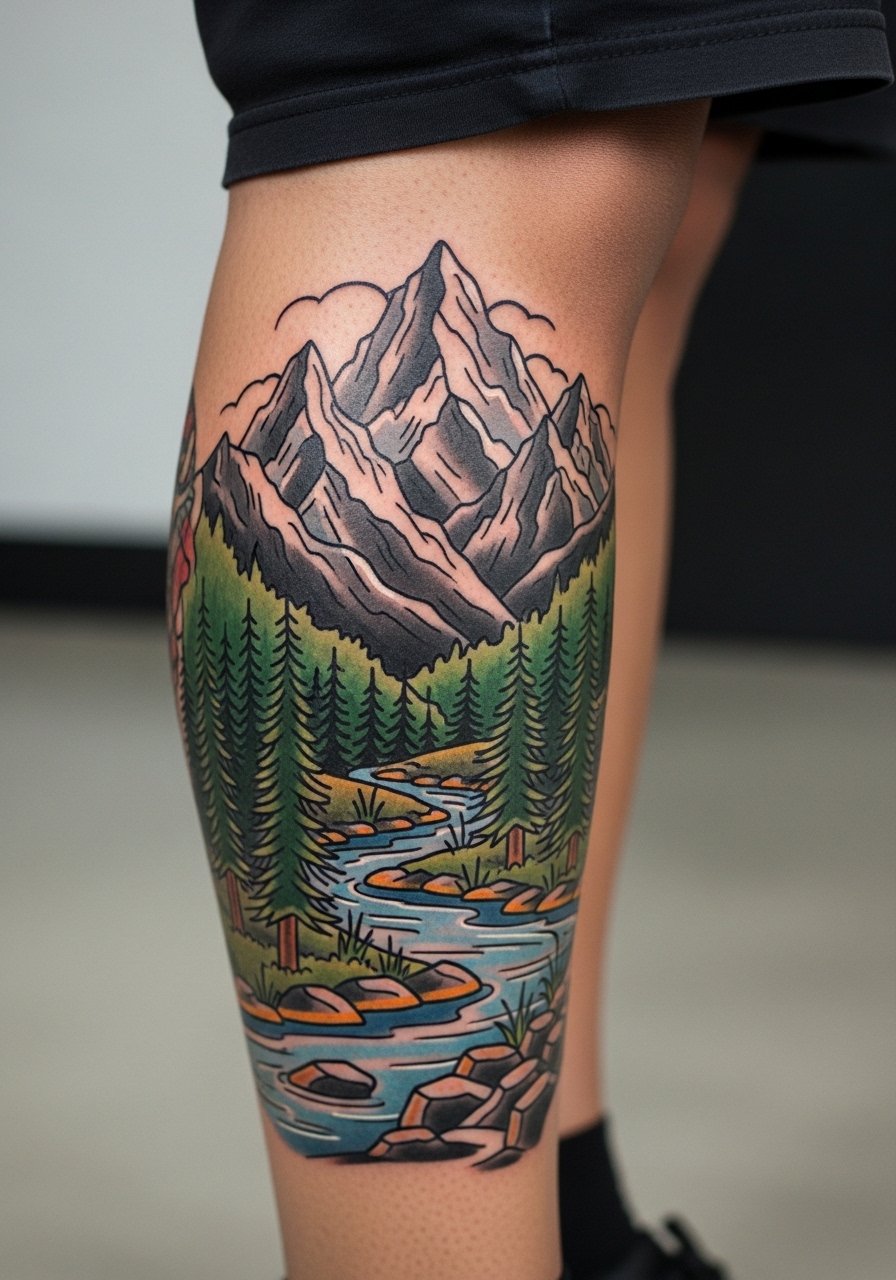
The calf is forgiving for traditional scenes and lets artists keep clear linework and saturated washes that age predictably. Expect sessions of two to three hours if you include color layers. A common error is cramming too many small elements, which makes the river and tree line indistinct over time. Ask the artist how the scene reads from a distance and whether they will use heavier outlines for foreground elements. Pain is lower on the calf and touch-ups are typically optional after two to three years if you want to refresh color.
12. Ignorant-style jagged peaks on the inner forearm

The ignorant style embraces bold, naive marks that age into a raw, graphic look. If you want that anti-polished aesthetic, ask your artist to mimic quick confident strokes and avoid overworking the edges. Inner forearm pain is moderate and sessions are usually an hour. A common mistake is asking for too much micro-detail inside thick strokes, which undermines the intended simplicity. Expect solid black to hold well and need fewer touch-ups than fine-line equivalents. If you want an increased contrast, request denser saturation in the peaks.
Tattoo Prep and Aftercare Essentials
- Fragrance-free gentle foaming cleanser for new tattoos. Use this for the first few days to remove ointment residue without stripping ink. It helps reduce scabbing issues and keeps the area clean without a heavy film.
- Lightweight fragrance-free moisturizing balm. Apply a thin layer after washing to lock in moisture while letting the skin breathe. Works well during the peeling phase and avoids clogging pores.
- Medical-grade second skin bandage sheet, 6 by 8 inches. Useful for the first 24 to 48 hours when your artist wants a sealed barrier. It reduces friction from clothing on torso and shoulder placements.
- Hypoallergenic non-stick gauze pads, box of 50. Keep these on hand for gentle blotting and covering during sleep on the first night if needed.
- Waterproof phone pouches or small protective sleeve. Handy when healing areas need to avoid accidental splashes in the shower or while commuting.
- Sun-blocking mineral sunscreen stick for healed tattoos. Once fully healed, protect color and linework from UV fade with a physical blocker designed for sensitive skin.
- Silk or soft cotton travel pillow cover. Keeps sheets from irritating fresh back or ribcage tattoos during sleep and reduces friction on shoulder blade pieces.
- Aquaphor healing ointment 14-ounce or similar. A mainstream option that many artists recommend for short-term sealing during the initial phase if you prefer an occlusive balm.
Every tattoo is different. Always follow your artist's specific aftercare instructions. Consult a dermatologist if you have skin concerns or unusual healing issues.
Frequently Asked Questions
Q: Will fine-line mountain tattoos blur faster on forearms compared with bold-lined versions?
A: From what I have seen, fine-line work on high-motion or thin-skin areas blurs sooner than heavier outlines. If you want a delicate look with longer readability, ask for slightly heavier anchors at the base of lines and plan a touch-up at year two to keep edges crisp.
Q: Do watercolor-style mountain tattoos need different aftercare than black-and-gray pieces?
A: Yes. Watercolor tends to rely on subtle saturation so avoid heavy ointments that can trap pigment under scabs. Clean gently, pat dry, and use a lightweight moisturizer for the peeling phase. Keep the area out of direct sun and plan a second session if you want the vibrancy refreshed after healing.
Q: How should I choose placement if I worry about body changes stretching a mountain piece?
A: Think about where skin stretches most, such as the lower abdomen and inner thigh. For stability pick collarbone, shoulder blade, or outer calf. If you want a thigh or ribcage location, ask the artist how the design will adapt to natural contours and whether they recommend thicker anchors or larger scale.
Q: Are fingertip or hand mountain tattoos worth it if I want something small and discreet?
A: They can be worth it if you accept that hands regenerate faster and need more frequent touch-ups. Also keep career visibility in mind. If you do choose a finger, request simplified geometry and ask how the artist handles repeat touch-ups for that zone.
Q: How do I find a watercolor or specialty artist if my city has few guest spots?
A: Use discovery paths like hashtag searches on social platforms with your city tag, check Tattoodo filters for style, and search "mountain tattoo [city]" results. I have found local guest spots by following #WatercolorMountainTattoo and reaching out through portfolio links to ask about availability.