
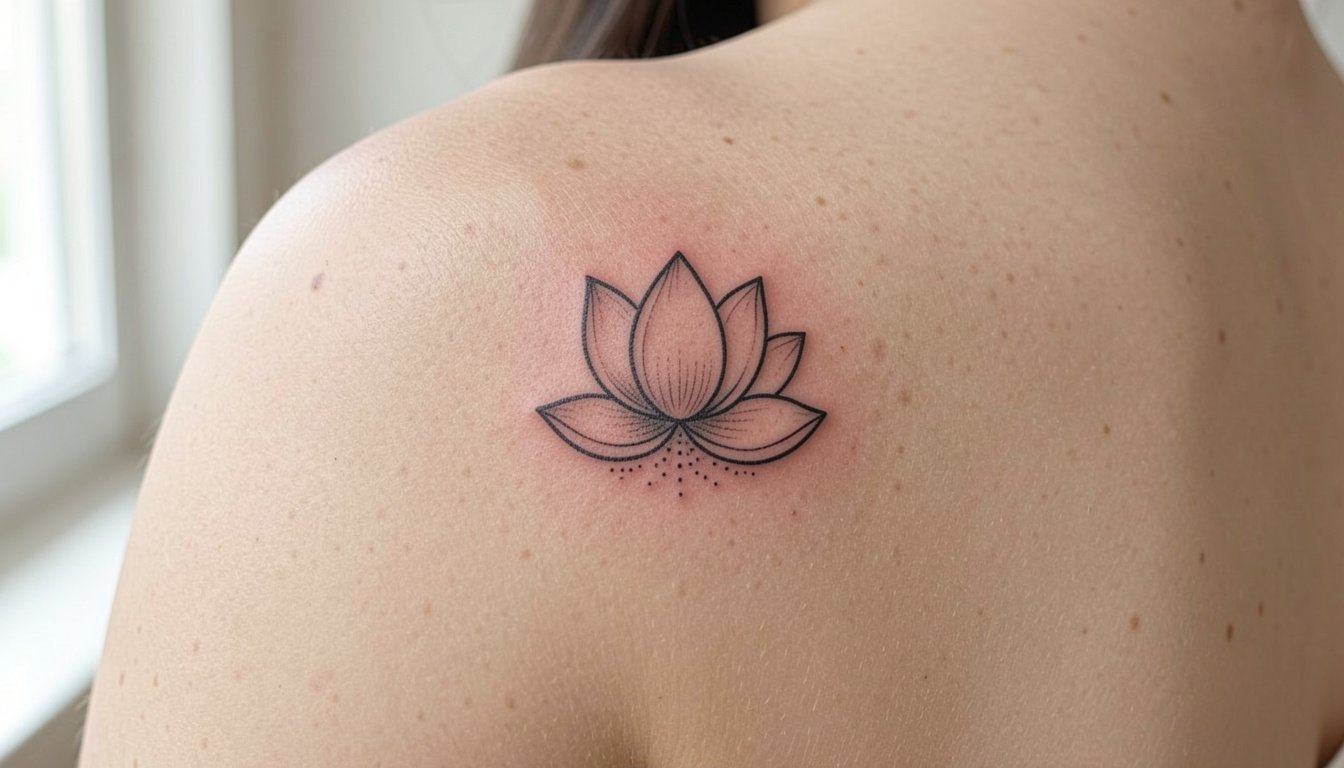
Minimalist lotus tattoos look simple at first glance, but the choices you make up front determine whether a piece still reads as a crisp symbol years from now. Fine single-needle petals can fade into a blur on hands and fingers, tiny placement choices increase blowout risk, and ribs or sternum sessions bring higher pain and longer touch-up timelines. Read on for minimalist lotus approaches that balance longevity, placement, and how you might actually wear them.
1. Tiny Single-Petal Lotus on Inner Wrist
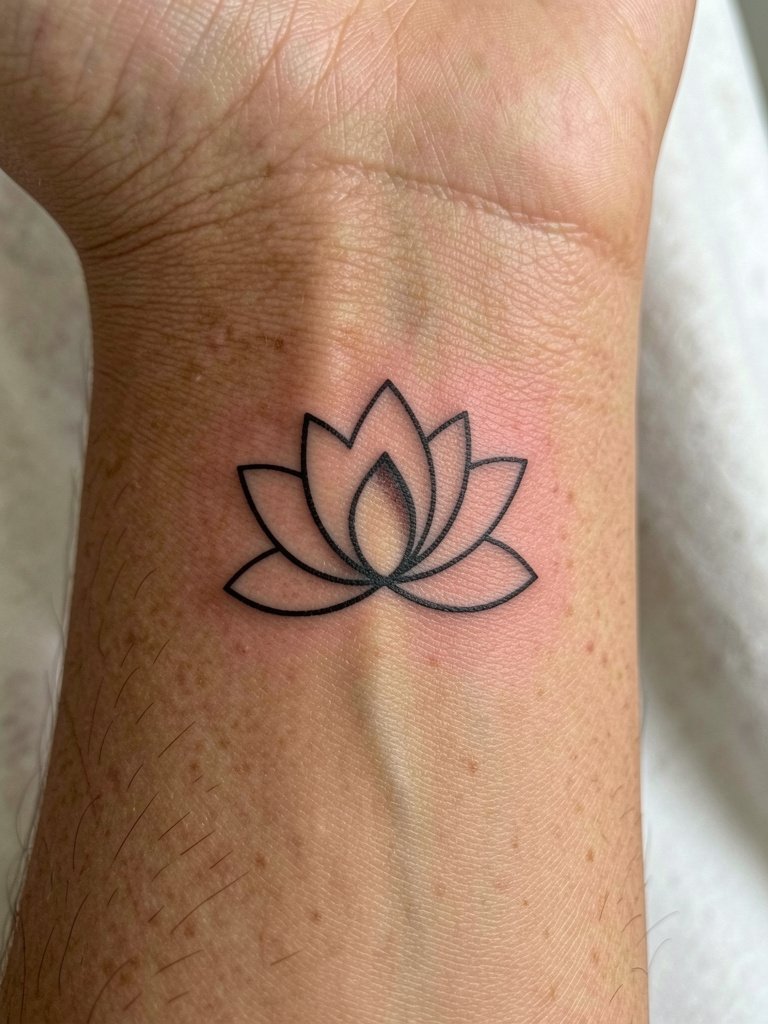
A single-petal wrist lotus reads best when the outline is given a hair more weight than the picture on your phone. The inner wrist has thin skin and frequent movement, so linework that is too fine will soften by year two. Expect a quick session of 20 to 40 minutes with a low to medium pain level, and a likely touch-up window around the one-to-two year mark. Avoid asking for needle-thin script-like lines. For showing it off, pair with a delicate chain bracelet that sits just above the tattoo so the motif frames the wrist.
2. Minimal Outline Lotus Behind the Ear
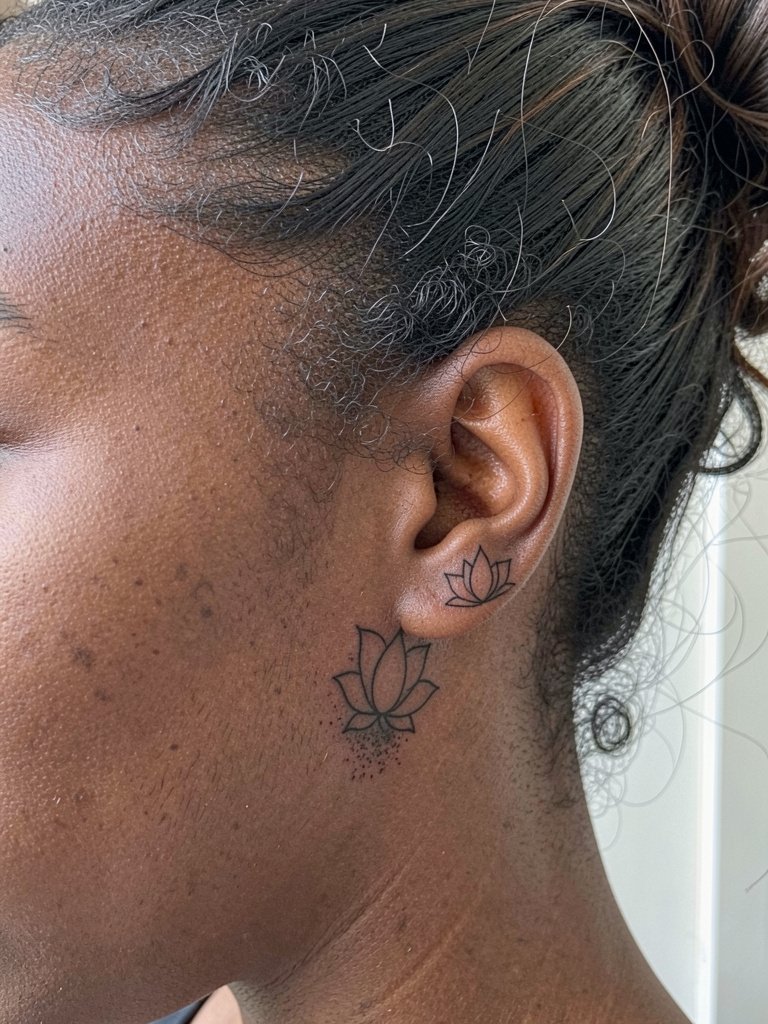
Behind-the-ear lotus pieces are discreet and heal quickly but demand an artist comfortable with shallow curved linework. Pain is usually low to medium and the session often finishes in under 30 minutes. A common mistake is asking for hairline-thin strokes without accounting for skin movement, which makes lines disappear into the hairline. If you want this piece to read, specify slightly bolder single-needle lines and plan for a small touch-up at six to twelve months. Professional consideration: pick an artist experienced with small head-and-neck placements because precision matters for longevity.
3. Tiny Dotwork Lotus on the Ankle
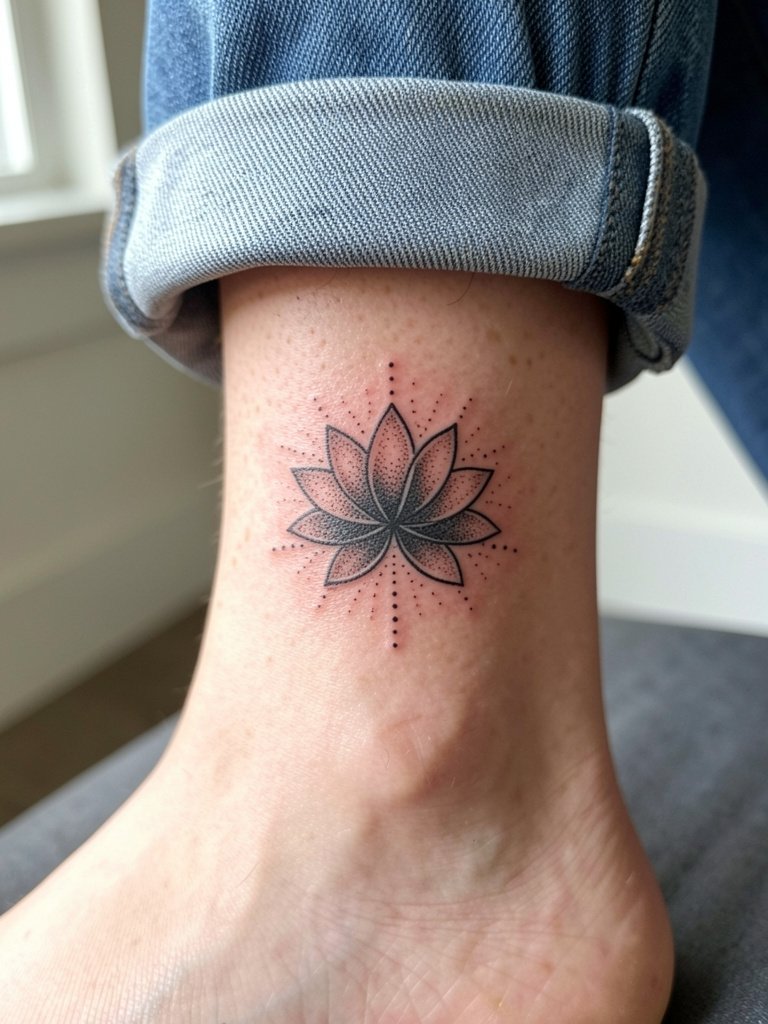
Ankle placements get lots of friction from socks and shoes, so dotwork that is too dense can fade unevenly. Recommend sparing stipple, leaving negative space for the petals to breathe, and expect a session of 30–45 minutes at a low pain level. A typical mistake is squeezing too many tiny dots into a small area. For evenings or sandals, pair the ankle with a beaded anklet that draws the eye without rubbing the fresh ink while it heals.
4. Continuous Line Lotus on the Collarbone
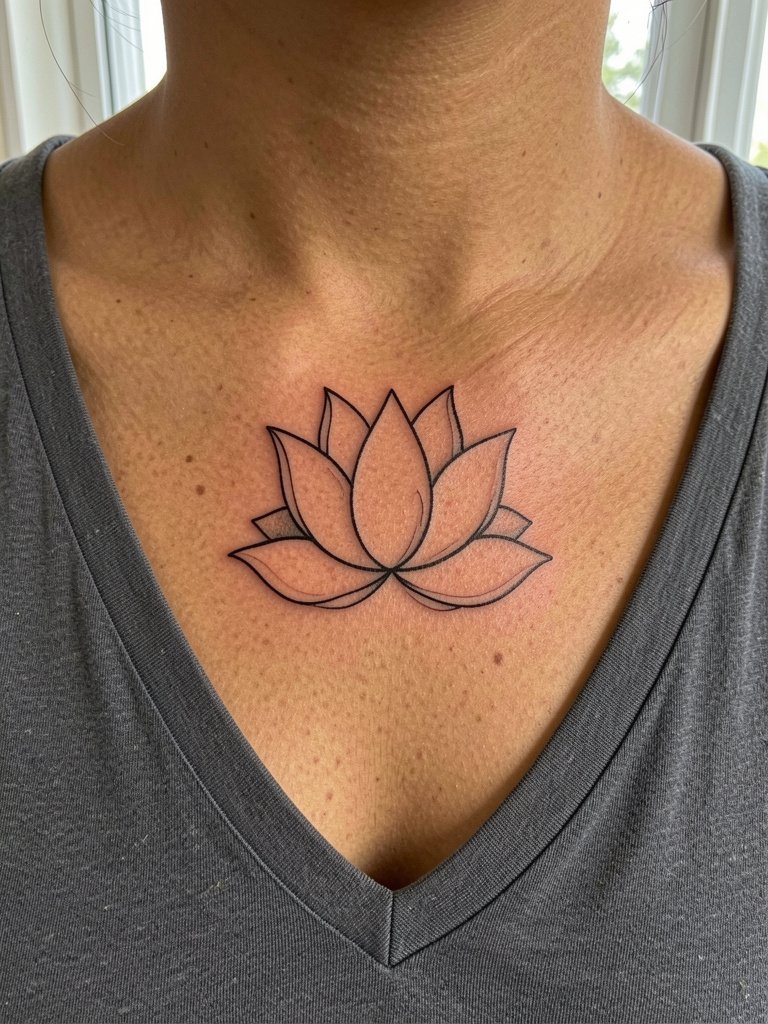
Collarbone pieces are very visible and flattering when the line weight is consistent. Pain ranges from medium to high depending on how close to bone the needle goes, and sessions are often 30–60 minutes. A common aging issue is the inner contour blurring if the continuous line is too thin. To avoid this, ask for an unbroken contour that is slightly heavier and for the artist to show a stencil on the exact collarbone curve so the piece sits naturally. For outfits, the design pairs well with open-collar blouses that expose just enough skin to frame the lotus.
5. Geometric Lotus Mandala on Upper Arm
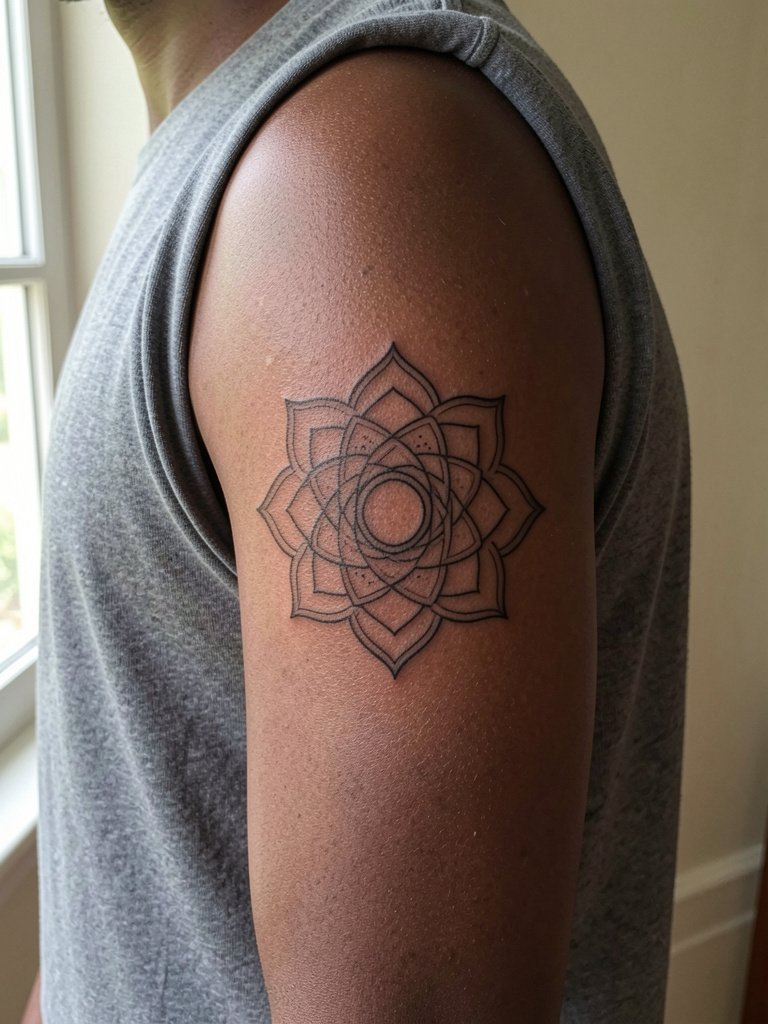
A geometric mandala lotus on the upper arm scales well and ages predictably because the outer arm has thicker skin and less constant friction. Sessions typically run 60 to 90 minutes and pain is low to medium. People often ask for insanely tight geometry at a tiny scale, which leads to lines merging over time. Ask the artist to space the rings slightly wider than the reference and to show a scaled stencil. For casual looks, a rolled-sleeve linen shirt complements the piece and keeps the arm visible without overexposure.
6. Tiny Floating Lotus on the Side Rib
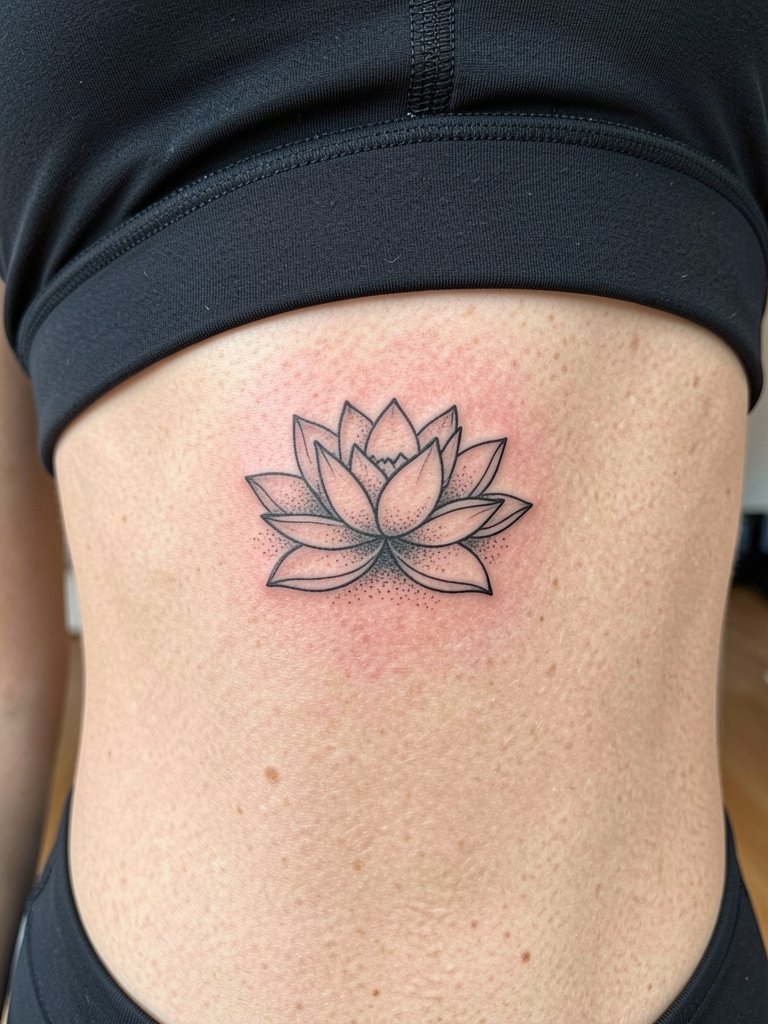
Rib placements are intimate and painful, and fine-line work here can be controversial. One camp argues that the skin on the ribs stretches and thin lines blur within two years. The other camp says that with slightly wider spacing and careful depth the lines settle fine, and they will point to healed photos at three years to back that up. Expect a medium-to-high pain score, longer aftercare attention, and a realistic touch-up at the one-year mark. For the session, wear a fitted sports bra so the artist has access without you disrobing unnecessarily.
Pre-Session Picks
The fine-line lotus placements above include wrists, ankles, and ribs, which all benefit from a few practical items for the studio and the first week.
- Stencil transfer paper kit. Lets you preview exact line weight on skin before committing, helpful for small wrist and behind-the-ear placements in ideas above.
- Topical numbing cream. Applied per instructions before a rib or sternum session eases the pain curve without affecting line clarity.
- Thin protective film roll. Keeps ankle and hand placements protected from friction and water in the first 24 to 48 hours.
- Fragrance-free body wash. Gentle cleansing for sensitive placements without stripping pigment.
- Aquaphor healing ointment. Thin application for the first two to three days locks in moisture for delicate linework without clogging pores.
7. Micro Lotus on the Side of a Finger
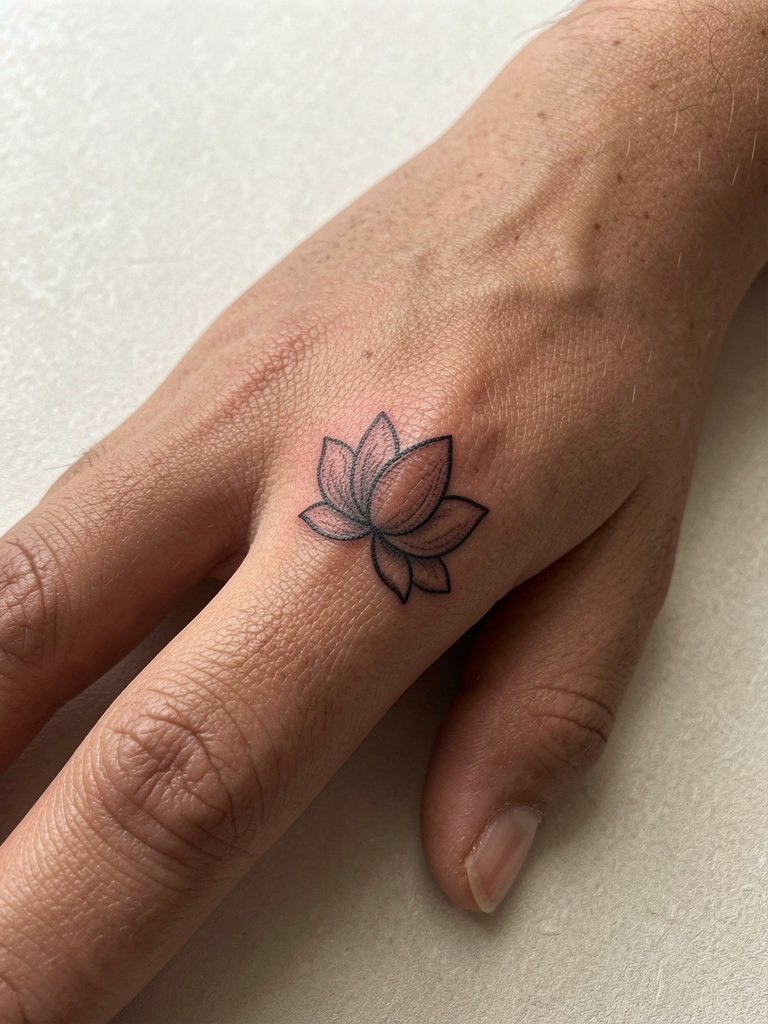
Finger placements are high risk for blowout and early fading because of constant washing and thin dermal layers. For a lotus on the finger, made slightly bolder and placed on the lateral side instead of the pad, the piece will last longer. Sessions are short but expect follow-ups; touch-ups at six to twelve months are common. A common error is demanding single-needle finery across knuckle joints. For daily wear, avoid rings that sit directly over the tattoo and consider a thin silicone ring while healing to reduce abrasion.
8. Negative-Space Lotus on the Outer Thigh
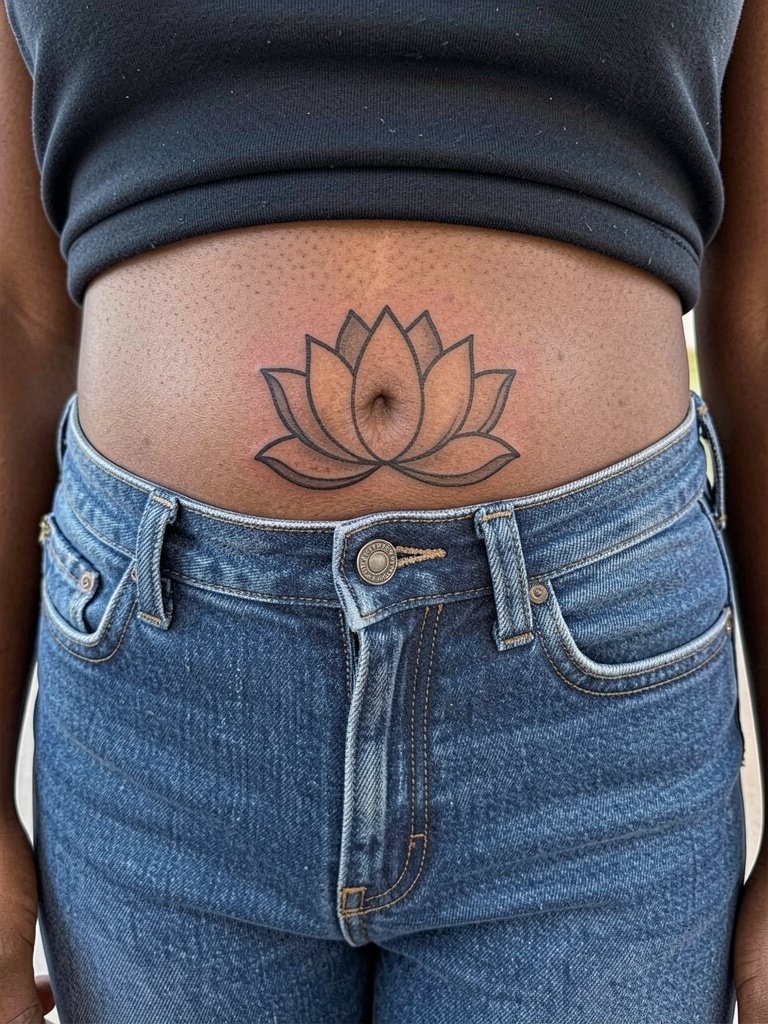
The outer thigh tolerates slightly denser black fills and negative-space lotus work because the skin is thicker and less exposed. Sessions usually run 45–90 minutes depending on scale, with low to medium pain. People sometimes request tiny negative-space details that the skin cannot hold at very small scales. Ask for a scaled stencil showing how the negative-space petals will read from a few feet away. For going out, a flowy midi skirt shows just enough of the thigh and keeps the tattoo visible without rubbing.
9. Paired Micro Lotuses Above the Ankles
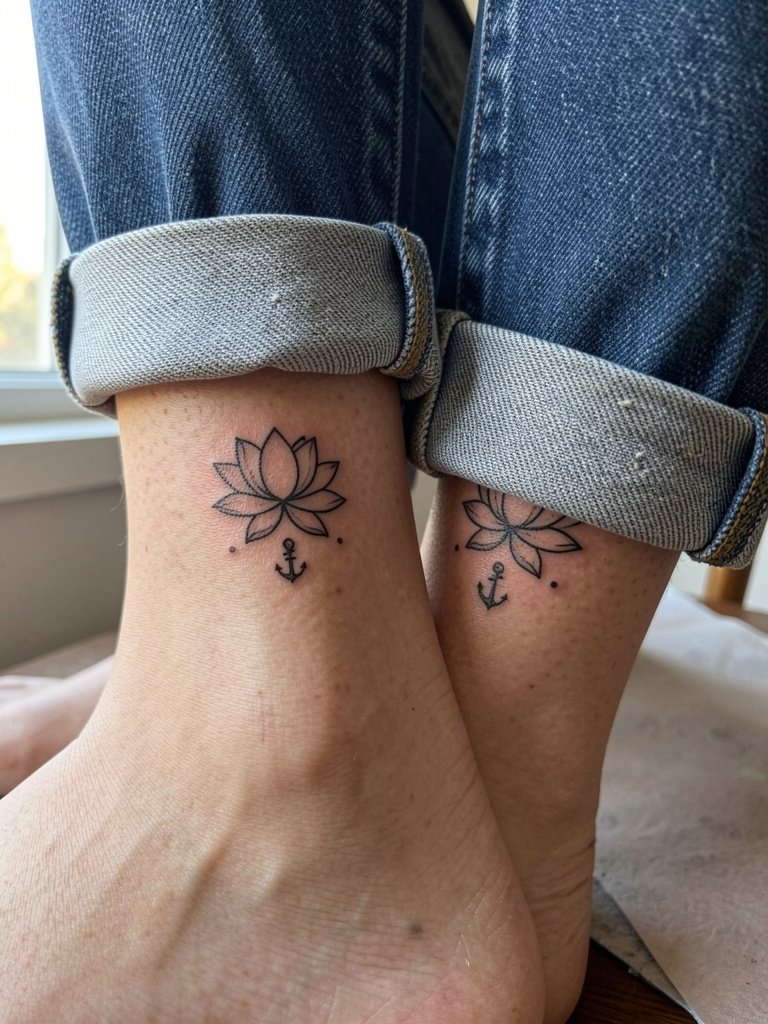
Matching anklet lotuses work well because symmetry distracts from slight uneven fading that can occur with single ankle pieces. Sessions are brief and pain is low. A mistake is going too small on both and expecting the exact same healing on each leg; slightly larger scale improves consistency. For footwear, go with sandals or low socks during healing and a lightweight cotton ankle sock pack for cooler days so the tattoo does not rub raw in shoes.
10. Lotus Outline Along the Inner Forearm
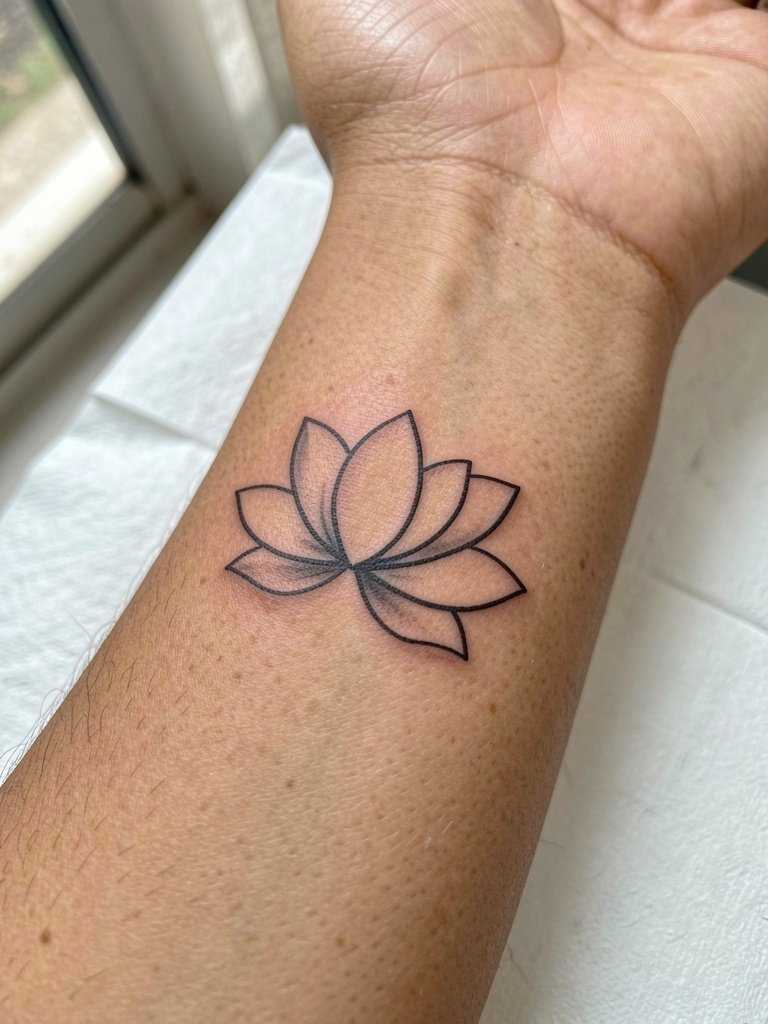
Inner forearm is forgiving for fine work because the surface is broad and mobility is moderate. Expect a 45 to 75 minute session at low to medium pain. The biggest mistake is compressing too much detail into a three-inch band. For better aging, insist on slightly heavier base lines and leave spacing between petal tips. For everyday styling, rolled sleeves and a casual linen shirt show the forearm without constant sun exposure.
11. Crescent Moon and Lotus on the Shoulder Blade
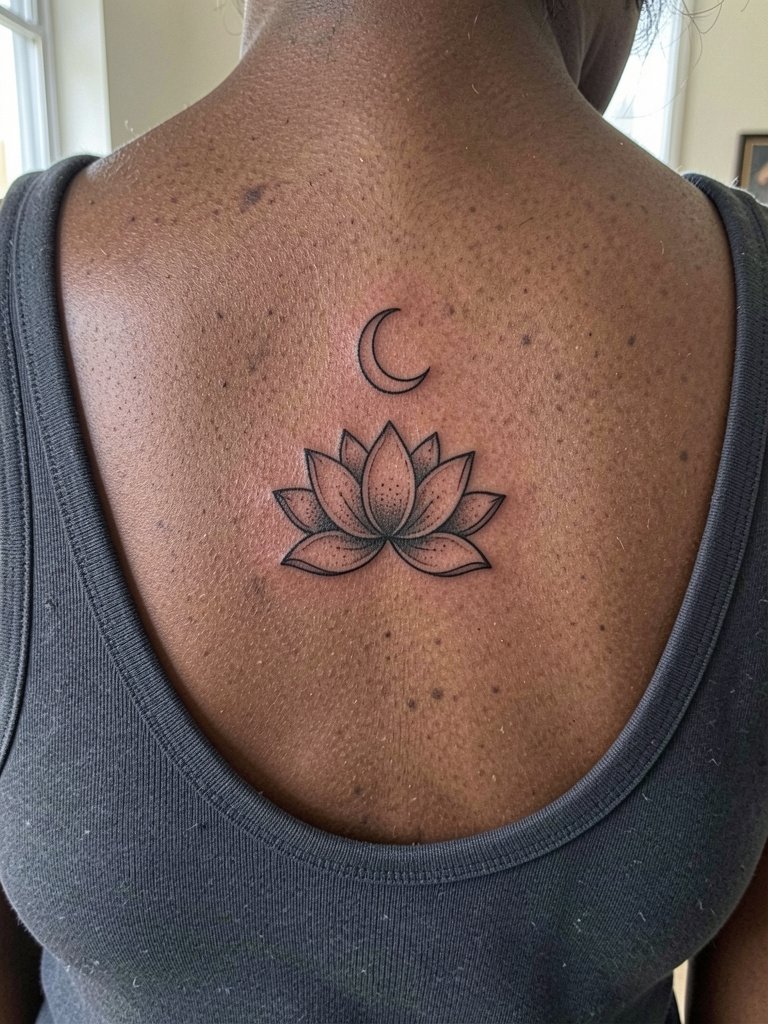
The shoulder blade offers a wide canvas and heals well because it avoids constant friction. Sessions typically last 45–90 minutes with low to medium pain. The common error is trying to cram a symmetric moon-lotus motif into a tiny, unreadable size. Ask the artist to position the moon so it aligns with your shoulder blade curve and to show a full-size stencil while standing. For coverups or show-off looks, a strappy back dress frames the area without rubbing when healed.
12. Minimalist Lotus at the Nape of the Neck
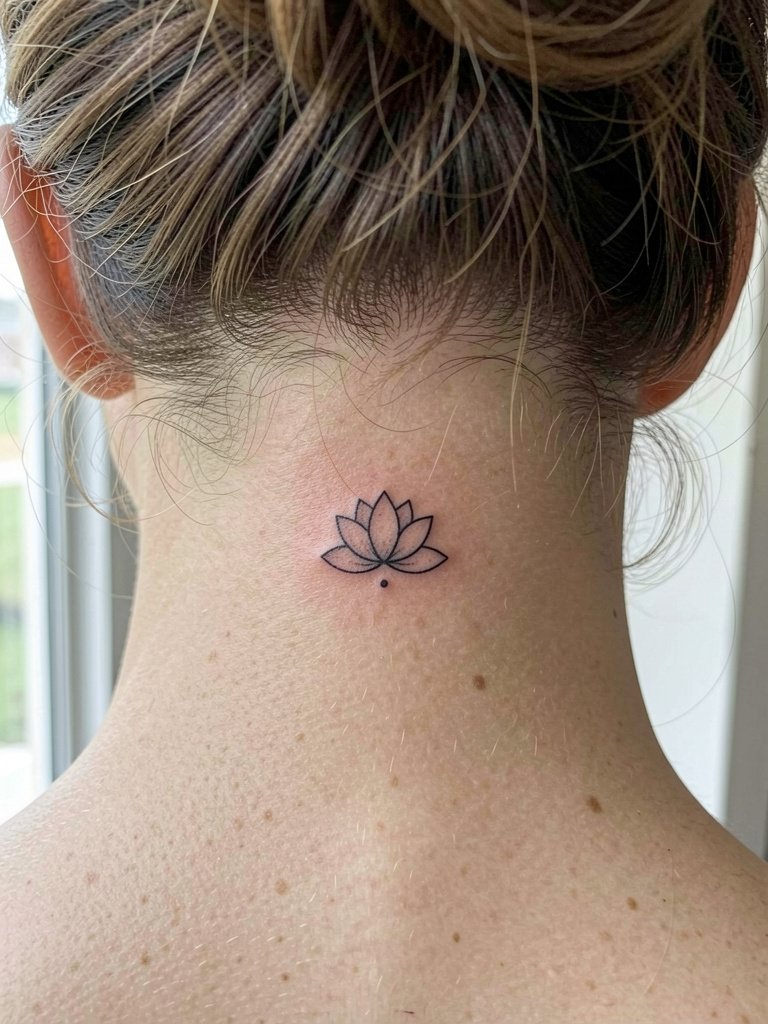
Nape placements can be visible or hidden depending on your hairstyle, and they heal fast with low to medium pain. The mistake is ordering ultra-fine hairline strokes that vanish under clothing or with hair growth. Ask for slightly stronger contour and plan a possible touch-up if your hair rubs the area frequently. For showing it off on special occasions, pair with a lightweight hair clip that keeps hair off the nape without tugging the skin.
13. Stacked Vertical Lotus Spine Motif
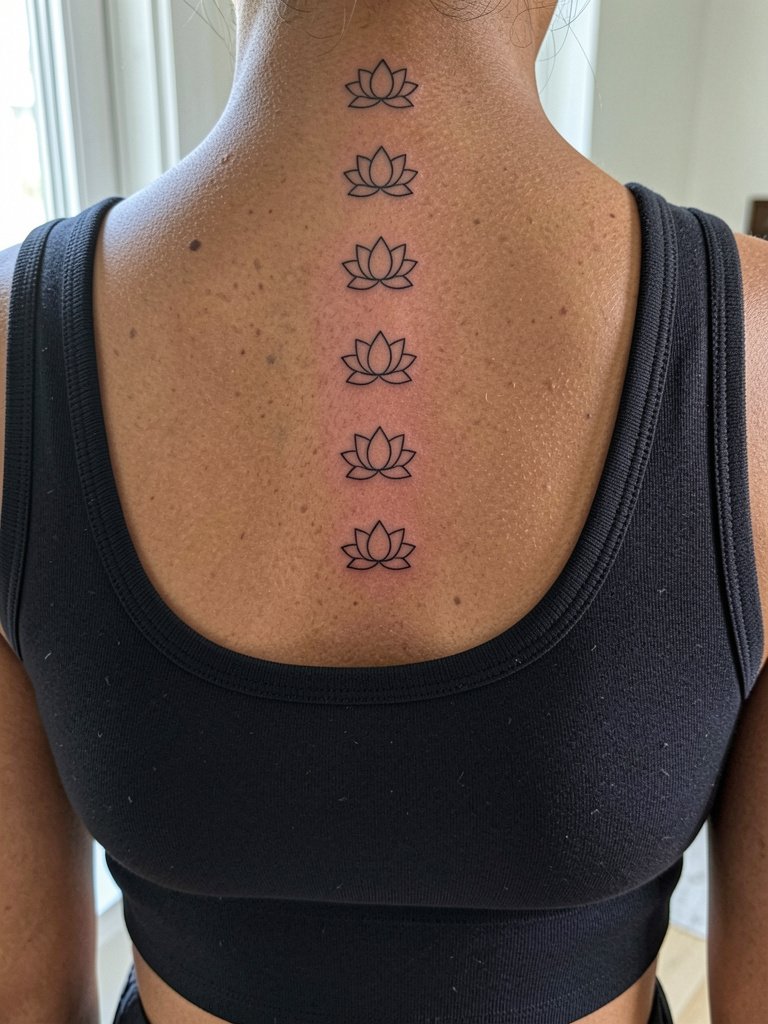
A spine stack of small lotuses reads well when each mark has room to breathe. Pain on the spine can be medium to high and sessions often split into two shorter visits. A common error is minimizing spacing to pack in too many motifs, which makes the sequence illegible after a few years. Specify equal vertical spacing and expect to return for a touch-up if the central pieces receive the most friction from clothing. For nights out, a low-back dress highlights the sequence without constant abrasion.
14. Micro Lotus on the Side of the Thumb
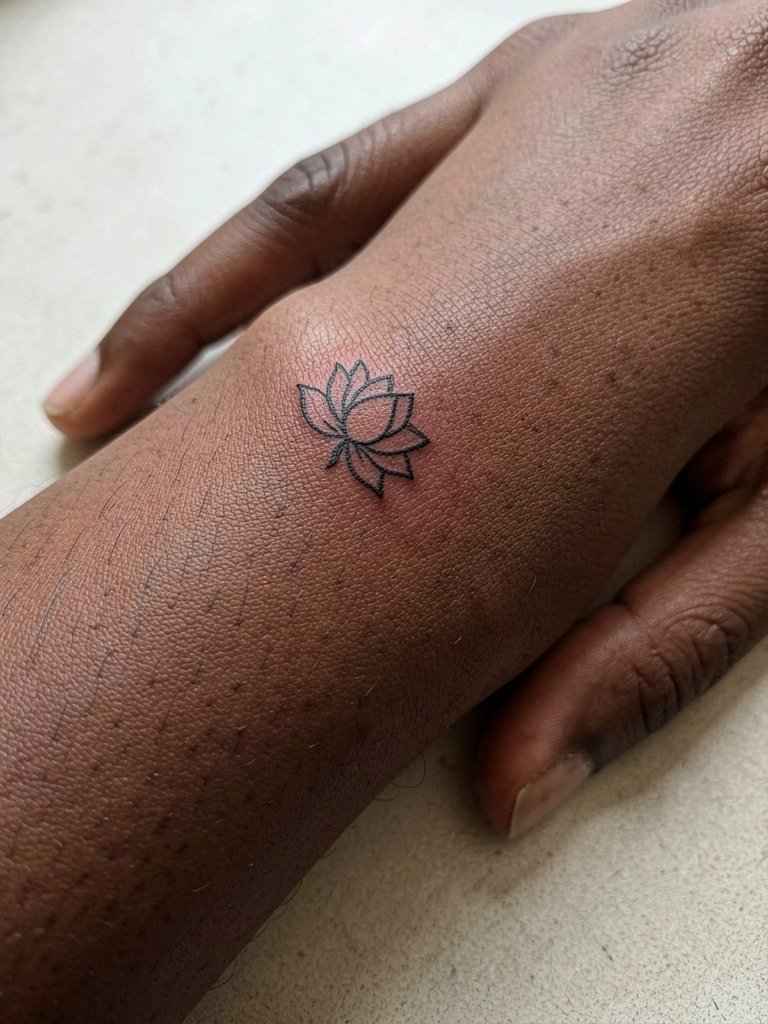
Thumb-side tattoos suffer from constant washing and friction, so a tiny lotus here should have slightly heavier contour and minimal inner detail. Sessions are short but plan for follow-ups since touch-up demand is high. A frequent mistake is asking for extremely fine internal petal details that vanish within months. For healing, avoid rings and opt for minimal hand jewelry; a soft cotton glove during cold weather can protect the area without pressing the fresh ink.
15. Minimal Lotus with Thin Stem on the Side Hip
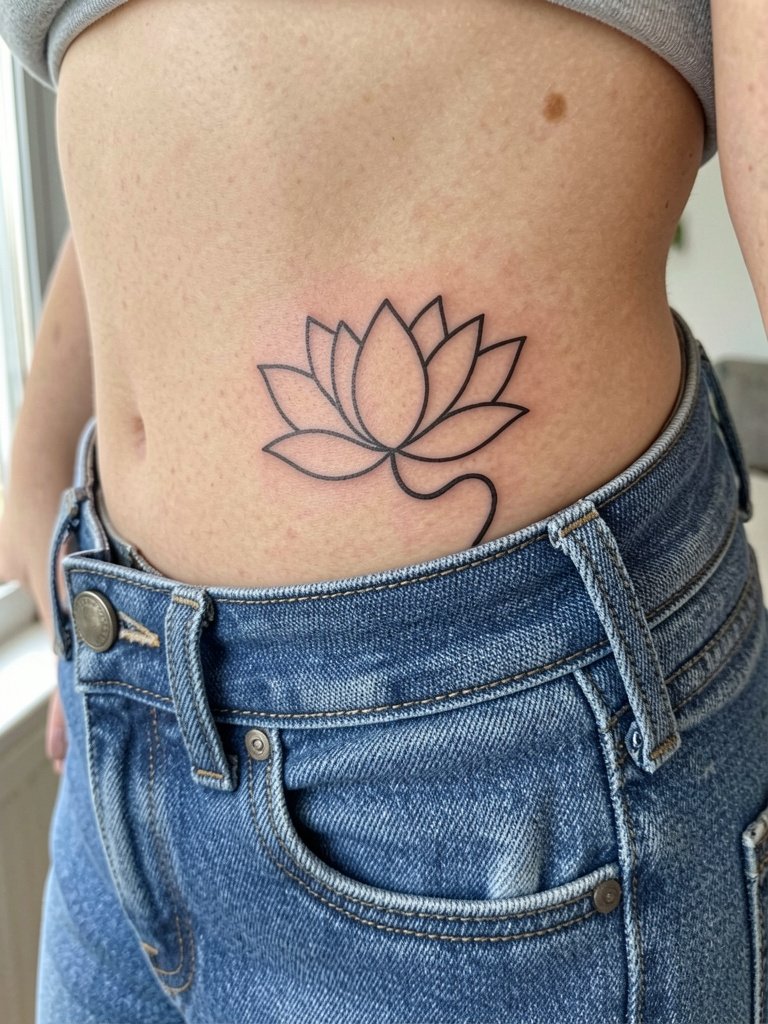
Hip placements sit near clothing edges so clarify where the waistband will sit during the consultation. The skin tolerates thin stems well but avoid micro detail at the stem base. Sessions usually run 30–60 minutes with low pain. A mistake is placing the stem too close to the waistline, which can distort with clothing. For summer looks, low-rise jeans and crop tops show the motif, and a cropped tee is an easy pairing that keeps fabric off the area while it heals.
16. Tiny Lotus on the Top of the Foot
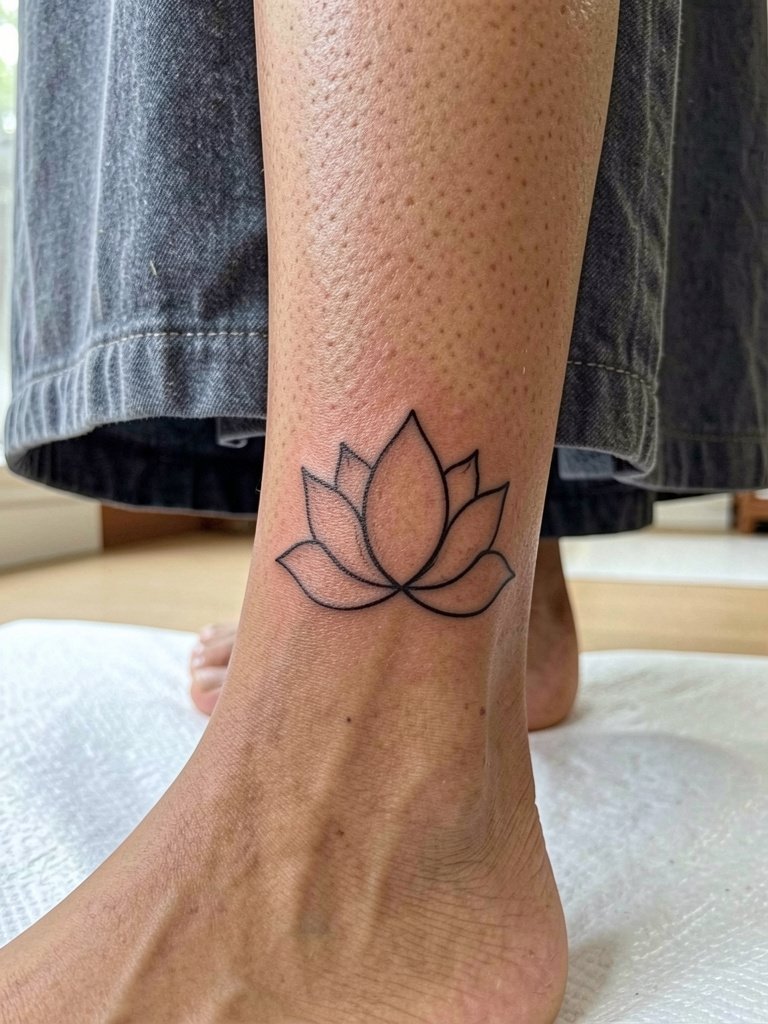
Top-of-foot tattoos see a lot of wear and are vulnerable to rubbing from shoes. Make the outer linefriendlier to abrasion rather than piling on internal detail. Sessions are short but painful for many people, with medium pain levels. A common error is insisting on single-needle interior shading that fades quickly. For footwear, choose sandals during the early healing phase and consider a soft slip-on sandal that avoids straps across the fresh ink.
17. Micro Lotus with Crescent Under the Collar
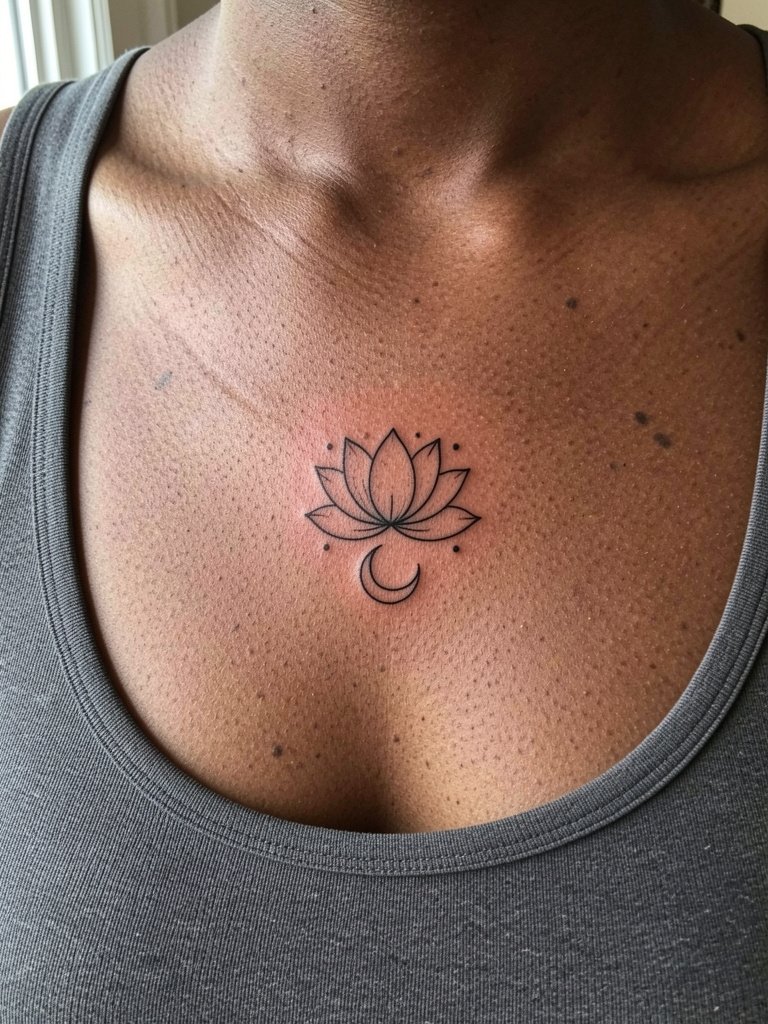
Tiny chest pieces are visible and sit on skin that moves with breathing. One camp of artists says micro chest details blur quickly because the skin stretches with respiration. The other camp notes that with slightly wider spacing and a heavier outer contour micro pieces can remain crisp for years and they will show healed photos as evidence. Expect a medium pain level and a session of 30–60 minutes. For outfits, a wide-neck cami frames the area without rubbing the tattoo while it heals.
18. Split-Lotus Wrist Band
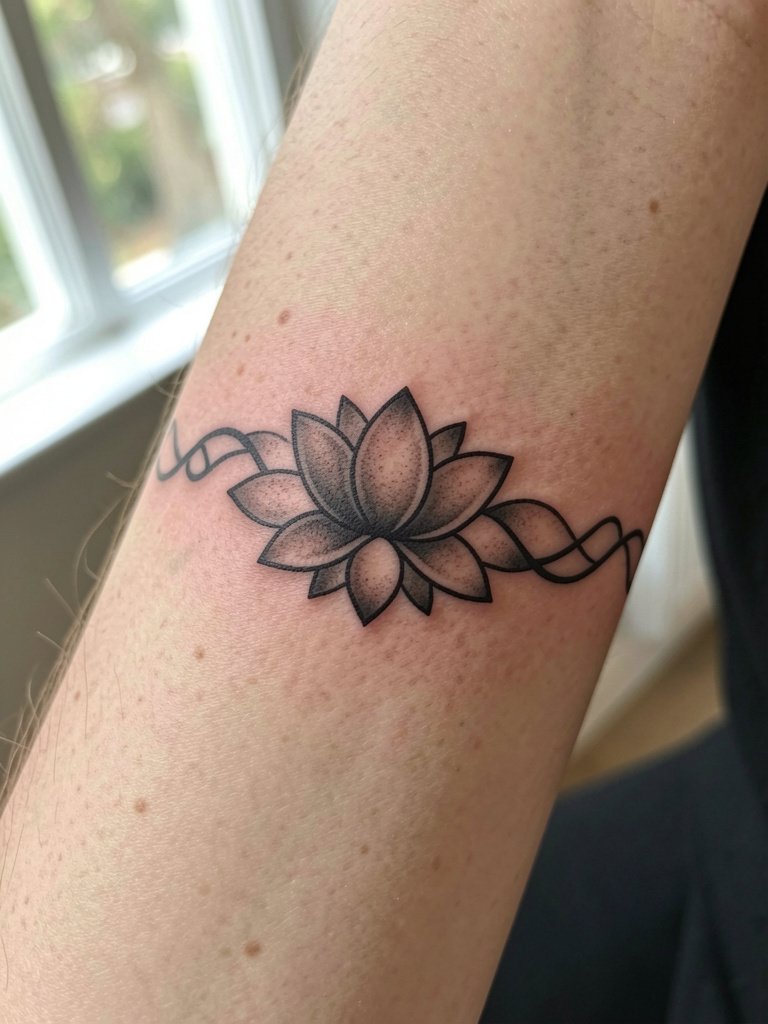
Wrist-band styles need symmetry and enough negative space so the pattern does not melt into an unreadable smudge. Sessions are short and pain is low to medium. A frequent mistake is compressing too many repeats into a small circumference. Ask your artist to map how the pattern looks when the wrist is flexed and to avoid overly delicate internals. For daily wear, a thin leather cuff worn above the band can accent the tattoo without rubbing the fresh ink.
19. Leaf-Encircled Lotus on the Upper Shoulder
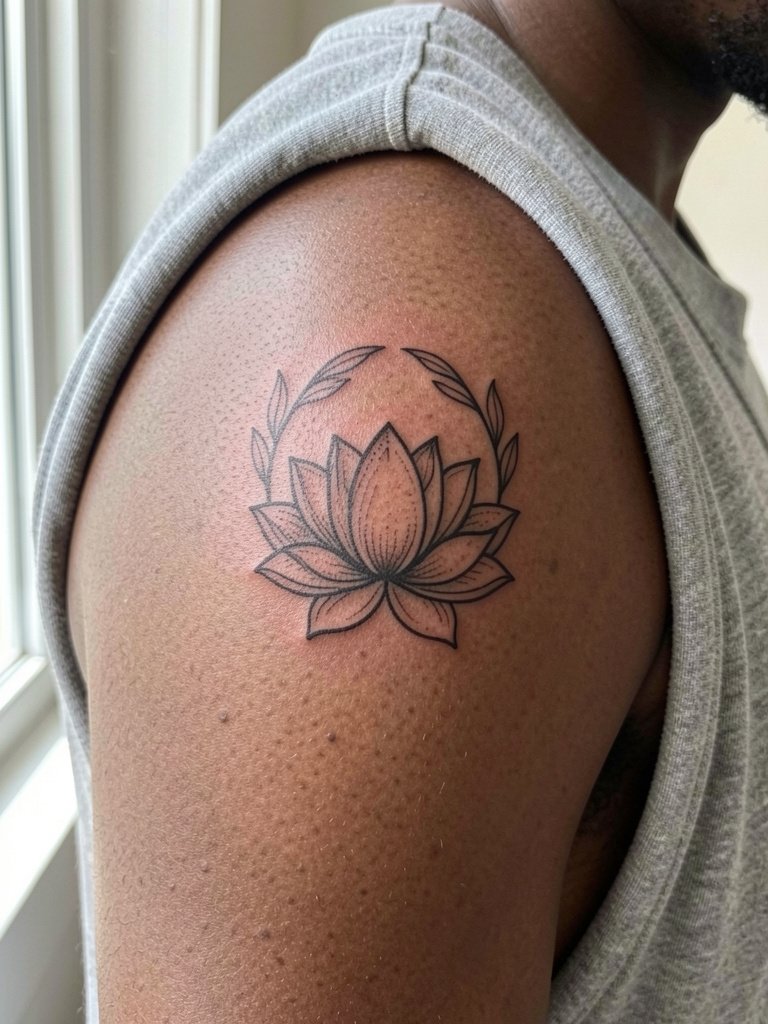
Shoulder pieces hold detail well and tolerate slight curvature. Sessions run 45–90 minutes depending on the ring size and shading. People often over-detail the encircling leaves at a tiny scale, which causes visual noise later. For better aging, favor fewer leaves with stronger contours. When choosing outfits, a sleeveless tank shows off the shoulder without rubbing and keeps sun exposure controlled.
20. Minimal Lotus on the Inner Thigh
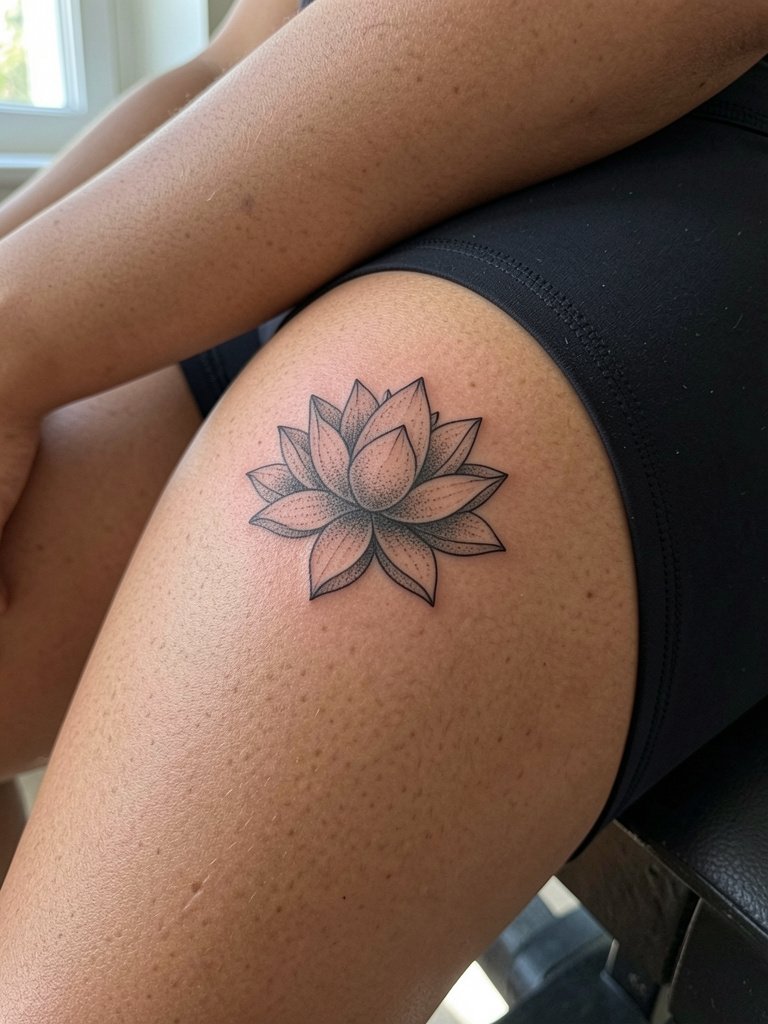
Inner-thigh placements are discreet but sensitive. Sessions can range from 45 minutes to two hours and pain is medium to high. The common mistake is placing extremely thin filigree near the groin where friction and sweat accelerate fading. For professional considerations, some artists require privacy and extra draping for inner-thigh work. For recovery, wear loose-fitting bottoms and consider a pair of soft lounge shorts so fabric does not rub the fresh ink.
21. Minimal Lotus on the Sternum
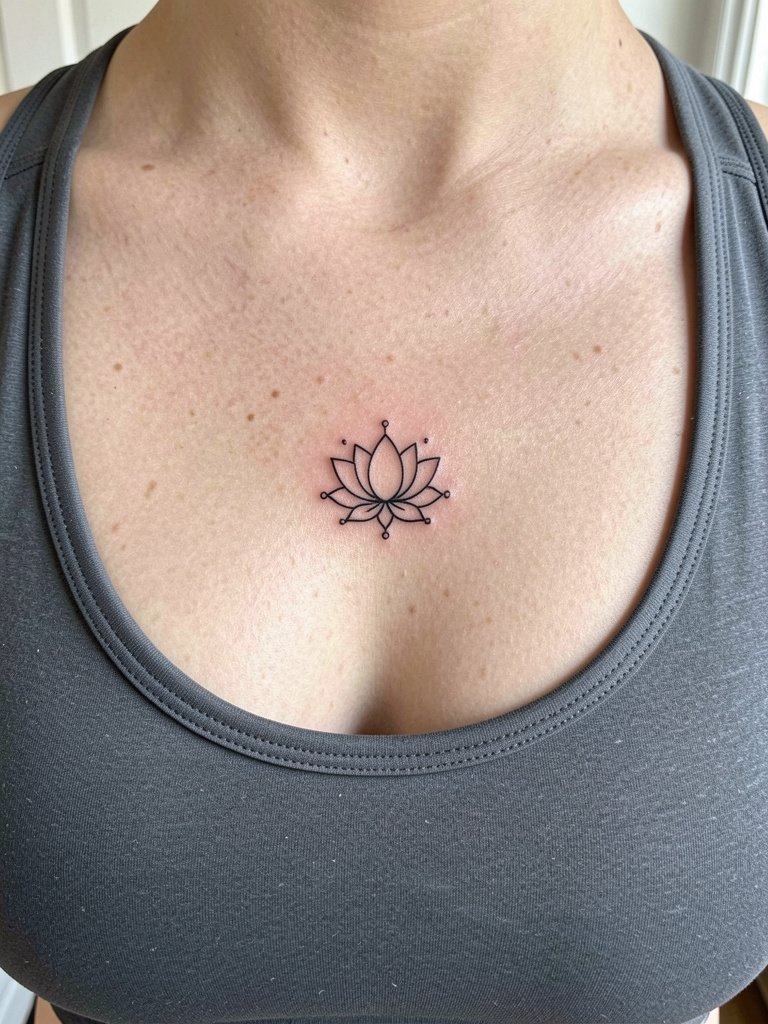
Sternum tattoos are intimate and often controversial for fine-line detail. One camp worries that breathing and chest movement make fine lines blur within a few years. The opposing camp points out that slightly bolder outlines and careful spacing counteract that and can keep a minimalist sternum piece legible long-term. Pain is typically high in this area and sessions may require breaks. For the appointment, wear a fitted sports bra that offers coverage while giving the artist access, and plan for a touch-up around the first anniversary.
22. Tiny Outline Lotus Near the Clavicle Pair
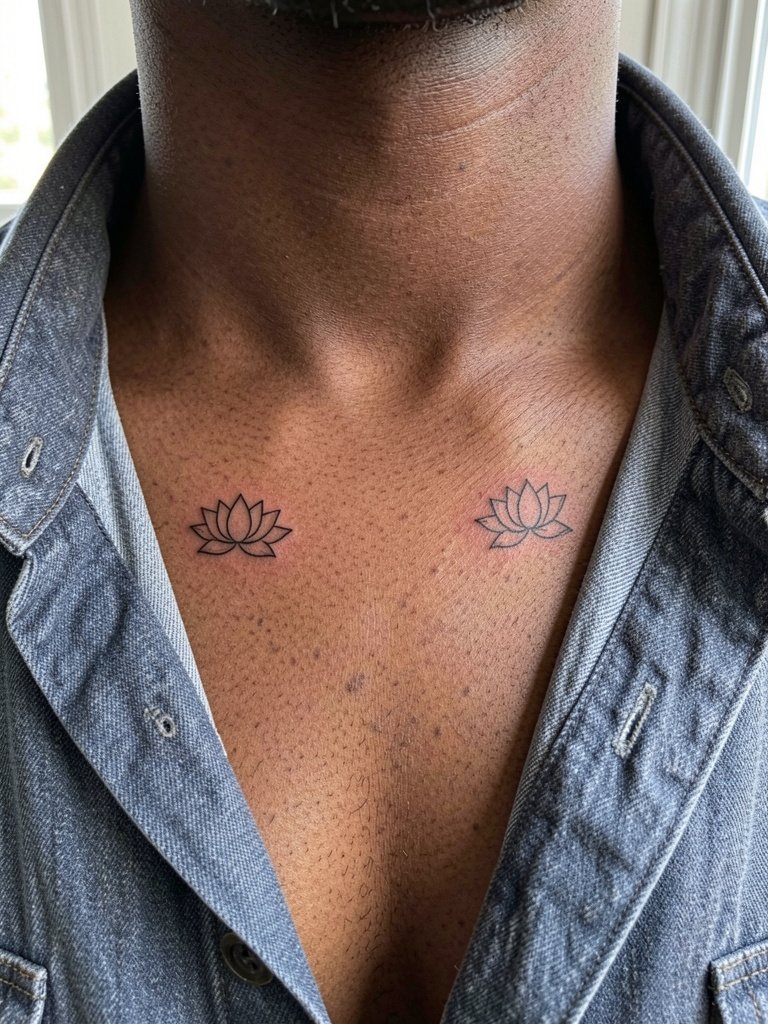
Symmetrical clavicle lotuses are delicate focal points when positioned correctly. Sessions are brief and pain is low to medium. A mistake is misaligned placement relative to bone structure, which makes even symmetrical designs look uneven. Request the artist pin the stencil while standing so the symmetry sits naturally on your shoulders. For wardrobe, try an open-collar shirt that frames the clavicle without rubbing the healing skin.
23. Minimal Lotus with Tiny Stem on the Inner Wrist Wrap
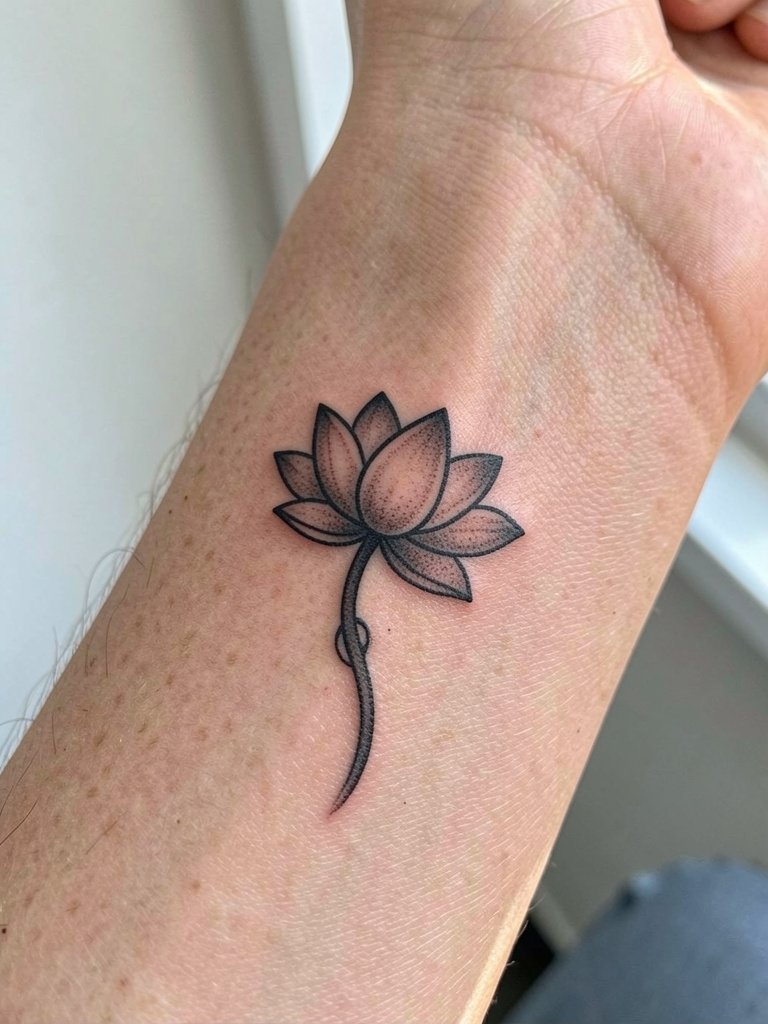
A wrist-wrap lotus that slightly encircles the tendon needs a careful stencil to avoid joint creases. Expect a 20–45 minute session and low to medium pain. The most common mistake is letting the wrap cross a tendon crease where motion will distort the line. Ask the artist to place the stem so it follows the natural wrist curve rather than crossing the joint. For everyday looks, pair with a minimal cuff watch worn above the tattoo so the piece remains visible and undisturbed.
Frequently Asked Questions
Q: How do minimalist lotus tattoos age on different body parts?
A: It depends on placement and line weight. Areas with thin skin and lots of movement like fingers, wrists, and the sternum tend to blur faster unless you add a little extra contour up front. Thicker-skin areas such as the upper arm, outer thigh, and shoulder blade keep fine detail longer and often need fewer touch-ups.
Q: What should I bring to the consultation to ensure the lotus reads well long-term?
A: Bring two reference photos at different scales and ask to see a life-size stencil while standing. Specify exact line weight and spacing preferences, and point out any clothing lines that will sit near the tattoo so the artist can adjust placement.
Q: Where can I find healed examples and portfolios without naming specific artists?
A: Search location-filtered tags on social platforms and niche portfolio sites using phrases like #MinimalLotusTattoo, #MicroLotusHealed, and "minimal lotus healed" with your city filter. Reddit tattoo threads and community galleries are good for seeing how similar placements age on different skin tones.
Q: Are lotus designs culturally sensitive to get as a minimalist tattoo?
A: The lotus has religious and cultural significance for many traditions, so be mindful of context when you choose imagery that references sacred forms. If you want to honor origin, use respectful language in your brief and avoid decorative shortcuts that appropriate symbolism without understanding.
Q: What should I wear to my session for chest, rib, or hip lotus placements?
A: Choose fitted pieces that expose the area without active disrobing. For ribs or sternum wear a fitted sports bra, for hip wear low-rise jeans or a cropped top, and for shoulder or back opt for a tank. A soft drawstring linen pant is a comfortable option to keep movement minimal during longer sessions.