

A lot of scripture tattoos that start as crisp single-needle scripts fade into blotchy smudges within a few years. The surprising part is that a small change in spacing, a slightly heavier line, or swapping a full verse for a reference often keeps the design legible without losing the meaning. Read these practical ideas for scripture ink that still reads clearly at six months and at five years, plus what to wear on session day.
1. Fine line wrist scripture with a short verse reference

A wrist reference is the classic way to keep scripture private and readable. For this placement aim for slightly wider letter spacing than you see on Pinterest. Tiny single-needle script looks stunning fresh but often softens by year two. One design choice splits artists into two camps. One camp says tiny text keeps the message discreet and elegant, and many clients prefer that. The opposing camp says tiny lettering blurs as skin moves and ages, so larger letters or a reference only will read longer. When booking, have the artist show a mockup at both two and five centimeters so you can see how spacing affects legibility. For the session wear a short-sleeve tee with the cuff rolled up and bring a thin chain bracelet option to style the area after healing. thin+chain+bracelet+set link
2. Single-word faith script with a tiny reference on the inner forearm
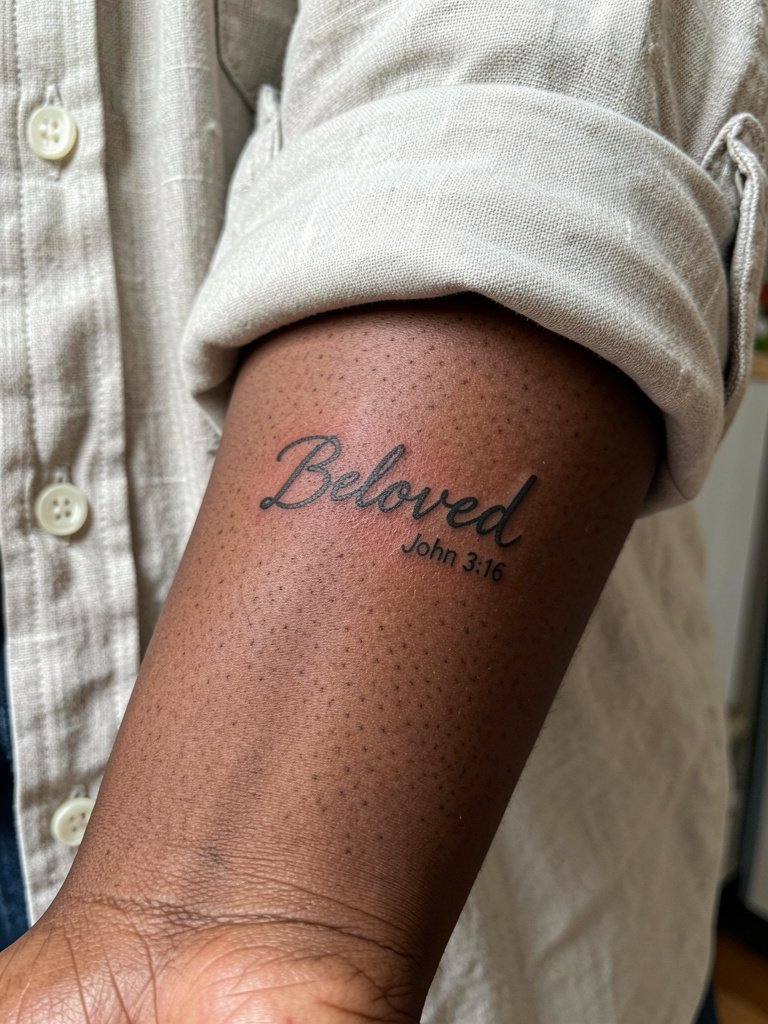
Single-word scripture tattoos solve the long-verse problem without losing meaning. A neat trick is to place the tiny verse reference under the word so the script anchors the eye. Discuss exact word spacing and the tiny reference placement during your consultation so the artist can show how legibility changes at three, four, and five inches. Common mistakes include asking for the thinnest possible single-needle script and then wondering why it fades into a gray smudge on textured skin. Expect a one-hour session and a mild eight out of ten on the pain scale for inner forearm work. For showing it off, pair with a rolled linen button-down in neutral tones. linen+button+down+shirt link
3. Armor of God blackwork with shield and verse on the upper arm

This is for someone who wants a symbolic statement rather than a text block. Blackwork shields and swords pair well with a short quoted reference or a small verse number. Tell the artist the exact reference placement and how much negative space you want inside the shield. A common mistake is crowding the symbol with too much script. The outer upper arm tolerates heavier linework, so choose bold outlines and solid saturation to prevent future softening. Session time varies from one to three hours depending on detail. Show-off tip for after healing is a sleeveless tank or rolled muscle tee that leaves the patch visible. mens+sleeveless+tank link
4. Cross plus verse composition on the collarbone
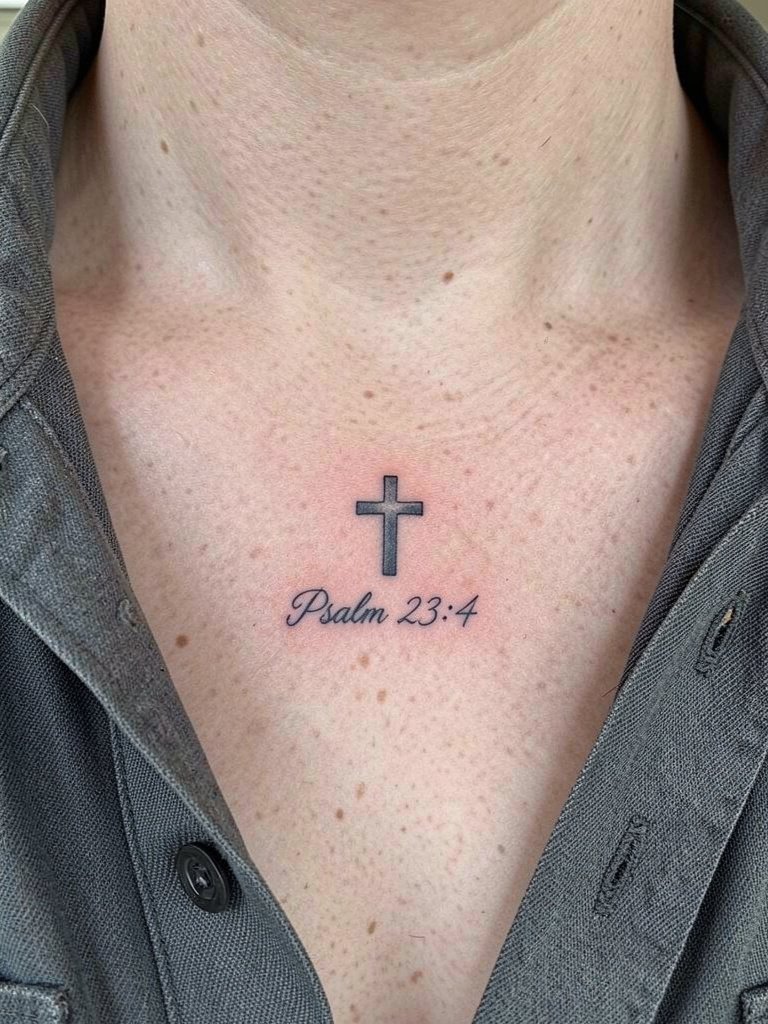
A collarbone cross with a short verse reads as a single composition and keeps the wording unobtrusive. Request the artist show the piece at full size on your collarbone area before they begin so you can check curvature and baseline. A typical aging issue is placing tiny script too near the clavicle contour where movement changes how letters sit. For a small collarbone piece expect moderate pain and a single-session appointment under two hours. Style-wise, an open-collar shirt or a layered chain necklace that sits below the text frames the work without drawing too much attention. open+collar+shirt link
5. Religious sleeve with multiple scriptures and landscape elements
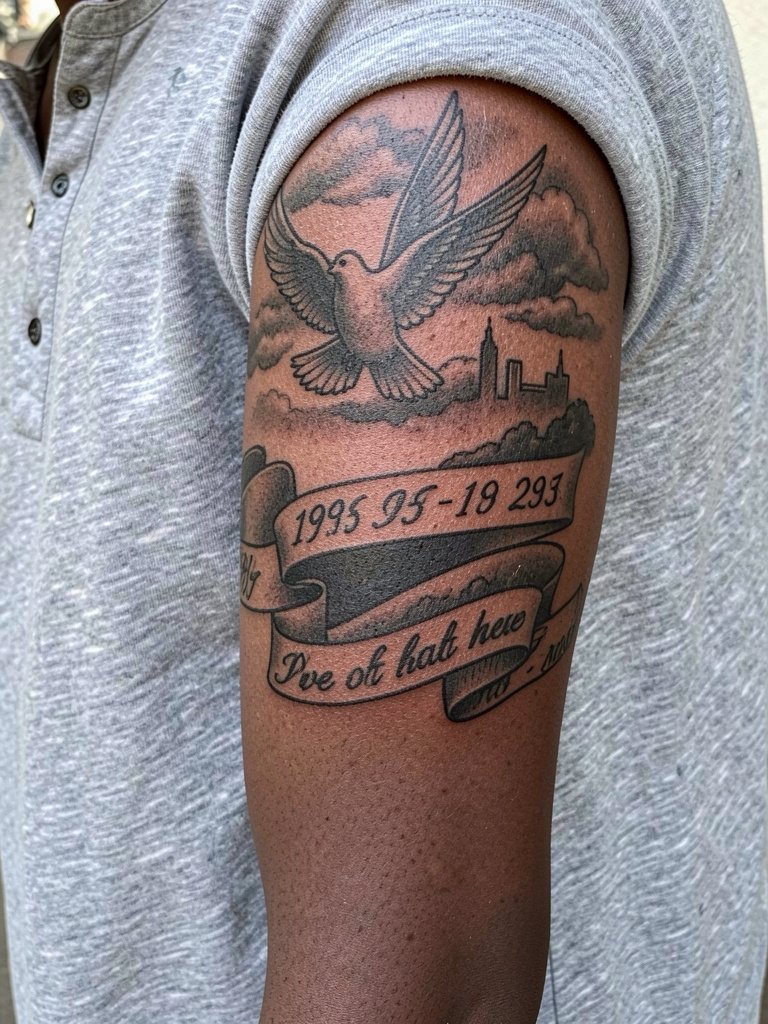
Sleeves let you layer testimony pieces over time, but they need a plan. Pick one symbol to repeat as a visual anchor so those small verse blocks do not appear disconnected. A misstep is adding many different scripts with inconsistent lettering styles. Sessions for a multi-element sleeve run across multiple appointments and often require color or heavy shading for depth. Expect touch-ups later when adjoining pieces settle. For session wear, a short-sleeve henley gives clean access to the entire outer arm. short+sleeve+henley link
6. Bible verse forearm script framed with geometric borders
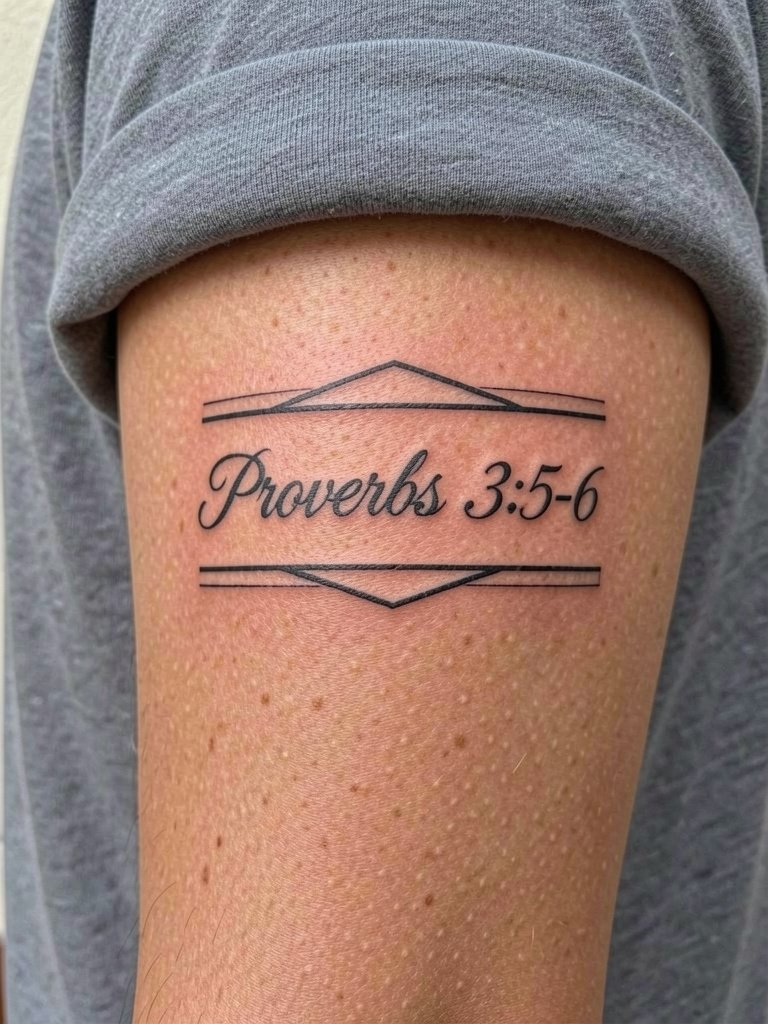
Geometric framing helps longer verses stay readable by creating margins that stop text from running into surrounding imagery. Artists disagree on full verses versus references in this layout. One camp prefers the whole quote because the exact words matter and the line breaks can be designed to read like poetry across the forearm. The other camp says a reference alone is cleaner and avoids crowding the skin, especially over five years. When you consult, bring the exact verse and ask the artist to map it at the intended width so you can see real line breaks. Inner forearm work heals predictably, but heavier text benefits from bolder line weight on the day so the letters keep crispness over time. plain+crew+neck+tee link
7. Psalm-inspired mountain scene with tucked verse on the outer forearm
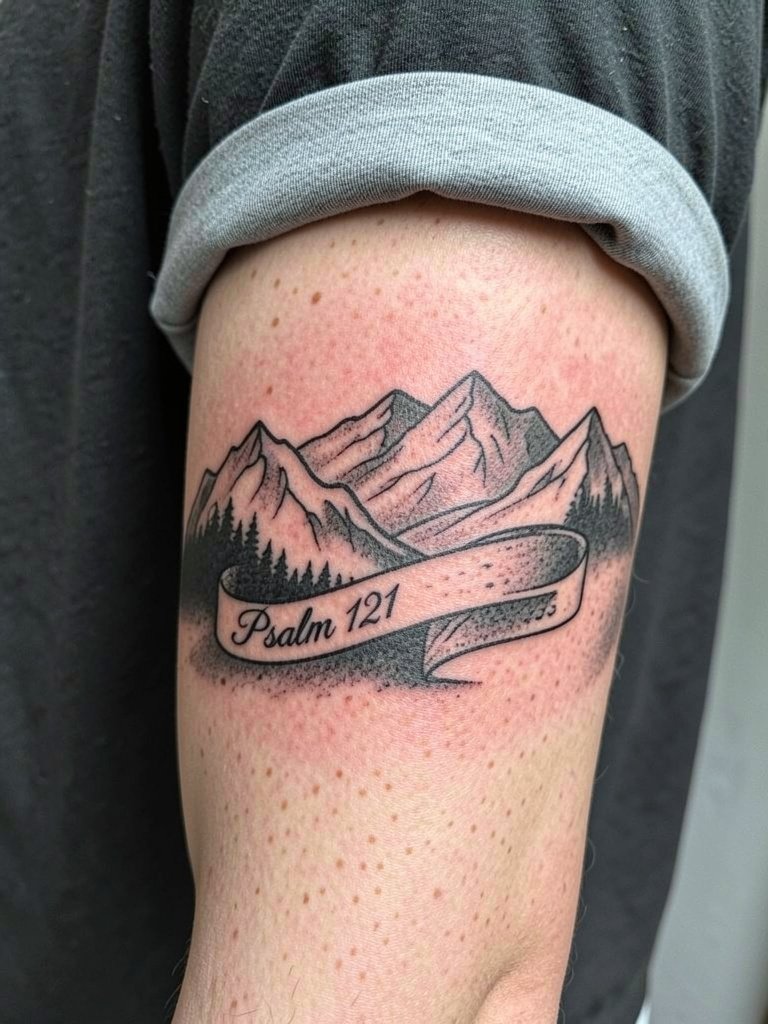
Pairing scripture with creation imagery makes the verse part of a scene rather than a block of text. Ask the artist to set the verse on a negative space ribbon so the letters contrast against the shaded landscape. A common mistake is letting tiny script overlap heavy stippling, which reduces legibility after a few years. Outer forearm pieces tolerate more shading and stand up well to touch-ups if needed. For showing the finished work, short-sleeve tees or a light overshirt keep the scene visible. plain+crew+neck+tee link
8. Compact verse on the ribcage for privacy
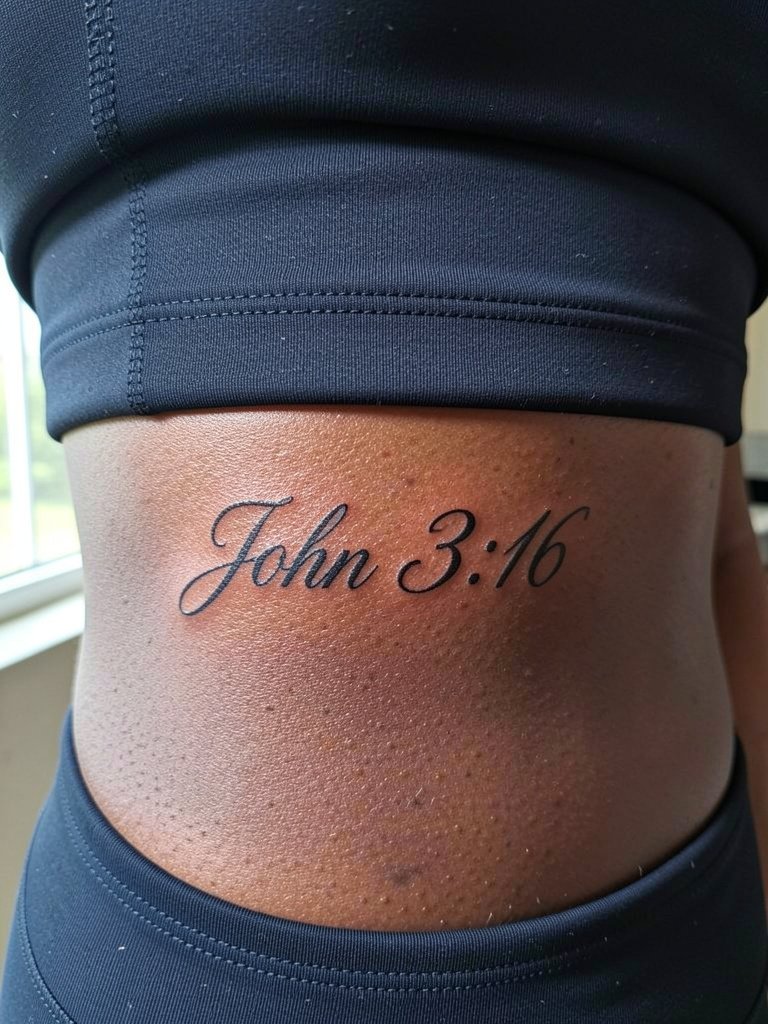
Ribcage placements are private but painful and sensitive. Many clients want a full line verbatim here, but very long quotes can wrap awkwardly across ribs. A typical guidance is to either choose a compact verse or use a reference only. Rib work often requires slightly larger line weight than wrist pieces to account for the skin's movement. Pain during the session is usually high, and the appointment may demand breaks. For session wear choose loose button-down shirts or tanks that allow easy side access without tugging at the skin.
9. Proverbs trust verse across the inner forearm

Long horizontal verses are well suited to the inner forearm because they read like a line across a page. Have the artist lay out the verse at actual scale during consultation and then compare how the spacing reads at three and five inches. A common error is cramming too many words into one slender line. Expect one session and a mild to moderate pain level. For wardrobe, a cuffed linen shirt or a rolled sleeve keeps the verse visible in casual settings. rolled+cuff+shirt link
10. Psalm 23:4 memorial script with a tiny cross on the wrist
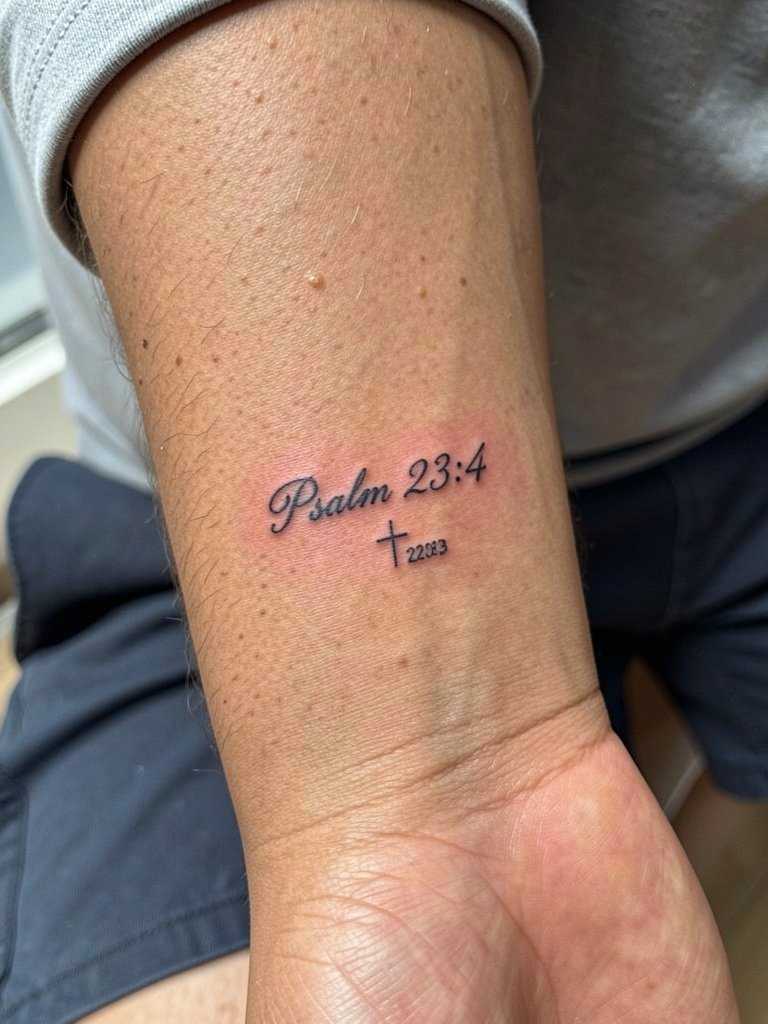
Memorial scripture tattoos balance sentiment and restraint. One effective approach is a single short verse number plus a small symbol and dates rather than the entire passage. A frequent misstep is adding too many decorative elements that clutter the wrist. For session planning ask the artist how the dates will age at the chosen point size so numbers do not bleed together over time. Wrist skin sees a lot of movement and friction, so a thin protective wrap the first 24 hours helps reduce scabbing. Style it with a minimal watch on the opposite wrist so the memorial reads quietly. minimal+watch+women link
11. Micro-realism open Bible and verse on the forearm
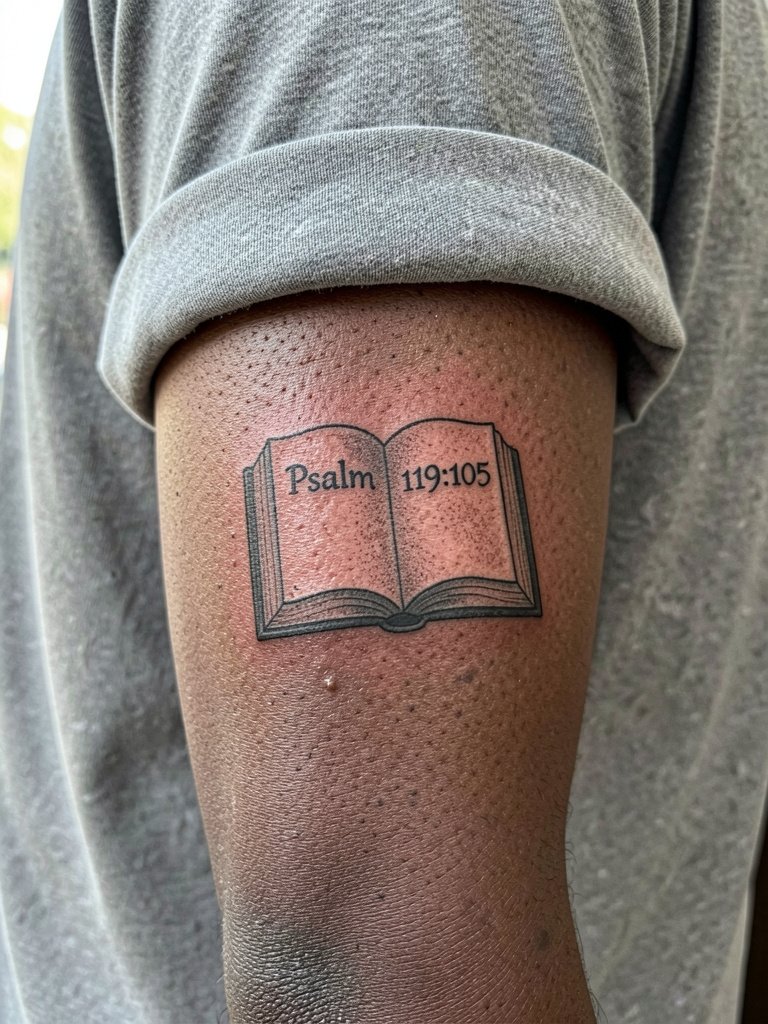
Micro-realism gives the scripture a literal object feel but demands high contrast for the tiny text to stay readable. When you consult ask to see healed photos of similar scale from the artist, not only fresh photos. A common mistake is assuming high detail at micro scale will remain crisp without heavier contrast. Expect longer shading passes and a careful touch-up plan within one to two years if the text needs sharpening. Outer forearm placement keeps the image visible and reduces rubbing during daily activities.
12. Ornamental scroll or ribbon banner with longer scripture
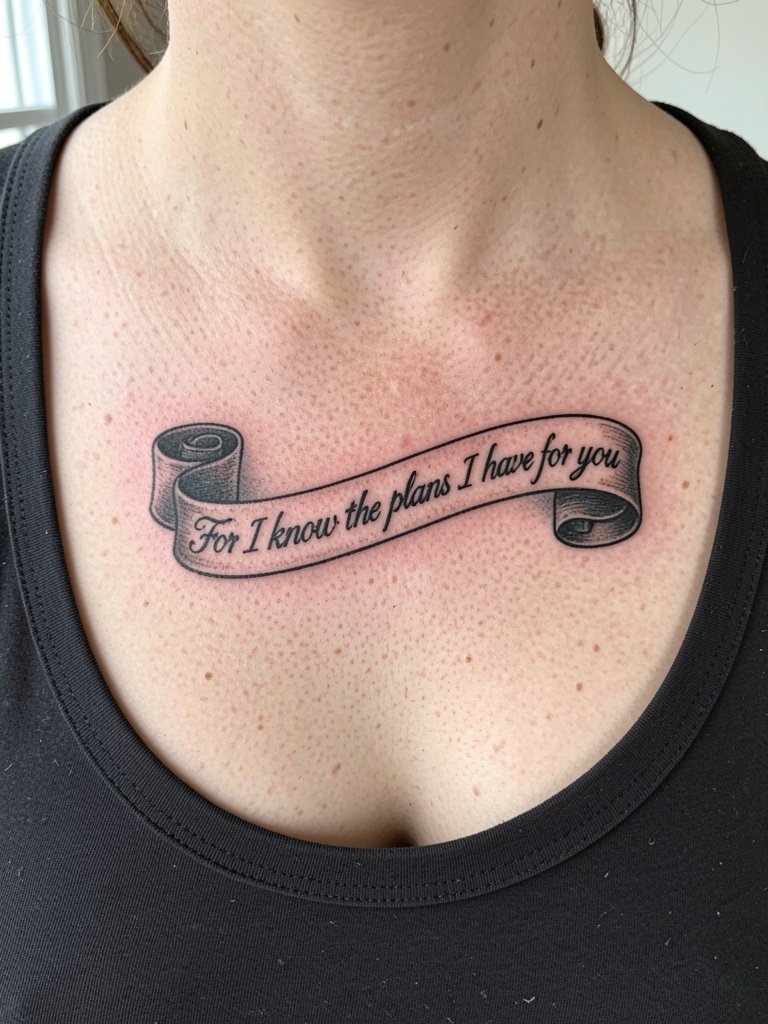
Banners are built to carry longer wording while avoiding cramped text blocks. The key is to set comfortable letter height and a gentle curvature that follows the body. Mistakes appear when the banner is too narrow or the script too small. Upper chest pieces can read well for years if the line weight is slightly bolder than what you see in flash images. For session wear pick a button-down or scoop neck so the artist can work without tugging at fabric.
13. Minimal cross with verse reference at the ankle

Ankle tattoos can be discreet and professional if kept tiny and simple. Because the area rubs against socks and shoes, avoid filigree and opt for clean silhouettes. The most common error is choosing extremely thin detail that disappears after scabbing and daily friction. Expect a short session and low to moderate pain during application. Show it off with cropped pants, low-top sneakers, or sandals in warm months. cropped+joggers link
14. Memorial name and dates framed by a single verse on the upper chest
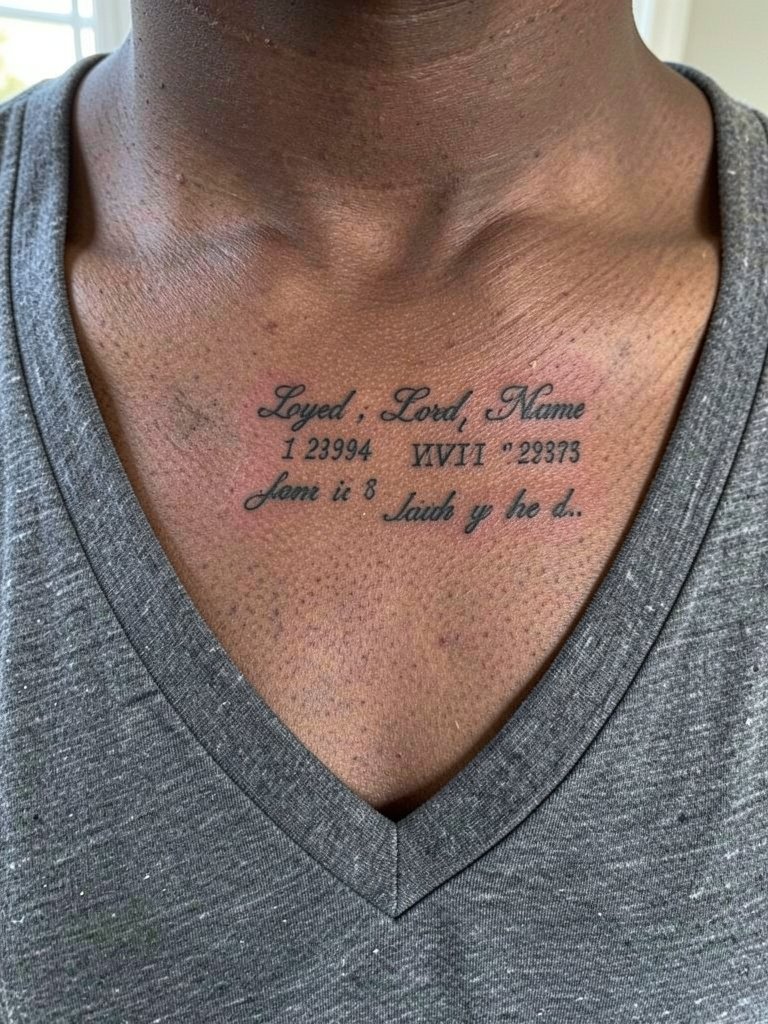
Combining a name and dates with a verse lets a grief piece remain focused without becoming heavy. Keep the verse short and visually subordinate to the name so it supports rather than competes. A frequent mistake is adding long passages that make the chest look crowded. Upper chest areas age predictably, but watch for placement near collarbone curves where letters can distort. For session wear choose an open collar shirt or a scoop neck so the artist can position the stencil with precision. v+neck+tee link
15. Geometric-framed scripture in bold blackwork on the outer shoulder

Geometry keeps scripture modern and readable because the frame enforces margins and breathing room. The outer shoulder tolerates bold blackwork and is low risk for blowout when the lines are not too tight. A typical error is making the inner frame lines so thin that they blur into the filled black over time. Expect a one to two hour session and easy aftercare because the area is less prone to rubbing. For display, sleeveless tops or open overshirts highlight the clean geometry. overshirt+men link
Heal Smart
Small placement differences change how lettering ages, so these picks help protect wrist and forearm scripts from common early issues.
- Tattoo Goo aftercare balm. A lighter feeling balm some people prefer during the early drying stage for fine-line work that needs moisture without heavy residue.
- Bepanthen healing ointment. Often mentioned for sensitive skin and useful for a thin protective layer in the first 48 hours.
- Aveeno fragrance-free lotion. Gentle daily moisturizer for once the tattoo is past the raw phase and needs regular hydration without perfumes.
- CeraVe moisturizing cream fragrance-free. Good option for dry skin types after initial healing when more long-term hydration helps line retention.
- Second-skin tattoo film. Protects fresh ink from friction and accidental contamination during the first week, especially on wrists and ribcage.
Frequently Asked Questions
Q: How much should I scale up lettering so a short verse still reads in five years?
A: As a rule of thumb ask for letters that read clearly at roughly four to five millimeters in height for single-word pieces and a little larger for full-verse lines. Have the artist mock the verse at actual scale on your skin and view it from normal social distance so you can see how spacing affects long-term legibility.
Q: When is it better to tattoo a verse reference instead of the full scripture?
A: Choose a reference when the placement is small or when you want discretion. A reference keeps the spiritual anchor and gives you room to use a slightly heavier line weight for longevity. If the words themselves are central to you, plan for a wider layout and accept the larger area it requires.
Q: Where can I find healed examples and artists who specialize in clean lettering?
A: Search hashtags like #bibleversetattoo and #scripturetattoo on Instagram and TikTok and filter by city to find local portfolios. Use Pinterest for layout ideas and check studio websites for healed photos older than six months. Reddit threads in tattoo communities can help you spot artists who post before-and-after healed shots.
Q: Does color ever make sense for scripture tattoos, or is black and gray always better?
A: One camp argues black and gray preserves contrast and keeps lettering readable over time. The other camp says limited color can deepen symbolism when used only in supporting imagery, not the text itself. If you consider color, plan the lettering in black and add color accents elsewhere so the verse remains the highest-contrast element.
Q: What should I wear to the appointment for a collarbone or rib piece?
A: For collarbone work choose an open-collar or scoop-neck shirt so the artist has clear access without tugging. For ribcage sessions wear a fitted cropped top or a loose button-down that can be moved without stretching the skin. Comfortable clothing that allows easy access and preserves warmth between breaks makes multi-hour sessions easier.