
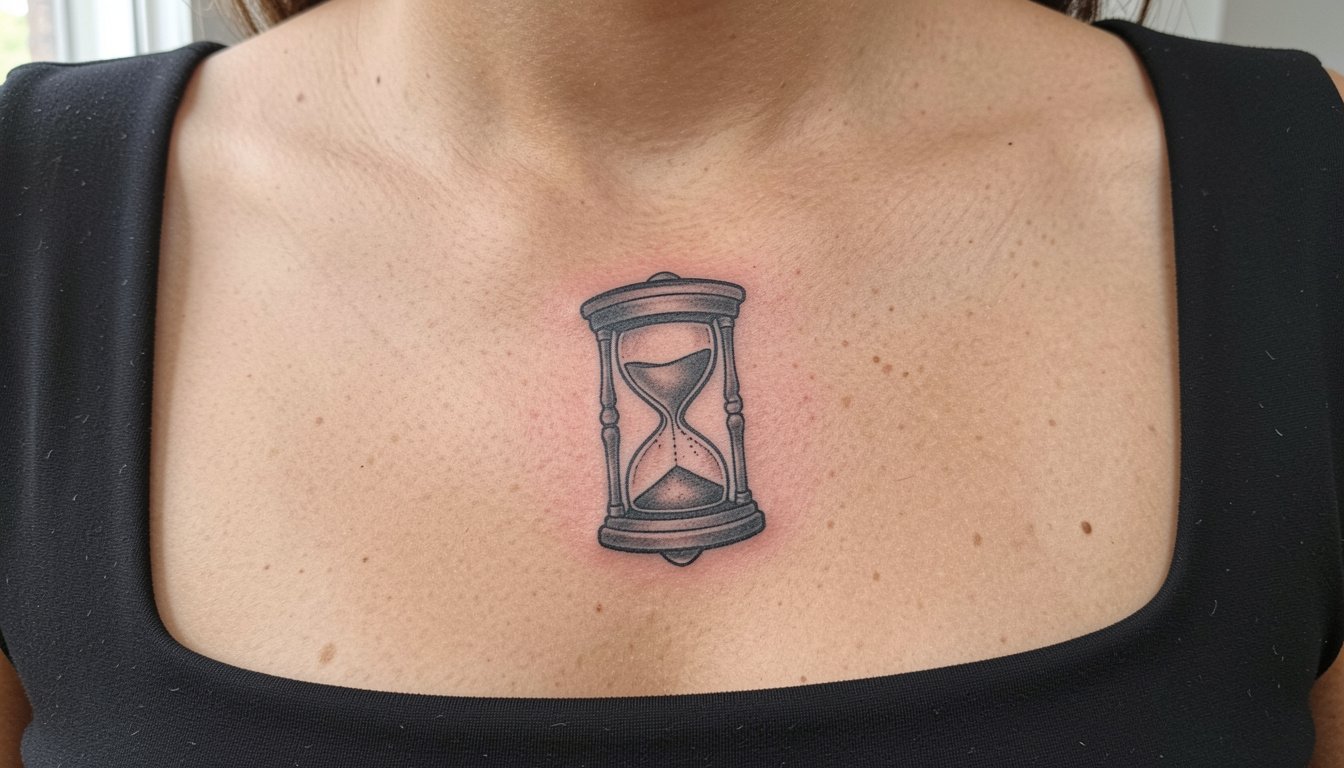
A crisp hourglass can read like a quiet vow to notice time, not a shout about fate. Pick the right line weight, spacing, and placement and the symbol will still read clearly after a few years. Pick the wrong scale or place it where skin stretches constantly and the detail softens into a smudge. Below the hero photo you will jump into wearable, realistic hourglass ideas that show how each choice ages.
1. Fine-line inner forearm hourglass for first-timers
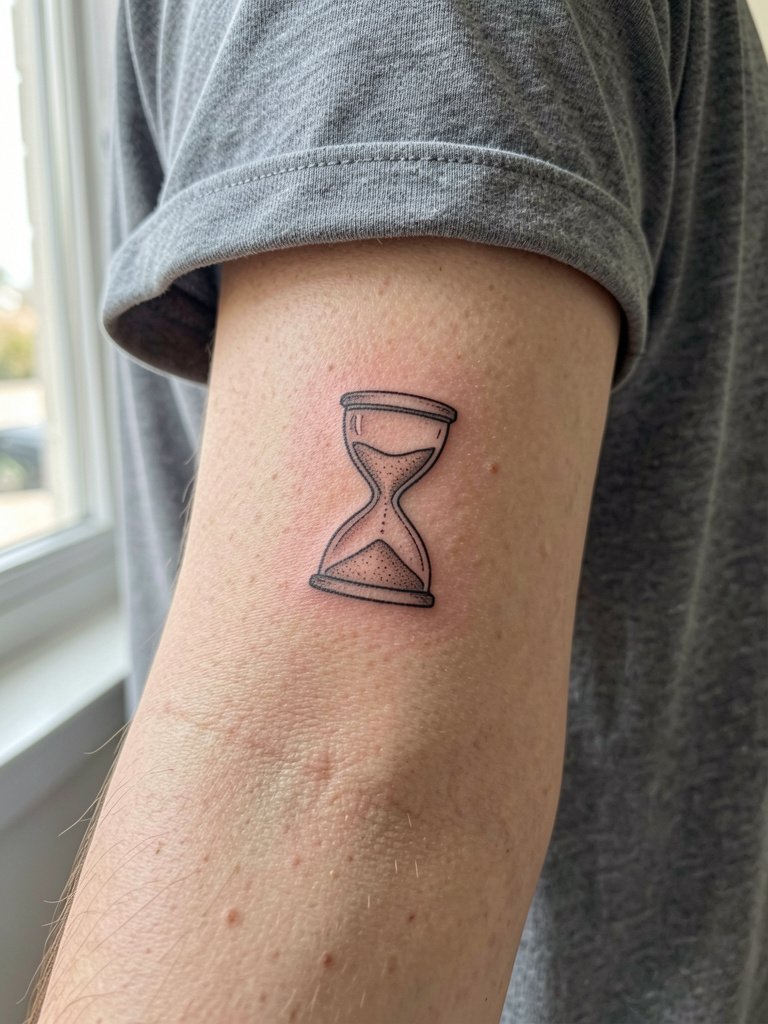
A fine-line inner forearm piece is the classic first symbolic tattoo. It reads clean when drawn at three to four inches, and the palm-up surface suits script or a small date under the glass. Bring two scale references so the artist can show how the sand, the bulbs, and the waist of the glass will read at several sizes. A common mistake is asking for hairline filigree too small for the area, which loses definition by year two. Expect one short session and a single touch-up in the first year if you want crisp linework.
2. Traditional hourglass with a bold banner on the outer forearm

This is the hourglass people picture when they say "symbolic and bold." Thick outlines and broken-in shading make a bannered piece readable for a decade. The outer forearm tolerates heavy saturation, so the red in the banner and small color fills hold better than delicate tonal shading. For session comfort, wear a short sleeve or a rolled sleeve shirt so the artist can work without tugging fabric. If you prefer a vintage feel, ask for slightly distressed edge shading and flat color fills rather than layered watercolor.
3. Ornate hourglass framed with thorns for the thigh

Thigh placements let ornate hourglasses breathe and age with grace because there is room for larger composition. The thorn frame adds emotional tension and keeps the eye moving, which helps the piece stay interesting as lines soften. When you book, bring reference photos showing the exact ornament scale you like so the artist can map spacing to your thigh contour. For show-off styling, oversized tees and high-waisted shorts let the piece peek through naturally while you still protect the area in the first weeks.
4. Fine-line ribcage hourglass with a memorial heart inside
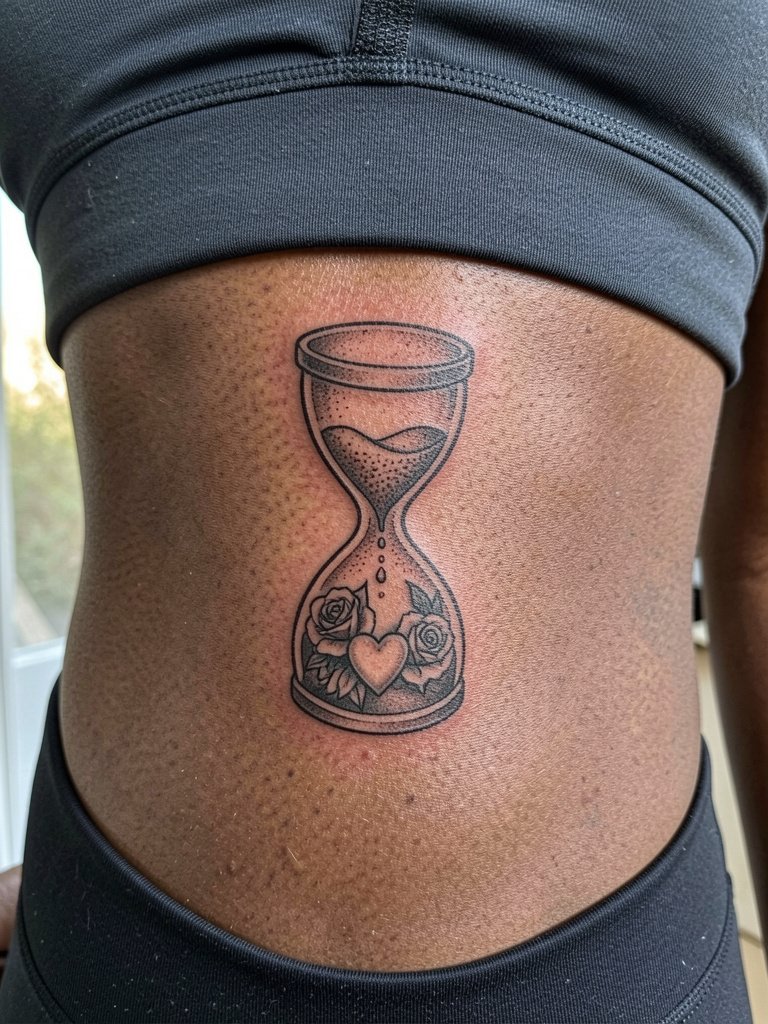
Fine-line work on the ribs is controversial among practitioners. One camp argues that the constant movement and stretch of rib skin causes hairline detail to blur within a couple of years. The other camp says that with slightly larger spacing, careful needle depth, and modest detail, fine line can settle neatly and show healed photos to support that point. If you choose ribs, plan for a slightly larger layout than the Pinterest reference and expect the session to feel intense because ribs rate high on most pain charts. Pick an experienced healed-portfolio artist and schedule a touch-up at six to twelve months.
5. Simple large hourglass with flowing sand for the upper arm
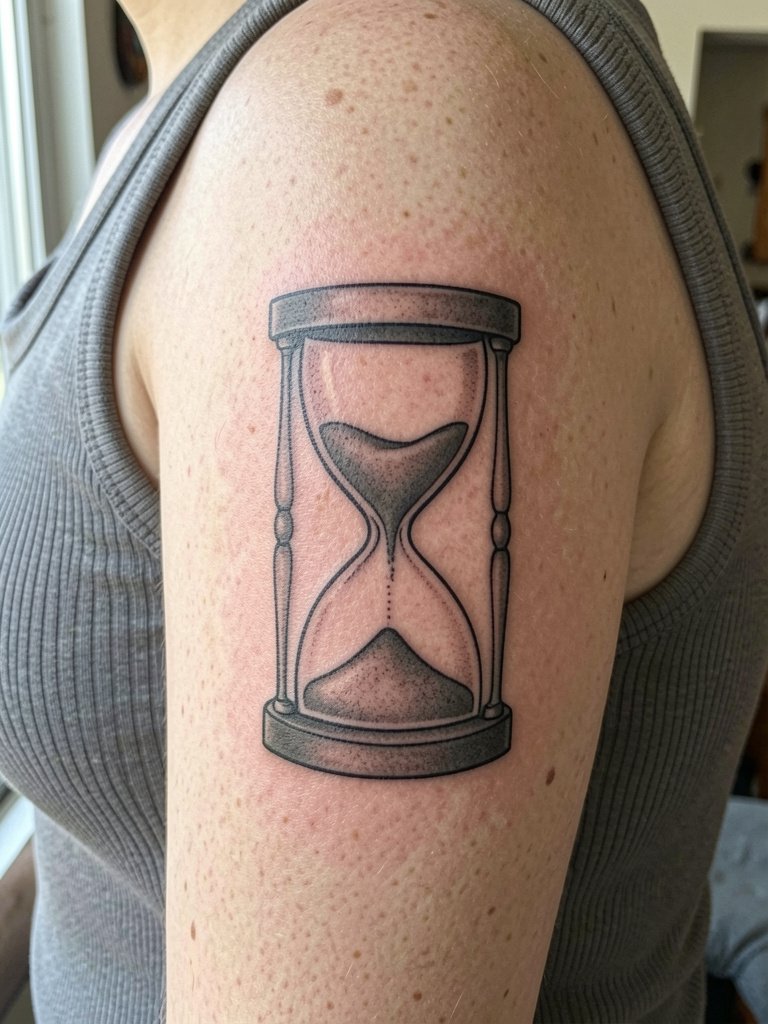
A larger, spacious hourglass on the upper arm is forgiving over time. Flowing sand lines give the composition motion, and moderate shading keeps the bulbs legible as the ink spreads slightly with age. For the appointment, wear a sleeveless top so the artist has clear access. The main mistake is cramming too much interior detail into a medium-size hourglass. Keep the sand cues and negative space clear, and plan a one to two hour session with an optional touch-up.
6. Geometric hourglass with dotwork for the calf

Geometric hourglasses modernize the symbol and work well on the calf because the surface is fairly flat and motion-friendly. Dotwork stippling creates volume without heavy fills, and the calf tolerates midline geometry without distortion. Bring a ruler-style reference so the artist can translate line spacing from paper to skin. For outfit pairing, cuffed jeans or cropped pants show the composition cleanly and frame the lower leg in motion.
Pre-Session Essentials
The forearm, calf, and chest pieces above demand different session prep, so a few targeted products smooth the first week and reduce friction on healing lines.
- Hypoallergenic tattoo balm search. Lightweight, fragrance-free balms protect fine-line work without clogging needle channels during the first three to five days.
- Unscented gentle soap search. A mild cleanser cleans the tattoo without stripping the skin, which matters for dotwork and geometric shading.
- Thin protective film search. Breathable film helps placements that rub on clothing, like the calf and thigh, in the first 24 to 72 hours.
- Non-stick gauze pads search. Soft, non-stick dressing is useful when the placement scabs or flakes and needs a protective barrier.
- Aquaphor healing ointment search. A thin layer for the early healing window locks in moisture for crisp linework without heavy buildup.
7. Blackwork hourglass for bold contrast on the outer upper arm
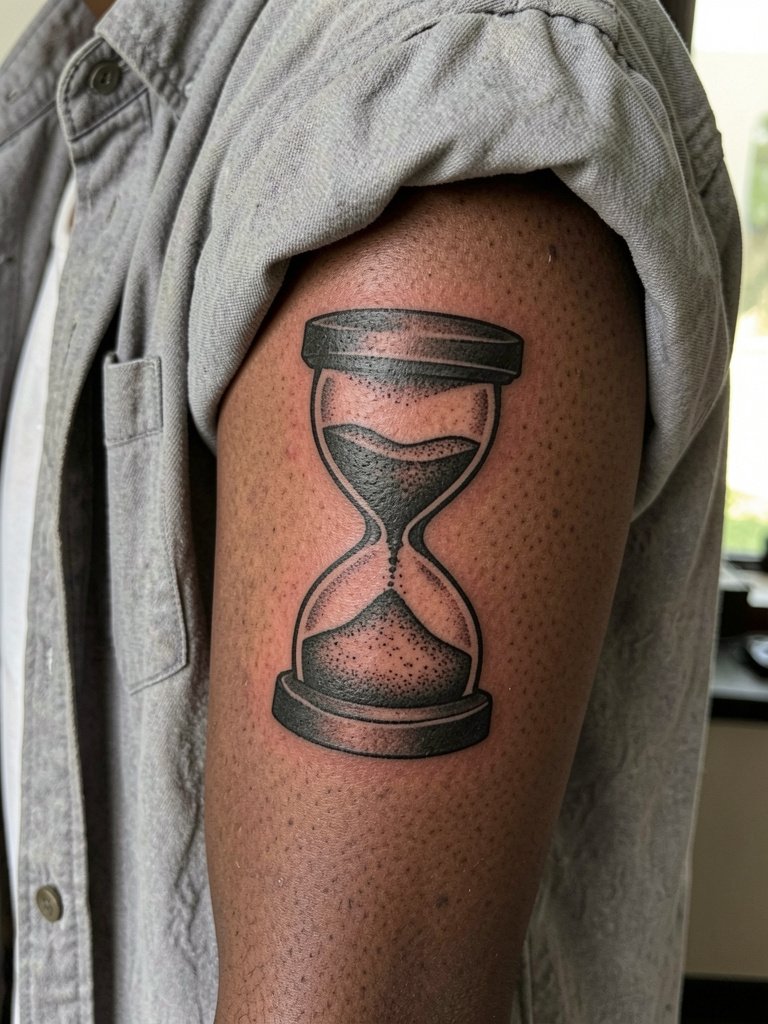
Blackwork keeps hourglass shapes readable for years because strong fills age into recognizable silhouettes. It suits clients who prefer a graphic statement and minimal touch-ups. In consultation, specify how much negative space you want inside the bulbs so the sand still reads after five years. For showing it off, sleeveless tops and muscle tees frame the arm and make the negative-space details stand out in daylight.
8. Winged hourglass that reads "time flies" on the shoulder
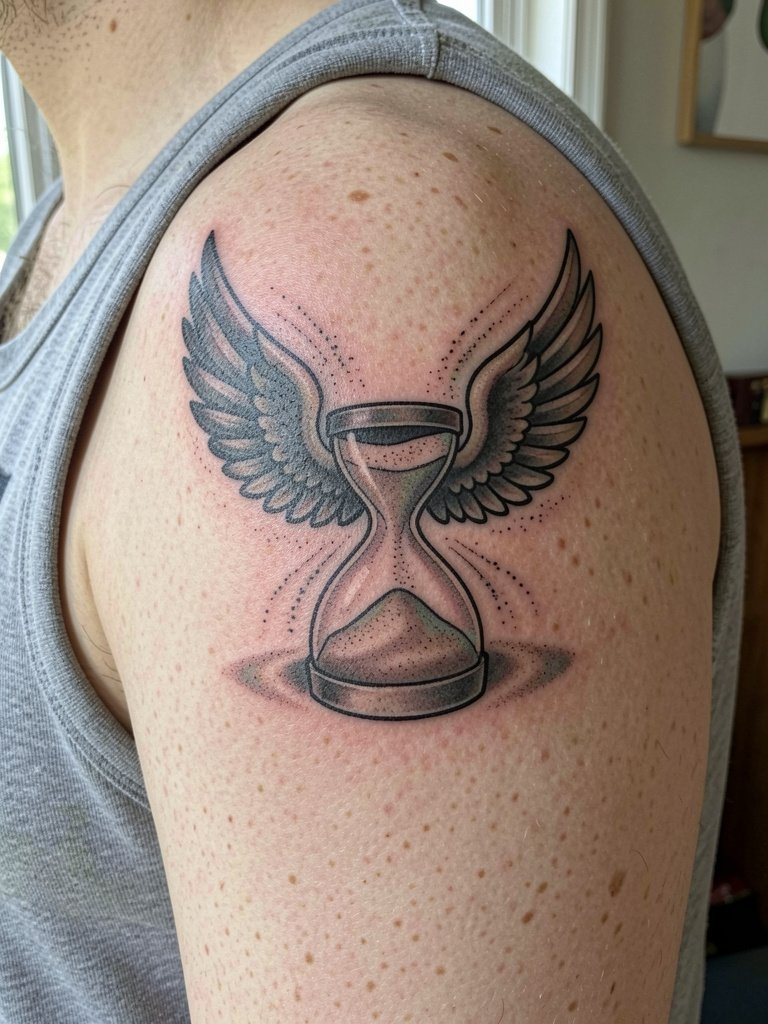
The winged motif literalizes the phrase "time flies" and works naturally on the shoulder because the curve of the deltoid adds movement. Motion lines and feather detail require slightly bolder tips than micro-linework so the feathers do not blur. Wear a sleeveless top to the session so the artist can reach the shoulder without fabric friction. Ask for healed examples on similar skin tones if you want the feather texture rendered clearly.
9. Hourglass paired with a skull, black and grey or selective color on the chest

Black and grey hourglass-and-skull pairings are the classic mortality statement. One camp favors black and grey for symbolic clarity because monochrome keeps the silhouette readable over time. The other camp favors color accents, arguing that careful color can strengthen visual weight and emotional tone without compromising longevity if saturation is managed. If you want color, ask the artist how the chosen pigments behave on your skin tone and schedule a touch-up discussion for one year after the session.
10. Compass-and-hourglass for travelers on the inner forearm
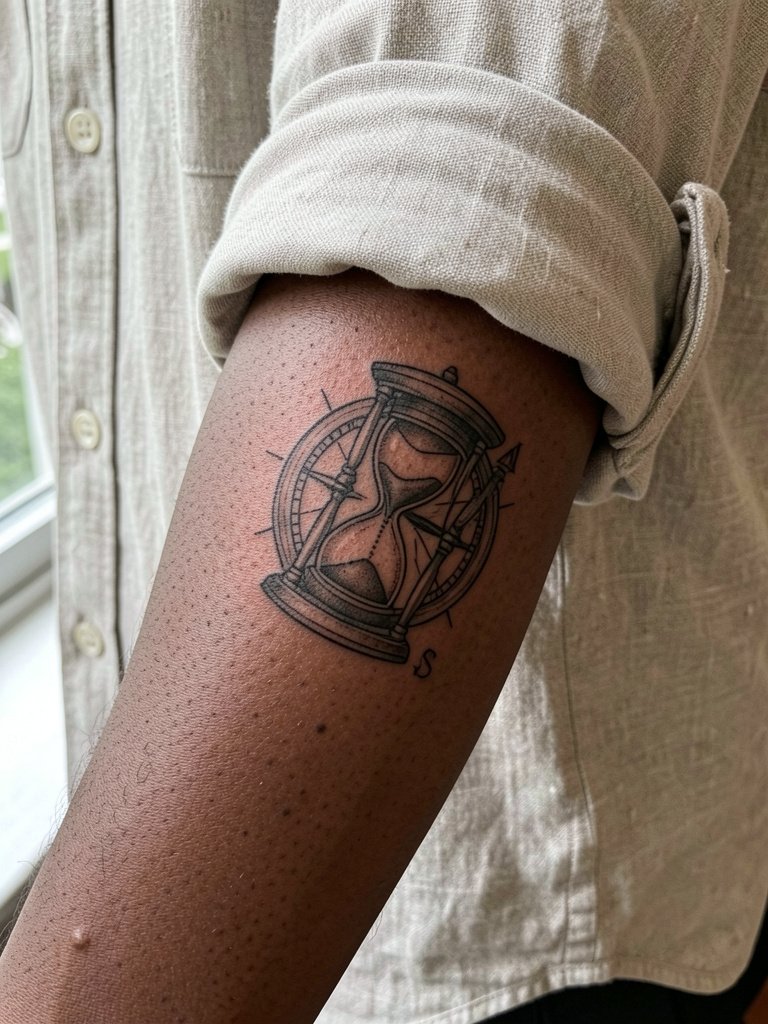
A compass plus hourglass reads like direction plus time and fits the inner forearm because you can align the compass points with the arm axis. Bring travel references or coordinate numbers so the artist can match scale and orientation. For outfits, a linen button-down or a neat cuffed shirt frames the forearm and keeps the work visible without overexposure. Expect mid-range session time for the compass detail.
11. Owl holding an hourglass on the upper arm
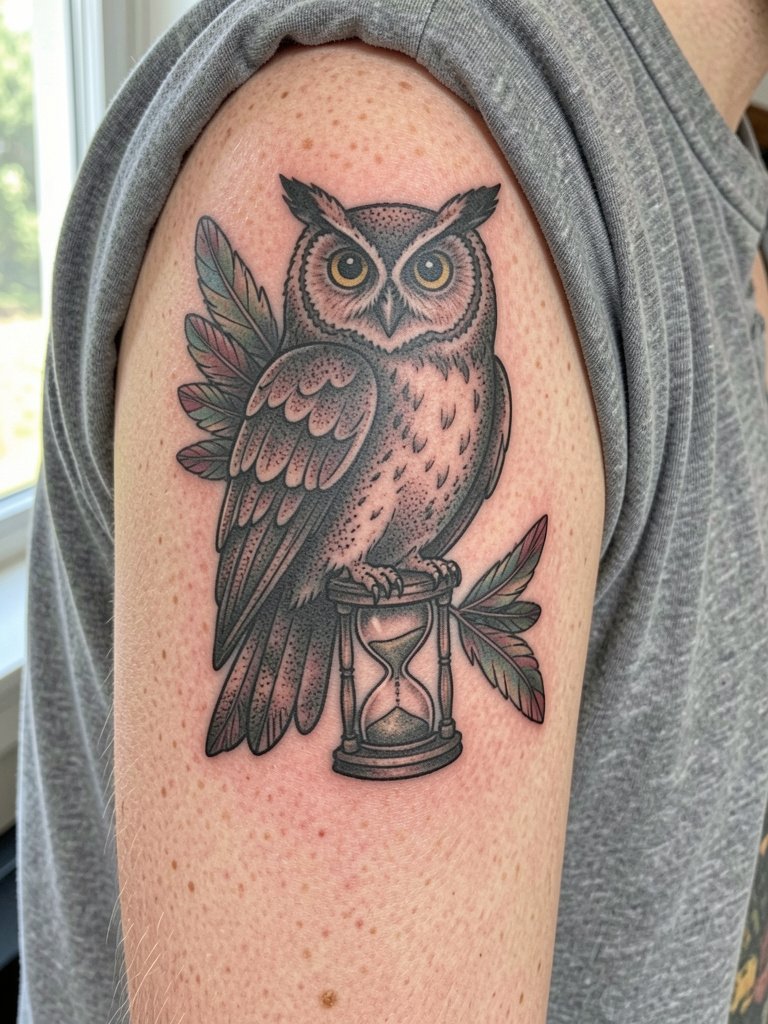
The owl adds wisdom and a guardian feel to the hourglass. Feather texture benefits from a mix of stipple and whip shading, and the upper arm has the surface area to include facial detail without shrinking the piece. During consultation, prioritize healed feather examples so you can see how the shading resolves. For session wear, choose a short-sleeve open shirt so the artist can roll or remove the sleeve without tugging.
12. Lion and roses around an hourglass for a neo-traditional composition

Combining a lion, roses, and an hourglass makes a narrative piece about strength and passing time. Neo-traditional bold outlines keep the composition legible, and muted jewel tones give depth without relying on tiny color detail. This is a larger session and often requires two sittings. For showing the piece off, sleeveless tanks or muscle tees showcase the shoulder-to-arm transition and let the floral and mane flow with clothing movement.
13. Surreal chest composition with hands, birds, and fractured geometry
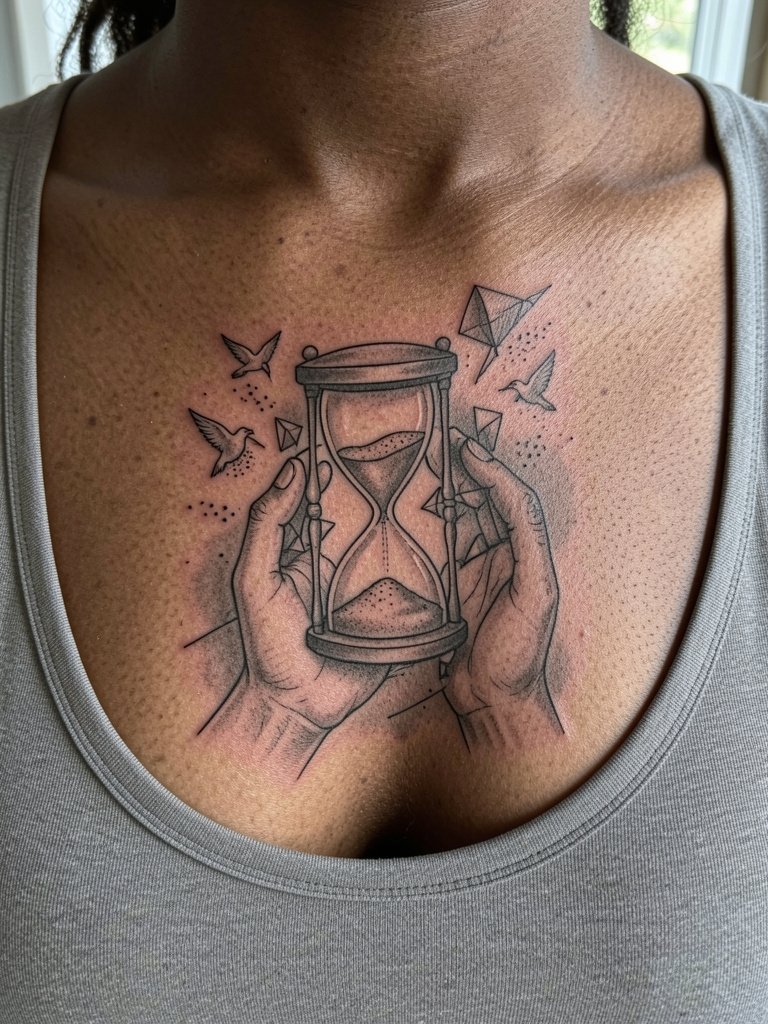
Surreal compositions expand the hourglass into an idea rather than a single icon. Hands and birds add motion and narrative, and fractured geometry gives a contemporary edge. Chest skin takes detail well, but plan sessions in layers so the artist can block in the major shapes before adding micro-dotwork. Consider wider spacing on hand contours so the fingers remain legible after healing.
14. Tiny geometric hourglass for behind the ear or the wrist
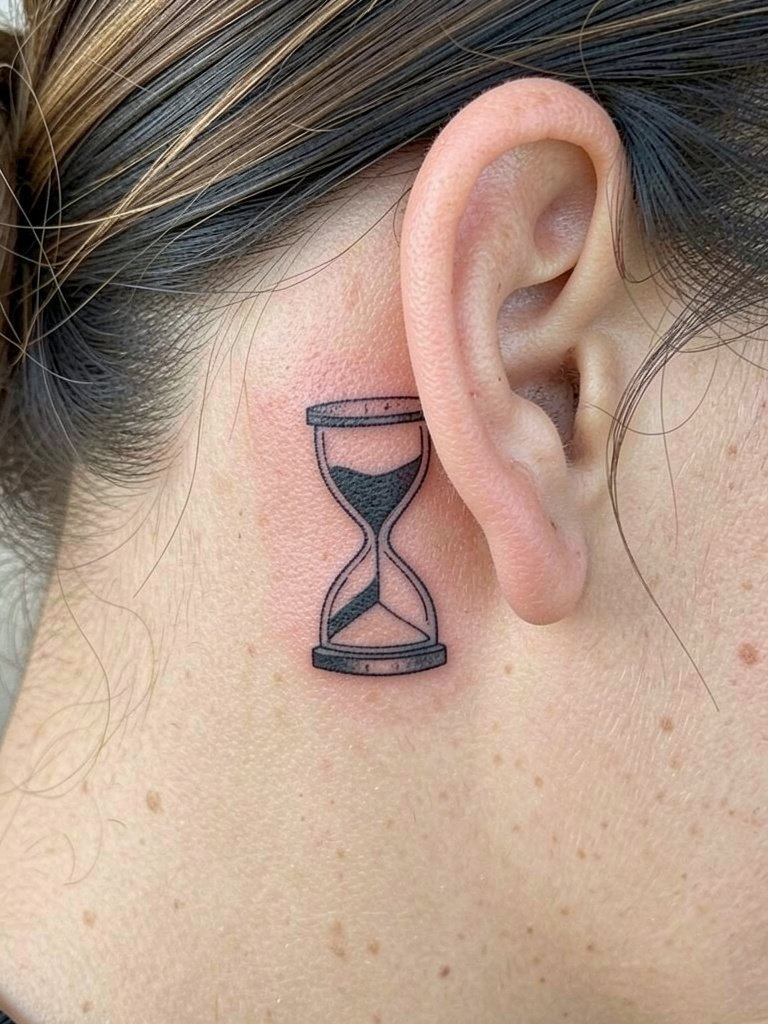
Micro hourglasses are ideal patchwork pieces and placement behind the ear is discreet. Tiny work needs heavier-than-you-expect line weight to avoid early blur. For wrist micro tattoos, avoid stacking bracelets on the same wrist during healing to reduce abrasion. These are quick sessions but plan a touch-up if the artist notes any shallow needle depth during the first visit.
15. Small symbolic hourglass for ankle or calf, perfect for patchwork collectors

Small ankle or calf hourglasses insert neatly into a patchwork sleeve of tiny symbols. The ankle sees friction from socks and shoes, so aim for a clean silhouette rather than filigree. For session day, wear pants you can roll or shoes that let the artist access the area without rubbing it. Expect a short session and rapid healing if you limit moisture and friction in the first week.
16. Memorial hourglass with name or date integrated at the clavicle
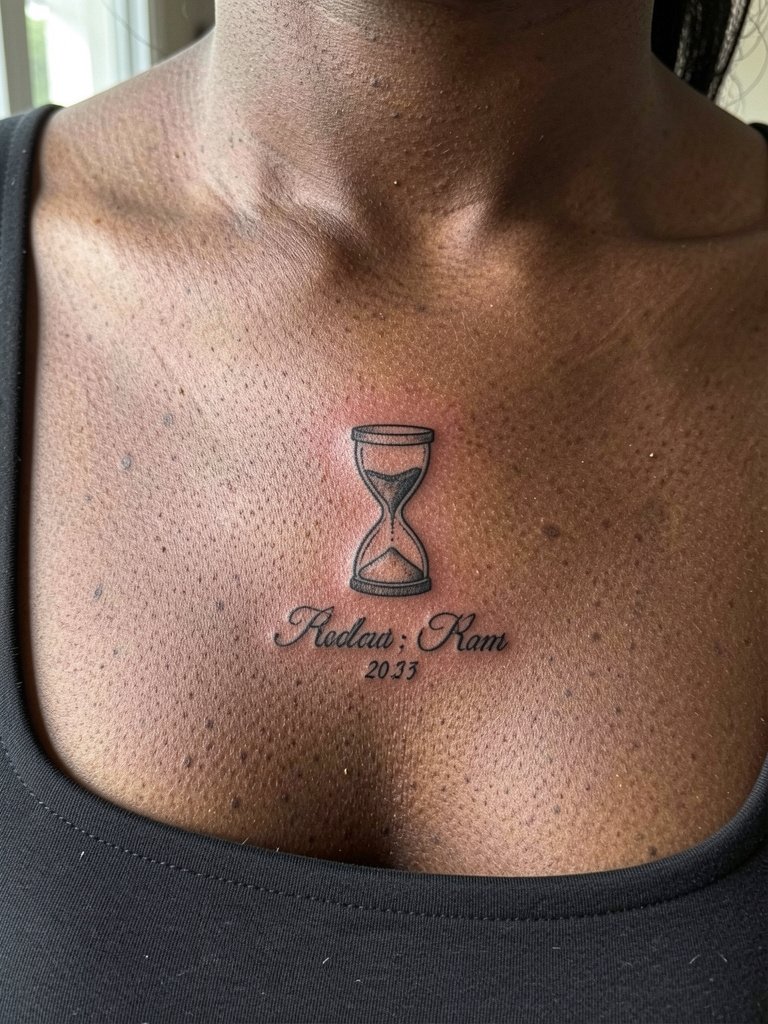
A clavicle placement carries memorial meaning without being overtly funerary. Integrating a name or date inside or beneath the hourglass keeps the symbol compact and readable. When specifying text, provide the exact spelling and a sample of the script size so the artist can plan spacing. For showing it off, square-neck tops or short pendant necklaces frame the collarbone and highlight the placement.
17. Broken hourglass with glass shards across the sternum
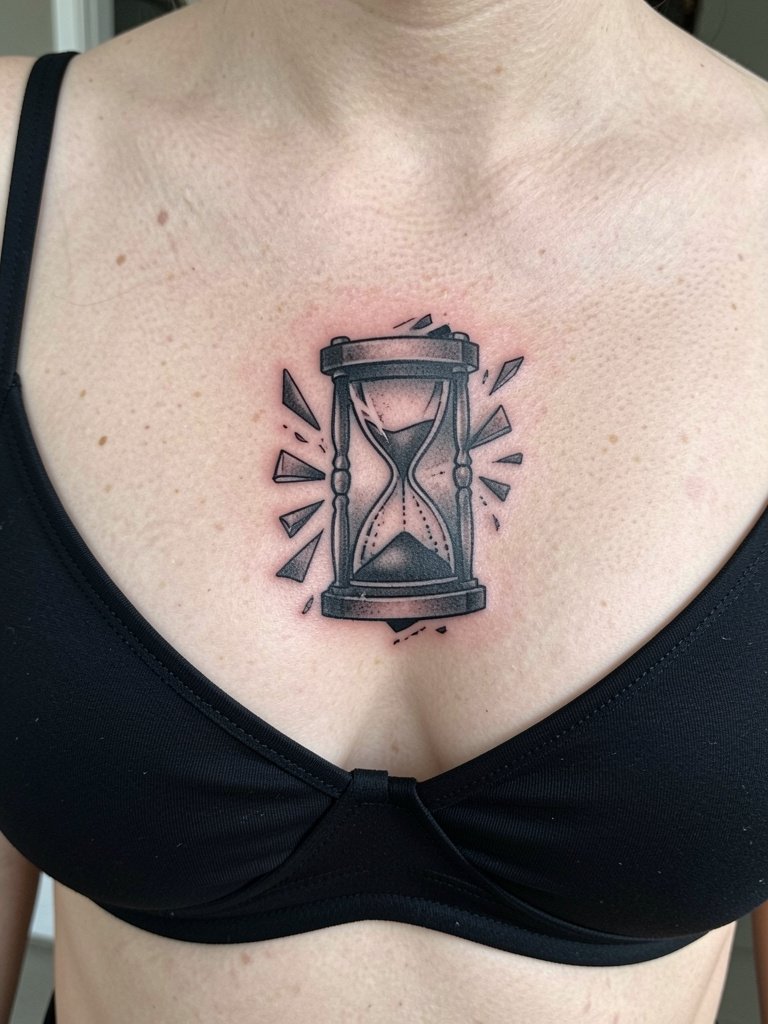
Sternum pieces can be striking but require an artist comfortable with central torso contouring. Expect the session to be longer and at times sensitive because the area is close to bone and thin skin. If you choose sternum, book with an artist who shows healed examples on that placement. For wardrobe, front-closure bras and button-up shirts that remove easily lower the chance of rubbing the fresh ink.
18. Time-flies scattering birds with sand turning into doves on the forearm
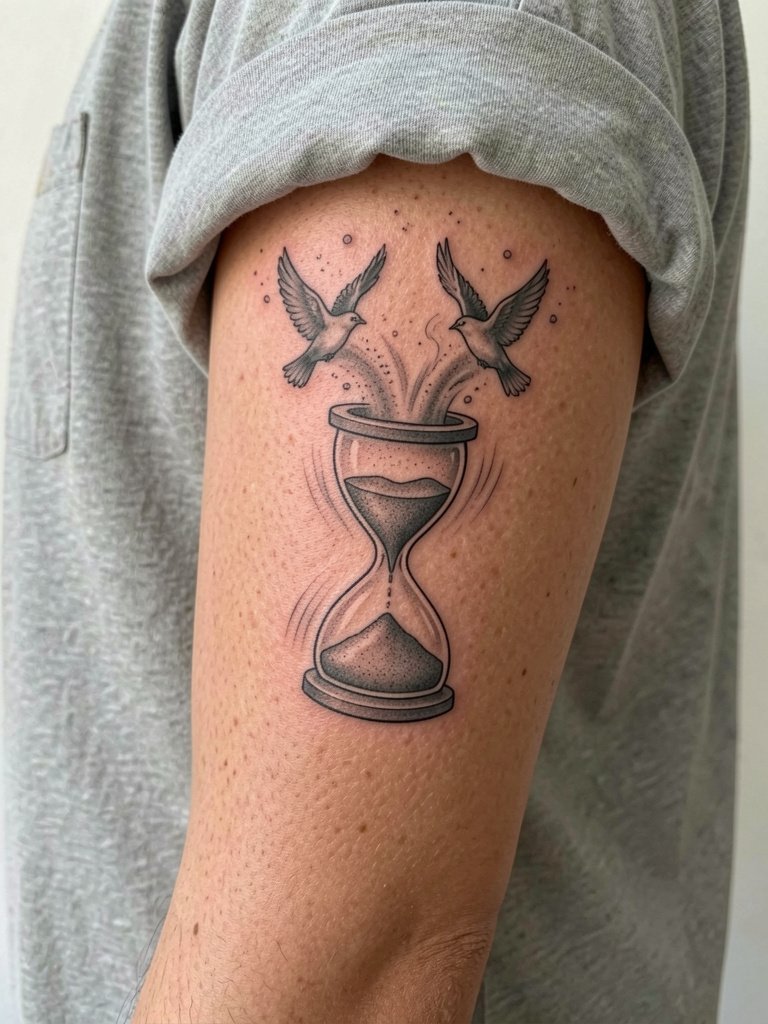
Birds emerging from an hourglass is a literal and readable motif that avoids text. Motion cues help the composition age, because movement distracts from small line spread. For the session, wear short sleeves and consider skin tone when choosing how dark to make the birds. Lighter skin may take subtle grey washes differently than darker skin, so ask the artist for healed examples on similar tones.
19. Hourglass with map coordinates and travel motifs on the forearm
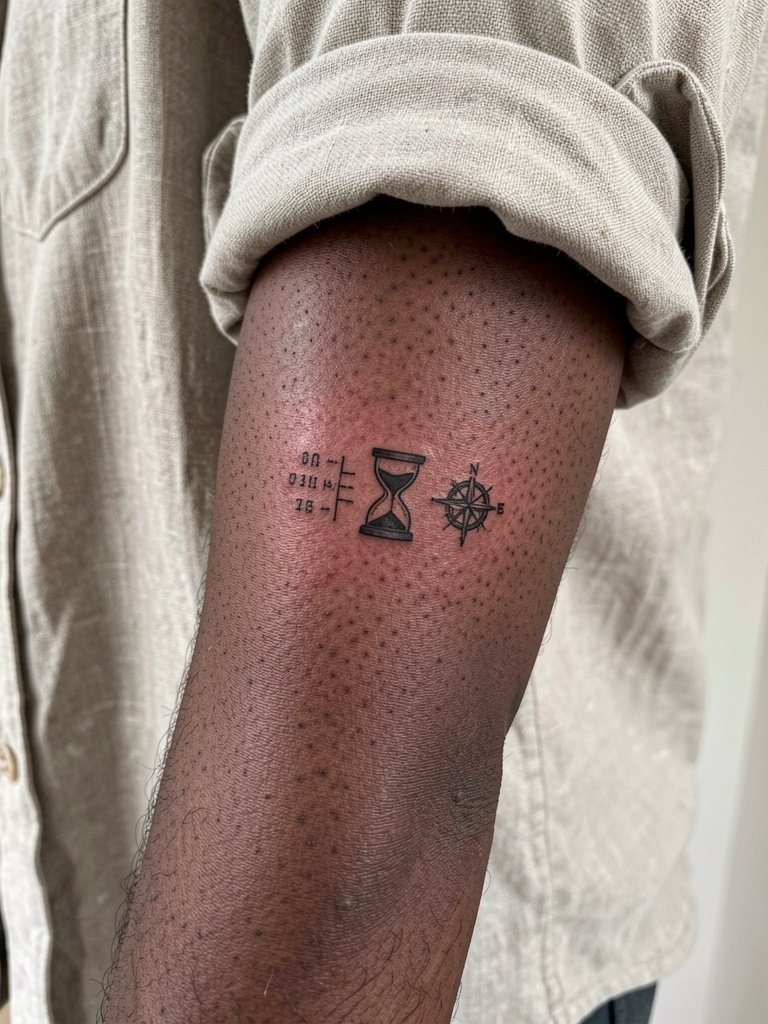
Adding coordinates turns an hourglass into a personal map marker. Use a clear monospace or small serif that your artist can reproduce legibly at the scale you want. Coordinate text must be exact in your reference material so the artist places numerals correctly. Bring the exact font size example so the numbers remain readable after healing.
20. Moon-phase hourglass across the chest or sternum
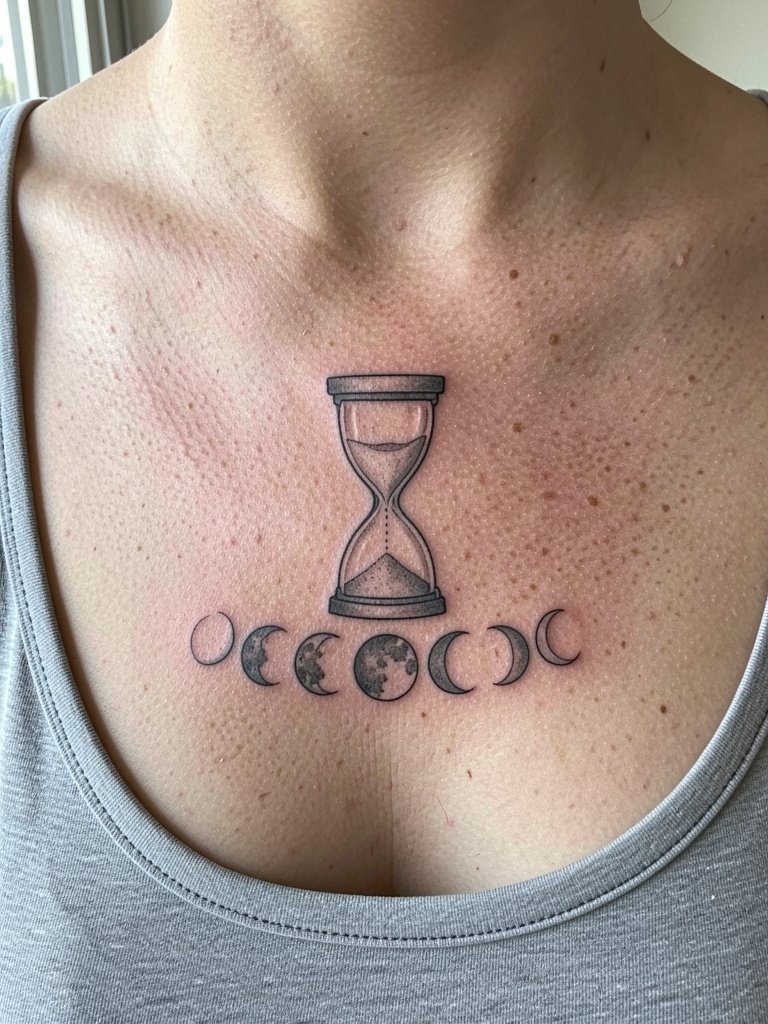
Moon phases surrounding an hourglass add cyclical time imagery and look elegant on the chest. The phase icons should be sized clearly enough to avoid merging into dots with age. If you want subtle shading between phases, ask the artist how they render soft grey on your skin tone so the gradation keeps contrast after a year.
21. Blackwork ornamental hourglass with roses for the forearm
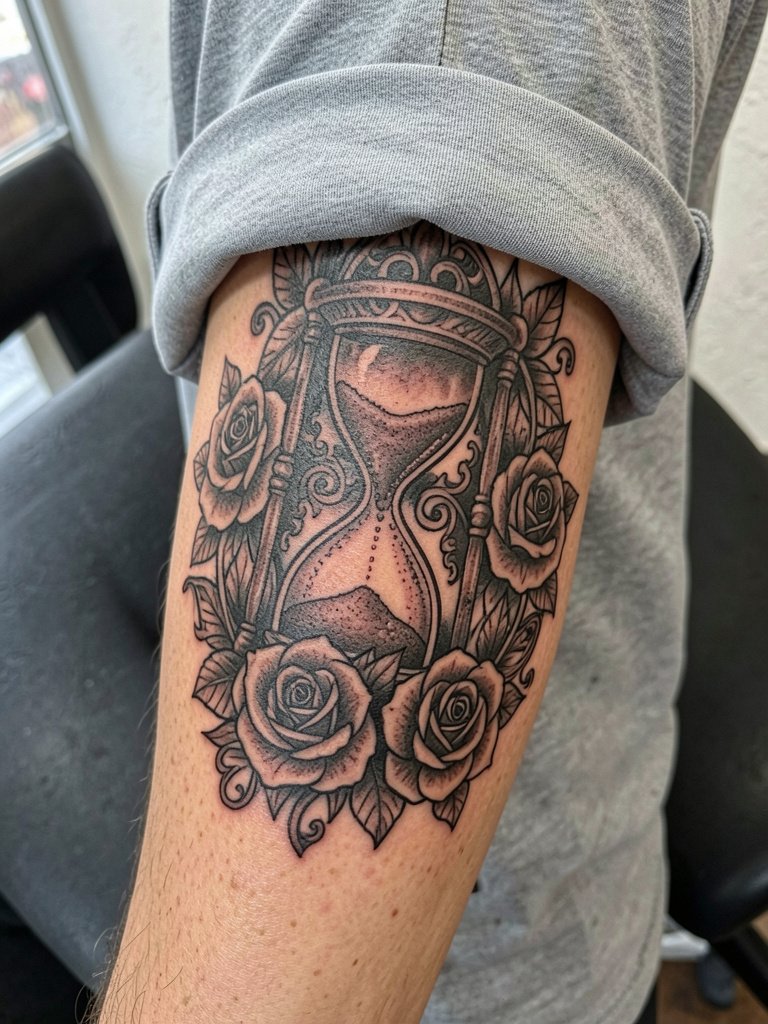
For clients who want drama and longevity, blackwork paired with roses keeps the form readable and bold. The forearm shows the ornamental scroll and floral shapes beautifully while resisting softening. Consider heavier lineweight on petal edges so the roses stay defined over time. This style typically needs only one solid session for smaller compositions.
22. Hourglass wrapped in sunflowers and hearts for a softer memorial feel
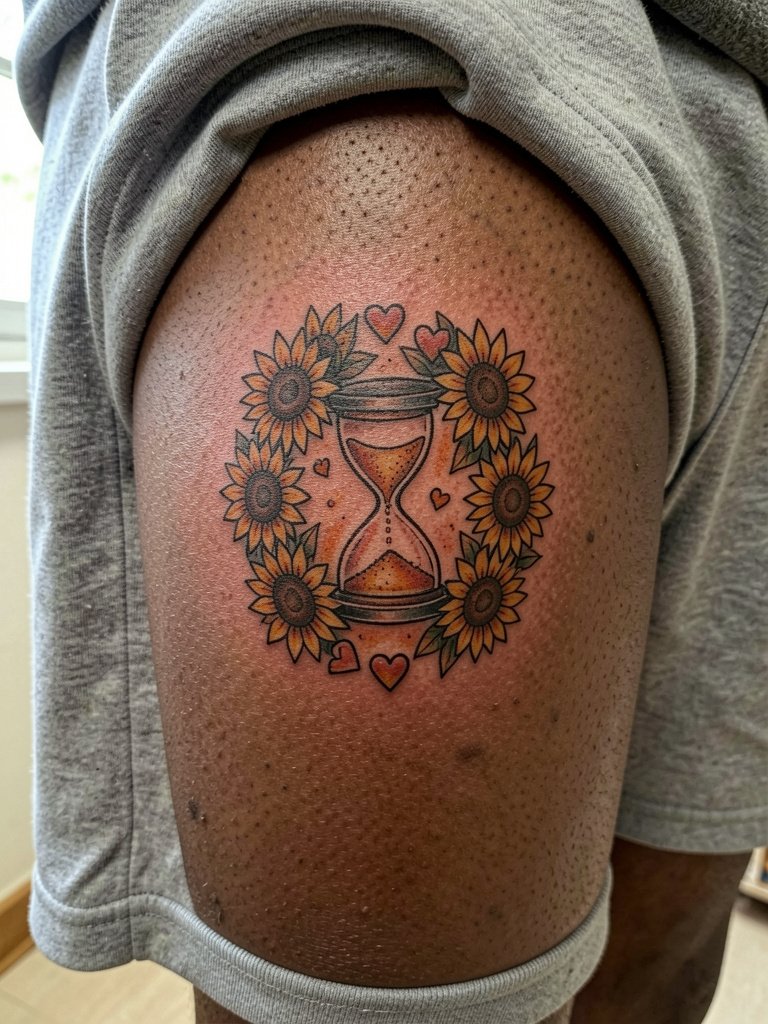
Sunflowers soften the weight of memorial imagery and bring brightness to the hourglass without explicit script. This design works well on the thigh where size and detail can be larger and more ornamental. For session wear, pick loose shorts so the artist can access the thigh without fabric pressure. If you want muted color, specify pigment types so they complement your skin tone.
23. Micro patchwork hourglass for hand or finger placement
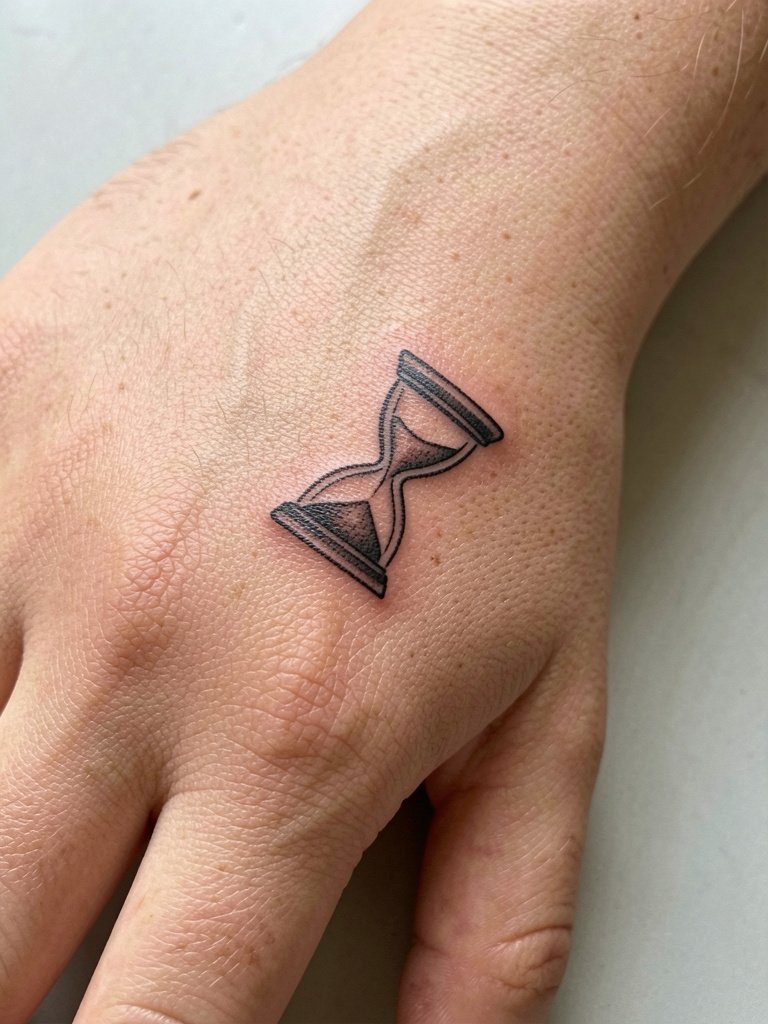
Hands and fingers are high-motion and high-wash areas that often fade fast. If you want a micro hourglass here, pick heavier lineweight and accept that touch-ups are more likely than for arm or thigh pieces. For session day, keep the hand clean and free from rings so the artist can see the skin clearly. This placement is ideal for patchwork collectors who plan future small additions around it.
Frequently Asked Questions
Q: How much should I expect to pay for an hourglass tattoo?
A: Expect price ranges rather than exact quotes. Tiny hourglasses for wrist or behind-ear usually fall in the range of $60 to $200. Medium forearm or calf pieces typically range from $200 to $600 and larger chest or thigh compositions often run from $600 to $1,400 depending on detail and session count.
Q: Which placements hold up best for fine-line hourglass designs?
A: Forearms, outer upper arm, and calf are generally more forgiving because they see less skin stretch and friction. High-stretch areas like ribs and inner thigh are riskier for ultra-thin detail, and you should plan slightly larger spacing or bolder lineweight if you insist on those placements.
Q: Black and grey or color for an hourglass, which should I pick?
A: Black and grey usually reads more predictably over time because contrast preserves the silhouette and linework. Color advocates argue that careful selective color can enhance meaning, and when saturation and pigment choice are right color can age well too. Decide by looking at healed examples on similar skin tones and by asking the artist to show long-term photos of both approaches.
Q: Where can I find artists and healed photos for hourglass tattoo styles?
A: Search hashtags like #hourglasstattoo and #blackworktattoo while adding words like "healed" or "forearm" to filter results. Use location filters on Instagram and TikTok to narrow to nearby artists and check studio booking platforms for style keywords. Reddit threads in tattoo communities also surface healed photos and candid feedback from clients.
Q: How should I dress for my appointment and during the first week of healing?
A: Match your outfit to placement. For forearm and upper arm, wear short sleeves or rollable shirts. For thigh work, choose loose shorts or skirts that lift easily. For sternum or clavicle pieces, front-closure bras or button-up shirts help. During the first week keep clothing soft and loose to reduce friction on fresh ink.
Q: How often do hourglass tattoos need touch-ups?
A: Touch-up frequency depends on size, placement, and lineweight. Small micro pieces on fingers and ankles commonly need a touch-up within six to twelve months. Well-executed forearm and upper arm pieces often only need a minor touch-up after a year or two. Expect heavier-touch areas to need maintenance more often.
Q: Are there special considerations for darker skin tones with fine detail hourglasses?
A: Yes. Artists often recommend slightly bolder lineweight and higher contrast when working on deeper tones so the design remains legible after healing. Ask to see healed photos on similar skin tones and discuss spacing and fill choices with the artist before booking.