
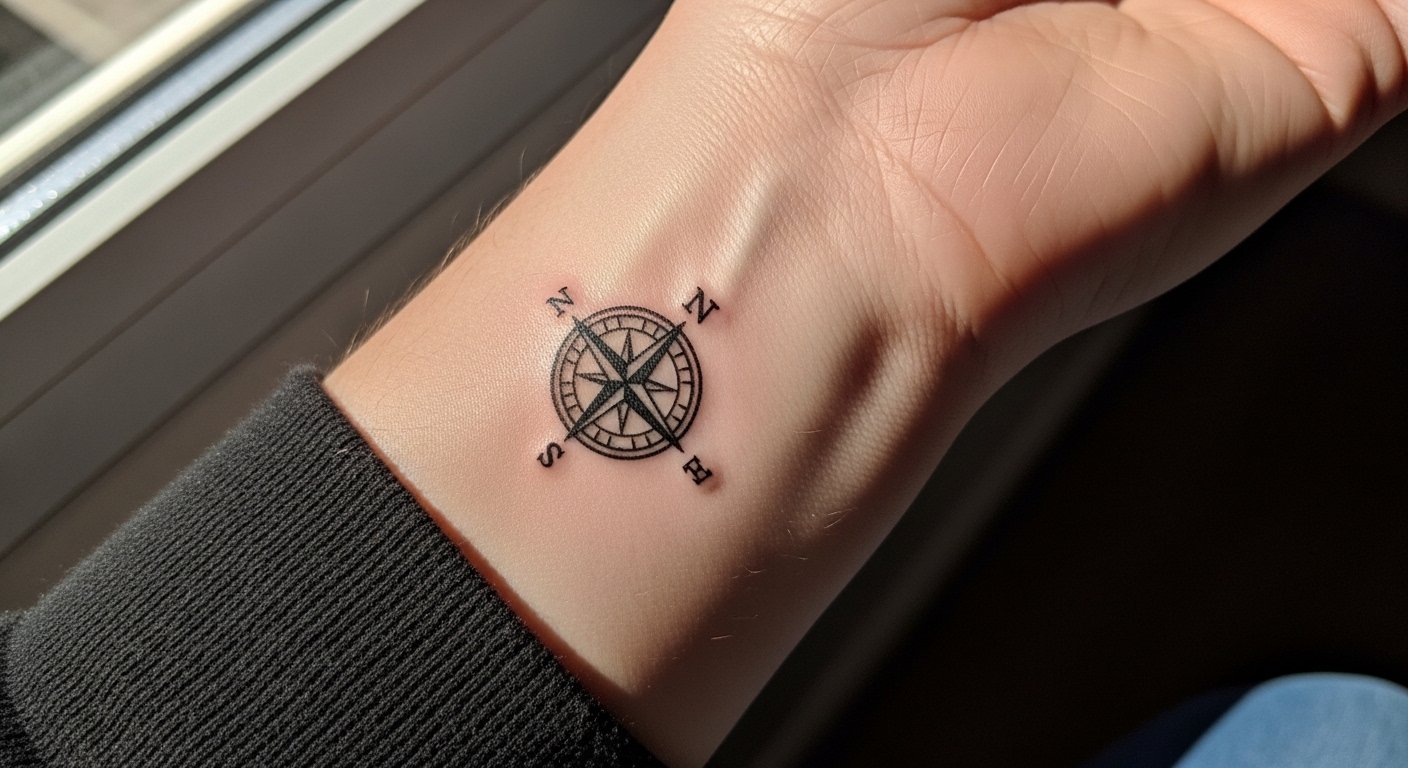
Someone I know spent six months narrowing down a matching tattoo only to realize the real decision was where the design would live and how it would age. Matching compass tattoos feel personal and practical, but the tiny details matter more than the symbol. Below are ten small compass ideas that work for couples, friends, or siblings, with what to ask your artist, placement trade offs, and realistic expectations for healed look and touch-ups.
1. Fine-line micro compass on the inner wrist
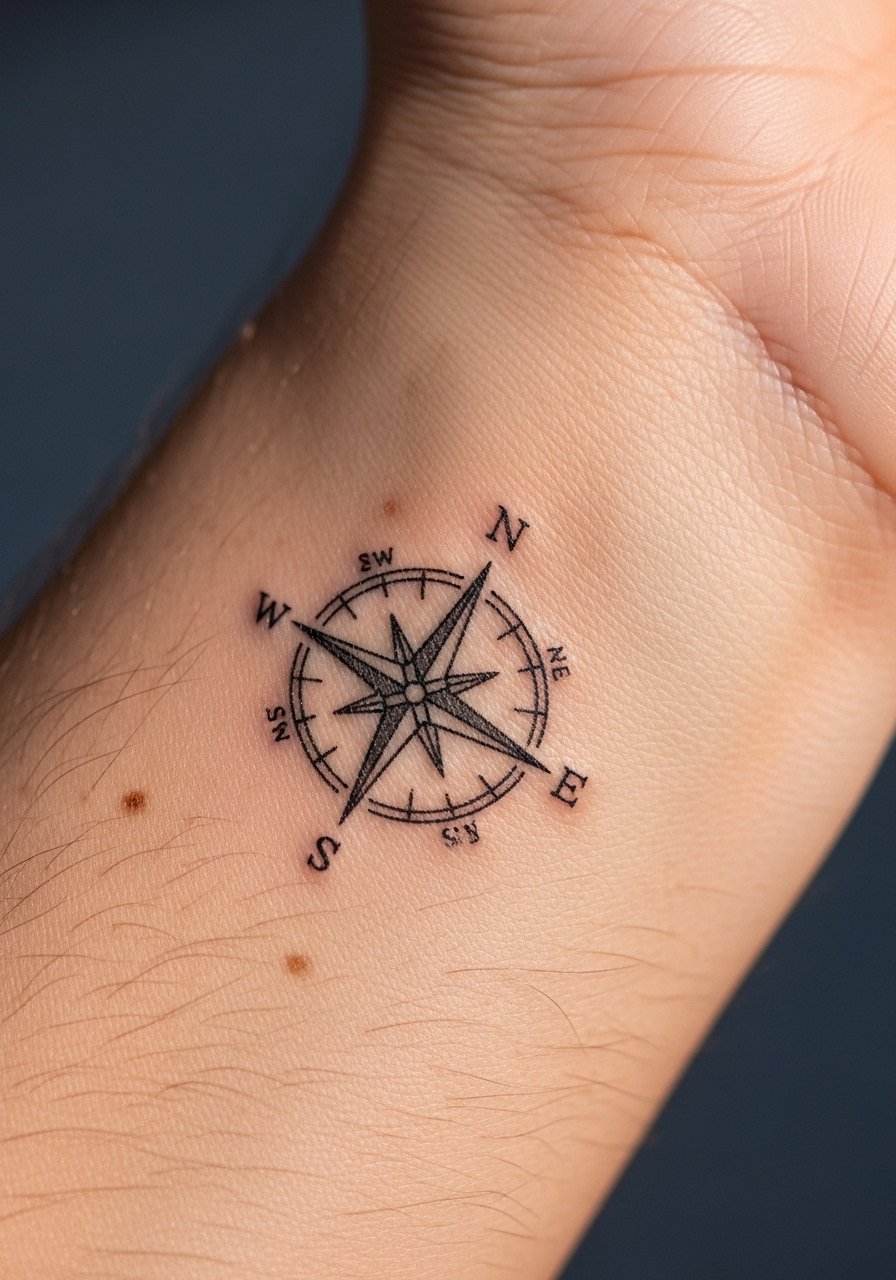
Someone I know first saw this style on a friend and booked it for a matching piece. The inner wrist is easy to show and easy to hide with a watch. Fair warning the wrist moves a lot so linework can blur faster than on the forearm. Tell your artist you want slightly bolder main points and thin secondary ticks to give the design breathing room. Typical session time for a tiny piece is under 30 minutes and pain is mild to moderate. Common mistake is asking for ultra-fine detail under 1.5 centimeters. Expect touch-up around year two if you want crisp compass points.
2. Mini traditional compass with dot work on the ankle
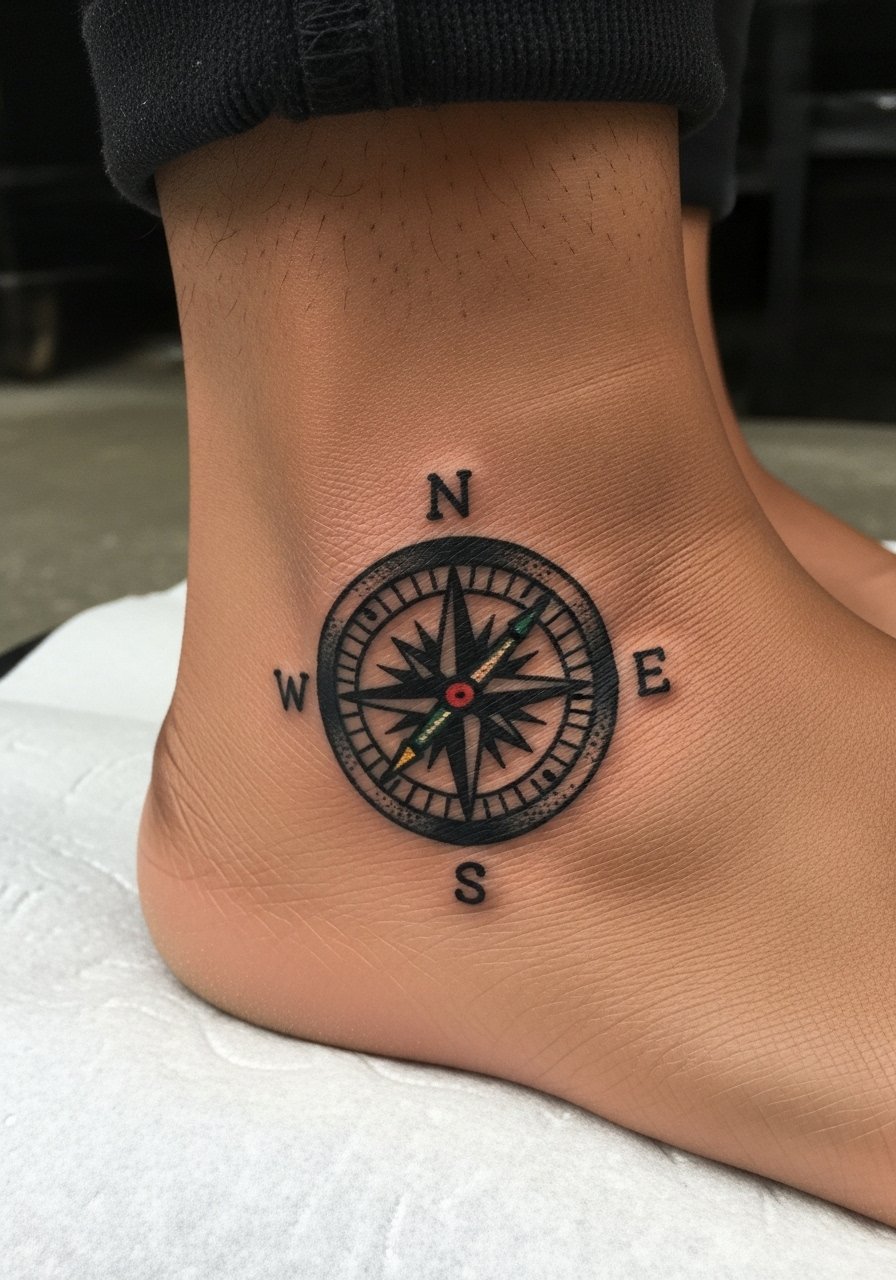
Fair warning. Ankles are bony and feel sharper during the session. The traditional linework holds up well on the ankle because the skin there does not stretch the same way it does on the torso. Ask for bold main outlines and stipple shading instead of small filled gradients. This version reads clearly when wearing shoes or sandals. The mistake is shrinking a traditional layout until the inner detail collapses into a blurred patch. Blowout risk is low on the ankle but touch-ups at three to five years can refresh saturation.
3. Tiny compass rose behind the ear with single-point accent
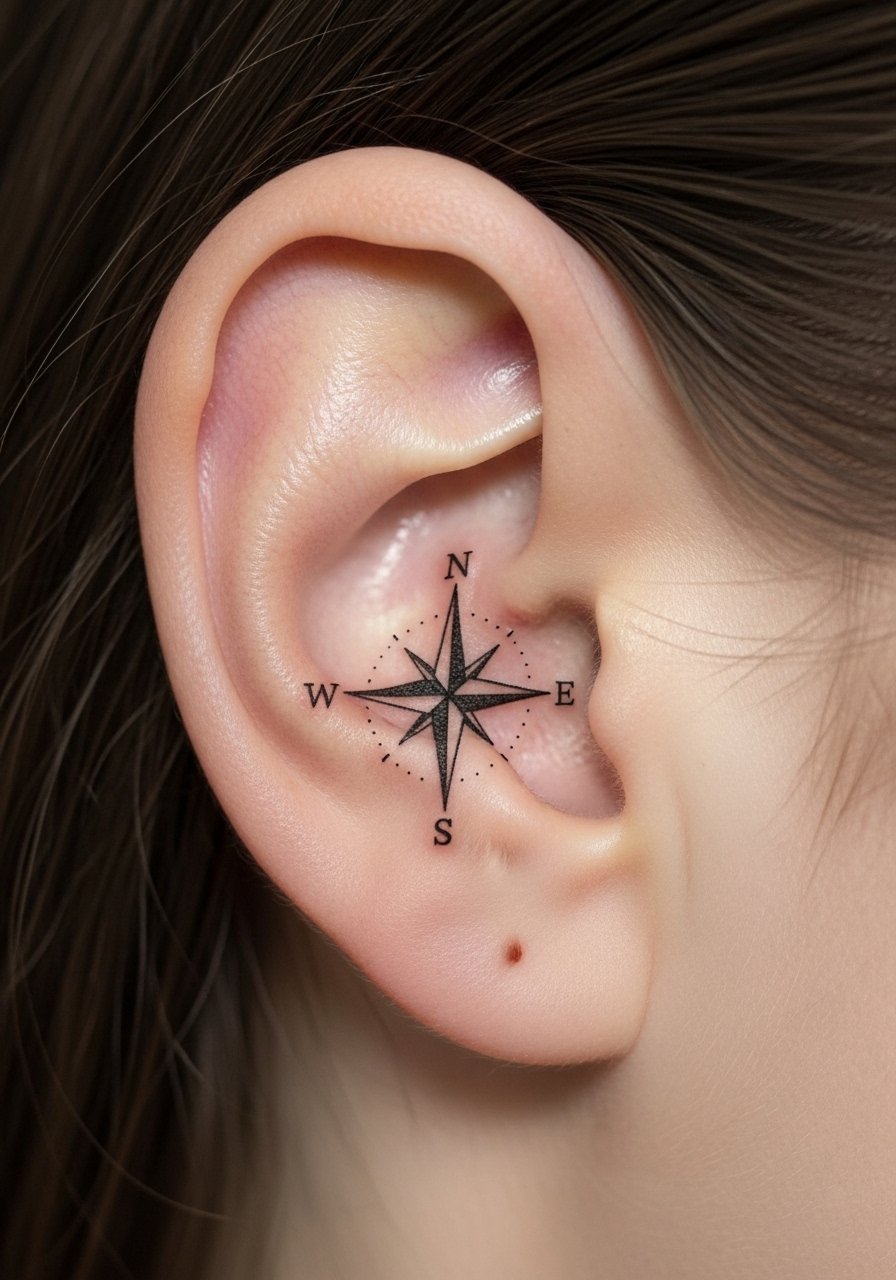
Most watercolor or feathered fills from a few years ago look muddy now. This minimalist behind-the-ear compass stays sharp by skipping color wash and using a single-point accent to mark north. When you sit with your artist, request a custom flash that keeps negative space around the compass to avoid spreading. This spot is sensitive and the session feels quick but intense. Professionals are split on ear placements. One camp says tiny work there fades quickly because of thin skin. The other camp says precise depth and spacing keeps the lines stable. Ask where your artist stands before booking.
4. Matching tiny compass with coordinates on the ribcage
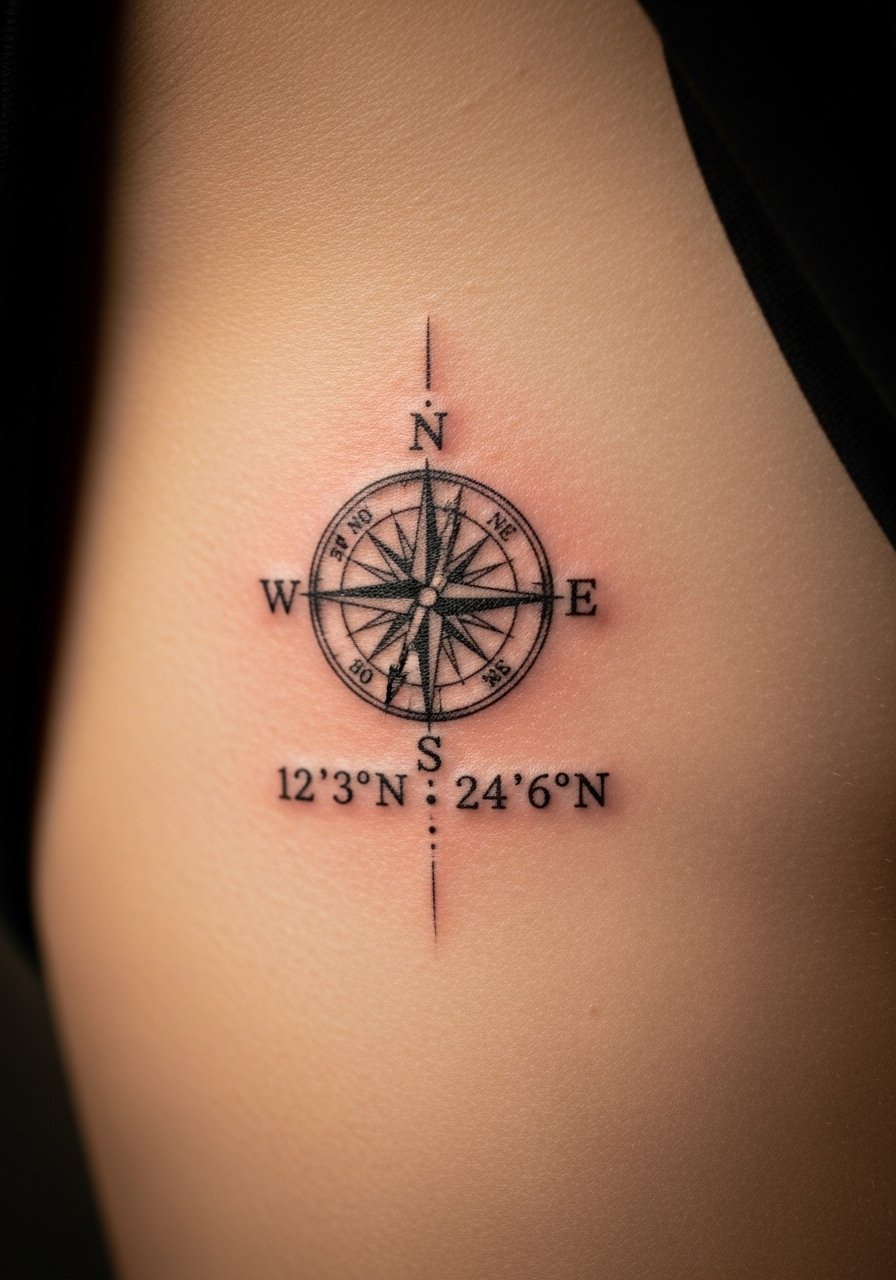
Fair warning. The ribcage rates high on most pain scales. People pick ribs for matching tattoos when the moment is private and the placement feels meaningful. The coordinates make the match specific without overt symbolism. For the consultation, bring exact coordinates in monospace text so the artist can size the numerals for legibility. Aging here can be tricky because the skin stretches with weight change. A common mistake is asking for tiny numerals that blur by year two. Expect a longer touch-up window for ribs than for forearms.
5. Micro geometric compass on the side of the finger
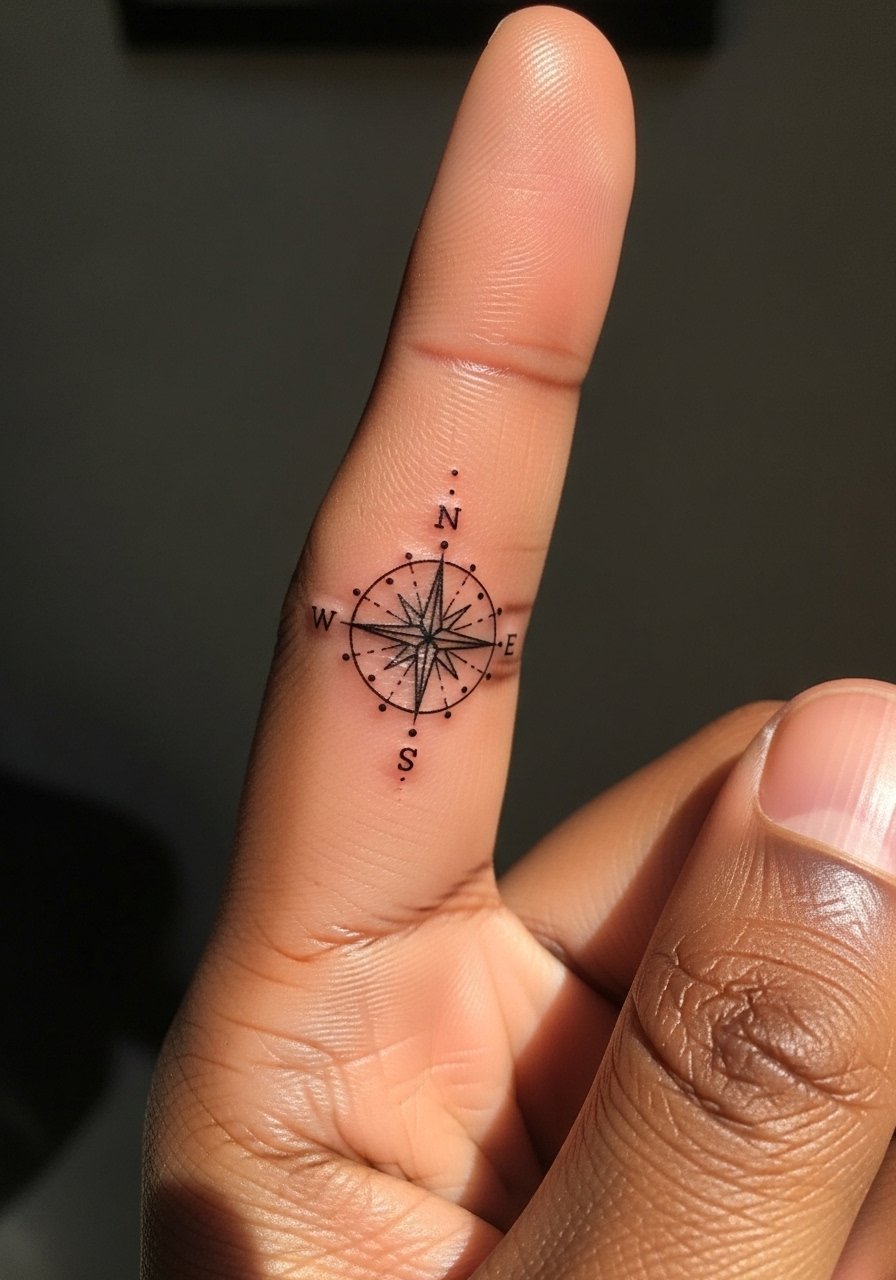
The biggest mistake with finger tattoos is going too small and too detailed. Fingers shed skin and get washed often so linework thins quickly. If you want matching finger compasses, ask for slightly bolder linework with space between major points and dot work for texture. Sessions are short but healing requires careful aftercare because scabbing can pull ink. Expect touch-ups as a normal part of this placement. Also think about career implications since hand and finger tattoos still matter to some employers.
6. Micro-blackwork compass on the side of the forearm
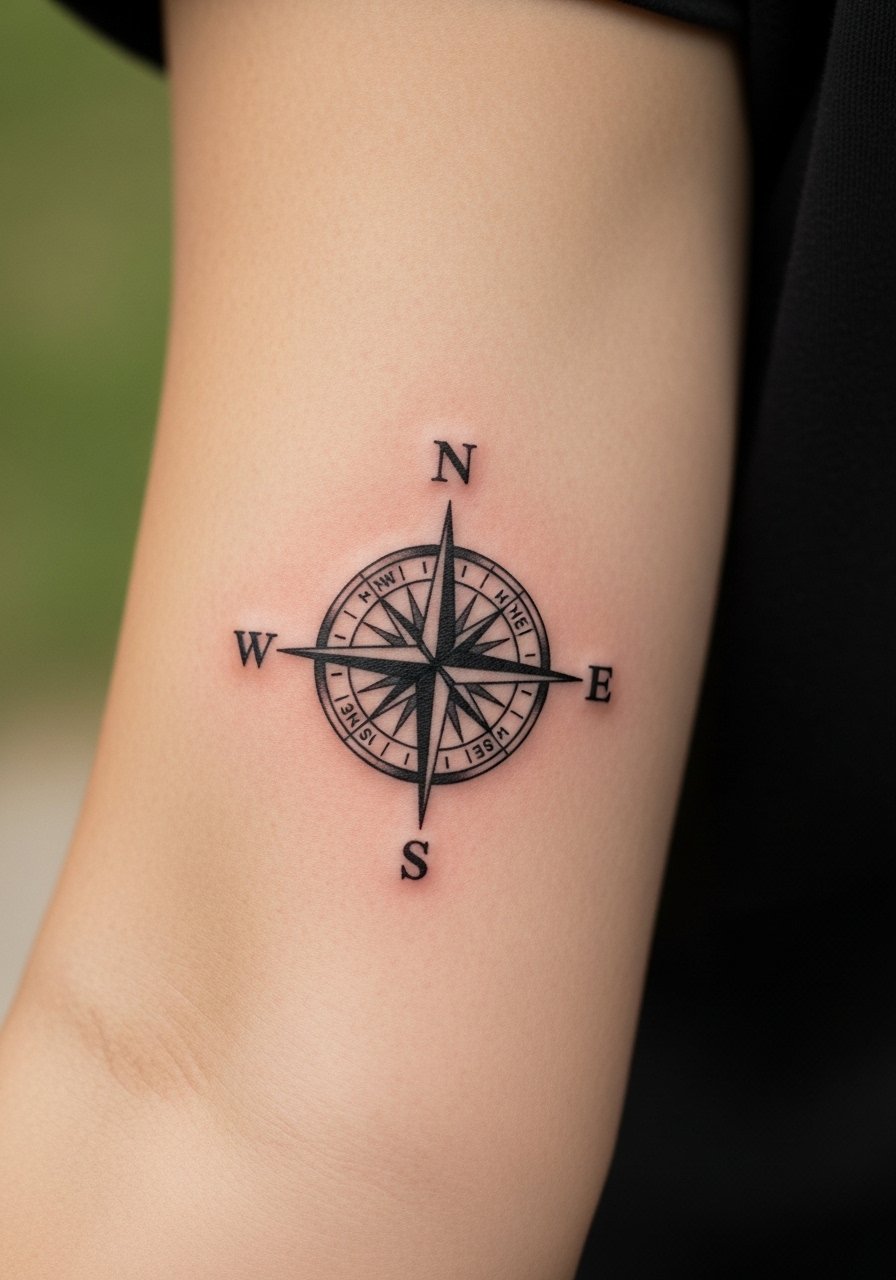
When you book this one, bring references that show exact line weight. The forearm is forgiving for small blackwork because it gets less friction and sun exposure than hands. Tell your artist you want higher contrast between main points and the inner ticks to keep the compass readable for years. Pain is low and session time is short. One real advantage here is touch-ups are straightforward and artists can match saturation easily. A common error is asking for too many internal flourishes that age poorly on narrow forearms.
7. Tiny compass in a mandala frame on the upper chest
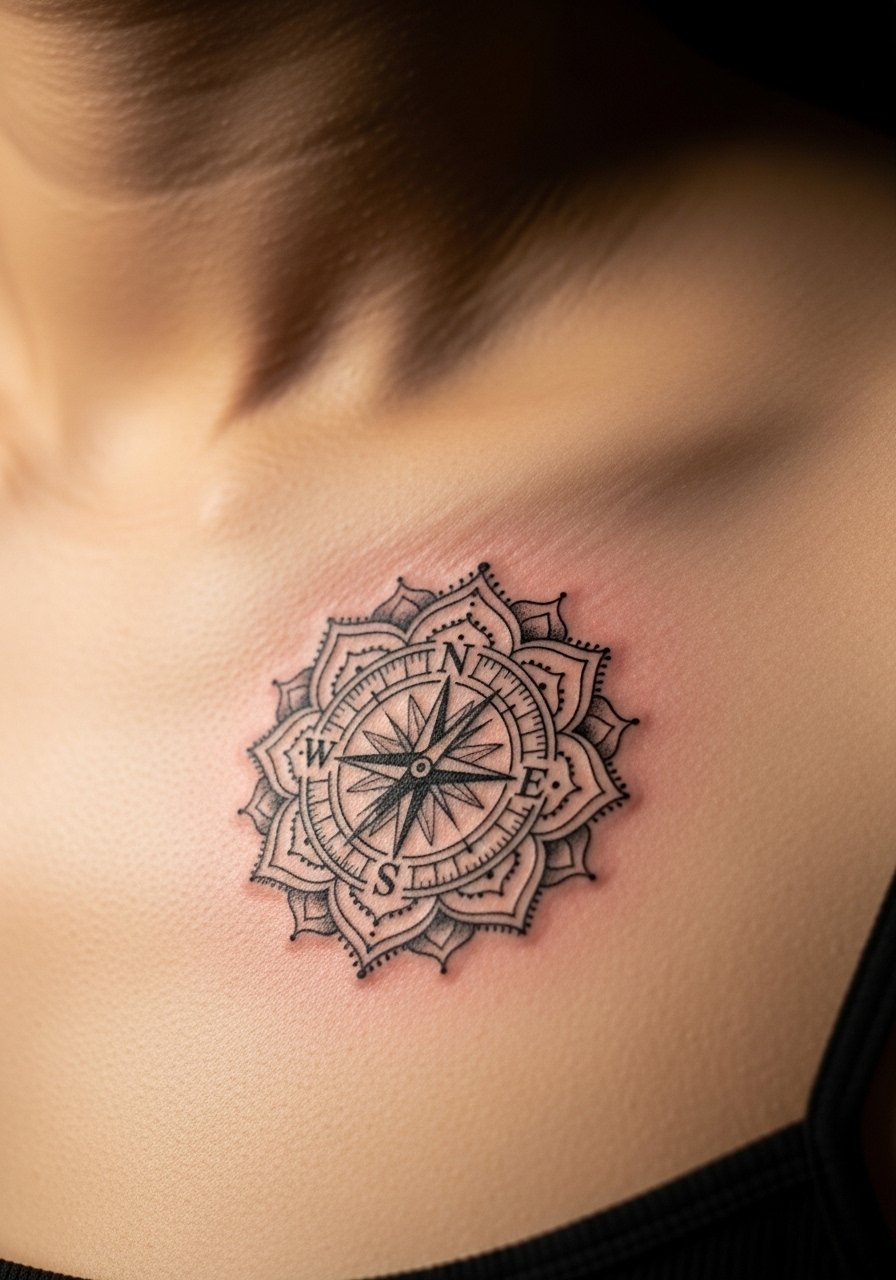
Artists split on cultural sensitivity for mandala elements. One camp treats mandalas as neutral geometric art, while another camp urges caution because of spiritual origins. If you like the mandala frame, say you respect the origin and consider a simplified pattern that nods to the form without copying sacred iconography exactly. The upper chest gives a flattering flat canvas and the session feels moderate on pain. Expect slight fading with sun exposure so plan for sunscreen after healing. Ask your artist for a version that reads at matching small scale before committing.
8. Compass with tiny wave line for maritime meaning on the ankle bone
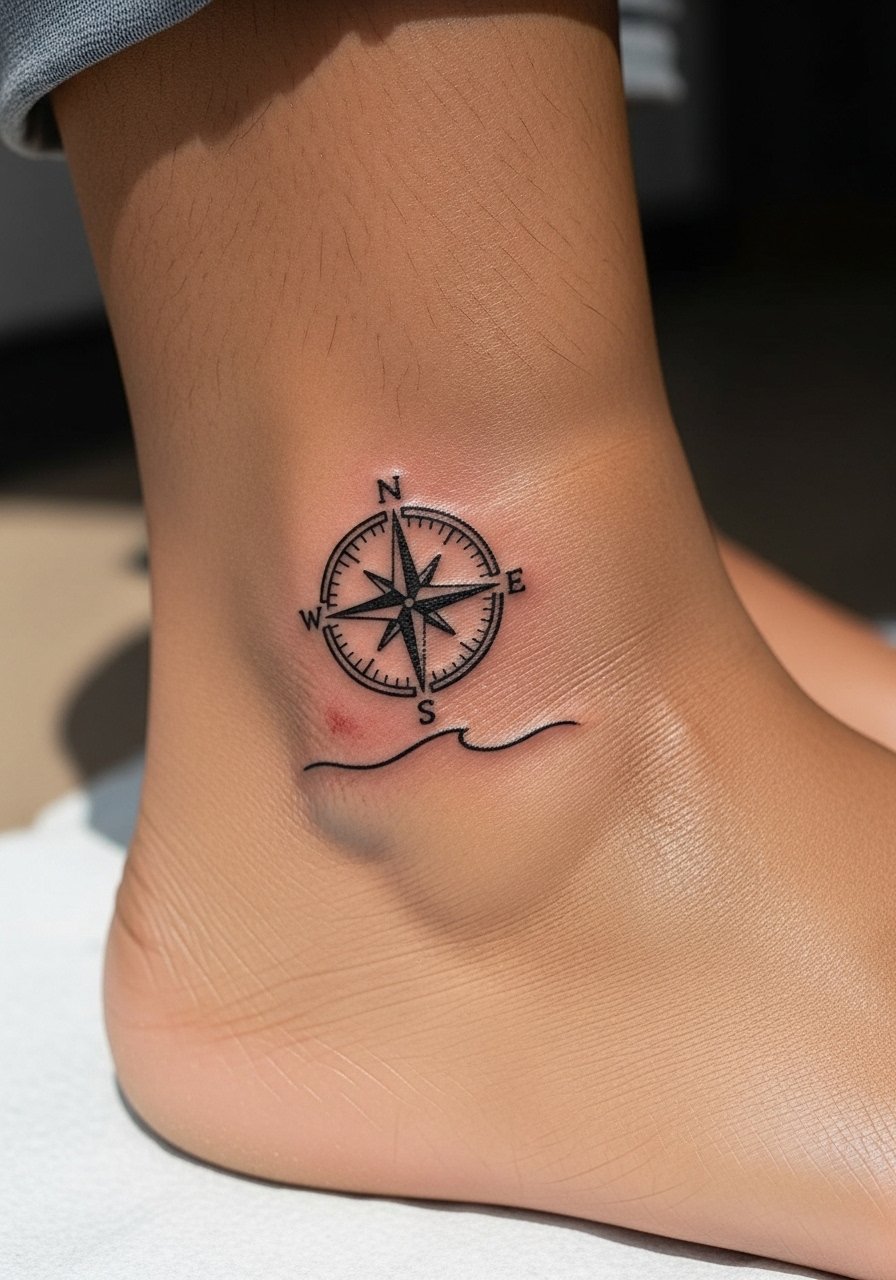
When people pick maritime details they often want the symbolism of travel and return. I have seen siblings choose this placement because it tucks under a sock and becomes a small private signal. Tell your artist to keep the wave line simple so it does not blur into the compass. The ankle bone has a sharper sensation during the session but heals cleanly if you avoid rubbing. A common mistake is asking for gray wash near the compass which can age into a smudged look. Consider touch-ups at three to five years to keep the wave crisp.
9. Tiny north-only minimalist compass on the collarbone
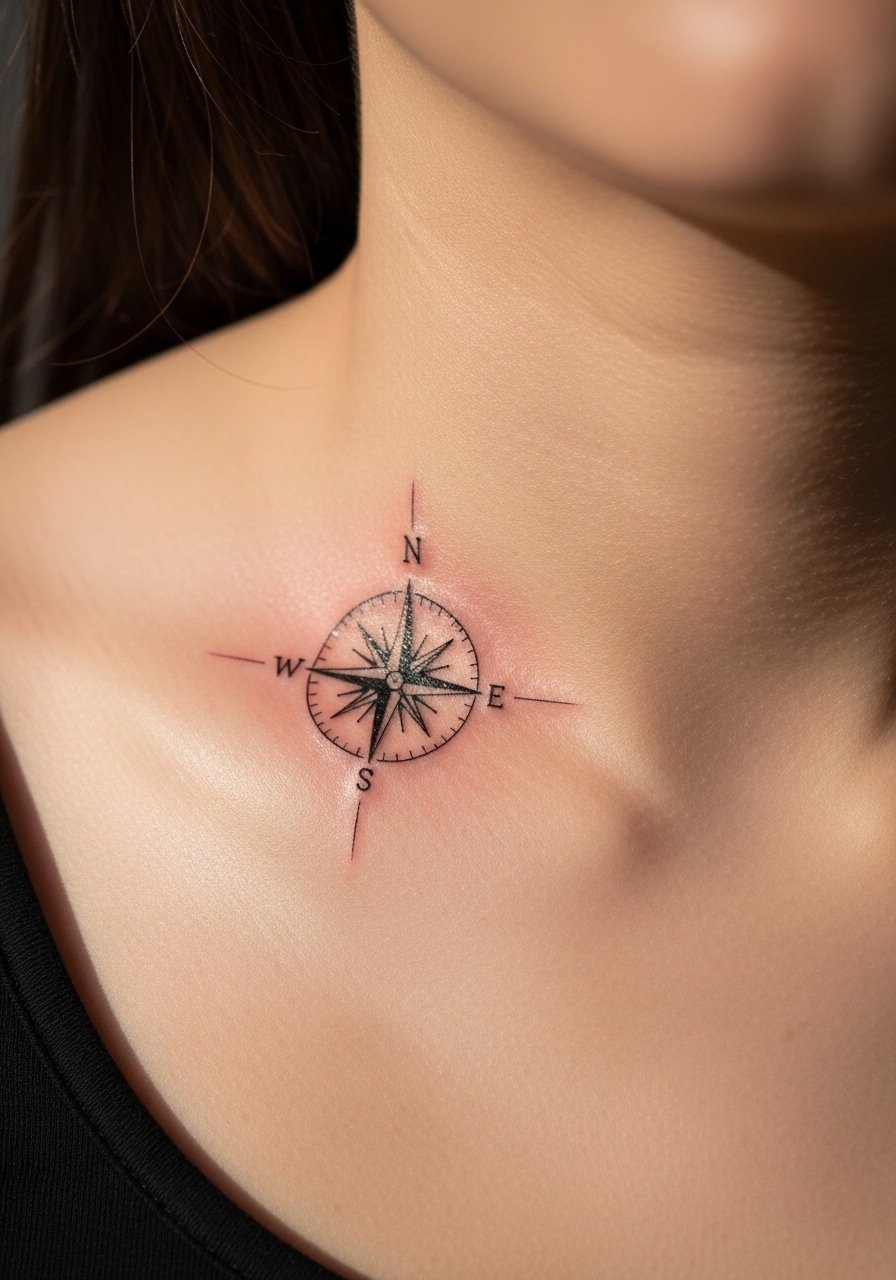
There is something about a single north point that reads personal and restrained. The collarbone sits close to clothing seams so expect slight friction while healing. For the consultation, specify that you want a single north spike with no internal circle to keep the tattoo small and resilient. Pain ranges from moderate to high, depending on proximity to bone. The main mistake is crowding this with extra symbols which forces reduced line weight. If matching with someone else, place symmetry matters so compare collarbone height in a mirror before booking.
10. Mini compass with stipple halo on the inner bicep
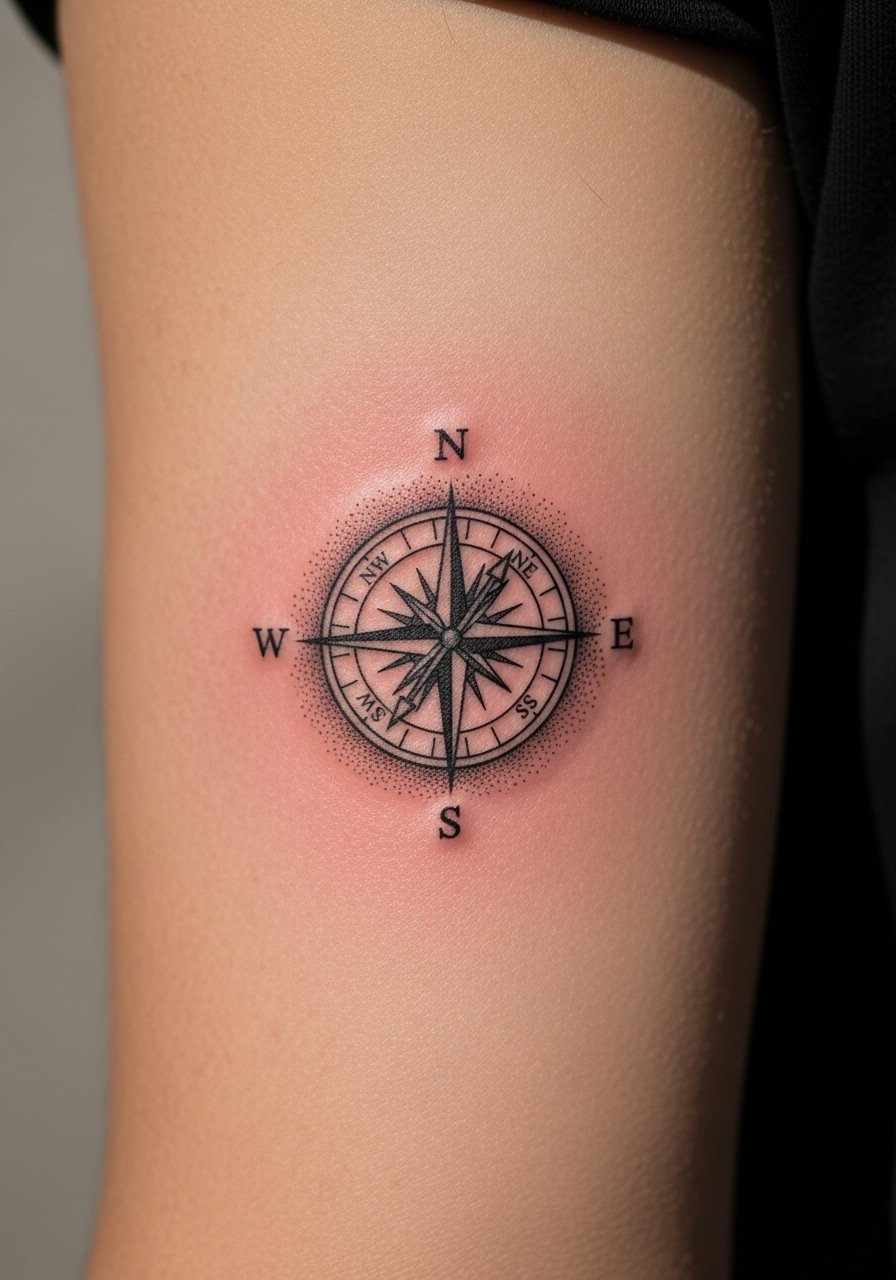
When you sit down with your artist for this one, bring photos showing stipple density you like. The inner bicep is forgiving and the stipple halo helps the tiny compass read larger without adding solid fills. Sessions feel moderate and you can usually complete this in under an hour. A real mistake is asking for a heavy shaded halo which competes with the linework and ages like a gray patch. Expect lower blowout risk here but plan touch-ups after several years to freshen the stippling and line saturation.
Tattoo Prep and Aftercare Essentials
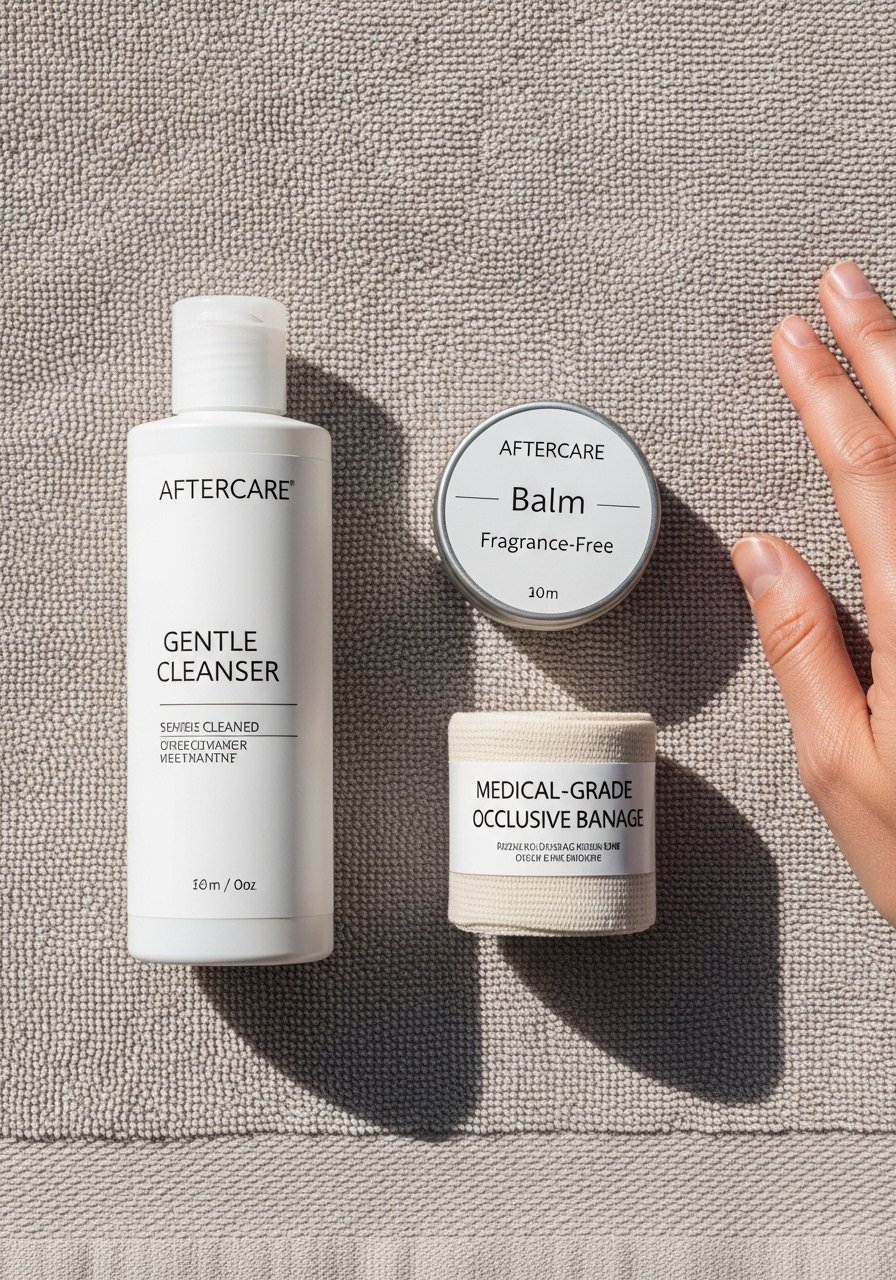
Fragrance-free gentle foaming cleanser for tattooed skin. Use this for the first five to seven days to remove odor and residue without stripping oils. It helps prevent dry, tight scabs that pull at linework.
Lightweight fragrance-free healing balm in a small tin. Apply a thin layer after cleansing for the first week to support re-epithelialization. Less is more when it comes to saturation.
Medical-grade second skin bandage, small squares. Useful for areas that rub clothing or for matching tattoos on high-friction spots during the first 48 hours.
Silicone scar sheets, travel size. For long-term maintenance on raised areas consider silicone to help flatten hypertrophic scarring after full healing.
Broad-spectrum mineral sunscreen stick, travel size. UV exposure is the fastest way to lose saturation on tiny tattoos. Keep a stick handy for exposed placements.
Fragrance-free lightweight body lotion for long-term moisturization. Use daily after the tattoo is fully healed to support skin elasticity and color retention.
Aquaphor original healing ointment, travel size. This is the one mainstream product here and it can help in the very first 24 hours if your artist recommends an occlusive. Use sparingly and only if your artist endorses it.
Every tattoo is different. Always follow your artist's specific aftercare instructions. Consult a dermatologist if you have skin concerns or unusual healing issues.
Frequently Asked Questions
Q: Will tiny compass linework blur if we get matching pieces on different skin tones?
A: Fine-line work reads differently across skin tones because contrast and saturation interact with melanin. Tell your artist the exact skin tone for both people during consultation so they size line weight appropriately. On darker skin slight bolding of main points helps keep the compass readable without overcrowding detail.
Q: How long should I expect before a touch-up for a tiny compass on the wrist or finger?
A: Expect a touch-up window between one and three years for fingers and between two and five years for wrists, depending on sun exposure and friction. Fingers age fastest because of washing and movement. Bring clear photos when you book a touch-up so the artist can match prior saturation.
Q: Do mandala-framed compasses require special cultural consideration?
A: Yes. One group treats mandala patterns as geometric inspiration. Another group cautions about direct use of sacred patterns. If you prefer respect, ask your artist for a simplified pattern that nods to the mandala rather than a direct replica.
Q: I want matching compasses as a couple. Will that limit future cover-up options if something changes?
A: Small compasses are among the easiest tiny designs to cover or incorporate into larger work later because of their simple geometry. For best future flexibility avoid dense dark fills around the compass and keep surrounding skin as negative space.
Q: Can I use the products listed above on sensitive or eczema-prone skin?
A: If you have sensitive skin, start with the fragrance-free gentle cleanser and a lightweight balm. Consider doing a patch test on unaffected skin first. If you have active eczema, talk to a dermatologist before getting ink and follow up with your artist on aftercare. The medical-grade second skin bandage link can help shield fragile areas during the first 48 hours.