
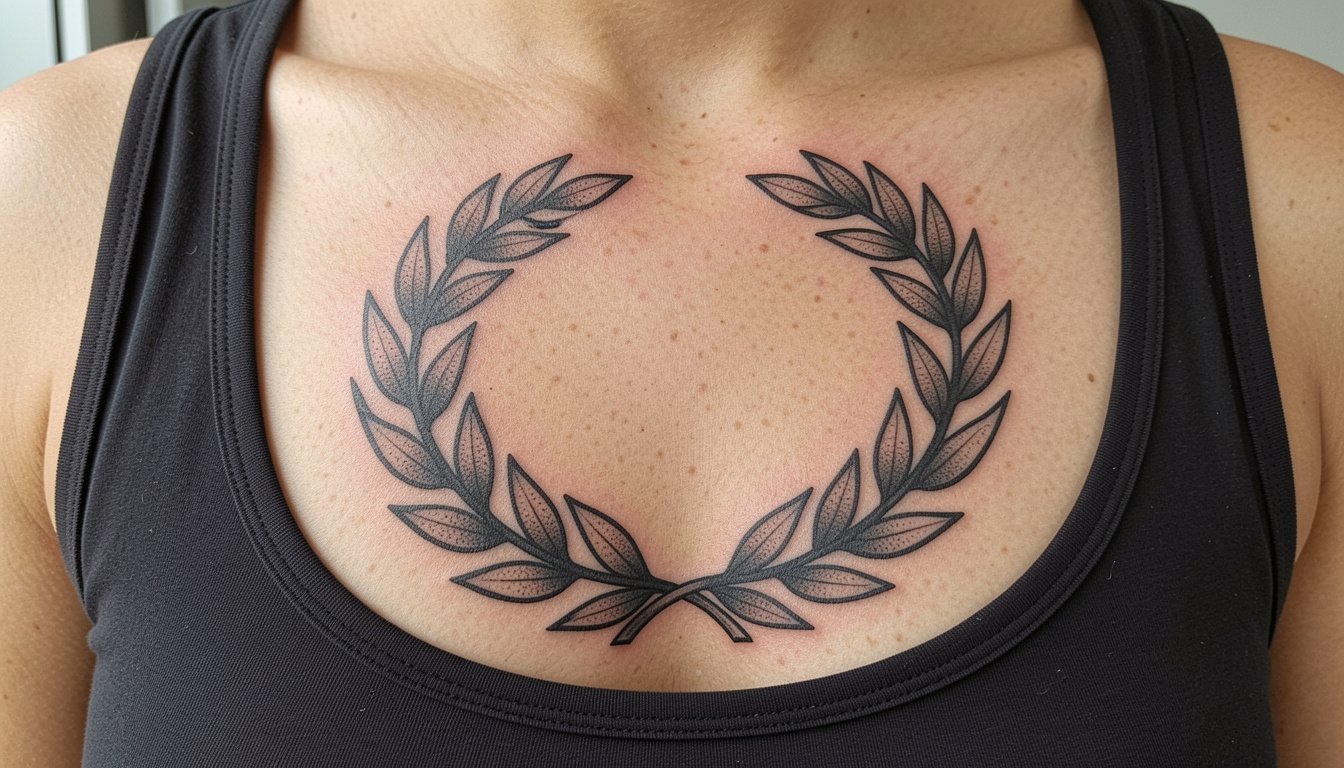
Laurel wreaths read like a quiet shorthand for victory, honor, and quiet confidence, but the small choices you make at the stencil stage decide whether those leaves still read crisp in five years. Pick dense single-needle leaves and you risk blur on soft skin. Choose slightly bolder linework and spacing, and the same wreath keeps its shape without shouting. Below are wearable takes that balance detail and longevity.
1. Minimal Single-Line Laurel on Inner Wrist

A minimalist wrist laurel reads subtle and low-profile. I recommend this when you want daily visibility without a large commitment, because wrists show detail well for a year and then start losing ultra-fine strokes. Ask for slightly heavier single-needle weight so the leaves do not disappear into the wrist creases by year three. Common mistake is requesting hairline leaves that look delicate on camera but blur with frequent washing. Session time runs short, usually under an hour, and pain on the inner wrist is mild to moderate. For showing it off, roll sleeves or pick a linen short-sleeve shirt that hits above the wrist.
2. Micro-Realism Laurel with Initials on the Inner Bicep

This compact laurel is about personal markers rather than public display, and the inner bicep gives the artist space to keep leaf spacing. Tell the artist to preview the initials at both two and three inches so you see how legibility changes. Expect the session to include occasional repositioning, and plan for a touch-up at 12 to 18 months for the initials. Blowout risk is low here if the needle depth is controlled, but tight single-needle strokes that hug each other age poorly. For the appointment, wear a loose tank top so the artist can access the arm without fabric bunching.
3. Bold Blackwork Laurel Circlet on the Nape

A dense blackwork wreath at the nape reads strongly and ages predictably because saturation resists early fading. This works for anyone who wants something that reads from behind when wearing short hair or an updo. The session feels short but firm, and the nape can sting more than the chest. Ask for clear spacing between leaf veins to avoid shading that turns muddy on healed photos. If you want a look you can hide by letting hair down, this placement is an easy choice. Pair it with a wide-neck shirt for evenings when you want the wreath in view.
4. Fine Line Laurel Half-Crown for the Scalp Edge

Fine-line laurel crowns split artists into two camps. One camp argues that the scalp and hairline area is forgiving because the short hair masks softening lines within a year. The other camp says single-needle detail here will blur unless the line weight is bumped slightly and spacing increased from the reference. If you prefer the subtler camp, expect to book a touch-up sooner. Pain is variable at the hairline but often tolerable with a short session length. Consider showing the wreath by wearing short cuts, or keep it discreet under longer hair.
5. Classical Roman Laurel Around the Forearm Band
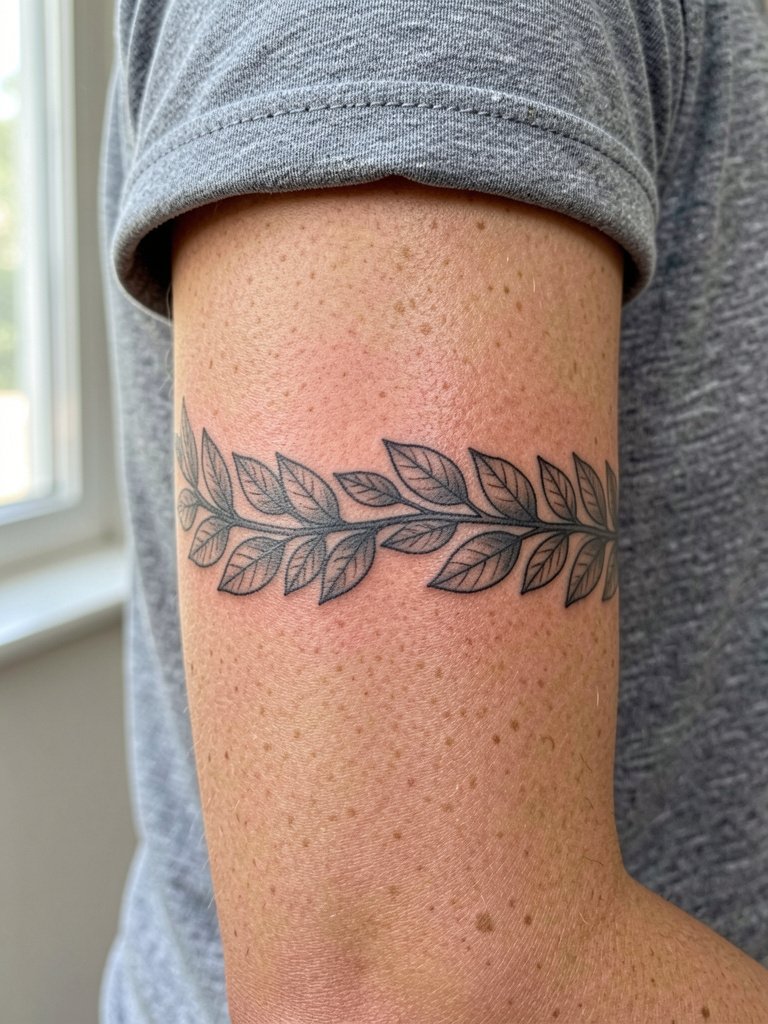
A forearm laurel band gives a classical feel and reads well from across a room. Recommend this as an alternative to script around the arm because the repeating leaf pattern resists distortion better than fine cursive. During consultation bring images that show band width and leaf scale at the exact circumference of your arm. A common mistake is asking for a too-narrow band which becomes indistinct when the arm flexes. Expect moderate pain and a session of one to two hours. Wear a short-sleeve rolled linen shirt to show the band cleanly after it heals.
6. Neo-Traditional Laurel with Red Accent on the Shoulder Cap

A neo-traditional laurel around a badge or crest gives personality while keeping the wreath readable. I recommend saturated red accents to add focal points that age differently than black. Discuss pigment placement with the artist so the red highlights remain separate from the black outlines. Shoulder sessions are usually comfortable with short breaks, and the deltoid holds saturation well so touch-ups are less frequent. For post-heal show-off looks, a loose casual blazer with sleeves pushed up frames this placement.
Session Day Picks
The chest and shoulder pieces above need different clothing and small kit items for the session and the first week of healing.
-
Thermal stencil transfer paper kit. Lets you preview lineweight on skin before the needle touches the surface, which helps for the fine wreaths in ideas 1 through 4.
-
Topical numbing cream. Applied as your artist recommends reduces discomfort for rib and scapula sessions without dulling the whole area.
-
Thin protective film roll for tattoos. Keeps small wrist and hand wreaths clean during the first few days of high-friction activity.
-
Fragrance free gentle body wash. Gentle cleansers avoid stripping fresh ink, which matters for delicate laurel shading.
-
Aquaphor Healing Ointment. A thin initial layer helps lock in moisture for delicate single-needle work without clogging pores.
7. Laurel Wreath Ring on the Finger

Finger wreaths are intimate and visible, but fingers have the highest wear and fading. I usually recommend a slightly bolder outline for leaf edges and anticipate a touch-up at six to twelve months. The session is quick and can sting more than a forearm piece. A common mistake is expecting ring-level crispness without planning for frequent retouching. If you want to protect the piece while it heals, avoid heavy hand work for the first two weeks. Finger tattoos pair well with simple metal bands that do not sit over the ink, so consider thinner rings that complement the laurel.
8. Stipple-Shaded Laurel Behind the Ear

Behind-ear laurel pieces are a tiny, stylish option for people who want an easy hide. The dot-work stippling gives texture that ages more gently than thin continuous lines. Discuss exact placement at the mastoid area so hair growth does not obscure details. Pain is relatively low because of the soft pad behind the ear, but the skin there is thin so the artist must manage depth carefully. For session comfort, wear hair up in a natural style rather than holding it yourself.
9. Laurel Wreath Half-Sleeve with Geometric Fill

Half-sleeves let a laurel wreath become a repeating motif within a larger visual story. For sleeves, priority is consistent lineweight so leaves match when the arm curves. Ask for reference photos showing the exact scale on an arm your size. A common mistake is asking for too much tiny detail that disappears when wrapped around the bicep. Expect a multi-session commitment and occasional touch-ups to maintain saturation in shaded fill areas. For staged reveals, cuff a short-sleeve linen shirt so the sleeve ends right at the start of the design.
10. Laurel Wreath Over a Small Skull on the Calf

A calf laurel pairs well with emblematic motifs like skulls, giving more visual weight than the wrist or finger. Calf skin holds saturation and is forgiving on detail, so you can include small textures like cracks in the skull. Discuss how the wreath sits when you are standing and when you sit, because the calf curves change perspective. The session tends to be low to moderate pain with decent healing. For showing it off in warm weather, try shorts or rolled jeans and pair with a casual short-sleeve shirt.
11. Wreath Encircling a Compass on the Sternum

Sternum wreaths are striking but sensitive to movement and stretch. The sternum area takes well to symmetrical designs, but plan for longer sessions and breaks. Discuss spacing carefully because the center point affects how the wreath balances across the chest. Many people underestimate pain and session time here, so booking a shorter appointment with a break works better than one marathon sitting. Because of sweat and friction, healing requires patience. For layered outfits after healing, pair with a wide V-neck top when you want the wreath visible.
12. Badge-Style Laurel with Initials on the Upper Back

Laurel badge pieces on the upper back allow for symmetry and scale. One school of thought favors very fine internal details for elegance. Another school says larger flat fills are more durable over time. The first camp argues the badge looks more refined when the initials and small elements are crisp. The second camp argues that modestly increased leaf spacing and bolder fields age more predictably and need fewer touch-ups. If you want the refined look, plan on a scheduled touch-up and clear healed-photo references. Upper-back sessions are moderate in pain and usually require a partner to check symmetry at home.
13. Laurel Wreath Tattoo as a Collarbone Accent

Collarbone laurel accents are ideal for visibility without a large piece. Because the collarbone moves with breathing and shoulder motion, avoid ultra-fine internal detail that will smudge. Ask for leaf spacing that accounts for natural skin movement. Pain tends to be higher along the bone, so pace the session with short breaks. For styling, an open-collar shirt frames the wreath cleanly, try pairing with an open-collar shirt.
14. Celtic-Inspired Interlaced Laurel on the Ribcage

Ribcage designs can look spectacular when scaled correctly, but they are one of the placements people debate. One camp says the skin there stretches and flexes, causing fine linework to blur in a couple of years. The other camp says with slightly wider spacing and controlled needle depth, even detailed knotwork settles fine. If you lean toward detail, expect a longer session and a higher chance of a touch-up. Pain is higher on the ribs, so plan for breaks and a numbing option if you prefer.
15. Minimal Geometric Laurel on the Ankle
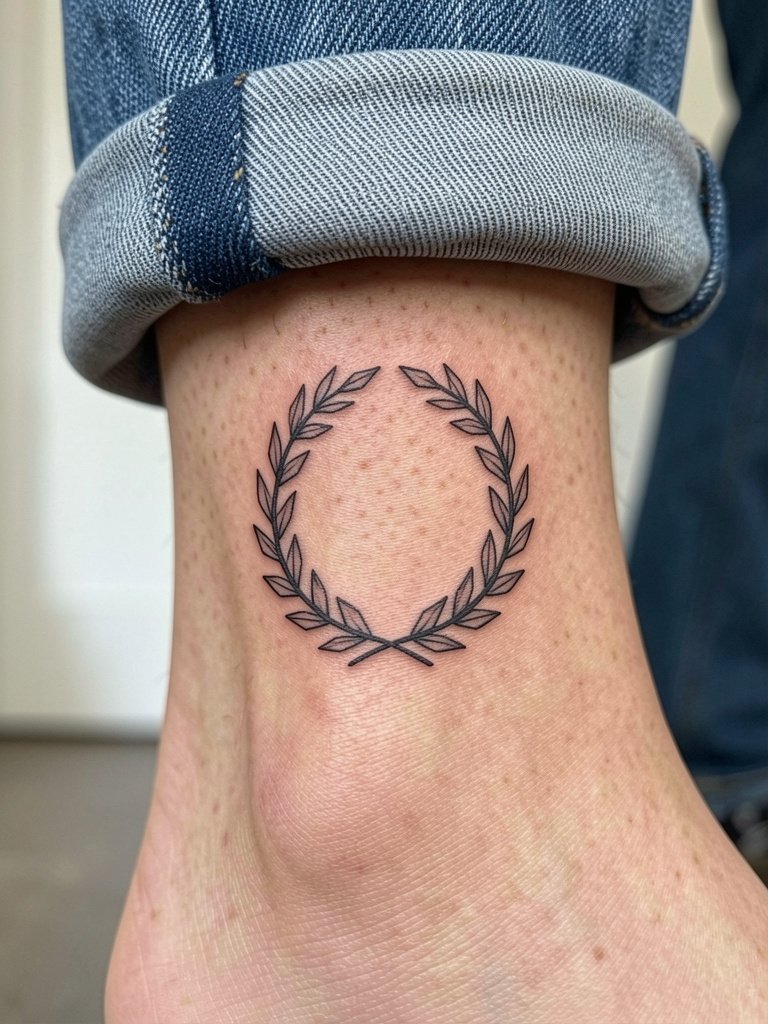
Ankle wreaths are discreet and easy to hide. Friction from socks and shoes makes leaf edges fade faster, so ask the artist to keep leaf edges slightly bolder than the reference. The session time is short, and pain is low to moderate depending on your tolerance. A common mistake is choosing tiny, detailed leaves that vanish after heavy walking. For showing the piece off, a pair of rolled pants or low-cut sneakers works well, try a jeans roll-up style.
16. Laurel Wreath Crest on the Chest Plate

A chest crest gives room for elaborate laurels that hold up because the larger leaf scale translates to long-term legibility. When booking, discuss how the crest sits with chest movement so the wreath looks centered when you stand. A mistake is compressing too much detail into a small chest piece. Expect moderate pain and multiple passes for shading. For pre-session comfort, wear a fitted scoop-neck tank that offers easy access and keeps the area clean.
17. Tiny Laurel Accent on the Side of the Hand

Hands are high-wear zones and small laurel accents here will likely need periodic touch-ups. Choose slightly bolder outlines so the leaves remain defined through washing and use. The session is short but can sting more than forearm work. A common mistake is expecting the initial darkness to be permanent without scheduling follow-up. For the appointment, avoid heavy hand lotion that might interfere with stencil transfer and keep the hand dry for the first 48 hours after ink.
18. Laurel Wreath Framing a Compass Rose on the Thigh

Thigh placements give artists space for larger wreaths and internal details. The skin here is forgiving and holds shading well, which makes it ideal for dot-work and subtle gradients. Discuss how the design interacts with the curve when you sit so the compass remains centered. Sessions can run longer but are usually comfortable. For a reveal, shorts or a mid-thigh hem work best, try a modest athletic short.
19. Laurel Wreath Over a Scripted Motto on the Rib Side

Combining script and laurel at the ribs looks intimate and classical, but the ribs can blur fine cursive faster than other zones. Plan for slightly wider letter spacing and a bolder script baseline so the quote remains legible over time. The session is one of the more painful ones, so plan breaks and consider numbing. A realistic touch-up timeline is 12 to 24 months. For after-heal styling, a cropped top with a fitted cropped tee shows the script and wreath without strain.
20. Geometric Laurel Wreath as a Chest Band

Chest band laurels read strong because the geometric repeat reduces reliance on micro detail. This design suits anyone who wants an architectural look that ages cleanly. Discuss band width relative to your chest width so the geometry does not look cramped. Sessions are moderate and usually finished in one sitting if the band is not too wide. Pair this with a scoop-neck tank when you want to reveal the band.
21. Laurel Wreath Around a Pocket Watch on the Forearm
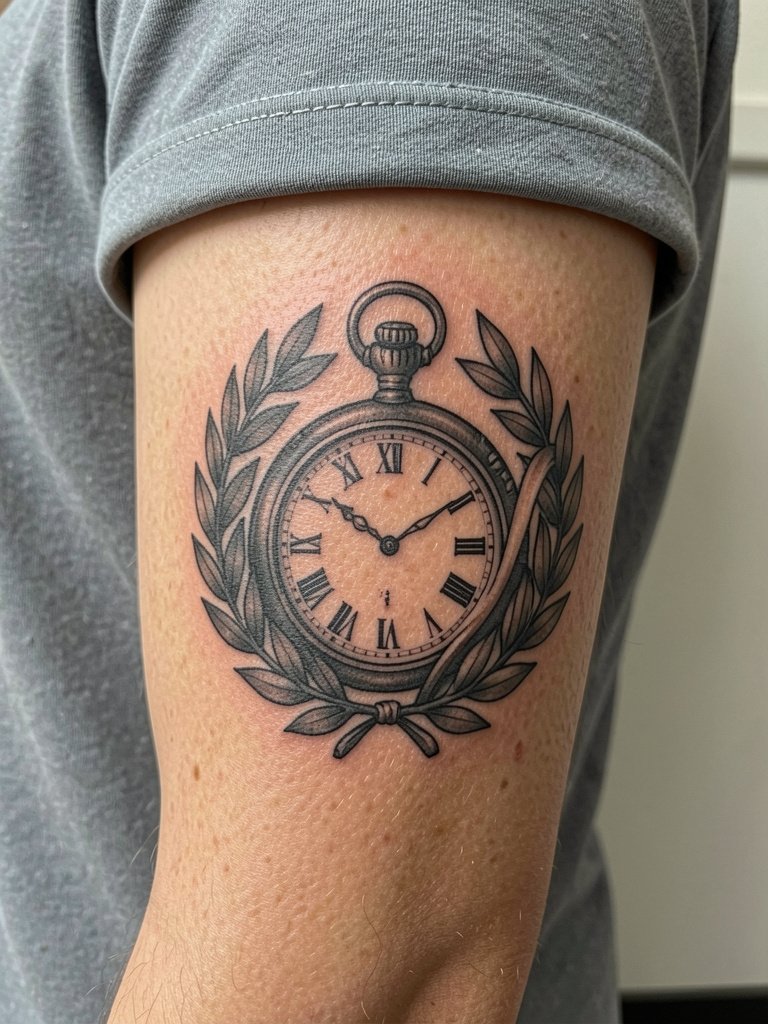
Combining a pocket watch with a laurel adds narrative and gives the wreath structure to sit against. For readable numerals, ask the artist to place the watch face at a scale that keeps numerals legible after healing. Forearm skin holds detail well, and touch-ups are typically minor. The session usually takes a couple of hours depending on shading. For an easy reveal, roll up sleeves or wear a short-sleeve linen shirt.
22. Small Laurel Wreath Over the Collar of a Jacket

A tiny laurel that peeks above a jacket collar is a stylish nod without being overt. Placement must be precise so it centers when the jacket sits closed. Small scale requires slightly bolder veins for longevity. The session is short and tolerable. For showcasing, pair with a blazer that has a modest open collar so the wreath shows at the neckline, try a casual blazer.
23. Laurel Wreath with Mountain Silhouette on the Shoulder Blade

Shoulder-blade laurels allow pictorial elements like mountains and keep the wreath readable when scaled to the blade. Ask for reference shots of similar placements so the artist can map the design to your scapula shape. Sessions are moderate and often done in a single sitting with shading. For casual coverage, wear a cropped tank to reveal the piece without stretching the skin.
24. Single-Leaf Laurel Accent on the Collarbone Edge
A single-leaf laurel is a minimalist take that still reads symbolic. Its small size keeps session time low but requires slightly bolder veins to remain visible over time. Bone-adjacent collarbone pain applies, so expect a sharp sensation during needle passes. For outfits, an open-collar shirt frames a single-leaf accent elegantly, pair with an open-collar shirt.
25. Laurel Wreath as a Ring Tattoo Around the Neck

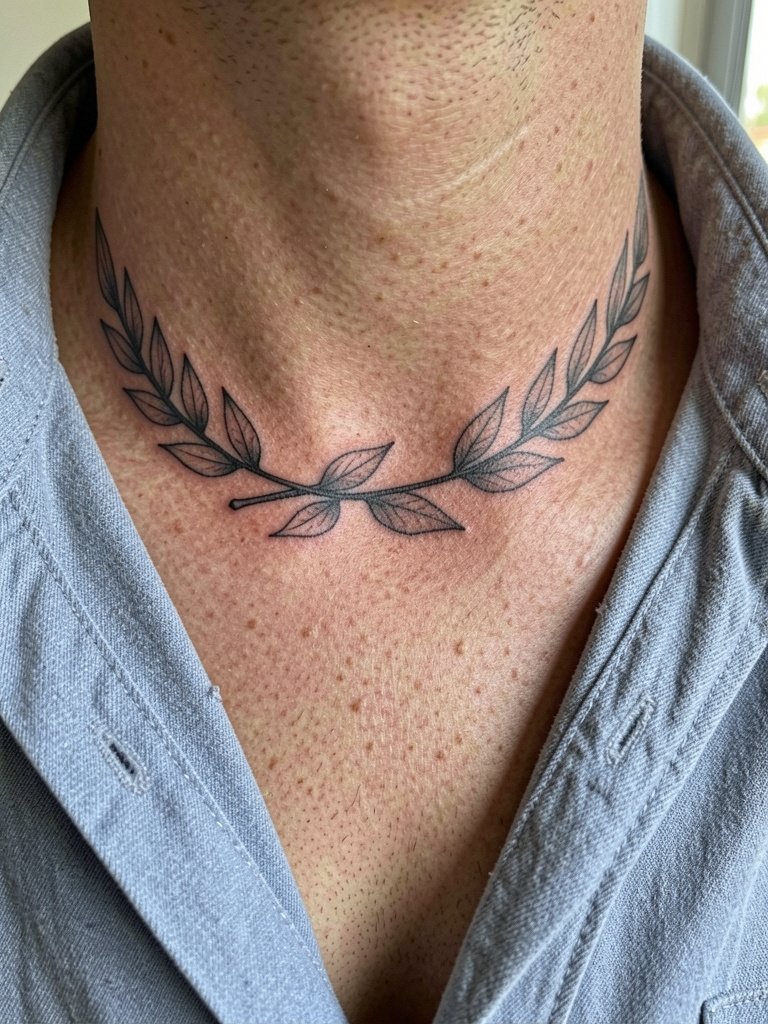
Neck ring laurels are bold and visible, and they demand respect from a technical standpoint because neck skin moves and flexes. The ring must be mapped to your anatomical contours so the wreath sits even when you turn your head. Expect higher pain and plan for possible touch-ups. Because of visibility, consider social and work implications before booking. For staged reveals, pair with a wide-neck top.
26. Laurel Wreath Framing a Small Anchor on the Wrist

Wrist wreaths around small symbols like anchors balance presence with subtlety. Make sure the anchor scale is large enough to preserve detail after healing and ask for modestly heavier lines on the anchor to avoid early softening. Sessions are short and pain is mild to moderate. For showing it off, bracelets that sit below the tattoo work better than those that cover it. Try a minimalist band or cuff that does not press on the ink.
27. Full Chest Laurel Garland with Lettering

A full chest garland with lettering reads like a personal crest and requires careful symmetry. Bring exact text and font examples so the artist can scale the letters to match the wreath. Sessions are longer and often split across days, and touch-ups refine the central lettering if it shifts during healing. A common mistake is underestimating how the chest expands with breath, which can distort tight scripts. For fittings, a fitted scoop-neck tank leaves the area accessible and frames the garland well.
Frequently Asked Questions
Q: How do laurel wreaths age on different placements and what should I expect for touch-ups?
A: Laurel wreaths on areas with low friction like the upper back, calf, and chest generally keep linework and saturation longer. High-friction zones such as fingers, wrists, and ankles fade faster and may need touch-ups within 6 to 18 months. Plan to budget for at least one touch-up in the first two years for small or single-needle pieces, and expect less frequent touch-ups for larger blackwork wreaths.
Q: Are single-needle laurel wreaths a bad idea for pale leaves and fine detail?
A: Single-needle laurel pieces look delicate but their fine strokes are the first to soften on soft or high-motion skin. If you value longevity, ask for slightly heavier lineweight and more spacing between leaves. Request healed photos from your artist of similar placements so you can judge long-term legibility.
Q: Where can I find healed examples and portfolios without naming specific artists?
A: Search platform filters and niche hashtags to find healed shots, for example look for #LaurelWreathTattoo, #HealedInk, and keywords like "chest laurel healed" on image platforms. Use location filters on TikTok or Instagram to see nearby shops and browse community forums for healed galleries in different skin tones. Reddit tattoo threads are useful for real-world before and after photos in varied lighting.
Q: What should I wear to the appointment based on placement to make the session easier?
A: Wear clothing that gives direct access to the placement without pulling fabric during the session. For inner arm or shoulder work, a loose tank top is ideal. For chest or sternum work, a fitted sports bra or scoop-neck tank keeps things accessible and clean. Try a loose tank top for upper-arm sessions and a scoop-neck tank for chest work.
Q: Are there cultural considerations for laurel designs I should know about?
A: Laurels have roots in classical symbolism and varied cultural meanings tied to victory and honor. If your wreath incorporates cultural patterns or symbols, mention the origin and intent during consultation so the design respects that context. Many artists welcome reference images and a brief note on how you want the symbolism represented.