
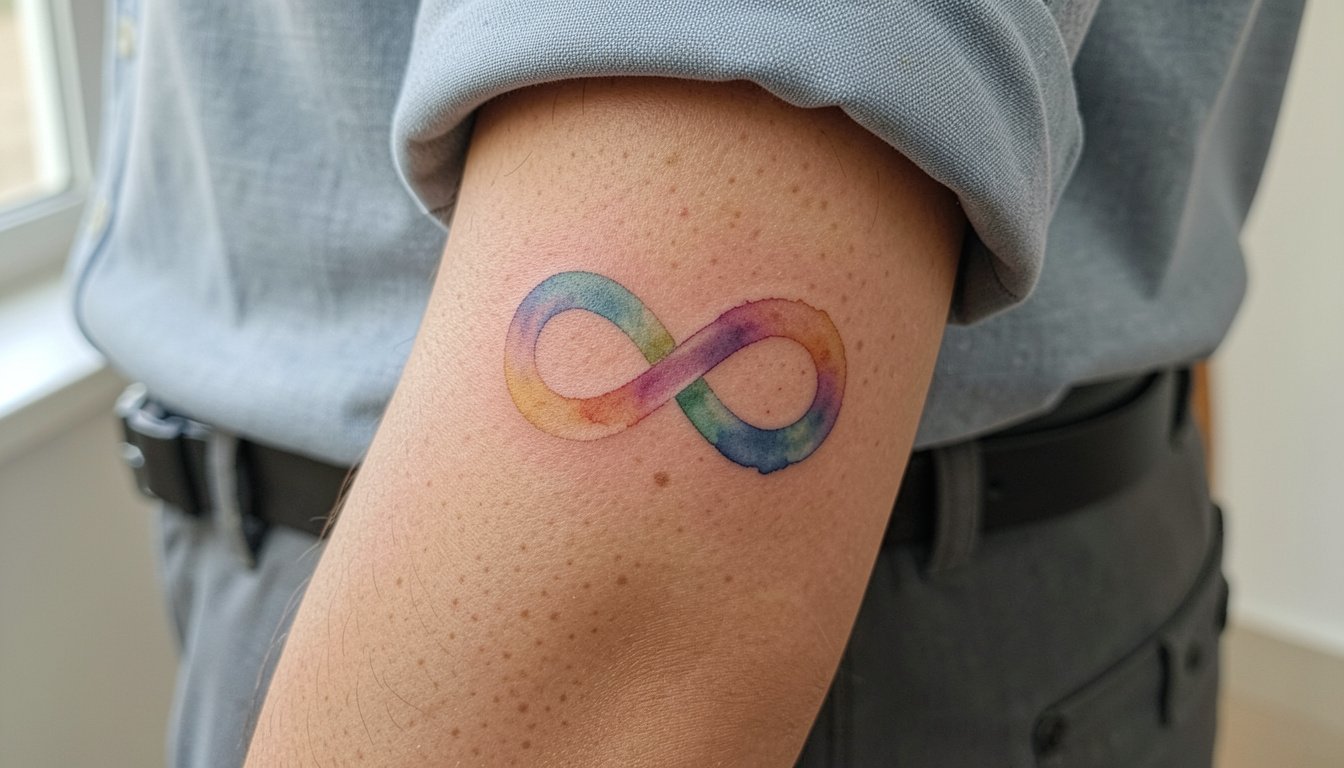
Trends on social feeds make the infinity symbol feel like easy ink, but the small, looping form hides tricky aging and placement choices. A tiny wrist piece can blur faster than you expect when the line weight is too thin, while a bold forearm variant can keep its shape for years. These ideas focus on design decisions that help each infinity read clean at six months, two years, and beyond.
1. Minimal Fine-Line Infinity on the Inner Wrist
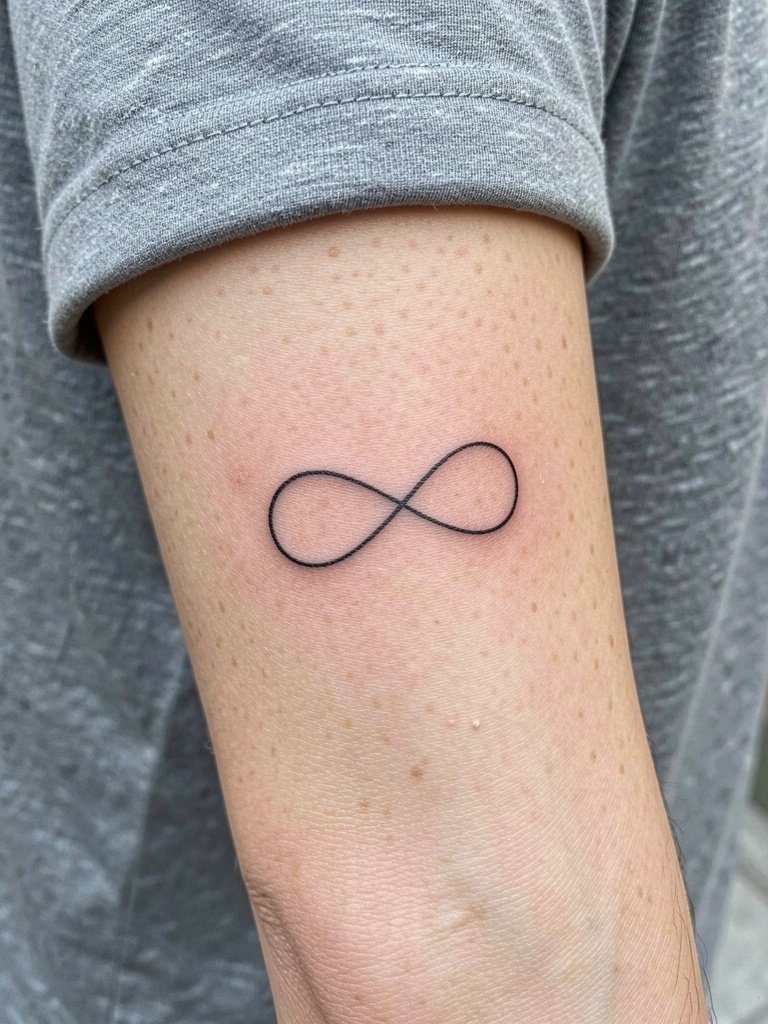
Keep this one tiny and honest. The inner wrist eats ultra-fine detail over time, so increase the single-needle line weight slightly from your Pinterest reference. Bring two reference photos at different scales so the artist can show how the loop reads at one inch versus two inches. Expect a short session and a mild pressure sensation where bone meets tendon. A common mistake is squeezing names into the loop and then losing legibility by year two. For showing it off, try a thin chain bracelet on the opposite wrist so the tattoo stays visible without crowding.
2. Script-Integrated Infinity on the Inner Forearm
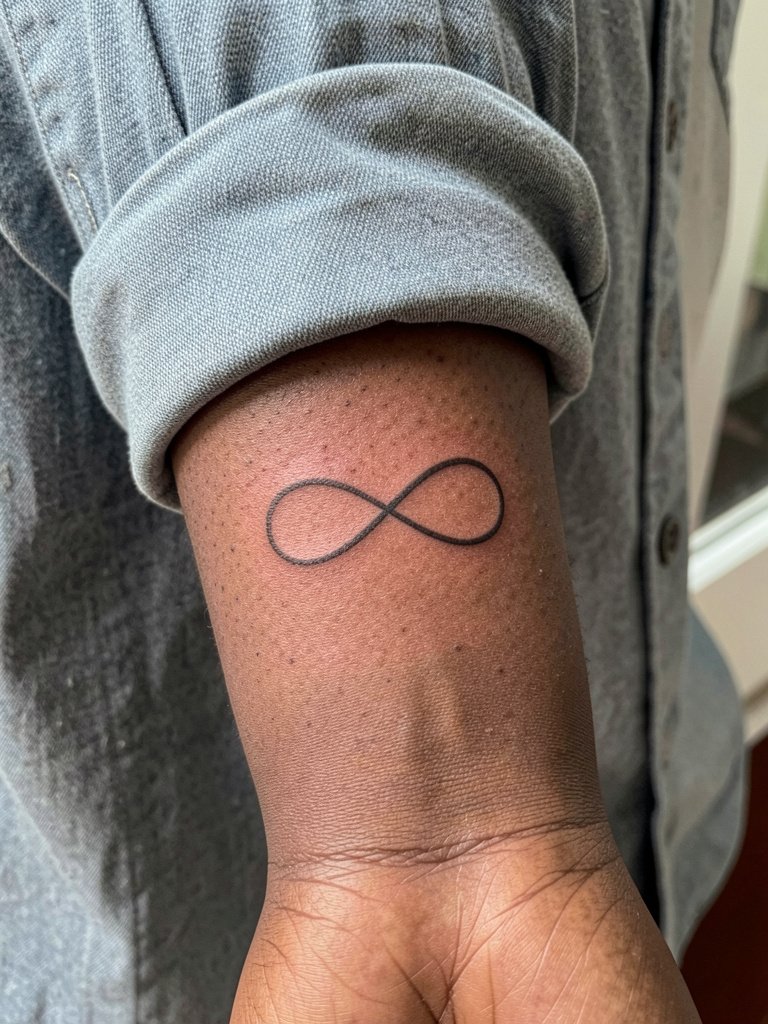
This version turns one loop into a name or short word without crowding the composition. Ask for slightly wider spacing where the script crosses the loop so letters do not merge as the piece settles. Healed photos help decide letter size and spacing. Inner forearm sensation is mild to moderate and the area takes ink well, so touch-up needs are less frequent than the wrist. A common error is using a delicate script that reads as a smudge after a year. Wear a rolled-cuff linen shirt to frame the design in warm-weather looks.
3. Infinity with Tiny Hearts for a Family Tie on the Collarbone

Collarbone pieces need negative space and contrast to stay readable. Keep the hearts proportional to the loops so they act as punctuation rather than clutter. Expect a sharp sting when the needle crosses the clavicle edge; pain is brief. The most common mistake is packing multiple names and hearts into a small area. For evenings out, delicate jewelry pairs well, and a delicate necklace frames the space without overwhelming it.
4. Feathered Infinity on the Ankle for Flow and Movement
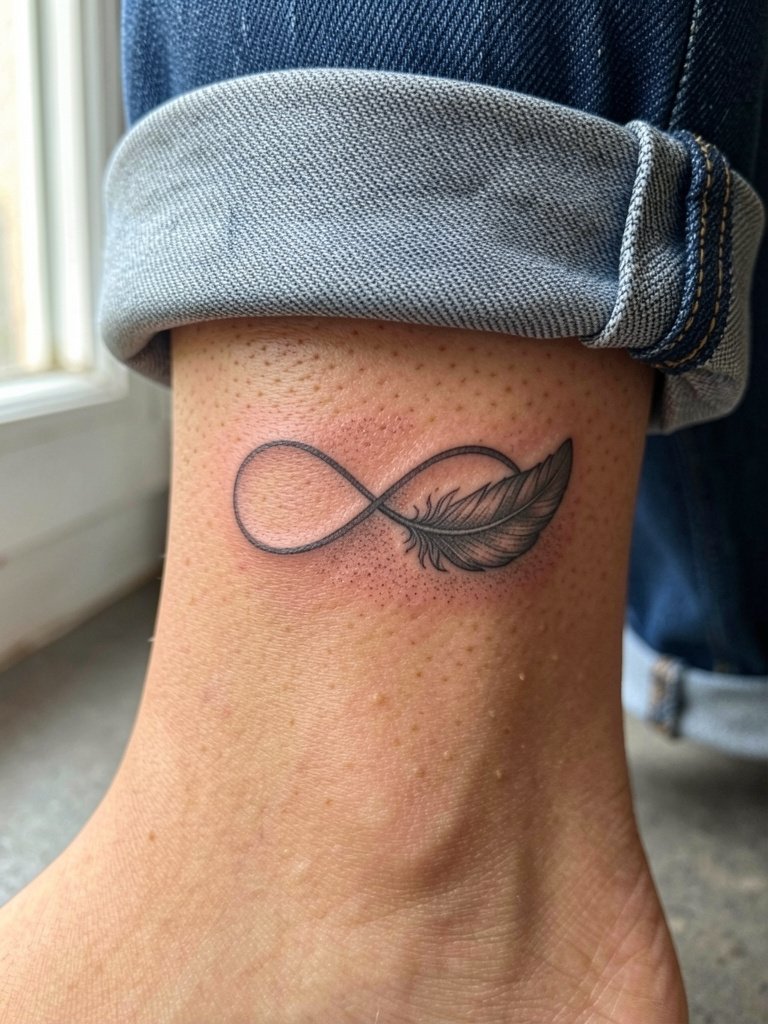
Ankle skin sees a lot of friction from socks and shoes, so silhouette and contrast matter more than micro-detail. Choose a feather that reads as a block of tone rather than tiny wisps that disappear. The ankle session is brief but can feel sensitive near bone. A common aging issue is blurred feather tips; prevent that by asking for slightly bolder tapering in the feather barbs. Show it off with low-profile sneakers or strappy sandals and a ankle strap sandal that keeps the area visible.
5. Watercolor Infinity with Subtle Color Wash on the Forearm

Watercolor accents work best as background washes rather than full fills inside the loop. The aging reality is that washed color fades faster than saturation, so use color as a mood layer and keep the black line slightly heavier for longevity. For this style request clear healed examples from the artist to see how color held on similar skin tones. Expect a longer session than a plain linework wrist piece and occasional touch-up after a few years. Pair with a cropped tee to let the forearm color read in casual outfits.
6. 3D Illusion Infinity Across the Outer Forearm
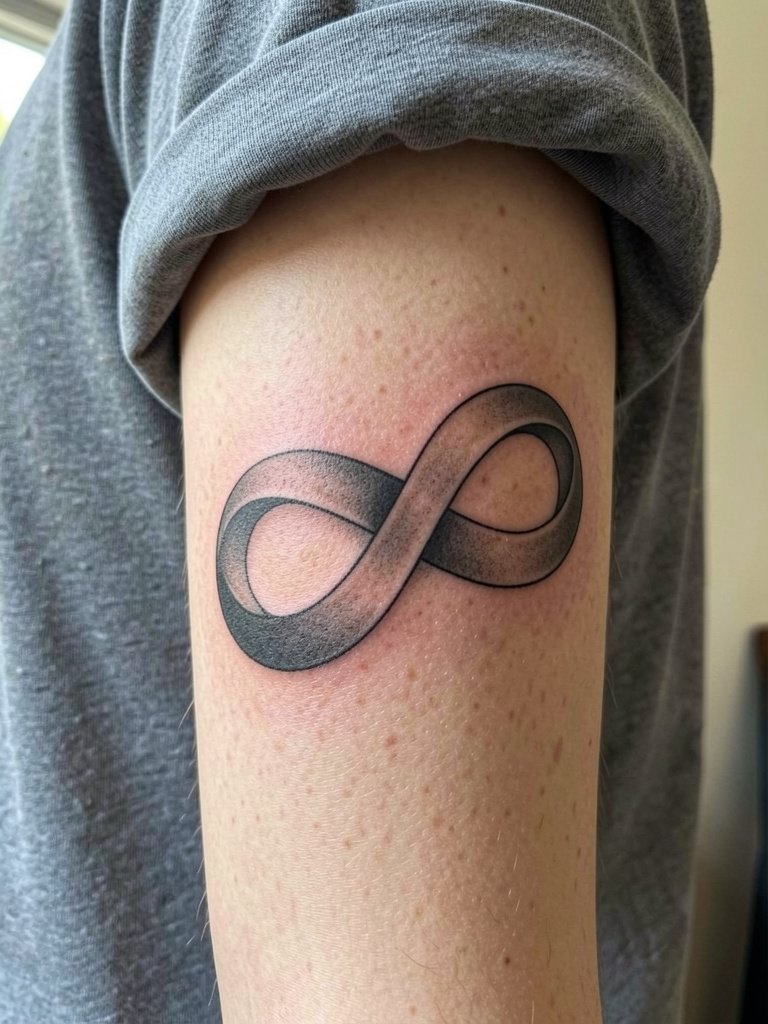
Illusion work needs crisp contrast and confident shading to maintain the three-dimensional look as it ages. The key instruction for the consultation is to request photos of three-year healed 3D work on similar placements. Outer forearm sessions feel moderate and typically finish in one visit. A common mistake is asking for tiny 3D details in a space too small for shading to resolve. Style it with a denim jacket or cropped sleeve so the illusion reads in motion.
Session Day Picks
The wrist, ankle, and forearm pieces above have different access needs, so a few items make the session and the first week smoother.
- Stencil transfer paper kit. Lets you preview the exact line weight and loop placement on skin before the needle starts, especially useful for wrist and collarbone layouts.
- Topical numbing cream. Apply 30 to 45 minutes before a sensitive ankle or sternum session to ease the initial sting without affecting shading.
- Thin protective film roll. Keeps wrist and finger tattoos shielded during the busiest first days while you wash and type.
- Fragrance-free body wash. Gentle cleansing during showers avoids irritating fine-line loops.
- Aquaphor healing ointment. A thin layer for days one to three helps maintain moisture for crisp linework without suffocating needle channels.
7. Infinity with Tiny Butterfly Accent on the Shoulder
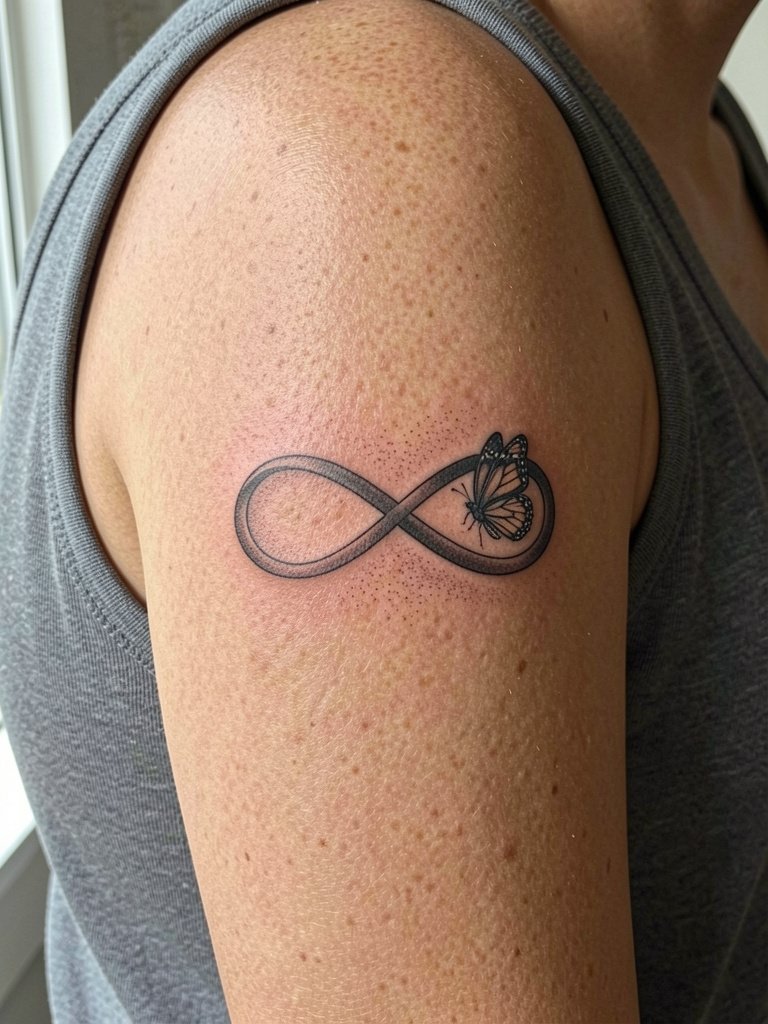
Shoulder placements tolerate slightly more detail than wrists, so the butterfly can include subtle stipple and wing veins that age well. Ask for healed images of the artist's stipple shading at two years so you know how dot work holds. The session is comfortable for most people compared with bony zones. A mistake is asking for ultra-fine wing veins that blur. For casual shows, tank tops and sleeveless tanks let the shoulder art be visible while staying unobtrusive.
8. Bold Blackwork Infinity for a Masculine Edge on the Outer Forearm
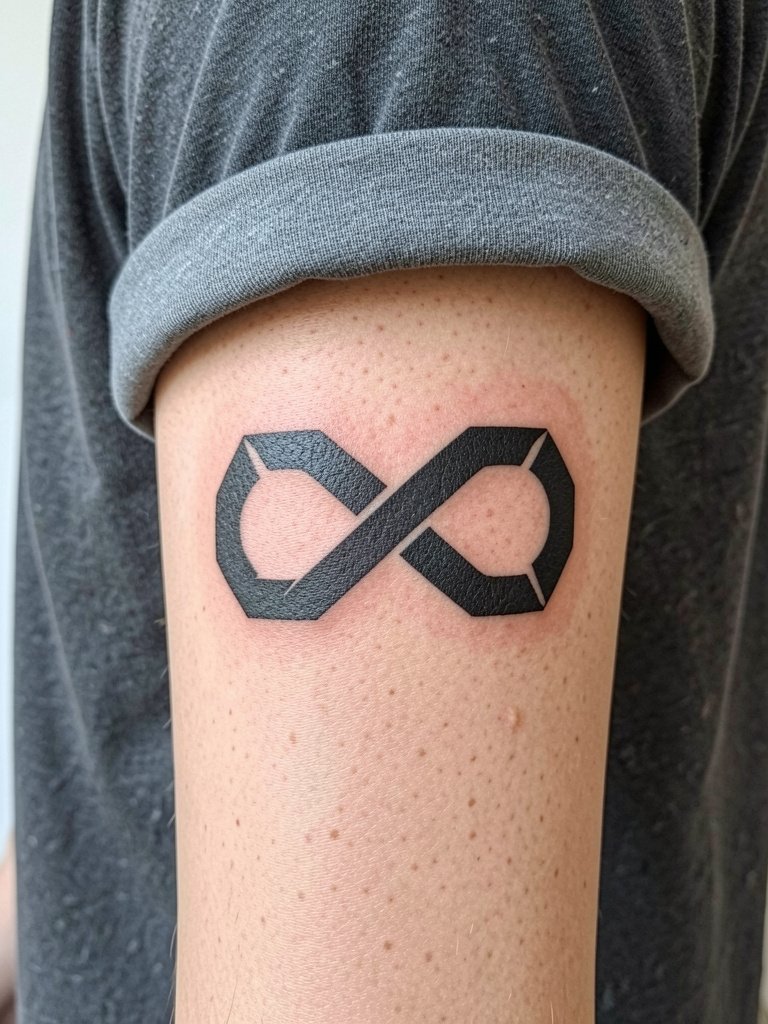
If longevity is your goal, heavier line weight outperforms filigree in small symbols. One camp argues that bold blackwork is more durable and ages into a readable mark. The other camp prefers fine single-needle detail for initial delicacy, accepting more frequent touch-ups. For this design request specify the exact line thickness you want and view healed shots of bold lines at three to five years. The outer forearm session is straightforward and tolerable. Pair with a loose fit tee so the piece reads against simple fabrics.
9. Semi-Colon and Infinity Combination on the Inner Wrist

Merging two symbolic marks is a good way to add personal meaning without heavy composition. Make the semi-colon slightly larger than you think you need so the punctuation retains shape as the wrist softens with age. The most common mistake is shrinking the semi-colon until it becomes a dot. The wrist will feel more sensitive near bone, so short breaks can help during the session. For everyday wear keep bracelets off the tattooed wrist for a few weeks to avoid rubbing.
10. Infinity Wrapped Around a Small Feather on the Ribcage
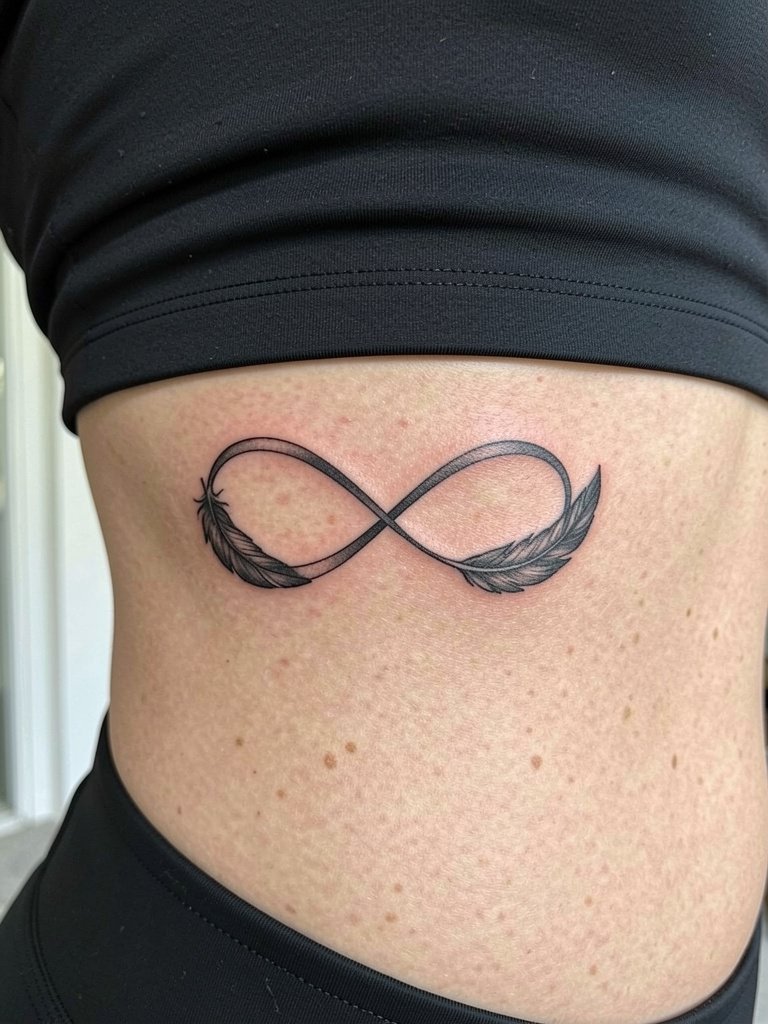
Ribcage skin stretches more with movement and weight shifts, so fine line here must use slightly wider spacing. One group advises avoiding fine line on ribs because skin stretch blurs detail. The other group says that with proper depth and spacing it can settle clean. If you choose ribs ask the artist for healed rib photos. Expect higher pain levels and a session broken into shorter passes. For the appointment wear a fitted sports bra or bandeau so the area is accessible without exposing too much.
11. Infinity as a Cover-Up for Small Old Tattoos on the Forearm
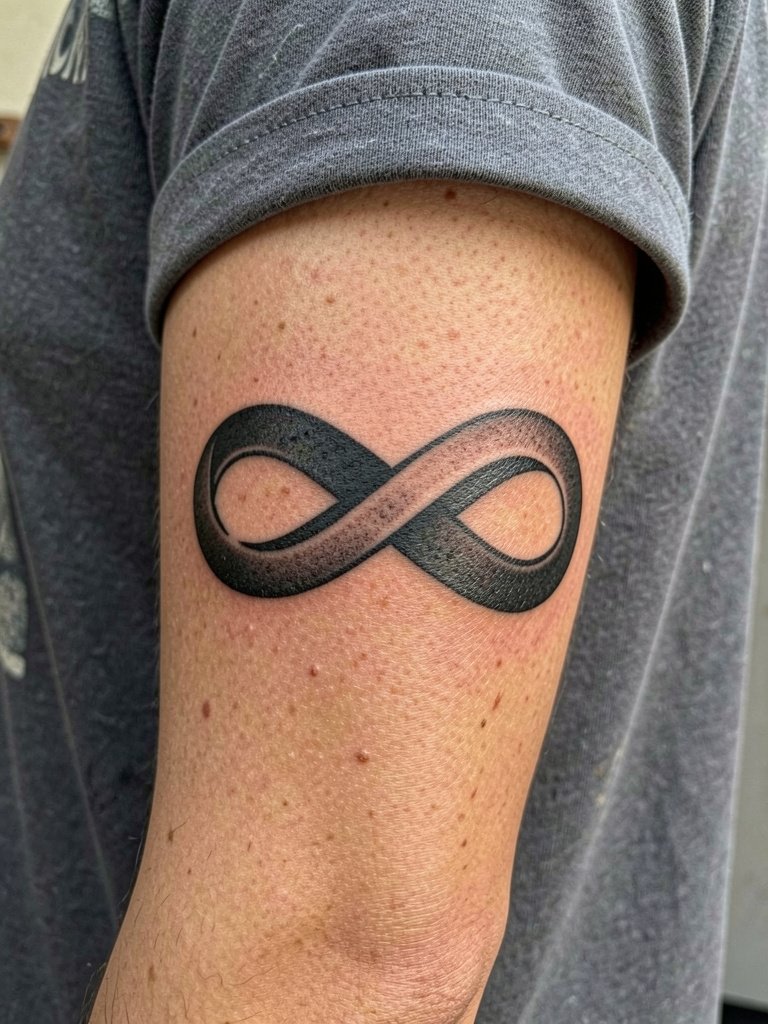
Cover-ups demand a plan from the start. The effective approach is to use bold areas of black and smart negative space so the old lines do not peek through. Bring a picture of the old tattoo so the artist can design overlap zones. Forearm cover-ups usually need more session time and sometimes multiple visits depending on previous saturation. A mistake is asking for a tiny cover-up over dense black; bigger, bolder shapes solve more problems. Wear a cropped jacket or short sleeve that exposes the area without fuss during the session.
12. Infinity with Pet Name Script on the Inner Forearm

Pet memorials work well when the script follows the loop rather than being cramped inside it. Specify the exact spelling and capitalization up front so the stencil is correct. Inner forearm offers good visibility and lower touch-up rates versus wrist pieces. A typical mistake is picking a decorative script that loses clarity in small sizes. For casual outfits, rolled-cuff shirts and simple stacking rings highlight the script; try a rolled sleeve shirt on cooler days.
13. Infinity with Geometric Dot Work on the Upper Arm
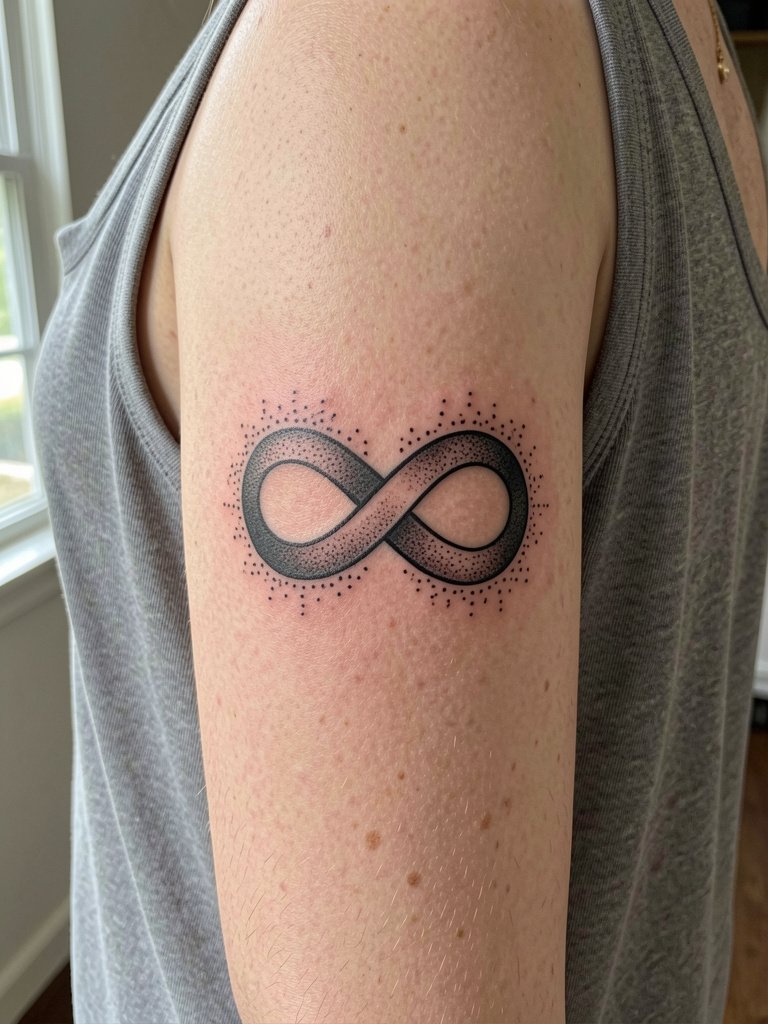
Dot work holds well on flesh because the stipple creates tonal mass without relying on single continuous lines. Ask the artist to show a healed three-year photo of stipple on similar skin to see density retention. Outer upper arm is low on pain and high on session comfort. A common mistake is asking for dot work too close to the loop edge where the stipple reads muddy. For a casual look wear a button front tank that frames the upper arm.
14. Split Infinity with Two Dates on the Collarbone
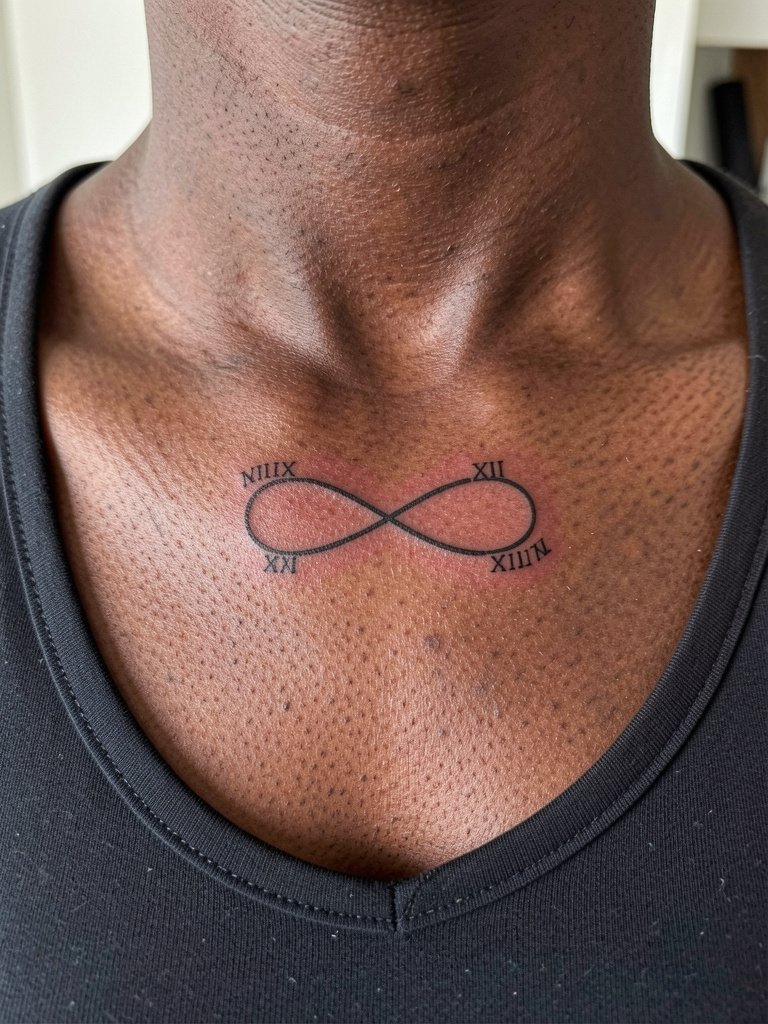
Dates act as anchors and need slightly larger numerals than decorative script so they remain legible with time. Discuss exact numeral styling and spacing so the numbers do not compete with the loop. Collarbone sessions can be tingly around bone areas, so short breaks may be helpful. The typical error is shrinking the numerals until they become dots. A delicate necklace complements the placement, so consider a wide neck top for outfits that highlight the piece.
15. Infinity with Tiny Stars in a Constellation on the Wrist
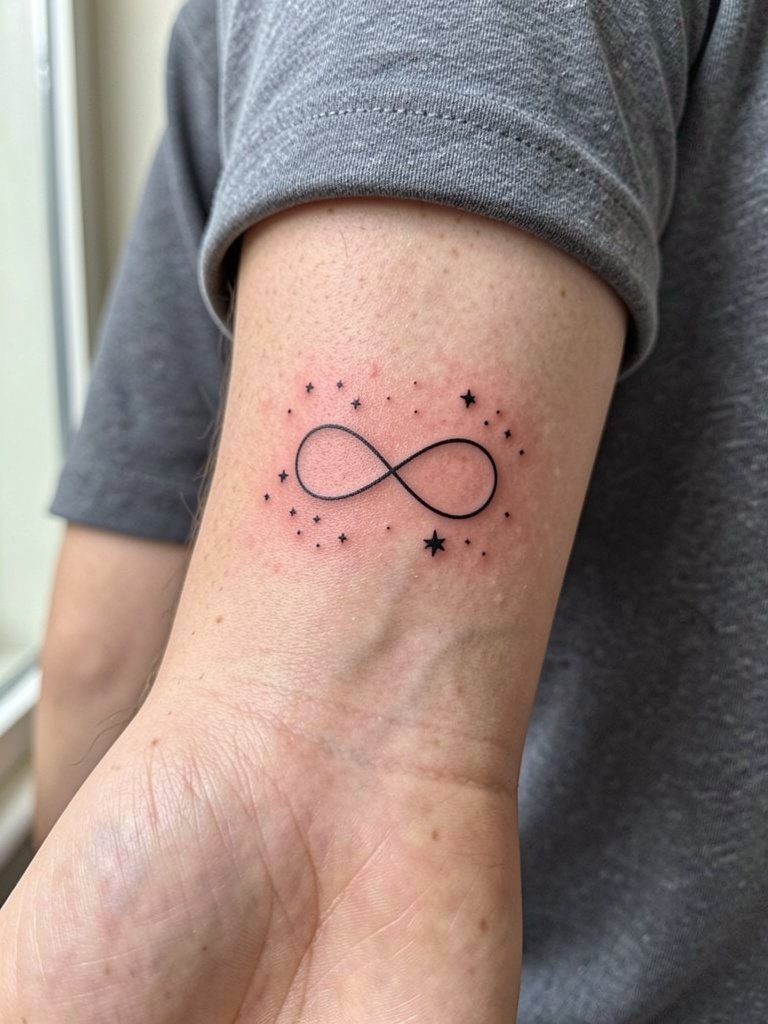
Tiny star clusters need deliberate spacing so single dots do not become a gray blur. Make the largest star bold enough to remain a visual anchor over time. Wrist sensitivity is moderate and the session is brief. Common mistakes include overpacking star dots around the loop. For styling choose short sleeves or minimalist watches and try a minimalist watch on the opposite wrist to balance the look.
16. Infinity Intertwined with a Small Rose on the Thigh
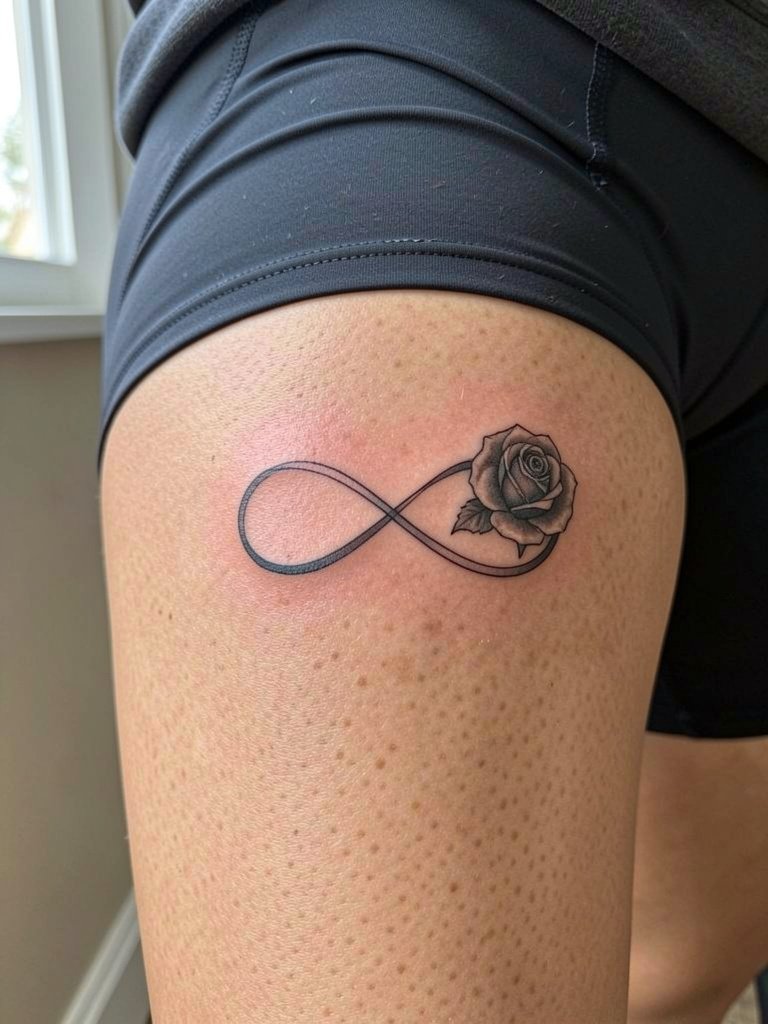
Thigh skin is forgiving and supports moderate detail without high blowout risk. If you want realism in the rose, request healed examples of shading on similar skin tones. Sessions are comfortable and usually faster than ribs. A mistake is squeezing too many small petals into a compact loop. For showing the piece, fitted shorts or skirts keep the design visible and you might try modest athletic shorts in summer.
17. Infinity with a Tiny Anchor for Travel or Stability on the Ankle
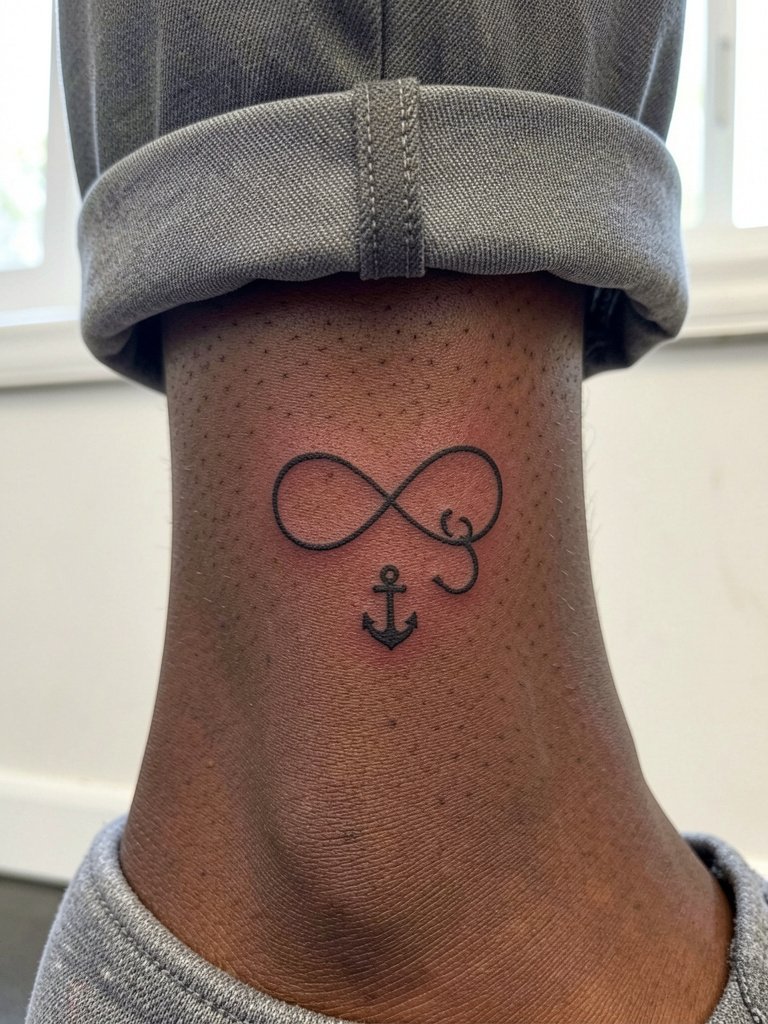
Small symbols like anchors need a touch bolder rendering on the ankle so the tiny silhouette stays crisp. The ankle feels sharper during the session because of thin skin over bone, so plan for short bursts and hydrate well beforehand. People often ask for minute icon detail that fades; scale up the anchor slightly. Low-profile footwear and cropped jeans keep the area visible and clean, try a no show socks pack if sneakers are your go-to.
18. Infinity Formed from Two Interlocking Finger Lines
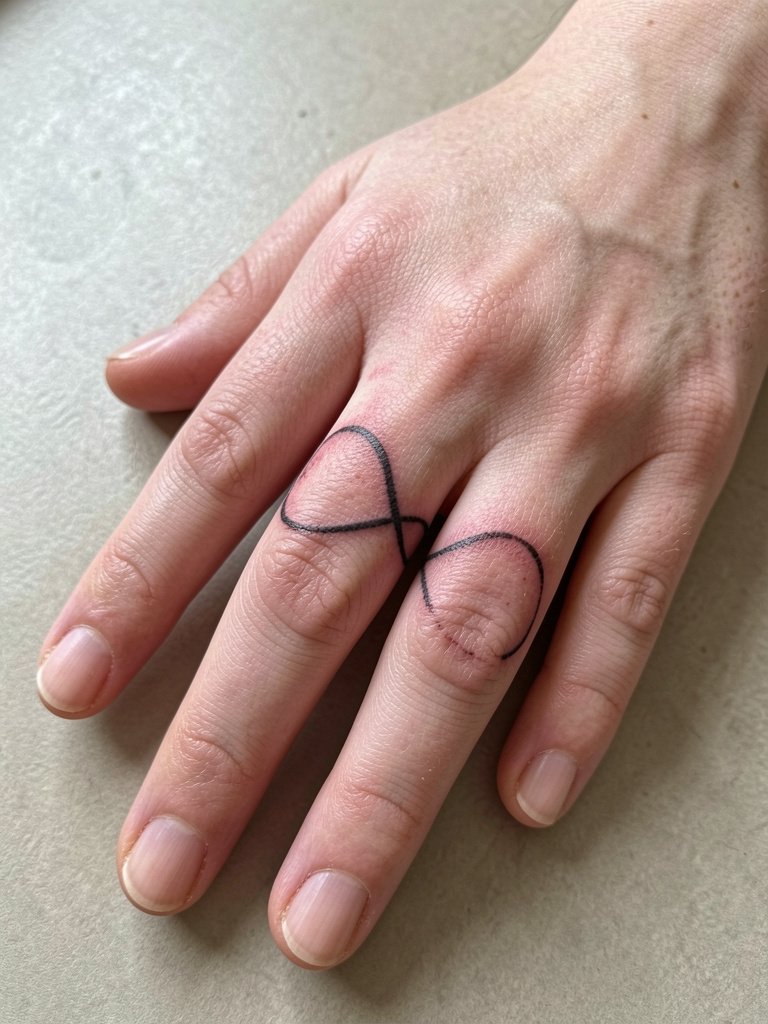
Finger work is high-maintenance. The skin there regenerates rapidly, so expect fading and more touch-ups. Design for thicker strokes across the web space rather than hairline loops. The session has a sharp sensation because of proximity to bone and tendon. A mistake is assuming finger tattoos are as permanent-looking as forearm work. Keep hand soaps gentle and brief to protect early healing.
19. Infinity with a Tiny Butterfly Trail on the Calf

Calf placements are forgiving for motion-based designs. The infinity can be the anchor and the butterflies create movement that reads well from a distance. Sessions are low on pain and heal reliably. A common misstep is making each butterfly too small to hold detail. For warm-weather visibility, pair with skirts and strappy sandals and consider strappy sandals.
20. Infinity Framed with Tiny Dots and Lines on the Back of the Neck
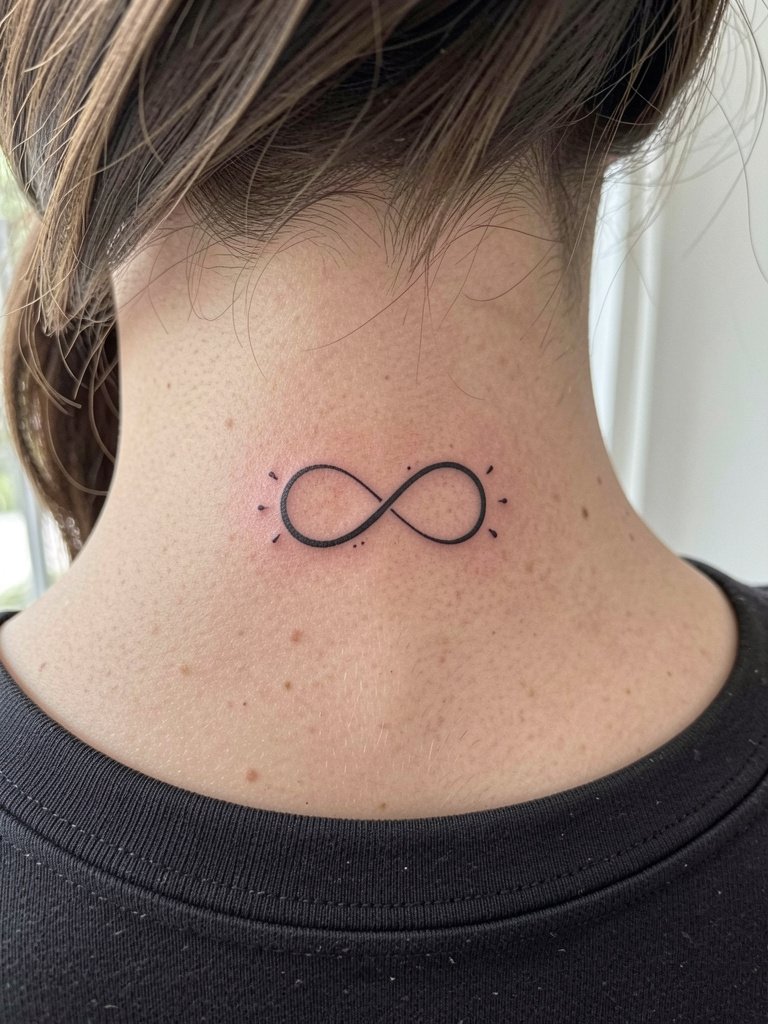
Nape tattoos need clear stencils because symmetry matters when hair grows back. The back of neck feels moderate in pain. Ask to see healed nape work so you know how dot accents age with neck movement. Mistakes include tiny, overly intricate framing that fades quickly. For style, wide-neck tops and updos show the piece, and a wide-neck top makes it part of your outfit.
21. Infinity with Tiny Leaves for a Botanical Variant on the Wrist
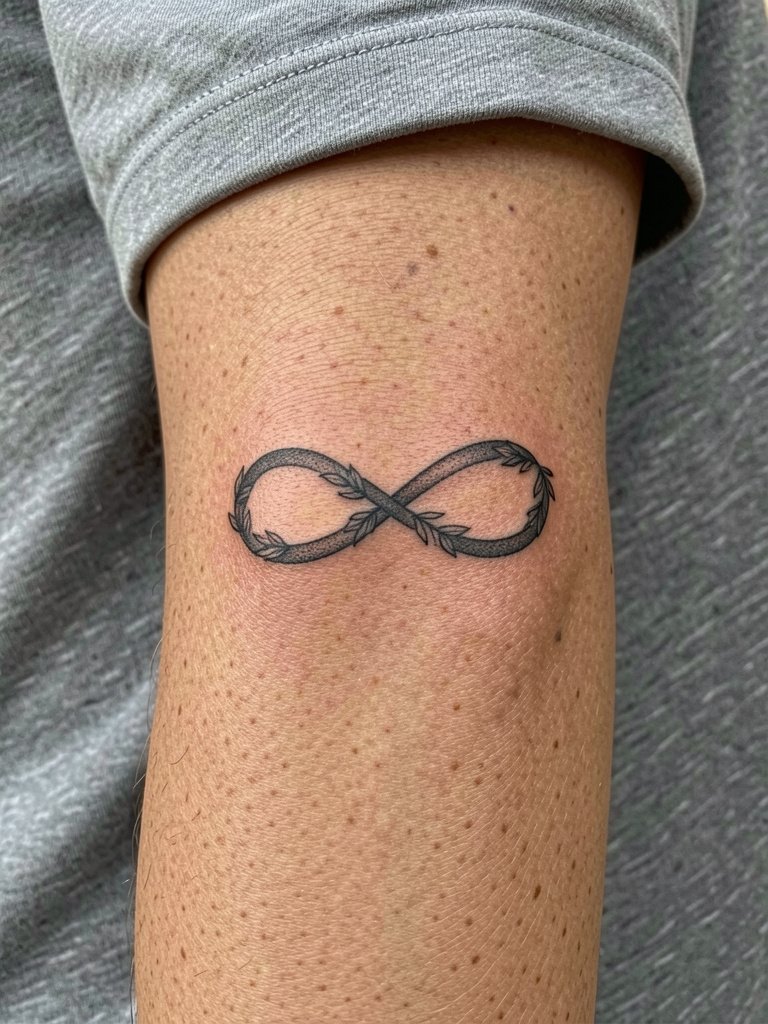
Botanical accents add softness, but keep leaf sizes deliberate so they do not vanish. Leaves with a small central vein rendered slightly bolder will stay readable. Wrist discomfort is short but present. A common error is packing too many leaves into the loop. For everyday wear try a lightweight watch on the opposite wrist or a minimalist bracelet set that complements the piece.
22. Infinity with Rainbow Color Fill for a Playful Pop on the Wrist
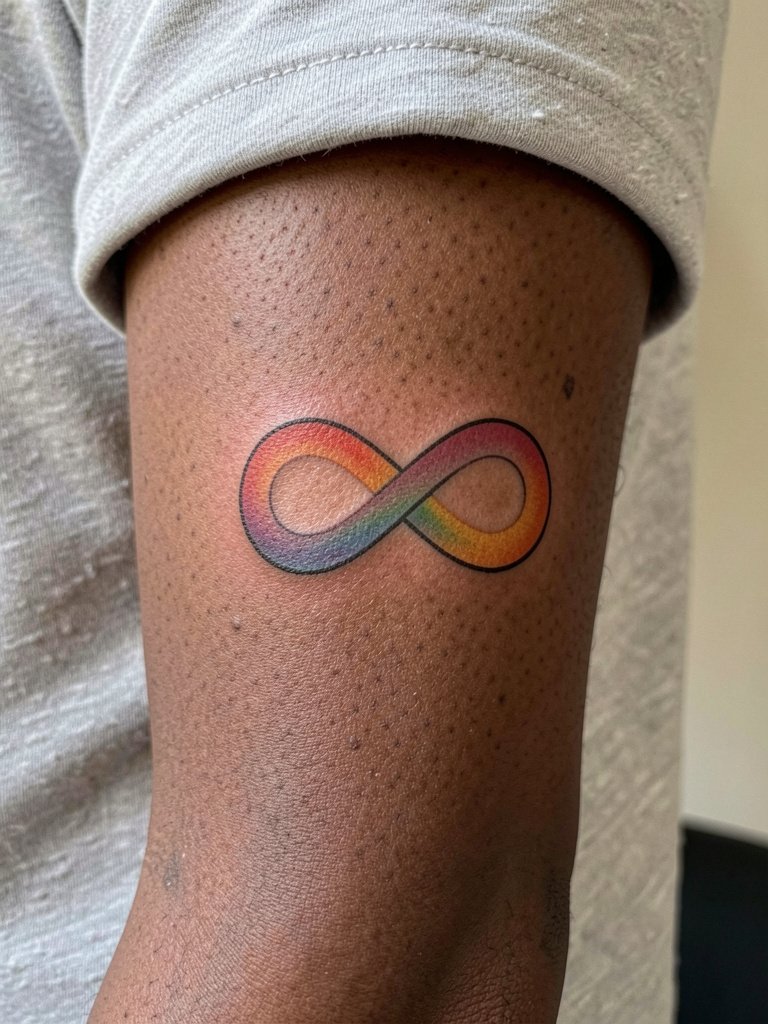
Color on small symbols is eye-catching but needs saturation control. For rainbow fills pick a short, controlled gradient rather than watercolor splashes to slow fading. One camp warns that color fades faster and needs touch-ups. The other camp says saturated mini-fills can survive well if placement avoids constant abrasion. For a wrist rainbow select vibrant inks and plan for touch-ups in a few years. Short sleeves and minimal bracelets help the colors show, and a thin chain bracelet set on the opposite wrist balances the look.
23. Interlocked Infinity for Couples, Split Between Two Wrists

Matching pieces work beautifully when both stencils are scaled to each wrist. Have both people bring reference photos at the same scale so the halves align when compared. Wrist matching feels symbolic and visible; make sure each half has slightly bolder contour lines to survive minor differences in healing. A common mistake is expecting exact mirror symmetry; small anatomical differences will shift the look. For coordinated outfits keep wrists exposed with short sleeves, and try a minimalist watch set or matching bracelets for photographs.
Frequently Asked Questions
Q: How small is too small for an infinity symbol on the wrist?
A: For clean longevity the loop should be at least one to one-and-a-half inches across depending on lineweight. If you choose single-needle lines, increase the loop size slightly; otherwise the knot in the center can merge into blur. Ask for a skin-transfer preview at full size so you can see how it reads on your wrist before the session.
Q: Do fine-line infinity tattoos age worse than bold versions?
A: Artists split into two camps on this. One group argues that fine single-needle loops lose crispness within two to three years, especially on high-motion or thin-skin zones like the wrist. The other group says that with slightly wider spacing and proper depth, fine-line work can settle nicely, and they will show healed photos to support that claim. Your choice comes down to how often you accept touch-ups versus initial delicacy.
Q: Are watercolor or rainbow versions safe for darker skin tones?
A: Color behaves differently across skin tones. Heavier saturation and controlled gradients work better than faint washes on medium to dark skin because subtle washes can disappear. If you prefer color, ask the artist for healed examples on similar skin tones and plan for possible touch-ups to refresh the saturation.
Q: Where can I find local portfolios and healed examples without naming artists directly?
A: Search hashtags like #infinitytattoo, #finelinetattoo, and #wristtattoo on Instagram and TikTok and filter by location to surface nearby portfolios. Use Tattoodo for keyword searches such as "minimalist infinity tattoo with name" to find studio galleries. Reddit threads in tattoo communities are helpful for real-world pain and healing feedback and for seeing varied skin-tone photos.
Q: What should I wear to the appointment for an inner forearm or shoulder piece?
A: Wear clothing that gives clear access without you needing to undress. For inner forearm choose a loose button-down or short sleeve you can roll up easily. For shoulder pieces bring a sleeveless tank or a top with a wide armhole. A simple guideline is to wear what lets the artist reach the area with no fabric pulling.
Q: How often do small infinity tattoos need touch-ups?
A: Expect possible touch-ups in two to five years depending on placement, lineweight, and sun exposure. Wrists and fingers typically need more frequent refreshes. Forearms and shoulders usually hold longer. Plan touch-ups into your timeline rather than treating them as emergencies.
Q: Can an infinity symbol work as a cover-up for a small old tattoo?
A: Yes, the looping form lends itself well to masking older marks with strategic blackwork and negative space. Bigger, bolder sections are the typical solution, and multiple sessions may be required to fully integrate or obscure dense old ink. Bring clear photos of the existing tattoo so the artist can design a cover-up that hides the old lines while keeping the infinity readable.