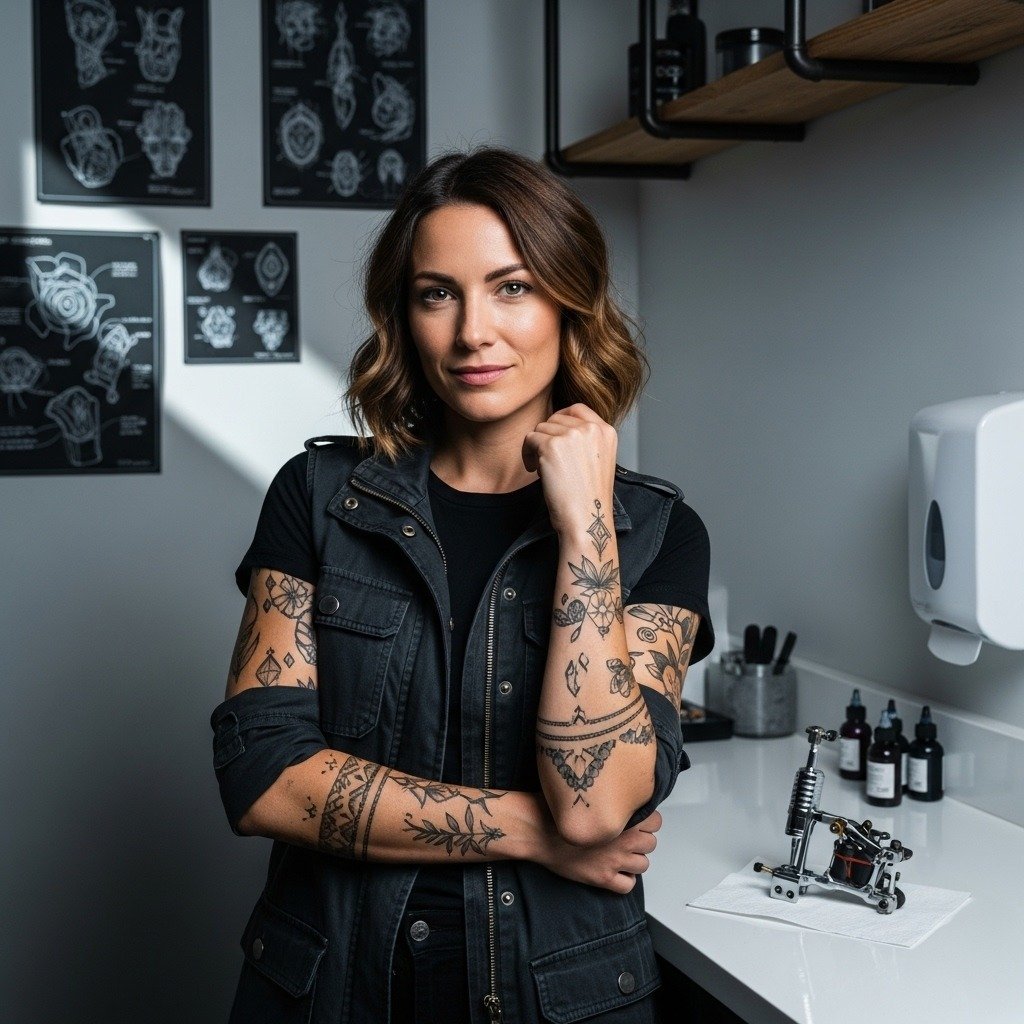
A lot of arm tattoos you see on feeds look perfect the day they are done and confusing a year later. The trend toward whisper-fine florals and single-needle script is real, and so is the follow-up cost when linework needs touch-ups. Read this list if you want ideas that read beautifully now and still look intentional after a few seasons of wear.
1. Fine line floral forearm wrap

A forearm wrap reads like a continuous band when the artist plans the flow with the arm curve in mind. I recommend slightly thicker contour lines than the thinnest single-needle options so the petals keep shape after a year. One common mistake is packing tiny detail into the wrist area, which moves and softens. Expect one short session for a compact wrap, longer if it extends toward the elbow. For showing it off, pair with rolled-cuff linen button-downs and a slim bangle on the opposite wrist for balance. linen button down women
2. Classic rose on the forearm

A traditional rose is a reliable choice for longevity because bold outlines and solid saturation age predictably. If you prefer softer edges, the artist should use stipple shading rather than tiny parallel strokes that blur. Expect a single session for a medium rose and mention in consultation that you want higher saturation in the center so color keeps contrast. Dress for the appointment in a short sleeve tee that can be rolled without pressure. For an everyday look, a cropped denim jacket frames an arm rose cleanly. cropped denim jacket women
3. Sunflower upper arm tattoo

Sunflowers sit naturally on the rounded upper arm and work well for color pieces that catch light. The key is saturation near the center of the flower so yellow does not wash out on medium to dark skin tones after healing. Tell the artist you want the petals sketched with subtle whip shading and a slightly stronger outline so the silhouette keeps reading from across a room. Session wear here is a tank top with easy shoulder access. For warm-weather reveals, choose square-neck tops that put the upper arm on display. square neck tank top
4. Geometric armband or bracelet tattoo

Armband geometry needs breathing room so symmetry stays crisp as the skin settles. A common mistake is shrinking the pattern too small which forces lines into the same healed channel. During consultation ask for test stencils that show the band at actual circumference so you can see how negative space will behave. For daily styling, cuffed sleeves or fitted tees pair well, and a thin cuff bracelet on the opposite wrist keeps the look intentional. cuff sleeve tee women
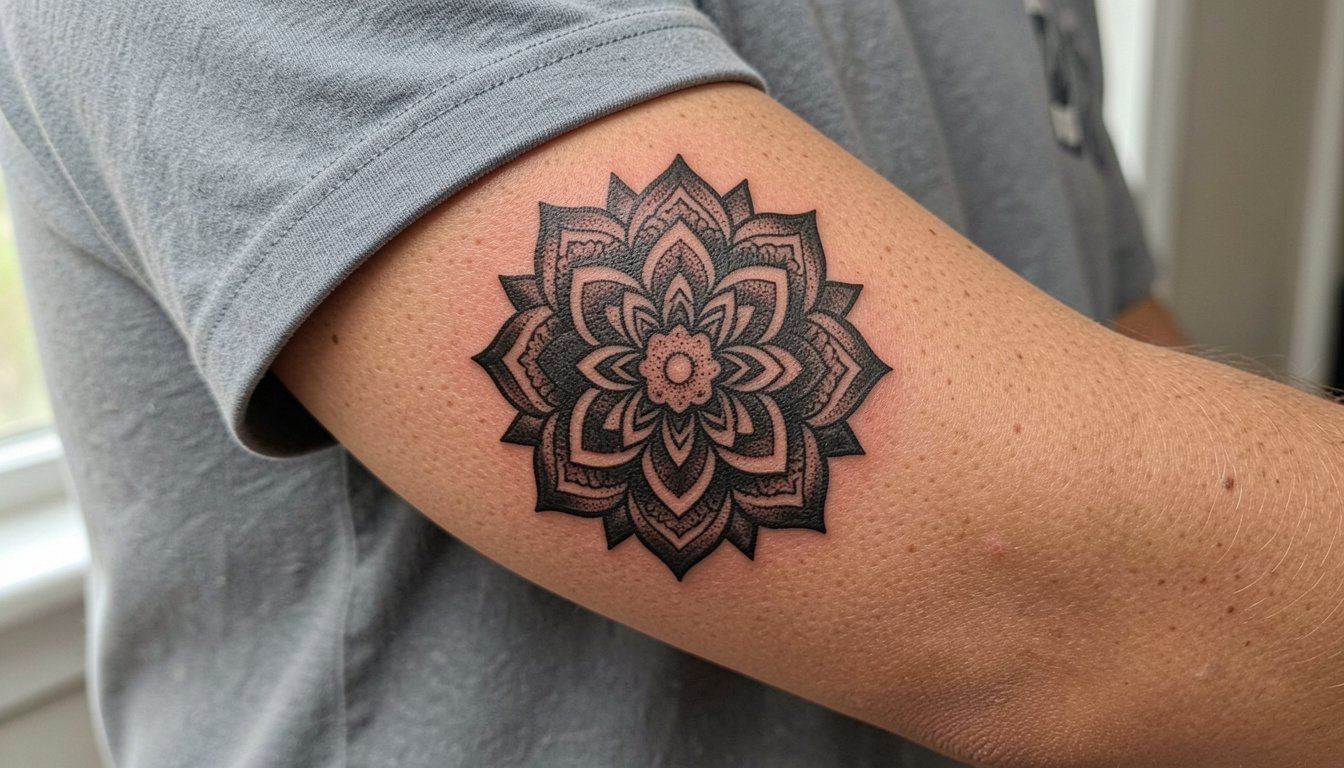
5. Ornamental mandala arm piece

Mandala work reads like jewelry when placed on the outer forearm or upper arm and uses dot work for texture. The problem people run into is packing too many inner rings into a small radius, which looks like mud after a year. Request a layout that keeps the central negative space slightly larger than in flash sheets. Styling note: this motif looks elegant with straight-cut shirts and clean denim. For the session, wear a short sleeve that can be rolled without creating pressure on the area.
6. Minimal script on the wrist

Tiny wrist scripts can be charming and they are also the most likely to need a touch-up. Artists split on fine-line longevity. One group says wrist skin and daily friction blur ultra-fine strokes within a couple of years. The other group points out that slightly heavier baseline strokes and smart spacing let a wrist script hold up. If you want the word to stay legible, specify line weight that is a hair bolder than your pure single-needle reference. For showing it off, wear minimal cuffs or thin bracelets on the opposite wrist and avoid watches on the tattooed wrist during healing. thin cuff bracelet
Heal Smart
The first six ideas include small wrist and forearm work that face different wear patterns, so a few targeted items make the first week and first year easier.
-
Indie tattoo balm stick. Lighter than heavy ointments, a small balm stick soothes without feeling greasy and is handy for mid-day reapply on forearm pieces.
-
Fragrance-free gentle cleanser. A low-irritant wash helps if your skin reacts to perfumed body soap during the first week.
-
Compression-free sun sleeve. Useful later for protecting healed arm tattoos outdoors without constant sunscreen reapplication.
-
Adhesive remover wipes. If a second-skin bandage starts to lift, these help remove residue safely so you do not pick at the site.
-
Second-skin tattoo bandage. Keeps fresh arm tattoos protected from friction and contamination in the first healing phase, but note some skin types react to adhesives so use cautiously.
7. Micro-realism butterfly on the upper arm

Micro-realism needs tight contrast so details read after healing. For upper arm butterflies ask the artist for slightly increased contrast at wing edges so the silhouette keeps reading on darker tones. A common mistake is overworking tiny wing veins that disappear into healed skin texture. Session feel is usually mild to moderate because the area has soft tissue. For wardrobe pairing try racerback tanks or wide-strap camis that let the piece peek out. racerback tank women
8. Snake wrapped around the forearm

A snake taking advantage of forearm length creates movement that flat icons cannot. Plan the coils with the artist so the snake reads when your arm is relaxed. Ask for scale texture rendered with stipple shading to keep contrast without heavy color. The elongated placement can hide motion lines, but avoid too many tiny scales near joints. For fits, cropped jackets and cuffed sleeves make the snake silhouette stand out.
9. Medusa portrait on outer forearm

Portrait-level pieces on the forearm demand multiple hours and careful planning to preserve facial features. One trap is shrinking a portrait to wrist-sized, which forces value into small areas and loses depth. Talk to the artist about planned session breaks and reference photos showing three-quarter views so cheek and jaw shadow remain readable. Pair with straight-cut shirts and clean denim that do not fight the face-like silhouette.
10. Anime-inspired sleeve accents

Anime panels work well as sleeve accents when they are composited with florals or ornamental fills. The common misstep is using bright pastel colors without adequate black anchors, which causes the panel to float visually on the arm. If you plan a sleeve in stages, ask the artist how each panel will transition to filler motifs and which colors will be used as anchors. For session wear, bring an oversized tee that can be removed without tugging the shoulder. oversized tee women
11. Traditional flash-inspired small arm piece

Classic flash ages well because simple shapes and strong outlines keep definition. The main mistake is asking for faded, watercolor-style shading inside a tiny flash piece. If longevity matters, request bold outlines and saturated fills. For styling pick fitted tees and simple rings so the design does not compete with busy patterns. Walk-ins are common for small flash but check shop minimums and appointment policies first.
12. Botanical upper arm band

A botanical band follows the arm curve and frames the bicep. One practical note is to avoid overly dense filler near muscle creases, which can flatten the band visually after movement. Ask the artist to map the band while your arm is relaxed so pattern flow matches your anatomy. For evenings out, pair this band with racerback tanks or dresses with open shoulders that show the arc cleanly.
13. Patchwork arm composition

Building an arm one piece at a time means planning negative space for future filler. A common collector mistake is crowding early pieces without considering flow. When you schedule a new element, bring photos of previous healed work so the artist can match line weight and shading technique. Patchwork works well with neutral, oversized outerwear that can reveal or hide tattoos depending on the occasion. button down overshirt women
14. Small symbol on the inner forearm

Tiny inner-forearm symbols are budget-friendly visually but shop minimums still apply. Many people assume small equals cheap, but setup and sterilization are fixed costs that shops factor into minimums. One camp thinks small pieces should cost little. The other camp argues that even tiny tattoos can require $100 to $300 or more because of studio minimums and artist time. If budget is a concern, plan for an appointment that includes two small pieces or ask about an artist's booking window for compact work. For session wear, choose a loose button-down you can roll up without pressure on the tattoo.
15. Crescent moon and star cluster on the elbow crease

Placement near the elbow crease requires reinforced contour so the small crescent keeps form after motion. Expect more discomfort in this zone because the skin sits close to the joint and nerve endings. The main longevity issue is micro-movement smoothing detail, so ask for a slightly bolder outline. For session comfort, wear a loose short sleeve that can be rolled without putting pressure on the bend. Small star clusters pair with short sleeve tees or layered bracelets when healed.
16. Stacked geometric bands near the wrist

Bands near the wrist must account for wrist flex and frequent rubbing by clothing. The mistake is placing bands too close together. Leave measurable space so each line has its own healed channel. For session wear, remove watches or bracelets and bring a short sleeve shirt. Stacked bands look intentional with minimalist watches and thin rings on the opposite hand. minimalist watch women
17. Single-stem peony on the bicep

A peony on the bicep fills the rounded canvas and photographs well in black and gray. If you want it to age cleanly, ask for slightly bolder petal edges and stippling for midtones. The bicep tolerates longer sessions with moderate pain. For wardrobe, wide-strap camis and off-shoulder tops reveal the piece in summer. Bringing healed photos of similar placements helps the artist match scale and shading.
18. Minimalist mountain range on outer forearm

Linear mountain ranges read well as minimalist forearm pieces but need a stronger baseline to avoid disappearing into creased skin over time. A mistake is using an ultra-thin single stroke for the entire range. Ask for a slightly heavier bottom line and minimal negative-space highlights. For showing off, pair with cropped outerwear and stacked rings. Session time is short for small, crisp linear work.
19. Lace cuff on the upper arm

Lace cuffs read like jewelry when the artist scales ornamentation to the arm width. Avoid over-dense inner details that age into muddiness. During consultation show the exact cuff height you want and ask to see a template wrapped on the arm. Lace cuffs pair well with sleeveless tanks or open-shoulder dresses. For the session, wear a sleeveless top with no tight elastic around the bicep.
20. Tiny constellation cluster near the wrist

Constellation clusters are small but require strategic anchoring so the pattern reads on motion-prone skin. Place slightly larger anchor dots at key points to keep geometry evident after healing. For session wear, roll sleeves well above the wrist and avoid watches. Constellations look neat with thin bracelets on the opposite wrist for a curated effect.
21. Single-needle portrait of a loved pet

Pet portraits need clear reference photos and realistic expectations. If the image is small, texture and shadow choices must be simplified to remain readable. The common mistake is shrinking a portrait without asking how it will translate to a two-inch oval. Discuss which photo angles provide the most readable silhouette and how contrast will be preserved. For daily wear, open-back or sleeveless tops let the portrait show when you want it seen. wide strap cami women
22. Watercolor splash accent on outer forearm

Watercolor approaches can create beautiful color halos but they require black anchors so color does not float away visually on darker complexions. Critics of watercolor caution that soft blends age into indistinct patches without strong contrast. The counter view is that disciplined anchors and controlled saturation let watercolor remain vibrant. If you choose this style, ask for the black line elements to be the structural framework. For outfits, oversized tees with rolled sleeves make the splash read as compositional color.
23. Minimal arrow on the outer forearm

A simple arrow is low-commitment visually but needs a reinforced tip and fletching so it reads after movement. The usual mistake is a hairline shaft that softens into a fuzzy line. Ask the artist for a slightly stronger tip and clear negative-space separation for the fletching. Arrows look sporty with cropped jackets and cuffed sleeves. Session time for a single arrow is short and usually tolerable.
24. Compass or nautical motif near the elbow

Nautical compasses need clear negative space inside the dial to avoid looking muddy. Near the elbow, reinforce the main points so the compass keeps orientation after skin movement. For wardrobe pairing, straight-cut shirts and dark denim make the motif pop. For the session wear a sleeve you can roll that does not bind at the elbow crease.
25. Tiny stacked rings and dotwork band

Stacked ring motifs mimic jewelry without bulk but must have anchor strokes to survive daily friction. The main mistake is making each ring too thin so the collection blurs together. Ask for separation gaps and slightly varying ring thickness. Styling pairs well with stacked rings on the opposite hand and a cropped outer layer to keep wrists visible.
26. Ornamental half-sleeve panel

Half-sleeve panels are an efficient way to build a larger arm composition. A frequent pitfall is uneven line weight across guest tattoos when multiple artists work without style matching. To avoid this, ask the artist how they will match linework and shading density to existing pieces. For outfits choose oversized tees with rolled sleeves or cropped jackets to stage the panel. Multiple sessions are normal and the artist should suggest a phased plan.
27. Tiny floral sprig behind the elbow

The area behind the elbow flexes and bends, so avoid ultra-fine filigree there. Slightly bolder contour on the sprig keeps the flowers distinguishable over time. Expect more movement-related discomfort and plan for a short break if needed. This placement pairs with sleeve hems rolled above the elbow for periodic reveal and hides easily with long sleeves.
Frequently Asked Questions
Q: How much should I actually budget for a small forearm tattoo?
A: Shop minimums vary but many studios set a baseline that makes tiny work more expensive than people expect. Plan for a minimum that covers setup and sterilization, and add an extra 15 to 25 percent if you tip for good service. If budget is tight, book a slightly larger element planned to scale down rather than chase a too-small size that will need touch-ups.
Q: What holds up better on darker skin tones, fine line or bold work?
A: Bold outlines and higher contrast saturation usually show best across a wider range of complexions because they create clear contrast with the skin. That said, fine line can work if the artist increases line weight strategically and uses spacing that lets each stroke keep channel separation. Ask to see healed examples on similar skin tones when you book.
Q: Where can I find healed photos and local artists who do these styles without naming specific accounts?
A: Search hashtags and location filters on Instagram and TikTok like #armtattooideas, #finelinetattoo, and #forearmtattoo, then apply a city filter. Pinterest and Tattoodo are useful for portfolio discovery when you add placement words such as "inner forearm" or "upper arm band." Reddit threads often include healed shots and booking notes from people who have been through the process.
Q: Should I use second-skin products or dry healing for arm tattoos?
A: Practitioners split into two camps. One says second-skin bandages protect fresh arm tattoos from friction and contaminants during the crucial first days. The other camp warns that adhesives can trap moisture or irritate sensitive skin and that simpler dry healing works better for certain skin types. If you try a bandage, patch test or discuss adhesive sensitivity with the studio and monitor for irritation.
Q: How often do fine line floral forearms need touch-ups compared with traditional roses?
A: Fine line florals generally need touch-ups sooner because the thin strokes live on a narrow healed channel that can soften with time. Traditional roses with bold outlines and saturated fills tend to need touch-ups less frequently. If longevity is a priority, ask for slightly reinforced contour or a hybrid approach that preserves the delicate look while adding structural line weight.
Q: What should I wear to a session for an upper arm piece or half-sleeve panel?
A: For upper arm work wear a sleeveless tank or wide-strap cami so the artist has unobstructed access. For half-sleeve sessions bring a loose short sleeve or a button-down you can remove without tugging. For showing healed work, off-shoulder tops and racerback tanks make those placements visible and flattering. wide strap cami women