
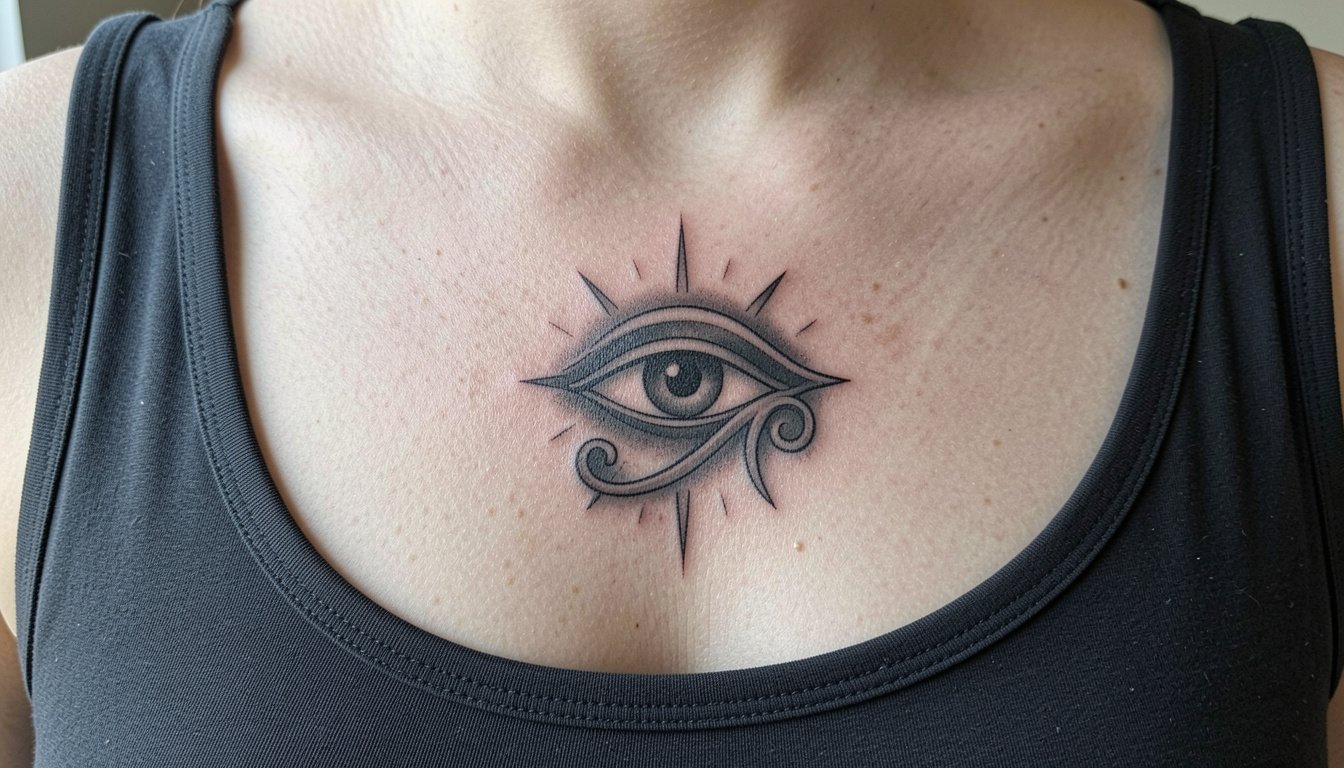
Bold black outlines hold up in ways thin single-needle versions do not. I say that because I have watched fresh Eye of Horus pieces on social feeds and then seen the same motifs soften two to three years later. If you want the symbol to stay readable, pick a line weight and placement that match the level of detail you want to keep, and check healed photos from the artist before you book.
1. Classic Eye of Horus with bold black outline
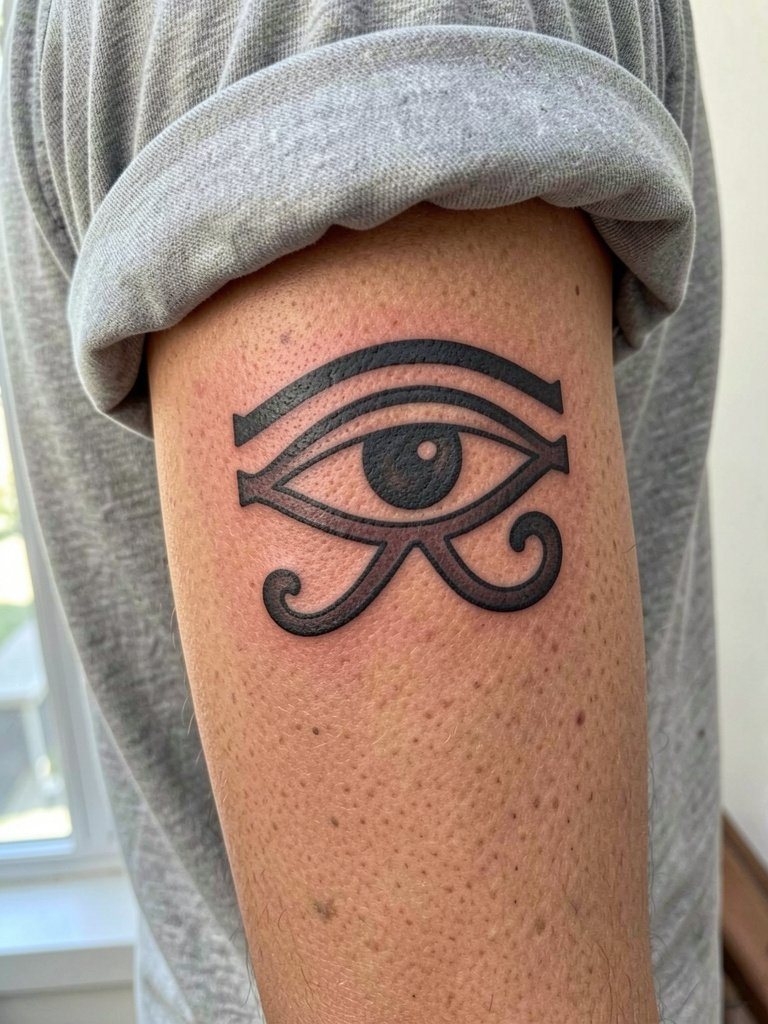
Pick this if you want instant legibility from a distance. The bold weight resists early softening, which is why I recommend it for forearm work where abrasion and sun exposure are real factors. Talk with the artist about contour thickness, not just “make it bold.” Ask for a reference stencil at three inches so you can see how the inner eye pupil and tear line scale. Common mistake is shrinking the design too small for the level of black fill. For session wear, bring a rolled sleeve shirt so the artist has easy access without too much fabric under tension. Expect one session and a touch-up in the second year for heavy blackwork saturation if you swim or spend a lot of time in the sun.
2. Fine line Eye of Horus with minimal shading
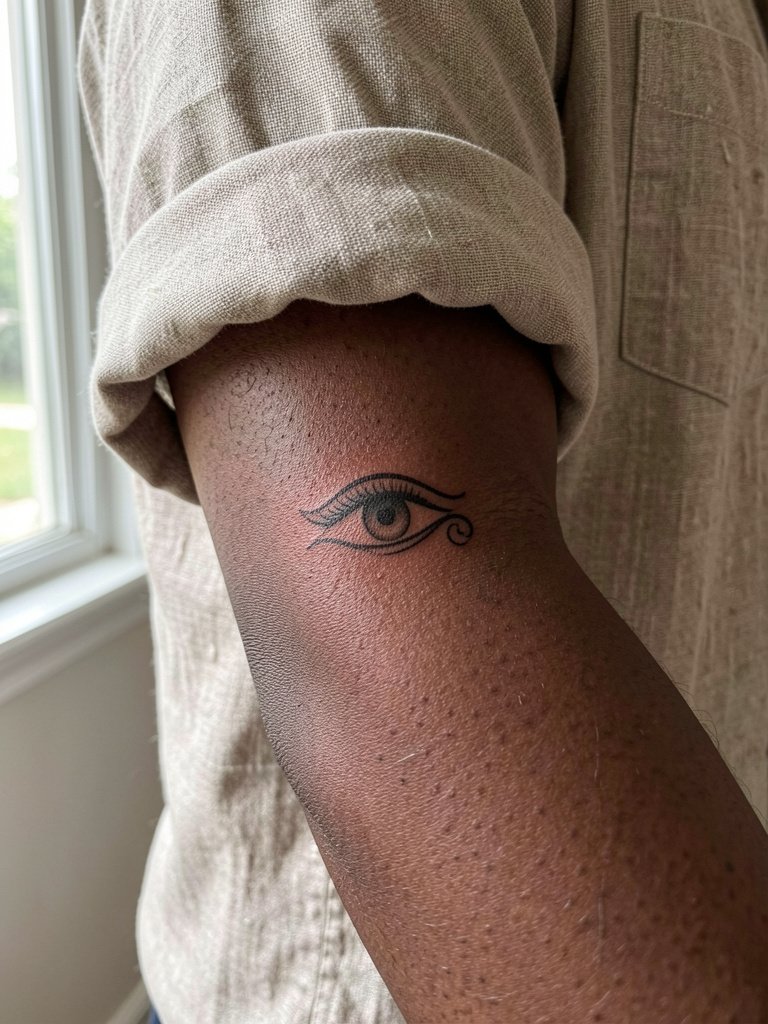
Fine line looks elegant but ages differently than bold work. One camp argues that thin lines maintain a refined look if the artist spaces strokes slightly wider and uses precise single-needle depth. The other camp argues that thin single-needle work blurs on high-movement spots like the inner forearm within two to five years. If you lean fine, ask for slightly heavier lash lines than the reference, and request healed photos from the artist at 12 and 24 months. The inner forearm eats detail less than the wrist so this is a safer spot. For showing it off, pair with a linen short sleeve shirt in neutral tones to keep the eye readable against simple fabric.
3. Eye of Horus and Eye of Ra paired sleeve start
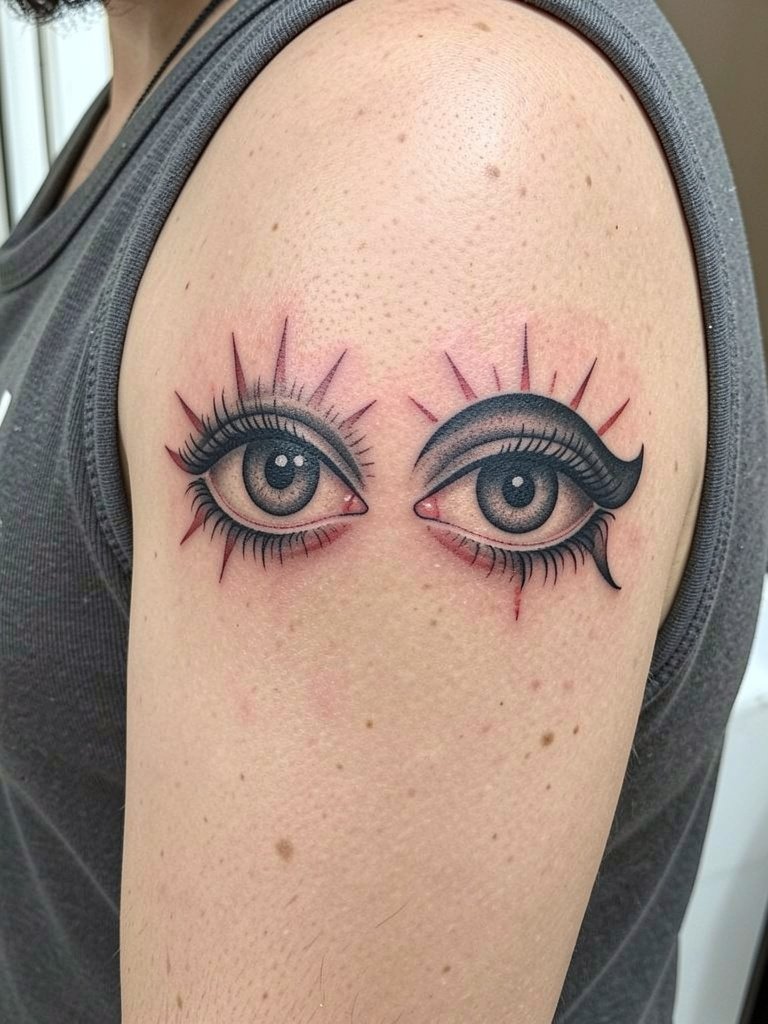
Collectors like pairing both eyes to convey complementary meanings. Start this as a medium piece on the outer upper arm if you plan a full sleeve later. Discuss composition flow so the two symbols do not compete for focal attention. A common error is placing both eyes at identical scale; instead set one slightly smaller and give each its own negative-space margin. Session feel is moderate because the outer upper arm tolerates longer sittings. For wardrobe, show the piece with a muscle tank so the contrast reads on camera. Expect two sessions if you add color accents.
4. Eye of Horus inside geometric frame
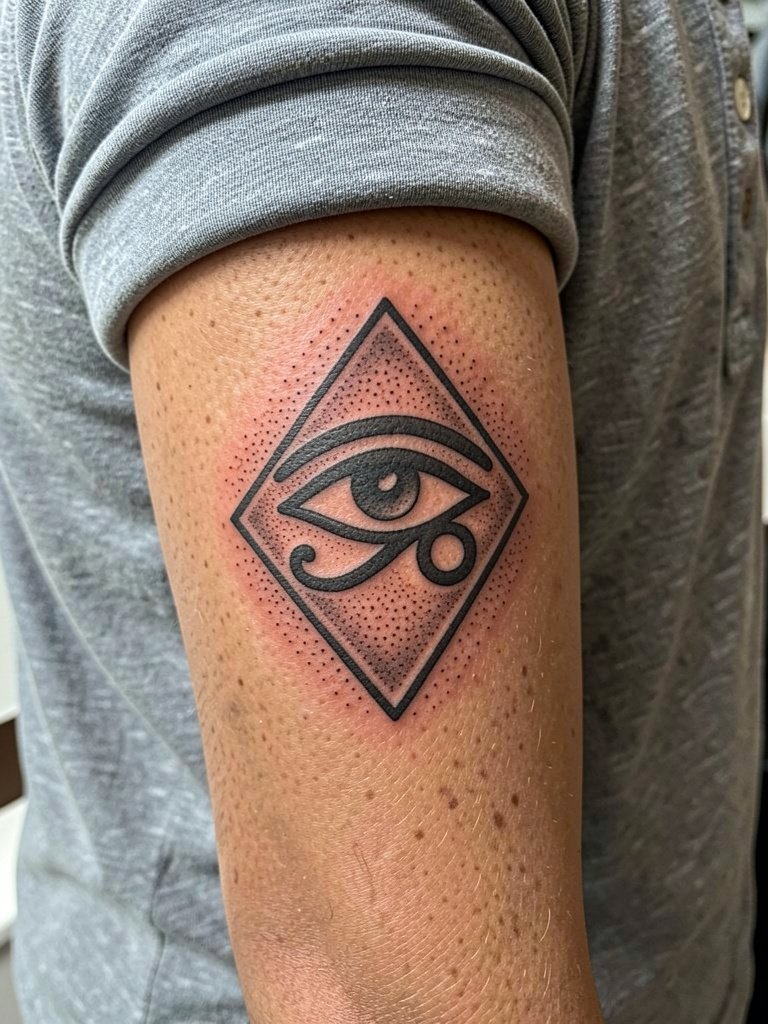
Geometric framing modernizes the symbol and helps it read as a composed piece. Tell the artist you want the frame to act as a visual buffer, two to three millimeters of clear skin around the eye so the negative space breathes. A frequent mistake is clipping the frame too tight to the symbol, which creates crowding once healed. For showing it off, pair with a fitted henley to keep sleeves from competing with the geometry. Stipple shading holds beautifully if the artist spaces dots well, but dot work requires slightly larger scale than a tiny wrist mark.
5. Ornamental Eye of Horus with mandala accents
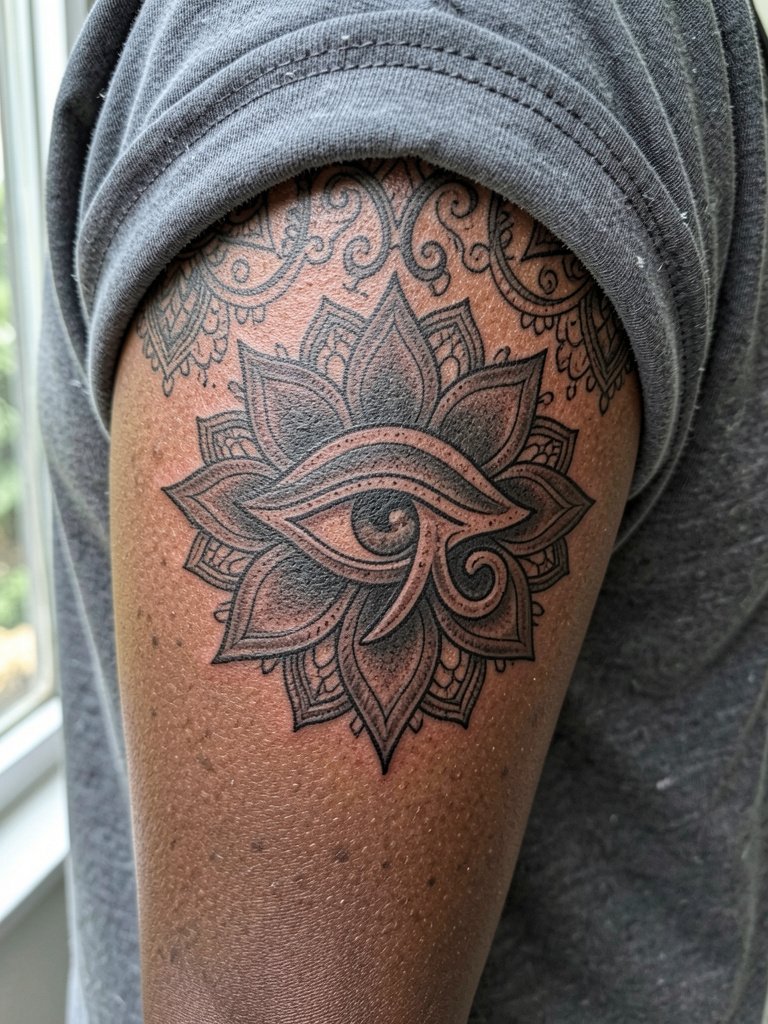
This version reads like a jewel on the arm and works well when you want more ornament without full Egyptian scenework. Specify how much ornament you want in a single sentence to the artist, for example, "one outer ring of mandala petals, thin filigree only." The common error is asking for dense lace at a small scale. Go slightly larger and expect 1 to 3 sessions depending on surface area. For nights out, this placement pairs with short sleeves and a clean cuff so the filigree has room to show.
6. Micro Eye of Horus behind the ear
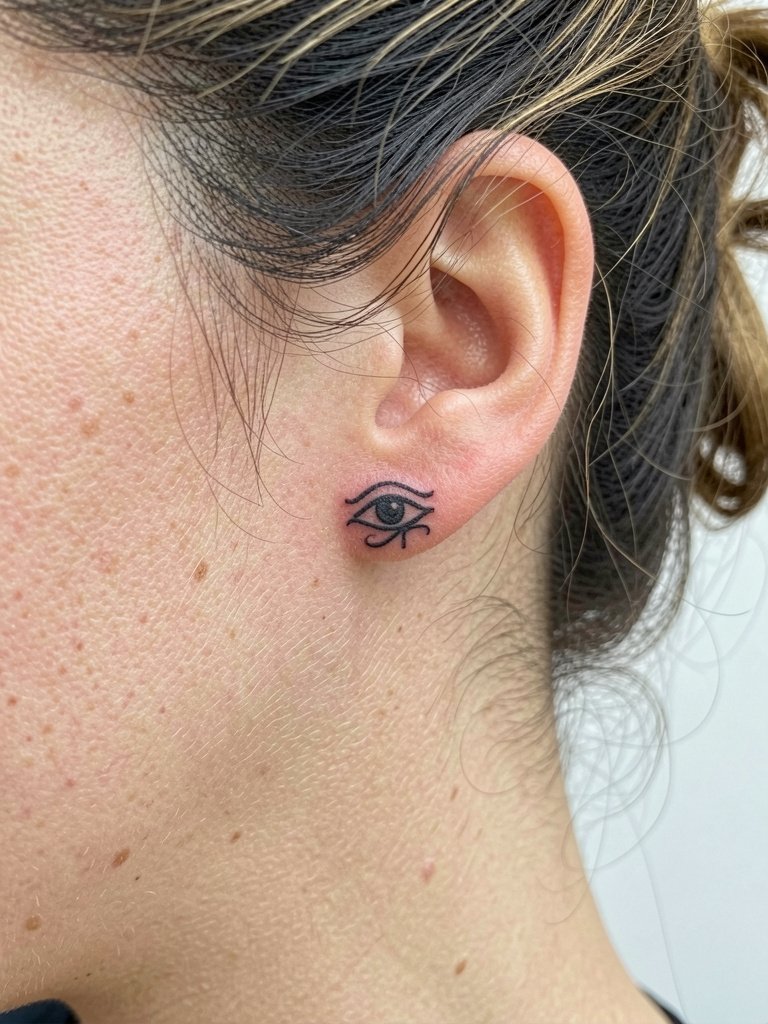
Tiny behind-the-ear pieces are discreet and personal. The mastoid area tolerates micro work but it is a high-movement zone under hair. Ask the artist to show healed micro shots from months one and twelve, not just fresh photos. Common problem is choosing a design with too many internal strokes. For the appointment, wear your hair up or clip it with a simple hair clip so the artist has clean access. This placement often needs a touch-up earlier than a forearm piece because of constant rubbing from collars and hair.
7. Black and gray realism Eye of Horus with weathered stone texture
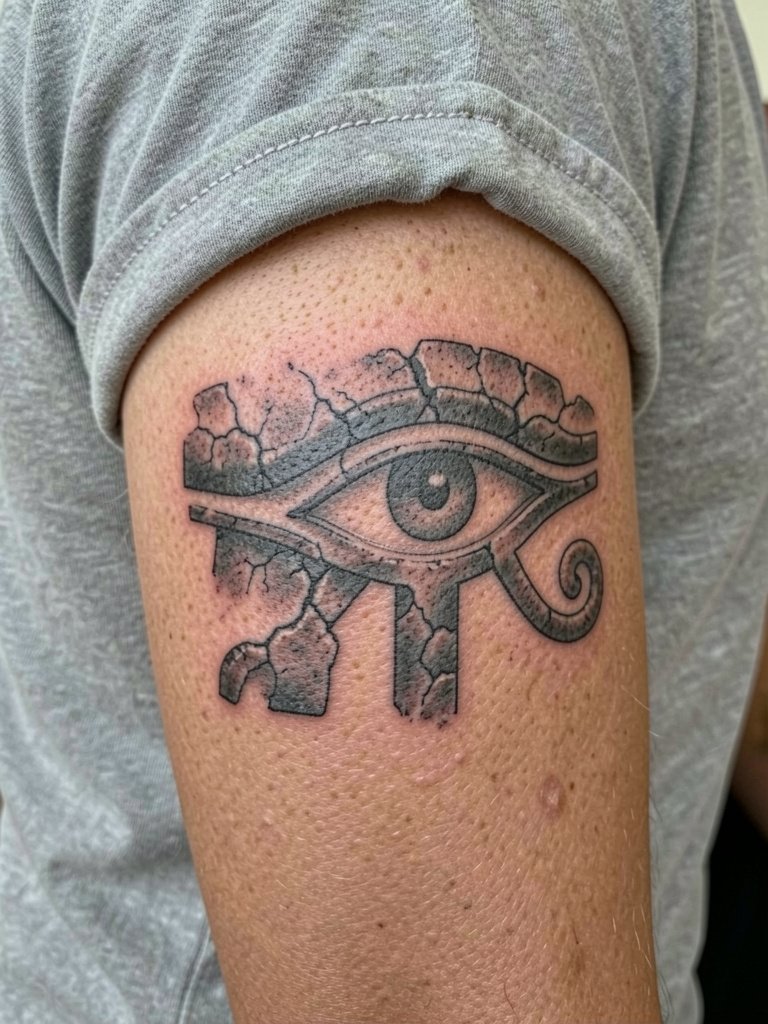
This option gives an archaeological vibe that reads as aged stone. On realism pieces, name the level of texture you want in plain language such as "light weathering and fine crackle." Artists are split on color accents for realism. One camp prefers strict black and gray for consistent aging. The other camp adds small amounts of muted color like gold or blue to enhance depth. If you want the stone look, keep color minimal and ask for healed samples showing saturation at one year. Realism requires more session time and a careful stencil preview.
8. Eye of Horus with ankh or scarab companion symbols

Adding companion symbols builds a small mythology on the leg. Plan spacing so each element has its own negative space. Discuss which symbol is primary and which is accent so the composition avoids collapsing into a single dark mass. Common mistake is stacking without breathing room. Calf sessions are comfortable and allow medium-size detail. For showing it off, wear athletic shorts that sit above the calf line, which highlights vertical compositions.
9. Split Eye of Horus with negative space
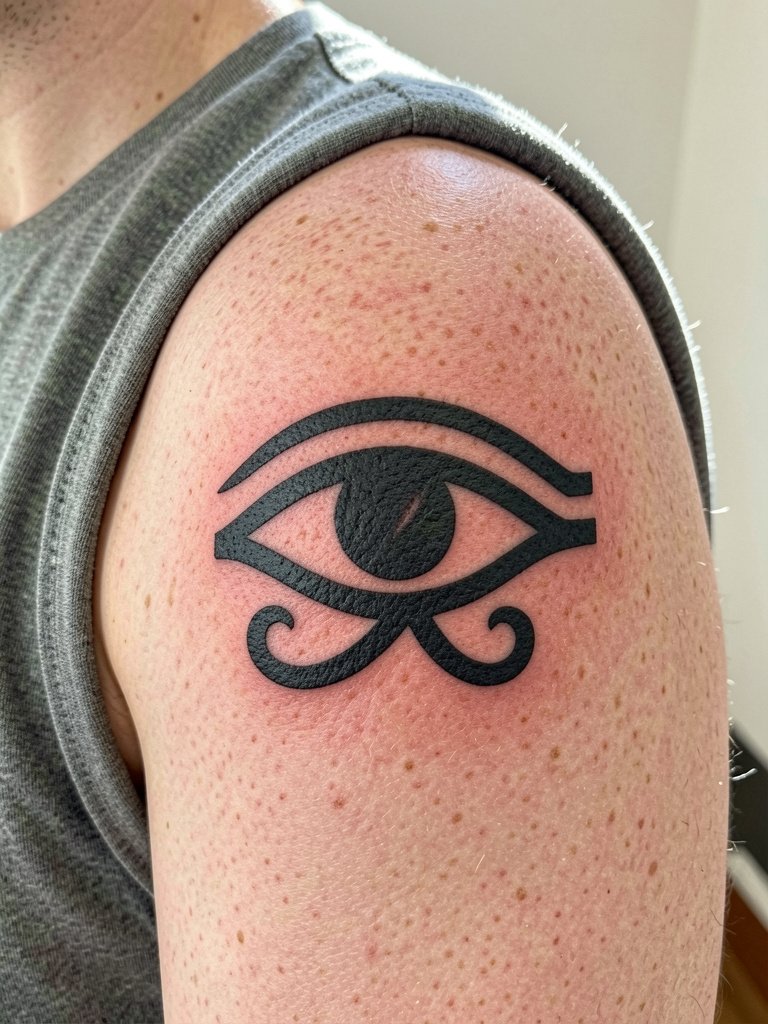
Negative space can make the Eye feel modern and less heavy. Tell the artist exactly which half you want solid and which to read as skin. A mistake is reducing the negative band to a hairline that disappears as the skin settles. Shoulder placement helps because the curvature supports bold blocks. For styling, this reads sharply with sleeveless tanks that frame the deltoid.
10. Eye of Horus on inner upper arm as a private symbolic piece
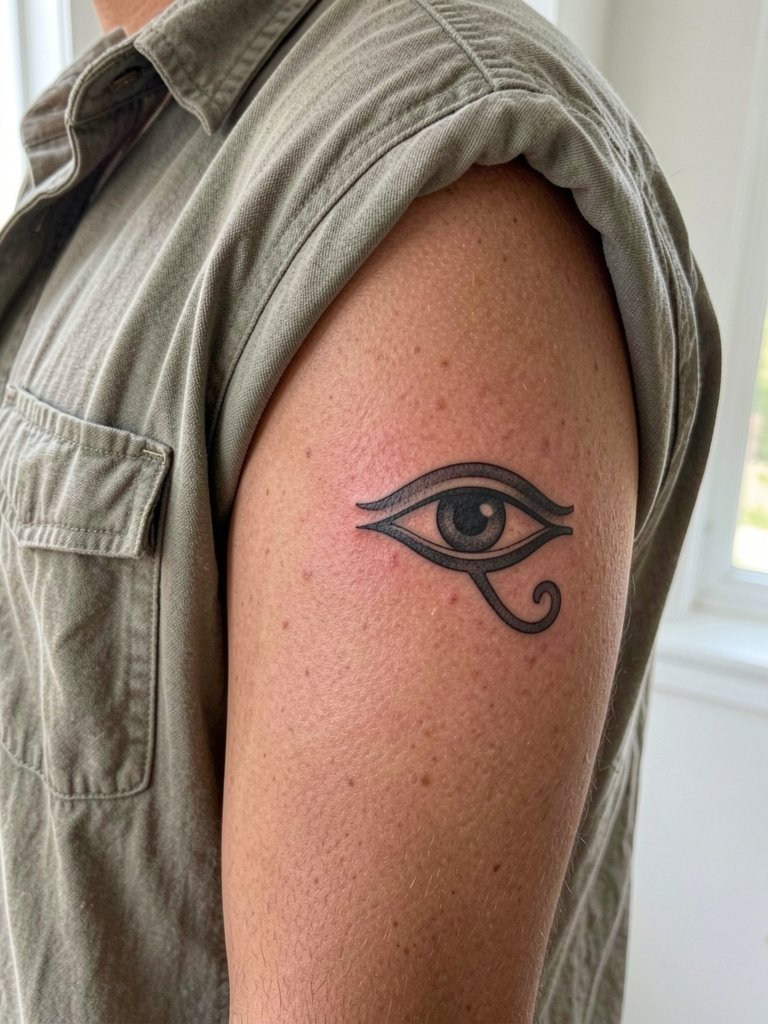
Inner upper arm keeps the symbol private and is forgiving for detail. Specify scale in inches during consultation so the artist can show how the inner-facing surface reads when the arm relaxes. People often underestimate how tight the medial bicep skin is when small details are placed too close together. For session comfort wear a camp-collar shirt you can remove or slide off easily. This placement usually has lower blowout risk but can need a touch-up if you gain or lose significant weight.
11. Eye of Horus with halo, rays, or solar burst
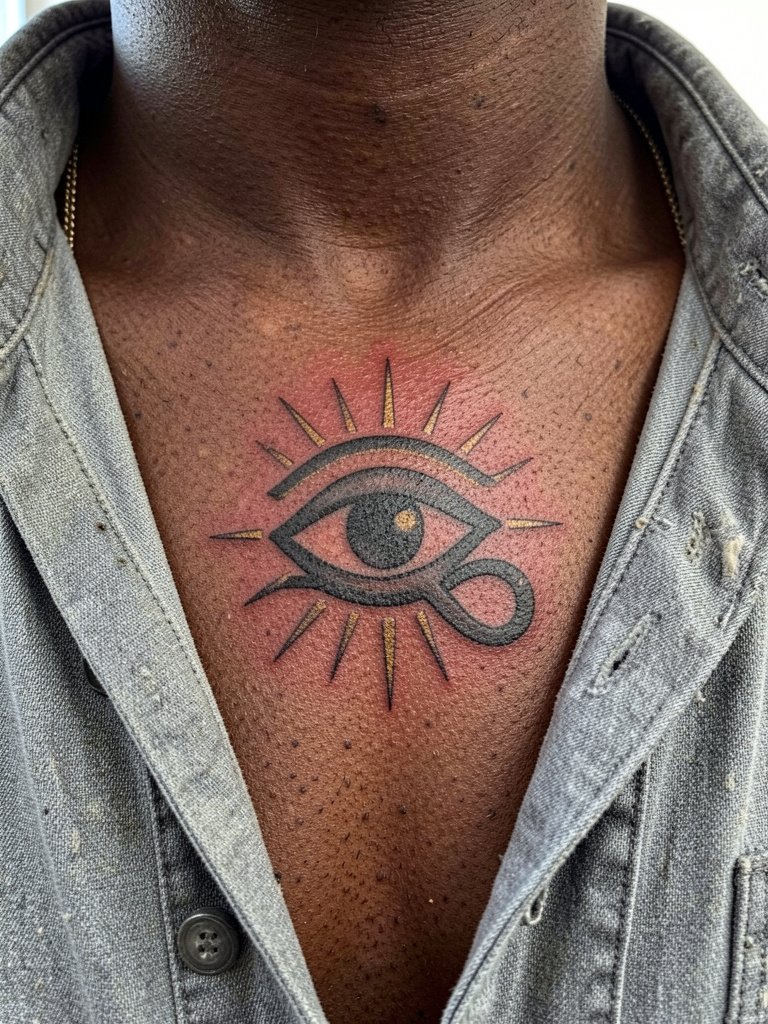
Solar accents push the symbol toward a divine motif. Decide whether the rays are decorative or symbolic, and tell the artist which direction the light should read from. A frequent error is compressing the rays too close to the eye so the burst reads as a halo blob after healing. For outfit pairing, the open collar shirt style keeps the piece visible without exposing too much skin. Expect one to two sessions if you add metallic accent ink.
12. Eye of Horus wrist tattoo
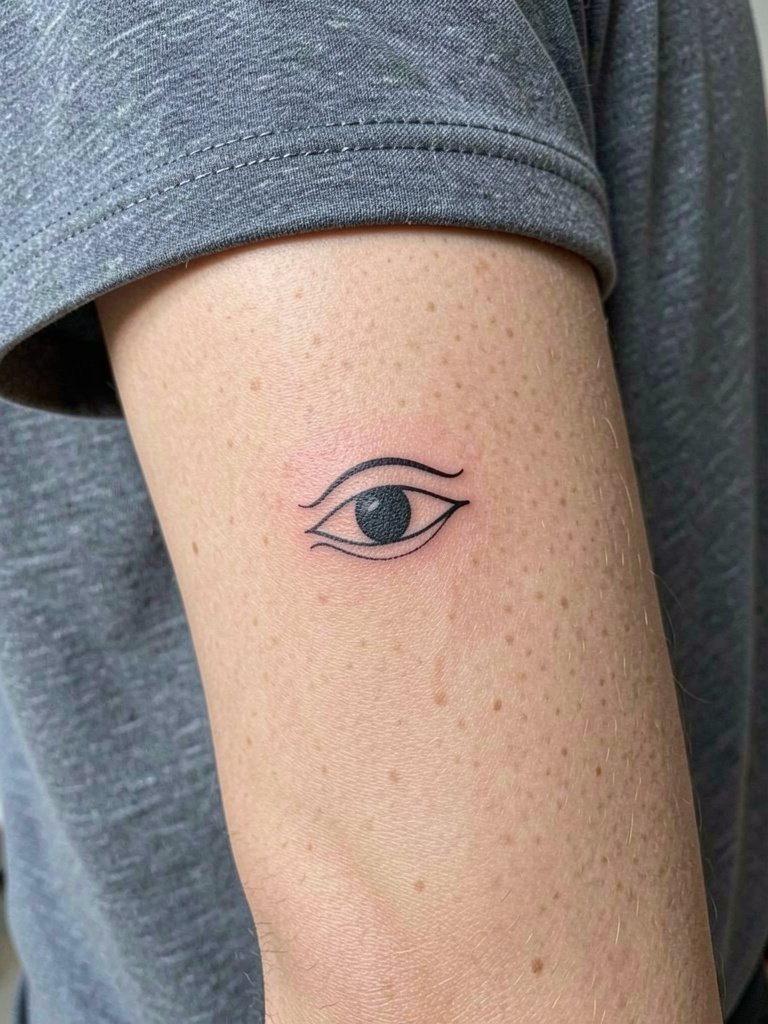
Wrist pieces are visible daily but are high-motion and high-abrasion areas. For a small eye choose a slightly heavier lash line than the reference so detail does not blur into a dark smudge over time. Ask the artist to mock up the design at the exact wrist circumference so you can see wrapping effects. Avoid bracelets on the tattoo wrist during the session and the first month. For an accessory that keeps the opposite arm balanced, consider a minimal wristwatch on the other hand.
13. Large Eye of Horus on side torso
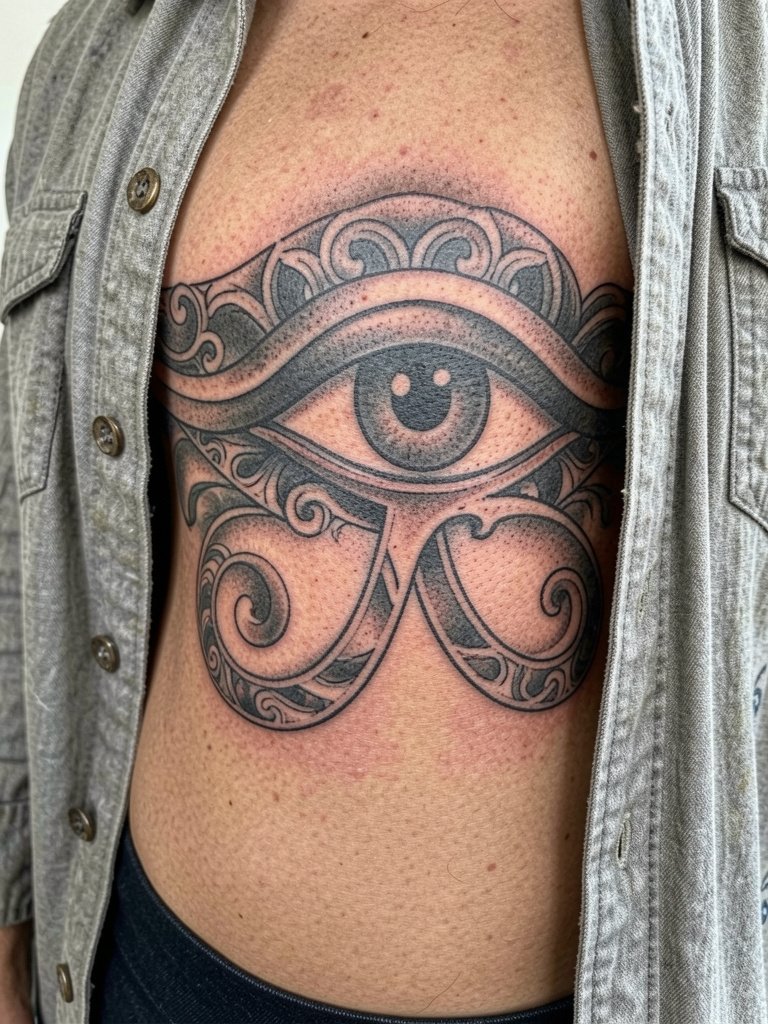
Ribcage pieces allow scale and detail but the area is painful and sensitive. Artists split into camps about fine line on ribs. One camp warns that the skin stretch and breathing motion blur ultra-thin lines within two years. The other camp says with correct needle depth and slight widening of line spacing, fine line can settle well. Be explicit about pain tolerance and request staged sittings if you want detail without numbing. For session wear choose a loose button-down that the artist can move without tugging at other parts of the tattoo.
14. Eye of Horus with pyramid or ancient script backdrop
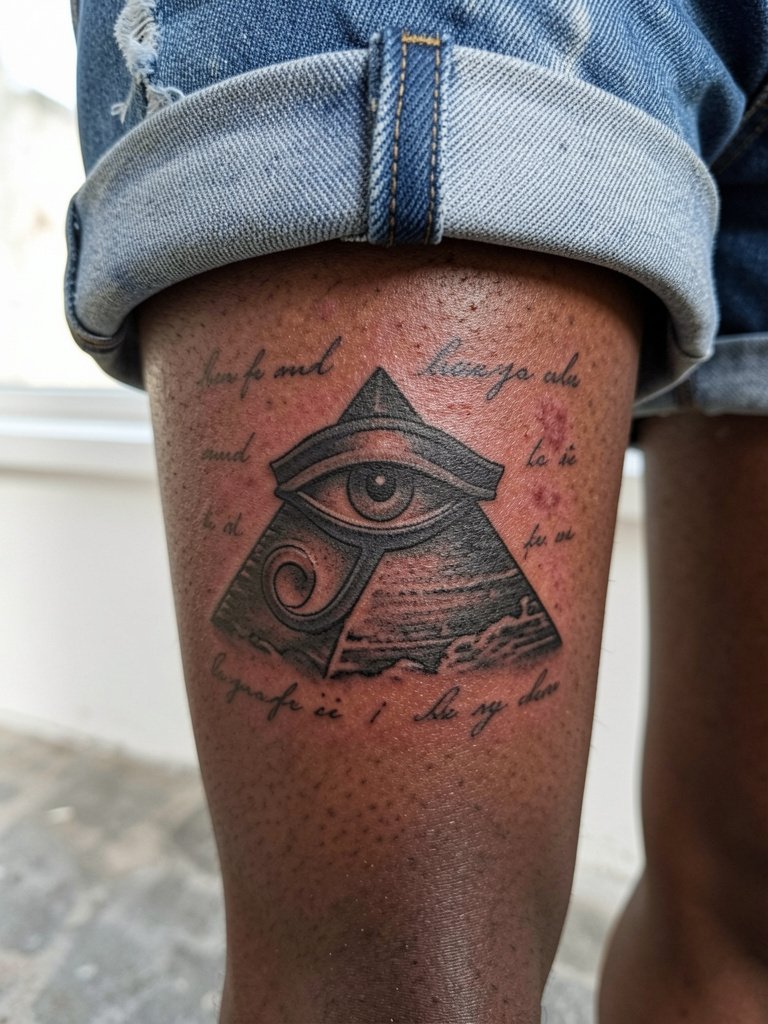
Backdrop elements make the Eye feel part of a scene. Keep the pyramid or script light so it functions as atmosphere rather than filling. A common mistake is heavy backdrop shading that competes with the primary symbol. Calf placements hold shading well and are easy to display with shorts. For long-term clarity, black and gray backdrop is safest, with color accents reserved for artists who show healed color work on similar skin tones.
15. Dot work Eye of Horus with stipple shading

Dot work can give texture without heavy black blocks. Ask the artist to show healed stipple work on forearms at one and three years to evaluate how the dots hold. The mistake is packing dots too densely at a small scale, which turns into a gray wash after healing. Sessions are time-consuming but minimally painful for the outer forearm. For a casual look pair with a fitted henley that keeps sleeves from cutting into the dot field.
16. Eye of Horus as part of a small chest medallion
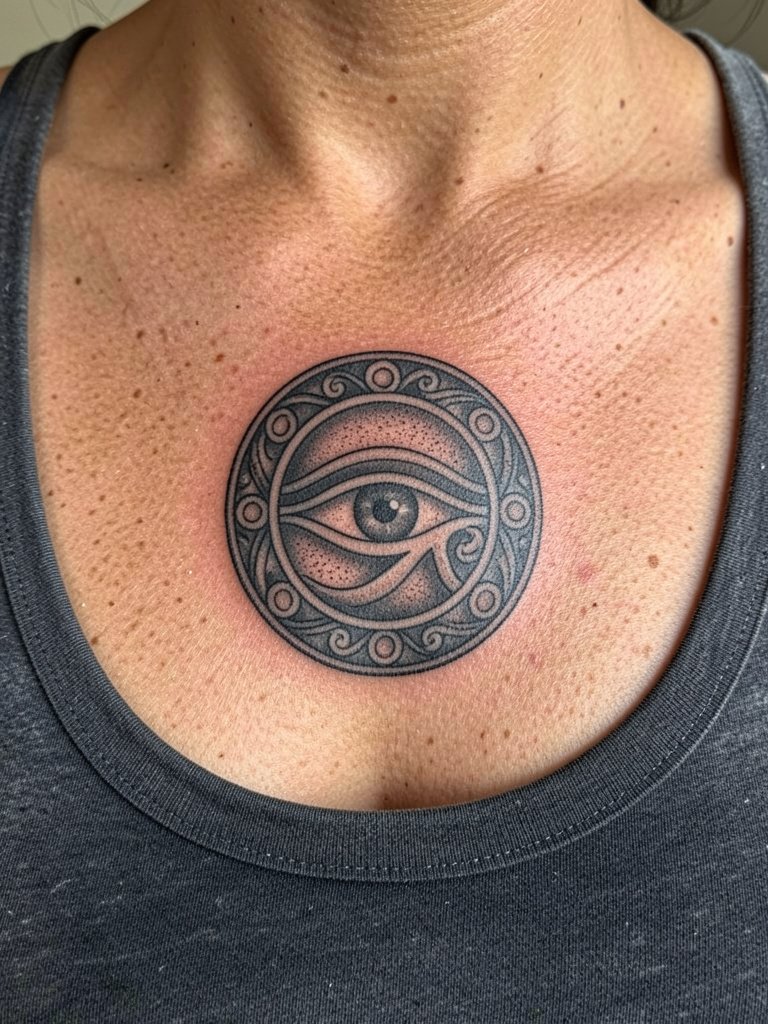
Center chest medallions are visible and intimate. Make sure the medallion diameter is large enough to carry ring detail. The biggest mistake is squeezing filigree into a coin-sized circle. If you want it to stay crisp in photos, aim larger and ask for ring spacing that allows the eye to breathe. For showing it off select scoop-neck tops that reveal the collarbone area.
17. Linework Eye with brushstroke or painterly accents
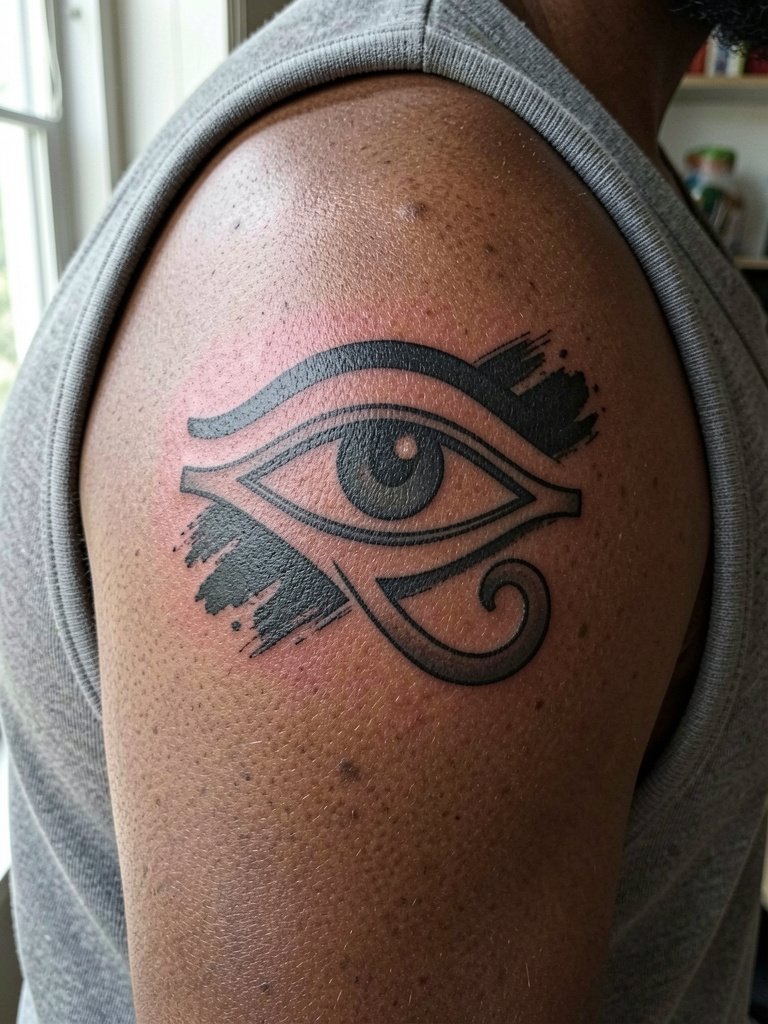
Painterly strokes add movement and keep the Eye from feeling literal. Tell the artist whether the strokes should be crisp or intentionally imperfect. A common error is overusing broad strokes on small placements. Shoulder scale lets the brush marks breathe. For the session, wear a tank top that gives easy shoulder access without rubbing.
18. Minimal geometric Eye with compass points

Geometric companions give the Eye a directional feel. Specify exact compass points or leave them open for the artist to balance with the symbol. The inner forearm is forgiving but avoid hairline lines that will blur. For showing it off, neutral tees keep the composition readable. If you like the minimal look, make sure the artist spaces the compass markers to prevent dot merging.
19. Neo-traditional Eye with saturated color accents
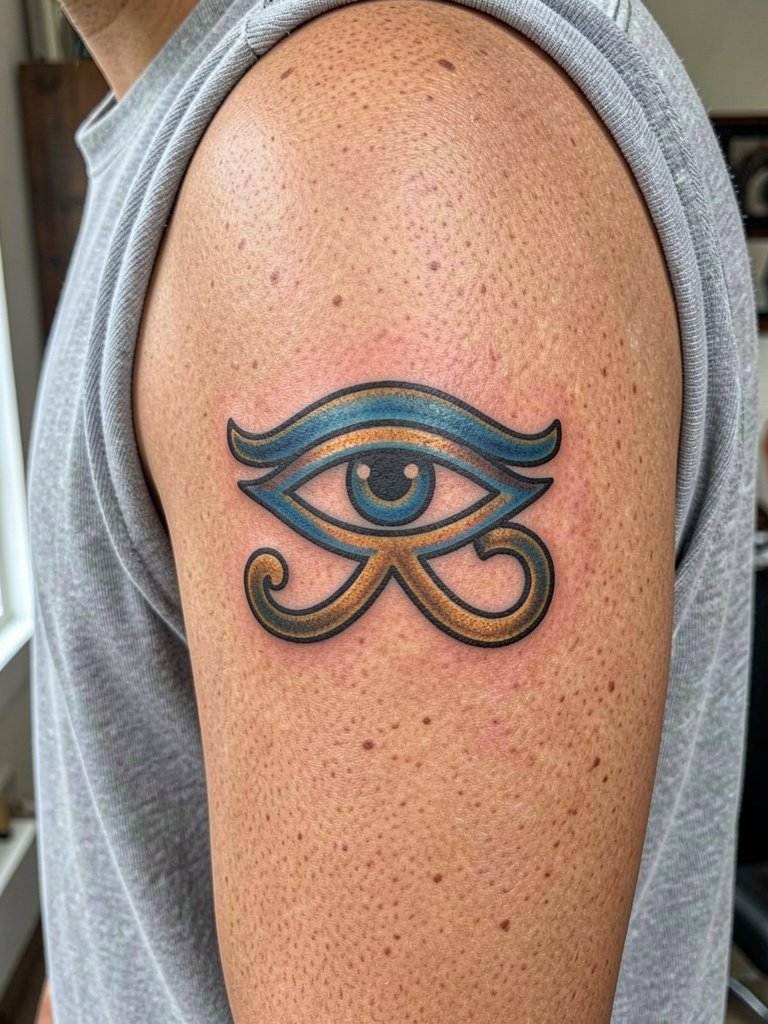
Color adds presence but may age differently across pigments. One camp prefers black and gray for longevity. Another camp accepts small accent colors like gold and blue to enhance the theme. If you want color, ask the artist to show healed color work on similar skin tones at one and three years. Neo-traditional shading holds up when saturation is deep and the palette is limited. For show-off outfits, a sleeveless shirt in complementary tones helps the accents pop.
20. Eye of Horus in blackout negative framing
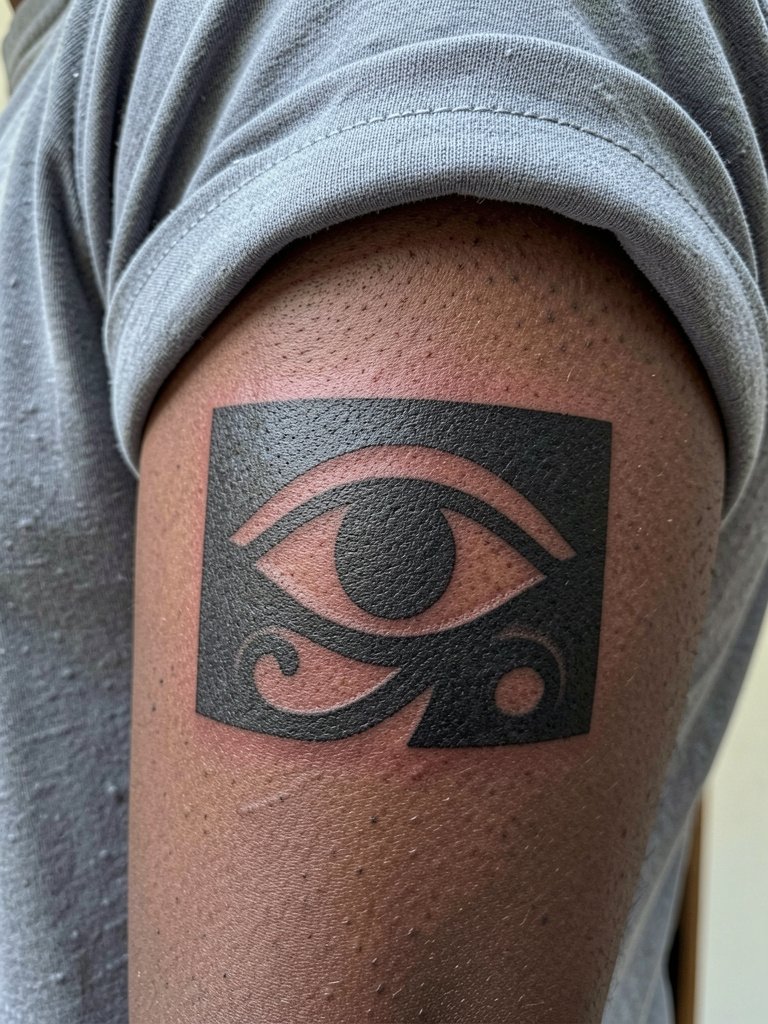
Blackout backgrounds make the Eye read like carved space. Plan the blackout edges carefully because touch-ups on dense black require a long healing timeline. A frequent error is creating an oddly shaped blackout that conflicts with arm anatomy. For this heavy black piece expect longer sessions and a staged approach, plus after-sun precautions to preserve saturation.
21. Micro-Realism Eye with tiny lashes and pupil detail
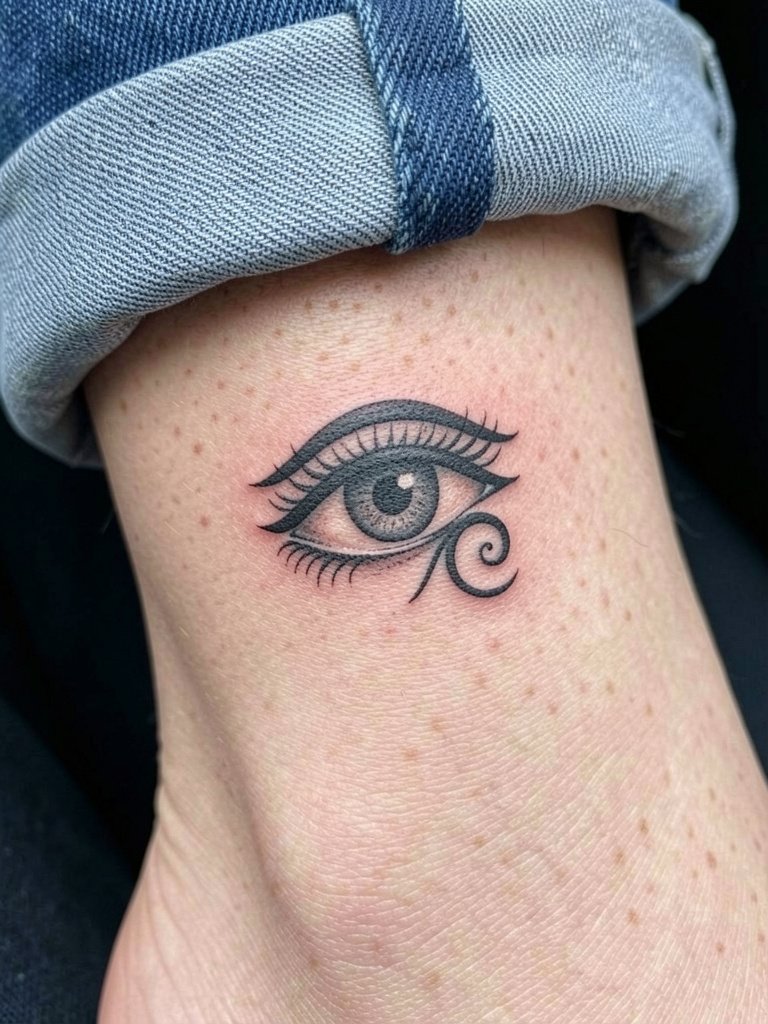
Micro-realism demands an artist who shares healed close-ups of similar work. The ankle is a high-friction zone, so expect faster fading and a likely touch-up. A common mistake is asking for micro lashes that cannot survive regular shoe wear and socks. For session day wear cuffed jeans so the artist can access the area without you exposing more skin than necessary.
22. Eye of Horus with architectural column motif
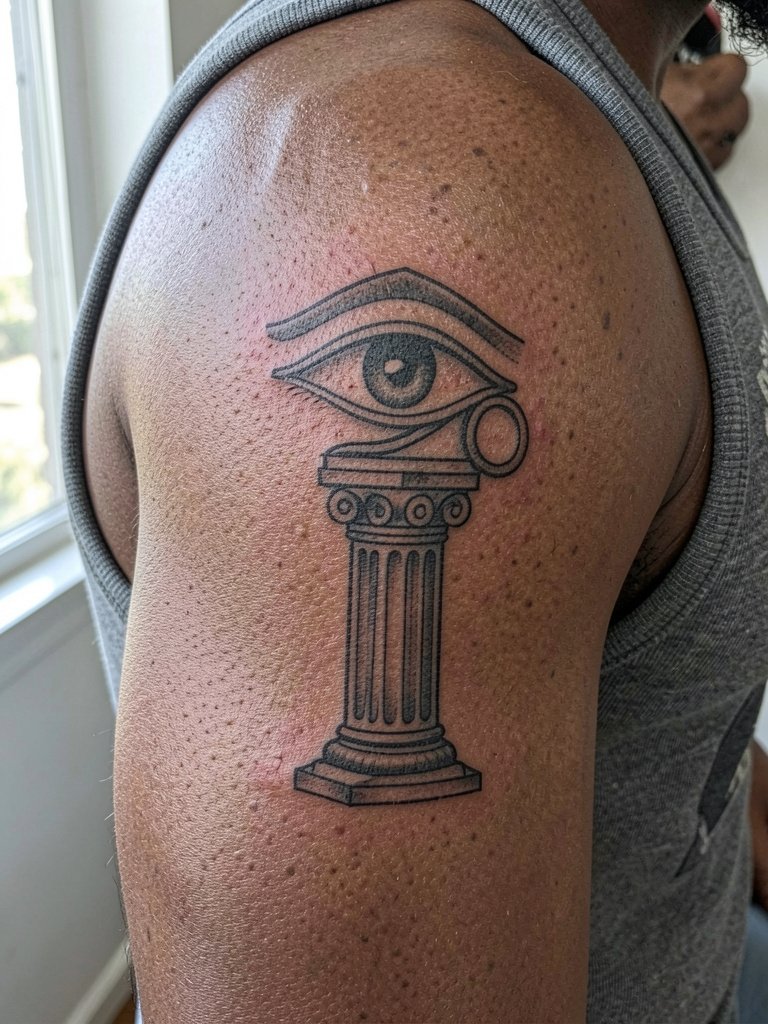
Architectural motifs add gravitas and anchor the Eye visually. Ask the artist to space column fluting so it still reads at three inches across. Errors happen when people insist on tiny fluted lines that vanish after healing. This placement sits well with rolled athletic shirts that highlight the upper arm silhouette.
23. Half-sleeve Egyptian narrative with Eye focal point

Large narrative sleeves let you build a story and place the Eye as the visual anchor. For multi-element pieces, create a simple map with the artist showing where each symbol sits and how negative space will flow. A mistake is overfilling early, leaving no room for breathing between icons. Half-sleeves require staged sessions and careful aftercare to maintain saturation across different textures.
Session Day Picks
These five items smooth out common snags that appear in the forearm, wrist, and ribcage examples above.
-
Stencil transfer paper kit. A clear transfer preview helps you see how proportions read on curved surfaces like the forearm and ribcage before permanent ink goes down.
-
Topical numbing cream. Applied as directed can reduce discomfort for sensitive placements such as ribs and inner bicep while leaving linework accessible.
-
Thin protective film roll. Keeps wrist and finger tattoos protected during the first few days of frequent handwashing and friction.
-
Fragrance-free body wash. Gentle cleansing without perfumes reduces irritation as new blackwork and fine line pieces heal.
-
Aquaphor healing ointment. A widely used option for the first 48 to 72 hours to lock in moisture for heavy black fills and delicate single-needle lines.
Frequently Asked Questions
Q: How do I size an Eye of Horus so the detail does not blur on wrist and behind-ear placements?
A: For wrist or mastoid micro work, aim for a minimum of about three inches if you want clear internal detail. If you need a wrist-sized mark under three inches, simplify the interior to a clean silhouette and increase contour thickness by a hair. Ask the artist to show scaled stencils on your wrist so you can see the wrap and spacing before work begins.
Q: Should I pick black and gray or add color accents for an Egyptian look?
A: Black and gray is generally safer for long-term legibility, particularly on high-movement zones. Some clients add restrained gold or blue to evoke Egyptian palettes. If you choose color, request healed color samples from the artist on similar skin tones to confirm saturation and fading patterns.
Q: Where can I find portfolios and healed shots without naming or contacting specific artists?
A: Search social platforms and tag chains using combined keywords such as #eyeofhorus, #egyptiantattoo, #blackworktattoo, and #finelinetattoo then filter by location. Use Reddit and Facebook tattoo threads to find community-shared healed photos, and verify any studio portfolio contains aged images not just fresh work.
Q: How often do Eye of Horus tattoos need touch-ups, and what affects that timeline?
A: Touch-up frequency depends on lineweight, placement, and lifestyle. Bold forearm pieces might need a touch-up at year two in heavy sun or frequent swimmers. Fine single-needle work on wrists or ankles commonly needs a shorter-term touch-up. Plan for a realistic touch-up conversation that includes how your skin reacts to sun and friction.
Q: Is it culturally sensitive to use Egyptian symbols like the Eye in my tattoo?
A: The Eye of Horus has deep cultural and historical roots tied to protection and restoration. Respectful use means avoiding caricature and not appropriating sacred imagery as novelty. If you incorporate additional cultural elements, keep them researched and balanced rather than mixing unrelated motifs indiscriminately.