The Armor of God pieces that still read like armor after five years are not the tiniest script banners people pin on a whim. Heavier silhouettes, thoughtful spacing, and where the design sits on the body matter more than the prettiest reference. Read these ideas with an eye for longevity, placement-specific pain and healing, and practical wardrobe notes to help each concept age into a clear statement.
1. Full Chest Armor, Medieval Knight Motif
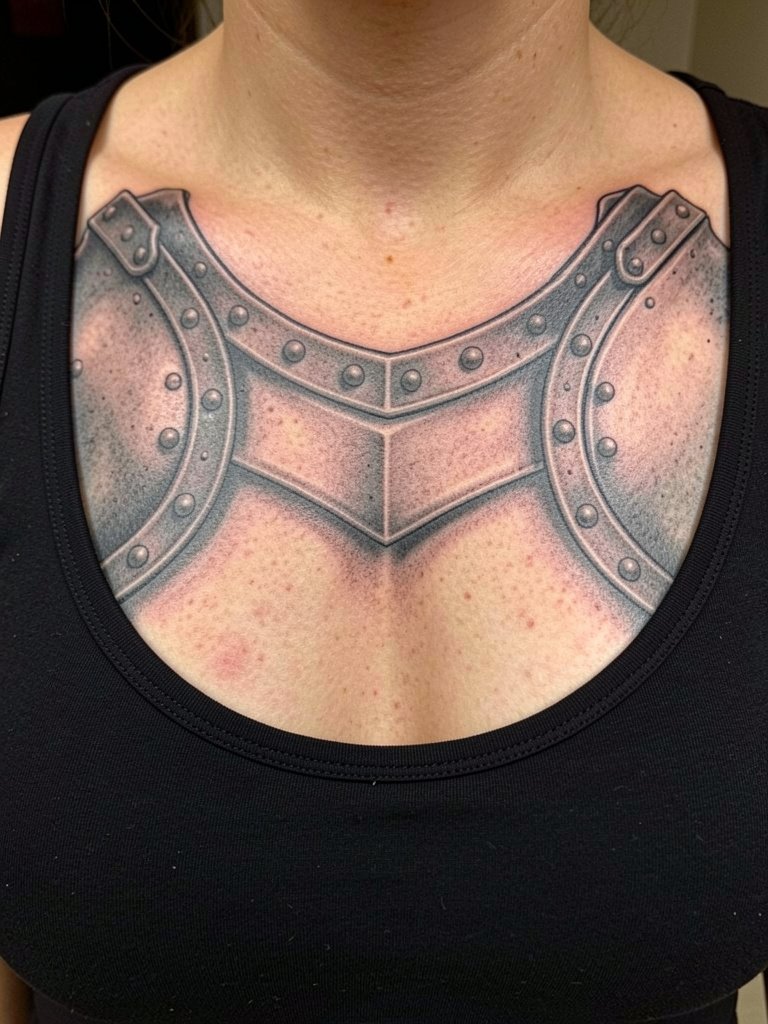
This broad chest piece reads like protective armor because of scale and negative space. Recommend it for someone who wants a literal, symbolic front-of-body statement. In a consultation bring reference photos that show exact rivet density and the width of shadow lines so the artist can map where highlights sit relative to your collarbones. Chest sessions are longer and feel like steady vibration rather than sharp, concentrated jolts. Expect two to four sessions with heavy blackwork saturation first and a second pass for refined shading. A common mistake is shrinking the breastplate too small so details bleed together as the skin ages. For show-off outfits pick shirts with scoop or boat necklines that naturally expose the upper chest, and try open-back tops for evenings when you want the piece visible.
2. Scripture Banner with Tiny Armor Icons on Forearm
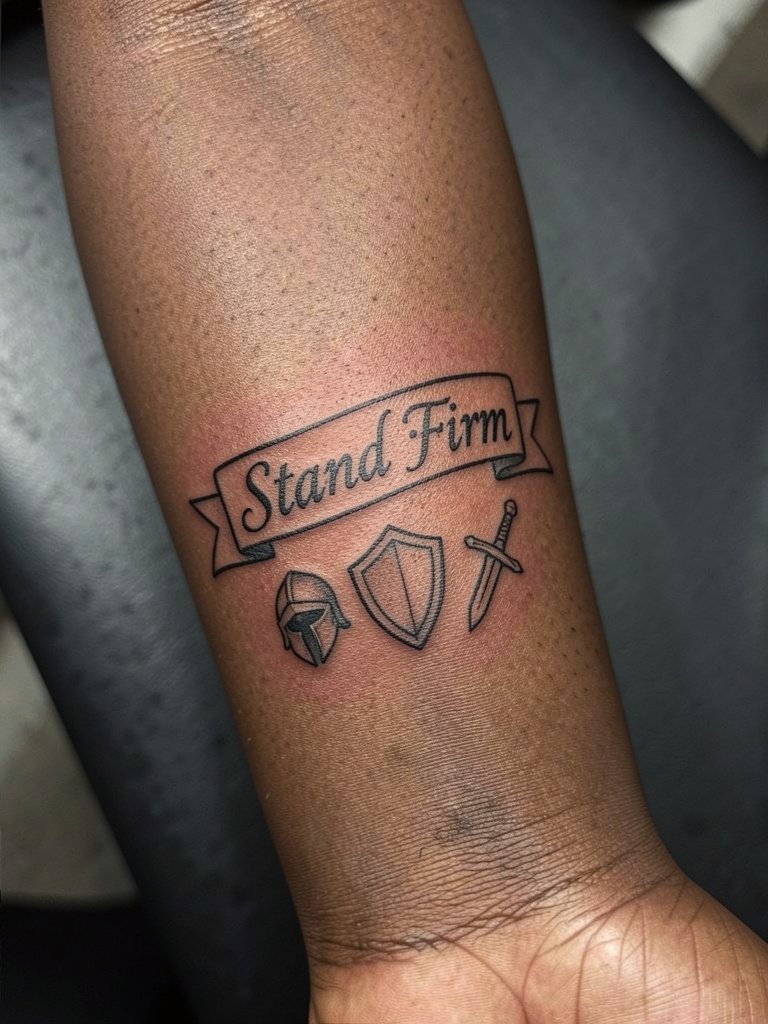
A forearm banner keeps the verse readable and portable. This style works best a bit larger than most Pinterest micro-scripts so the text does not blur in two years. Ask for slightly heavier linework on the lettering stroke so letters hold. Forearm work generally heals quickly, and you will feel a rubbing vibration during the session that eases after the first hour. The main mistake is using extremely tight cursive that collapses when the skin moves. For everyday wear this placement pairs with rolled sleeves and layered bracelets to frame the banner, and a lightweight linen button-up in normal worn state highlights the arm when you want to show it. Try a simple beaded bracelet like men's minimalist bracelet to complement the icons.
3. Half Sleeve: Helmet of Salvation and Sword of the Spirit
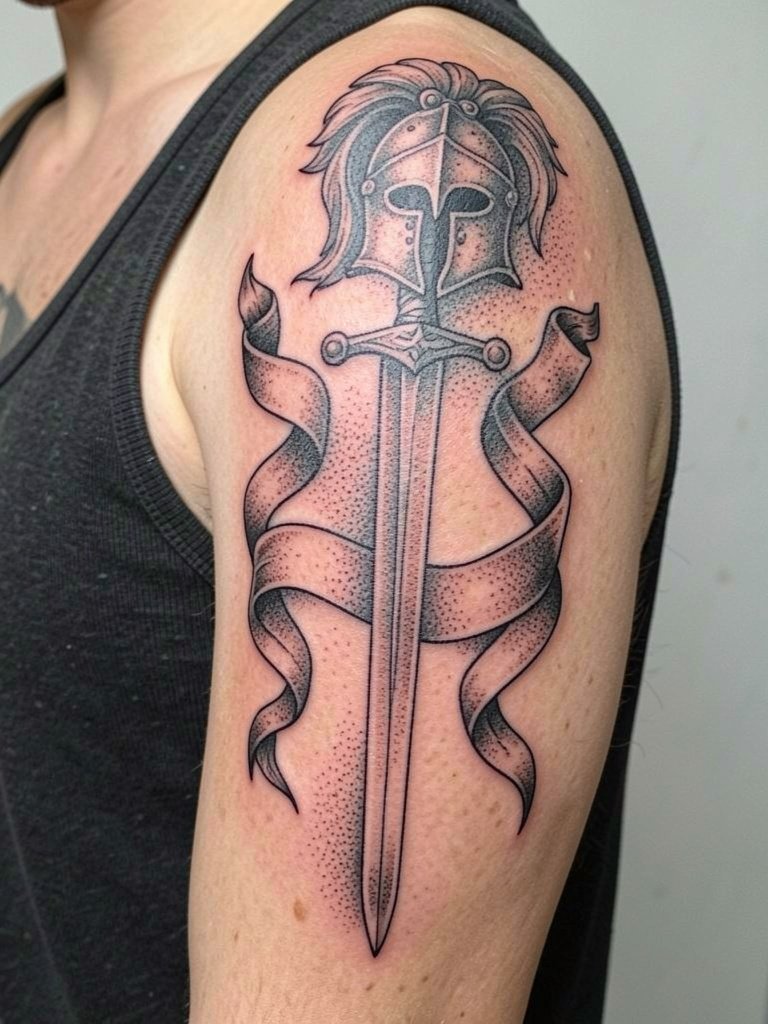
A half sleeve lets you combine the helmet and sword into a narrative composition without committing to a full torso canvas. This is ideal for collectors who want detail but still want the option to cover up. During the consult show scale references at three different sizes so the artist can place focal points at the shoulder cap and the arm's natural bend. Half sleeve sessions feel like medium endurance, often split into two or three blocks of three hours. Blowout risk is lower on the outer arm than on softer areas, but small script or tiny filigree near the elbow will age poorly. For showing it off choose sleeveless linen or cotton shirts, and consider a rolled-sleeve shirt to frame the artwork without covering the shoulder cap.
4. Belt of Truth, Subtle Wrist Band
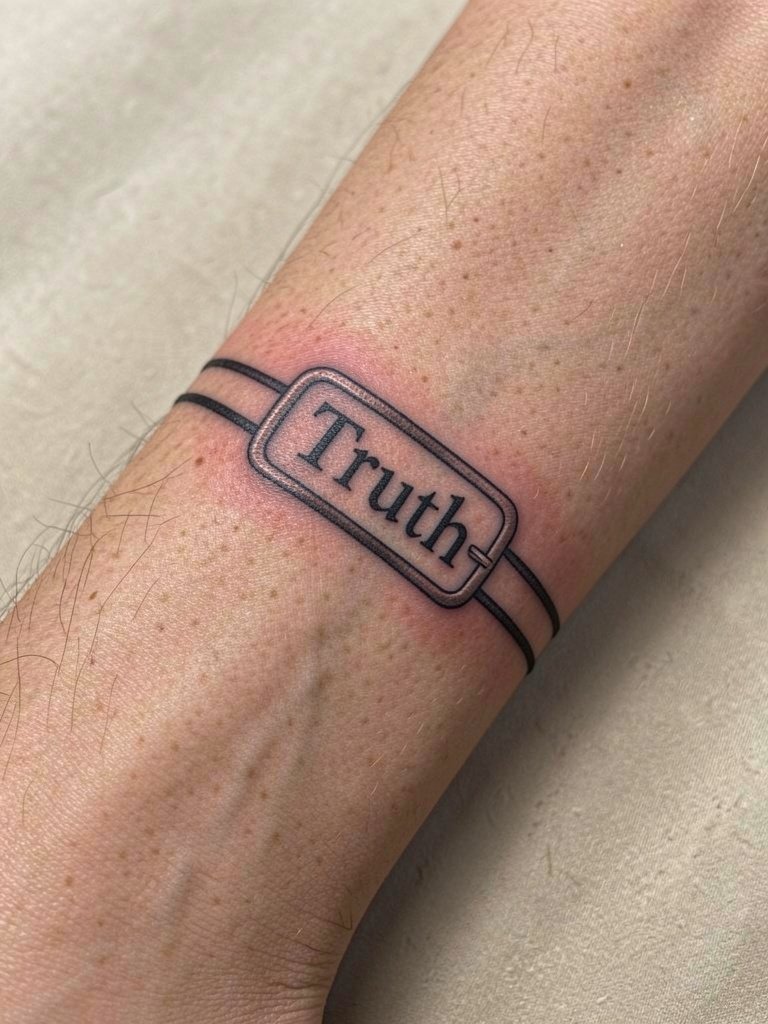
The belt idea works as wearable jewelry. Recommend a slightly wider band than people expect so the buckle detail keeps separation over time. For session prep wear a loose sleeve that can be rolled up without tight elastic. The wrist heals quickly but sees constant washing. The frequent friction and water exposure make thin single-needle bands prone to softening, so request a modestly heavier stroke on the buckle lines. Touch-ups are common around year two for wrist work. Style it with layered wristwear like a leather cuff or a fine chain bracelet, and try a slim leather bracelet that won't rub directly over fresh ink but complements the band once healed.
5. Shield of Faith, Distressed Engraving on Outer Arm
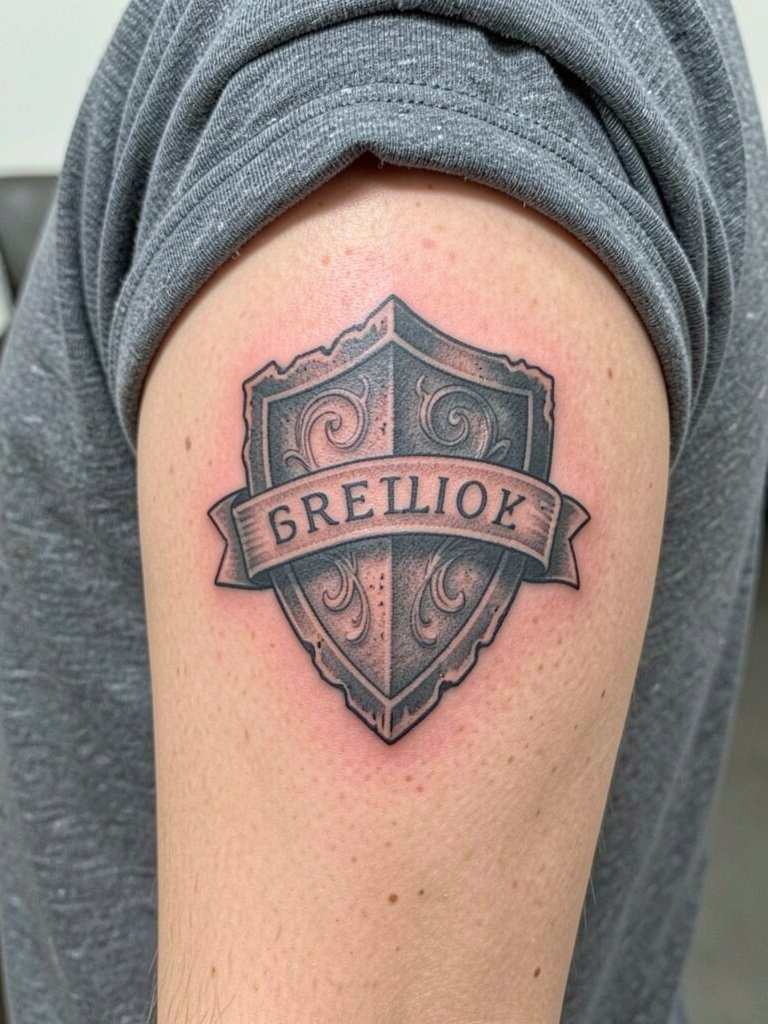
The shield reads well at medium size and holds detail because the outer arm is less likely to experience stretch. Recommend this for someone wanting an emblematic piece that ages into a worn, heraldic look. During consultation identify the level of distress you want so the artist spaces pitting and hatch marks accordingly. Sessions are moderate and often done in one two-hour block for a medium shield. A common error is cramming script into the shield center that becomes illegible later. For outfits, this placement looks sharp with short sleeves and textured knits. Pair with a short-sleeve henley to show the shield without overexposure.
6. Sternum Breastplate, Symmetrical Ornamental Form
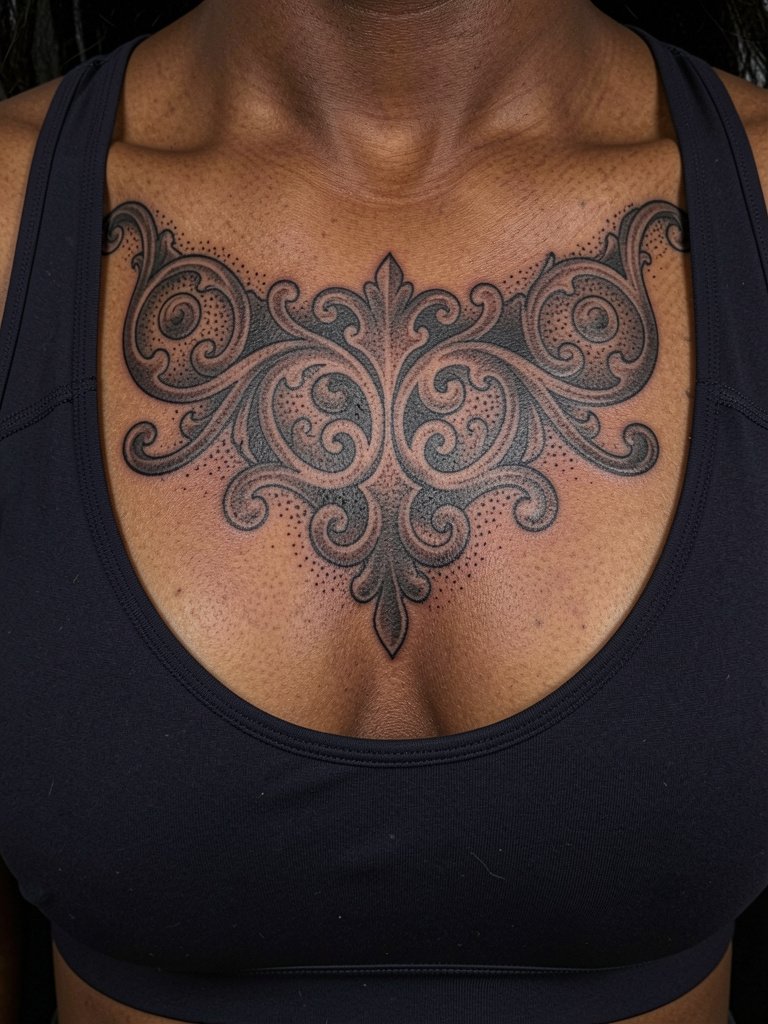
Sternum pieces need symmetry and breathing room to avoid early blur. One camp warns that the sternum and underbust area stretch and move enough that extremely fine filigree will lose definition within two years. The other camp says that with slightly wider spacing and conservative dot work the details settle and look refined, and they will show healed photos at three years to support that view. For this placement seek an artist experienced with chest symmetry and expect a higher pain level because the area is bony and thin. Wear a fitted sports bra to the session so the artist has access while keeping modesty. This placement often needs a touch-up at year one to sharpen delicate flourishes.
7. Minimalist Icon Set, Wrist or Ankle Trio
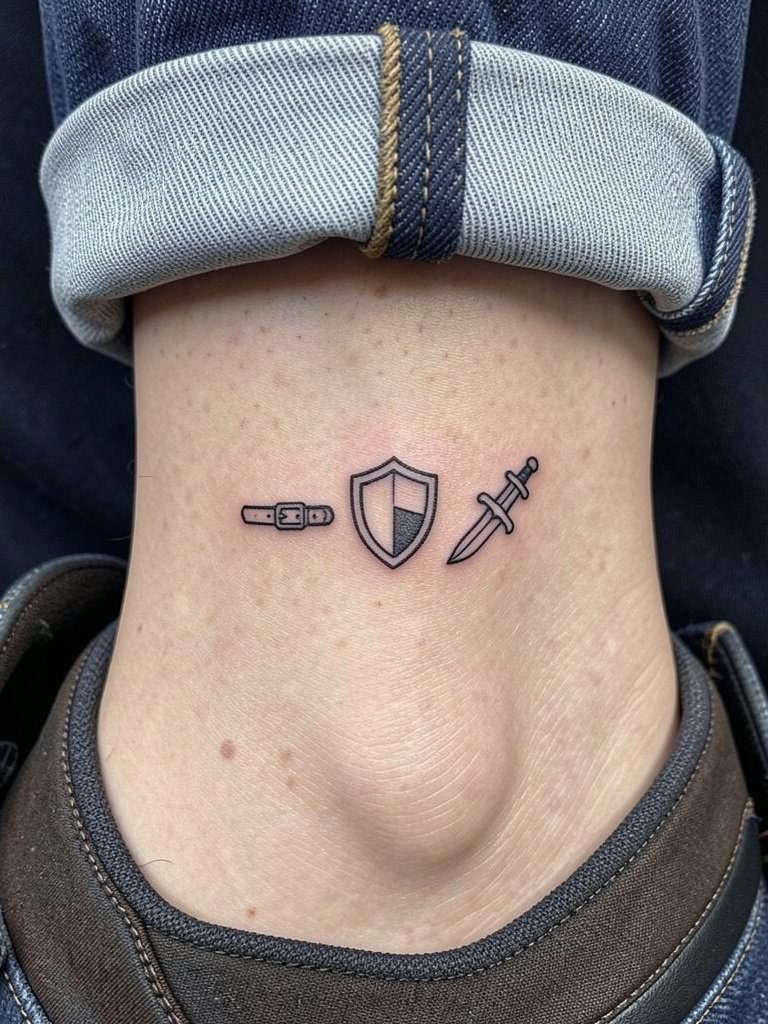
A set of tiny symbols keeps the message discreet and versatile. These work best when scaled to readable size rather than micro. The ankle and wrist are exposed to friction, so choose slightly heavier outlines. In the consult specify exact spacing between icons so they do not merge as the skin shifts. Sessions are short and feel like a sharp nested vibration near bone, especially on the ankle. Common mistakes include asking for hairline strokes that disappear. For footwear and outfits roll jeans or choose cropped trousers to show the ankle icons, and try low-top canvas sneakers to keep focus on the trio.
Pre-Session Essentials
The pieces above range from wrist bands to chest armor, so a few small items smooth the appointment and the first hours of healing.
-
Stencil transfer paper kit. Lets you preview exact placement for banners and shields on skin before needles touch down, which is crucial for symmetrical chest and sternum work.
-
Topical numbing cream. Applied as directed before longer sessions helps reduce the sting on ribs and sternum without affecting linework.
-
Thin protective film roll. Useful for small wrist and ankle designs in the first 48 hours when friction from shoes or sleeves is highest.
-
Fragrance free body wash. Gentle cleansing matters when showering healed armor pieces to avoid irritation around dense blackwork.
-
Aquaphor healing ointment. A mainstream, widely recommended ointment for the first day or two to lock in moisture for denser saturation areas like chest panels.
8. Full Back Piece with All Six Armor Elements
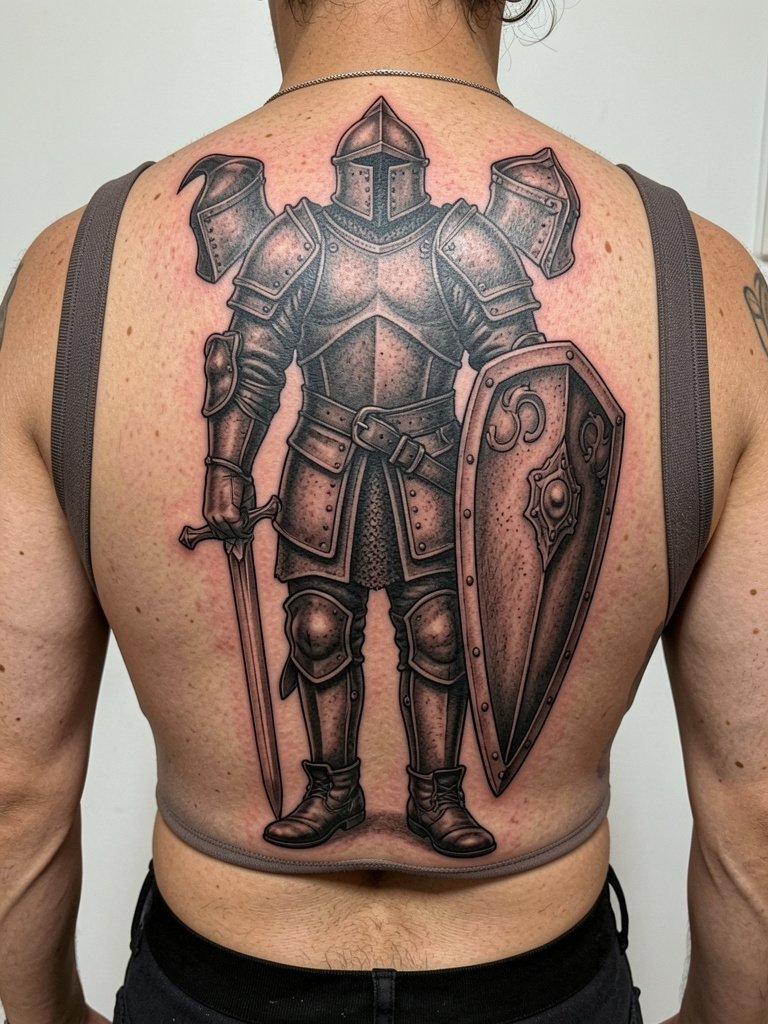
A back canvas gives the most design freedom and the best longevity for detailed armor elements. This option is for people ready to commit to multiple sessions and a longer healing window. In the consult bring full-body reference photos so the artist can scale the armor to your back contours. Back sessions feel like endurance work with breaks between longer blocks. A common error is overfilling the back with tiny, competing focal points; instead pick a single central focal piece and supporting elements. For clothing, open-back dresses or racerback tops in normal worn state display the upper back without rubbing, and a lightweight kimono cover is a good post-session layer.
9. Cross-Integrated Armor with Scripted Verse
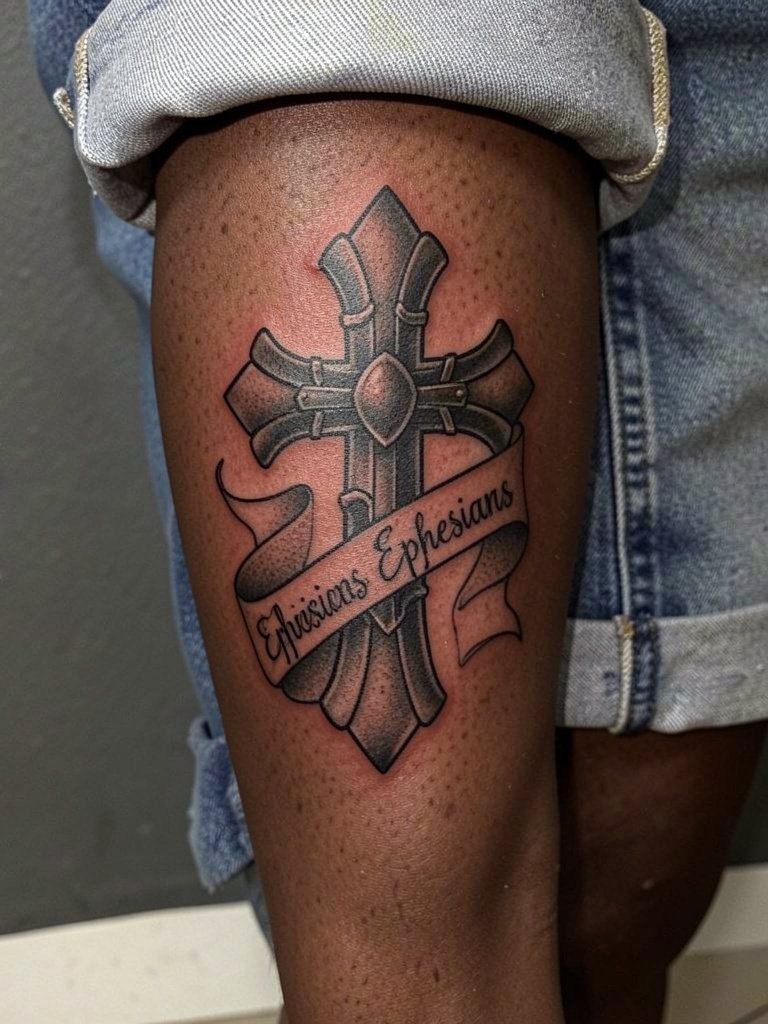
Merging a cross with armor elements gives instant Christian recognition while keeping the verse embedded. Calf placement handles larger script well and usually ages cleanly. For the consult show the exact wording you want so the artist can set letter spacing against the cross silhouette. Calf sessions feel firm but tolerable and usually complete in one long sit for medium pieces. Beware cramming long verses into narrow spaces. Pair it with mid-calf boots or cropped trousers to display the cross, and try casual ankle boots for a framed look when dressing up.
10. Ornamental Armor with Floral Integration on Shoulder
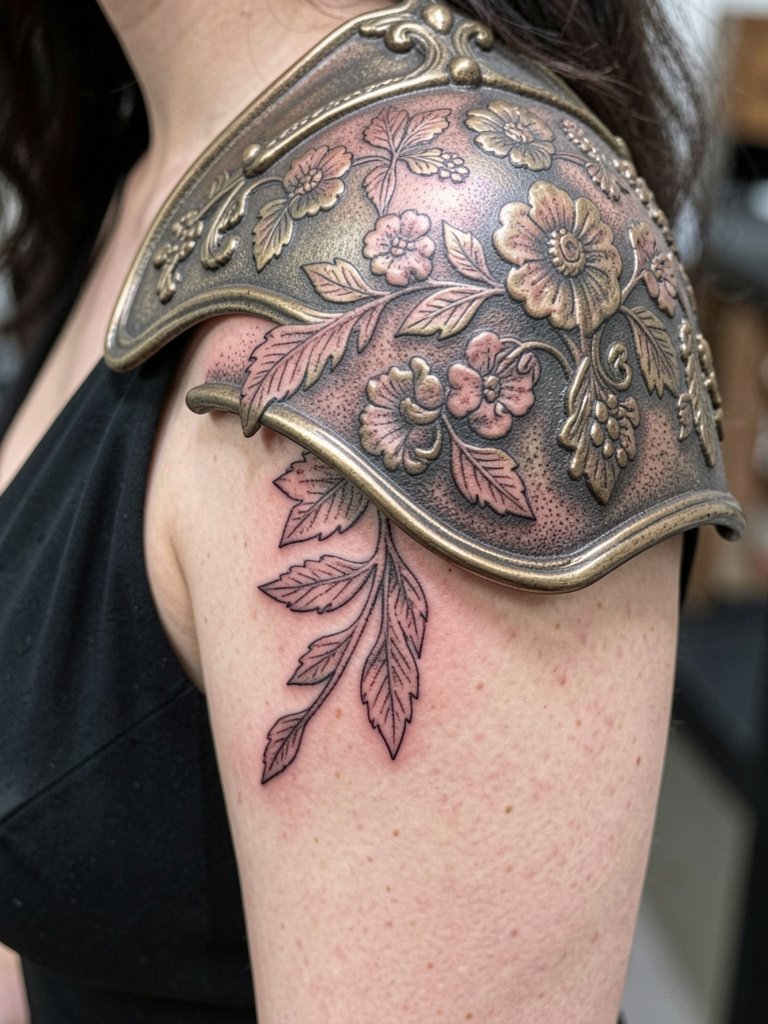
Floral elements soften armor and make it wearable with feminine silhouettes. The shoulder cap provides a round plane that holds ornamental detail well. Ask for the flowers to have open negative space so petals do not muddy with the plated lines as the shoulder moves. Sessions are moderate and the area tolerates heavier saturation. A common mistake is too many tiny petals near the shoulder seam that blur. For outfits, open-shoulder tops and wrap dresses highlight the piece, and a sleeveless linen dress keeps the artwork visible without friction.
11. Sword of the Spirit, Forearm Vertical Placement
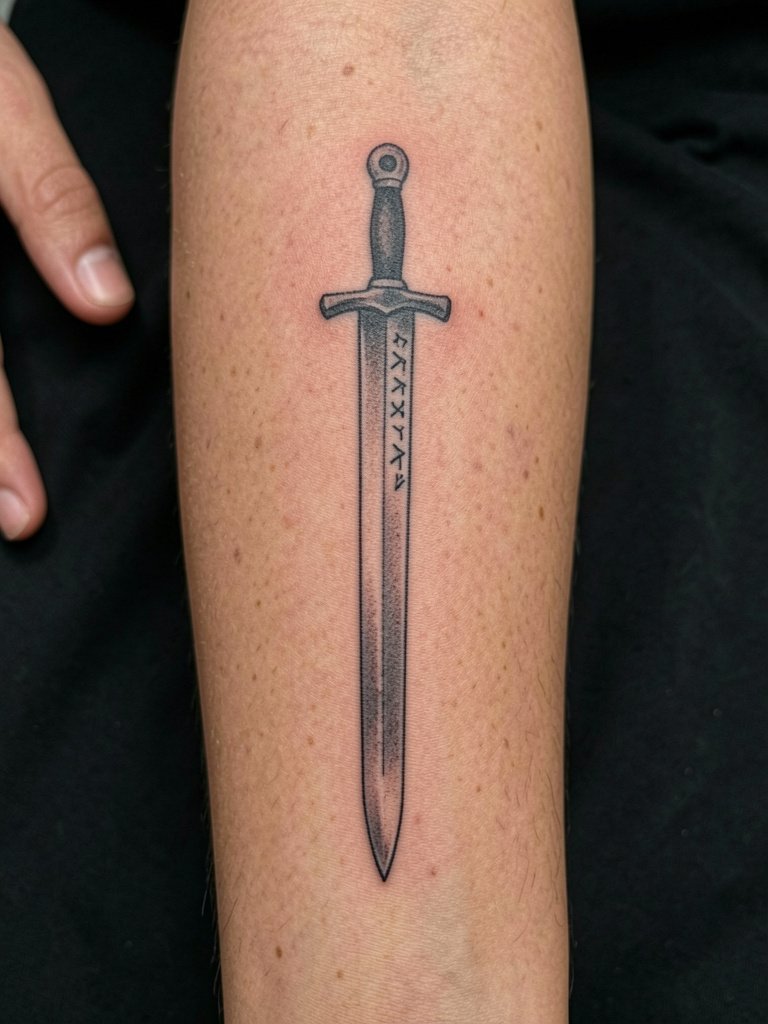
A vertical sword reads well on the inner forearm and can incorporate brief inscriptions along the blade. This is a good fit for first-timers who want a medium-length piece that is easy to conceal. Request the exact inscription in your consult so the artist can size the lettering to match the blade width. Inner forearm sessions are typically comfortable but feel vibratory when the needle passes over tendons. Watch for the common error of placing too much fine detail on the blade edge that later blurs. For showing it off wear rolled sleeves and a slim cuff watch that does not sit over the design, or try a minimal leather watch strap to complement the vertical line.
12. Ribcage Side Torso Armor Panel with Stipple Shading
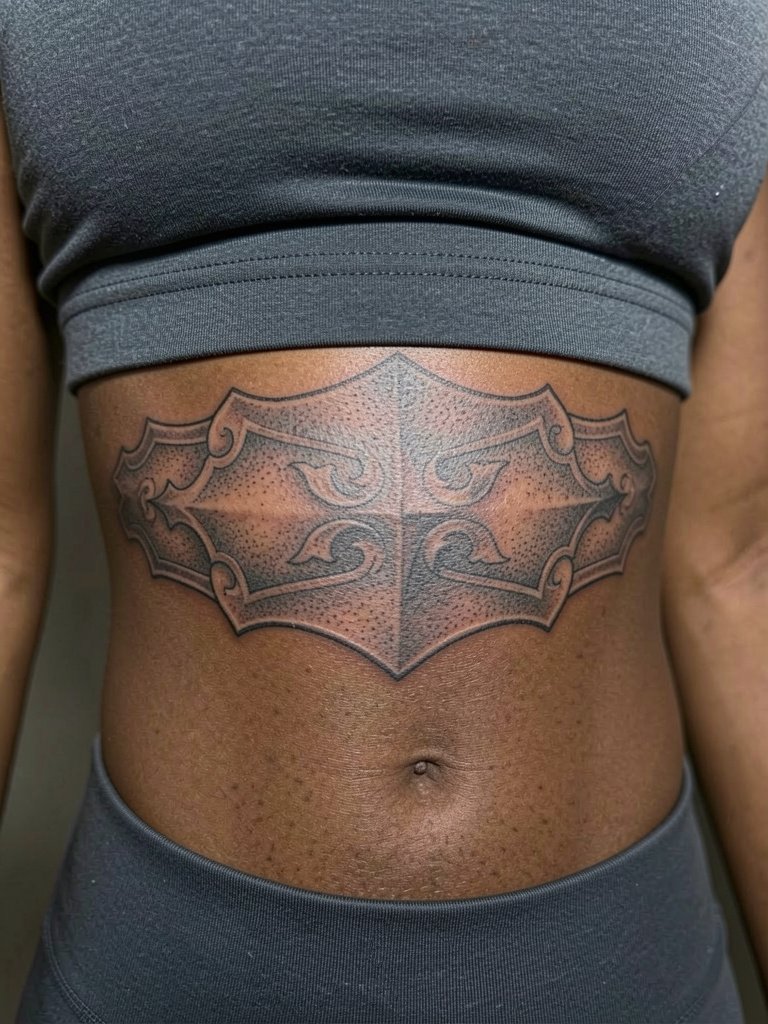
Ribcage armor is dramatic but controversial in terms of fine-line longevity. One camp argues that fine single-needle work on ribs blurs within a couple of years because the skin stretches and moves with breathing. The other camp insists that slightly wider spacing and conservative needle depth let fine work settle and remain legible, and they will point to healed portfolio pieces as evidence. This placement is high on the pain scale and the session will feel intense in short bursts. If you choose ribs plan for a two-step approach with a heavy outline pass first and a later shading session. For session comfort wear a fitted sports bra or crop top so the artist can access the area without fabric shifting.
13. Circular Seal on Shoulder Blade with Six Icons
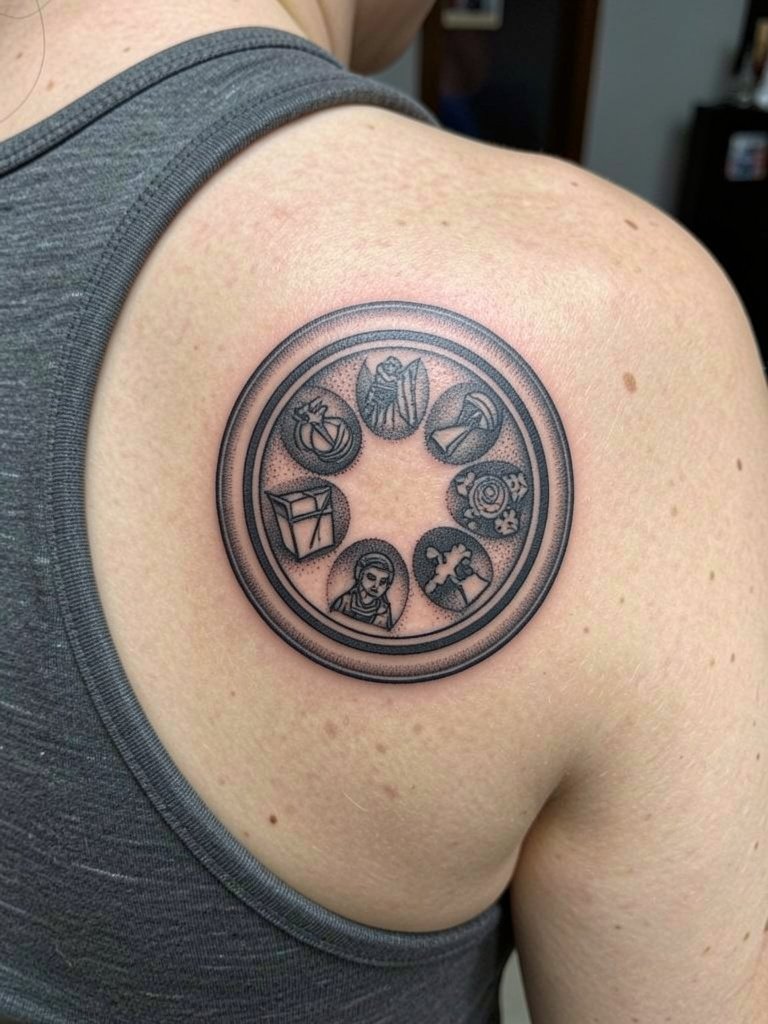
A seal compresses all six armor symbols into a single wearable emblem that works well on the shoulder blade. The shoulder blade offers a flat table that preserves circular symmetry. During the consult specify which two icons should stay immediately legible in small scale so the artist can prioritize those lines. Sessions are moderate and the area tolerates heavier blackwork, but the shoulder blade tenses when the arm is raised so stay relaxed to reduce movement. A common error is centering the seal too close to the spine where distortion occurs. For outings wear racerback or open-back tops to show the seal, and consider a racerback tank for casual display.
14. Chainmail Cuff Around the Wrist
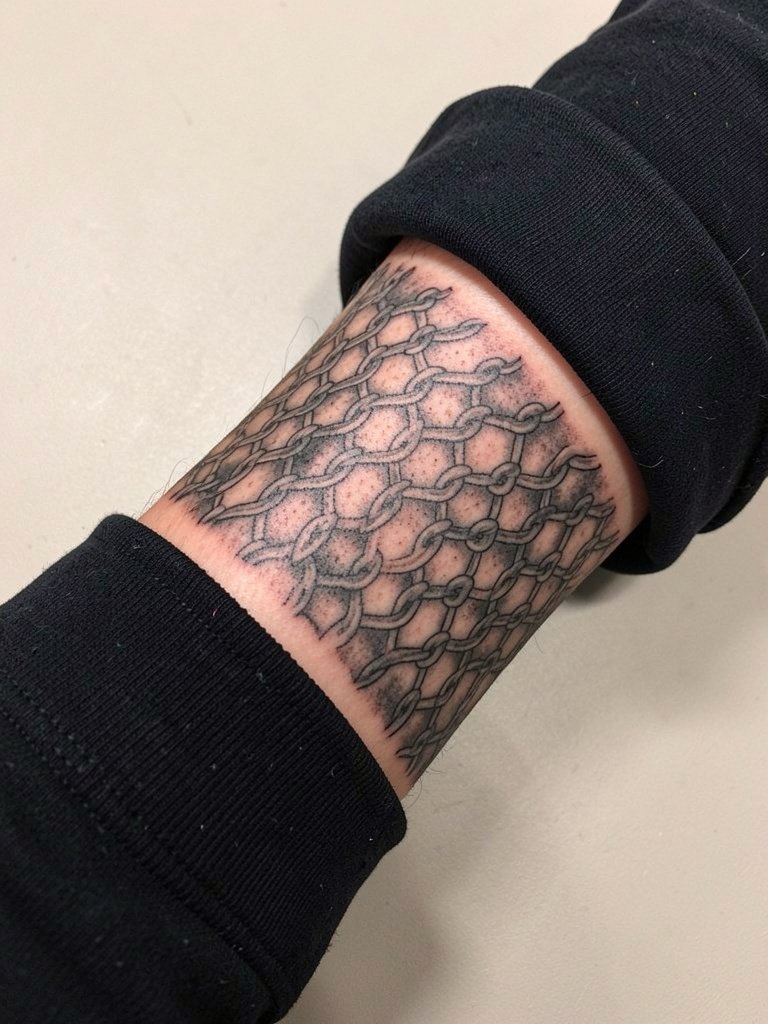
A cuff gives the visual of armor without the bulk of metal. The wrist sees lots of motion and washing, so choose slightly larger interlinks rather than microscopic chain details. In the consult ask the artist to space interlinks so touch-ups are less likely to be needed. The session is quick and focused, but the bone close to the wrist can feel sharper. Avoid asking for high-contrast tiny texture that will soften. For styling roll sleeve cuffs or opt for cropped jackets to show the cuff, and pair with a textured knit sweater that frames the wrist without rubbing.
15. Nature-Inflected Armor, Vines and Leaves Woven Through Plates
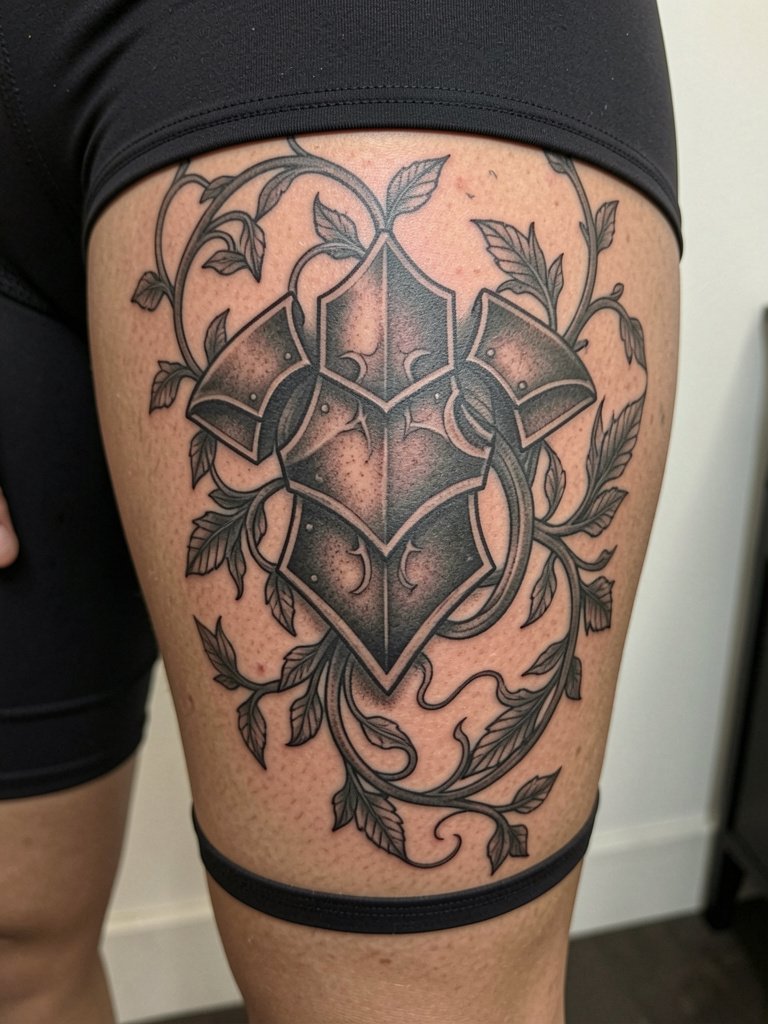
Combining organic life with plates creates a softer metaphor for protection. Outer thigh placement is forgiving and holds larger ornamental areas. Bring references of the specific leaves and the style of plate engraving you want so the artist can balance negative space. Thigh sessions are comfortable for longer blocks, but the skin there can be softer so shading needs careful saturation. A frequent mistake is over-detailing small leaf veins that disappear. For clothing, fitted shorts and high-slit skirts in normal worn state show the thigh artwork, and a flowy midi skirt works well for summer events.
Frequently Asked Questions
Q: How do I find healed Ephesians 6 armor portfolios without naming artists?
A: Search platform tags and keywords that focus on healed work and placement. Try hashtags like #ArmorOfGodTattoo, #Ephesians6Ink, and #HealedTattoo on Instagram and TikTok while using location filters for your city. Reddit threads under tattoo communities often include before and after photos from multiple artists. Look specifically for "healed" and a time frame like "2 year healed" to see how styles settle.
Q: Will a small shield or script hold up on darker skin tones?
A: Yes, but sizing and contrast need adjusting. On medium and dark tones ask for bolder linework and slightly larger letter sizes so saturation reads clearly. Artists who work across a range of skin tones will show healed examples, and you should bring those images so they can match scale and saturation.
Q: What should I wear to a sternum or ribcage session for maximum access and modesty?
A: A fitted sports bra or bandeau and high-waisted pants in their normal worn position make access straightforward while keeping you comfortable. These pieces allow the artist to reach the sternum or side ribs without you having to undress, and they prevent fabric from shifting during longer sessions.
Q: How often do Armor of God tattoos need touch-ups, realistically?
A: It depends on placement and line weight. Dense chest and back pieces often need fewer touch-ups in the first five years than thin single-needle wrist or rib work. Expect wrist and ankle bands to require a touch-up around year two, while a well-saturated chest emblem might go longer without a revisit.
Q: Is there a debate about fine-line religious tattoos on the ribs and sternum?
A: Yes, artists are split into two camps. One group says fine single-needle work on ribs and sternum blurs quickly because those areas move and the skin texture is thin. The other group argues that with slightly wider spacing and conservative depth the lines can settle cleanly and stay legible, and they point to healed photos to support that position.