
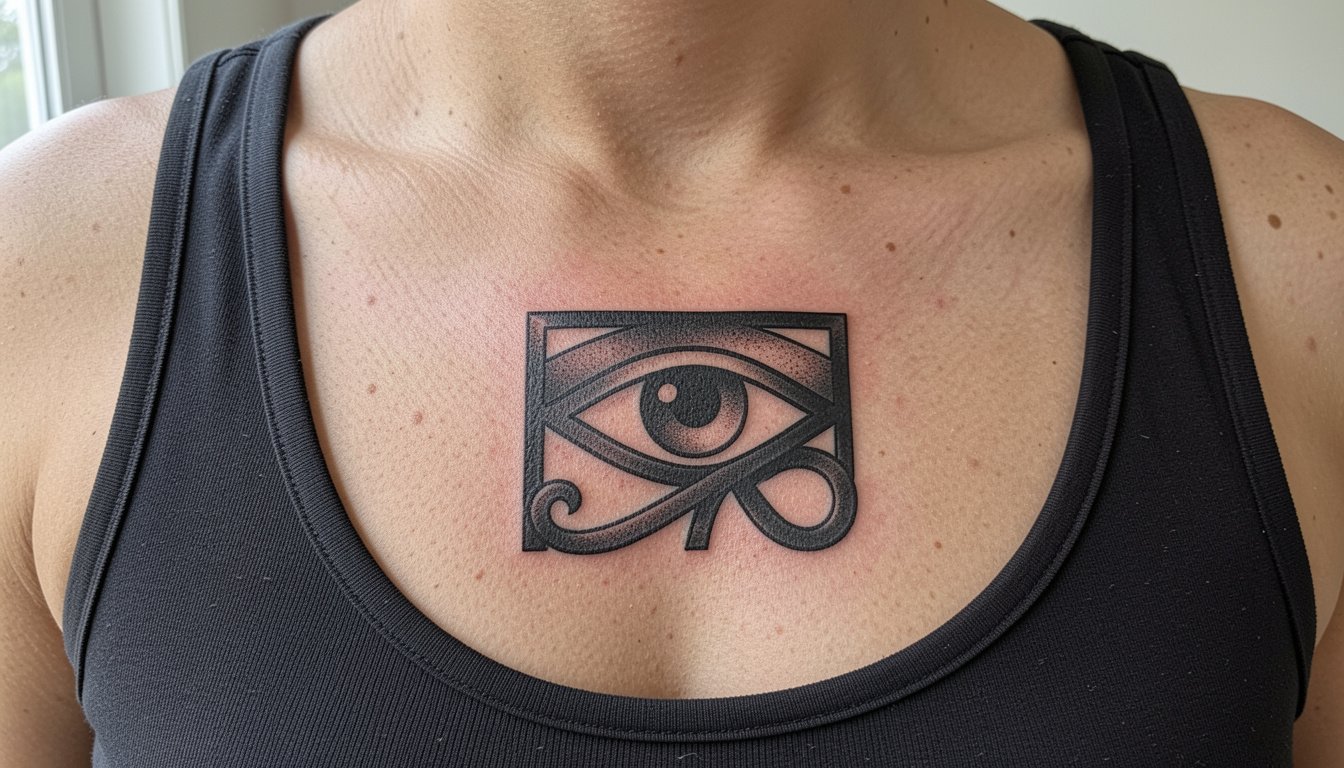
The bold Eye of Horus pieces that still read crisp after five years are not the tiny filigree versions you see on trend boards. Heavier linework and planned spacing keep the symbol readable as skin settles, and placement makes a bigger difference than you expect. Consider how the design will age on the exact skin piece you want, and use the early consultation to lock in line weight and breathing room for lasting clarity.
1. Minimal Single-Line Eye on Inner Wrist
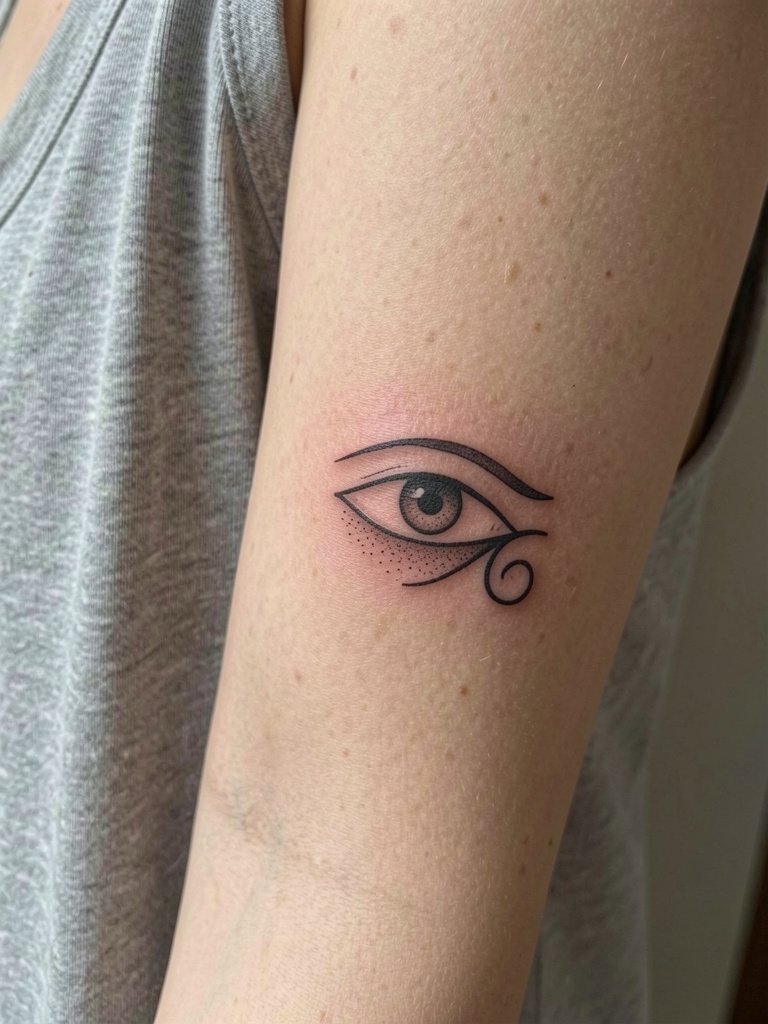
A tiny single-line Eye on the inner wrist is delicate and discreet. Recommend slightly heavier single-needle line weight than the reference image so the detail does not soften into a blur at year two. Expect a session of about 30 to 45 minutes and wrist sensitivity at a moderate level because of thin skin and underlying structures. The common mistake is asking for ultra-fine filigree at one inch across. Ask for scale mockups at three sizes during your consultation so you can see how the eye reads at six months and at two years. For showing it off, rolled-up linen shirts pair well and protect the area in sunlight while letting the symbol peek through. rolled+linen+shirt
2. Block Blackwork Eye on Upper Arm

Solid blackwork reads strongly on the upper arm and often ages the best for symbolic pieces. The session tends to be 60 to 90 minutes depending on saturation needs. Outer arm skin handles saturation well and the blowout risk is lower than on the inner wrist. A common error is packing small internal details into saturated fills, which disappear as the ink spreads slightly. During consultation, request a healed-example comparison for saturated blackwork on similar skin tone so you know how dense the shadow will look at two years. Pair the placement with a casually cropped tee or short-sleeve fitted tee to let the motif sit in view while staying easy to cover.
3. Tiny Scripted Eye Under the Eye Socket
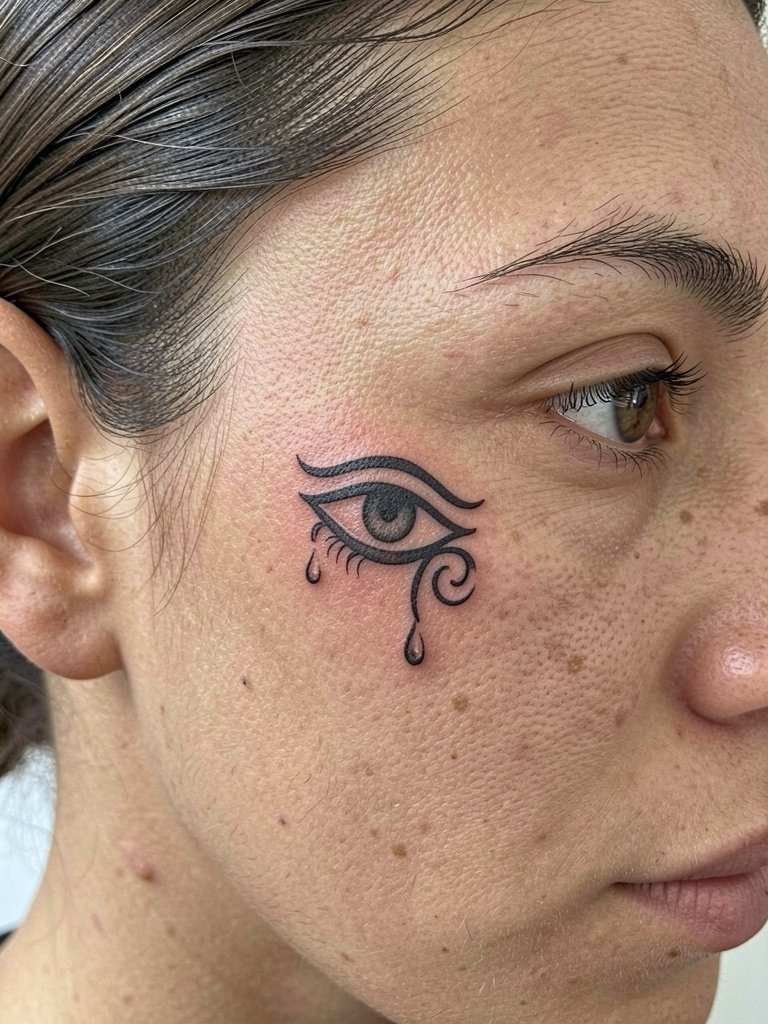
Facial placements demand specialist experience and a clear conversation about longevity. One camp argues face skin shifts and swells in ways that blur micro-detail quickly. The other camp says a seasoned facial tattooist using slightly heavier single-needle work can keep those details readable for years. Expect a short but intense session and a higher immediate redness level. Key consultation items include needle depth strategy and a plan for touch-up at the six to twelve month mark. Most people wear minimal makeup during the first week and sleep on a clean pillowcase. Note that not all studios accept face work, and this requires a licensed specialist.
4. Geometric Framed Eye on the Sternum
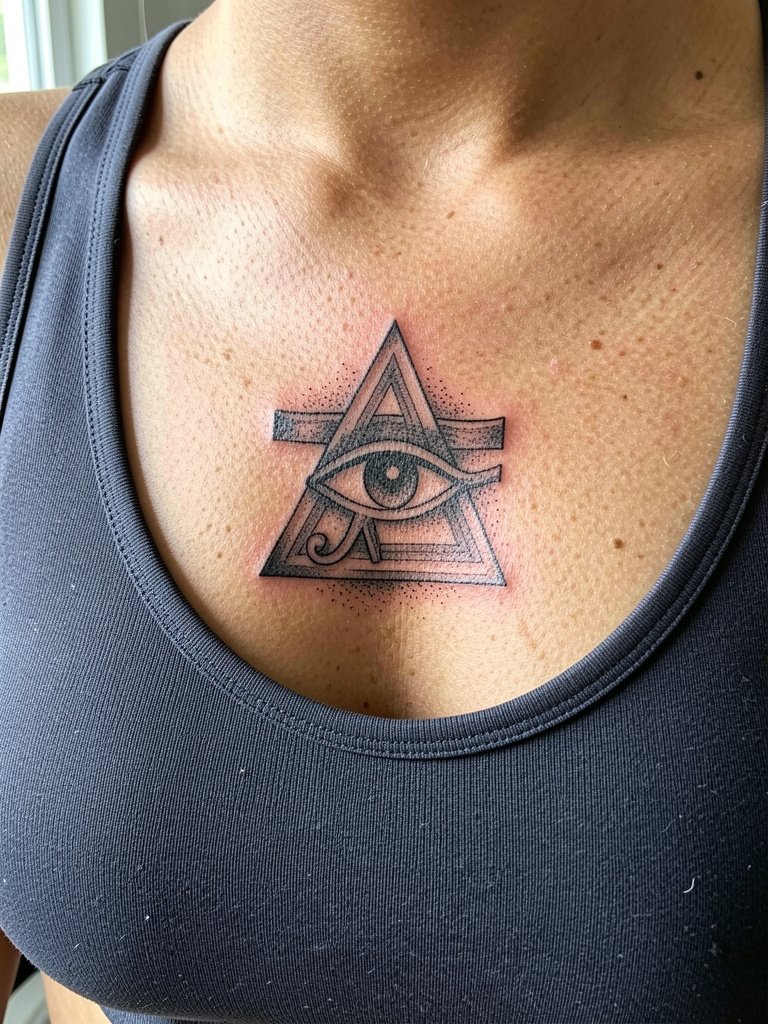
Sternum pieces sit on mobile skin that stretches with breathing. The usual mistake is compressing complex geometry into a narrow band. I recommend wider spacing between the triangles and a controlled stipple for the inner shading so the geometry retains shape as the chest moves. Pain level is higher here and sessions run longer when symmetry is essential. Ask for a mirror stencil check while you are upright so the artist can confirm how the design aligns with the sternum at rest. For the appointment, wear a fitted sports bra or bandeau so the artist has clear access without you needing to adjust clothing. Origin sensitivity note The Eye of Horus is an ancient Egyptian symbol, so discuss cultural context with your artist if you want authentic visual cues.
5. Neo-Traditional Eye with Scarab Accent on Shoulder Blade

Shoulder blade work ages well because of thicker skin and less friction. Neo-traditional color pops at year one then gently patinas over time depending on your sun exposure. Plan a single two- to three-hour session for a medium-sized motif with color layering. A frequent mistake is asking for saturation levels that require touch-ups every year. For longevity, ask the artist for a two-stage color pass and a realistic touch-up timeline at six to twelve months. The shoulder blade looks great with open-back tops and open back midi dresses for nights out.
6. Fine Line Eye Nestled in a Floral Mandorla on the Thigh
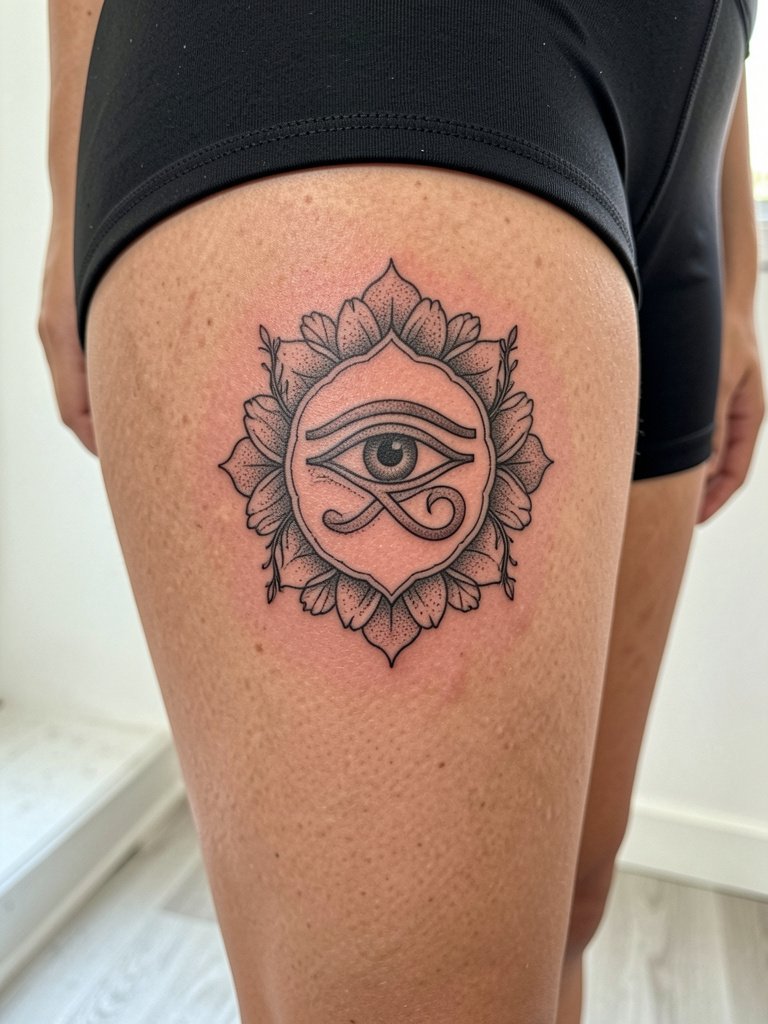
The inner-thigh-adjacent pieces read like jewelry when placed with room for the mandorla. Expect a gentler pain curve than ribs but more than outer thigh. Because fine line is used, avoid requesting ultra-tiny vine filigree next to heavy stipple. The common failure is packing too much detail into a small footprint which yields indistinct areas after healing. Ask the artist to show how the design scales at four versus six inches. For the session, wear modest shorts you can pull down or roll without pressing on the area, such as fitted bike shorts. Cultural note When combining Egyptian motifs and floral elements, be clear about whether you want historically influenced forms or more decorative interpretations.
Session Day Picks
These first six placements include high-contact zones and delicate line work, so a few practical items smooth the session and the first week.
-
Stencil transfer paper kit. Lets you preview line weight on skin before committing, helpful for the wrist and thigh ideas above.
-
Topical numbing cream. Applied 45 minutes before reduces edge pain on sternum and inner forearm without changing how the ink settles.
-
Thin protective film roll. Keeps wrist and ankle pieces protected during early wash routines and typing.
-
Fragrance-free gentle body wash. Cleans the healing area without irritating delicate linework from the first shower.
-
Aquaphor healing ointment. A mainstream option for initial moisture lock that many artists recommend for small blackwork pieces.
7. Illustrated Eye with Hieroglyphic Band on Forearm

A forearm band combines readable placement with enough space for small hieroglyphic elements. I recommend asking for slightly bolder hieroglyph strokes than the main eye so the script stays legible at two years. Expect a one- to two-hour session and moderate pain. A common mistake is compressing the band too tightly around the curvature, which can warp the symbols as the arm rotates. During the consult, ask the artist to trace the band on your arm in both flexed and relaxed positions. For outfits that show it off, try rolled-up sleeves or a loose drawstring linen pant for a relaxed, coordinated look.
8. Dot-Work Eye with Crescent on Ribcage
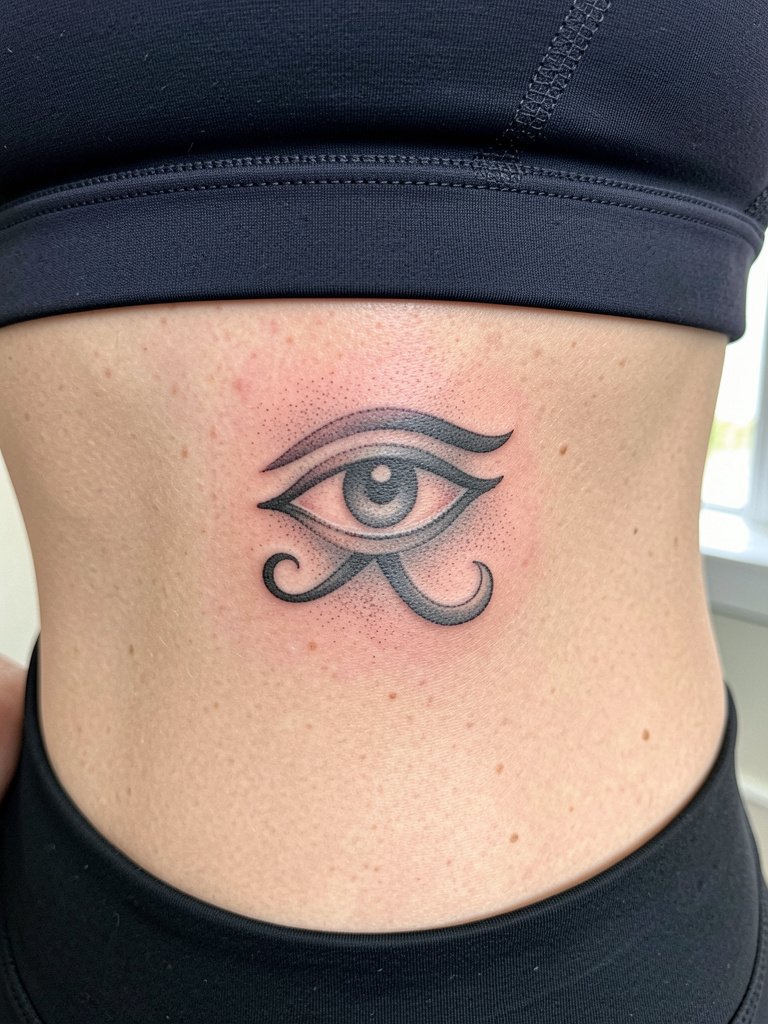
The ribcage is a classic spot for detailed dot work but it is also a high-pain area. Fine dot gradients can look ethereal at six months then lose crispness if packed too densely. Artists disagree openly about fine line on ribs. One camp argues ribs move and stretch too much and fine detail blurs within two years. The other camp believes slightly wider spacing and careful depth keep the dot work intact, and they point to multi-year healed images as proof. If you want dot gradients to last, ask for a test panel of stipple density on comparable skin during consult. Expect a longer session and plan breaks.
9. Watercolor Wash Eye with Minimal Line on Calf
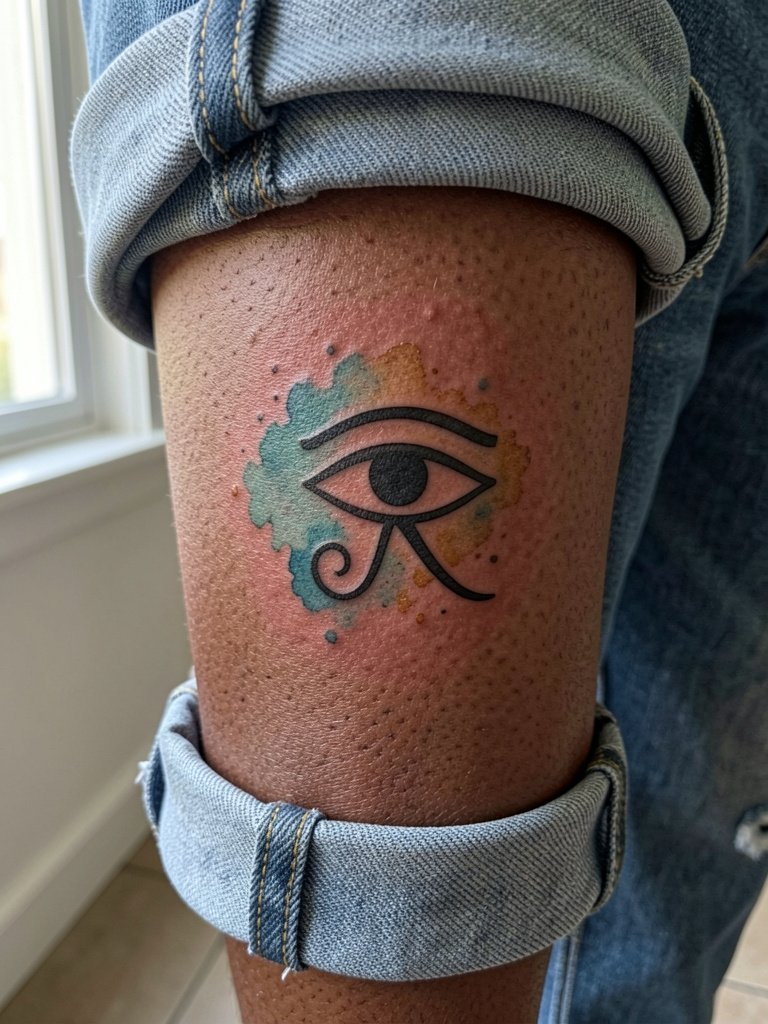
Watercolor effects look striking on the calf because the area is low friction and has a larger canvas. The risk is color migration in pale washes if the initial layer is too thin. A practical consultation item is to confirm color saturation points and a touch-up plan at six to twelve months to refresh soft washes. Calf sessions are comfortable for most people and generally need a single two-hour visit for a mid-sized piece. For showcasing the piece, cropped jeans or skirts reveal the calf, so try cuffed denim or a midi with a slit for evenings. cuffed+denim+jeans
10. Tiny Eye on the Side of a Finger

Finger tattoos are highly visible but have the highest touch-up demands. The typical mistake is requesting very fine details that the finger will not keep for more than a year. For a finger eye, plan on an initial short session and expect touch-ups at six to twelve months. Tell the artist you want slightly heavier contour lines so the eye remains legible through frequent hand washing. Pain is sharp but brief on the finger because of thin tissue. Avoid hand creams with fragrances during healing, and note that typing and manual work will increase wear.
11. Ornate Eye with Ankh Integration on Lower Back
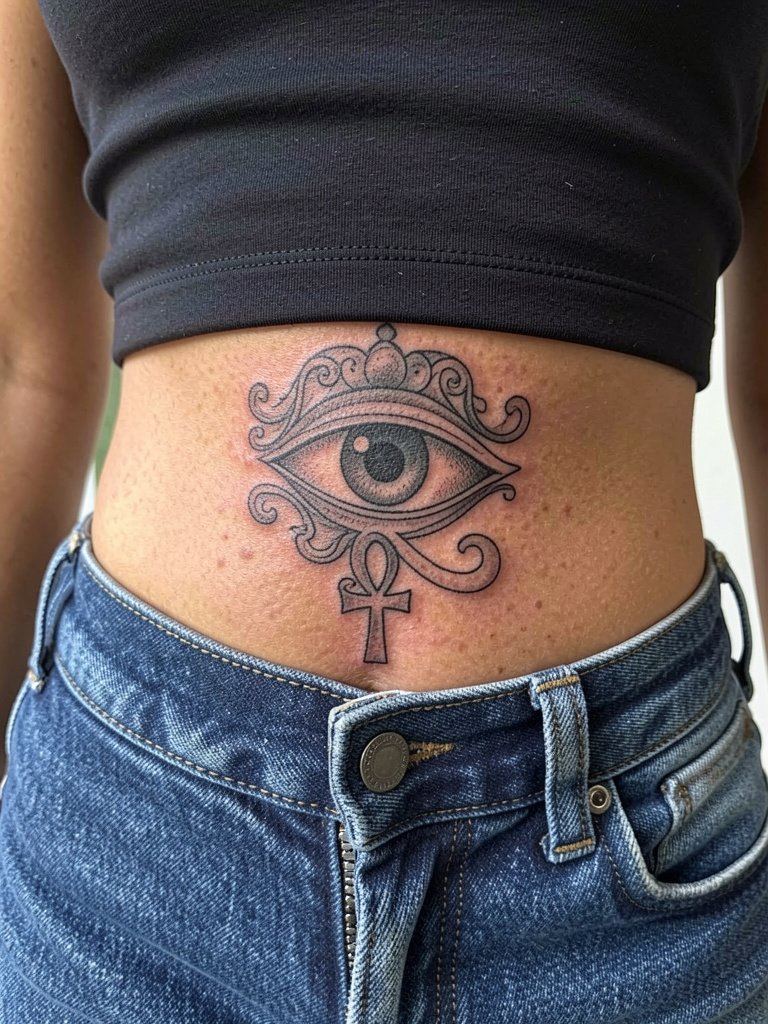
Lower back placement offers a broad canvas for ornate combinations and generally handles detail well when sized appropriately. The most common mistake is compressing dense filigree into too small an area which muddies as the skin moves. Expect a one- to two-hour session. For consultation, have the artist show how the Ankh sits within the Eye when you bend and when you are upright so symmetry remains consistent. For clothing that complements it, high-waist jeans and cropped tops work to frame the lower back without rubbing the piece.
12. Stippled Eye Framed by Scarab on the Hip
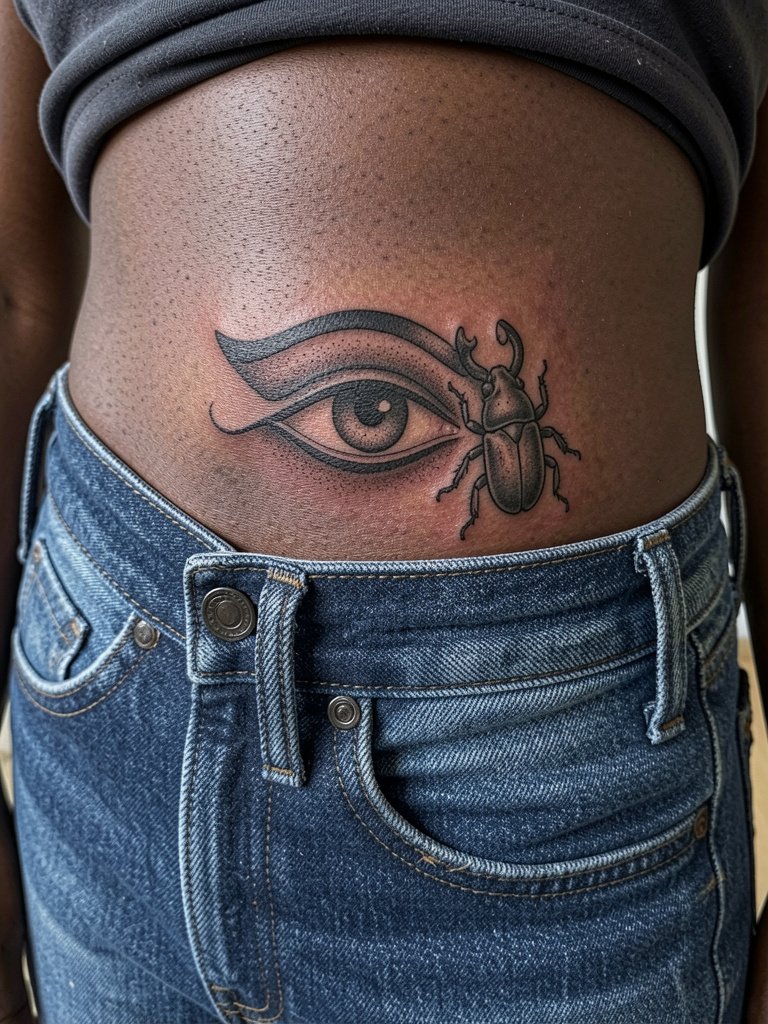
Hip tattoos can be sensual and private while still showing with low-rise clothing. Pain is moderate and session time is typically one to two hours for a mid-sized piece. The usual error is placing fine detail too close to the waistband where friction speeds fading. During the consult, ask for the exact vertical placement relative to your natural waistline and for mockups with your preferred pants. For revealing options, low-rise jeans and cropped tees show the scarab and Eye in movement. Respect note When combining Egyptian symbols with personal imagery, clarify whether you want historically informed design elements or decorative fusion.
13. Chain-Linked Eye on Collarbone
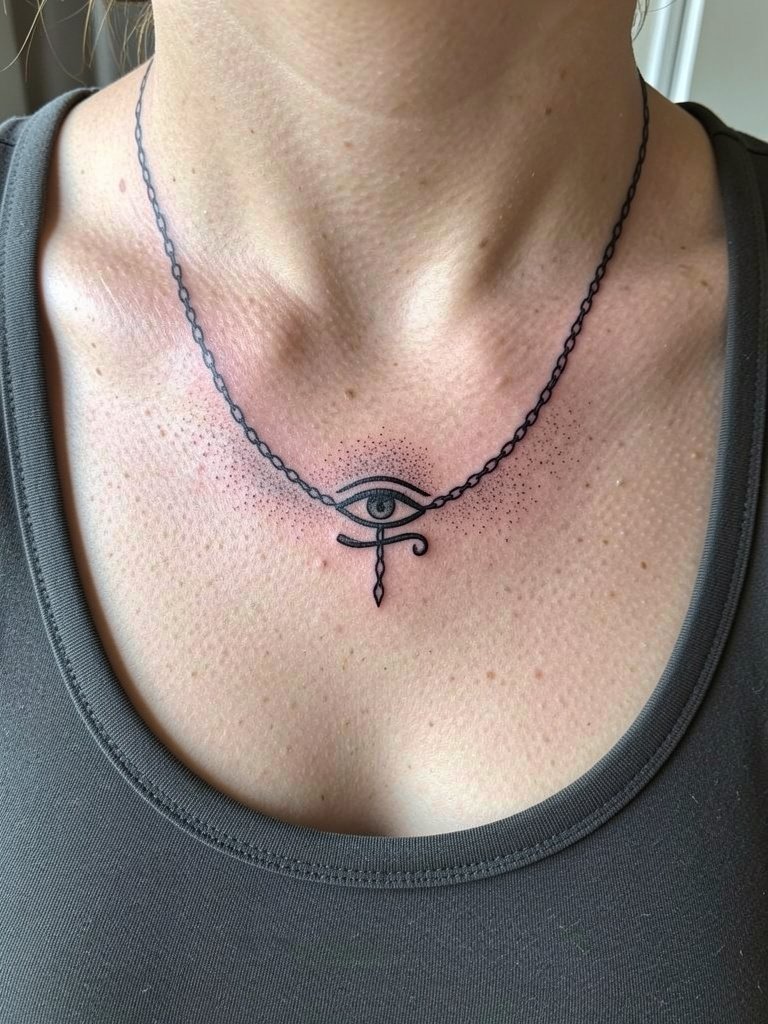
Collarbone chains read like jewelry and often suit those who want a visible but refined symbol. The pain is moderate because the area is bony. The common mistake is having the chain too thin which fades unevenly with movement and sun exposure. Ask the artist for slightly increased line weight on the chain links and verify how the chain drapes when you move your shoulders. Sessions are typically 45 to 90 minutes. For show-off outfits, open-neck tops or thin-strapped dresses pair naturally with a collarbone chain and keep the Eye visible. scoop+neck+tank
14. Small Black Eye Inside a Mandala on the Palm-Side Wrist
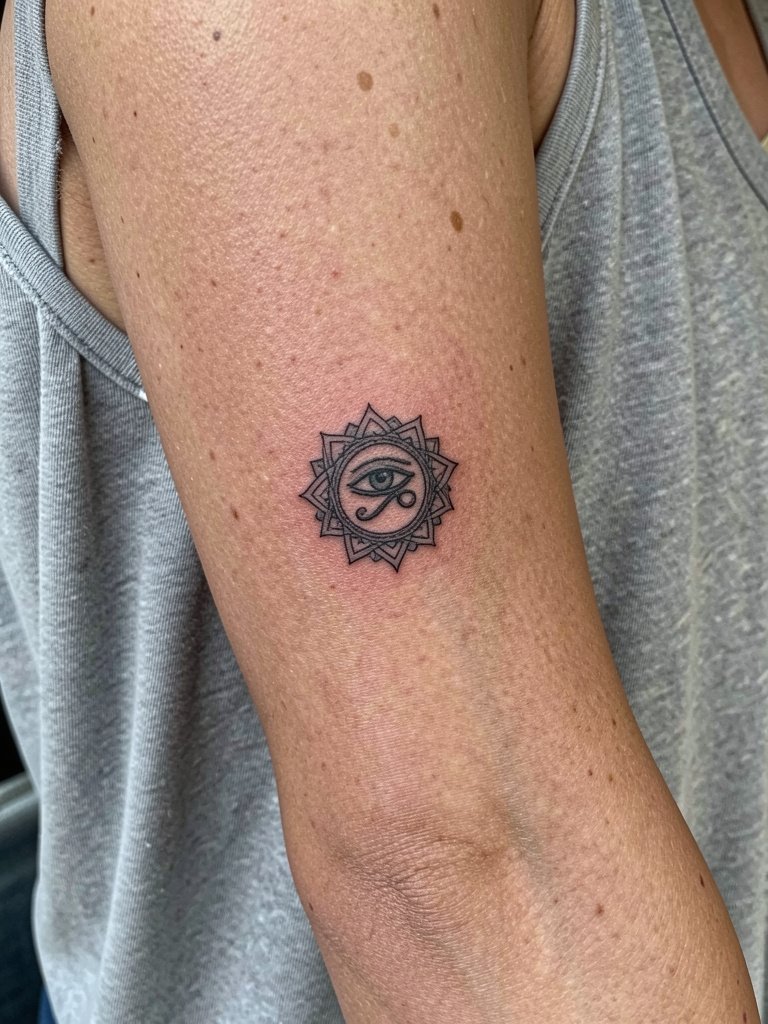
Inner wrist mandalas with a central Eye are intimate and visible. The wrist skin is thin, so the frequent error is overloading the mandala with micro detail that the wrist will not hold for multiple years. For durability, recommend a slightly wider spacing and a touch-up plan at the one-year mark. Sessions are short but can sting because of proximity to bone. During consult, ask the artist how the mandala reads at small scales and request a printed mockup to view on your wrist. For the appointment, wear a loose tank so the artist can access the wrist without fabric bunching.
15. Classic Egyptian Panel on the Thigh Wrap
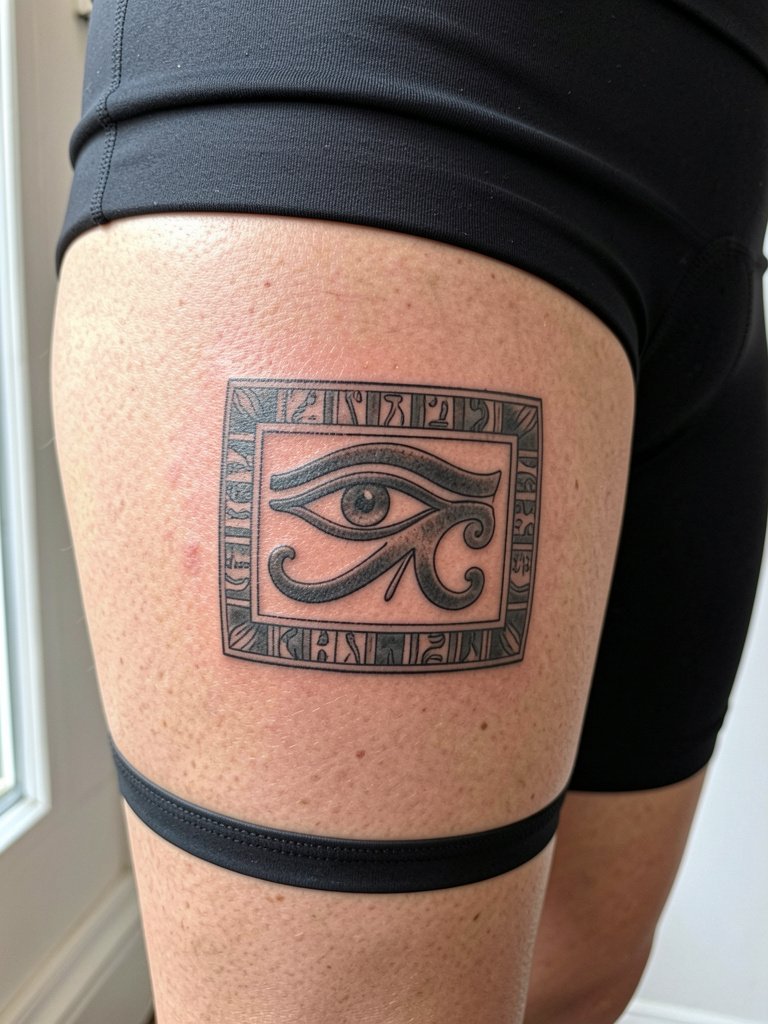
Thigh panels are forgiving for detail and ideal for classical frames. Expect a two- to three-hour session if you want deep shading. A usual planning mistake is booking a panel that is too narrow for the internal motifs. Ask the artist to show the piece at final scale on your thigh so you can judge negative space. Thigh pieces age well and are easy to hide or show. For reveal outfits, mid-thigh shorts and slips work, so consider a mid-thigh slip dress for evenings.
16. Single-Needle Linear Eye on the Rib Under the Breast
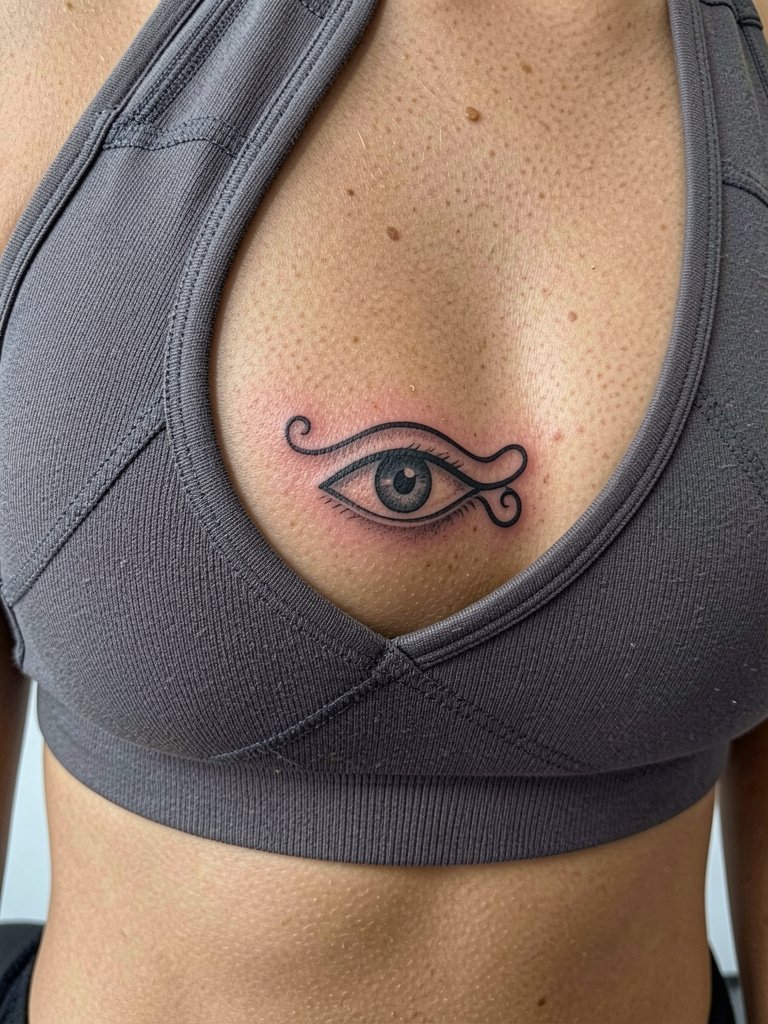
Fine single-needle ribs demand a frank conversation about longevity. Artists divide into two camps on fine line ribs. One group warns that the skin there stretches and the lines blur within two years. The other group argues that with slightly wider spacing and proper needle depth, single-needle pieces can settle well, and they often point to multi-year healed images. If you prefer single-needle, insist on broader spacing than you see online and a follow-up touch-up at the six to twelve month window. Pain is high but sessions can be broken into shorter passes.
17. Eye Incorporated into a Sleeve of Egyptian Motifs
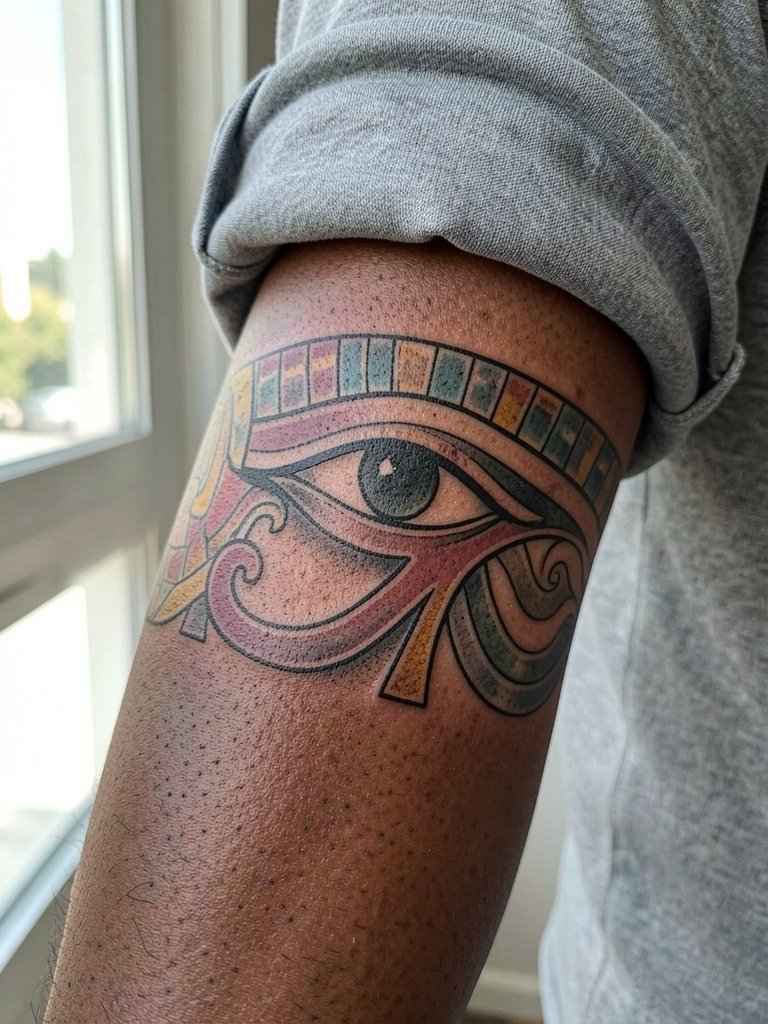
Sleeve work gives the Eye context and narrative, but it requires planning across sessions. The biggest mistake is starting with tiny filler pieces that later create scale mismatch. Ask the artist for a roadmap that lists session goals, approximate hours per visit, and how color saturation will build. Forearm sleeves sit at low to moderate pain and take multiple sessions. For casual styling, layered short-sleeve shirts or cuffed long sleeves reveal the sleeve in deliberate glimpses, so try structured short-sleeve shirts.
18. Monochrome Eye with Negative Space Halo on the Nape

Nape tattoos are discreet and frame hairstyles. The main misstep is choosing micro detail that disappears under hair friction. Opt for a negative-space halo with solid contour and ask the artist about how it will look with hair down versus up. Sessions are short and pain is moderate. A professional stylist-grade touch-up at the one-year mark is common for nape pieces because of daily contact with collars and hair oil. If you plan frequent updos, this placement makes the Eye pop.
19. Embedded Eye in a Geometric Bust on the Chest
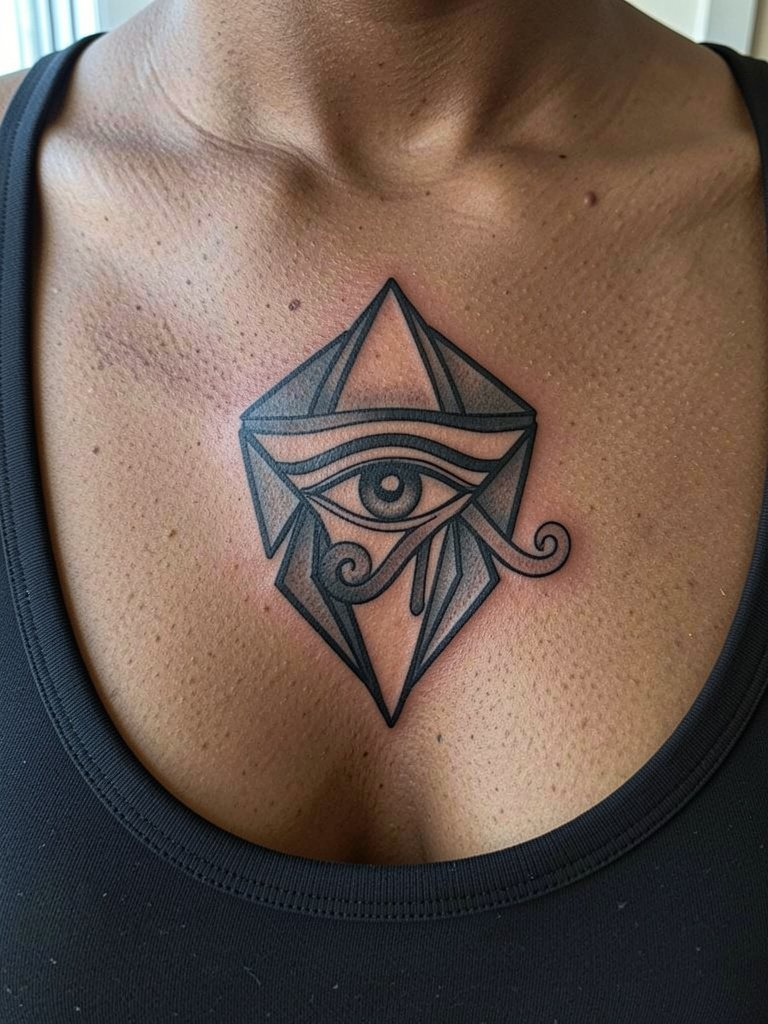
Chest geometry gives a bold presentation and usually needs a two- to three-hour session for a medium-sized layout. The common error is underestimating how the chest shifts when you change posture which can distort angular panels. During consult, have the artist place the stencil and check it while you sit, stand, and raise your arms. For tattoos that frame the clavicle, scoop-neck tops provide a clean display and add balance to the angular shapes.
20. Ornamental Eye with Chainlet on the Ankle
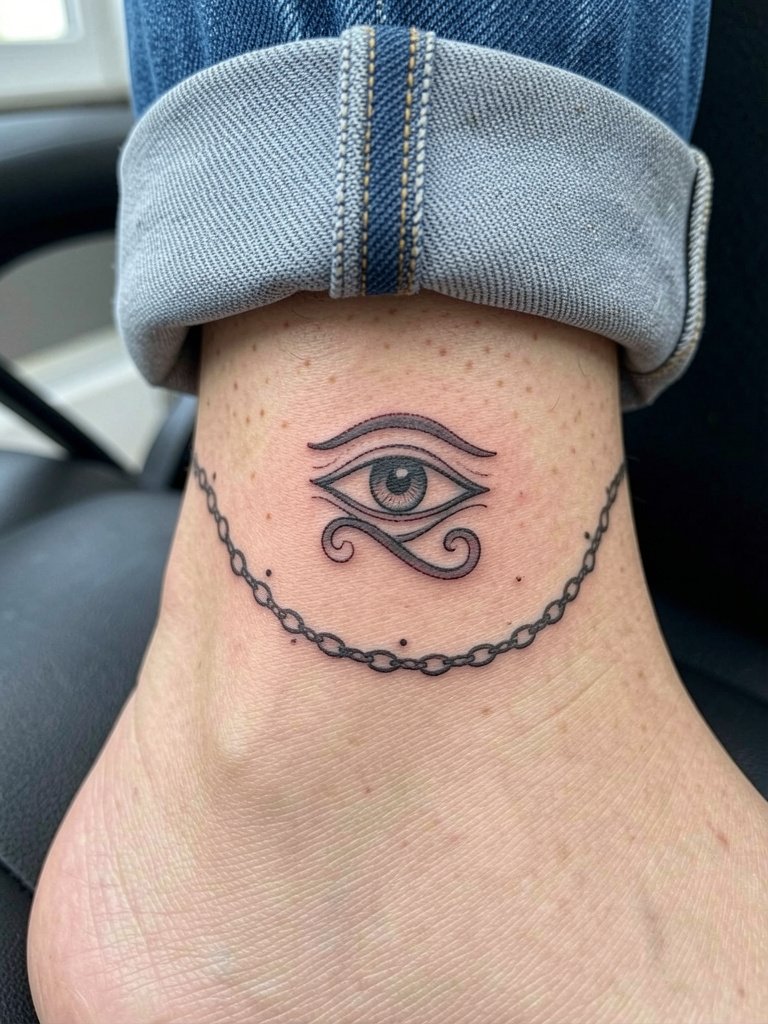
Ankle chains read like jewelry and are low-friction but subject to shoe rubbing. The typical mistake is placing the chain too close to where shoes rub the skin which speeds fading. Ask for the exact vertical placement relative to your usual shoe line and for a mockup that considers walking motion. Sessions are short and pain is variable depending on bone contact. For show-off looks, pair with cuffed jeans or anklets to highlight the chainlet.
21. Eye with Script Banner on the Throat Side
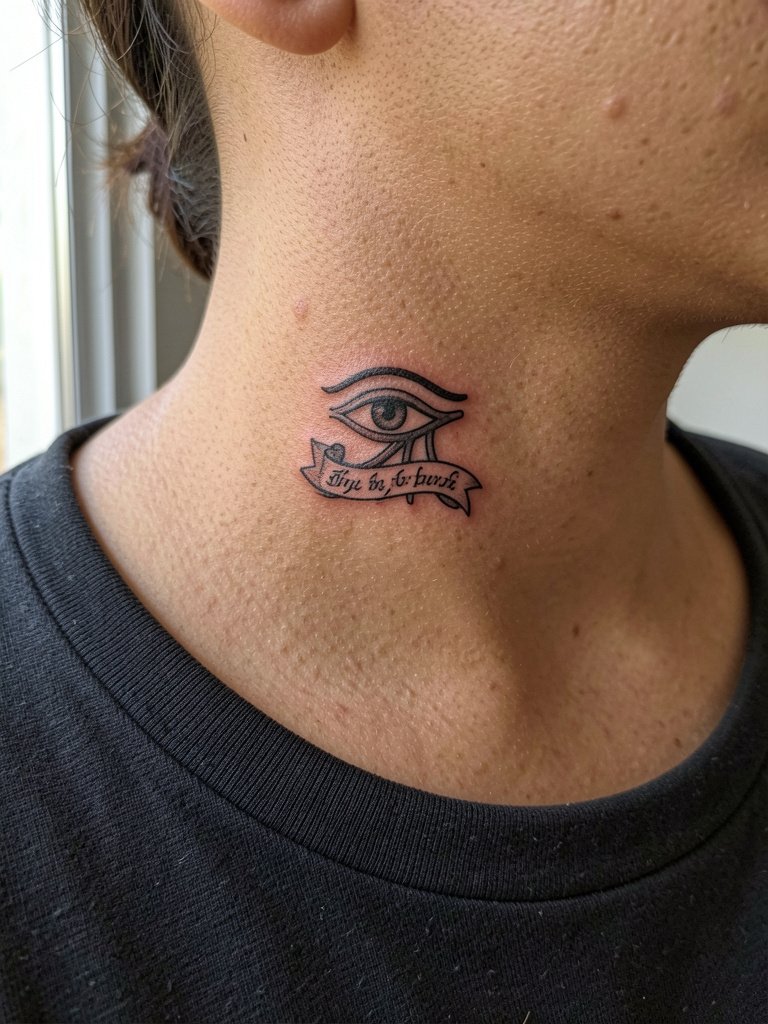
Side-neck work is bold and visible, so the consultation should include talk about how text will age alongside the Eye. A common error is choosing hairline-thin script that blurs with motion. Ask the artist for slightly bolder serif lettering and for a scale test at various distances. The pain is moderate to high, and sessions are typically brief. For styling, wide-neck tops keep the area unobstructed so the piece reads cleanly.
22. Eye Set in a Shield on the Chest Pocket Area
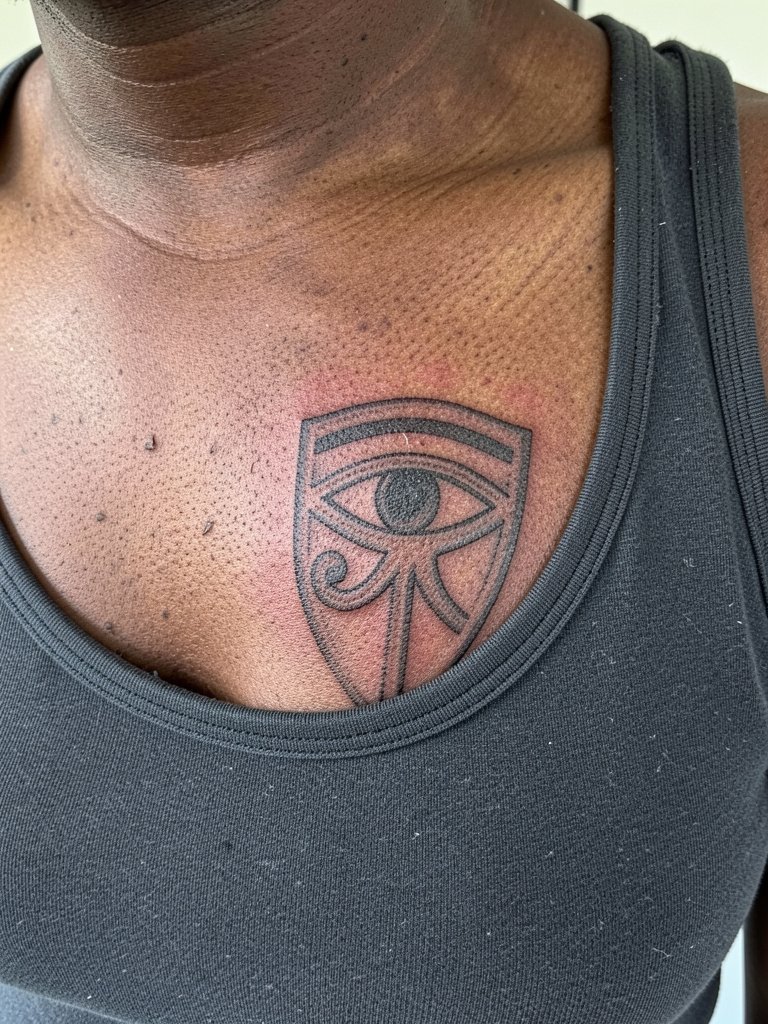
Chest pocket shields have a heraldic feel and are easy to scale. The standard planning error is compressing too many interior motifs into the shield, which reduces legibility over time. Ask for the shield to be shown at full size on your chest with a ruler so you can see negative space. Sessions are generally one to two hours depending on fill. For outfits, casual scoop-necks or button-ups left slightly open frame the shield and keep it visible without excessive sun exposure.
23. Micro Eye Behind the Ear with Tiny Dot Trail

Behind-the-ear tattoos are tiny statements that look crisp with clean single-line work. The pitfall is tiny trailing dots that blur into a single smudge after healing. Ask for the dots to be spaced wider than your reference and for a planned touch-up at six months. Sessions are very short and pain is usually low to moderate. Hair oils and helmets can affect early healing so keep the area dry and use a clean pillowcase. For evening styling, tuck hair into a low bun to reveal the micro piece.
Frequently Asked Questions
Q: How do I choose between fine-line and bold blackwork for an Eye of Horus design?
A: Fine-line offers subtlety and pairs well with delicate placements like the wrist or behind the ear, but it needs slightly wider spacing to stay legible over years. Bold blackwork reads from a distance and tends to age into a clear silhouette. Consider the placement and your daily routine, and request healed examples on similar skin tones during your consultation so you can compare expected long-term clarity.
Q: Is it cultural appropriation to get an Eye of Horus tattoo?
A: Opinions split into two camps. One camp emphasizes historical and spiritual context and urges people to approach Egyptian symbols with respect, provenance, or specific cultural meaning. The other camp treats ancient symbols as part of shared visual heritage and uses them for personal symbolism. If you are concerned, explain to your artist whether you want historically accurate imagery or a decorative approach, and ask them how they plan to represent motifs sensitively.
Q: Where can I find healed examples and discovery pathways without naming individual artists?
A: Search platform tags and keywords on social channels using targeted phrases such as #EyeOfHorusTattoo, #EgyptianInk, and location filters for your city. Look for galleries that show healed shots and use portfolio filters for terms like "healed blackwork" or "fine line healed." Tattoo discussion forums often compile multi-year photos which help you see aging on different skin tones.
Q: How often will I need a touch-up for an inner wrist versus a thigh Eye?
A: Small inner wrist pieces commonly need a touch-up within twelve months because of high use and sun exposure. Thigh pieces usually hold color and detail longer and often go several years before a touch-up is needed. Ask for a touch-up policy during booking and budget one follow-up session within the first year for small blackwork or color adjustments.
Q: What should I wear to the studio for shoulder blade, sternum, and hip placements?
A: For shoulder blade wear an open-back or wide-neck top that stays in place, such as an open-back midi dress or a fitted tank, so the artist can access the area without you moving around. For sternum, a fitted sports bra works best. For hip, wear low-rise jeans that are fully zipped and buttoned so the artist can see the exact waistband relation.