
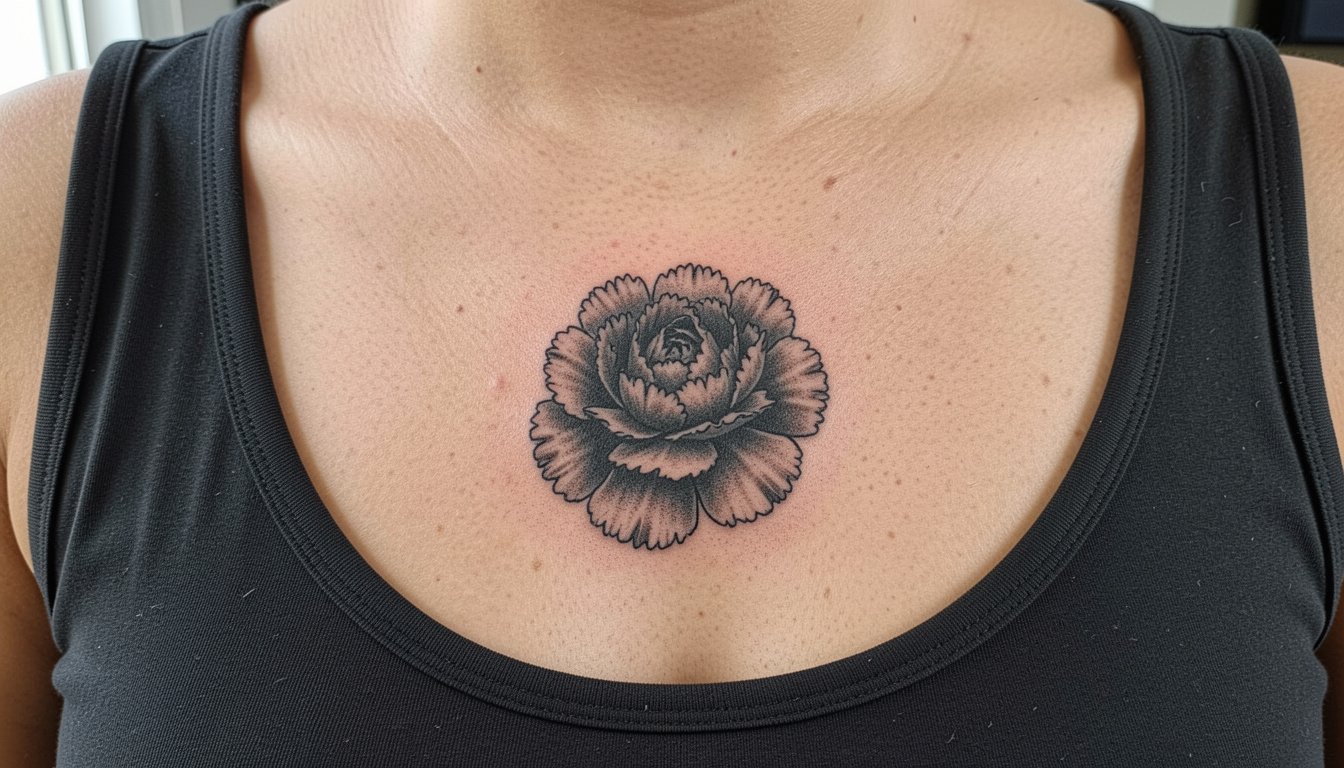
The carnation that looks crisp after two years usually started with sensible spacing and slightly firmer linework, not the tiniest single-needle sketch you saw on social. Many people pick the thinnest lines because they seem barely there at first, then wonder why petals blur. Read these 23 carnation ideas with placement, styling, and realistic longevity notes so you can pick a version that still reads like a flower after a few seasons.
1. Single-stem fine line carnation on the inner wrist
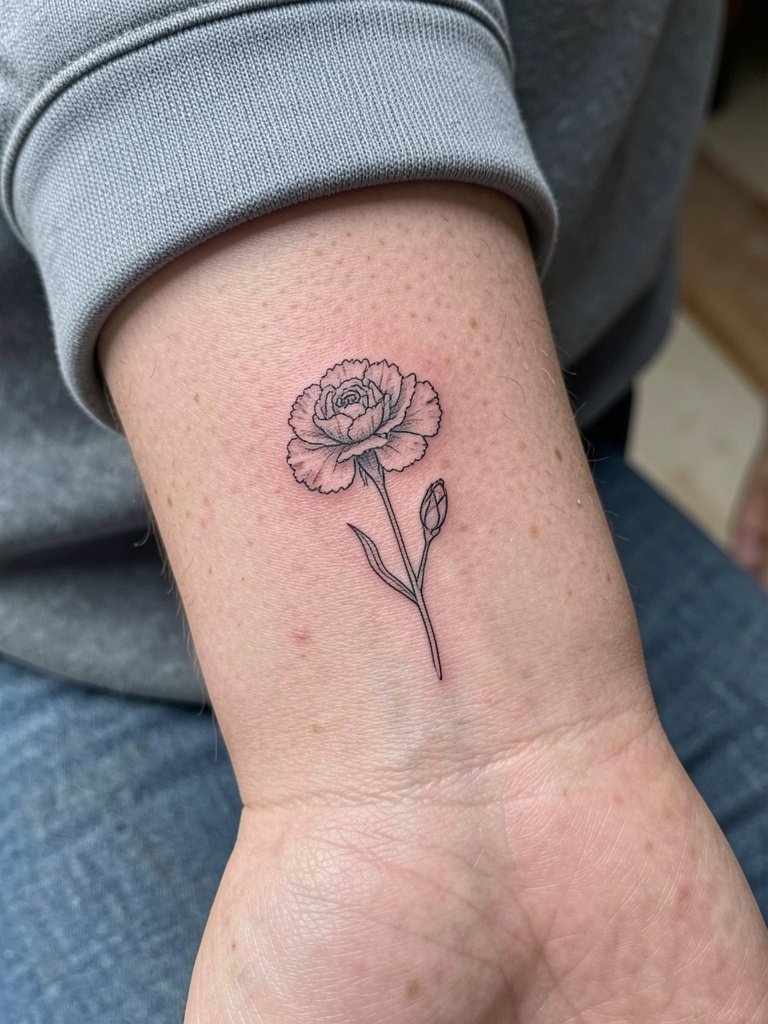
A single-stem fine line carnation reads airy on the wrist and suits anyone who wants a discreet vertical motif. One major debate plays out here in plain view. One camp says ultra-fine single-needle work preserves that barely-there look and that thicker lines spoil the delicacy. The other camp says slightly firmer line weight is smarter because the wrist sees motion and friction and too-thin lines can blur within a couple of years. For longevity, ask for a hair stronger contour than your reference and bring healed photos of the artist's similar wrist pieces so you know how the lines settle. Expect a short session and modest discomfort at the wrist bone.
2. Birth-month carnation with a slender stem, inner forearm
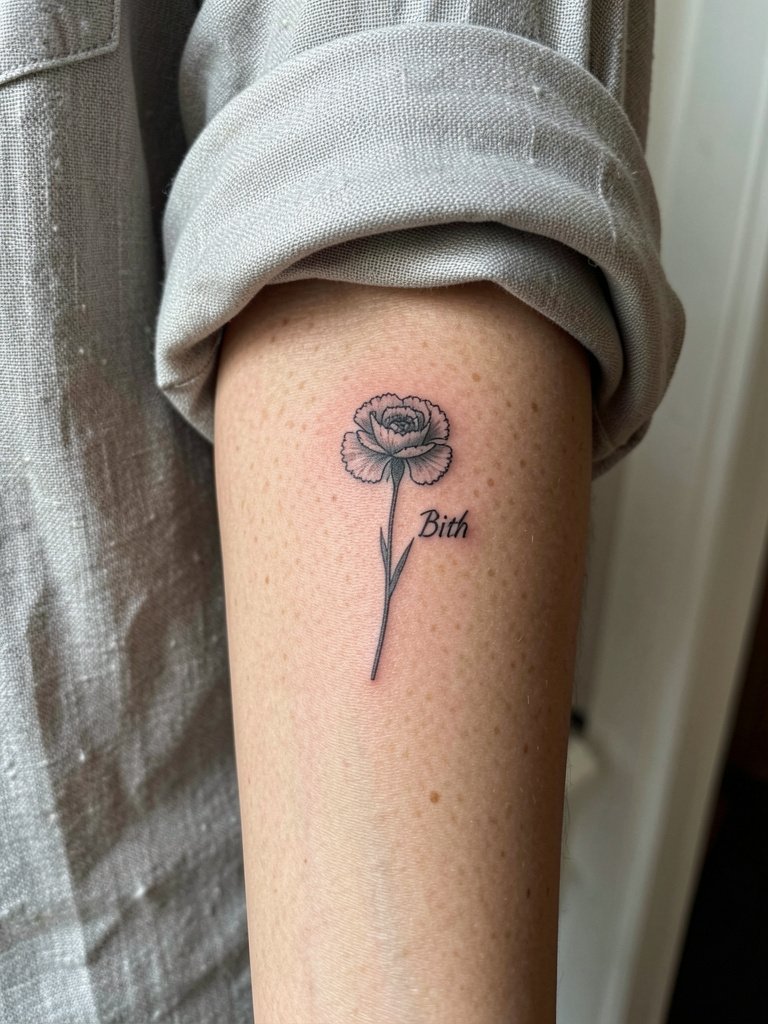
If you want a carnation tied to a birth month, this inner-forearm placement frames the flower and the small numeral elegantly. For the session, wear a linen button down shirt so the sleeve can roll up without constricting the artist. One common mistake is cramming script into narrow petals. Keep the numeral slightly separate so both the number and the bloom read at arm's length. The inner forearm tends to heal well for fine work, but insist on healed photos that show similar line weight on that surface.
3. Micro carnation with stem and one bud, ankle
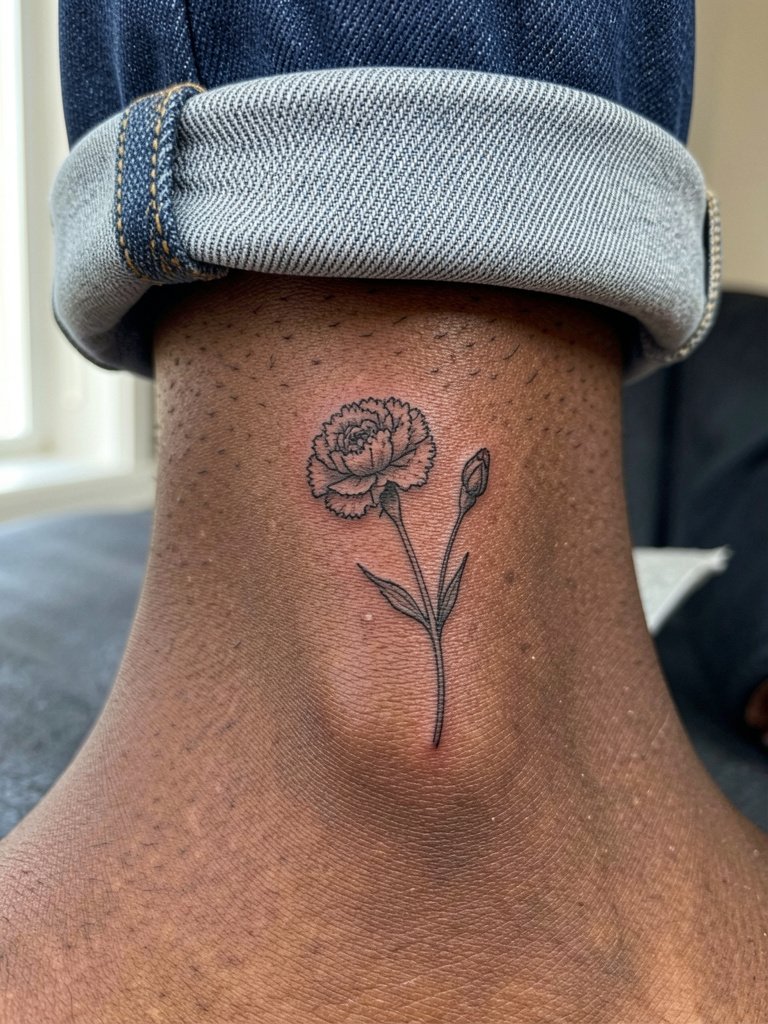
Tiny ankle florals are the go-to for discreet ink that shows in sandals and sneakers. Shoes and socks create friction, so a compact silhouette outperforms tiny filigree here. For the session, wear cropped jeans or shorts that can be pulled above the ankle without tugging the area. Expect short needle time but be mindful that small tattoos sometimes look thinner from a distance. If you want the bud to read in darker skin, ask for slightly denser dot shading rather than ultra-thin lines so contrast endures.
4. Carnation cluster with soft shading for the inner forearm
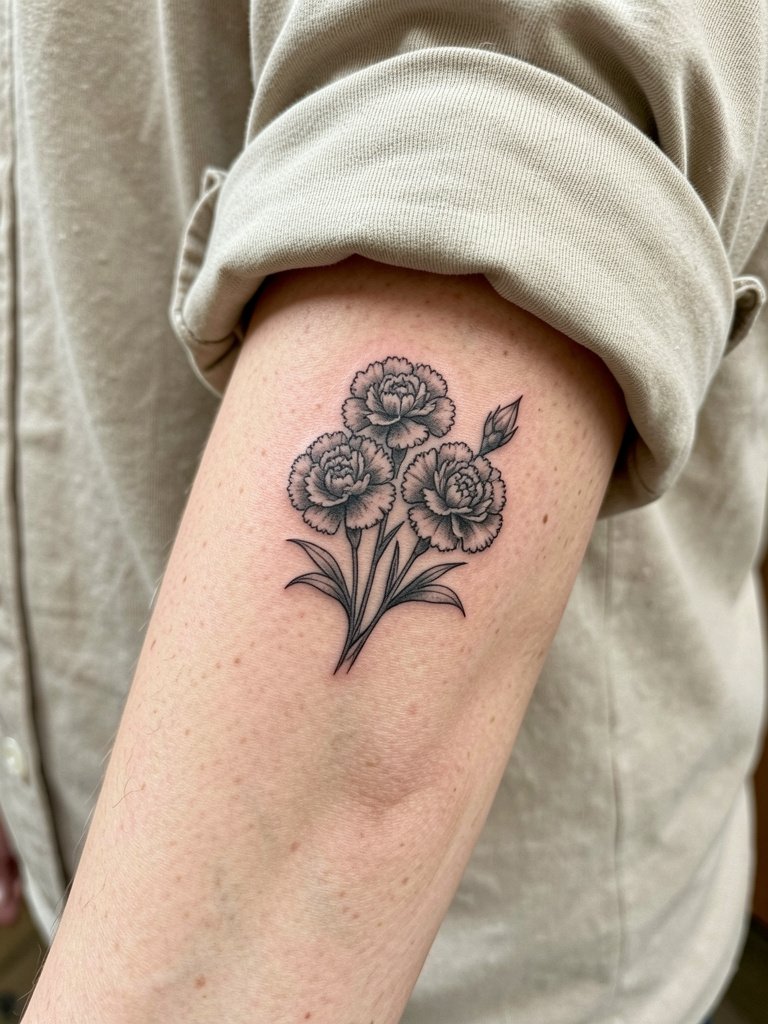
A small cluster adds visual weight without going large, which helps if you want the piece to read clearly from a short distance. One realistic tip is to ask for soft stipple shading in the petals rather than heavy packed gray. That keeps the overall look airy and reduces the chance of muddying as it ages. For showing it off, rolled linen sleeves in cream or olive make the cluster stand out. This placement usually heals reliably, but expect a slightly longer session than a single-stem wrist piece.
5. Pink carnation with watercolor wash on the shoulder
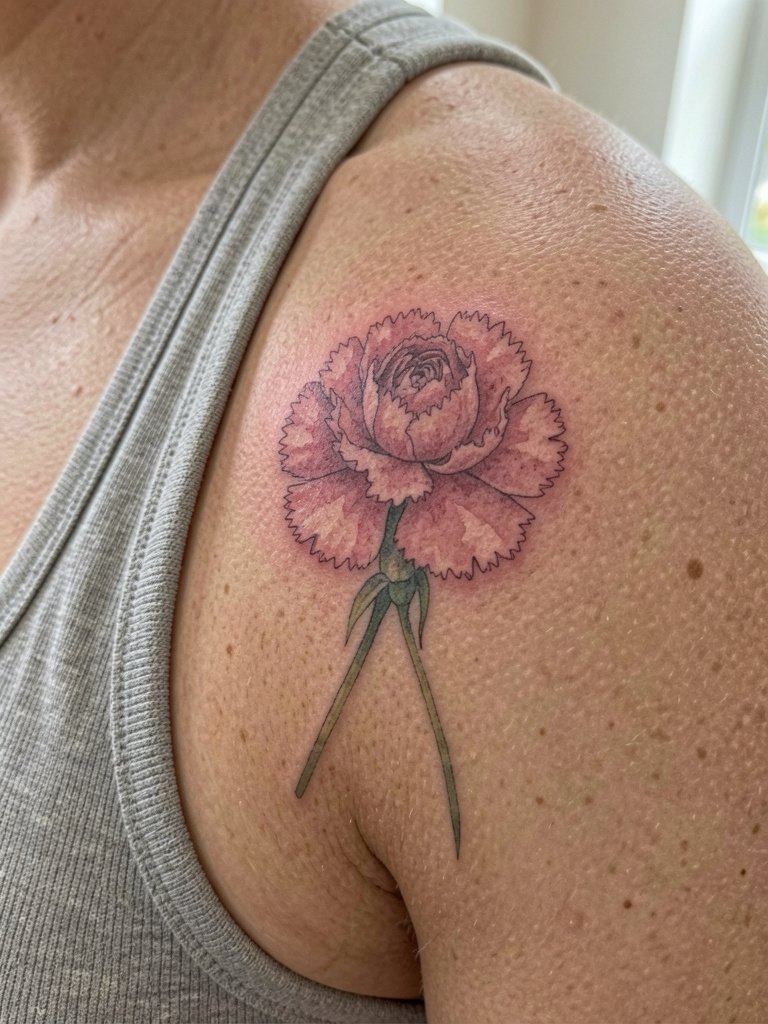
Color brings a romantic softness, but the color-versus-longevity debate is real. One camp favors black and gray because it tends to age more predictably and keeps thin details readable longer. The other camp argues that soft pinks and muted greens are worth it if the artist is skilled in saturation, because color makes the carnation feel more lifelike. On the shoulder you get a forgiving canvas for gentle washes. For session comfort, wear a wide-strap tank top so the artist can access the shoulder without fabric rubbing during the first week. Plan for a possible touch-up to refresh muted watercolor after a year or two.
6. Black and gray carnation with memorial emphasis on the collarbone
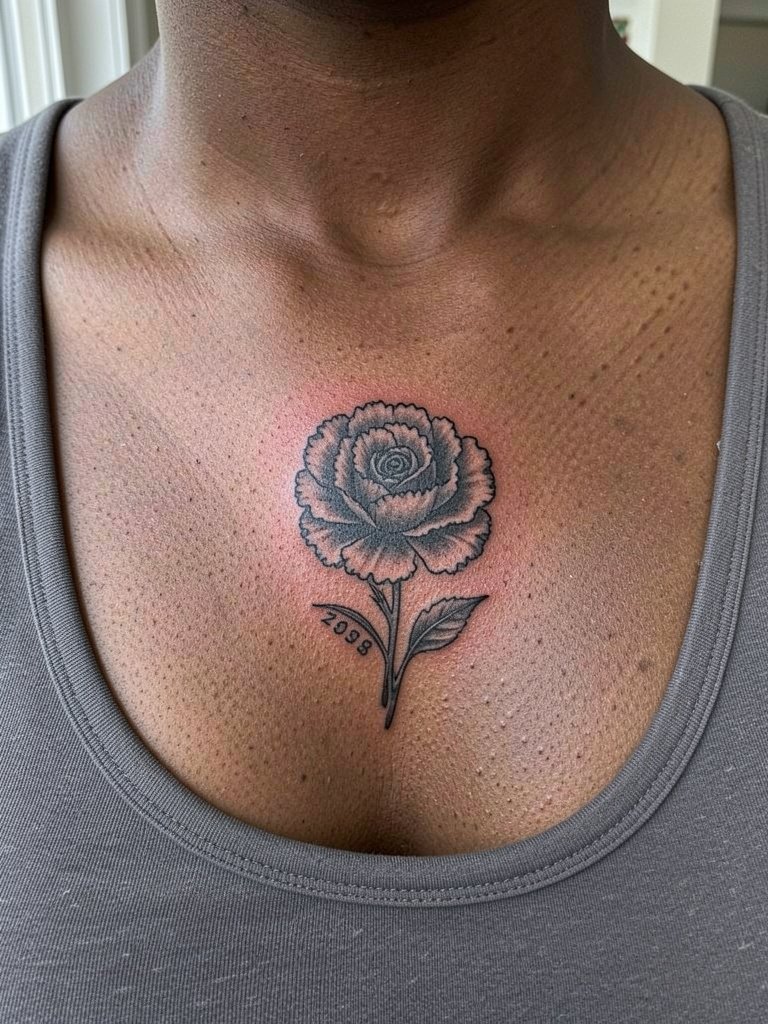
Black-and-gray memorial carnations read quietly on the clavicle and avoid early color fade. For the session wear a loose top with an easy neckline so the artist can work without fabric tugging. A common mistake is placing too much tiny detail right over the bone where healed contrast can soften. Ask for slightly stronger contour lines for the collarbone area and bring references of healed collarbone pieces to confirm how shading settled on similar skin tones.
7. Fine line carnation with stem wrapping toward the wrist
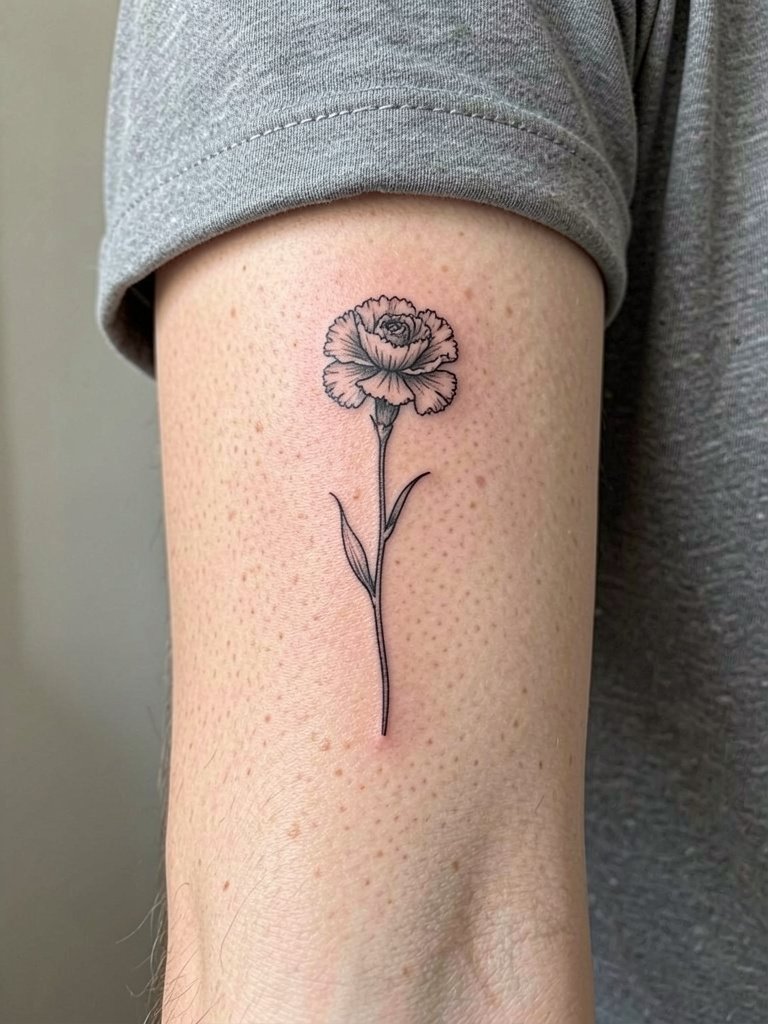
The vertical flow elongates the arm and works with natural movement. For everyday styling, pair this with a thin chain bracelet set on the opposite wrist so the tattoo wrist remains unencumbered. A common session mistake is requesting ultra-tiny petal detail too close to the wrist crease. The wrist eats fine detail over time, so keep spacing between petals and use slightly fuller linework at the base of the stem for structure.
8. Carnation and marigold pairing on the inner upper arm
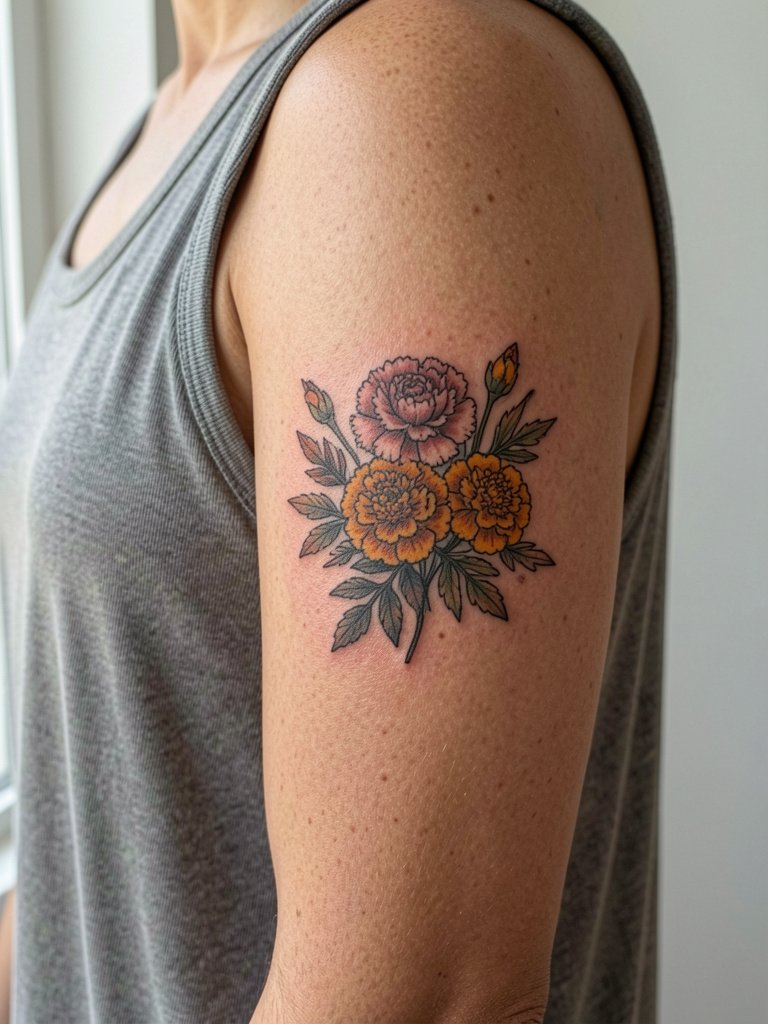
Mixing birth flowers gives the piece personality without needing extra size. For session wear, pick a loose tank so the artist can access the medial bicep without the sleeve clinging. One design tip is to let the marigold handle the denser petal texture and keep the carnation lines a bit more open so each flower reads. Inner upper arm tends to be forgiving on healing, but expect slightly more tenderness and a longer touch-up window than the forearm.
9. Minimal carnation linework for the ribcage
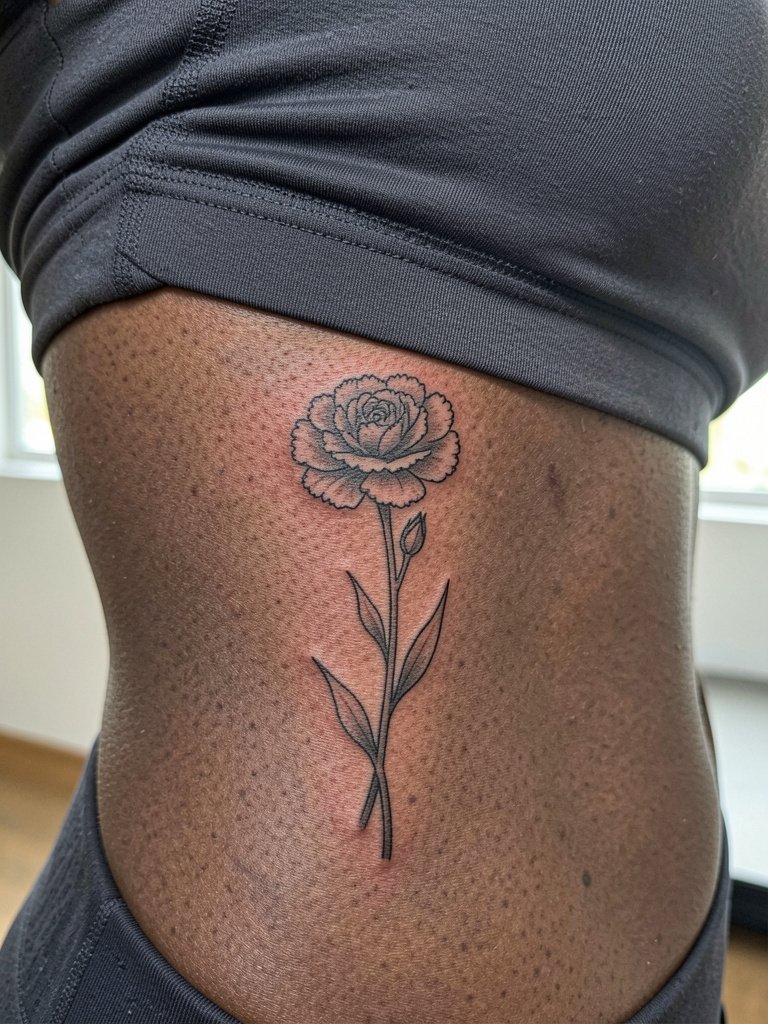
Ribcage placement looks graceful but comes with trade-offs. One camp warns that the skin stretch and movement in that zone blur fine lines within two years, especially near the breast crease. The opposing camp says the vertical anatomy suits stemmed flowers and that with slightly deeper needle depth and wider spacing the lines settle fine. Be honest about the pain level and plan for shorter sessions or breaks. If you want ultra-fine detail, consider spacing it out a touch or choosing a black-and-gray wash that reads from a distance.
10. Traditional-inspired carnation with bolder outlines, outer forearm
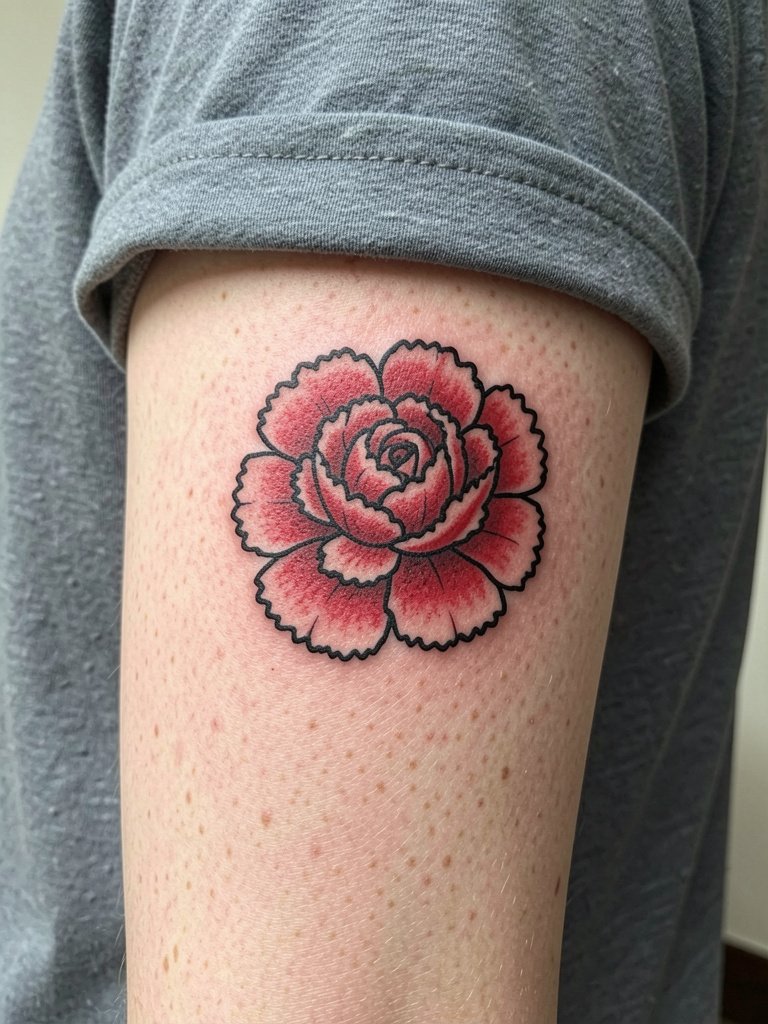
Bolder outlines help this style age well and maintain contrast. For daytime wear, this reads nicely with rolled sleeves or a short sleeve tee that shows the outer forearm. This version is slightly larger than single-stem fine line work which makes touch-ups less frequent. Traditional saturation gives the petals structure as the piece heals over the first year.
11. Tiny carnation behind the ear
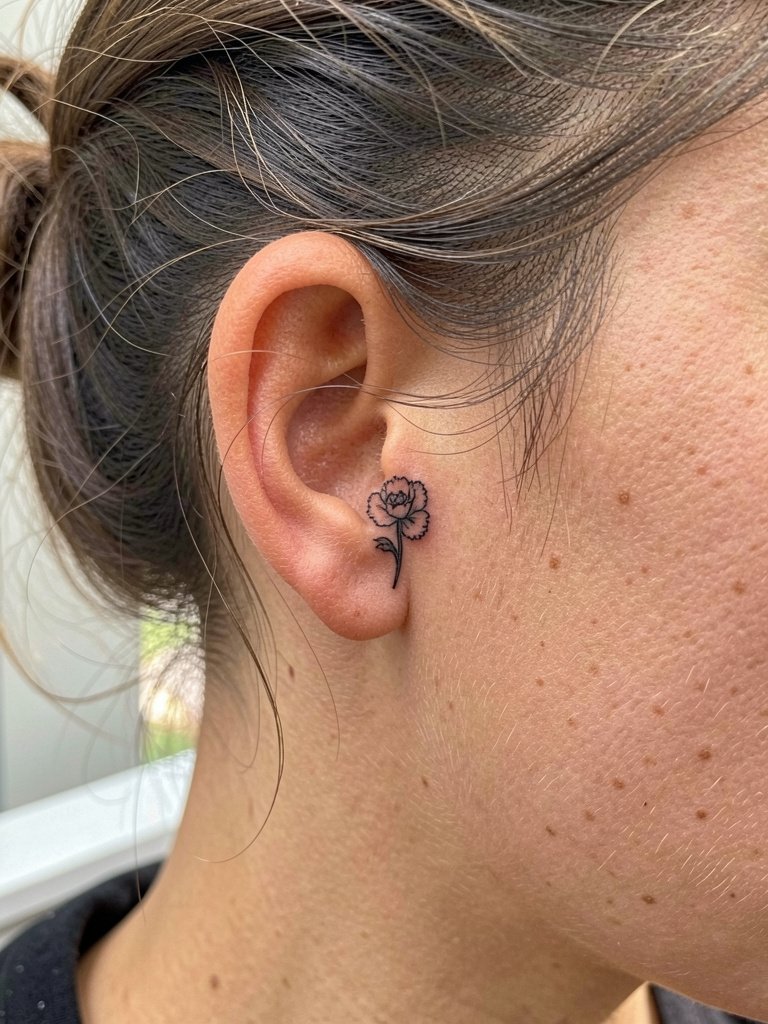
Behind-the-ear tattoos are intimate and peek out when hair is up. For the session, bring hair clips to pull hair away comfortably and wear a shirt with an easy collar. Tiny motifs can fade faster because the mastoid skin is thin, so ask for slightly stronger outlines than your reference. That keeps the micro bloom readable and reduces the need for early touch-ups.
12. Larkspur and carnation duo, shoulder blade
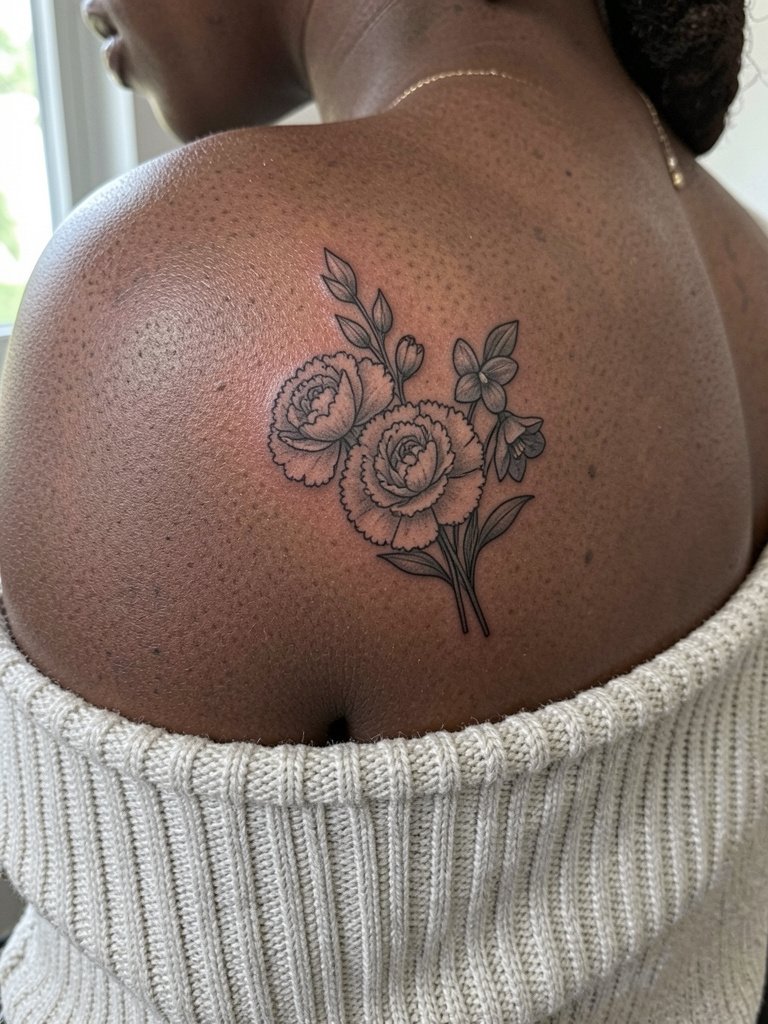
Pairing a carnation with larkspur gives a layered bouquet feel while staying compact. The shoulder blade is forgiving for shading and looks great with off-shoulder tops. Ask for healed examples that match your skin tone because shading reads differently across tones. Expect a one to two hour session depending on the level of stipple shading and color accents.
13. Delicate carnation with leaf-only framing, wrist band style
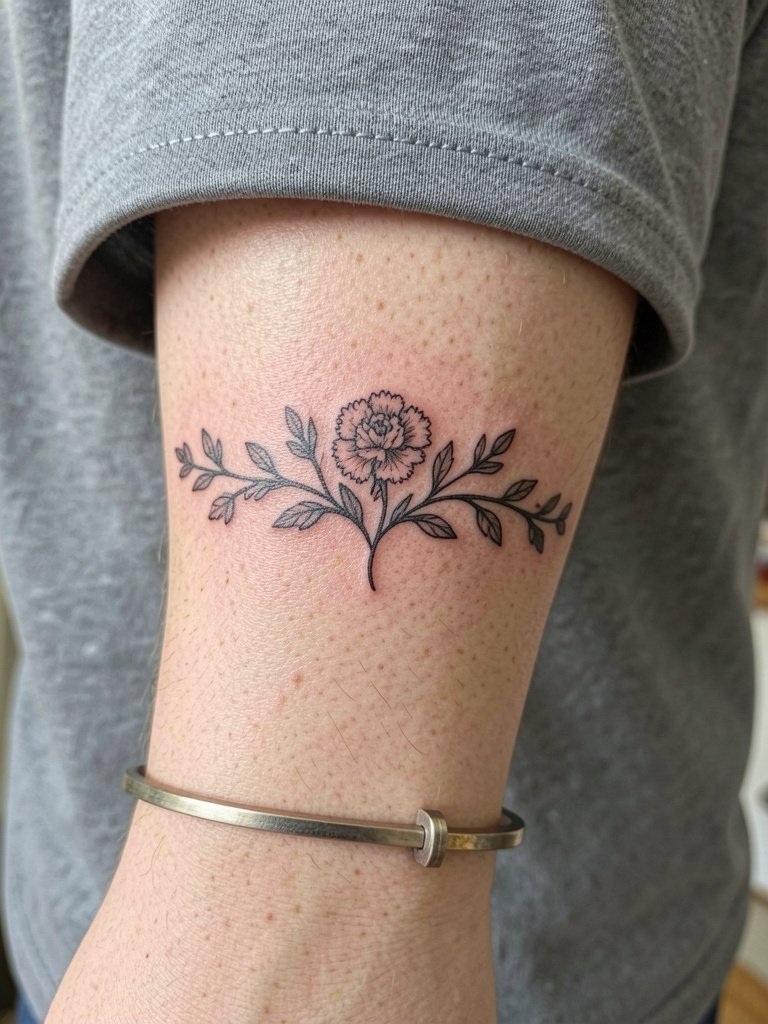
Using leaves to frame a carnation gives the illusion of a finished cuff without heavy ink. For showing it off choose a minimal bracelet on the other wrist and avoid stacking jewelry on the tattoo wrist. A mistake people make is over-detailing leaf veins in a tiny cuff. Keep leaf shapes clear and slightly bolder so they read after healing.
14. Carnation tattoo sheet / flash-inspired design, shoulder or outer forearm
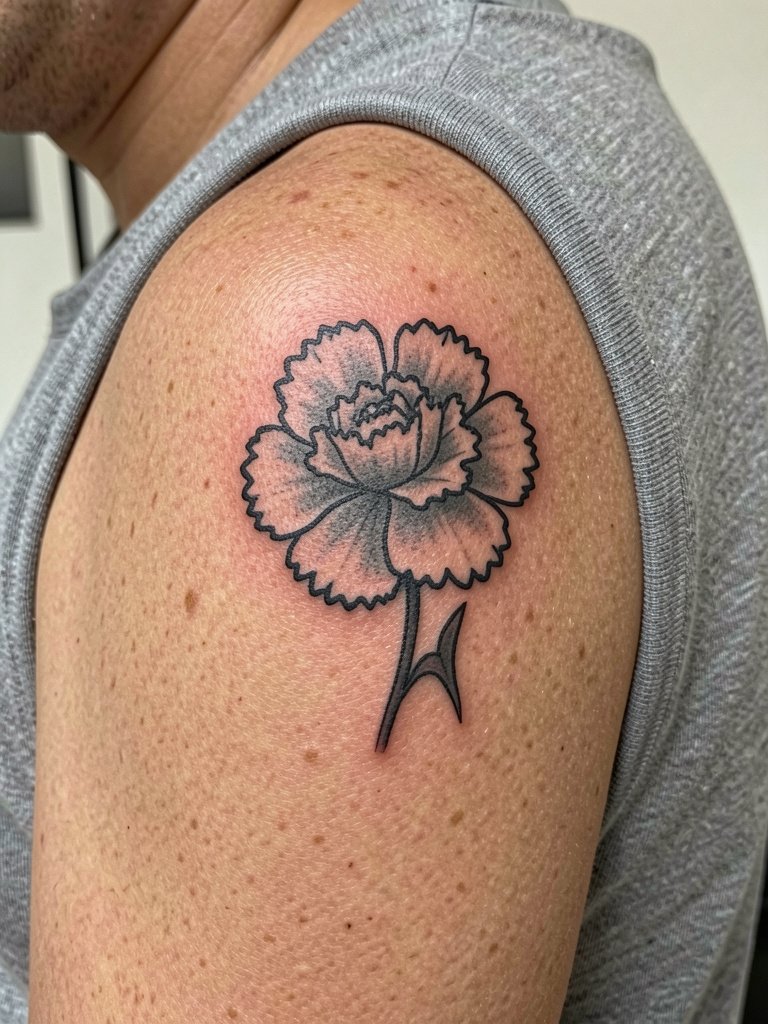
Flash pieces let you pick a ready-made design and get inked quickly. They often read at a glance because the outlines are clear and color or gray fills are simplified. If you plan to wear sleeveless tops, a flash carnation on the shoulder or outer forearm pairs well with those silhouettes. Choose a flash sheet with the exact line weight you want because reproducing it at a different thickness changes the look substantially.
15. Realistic carnation bloom with petal depth on the outer forearm
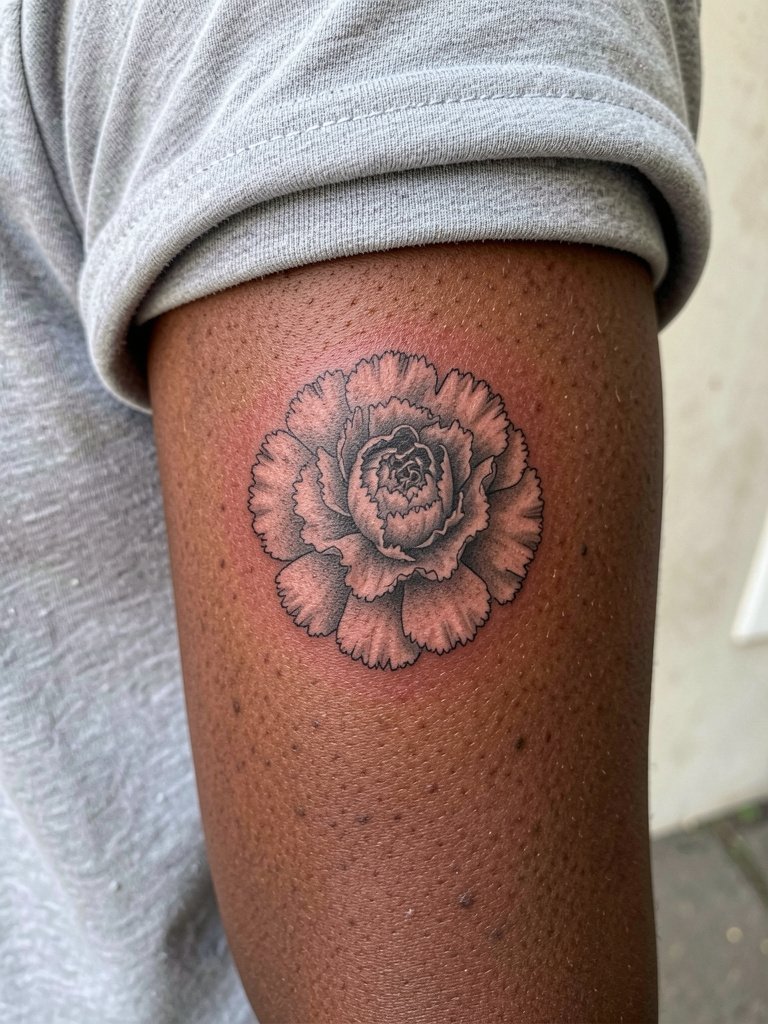
If you want a lifelike carnation, realism brings petal depth and soft transitions. Realism requires an artist experienced in micro-shading so saturation and contrast last. This style usually needs a longer session and may need a touch-up within a couple of years to refresh fine gradients. Keep your arm protected from daily sun to preserve the subtle shading.
16. Micro-realism single petal near the clavicle
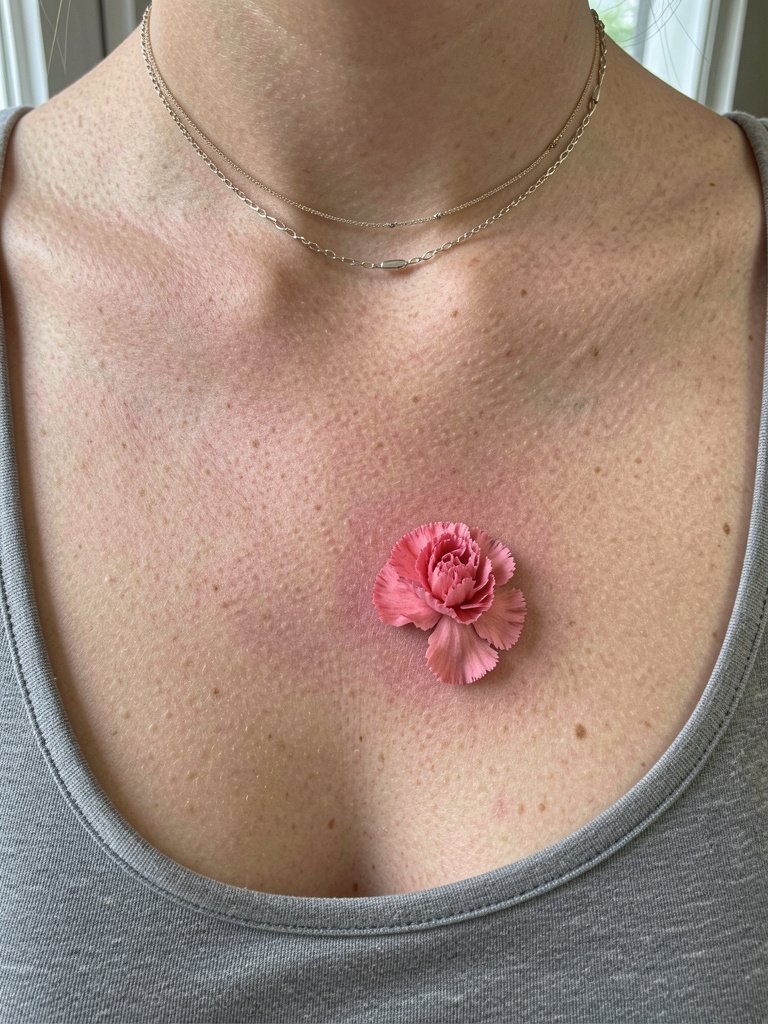
A single petal can be surprisingly expressive when placed near the clavicle. For showing it off, delicate layered necklaces and scoop-neck tops frame the area. The clavicle sits on bone, so plan for slightly denser linework at the contour to keep contrast. Micro-realism on this site heals well if depth is carefully managed and you avoid heavy sun in the first year.
17. Stem wrapping around the wrist like a cuff
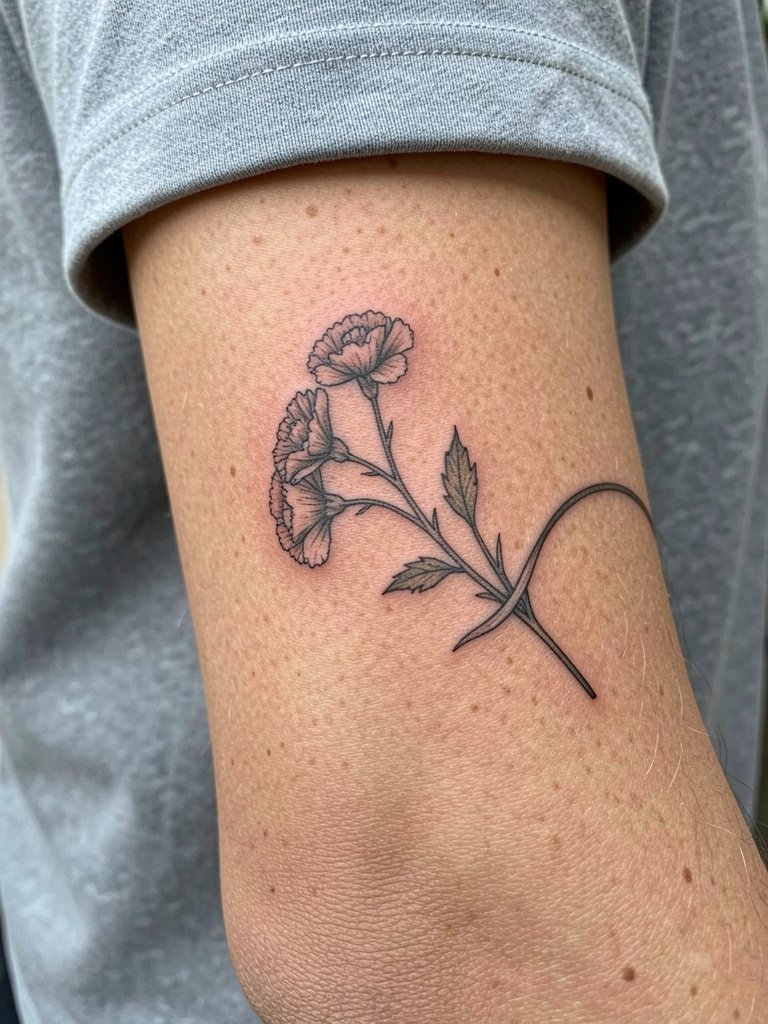
Wrap-around stems create a jewelry-like effect without metal. Keep the stem slightly bolder where it crosses the wrist crease so the lines last through movement. Avoid stacking bracelets on the tattoo wrist during healing to prevent rubbing. A tiny cuff design reads better if there is intentional negative space to prevent crowding of petals.
18. Side-of-finger carnation accent

Finger placements look delicate but come with higher blowout and fading risk. The skin on the finger is thin and frequently washed, so micro details can spread or fade faster than on the forearm. Keep this design bold and simplified rather than tiny filigree. Expect faster touch-ups and plan around that reality when choosing the finger location.
19. Mini carnation on the top of the foot or near the ankle
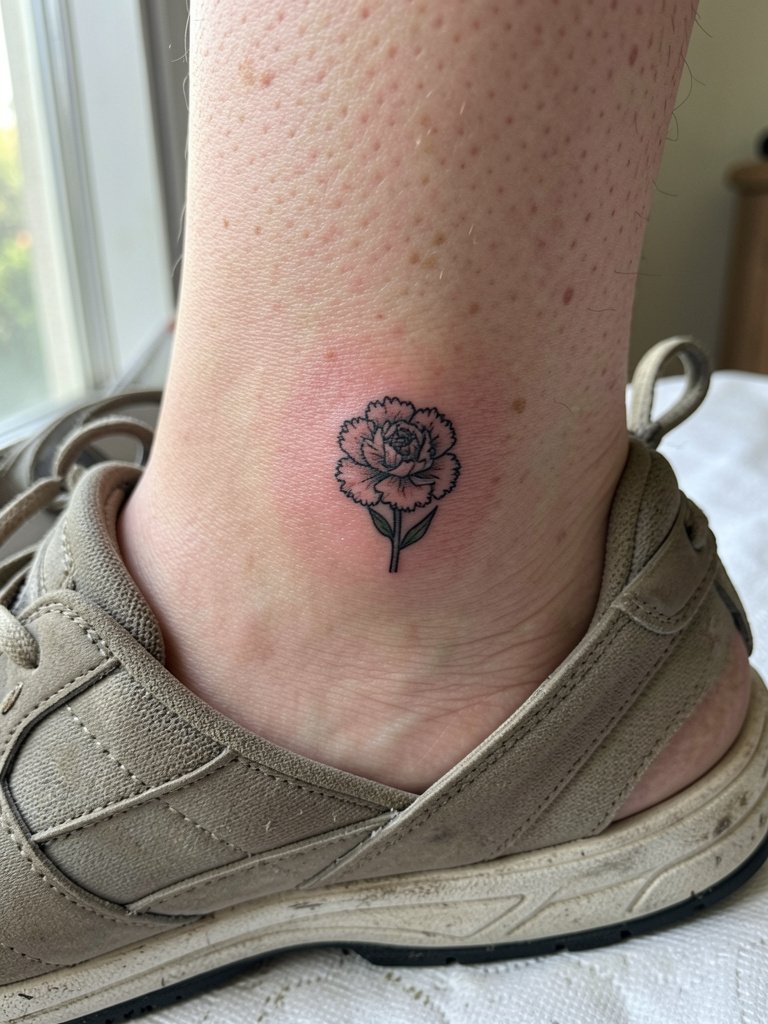
Top-of-foot carnations are subtle and peek in summer footwear. The area sees shoe friction, so pick a compact silhouette. For warm months, minimal sandals show the piece well, and minimal sandals let the tattoo read. Expect slower healing due to footwear and bruising risk in sensitive feet.
20. Carnation bouquet near the shoulder blade
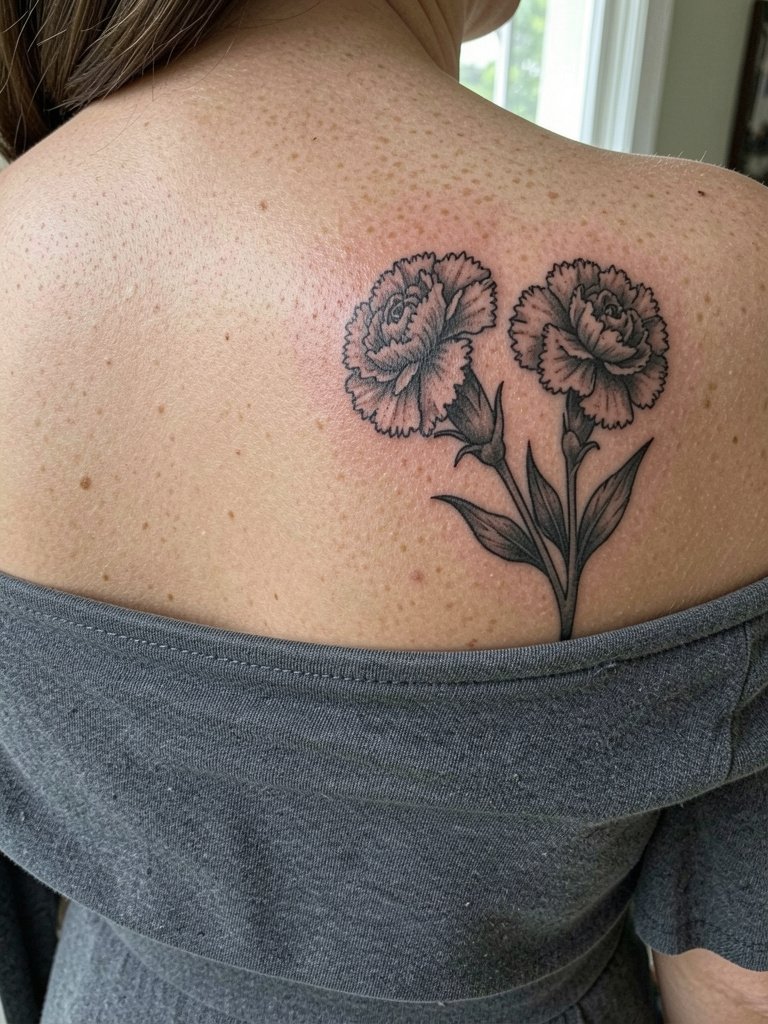
Upper-back bouquets sit where they can be private or revealed depending on wardrobe. Off-shoulder dresses and tanks frame this area nicely for shows of the design. Expect a slightly longer session because the surface can need careful shading to keep petals distinct. This spot is low-friction in daily life so fine details tend to hold up well compared with wrists or fingers.
21. Inner thigh micro bouquet
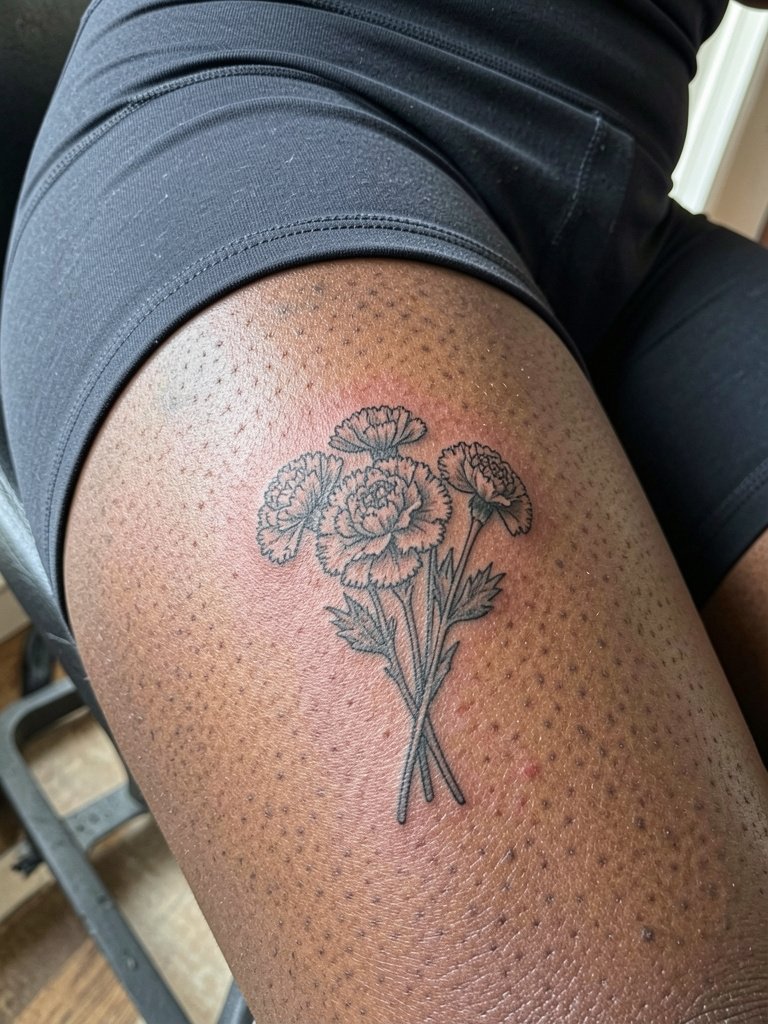
Inner-thigh placements are intimate and often hidden, which can be appealing for personal florals. Because the site is private, style choices focus on what you want to feel rather than show. The skin is less exposed to sun, which helps preserve fine shading. For session wear, bring shorts that make access easy without pulling at the area.
22. Carnation with a tiny date or script tucked under the bloom, inner forearm

Combining a small date with the bloom keeps the symbolism specific without crowding the design. Keep the type minimal and separate it from petal edges so both elements read. For the appointment, wear a rolled sleeve blouse that can stay loose while the artist works. This setup lets you preview placement with the arm relaxed so the date sits naturally under the flower.
23. Negative-space outline carnation on the outer calf
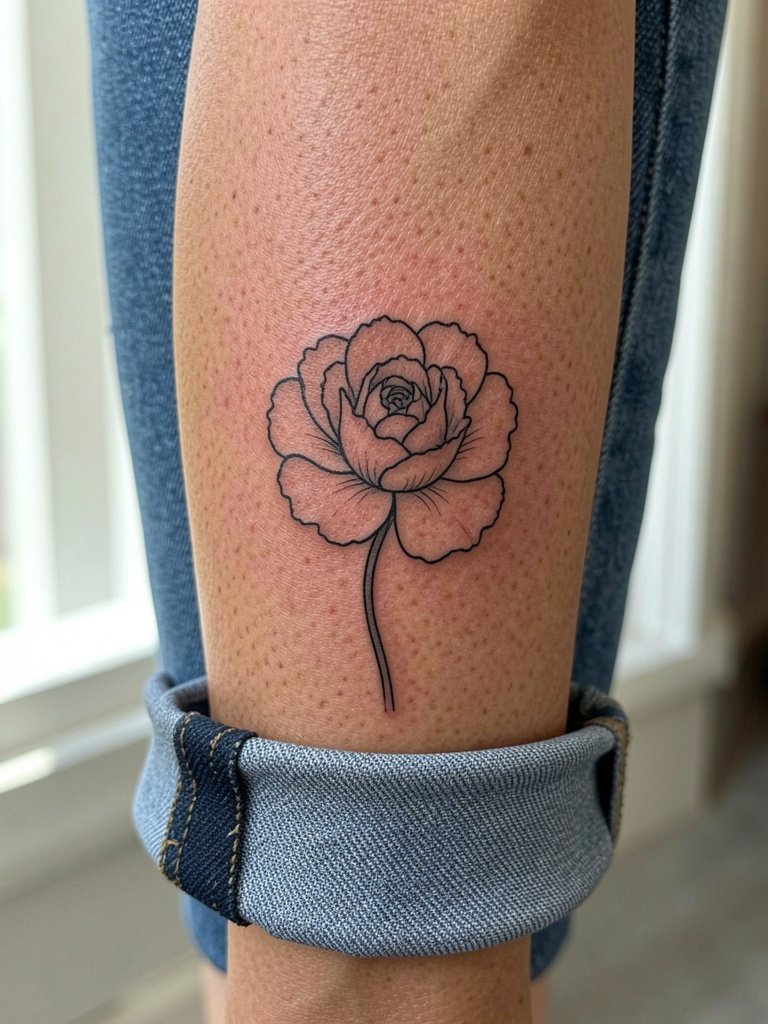
Negative-space outlines keep the carnation airy while creating a modern silhouette on the calf. Cropped pants and rolled cuffs display this placement well. Because the calf gets occasional sun exposure, plan for sunscreen on healed work to slow fading. The outer calf is forgiving for linework and usually requires fewer early touch-ups than fingers or toes.
Heal Smart
The wrist, forearm, and shoulder pieces above each have different friction and sun exposure, so these specific products help protect delicate linework during the first week.
-
Tattoo Goo Healing Balm. A lighter-feeling balm some people prefer over heavier ointments for small florals, which can cut down on clogged pores around delicate lines.
-
Panthenol-Based Tattoo Balm. Panthenol assists skin repair and tends to feel less heavy on fine linework that needs to breathe without excessive greasiness.
-
Fragrance-Free Castile-Style Wash. Gentle cleansing for the first two weeks helps avoid irritation on tiny tattoos that are easy to overclean.
-
Adhesive Film Remover Wipes. Useful when a second-skin application sticks more than expected, these wipes help take film off without tugging the healing ink.
-
Aquaphor Healing Ointment. A commonly used option for the initial thin-layer hydration phase, suitable for the first couple of days on many fine-line florals.
Frequently Asked Questions
Q: How do I find healed photos of carnation tattoos and local artists without naming people?
A: Search hashtags like #carnationtattoo, #finelinetattoo, and #birthflowertattoo on Instagram and TikTok and use the location filter for your city. Use Reddit communities to ask for healed-photo examples and to get realistic pricing feedback from people who healed similar placements.
Q: Will fine line carnations blur faster than thicker styles?
A: It depends on placement and line weight. Fine single-needle work can look fragile at year three on wrists and fingers, while slightly stronger linework with modest spacing tends to hold shape longer on those same spots.
Q: Should I pick black and gray or color for a soft-looking carnation?
A: Black and gray usually ages more predictably and preserves detail. Color gives a lively look but often needs more saturation and a possible touch-up later, especially for watercolor washes on shoulders.
Q: How painful is a ribcage carnation compared with a wrist piece?
A: Ribcage sessions typically score higher on pain because the needle hits closer to bone and the area flexes with breathing. Wrist pieces are uncomfortable but more manageable for short sessions.
Q: What should I wear to a collarbone or sternum appointment?
A: Choose a top that exposes the area without tugging. For collarbone work, scoop-neck tops in normal worn position are useful. For sternum work, a fitted sports bra or bandeau is practical for access while keeping you covered.
Q: Can I protect a small forearm carnation from sun and fading in daily life?
A: Keep the healed tattoo covered or apply a broad-spectrum sunscreen when exposed for long periods. Lightweight long sleeves in neutral fabrics help, and rolled sleeves work for showing the tattoo occasionally without constant sun exposure.