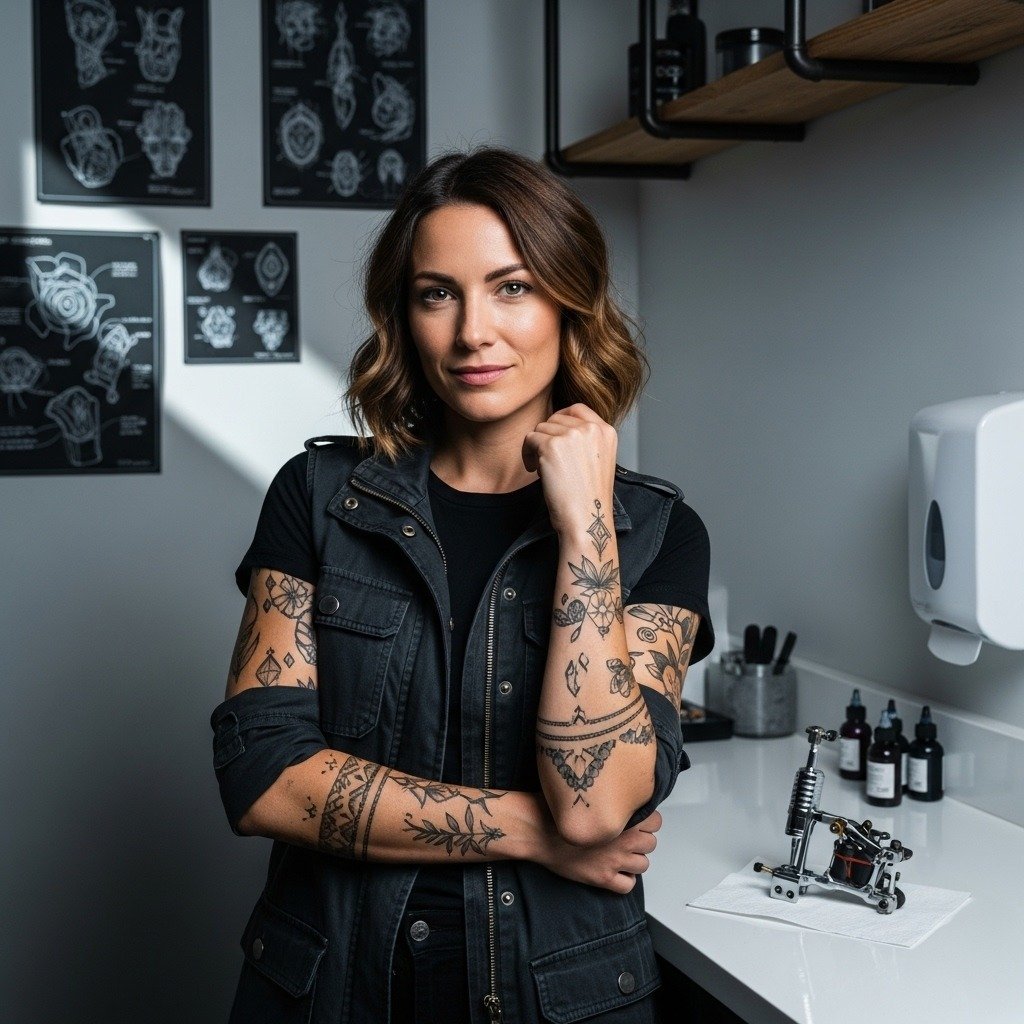
Someone I know spent eight months saving designs and still got stuck on the same problem. It was not finding cool art. It was knowing which cyberpunk tattoos aesthetic will still read as sharp after sun, summers, and day jobs. I visited five shops across Brooklyn and scanned Tattoodo and TikTok trends to see what actually heals well. These 25 ideas lean on practical choices, session reality, and placement trade offs so you can pick a design that lives on your skin, not just on a feed.
1. Neon Circuit Armband on Outer Forearm
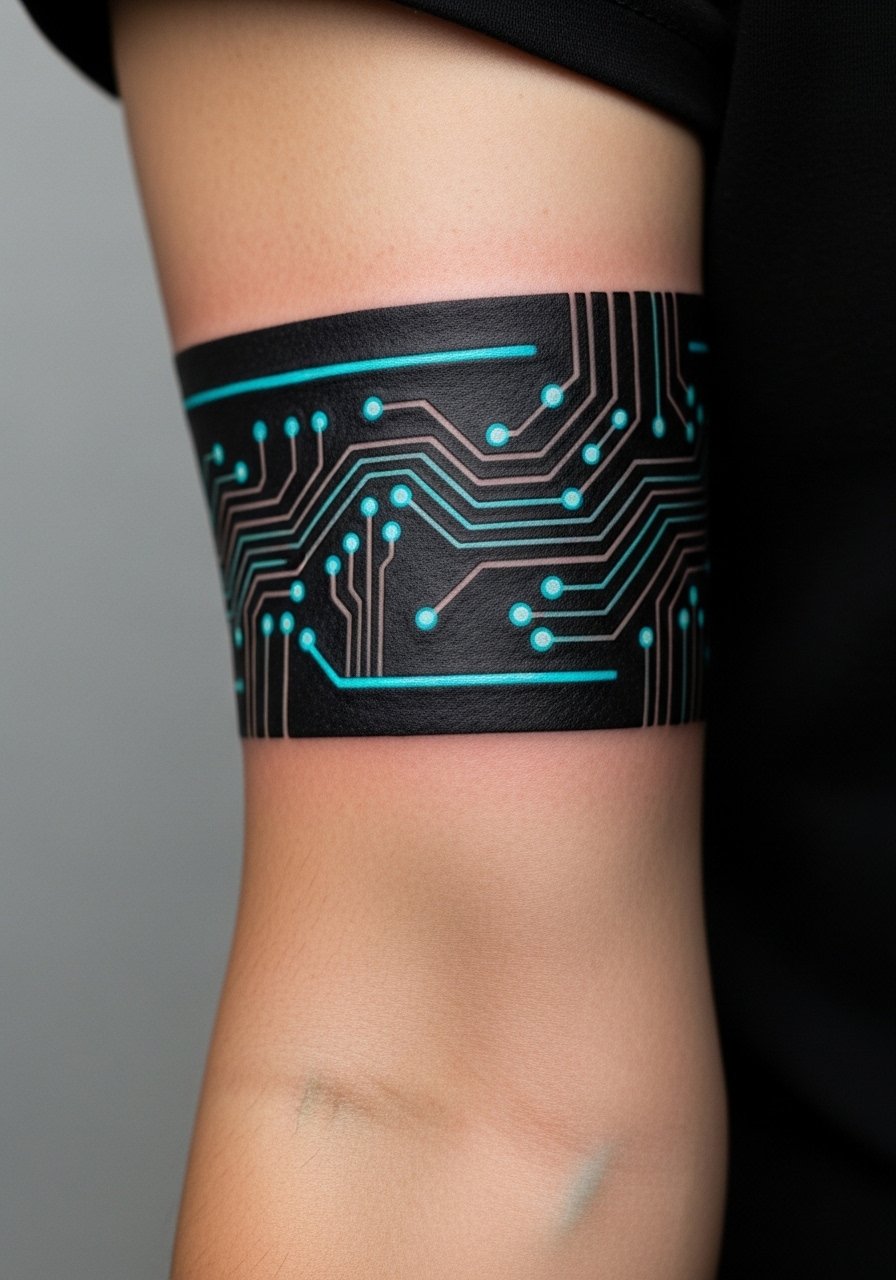
Someone I know first saw this as a walk-in flash and loved how circuits read from a distance. I recommend the outer forearm for visibility and lower blowout risk than inner wrist. Ask your artist for a bold black base with thin neon overlays so the neon sits on top of saturated black rather than relying only on fine color lines. That approach holds up better at six months and one to two years. Pain is moderate and most sessions run 60 to 90 minutes. A common mistake is squeezing too many micro details into a 2-inch band. Expect a touch-up around year two if you want the highlights bright.
2. Biomechanical Skull Along the Outer Forearm
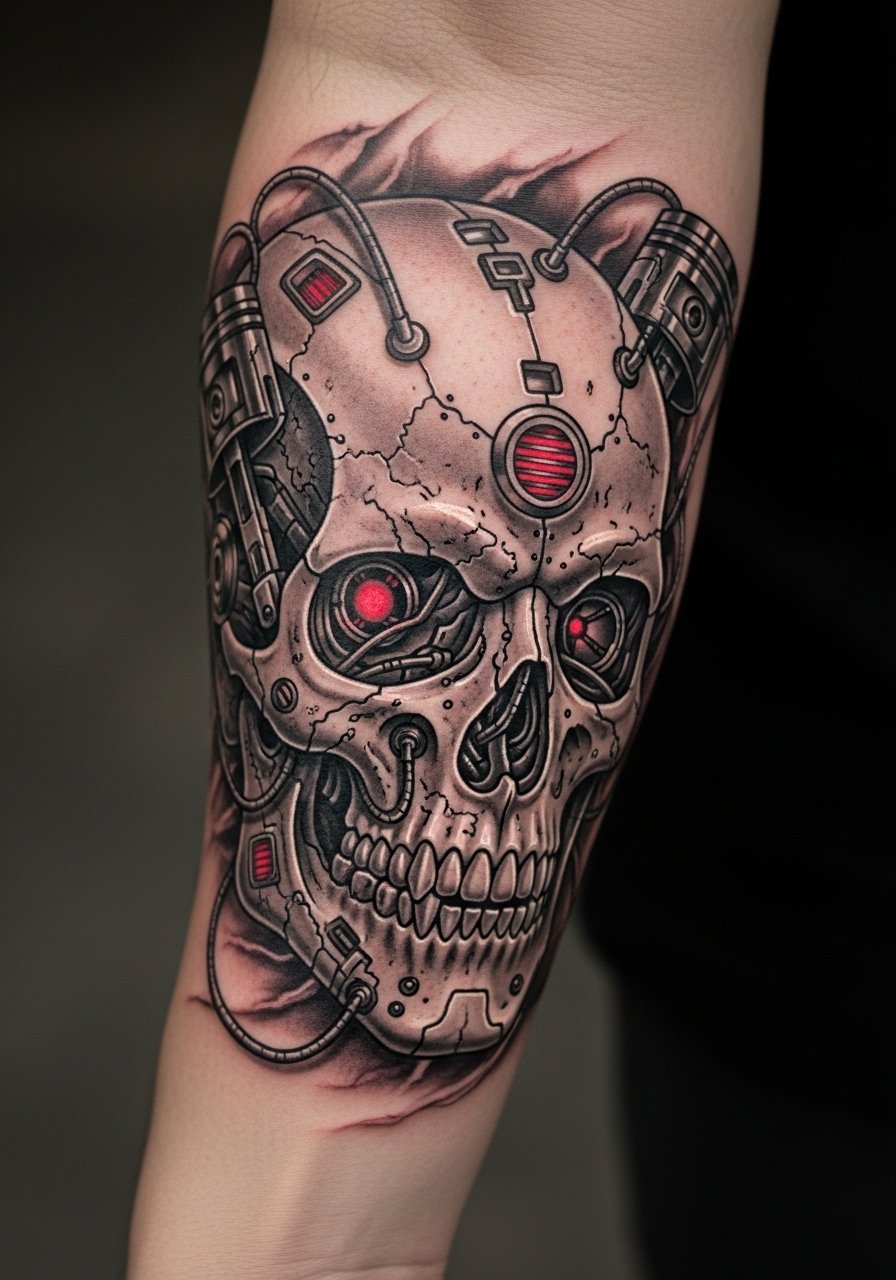
Fair warning: large forearm realism takes time and patience. This design blends anatomy with machine parts and works well when artists use stipple shading for texture. Tell your artist you want contrast between matte black components and glossy red accents to create a layered, implanted feel. The outer forearm stretches less than the inner side, so linework holds tighter and blowout risk is reduced. Sessions usually span two to three appointments. Expect heavier saturation at six months and a softer, more integrated look by year three. The biggest mistake is asking for ultra-fine facial detail in a piece under eight inches wide.
3. Glitch Hologram Wrist Accent on Inner Wrist
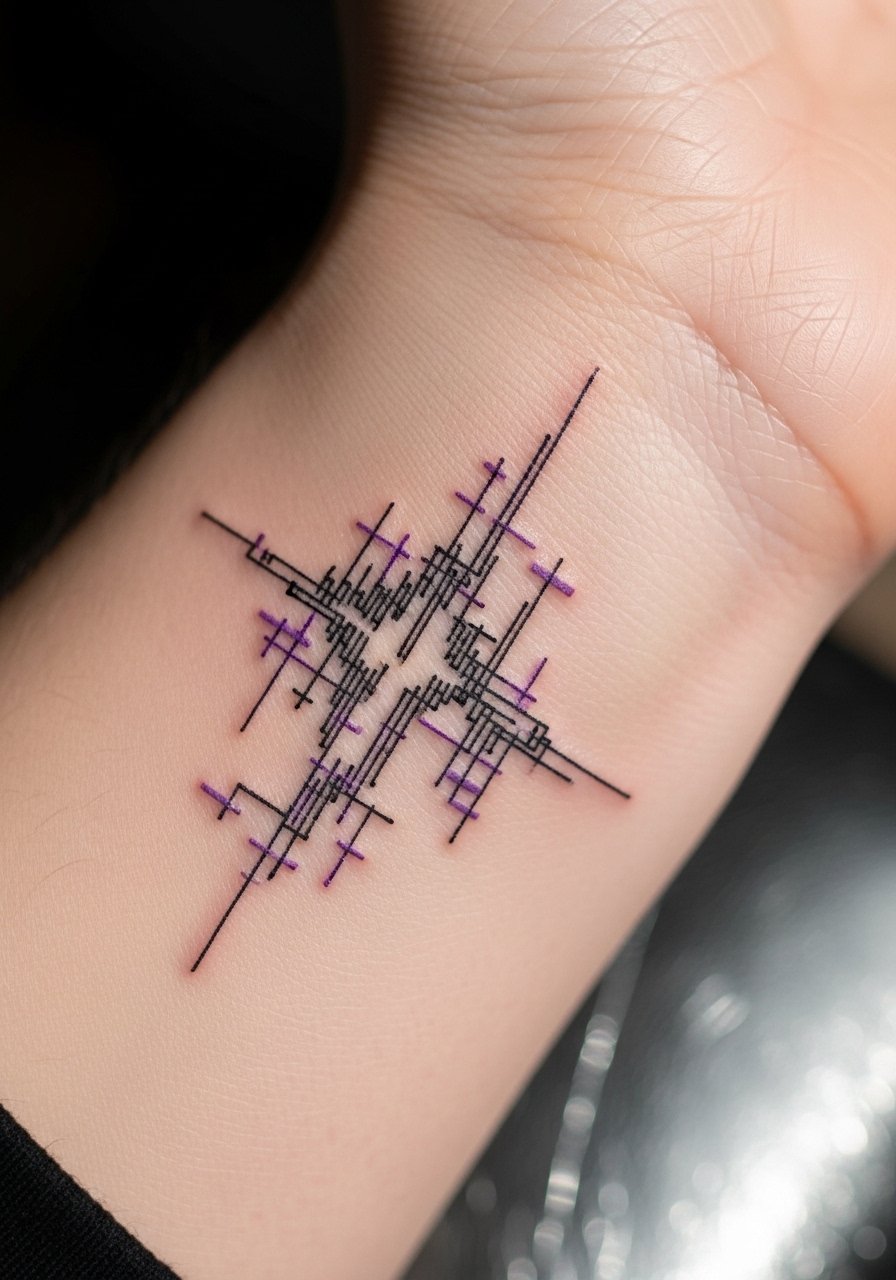
When you sit down with your artist for this small wrist piece, bring exact references that show the glitch spacing you want. The wrist is forgiving for micro digital motifs but fine line neon can fade faster there because the skin flexes. One camp says fine detail captures the effect better and risks faster fading. The other camp favors bolder contour lines so the hologram keeps definition. Pain is higher on the inner wrist because of thin skin. One session usually does it. Plan a touch-up at year one to two if you want to preserve neon edges.
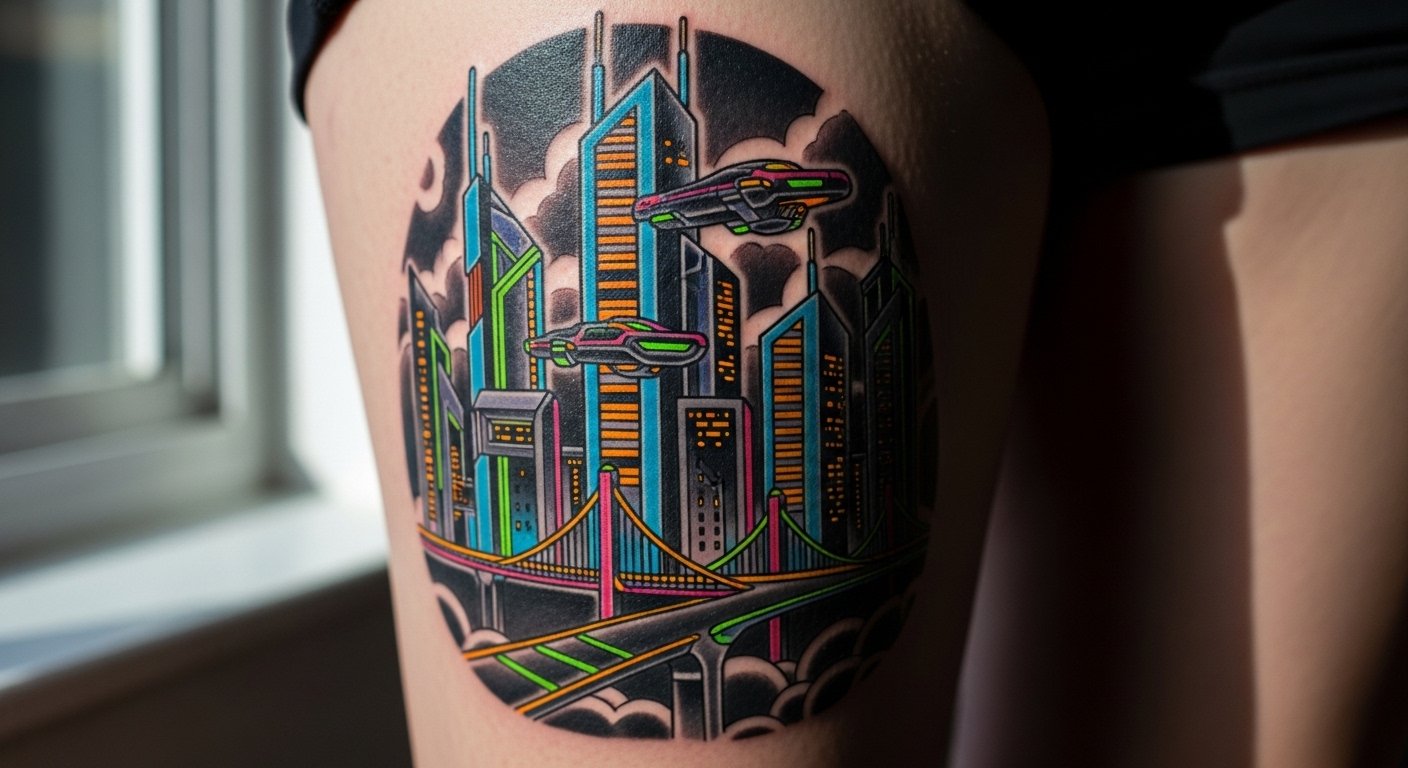
4. Futuristic Cityscape on Outer Thigh
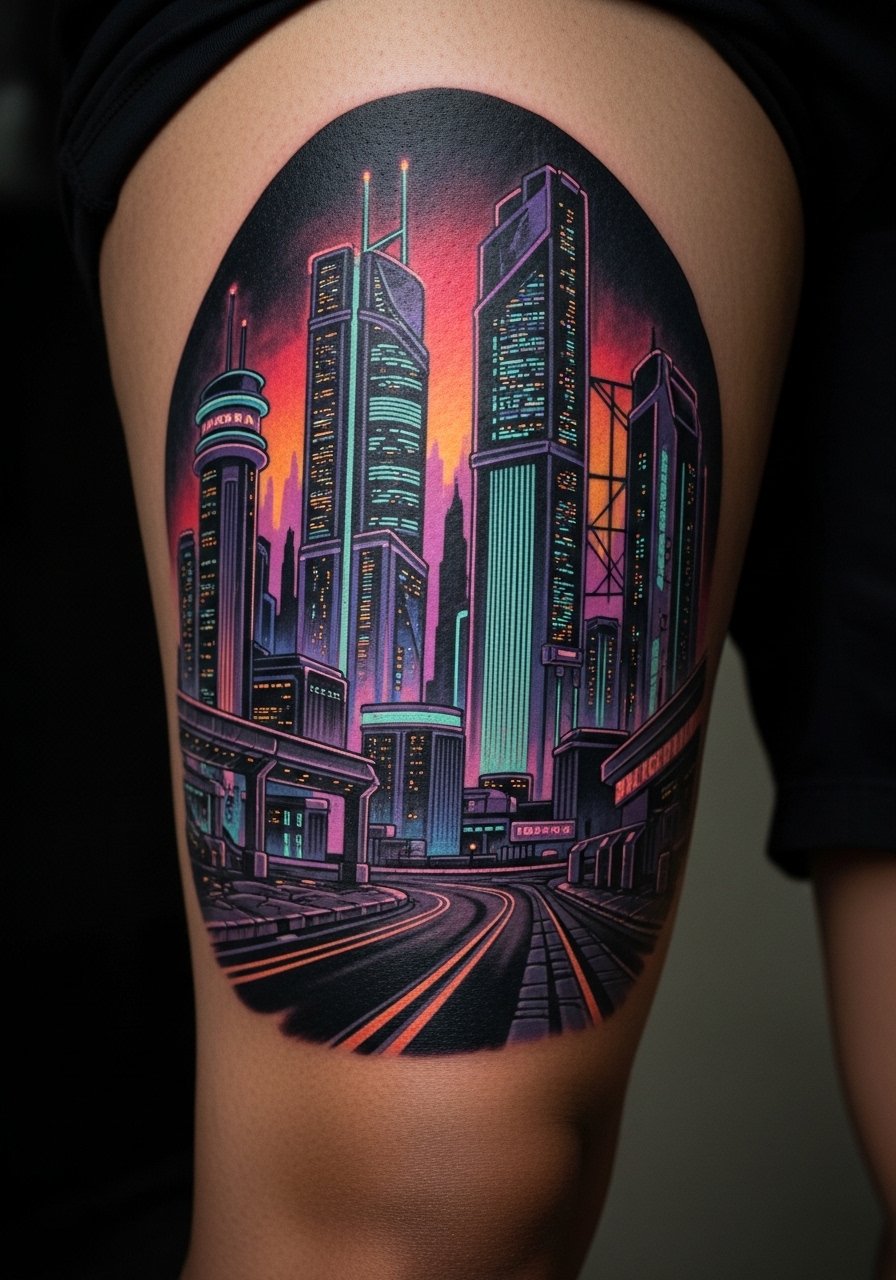
There is something about a thigh cityscape that reads like a micro mural. Thigh skin holds saturation well and the surface is large enough for layered neon, stipple depth, and small architecture lines. Tell your artist you want modular areas so you can expand sideways into a half-sleeve later. Sessions are long and spread across four or more visits. One controversy here is sleeve vs modular work. Some artists push full immersive sleeves for consistency. Other artists recommend modular panels to avoid session creep and budget surprises. If you favor long-term options, build a roadmap in your consultation.
5. Cyber Sigil Chestplate at Sternum and Center Chest
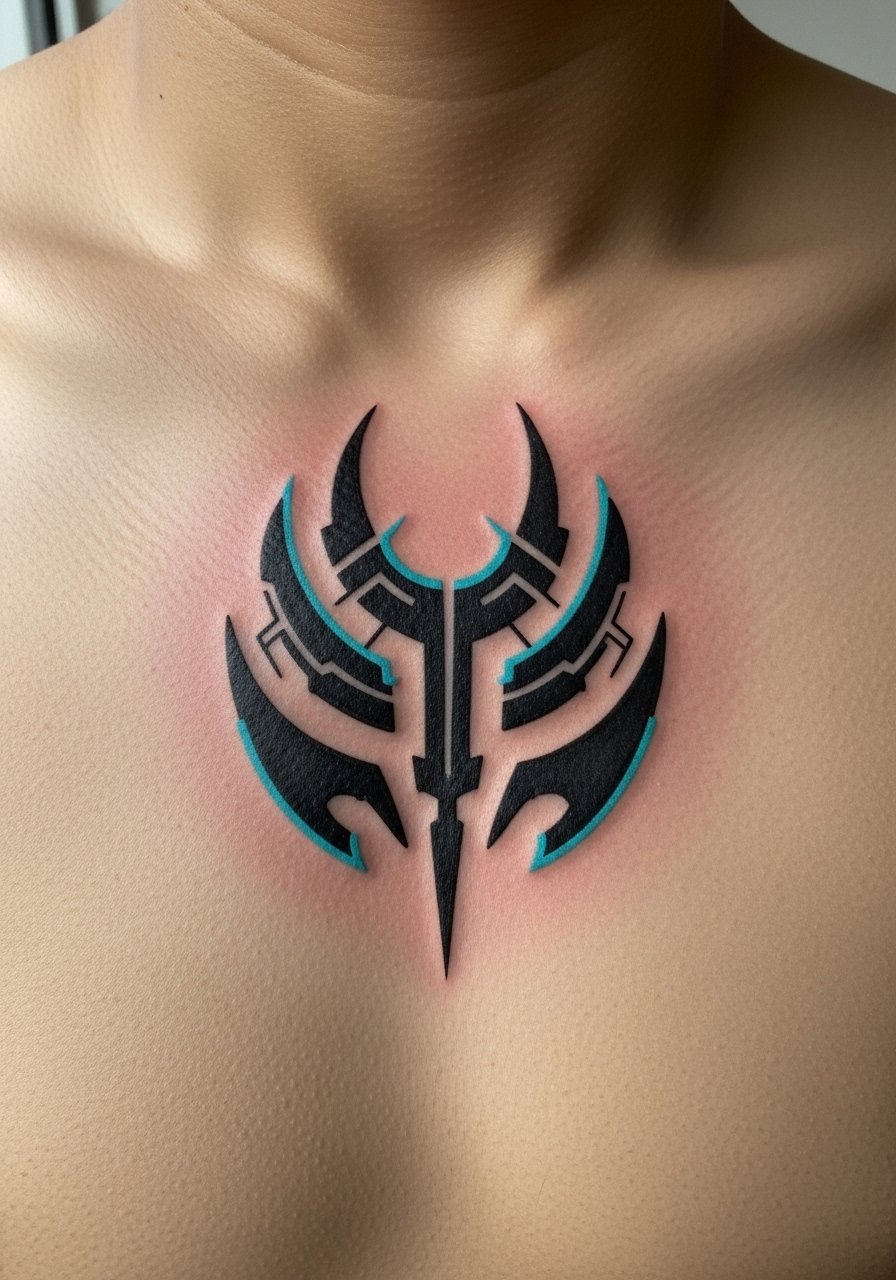
Most people do not realize chestpiece placement affects how a sigil reads when you move. The sternum gives symmetry but the area can be painful and prone to linea changes with weight and muscle shift. When you consult, bring game icons or custom glyph ideas and ask the artist to design negative space that will keep the symbol readable if any blur happens. Sessions are medium to long. A common mistake is forcing dense micro details into the center chest where skin movement will soften them. Expect a touch-up at year two to sharpen cyan accents.
6. Cybernetic Eye Sleeve Accent at Upper Arm
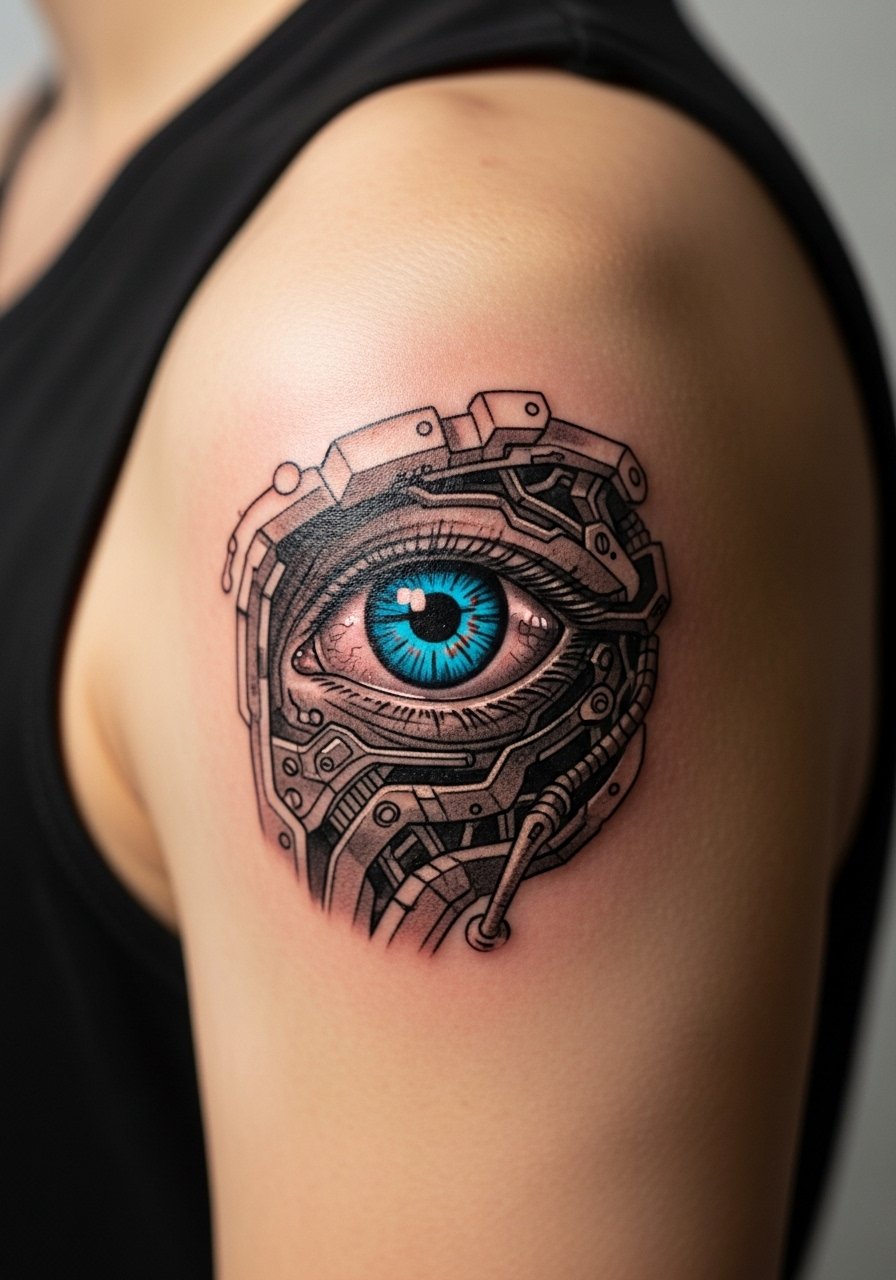
The upper arm is forgiving and excellent for micro-realism experiments like a cybernetic eye. Most artists recommend starting at the shoulder cap and expanding downward. Tell your artist you want the neon iris to sit above a textured black and gray background so color contrast survives sun exposure. Expect multiple sessions and moderate discomfort around deltoid transitions. One mistake I see often is trying to compress a full eye into a small patch under two inches. For longevity, plan for staged sessions and a touch-up at year three.
7. Neon Samurai Katana Wrap on Calf
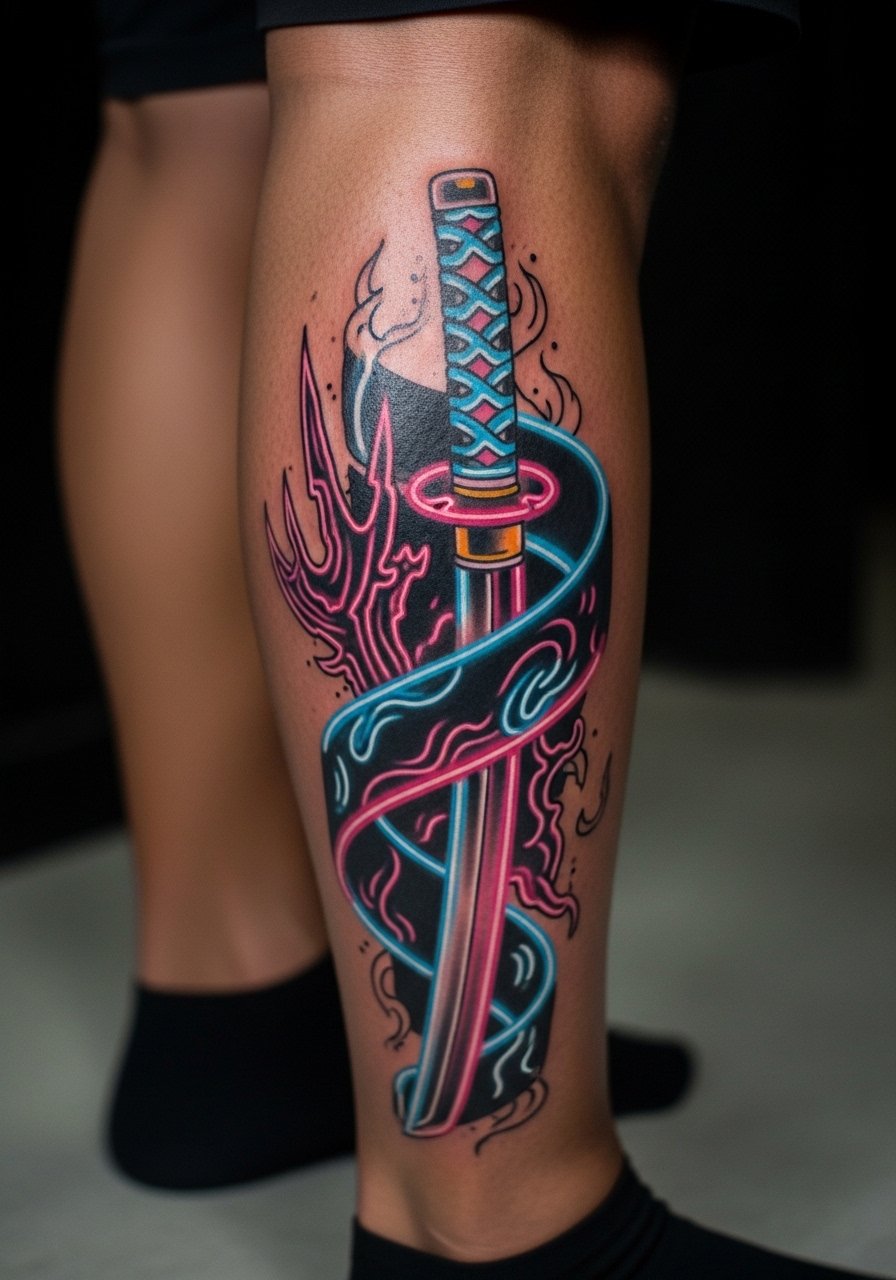
I've noticed calf wraps age well because of thicker skin and less direct sun exposure. A neon katana with ornamental handles works as a calf piece because the leg lets details breathe. Mention to your artist you want the neon to be muddy rather than clean if you want a post-apoc aesthetic. Sessions usually take two appointments. Pain is moderate. Avoid asking for ultra-fine blade engraving in a narrow band. That detail will blur quicker than the main silhouette. Expect color softening after two to three years and budget a touch-up if you want crisp neon.
8. Circuit Board Ribcage Panel on Side Ribs
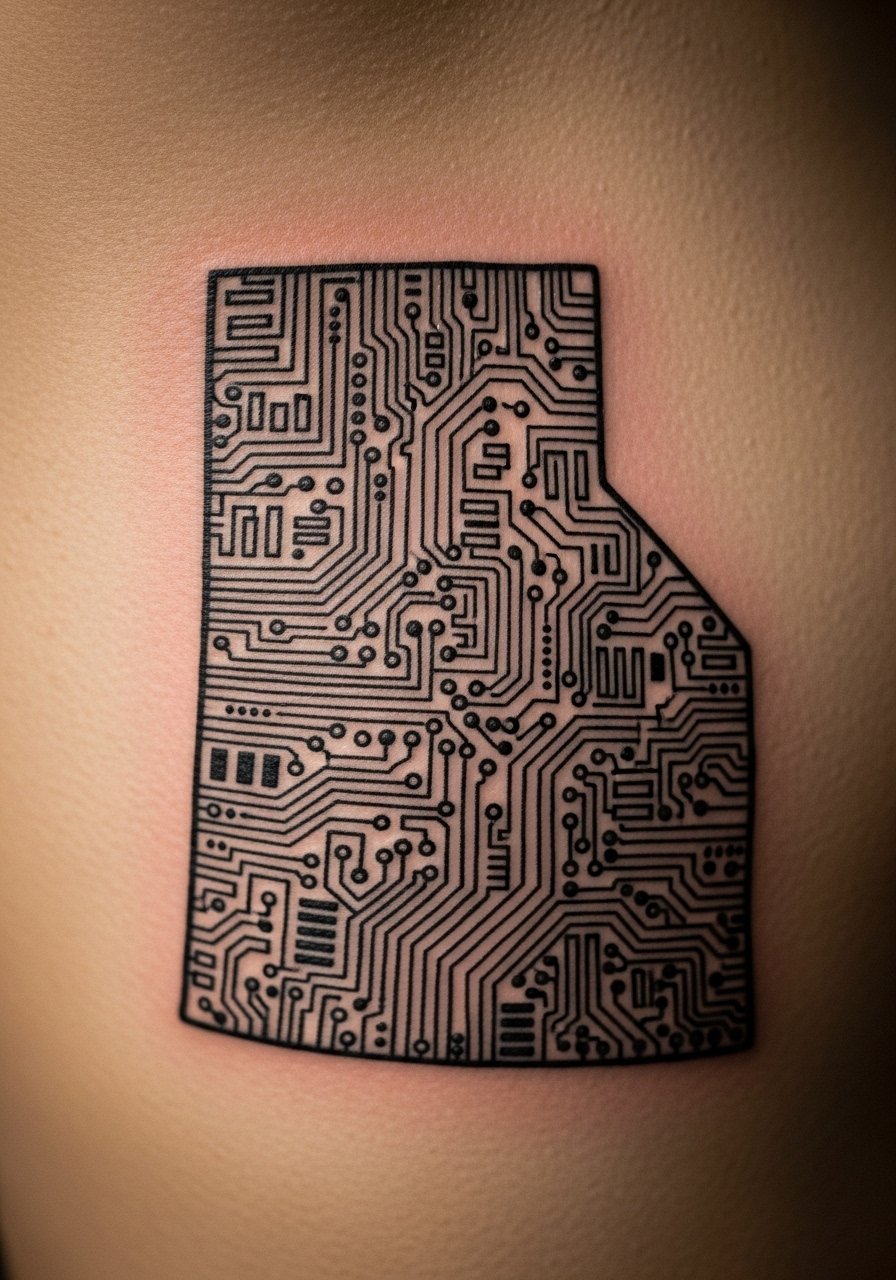
Fair warning: the ribcage rates high on the pain scale, often around a seven out of ten. But the ribs are ideal for hidden panels that can expand into torso work. One design tip is to use slightly thicker linework and geometric negative space so the circuit remains legible as it heals. Artists split on fine line ribs. One camp says the skin there stretches too much and lines blur in a couple of years. The other camp says proper depth and spacing solve that. If you want to minimize risk, plan slightly bolder lines and a touch-up within two years.
9. Holographic Corporate Logo Upper Back Panel
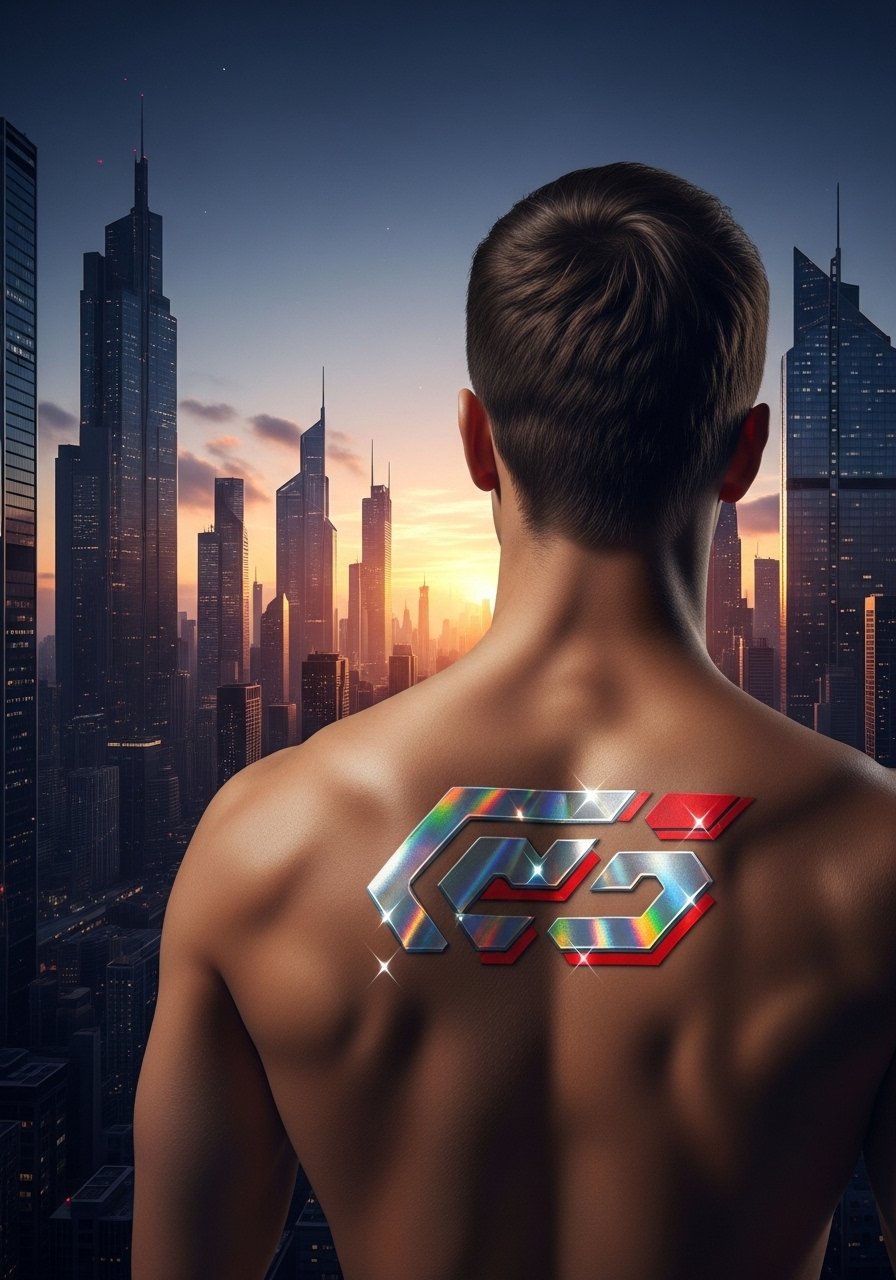
A large back panel gives room to make a bold statement with metallic inks and red accents. Be aware that metallic pigments can feel different as they age on various skin tones. When you consult, ask for contrast studies with darker base ink so the logo keeps its edge. Sessions are long and require multiple visits. This placement has a lower blowout risk than smaller areas. One common mistake is requesting super-fine shading for metallic effects in the first session. Layer the metallic look over a solid foundation for best longevity.
10. Post-Apocalyptic Drone Shoulder Cap
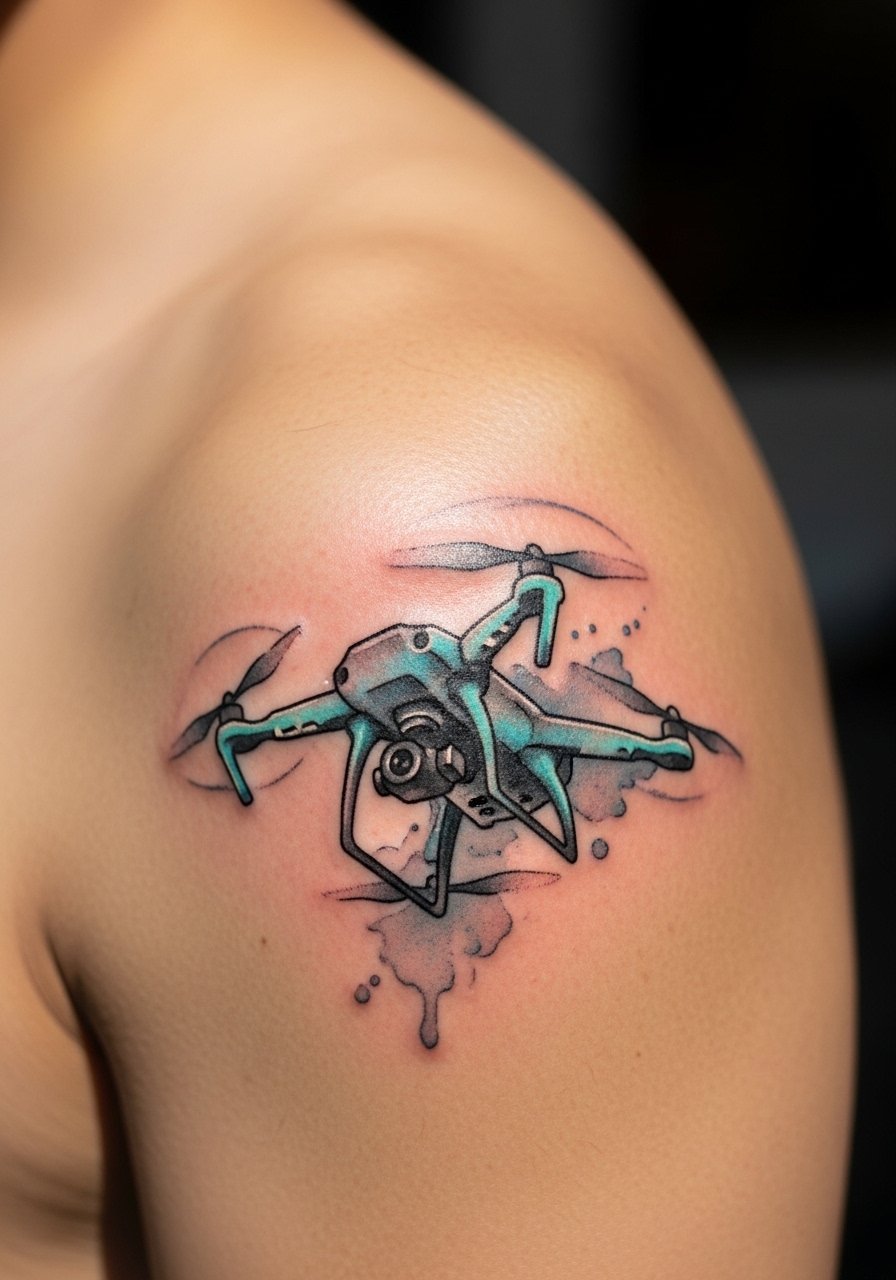
There's a reason the shoulder cap is a go-to for mechanical motifs. The curved surface lets drones peek out across the arm and chest. Watercolor approaches look striking initially but tend to fade faster in thin-skin areas. If you want the watercolor wash without rapid loss, ask your artist to anchor the design with black outlines or stipple shading. Sessions are usually two appointments and pain is low to moderate. Artists sometimes underestimate how much a watercolor base will wash out, so plan for a color boost at year two if you wear a lot of sun.
11. Ignorant Style Netrunner on Back of Hand
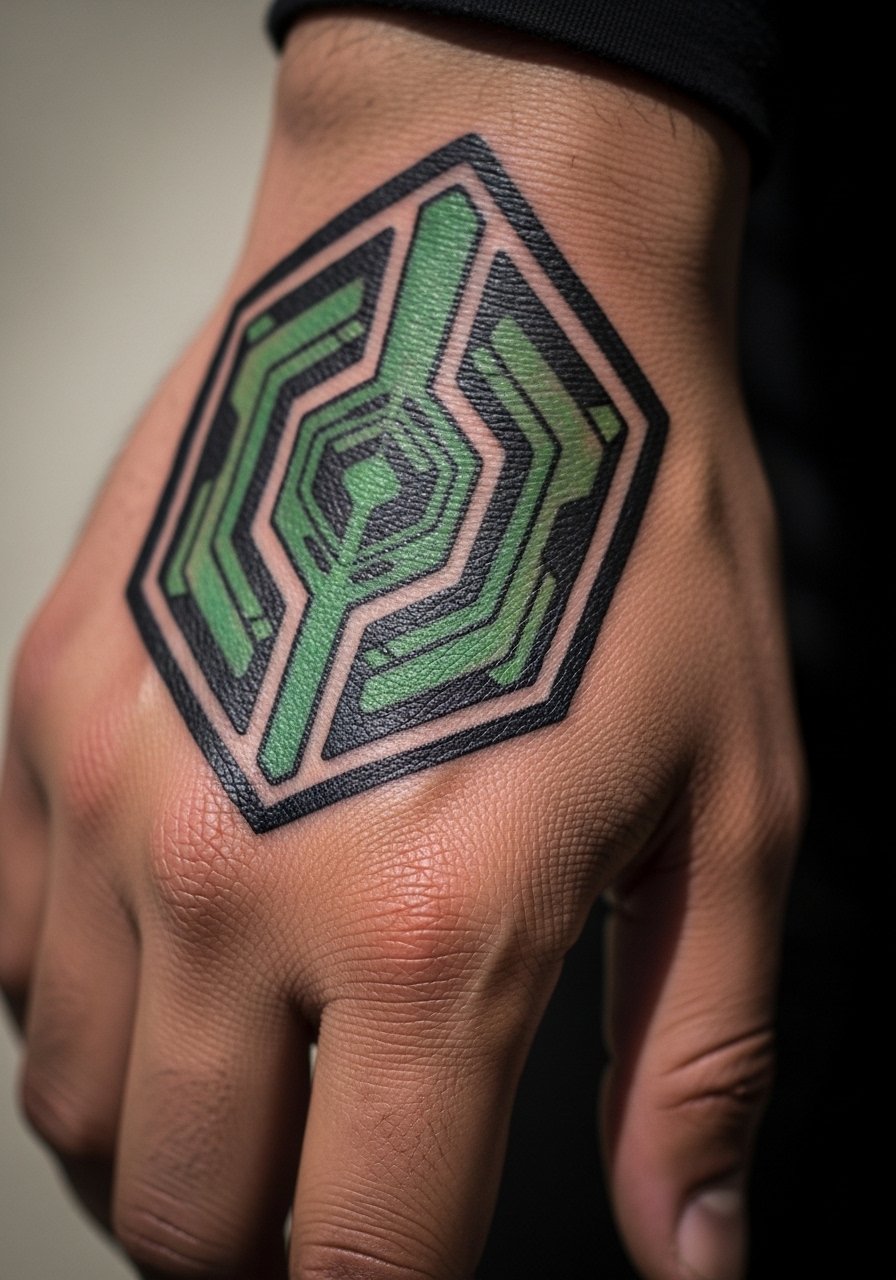
Hand tattoos remain visible and still carry workplace implications. Think about career impacts before booking. Ignorant style reads loud and raw and it fits the hand because the bold lines hold up better than fine line fills. The hand heals differently and requires an artist experienced with hand work. Pain is high and sessions are short but intense. Expect quicker fading and more frequent touch-ups than other locations. The common mistake is asking for tiny detail or thin neon veins on the hand. Bold graphic shapes last longest.
12. Geometric Matrix Neck Panel Along Side Neck
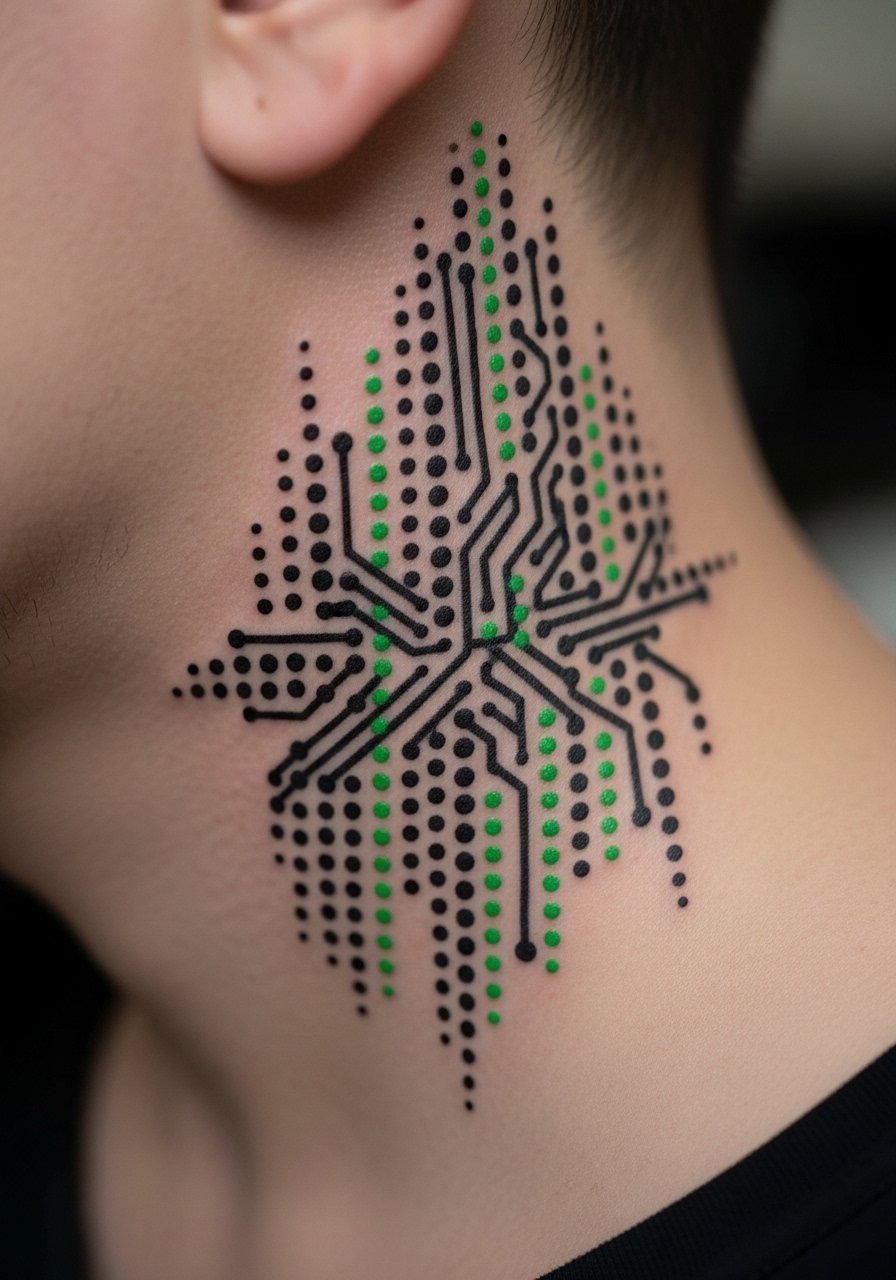
Neck placements need careful consideration for both healing and social factors. The side neck works for compact code rain that reads like a tech collar. Discuss with your artist how it will sit under collars and with hairlines. Pain is high and aftercare requires extra attention because clothing rubs. This placement benefits from slightly thicker dots and spaced lines so the code does not merge over time. One mistake is compressing too many micro lines into a narrow strip. Plan for a touch-up and a clean edge maintenance at year two.
13. Neo-Noir Street Sign on Inner Bicep
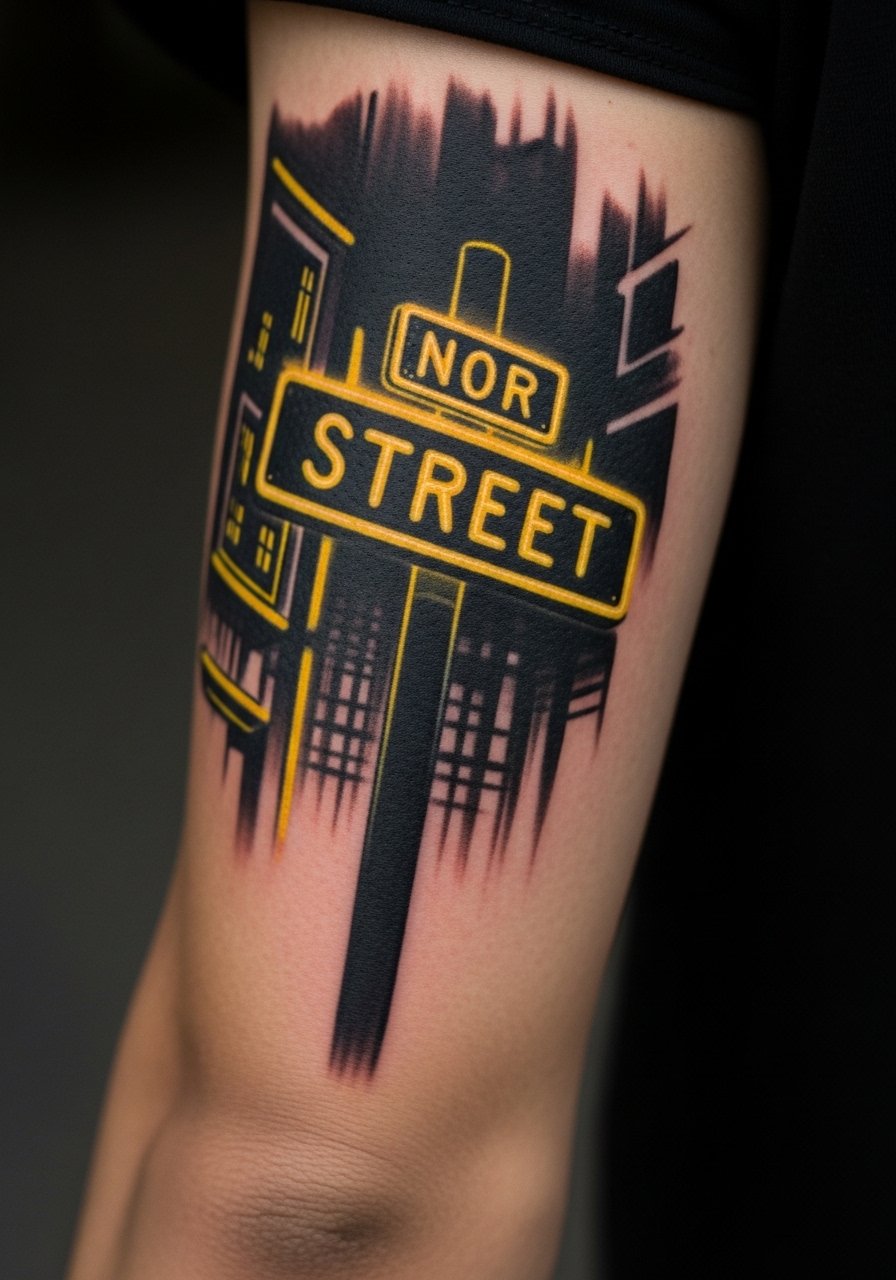
I saw this style on a convention board and it reads like a rainy alley in motion. The inner bicep is softer on pain than ribs and keeps neon highlights visible if placed over a black base. Tell your artist you want the neon to bloom from the black rather than sit in thin color strokes. Sessions are usually two appointments for medium pieces. Be careful with too much tiny text inside the sign. Lettering that is too small will blur more quickly than bold signage.
14. Collarbone Hologram with Shoulder Extension
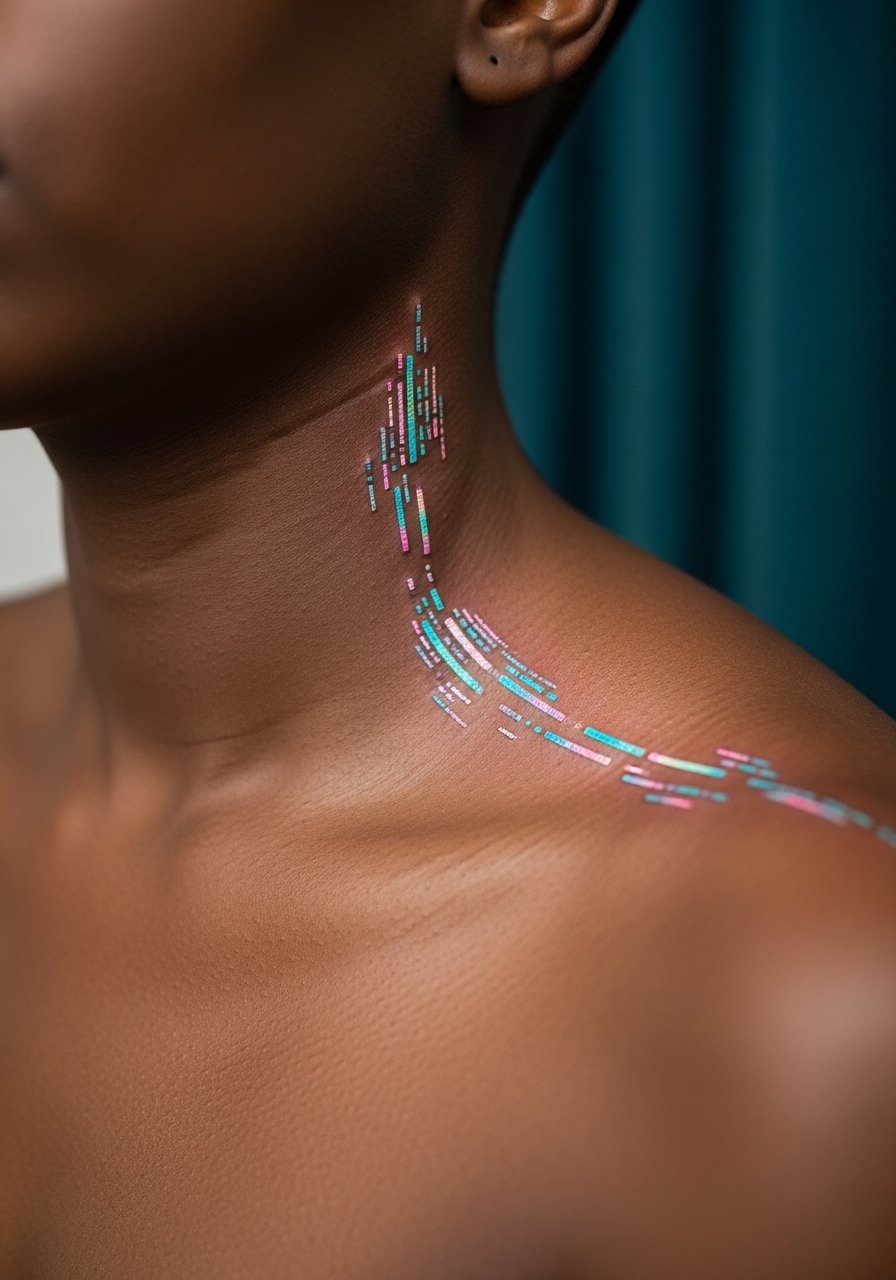
When you consult for a collarbone hologram, plan extensions that meet shoulder panels later. Collarbone skin moves with breathing and can soften detail faster than the thigh or back. This is a placement where modular design shines. Mention to your artist you want negative space that will link to future shoulder work. Pain is moderate to high. Professional considerations apply because the collarbone is visible in many workplaces. One mistake is cramming full shoulder detail into a collarbone-only session. Stage it instead.
15. Dirty Neon Patchwork on Inner Forearm
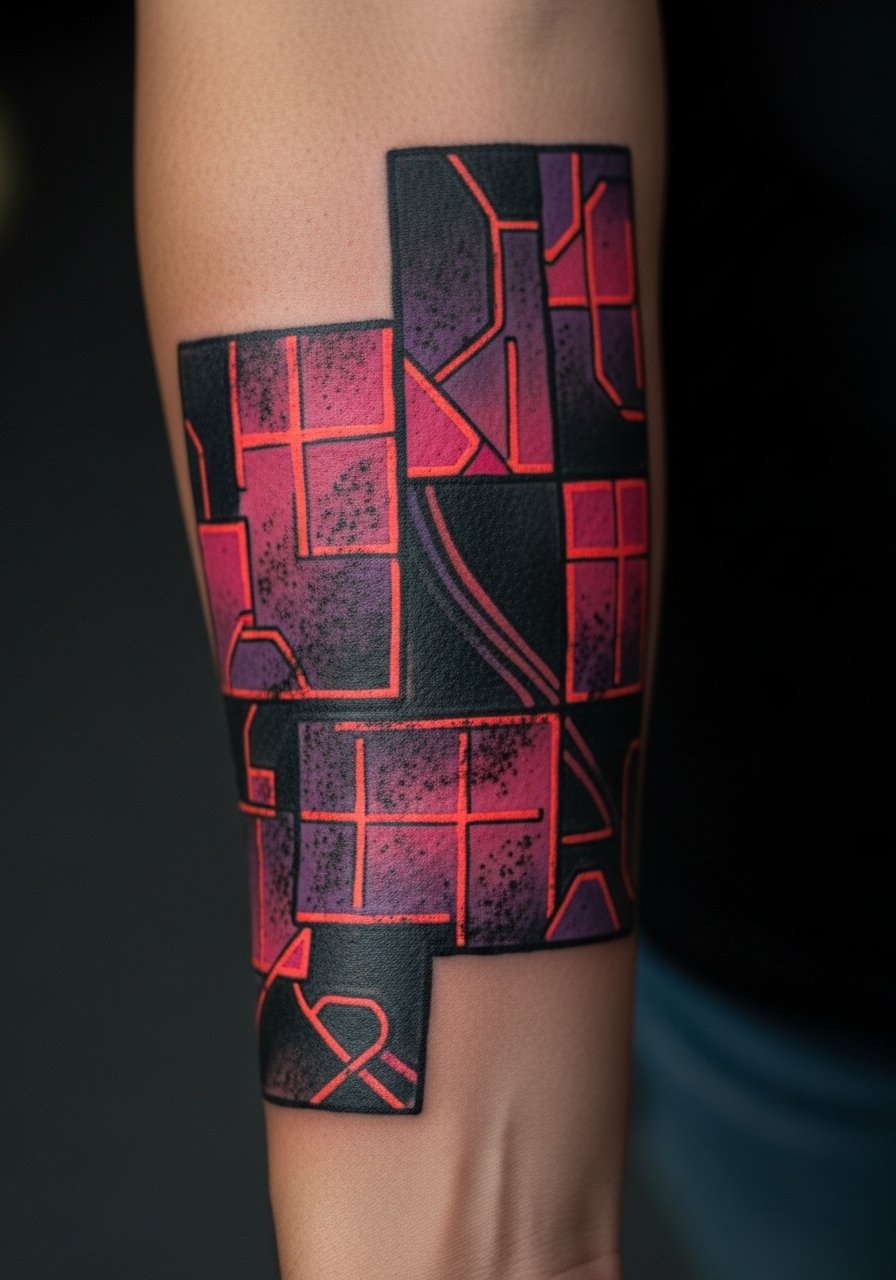
Most neon seen online is clean and bright. I have started noticing dirty neon palettes that feel more post-apoc and they age with character. The inner forearm is a prime canvas but sun exposure is a factor. Ask your artist for muddied pinks and purples layered over a black base. That approach helps the neon keep presence longer through summers. Sessions are usually one to two visits. The common mistake is using only color with no black underlay. That will fade fast and lose contrast.
16. Matrix Code as Filler Between Old Blackwork
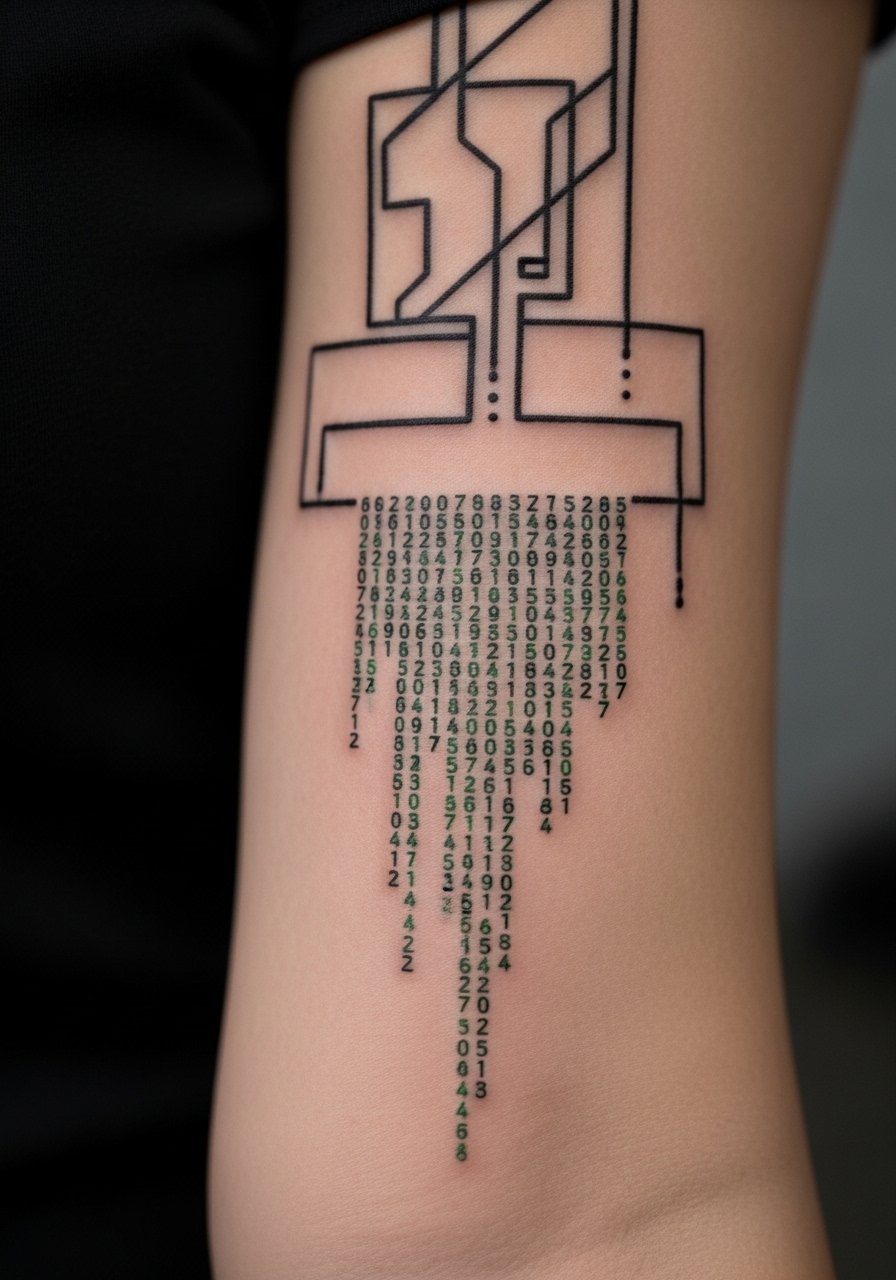
If you have old blackwork that needs bridging, matrix code makes a smart filler that complements existing linework. Tell your artist which sections you want linked and ask for variable dot sizes so the filler reads layered. This is low pain and usually one short session. A common mistake is trying to match ink tones exactly to old pieces. Expect slight variation and plan a touch-up to get the blend seamless. This approach helps modernize older blackwork without ripping it out.
17. Micro-Realism Chip on Side of Hand
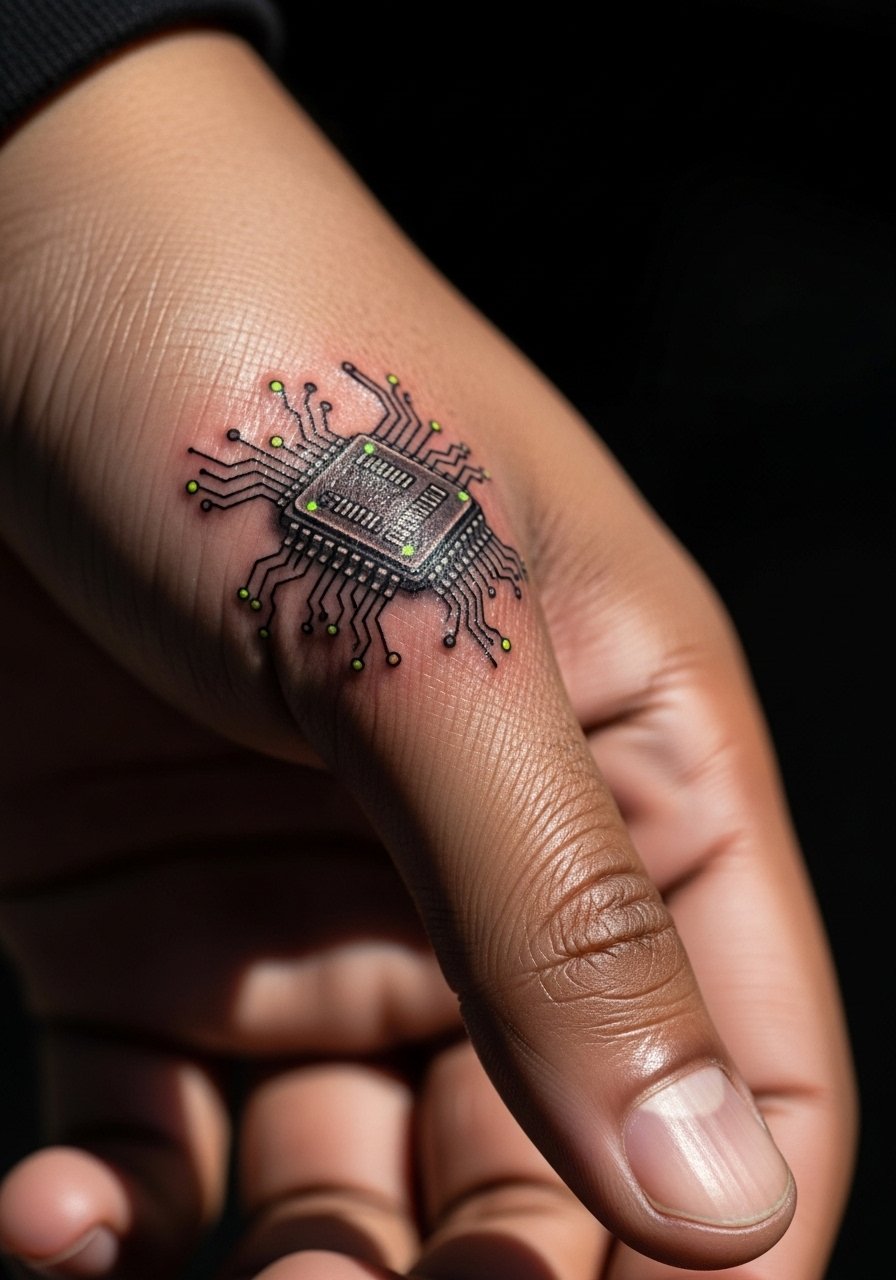
I noticed that side-hand placements can retain micro accents if the main shapes are bold. This chip design looks delicate but benefits from a clear silhouette to avoid blowout. The side of the hand is sensitive and heals with more scabbing, so aftercare matters. One session can do it, but expect faster fade and possible yearly touch-ups. The key mistake is relying on ultra-fine circuitry lines without a solid perimeter. Ask your artist to balance micro detail with a strong contour.
18. Stipple Shaded Augmented Rib Panel Around Lower Ribs
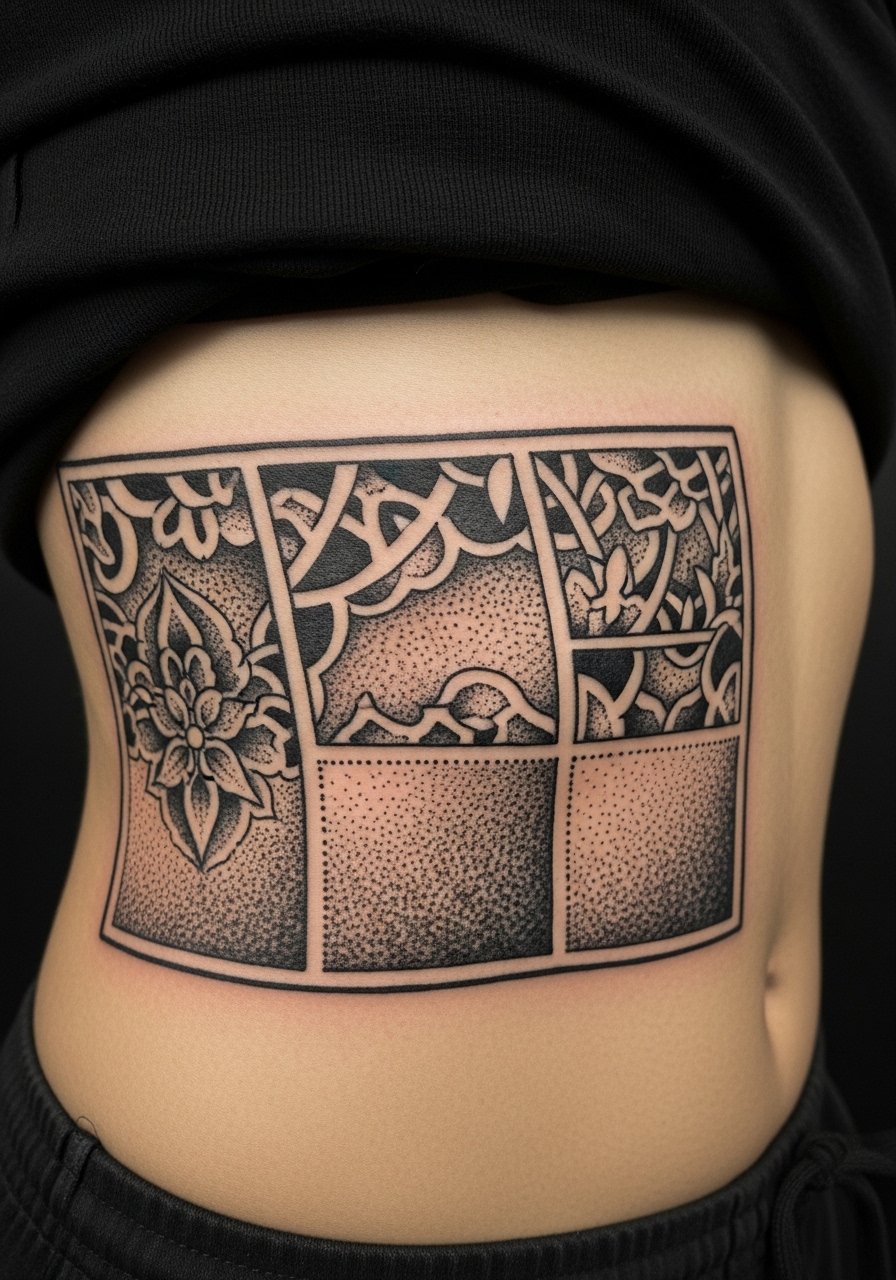
Most stipple shading ages very predictably because dots leave space for skin movement. Lower ribs are painful but deliver excellent contrast for blackwork panels. Tell your artist you want stipple transitions rather than gradient washes so the piece keeps depth as it heals. Pain is high and sessions are several hours. A common mistake is asking for smooth watercolor blending on ribs. Dot work is a more durable choice there. Expect a touch-up in two to three years to refresh high-contrast edges.
19. Collar Implant Lines Along Collarbone for Modular Sleeve Start
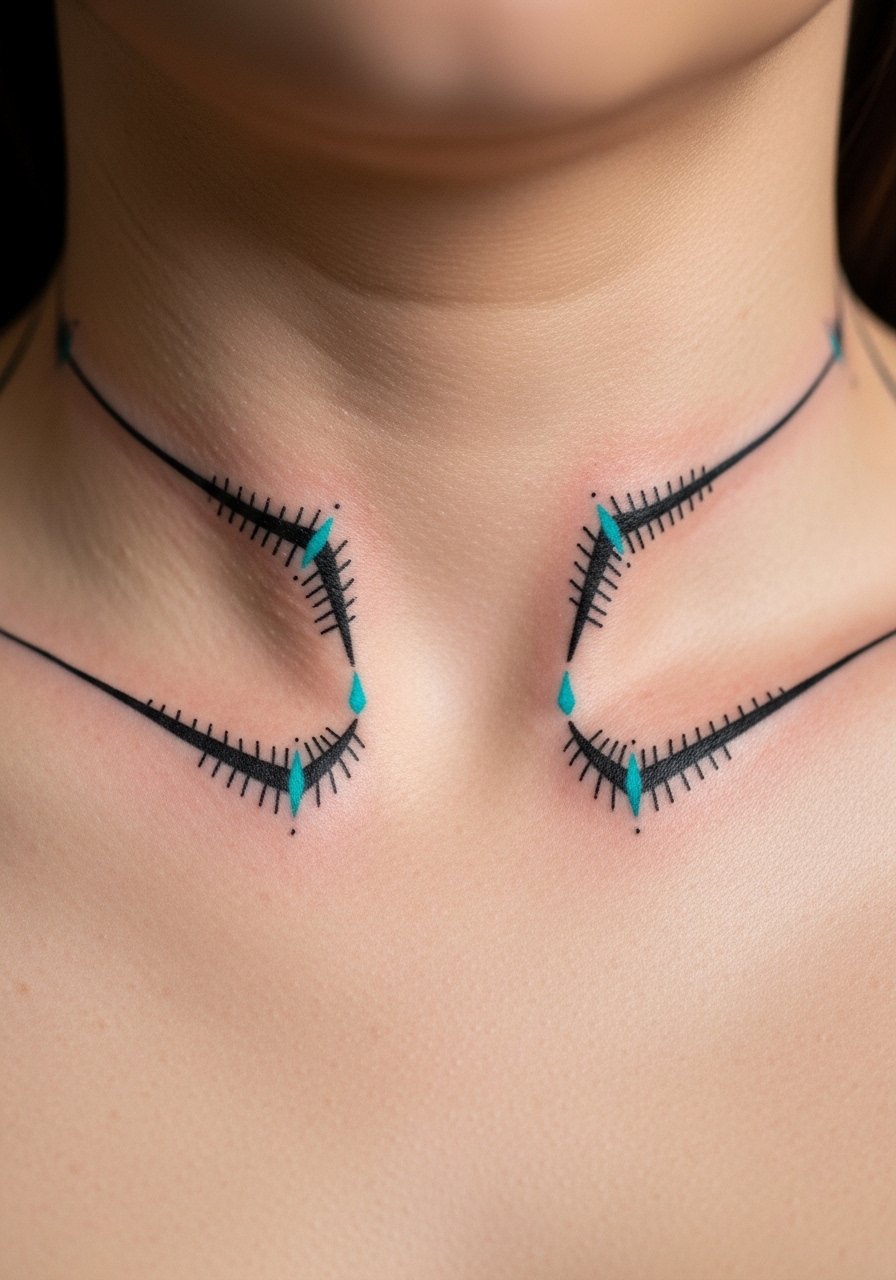
When you want a modular sleeve start, collar implants can create a visual anchor that connects to shoulder and chest work later. The collarbone can be sensitive, so plan shorter sessions and stage the work. One benefit is you can test neon highlights there and see how they age on your skin tone before committing to a full sleeve. The mistake I see is trying to finish a full connector in one long session. Break it into sessions and review healed photos before expanding.
20. Barcode-Like Wrist Band with Personal Coordinates
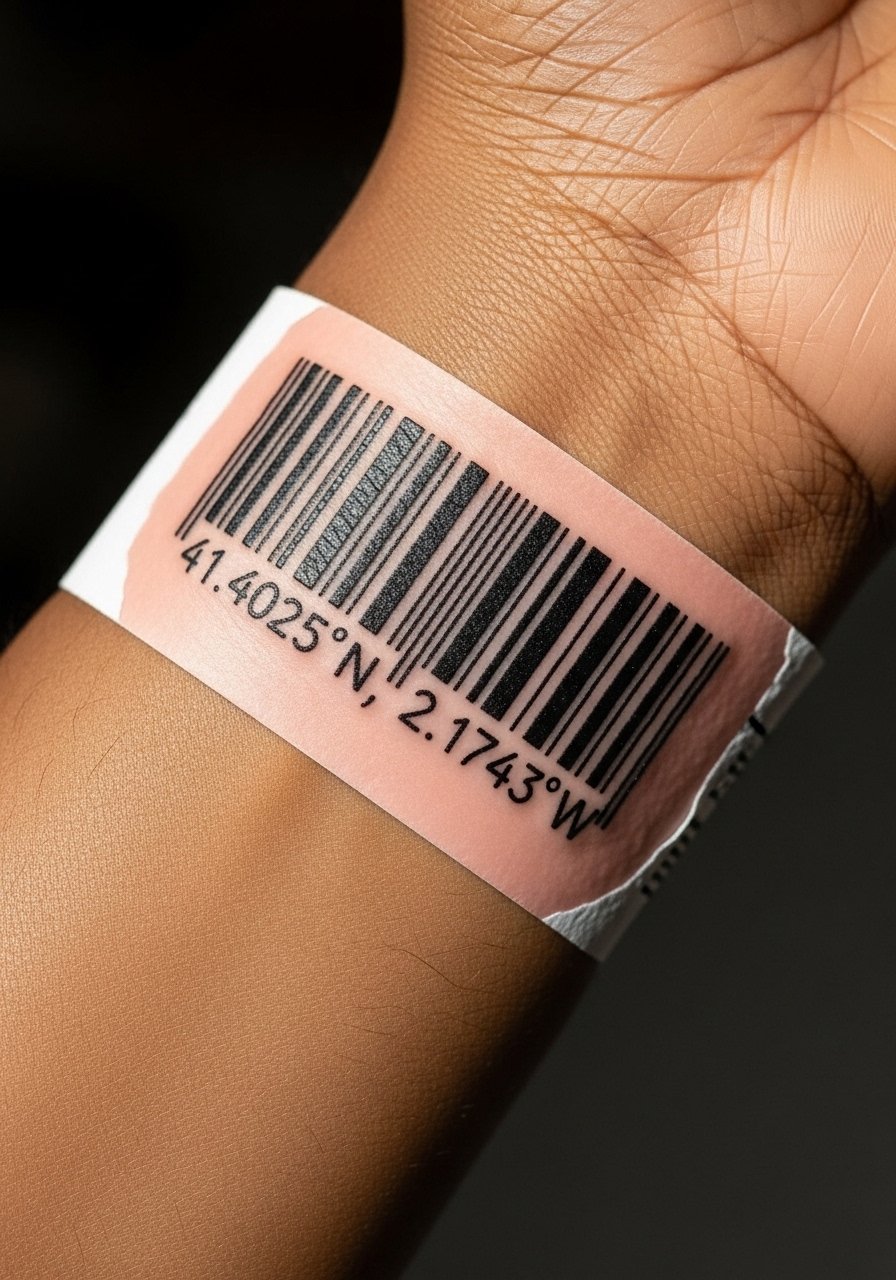
When text appears in an image prompt, it must be exact. Coordinates make a barcode band feel personal and techy. The inner wrist and outer wrist both work but the inner side fades faster. Keep the bars slightly thicker than standard barcode lines to reduce blur. This is a small, usually single-session piece. One mistake is cramming long coordinates in too small a space. Use a slightly larger band and expect a touch-up at year one if you want razor-sharp lines.
21. Whip-Shaded Circuit Panels on Upper Thigh
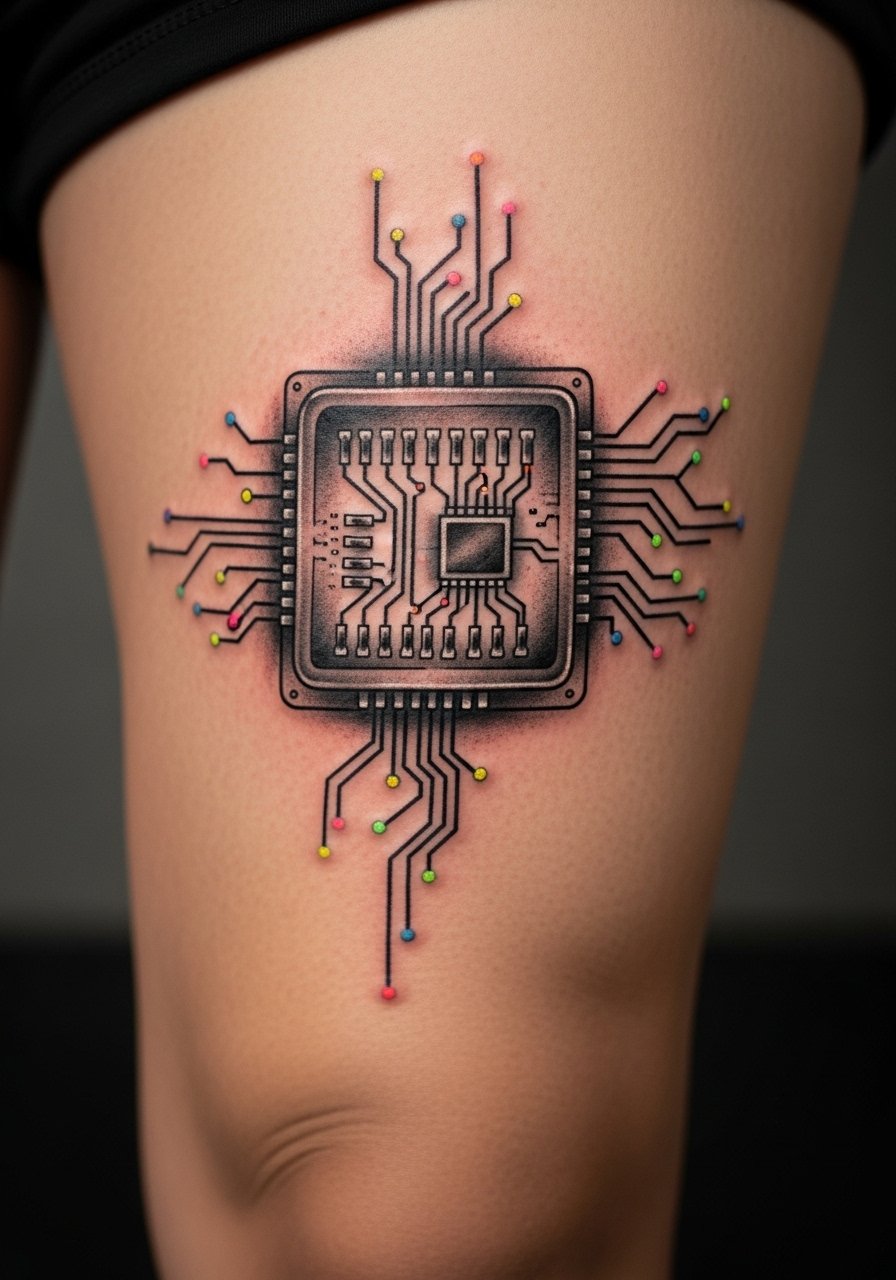
Upper thigh panels are great for larger techno patterns with whip shading that adds kinetic motion. I recommend asking for directional shading that follows the body's curve. Sessions are longer and pain is moderate. One downside is dramatic color contrast can look different on darker skin tones, so ask for mockups on similar skin tones. The common mistake is ignoring directional flow. A circuit that fights the body curve will look off when you move.
22. Neo-Traditional Neon Samurai Chest Wrap
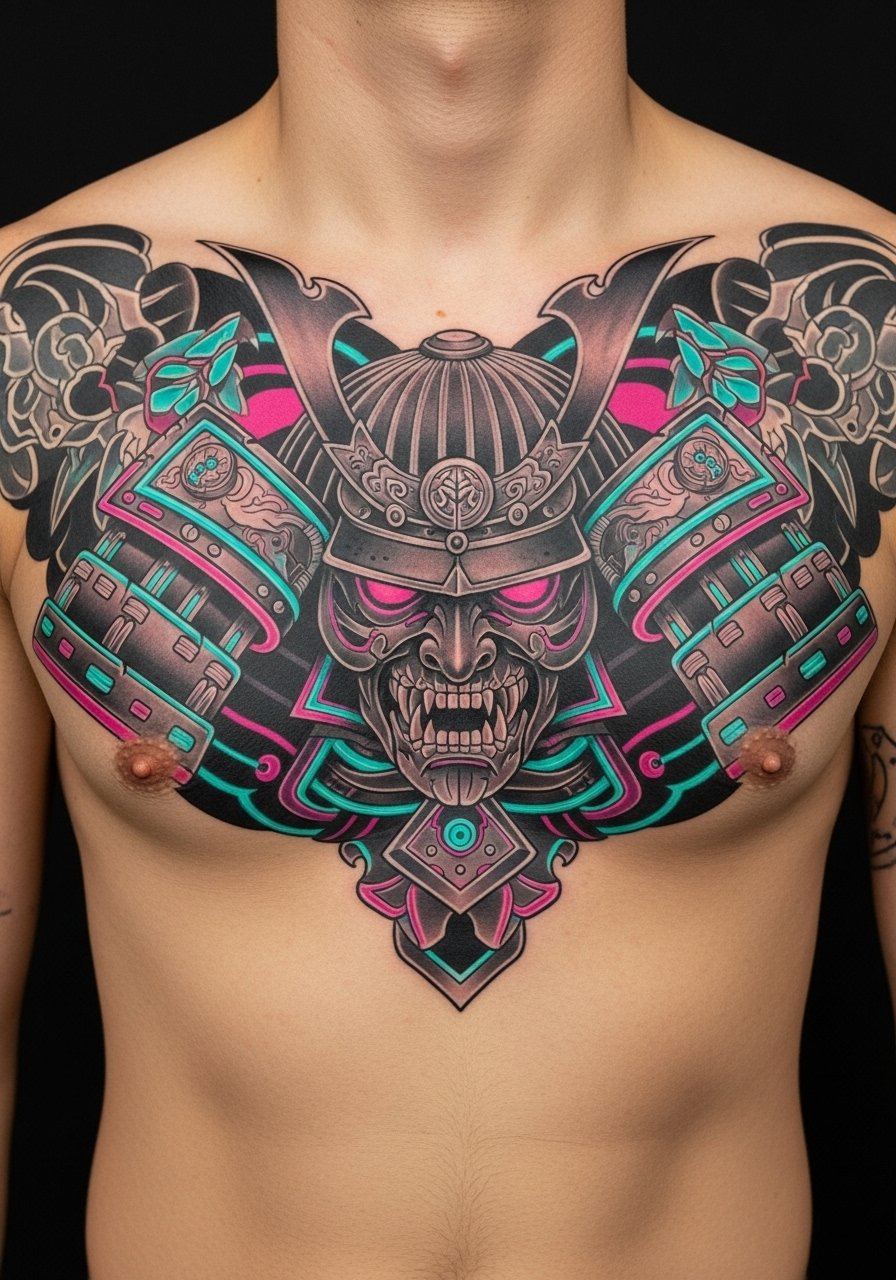
There is strong visual impact when samurai motifs use neon accents on a chest wrap. Chest offers room for bold silhouettes, and neo-traditional linework holds well over time. Sessions are multiple and pain can spike near the sternum. For longevity, anchor neon colors to black outlines and stipple shading so color does not wash out. The mistake is overloading fine decorative details in high-movement chest areas. Pace the sessions and plan touch-ups.
23. Micro-Geometric Eye at Inner Wrist as Subtle Signal
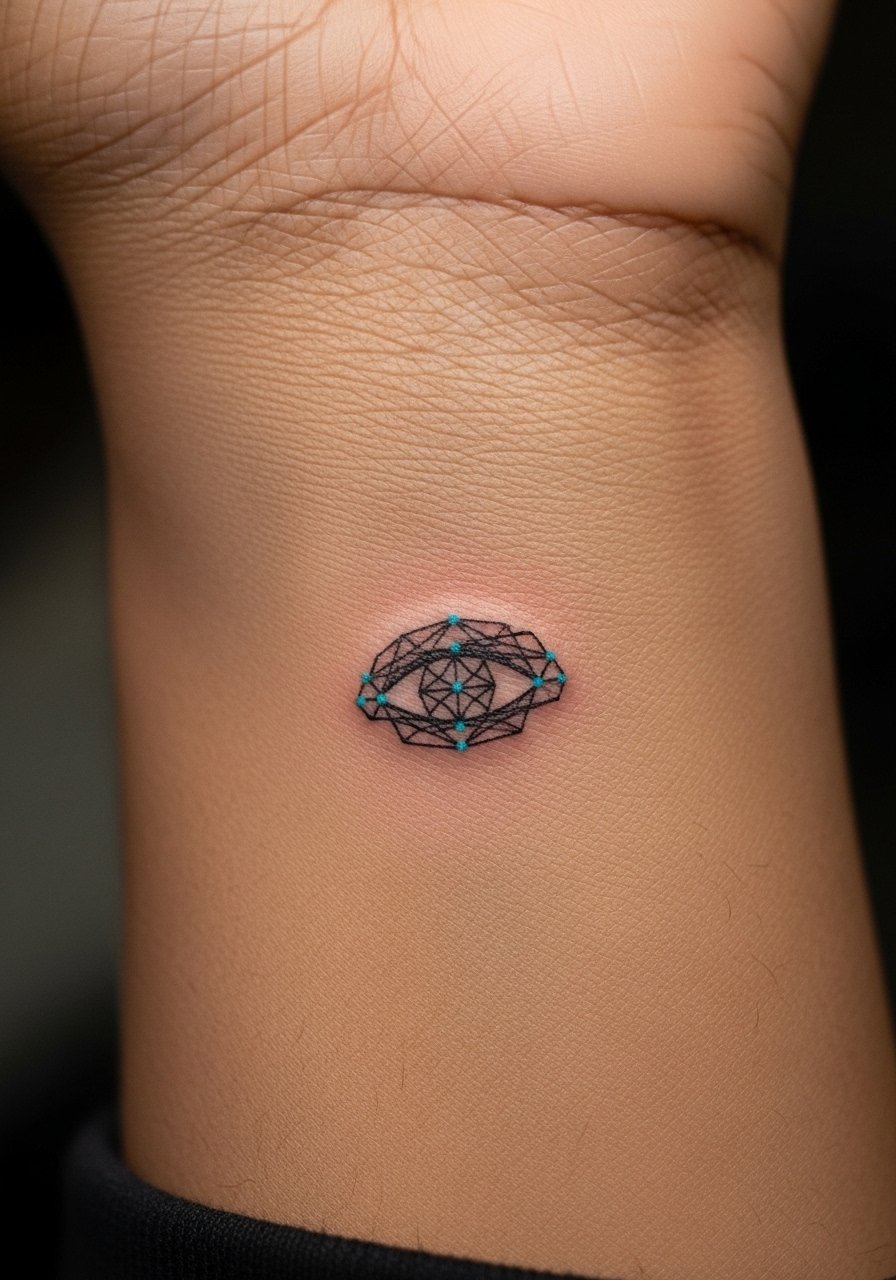
Most first-timers pick this as a small identifier that nods to cyberpunk themes without shouting. The inner wrist will show fine work but also shows wear. Ask for a slightly bolder outline and reserved cyan dots to keep the eye readable for the first few years. One session usually suffices. The most common mistake is asking for too many tiny interior lines. Keep the geometry simple and plan for a touch-up if you wear a lot of sun.
24. Holographic Collar Sigil for Shoulder Extension
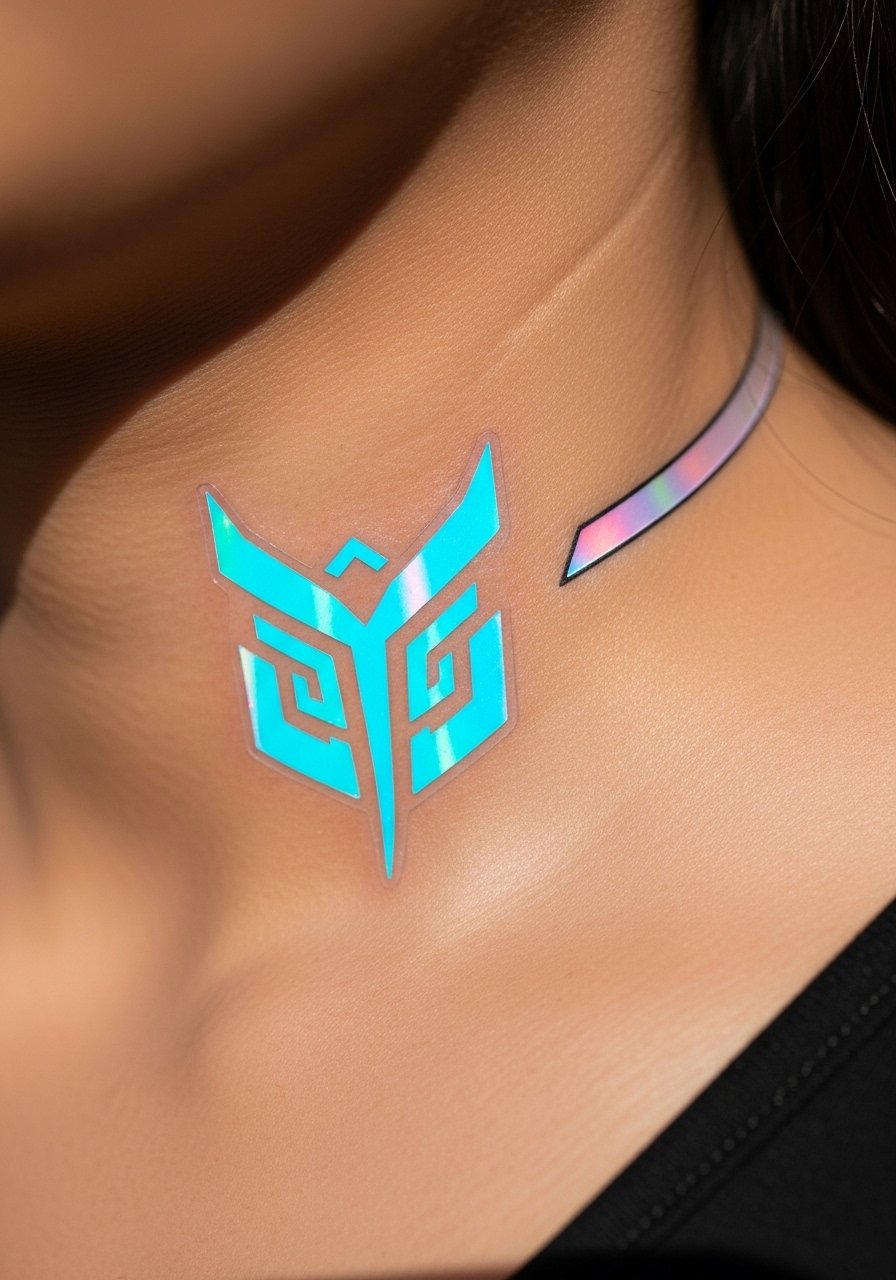
I recommend a collar sigil if you want a future shoulder extension that reads as one unit. This placement is visible and requires artists who understand how collar scars and movement will affect edges. Pain is moderate. Artists differ on how bright holographic pigments hold on the collarbone. One camp favors cooler cyan with strong black contrast. The other camp experiments with magenta overlays for depth. Discuss long-term plans with your artist so the shoulder extension will line up cleanly.
25. Minimalist Data Stream Behind Ear as Tiny Accent
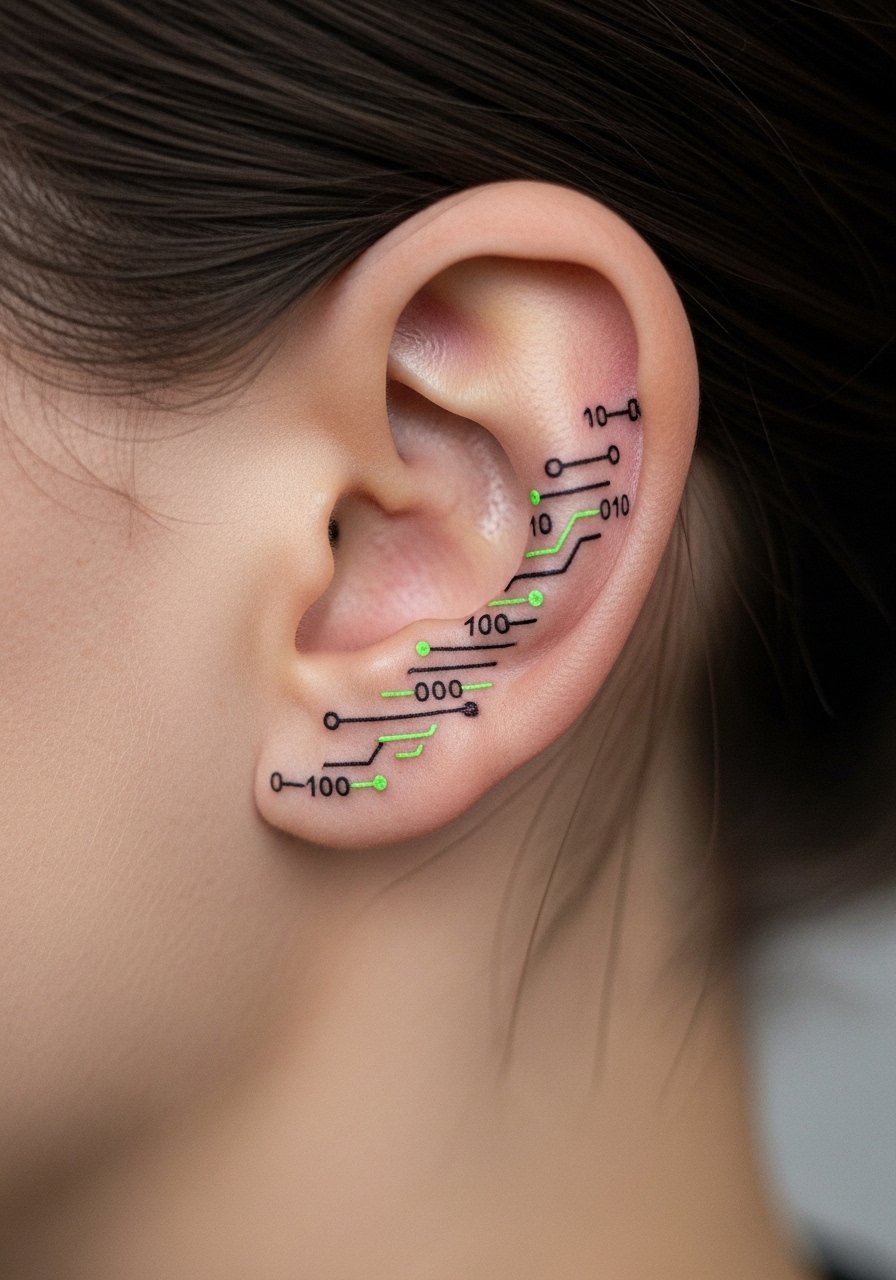
Most tiny accents behind the ear are discrete and carry low commitment. The area heals quickly but has a higher chance of softening because of constant motion from sleeping and hair movement. Keep the design minimal and spaced. This is usually a single short session and pain is low. One mistake is asking for micro text there. Too-small characters will blur. Consider a simple stream of dots or tiny angled lines for lasting clarity.
Tattoo Prep and Aftercare Essentials
Fragrance-free gentle foaming cleanser for fresh ink. Use for the first week to clean pores without added scent. Gentle foaming cleansers remove excess plasma and ink particles without stripping natural oils.
Lightweight fragrance-free balm for first-stage healing. Apply a thin layer after cleaning to keep the area hydrated and prevent hard scabbing. Choose a balm with minimal ingredients to reduce irritation risk.
Medical-grade second skin bandage, 6-inch roll. Useful for large panels or areas that rub against clothing while the tattoo seals. Change per your artist's instructions.
Silicone-based scar gel for long-term maintenance. Use months after healing to even out raised areas and help color settle more smoothly. Apply as directed and test a small patch first.
Breathable high-SPF mineral sunscreen, 30+. Critical for preserving neon and black contrast once healed. Apply generously on exposed tattoos after full healing.
Soft, high-cotton clothing for the first two weeks. Minimizes friction during the initial seal and cuts down on irritation for collarbone and rib placements.
Medical-grade saline spray for delicate areas. Use for delicate placements like hands and neck to gently cleanse without rubbing.
Silicone sheet patches for targeted scar smoothing. Useful on raised spots after healing to flatten and reduce texture differences.
Every tattoo is different. Always follow your artist's specific aftercare instructions. Consult a dermatologist if you have skin concerns or unusual healing issues.
Frequently Asked Questions
Q: Will fine line glitch tattoos on wrists blur faster than a bold blackwork armband?
A: From what I have seen, fine line glitch tattoos on wrists often lose crispness sooner because the wrist flexes and the skin is thin. Bold blackwork armbands anchor neon overlays and tend to read clearer after a year or two. If you want glitch detail, ask your artist to combine fine color with a slightly stronger black contour to slow blur.
Q: How many sessions should I expect for a thigh cityscape compared with a chest sigilplate?
A: A thigh cityscape usually stretches across larger surface area and can take four or more sessions for full saturation and neon layering. A chest sigilplate of medium size often fits into two to three sessions. Sessions depend on artist pace and your comfort with longer sittings. Discuss modular staging if you want to manage cost and recovery.
Q: Are neon colors safe on darker skin tones and how do they age?
A: Neon pigments respond differently across skin tones. Darker skin can mute some pigments, so artists often use a black base or muddied neon shades to preserve contrast. From what I have gathered, anchoring neon to blackwork gives the best long-term visibility. Ask to see healed photos on similar skin tones when you consult.
Q: How should I approach hand or neck placements from a professional perspective?
A: Hand and neck areas demand specialized experience. These areas see more sun, friction, and movement, so choose an artist with a lot of hand or neck work in their portfolio. Also consider career visibility and healing complexity before booking. Shorter staged sessions help both healing and design accuracy.
Q: When is a touch-up realistic for micro-realism cybernetic eyes and biomechanical forearms?
A: Realistically, expect touch-ups around the two to three year mark for micro-realism and biomechanical pieces that rely on fine contrast. Exposure, skin type, and placement speed up or slow this timeline. Plan a follow-up in your booking so you do not scramble if you want to maintain crisp saturation.
Q: Where do people typically find artists who do clean cyberpunk linework and neon layering?
A: I usually recommend browsing Instagram tags like #cyberpunktattoo and #neoncyberpunk, checking Tattoodo filters for location, and watching TikTok duets under #cyberpunk2077tattoo for healed progress. Apps like Booksy and Inked can help you find shops offering guest spots and portfolios for travel-friendly booking.