Fine line cat outlines fill feeds, but the ones that still read in year five are rarely the skin-thin sketches everyone saves. Small silhouettes and slightly bolder contour lines resist blur and stay readable on high-movement spots. For a cute cat you will want forever, think scale, spacing, and placement before booking. The first idea shows a tiny outline that balances charm with the spacing it needs to age well.
1. Minimalist Cat Outline with Tiny Heart on the Wrist
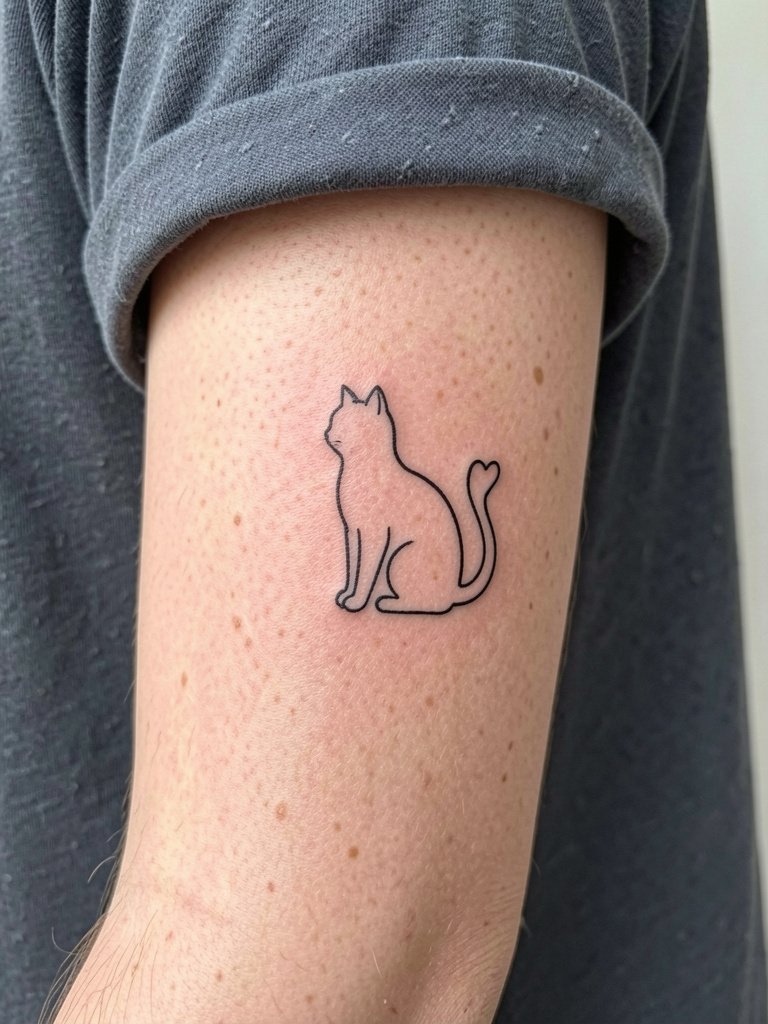
This tiny outline reads as a charming, almost jewelry-like mark when the line weight is kept steady. Plan for slightly heavier single-needle linework than the thinnest reference images, because the inner wrist moves and the skin can soften the stroke over time. If you want the heart to remain distinct, ask for the heart filled or slightly separated from the main contour, not just a dot. For the session, wear a short-sleeve tee you can push up easily, like a cropped sleeve top. If you prefer a subtle accessory to pair with it, try a thin bangle bracelet on the opposite wrist to keep attention balanced.
2. Tiny Cat Silhouette with Negative Space Behind the Ear

Behind-the-ear micro silhouettes work because the skin is low-stretch and the design can be kept boldly simple. Artists split on tiny fine-line detail here. One camp says ultra-fine single-needle work keeps the piece discreet and photogenic. The other camp warns that ultra-thin lines in this spot can fade into a gray spot by year two and recommends a slightly thicker contour. For the appointment, pin your hair so the area is fully visible, and expect a quick session time with a brief sting rather than extended discomfort.
3. Simple Cat Face Linework Behind the Ear or on the Wrist
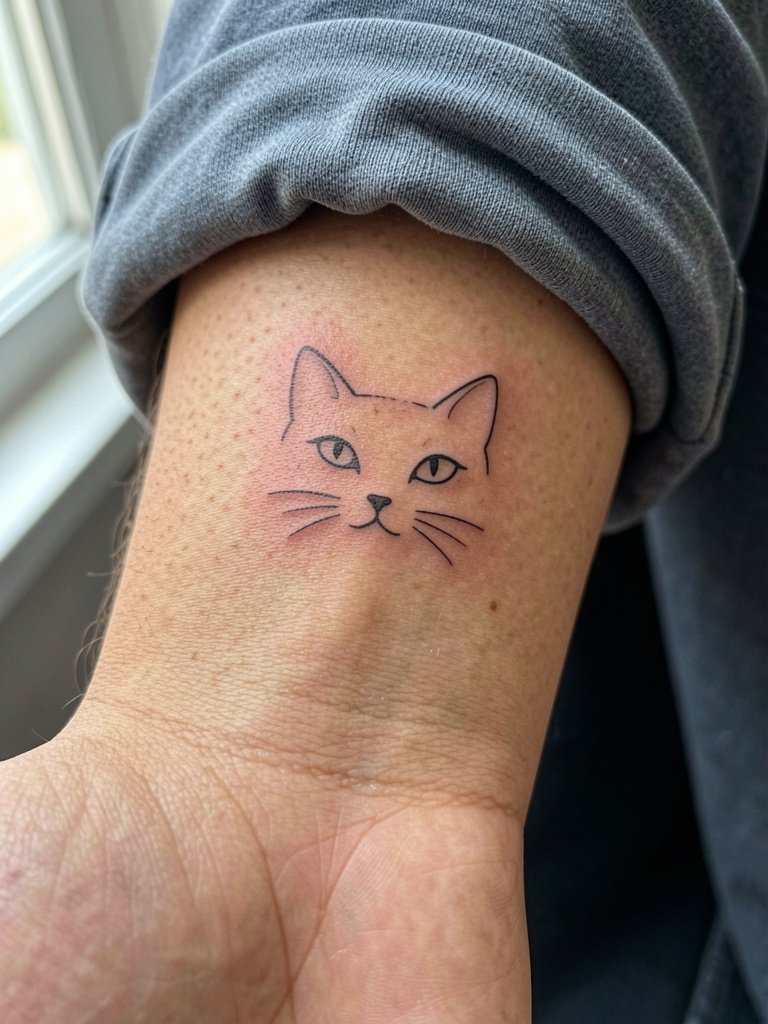
A tiny cat face captures personality without clutter, but scale matters. I recommend a face with bold, clean features rather than tiny filigree eyes. For a wrist placement, the skin movement means the eyes should be slightly larger so they stay readable. This one is also a low-risk memorial option when paired with a discreet initial below the chin line. Wear a short-sleeve shirt on the day of the appointment so the artist can access the inner wrist. If you like jewelry pairings, try a minimalist watch on the opposite wrist to frame the new ink.
4. Tiny Cat Paw Print Memorial on the Ankle

Paw prints are quietly effective tributes because they are readable at micro sizes. The ankle endures friction from socks and shoes, so keep edges clean and avoid tiny inner dots that will blur. If you want the paw paired with a name, keep the script short and lightly spaced above or below the print so it does not crowd the shape. For session wear, slip into low-profile sneakers and rolled jeans so the ankle is easy to expose without tugging. When showing it off, low-rise jeans and ankle socks put the area on display with casual footwear.
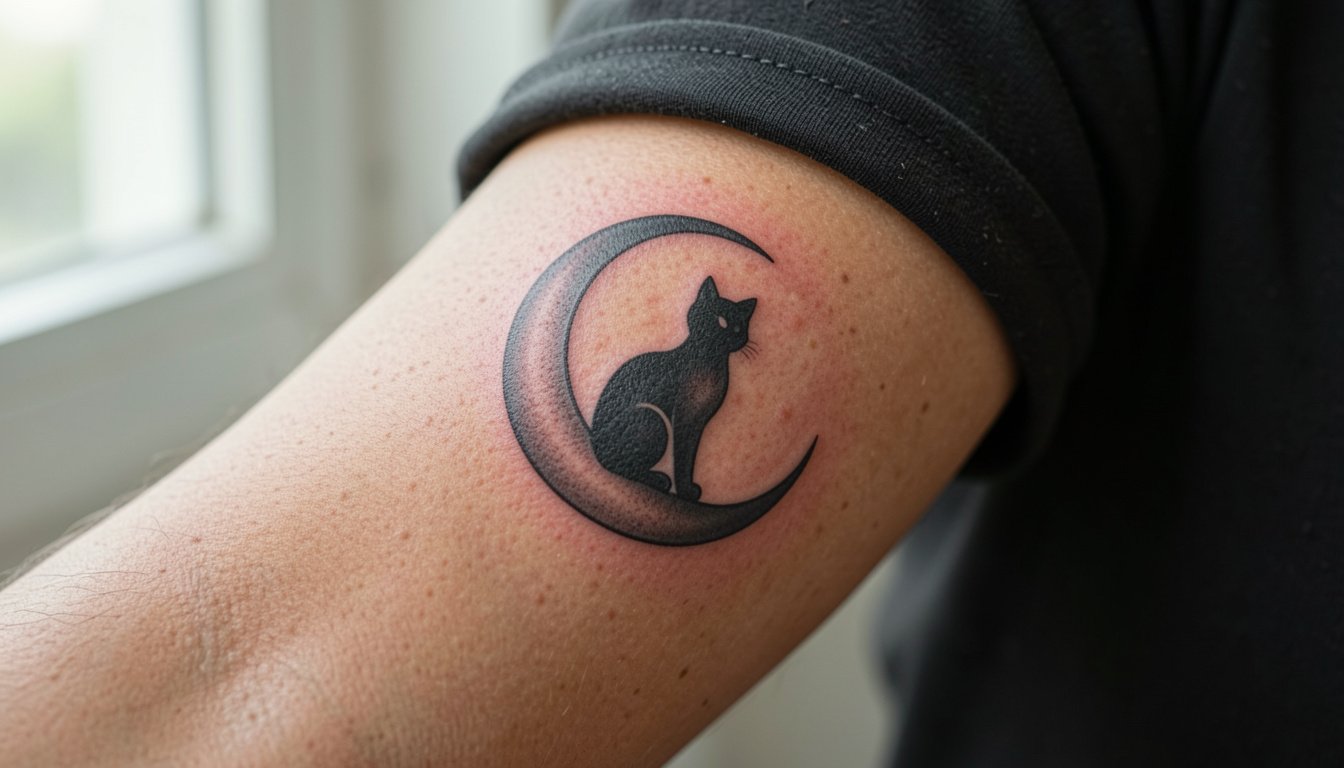
5. Blackwork Cat in Moon Silhouette on Outer Forearm
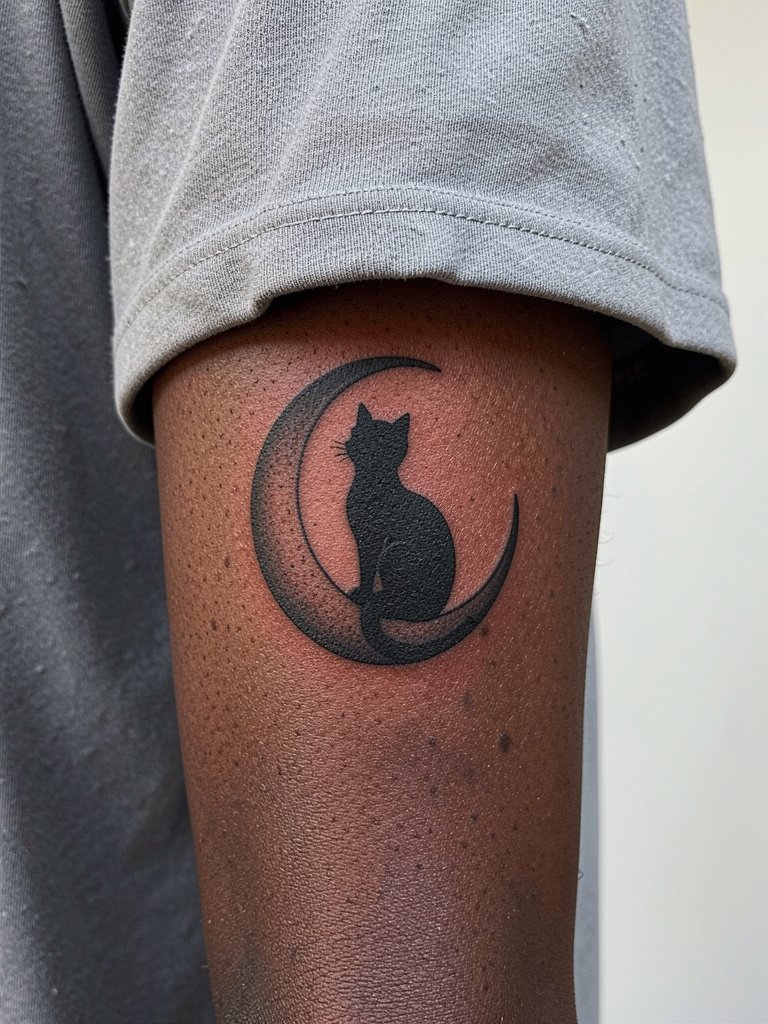
Solid black silhouettes age predictably because they rely on contrast, not tiny linework. For outer forearm placement, the area offers room to make the moon and cat slightly larger, which helps keep detail crisp for years. If you want a mystical vibe, add small negative-space stars around the moon rather than colored accents, which can soften faster. Wear a short sleeve shirt to the appointment so the artist has clear access. For evenings, pair this with boxy solid tees to let the blackwork read cleanly against a neutral top.
6. Realistic Cat Portrait on the Upper Arm
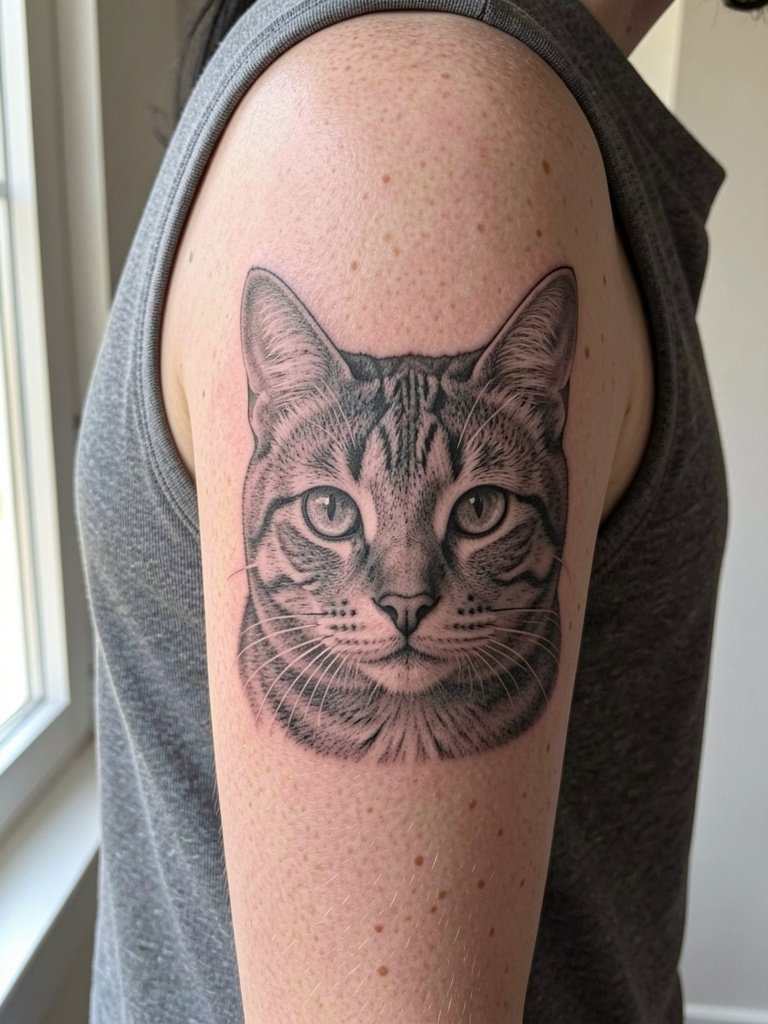
Portraits are a powerful tribute, but opinions split. One camp says portraits capture a pet exactly and feel deeply personal. The other camp argues portraits can distort unless the artist is a proven micro-realism specialist, and they often ask for larger canvas sizes. For a portrait on the upper arm, give the artist multiple clear reference photos from different angles and specify the focal point, such as the eyes, so they know where to concentrate saturation and stipple shading. Expect a longer session and discuss touch-up planning because realism benefits from a follow-up pass.
Session Day Picks
These first six designs show how micro and small work differently, so a few practical items smooth the session and first week.
- Stencil transfer paper kit. Helps the artist position lines precisely on small wrist and ear placements, which matters for the minimalist outline and face ideas above.
- Topical numbing cream. Useful for ankle or inner arm sensitivity during micro sessions, applied as the artist requests.
- Thin protective film roll. Keeps ankle and wrist pieces clean while you move around during the first 48 hours.
- Fragrance-free gentle body wash. Mild cleansing for the first week without irritating fresh linework.
- Aquaphor healing ointment. A mainstream option for thin initial occlusion during the earliest healing phase when fine lines need moisture control.
7. Cartoonish Cat with Bold Color on the Calf
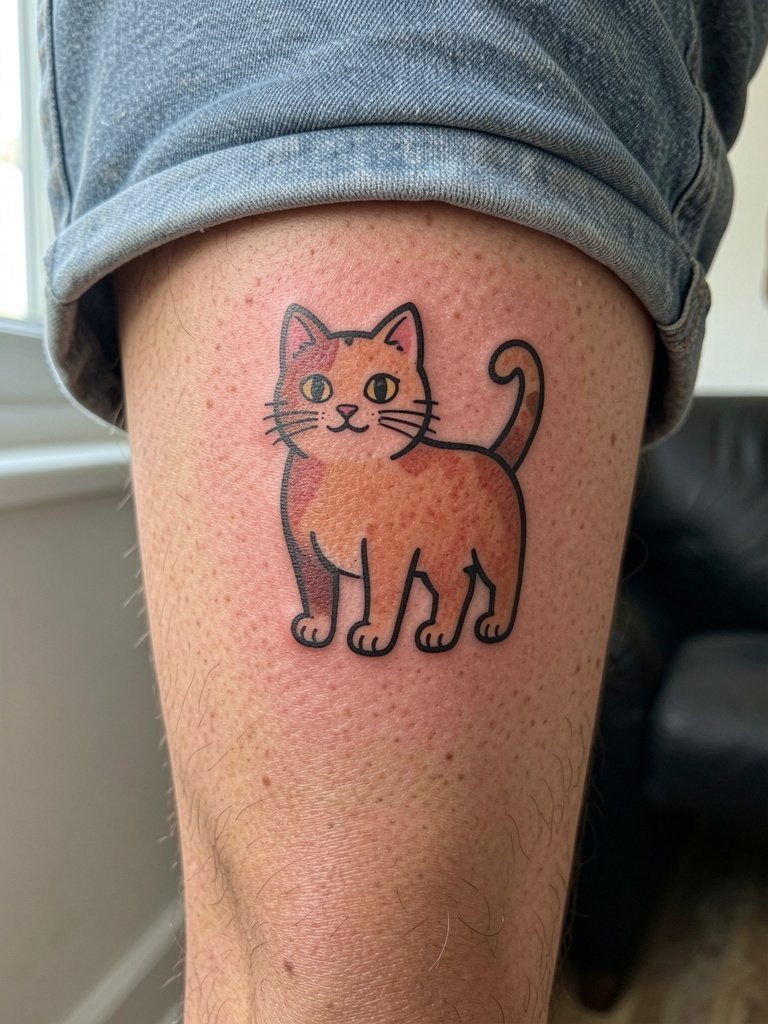
Cartoon cats feel playful and hold up well when the outlines are bold and the color blocks are saturated. For calf placement the skin is forgiving and color saturation lasts longer than on hands or feet. If you want a bright palette, request flat fills and avoid intricate dot shading that can lose texture. Session wear should be shorts or pants that roll easily so the artist can reach the calf without fabric tug. For outfits, midi skirts or shorts show this piece off on warm days, and you can link a midi skirt to the look.
8. Cat with Floral Accents on the Inner Forearm
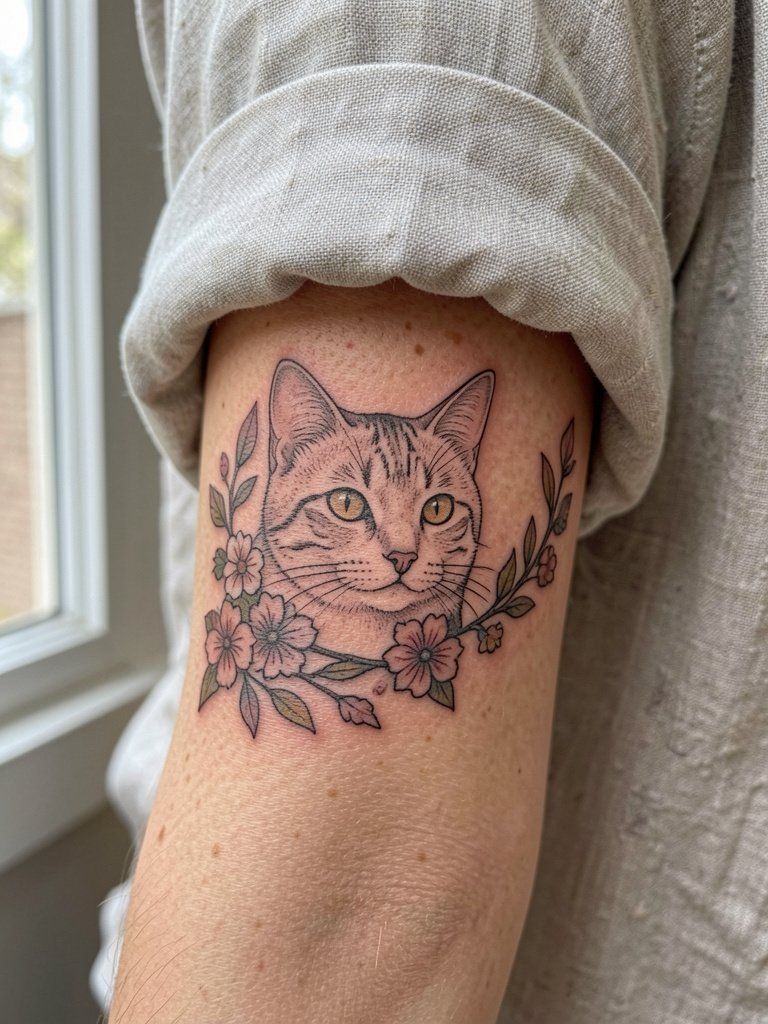
Combining a cat with flowers softens the imagery and creates a decorative piece that reads as wearable art. On the inner forearm you can include small muted color accents, but limit the color palette to two or three hues to avoid muddiness over time. When discussing composition, bring photos showing scale so the artist knows how the flowers should curve with the arm. For the session, wear a loose linen button-down you can roll easily, and for show-off days, a linen button down shirt paired with cuffed sleeves frames the inner forearm.
9. Cat with Stars or Moon Elements on the Shoulder
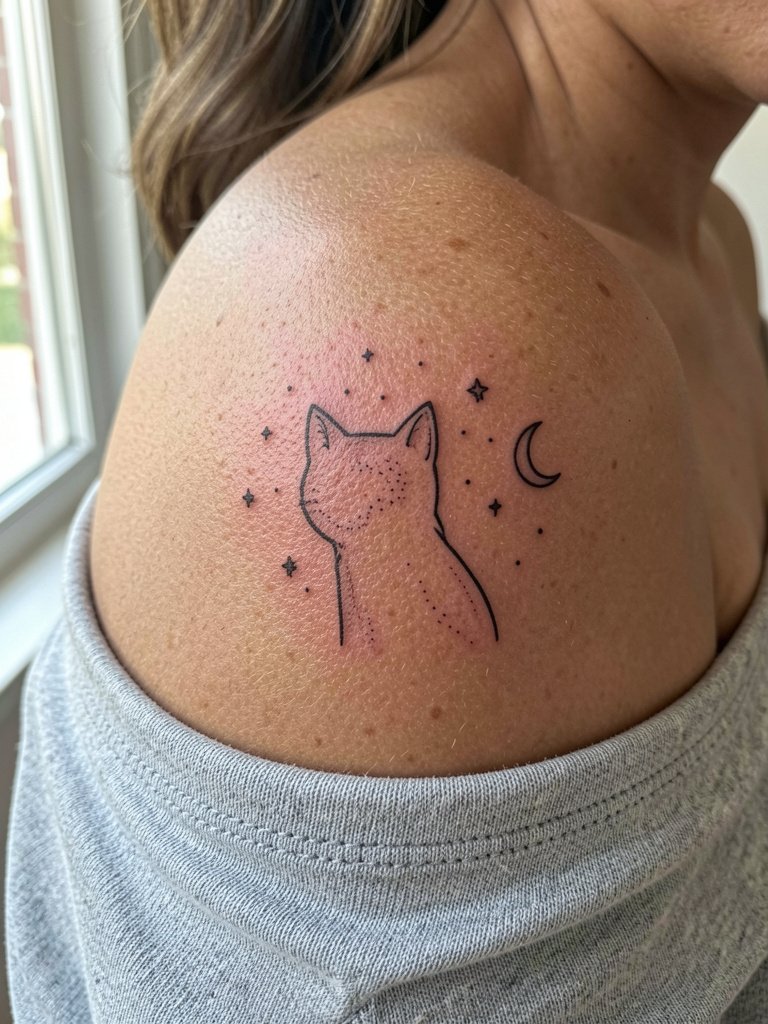
Celestial accents elevate a small cat design into a themed composition that still reads at small sizes if you stick to simple star dots and a single moon. Shoulders are a forgiving placement for small decorative clusters because the surface is broad and motion is moderate. If dot-work is used, ensure stipple shading is controlled so the texture does not become indistinct after a few years. For outfits, off-shoulder tops and sundresses highlight the placement. Consider a lightweight off-shoulder top to pair with the look.
10. Tiny Cat Silhouette with Negative Space on the Collarbone
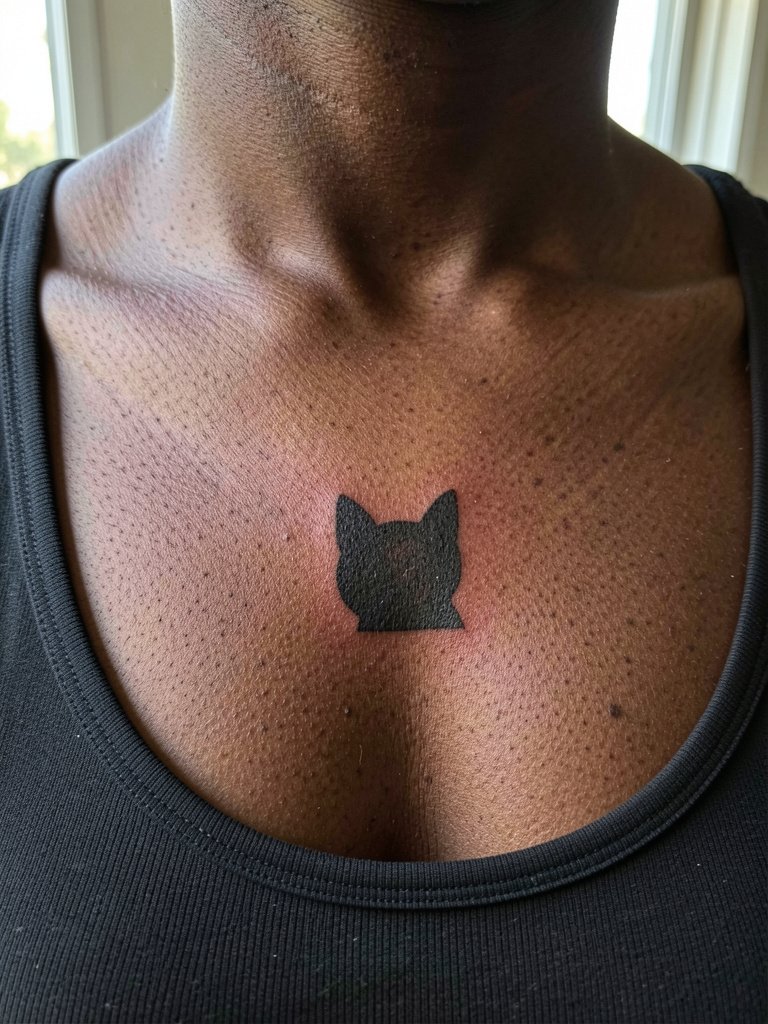
Collarbone pieces show up beautifully but require careful placement so the shape reads from different angles. Negative-space silhouettes are an excellent choice because they avoid tiny interior details that can blur with body movement. When preparing references, mark the exact point on the collarbone where you want the peak to sit so the artist can mirror your preferred positioning. For session wear, bring a wide-neck tee that provides access without stretching. Delicate layered necklaces that end above the tattoo can complement the look without crowding it.
11. Adorable Cat Head Flash on the Outer Arm
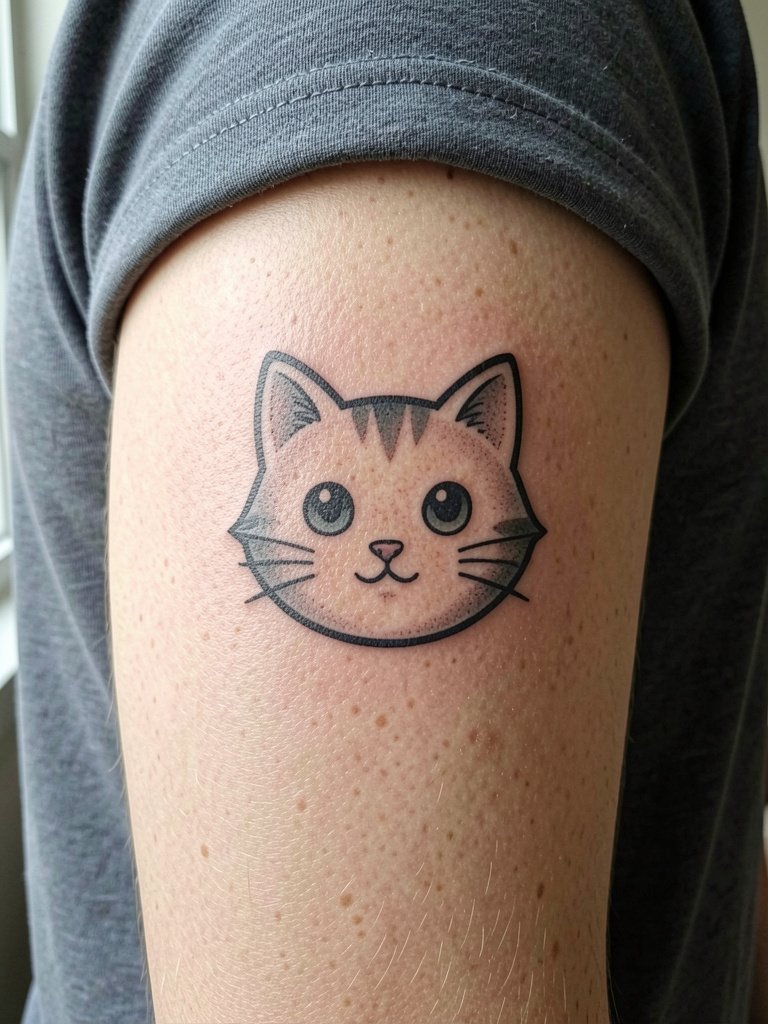
Flash-inspired cat heads are fun because they are designed to be bold and readable from the start. Outer arm placement gives the flash room to breathe and means the design will age more predictably than micro wrist work. If you want to customize a flash piece, request variations in the eyes or whisker style rather than minute fur texture. Bring a short sleeve shirt for the appointment so the artist has ready access. For casual days, a solid color tee frames outer-arm flash nicely.
12. Watercolor Accent Cat on the Shoulder Blade
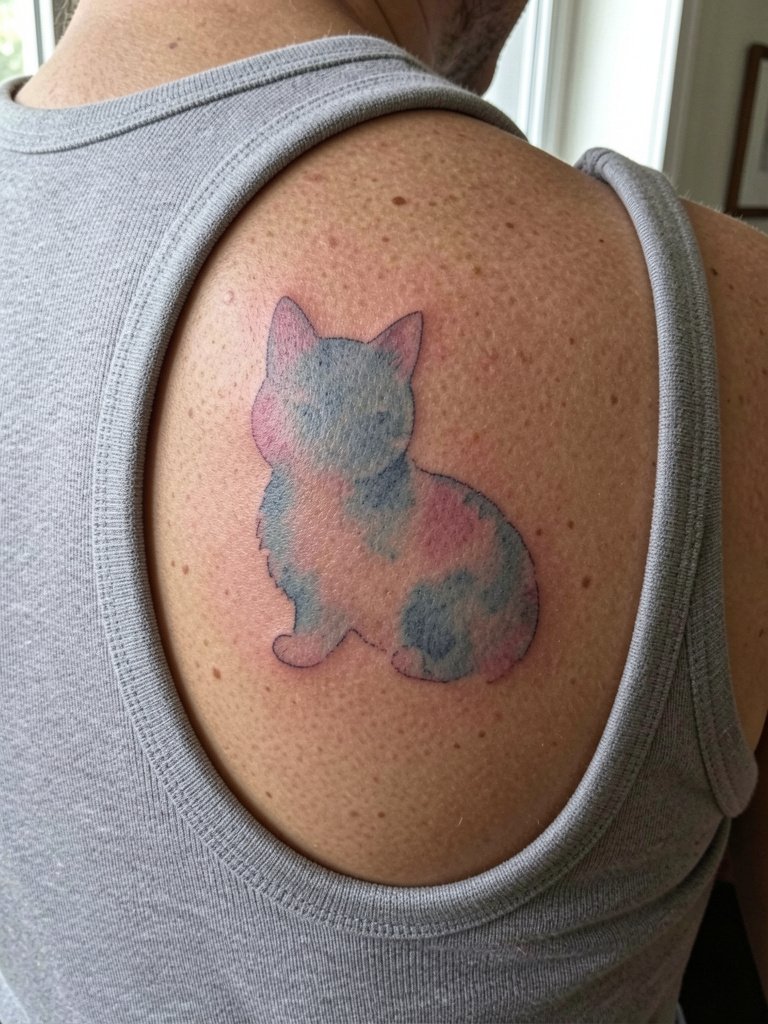
Watercolor accents make a cat design look painterly, but small watercolor applications can soften over time. On the shoulder blade you have more real estate, so add controlled washes that sit behind crisp linework rather than depending solely on diffuse color. For healing longevity, ask for the linework to be slightly stronger so it holds the watercolor visually. Wear a tank top to the appointment so the area is accessible and avoid tight backpacks while the area heals.
13. Small Cat with Quote on the Inner Forearm
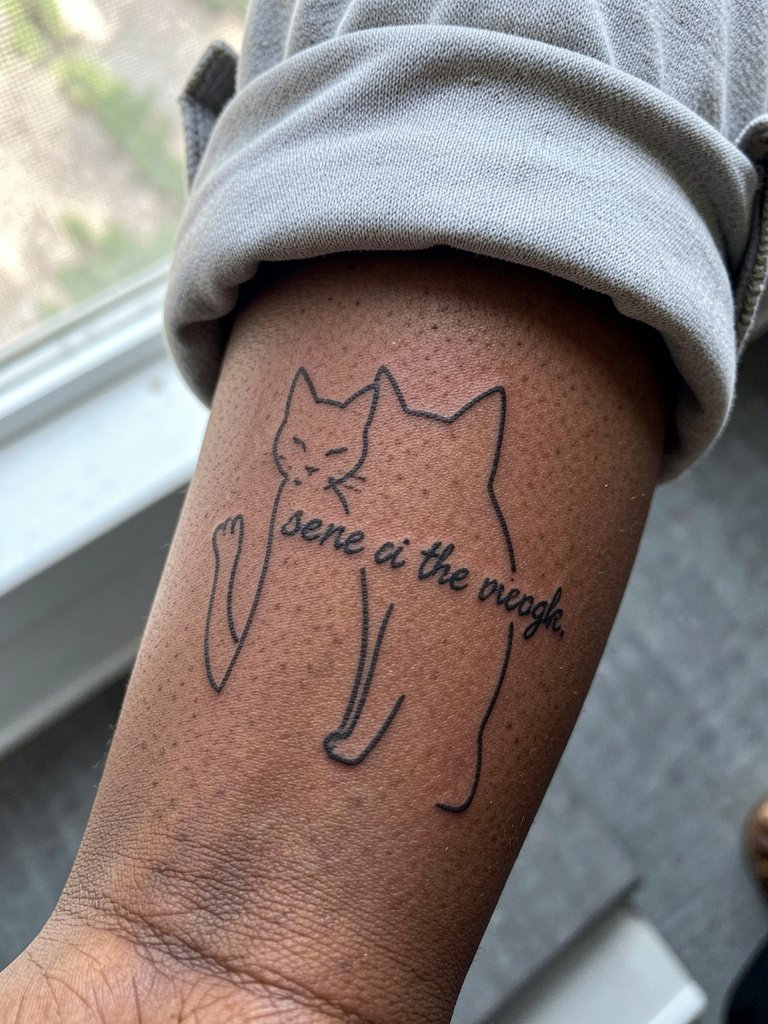
Combining script and image works if you keep spacing intentional. Scripts that hug the silhouette too tightly tend to blur into legibility issues, so request a slightly larger letter spacing and a modest type size that still looks delicate in person. For the session, bring two reference sizes so the artist can demonstrate how the phrase reads at different lengths. This placement is visible in daily interactions, so a rolled sleeve shirt and dainty bracelet on the opposite arm provide complementary framing.
14. Witch Cat with Broom and Stars on the Outer Forearm
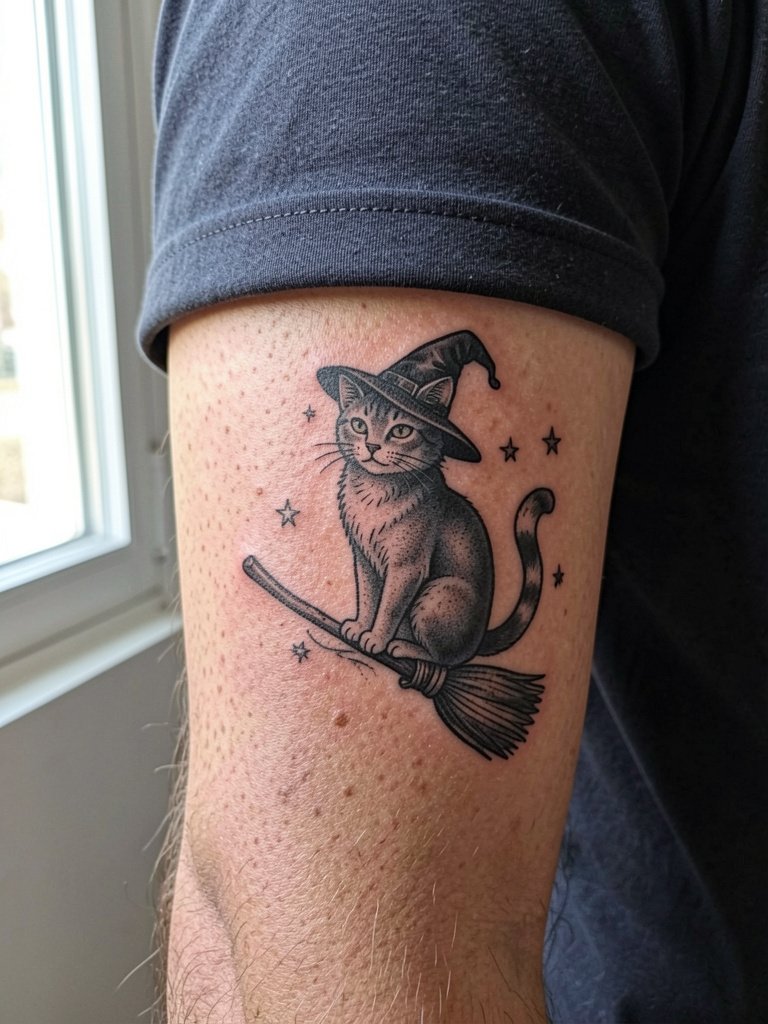
Witchy motifs let a cat design lean into occult aesthetics while staying wearable. For outer forearm placement, you can include short ornamental shading and small stars without risking loss of detail. Ask for slightly wider linework on the broom handle and paw junctions so those small contact points do not merge later. Wear a short sleeve shirt for the appointment. For daily outfits, a boxy overshirt frames the forearm and gives the piece some room to breathe visually.
15. Simple Cat Paw Trail around the Ankle

A paw trail that follows the ankle contour keeps the design dynamic and playful without adding complexity. Because the ankle faces friction, keep each print slightly bold and clearly separated to avoid lines softening into a single shape. For the session, wear pants that roll easily and shoes that are simple to take off. Low-profile sneakers and cropped pants or rolled jeans show off ankle work best when healed.
16. Cat Silhouette with Floral Wreath on the Shoulder

A wreath frames a silhouette and gives the composition structure that reads well at small sizes. On the shoulder, you can keep floral elements simple with single-needle stems and tiny blossoms. Note that closely packed tiny petals are the common mistake. Give the artist room between botanical elements and the cat outline so each element keeps its identity. For showing it off, off-shoulder tops and tank straps work well, and a tank top provides easy access on session day.
17. Linear Cat Geometry on the Inner Biceps
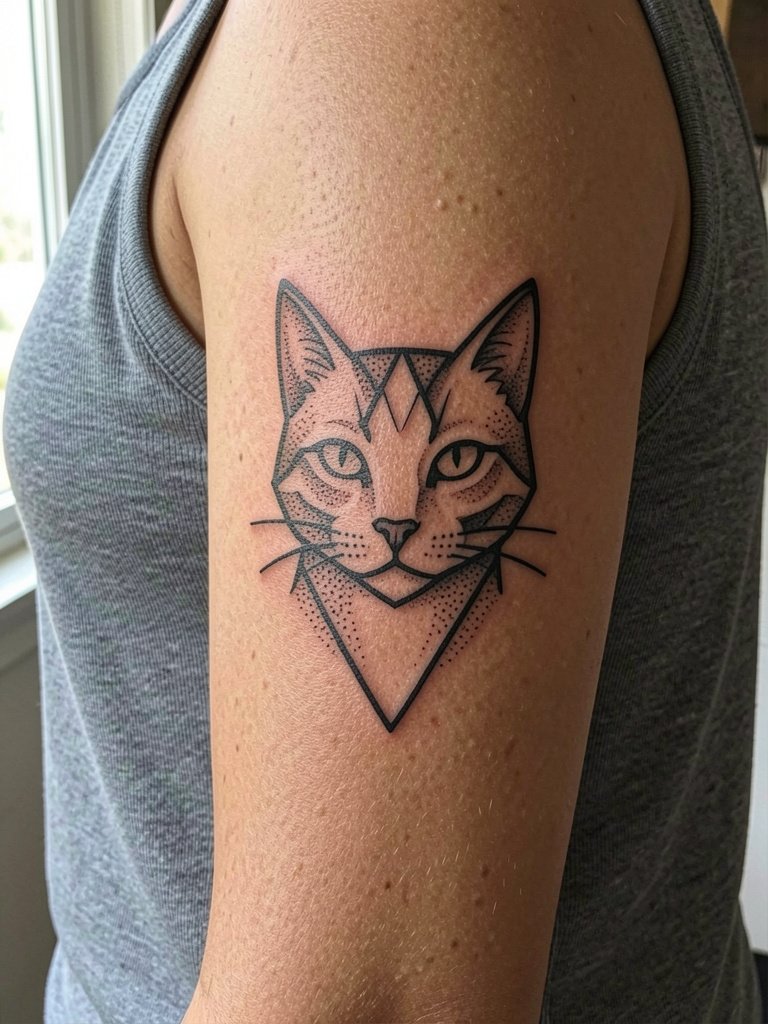
Inner bicep ink lives on a less-exposed surface but the skin here can blur tiny parallel lines over time. Use geometric spacing and heavier contour lines rather than ultra-fine parallel strokes. Specifically request separation between adjacent lines so the geometry keeps its shape as the skin settles. The arm should remain relaxed during stencil placement to ensure the design reads when your arm is at rest. Wear a sleeveless tee for the session and expect moderate discomfort in the area.
18. Tiny Cartoon Cat on the Calf with Muted Color

Cartoon calves let you use soft color while maintaining legibility because the area is less prone to constant friction. Keep watercolor-style fills controlled to specific panels within the cat silhouette so the pigments do not bleed into adjoining outlines. For the appointment, shorts are the best session wear since they provide access without hindering the artist. For styling, midi skirts and cropped joggers highlight lower-leg ink.
19. Minimalist Cat Outline with Name on the Inner Forearm
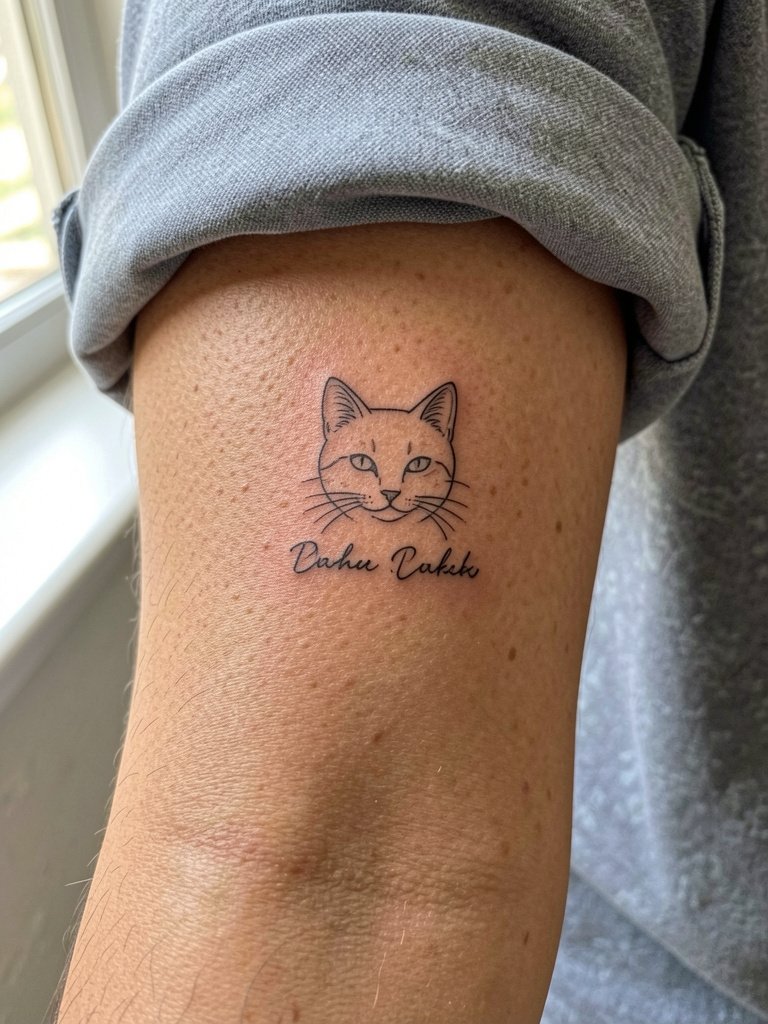
Pairing a name with a small outline turns the piece into a readable memorial without the heaviness of a full portrait. Keep the script short and letterforms open so the ink does not close up into an unreadable line. When preparing references, bring two sizes so the artist can show how the name reads at three and five inches of length. For showing it off, rolled linen shirts and stacked bracelets on the opposite wrist balance the forearm visually.
20. Cat Face with Stipple Shading on the Collarbone
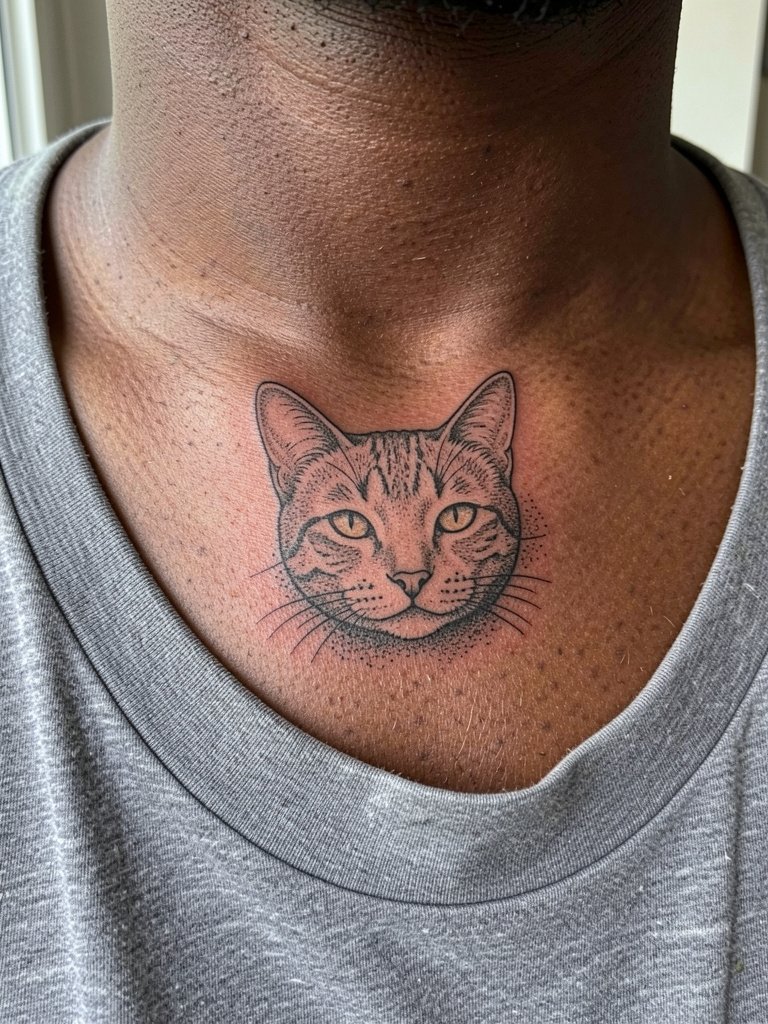
Stipple shading gives texture without relying on dense solid fills, which helps keep small facial features readable. Collarbone placement needs clear vertical spacing so stipple does not merge into the bone shadow as you move. Ask the artist to show healed examples of stipple on similar skin tones to confirm how the dots hold. Wear a wide-neck tee for the appointment and choose delicate layered necklaces that stop above the tattoo once healed.
21. Tiny Black Cat Silhouette on the Finger
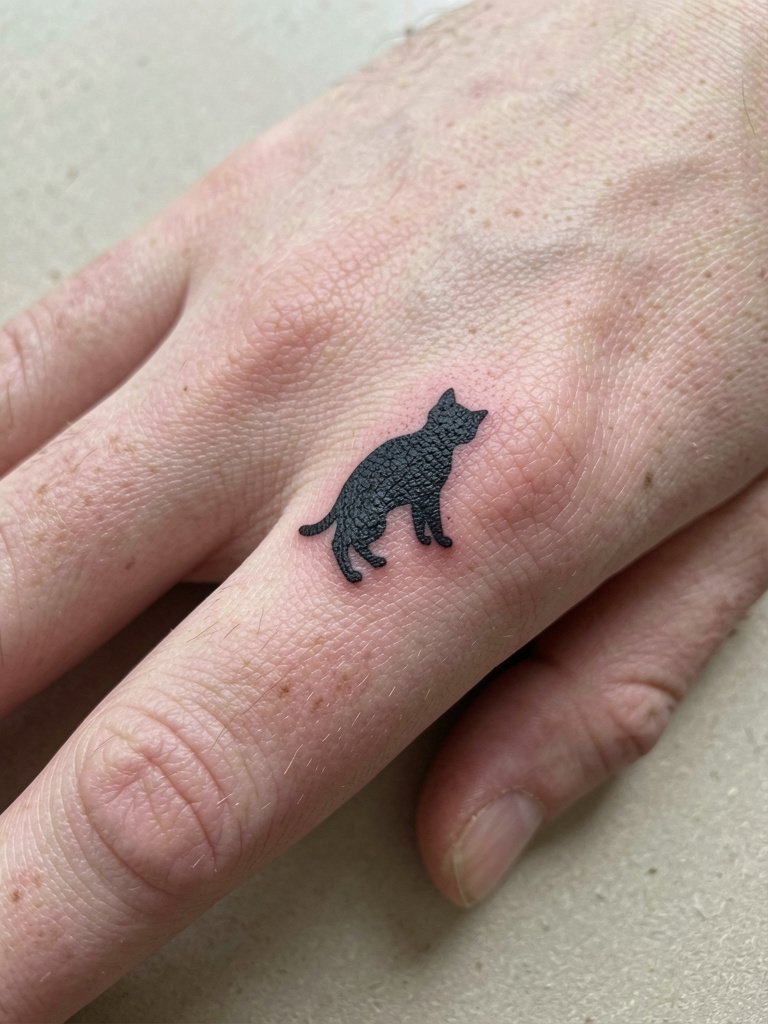
Finger tattoos face heavy wash and friction, so silhouettes must be bold and accept that touch-ups are common. Keep the cat shape compact and avoid tiny interior details. Expect a faster session but a higher likelihood of needing a touch-up within a year. For the appointment, avoid rings that compress the area and consider wearing a plain band on the opposite hand to balance visual weight.
22. Cat with Moon and Stars on the Back of the Neck
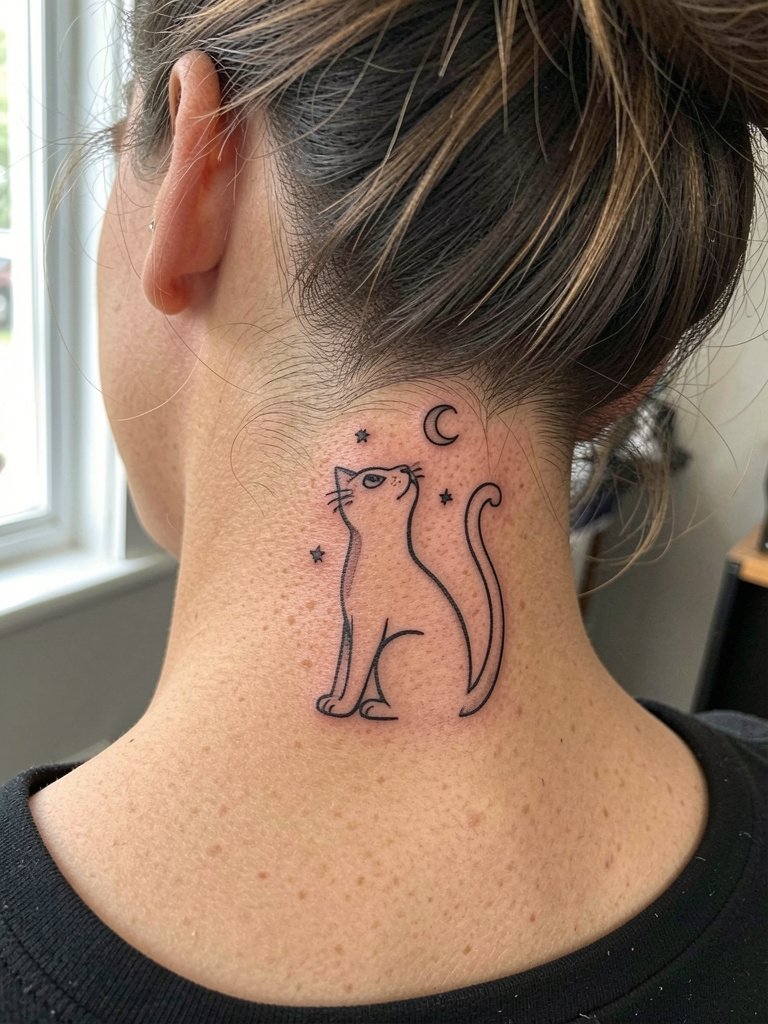
Nape tattoos are discreet and easy to conceal with hair, but the area requires precise spacing so the small moons and stars do not blur into a single mass. Ask the artist to map the design to your hairline so the composition still reads when your hair is up. For session wear, bring a shirt with an easily adjustable neckline and be prepared for a brisk sensation during the procedure.
23. Cat and Crescent Moon on the Calf with Dot Work
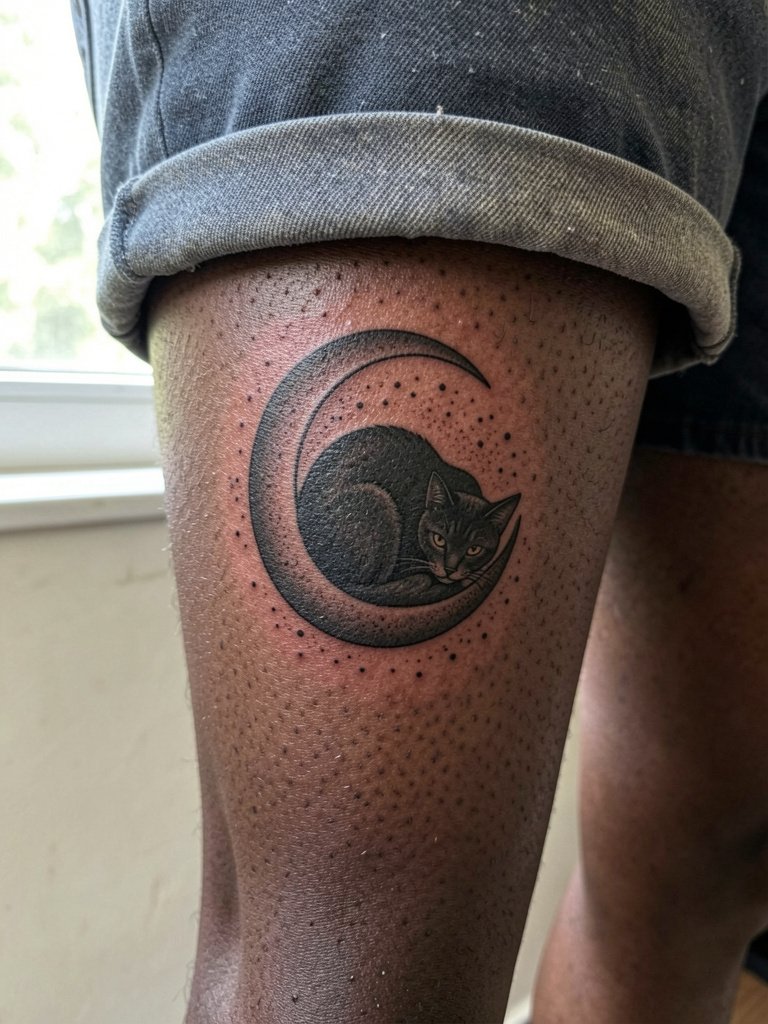
Dot work creates atmosphere without heavy saturation, and the calf accepts stipple shading better than the forearm. The common mistake is overconcentration of dots near the outline, which can obscure the silhouette as it heals. Ask the artist to keep dot density lower near boundaries and increase it gradually outward. Shorts are the easiest session wear and midi skirts display this area well.
24. Adorable Cat with Floral Brow on the Temple

Temple placements are sensitive and highly visible, so keep designs minimal and bold rather than intricately detailed. Tiny floral accents above a cat face can read as decorative jewelry for the head when scaled correctly. Discuss needle depth and spacing so the fragile temple skin keeps the linework. Wear hair up on session day and plan for a short appointment with a sharper sting in the area. For evenings, a simple updo highlights the piece.
25. Geometric Cat Linework Along the Ribcage
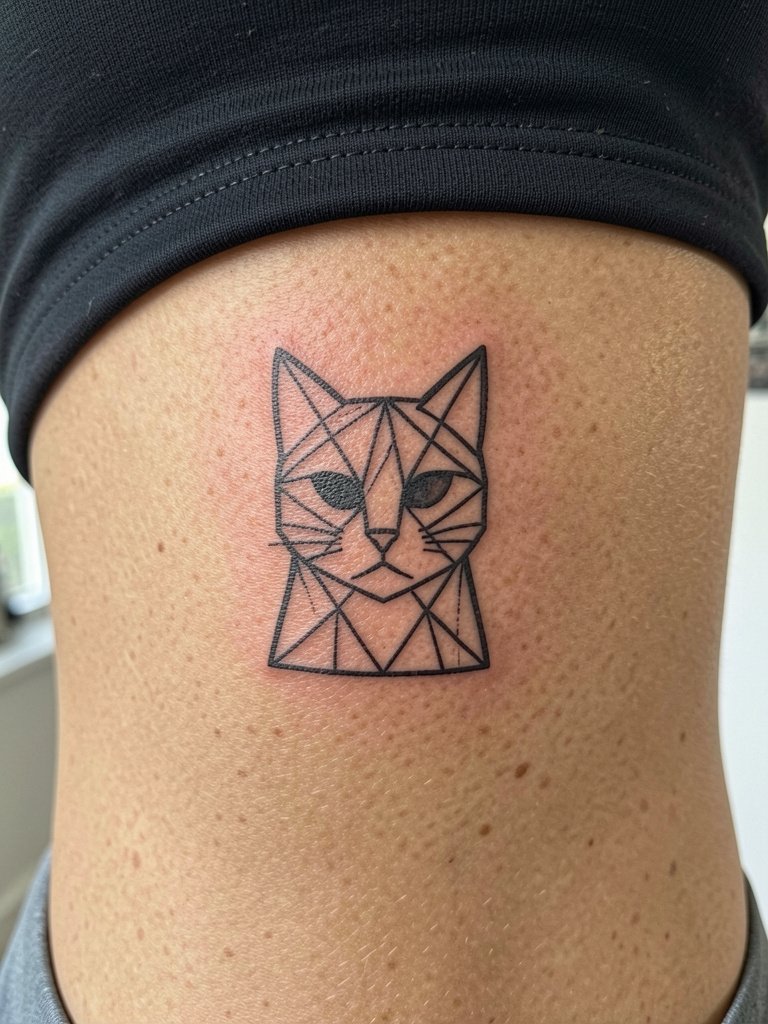
Rib pieces age differently because the skin stretches and moves with breathing. Artists split on whether very fine linework holds here. One argument is that ribs soften thin lines quickly due to constant expansion. The opposing argument is that with slightly wider spacing and careful needle depth, fine geometry can remain crisp. If you choose the ribs, request spacing adjustments and plan for a possible touch-up rather than assuming a one-and-done micro approach. Wear a fitted cropped top you can pull up without tugging at the tattooed area for the appointment.
26. Minimalist Cat with Tiny Star Accents on the Ankle

Ankle work is ideal for minimalist motifs because the area is often visible yet concealed when needed. Keep star accents spaced away from the main outline to prevent merging during the healing phase. Shoes and socks create friction, so allow a few extra days of gentle care and consider protective film on the first night. For showing the tattoo, ankle socks plus cropped trousers or slip-on shoes frame the area well.
27. Tiny Cat Portrait with Single-Color Accent on the Outer Forearm
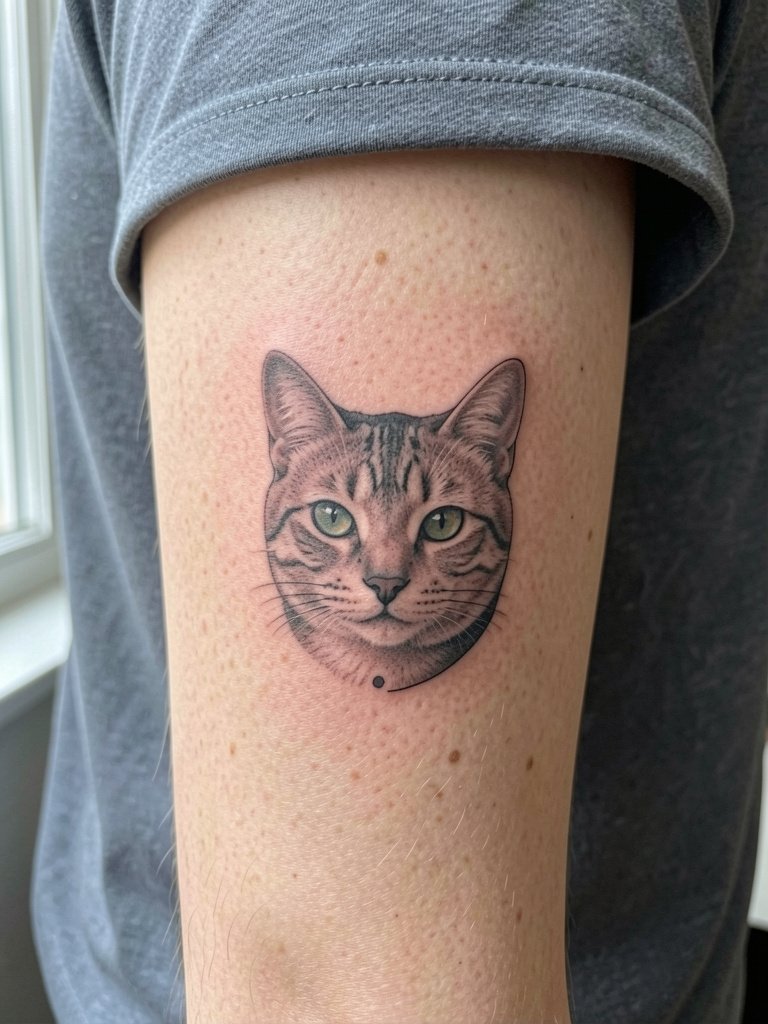
A micro-portrait with one color accent gives a focal point that draws the eye without leaning on full-color saturation. For outer forearm placement this technique balances realism with longevity, because the single-color spot can be placed where touch-ups are simplest. Bring clear references and decide the accent location ahead of time. Wear a short sleeve shirt and plan for a moderate-length session, especially if you want highly detailed fur texture.
Frequently Asked Questions
Q: How much does a tiny cat tattoo usually cost?
A: For micro to small pieces the common range is roughly 100 to 300 for most walk-in or small-studio sessions, and more for custom portraits or multi-hour realism work. Shop minimums push tiny designs into that range, while larger or color pieces usually move higher based on complexity.
Q: How do I find artists who show healed cat tattoo examples without naming specific shops?
A: Search hashtags like #cattattoo, #finelinetattoo, and #smalltattooideas on social platforms and use location filters to see artists near you. Look for portfolio galleries that include the word "healed" or explicitly state healed photos and examine community forums for real-world experiences with look-alike styles.
Q: Will a tiny cat outline look childish in a few years, and how do I avoid that?
A: A tiny outline can feel juvenile if the composition relies on novelty elements that trend quickly. Choose a confident contour, slightly increased line weight, and simple negative-space accents instead of multiple tiny decorative bits. Bring scale references so the artist can show how the same design reads at different sizes.
Q: Which placements age best for small blackwork silhouettes versus fine-line portraits?
A: Solid black silhouettes tend to hold up better on high-friction areas like ankles and calves. Fine-line portraits do best where skin is stable and can accommodate slightly larger scale, such as the outer upper arm or forearm. If you want a portrait, prioritize space over micro scale so shading and stipple remain distinct.
Q: What should I wear to the appointment for my chosen placement?
A: Match session wear to placement. For wrists and forearms bring short sleeves or rollable shirts. For ankles wear shorts or easily rollable pants. For shoulders, tanks are easiest. A simple guide is to wear loose, normal-fit clothing that exposes the site without being moved during the session. If you like, pair your healed ink with a cropped sleeve top for photos once it is healed.