
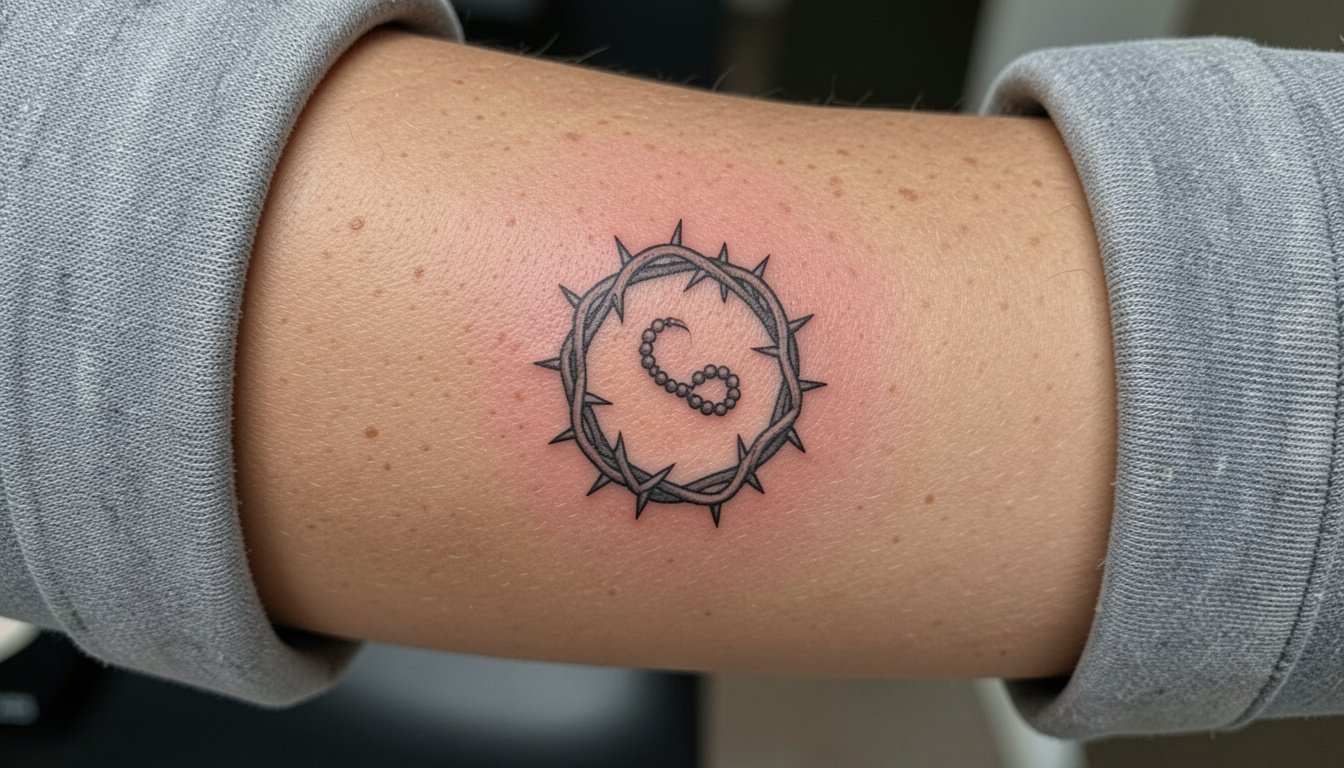
Small, delicate Crown of Thorns pieces often read as sacred because they leave room for the skin to show through. One camp favors ultra-fine single-needle threadwork and light stipple shading, arguing subtlety feels reverent. The other camp prefers bold blackwork and heavy saturation, saying the silhouette must stay crisp under years of movement and washing. Below you will find 23 approaches that respect symbolism and also account for how ink actually ages, placement pain, and what to wear to show it off.
1. Fine-Line Crown on Inner Forearm
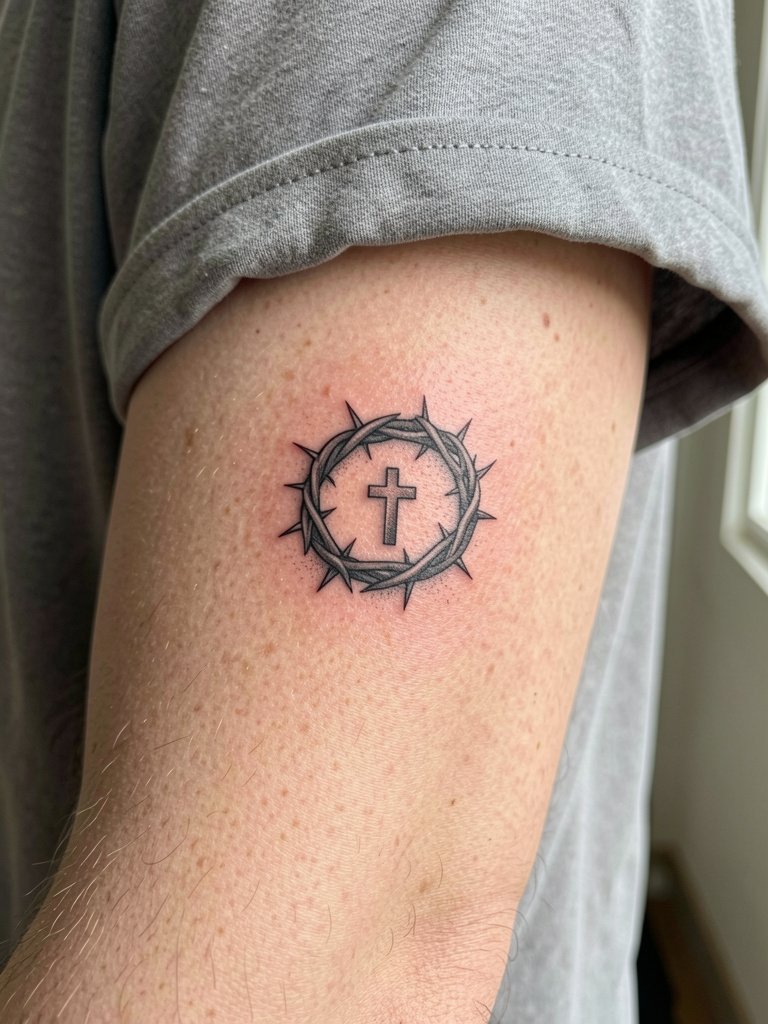
This is the go-to for someone who wants an intimate, readable symbol. Recommend a slightly heavier single-needle contour than the Pinterest reference so the thorns keep separation at year two. Expect a 1.5 to 2 hour session and moderate wrist sensitivity near the inner forearm. Common mistake is asking for micro-detail without spacing, which leads to early softening. For the appointment wear a loose short-sleeve tee so the artist has unobstructed access. After one year a touch-up may be needed to restore thin highlights.
2. Wrapped Band Around the Wrist
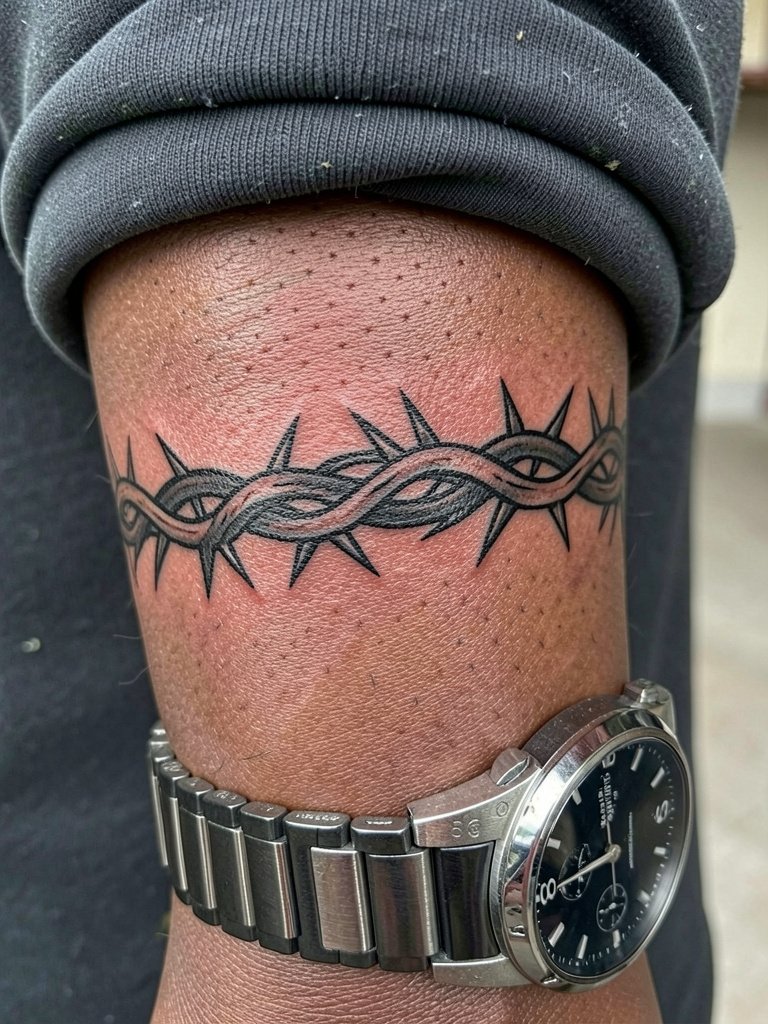
A wrist band reads like jewelry and survives if the lineweight is bold enough. Ask for slightly thicker outer lines so blowout does not swallow the thorns. Session time is under an hour for experienced artists but expect higher sensitivity because the wrist sees daily friction. The usual error is requesting micro lines that blur within a year. For showing the piece, a slim leather bracelet layered beside it keeps the silhouette visible and balanced with a minimal leather cuff. Plan a touch-up at 12 to 18 months if the edges soften.
3. Neo-Traditional Crown Over the Shoulder
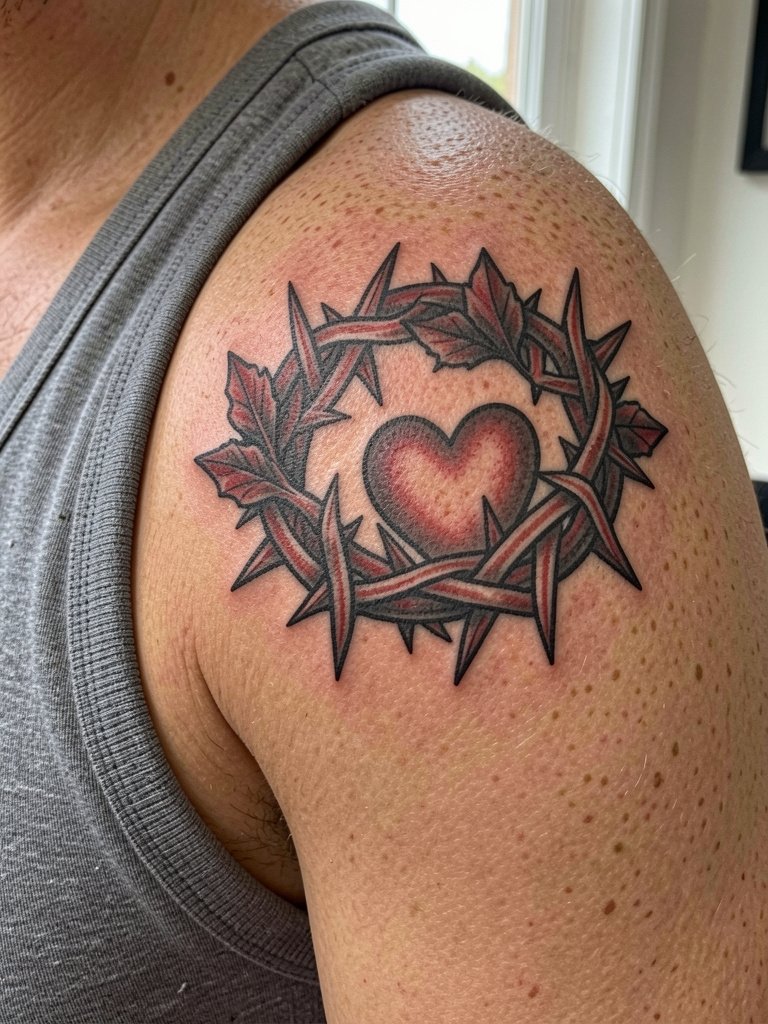
This style pairs symbolism with color and reads well at arm lengths. It suits men who want a statement that can expand into a sleeve later. Discuss spacing between thorns and the heart so shading does not merge with time. Sessions run two to three hours with low to moderate pain on the shoulder. A common mistake is overfilling small details with color that loses texture after two years. For evenings out, the tattoo shows well with a sleeveless linen shirt that frames the deltoid.
4. Micro-Realism Single Thorn on the Chest
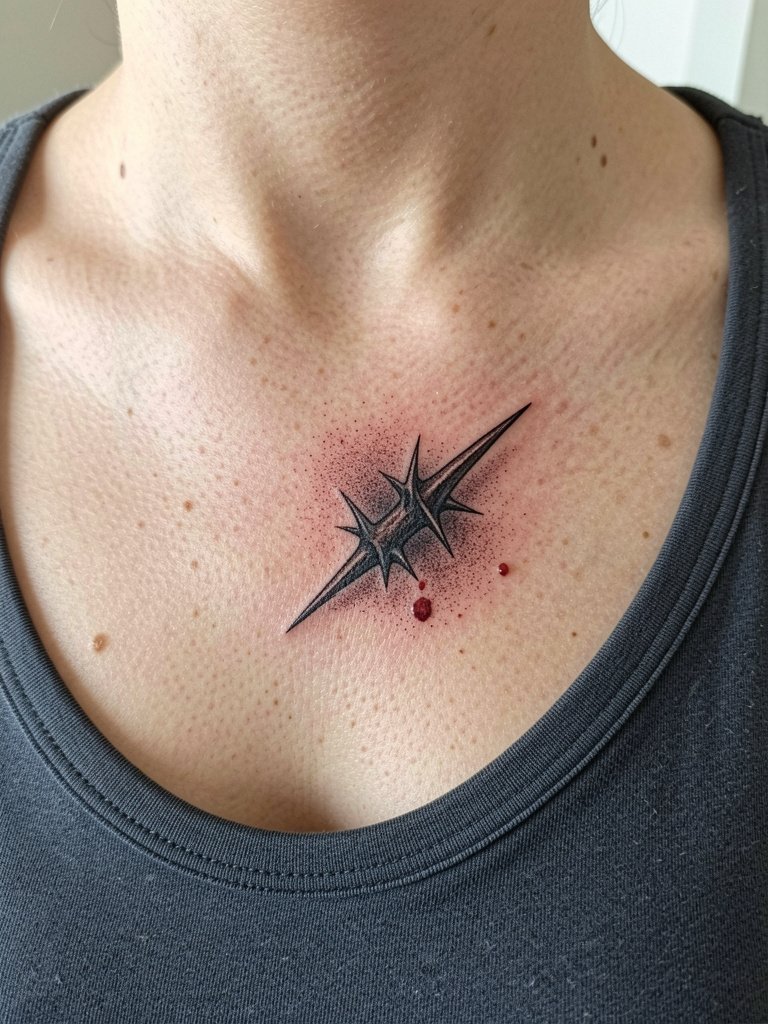
A solitary thorn is minimalist and paired well above the heart or collarbone. It ages well if you keep the shading soft and do not insist on micro cross-hatching inside the tiny form. Expect a one-hour session and mild to moderate sternum sensitivity when close to the breastbone. The mistake is shrinking the design so small that blowout eats the shadow. For wardrobe, a wide-neck tee frames the collarbone without masking the piece. Consider a touch-up after two years for the darkest values.
5. Bold Blackwork Crown on the Upper Arm
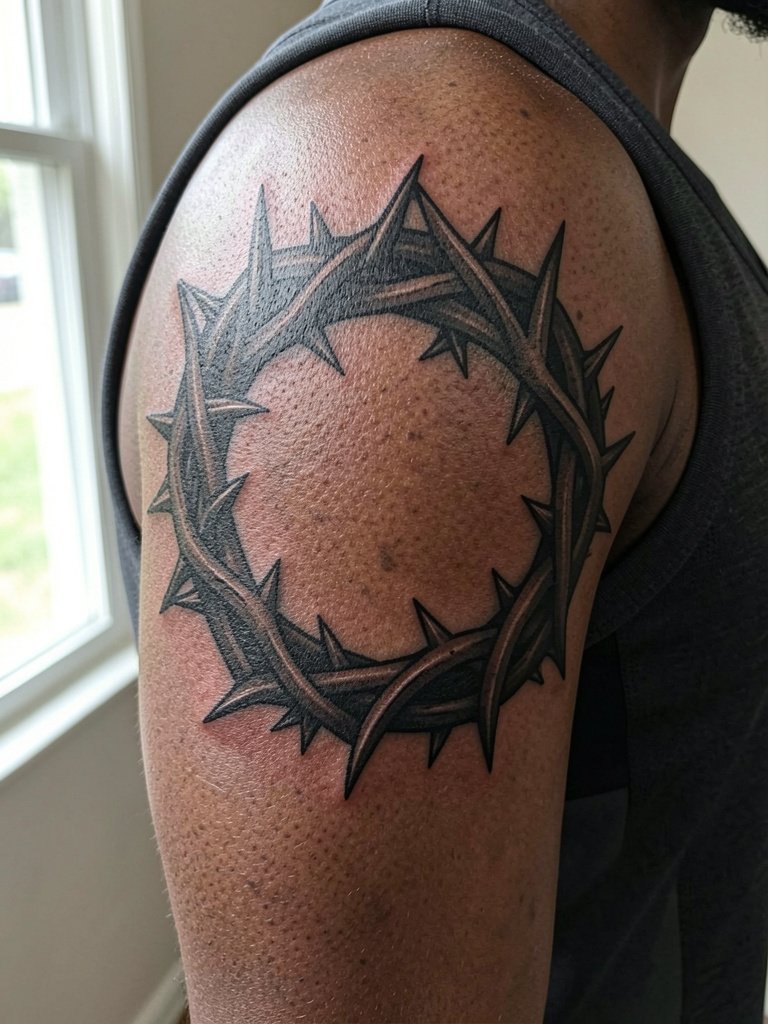
Artists are split on how to treat this one. One group argues bold blackwork preserves the thorn silhouette through years of movement and washing. The other group maintains that a leaned-in single-needle approach reads more delicate and therefore more sacred over time. Pick your side by looking at three-year healed photos for each method, not just the fresh stencil. This piece takes two to three hours and mild to moderate pain. For session wear, bring a loose tank top so the artist can work without fabric tugging.
6. Crown Encircling a Rib Quote
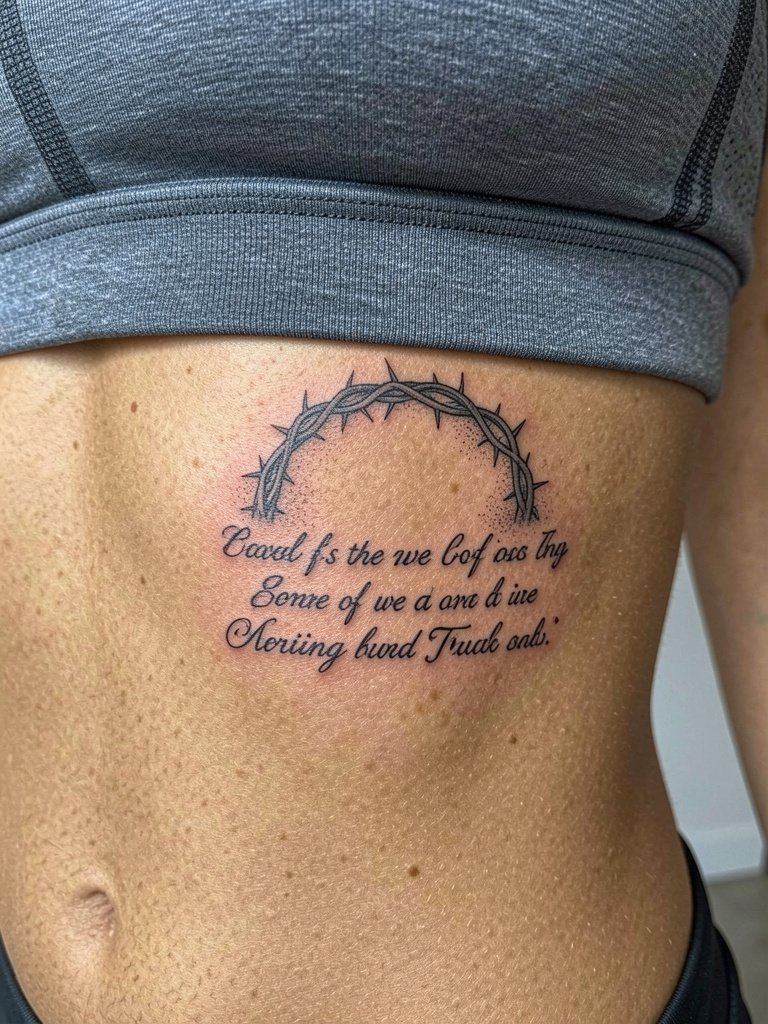
Ribs are a high-pain zone but they hold detail beautifully when done right. Ask for slightly wider spacing between thorns and letters so the script does not collapse into the thorn line over time. Sessions take longer because you will need short breaks. A common error is insisting on ultra-fine script that becomes unreadable after a year. This placement requires an artist experienced with ribwork. Note on sensitivity and artist choice: ribs need someone comfortable with longer shading passes and careful depth control.
Heal Smart
These first six placements mix thin detail and dense blackwork, so a few tools make the session and first week smoother.
- Stencil transfer paper kit. Lets you preview the linework on skin before committing, especially helpful for the inner forearm and wrist band ideas above.
- Topical numbing cream. Applied 30 to 45 minutes before the session reduces rib and wrist sensitivity without changing how the ink settles.
- Thin protective film roll. Keeps wrist and finger areas cleaner during the first week of repeated washing and friction.
- Fragrance-free body wash. Gentle cleansing for the healing window that avoids stripping fresh pigment.
- Aquaphor healing ointment. Thin application the first few days locks in moisture for linework while allowing the skin to breathe.
7. Stippled Crown Over a Heart Tattoo
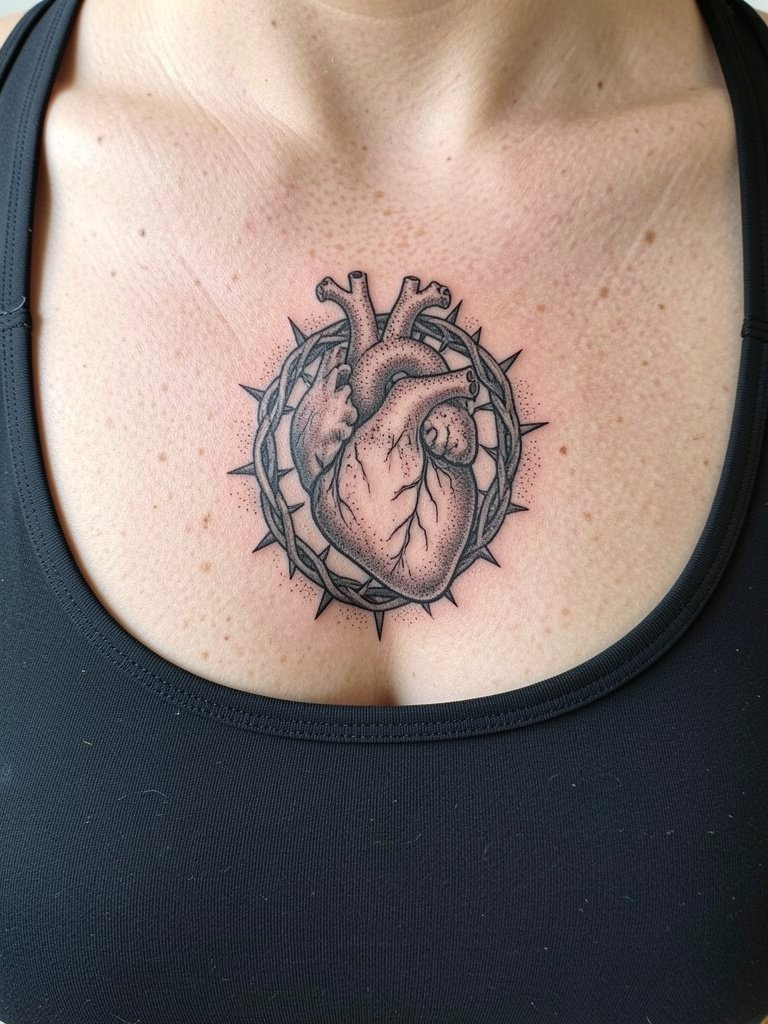
Stipple and dot work gives a worn, sacred feel without heavy color. Discuss dot size progression with your artist so gradients keep reading at six months and two years. Sternum work requires an artist who is comfortable with chest anatomy and pressure changes during respiration. Expect a longer session with higher pain near the breastbone. A common mistake is packing too much contrast in the first session which makes later touch-ups harsher. For show-off outfits, a deep-V shirt reveals the central placement while keeping fabric coverage.
8. Minimalist Crown at the Nape of the Neck
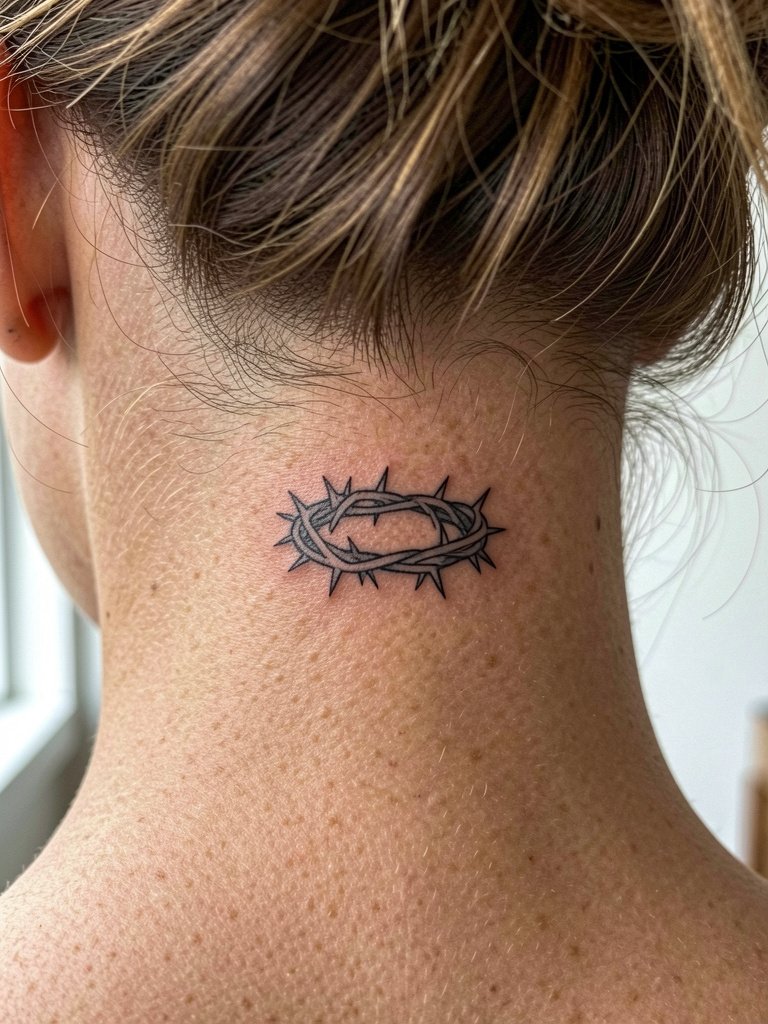
Nape placements are discreet and read like a private emblem. Request slightly stronger outer lines because the nape moves a lot with neck rotation. Sessions are quick but the area can be tender. A typical error is choosing hairline-hugging placement without considering future haircuts and neckline changes. For daily wear, keep hair lengths in mind and style with a low bun tie if you want it visible sometimes. Healed results usually remain sharp with one light touch-up within two years.
9. Geometric Crown Around a Wristwatch
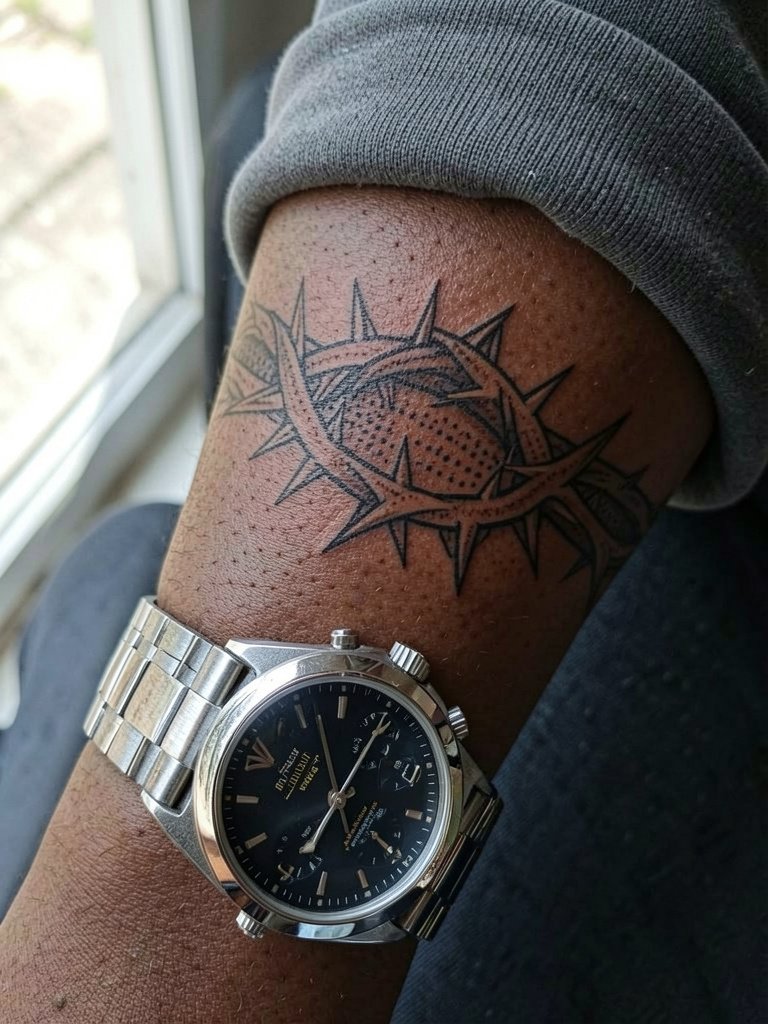
Combine geometry with thorn motifs for a modern take. Show your artist the exact watch width so the band sits balanced and does not collide with the watch face later. Session time is under 90 minutes and sensitivity is moderate at the wrist. People often request micro-geometry too small for the wrist which leads to merged lines. For a stylish look, wear a slim metal band watch and a rolled sleeve linen shirt to keep attention on both the timepiece and the ink.
10. Collarbone Crown with Subtle Cross
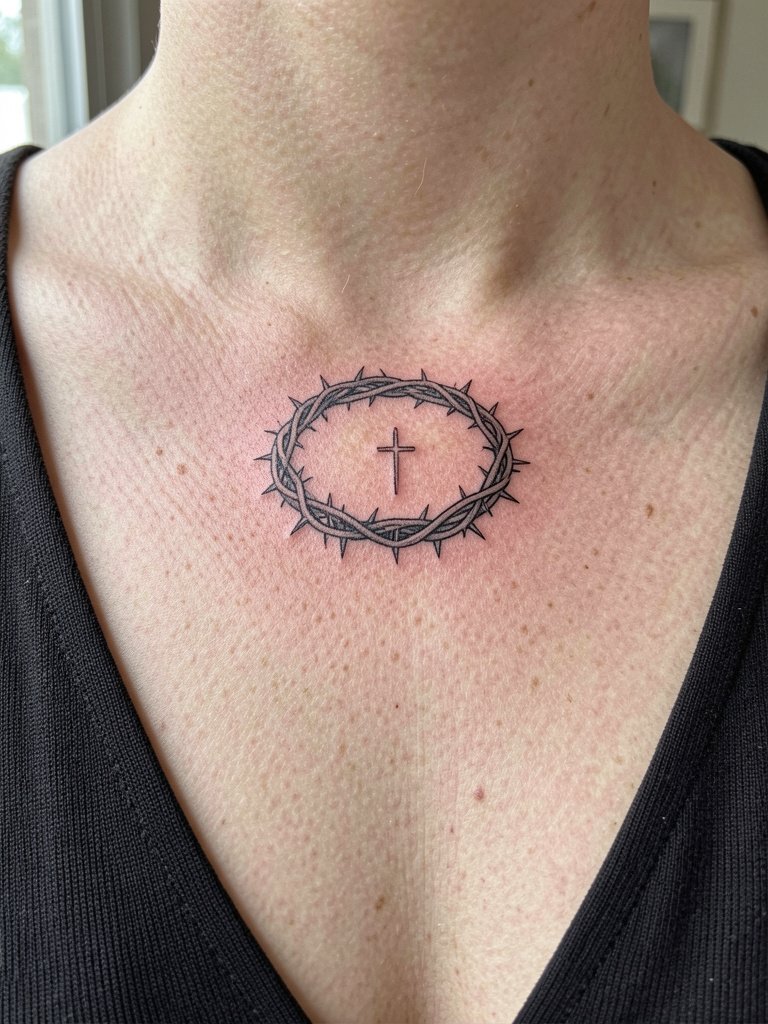
Collarbones highlight any fine detail so plan spacing carefully. Ask for slightly bolder outer contour so the crown still reads under shirts with fabric friction. Session length is about one to two hours and pain is mild to moderate on the bone. A common mistake is compressing too much detail into a narrow arc which blurs with time. For showcasing, a wide V-neck shirt keeps the clavicle area open and lets the crown sit naturally.
11. Sleeve Accent: Thorn Cluster Near Elbow
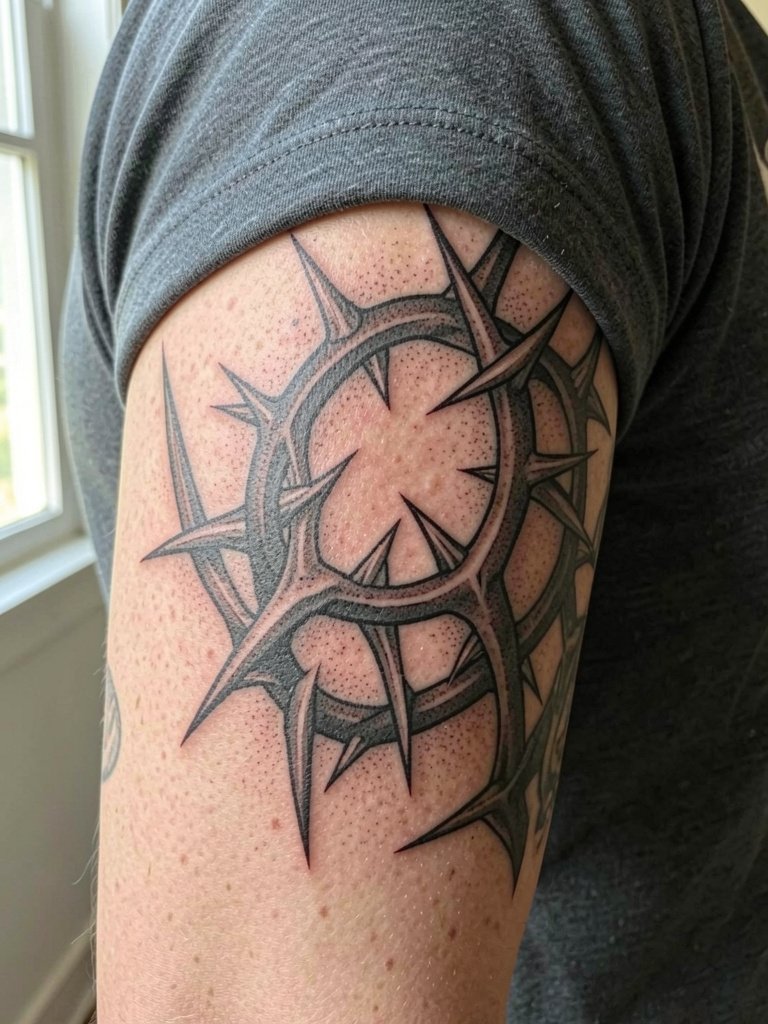
Using a thorn cluster as an anchor in a sleeve gives you expansion options. Discuss flow lines with your artist so the thorns integrate without looking pasted on. Expect multiple sessions as part of a sleeve plan and moderate pain at the elbow. The mistake is treating the elbow as a standalone piece without mapping future connections, which makes later filling awkward. Layer with a rolled short-sleeve shirt when you want the elbow accent to peek.
12. Tiny Ring Finger Thorn Accent
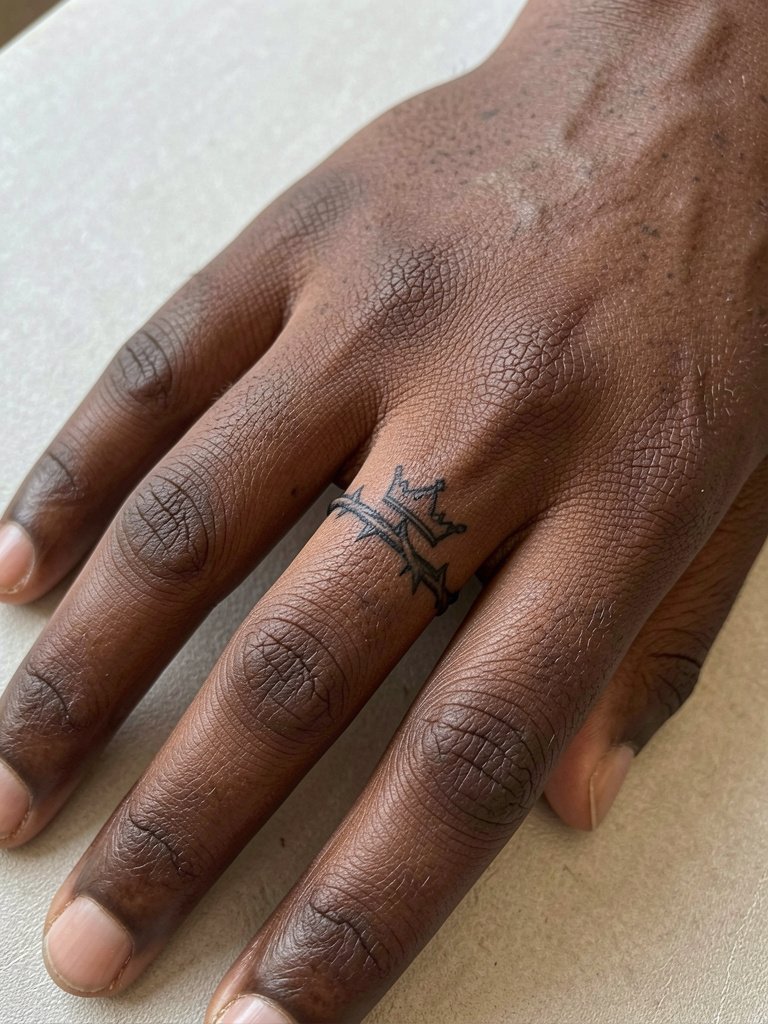
Finger tattoos face fast fading due to constant washing and friction. Request slightly heavier lineweight and plan a touch-up at six months. Sessions are quick but the pain is sharp and you will want shorter passes. The usual error is thinking a tiny ring will behave like a metal band. For the session wear a top with easy sleeve access like a short-sleeve henley. Expect more frequent touch-ups on fingers than on forearm placements.
13. Back-of-Neck Crown with Radiant Lines
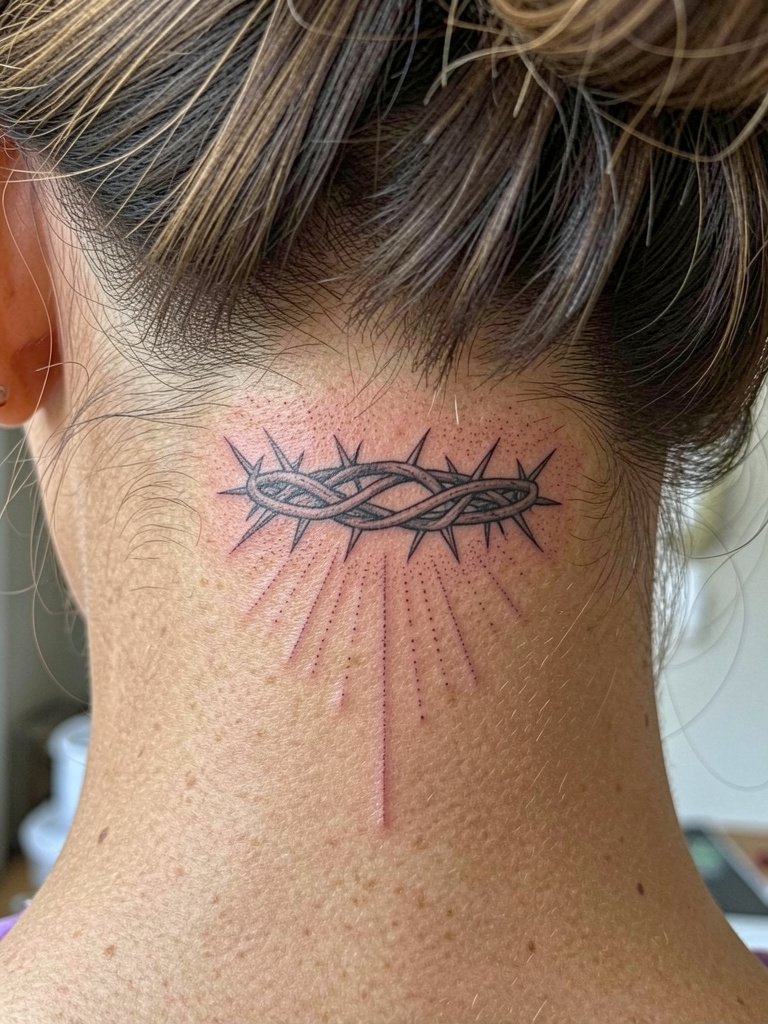
This design reads spiritual without being overt. Ask the artist to map the radiant lines so they fade gently rather than ending abruptly. Sessions are short and discomfort is mild. Common mistake is making the rays too dense which competes with the crown itself. For visibility, wear a crew-neck shirt with hair up to let the nape show when you want it to. Healed results usually need only one small touch-up at the outer tips.
14. Sternum Crown with Open Negative Space
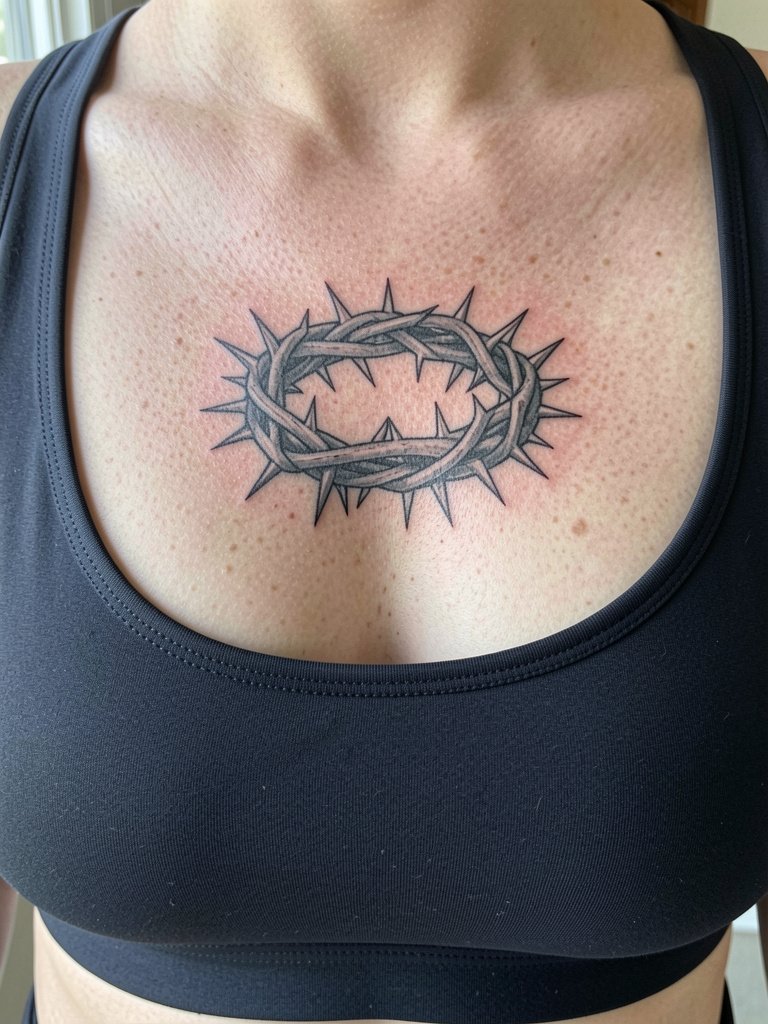
Sternum work can look sacred when space is respected. Discuss negative-space planning so the crown breathes through movement and weight change. Sessions are longer and pain is significant near the bone. A common misstep is crowding the area with too much fine detail that blurs under skin tension. Sternum placements need an artist with chest experience. For session comfort, wear a fitted top that your artist can easily lift without fabric grabbing the area.
15. Calf-Wrap Thorn Band
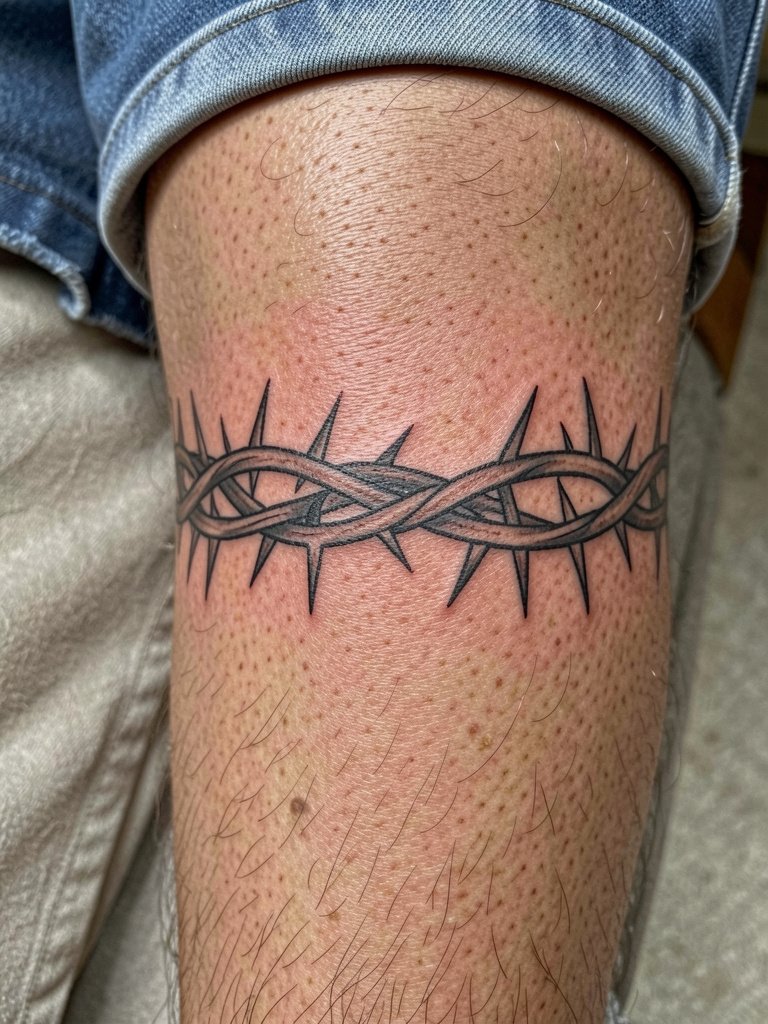
Calf bands age well because the area experiences less friction. Ask the artist to mark the circumference and ensure pattern continuity when you stand naturally. Sessions are low to moderate pain and usually one to two hours. The usual mistake is mismatched spacing when the leg shifts between sitting and standing. For visibility, pair with mid-length shorts and athletic shorts that sit above the calf.
16. Vertical Thorn Spine Accent
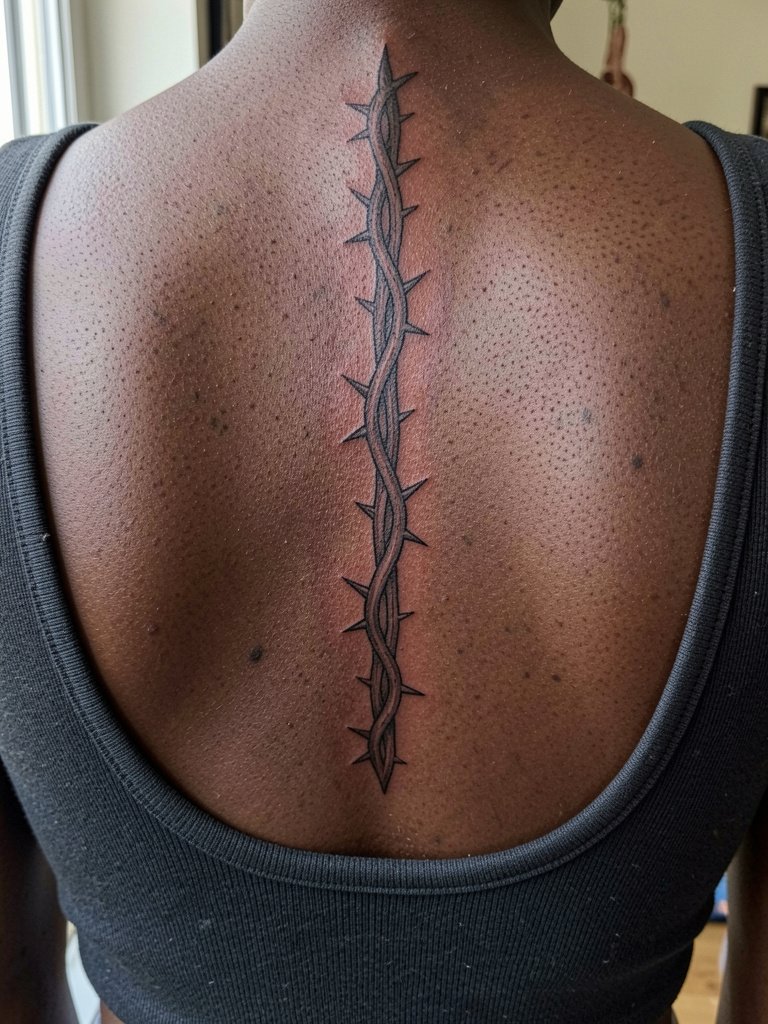
A vertical spine accent reads architectural and can be expanded into larger back work later. Discuss exact spinal alignment with the artist so the design sits true when you stand. Sessions take moderate time and discomfort varies with proximity to bone. People often center by eye rather than measuring which can skew the piece off-axis. For showing it at events, a low-back shirt frames the spine without exposing too much.
17. Thorns Encircling a Small Portrait
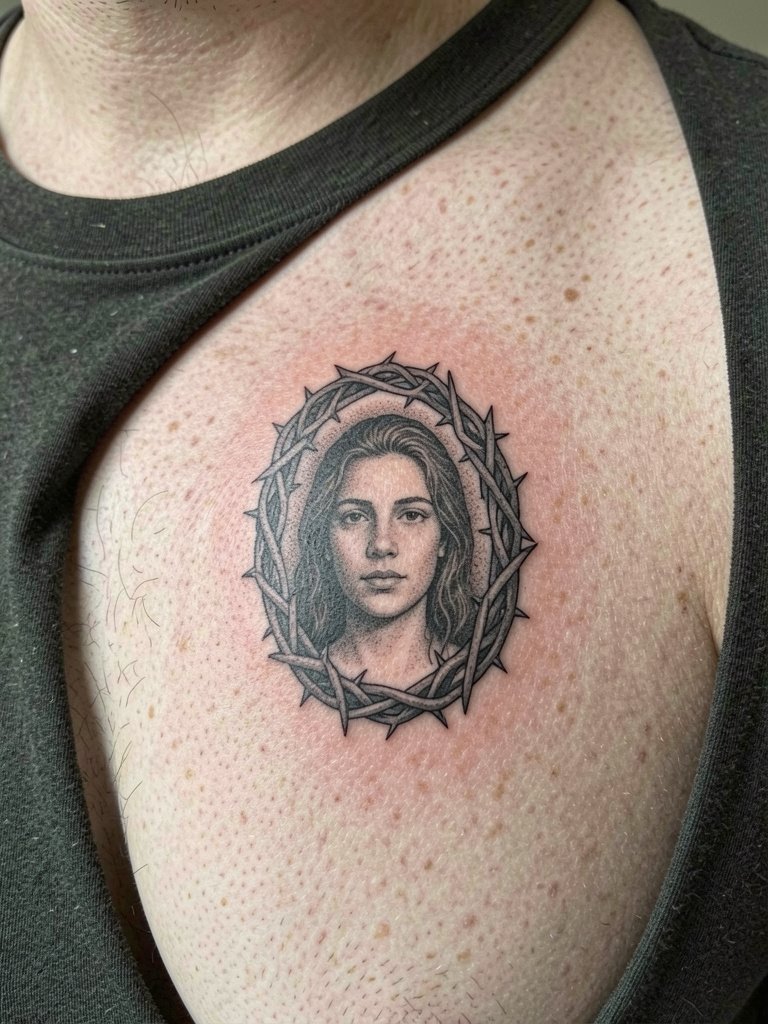
Combining a portrait with thorns makes a clear focal point but requires precise sizing. Ask the artist to show a mock-up at life size so the face does not get lost among thorns. Sessions may run multiple hours and the chest is moderately painful. A common mistake is shrinking the portrait to fit ornamentation which causes loss of facial detail. For wardrobe, a button-up shirt left slightly open gives subtle reveals without overexposure.
18. Wrist Corner Thorn with Dot Halo
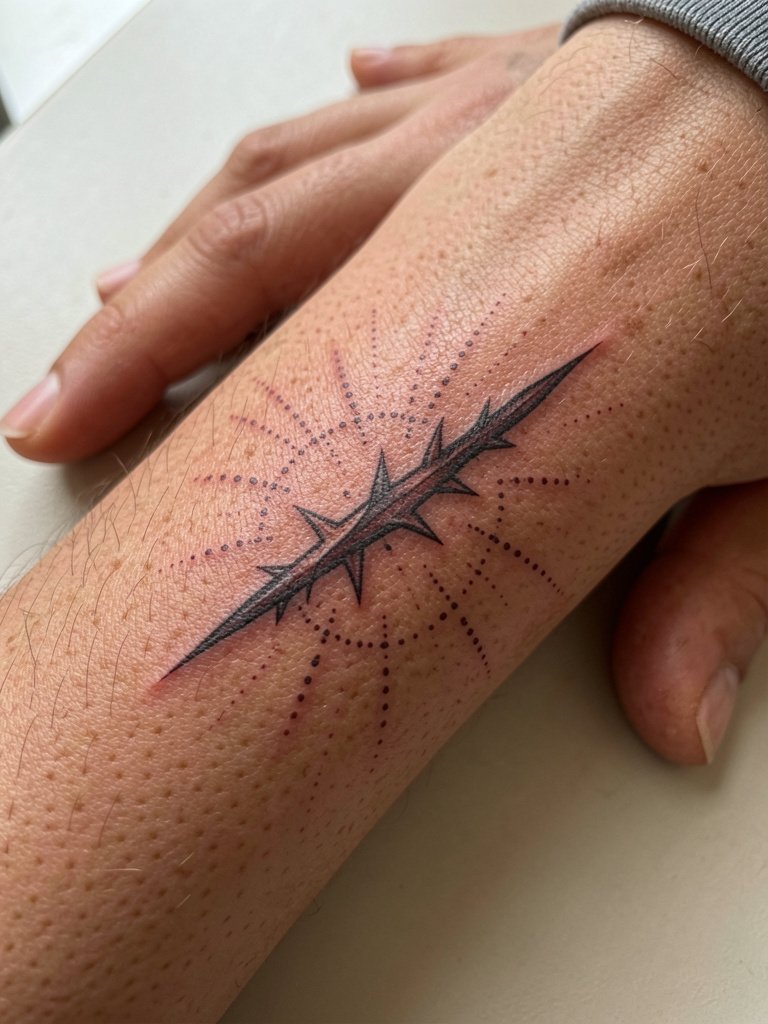
Corner wrist placements are ideal for delicate accents that peek from cuffs. Ask for a slightly crisper outer line because constant movement reduces crispness. Sessions are short and pain is moderate. Many people underestimate how much hand washing will fade such pieces. For a neat look, wear a slim bracelet that sits beside the motif without rubbing it directly.
19. Inner Thigh Thorn with Script
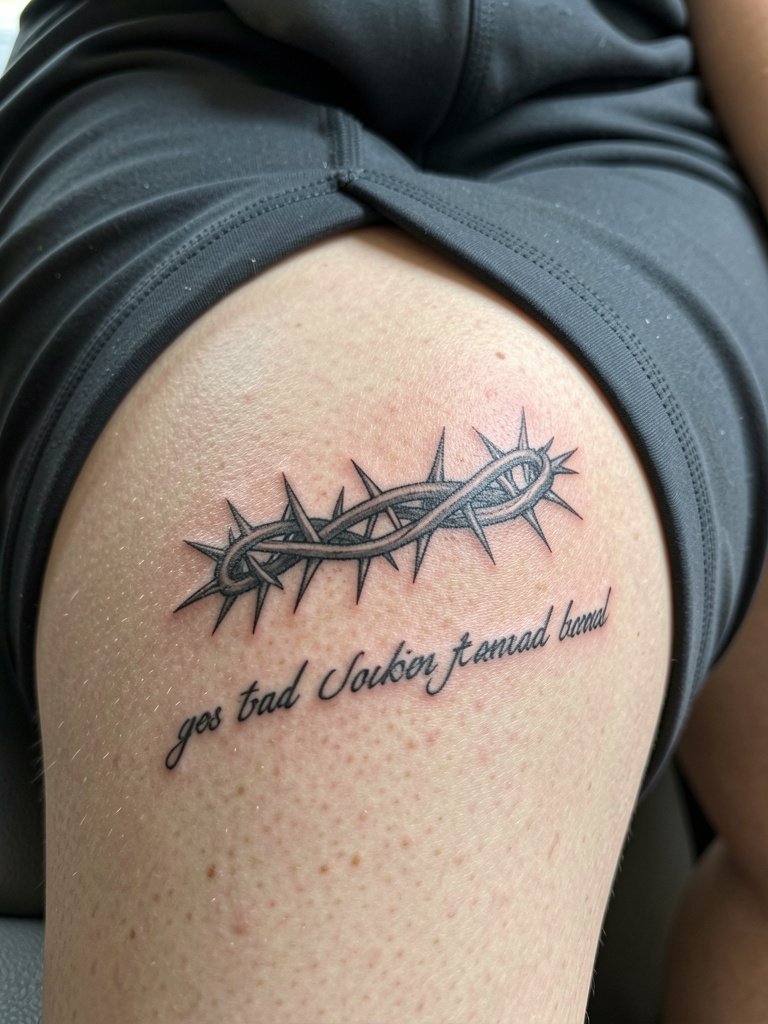
Inner thigh pieces are private and heal differently than limbs. Request the artist avoid overly tight script lines and instead give extra breathing room between letters and thorn points. Sessions are more comfortable seated and pain is moderate. A common error is placing art too close to the groin line which leads to friction complications. For session wear, choose athletic shorts so the artist can expose the area without you removing clothing.
20. Small Sternum Dotwork Halo
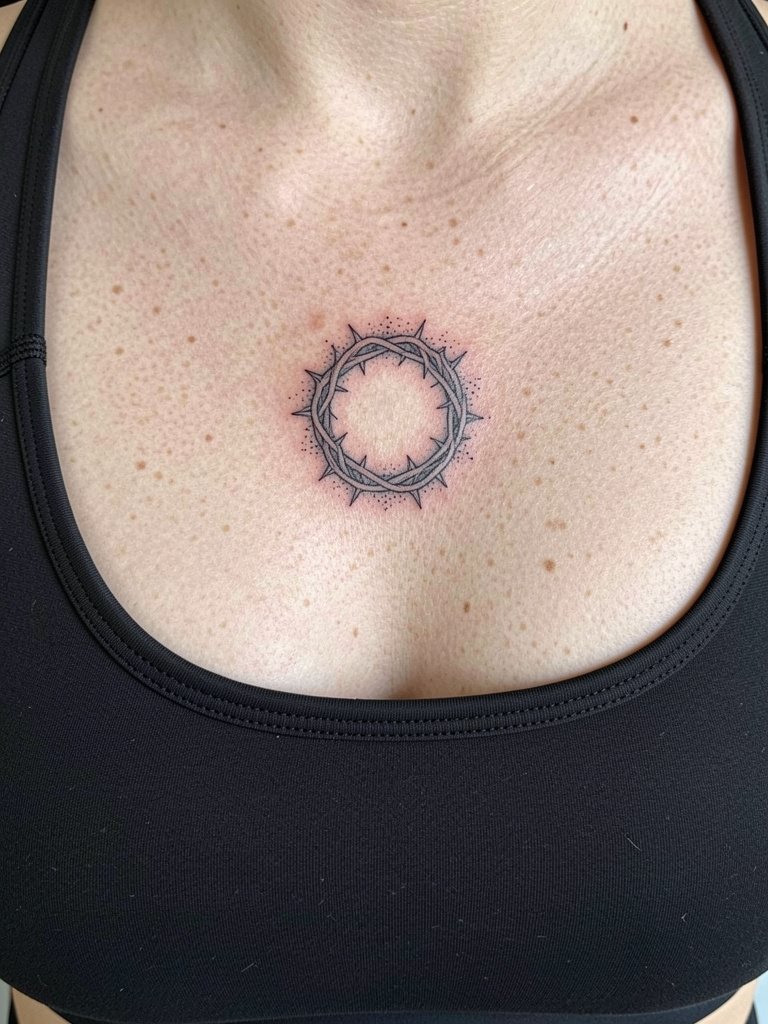
Dotwork halos are quiet and reverent. Discuss dot density with the artist so the halo keeps a soft edge and does not read like a solid band after healing. Sessions require steady breathing control since the sternum moves with respiration and pain is higher than on limbs. The error to avoid is stacking too many dots in the first pass which prevents subtle fading later. For showing the piece, choose tops with a natural neckline that expose the center chest when desired.
21. Thick Outline Crown on the Bicep
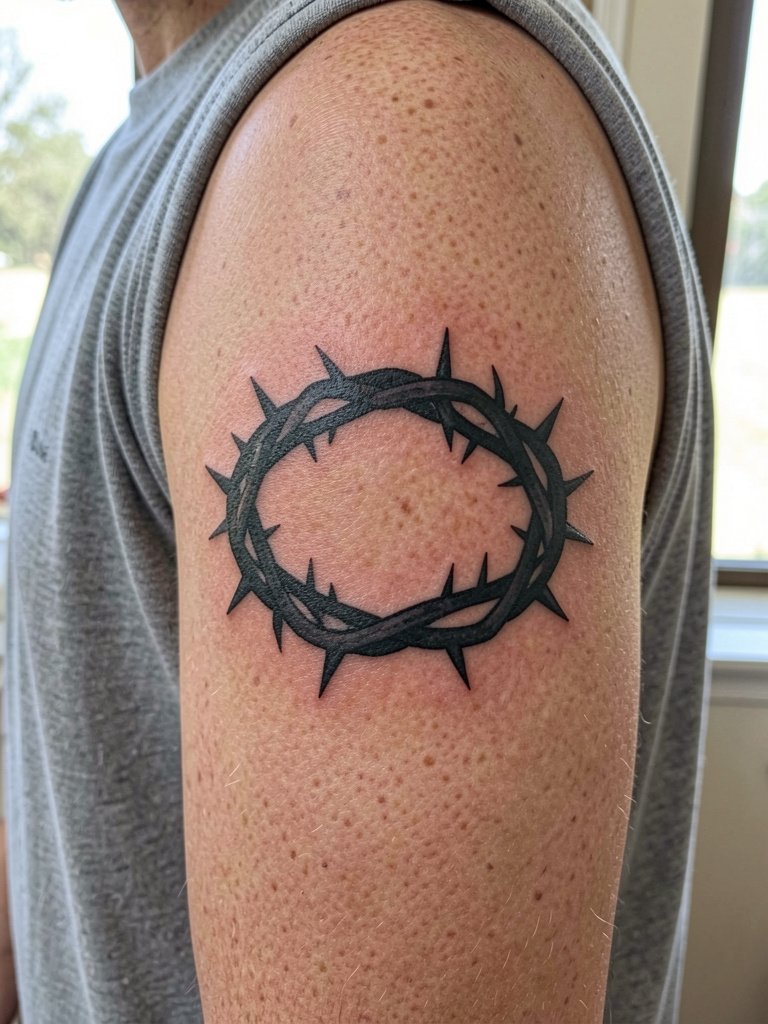
A bold silhouette can keep the thorn message readable even as small details soften. Ask for a crisp outer edge so the shape reads from a distance. Sessions are two hours and discomfort is moderate. People sometimes pick heavy black fills without considering future blending options for sleeves. For everyday wear, a muscle-fit T-shirt showcases the bicep curve.
22. Ankle Thorn with Subtle Leafing
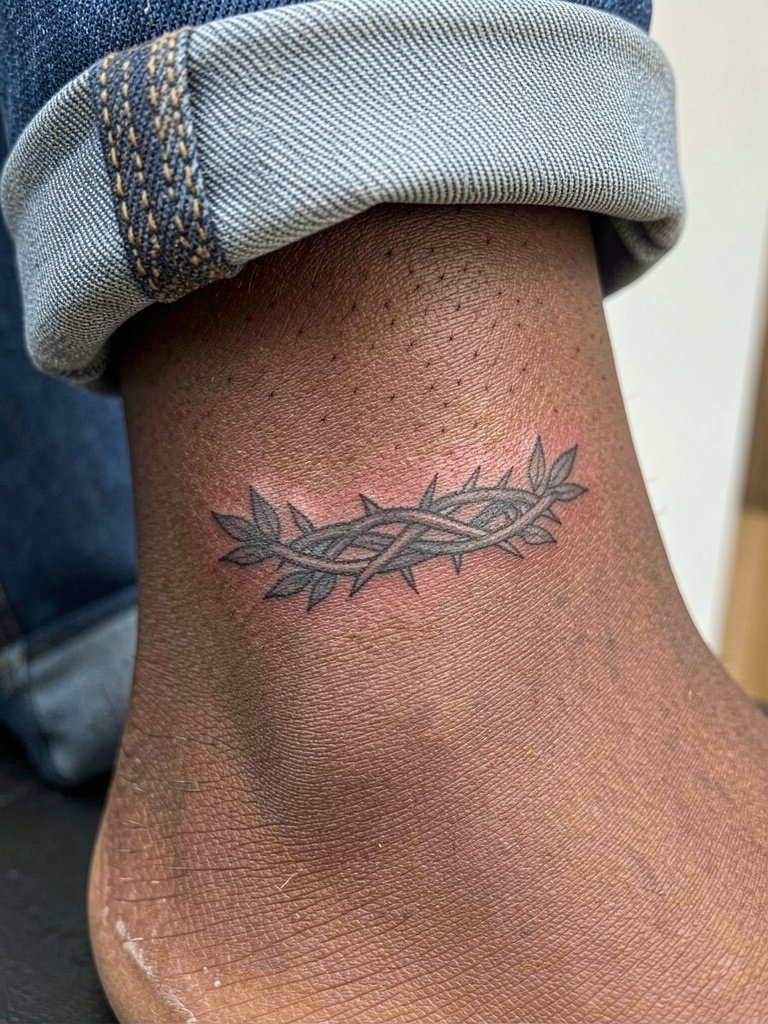
Ankle art is visible in summer and discreet otherwise. Ask the artist to position the thorns slightly above the bone to reduce rubbing against shoes. Sessions are short and sensitivity depends on bone proximity. The typical mistake is placing the piece where socks and shoe collars rub continually. For summer wear, cuff your jeans and pair with low-cut sneakers or canvas slip-ons to let the ankle show.
23. Large Back Panel Crown with Rays
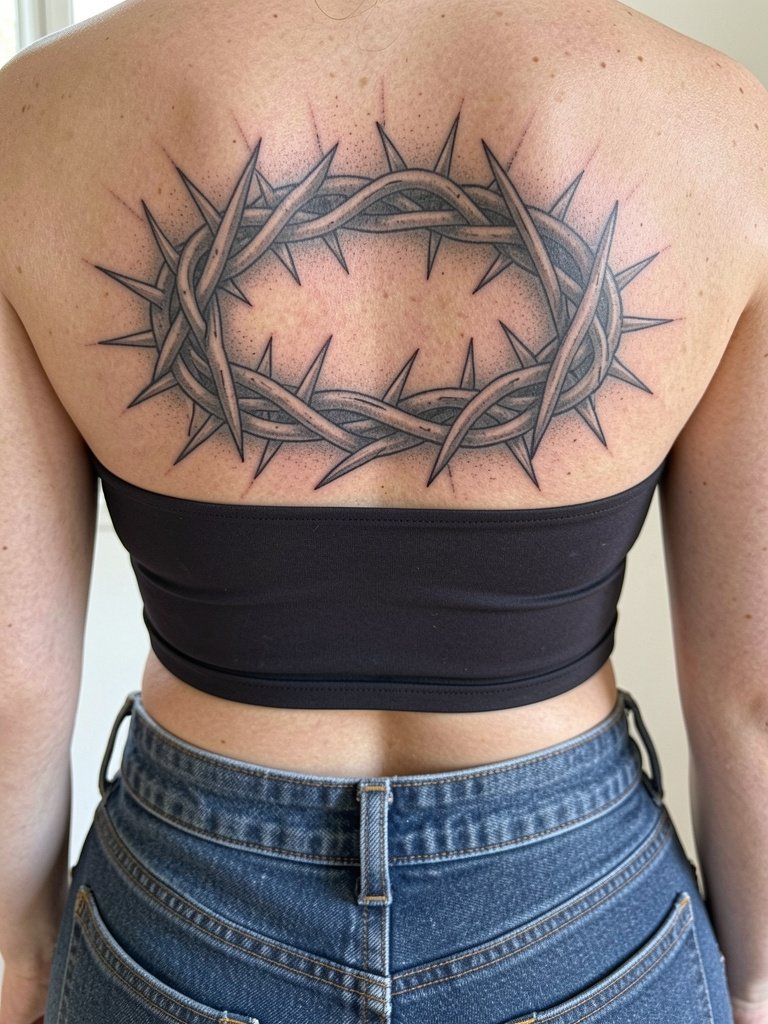
A full back panel can feel sacred when composition breathes. Request a detailed map of negative space so the rays do not crowd the shoulder blades once you move. Expect multiple long sessions and variable pain across bone and muscle. The common misstep is ignoring how a large piece looks seated versus standing which warps the intended lines. For showing or partially revealing the work, wear a low-back tank that aligns with the panel.
Frequently Asked Questions
Q: How do I choose between delicate fine-line and bold blackwork for a Crown of Thorns tattoo?
A: Think about how visible you want the symbol to be over time and what parts of your daily life will rub against that skin. Fine-line reads intimate but often needs touch-ups sooner. Bold blackwork preserves silhouette longer, but it is heavier visually. Look at healed photos at three years for each approach and decide which aging path you prefer.
Q: Where can I find healed examples and portfolios without naming specific artists?
A: Search platform tags and keywords like #CrownOfThornsTattoo, #SacredInk, and "crown thorns healed" on Instagram and TikTok with a location filter for nearby shops. Tattoodo and portfolio pages often let you search by symbol or style. Reddit tattoo threads can point to candid healed shots and user experiences in different skin tones.
Q: Will a chest or sternum crown hurt a lot and how long does a session take?
A: Sternum and ribs are higher on the pain scale because the needle buzz sits closer to bone and cartilage. A small sternum piece can be one to two hours. A larger chest panel will be multiple sessions. Plan short breaks, stay hydrated, and use breathing techniques. Numbing creams applied as recommended can help but discuss timing specifics with the shop.
Q: Are Crown of Thorns designs culturally sensitive or potentially offensive?
A: Crown of Thorns imagery comes from Christian symbolism and holds deep significance for many. One camp sees reproducing that iconography as a personal devotional expression. Another camp cautions about appropriation when symbols are used without context or reverence. Be explicit about your intent and acknowledge origins when the iconography is shared across communities.
Q: What should I wear to the session for a sternum, rib, or inner thigh placement?
A: Opt for fitted but removable layers that expose the area without full undressing. For sternum bring a fitted sports bra or bandeau that your artist can lift without shifting. For ribs and inner thigh wear athletic shorts with a high waist. For a general option, a zip-up hoodie makes undressing and redressing simple without tugging at healing areas.
Q: How often do Crown of Thorns tattoos need touch-ups?
A: Touch-up schedules vary widely with placement, lineweight, and daily friction. Fingers and wrists often need a touch-up at six to twelve months. Forearms and calves usually hold longer and may only need a small refresh at one to three years. Plan touch-ups as part of the long-term care rather than assuming one perfect session will last unchanged.