
Someone I know spent months bookmarking designs but still worried about three things. Would the fine line blur within two years, would a ribcage piece feel like a mistake because of pain, and which aftercare routine actually helps healing? I spent time in five shops across Brooklyn and watched pages of portfolio images to spot what ages best. Below are 25 cross approaches I recommend when you want a feminine, durable result that suits your style and life.
1. Floral Cross with Roses on the Wrist
Someone I know first noticed this while the artist added tiny petals around a slim cross. Floral crosses with roses read as neo-traditional without heavy saturation if the petals use restrained color. Tell your artist you want defined linework around the cross and soft petal saturation so the roses do not swallow the silhouette over time. Wrist pieces heal fast but sit close to bone, so expect a firmer sensation during the session. Blowout risk is low on the wrist, but going too small is the common mistake. Ask about touch-up timelines at year two to keep petal edges crisp.

2. Fine Line Cross Outline with Lilies on the Inner Forearm
Fair warning: fine line on flexible skin is a debate in shops. One camp says fine line blurs faster on moving areas. The other camp says well-spaced lines with shallow but consistent depth will last. When you consult, ask which spacing and needle grouping the artist uses for forearm work. Inner forearm is forgiving for healing and shows detail well. Expect mild discomfort rather than sharp pain. A common mistake is asking for lines too thin for the area. Plan for a touch-up at two to three years if you want the outline restored.

3. Rose and Cross Intertwined Sleeve Starter on Upper Arm
There is a practical reason to start a sleeve with a rose-and-cross cluster. It gives the artist anchor points for future expansion and blends traditional saturation with space for stipple shading. During the consultation, bring sleeve layout images showing how motifs overlap rather than sit in strict rows. Upper arm work feels moderate on pain scales and handles heavier saturation well. The common mistake is insisting on too many small elements at once. Expect two sessions for solid saturation and one touch-up later to keep the black saturated.

4. Ornamental Cross with Vines on the Ribcage
Fair warning: the ribcage is a seven out of ten on most pain scales. The result is worth it for people who want a hidden piece that unfolds with movement. Ornamental crosses with vine work use fine line and micro dot work to look jewelry-like. Ask your artist to keep most of the heavy contrast toward the center so vines remain delicate along the ribs. Blowout risk increases if the linework is too tight in a vibrating area. Plan for slower healing and consider a touch-up at year three to reassert fine vine detail.

5. Minimalist Cross with Heart Base Behind the Ear
When size matters for concealment, this design is a go-to. Behind the ear pieces are micro and subtle. Tell your artist you want single-needle linework and shallow depth so the tiny heart base keeps its shape. Sessions are short and pain is sharp but brief. The usual mistake is pushing too much detail into a micro area. Keep the cross simple to avoid early blur. Note that ear-area tattoos may require a specialized hand technique because the skin sits over cartilage. Think about how easily it hides for professional settings.

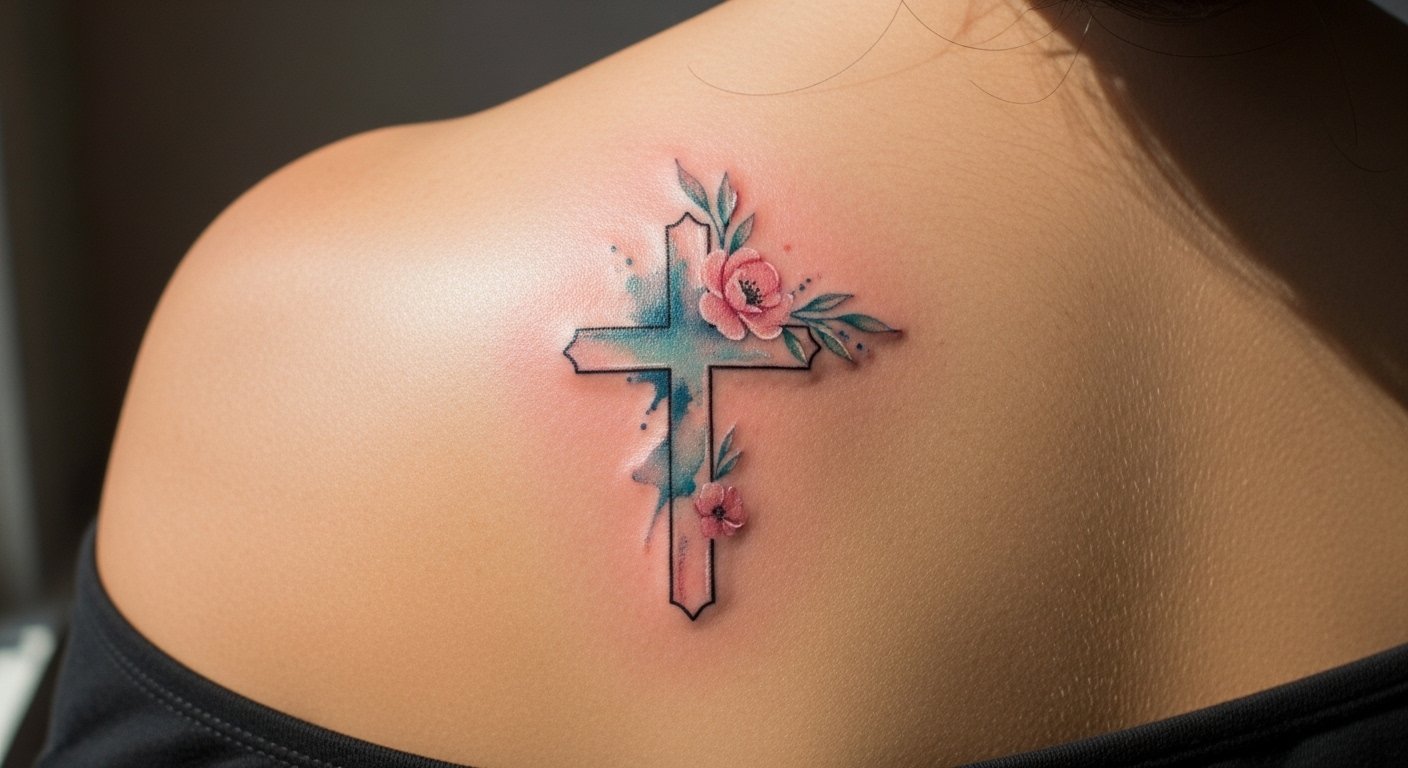
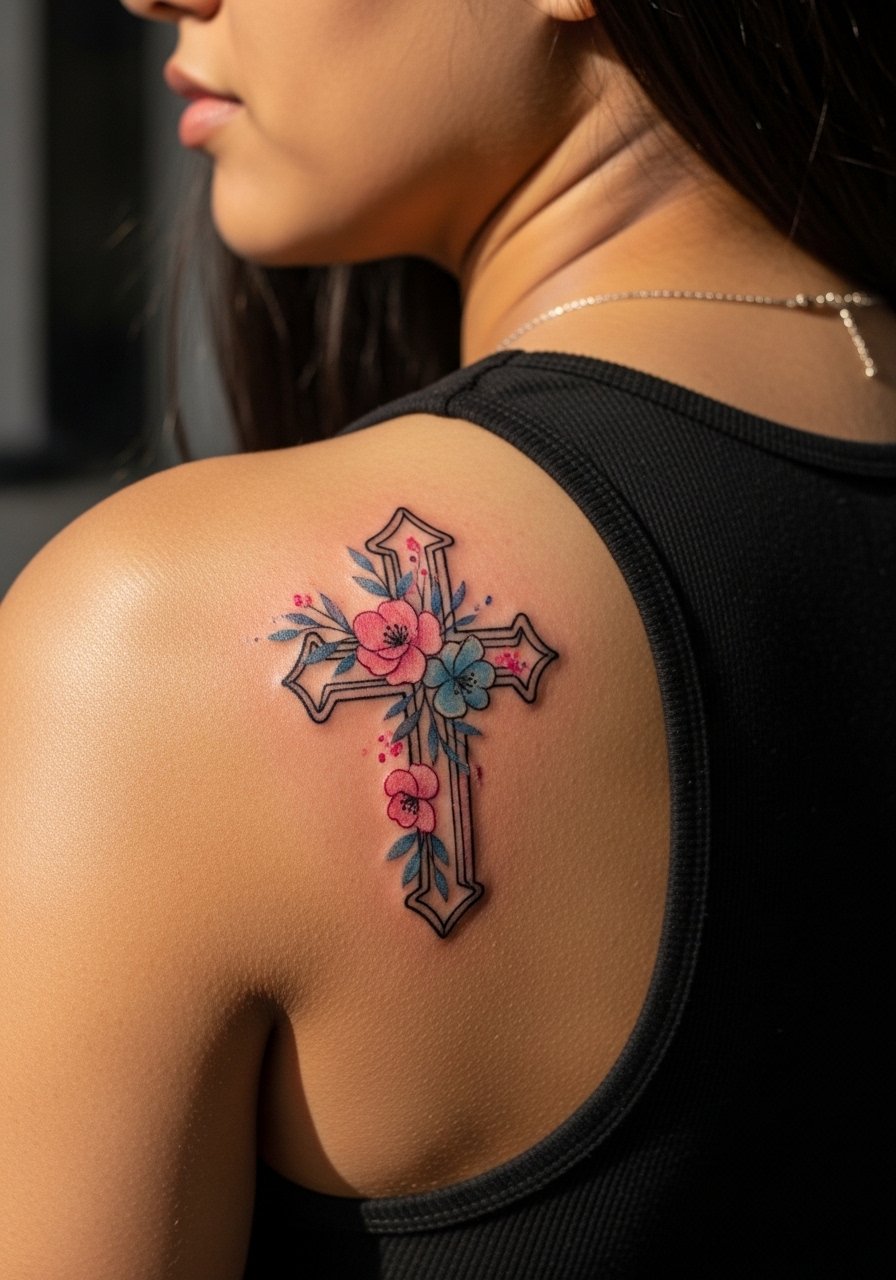
6. Watercolor Cross with Floral Accents on the Shoulder Blade
Most watercolor from years ago faded into uneven patches. One group of artists treats watercolor as trend work that needs frequent touch-ups. The other group builds a backbone of crisp linework beneath the wash so the silhouette reads as it ages. If you like watercolor, ask the artist to anchor the composition with subtle black contour and let pigment sit around it. Shoulder blade placement spreads movement and heals well. Expect a medium session length and slower color settling. Plan on touch-ups at year two if you want the pastel hues restored.
7. Blackwork Cross with Gothic Flourish on the Calf
There is something about solid black silhouettes that reads from across a room and stays legible for years. Big blackwork crosses use heavy saturation and crisp edges to avoid patchy fade. Tell your artist you want full saturation and consistent whip shading on the edges to keep texture without losing the cross shape. Calf placement is patient-friendly for longer sessions and tends to handle heavy black well. The main mistake is asking for overly complex internal decoration inside a dense black area. Expect three sessions for larger pieces and touch-ups as needed.

8. Micro-Realism Cross Pendant on the Sternum
When you want the look of jewelry rather than a flat motif, micro-realism can mimic a pendant sitting on the sternum. Mention to the artist that you want 3D highlights and a tiny chain suggestion to sell the pendant illusion. Sternum tattoos sit over bony anatomy so expect higher pain and slower healing. This is a sensitive placement that benefits from an artist experienced with micro shading. The common mistake is asking for too much tiny contrast which can blur. Plan for a touch-up window at one to two years to keep highlights crisp.

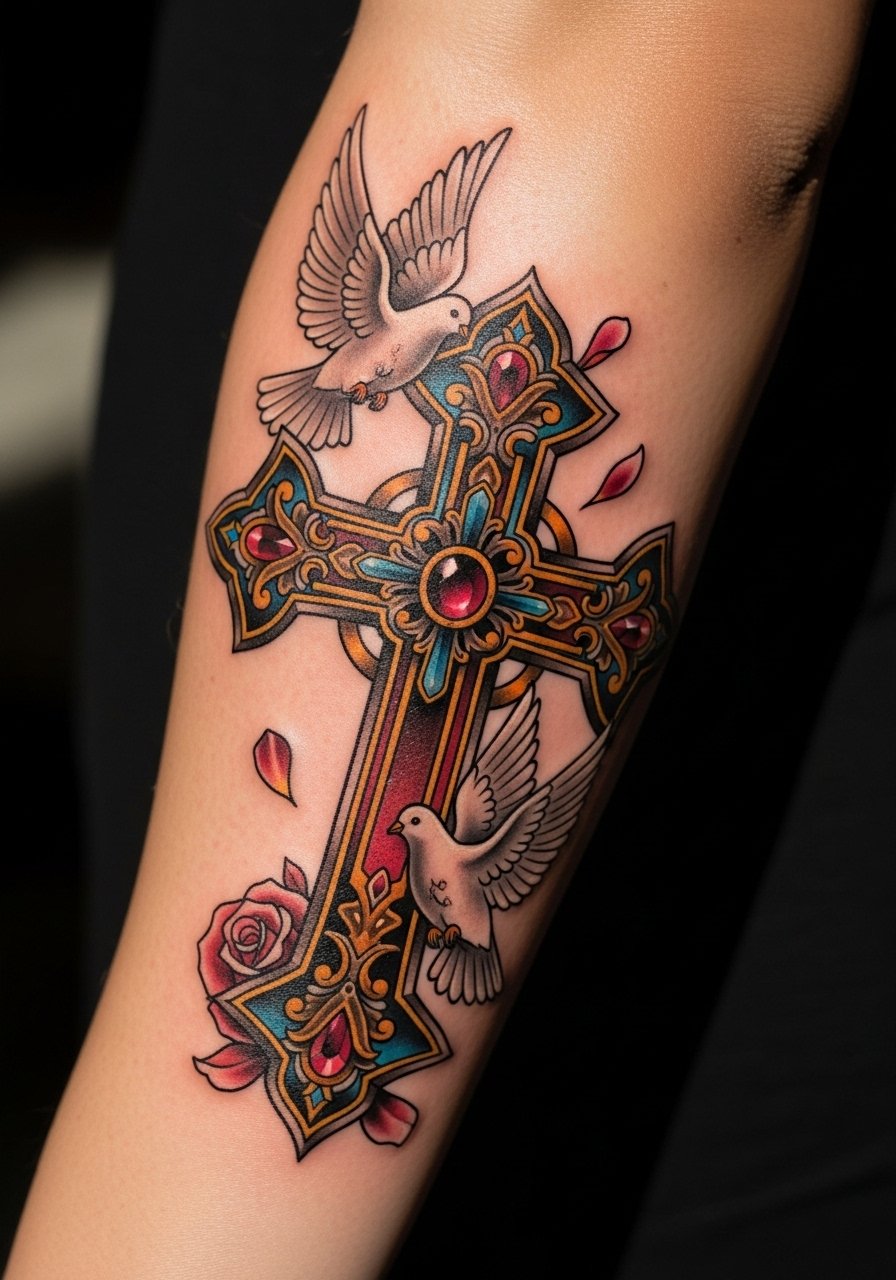
9. Neo-Traditional Cross with Doves on the Forearm
There's a hopeful clarity when birds sit around a cross. Neo-traditional palettes bring soft color and clear linework. For a forearm piece, tell your artist you want medium-weight linework and controlled saturation so the doves keep form without muddying the cross. Forearm placement is lower pain and great for showing detail. The typical mistake is piling color too near thin lines. Ask about how the piece will look at six months and at year two, since forearm sun exposure speeds fade. A yearly top-off keeps tonal balance.
10. Ignorant Style Cross with Dots on the Wrist
The ignorant style treats motifs playfully and often uses bold, imperfect linework with dot clusters. This approach reads youthful on small placements like the wrist. Tell your artist you want confident, slightly uneven linework and deliberate dot work rather than jittery single-needle stuff. Wrist sessions are quick and feel firm near the bone. A common mistake is trying to miniaturize too many dots into a tiny space. Expect the lowest blowout risk among small motifs if spacing is respected. This version ages with character rather than looking airbrushed.

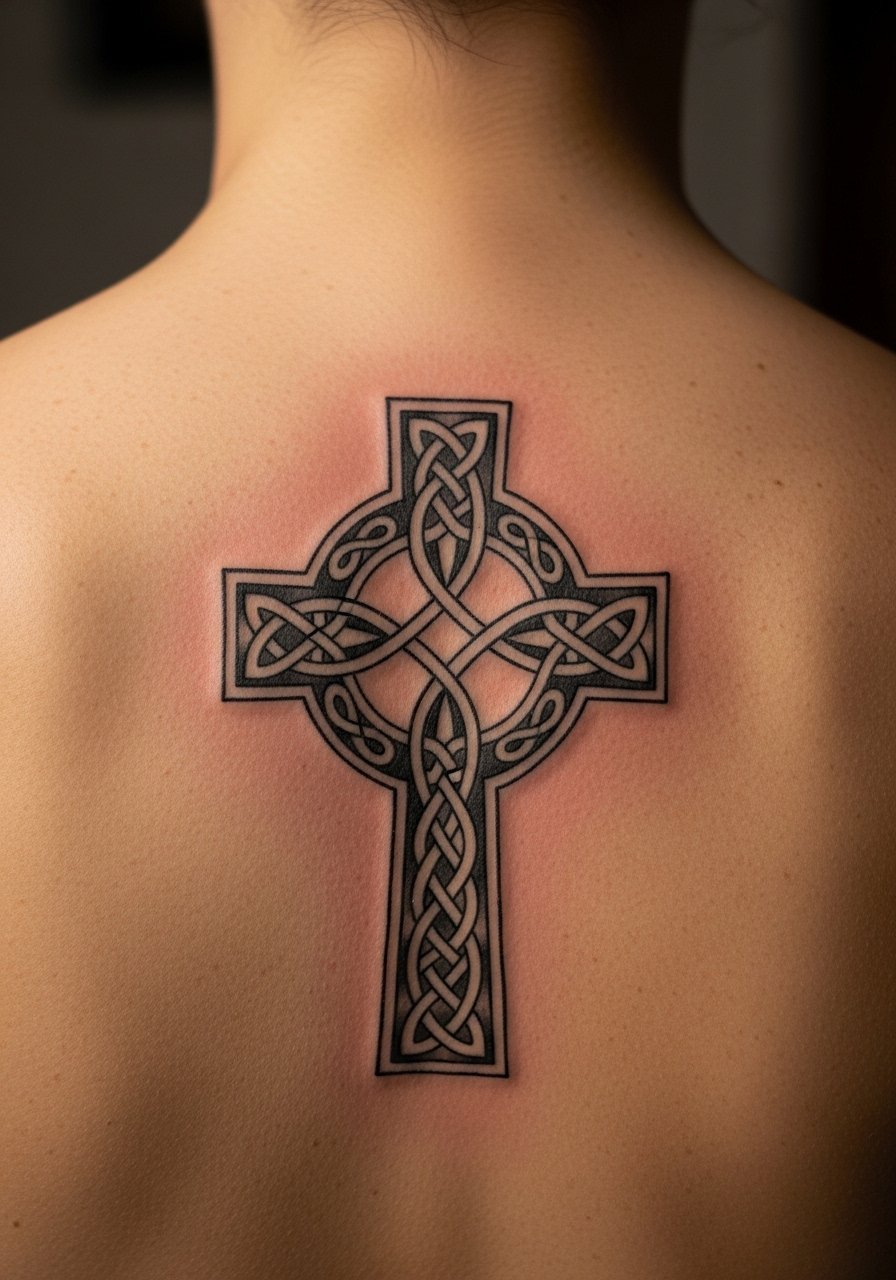
11. Celtic Knot Cross on the Upper Back
This one carries centuries of pattern heritage so a respectful approach matters. If you choose a Celtic knot cross, ask for simplified knot intersections so the design reads even as lines soften. Upper back work gives your artist room to scale the knots, and comfort is high during sessions. The mistake to avoid is insisting on excessive micro-knotting which compresses and blurs over time. Mention that you want clear negative-space channels to prevent saturation from filling the knots. Also consider origin respect and slight personalization rather than copying sacred artifacts.
12. Geometric Dotwork Cross on the Sternum
Most people pick this when they want symmetry and textural depth. Dotwork requires patience and time in the chair because stipple shading builds slowly. When you sit down with the artist, show examples of dot density you like and ask how they plan touch-ups. Sternum placement is sensitive and requires an artist experienced in even stippling over contoured anatomy. A real mistake is compressing too many dots into a tiny field which causes the design to blur. Expect a calm but uncomfortable session and schedule a follow-up touch-up if small areas feather.

13. Tiny Cross Behind the Finger Knuckle
The visual payoff of a knuckle cross is instant, but so is wear. Knuckle skin moves and exfoliates a lot. Tell your artist you want bolder linework than you might expect so the tiny cross retains clarity as it fades. The session is short and the pain is sharp. The most common mistake is insisting on overly fine lines in that spot. Expect early touch-ups within six to twelve months. Also think about job-related visibility because hand and knuckle tattoos still affect hiring in some fields.

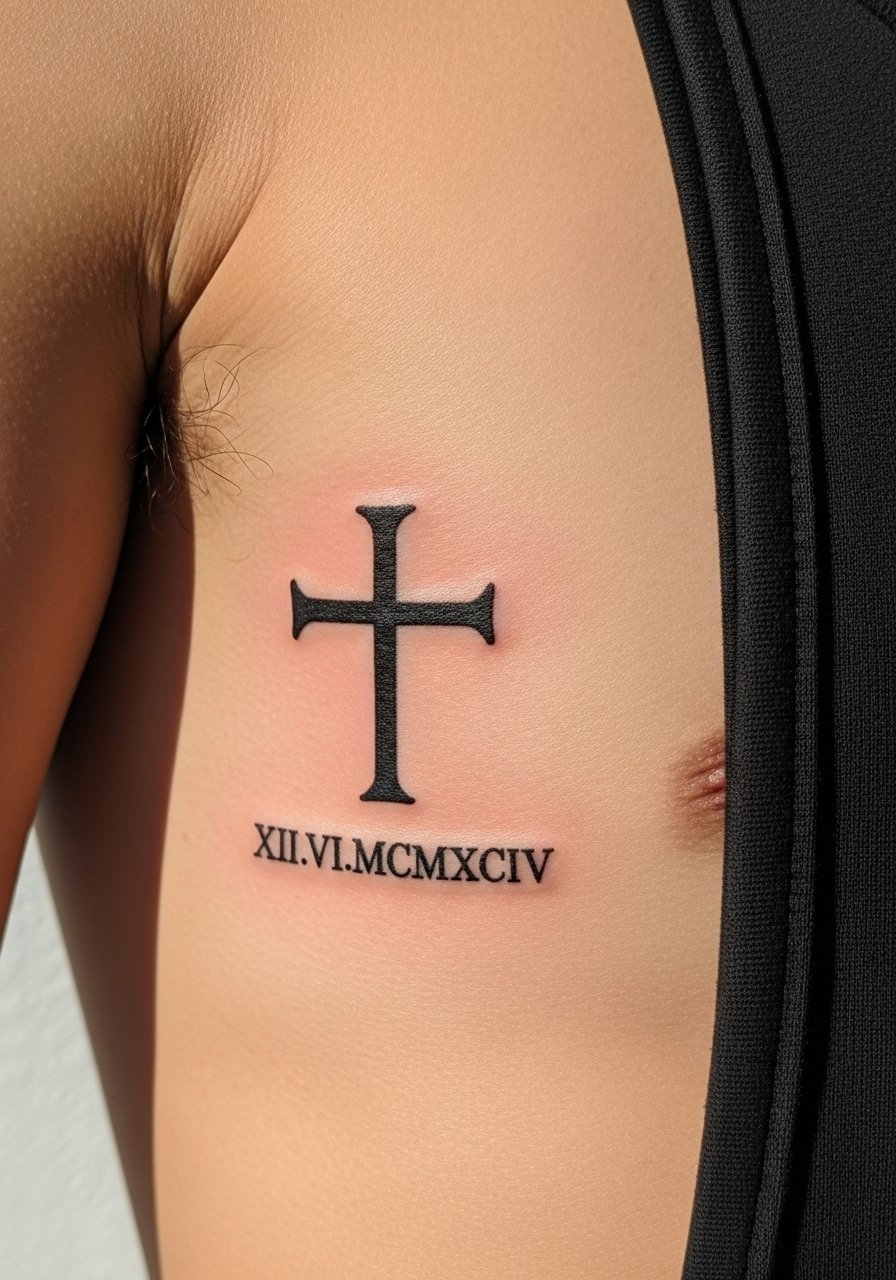
14. Cross with Roman Numerals on the Ribcage
When a cross anchors a memorial date, Roman numerals give a classic look. Tell your artist the exact numerals you want and how bold they should be. Important note: image generators need the exact text, so specify the numerals clearly if you create mockups. Rib placement is high on the pain scale and shifts during breathing. The common mistake is choosing numerals too small to remain legible as skin moves. Design with spacing in mind and expect a slower healing period for crisp numeral edges.
15. Cross with Scripted Ribbon on the Inner Arm
The inner arm reads like a private gallery and is great for incorporating a banner with a single word. In the consult, bring the exact script sample and ask for spacing that lets the ribbon breathe. Inner arm heals well and shows script detail clearly. A common mistake is squeezing long phrases into a narrow ribbon. Expect a moderate session and a touch-up around the one-year mark if the ribbon edges soften. Keep the script simple to avoid legibility loss as the skin moves.

16. Stipple Shaded Mini Cross on the Ankle
Someone I know chose stipple shading for an ankle cross because it looks textured without heavy black. Stipple gives soft volume with dot work rather than block fill. Ankle placement is bony so expect a sharper sensation during the session. The main mistake is asking for too dense a stipple field which can compact into a gray patch. Ask your artist how dense they will make the dots and how the area will look at two years. Plan for a small touch-up if dots start to merge.

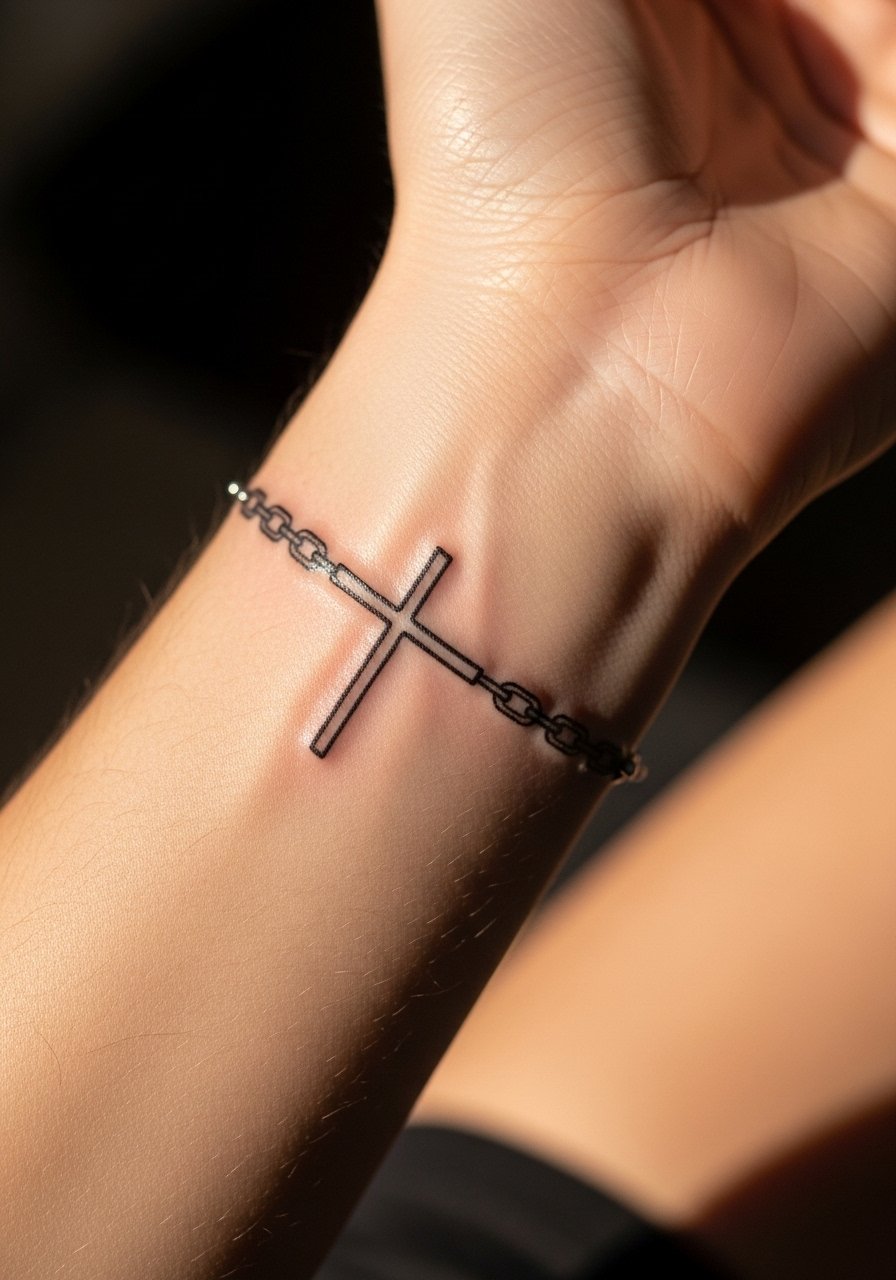
17. Chainlink Cross Bracelet Tattoo on the Wrist
When you want the feel of jewelry without wearing metal, a chainlink cross band wraps the wrist neatly. Tell the artist you want clear negative space between links so the chain reads metallic rather than smudgy. Wrist band work is quick but sits near joint movement. The common mistake is making the links too small which causes early feathering. Expect a shorter session and a likely touch-up within one to two years to restore crisp link edges. Discuss mobility with the artist to place links where the skin flexes least.
18. Ornamental Locket Cross on the Upper Chest
There is a jewelry sensibility when a cross is rendered like a locket over the chest. Request a clear center point and subtle highlight work to suggest metal without heavy color. Upper chest pieces sit near the clavicle so healing needs careful clothing choices. A mistake clients make is over-detailing the interior of a tiny locket. Expect moderate pain and a session that focuses on clean linework and light shading. Plan for a touch-up at year two if highlights fade.

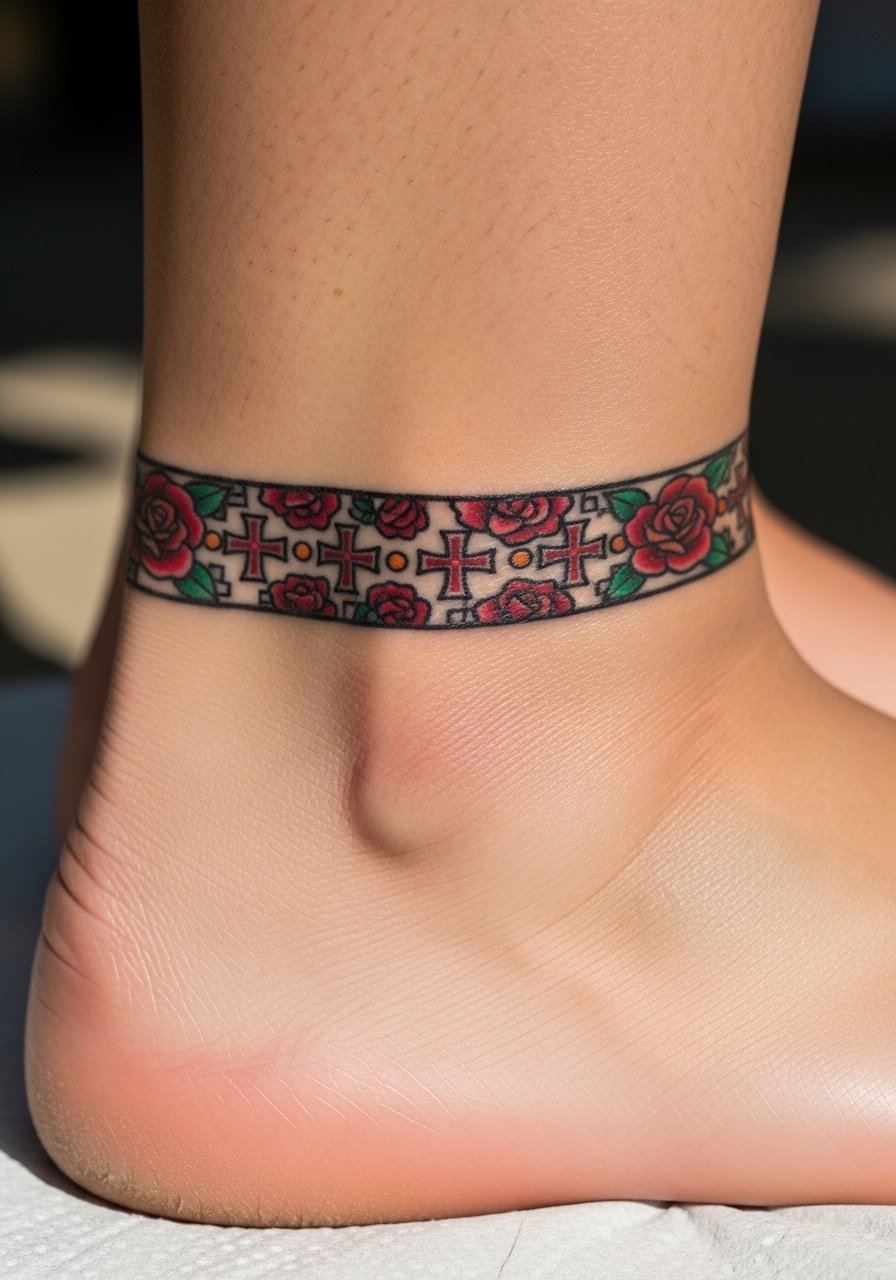
19. Cross and Rose Ankle Band
This banded approach uses small crosses and tiny roses to circle the ankle. When designed with rhythm, the motif looks intentional rather than cluttered. Tell your artist the negative spacing you want between elements and whether you prefer stipple or soft color accents. Ankle placement is sensitive but great for rotation in footwear. The mistake is compressing the motifs so they lose individuality. Expect a shorter session and a touch-up window if small roses begin to bleed into the linework.
20. Scripted Name with Tiny Cross on the Inner Wrist
There is clarity to pairing a name with a tiny cross for a memorial or dedication. Bring the exact lettering you want and confirm spacing so the cross and script do not compete. Inner wrist sessions are quick and healing is straightforward. The typical mistake is font choices that are too ornate for small scale. Expect to need a touch-up in a year if thin strokes fade. This placement is visible so think about how often you want it seen in daily life.

21. Minimal Bar Cross on the Finger
The simplicity of a minimal bar cross works for people who want discreet devotion. Fingers are high-motion and exfoliate frequently so thicker bar widths work better than hairline strokes. Tell your artist you prefer a slightly bold bar to outlast daily wear. The session is brief and the pain is sharp. Expect early fading and likely touch-ups every year or so. Also consider career visibility because finger tattoos remain a professional consideration in some industries.

22. Mandala Cross on the Upper Back
This pattern borrows mandala geometry to frame a cross. For cultural origins, consider subtle personalization rather than direct sacred replication. Request open negative spaces so the mandala petals hold their shape as the piece ages. Upper back provides space for larger scale and comfortable sessions. The common mistake is compressing too many petal layers which results in muddled detail. Expect longer sessions for the intricate dot work and a realistic touch-up plan for fine areas.

23. Cross with Halo and Rays on the Collarbone
There's an impact to a small cross with a faint halo and linear rays resting on the collarbone. Collarbone placement can be tingly and requires attention to clothing during healing. Tell the artist you want thin rays that do not crowd the cross silhouette so the halo remains subtle. The main mistake is over-lengthening rays which ages poorly with sun exposure. Expect a single session and consider yearly touch-ups to keep fine rays visible.

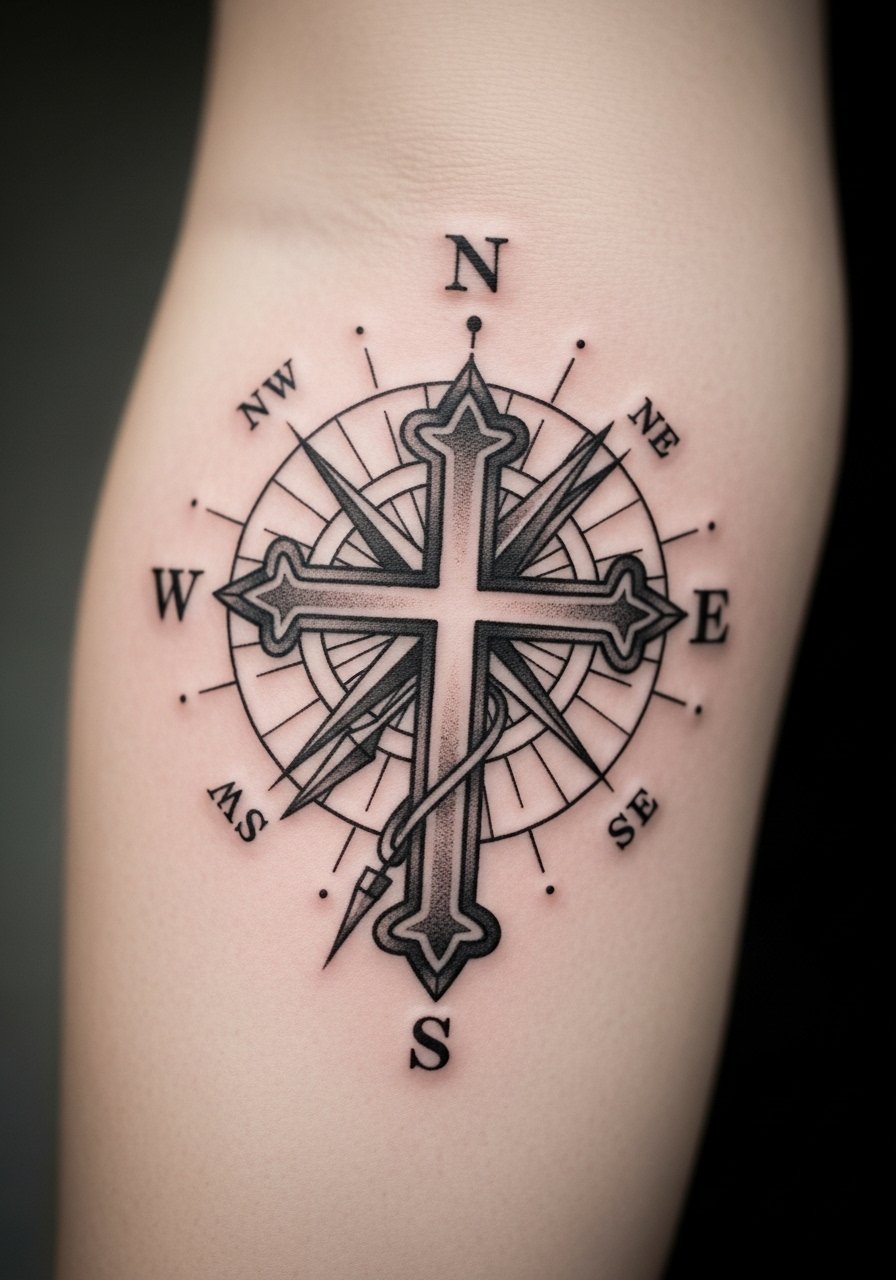
24. Cross Compass Hybrid on the Forearm
Visual impact comes from blending a compass with a cross to symbolize direction and faith. When planning this hybrid, discuss which element leads the composition so the piece does not read confused. Forearm placement shows detail well and tolerates medium-sized compositions. A common mistake is balancing the compass points too tightly against the cross arms. Ask the artist how the piece scales across the forearm and whether they recommend stipple or whip shading for the compass texture. Expect a two-session timeline for full detail.
25. Pendant Micro-Realism on the Clavicle
When you want a tiny, jewelry-like pendant resting along the clavicle, micro-realism sells the effect. Ask for crisp highlights that mimic metal and for a faint chain suggestion if you prefer the hanging look. Clavicle skin is thin so sessions can feel sharper and healing may take a bit longer. The common mistake is requesting too much micro contrast which can blur in small scale. Plan for a small touch-up to maintain metallic highlights after the first year.

Tattoo Prep and Aftercare Essentials
Fragrance-free tattoo aftercare balm search. Use in the first week when your artist allows ointment. Choose a balm without heavy fragrances so it does not irritate new ink.
Lightweight fragrance-free balm search. A thinner balm helps the skin breathe while protecting color during the initial peel phase.
Medical-grade second skin bandage search. Useful for larger pieces and areas that rub against clothing. Follow your artist's timing for removal.
Gentle pH-balanced soap search. Use to clean the area twice daily for the first week. Avoid aggressive scrubbing.
Aquaphor Healing Ointment search. This mainstream option can help during the first 48 hours for some skin types. Use sparingly and only if your artist approves.
Sun-protective mineral sunscreen stick search. Long-term UV protection prevents premature fading after the tattoo heals.
Silicone scar sheet or protective pad search. For raised or textured areas that need long-term smoothing after full healing.
Soft, breathable clothing for healing search. Loose fabrics reduce friction on fresh work and help avoid scabbing disruption.
Every tattoo is different. Always follow your artist's specific aftercare instructions. Consult a dermatologist if you have skin concerns or unusual healing issues.
Frequently Asked Questions
Q: Will a fine line cross on my ribs blur faster than other placements?
A: It depends on the artist technique and your skin. One camp argues rib skin movement and stretch cause fine lines to feather sooner. The other camp maintains that correct spacing and consistent depth can keep lines sharp. I recommend asking your artist about their ribline samples and planning a touch-up at year two if you want to preserve the original crispness.
Q: Do watercolor-style crosses need different aftercare than traditional blackwork?
A: Yes, because watercolor relies on softer color saturation. Keep the area out of direct sun while the pigment settles and use a gentle, fragrance-free balm during the first week. After healing, use mineral sunscreen on the area to slow color fade. Follow your artist's specific timing for ointment versus lotion.
Q: How often should small cross tattoos on hands or fingers get touch-ups?
A: Expect more frequent touch-ups than for arm or back tattoos. Fingers and hands exfoliate regularly and are exposed to sun and washing. A realistic plan is to budget for a touch-up in the first year and then reassess annually depending on coverage loss.
Q: Are there special considerations for a sternum pendant cross in terms of pain and healing?
A: Sternum work tends to be sharper due to bony anatomy and thin skin. Healing can be slower and you may need more careful clothing choices. Ask the artist about session length and whether they recommend splitting work into two sittings for comfort and precision.
Q: How should I approach cultural sensitivity if I want a Celtic or mandala cross?
A: Consider slight personalization rather than direct replication of sacred motifs. Ask your artist about design origins and how they adapt patterns respectfully. Many clients choose to combine personal elements to acknowledge origin while making the piece uniquely theirs.
Q: Can I get a watercolor cross and still have it read clearly after two years?
A: It depends on pigment saturation, underlying linework, and sun exposure. Artists who anchor watercolor with faint black contours usually produce pieces that retain structure longer. Plan for touch-ups and sun protection if you want lasting pastel tones.
Q: What questions should I ask during a consultation to ensure the cross will age well?
A: Ask to see healed photos on similar skin tones and placements. Request specifics about line spacing if you want fine work. Ask how the artist handles touch-up windows and what aftercare products they recommend. These specifics tell you more than a general portfolio alone.