
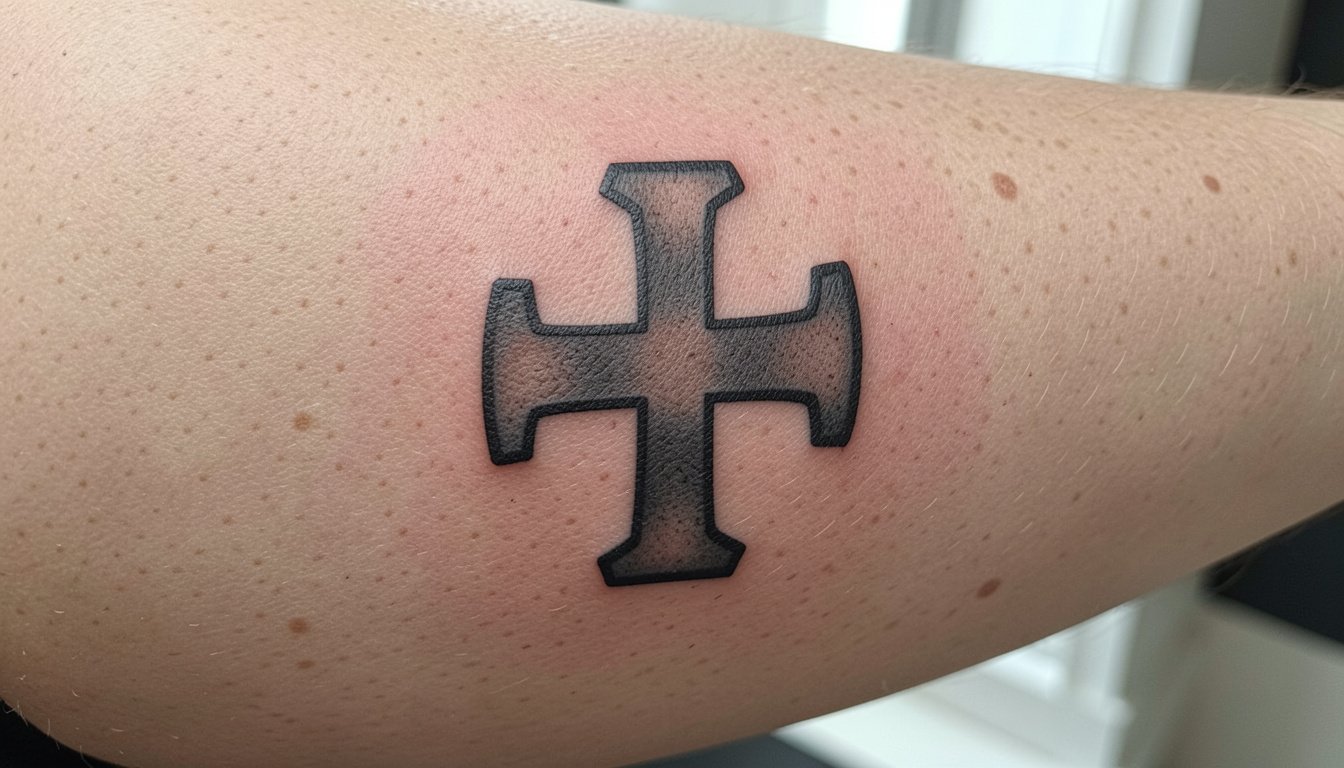
Small three-cross tattoos often look like a single idea on social feeds, yet subtle choices decide whether they read crisp for years or blur into a single dark mark. Tiny single-needle crosses on wrists will tempt you at booking, but spacing and line weight are what keep the crosses distinct as skin shifts. Read the options below with an eye for placement, how each one heals, and exactly what to ask for at the stencil stage to get a Calvary trio that ages well.
1. Small Calvary Trio on Inner Wrist
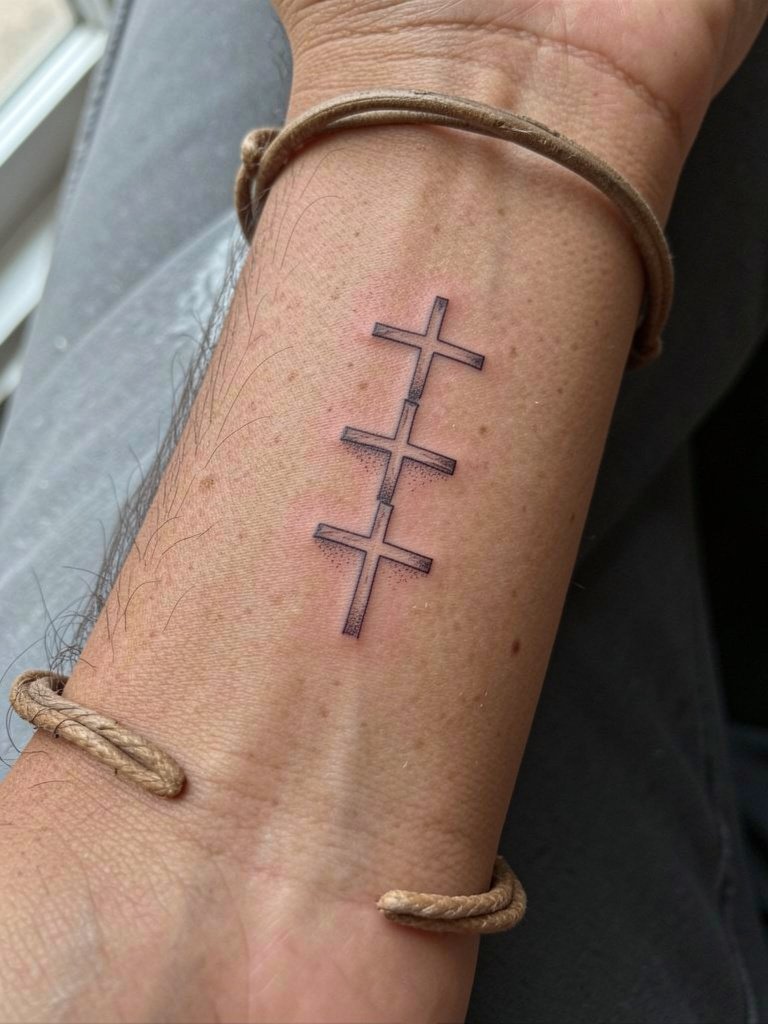
This tiny inner-wrist trio is a classic if you want something discreet that still reads as a set. For longevity, ask the artist for slightly heavier single-needle line weight than your reference so the three shapes stay separate as the skin softens. Expect a short session of 30 to 45 minutes and a low to moderate pain level. At six months the lines look crisp, at two years very fine lines may soften together, and by five years a touch-up is often needed to restore the thin cross bars. A common mistake is requesting hairline detail that the wrist skin cannot hold. This placement pairs well with rolled-up long sleeves and simple chain bracelets, try pairing with a slim silver chain bracelet to frame the wrist without covering the ink.
2. Micro Calvary Cross Behind the Ear
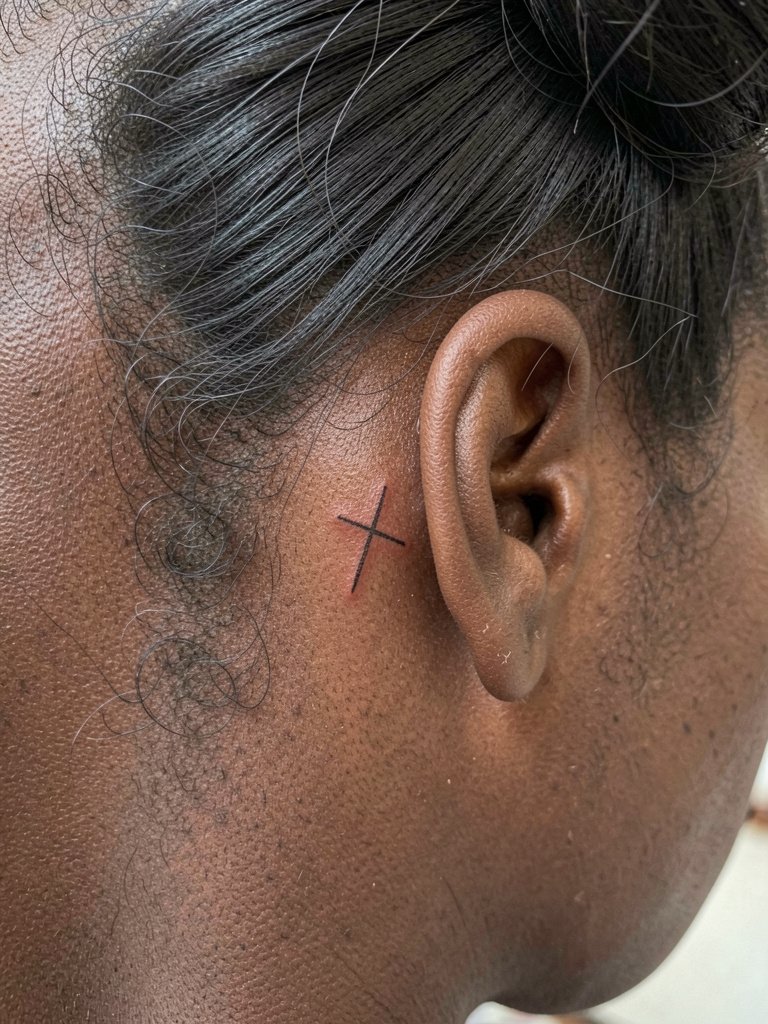
A behind-the-ear Calvary cross reads like a private emblem. The surface there is thin and mobile, so request slightly simplified geometry and modest spacing between the three crosses if you plan multiples. Session time is short, pain is moderate given proximity to bone, and touch-up is commonly required after a year for micro details. The main mistake is asking for ultra-tiny loops or serifs that never heal cleanly. For the appointment wear, keep hair up in a clip so the artist has clear access and the area stays dry for the first 24 hours.
3. Bold Blackwork Three Crosses on Outer Bicep
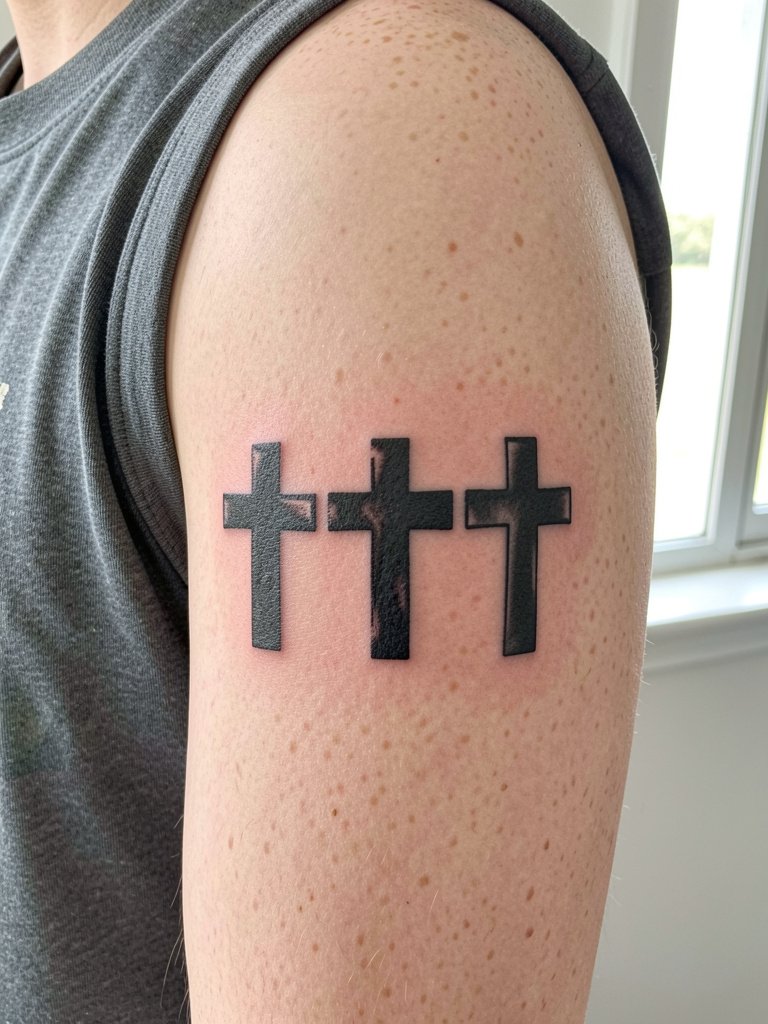
This blackwork trio reads from a distance and wears well. I recommend it when you want visible presence without color fading issues. Discuss saturation and patch tests with the artist to ensure even black fill across three separate pieces. Expect a session of 60 to 90 minutes depending on fill area, and moderate pain. At six months the saturation usually looks uniformly deep, by two years the edges soften lightly, and at five years touch-ups keep the silhouettes crisp. A frequent error is making the crosses too thin relative to arm width. It pairs naturally with sleeveless tees and classic cotton tanks that put the bicep on display.
4. Sternum Calvary Cluster with Dotwork
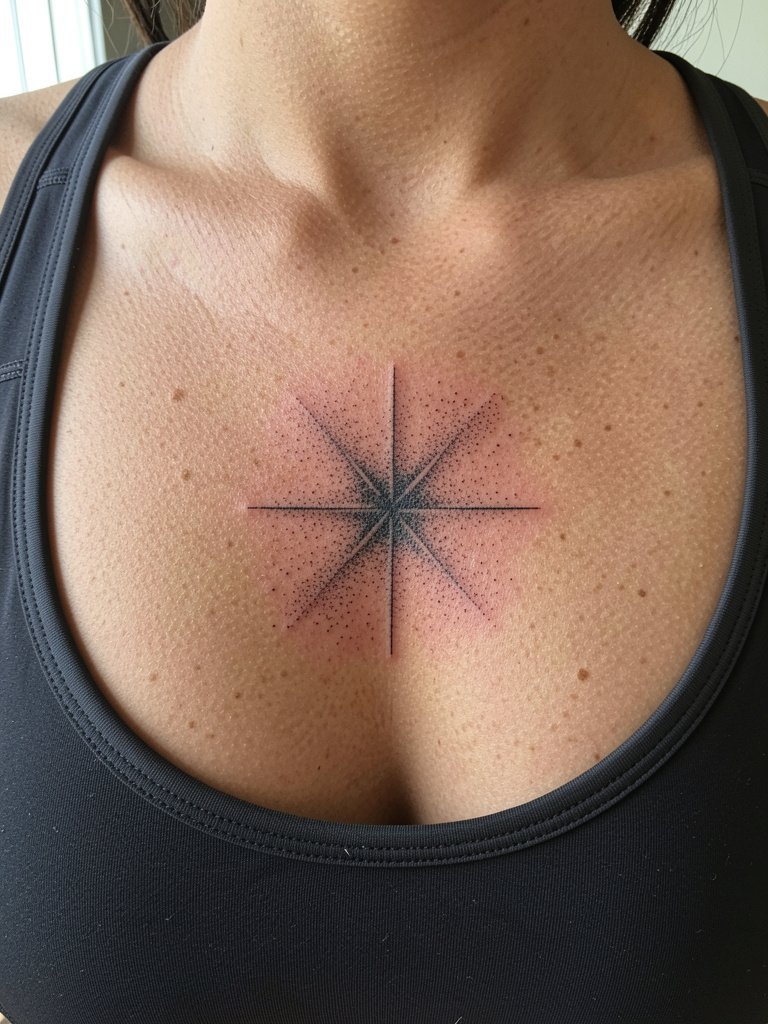
Sternum Calvary groups split artists into two camps. One camp says the sternum and underbust area shifts with body changes and that fine detail blurs within a few years. The other camp argues that slightly wider spacing and careful dotwork allow delicate pieces to settle beautifully, and they will show healed photos to support that. For this placement ask the artist about spacing measurements in millimeters and where the lowest cross will sit relative to the bra line. Sessions can run 90 to 150 minutes and pain is higher for most people. If you choose this area, choose a design with intentional negative space and expect a touch-up cycle at 12 to 18 months. Respect the religious origin of Calvary imagery and be clear about personal meaning during the consultation.
5. Stacked Tiny Crosses on the Side of a Finger
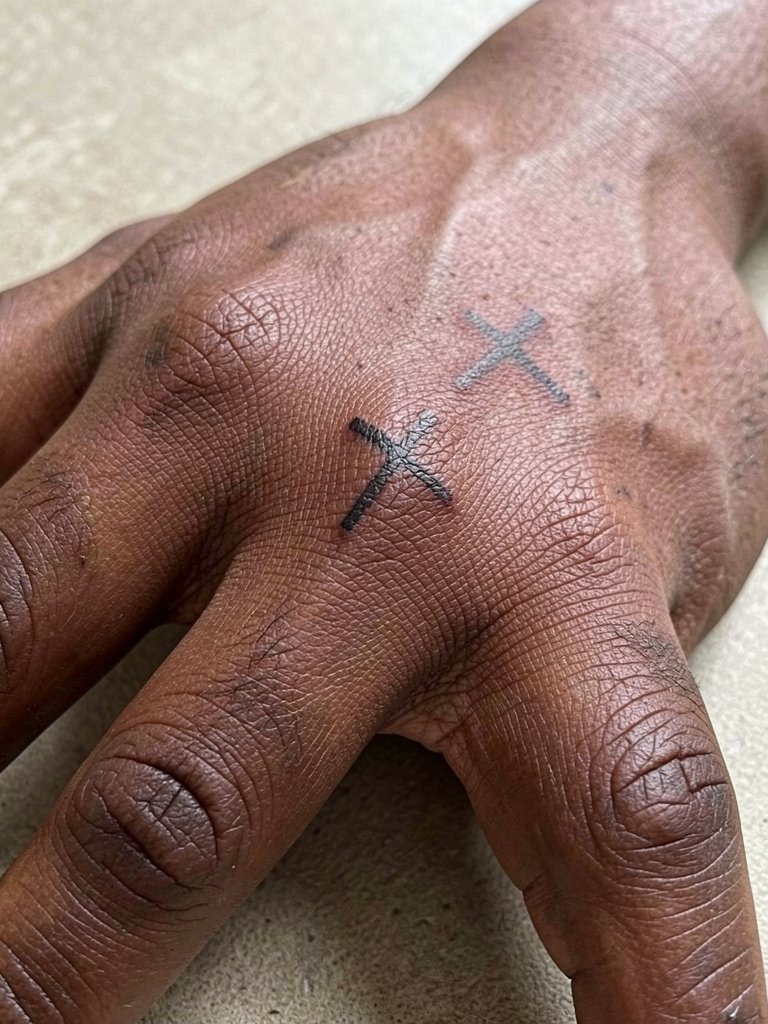
Fingers are high-risk for fading and blowout because of constant washing and thin skin. If you want a finger trio, request slightly bolder linework and accept that yearly touch-ups are the norm. The session is short but can sting because the area sits over bone. At six months the ink may already look faint, at two years expect partial fading, and at five years frequent refreshes are common. The mistake is asking for full single-needle script-sized detail on a finger. For daily wear pick sturdy rings that do not rub the tattoo directly. A simple thin stacking ring set visually complements the vertical three-cross stack.
6. Calvary Scene on the Ribcage with Small Script
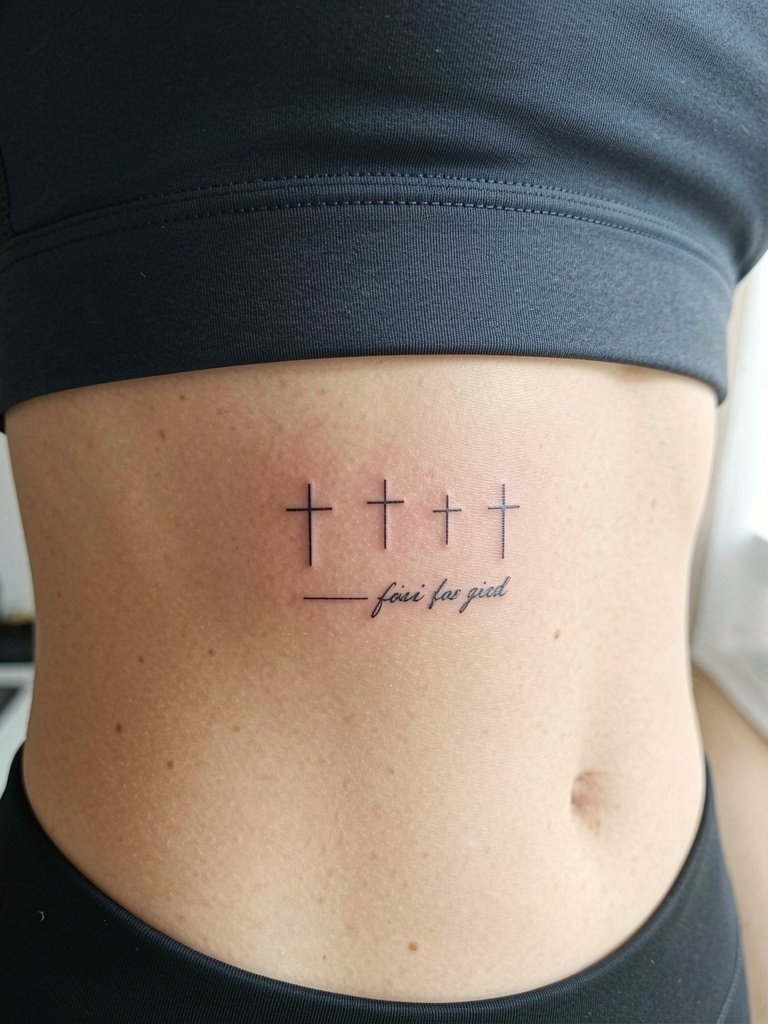
Ribcage placements trigger a clear debate among practitioners. Some artists insist fine-line work on ribs blurs quickly due to skin stretch and movement. Other artists maintain that with slightly wider spacing and measured needle depth fine-line ribs can age acceptably. If you prefer script under the crosses, bring exact font samples and request mockups at the scale you plan to wear. Sessions can be long and uncomfortable and usually require breaks. Expect the six-month photo to look crisp, two years to show softening if spacing was tight, and a touch-up window around year two to keep scripts legible. For the session, wear a convertible top that gives the artist clean access while keeping you comfortable.
Session Day Picks
These pieces above cover tiny wrists, ribs, and fingers so a couple of small items can smooth the chair day and first week.
-
Stencil transfer paper kit. Useful for previewing the exact spacing of three crosses on curved areas like wrists and ribs before the needle hits skin.
-
Thin protective film roll. Keeps delicate linework on fingers and wrists shielded from friction during the first two days.
-
Silicone scar-reduction sheet set. Helpful for minimizing raised healing on sternum or rib areas that tend to scar.
-
Hypoallergenic gentle body wash. A neutral cleanser for showers when healing small linework on the hand and wrist.
-
Aquaphor healing ointment. Thin layers in the first 48 hours help protect fine-line work without clogging the channels in tiny crosses.
7. Calvary Crosses with Sunrise on the Forearm
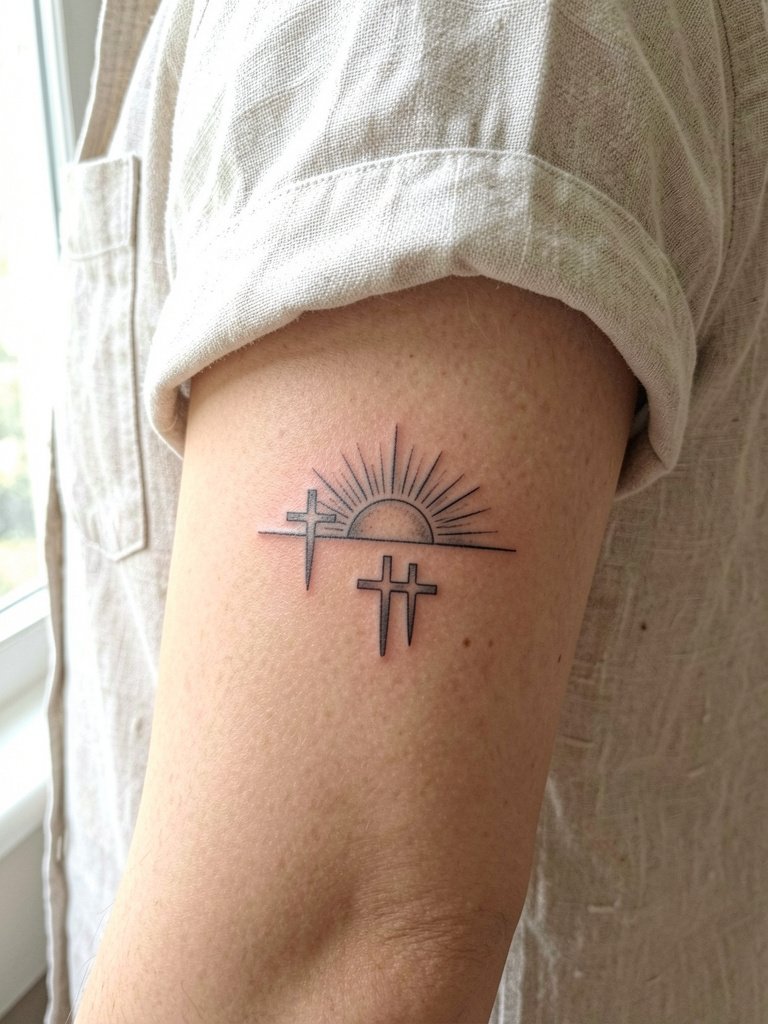
A forearm sunrise composition gives the Calvary trio context and readable visual hierarchy. I suggest asking the artist for incremental line weight between the crosses and the horizon line so the crosses sit forward visually. Expect a 60 to 90 minute session and mild to moderate pain. At six months detail is intact, at two years subtle feathering may appear around shaded areas, and touch-ups are occasional. A common mistake is packing too much tiny shading next to thin crosses. This placement looks great with rolled sleeves and mid-length shirts, try an open-weave linen shirt to frame the forearm art.
8. Watercolor Halo Three Crosses on Shoulder Blade

Shoulder-blade placement lets you go more decorative with background color while keeping the crosses bold. Because watercolor fades faster, pick saturated base tones and ask for color layers that will age into softer washes. Session time is 90 to 120 minutes and the area is low to moderate for pain. At six months the colors settle, at two years expect softer edges in the wash and possible touch-up for vibrancy. Avoid asking for pastel washes with hairline outlines because they can turn muddy. For evenings consider open-back dresses or tops that reveal just the shoulder blade, and try an open-back midi dress to highlight the halo effect.
9. Geometric Calvary Trio on the Ankle
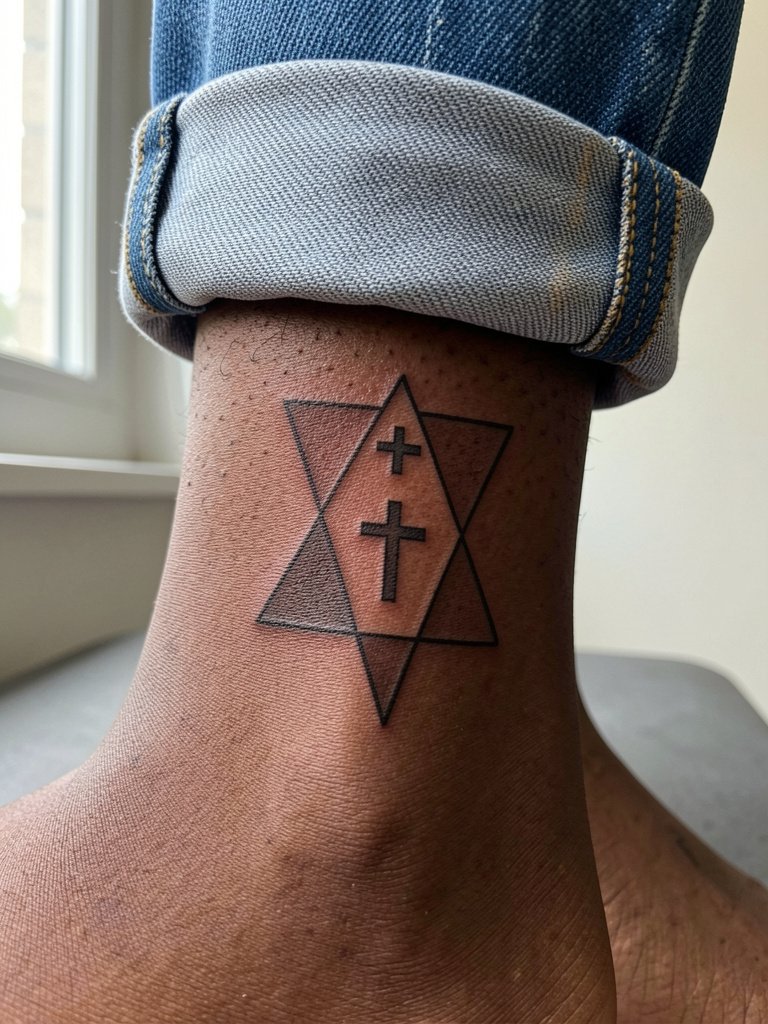
Ankle placements work well for geometric framing that separates three crosses into a deliberate composition. Because ankle skin and movement can blur tiny details, specify exact millimeter spacing for geometric elements and ask the artist to stencil while you stand so the design aligns with your natural posture. Sessions are brief, pain is moderate near bone, and touch-ups are common after a year. People often pick overly tiny geometry and then regret the loss of crispness. For footwear pairings try simple sandals that keep the ankle visible and choose a minimal leather ankle strap sandal to show the geometry cleanly.
10. Calvary Three with Laurel on Upper Chest
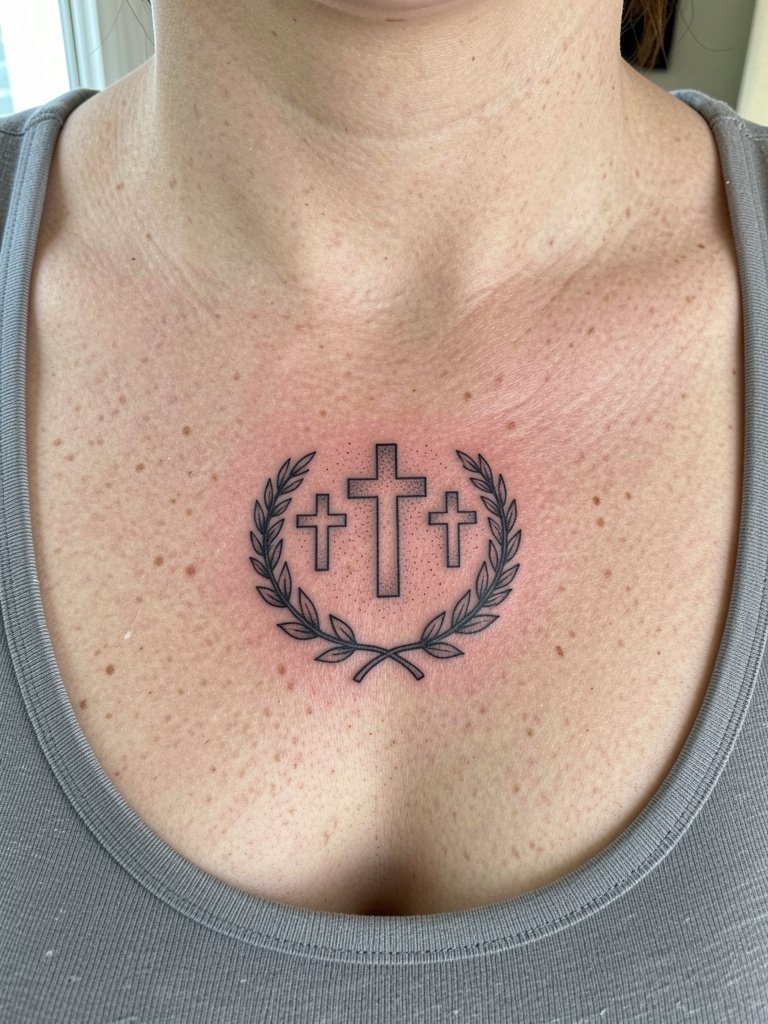
Upper-chest Calvary designs balance visibility and healing risk because the collarbone area is exposed to sun and friction from straps. For longevity request slightly bolder crossing bars and UV-safe aftercare advice from the studio. Expect a 60 to 90 minute session and moderate pain near bone. At six months the lines will look sharp, by two years sun exposure can bleach thin details, so planning for touch-ups after increased sun months is realistic. The common mistake is underestimating sun protection. For showing off, pick tops with scoop or boat necklines and try a scoop-neck tank that frames the chest piece.
11. Calvary Trio with Aged Scroll on Outer Bicep
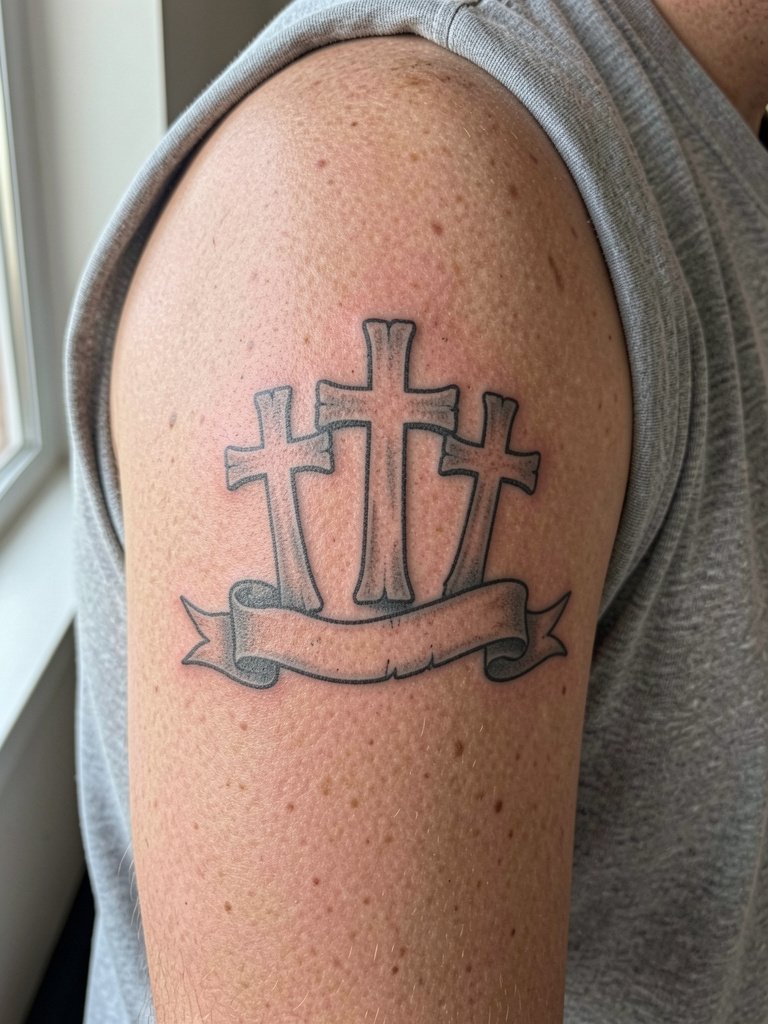
An outer-bicep composition with a small scroll gives room for a date or single word. Ask for a stencil showing the scroll curvature and how text reads when the arm moves. Sessions are 60 to 120 minutes depending on shading and the pain level is moderate. At six months the scroll edges are defined, at two years lightening can occur in shaded fills and a touch-up may be due. People often request tiny script in the scroll that becomes unreadable. For daytime wear pair with rolled sleeves or sleeveless layers and consider a casual sleeveless hoodie for streetwear looks.
12. Minimalist Negative Space Crosses on the Nape
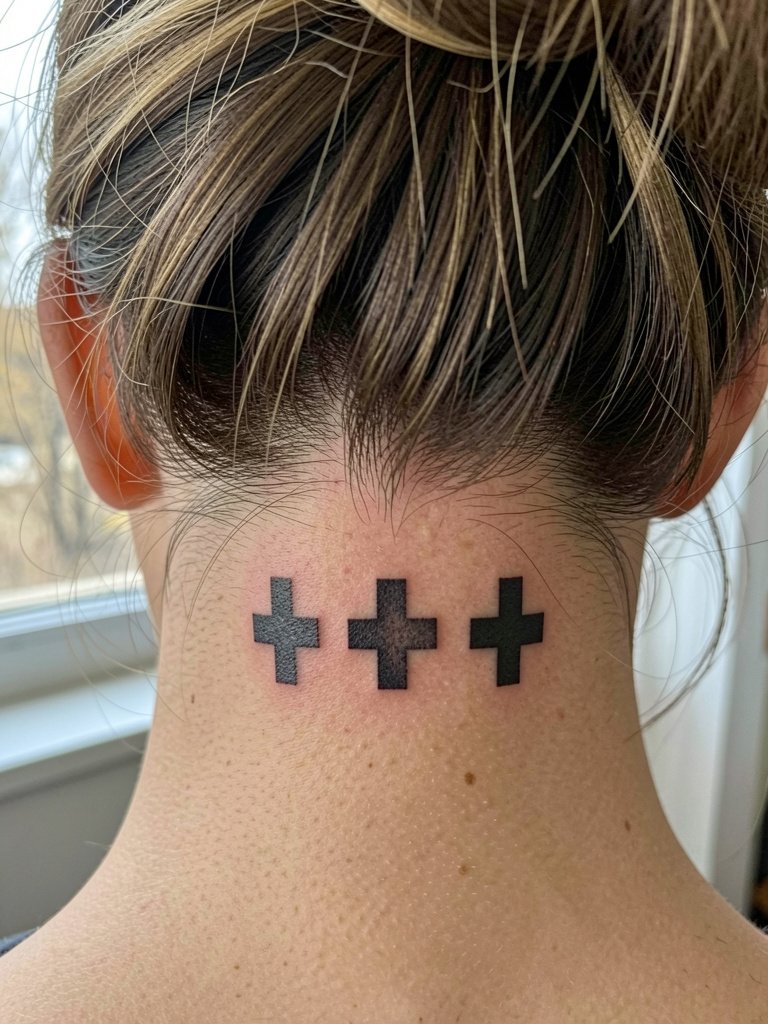
Nape pieces are private until you wear your hair up. Negative-space crosses can preserve skin highlights and lend clear separation between three marks. For this ask for stencils with hair down and hair up so you can see how visibility changes. Sessions are brief and pain is low to moderate. At six months the contrast is strong, at two years hairline blurring can occur if spacing is tight. The common error is expecting textural detail to hold in that small area. If you plan to show the nape, pick hairstyles that expose the spot occasionally rather than daily.
13. Calvary Trio on the Upper Thigh
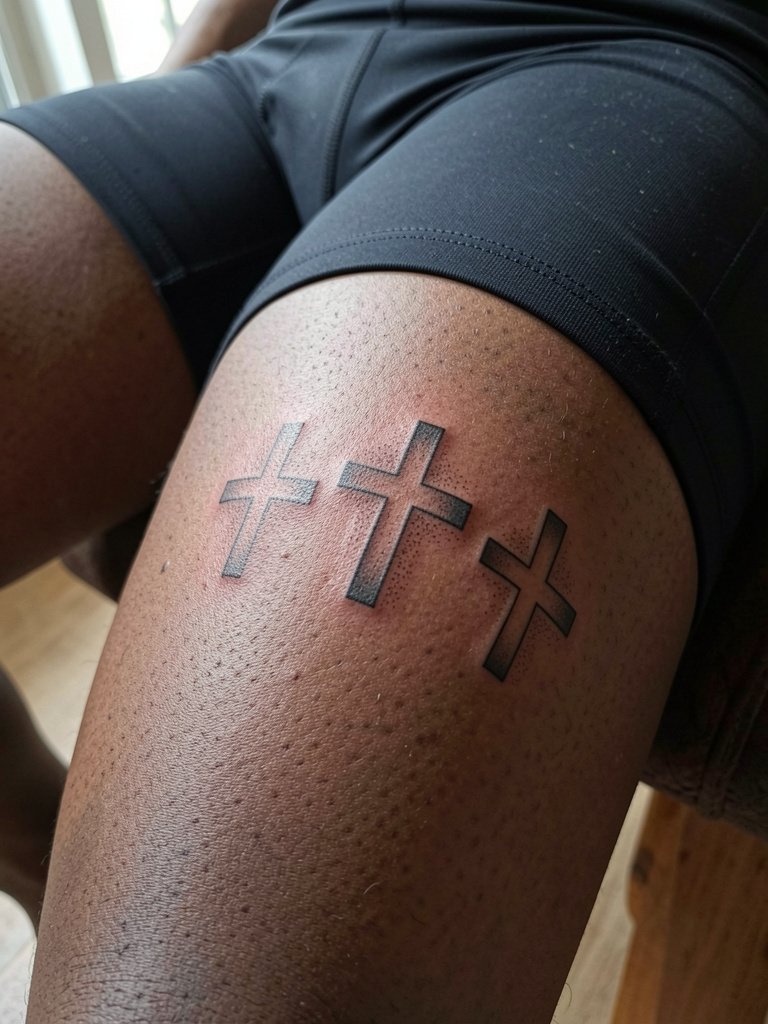
Inner-thigh pieces let you go larger without daily exposure. Because the thigh sees friction and occasional stretch, request designs with clear negative space between crosses and medium line weight that will tolerate movement. Sessions can be 60 to 120 minutes and pain is variable depending on proximity to muscle and nerve bundles. At six months detail looks stable, at two years minor softening can show if the area is frequently rubbed. People often pick extremely thin details that do not survive underwear friction. For the appointment wear loose shorts that you can slide down slightly without pulling fabric, and consider a pair of breathable bike shorts for comfort during healing.
14. Small Calvary Series Along the Collarbone
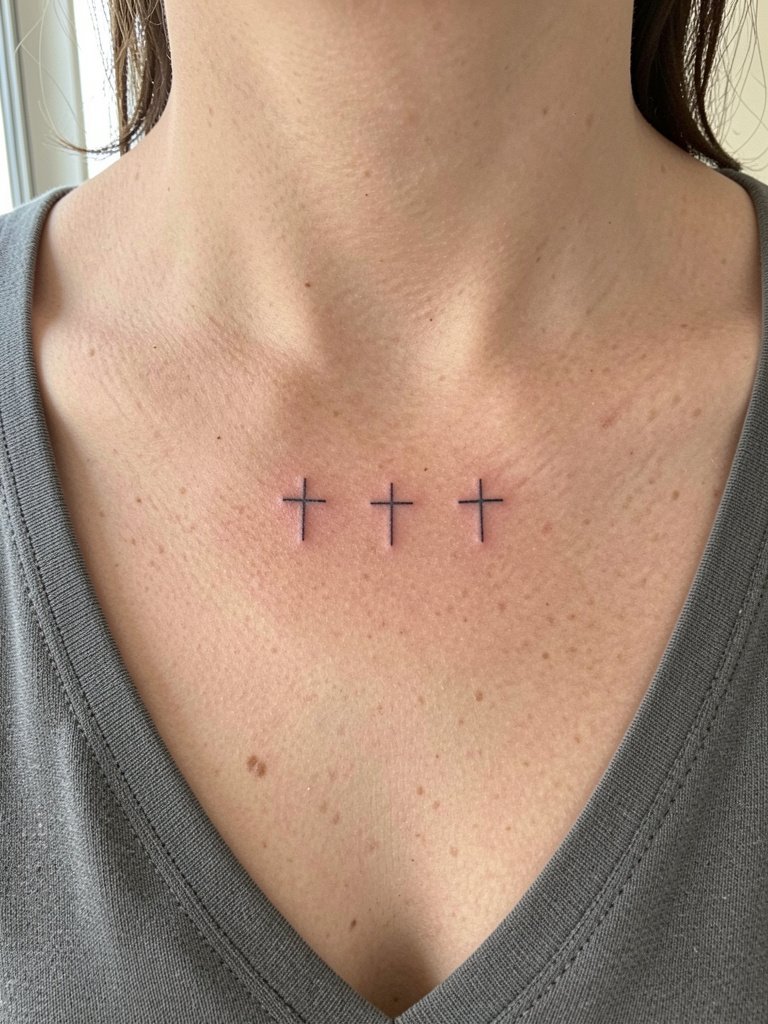
A collarbone alignment is subtle and reads as a horizontal motif. Ask for exact spacing in centimeters so the crosses do not crowds the natural bone ridge. Sessions are 30 to 60 minutes and pain is moderate near bone. At six months thin lines look crisp, at two years sun exposure and necklaces can create soft edges, and a touch-up after two to three years keeps the alignment clear. The mistake is requesting ultra-thin crossbars that fade under necklaces. For showing off choose scoop or V-necks, and try a delicate pendant necklace that sits below the ensemble.
15. Calvary Crosses with Stipple Shading on the Calf

Calf placements let you scale three crosses into a leg-friendly column with room for stipple depth. Ask for layered dotwork samples so you know how dense the stipple will be. Expect a 60 to 120 minute session and mild to moderate pain. At six months stipple reads like texture, at two years the dots diffuse slightly yet keep the perceived depth, and a touch-up at two to three years restores contrast. A frequent mistake is overpacking heavy solids next to delicate stipple which flattens the effect. For styling pair with mid-calf boots or sleeveless shorts and consider a pair of classic high-top sneakers to balance casual looks.
Frequently Asked Questions
Q: How do three small crosses age on different skin tones?
A: In my experience contrast and spacing matter more than skin tone alone. Lighter skin sometimes shows crisp single-needle work longer, medium tones benefit from slightly heavier single-needle or thin-line work, and darker tones read best with bold silhouettes or careful negative space. Bring healed portfolio photos from the shop showing examples on skin tones similar to yours so you and the artist can match expectations.
Q: Where can I find healed examples and portfolios without naming artists directly?
A: Search platform tags and keywords for healed work, such as hashtags and keywords on image and video platforms plus location filters to find studio portfolios nearby. Try searching for healed-ink tags and phrases, use location filters on short video apps, and browse gallery sections on shop websites for healed shots. Reddit tattoo threads and portfolio boards often surface slow-healed photos that show how the three-cross motif settles on different bodies.
Q: Should I be worried about cultural or religious sensitivity with Calvary imagery?
A: Calvary imagery has clear religious meaning for many people, so be explicit about intent during consultation. If your design references a specific cultural tradition or liturgical style, ask the artist about respectful treatments and avoid appropriation by researching the symbol and its significance beforehand.
Q: How often do small cross tattoos require touch-ups?
A: It depends on placement and initial line weight. Fingers and hands need touch-ups most often, commonly within one to two years. Inner wrist and collarbone often last two to three years before a touch-up, and larger bicep or calf work can go longer. Consider touch-up scheduling as routine maintenance rather than a failure.
Q: What should I wear to the appointment for ribs, sternum, or thigh placements?
A: For ribs or sternum, wear a convertible top or fitted sports bra that the artist can move without pulling at the fabric. For inner-thigh and hip work, wear loose shorts you can slide down a touch without exposing underwear. A simple option is a fitted sports bra or breathable shorts depending on which area you book.