
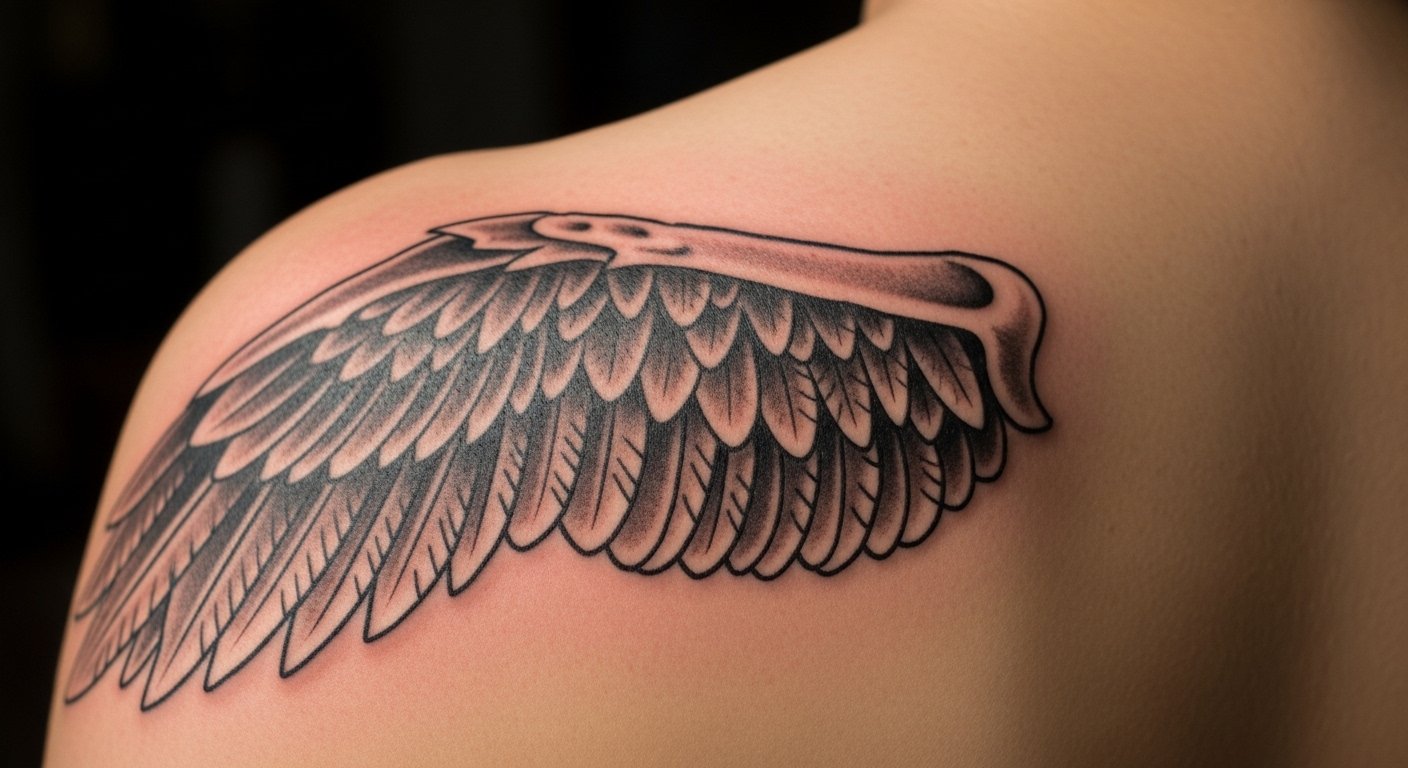
Someone I know spent months narrowing verses and still worried the ink would blur, the quote would be misquoted, or the placement would stretch with muscle gain. I have seen those exact frustrations in five shops across Brooklyn and in forum threads where people ask about readability on darker skin. Below are ten easy Bible verse tattoos that balance longevity, placement, and personal meaning, with what to ask your artist so the verse still reads well years from now.
1. Philippians 4:13 Forearm Banner
Someone I know first saw this on a forearm and liked how the banner read during workouts. Keep the script bold enough so the letters do not thin out with time, and ask your artist for slightly heavier linework than a typical fine line quote. Pain on the outer forearm is low to moderate and most sessions are 45 to 90 minutes. The mistake is going too small. At six months the ink should sit clean, at two years expect slight softening, and at five years plan a touch-up if you want crisp edges. Tell the artist you want readable spacing between words and consistent saturation to avoid early blurring.

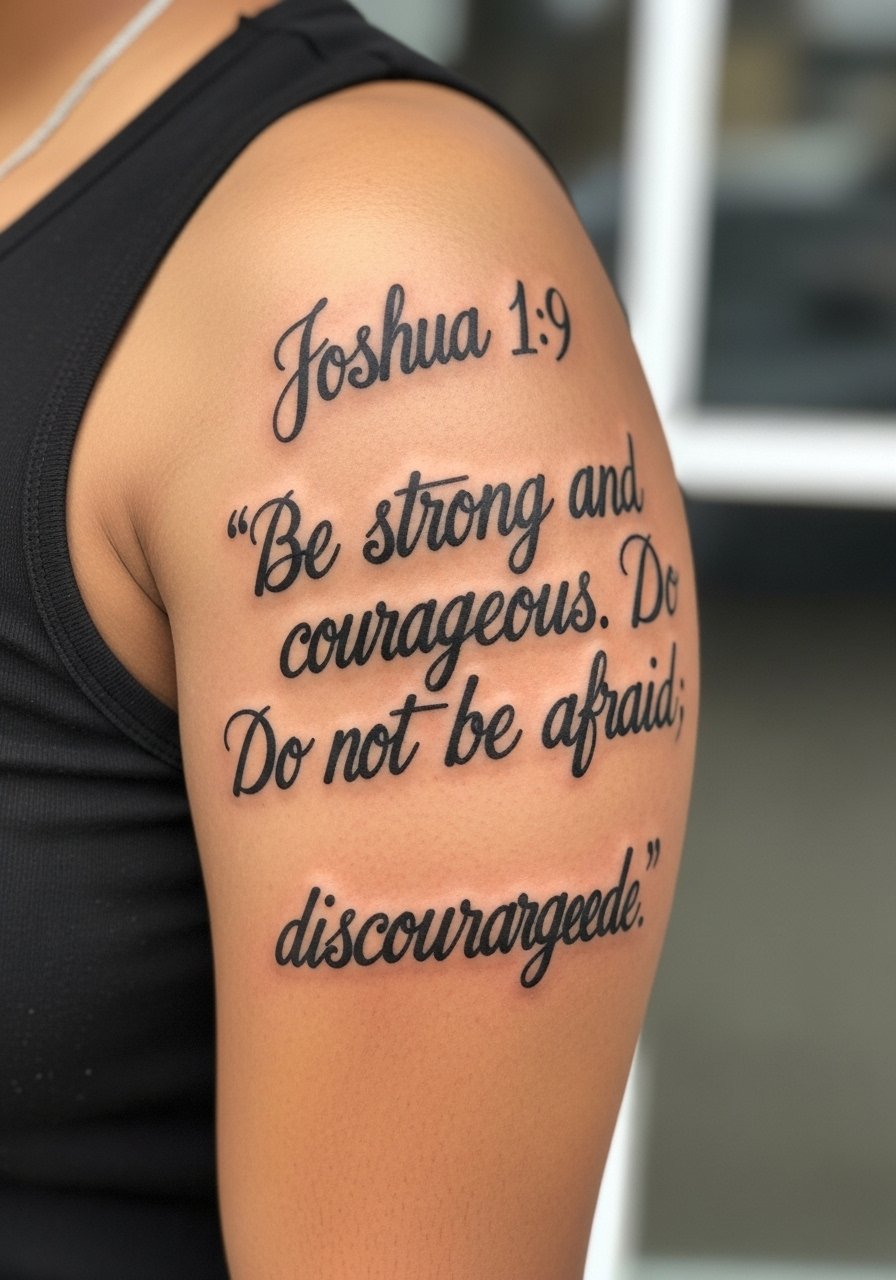
2. Joshua 1:9 Upper-Arm Sleeve Starter
Fair warning, upper-arm wrap builds into a sleeve and requires patience, but it is one of the easiest ways to pair text with armor motifs. Expect two to three sessions when you add illustrative elements like shields or subtle gray highlights. The pain is moderate and the placement ages well with muscle change. A common error is letting artists cram text into narrow bands. Instead, ask for blockier lettering and wider line spacing to maintain clarity. If you plan to extend into a sleeve, tell the artist where future motifs will sit so the verse becomes a visual anchor rather than an afterthought.
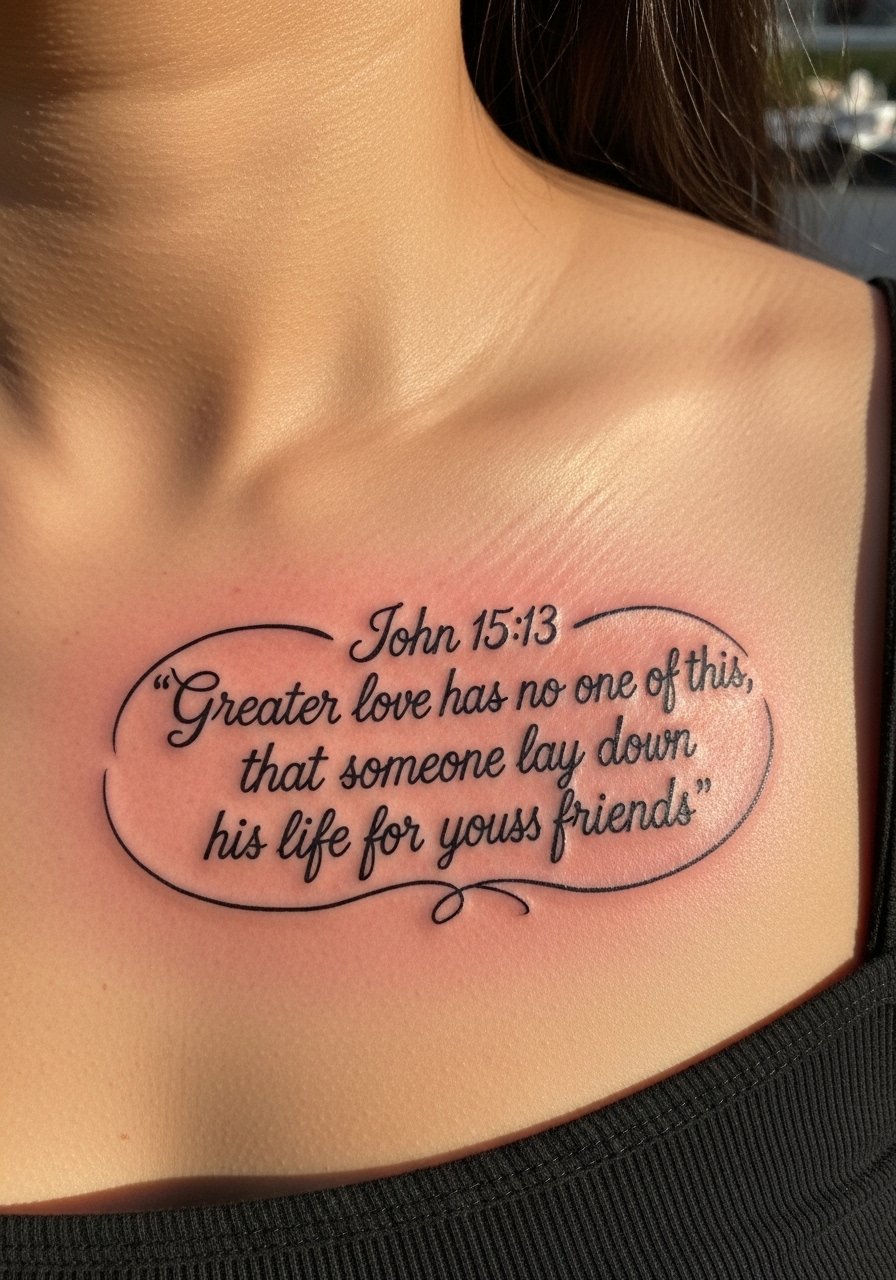
3. John 15:13 Curved Chest Arc
Most chest arcs read beautifully when they follow the pectoral curve, but remember chest skin stretches with chest workouts and weight shifts. For that reason choose slightly larger letterforms and blackwork script rather than ultra-fine lines. Session time is often one visit under two hours. Pain ranges from moderate to high across the sternum. A frequent mistake is placing the arc too low where the pectoral crease distorts letters. Tell the artist you want the arc to sit above the nipple line and ask to mock up the arc while standing so you see how it looks in motion.
4. Psalm 27:1 Vertical Rib Quote
Fair warning, the ribcage rates high on pain, but vertical script here is discreet and ages cleaner than chest arcs. The rib placement usually takes one session of about 60 to 90 minutes. Choose bold fine line spacing and avoid hairline curls that sink into flesh. One mistake is picking extremely tight serif fonts that blur after a year. At six months the quote sits tight, at two years thin strokes can soften. Expect a touch-up around year two to three if you want the original contrast restored.

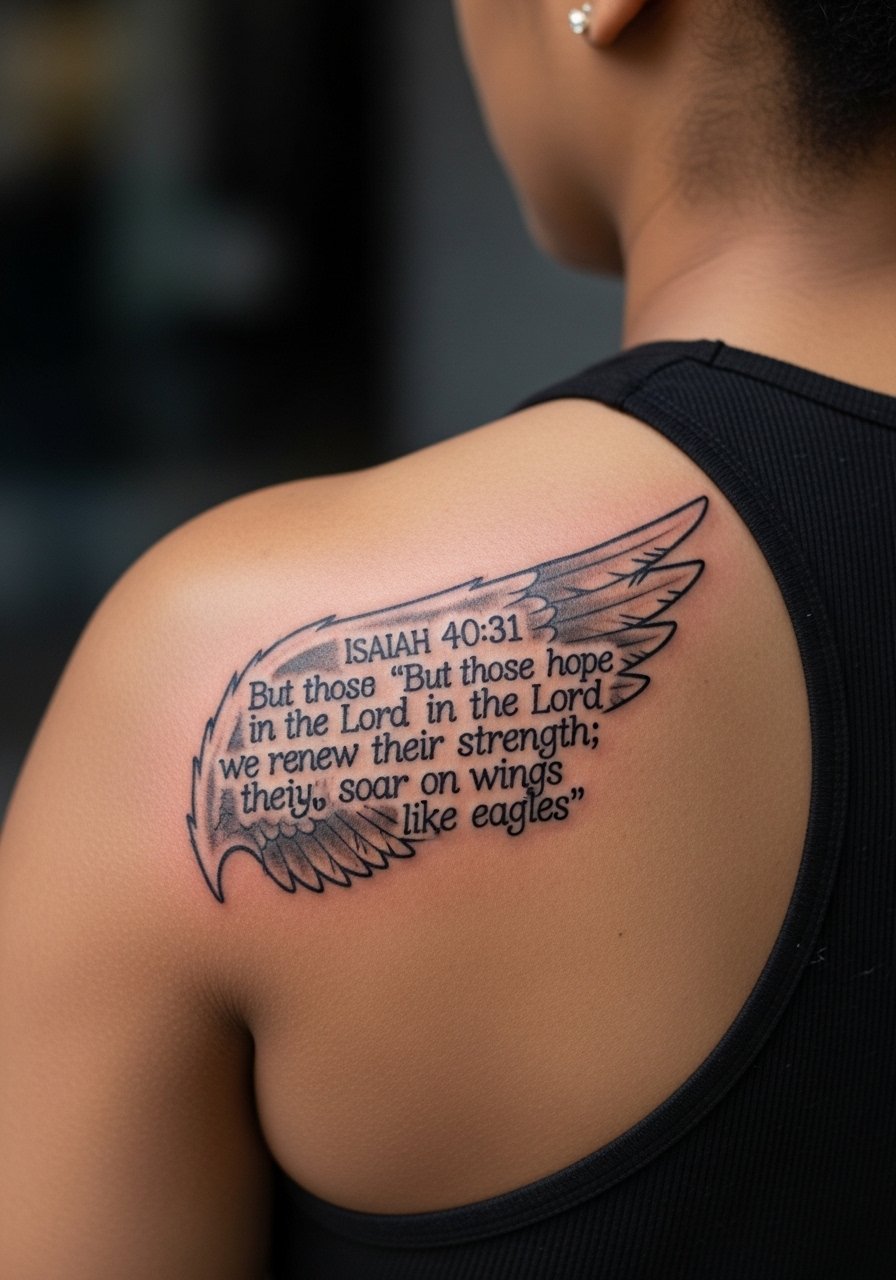
5. Isaiah 40:31 Eagle Wing Integration on Shoulder Blade
There is a visual payoff when text nests into an illustrated wing. Session count is usually two visits when you add feather shading. Pain is moderate on the shoulder blade and healing tends to be steady because the area moves less than the chest. A common error is letting the script compete with heavy feather detail. Tell your artist to keep the verse in a clean, contrasting script and to use stipple shading on the wing so saturation stays balanced. Six months in the image and text read together, and at two years the contrast softens unless the black saturation is strong from the start.
6. John 1:16 Grace Ribbon Around the Wrist
When you sit down with your artist for a wrist wrap, bring ribbon reference photos that show how text bends with the band. The inner wrist is sensitive, so expect a 30 to 60 minute session and a sharp sting near bone. This minimalist script looks best when letters are spaced to avoid smudging into the wrist crease. People often make it too thin. Ask for slightly heavier strokes and clear end points on each word so the phrase ages decently. If your job is hands-on, discuss visibility and career considerations before committing to wrist placement.

7. Leviticus 19:28 as an Irony Sleeve Comment
Artists split on this choice into two camps. One camp sees Leviticus 19:28 as a historical text that forbids tattoos and sees using it as ironic commentary. The other camp views it as a serious warning and thinks including the verse is provokative. If you choose it as meta-commentary, make the layout obvious so the irony reads at first glance. Expect three to four sessions for a full forearm sleeve with red accents. A misstep is using tiny script that looks like a fine print apology. Decide whether you want the verse front and center or integrated with imagery that signals reflection rather than mockery.

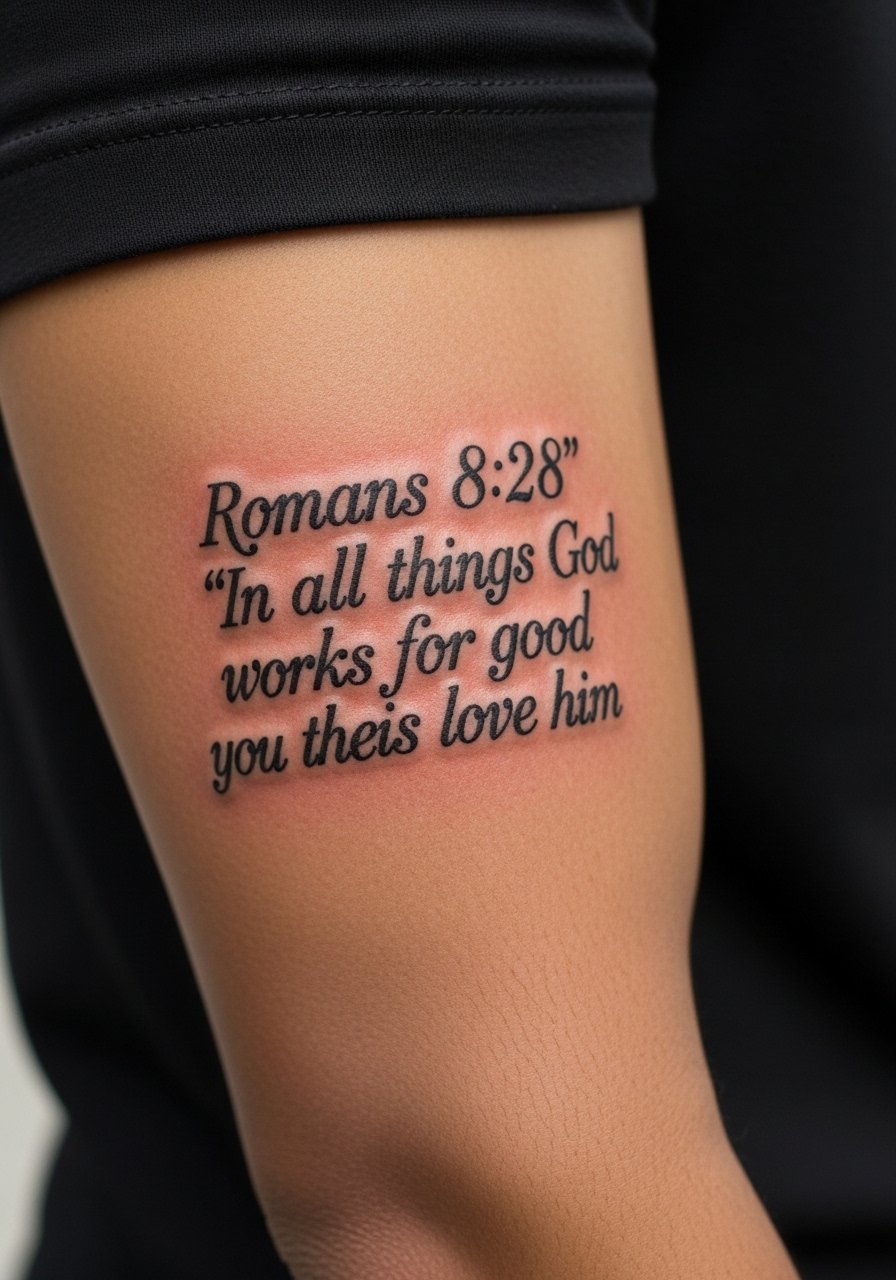
8. Romans 8:28 Inner Bicep Short Quote
A personal observation is that inner bicep quotes sit like private notes you flex into view. The pain is moderate and the area heals reliably if you avoid heavy friction during recovery. Pick a midweight script so the letters do not thicken or blur after healing. The common mistake is squeezing a long verse into a short band. Tell your artist the exact phrase you want and ask for a mockup at the same arm size to check spacing. Plan a touch-up between year two and three if you want to keep edges crisp.
9. Proverbs 3:5 Collarbone Micro Line
Fair warning, collarbone edges are bony and sting, but a short verse across the collarbone reads cleanly if the script is spaced and slightly bold. Sessions are typically 30 to 60 minutes. A frequent error is picking a delicate script that fans out on thin skin. Ask your artist for steady linework and to place the text where movement from shoulder rolls will not warp letters. For visual balance, pair the short text with a small dot work accent rather than heavy imagery so the piece stays readable as it heals.

10. Matthew 11:28 Ankle Wrap for a Quiet Reminder
The ankle is a sensitive spot and moves a lot with shoes and socks during healing, so plan a session of 45 to 75 minutes and extra aftercare. The ankle's skin can cause fine lines to blur if the script is too thin, so choose a compact, slightly bold script. A common mistake is placing text too low where footwear rubs it. Tell the artist you want the top of the foot avoided and ask for a protective aftercare plan. Expect touch-ups sooner for ankle work than for forearm pieces.

Tattoo Prep and Aftercare Essentials
If this is your first verse tattoo or your fifth, planning and the right gear matter. I recommend simple prep steps like moisturizing in the week before your appointment and wearing clothing that gives the artist access. Aftercare falls into three phases. The first 48 hours are about protection and light cleansing. The next two weeks are about keeping the area clean, lightly moisturized, and out of heavy friction. After the first month focus on sun protection and long-term maintenance. Below are items that cover those needs and keep healing predictable.
Medical-grade second skin bandage (6-inch roll) for covering fresh work. Use for first 24 to 48 hours if your artist recommends an occlusive dressing. It reduces scabbing and keeps ink in place while you sleep.
Fragrance-free gentle foaming cleanser for tattoos. Clean twice daily with lukewarm water. Gentle foams rinse residue without stripping saturation.
Lightweight fragrance-free healing balm. Apply in a thin layer after cleansing. Use small amounts so the skin can breathe.
Breathable tattoo-specific gauze pads. For blotting excess fluids in the first two days. Avoid rubbing.
Silicone scar and retention sheet for touch-up areas. Helpful months later when small raised spots form, used under artist guidance.
Sun-protective clothing and a lightweight UV sleeve. Sun exposure is the biggest factor in long-term fading, from what I've gathered from artist conversations.
Saniderm single-use transparent bandage sheets. This is a common occlusive option. Use only if your artist recommends it and follow their timing for removal.
Long-term fragrance-free moisturizing lotion for daily upkeep. After initial healing, keep the skin hydrated to maintain saturation and skin health.
Every tattoo is different. Always follow your artist's specific aftercare instructions. Consult a dermatologist if you have skin concerns or unusual healing issues.
Frequently Asked Questions
Q: Will fine line script on ribs blur faster than bold script on the forearm?
A: In my experience fine line on ribs softens quicker because the skin stretches more and the lines are closer together. Bold script on the forearm usually holds contrast longer. If you love fine line, ask for slightly heavier line weight and wider letter spacing so the text keeps definition.
Q: How should I tell an artist I want a verse integrated with imagery without losing readability?
A: Bring images that show the exact balance you want and mark which part should remain clear text. Say something like, "Keep the verse at 60 percent contrast to the image and use stipple for shading so the script stays legible." That specific phrasing helps the artist understand your priority.
Q: Do ankle and wrist verses need different aftercare than chest or forearm pieces?
A: Yes. High-friction spots like ankles and wrists need extra attention to avoid rubbing from socks and sleeves. Use protective dressing in the first 48 hours and avoid tight clothing that chafes. Check the area daily for signs of excessive scabbing or irritation.
Q: Can I include Leviticus 19:28 as a thoughtful commentary or will people misinterpret it?
A: People are split on that verse. Some view it as ironic commentary and others see it as a sincere admonition. If you pick it, make your intention clear in the design so viewers can read context clues. Expect varied reactions and plan placement accordingly.
Q: When should I plan a touch-up for a verse tattoo on the forearm versus the ribs?
A: From what I've seen, forearm text often needs a touch-up later than rib text. Expect a possible touch-up around year two to three on ribs and around year three to five on forearms, depending on sun exposure and original saturation. Your artist will give the best timeline after your piece heals.