

Someone I know spent months scrolling tattoo galleries before realizing the problem was not finding pretty photos. It was knowing which small design would actually read well behind the ear, handle machine vibration, and still look crisp after a few years. I visited five shops across Brooklyn and talked to artists who specialize in fine line work, and these behind ear tattoo ideas keep coming up as reliable choices for women who want discreet, wearable ink.
1. Tiny floral spring with leaves behind the ear
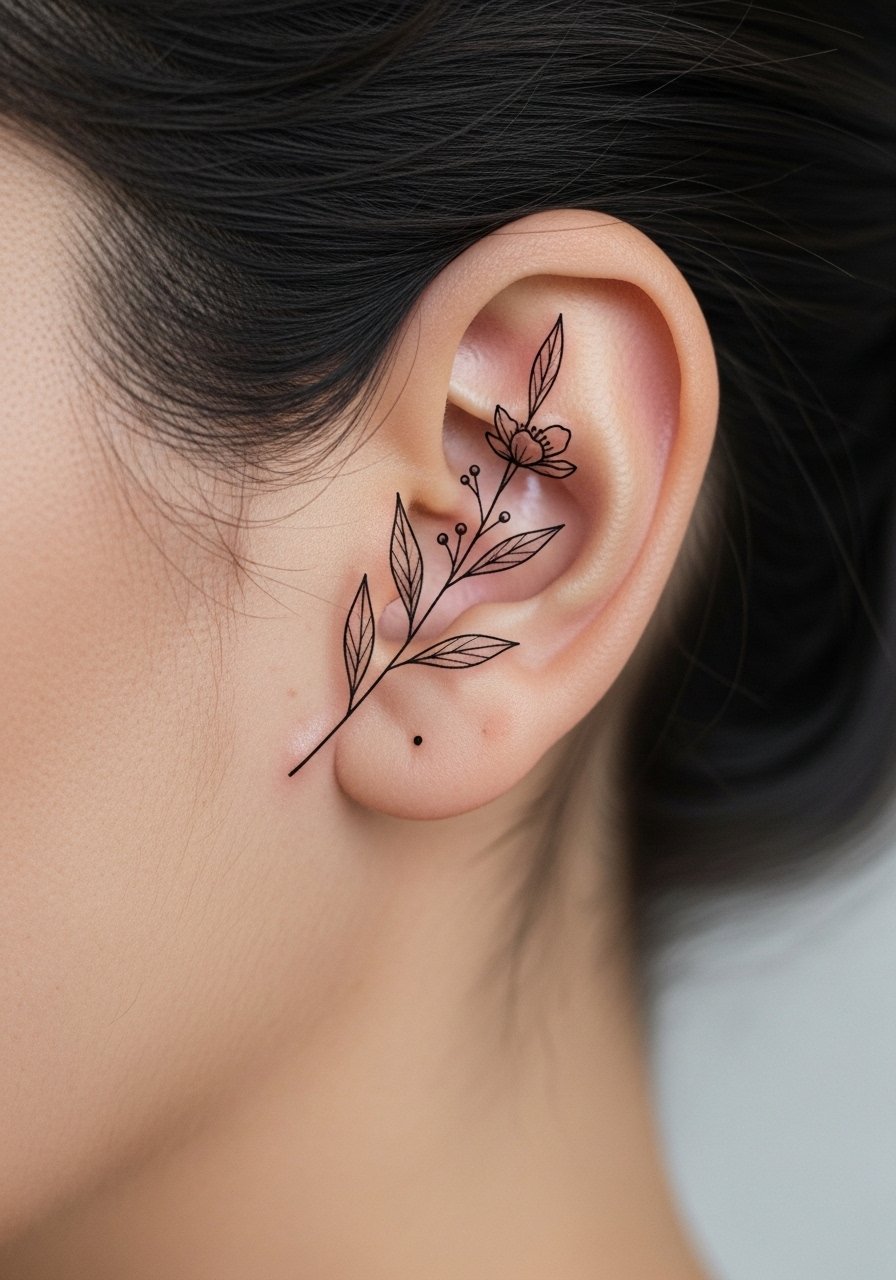
Someone I know picked a tiny floral spring for a first behind ear tattoo because it reads like jewelry when hair is up. Tell your artist you want thin linework with open spacing between leaves so the petals do not blur together. The common mistake is asking for too many tiny veins inside leaves. That creates muddy saturation at year two. Expect a 20 to 40 minute session and a pain level that is lower than the jawline but higher than the upper arm. Blowout risk is moderate if lines are packed too close. I recommend touch-ups around year two to refresh linework rather than overworking the area at the first session. If you want the design to extend down the neck, mention that at consultation so the artist can plan flow and spacing.
2. Mini butterfly outline perched near the hairline
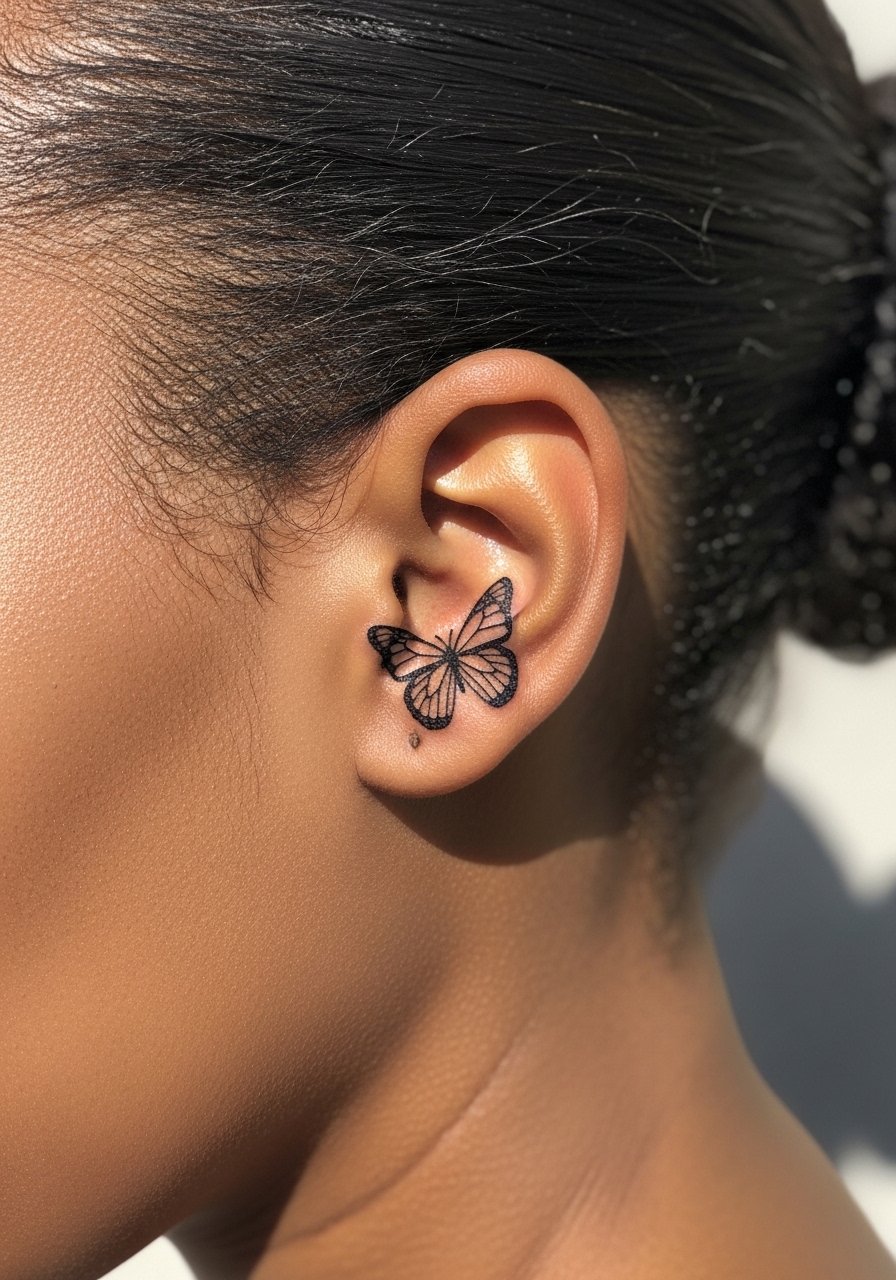
Fair warning: the thin skin under the hairline picks up vibration from the machine more than some people expect, and that can feel more uncomfortable than the needle itself. Choose a simple outline with a single continuous contour rather than lots of interior detail. During the consult, ask the artist to map the wings to the curve of your ear so the silhouette reads at a glance. The biggest mistake is requesting intricate shading inside a 1.5 centimeter butterfly. That detail often fades into a gray patch within a couple of years. This piece usually takes one short session. Expect a touch-up at two to three years if you want the wings to stay sharp.
3. Shooting star cluster that tails toward the nape
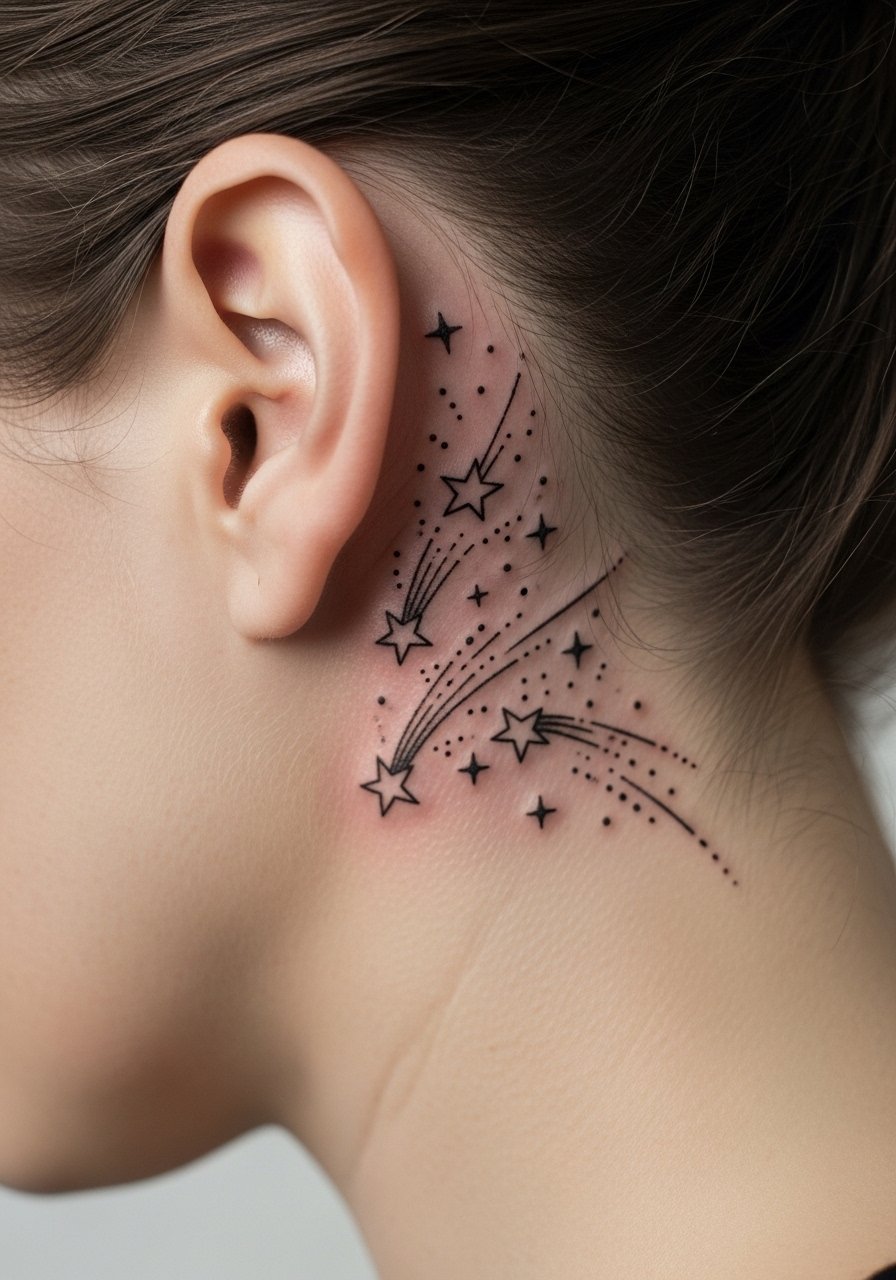
There is a version of this idea that I rarely see done well. Stars with long tails can create graceful motion when the tails are spaced and sized deliberately. Tell your artist you want a mix of filled and dot work stars and a couple of offset tails for a shooting effect rather than a straight line of identical dots. At six months the dots should still read crisp, and at five years the filled stars will retain silhouette while dot work softens slightly. Common mistakes include making tails too tight or parallel. That can read like a faded stripe later. This piece works well across hair lengths because you can control visibility by letting hair fall over the area.
4. Small lavender sprig tucked behind the ear lobule
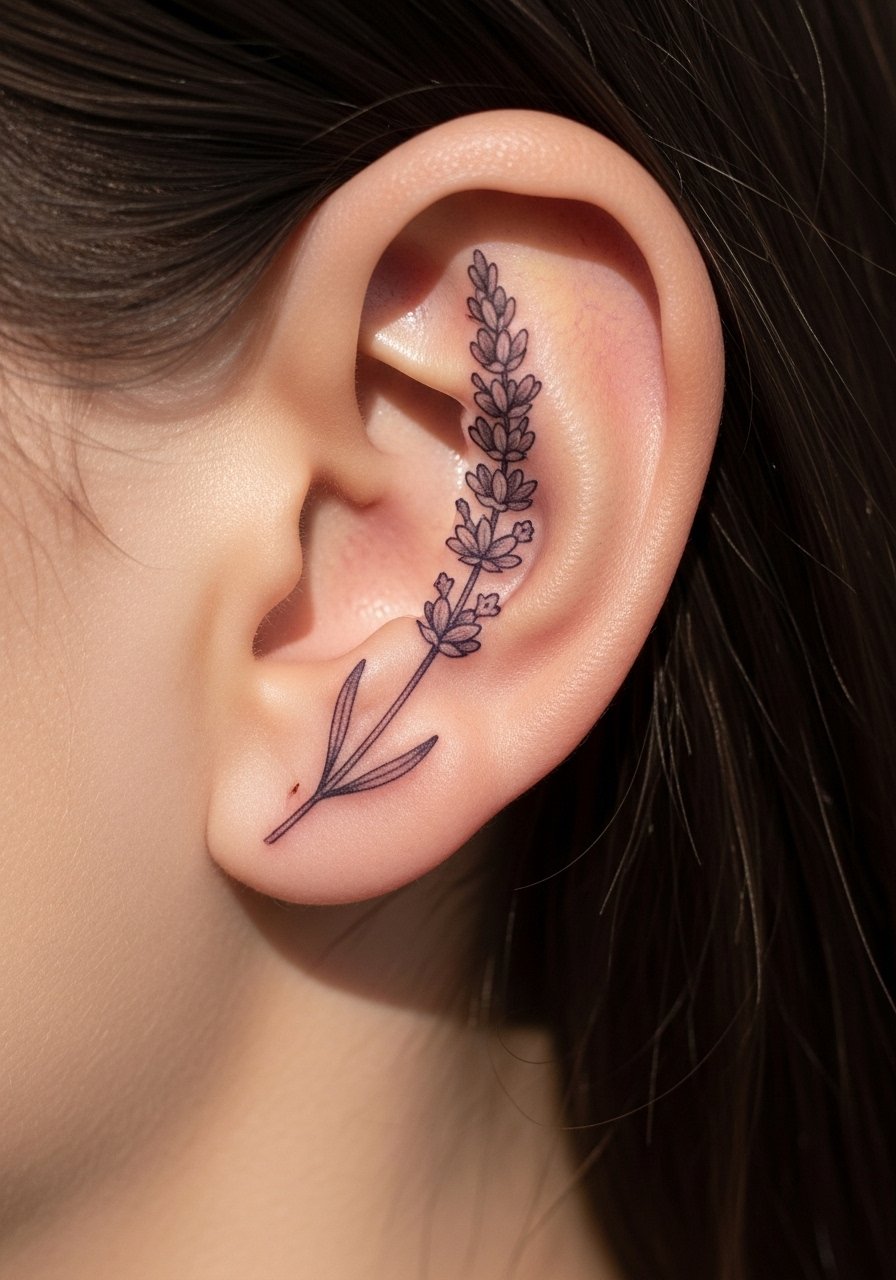
Most watercolor or muted color miniatures from a few years ago struggled to hold saturation. This adaptation uses muted purple-gray rather than bright pigment so the sprig ages with less obvious fading. Tell your artist to use washed color sparingly and to keep the stems as thin single strokes. The session is quick, often 20 to 30 minutes, and the pain is tolerable though you may notice vibration near bone. A real mistake is asking for heavy color fill in a one centimeter sprig. That invites patchy fading and uneven saturation later. Plan a light touch-up at year two if you want the lavender to stay visible.
5. Mini bird in flight just above the ear
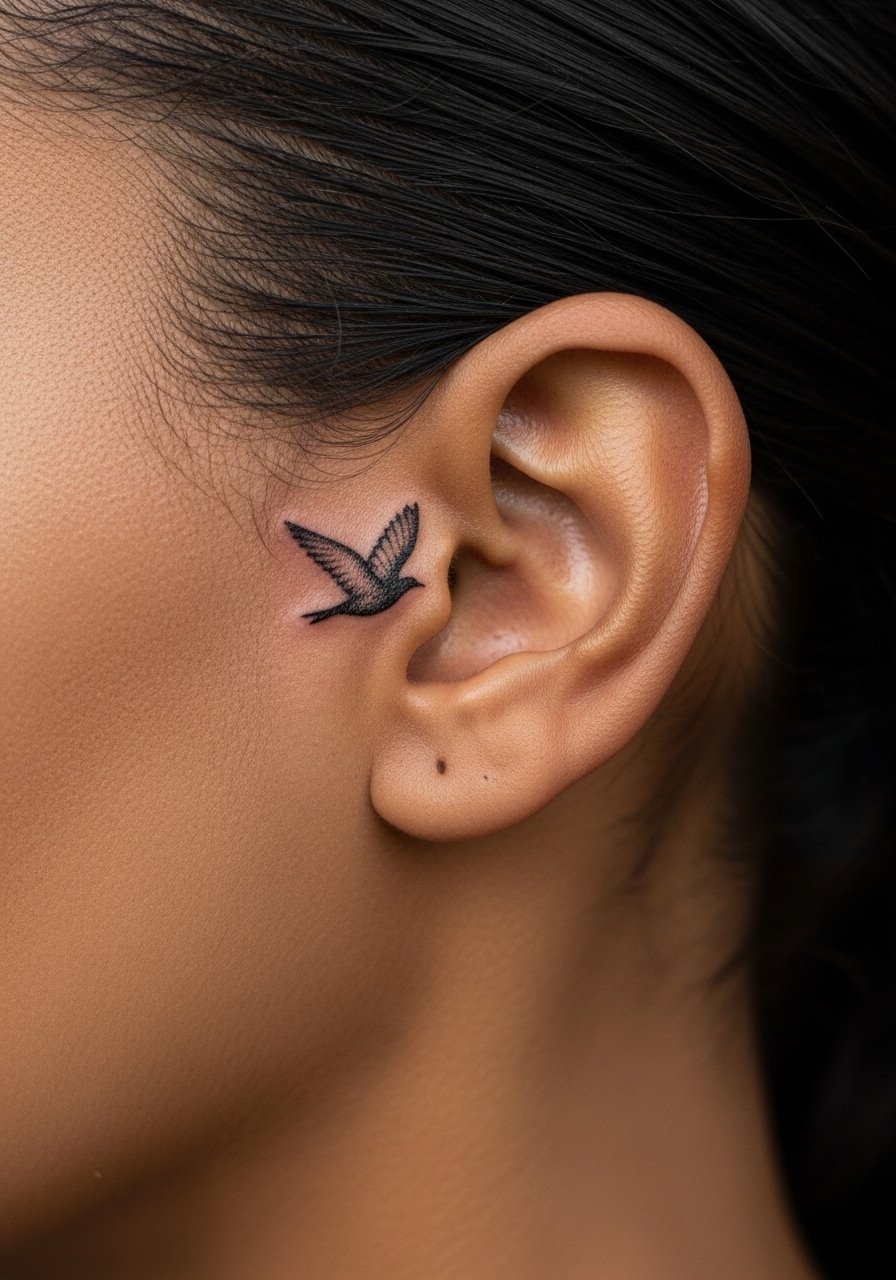
When you want a symbol of optimism that reads from a short distance, a simplified bird silhouette is a solid choice. In consultation, specify wing angle and be clear that you want the bird to read as a silhouette rather than a sketchy bird with many feathers. The session is short. Pain is noticeable near the mastoid but not extreme. A common error is requesting too much interior feather detail in a 2 centimeter design. That detail fills in and loses definition. For family symbolism, consider a small trio instead of one larger bird to keep scale appropriate. Expect a touch-up window at two to three years if you want crisp edges.
6. Delicate word script like "Breathe" along the ear curve
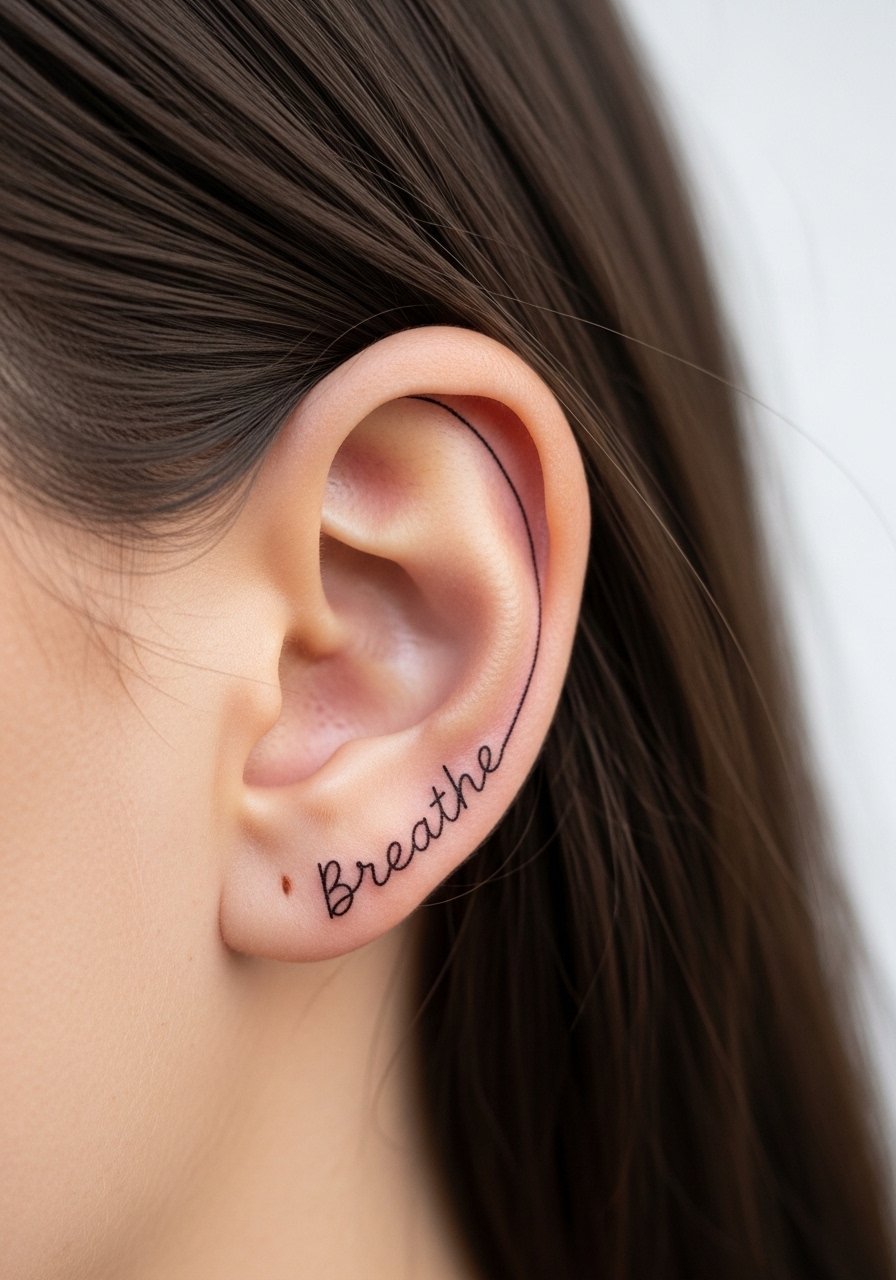
Fine line script behind the ear splits artists into two camps. One group says letters this thin will blur over time because the skin there moves and the lines can fade into gray. The other group says with the right needle depth and spacing script can stay legible for years. Ask your artist specifically how they handle small script in high-movement areas, and show a reference with the exact font size you want. A common mistake is choosing a font with hairline serifs or flourishes that need more room than the area provides. Expect a quick session and plan for a touch-up at year two if you want to keep lettering sharp. If your hairstyle hides the area most days, script works well as a hidden mantra.
7. Baby's breath cluster near the earlobe crease
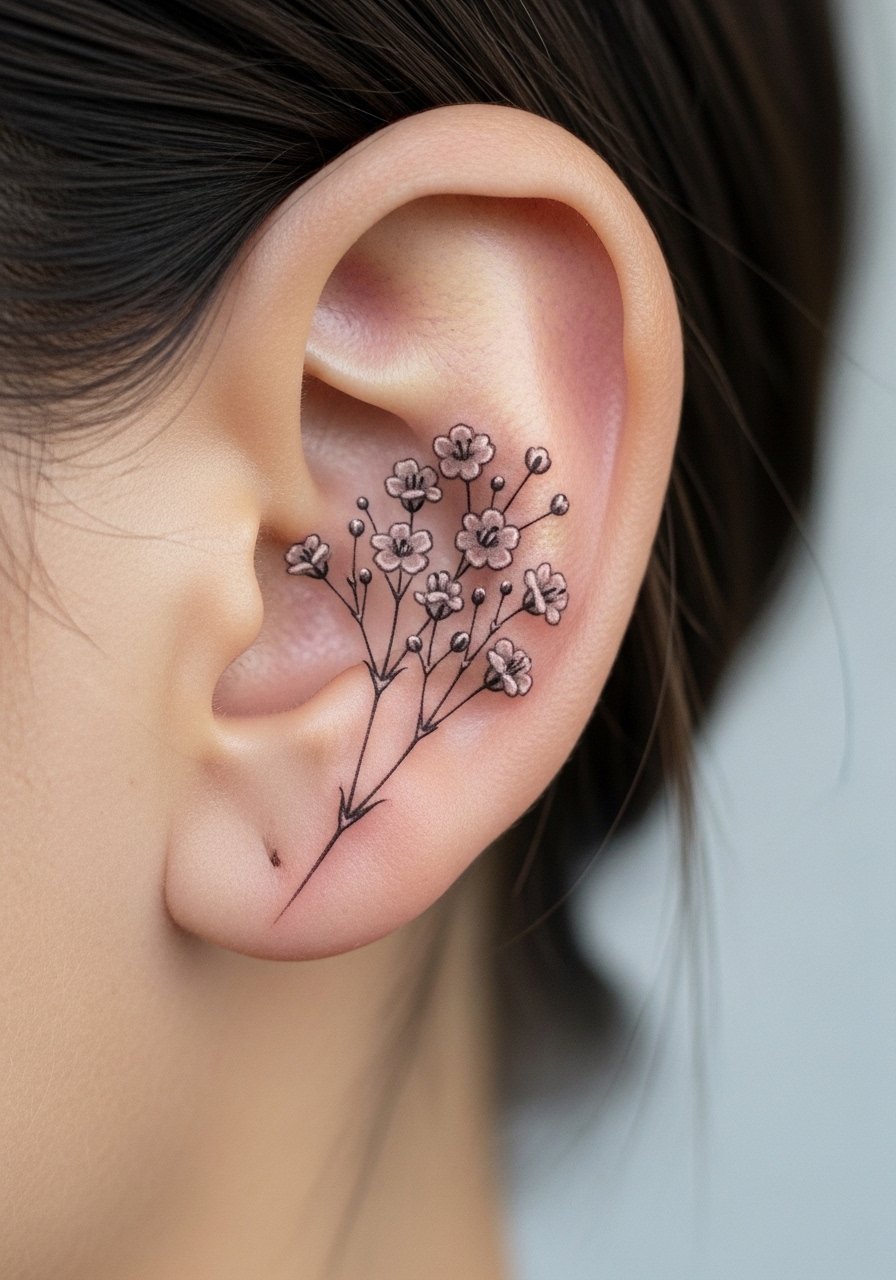
When someone I know wanted an airy floral that would not dominate, baby’s breath was the answer. Ask for tiny open dots with sparse stems rather than packed flowers. That spacing helps avoid saturation and blowout. The session usually runs under 30 minutes and the pain is mild to moderate. A typical mistake is asking for too many tiny blossoms in a 1.5 centimeter area. That compresses linework and creates a gray mass over time. For a healed look at two years, the cluster should still show separation between blooms. Consider a light gray wash to add depth without heavy pigment.
8. Minimal rose stem running vertically behind the ear
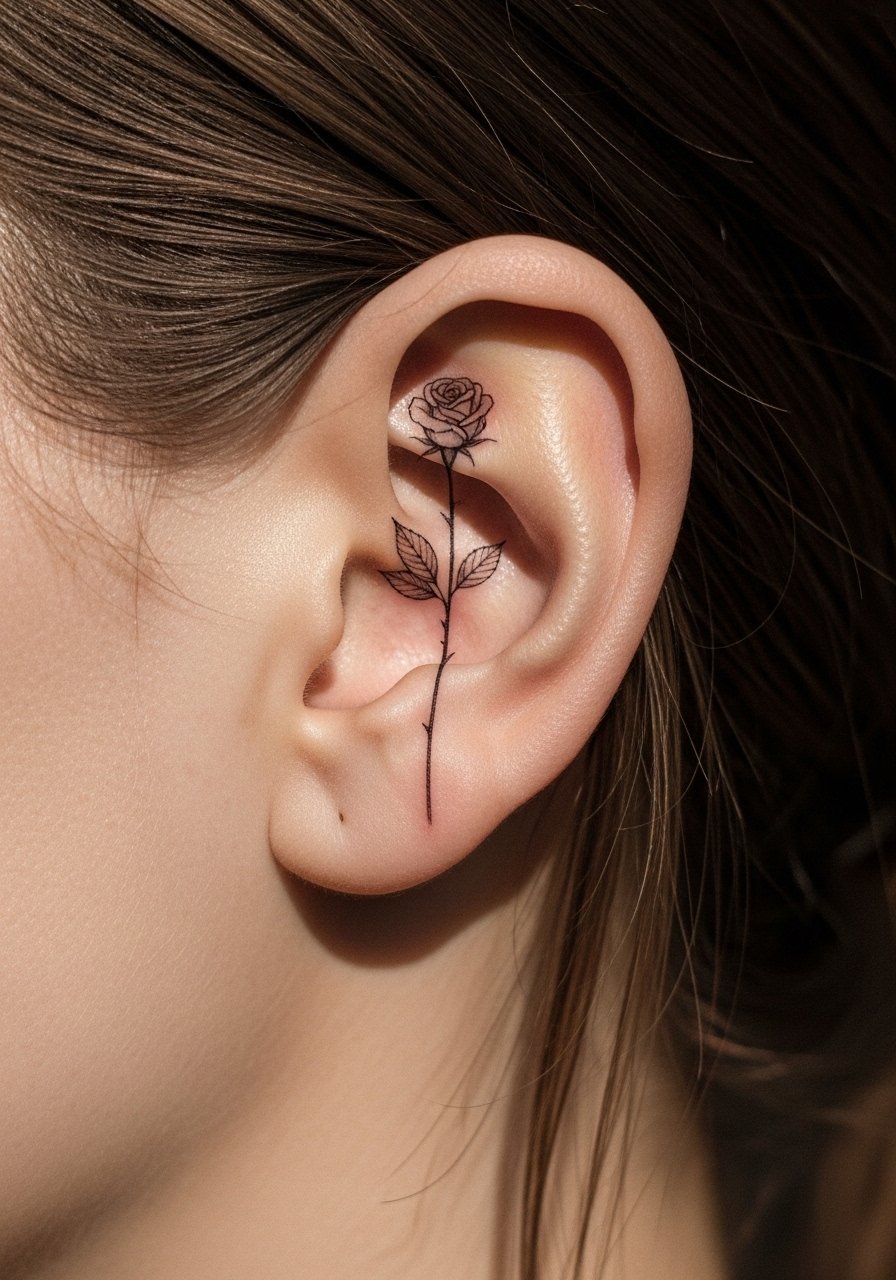
There is a visual impact to a vertical stem that follows the ear’s natural curve. When you consult, ask the artist to draw the stem to match your ear contour so the bloom sits where your hair parts. The biggest mistake is requesting a full shaded rose in a very small space. That approach often needs touch-ups sooner and can age into patchy tones. Pain is moderate around the base where the skin is thinner. Expect a session under an hour. This design translates well if you later extend into the neck because the stem already establishes flow.
9. Ornamental crescent moon centered behind the ear
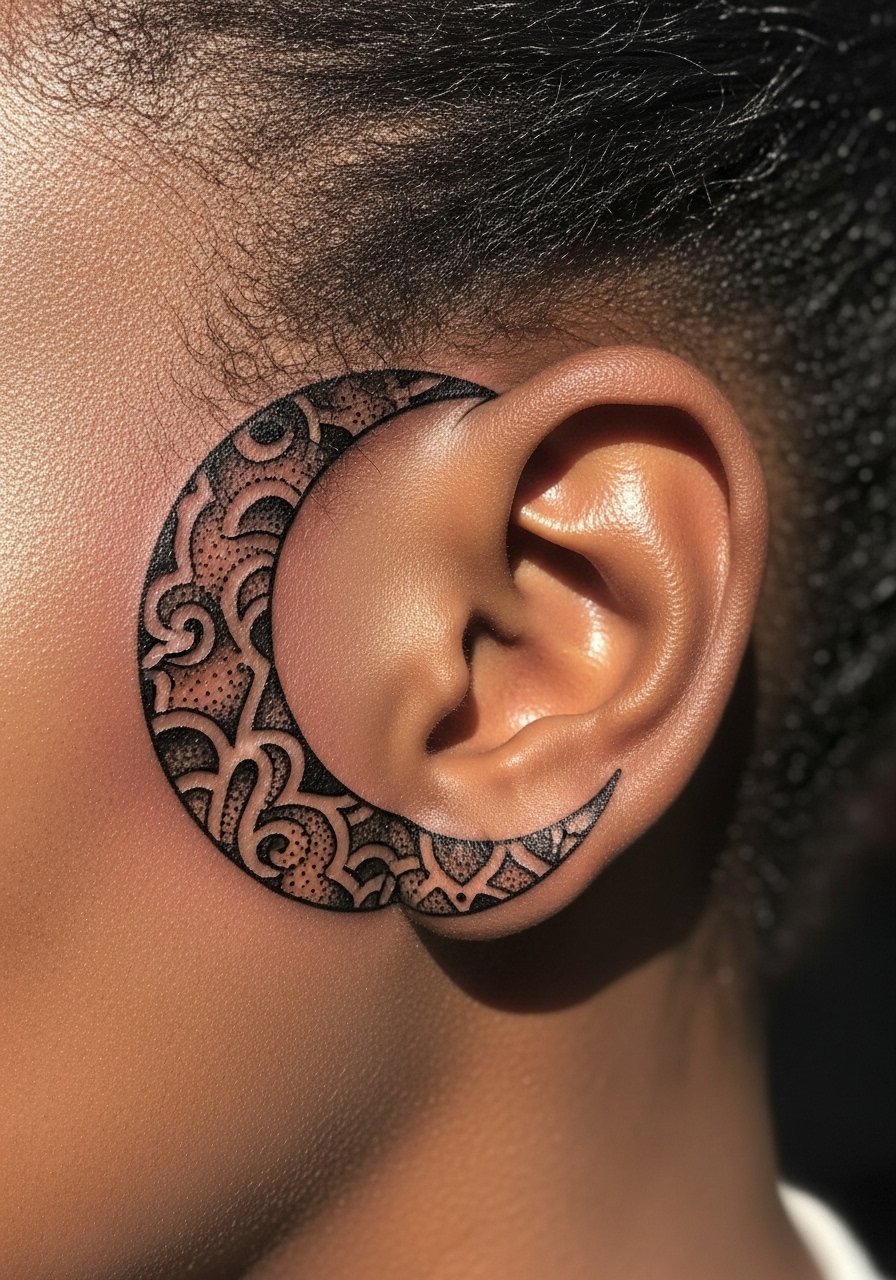
A crescent moon offers elegant symbolism with strong graphic read. When you talk to the artist, specify whether you want pure blackwork or stipple shading inside the curve. Stipple gives a softer fade over time while solid black retains a bolder silhouette. The common mistake is overloading the crescent with tiny ornamental filigree in a very small area. That filigree blurs faster than simple contours. Session time is short and pain is manageable. If you want a design that stays visible for years, lean on negative space inside the moon. If the ornamental pattern borrows motifs from a cultural tradition, note its origin and ask about respectful adaptation.
10. Flying bird trio to symbolize family ties
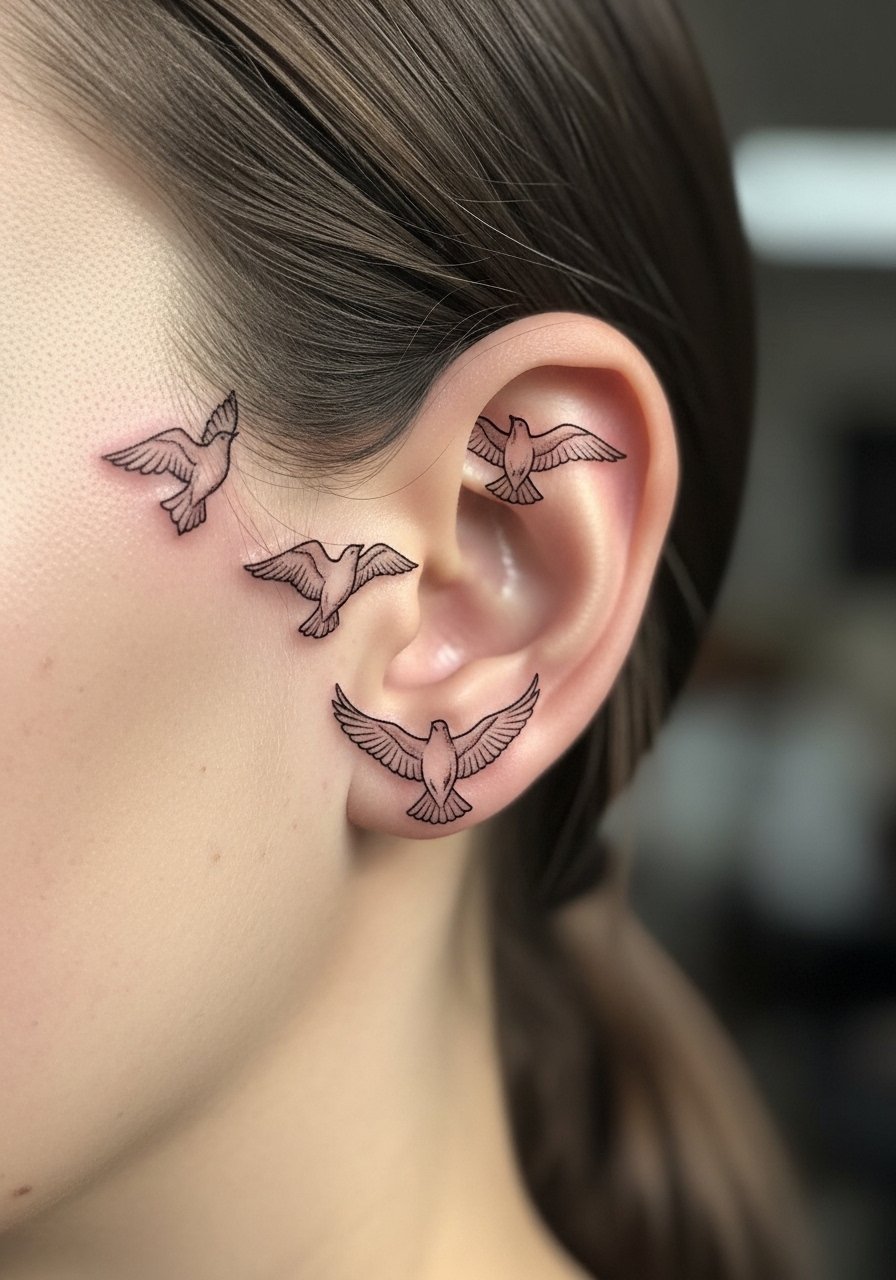
Some people pick three birds to represent family members or stages of life. Tell your artist the order and spacing you want, because numeric symbolism depends on placement. A typical mistake is placing the birds too close together, which causes overlapping shadows when healed. At six months you should see three distinct silhouettes. At five years, expect the smallest bird to soften first. Session time is short and pain mirrors other behind ear placements. If you want stronger symbolism, discuss size scaling for the central bird so the trio still reads when viewed from a short distance.
Tattoo Prep and Aftercare Essentials
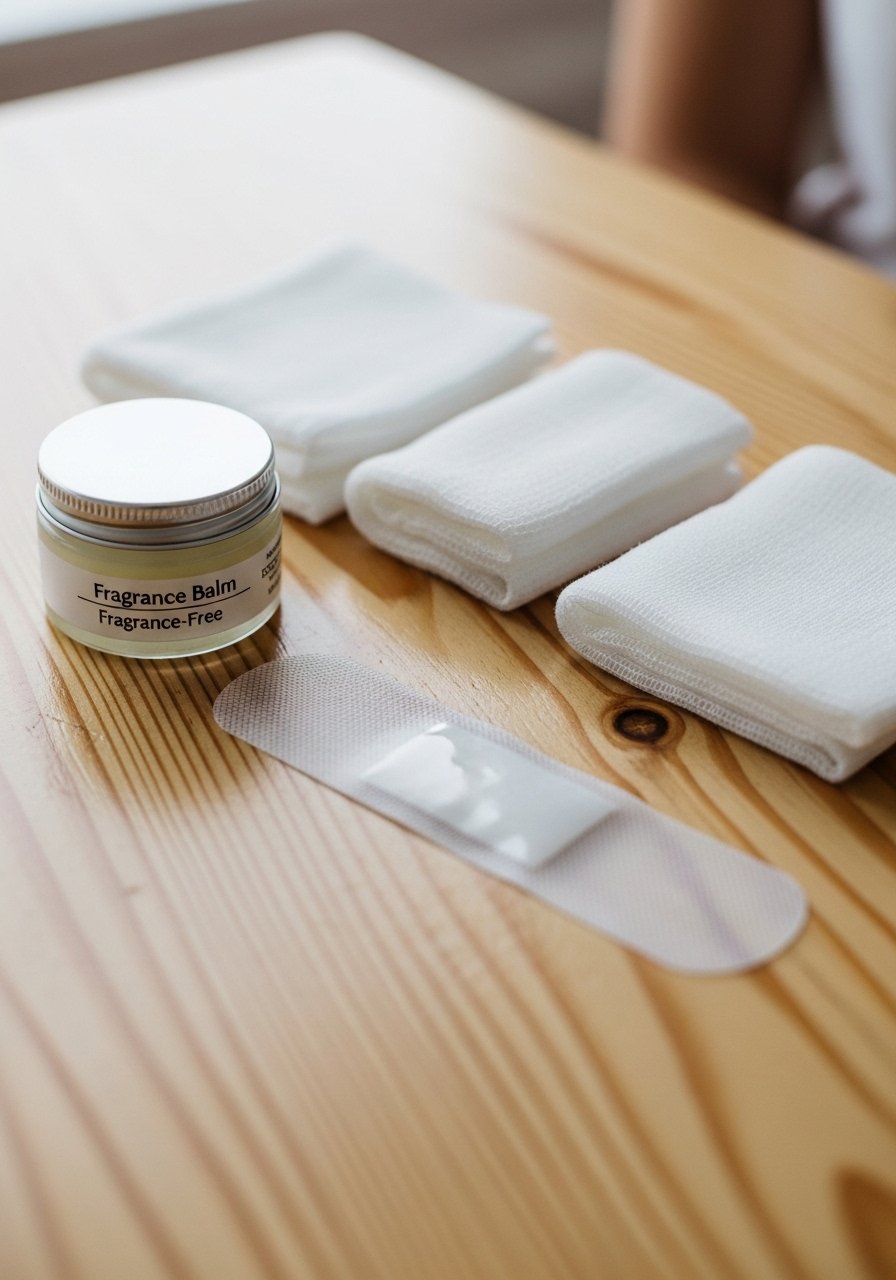
- Fragrance-free gentle foaming cleanser for sensitive skin. Use for the first few days to keep the area clean without stripping natural oils. Gentle suds remove ointment residue without scrubbing.
- Medical-grade second skin bandage, small sheet pack. Useful for the first 24 hours if your artist does not apply a protective film. Keeps friction low while you sleep.
- Lightweight fragrance-free balm. Apply a thin layer after washing once scabs form. The goal is moisture, not coating the area.
- Soft non-stick gauze pads, small pack. Handy if the tattoo oozes in the first day or two. Change pads with clean hands.
- Hypoallergenic adhesive tape for short-term holds. Use a small strip to secure a second skin if needed, but avoid long-term occlusion without artist approval.
- Wide-tooth detangling comb. Use to gently style hair away from the tattoo during healing so you do not pull scabs.
- Zinc oxide sunscreen stick for sensitive areas. After full healing, use this on exposed ink to slow fading from UV exposure.
- Aquaphor Healing Ointment. Keep this as the single mainstream product for an occlusive option during the very first phase if your artist recommends it. Use sparingly and switch to a balm when scabbing starts.
Every tattoo is different. Always follow your artist's specific aftercare instructions. Consult a dermatologist if you have skin concerns or unusual healing issues.
Frequently Asked Questions
Q: How painful is a behind the ear tattoo compared with other placements I might choose?
A: From what I have seen, behind the ear tends to be more sensitive than fleshy spots like the outer forearm because the skin is thinner and closer to bone. Machine vibration often registers more than the needle itself. Pain varies by person and exact placement, so expect a sharper sensation but a short session.
Q: Will fine line designs like script or tiny florals blur faster in the behind ear spot?
A: It depends. One group of artists I spoke with says fine line blurs sooner in thin, high-movement areas. Another group insists proper spacing and needle depth keep lines legible for years. Ask your artist how they handle micro work and plan for a touch-up around year two to three if you want long-term crispness.
Q: I want a small color sprig. Will muted color last behind the ear?
A: Muted tones fade less obviously than bright pigments, but any color will lose saturation faster than black. Use washed color sparingly and plan to use a zinc oxide sunscreen stick on healed ink to slow fading. If longevity matters most, stick to black or gray wash.
Q: How should I prepare my hair and appointments for a behind ear session?
A: Arrive with clean, dry hair and consider bringing clips or a wide-tooth comb to hold hair away from the area. If you want the tattoo visible during the session, part or pin your hair so the artist can map placement. A simple pre-appointment checklist includes a snack, water, and loose clothing so you are comfortable.
Q: How soon can I show the tattoo or hide it after healing?
A: Most people can reveal the area once scabs fall and the skin looks healed, usually four to six weeks. If your hair covers it most days, you can choose when to show it. Keep in mind visibility control is not absolute because short hair or ponytails reveal the area.
Q: If I want to find artists who specialize in fine line behind ear tattoos, where should I look?
A: Try Tattoodo for filters by style, search Instagram location tags like your city plus "behind ear tattoo," and browse Pinterest boards that focus on minimal ear pieces. Reddit communities such as r/tattoos or r/tattooadvice can also point you to portfolios and studio recommendations.
Q: Will I need a touch-up and how often?
A: Expect touch-ups sooner than with larger, low-movement tattoos. From conversations and observations, a realistic timeline is every two to five years depending on your skin, sun exposure, and the amount of linework. Planning a touch-up at year two is a reasonable expectation for most fine line behind ear work.