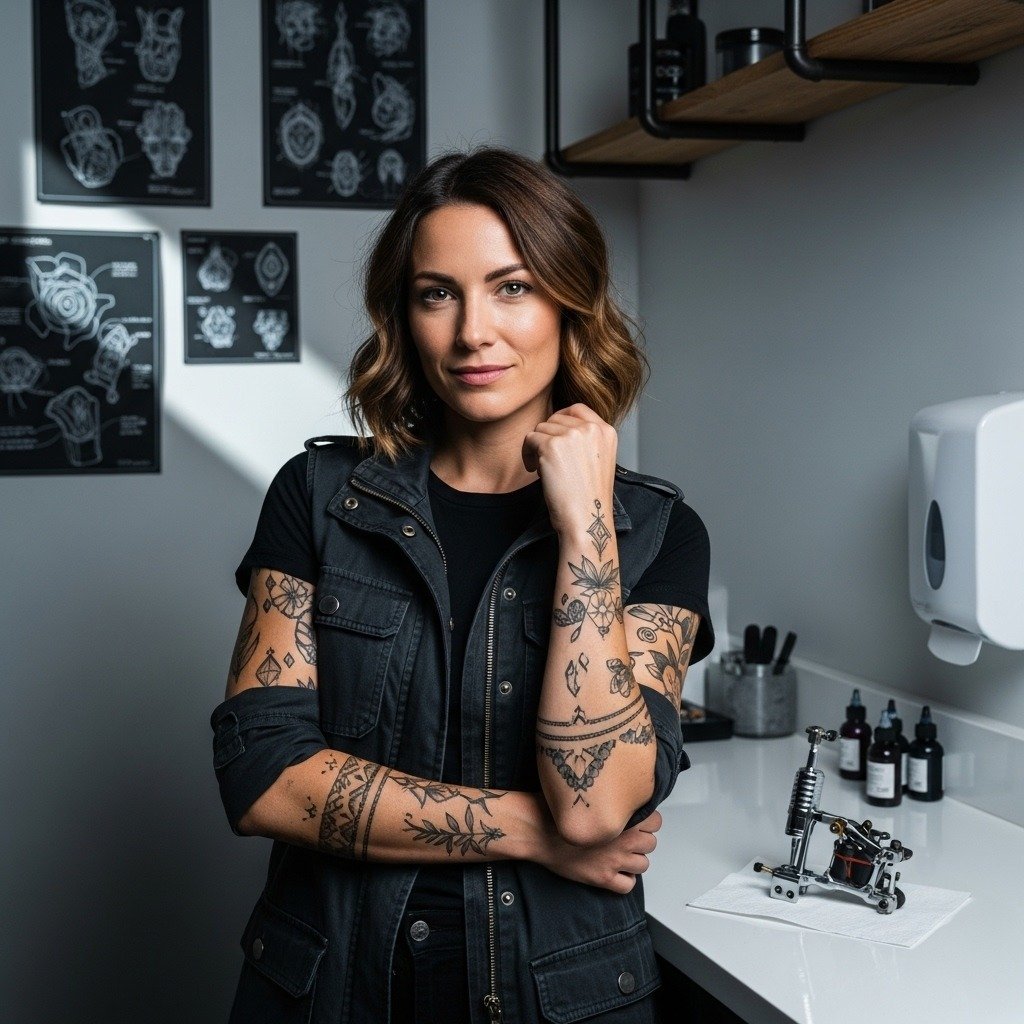

A fresh stencil lands on the nape, the hairline tucked up, and the artist squints at how the design will sit when the client grows a fade or lets the hair fall back down. The back of the neck is deceptively narrow, so spacing matters as much as the motif. Read through these curated nape ideas with notes on how they age, what to request in the chair, and how to style them so the reveal feels deliberate.
1. Small Tribal Nape Mark
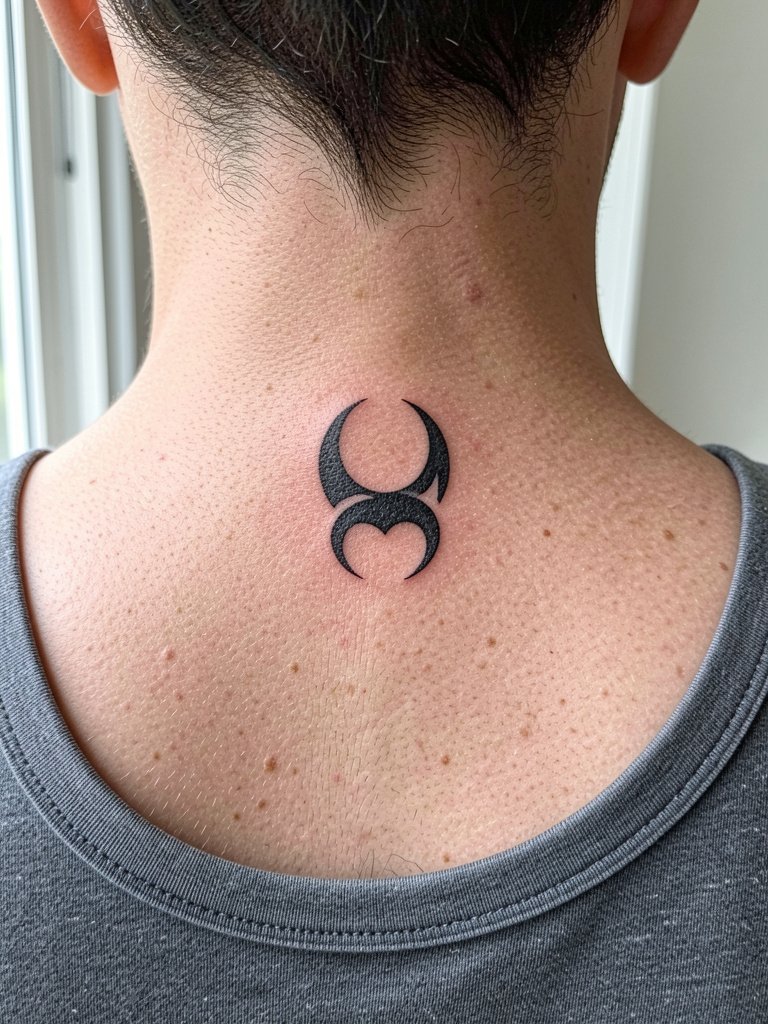
The nape favors compact, high-contrast shapes, and a small tribal mark reads clearly even from a short distance. I recommend asking for stronger lineweight than you see on Pinterest because the neck moves and fuzz can blur thin lines. Common mistake is shrinking the motif too much, which leaves negative space that makes the mark look lost when hair is short. This one usually takes a single quick session and is a low-commitment option for a first visible neck piece. For the appointment wear a loose T-shirt you can pull forward so the artist has clear access. For showing it off try a plain black crewneck with a short textured cut.
2. Celtic Knotwork Nape Tattoo
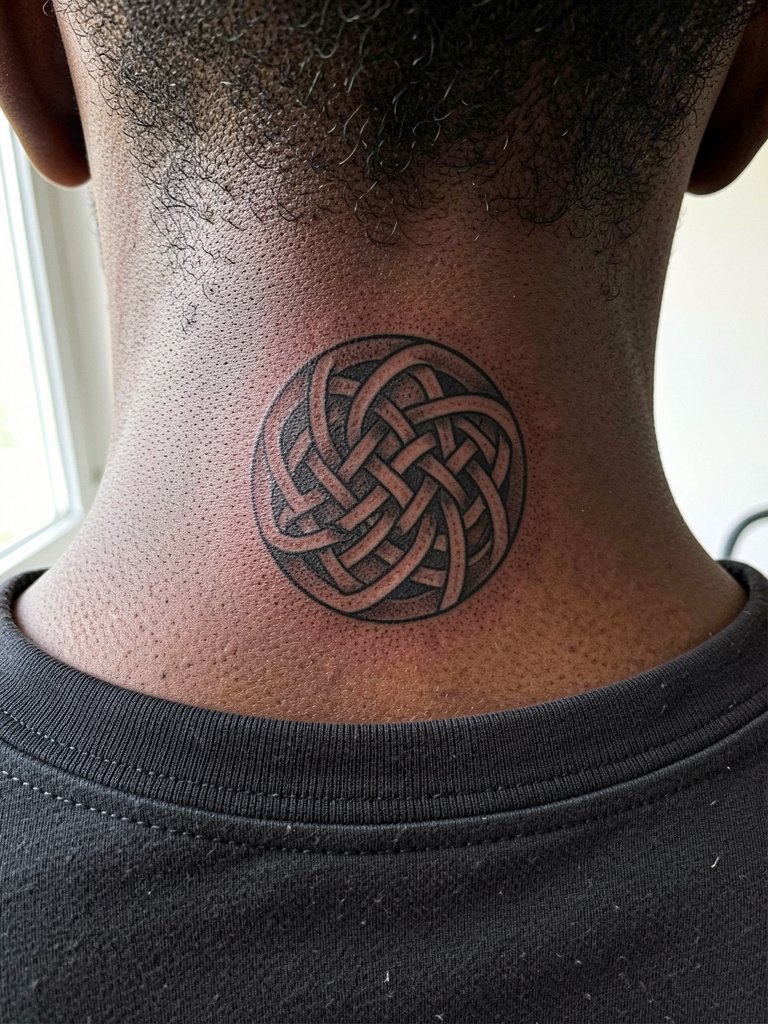
Knotwork looks intentional when scaled for the nape. Ask for slightly increased spacing inside the loops so the pattern does not muddy after a few years. A typical error is packing lines too close for the small canvas. On medium to dark skin, high contrast blackwork keeps the weave readable. This design benefits from a short fade or undercut to let the knot sit under the hairline and peek out. Session time is usually under an hour for a compact knot. Wear a button-up shirt you can slip off the shoulders or a loose tee to make access easy. For casual nights try an open collar shirt men to frame the nape.
3. Mandala Centered on the Nape
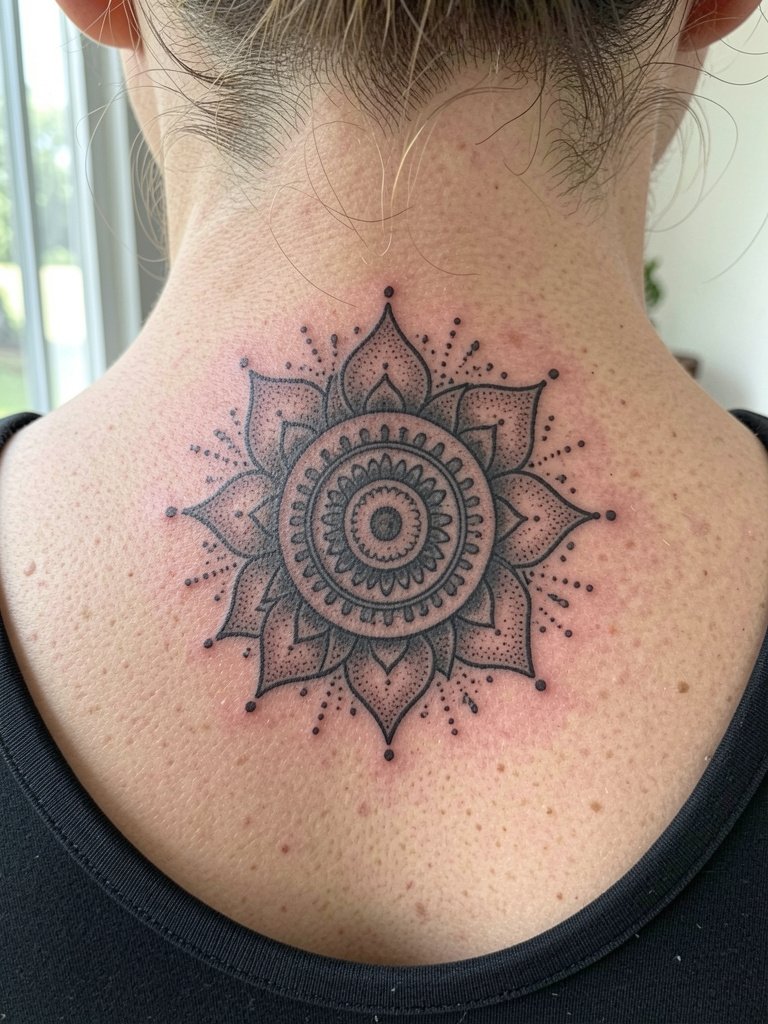
Mandalas read beautifully when they have room to breathe. If you want a center-focused piece, scale it so the smallest rings are still a few millimeters wide. A healed-photo check will show whether the detail held up. The main aging issue is overcrowding fine dot work into a tiny area. A prudent consultation topic is line spacing and dot size, not just the image. Pain is low to moderate, and one session typically handles a compact mandala. When you want it visible without shouting, pair it with a low-collar jacket and a textured crop haircut. Outfit-wise try a lightweight zip hoodie to let the design peek out when you unzip.
4. Geometric Minimalist Mark
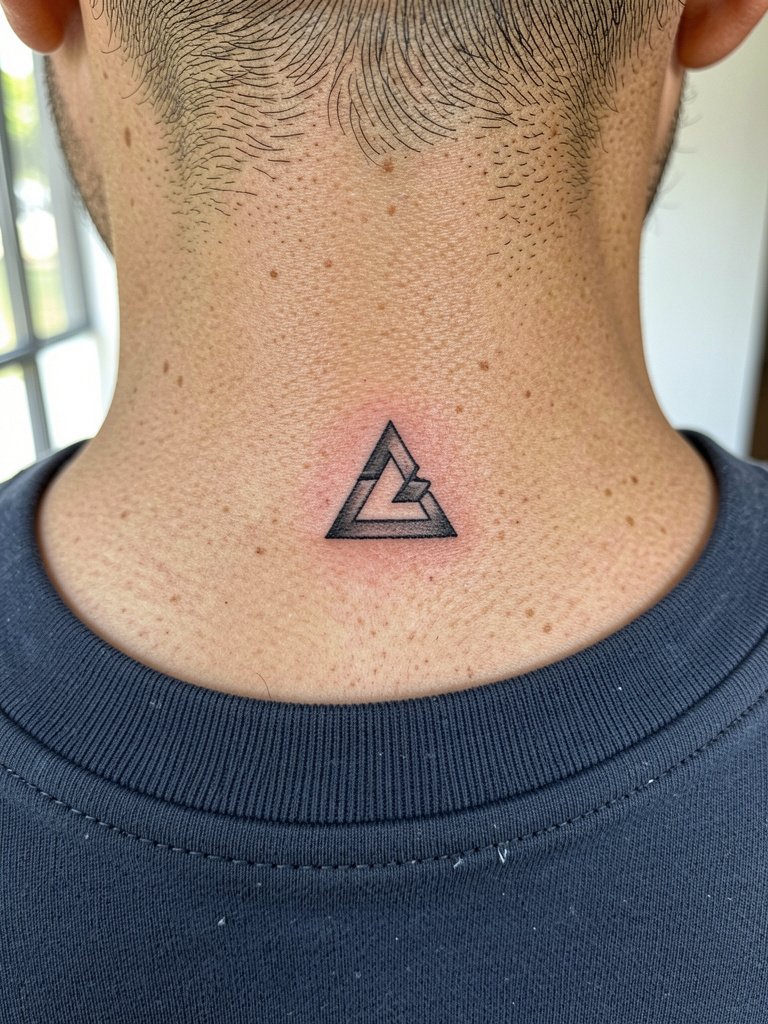
Minimal geometry can be elegant on the nape but needs deliberate contour. The tiny stacked triangle trend looks crisp at first and then fades into blur when inner strokes are too thin. For this style I advise a slightly bolder outer line with internal fine work left airy. Ask the artist to show how the stencil will look at three and five centimeters so you can judge presence. A common mistake is treating the nape like wrist real estate and shrinking everything down. In the session wear a button-up or loose tee for easy access. For evenings try a plain black crewneck to make the geometry the focal point.
5. Small Cross at the Nape
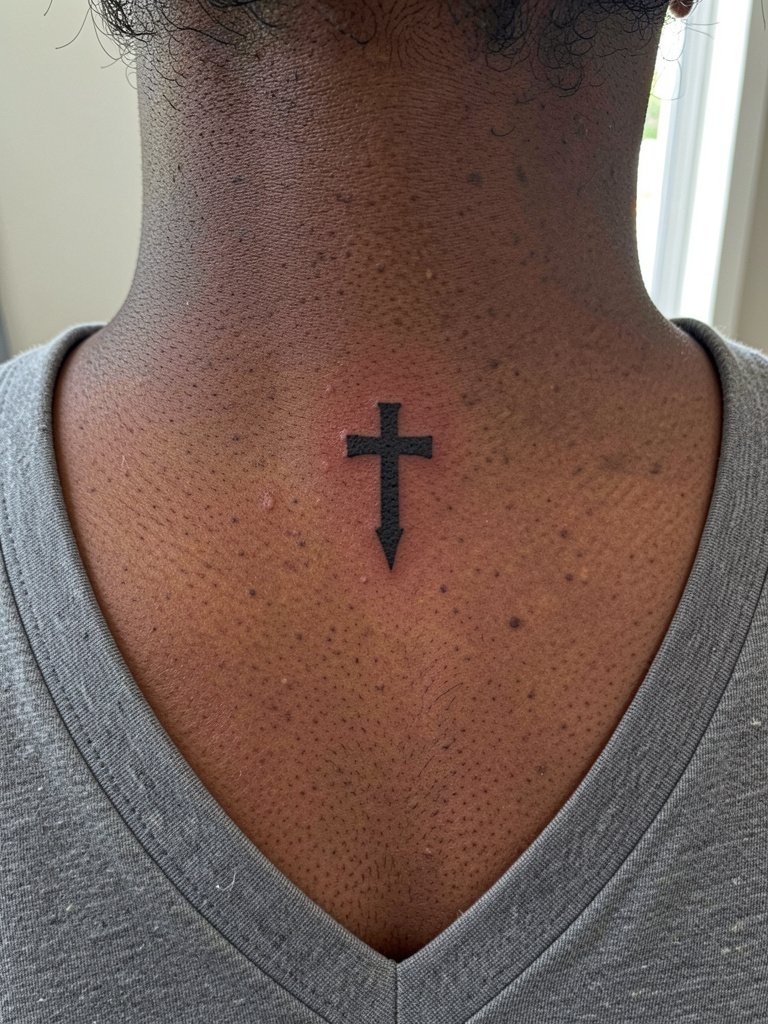
A cross is instantly legible and low fuss. If you want longevity, request a stronger contour and modest internal shading rather than hair-thin filigree. Many people ask for ornate mini crosses that do not age well on the nape. If faith is the driver, a clean bold variant will keep its silhouette for longer. Session time is short and pain is moderate. For the appointment wear a zip hoodie or button shirt you can move away from your neck for access. When showing the design in social settings a collared overshirt frames the nape without making the ink feel accidental.
6. Roman Numeral Band
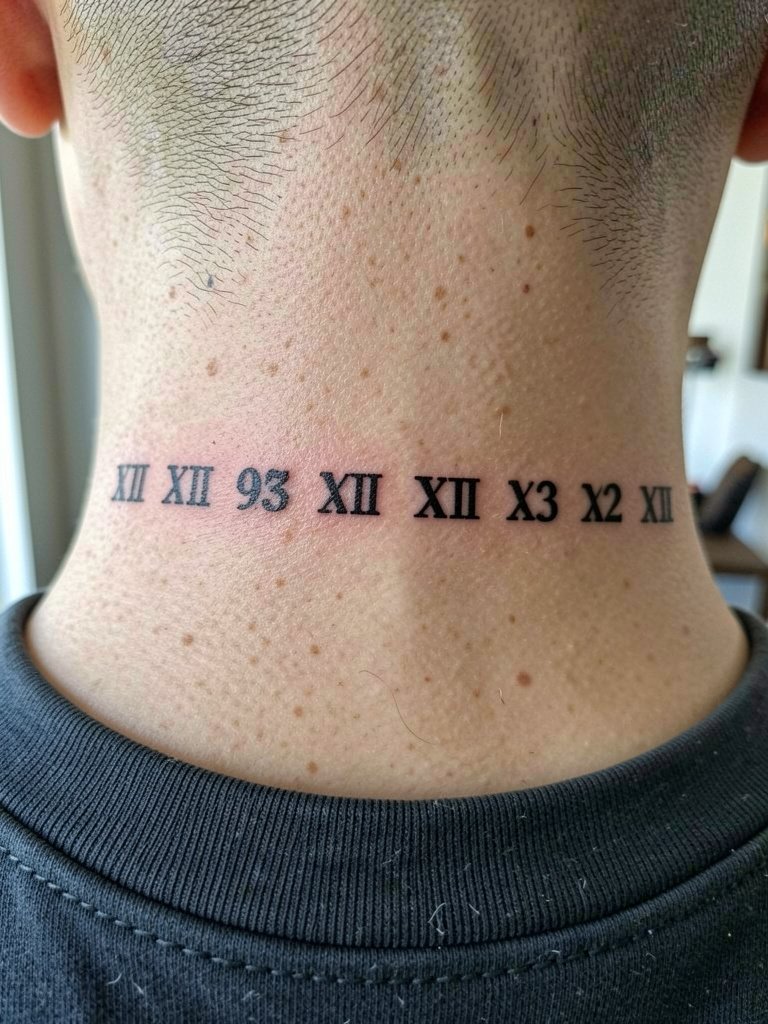
Roman numerals work well horizontally along the nape when spacing is measured. The mistake to avoid is shrinking the type so kerning gets tight. My specific advice is to bring two scale references so the artist can show how four versus seven numerals read at different widths. Healed appearance at two years depends on how dense the numerals are. This is a fast one-session piece. For the chair wear a loose T-shirt you can pull forward and a short haircut so the artist can place the stencil precisely. Styling-wise a structured jacket with an open collar puts the numerals on display without forcing attention.
Session Essentials
These products smooth the nape experience and address concerns raised in the first six ideas.
-
Stencil transfer paper kit. Lets you preview line placement on curved nape skin before the needle meets it, which is helpful for the knots and horizontal numerals above.
-
Topical numbing cream. Applied about 30 to 45 minutes before most short nape sessions eases sensitivity without obscuring the artist’s ability to work.
-
Thin protective film roll. Useful for the first day if your collar scrapes the area while clothing settles into normal wear.
-
Fragrance-free gentle body wash. Cleans the nape without irritating fresh ink and avoids scented ingredients that sting.
-
Aquaphor healing ointment. A thin application in the first 48 hours helps keep delicate linework from drying into flakes that pull pigment.
7. Bird Silhouette Flock
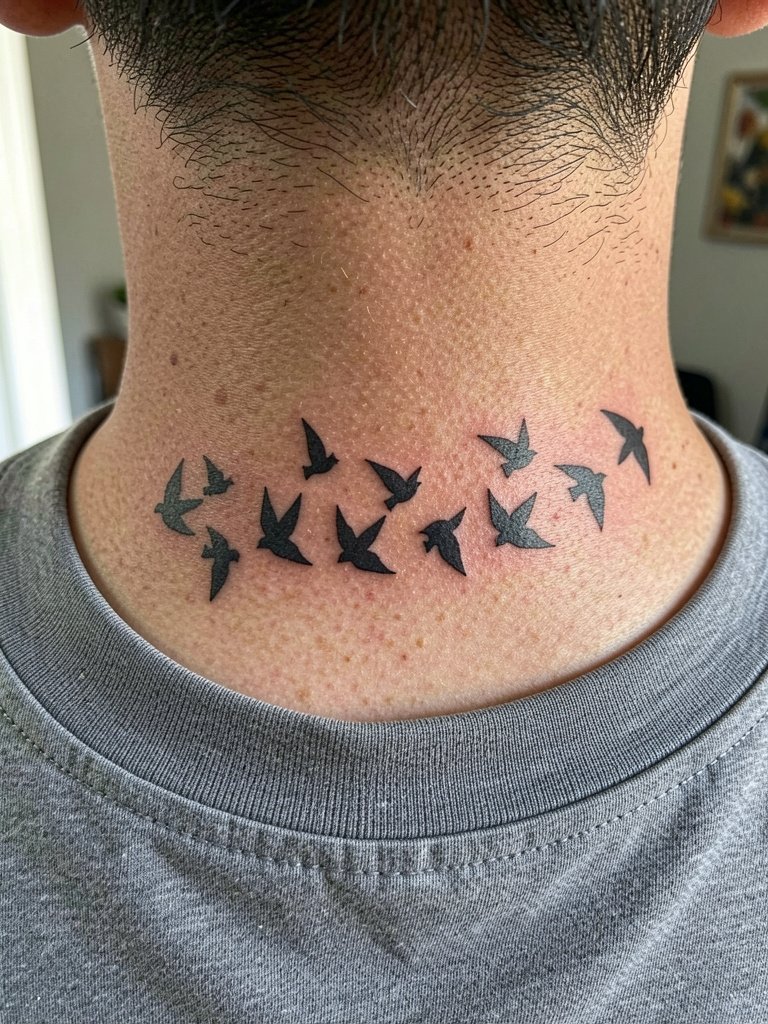
A small flock reads as movement and suits the narrow nape. The key is spacing each bird so silhouettes do not merge as the skin settles. The common error is cramming more birds than the canvas allows. This is a low-pain, short session, and it ages predictably when done in solid black. Session wear is a loose T-shirt or button-up you can move forward. When you want the birds to peek through longer hair, a crewneck tee with a short textured cut makes the reveal feel intentional. For an easy pairing try a plain black crewneck.
8. Eagle Inspired Nape Emblem
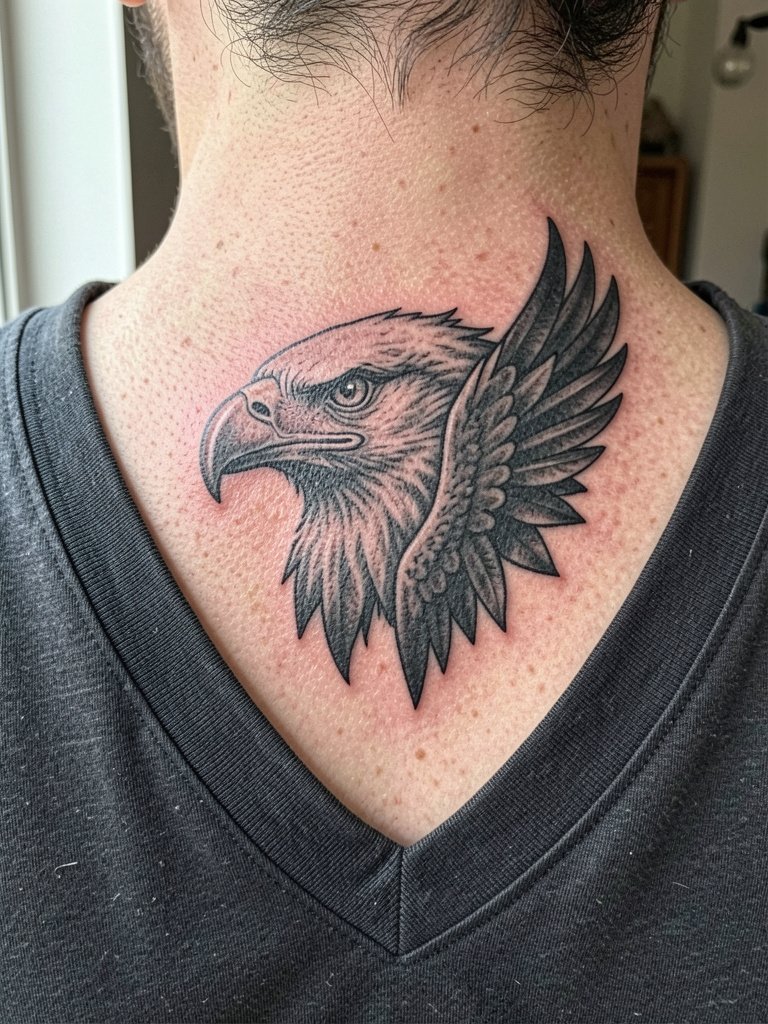
Illustrative eagles need slightly larger scale on the nape to keep feather detail legible. If you want the symbolism to read at a glance, aim for medium size rather than micro. One typical mistake is requesting micro-feathers that merge into tone after healing. This piece usually takes one to two sessions depending on shading. For access wear a zip hoodie or button-up you can move forward easily. For styling, darker tees and structured jackets integrate the eagle naturally into everyday outfits.
9. Rose Bloomed Low on the Nape
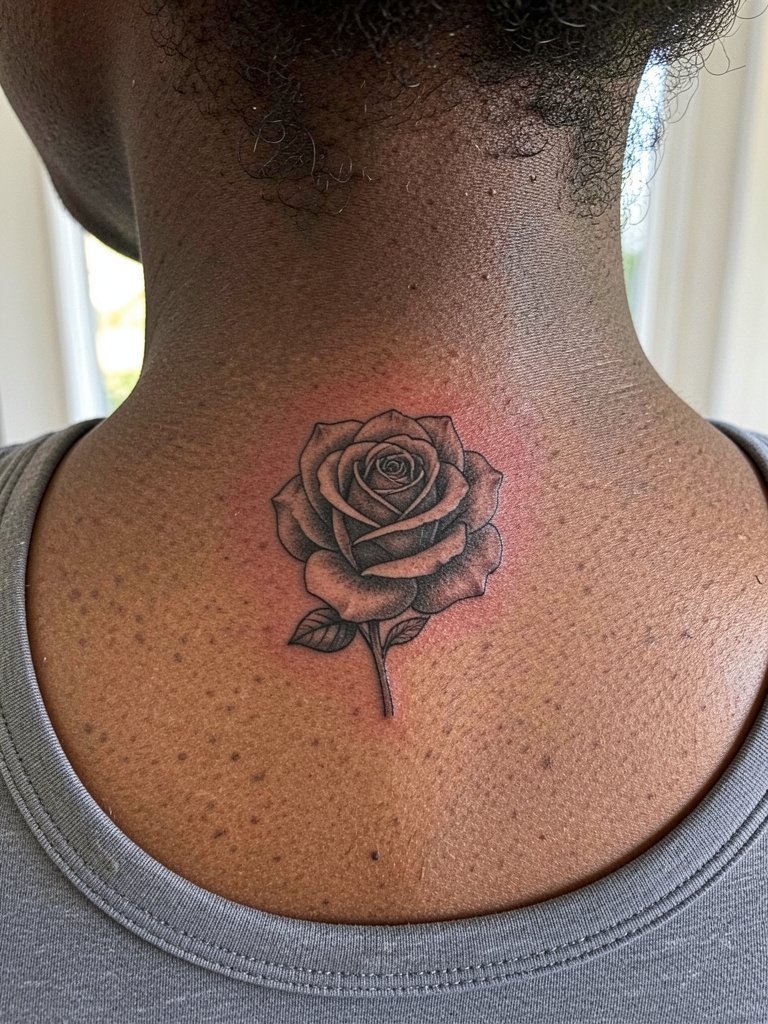
Roses can be adapted to feel masculine by keeping the linework bold and the shading restrained. The common aging problem is over-detail in tiny petals. For the nape, scale the bloom so the inner petal separations are a few millimeters wide. Expect one to two sessions if you add grey wash. Wear a loose shirt or a button-up for easy access. Styling-wise a textured crew or overshirt in neutral colors complements the muted florals without softening the motif.
10. Blackwork Cover-Up Block
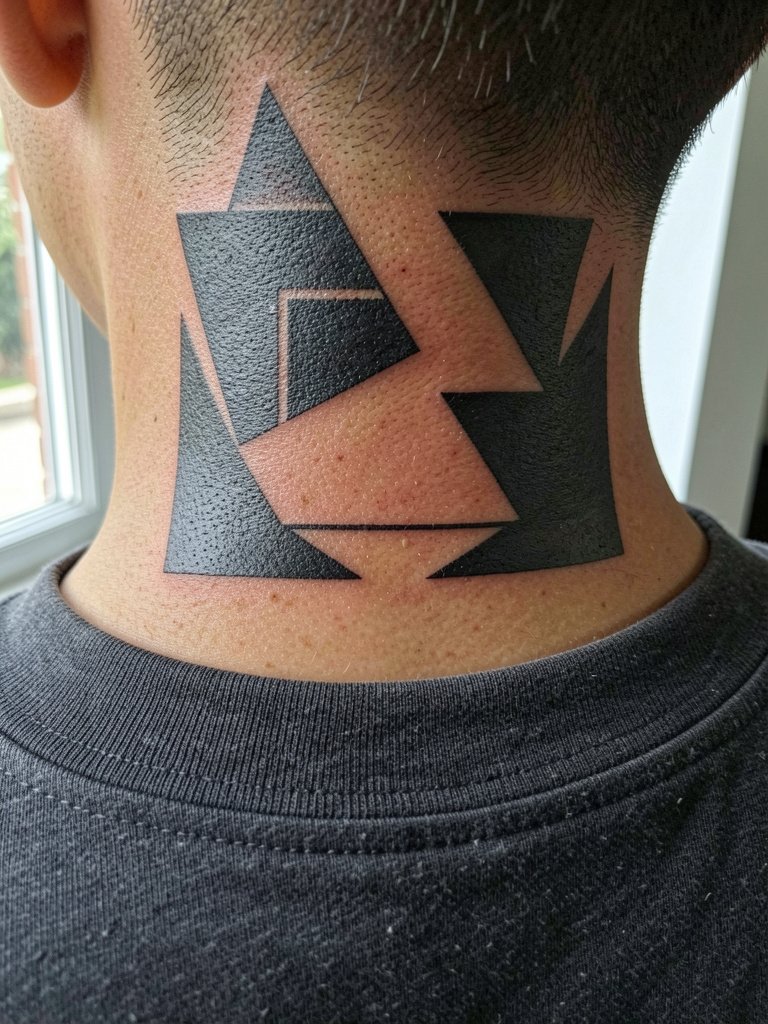
Blackout or heavy blackwork is a practical route for hiding old nape tattoos. There are two clear camps on this approach. One camp argues blackwork is the most reliable way to mask mistakes and it reads clean for years. The other camp favors reworking the old design into a fresh composition instead of heavy saturation. If you lean toward blackwork, be ready for multiple sessions to achieve even saturation. For the session wear a zip hoodie or a button-up you can move away from the neckline easily. Styling with darker tees makes blackout feel intentional rather than corrective.
11. Tiny Smiley Face or Quirky Symbol
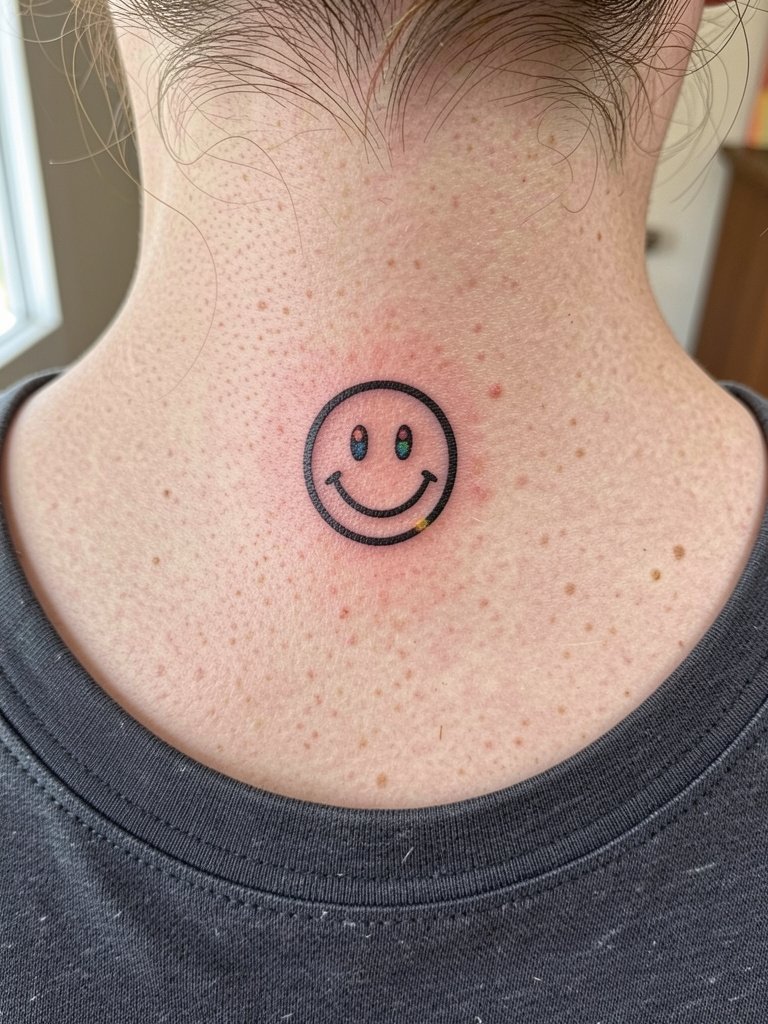
Novelty marks are low-commitment and add personality. The risk is they can look juvenile if placed without design intent. My advice is to make tiny novelty marks slightly bolder than you think you need so they do not dissolve into a speck over a few years. This session is quick and low pain. For the artist to work easily wear a loose tee and pin hair up if needed. If you want it to peek out casually, pair with a textured short haircut and a casual zip hoodie for balance.
12. Bat or Goth Silhouette
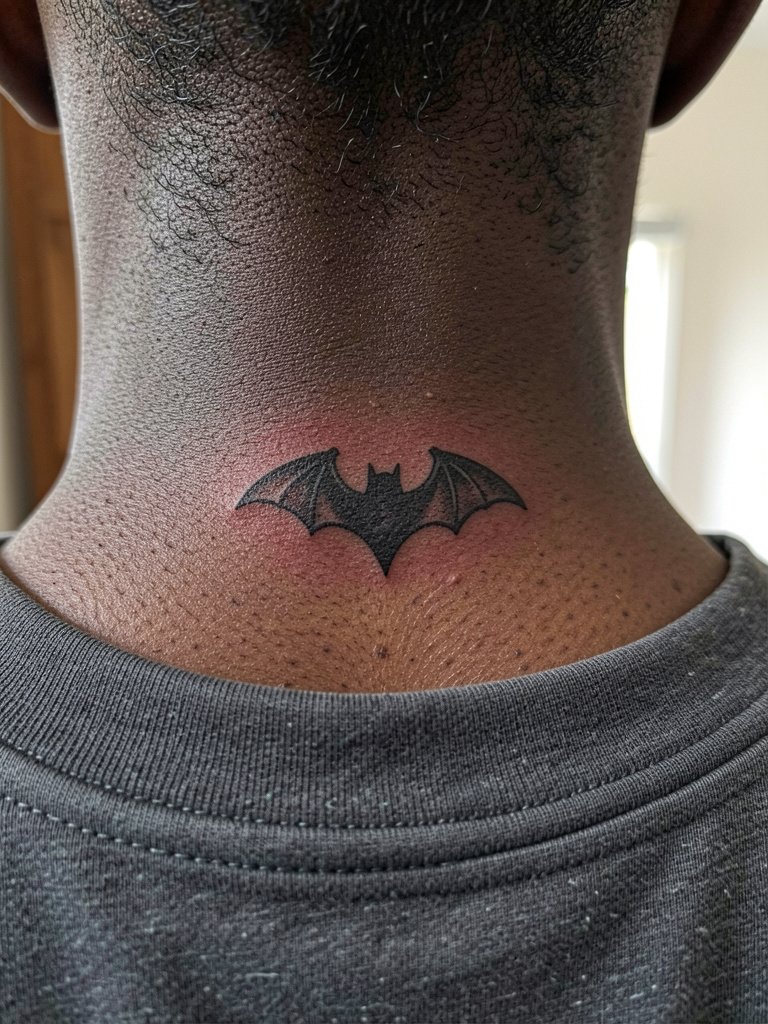
Goth silhouettes suit the nape because their bold shapes maintain identity at small sizes. One mistake is adding too much internal shading in a tiny silhouette which flattens into tone. Ask for clear wing separation and consider a little negative space to preserve the outline. Session is short and tolerable for most. For the appointment wear a shirt with a loose neckline. When showing it off pair with dark structured shirts and a cropped haircut to keep the aesthetic coherent.
13. Simple Script Word Line
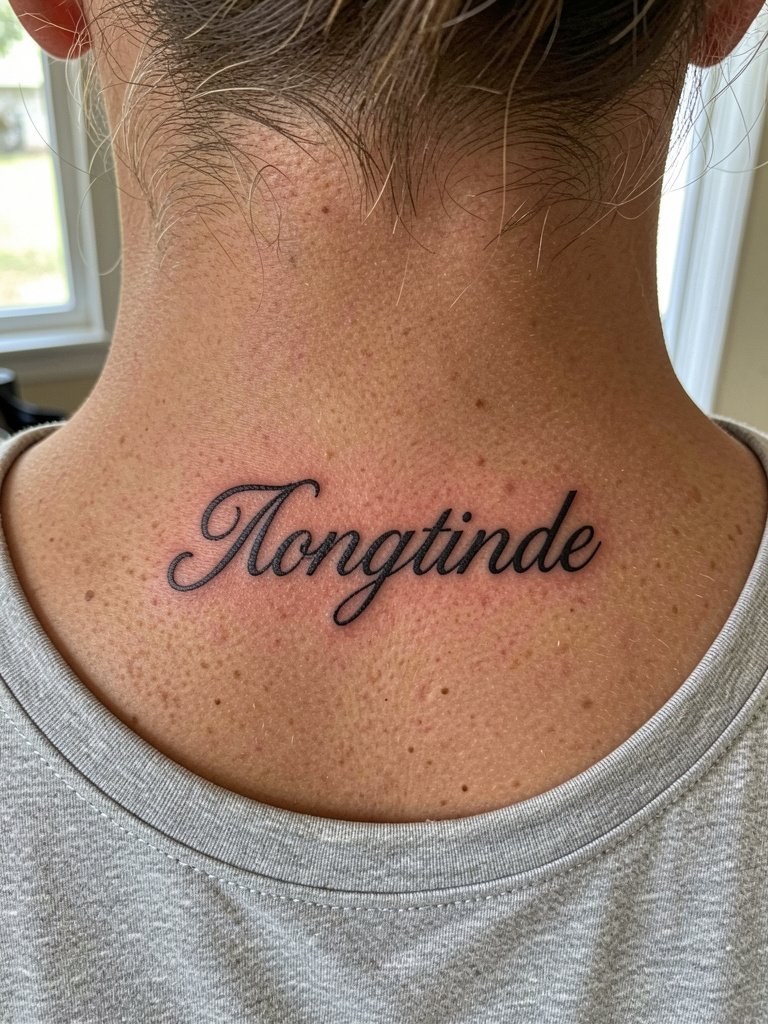
Lettering on the nape must prioritize spacing and weight. A common error is choosing too delicate a script for the narrow, mobile canvas. My specific guidance is to request slightly thicker downstrokes and a small cap height so the word reads clean from a distance. Healed clarity at two years depends on spacing and initial weight. Bring the exact word at the exact size so the artist can vector it to scale. For the session wear a button-up or loose tee. Styling with an open-collar shirt keeps the script visible without making it confrontational.
14. Small Ornamental Pattern
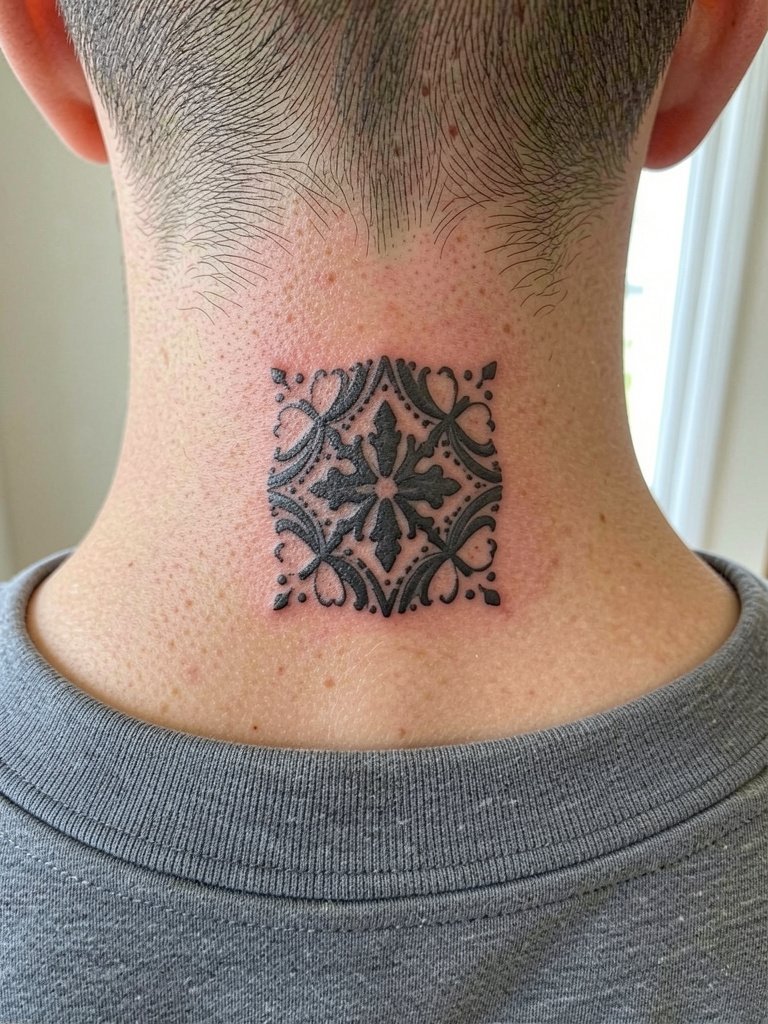
Ornamental pieces are discreet when scaled correctly. The worst version packs tiny repeating lines that blur into texture within a year. Request larger repeat units and ask the artist to show the stencil at full scale so you can judge if it reads from across the room. This design is great for someone who wants visible ink that still tucks away with longer hair. Wear a zip hoodie or loose shirt to the appointment. For outfits try a simple open-collar overshirt to let the ornament peek out.
15. Negative-Space Keyhole Mark
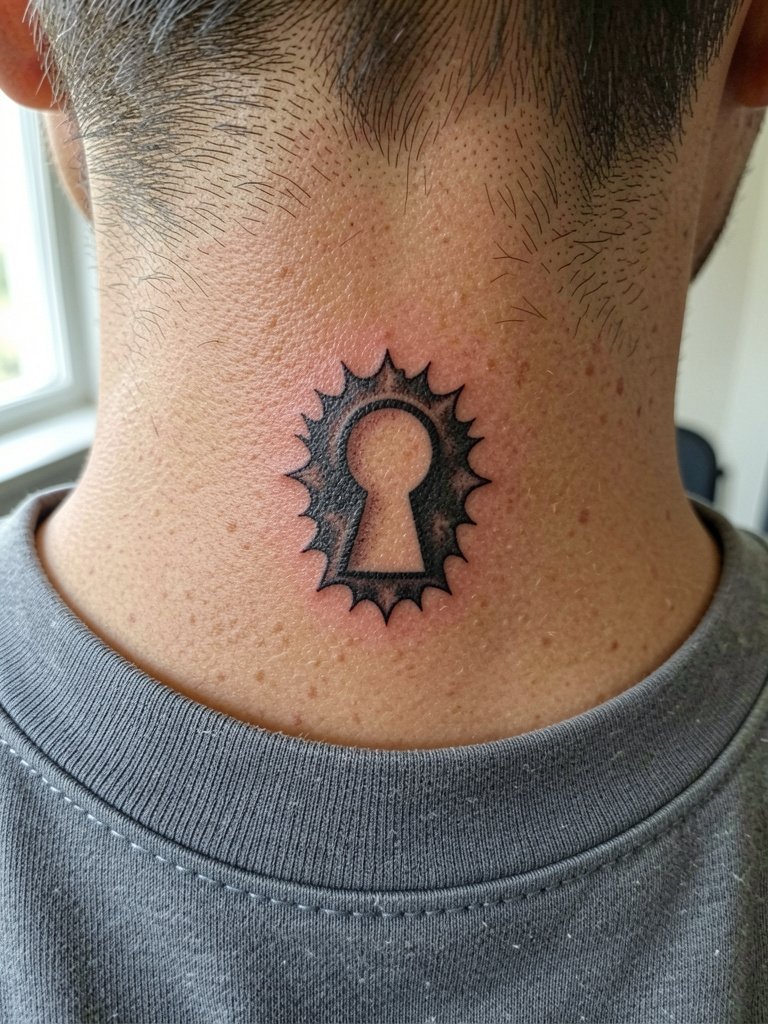
Negative-space techniques can be striking on the nape because they use the surrounding black to define the shape. One mistake is leaving too little negative area which makes the motif read as a smudge. If you like this approach ask the artist to mock up how it will age at six months and two years. A single session usually covers this concept. Wear something with a loose neckline to the appointment. For outfits, darker shirts and neat short hair make the negative-space pop without forcing attention.
16. Single-Needle Fine Line Icon
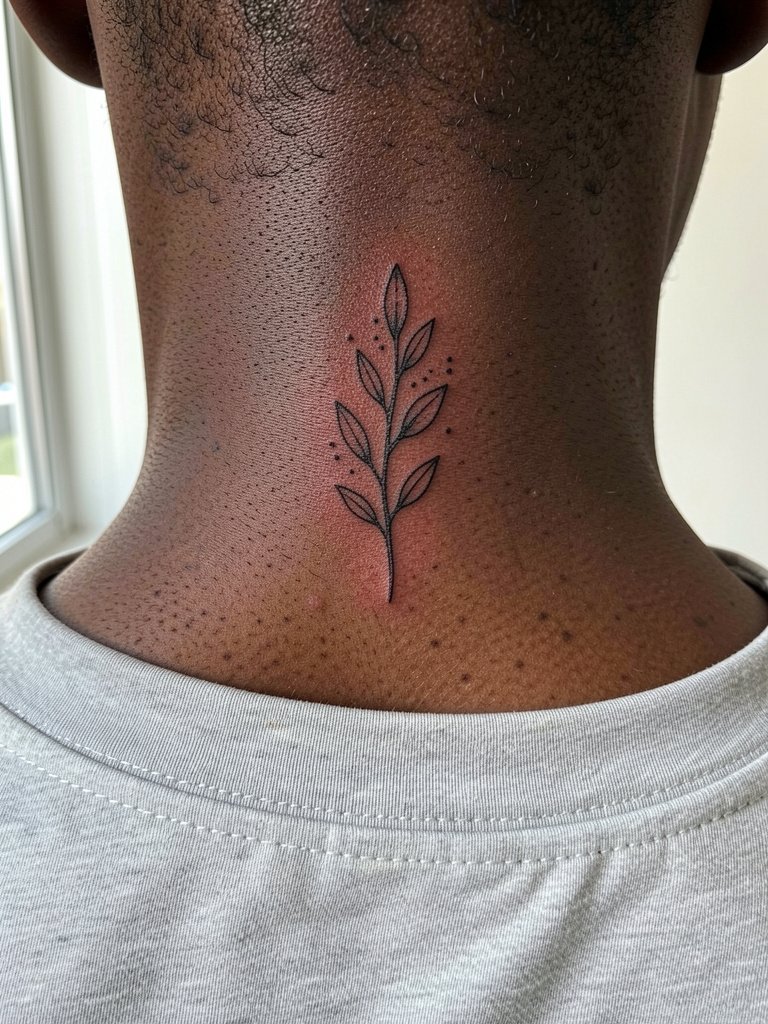
Single-needle work looks elegant up close but can soften over time on the nape. The controversy about fine line versus bolder work applies here. One camp warns that single-needle on mobile skin blurs within a few years. The other camp maintains that with slightly wider spacing and careful depth it can last and look refined. If you want single-needle, ask the artist to show healed photos of similar placements and line thickness. Session pain is low to moderate. Wear a loose T-shirt for access. For showing it off choose light monochrome shirts so the linework reads cleanly.
17. Micro-Realism Symbol
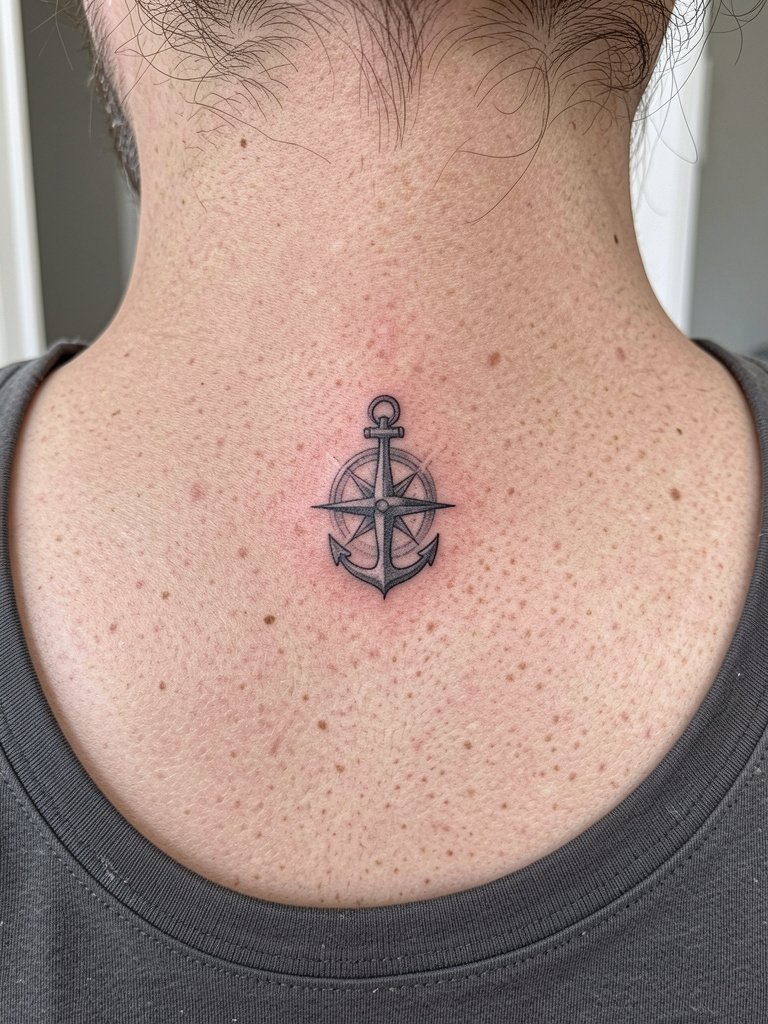
Micro-realism needs breathing room on the nape. The trick is to pick a simplified version of the reference and scale it so shading sits without filling in. A common mistake is insisting on full micro-detail at a postage-stamp size. Expect one session and a possible touch-up at the year mark. For the session wear a zip hoodie or loose tee you can move forward easily. To style it casually, select shirts with open collars so the tiny realism reads as a deliberate accent.
18. Symmetric Arrow Cluster
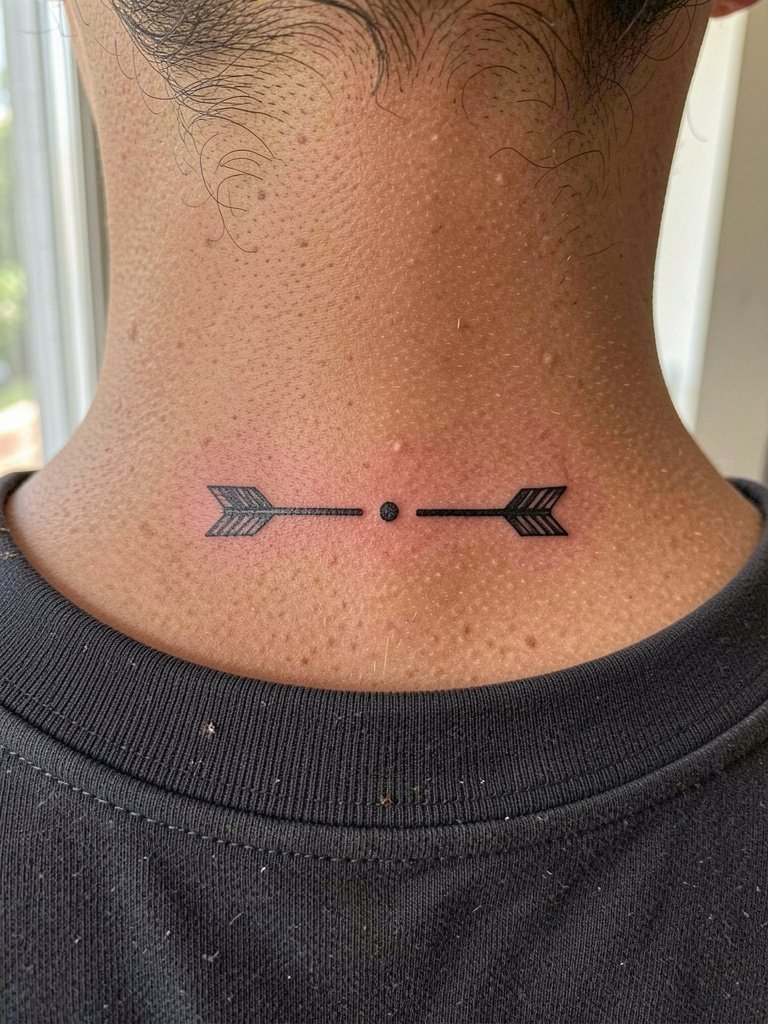
Arrow clusters make for bold, directional marks that hold up when the lines are weighted properly. The common error is using hairline thickness that disappears with friction from collars. Ask for a slightly heavier contour and moderate inner detail. Session time is short and pain is modest. Wear a loose tee or button-up to the appointment. For presenting it, pair with simple layered shirts and a cropped haircut to keep the composition intentional.
19. Abstract Wave Motif
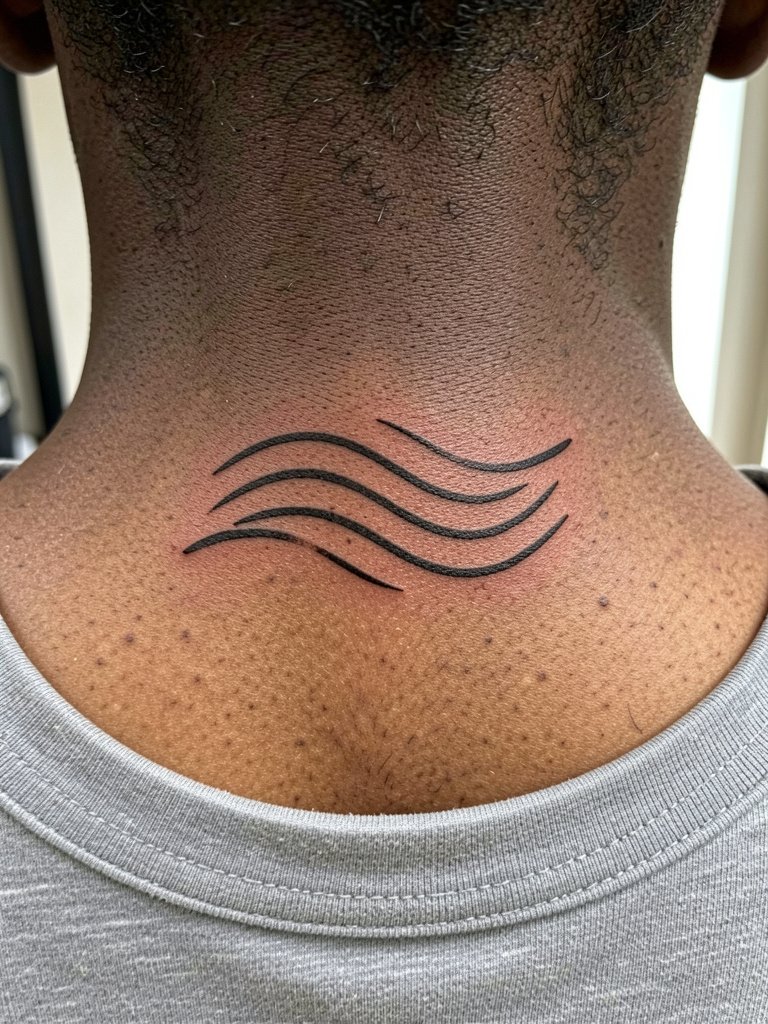
Abstract wave lines follow the natural curvature of the nape. To avoid future blending, leave several millimeters between each curve and opt for slightly bolder strokes. A common oversight is trying to cram too many waves into the narrow strip. Session length is brief. For the appointment wear a loose shirt or zip hoodie. When showing it off choose open-neck pieces so the flowing lines read as composition rather than an accidental crease.
20. Shield or Heraldic Mini Crest
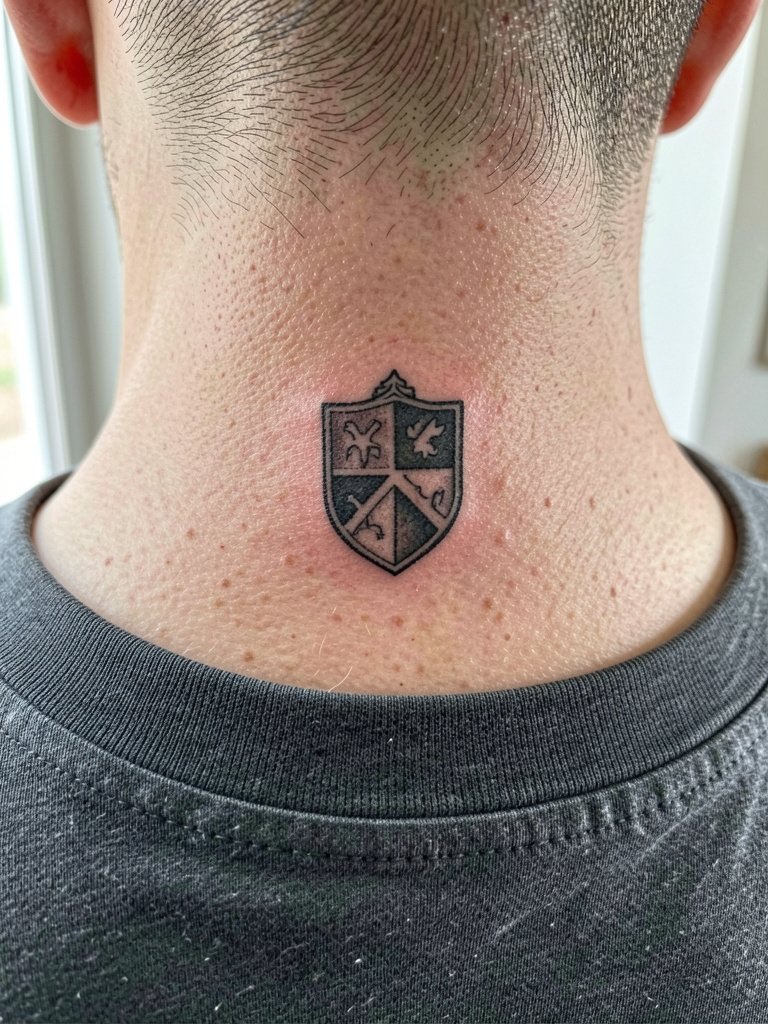
Crest work needs simplification on the nape so the panels do not bleed together. Ask for larger quadrant divisions and limit interior detail to bold symbols. A mistake is copying a full-size coat of arms at micro scale. Plan for one session and expect a touch-up if you keep very tight details. Session wear should be a button-up or zip hoodie. For styling, structured jackets and darker tees integrate the heraldic look without making it feel out of place.
21. Chain Link Band
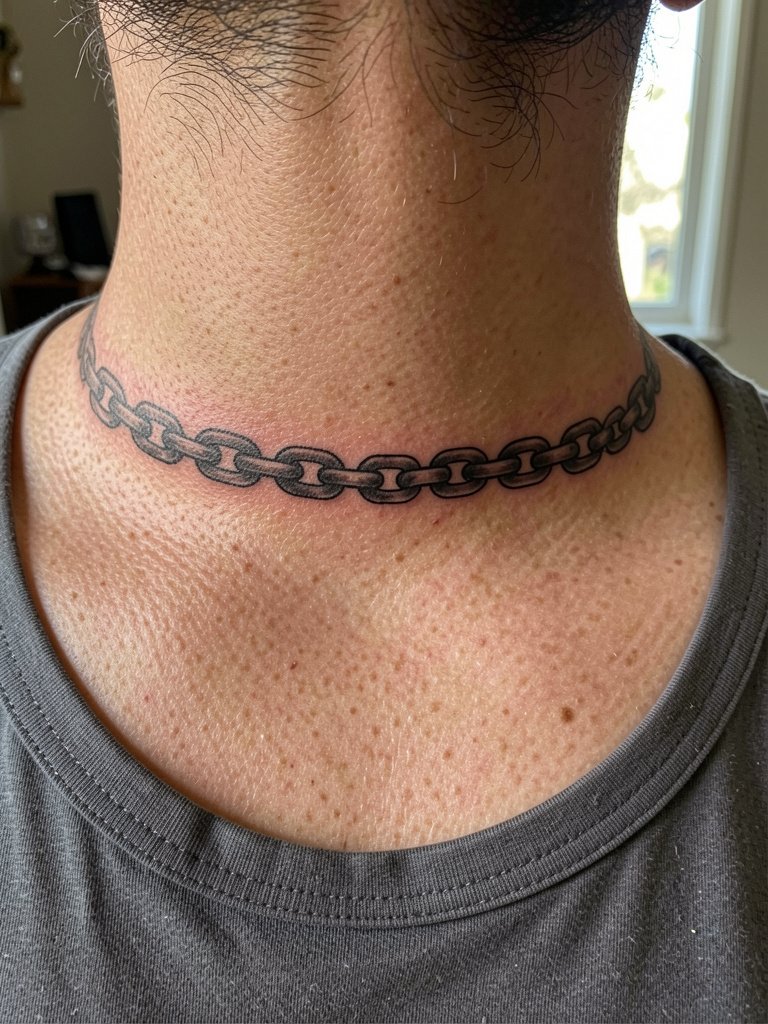
A chain band can look intentional across the nape when links are sized for the canvas. The trap is making the links too small which causes them to lose definition. Ask the artist to show the stencil wrapped around the neck so you can confirm link spacing. This is a short session with low to moderate pain. Wear a loose T-shirt or a button-up. For showcasing, a crewneck or open-collar shirt frames the band and makes it feel integrated with your wardrobe.
22. Small Compass Rose
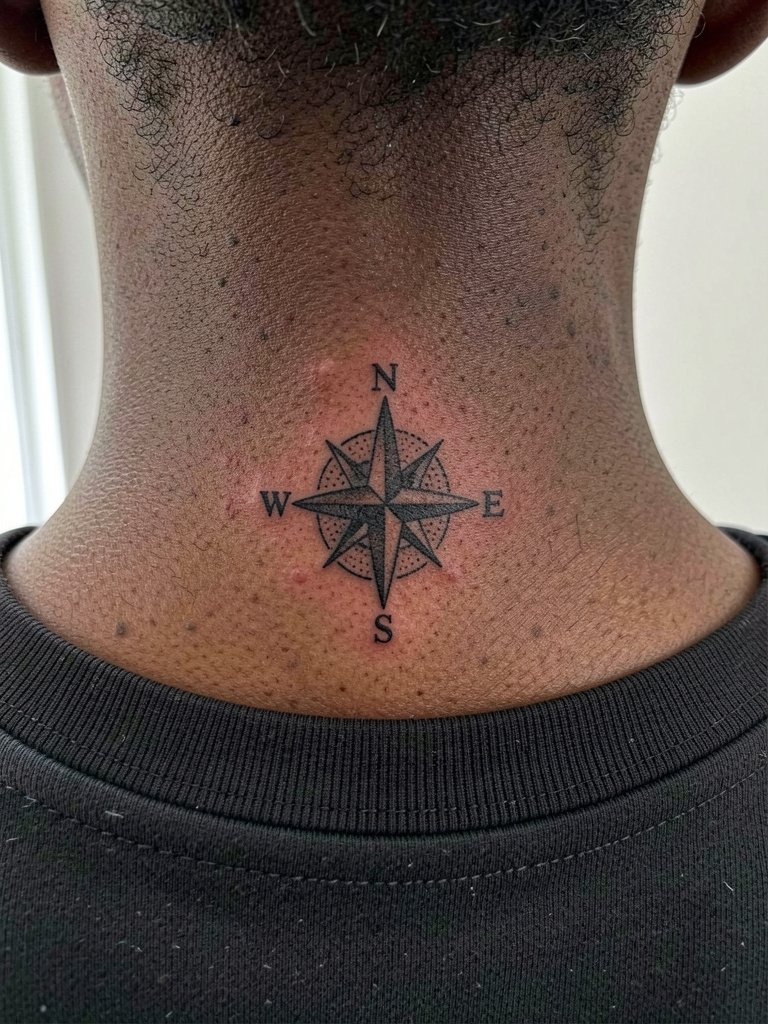
Compass motifs look crisp at medium sizes because the points need room. The most common mistake is shrinking them so tiny that degrees and arrows merge. If the compass is meaningful, plan for slightly larger scale. One session is usual for a compact compass. Wear a zip hoodie or loose tee for accessibility. For outfit pairing, choose structured shirts and textured hair to make the compass feel like an intentional accent.
23. Minimal Skull Silhouette
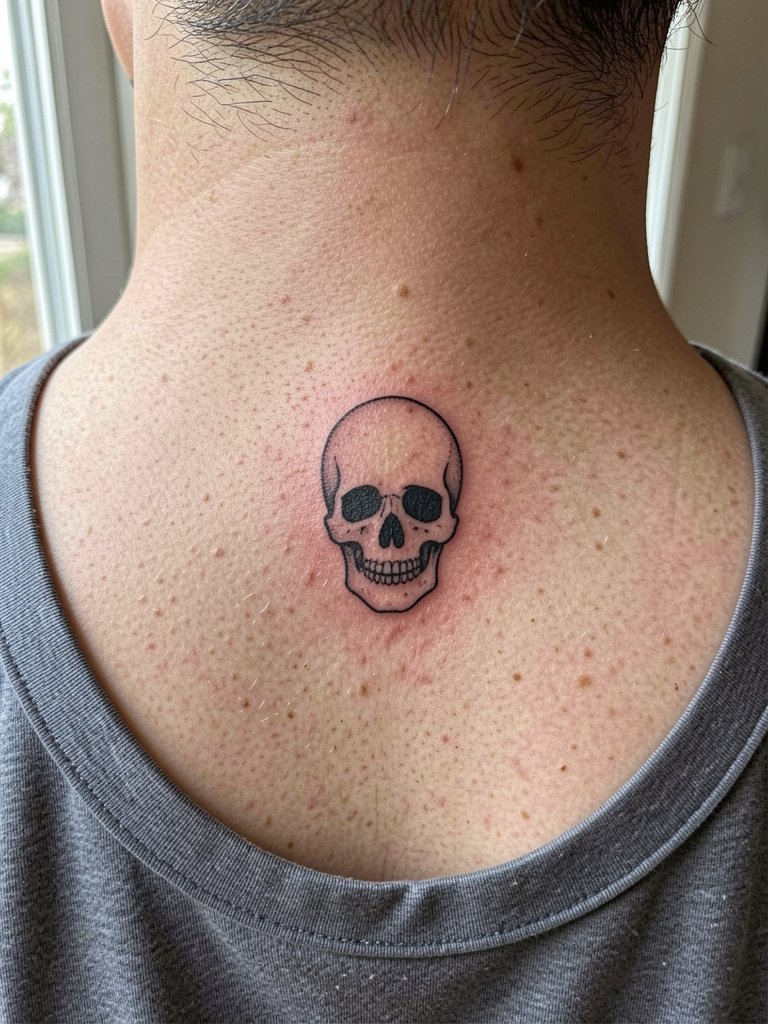
Skull silhouettes read as identity markers when kept bold. Trying to cram micro shading into a tiny skull is a common error that reduces long-term clarity. This one-session piece is moderate on the pain scale. For the chair wear a button-up or loose tee you can move forward. If you want it to feel integrated, wear darker, structured shirts that complement the motif.
24. Coordinates or Small Numeric Line
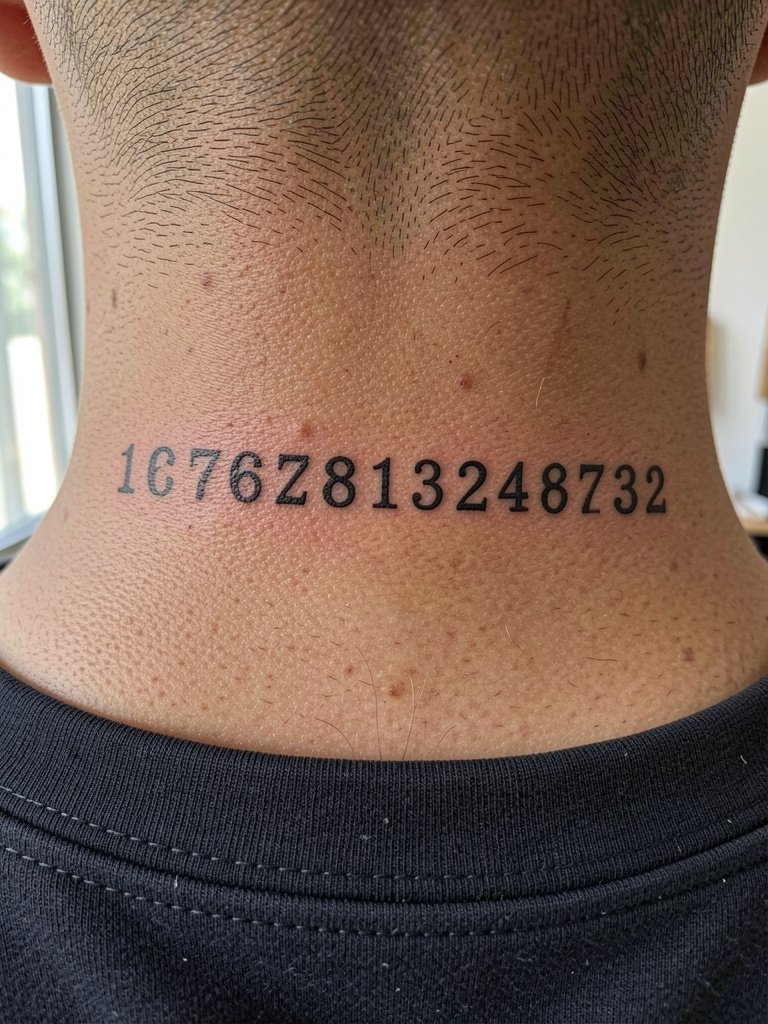
Numbers and coordinates must be drawn at a size that keeps counter shapes open. A frequent problem is tight kerning and hairline strokes that disappear with wear. Bring the exact text and ask the artist to place it at two scale options so you can choose presence. Expect a short session and a possible touch-up if very small. Wear a loose tee or button-up to the appointment. For everyday styling a plain tee or open collar lets the numbers peek out without dominating.
25. Barbed Wire Arc
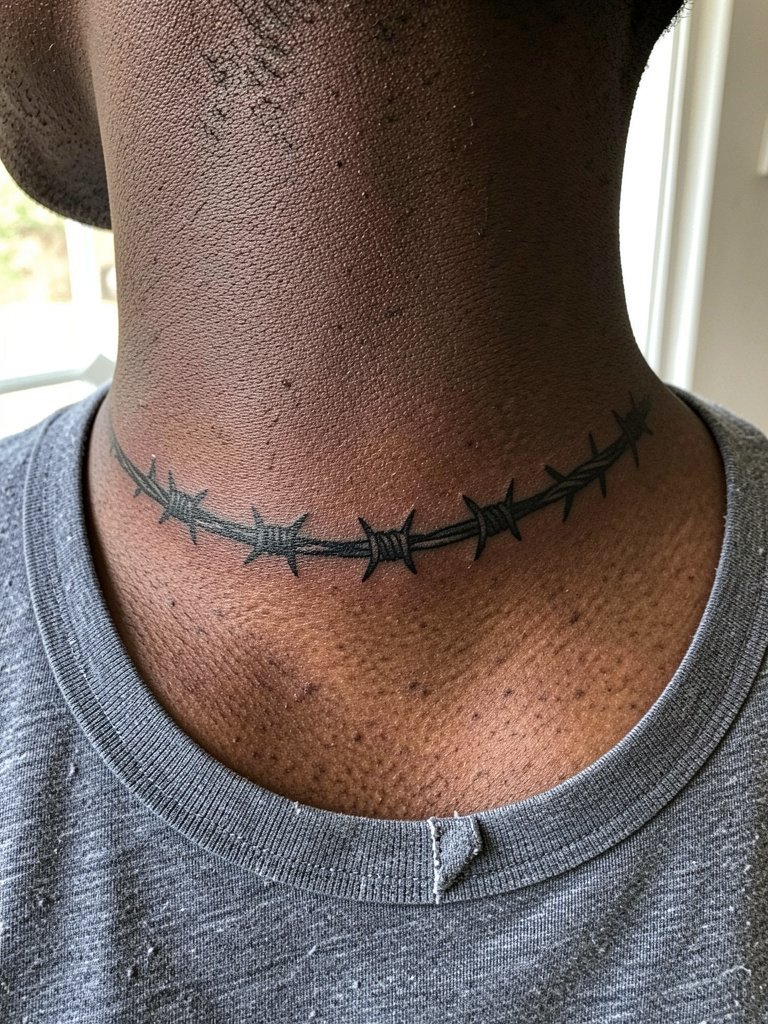
Barbed wire arcs need clear negative space between barbs so they remain readable. A common error is over-detailing the barbs which then blur. Request slightly wider spacing and a bold main line. This short session is moderate for pain. Wear a zip hoodie or button-up that you can move aside. For showing it off pair with a jacket and short hair so the arc reads as intentional composition.
26. Abstract Letterform Block
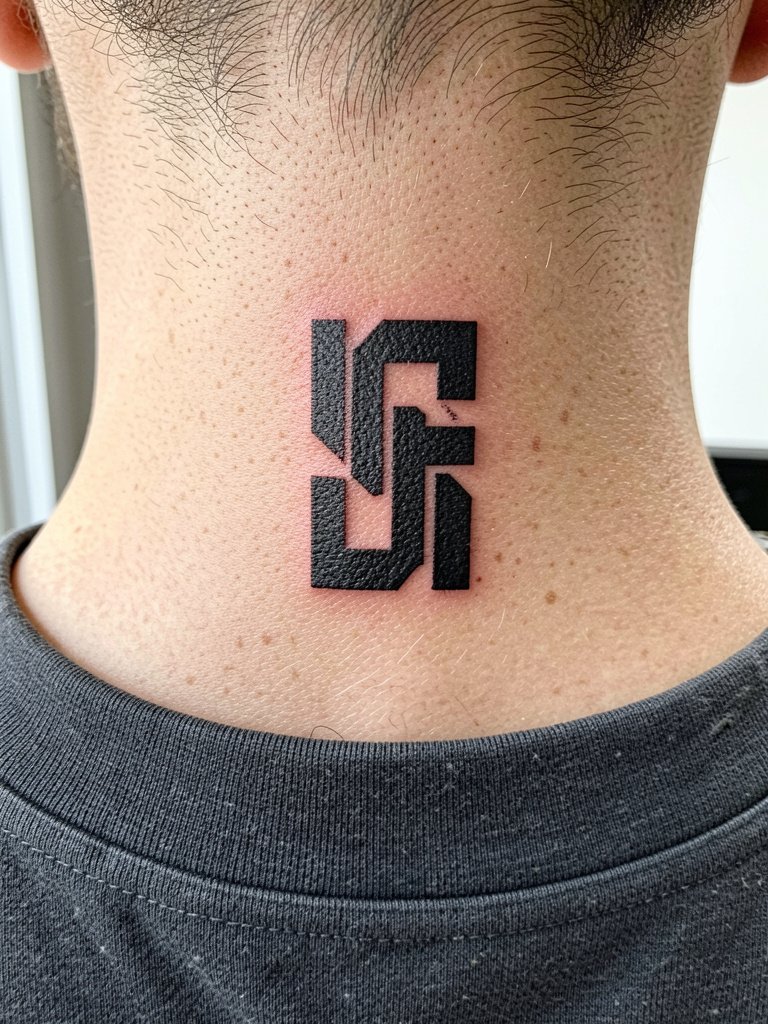
Typographic initials can be bold and graphic on the nape. The error is over-stylizing the character so it becomes illegible. Ask for mockups at different scales and for the artist to show how negative space will behave after a year. One session will usually suffice. Wear a loose T-shirt or button-up to the appointment. For wardrobe, a fitted open-collar shirt frames the letter as a deliberate accent.
27. Single Dot or Small Anchor Point
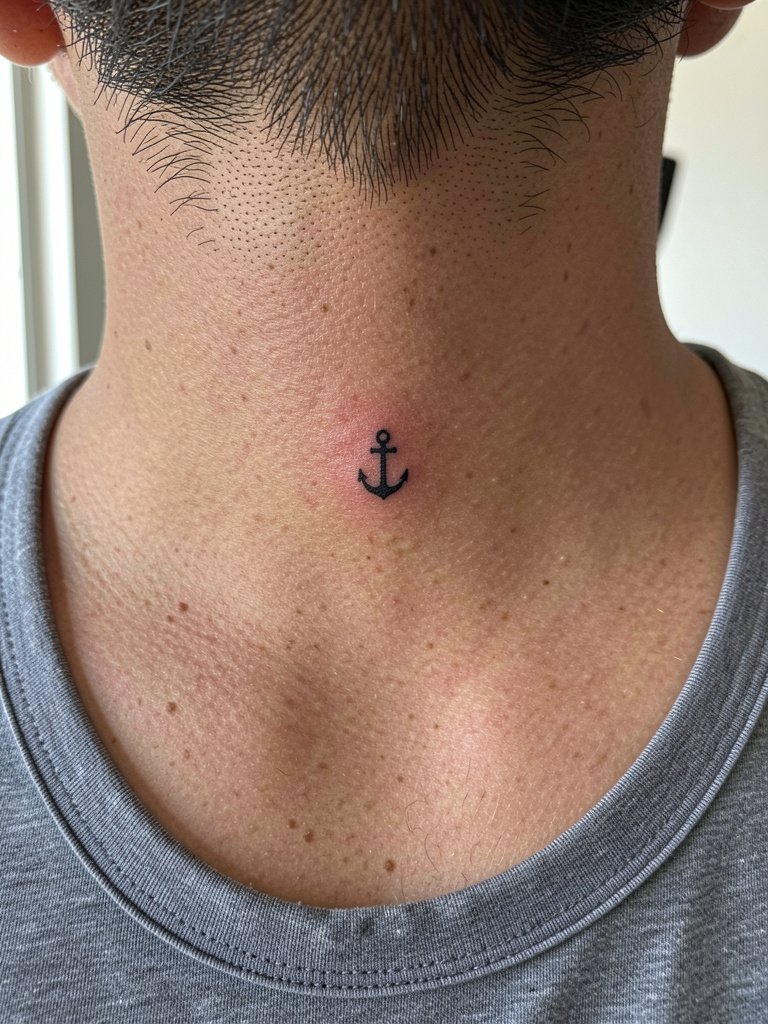
Single-dot pieces are the least visual commitment but the most dependent on perfect scale and saturation. Many single-dot tattoos fade into a freckle-like mark when pigment dispersion is not controlled. If you want a dot, ask for a slightly larger diameter and firm saturation to keep the point crisp. This is a very quick session with low pain. Wear a loose shirt for access. For evenings, a textured short haircut and an open-collar shirt give the micro mark the right context.
Frequently Asked Questions
Q: Where should I look to find local healed nape portfolios without naming artists?
A: Search Instagram and TikTok with placement-specific hashtags such as #backofnecktattoo, #napeink, and #napehealed, then filter by location or the tag on posts. Use Pinterest boards to compare scale photos and save only those that show the healed result from behind and with different haircuts. Reddit threads in r/tattoos and r/tattooadvice often include real healed photos and honest notes about longevity.
Q: How much does a back of neck tattoo cost in broad terms?
A: For small to medium nape pieces expect roughly 60 to 300 USD depending on shop minimums, complexity, and whether multiple sessions are required. Compact blackwork and single-session symbols sit at the lower end. Mandalas, illustrative eagles, and cover-ups that need two sessions sit toward the higher end.
Q: What size is too small for the nape?
A: If the core detail is under about two to three millimeters the design risks losing separation as the skin ages. I suggest discussing scale in millimeters and asking the artist to show the stencil at two scale options. That concrete view helps you avoid the common tiny-design mistake.
Q: What matters more for longevity, blackwork or fine line?
A: There are two camps on this. One camp says blackwork is the safer long-term bet on the nape because saturated areas handle friction and sun exposure better. The other camp argues that fine-line work can last if you increase spacing and use slightly heavier single-needle approaches. In practice, match the style to your tolerance for touch-ups and examine healed examples from similar placements.
Q: What should I wear to the session for a nape tattoo?
A: For direct access wear a button-up, zip hoodie, or loose T-shirt that you can move forward without tugging at the neck. Avoid tight collars and turtlenecks on appointment day because the artist needs the nape fully exposed. A simple zip hoodie or loose tee often works best.
Q: How do I make sure the tattoo looks good with my haircut?
A: Think about how often you wear your hair up versus down. Buzz cuts and fades expose the nape more, so a smaller piece will be more visible. Longer hair hides the design until you pull it up. Look for healed photos that show the tattoo with different haircuts and ask the artist to mock up placement relative to your hairline.