

Someone I know spent months scrolling for the right astro piece before realizing the real problem was knowing which style would still look good after a few years. After spending time in five shops across Brooklyn and talking with artists who work rotation shifts at conventions, I noticed the same tradeoffs keep showing up: fine line needs space to breathe, watercolor demands touch-ups, and blackwork hides well on darker tones. Expect small pieces to fall in the 100-400 range and full sleeves to reach 1,000-2,500 depending on complexity. Below are twenty zodiac tattoo ideas and clear notes to help you pick the right style for your sign and skin.
1. Minimalist Aries Ram Horns on Inner Forearm

Someone I know first saw this as a tiny wrist mark and then upgraded to an inner forearm piece. Ask your artist to draw horns with slightly heavier outer linework and a finer interior stroke so the shape reads at a distance. Pain on the inner forearm is moderate. Most sessions take 30 to 60 minutes. Common mistake is asking for lines so thin they disappear after a year. This version keeps age in mind by leaving small gaps between strokes, which reduces blowout risk. Expect a light touch-up at year two if you want crispness restored.
2. Fine Line Taurus Bull with Floral Accents on Inner Bicep

When you want a grounded look that still reads as delicate, the inner bicep gives room for detail without being exposed constantly. Tell your consult to keep core linework slightly bold and use stipple shading for the flowers so they hold on darker skin. The inner bicep is lower on the pain scale than ribs, but expect a two-session plan if you want color washes. A common aging issue is over-filling petals with light color, which fades into muddy patches. Leave negative space and plan a touch-up at year three if you wear short sleeves a lot.
3. Blackwork Gemini Twins Forearm Band

There is a reason twin silhouettes work as an arm band. The solid black silhouettes maintain saturation longer on all skin tones. When booking, ask the artist for clean edges and ample spacing so the band does not turn into a single dark block over time. Forearm bands feel like a mid-level pain day. Sessions usually run 60 to 90 minutes. A rookie move is shrinking the twins too small for the fill, which increases blowout risk. Blackwork ages well, but expect a five-year flattening of saturation that can be revived in a touch-up session.
4. Watercolor Cancer Crab with Crescent Moon on Ribcage

Fair warning: the ribcage is a 7 out of 10 on most pain scales. Many clients still pick ribs for watercolor because the canvas accommodates flowing washes. Artists split on whether fine line or light watercolor holds on ribs. One camp says the skin there stretches and blurs lines within two years. The other camp argues that with correct needle depth and spacing, details settle fine. Ask where the artist stands and whether they recommend a touch-up at year one. Watercolor on ribs usually needs a second session for saturation and a three-year check to maintain color.
5. Neo-Traditional Scorpio Fox with Geometric Accents on Wrist
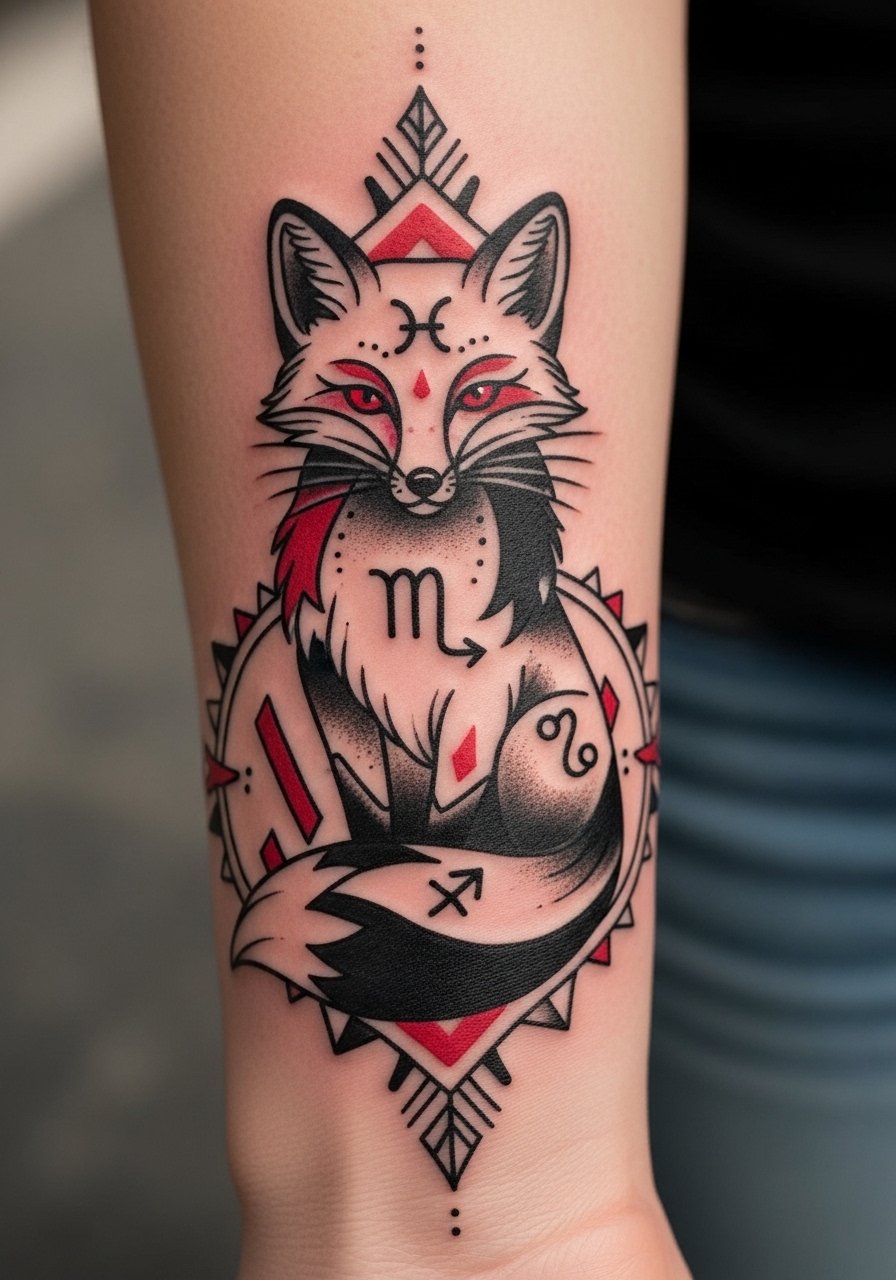
There is something about neo-traditional line weight paired with geometric shapes that reads as intentional rather than busy. For the wrist, request bold outer lines and reduced color saturation near the edges to prevent early feathering. Wrist tattoos tend to hurt more than forearms and can take 45 minutes to an hour. A common error is packing too many small geometric elements into a wrist piece. Scale back details so the fox still reads as a fox at arm's length. Expect touch-ups in two to three years, especially for color highlights.
6. Minimalist Sagittarius Arrow with Star Cluster Behind the Ear

The area behind the ear is discreet and low on visibility but higher on vibration from the skull, so expect a sharp sting for a minute. Keep the arrow no smaller than 1 inch so linework does not blur together. When you consult, ask for single-needle linework with slightly reinforced anchors at joins so the arrow keeps its negative space. A common mistake is asking for ultra-tiny stars that look like dots up close and smear in two years. Plan for a one-hour single session and a possible year-two touch-up to stay crisp.
7. Ornamental Capricorn Sea-Goat Mandala on Shoulder Blade

Someone I know chose the shoulder blade because it gives symmetry and pain is manageable there. For mandalas, request stipple shading and measured negative space so dot work does not pack into a gray mass. Sessions typically run two to three hours across one or two visits. A frequent mistake is starting a mandala too large for the shoulder curvature, which distorts as the skin moves. On healed skin, mandalas keep their geometry longer when spacing is generous. Touch-ups at three to five years are common to restore crisp dot edges.
8. Fine Line Pisces Fish with Waves on Ankle
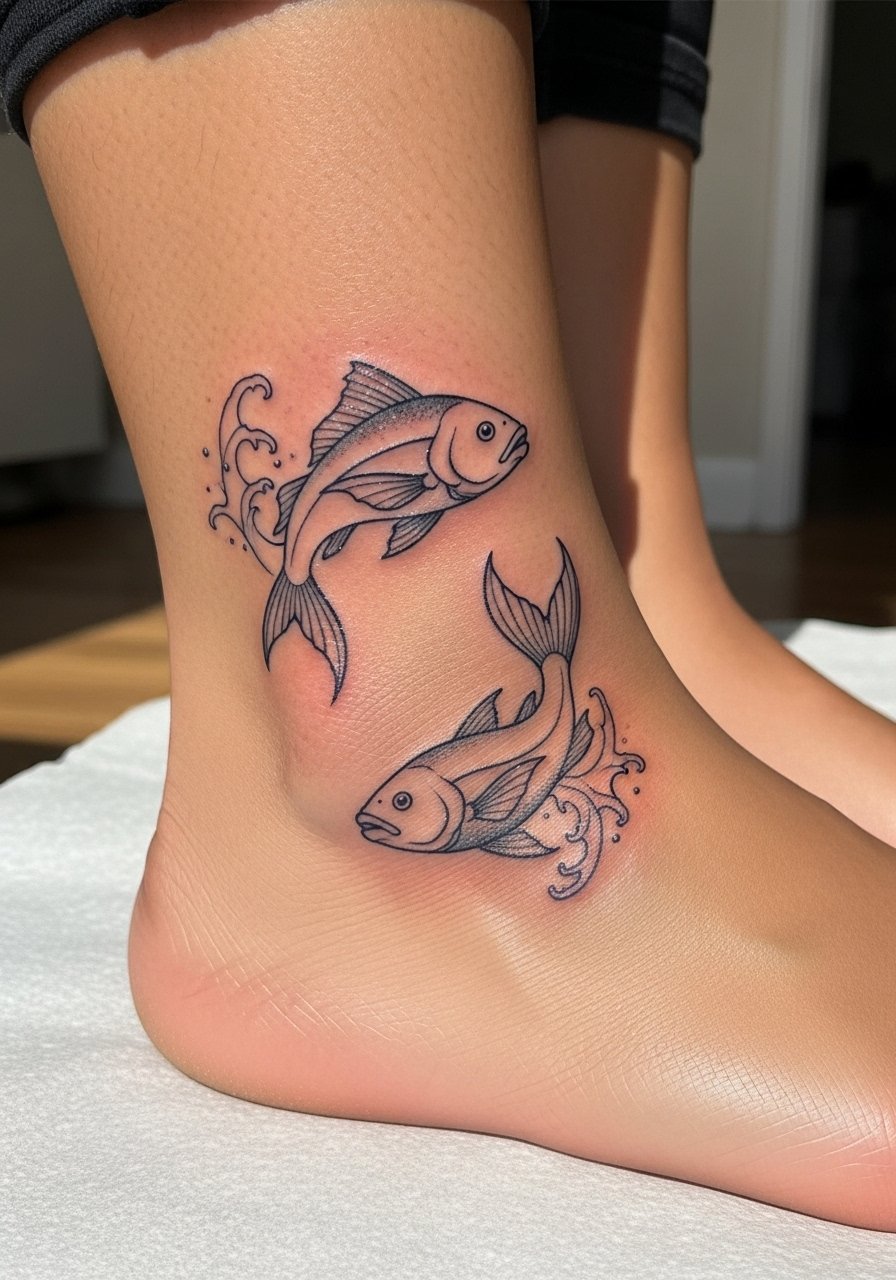
Ankle placements are notorious for both movement and shoe rubbing. When you ask for fine line there, tell your artist to slightly thicken the bottom-most contour so the fish silhouette survives shoe abrasion. Ankle pain is higher because the skin is thin over bone. Most of these fit a single-hour session. The usual error is expecting ultra-fine scales to last; scales blur first on ankles. Plan for a touch-up at year two if you wear ankle-covering footwear a lot.
9. Blackwork Leo Lion Constellation on Upper Arm with UV Elements

Visual impact rules here. Solid black linework for the lion reads strong, and small UV-reactive dots add a hidden effect under blacklight. Mention UV elements during consultation and check the ink brand for safety and longevity. Upper arm pain is moderate and sessions run 60 to 120 minutes depending on size. A misstep is asking for too many UV spots which can look patchy when they fade. UV additives fade faster than black, so expect more frequent touch-ups for the glow alone.
10. Micro-Realism Virgo Maiden with Herbs on Forearm
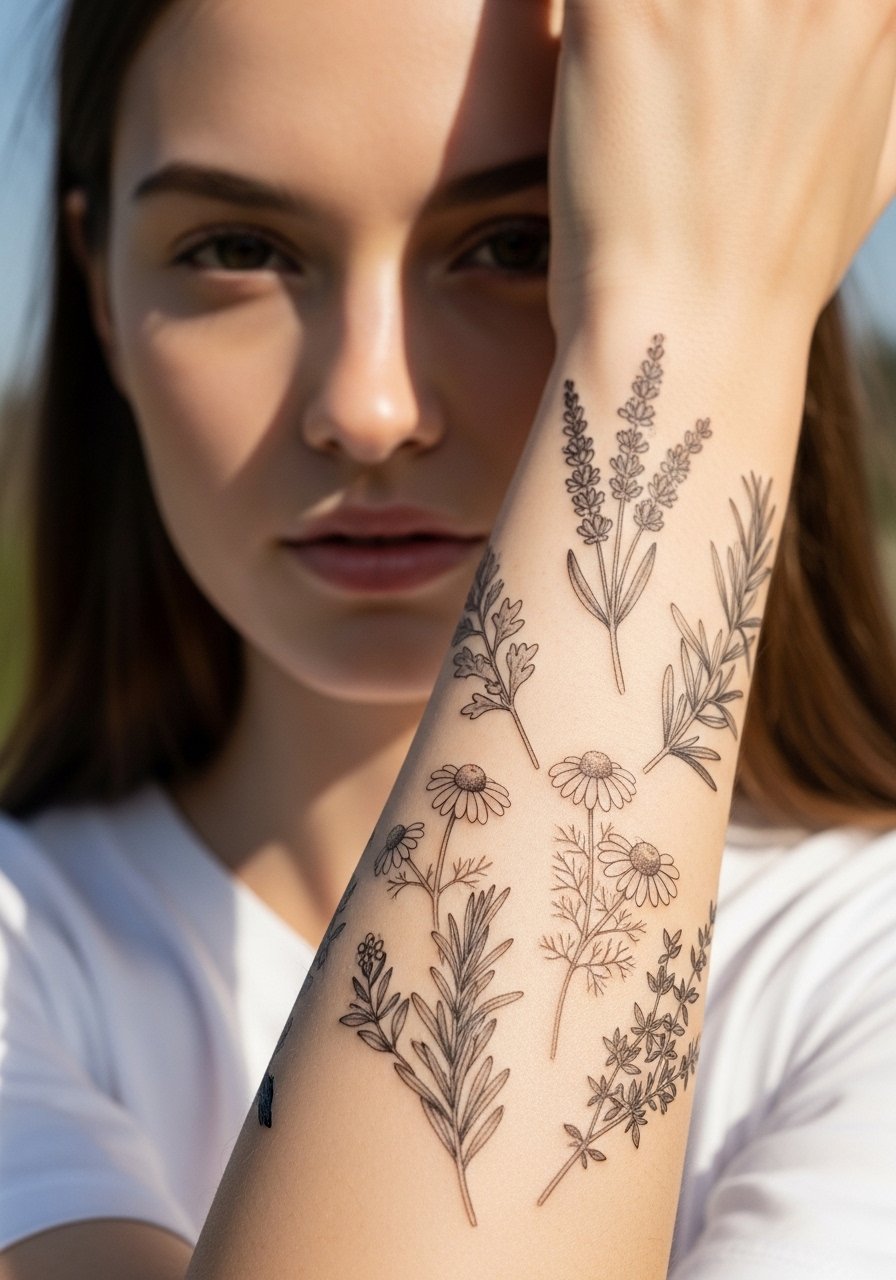
When you want a portrait with botanical notes, the forearm gives the space to show micro-realism without crowding. Tell your artist you want a 2-inch focal point with room around it for negative space so micro shading breathes. Forearm work hurts less than ribs and one session usually suffices. Common mistakes include shrinking portraits too small, which loses facial detail. Micro-realism tends to need touch-ups earlier than traditional work, so expect a revisit in two to four years for crispness.
11. Watercolor Libra Scales with Flowers on Inner Wrist
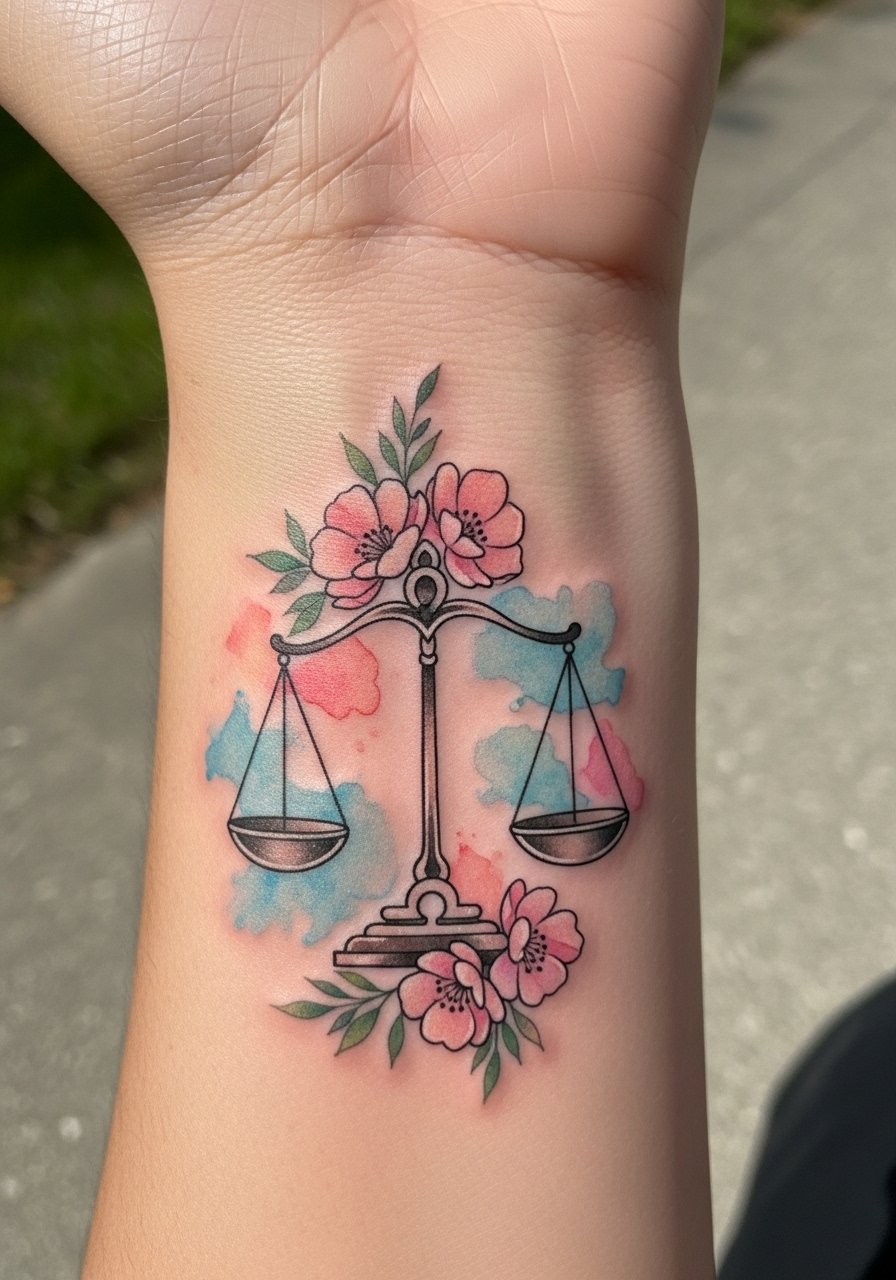
Most watercolor tattoos from years ago look washed out now when color was overapplied with no anchor lines. For an inner wrist Libra, ask for a fine anchor line around key elements so the scales keep definition while colors float inside. Inner wrist is sensitive and often needs very careful aftercare because the area flexes. One session of an hour may be enough for a small piece. A common mistake is using dense pastel fills on the wrist, which can blur. Expect a touch-up at year two for color refresh.
12. Ignorant Style Aquarius Water Bearer on Thigh

There is a raw appeal to ignorant style because it reads like a personal sketch. The thigh gives the room to go big and keep crude lines intentional rather than accidental. Tell your artist you want confident strokes with a few intentional drips so it reads as art and not as a sloppy piece. Thigh pain is lower and sessions can be longer. A common mistake is shrinking ignorant style details, which removes the aesthetic. Expect strong longevity for bold black but plan a three to five year check for saturation.
13. Floral Zodiac Constellation Sleeve Patchwork on Upper Arm

When collectors mix signs into patchwork, cohesion matters more than matching pieces. Start with a reference grid and ask your artist to design flow points so constellations and florals sit comfortably across muscle curves. Upper arm sleeves take multiple sessions and moderate pain. A typical mistake is stitching in too many micro-contrasts without a shared palette, which makes the sleeve feel disjointed. Healed work may need color touch-ups over time, so schedule maintenance sessions every three to five years depending on exposure.
14. Planetary Ruler Symbols Set on Collarbone
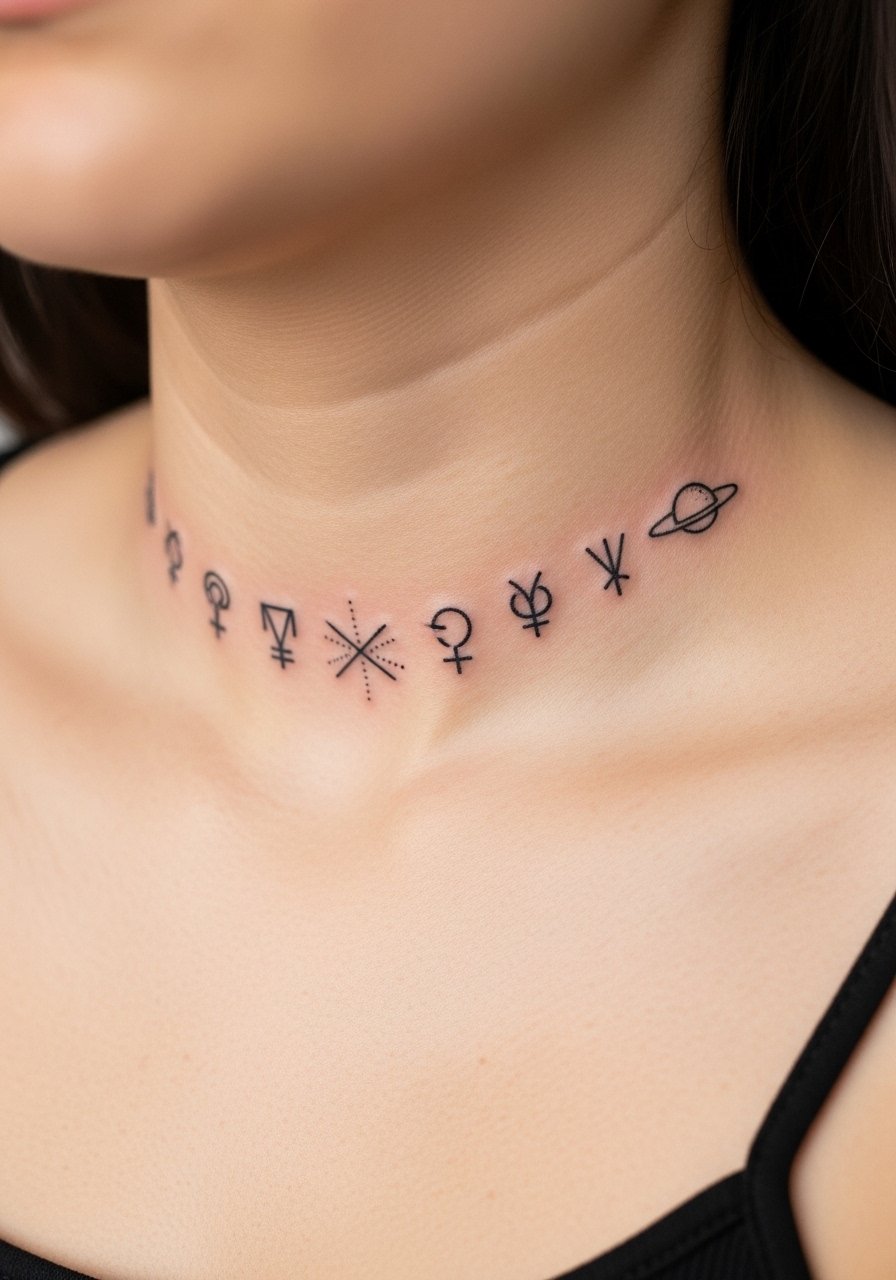
Someone I know used a line of planetary glyphs to represent natal rulers rather than sun sign alone. The collarbone lays flat for a linear set and reads well under shirts. Ask for consistent glyph scale and a slight spacing buffer to avoid crowding. Collarbone placements are higher on pain due to bone proximity and typically fit into a single session of 45 minutes. A mistake is cramming too many small glyphs together. Expect a modest likelihood of touch-up at year two if the lines settle unevenly.
15. Tarot-Zodiac Hybrid: The Chariot with Cancer Glyph on Sternum

When you want symbolism layered, a tarot-card hybrid gives narrative depth. The sternum is sensitive so professional tattooing and careful aftercare matter. Mention during consultation that you want the glyph proportionate to the card so neither element overwhelms the other. Sternum sessions are painful and may need a break between passes. A frequent error is pushing too much micro-detail into the sternum field, which can blur with movement. Plan for a touch-up at year two to keep line clarity.
16. Pisces Dual Fish in Circular Watercolor on Calf

The calf is forgiving and shows movement well for circular compositions. When asking for watercolor, request a darker perimeter line to contain washes, which helps aging. Calf pain is lower and sessions can stretch longer, often up to two hours for color. A common mistake is choosing colors that lack contrast on your tone, which makes the piece appear muted. Watercolor fades faster than black, so expect a color refresh at year three if you want vibrancy maintained.
17. Leo Solar Flare with Dot Work Background on Chest

Visual impact lead: there is a room-filling quality to a chest piece that uses radial flare and dot work to give depth. Tell the artist you want stipple shading that steps back in density so the flare pops without heavy fills. Chest placements are moderate to high on pain depending on proximity to sternum and clavicle and often need two sessions. A rookie mistake is packing continuous heavy shading into the center which flattens the flare. Dot work ages predictably when spacing is consistent, but expect a touch-up in three to five years.
18. Capricorn Sea-Goat Minimal Chest Patch with Mandala Halo
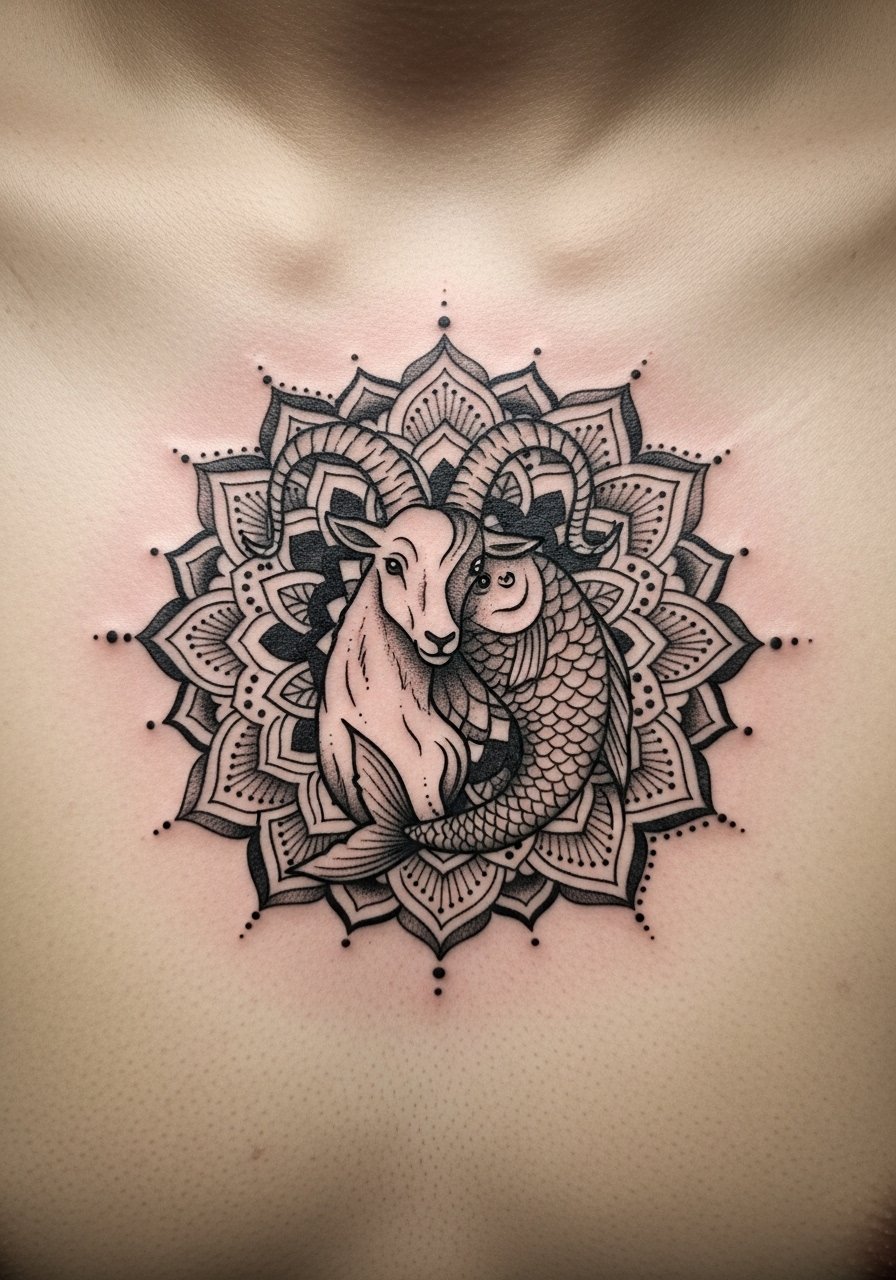
When ambition needs a subtle mark, a chest patch gives a symmetrical anchor that can tuck under shirts. During consultation specify mandala spacing and a small negative space buffer between the animal and halo so lines do not merge as skin moves. Chest pain varies and a small patch can be done in one session. The common mistake is overcomplicating the halo with too many tiny dots. Minimal mandala with bold anchors holds better over time and requires less frequent touch-ups.
19. Sagittarius Archer Horse Head with Arrow on Thigh

Mistake lead: the biggest error with illustrative horse heads is losing jaw definition when shading gets too soft. For a thigh piece ask for a defined jaw contour and a slightly thicker arrow so negative space reads from afar. Thigh placements let artists work larger and fewer sessions are needed. Pain is low and sessions tend to be longer. Expect minor saturation loss in shaded areas which can be refreshed in a touch-up at the three year mark if needed.
20. UV-Reactive Constellation Band for Any Sign on Inner Wrist

Consultation lead: if you want UV-reactive elements, bring that up early because not all inks behave the same and not every artist uses UV inks. Inner wrist visibility makes the band a conversation piece by day and a subtle glow under blacklight. Pain is moderate and sessions are short. A common mistake is over-using UV spots which can look uneven as they fade faster than black. Expect separate maintenance for the UV layer, possibly every two years, while the black linework will last longer.
Tattoo Prep and Aftercare Essentials
Fragrance-free gentle foaming cleanser for sensitive skin. Use for the first five days to keep the area clean without stripping oils. Apply with clean hands after light lukewarm rinses and pat dry with a new paper towel.
Lightweight fragrance-free healing balm. A thin layer helps scab formation stay flexible. Apply sparingly as advised by your artist.
Medical-grade second skin bandage, small sheets. Useful for high-friction spots like wrists and ankles in the first 24 to 48 hours.
Silicone scar sheets for long-term care. After full healing, these help texture evenness if you notice raised areas.
SPF 50+ broad-spectrum mineral sunscreen. Protect healed tattoos from fading and color shift when exposed to sun.
Saniderm occlusive bandage, single-pack option. Popular occlusive choice for the first day if your artist recommends an adhesive barrier. Use only one mainstream product in the list.
Soft non-abrasive microfiber washcloths, pack of two. Good for gentle cleaning once scabs start to soften.
Fragrance-free moisturizing lotion with ceramides. Use long term to maintain saturation and skin health.
Every tattoo is different. Always follow your artist's specific aftercare instructions. Consult a dermatologist if you have skin concerns or unusual healing issues.
Frequently Asked Questions
Q: Will fine line Aries ram horns blur on the wrist faster than on the forearm?
A: It depends on line weight and scale. Fine line on the wrist is higher risk because skin there sees more friction and movement. If you want the same look, ask your artist to slightly increase outer anchor lines or move the piece to the inner forearm where spacing helps reduce blowout. Expect a likely touch-up within two years for ultra-fine work.
Q: Do watercolor-style ribcage tattoos need different aftercare than traditional ones?
A: From what I've gathered, watercolor and traditional aftercare are similar while scabbing is active. The main difference is that watercolor relies on subtle saturation, so avoid aggressive exfoliation during the first three months. Keep the area protected from direct sun and plan for a possible color touch-up at year one to restore vibrancy.
Q: How often will a blackwork Gemini forearm band need touch-ups?
A: Blackwork holds better than pastel washes, but all solid fills flatten with sun and wear. In my observation, a dense black band may need a saturation refresh every four to six years depending on exposure and lifestyle. If you wear long sleeves most days, expect longer intervals between touch-ups.
Q: Are UV-reactive inks safe and do they fade differently?
A: Artists are split on UV inks. One camp says modern UV inks are formulated to be safe and stable. The other camp warns that some UV pigments fade unevenly and can look patchy. If you choose UV elements, get a clear plan from your artist about maintenance and expect the glow to require more frequent refreshes than black ink.
Q: Should I avoid micro-realism on darker skin tones for Virgo-style portraits?
A: Not necessarily. Micro-realism can work on darker tones if the artist adjusts contrast and uses selective highlights rather than relying on subtle gray gradients. Ask to see healed examples on similar skin tones and request a slightly larger scale so facial features hold. A visit for a touch-up at two to three years is common for maintaining detail.
Q: What discovery methods help me find an artist for these astrology designs?
A: Search studio blogs, local tattoo directories, and convention guest lists to find portfolios that show healed work. Look for healed photos, not only fresh shots. Community hubs and gallery-style studio pages often show progression photos that give a realistic sense of aging and touch-up frequency.