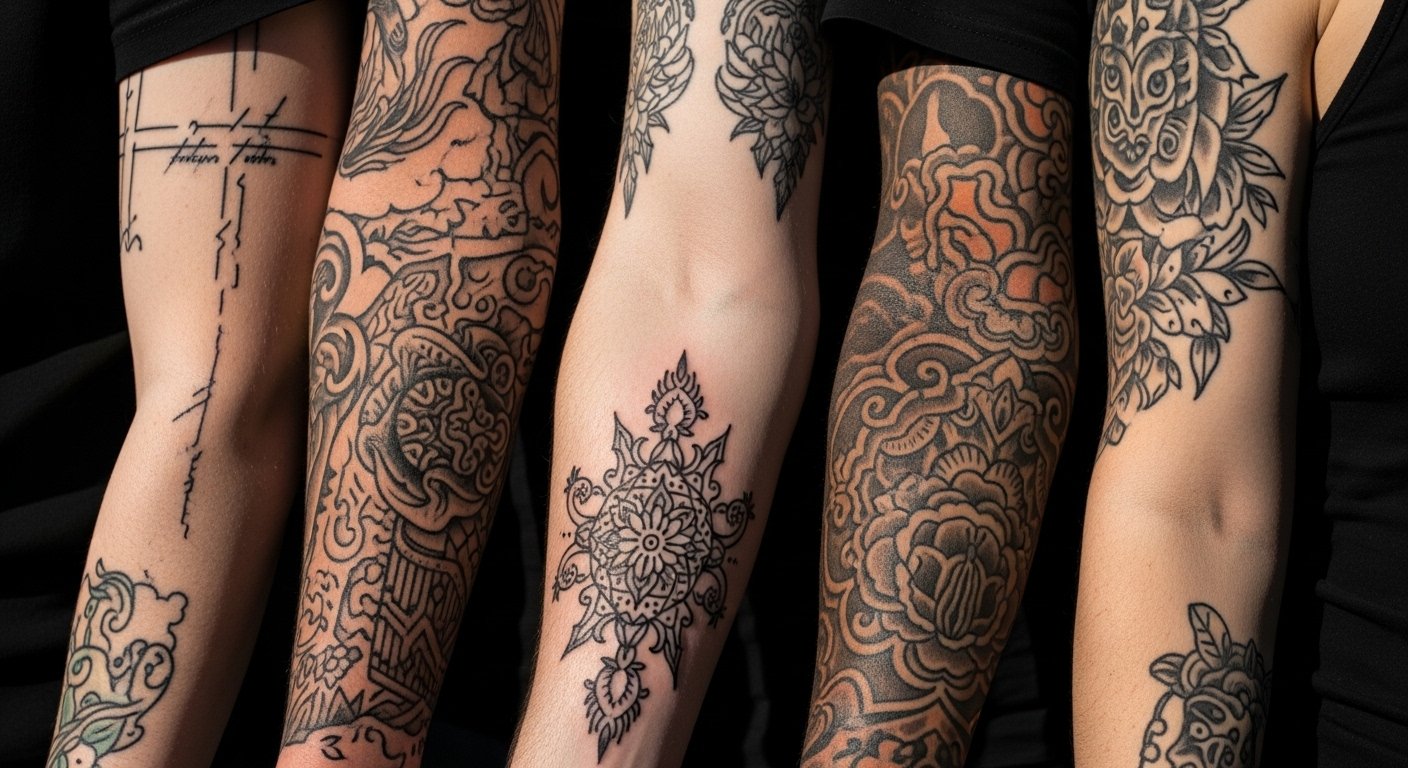
I spent months bookmarking blackwork pieces before I understood the real problem: picking a design that keeps its bold energy as it heals and ages. These 29 blackwork ideas focus on striking silhouettes and solid saturation—styles that look commanding fresh and remain legible years later.
Quick note: I focus on blackwork styles—geometric, illustrative, dotwork, and solid silhouettes. These designs work across arms, ribs, thighs, and backs. I pulled trends that are rising in 2025 and included a few under-covered ideas you don't see on every feed.
Blackwork Geometric Sleeve on Outer Forearm
Style/Technique: Blackwork / Geometric
Pain Level: Medium (4/10)
Session Time: 2–4 sessions
Best For: Statement sleeve, visible placement
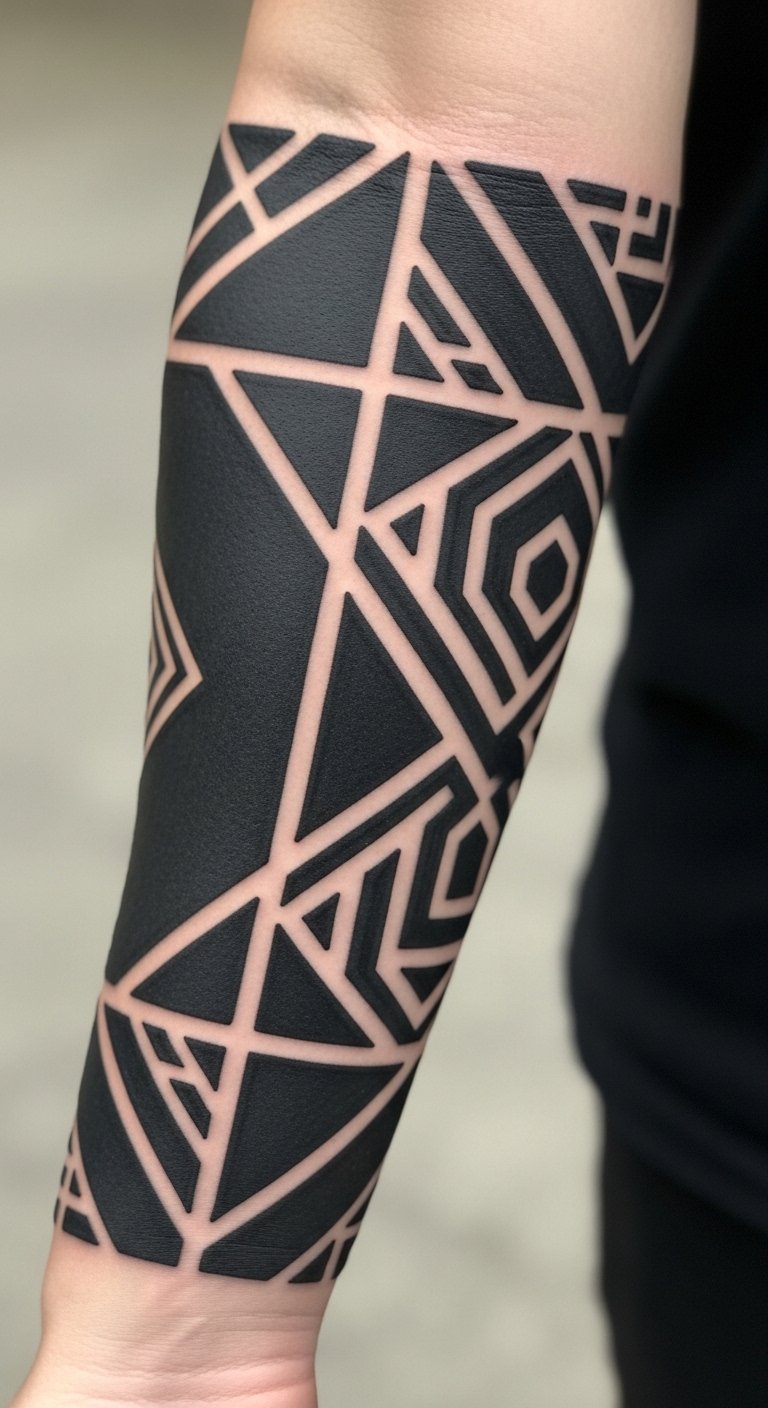
I fell for this style at a convention booth. Large blocks of solid black and repeating geometry read bold from across the room. Outer forearm tolerates longer sessions, so you can get big shapes that hold ink well. Expect steady soreness but manageable pain. Heals with crisp edges if the artist packs ink deeply and lets the skin rest between sessions. Common mistake: tiny details in solid fills—avoid micro-work inside huge black areas or it will blur over years. Ask for artists experienced in bold saturation and consistent needle packing.
Blackwork Mandala on Upper Back
Style/Technique: Blackwork / Dotwork
Pain Level: Medium (5/10)
Session Time: 2–3 hours
Best For: Symmetry lovers, statement piece

I saw a mandala like this at a studio and loved the balance it gives a backpiece. The upper back lets mandalas breathe. Dotwork petals fade softer than solid blacks but create depth. Pain is steady; it’s not brutal. Healing needs diligent moisturizing since dense dotwork can scab thicker. Avoid overcrowding with tiny elements—mandalas need negative space. Look for artists who use both solid fills and gradual dot gradients.
Bold Black Rose on Upper Arm
Style/Technique: Blackwork / Neo-Traditional
Pain Level: Low-Medium (3/10)
Session Time: 2–3 hours
Best For: Timeless statement, first bold piece

I picked a rose like this for a first big black piece. The upper arm is forgiving and holds solid black well. It reads powerful in photos and daily life. Pain is low to medium. Healing, you’ll see crisp edges turn slightly softer but remain bold. Common mistake: asking for too much tiny veining inside petals—keep petals chunky for longevity. Ask for bold outlines and saturated fills.
Blackwork Geometric Mandala Down Spine
Style/Technique: Blackwork / Geometric
Pain Level: High (7/10)
Session Time: Multiple short sessions
Best For: Vertical statement, symmetry seekers
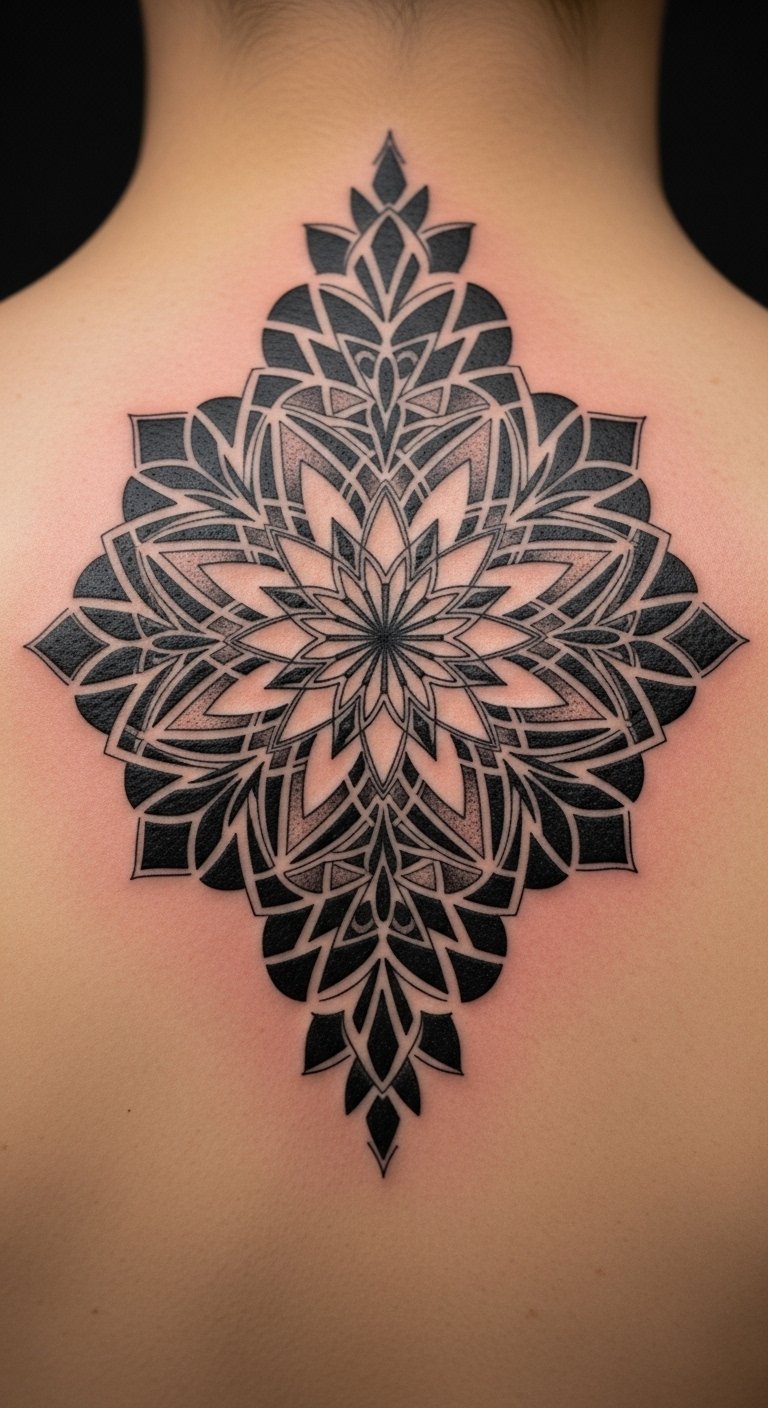
I saw this on a model and loved the way it anchors the body. Spine placement is painful due to bone proximity. Sessions should be staggered. The design ages well if blocks are bold and symmetry is precise. Avoid ultra-thin lines down the spine. Ask for design mockups showing alignment on your back.
Solid Black Forearm Band With Negative Space
Style/Technique: Blackwork / Silhouette
Pain Level: Medium (4/10)
Session Time: 1–2 hours per band
Best For: Bold minimalists, easy visibility

I tested a band like this on a friend. It’s simple and bold. Forearm bands are straightforward but need clean edges. Pain is manageable. Keep in mind solid bands can tighten skin sensation while healing—moisturize well. A common error is uneven width around the arm; request a stencil wrap to confirm fit.
Blackwork Animal Silhouette on Chest
Style/Technique: Blackwork / Silhouette
Pain Level: Medium (5/10)
Session Time: 1–3 hours
Best For: Symbolic pieces, easy negative-space work
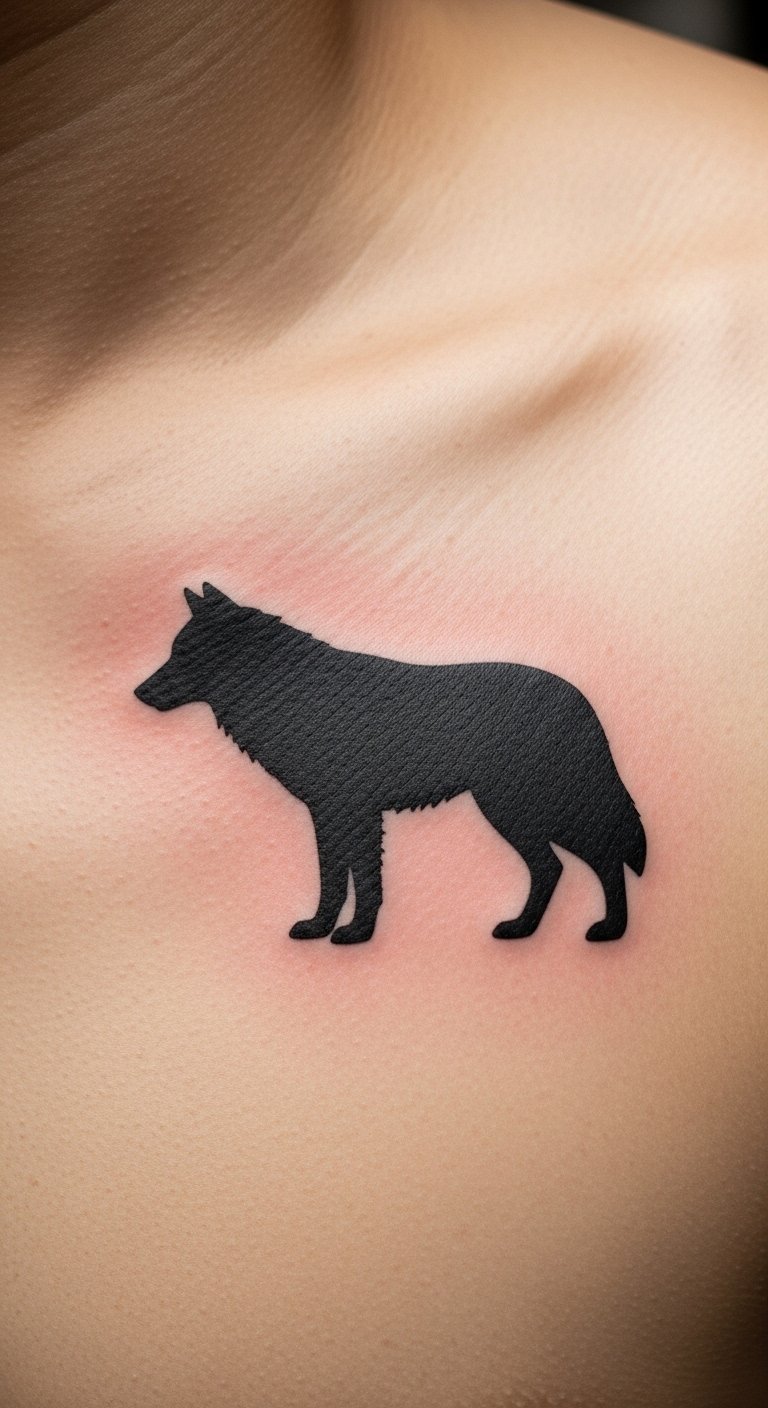
Silhouettes read clean and bold on the chest. I spotted one that felt like personal armor. Chest has variable pain (near sternum is sharper). Heals to a striking graphic shape. Avoid overly intricate inner detail—this style shines in simplicity. Ask your artist to test negative-space shapes on the skin first.
Ornate Blackwork Sleeve With Floral and Bones
Style/Technique: Blackwork / Illustrative
Pain Level: Medium-High (6/10)
Session Time: Multiple sessions
Best For: Full-sleeve collectors, gothic aesthetics

I loved how contrast plays between soft florals and hard bone shapes. Sleeves let you mix textures—solid fills, linework, and dot shading. Pain builds across sessions but you can pace it. Healing needs steady aftercare to keep blacks saturated. A mistake is cramming too many tiny elements; leave breathing room.
Blackwork Compass on Sternum
Style/Technique: Blackwork / Linework
Pain Level: High (8/10)
Session Time: 1–2 hours
Best For: Centered statements, adventurous placements
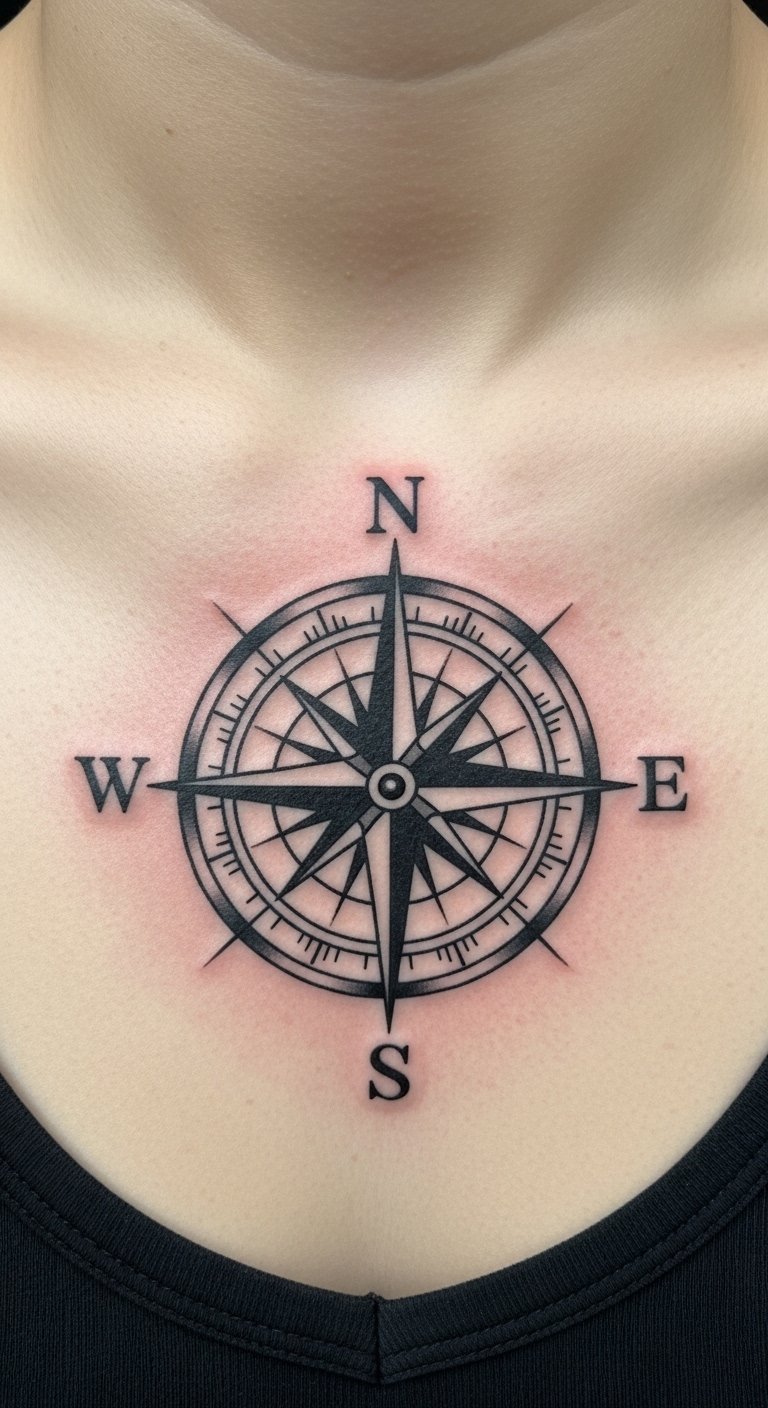
I tried a sternum compass sketch once—intense but rewarding. Sternum pain is high. The compass reads symbolic and bold when healed. Keep lines slightly thicker than usual; ultra-fine work may blur. Recovery requires minimal chest movement and careful clothing choices.
Blackwork Crescent Moon Behind Ear
Style/Technique: Blackwork / Minimalist
Pain Level: Low (2/10)
Session Time: 30–60 minutes
Best For: Subtle accents, hidden placement

I got a tiny crescent behind my ear to test tolerance. It’s subtle and heals fast. Pain is low. Black ink reads strongly even at this small scale. Common mistake: expecting ultra-fine detail—keep it bold and simple. Perfect for a first small blackwork.
Blackwork Stacked Triangles on Ribcage
Style/Technique: Blackwork / Geometric
Pain Level: High (7–8/10)
Session Time: 1–3 hours
Best For: Hidden statements, dramatic shapes
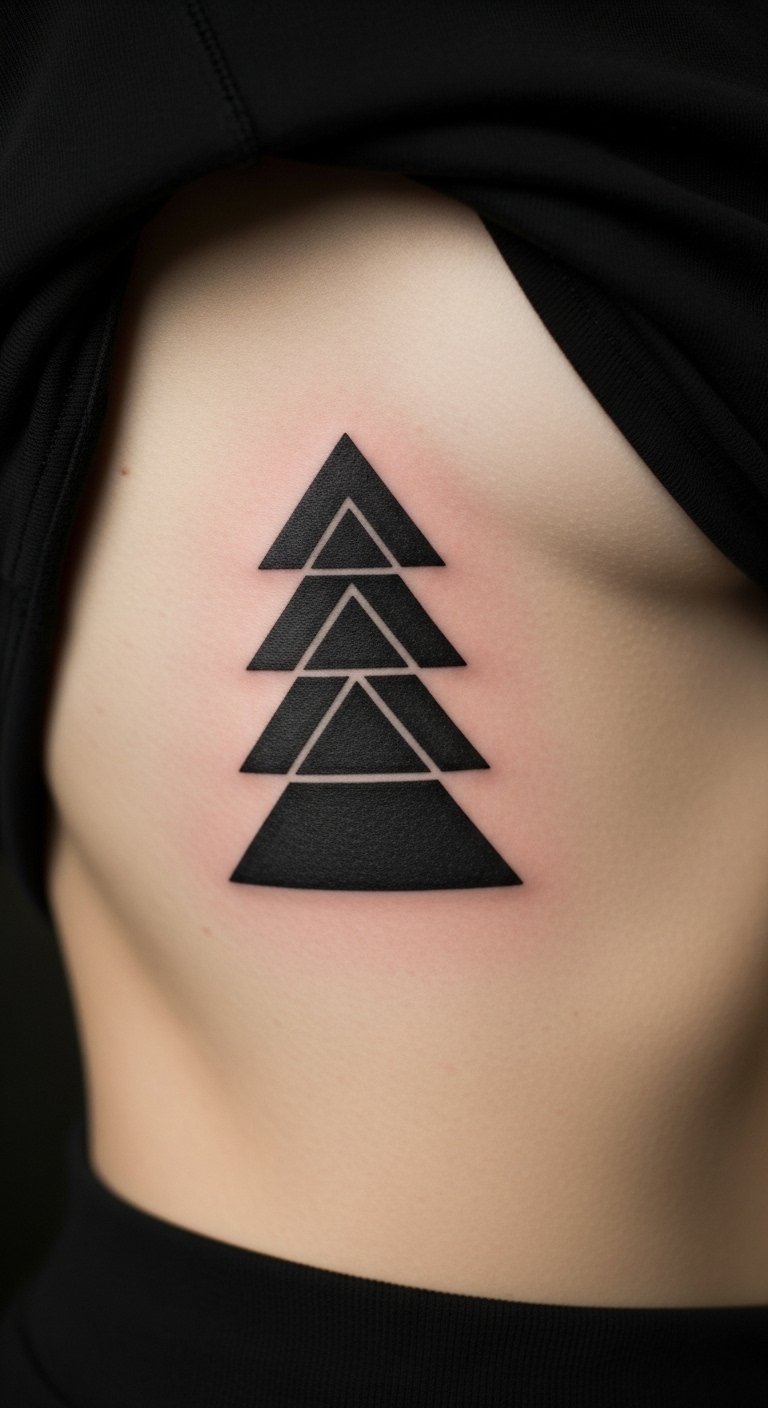
I bookmarked ribcage geometry for its drama. Ribcage is painful but great for long, vertical shapes. Heals with a slight softening of edges. Avoid tiny inner details inside triangles. Ask for clear negative-space guides.
Blackwork Portrait Silhouette on Thigh
Style/Technique: Blackwork / Portrait Silhouette
Pain Level: Medium (4/10)
Session Time: 2–4 hours
Best For: Large personal portraits, coverable
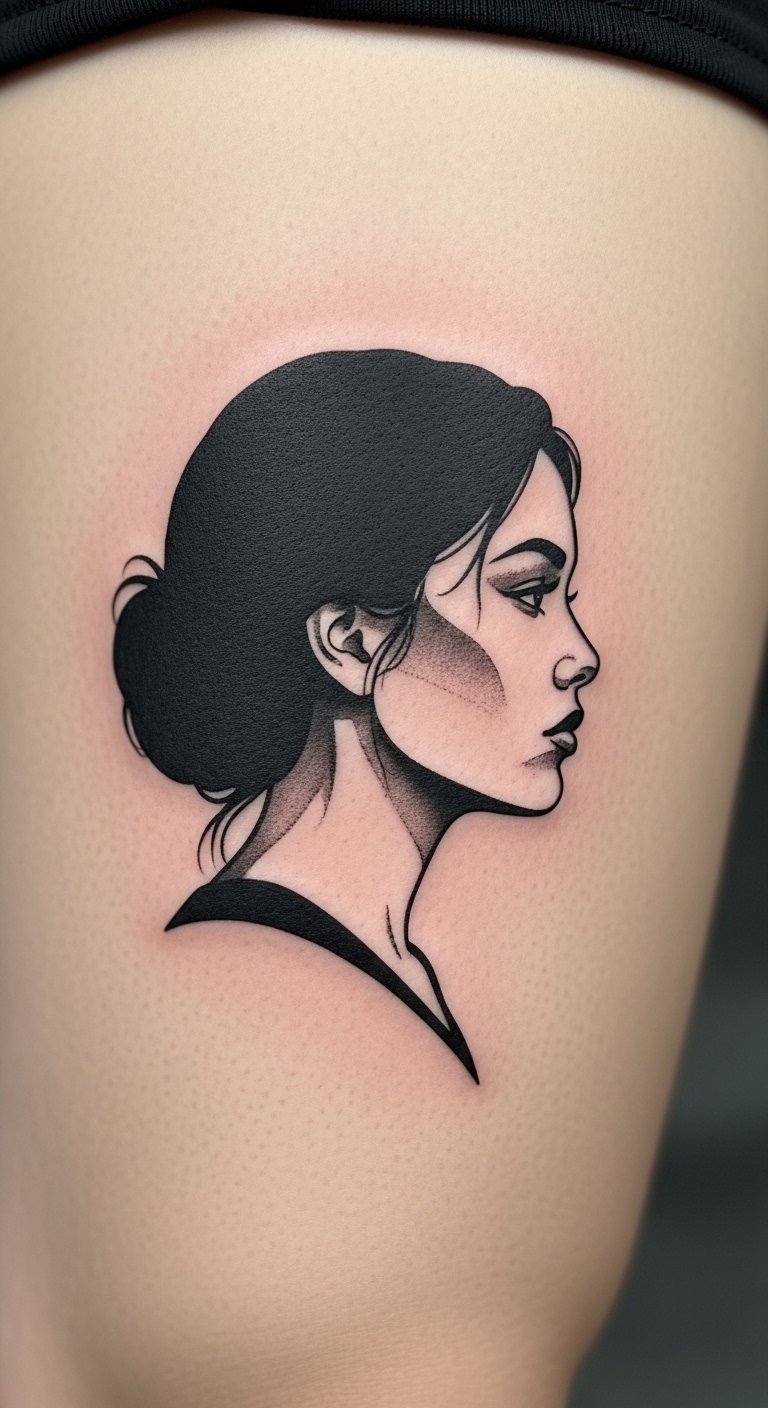
I liked the privacy of a thigh portrait. Thigh skin takes black well. Pain is moderate. Solid silhouettes keep the portrait readable over time. Avoid trying complex color portraits in this style—stick to bold shapes.
Blackwork Botanical Ankle Band
Style/Technique: Blackwork / Illustrative
Pain Level: Medium-High (6/10)
Session Time: 1–2 hours
Best For: Feminine band, low visibility

Ankle tattoos blister more due to movement and socks. Botanical blackwork looks delicate yet bold. Pain spikes near bone. Heals faster with little friction. Mistake: expecting ultra-fine veins; keep leaves slightly enlarged.
Blackwork Neo-Tribal Thigh Panel
Style/Technique: Blackwork / Tribal
Pain Level: Medium (5/10)
Session Time: 2–5 hours
Best For: Cultural motifs, bold coverage

I admired a neo-tribal thigh panel at a gallery. Thigh is forgiving for expansive black. Patterns should respect cultural origins—ask about references and meaning. Heals into a strong graphic piece. Avoid trivializing traditional motifs.
Blackwork Script Band on Wrist
Style/Technique: Blackwork / Script
Pain Level: Medium (4/10)
Session Time: 30–90 minutes
Best For: Meaningful words, high visibility

I tested a wrist ring script phrase. Wrist movement and thin skin can make script blur, so use thicker letterforms. Pain is brief but sharp. Healing needs sun protection; wrist fades faster without SPF.
Blackwork Negative-Space Skull on Calf
Style/Technique: Blackwork / Negative Space
Pain Level: Medium (4/10)
Session Time: 1–2 hours
Best For: Bold contrasts, athletic placements

I liked the stark impact of a negative-space skull on the calf. Calves tolerate work well and display clean edges. Negative-space designs age nicely if blacks remain saturated. Avoid tiny hollow details.
Blackwork Micro-Realism Eye on Behind Arm
Style/Technique: Blackwork / Micro-Realism
Pain Level: High (7/10)
Session Time: 2–3 hours
Best For: Conversation piece, expressive detail

I saw an eye like this that felt almost alive. Micro-realism in black demands a skilled hand. Behind-arm skin moves a lot, so expect some softening. Only an experienced artist should handle micro shading here.
Blackwork Floral Collarbone Accent
Style/Technique: Blackwork / Illustrative
Pain Level: High (6/10)
Session Time: 1–2 hours
Best For: Feminine placement, visible neckline

Collarbone tattoos look striking but hurt near bone. Florals in black create contrast with clothing and jewelry. Healing needs gentle care; avoid tight tops that rub.
Solid Black Back Panel With Cut-Out Shapes
Style/Technique: Blackwork / Silhouette
Pain Level: Medium-High (6/10)
Session Time: Multiple sessions
Best For: Large statement, cover-up friendly

I appreciated how a solid back field with cut-outs simplifies cover-ups and ages consistently. Dense black takes time to pack. Expect multiple sessions and careful aftercare to avoid patchiness.
Blackwork Constellation Wrist Cluster
Style/Technique: Blackwork / Minimalist
Pain Level: Low (2/10)
Session Time: 30–60 minutes
Best For: Tiny meaningful pieces, layering

Constellation clusters are subtle and personal. Tiny dots heal fast but can blur if overly fine. Keep dot size slightly larger for longevity. Wrist placement needs daily SPF later.
Blackwork Architectural Linework on Forearm
Style/Technique: Blackwork / Linework
Pain Level: Medium (4/10)
Session Time: 1–3 hours
Best For: Urban aesthetic, long shapes
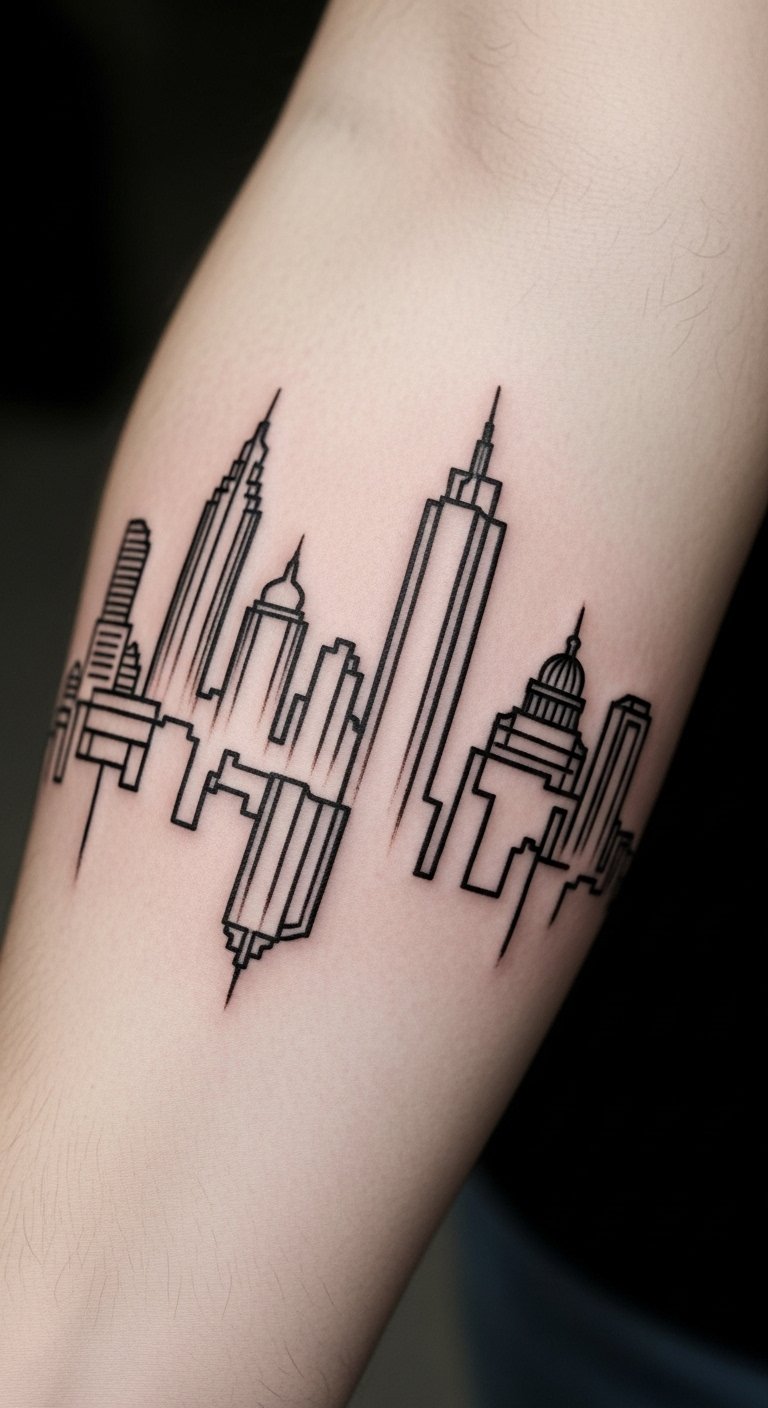
I loved a skyline forearm piece at an urban gallery. Strong architectural lines hold well when slightly thicker. Forearm movement is forgiving. Avoid ultra-thin single lines for long stretches.
Blackwork Celtic Knot on Shoulder Blade
Style/Technique: Blackwork / Knotwork
Pain Level: Medium (5/10)
Session Time: 1–2 hours
Best For: Symbolic work, medium detail

Celtic knotwork reads timeless in solid black. Shoulder blade is less painful and shows knots clearly. Precision matters—ask for a stencil that wraps the muscle curve.
Blackwork Botanical Thigh Wrap
Style/Technique: Blackwork / Illustrative
Pain Level: Medium (5/10)
Session Time: 2–4 hours
Best For: Large, feminine coverage
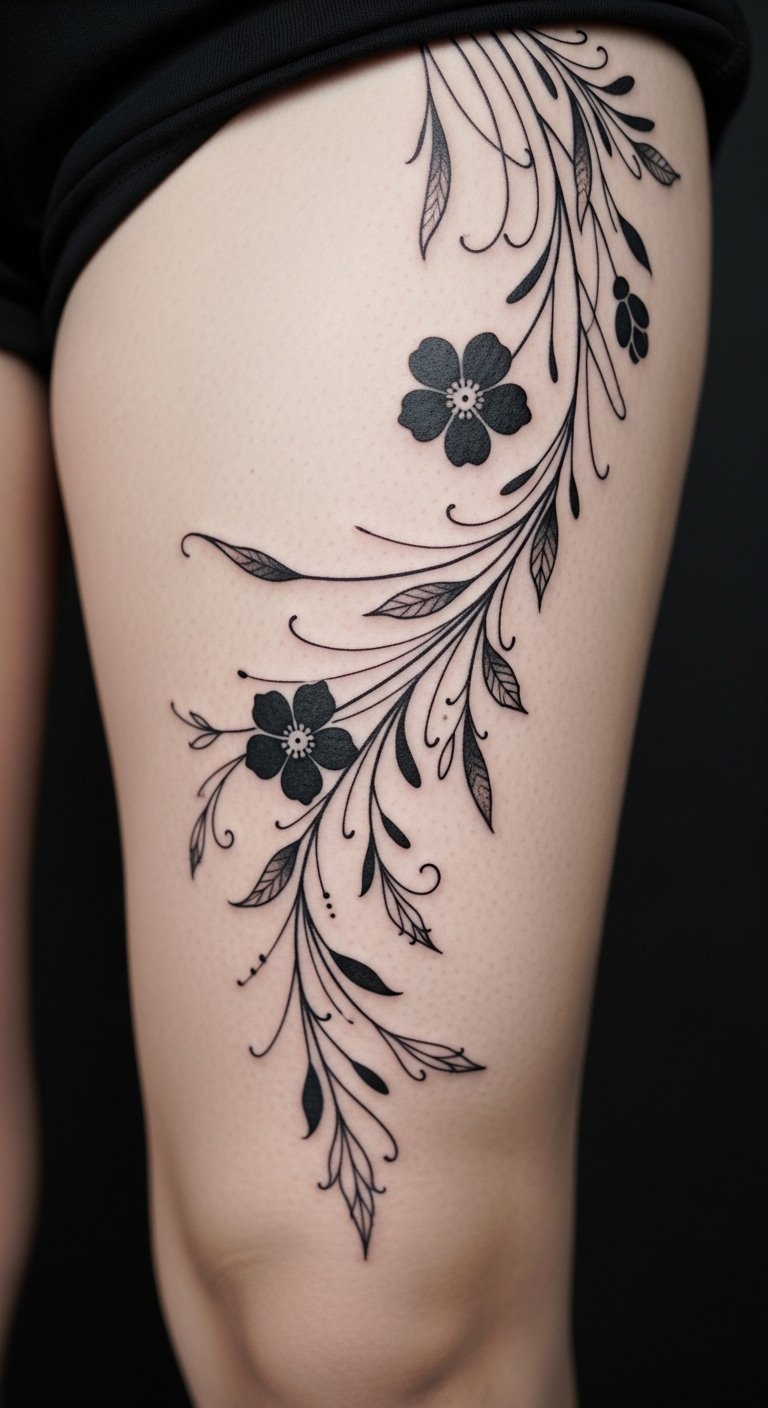
Thigh wraps allow flowing compositions. Black inks age well here. Avoid crowding stems; let the design move with your shape.
Blackwork Stag Head on Sternum-Rib Junction
Style/Technique: Blackwork / Illustrative
Pain Level: High (8/10)
Session Time: 2–3 hours
Best For: Centered torso pieces, mythic vibes

I saw a stag that used negative space across ribs. It looks heroic but hurts. Keep antler details bold to avoid long-term blurring.
Blackwork Optical Illusion Band on Bicep
Style/Technique: Blackwork / Op Art
Pain Level: Medium (4/10)
Session Time: 1–2 hours
Best For: High-impact arm pieces

Op art bands catch attention. Biceps flexing can change how they read; try a mockup while flexed. Lines must be slightly thicker for durability.
Blackwork Wave Panel Along Rib Line
Style/Technique: Blackwork / Illustrative
Pain Level: High (7/10)
Session Time: 1–3 hours
Best For: Fluid placement, coverable

I love wave energy along the ribs. It hurts, but the motion of the design suits the body. Dense blacks should be avoided near edges where movement causes faster softening.
Blackout Knee Cap With Cut-Out Pattern
Style/Technique: Blackwork / Silhouette
Pain Level: High (8/10)
Session Time: Multiple sessions
Best For: Bold lower limb statement
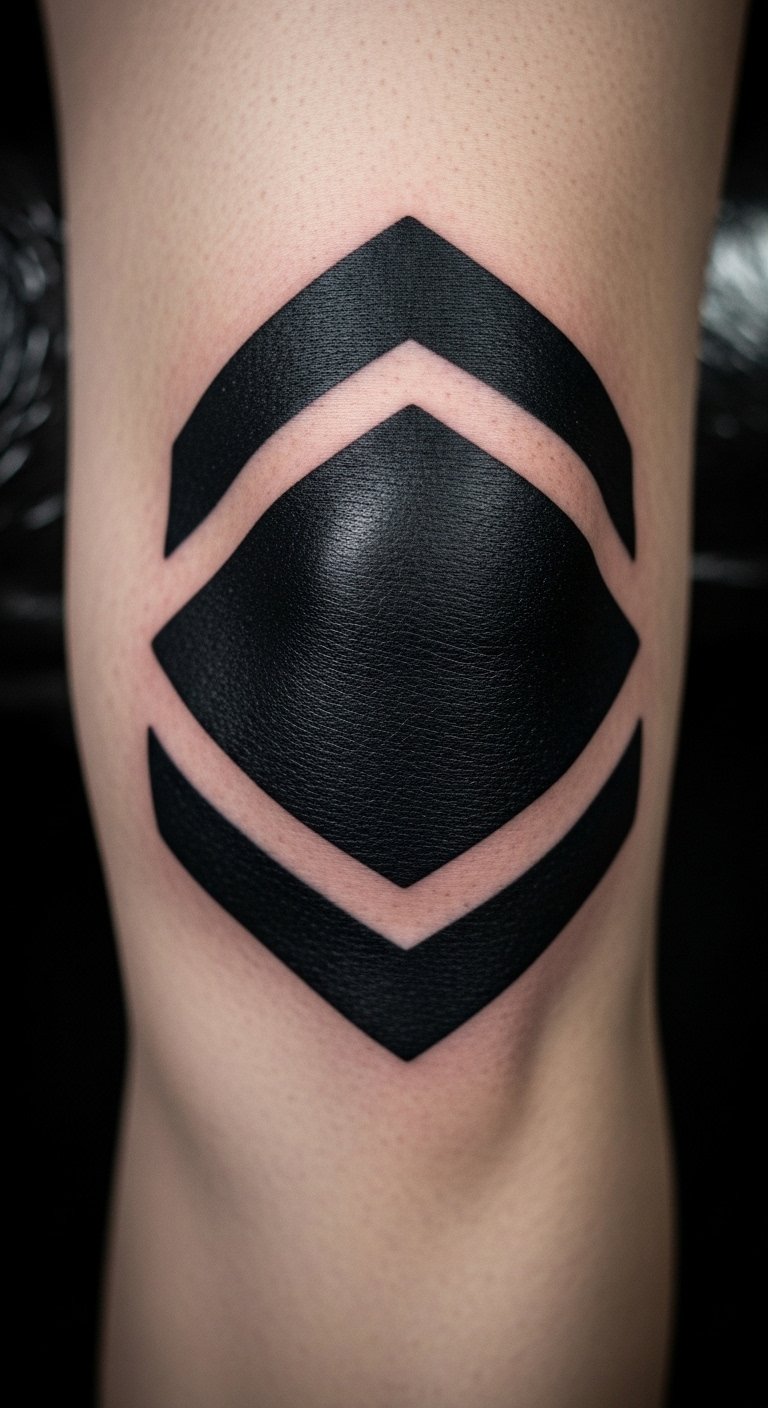
Knee blackout is intense. Expect multiple short sessions. It reads dramatic and holds well if packed correctly. Don’t try intricate internal detail over the knee.
Blackwork Floral Ribcage Half-Sleeve
Style/Technique: Blackwork / Illustrative
Pain Level: High (7/10)
Session Time: Multiple sessions
Best For: Feminine full-side pieces

I opted for a half-side floral and found it very visible when healed. Rib pain is high. Keep petals bold to ensure clarity as skin stretches.
Tattoo Prep and Aftercare Essentials
Aftercare Essentials:
- Aquaphor Healing Ointment, 14oz tube — Recommended first 3–5 days for heavy scabbing areas
- Saniderm Transparent Adhesive Bandage, 6-inch roll — Second-skin method many artists suggest
- CeraVe Fragrance-Free Moisturizing Lotion — For days 4–14 when dryness sets in
- Dr. Bronner's Unscented Castile Soap, 32 oz — Gentle cleaning during early healing
Before Your Appointment:
- Numbing cream with 5% lidocaine — Use only if your artist approves
- Stencil transfer paper pack — For at-home mockups if you design first
Long-Term Maintenance:
- SPF 50 sunscreen stick for tattoos — Daily protection prevents fading
- Mad Rabbit Tattoo Balm — For healed-skin maintenance
- Hustle Butter Deluxe, 4oz — Vegan aftercare option many artists recommend
Optional Comfort Items:
- Tattoo numbing spray — For very sensitive spots (use carefully)
- Hydrocolloid bandages large — For spot touch-ups or blisters
Frequently Asked Questions
Q: How bad does a tattoo actually hurt?
A: Pain depends on placement and tolerance. Outer arm = low (3/10). Ribs/spine = high (7–8/10). It’s often a steady burning/scratching sensation. For sensitive spots, consider a 5% lidocaine numbing cream only if your artist approves.
Q: How long does a tattoo take to heal?
A: Surface healing: 2–3 weeks. Full healing: 2–3 months. First week is most critical—clean gently with unscented soap and use Aquaphor for heavy scabs. Don’t pick flakes.
Q: How do I keep blackwork from fading?
A: Daily sunscreen is essential. Use an SPF 50 stick on exposed tattoos. Black holds longer than color, but UV kills pigment over time.
Q: Can I work out after getting inked?
A: Wait 48–72 hours minimum. If the tattoo is on a flex area (elbow, knee), wait longer until initial scabbing subsides. Sweat increases infection risk.
Q: Do tattoos look different on various skin tones?
A: Yes. Black and bold blackwork usually shows strongly across tones. Very fine white highlights may disappear on deeper skin. Ask to see healed examples on your skin tone.
Q: What if I regret my tattoo?
A: Sit with big ideas for months. Consider placement that’s easy to hide if unsure. Removal exists but is lengthy. Think of permanence when choosing visibility.
Stat notes: About 30% of U.S. adults report having at least one tattoo (Pew Research Center, 2019). Blackwork and geometric pieces have trended up in tattoo feeds across 2023–2025, showing strong longevity in healed portfolios (industry surveys and studio reports).
Start with research and a consultation. A clear stencil and realistic healing expectations make all the difference. Keep your new blackwork bold with Aquaphor early and SPF daily. Which blackwork style are you leaning toward?