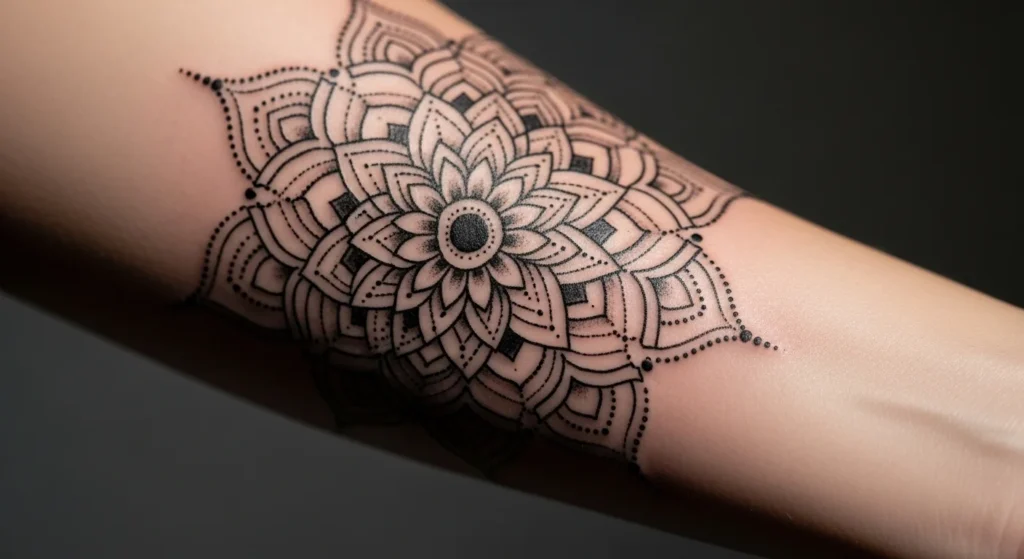

Mandala tattoos carry a peaceful energy. Their symmetry, soft patterns, and repeating shapes feel grounding to many people. Whether you pick a simple wrist piece or a full back design, these tattoos often bring a sense of balance. This list gives you calm-looking ideas along with practical tips. You’ll also find suggestions that help you choose the right style, size, and placement without overspending or feeling lost in the design overload.
1. Forearm Mandala for Everyday Calm

A forearm mandala feels grounding because you see it often. The open space on the forearm works well for round symmetry and simple dotwork. You can go small to keep costs low. Start with a main circle and add tiny petals around it. Many people like using a single shade of black for clean results. If you’re on a budget, choose fewer layers. If you want a personal touch, add a tiny flower or leaf shape in the center. The forearm also handles touch-ups well. Keep the aftercare simple: unscented moisturizer and gentle washing. A forearm tattoo suits people who want visible art without going too large. You can show it when you want or cover it easily with long sleeves. This style stays calm, subtle, and flexible.
2. Small Wrist Mandala

A wrist mandala is simple, light, and easy to manage. You don’t need a complex pattern for it to look peaceful. A small circle with a few balanced shapes can feel just as grounding as a large piece. Many artists finish small wrist mandalas in under an hour, which helps keep the price lower. If you want it to feel personal, choose a symbol for the center such as a micro sun, moon, or a tiny geometric petal. Keep the lines bold so they last longer on the wrist, since this area moves a lot. This design suits people who want calm energy without committing to a large tattoo. When picking the size, try tracing a coin on your wrist to test how it looks. Simple choices often create the most soothing visual effect.
3. Dotwork Mandala Sleeve Starter

Dotwork works well for a calming sleeve because the tiny dots create depth without heavy shading. A sleeve starter lets you begin small and add to it over months. Start with one main circle on the upper forearm, then add repeating shapes around it slowly. This approach lets you manage your budget better. You can expand the pattern after pay cycles or when you feel ready. Many artists recommend keeping the inner arm lighter because shading there can be sensitive. To personalize your sleeve, mix large circles with small diamond shapes. Try to keep spacing equal so the sleeve flows smoothly. If you sweat often, schedule longer breaks between sessions. A sleeve starter helps you build a meaningful piece over time instead of rushing into a full sleeve in one go.
4. Geometric Mandala for Symmetry Lovers

Geometric mandalas are great if you like clean symmetry. Their straight lines and repeating shapes give a sense of order. You can combine triangles, hexagons, and circles to build a calm pattern. Even a small geometric mandala can feel balanced. If you want to keep the cost lower, choose fewer layers and stick to simple linework instead of complex shading. When choosing placement, think about flatter areas of the body like the forearm, upper back, or outer thigh. These spots help the straight lines stay sharp. Many people enjoy turning a geometric mandala into a personal symbol by adding a small shape in the center that represents something calming—such as a tiny sun or a wave. This style feels clean, organized, and mentally soothing.
5. Back Mandala With Radiating Shapes

A back mandala gives you a large canvas. This space makes it easier to include wide petals, layered circles, or subtle dot shading. If you’re working with a budget, start with the center design and expand later. A good approach is to place the main circle between the shoulder blades. From there, you can add petals or small rays little by little. Use soft shading only where needed to save time and cost. The back is great for people who want a big piece without showing it daily. If you’re planning multiple sessions, schedule them at least a couple of weeks apart to keep the skin comfortable. A back mandala tends to feel peaceful and balanced because the shape sits naturally on the spine.
6. Thigh Mandala for Bold Vertical Flow

The thigh offers room for vertical or oval mandala shapes. This area works well for bigger patterns and soft gradients. Many people like this placement because you can keep the design private or show it when you prefer. To manage your cost, begin with the top half of the design first. Then add lower layers later as your budget allows. For a calming effect, ask the artist to use lighter shading on the edges. If you want to personalize the piece, add botanical shapes between the petals. The thigh handles detail well, and the skin doesn’t stretch as much during healing. This makes the area good for beginners who want a medium-to-large piece without too much discomfort.
7. Mandala + Lotus Combination
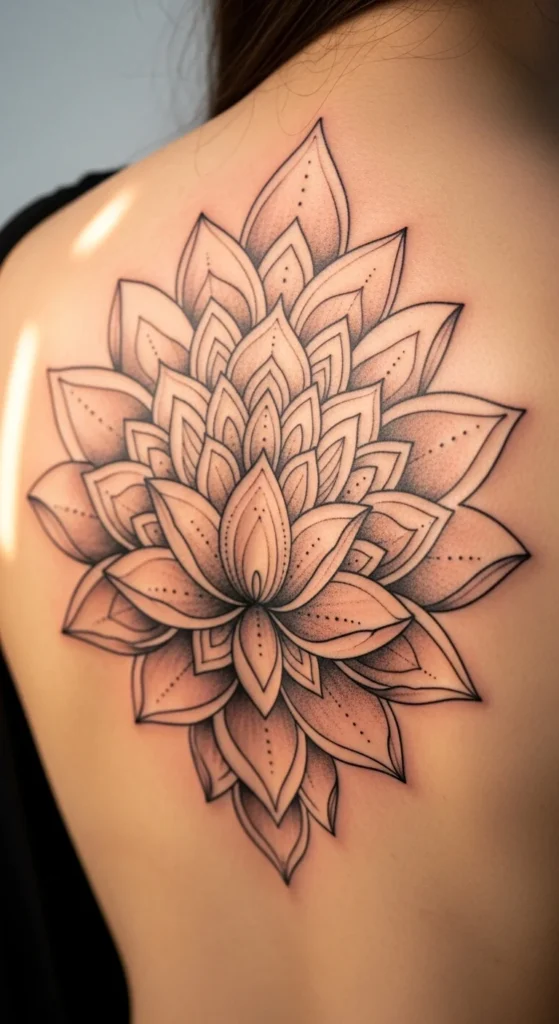
A mandala paired with a lotus symbol creates a peaceful look. Many people enjoy this blend because it mixes round symmetry with gentle petals. If you’re keeping the cost low, keep the lotus simple at the bottom and add a few dot lines above it. This combination works well on the inner forearm, upper back, or calf. Keep the shading soft to avoid long sessions. If you want deeper meaning, place a tiny symbol like a sun or star inside the center. This design often feels soothing because the lotus brings a gentle upward flow. For DIY planning, print a small lotus and place it under a simple mandala circle at home to test how the two shapes stack visually.
8. Minimalist Mandala Outline

Minimalist mandalas suit people who want calm energy without too much detail. This style uses clean lines and simple petals. The outline approach cuts down on session time and cost. You can get a small version in under an hour at many shops. Pick a placement that matches your lifestyle—wrist, ankle, or collarbone works well. If your budget is tight, stick to basic symmetry and skip shading. You can always add layers later. A minimalist mandala still feels soothing because the shape stays balanced. If you want a personal touch, include a tiny dot or micro shape in the center. These small choices make the tattoo meaningful without adding complexity.
9. Floral Mandala Fusion

Floral mandalas add softness to the classic circular shape. The petals flow outward and make the tattoo feel natural. If you want a calming look, mix bold lines with softer leaf shapes. To keep things affordable, ask for fewer floral layers. Choose arm, thigh, or shoulder placement for smoother lines. A simple trick for DIY planning is sketching a flower and placing a mandala circle in the center to see how the two blend. Floral mandalas work well for people who want something nature-inspired without doing a full botanical sleeve. They stay peaceful, feminine or neutral depending on the shapes, and they age well with proper care.
10. Sacred Geometry Mandala
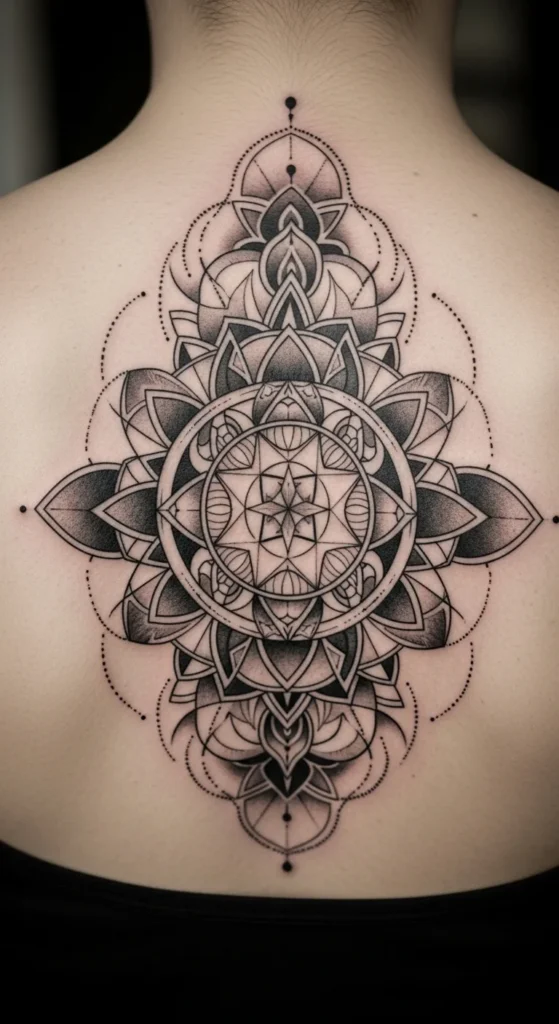
Sacred geometry patterns give mandalas a structured, calm feel. Triangles, circles, and interlocking shapes form a balanced structure. If you like meaningful patterns, this style works well. The layout usually starts with a simple circle and then builds outward with repeating shapes. To keep it affordable, skip heavy shading and focus on bold outlines. This type of design looks good on the forearm, back, or ribs. If you want to personalize it, add one shape inside that represents something important to you. Many people choose a sun, seed shape, or a tiny wave. The design feels peaceful because the repeating geometry creates a steady rhythm to look at.
11. Shoulder Mandala for Rounded Flow

Shoulder mandalas wrap nicely around the top of the arm. This spot naturally supports round shapes. If you’re working with a budget, keep the center large and add fewer outer petals. This saves time while still looking full. Shoulder pieces often flow into future sleeves, which helps if you want to expand later. If you like movement, add subtle dot shading on one side. DIY testing is easy: cut a round paper shape and tape it on your shoulder to see how it curves. This placement feels calm because the rounded shoulder shape blends with the mandala naturally.
12. Sternum Mandala With Soft Lines
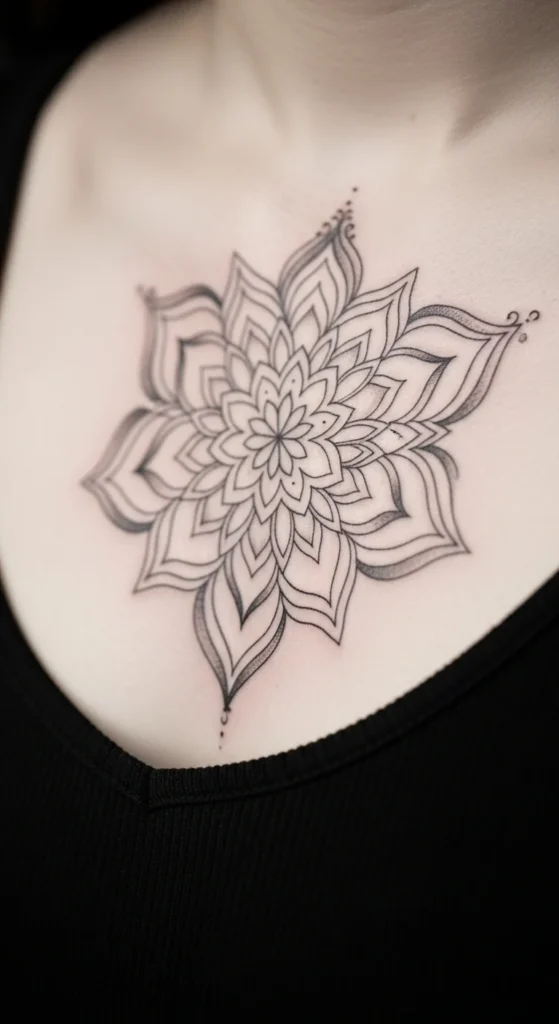
Sternum mandalas look delicate and detailed. This placement works best with soft lines and gentle curves. If you’re on a budget, keep the center simple and limit the outer shapes. The sternum area can be sensitive, so shorter sessions help with comfort. Try a simple half-mandala shape if you want something subtle. For personalization, add a small shape in the center that feels calming to you. When planning the size, use a printed circle to test how it fits under your chest. This design feels soothing because the curves follow the natural lines of the body.
13. Calf Mandala for Vertical Balance

A calf mandala gives you room to create a tall design. Many people like this placement because it looks balanced whether you stand or walk. To keep the cost steady, use simple linework and avoid heavy shading. A vertical flow works well if you combine circles with long petals. If you exercise often, keep the design centered so movement doesn’t distort the pattern. For DIY experimenting, draw a tall oval and place a mandala circle inside it to check the flow. Calf mandalas feel calm because the long shape spreads gently down the leg.
14. Mandala Half-Sleeve Concept

A half-sleeve gives you space to blend several mandalas. You can start with one main circle and build around it. This method works well if you want a larger piece but prefer building slowly. To keep the price manageable, add new layers over time. Mix circles with smaller shapes like diamonds or soft waves. The upper arm is one of the most comfortable areas for longer sessions. If you want a personalized touch, include a small symbol in the center of each section. This creates a theme while keeping the design balanced.
15. Mandala With Animal Elements
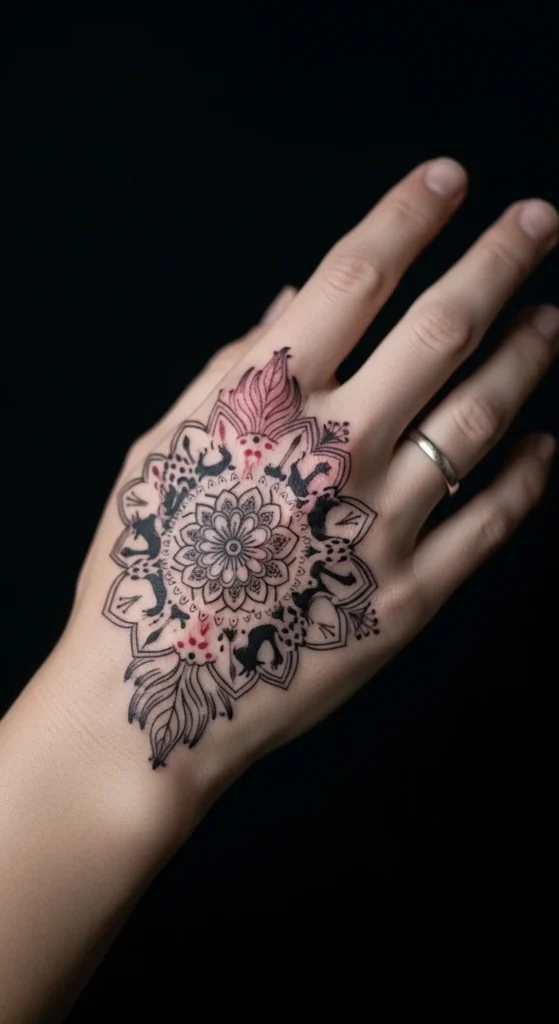
Adding animals to a mandala gives the design a meaningful touch. You can keep the mandala round and add small shapes like a bird, butterfly, or lion inside the petals. This style works well on the upper arm, thigh, or upper back. To stay on budget, keep the animal shapes simple. Linework is enough to communicate the idea without adding long shading sessions. Many people like animal elements because they represent traits such as calmness, strength, or freedom. If you want to test the look, print a small animal outline and place it inside a circle drawing at home. This combination stays balanced while adding personality.
16. Negative-Space Mandala
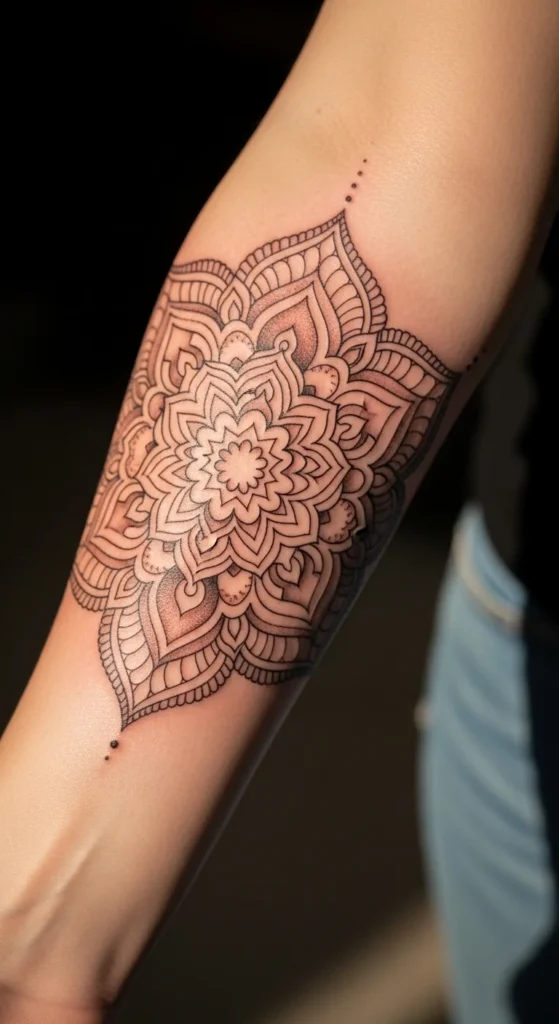
Negative-space mandalas use empty areas instead of heavy ink for design. This makes the tattoo feel light and calm. The artist creates shapes by leaving parts blank. It’s a great choice if you want a soft look without shading. On a budget, this technique saves time because there’s less ink used. Choose placements like the forearm, shoulder, or thigh for cleaner lines. If you want to personalize the center, add one small shape or dot. Negative-space designs age well because the skin gaps create natural contrast.
17. Mandala Anklet Band

A mandala anklet band wraps around the ankle in a delicate way. The repeating shapes feel calming and gentle. If you want something small and affordable, this is a good choice. The band can be thin or thick depending on your taste. Keep the shapes simple because the ankle area is narrow. You can add tiny dots between each pattern. The ankle heals fast if you keep it clean and dry. For DIY planning, use a strip of paper to test width and placement. It’s a subtle style that feels peaceful and decorative.
18. Mandala Sunburst Design

A sunburst mandala looks bright and calm at the same time. The rays spread outward and create a peaceful look. It works well on the shoulder blade, thigh, or upper arm. To stay within budget, keep rays simple and limit the number of layers. Add a small center dot or shape for personalization. If you prefer softer detail, use thin lines instead of thick ones. This look feels uplifting and balanced. Sunburst designs often give the impression of warmth and softness without needing color.
19. Wide Hip Mandala

Hip mandalas have a flowing shape that fits the curve of the body. This area works best for wider patterns rather than tall ones. If you want it to feel subtle, keep the outer rings light. To keep costs steady, choose simple lines without shading. Many people place half-mandala shapes along the hipbone because it creates a natural curve. Use clear aftercare to protect the area, especially if clothing rubs against it. Hip mandalas feel soft and calming because the design moves with the body.
20. Mandala Spine Line
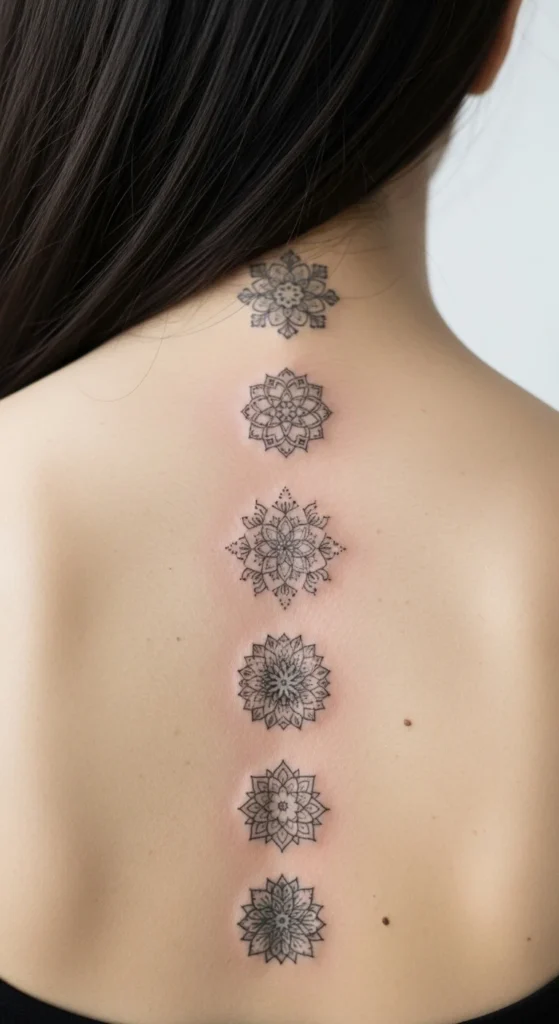
A spine mandala creates a calm vertical line down the back. You can use small circles stacked one above the other. To stay within budget, limit the number of circles and keep them small. This style looks good when wearing open-back clothing. Healing may take time due to movement, so keep the design minimal. A good DIY idea: print small circles and tape them down the spine to test alignment. This design feels peaceful because the line follows natural body symmetry.
21. Mandala Elbow Cap
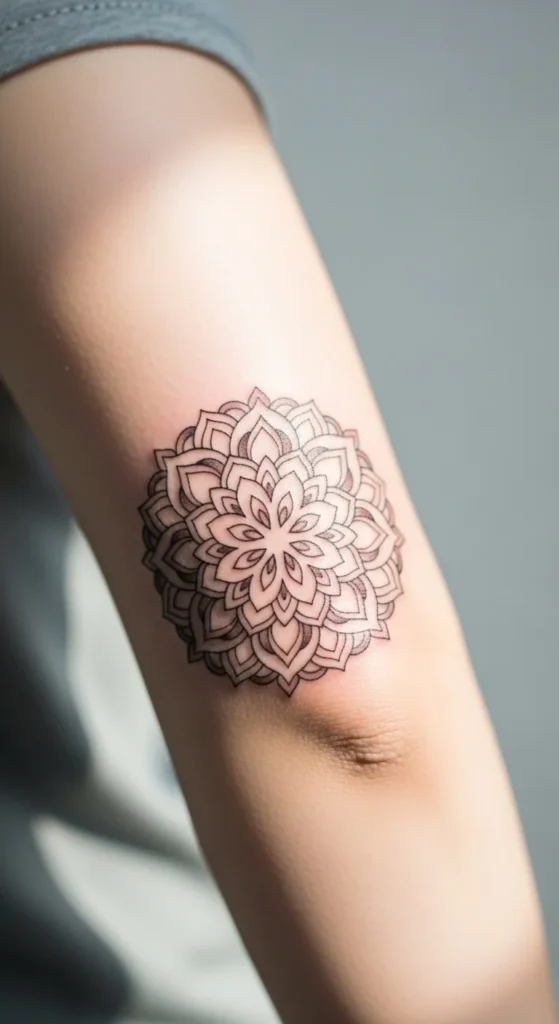
An elbow mandala fits perfectly into the round shape of the joint. This placement creates a balanced look. To keep the session short, stick to one circle with a few petals. You can add more later if you want to expand it into a sleeve. The elbow moves a lot, so bold lines last longer than thin ones. Try testing the design with a paper cutout to see how it bends. This style feels playful but still calm and symmetrical.
22. Mandala Collarbone Accent
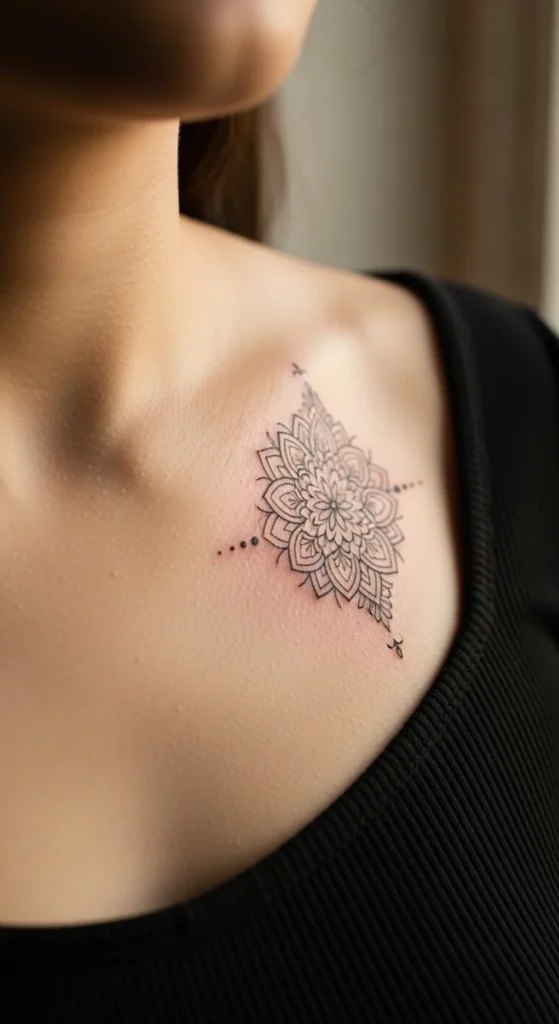
A collarbone mandala adds a gentle accent near the chest. This spot handles small designs well. Keep the pattern minimal for comfort. To stay within budget, skip heavy shading. You can add a tiny shape or dot inside the center for meaning. The collarbone area brings out the curved shapes nicely. For DIY planning, trace a small circle on paper and hold it near the collarbone to test size. This placement feels elegant and calm.
23. Mandala Knee Frame

Designs near the knee wrap naturally around the joint. A mandala can frame the top or bottom for a decorative look. Keep the outer petals short to make bending comfortable. To manage cost, stick to clean lines instead of shading. This placement works well if you want something bold but not too large. For DIY testing, place a paper arc above or below the knee to see how it follows the curve. It’s an eye-catching but still calming choice.
24. Delicate Ankle Mandala

A small ankle mandala is perfect if you want something gentle. The area suits tiny, simple shapes. To keep the price low, use basic linework. Skip shading unless you want extra depth. You can pair it with a tiny dot trail for a soft look. Ankle tattoos heal well as long as shoes don’t rub them. For planning, draw a circle on paper and tape it near the ankle to see the fit. This is a calm, graceful style.
25. Mandala Shoulder Blade Layout
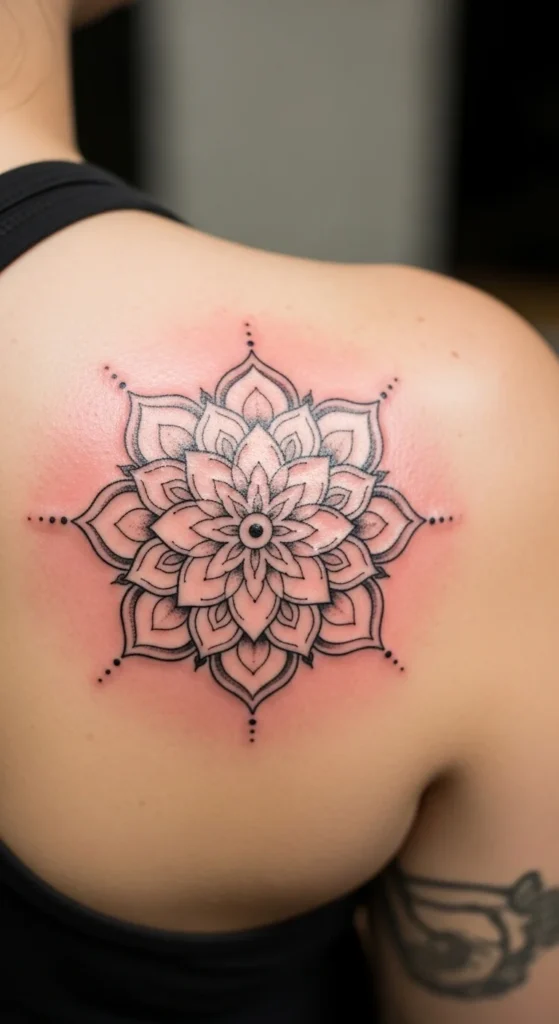
Shoulder blade mandalas are great for medium or large pieces. The flat area helps keep lines crisp. If you want to stay within budget, start with a basic circle and expand later. The shoulder blade also allows for floral petals or geometric shapes. You can cover it when working or show it depending on your outfit. This style feels centered and peaceful due to the natural space across the back.
26. Mandala Band on Upper Arm
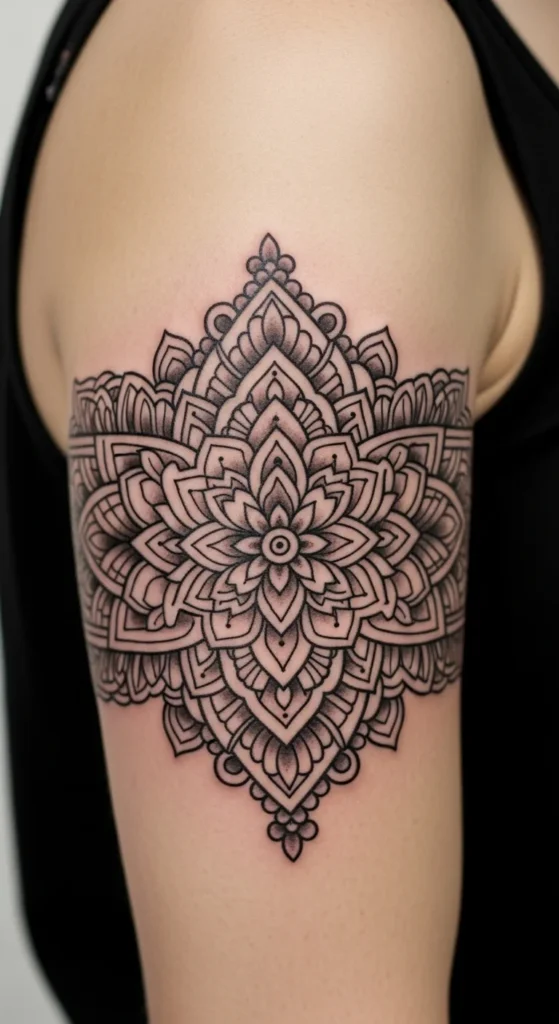
A mandala band wraps around the upper arm like a bracelet. The repeating shapes feel steady and calm. You can make it thin to save cost or thick if you want more detail. Linework alone works well. If you want extra meaning, add one slightly larger shape to mark the “front” of the band. When planning the layout, wrap a strip of paper around your arm to check the width. This style works for both subtle and bold looks.
27. Mandala Patch on Ribs

A rib mandala looks delicate and balanced. This area suits small or medium tattoos. To stay comfortable, keep the lines simple since this spot can be sensitive. A single circle with subtle shapes works well. Avoid heavy shading to keep the time short. If you want personalization, add a small symbol in the center. When testing the look, attach a printed circle to the ribs to see how it fits. It’s a soft and peaceful placement.
28. Full Mandala Back Piece

A full mandala back piece gives you room for detail. It can spread across the shoulders, spine, and ribs. To manage cost, start with the center circle and expand over sessions. Mix dotwork with bold lines to keep the piece readable. This design often takes multiple visits, but you can break it into small sections. If you want DIY planning, draw a large circle on paper and tape it to your back to test placement. The large size creates a calm visual effect.
29. Mandala With Soft Shaded Petals

Soft-shaded petals create a relaxed look. The shading adds depth without making the design heavy. To stay on a budget, keep shading minimal and focus on linework. This style works on the thigh, arm, or upper back. If you want to test the look, shade lightly with a pencil on paper to preview the result. Gentle shading often makes the tattoo feel smooth and calming. It’s a good way to get dimension without choosing a complex design.
Conclusion
Mandala tattoos offer peaceful shapes, personal symbolism, and flexible choices for size and placement. Whether you start small or plan a full piece, each design can carry calm meaning. Use these ideas to test layouts, compare placements, and build something that feels grounding. Take your time, explore styles, and choose a pattern that feels steady every time you look at it.