
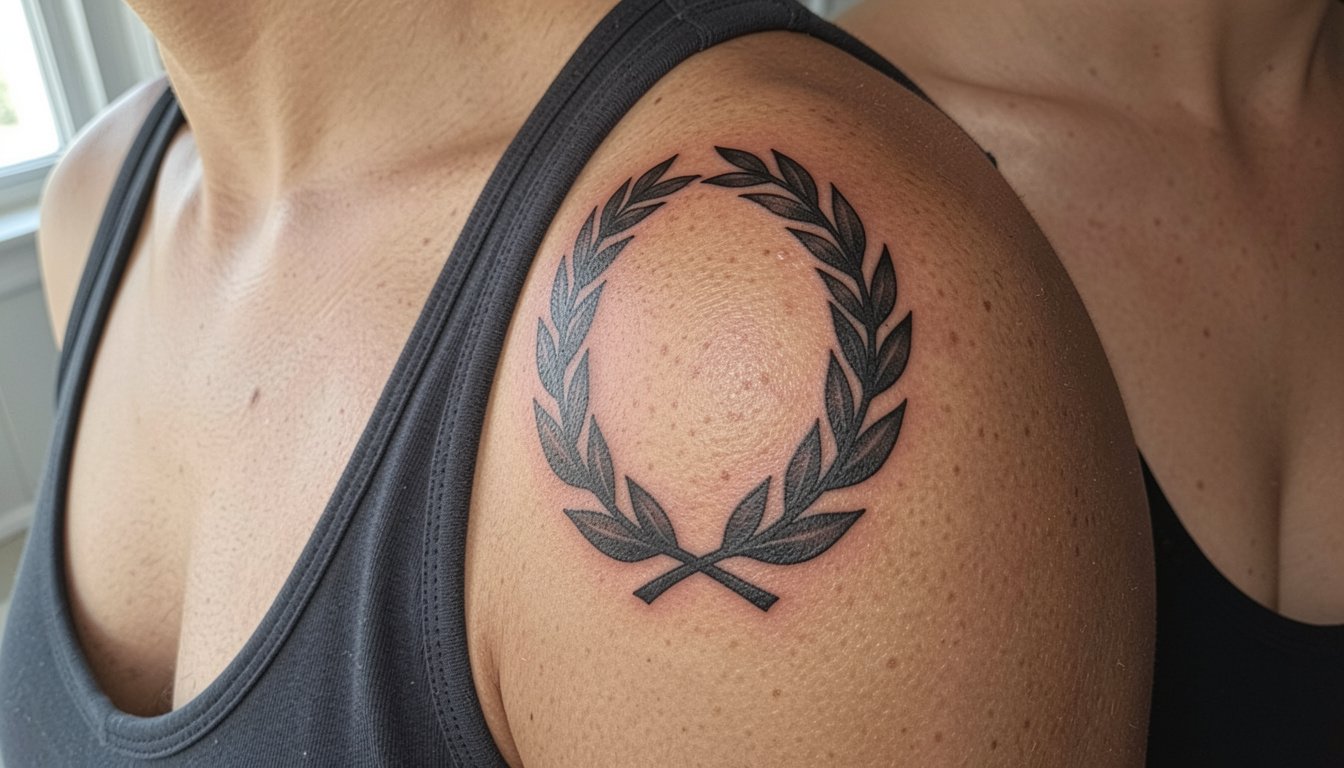
Delicate laurel wreaths look lovely at first, but they often blur faster than people expect when placed on thin, high-motion skin. Expect decisions about spacing, linework weight, and placement to matter more than adding tiny leaves. Pain, visibility at work, and long-term legibility are the three concerns most clients bring up before booking a wreath piece, and getting those right sets the design up to age well.
1. Fine Line Laurel on Inner Forearm
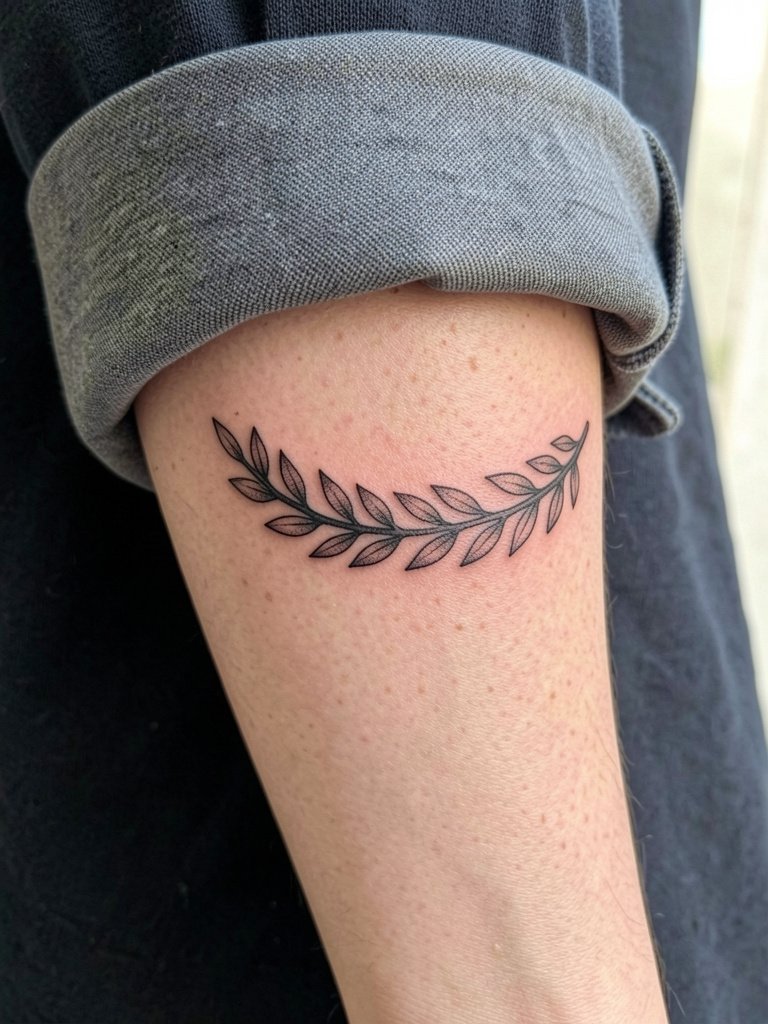
On the inner forearm a fine line laurel reads delicate and personal, and it is a great pick for someone who wants a subtle band that can peek out with sleeves rolled. Expect a one- to two-hour session for this size, and fair warning, the inner forearm moves with wrist motion so lineweight needs to be a hair heavier than the reference so the leaves do not vanish by year three. Common mistake is asking for leaves the size of pencil eraser tips, which merge into a soft grey line over time. For show-off outfits, pair the piece with rolled linen sleeves that expose the forearm without rubbing the fresh ink.
2. Wreath as Wrist Bracelet
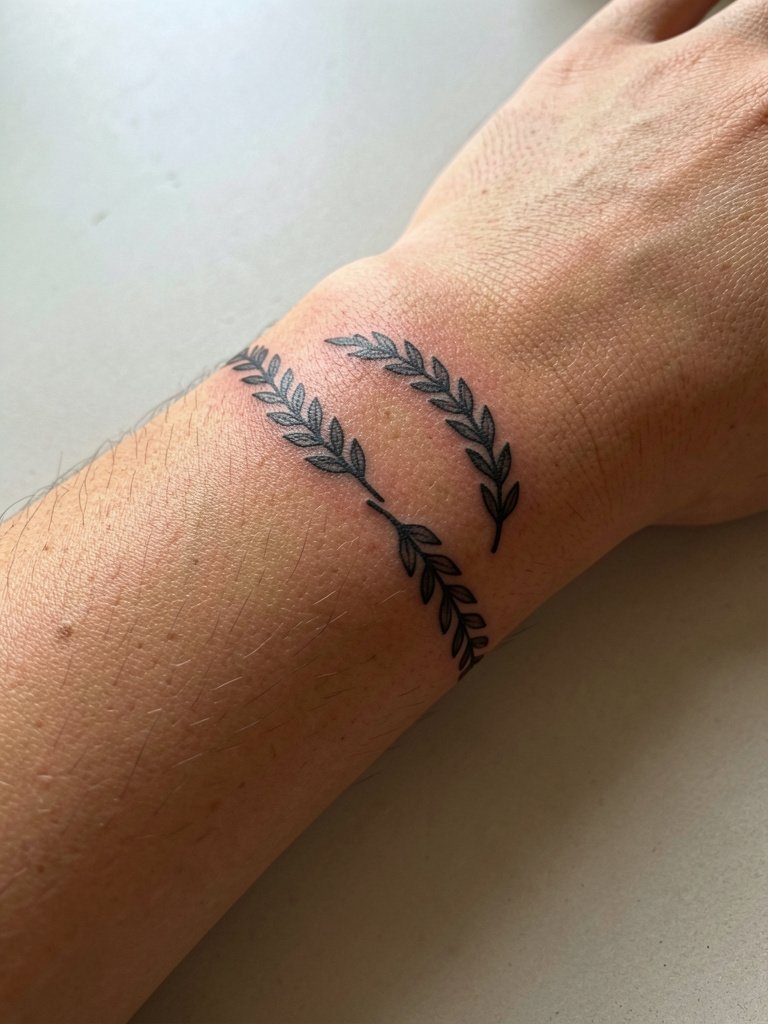
Wrist wreaths read like jewelry and they are a solid choice for anyone wanting a visible nod to classical symbolism. Pain is low to moderate at the wrist because of thin tissue over tendons, so expect a thirty to forty-five minute session. The biggest aging issue is friction from watches and bracelets, which causes edges to soften faster. A frequent mistake is packing too many tiny leaves into the band. For evenings out the band plays well with a thin leather wrap bracelet that frames the ink without rubbing the fresh linework.
3. Micro-Realism Wreath Behind the Ear

A behind-the-ear laurel is a tiny signature piece that reads discreet during the workday and flares in casual settings. Session time is short, often under thirty minutes, but the mastoid skin is thin so artists must use careful depth to avoid blowout. One real mistake is asking for single-needle filigree without leaving breathing room, which causes blur on that curved area. For appointment comfort wear hair up and bring a stretchy soft headband so the artist has unobstructed access and you stay comfortable during touch-ups.
4. Half-Wreath Collarbone Accent

A half-wreath on the collarbone sits where movement from shoulder and chest can subtly distort thin lines, so expect a one- to two-hour session. Pain tends toward moderate because the bone is close to the surface. The aging grace of this placement depends on spacing in the leaves more than the style. A common error is pushing for ultra-thin single-needle leaves right on the clavicle edge, which fade into faint grey. For outfits that highlight the piece, pair it with open-neck blouses that let the semi-circular curve take center stage.
5. Wreath Ring on Finger
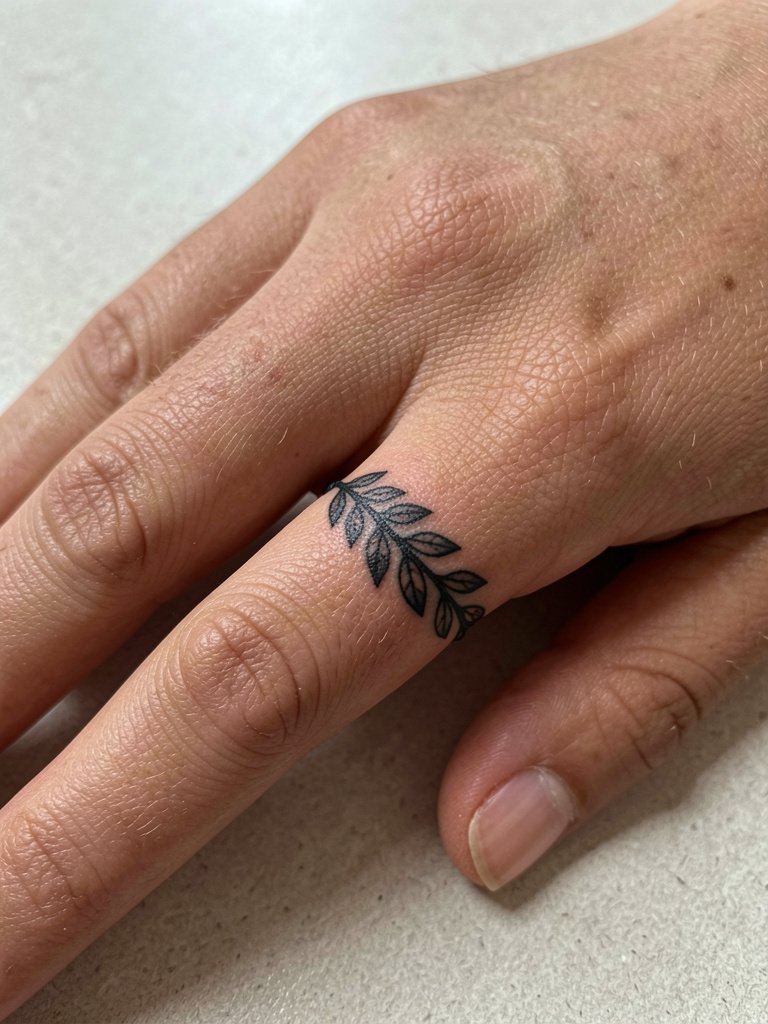
Finger ring wreaths are charming as permanent jewelry, but they are high-maintenance. Expect gradual fading and more frequent touch-ups because fingers wash constantly and the skin there renews quickly. Typical session time is brief, but you likely need a touch-up within the first year. A mistake many make is asking for ultra-fine leaves with no solid anchor, which disappears into smudge. For showing off without rubbing, try stacking the tattoo with a thin midi ring on an adjacent finger that draws attention without pressing against the fresh ink.
6. Laurel Wreath on Side Ribcage
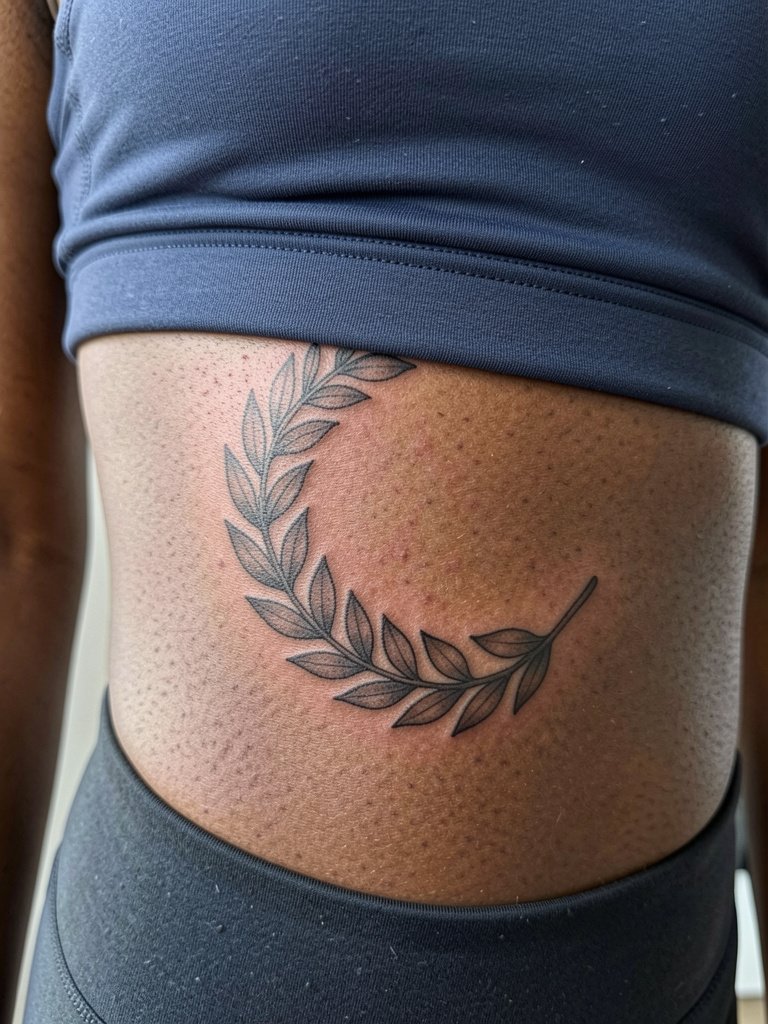
Rib wreaths make a dramatic curve and suit anyone comfortable with a higher pain zone. Expect a longer session, often one and a half to three hours, and plan for breaks. Artists split into two camps over fine line on ribs. One camp argues that fine single-needle work on the ribs blurs within two years because the skin there stretches and breathes. The other camp says that with slightly wider spacing and confident depth a laurel settles fine and retains leaf definition for years. For session wear choose a fitted sports bra so the artist has clear access and you stay supported during the longer appointment.
Session Day Picks
The wreath placements above include both exposed and intimate zones, so a few small items make booking and the first week easier.
-
Stencil transfer paper kit. Helps preview the band spacing and leaf placement on curved skin, which is critical for wrist and rib pieces mentioned above.
-
Topical numbing cream. Applied as directed eases rib and sternum sessions without altering the artist's precision.
-
Thin protective film roll. Useful for small finger and wrist wreaths to reduce friction during the first two days.
-
Fragrance-free body wash. Gentle cleansing avoids irritating delicate linework on collarbone and inner forearm pieces.
-
Aquaphor Advanced Healing Ointment. A mainstream balm many use in the first 48 hours to keep ink moist without heavy residue.
7. Greek Wreath on Calf
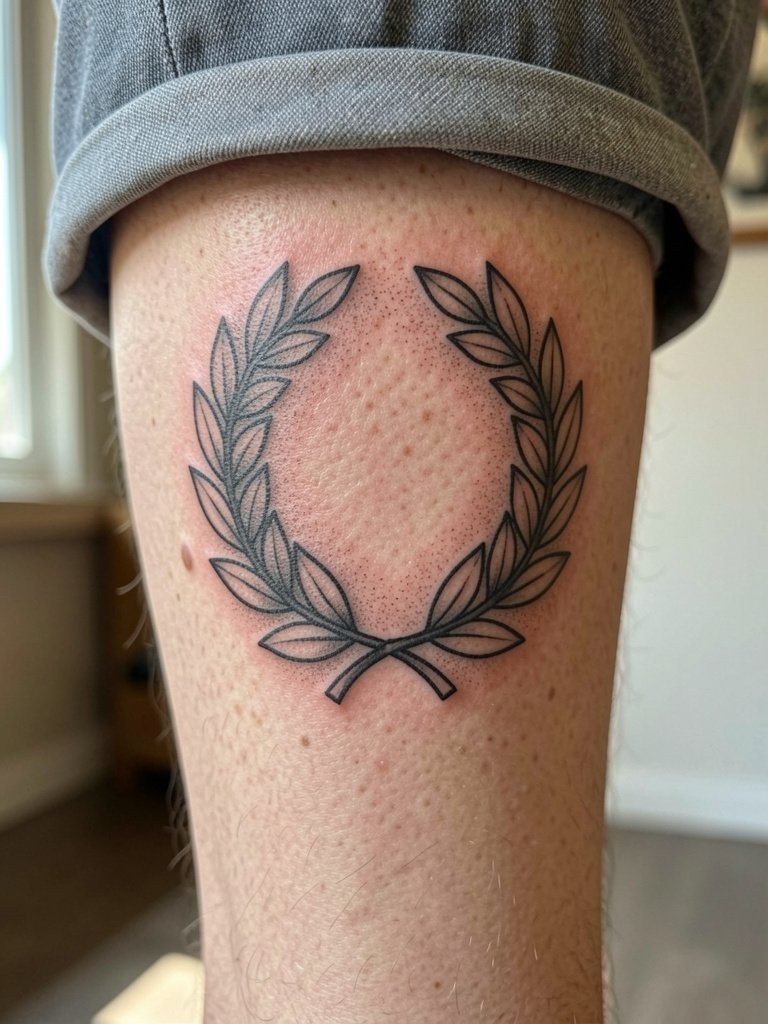
A calf laurel is a solid choice for visibility without constant sun exposure. The thicker tissue means less risk of blowout, and session time usually runs one to two hours depending on size. The most common mistake is choosing a wreath scale that is too small, which looks cramped on athletic calves. Healed at six months the piece will show saturated blackwork and soft stipple, while after two years the outlines may soften slightly but maintain shape. For afternoon wear, pair the calf wreath with flow linen shorts that let the art show without rubbing the area.
8. Mini Wreath on the Ankle
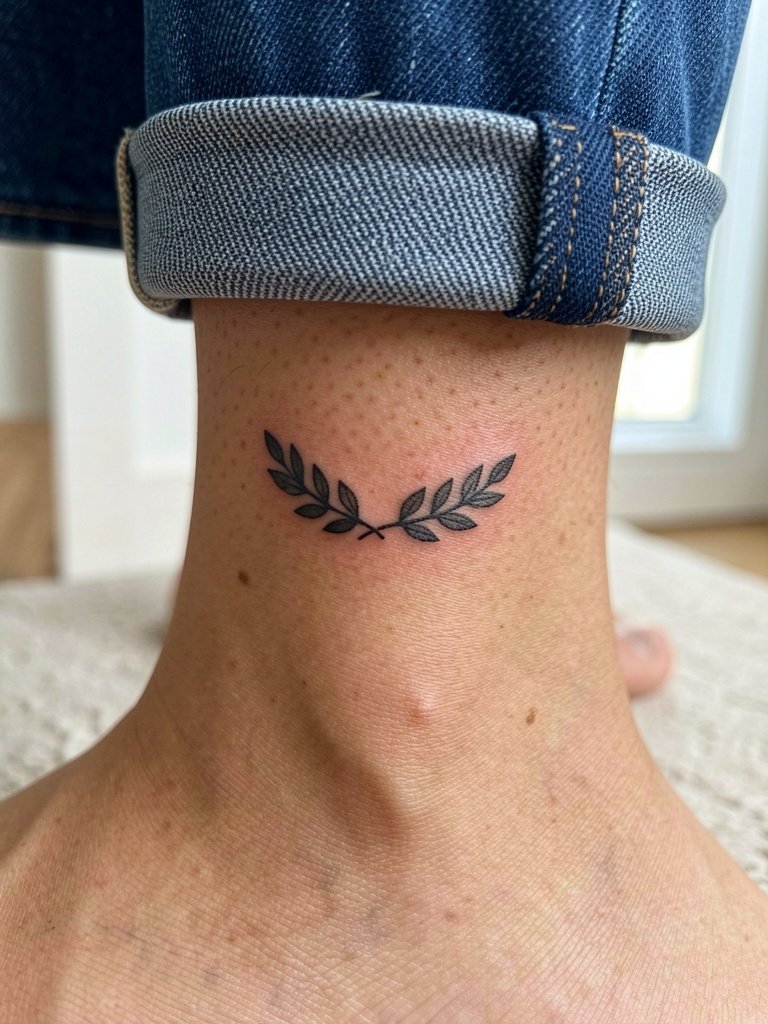
Ankle wreaths are small and playful but face a lot of shoe and sock friction. Sessions are short, often under an hour. Expect faster fading there and prepare for potential touch-ups at the one-year mark. A usual error is insisting on ultra-thin leaves that lose crispness after frequent washing and movement. For styling choose footwear that reveals the tattoo without rubbing it, like low profile espadrilles which show off the ankle while staying gentle on fresh ink.
9. Wreath Crown on Nape of Neck
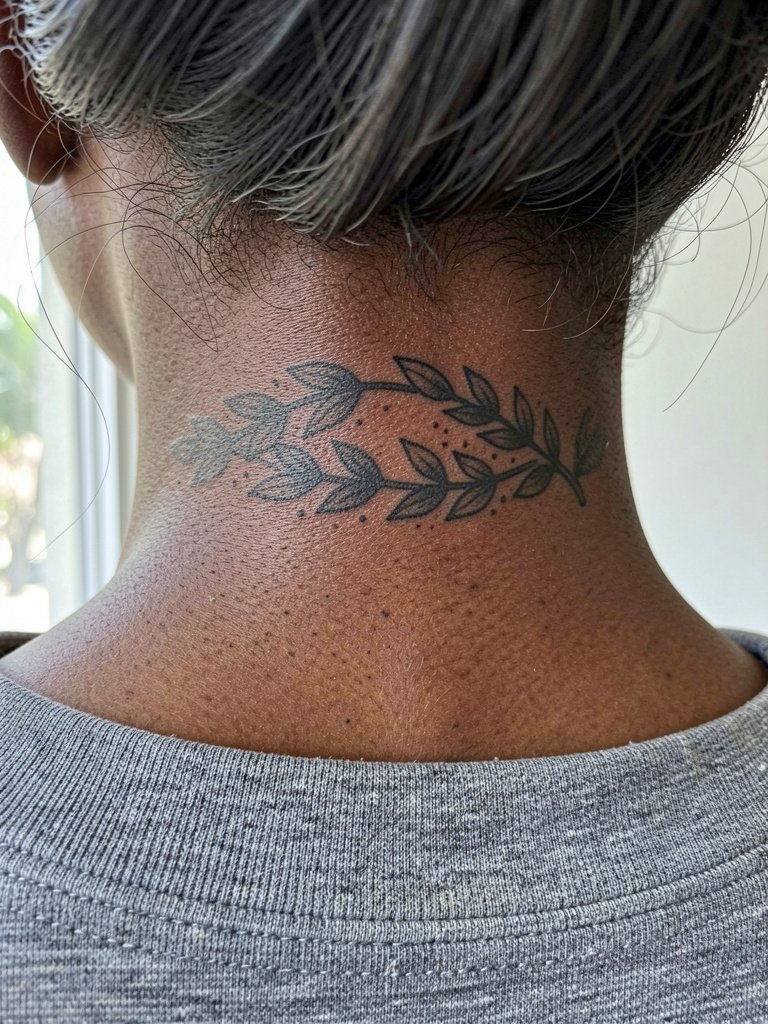
A nape wreath reads regal and hides easily under hair for conservative workplaces. Pain is moderate because the area sits close to bone for some people, and session time is sixty minutes on average. A typical mistake is packing tiny inner details that do not read when hair grows and the skin moves. At six months the dot shading will settle, and by two years the outline may need a touch-up if exposed frequently to sun. For evenings, let the nape show by wearing a low-back top that frames the curve without exposing the whole back.
10. Full Wreath Chest Plate
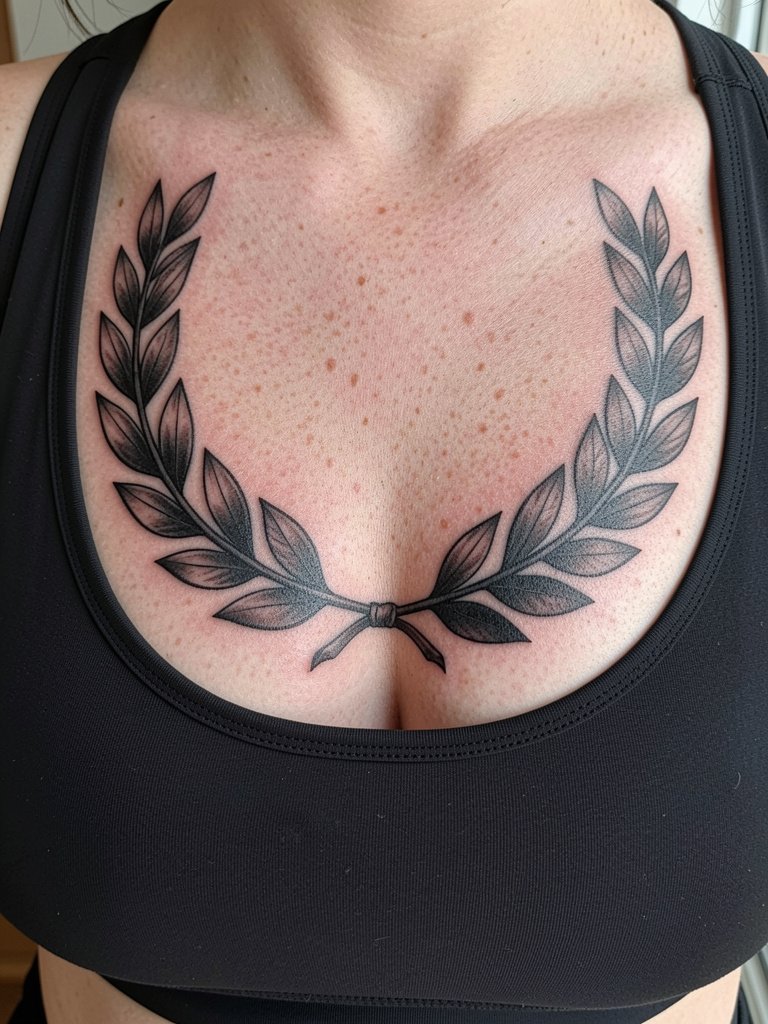
A chest plate wreath creates a bold classical statement and requires a longer session, often two to four hours. The sternum area can be painful for many clients, so breaks and pacing are part of the process. A mistake is compressing too many small leaves into the center where the skin flexes, which yields muddiness later. Over time the saturated shadow areas help the piece hold its silhouette. For session comfort wear a sports bra that provides coverage while leaving the sternum accessible.
11. Fine Wreath on Upper Thigh
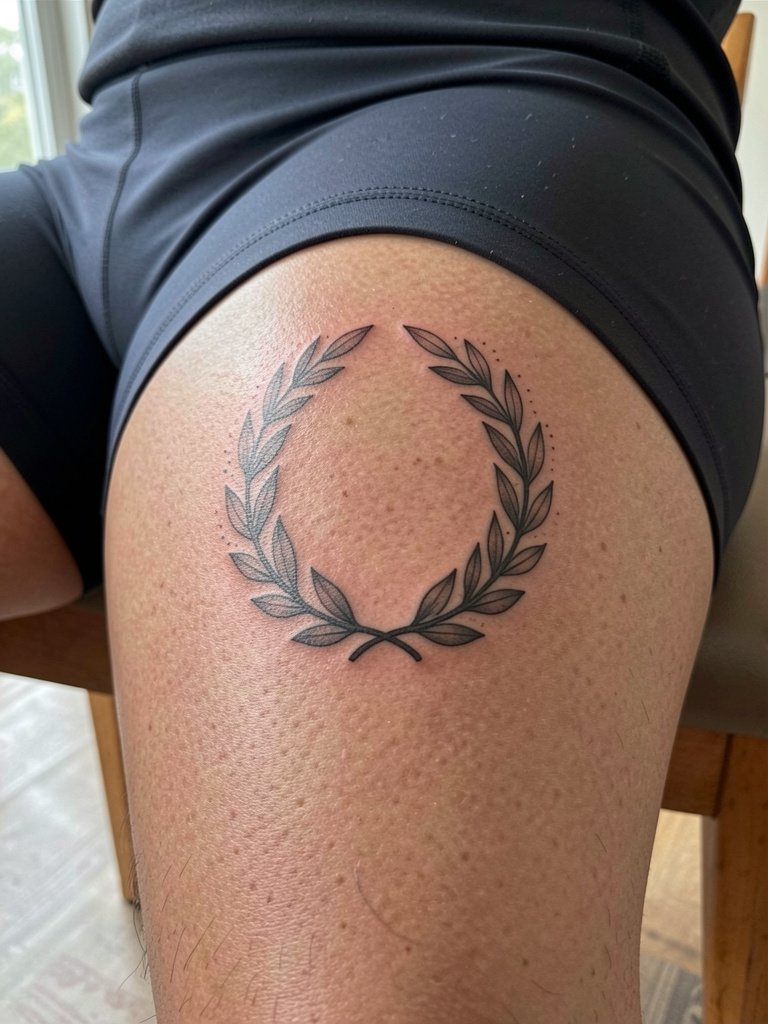
Upper thigh wreaths are intimate and flattering when sized to body curves, with session times typically between ninety minutes and three hours. The inner thigh skin can be sensitive, so plan for a higher pain tolerance. A common error is choosing a too-small wreath that vanishes under movement or tight clothing. At two years the thigh usually keeps linework well with minimal touch-up needs. For showing it off without irritation, coordinate with high-cut swimwear that complements the arc.
12. Neo-Traditional Laurel on Shoulder Blade
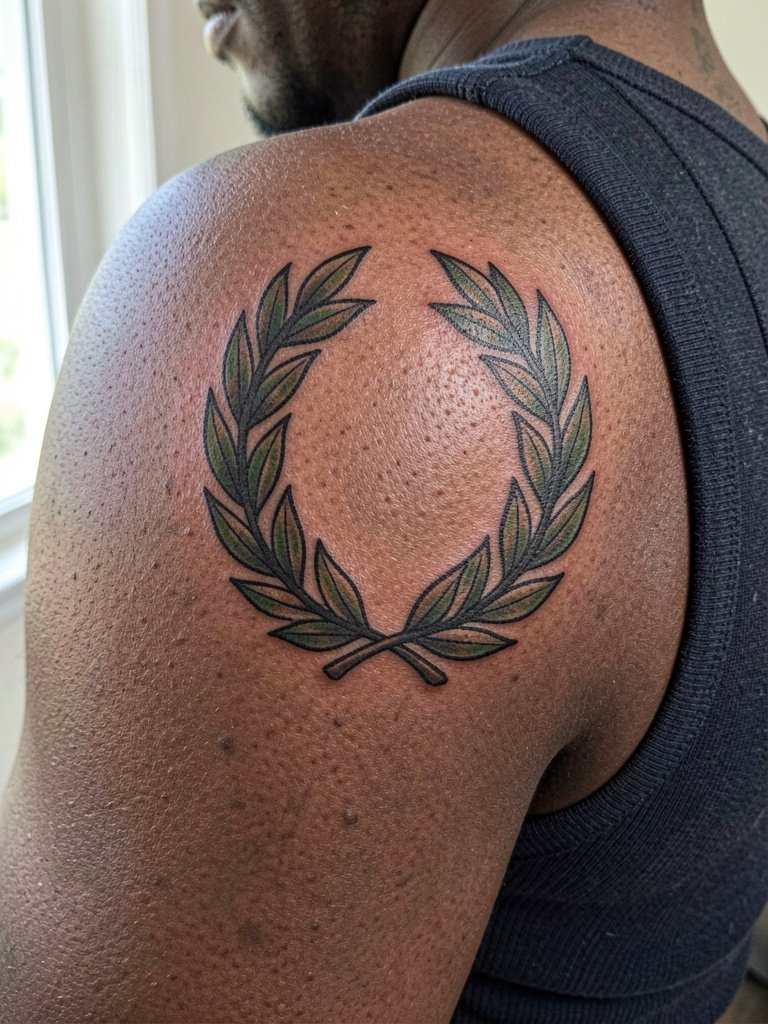
A shoulder blade laurel is ideal for larger neo-traditional treatments with color. The area tolerates saturation and the thicker tissue reduces blowout risk. Expect two to three hours for a mid-sized colored wreath. A mistake is choosing too narrow a leaf profile which loses its character when combined with bold color fills. Over five years, saturated color holds well if you protect it from sun. For wardrobe pick a strappy cami that lets the art peek out without rubbing the healing skin.
13. Minimalist Wreath on Rib to Hip Sweep
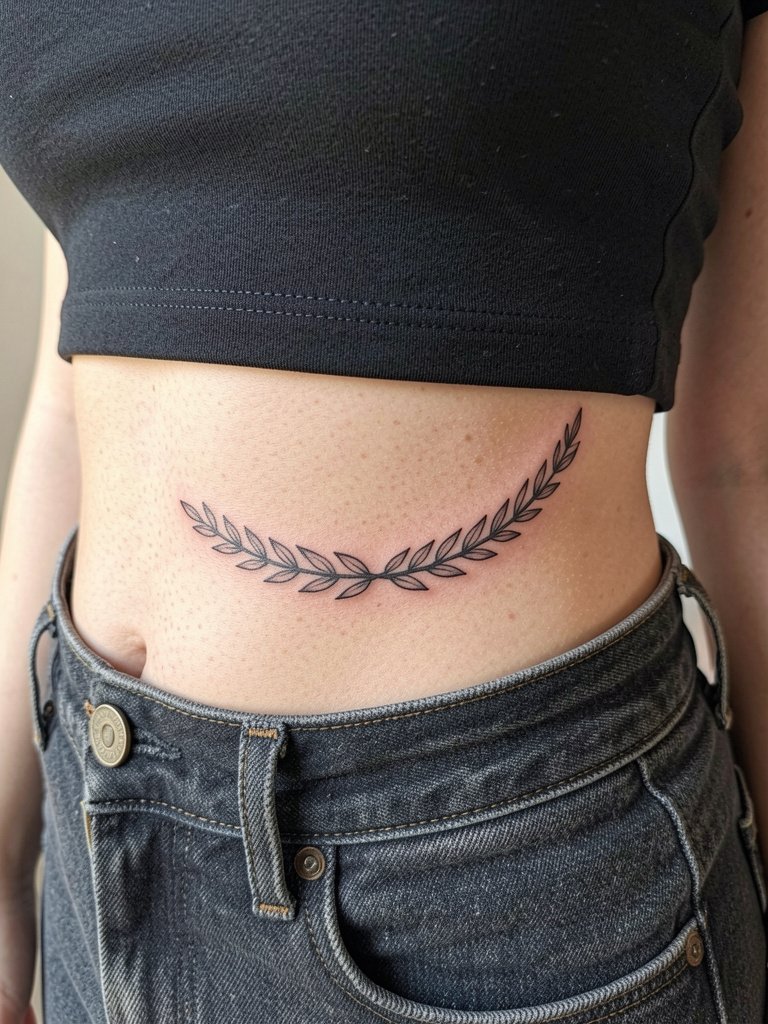
A rib-to-hip sweep reads elegant on curving anatomy and shows how spacing affects longevity. Plan for a two- to three-hour session and multiple breaks. The main mistake is compressing the chain so leaves crowd when the torso moves and breathes. Healed at six months the linework looks measured, and by three years delicate areas may need redefinition. For outfits that flatter the sweep choose high-waisted denim that sit below the lower leaves so the wreath displays against bare skin.
14. Wreath Tattoo with Script Banner
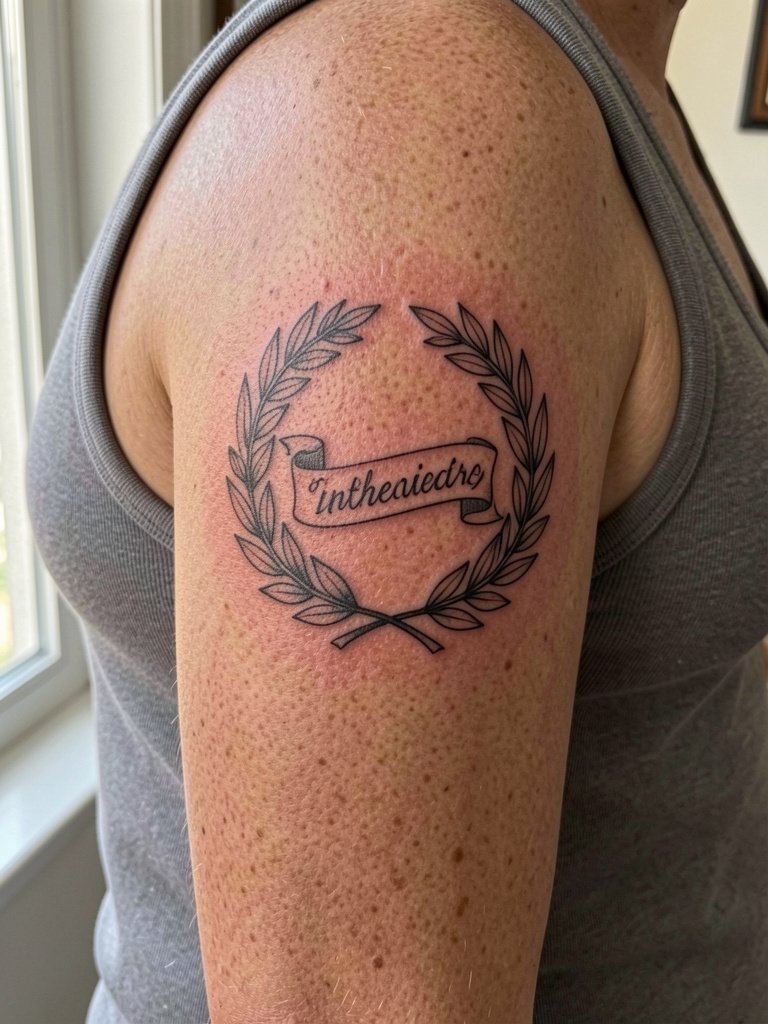
Combining a wreath with a short banner adds personalization without clutter, and the inner bicep gives privacy to the text. Session time is usually one to two hours. A common error is choosing a script that is too ornate and becomes illegible when scaled to arm curvature. For the best result bring the exact word in the font size and spacing you want so the artist can adjust proportions on your skin. Wear a loose tank on session day so the artist can access the inner bicep easily, and plan casual shirts that reveal the banner when you want to show it.
15. Blackwork Laurel Sleeve Accent
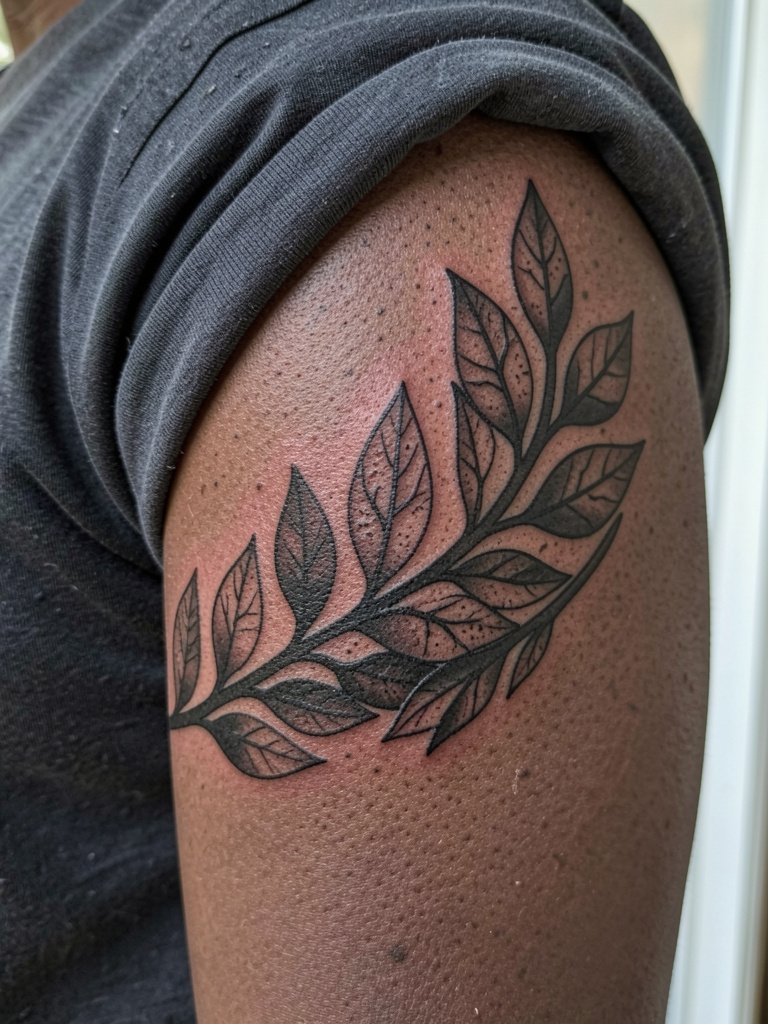
Blackwork laurel elements integrate well into sleeve pieces because saturation gives long-term graphic clarity. Expect multi-hour sessions depending on how much saturation you want. A mistake to avoid is asking for tiny negative veins inside each leaf, which do not hold at sleeve scale. Over time saturated blackwork resists blurring better than thin single-needle fills. For staged reveals, long-sleeve shirts with the cuff hit above the elbow let the sleeve art show while protecting fresh ink.
16. Delicate Wreath on Side of Hand
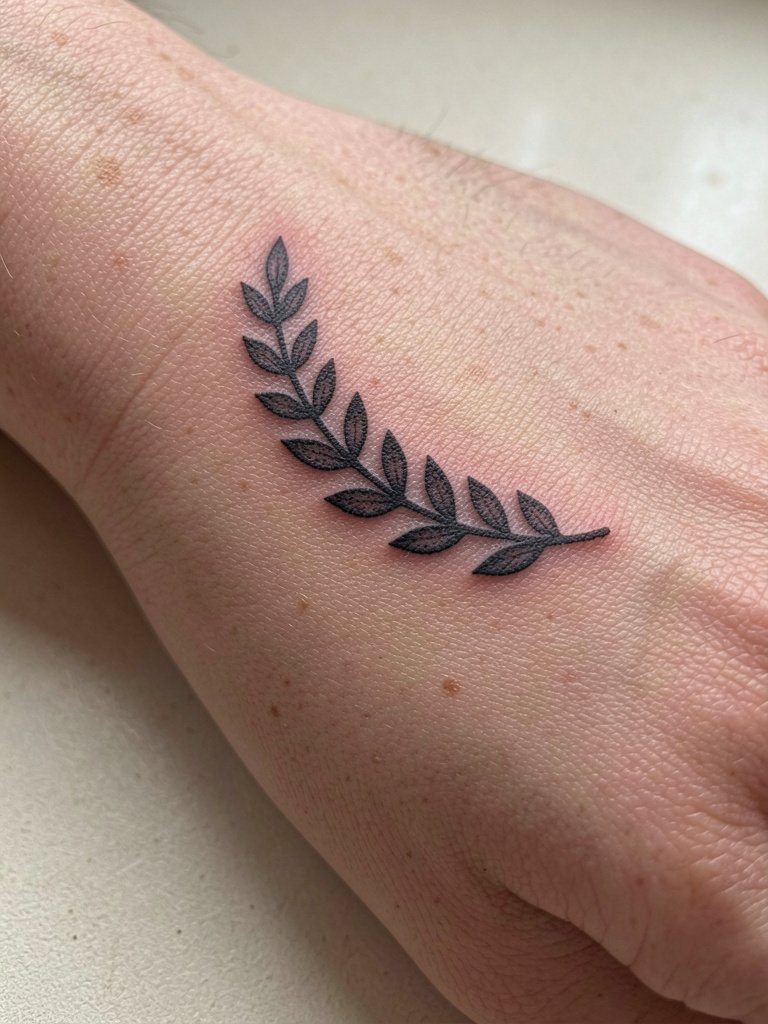
Side-of-hand wreaths are striking but exposed to heavy washing and use, which shortens crispness. Session time is typically under an hour, and expect potential touch-ups within the first year. The biggest mistake is demanding micro-leaf detail where daily abrasion will erase it. Healed at six months the motif will be visible but may soften, especially on the knuckle-adjacent skin. Keep hand jewelry minimal while healing and try a simple band ring on another finger to draw attention without contact.
17. Stippled Laurel on Upper Arm
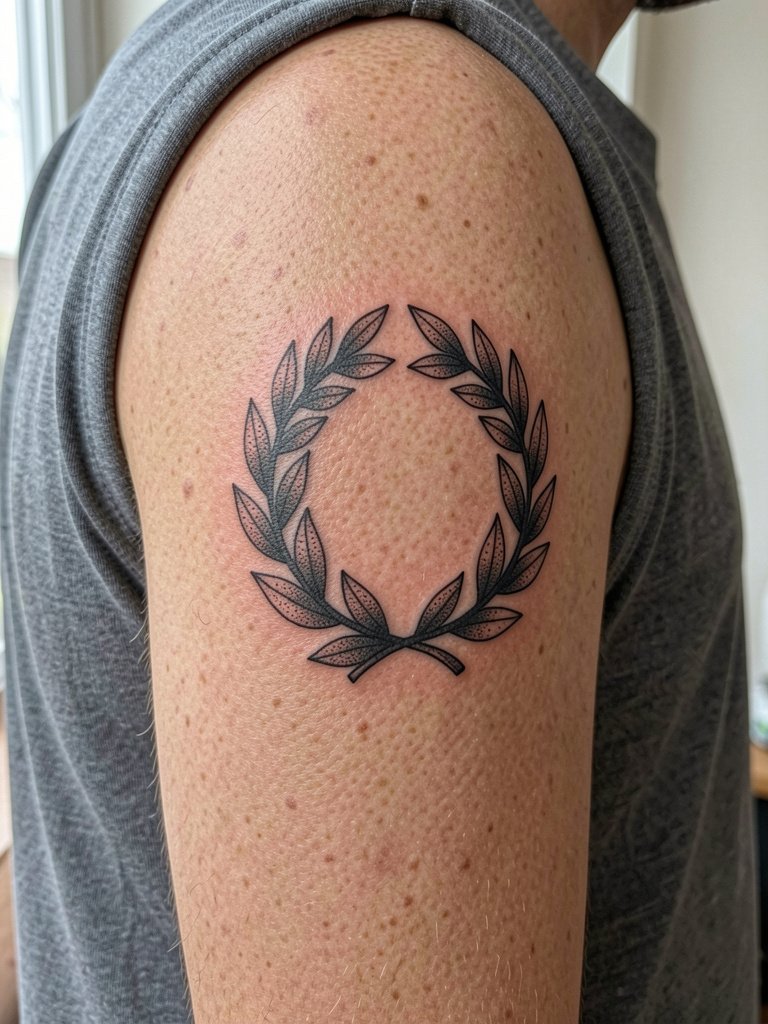
Stippled leaves add a textured, vintage feel and hold well on the upper arm where the skin is thicker. Sessions vary but many artists complete this size in one to two hours. A common error is asking for dot work so fine it disappears into the skin tone, so request slightly larger stipples for longevity. At two years the shading keeps the leaf shapes readable and natural motion barely affects outline. For casual looks choose sleeveless tops that let the stippled texture show, like a cotton tank.
18. Geometric Laurel Wreath
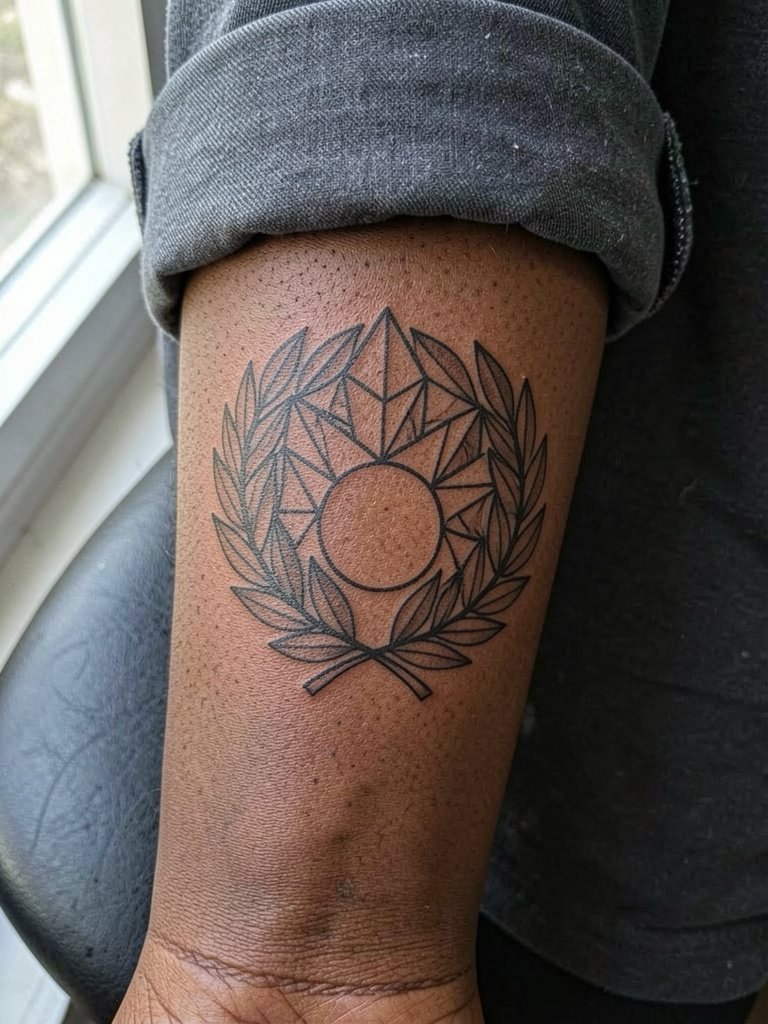
Geometric laurel wreaths take a modern angle and read sharply when lines are given breathing room. Session time depends on symmetry checks and stencil adjustments, often an hour to ninety minutes. A mistake is forcing perfect symmetry without accounting for the forearm's natural taper, which makes the design look off when the arm is relaxed. Over years geometric work stays legible if linework is slightly bolder than the reference. For daily wear the piece pairs well with a minimalist watch that complements the geometry without rubbing the fresh ink.
19. Wreath Encircling a Small Portrait
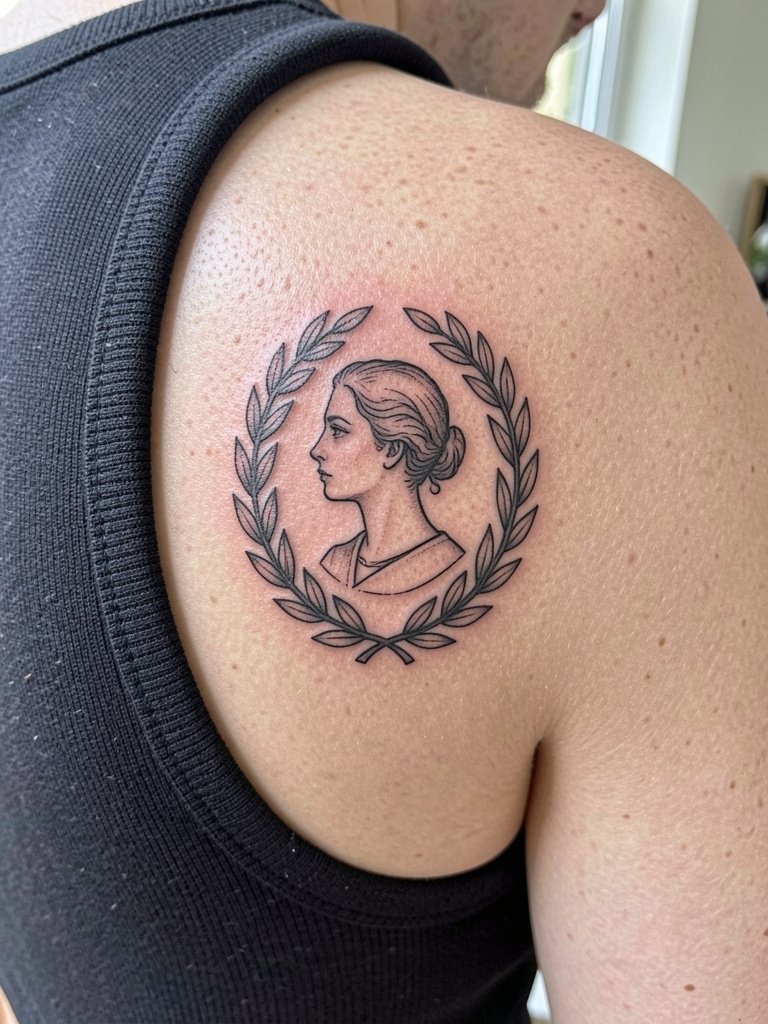
Framing a portrait with a laurel wreath gives the imagery a classical edge, but micro-portraits need enough size to retain facial detail. Sessions vary from one to three hours depending on portrait complexity. A common error is scaling the portrait too small so facial features become indistinct after healing. For longevity opt for slightly heavier outlines around the wreath and softer portrait shading inside. For wardrobe, a backless dress shows the framed portrait cleanly without rubbing the area.
20. Split Wreath Along the Spine
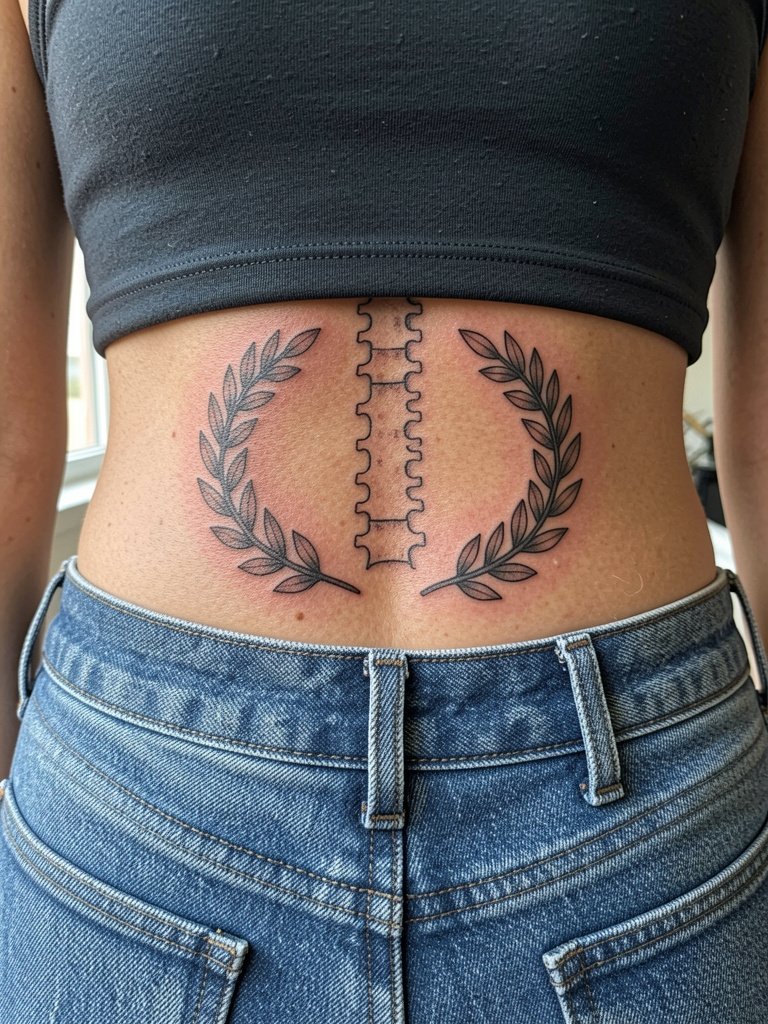
Wreaths along the spine make a vertical statement and require planning for symmetry. Sessions last one to three hours depending on length. A mistake is ignoring the waistband placement which can cut across leaves and cause uneven fading. Expect modest touch-ups where clothing rubs the lower edge. For styling choose low-rise pants that sit below the wreath so the design remains visible, like a pair of low-rise jeans that sit naturally below the ink.
21. Asymmetrical Laurel over the Hip
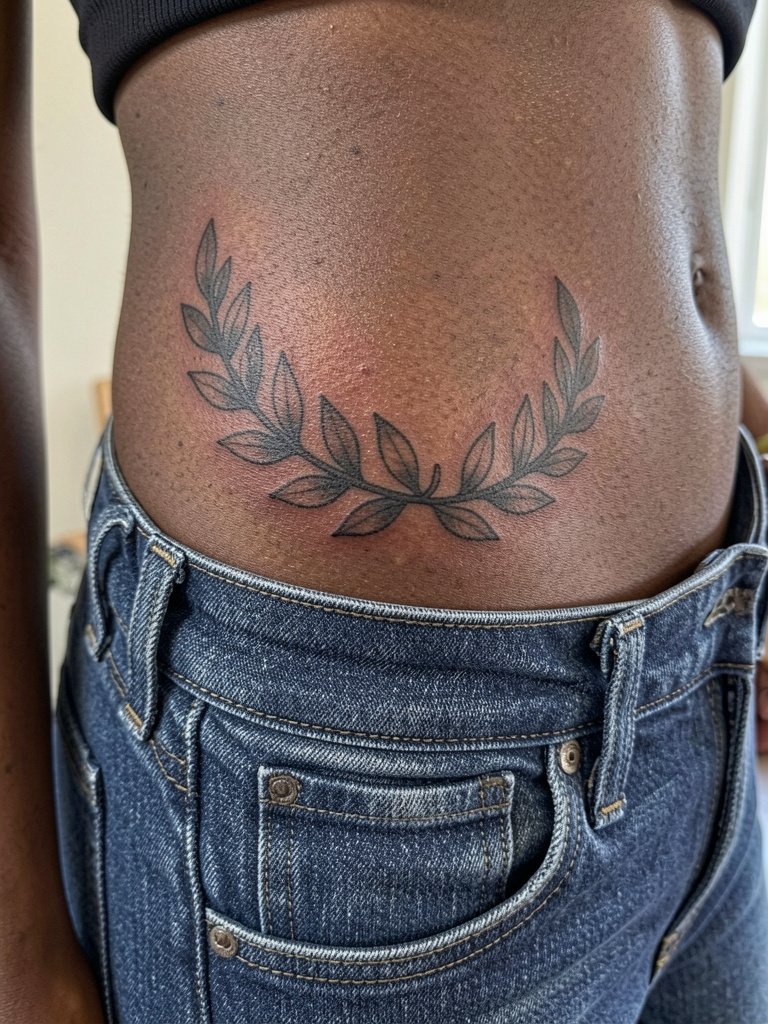
Hip laurel placements allow asymmetry to work in your favor because the body slope becomes part of the composition. Session time is usually under two hours. A frequent mistake is not accounting for the waistband when designing the arc, which makes the lower leaves press under jeans and fade unevenly. Expect touch-ups at the border where fabric meets skin. For show-off outfits, low-rise cuts and high-slit skirts highlight the hip sweep, try pairing with low-rise shorts.
22. Wreath Tattoo Around a Scar
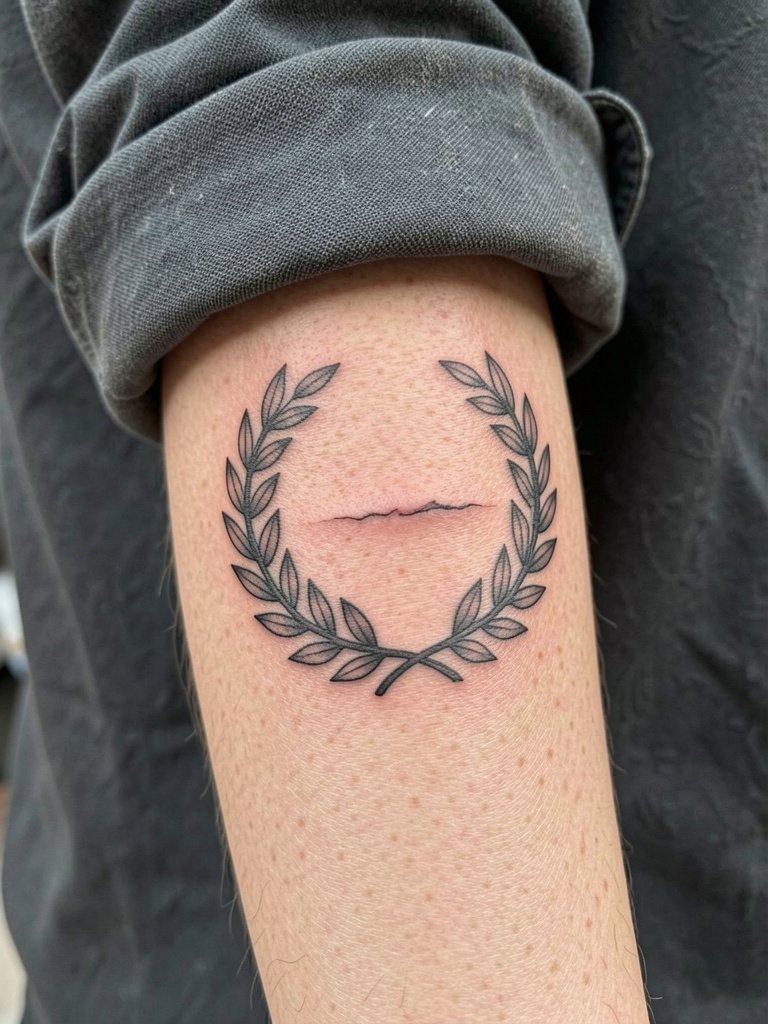
Using a laurel to frame a scar can be powerful visually and emotionally, but it requires consultation about scar maturity. Tattoos over recent scars risk unpredictable ink uptake, so the safe route is waiting until the scar is fully matured and flat. A mistake is assuming a healed scar will accept ink the same as normal skin. Bring exact photos of the scar so the artist can plan leaf placement that complements the texture and hides irregularities. For appointment wear a sleeve you can roll easily to expose only the treatment area.
23. Micro Wreath on the Toe
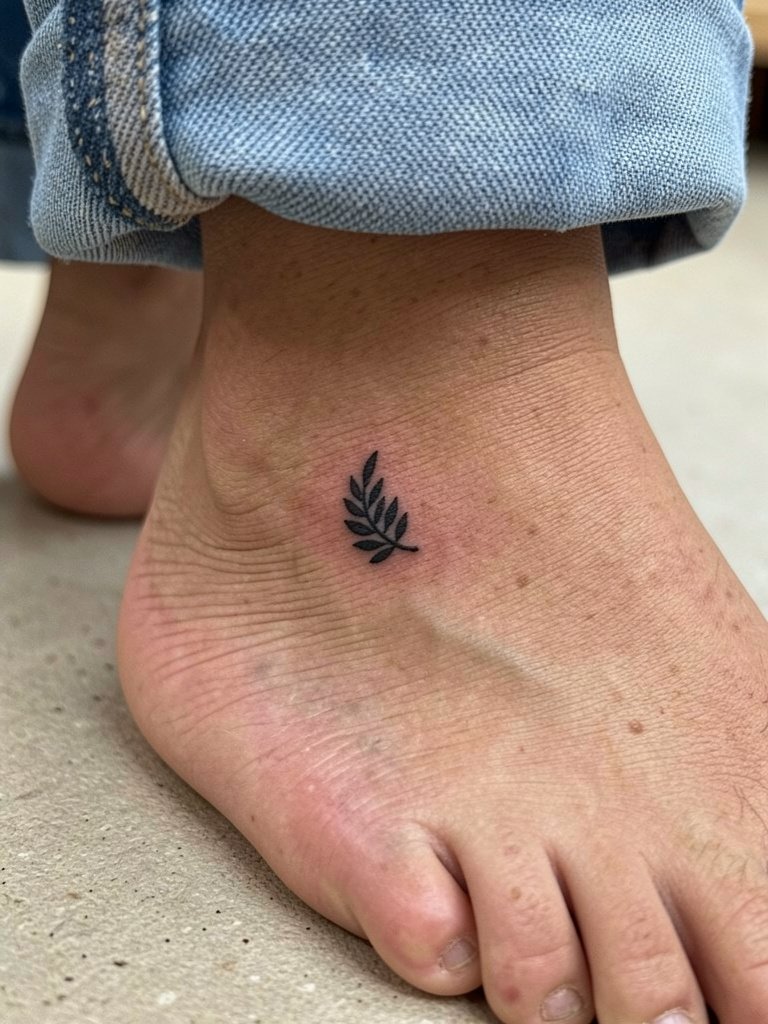
Toe wreaths are extremely cute but they face high friction from shoes and moisture. Sessions are quick, under thirty minutes, but expect faster fading and the need for touch-ups sooner than larger placements. A common mistake is choosing too much internal detail for such a small canvas. If you want the motif to last, aim for clear silhouettes rather than tiny veins. For footwear that showcases the toe art without rubbing, wear simple sandals that expose the area.
24. Laurel Around the Wristwatch
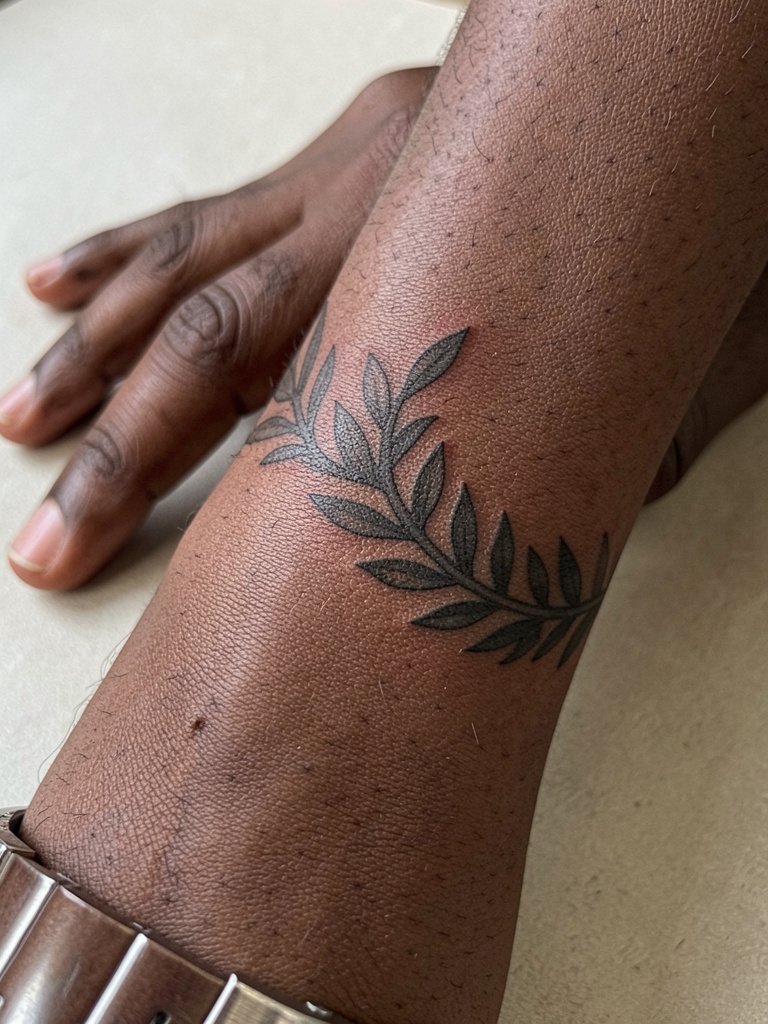
Placing a laurel where a watch sits gives a built-in frame for accessories, but you must plan for metal rubbing. Session time is short, yet the area sees constant friction, which accelerates edge softening. The mistake is not leaving breathing space between the watch and the leaves, which results in premature fading. For pairing, select watches with leather straps rather than metal bands during the first weeks, for example a thin leather watch strap that sits comfortably without abrasive contact.
25. Laurel Wreath with Color Accents
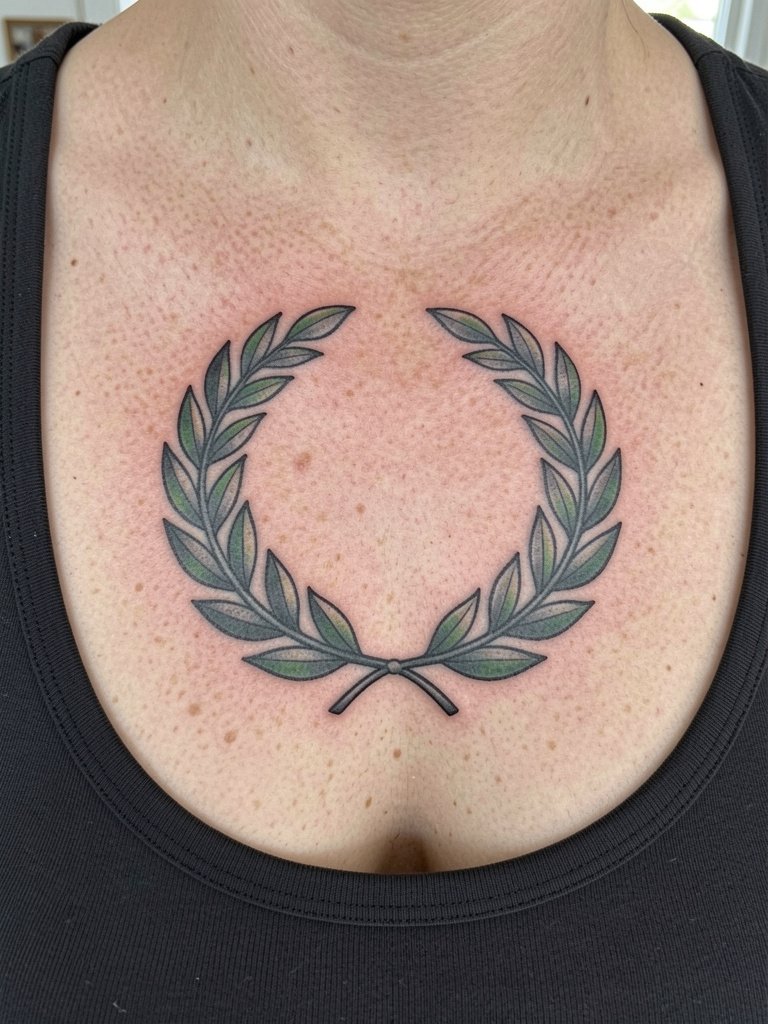
Selective color in a laurel can bring dimension without overwhelming the classical aesthetic, and areas with medium tissue handle color better. Plan for extra time because color layering adds session minutes. A common mistake is oversaturating every leaf, which ages differently and can muddy the design. When done with muted accents the wreath keeps its shape longer than full-color fills. For style balance, wear neutral tops that pick up the muted tones, such as an olive knit top that complements the green accents.
26. Ringed Laurel Around a Bicep Tattoo
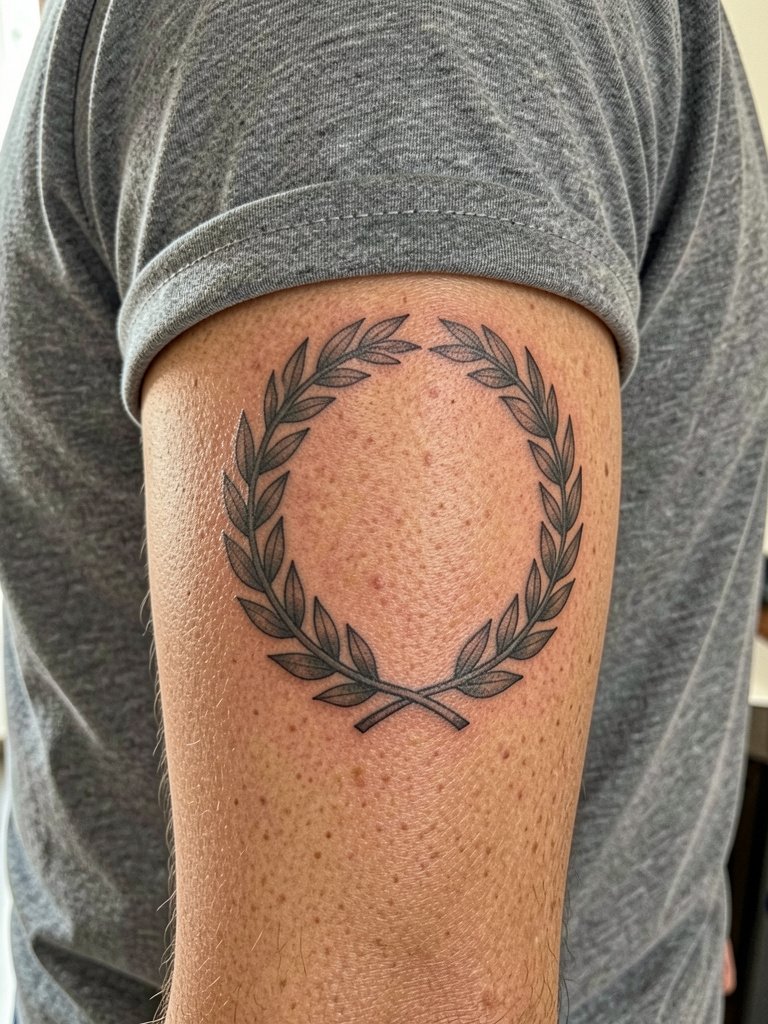
Framing an existing medallion with a laurel can tie disparate pieces together and create a cohesive sleeve foundation. Sessions depend on integration work, often one to two hours for adjustments. The mistake is matching a wreath too tightly to an older piece with different line weights, which makes the composition look inconsistent. For success ask the artist to balance lineweight so the wreath reads with the medallion at arm distance. For casual looks a fitted short sleeve shows the wrap without covering it.
27. Laurel Wreath Anklet with Small Gems
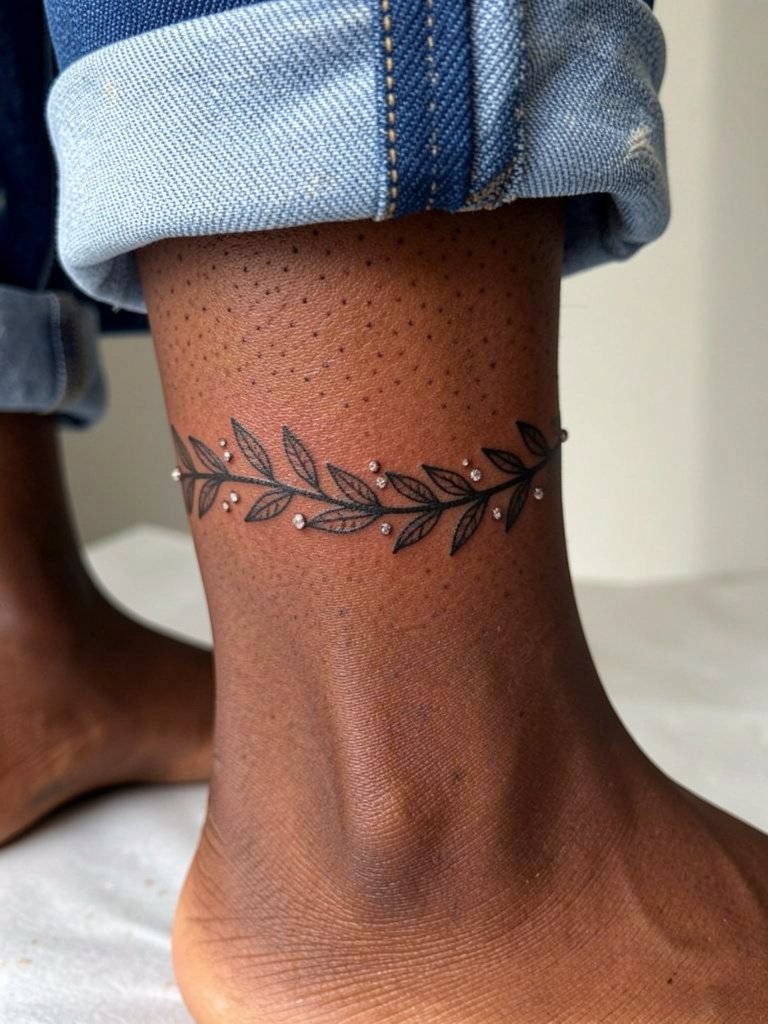
Anklet wreaths are a subtle alternative to jewelry and work well with tiny dot accents that read as gems. Plan for a short session and expect the anklet to experience footwear friction. A common error is overcrowding the anklet with dots, which fade and leave uneven texture. Opt for slightly larger dots and a clear rhythm between leaves for longevity. For footwear that showcases the anklet without rubbing, choose open toe sandals that reveal the area gently.
Frequently Asked Questions
Q: How do I decide between fine line and bolder laurel styles for longevity?
A: Fine line looks elegant but can blur faster on high-motion zones like fingers and ribs. Bolder spacing and slightly heavier linework usually read longer on areas that get washed or rubbed, and asking for modestly wider gaps between leaves is a practical move for durability.
Q: Are laurel wreaths culturally sensitive to use as a tattoo?
A: There are two ways people frame this. One camp treats the laurel as a classical motif used widely across time and cultures, seeing it as shared heritage. The other camp cautions that classical symbols carry historical weight and context, and they recommend thoughtful placement and intent to avoid trivializing cultural significance.
Q: Where can I find healed portfolio examples and discovery paths without naming specific artists?
A: Search platform filters for terms like "healed laurel wreath tattoo" and "laurel wreath healed shot" on image-driven sites, check curated tattoo portfolio collections, and browse community threads that show year-by-year healed timelines to see how linework and spacing performed on different skin tones.
Q: What should I wear to my appointment for a sternum or ribcage wreath session?
A: Wear a fitted sports bra or a cropped top that stays in place so the artist has clear access and you stay comfortable. A loose zip front hoodie is handy to put on between breaks without rubbing the fresh area.
Q: How often will I need a touch-up for a wrist or finger wreath?
A: Fingers and wrists typically need touch-ups sooner than larger placements because of washing and surface wear. Expect a possible touch-up within the first year, and after that maintenance depends on sun exposure and daily abrasion.