
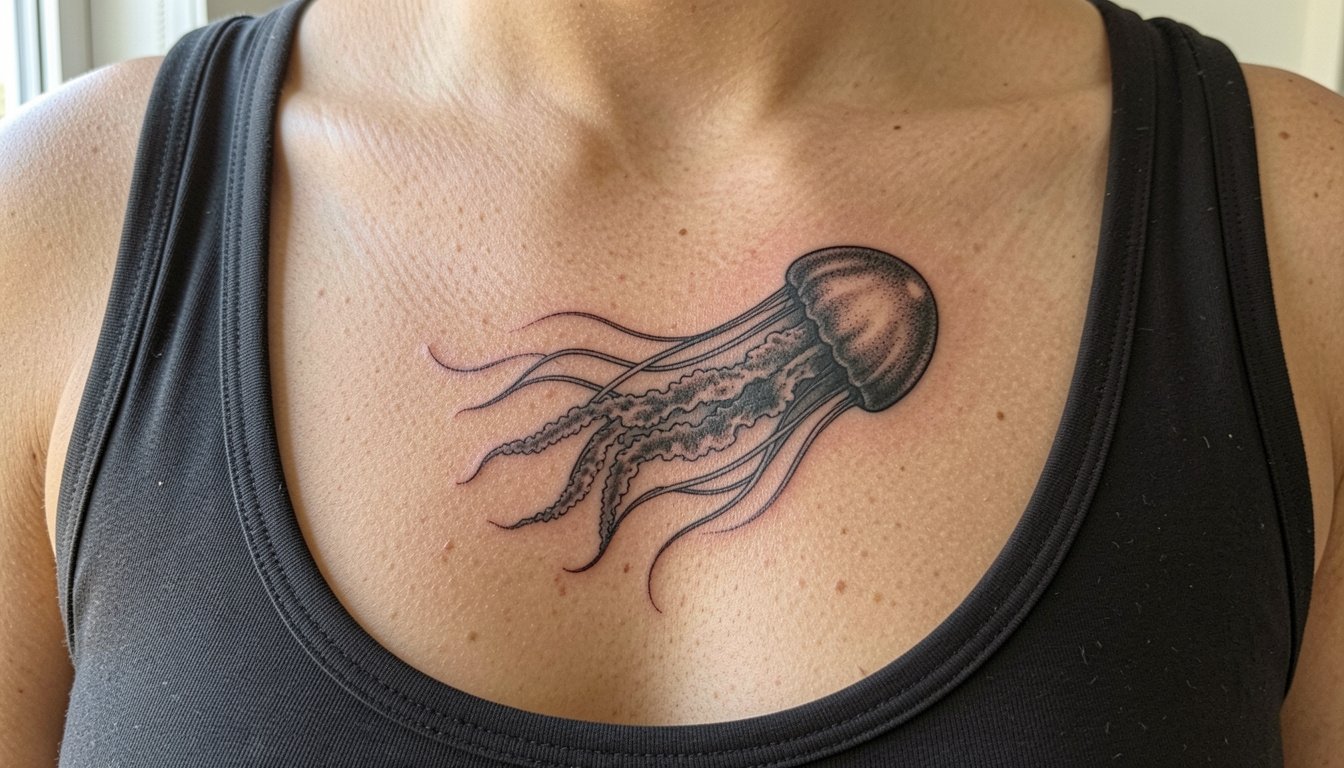
The ocean looks different on skin than it does in a photo, and jellyfish tattoos show that more than most motifs. Trend feeds push tiny watercolor bells and single-needle tentacles, but those quick wins often lose form as the years go by. This list favors realistic approaches that keep the jellyfish readable as the skin settles, and it includes styling notes for session day so the piece looks intentional on and off the chair.
1. Flowing Realistic Jellyfish on Outer Forearm
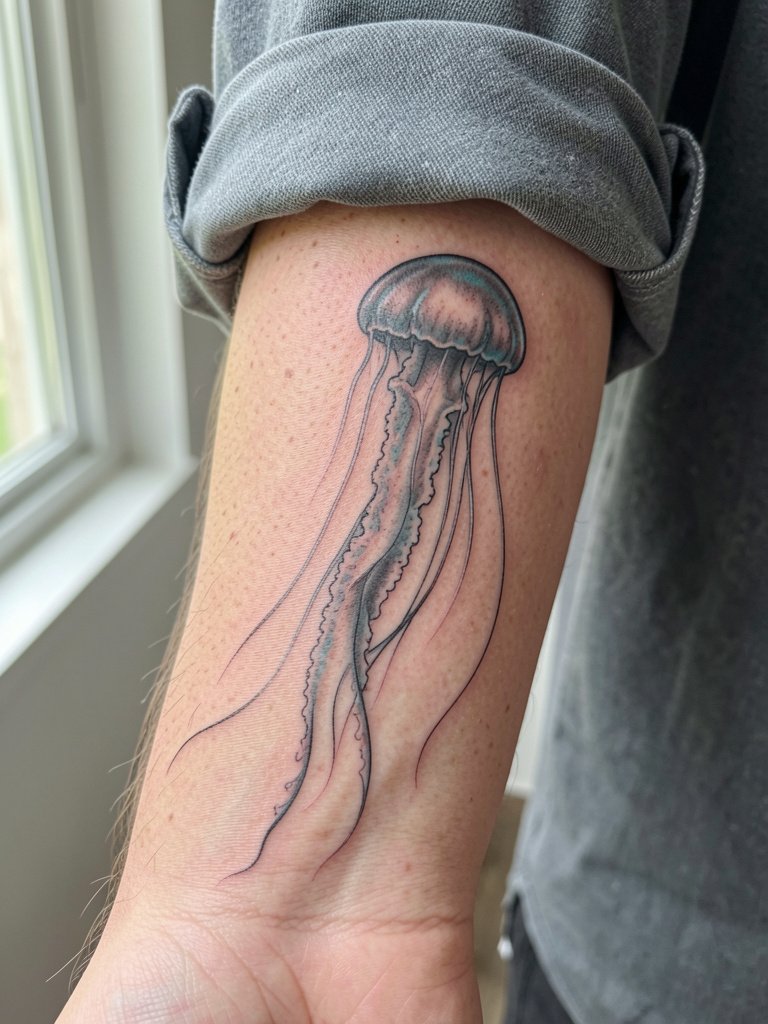
This placement uses the forearm's vertical line to sell movement. I recommend a slightly larger scale than many saved pins show because tiny tentacles tend to blur into each other after a few years. Talk specifics with your artist about tentacle spacing and contrast, not just the reference image. A common mistake is asking for single-needle tentacles at wrist scale and wondering why they lose definition by year two. Expect one to two sessions for a mid-sized forearm piece and moderate discomfort around the distal forearm bone. For showing it off, pair the tattoo with a rolled sleeve shirt that frames the area cleanly for everyday wear.
2. Watercolor-Accent Jellyfish on Upper Arm

Watercolor works best when it acts as an accent instead of the whole structure. One camp argues watercolor fields lose clarity faster because low contrast fades into a pale bruise look over time. The other camp maintains watercolor holds if an artist anchors the paint with realistic shading or a thin outline, and they show healed examples to prove it. For this upper arm piece, ask for a clear plan for saturation layers and an agreement on touch-up timing. Session wear is a loose tank top so the artist can rotate the arm freely. When you want to highlight the color, try an open-back top or sleeveless knit to keep fabric from rubbing the bell.
3. Fine Line Minimal Jellyfish on Inner Forearm
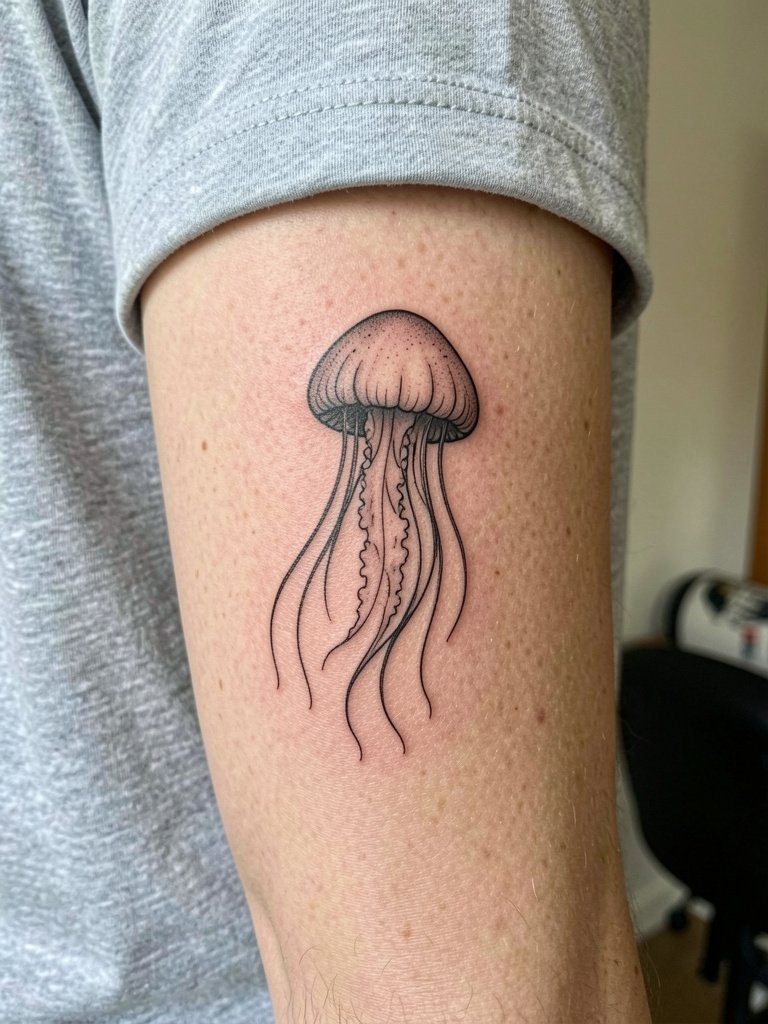
Fine line feels wearable, but size planning is everything. The inner forearm is forgiving of delicate work if the artist spaces the tentacles and uses slightly heavier single-needle weights than Pinterest shorts suggest. A frequent error is copying a tiny wrist reference and scaling it up to the forearm without rethinking spacing. This piece usually heals quickly and looks crisp at six months if the client avoids scrubbing and sun. For session day, wear a soft cotton tee that can be rolled up above the elbow so the artist has full access. Expect low to moderate pain and a typical one-session time of 60 to 90 minutes.
4. Black-and-Gray Realism on Calf
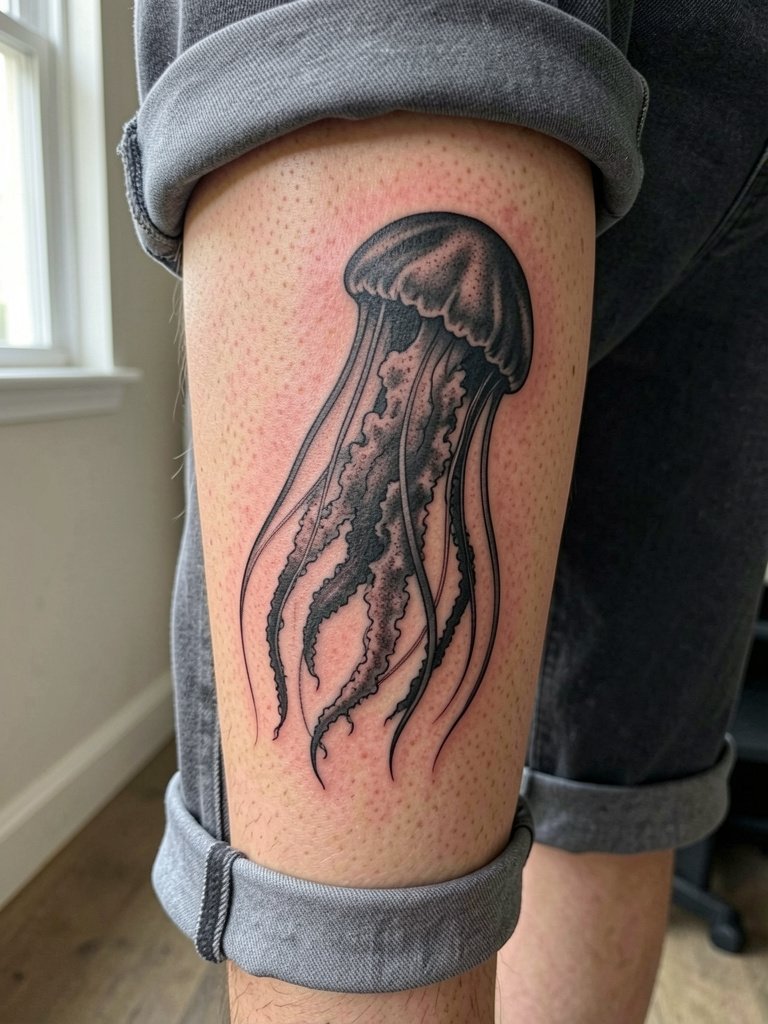
The calf gives vertical breathing room for long tentacles and shading. Black-and-gray realism holds up well here because the strong contrast keeps tentacles readable as the skin ages. Pain is usually low to moderate and you can schedule a multi-hour session if you want a large single-subject piece. A common mistake is forcing too many tiny tentacles into the same horizontal plane. Instead let them overlap with clear separation so they do not merge into blotches. For warm-weather showing off, cropped straight-leg pants and a midi skirt casual both frame the calf and keep the piece visible when desired.
5. Neo-Traditional Jellyfish on Outer Upper Arm
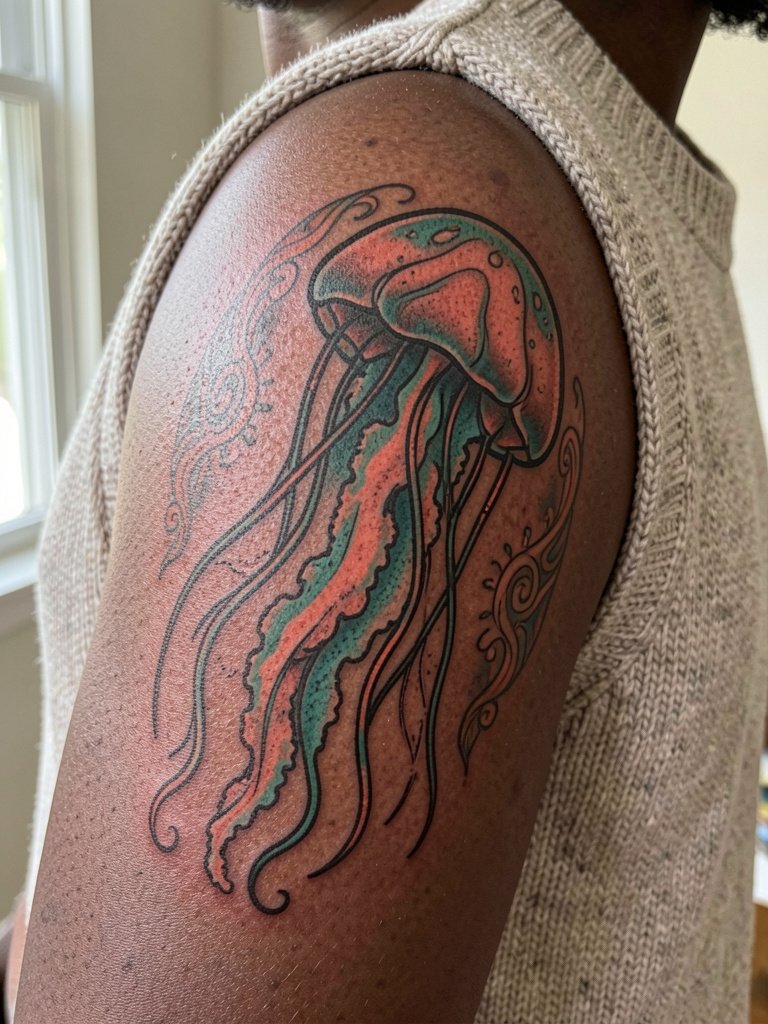
Neo-traditional solves a common aging problem by favoring bold outlines and saturated fills that keep reading as the tattoo softens. If longevity matters more than subtle translucency, this approach is a practical choice. Expect one to two sessions depending on color layering and size, and moderate pain at the deltoid area. A frequent mistake is over-detailing the tentacles in thin linework that contradicts the style. For outings, a ribbed tank top or relaxed sleeveless top lets the color pop without competing textures. Bring reference photos that show color intensity and healed examples so the artist knows the finish you want.
6. Tiny Ankle Jellyfish, Minimal Accent
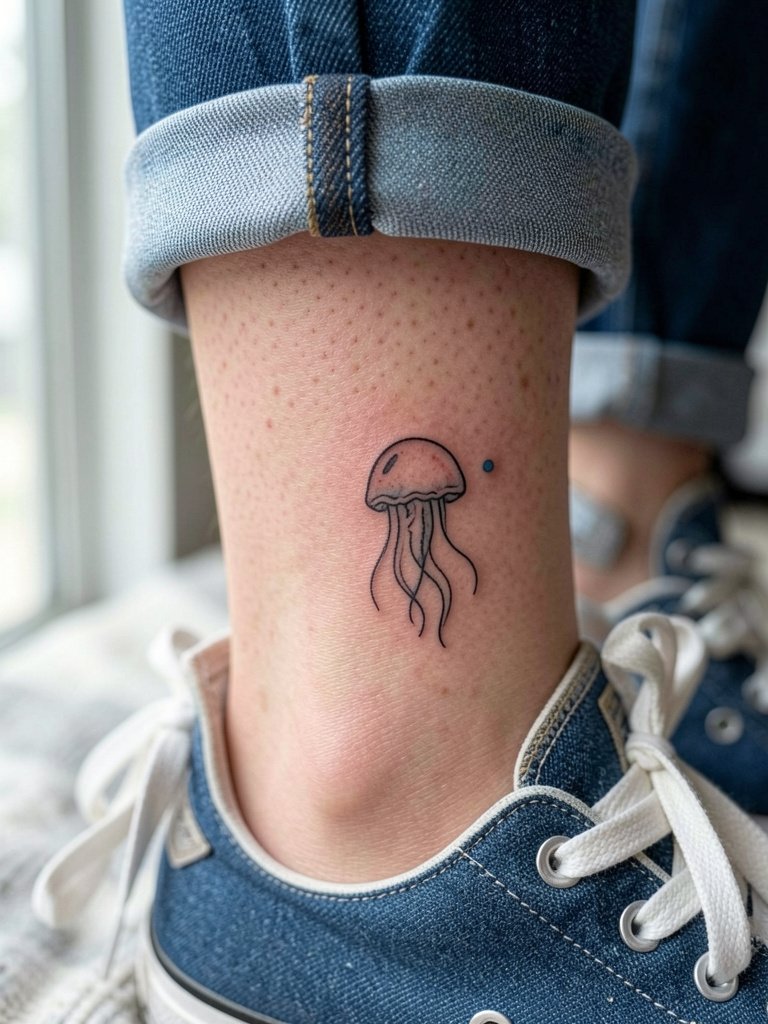
Ankle tattoos face day-to-day friction from shoes and socks, so clean silhouettes outperform overly filigreed tentacles. Keep the composition simple and the linework deliberate. A common error is cramming many tiny curls into a coin-sized area, which tends to become indistinct after healing. Expect mild to moderate pain and a single short session for a micro piece. For showing it off wear low top sneakers or sandals so the ankle remains visible. Plan for possible touch-up at the one-year mark if you want the accent color to stay vivid.
Session Day Picks
The forearm, upper arm, and calf pieces above face different session needs, so a few small items remove friction from the appointment and the first healing week.
-
Second-skin style dressings. These thin transparent films reduce fabric friction for flowing tentacles and help larger pieces on the back or side torso stay clean during the first days of healing.
-
Small-batch aftercare balm. A non-greasy balm from a boutique supplier can replace heavy petroleum when you want a lighter moisture layer on color work without occlusion.
-
Fragrance-free wash bar. A gentle soap bar is handy in the shower for the first two weeks, and avoids foams that tempt people to scrub.
-
Healing spray for delicate areas. For clients who dislike thick ointments, a mist format can keep the linework hydrated without residue.
-
Fragrance-free gentle body wash. A mainstream, low-irritant wash cleanses the area during showers while limiting inflammation for fine line and watercolor details.
7. Large Back-Piece Jellyfish Composition
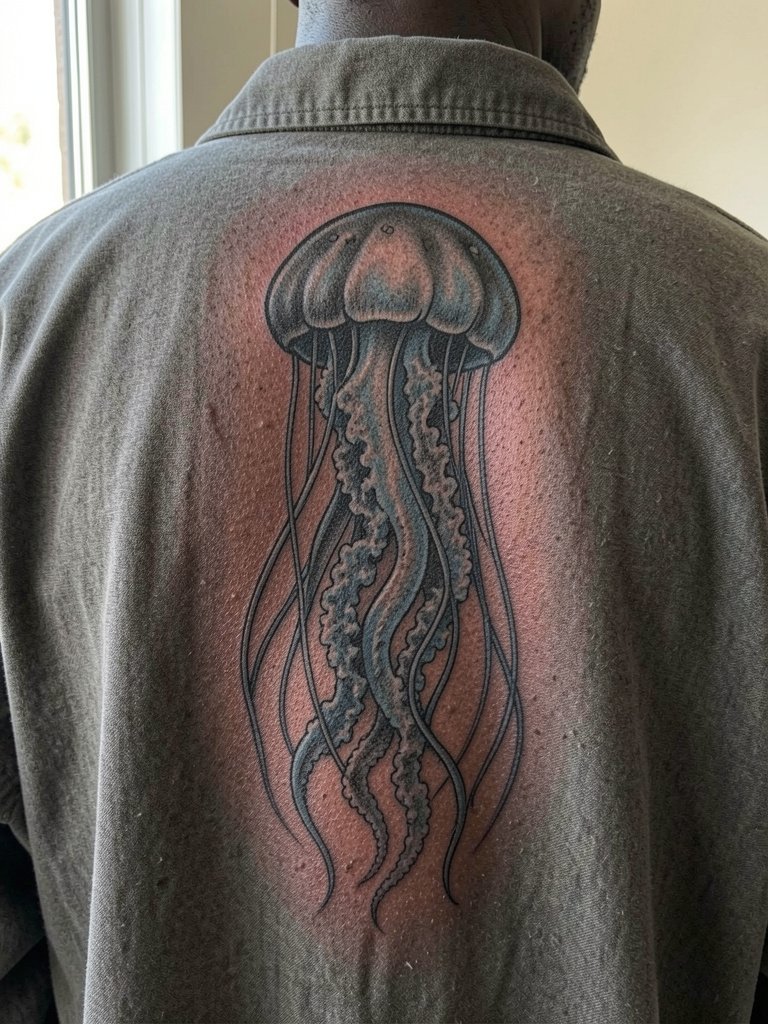
Back pieces let an artist play with scale and motion, but they also demand multiple sessions and a clear plan for how tentacles fall with body curvature. A common mistake is underestimating session time and booking only one block for work that really needs staged shading resets. Touch-up timelines for large black-and-gray pieces often occur around year two to refresh subtle gradients. For the studio visit wear a loose button-down or an oversized tee so you can expose only the needed area without tugging at fabric. If you prefer a defined silhouette, request a composition study that shows how tentacles interact with the spine and shoulder blades.
8. Tiny Nape Jellyfish, Hidden Detail
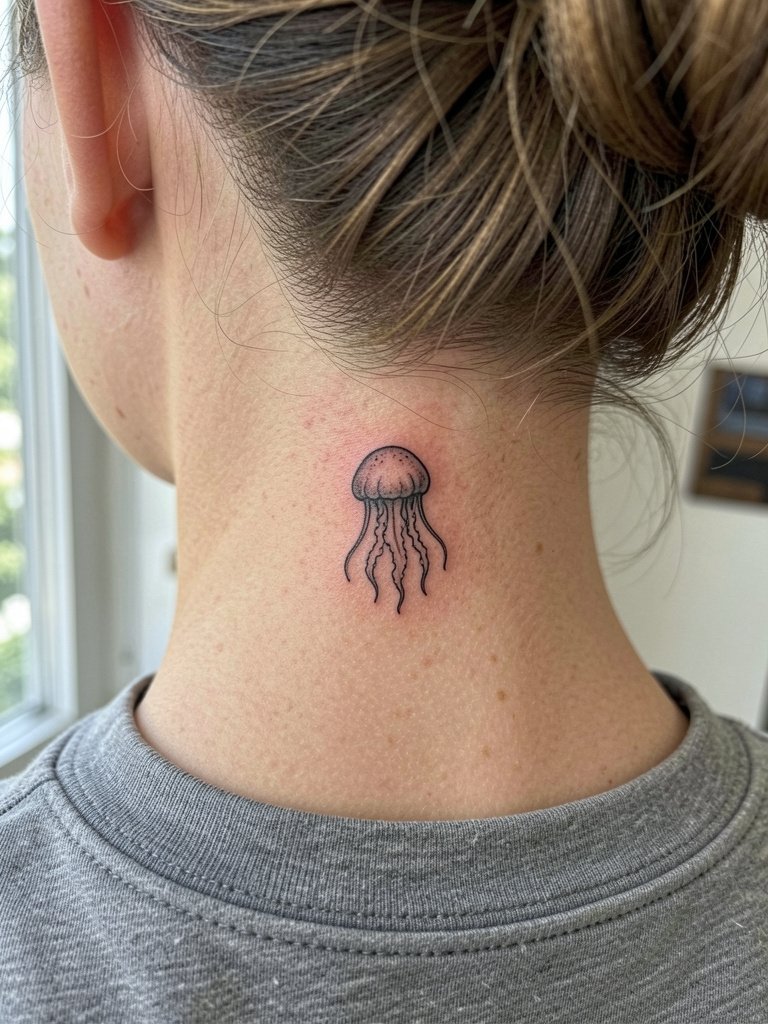
A nape piece reads as a tiny signature when hair is up and stays discreet otherwise. Fine-needle work here can hold if scaled correctly and spaced away from the hairline to avoid constant rubbing. Artists differ on fine line in high-movement neck skin. One camp warns that the nape's motion blurs ultra-fine single-needle lines within a few years. The other camp says careful depth and modest spacing prevents that outcome and they will show healed photos from similar placements. Session wear is a crewneck or button-down that can be pulled away from the nape without stretching the skin. Expect a short session with localized tenderness.
9. Jellyfish with Starry Dotwork Accents on Inner Forearm
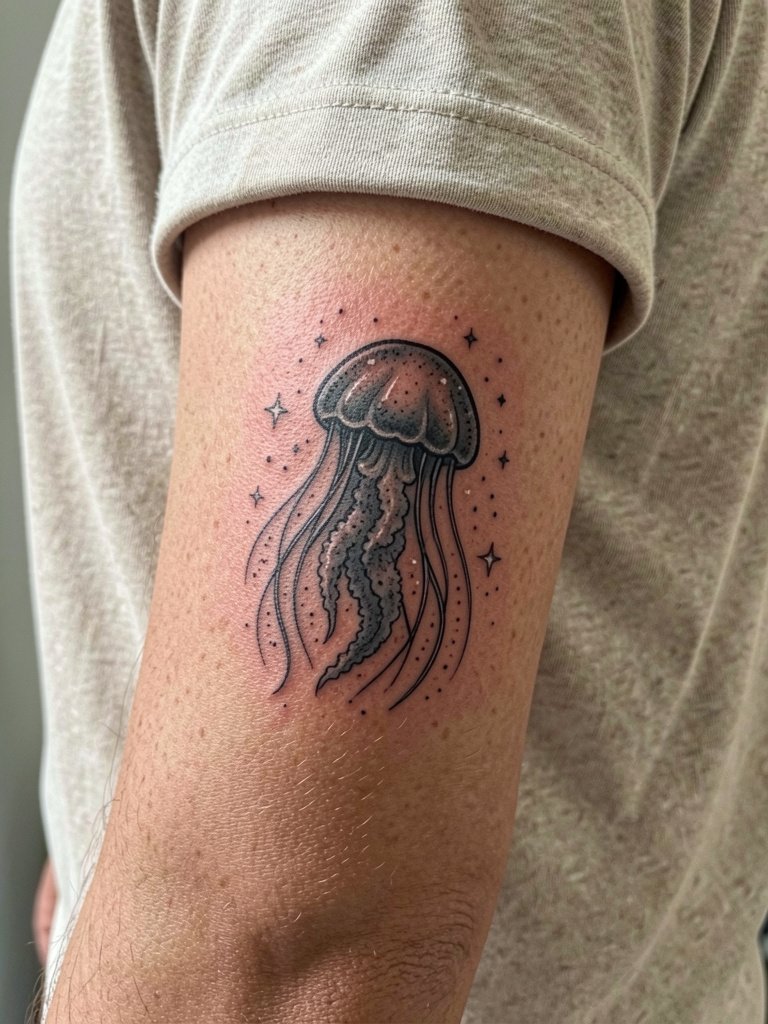
Combining realism with dotwork creates a dreamy feel while still keeping the jellyfish readable. Dotwork accents age like other black ink, so they remain a safe way to add texture. A common misstep is asking for luminous white ink stars without discussing how white settles on different skin tones. Ask the artist to demonstrate white highlights on similar healed skin if that matters. For styling, the inner forearm piece pairs well with a slim bracelet stack on the opposite wrist to balance attention. Expect one to two sessions depending on the number of dotwork elements.
10. Wrist-Wrap Jellyfish That Reads Like Jewelry

Wrist-wrapping tentacles deliver a jewelry effect but the area sees lots of movement and washing, so simplify the design. Tiny curls and micro-shading dissolve faster here than on calmer skin. A smart approach uses fewer tentacles and clear negative space so the wrap remains legible. Session time is short but the site may need a touch-up earlier than forearm placements. For daily styling try thin chain bracelets on the opposite wrist and sleeveless tops to keep the wrist cleanly framed. Remove watches and bracelets from the tattooed wrist during the session and healing window.
11. Mirrored Double Jellyfish for Thigh Symmetry
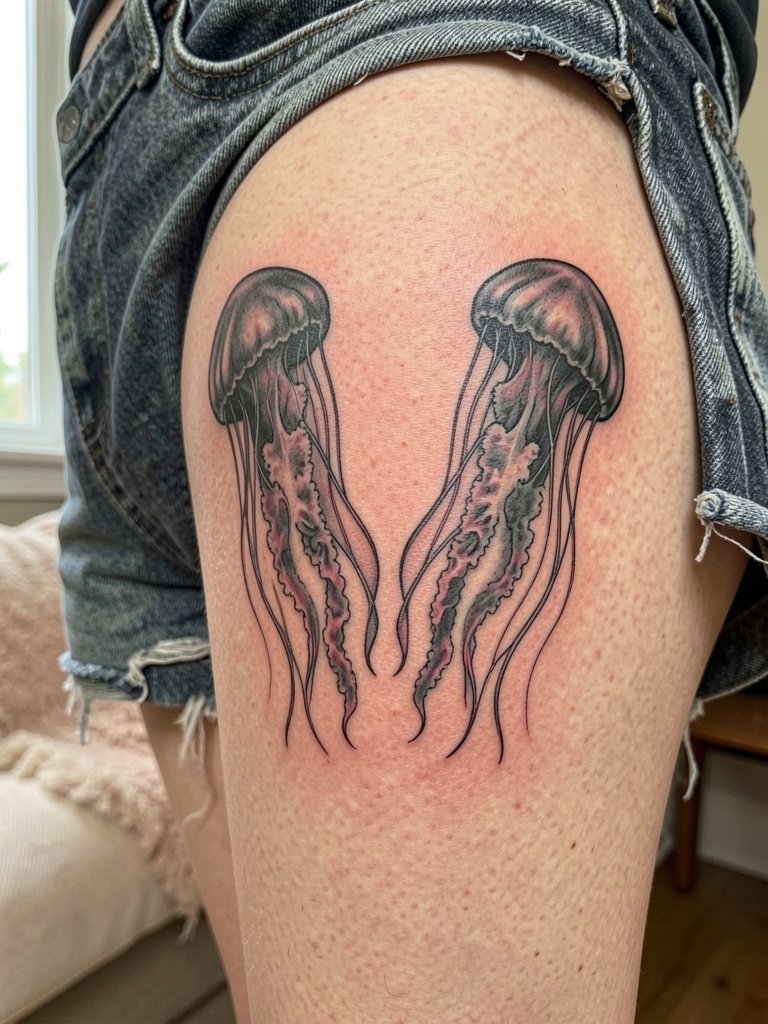
Symmetry reads well on the thigh because mirrored forms balance the panel without crowding. Thigh skin accommodates medium scale, which makes detailed tentacle work worth the extra hours. A common mistake is forcing mirror images that do not account for muscle curvature, which makes one side look heavier after healing. Bring photos of both legs in the chosen pose so the artist can map the composition correctly. For summer shows wear high-waisted shorts or a tied oversized shirt for a casual frame. Expect moderate pain and two or more sessions depending on complexity.
12. Temporary-Test Stylized Jellyfish for Placement Trials

Trying a temporary transfer gives practical insight into scale and daily wear before committing. Marketplace sheets let you test how tentacles sit when you type, sleep, or wear a watch. The typical mistake is testing only one pose. Try the transfer in motion and with different clothing to catch friction points. For session day practice, wear the same type of shirt you plan to wear to the appointment so the artist can see how fabric interacts with the area. Temporary trials are also a good opportunity to note whether colors show up on your skin tone.
13. Ornamental Lace-Like Jellyfish on Sternum
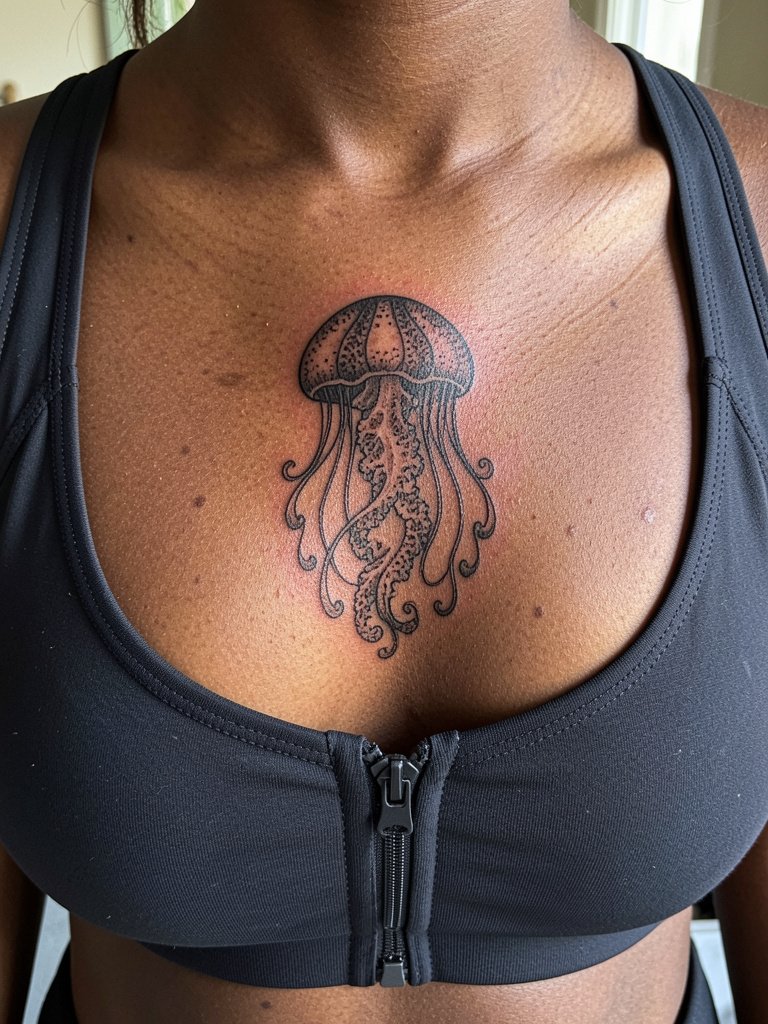
Sternum placements require careful planning because breathing and movement affect healing. The ornamental lace look benefits from slightly bolder main lines so the filigree survives time. Fine-needle-only approaches here risk blurring if spacing is too tight. Pain ranges higher due to proximity to bone and thinner skin. Session wear should be a front-opening bra or loose button-down for easy artist access without stretching. If you plan to show the piece, delicate layered necklaces and V-neck dresses frame the area without covering it. Discuss touch-up expectations up front because sternum detail often needs minor refreshes.
14. Subtle Accent on Upper Chest Below Clavicle
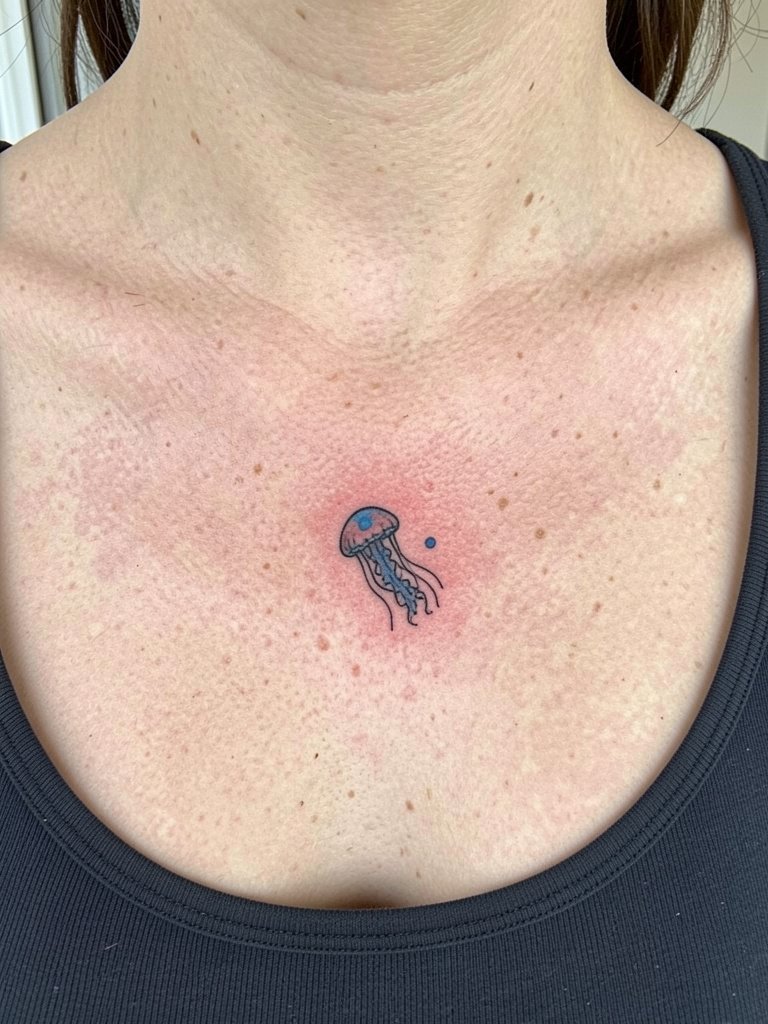
A small clavicle spot reads like jewelry when paired with neckline-friendly clothing. The key is leaving negative space so the accent color remains noticeable. Tiny color accents on chest skin need good saturation from the start because sun exposure can dull them faster than on covered areas. For session day, wear a scoop neck top or a front-button shirt that can be shifted without rubbing the area. When you want to accessorize, use dainty layered necklaces that sit above the tattoo and do not press into the skin. Expect a brief appointment and possible one-year touch-up for color refresh.
15. Realistic Side Torso Jellyfish on Ribcage
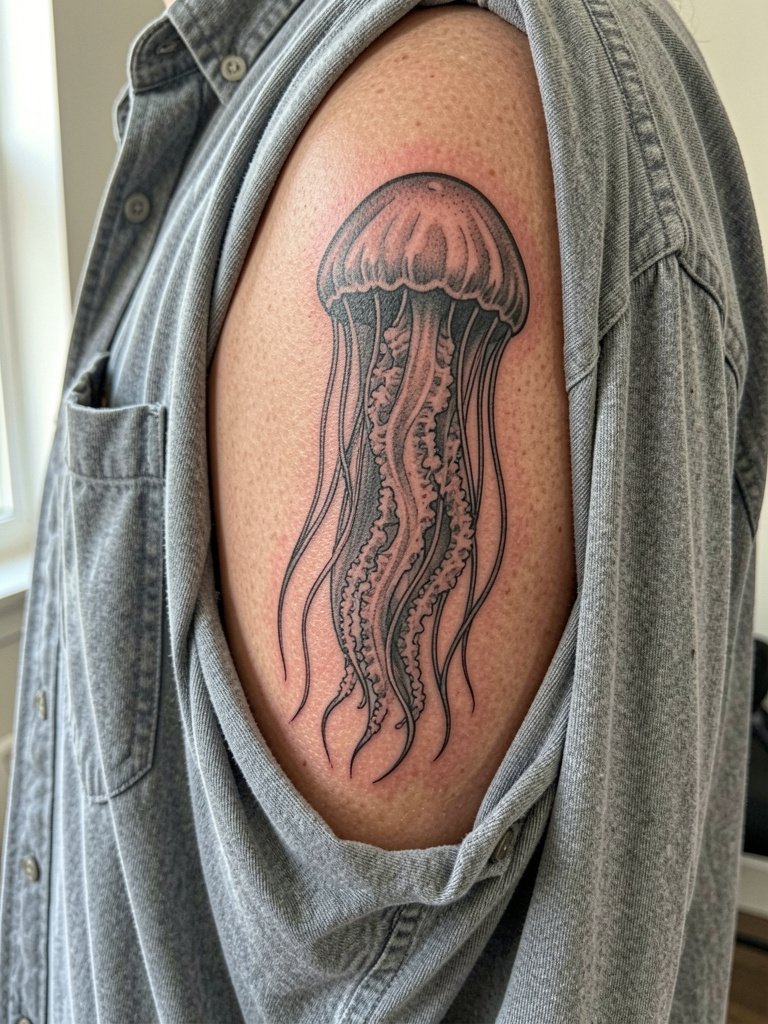
Ribcage pieces look gorgeous but they bring higher pain and movement that influences line longevity. Fine-line proponents warn that the skin there stretches and blurs ultra-thin lines quickly. The opposing view is that slightly wider spacing and experienced needle depth let fine line work settle well on ribs. Name both positions when you consult and ask the artist to show healed examples on similar areas. Session planning should include breaks and numbing strategy if needed. Wear a loose button-down or a front-opening bra so the artist can access the side without fabric tugging. Expect multiple hours and a realistic touch-up window within two years.
Frequently Asked Questions
Q: How do I pick between black-and-gray realism and color for a jellyfish?
A: If longevity and predictable aging are your top priorities choose black-and-gray realism because contrast holds up well. If you want translucency and the feeling of depth then color captures jellyfish better, but you should plan for stronger saturation and potential touch-ups. Ask to see healed examples on a similar skin tone so you know what to expect.
Q: Will a watercolor jellyfish fade faster than a realistic shaded one?
A: Many artists split into two camps on that. One camp says large soft watercolor fields and low-contrast washes can fade unevenly and look washed out. The other camp says watercolor used as an accent over a shaded base or anchored with linework can age acceptably, and they point to healed pieces that still read well. Decide which outcome you prefer and request a plan for saturation and touch-up timing during the consult.
Q: Where can I find artists and healed portfolios for jellyfish work?
A: Search Instagram and TikTok with style-plus-subject tags such as #jellyfishtattoo, #realistictattoo, #finelinetattoo and add your city to narrow results. Browse Tattoodo for keyword queries like "jellyfish realism" to surface style-specific portfolios. Use Reddit tattoo communities for candid feedback and to find healed photos from real clients.
Q: What should I wear to a session for a ribcage or sternum jellyfish?
A: For ribcage pieces choose a loose button-down or oversized tee that you can shift without pulling at the skin. For sternum work a front-opening bra or fitted sports bra lets the artist work without fabric tugging. Bring clothing that avoids seams or waistbands directly over the tattoo during the first week.
Q: How long before a small jellyfish needs a touch-up?
A: Tiny fine-line pieces commonly see the first touch-up between 12 and 24 months, depending on placement and sun exposure. Areas that rub against clothing like ankles and wrists often need refreshes earlier. If longevity is essential choose slightly heavier line weight or a small accent of bolder black to reduce early fading.