
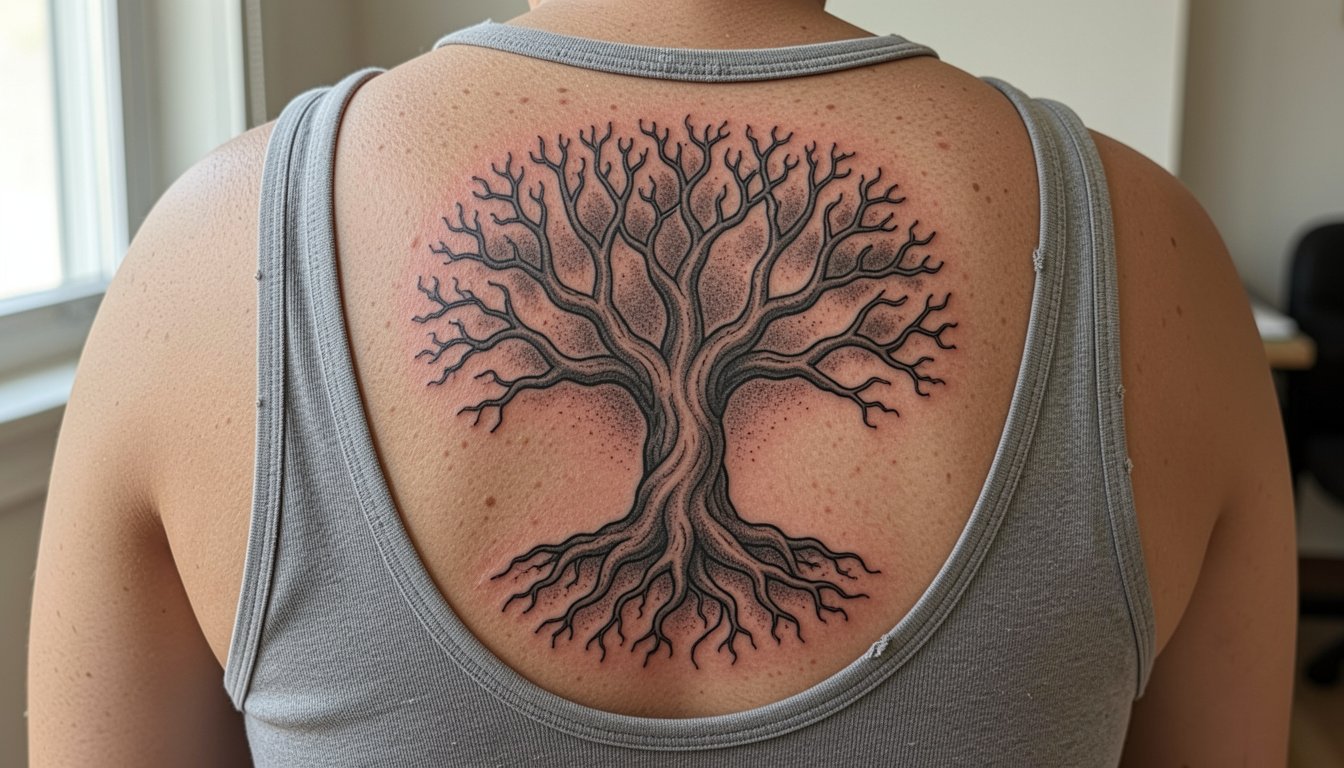
A lot of runic tattoos on boards look great in a square crop and terrible in real life. Small single runes can blur into smudges if they are placed too close together, and a Vegvisir slapped onto a narrow upper arm can lose its compass feel when the skin settles. I wrote these picks to help you pick a readable rune design for the spot you want and to avoid the two mistakes I see most: wrong symbol choice and undersized linework.
1. Single Elder Futhark Rune on the Wrist
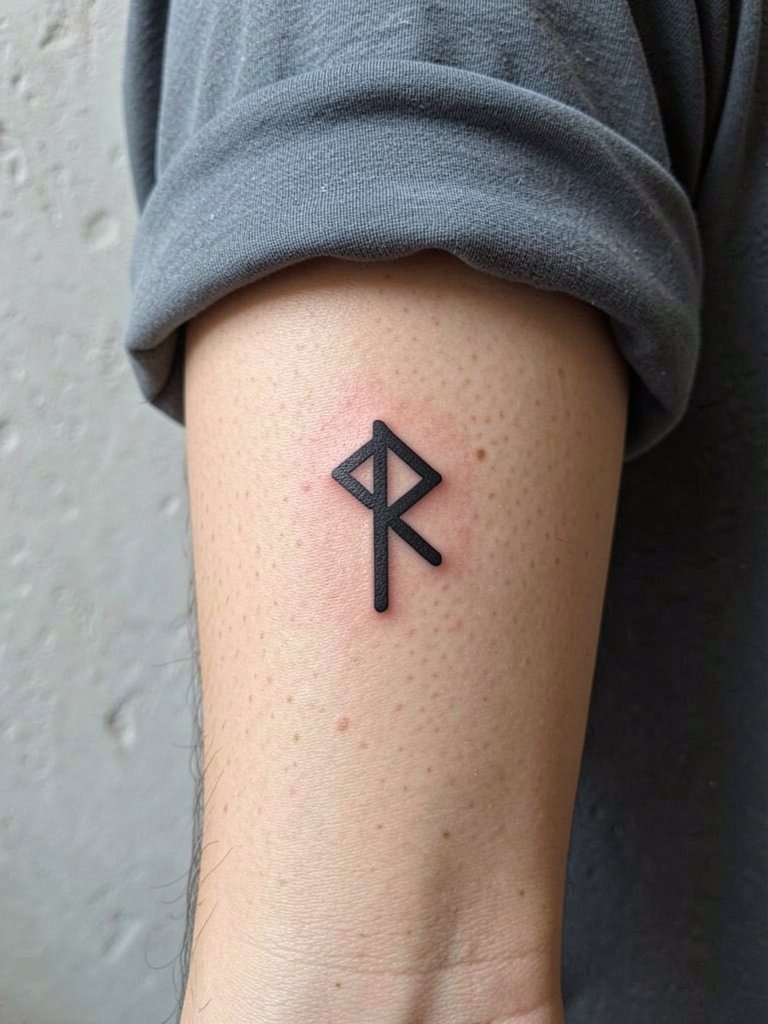
A single Elder Futhark rune on the wrist is the classic starter choice because it keeps the composition simple and the symbol legible. For durability, increase line weight slightly from what your reference photo shows and ask for clean linework with no soft shading inside the rune. The wrist sees constant washing and friction so expect a light touch-up at year two for single-needle work. For showing it off, pair the tattoo with a thin chain bracelet set so the cuff frames the rune without covering the ink. A common mistake is asking for ultra-fine single-needle strokes without accounting for wrist movement, which causes early softening.
2. Algiz Protection Rune on the Inner Forearm
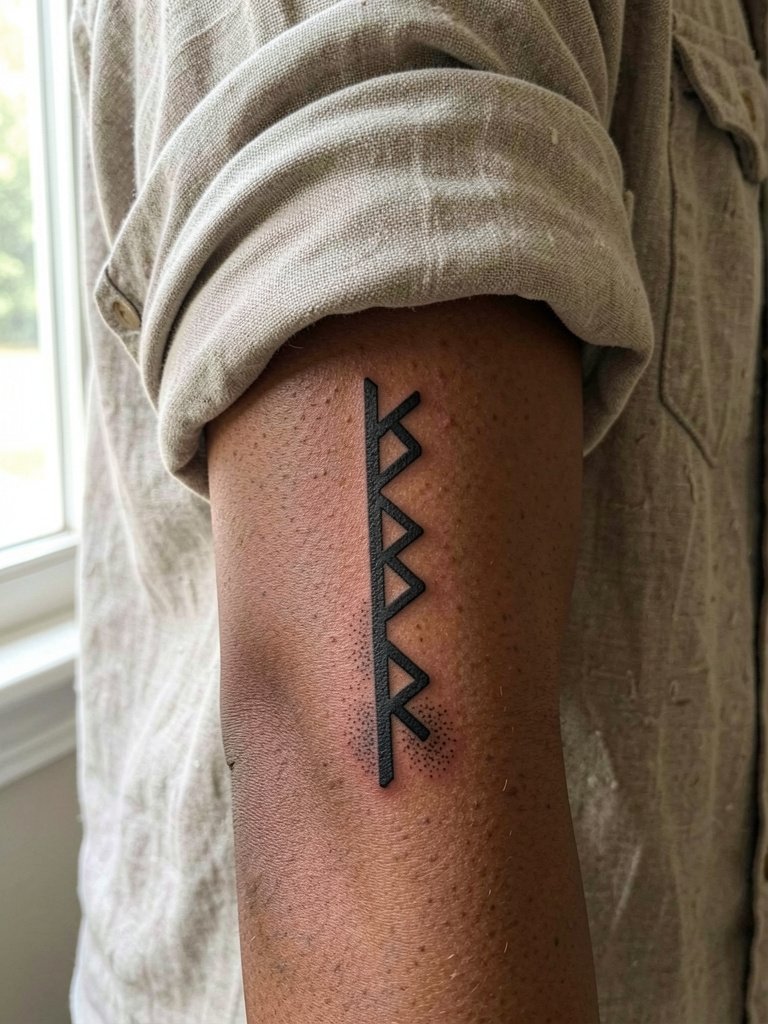
Algiz reads naturally on the palm-up inner forearm where the skin is flat and the symbol can stay upright when your hand is at rest. Specify a slightly heavier line weight and crisp termini so the rune keeps its protective silhouette as the skin ages. During the session expect moderate discomfort, a steady pain around three to four out of ten for most people because the area has little fat. When you book, wear a linen button down that rolls easily above the elbow. A common mistake is compressing Algiz into a narrow horizontal space so the arms of the rune clash when healed.
3. Name or Sentence Written in Runes on the Outer Forearm
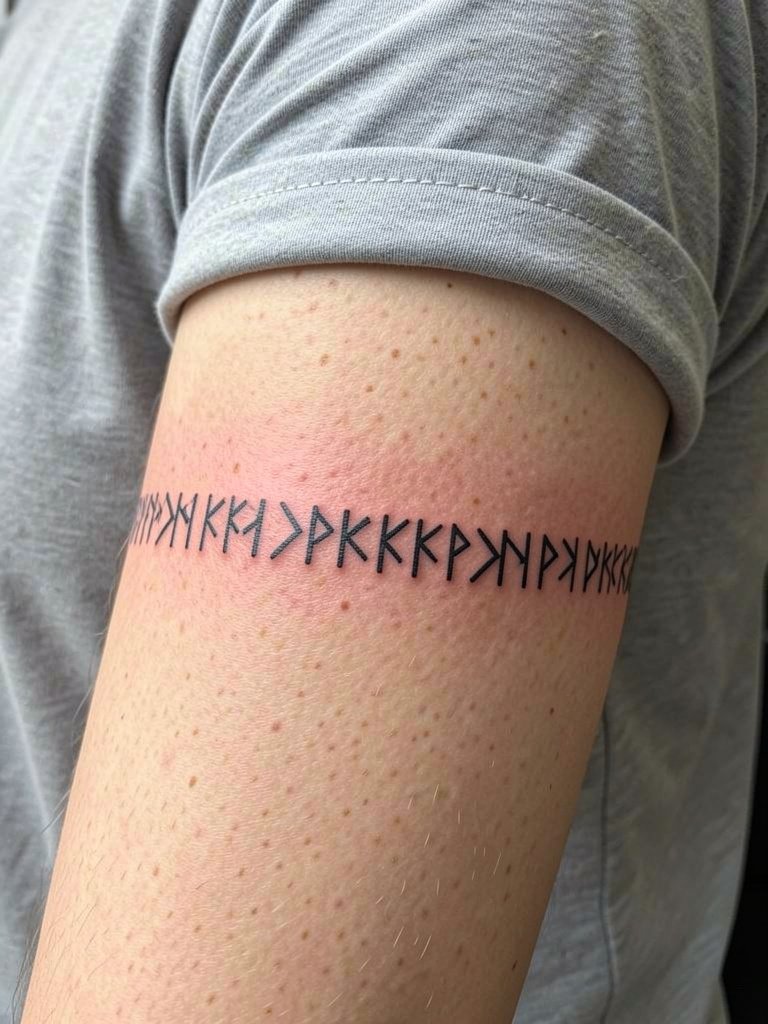
Turning a name or phrase into runes works best on the outer forearm where horizontal reading is natural. Bring a typed reference of the exact runic transliteration and request even spacing and slightly larger letterforms than what looks nice at first glance. That spacing is what keeps the sentence readable at six months and beyond. For session comfort, choose a soft short-sleeve shirt, and consider a plain crew neck tee you can push up without tugging. The main error I see is squeezing too many runes into a short band so the characters merge when the skin settles.
4. Runes Combined With Vegvisir on the Upper Arm
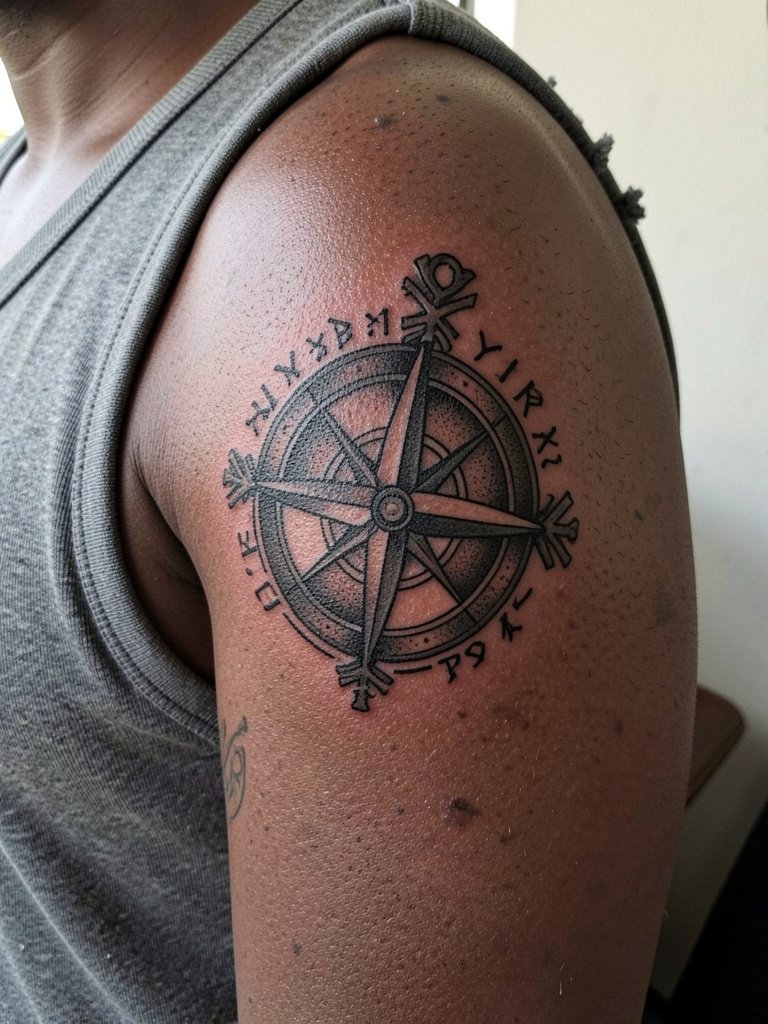
Combining runes with a Vegvisir gives the upper arm a clear central motif and a readable rune accent that supports the compass meaning. Artists and collectors split on single rune versus combined compositions. One camp prefers single runes because they are cleaner and fit small placements without visual clutter. The other camp favors combinations like Vegvisir with runic bands because the added element builds a fuller mythic message and reads stronger from a distance. If you like the combined look, ask for the Vegvisir to have negative space between the arms and the runes to avoid crowding. For showing this off, a tank top with a relaxed armhole frames the outer upper arm without cutting into the piece.
5. Runes With Mjölnir on the Shoulder
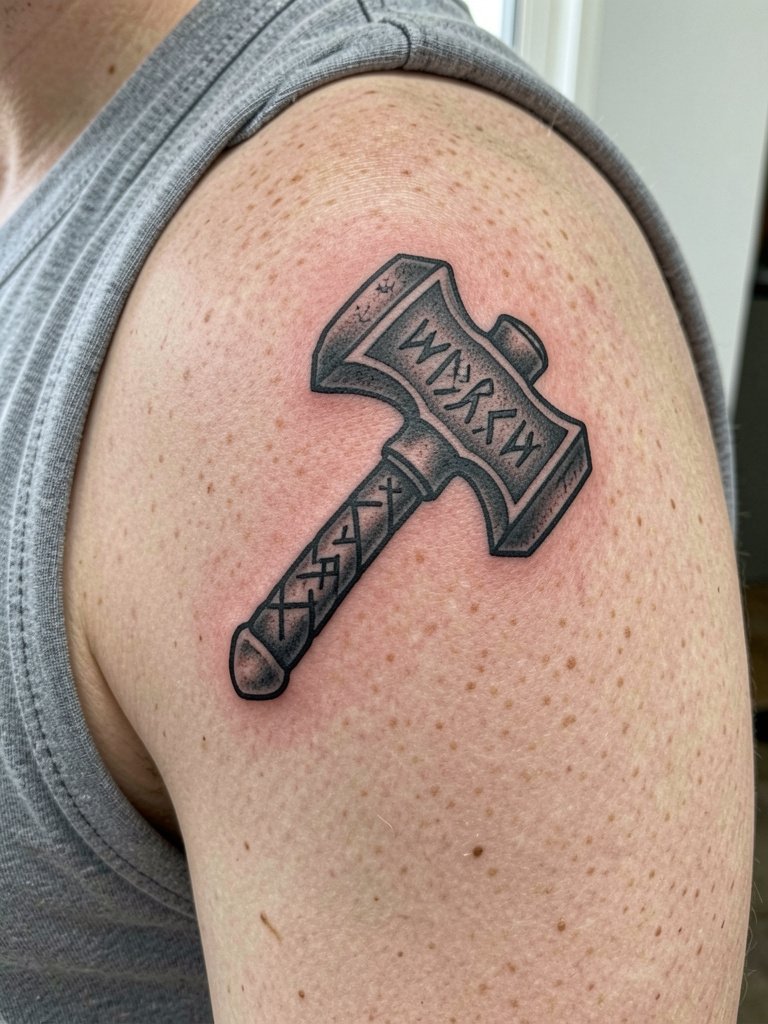
Thor’s hammer works well on the shoulder because the round shoulder cap lets a compact Mjölnir read without distortion. Ask for bold linework and solid saturation so the hammer silhouette stays distinct as the skin moves. Pain on the shoulder is usually mild to moderate and session time for a small piece is often one appointment. Pair the finished tattoo with sleeveless tops or men’s tank tops for reveal moments. A frequent mistake is requesting tiny fine detail inside the hammer that disappears after a year; keep internal ornamentation bold.
6. Runes Plus Yggdrasil Composition on the Back
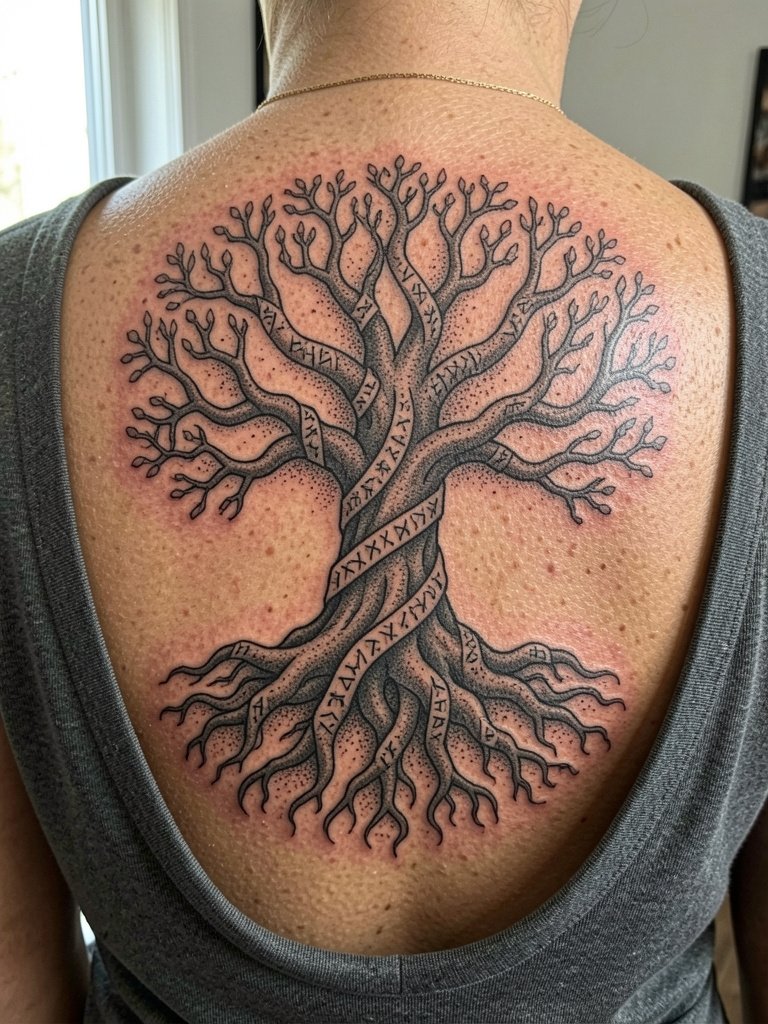
A Yggdrasil composition lets you turn runes into narrative accents rather than lone icons, which is ideal for collectors who want a layered back piece. Expect multiple sessions because of scale and detailed linework, and plan for a heavier session cadence to protect saturation during shading passes. For the studio day wear, choose a front-opening shirt or a sports bra that unclips easily so you do not tug at fresh work. The biggest mistake is treating a back tree like a single-session project; block time for two or more appointments and plan realistic touch-up windows.
Session Day Picks
These items smooth the first week for small wrist pieces and multi-session back work you met in ideas 1 through 6.
-
Tattoo practice stencil transfer paper kit. Lets you preview line placement on skin and adjust rune spacing before the first needle hits, which matters for wrist and forearm text pieces.
-
Thin protective film roll for skin. Keeps finger and wrist tattoos clean during daily washing and typing without sticking to tight linework.
-
Breathable silicone barrier patches. Useful on shoulder and upper arm placements where shirts can rub during the first two days.
-
Soothing salve balm travel tin. A compact balm for the first-week dry spots on forearm and back pieces.
-
Aquaphor Healing Ointment. Thin applications in the first 48 hours help lock moisture into single-needle and blackwork pieces without smothering fine line channels.
7. Micro Rune Behind the Ear
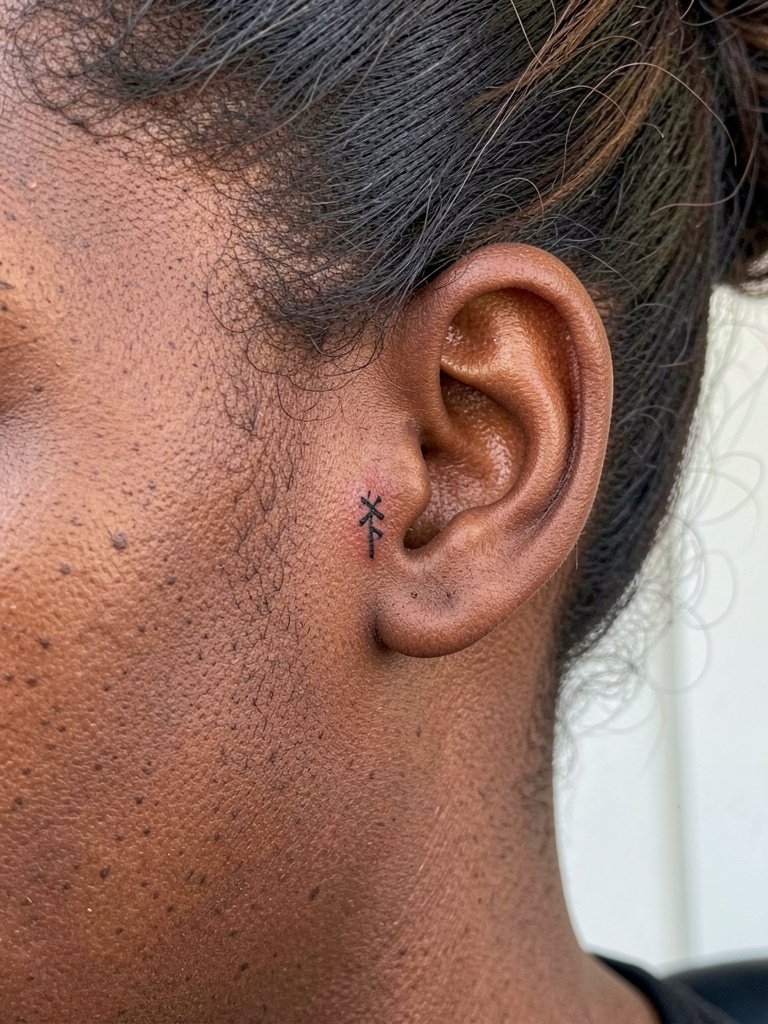
Micro runes behind the ear are discreet and personal, but they face a longevity trade-off: tiny single-needle strokes are vulnerable to blurring as the skin grows and ages. One camp argues micro is perfect for hidden symbols because it is easy to cover with hair. The other camp warns that micro work in that exact spot will often need a touch-up within two years to keep crisp edges. If you choose this spot, increase the glyph size just enough so the character stays legible and plan for a quick touch-up timeline. Wear hair up for reveals and keep earrings minimal so the area can breathe after the session.
8. Rune Band or Stacked Runes on the Thigh
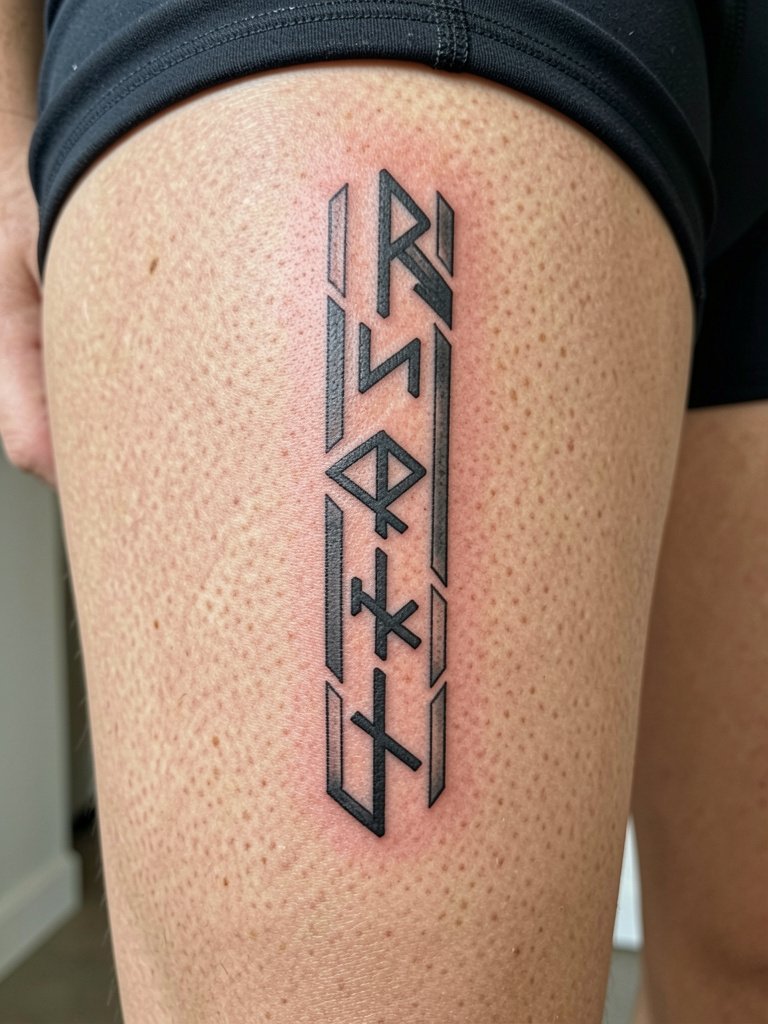
A thigh band gives you room for multiple runes without compressing them. Set the runes with deliberate negative space and consider light framing lines so each symbol reads independently as the skin shifts. Session feel is usually tolerable because the outer thigh has soft tissue, but expect longer session times for a multi-symbol band. For session wear choose fitted bike shorts you can adjust without tugging and try bike shorts so the artist can reach the area easily. Avoid cramming too many runes into a narrow strip, which causes early blurring.
9. Single Rune Finger Tattoo
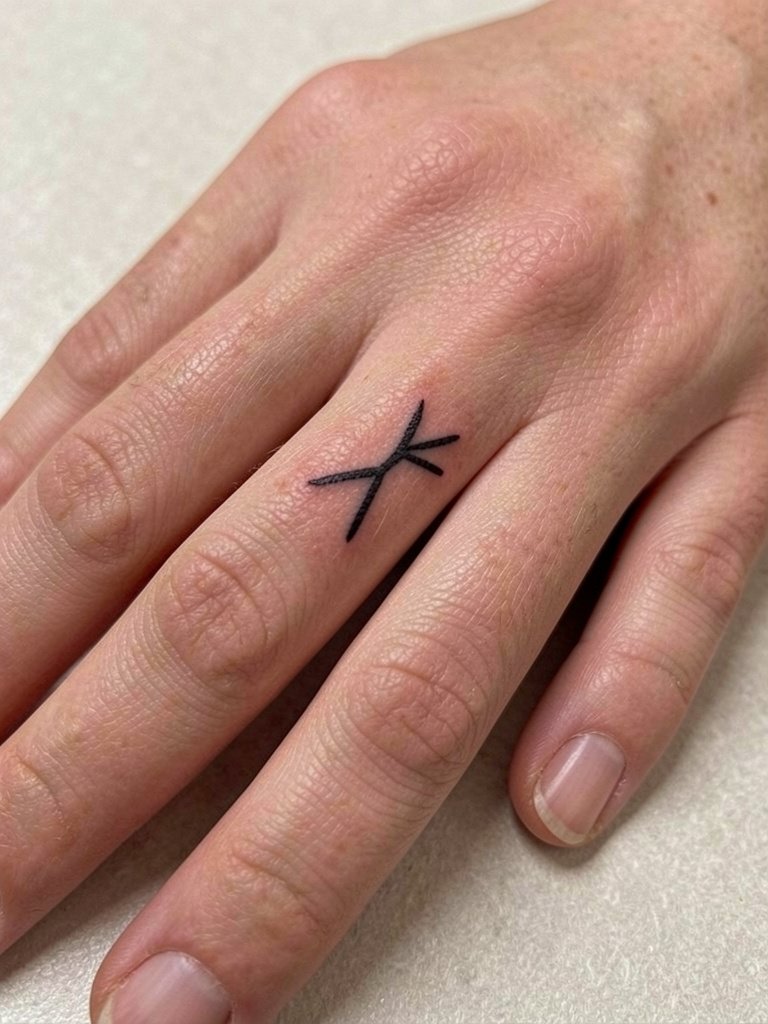
Finger runes are visible daily but they face heavy wear from washing and rings. Ask for a slightly heavier single-needle contour so the rune survives repeated contact and plan on touch-ups more often than for forearm work. During the session you will feel sharp surface sensitivity because the skin is thin, but most people tolerate small pieces in one short appointment. If you want to style the hand, minimal rings or a thin band ring keep the rune visible without smudging the area with metal contact. Avoid asking for ultra-fine hairlines on the finger, those rarely last.
10. Runes With Shading-Heavy Norse Imagery on Full Upper Arm
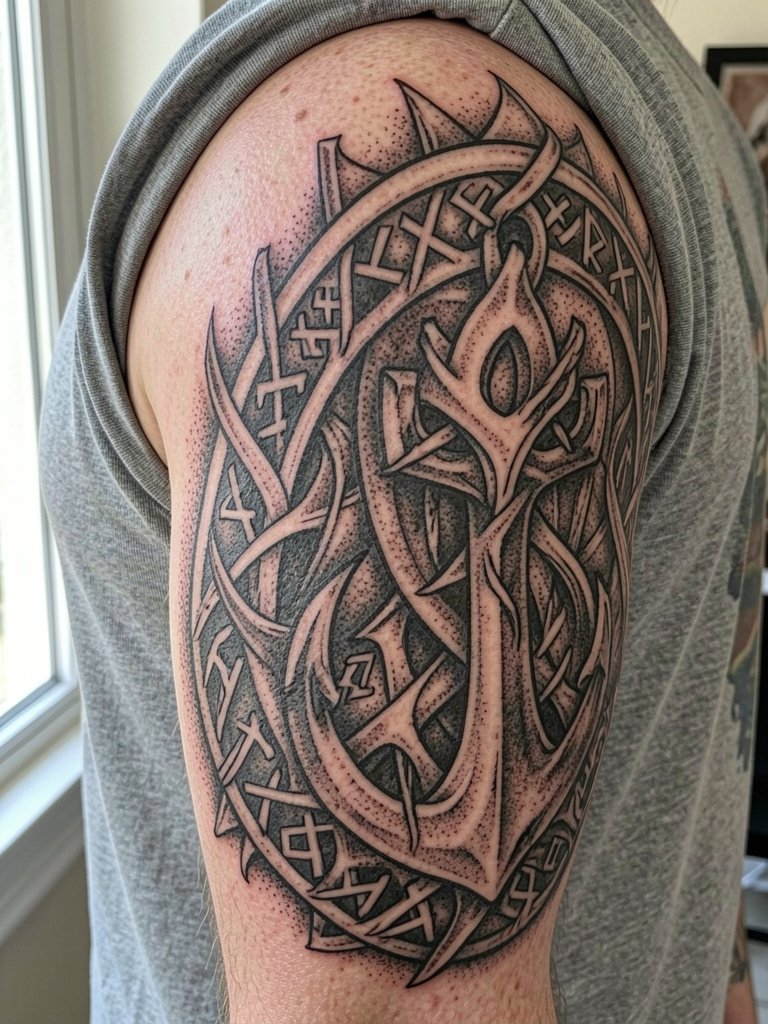
Large upper-arm compositions allow runes to be part of a scene that uses shading to create depth while leaving the glyphs legible. For this scale ask your artist to map where the runes will sit so shading does not bleed into the characters, and request whip shading and stipple texture for natural transitions. Expect multiple sessions and plan touch-ups after the first year to correct any saturation that settles unevenly. For presentation, a boxy tee with relaxed sleeves frames the upper arm while keeping the tattoo visible. A mistake here is letting grayscale washes cross runes without intentional negative space, which undermines readability.
11. Compact Rune Tattoo on Finger or Wrist for First-Timers
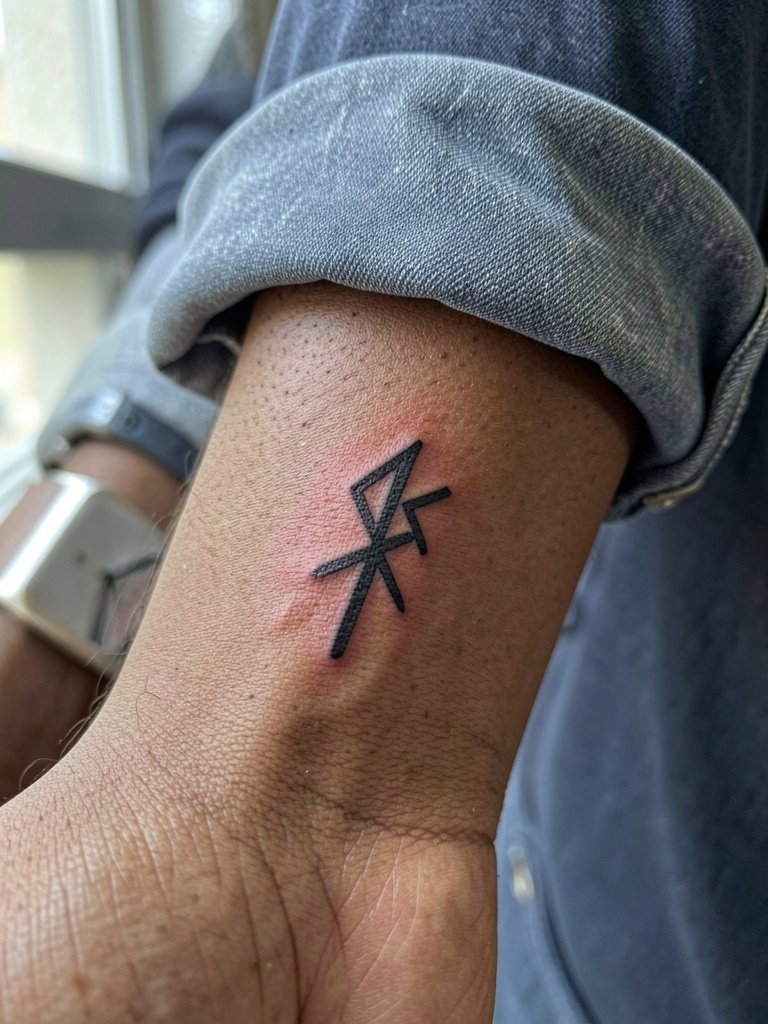
For first-timers a compact wrist rune is low-commitment but still requires thoughtful scale so it ages. I recommend bumping the rune size up slightly and asking for a reinforced outline so the piece holds. Session time is short and pain is mild on the wrist when compared with ribs or sternum. When you show it off, a minimalist watch on the opposite wrist balances the visual weight and keeps the tattoo visible. The common error is choosing a rune too small to be practical, which forces early touch-ups.
12. Elder Futhark Runes With Mythological Imagery
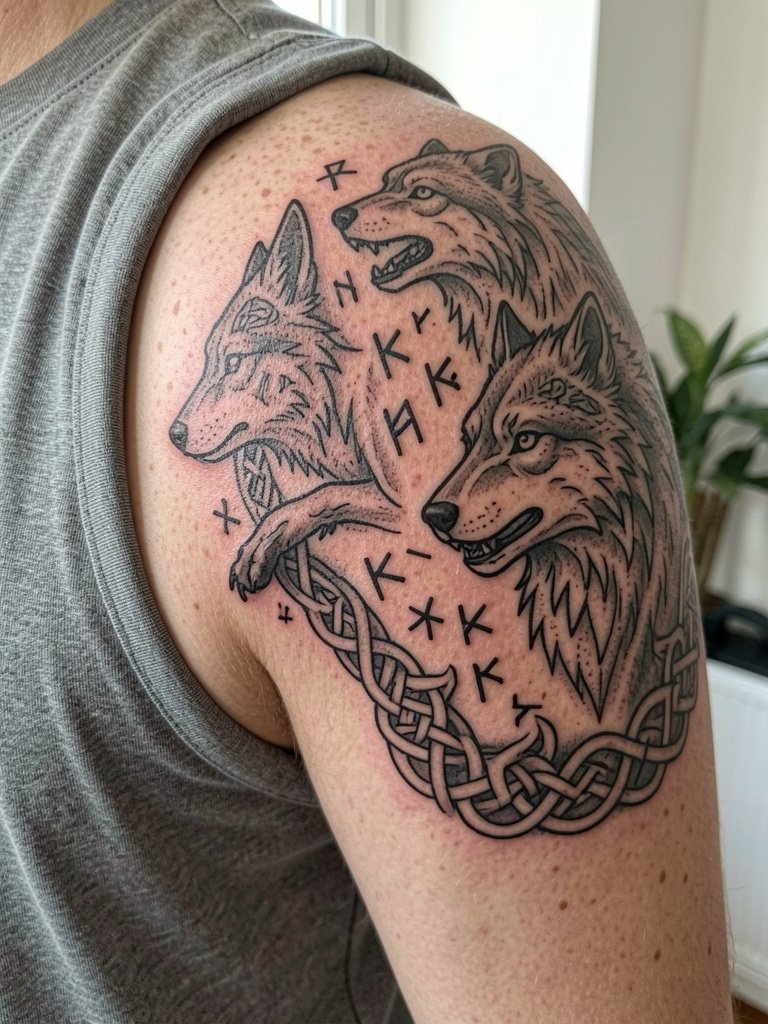
Pairing Elder Futhark runes with mythic imagery gives context to the glyphs and signals intent beyond aesthetics. For mixed scenes, keep runes isolated with negative space or small framing lines so they do not get lost in complex art. Larger pieces like this are suited to upper back, shoulder blade, or chest panels where an artist can stage composition across sessions. A typical mistake is overloading symbol density without planning how each rune will read from different viewing distances. Discuss spacing with your artist using a mock stencil taped down so you see scale in real skin context.
13. Runic Tattoo as a Stand-Alone Heritage Marker
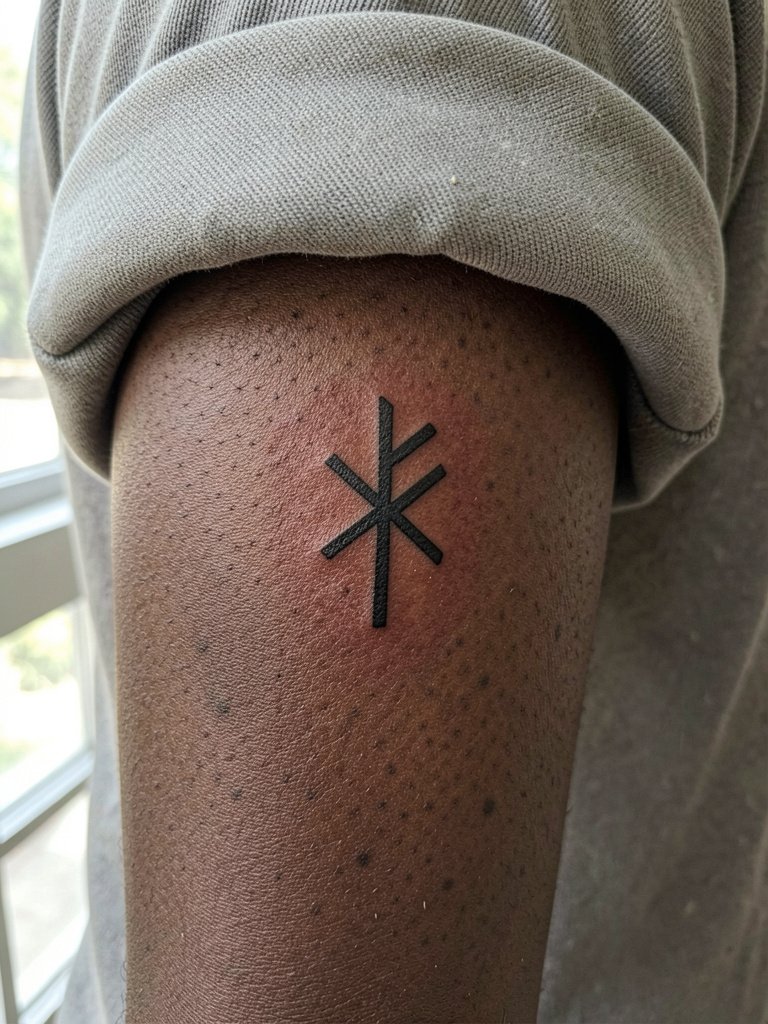
When a rune is chosen as a clear marker of heritage, clarity is everything. Pick a historically appropriate rune form and commit to blackwork so the glyph reads across changing light and skin texture. For the forearm placement, request a proof stencil at full scale and test how the rune looks when your arm is relaxed. For everyday styling, a thin bracelet stack on the opposite wrist or a rolled cuff shirt keeps the forearm visible and balanced. The typical issue is mixing modern ornamentation that confuses the original rune form.
14. Large Back Piece Featuring Runes and Viking Symbols
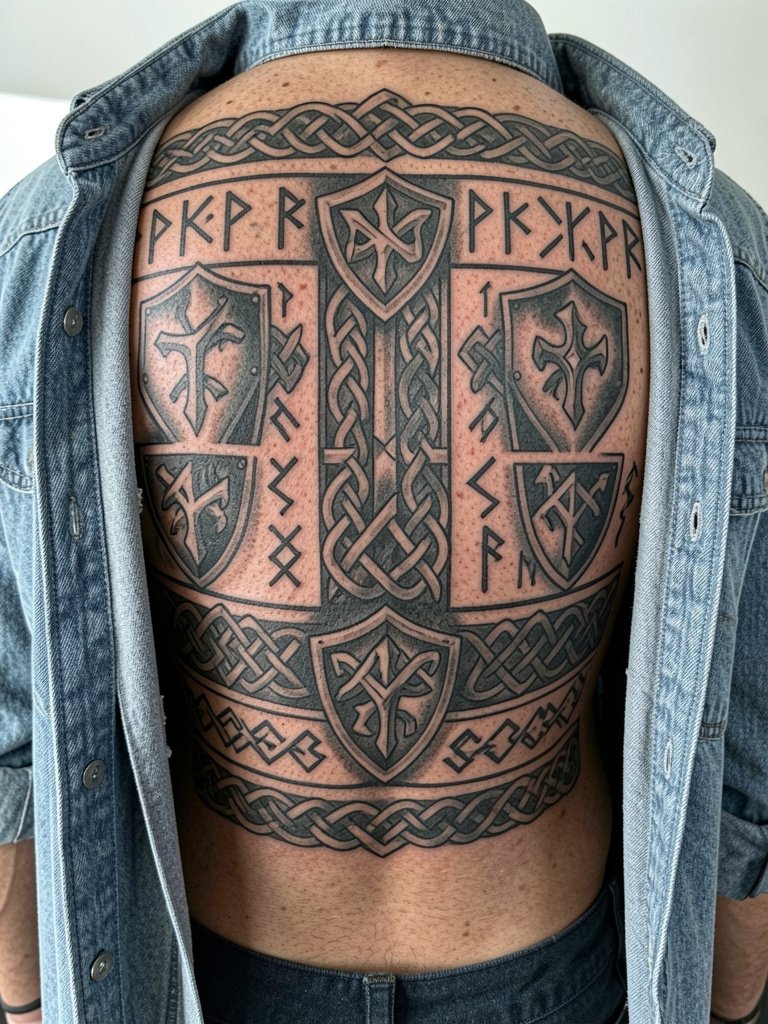
Full-back work is where runes can become chapters in a larger mythic layout. Expect a staged process with careful mapping so each band and symbol has room to breathe. The skin on the back can take larger black areas well, but plan multiple sessions and allow for shading passes to settle. Wear a front-opening shirt or sports bra for the appointment to avoid tugging at the healed area. A mistake here is rushing the stencil approval; check scale and spacing thoroughly to avoid dense bands that merge visually after healing.
15. Micro Rune on the Nape or Nape-Adjacent Spot
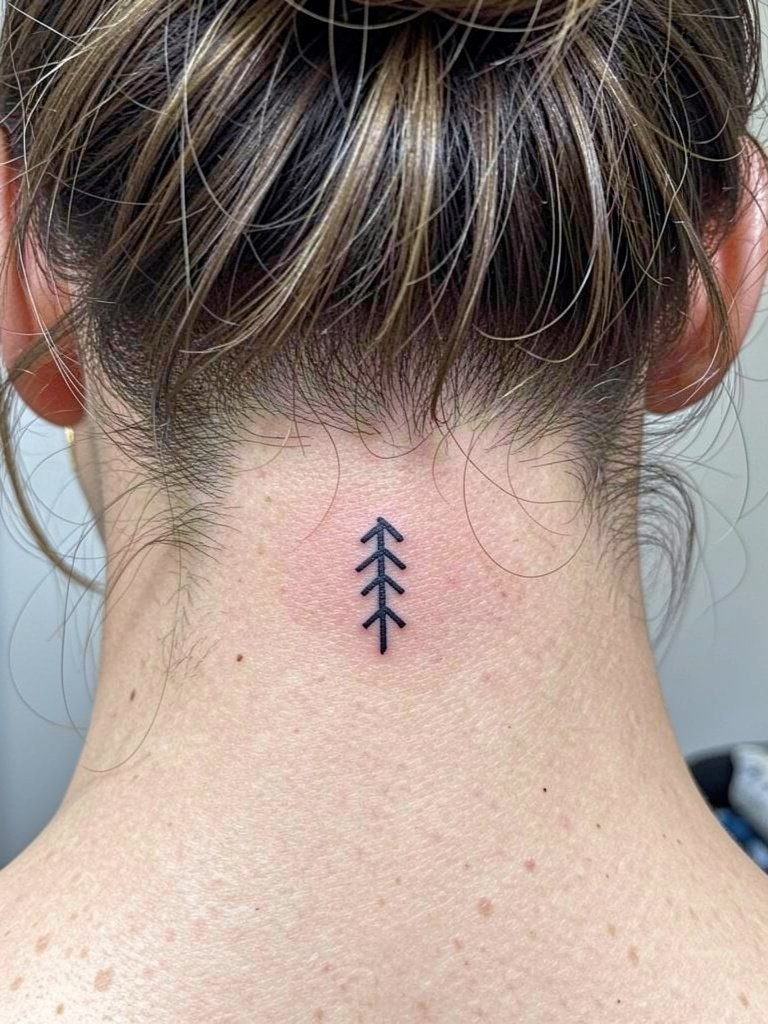
The nape is a great hide-and-reveal location for a micro rune but it requires slightly bolder linework than you might expect. Because hair and collars pass over the area, I recommend a reinforced outline to prevent softening. Sessions are short and pain is low, but the risk of early blur is real if the rune is too skinny. Style with updos for visibility and keep collars loose during the healing window. The usual error is under-sizing the glyph to satisfy a desire for invisibility, which forces early touch-ups.
Frequently Asked Questions
Q: How do I verify a rune’s meaning before committing to ink?
A: Compare multiple transliteration references and have the transliteration typed into your booking message so the artist can confirm the exact rune forms. Bring printed examples that show the rune at the size you want and insist on a full-scale stencil check. If you want a heritage framing, mention which Futhark version you prefer so the artist matches letterforms.
Q: Will a tiny rune still read well after two years on finger, wrist, or behind the ear?
A: Tiny pieces age differently by placement. Fingers and wrists suffer the most friction and usually need touch-ups within one to three years. Behind-the-ear micro work often keeps its outline longer because there is less daily abrasion, but plan for occasional reinforcement. Slightly increasing letter size and reinforcing outlines trades subtlety for longevity and is a practical compromise.
Q: Where can I find local portfolios of artists who post healed runic work without naming individual artists?
A: Search Instagram and TikTok with tags like #vikingrunes, #vegvisirtattoo, and #norsetattoo and filter by location. Use tattoo directories and look specifically for portfolios labeled "blackwork runes" or "Nordic symbol tattoo" and check for healed photos instead of fresh flash. Reddit tattoo subforums are useful for seeing healed results by search terms and region.
Q: Is it okay to add color to a rune composition or should I stick to blackwork?
A: Artists split on this. One group says black ink is the most durable and keeps runes crisp over time. The other group embraces small color accents to highlight elements in large pieces, arguing selective color can lift a composition. If you want color, keep it minimal and confined to background fills so the runes themselves remain high-contrast black.
Q: What should I wear to the appointment for different rune placements?
A: For wrist or forearm pieces wear a short sleeve or a rolled sleeve shirt that stays in place. For shoulder and upper arm work pick a tank top or sleeveless tee. For back or lower-back sessions choose a front-opening shirt or a sports bra that unhooks. If you plan to show off the finished ink, lightweight options like a open-back tank or rolled linen sleeves make reveal photos simple.