
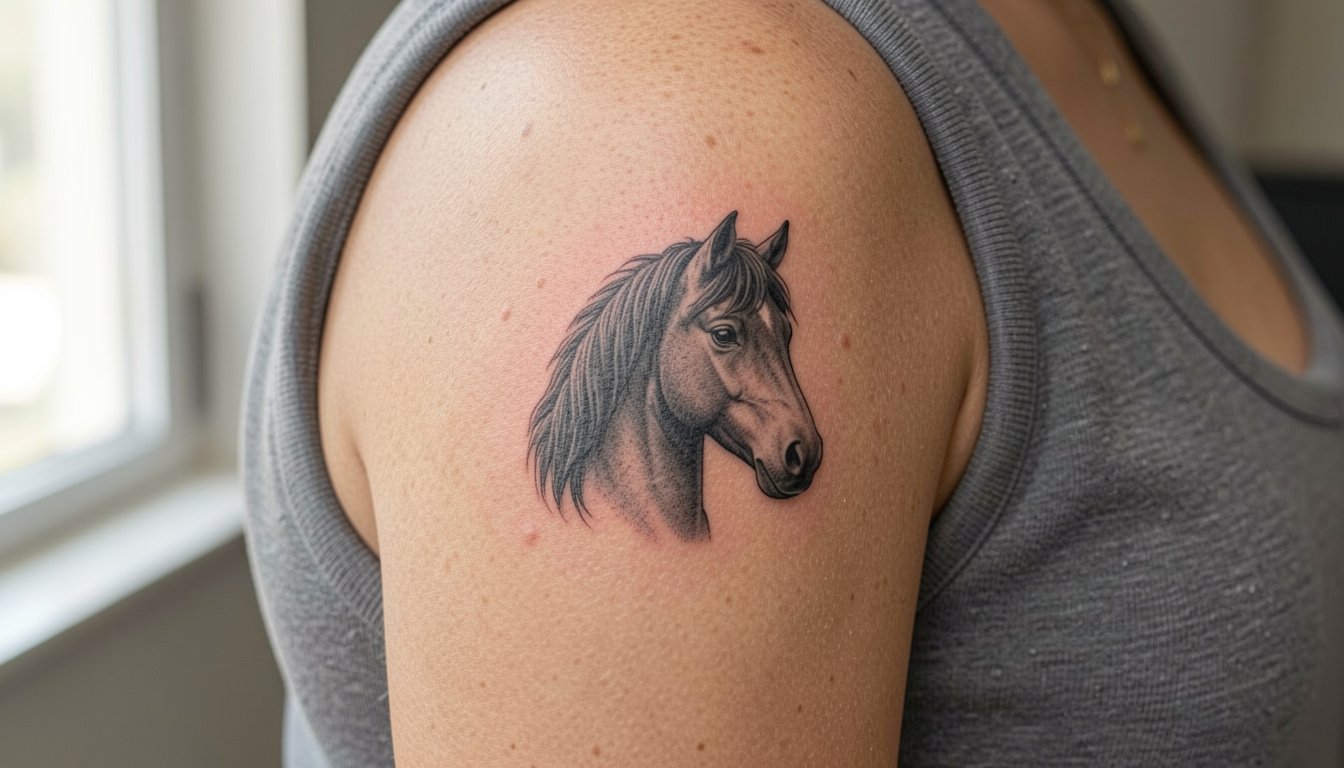
Minimalist horse tattoos flood feeds right now, but the pieces that still read clearly three years later are not always the ones with the most saved screenshots. What holds up is the match between shape and placement, a sensible line weight, and a reference that shows healed work rather than a glossy mockup. Read these ideas with those three checks in mind and you will save designs that actually work on real skin.
1. Single-line horse outline on the wrist
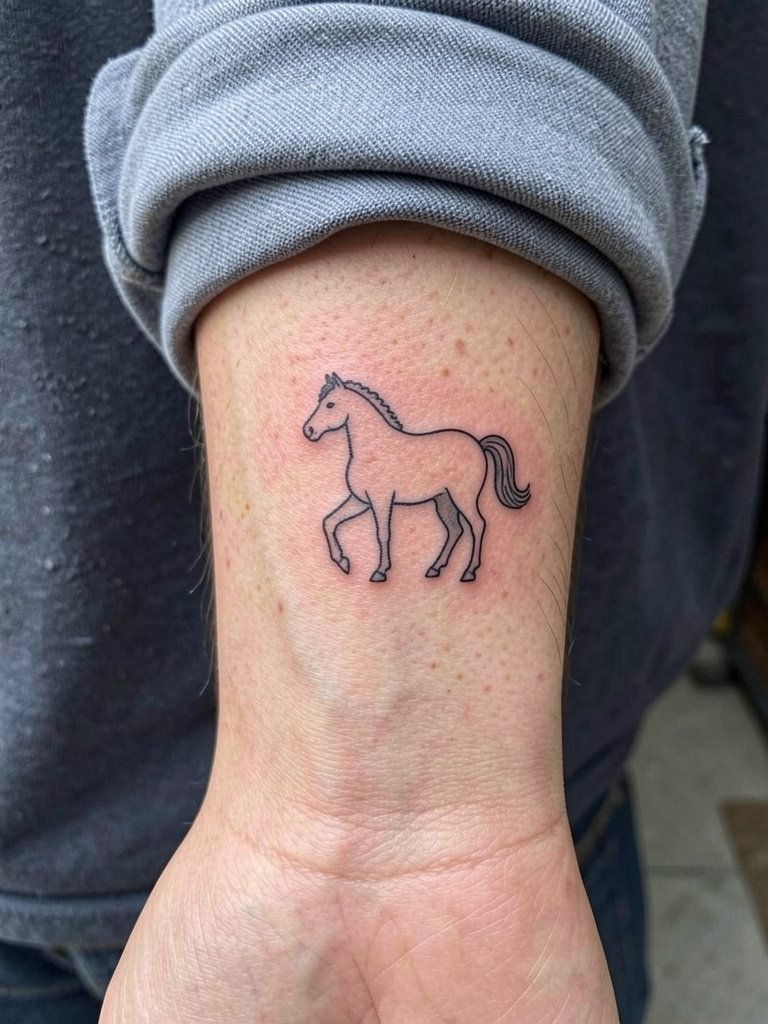
The single-line wrist outline is the purest minimal horse. I recommend it for first tattoos because the shape reads at tiny sizes and the session is usually one short visit. Fine line fans argue it keeps the design airy and true to minimalist aesthetics. Others argue slightly bolder line weight helps this small wrist placement avoid blowout and remain legible after touching up. If you pick the single-line route, bring a healed photo that shows similar spacing and ask for a hair-stepped line weight, slightly thicker than a one-needle pass so it does not vanish over two years. Expect mild wrist sensitivity and a short session under an hour. For showing it off pair it with thin stacking rings on the opposite hand and rolled shirt cuffs to keep the area visible.
2. Small running horse silhouette on the inner forearm
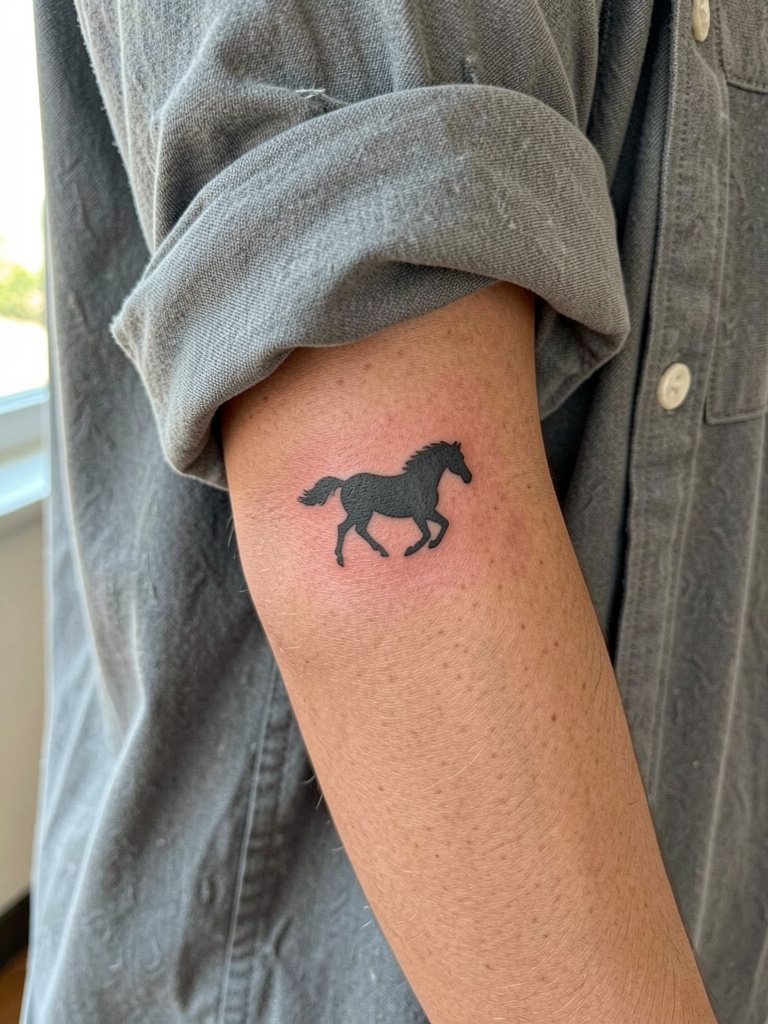
A running silhouette is the easiest way to keep motion visible at small scale. Pick this if you want instant readability and low session time. Discuss silhouette edge crispness with your artist so the hoof and neck shapes do not collapse into a single blob. A common mistake is requesting a silhouette with tiny interior details; those features blur and fuel touch-ups. The inner forearm stretches and flexes, so expect a little fading in six months and a clearer shape after a single touch-up at year one. Pain is mild to moderate and the session is quick. For a daytime wardrobe that frames this piece try a rolled sleeve button-down so the forearm reads against a relaxed silhouette.
3. Fine line horse head profile on the upper arm

A head profile gives equine personality without a full body. I suggest this for people who want identifiable anatomy in a compact area. During consultation show your artist the exact head angle and mane direction you like, and request slight spacing between nostril lines so the muzzle does not soften with time. The upper arm accepts finer work than the wrist, but stipple shading and light whip shading should be used sparingly to avoid muddying on darker tones. Expect the session to run 45 to 90 minutes. For display wear a muscle tee or racerback tank so the clean contour stays visible.
4. Micro-realism horse portrait on the outer upper arm
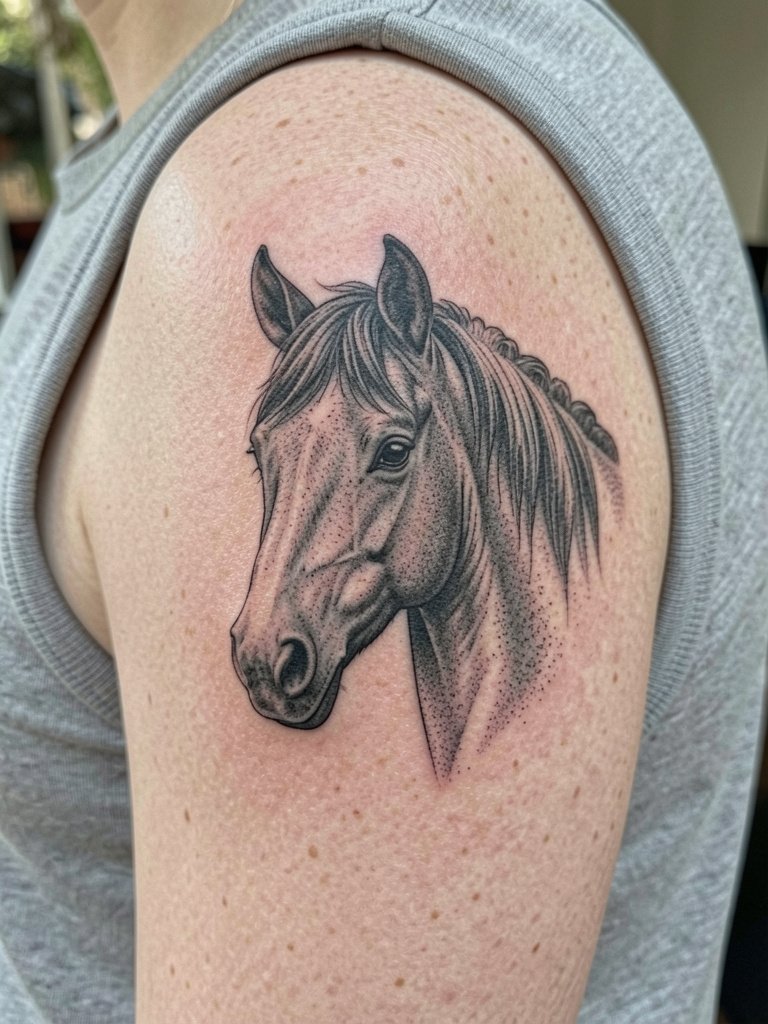
Micro-realism preserves an individual horse expression in a small footprint but it costs more and demands technical saturation. One camp favors realism because it captures eyes and mane texture that mean something to owners. The other camp favors silhouettes because they read faster and age more predictably. If you choose micro-realism, ask to see healed close-ups on similar skin tones and discuss a touch-up window at six months to refine any softening. Sessions run longer, often two hours or split across two appointments. Expect more sensitivity than a simple outline. For session comfort wear a loose short-sleeve shirt so the artist can shift the sleeve without pressure on the area.
5. Horse and horseshoe pairing at the ankle
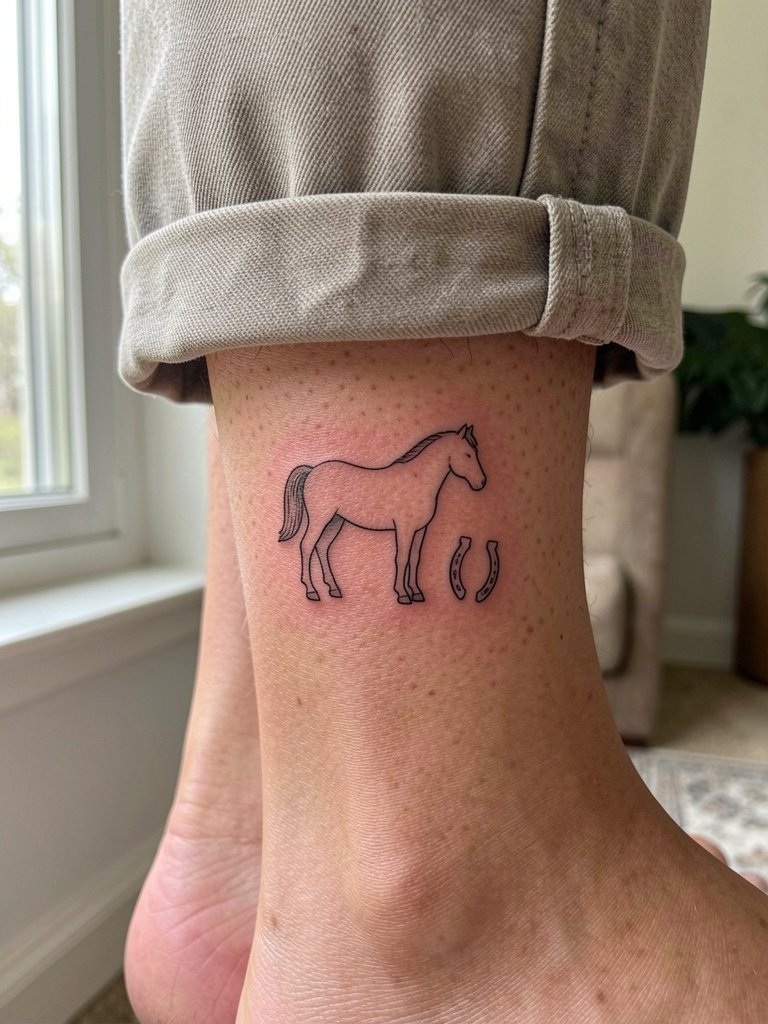
Horseshoes add symbolic weight without cluttering a compact silhouette. For ankle placement pick slightly bolder linework so friction from socks and shoes does not eat the contours. A frequent mistake is placing too much detail on the horseshoe interior; keep the horseshoe graphic simple so it stays readable after walking and repeated washing. Pain at the ankle can be sharp but sessions are short. To show it off try cropped trousers or ankle-baring sneakers that make the area visible without rubbing.
6. Flowing-maned horse with motion lines on the ribcage
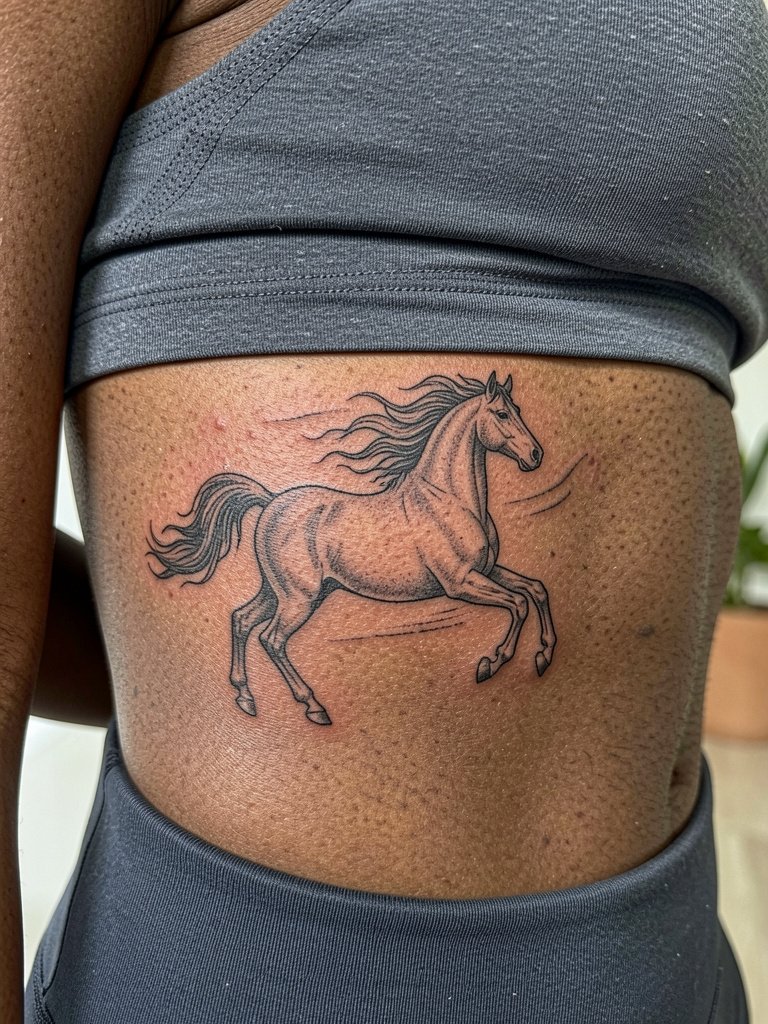
Motion lines make a small ribcage piece feel expansive. This is a good pick if you want energy without a landscape. Ribcage skin moves and breathes, so lines that are too fine tend to blur faster. Some artists say fine line on ribs will blur within two years because of skin stretch. Other artists say properly spaced lines that sit at a sensible depth settle fine and point to healed photos that show longevity. If you choose this placement, request slightly wider spacing and plan for a touch-up around year one. Pain is higher than arm placements, and the session time depends on length of the mane strokes. For session wear a soft sports bra or a top that can be moved aside easily to give the artist full access.
Session Day Picks
The first six designs above include small wrist and ribcage pieces that benefit from a few simple session and healing items.
-
Stencil transfer paper kit. Helps the artist test placement and scale directly on the skin before any needles touch, which is useful for tiny wrist and collarbone pieces.
-
Topical numbing cream. Applied forty to sixty minutes before the session so wrist and ribcage sensitivity is easier to manage.
-
Thin protective film roll. Keeps ankle and finger tattoos clean while you get about your normal daily routines without overbandaging.
-
Fragrance-free gentle body wash. A no-irritant wash so fresh fine line work on the forearm and calf heals without unnecessary soap fragrances.
-
Healing ointment variety pack. A thin layer for the first few days helps fine line and small silhouette work settle, then switch to lighter lotion as directed.
7. Galloping horse micro-outline on the calf

A gallop pose instantly reads freedom and movement at medium scale on the calf. Calf skin tolerates slightly bolder ink, so consider modestly heavier linework to keep the legs distinct after healing. A common error is over-compressing the horse into a tiny area, which makes leg separation hard to read. Expect low to moderate pain and a session of under an hour. For casual outfits that highlight the piece try cropped straight jeans or midi skirts so the calf sits in view.
8. Two mirrored horse silhouettes on the outer forearm
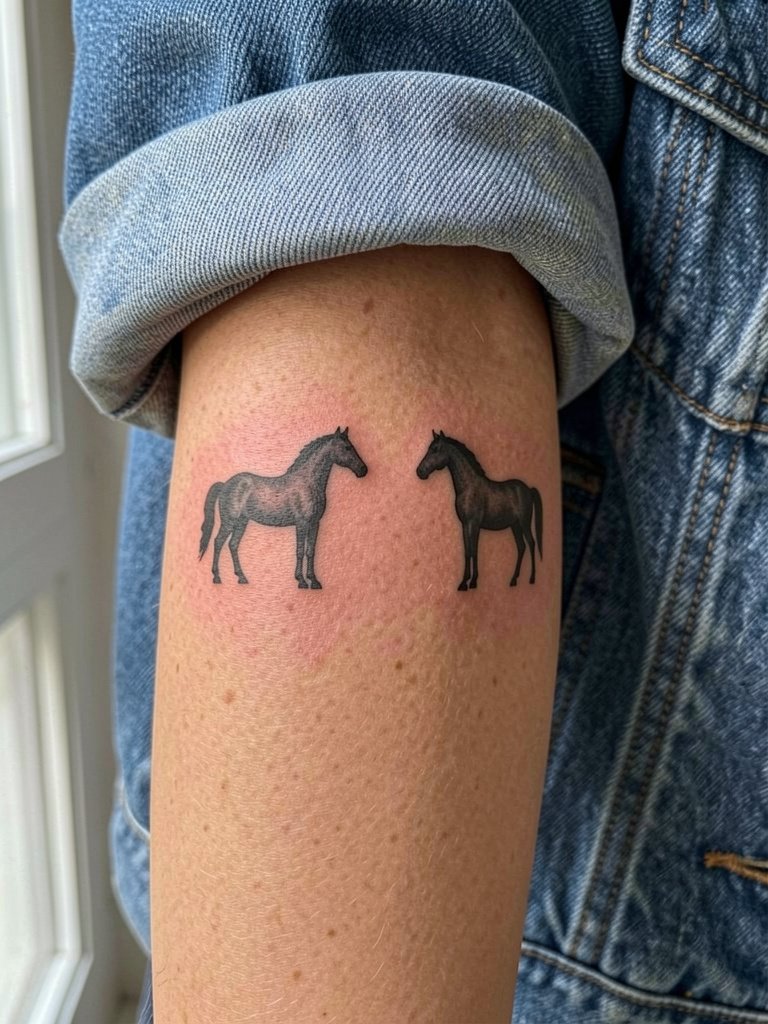
Mirrored silhouettes are popular for pairs or siblings because they communicate a shared image without text. If you plan a matched piece, scale matters more than you think. Bring two reference photos at different sizes so the artist can show how the mirrored negative space reads solo and side-by-side. The outer forearm handles contrast well, and blowout risk is lower than on the wrist. For display pair the design with a relaxed denim jacket and bracelets on the opposite arm, or wear a denim jacket pushed up to frame the pieces.
9. Curled-neck horse line art at the collarbone
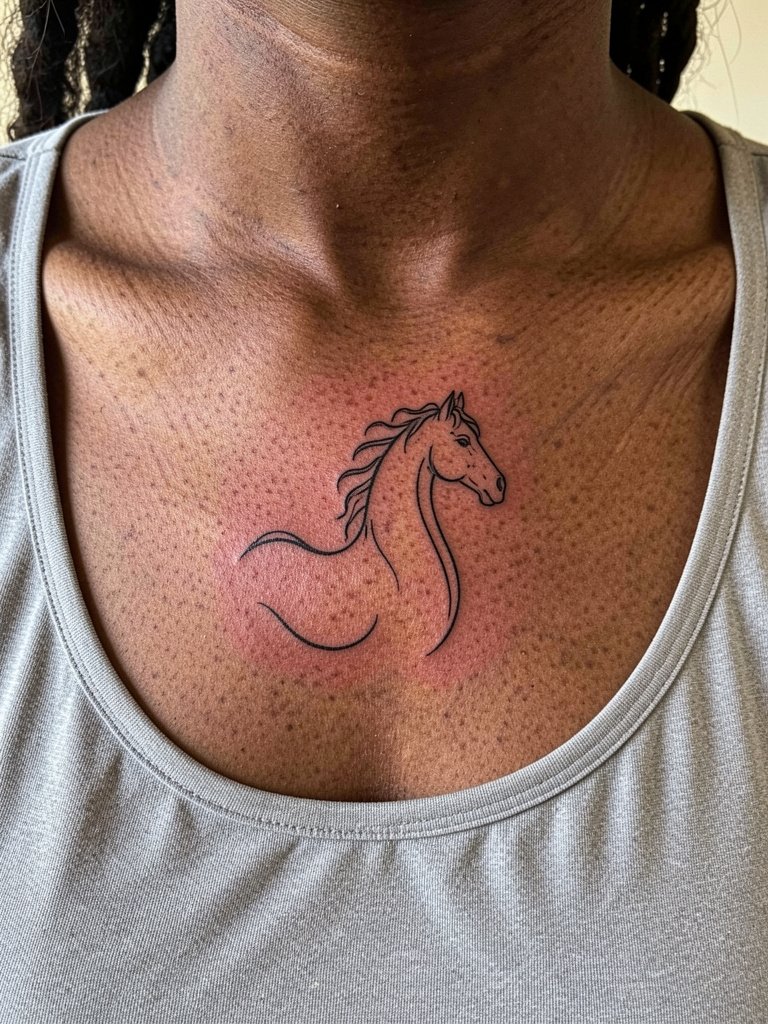
The collarbone lets a curled-neck line art sit like jewelry. Keep line spacing a touch wider here to avoid merging along the clavicle where skin flexes with shoulder motion. A frequent mistake is making the curve too tight; that compresses the negative space and causes the piece to look blobbed as it heals. Expect moderate pain and a session under an hour. For evening wear, layer delicate chains that trace the collarbone to echo the tattoo lines.
10. Horse head with a tiny star or floral accent behind the ear

Behind-the-ear tattoos read as intimate and discreet. Because the area is small, choose a compact head silhouette with a single accent element like a star or tiny flower. The main risk is overscaling the accent so it becomes more prominent than the head itself. Pain is low but the mastoid area is sensitive; expect a short, sharp session. For wearing the design out, tie your hair up in a neat bun or claw clip to keep the tattoo visible and frame it with small hoops.
11. Abstract brush-stroke horse on the thigh
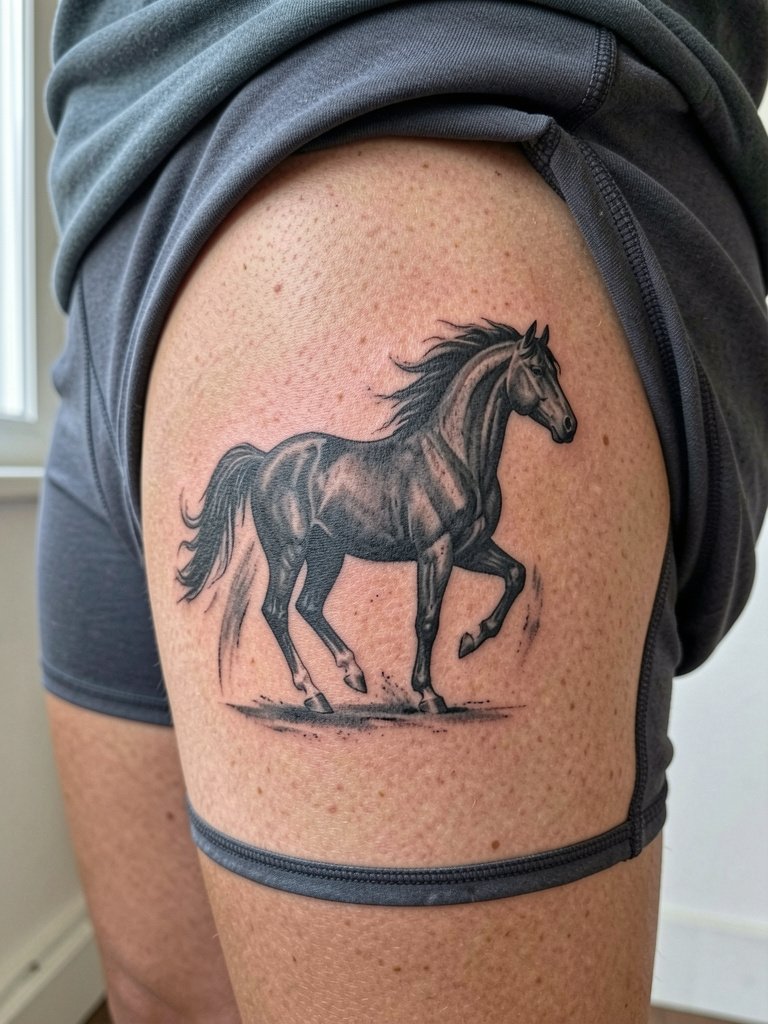
A brush-stroke approach puts mood over strict anatomy. One camp loves watercolor and motion effects for their artistic energy. Another camp favors black-and-gray minimalism because it tends to age more predictably and is easier to refresh. If you lean toward the painterly option, plan for a possible second session to add saturation where the gray wash fades. Thigh skin is forgiving and sessions are comfortable if you wear loose shorts. For summer looks pull the piece into view with side-slit dresses or bike shorts so the composition reads without tight seams pressing on it.
12. Horse hoof print memorial tattoo on forearm or calf
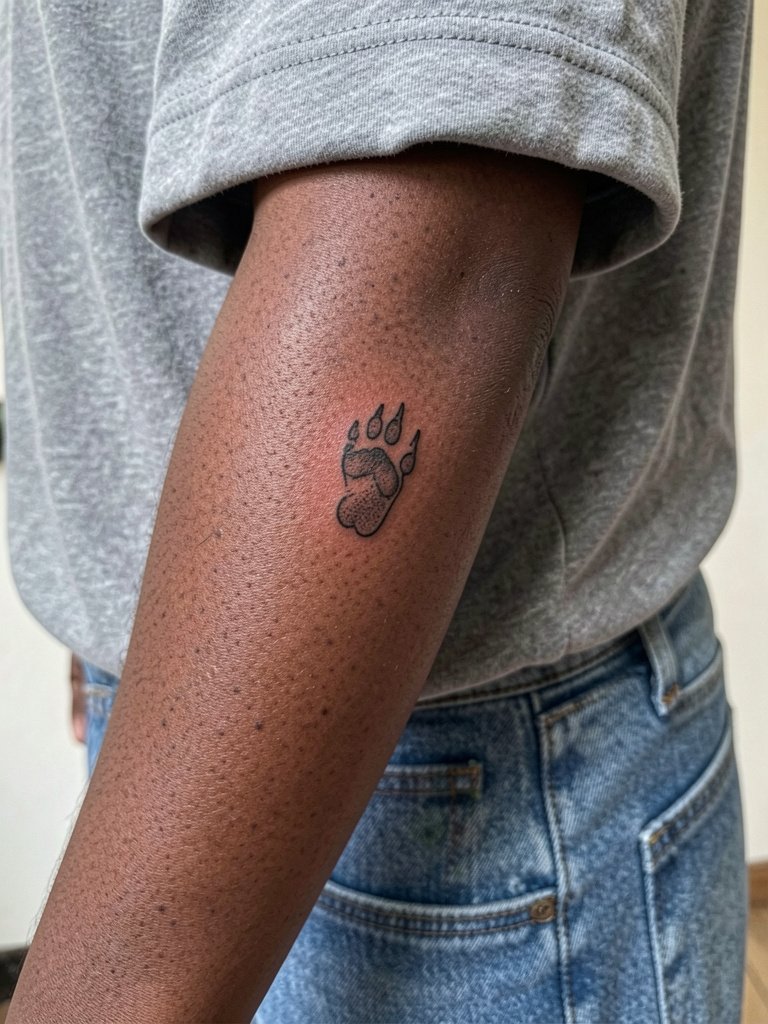
Hoof prints are quiet and specific memorials that say one horse in a single mark. For a private memorial choose a small print placed where clothing can hide it easily or where you pass your hand and feel it often. Avoid over-texturing inside the print, as tiny interior dots tend to fuse during healing. Discuss exact size and ask the artist to show you the stencil on skin for scale confirmation. Forearm placement gives daily visibility, calf placement is more private and low-friction. Touch-up at six to twelve months is common for precise edges.
13. Horse and wind-line composition on the side torso
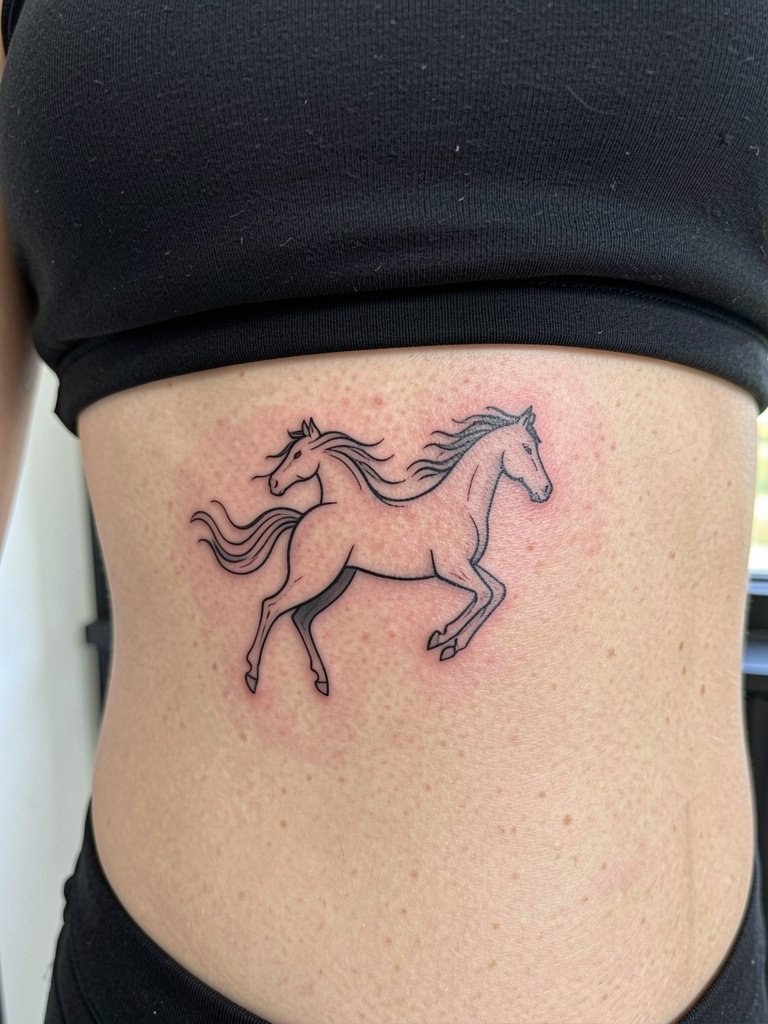
Wind lines let a horse tattoo feel larger without extra detail. On the side torso, choose confident strokes that follow body curves so the composition breathes. A mistake is placing too many short strokes that become visual noise as the skin stretches. Plan for a slightly bolder main contour and lighter motion lines to preserve the sense of speed over time. Pain on the side torso can be significant and sessions may need breaks. For session wear a soft sports bra or clothing that gives the artist full access without tight waistbands.
14. Vintage horse illustration reinterpretation on the shoulder
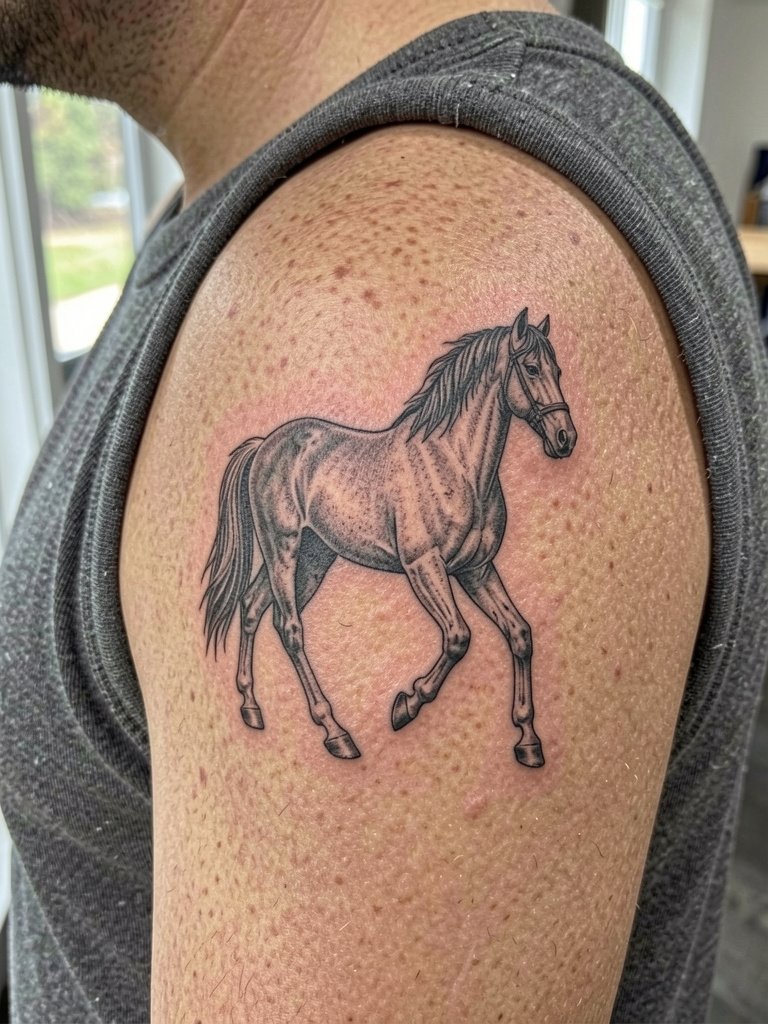
Reinterpreting a vintage plate or postcard style gives the piece a heritage feel without copying anything exact. Use weathered texture sparingly so the thin cross-hatching does not fill in. The shoulder is forgiving for linework and shows off the shading. A common error is asking for too small a vintage plate which loses the charm once healed. Sessions are comfortable on the shoulder and heal well if you avoid tight straps. For showing the piece off, go with a sleeveless tank or boxy vest that keeps the shoulder silhouette clean.
15. Minimalist tack detail, like a tiny bit or bridle line on the wrist
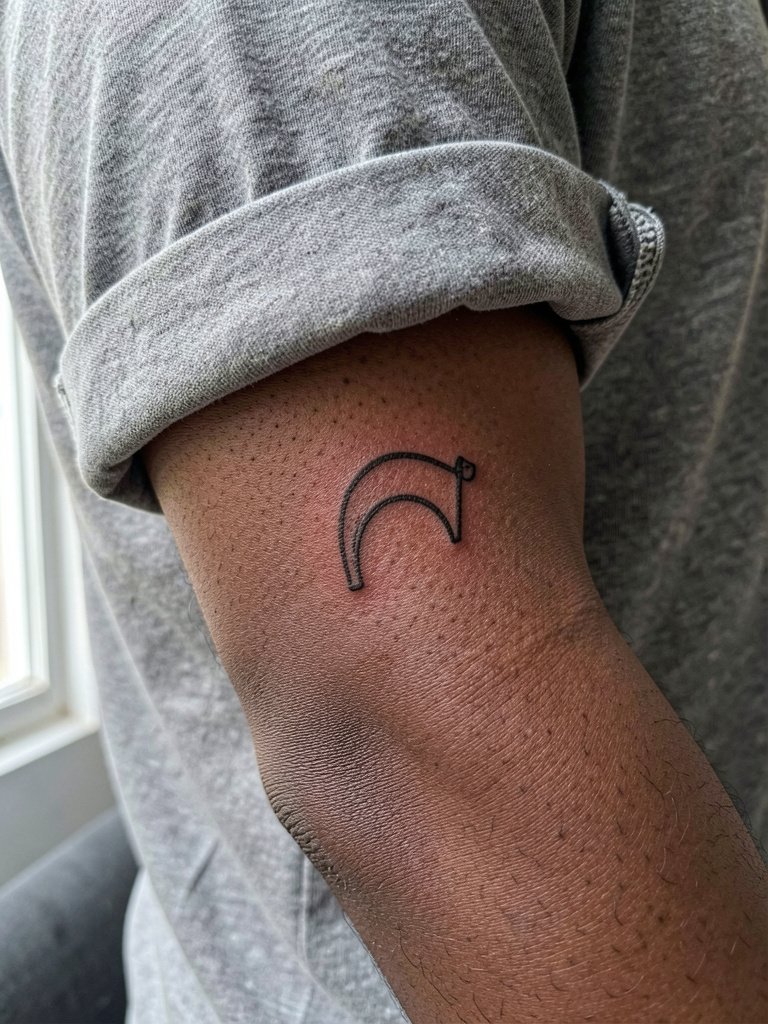
Tack details appeal to riders who want a subtle nod to their sport without a full horse image. These small glyphs age well if drawn with clear negative space and slightly reinforced contour lines. Mistakes include over-complicating the hardware with tiny buckles that blur. The wrist sees motion, so plan on a small touch-up window at six months. For the appointment wear a sleeveless top or short sleeve you can shift easily so the artist has access to the inner wrist, and consider pairing the finished piece with a thin chain bracelet on the opposite wrist to balance the look.
Frequently Asked Questions
Q: How much should I budget for a minimalist horse tattoo?
A: For small minimalist pieces expect studio minimums to set the price, so budget in a range of about $100 to $300 or higher depending on city and artist. Micro-realism and portrait work usually falls at the top of that range or above because of the time and saturation required.
Q: Which placements age best for fine line horse tattoos?
A: Outer upper arm, shoulder, and calf tend to hold linework better because the skin is thicker and moves less. Wrists, ankles, and ribcage are popular but may need slightly heavier line weight and planned touch-ups over time.
Q: I want a memorial that is quiet. What are discreet options that still feel specific?
A: Hoof prints, a single mane curl, or a tiny tack glyph are good choices. These let you preserve a specific detail without a full portrait showing on the outside. Choose placement that you can hide or reveal depending on how public you want the memory to be.
Q: Where can I find artists who post healed equine work and not just flash?
A: Search Instagram and TikTok with combined style and subject tags such as #finelinetattoo plus #horsetattoo, save healed photos, and use Reddit tattoo threads or horse-owner groups to ask for healed examples. Look for portfolios that explicitly show healed shots and multiple skin tones so you can compare how the linework settled.
Q: How long before I need a touch-up on a fine line or silhouette horse tattoo?
A: Many minimal horse tattoos are fine after one session, but plan on a check-in and possible touch-up around six to twelve months for clarity. Portrait and micro-realism pieces may need a follow-up sooner if subtle saturation areas soften during healing.