
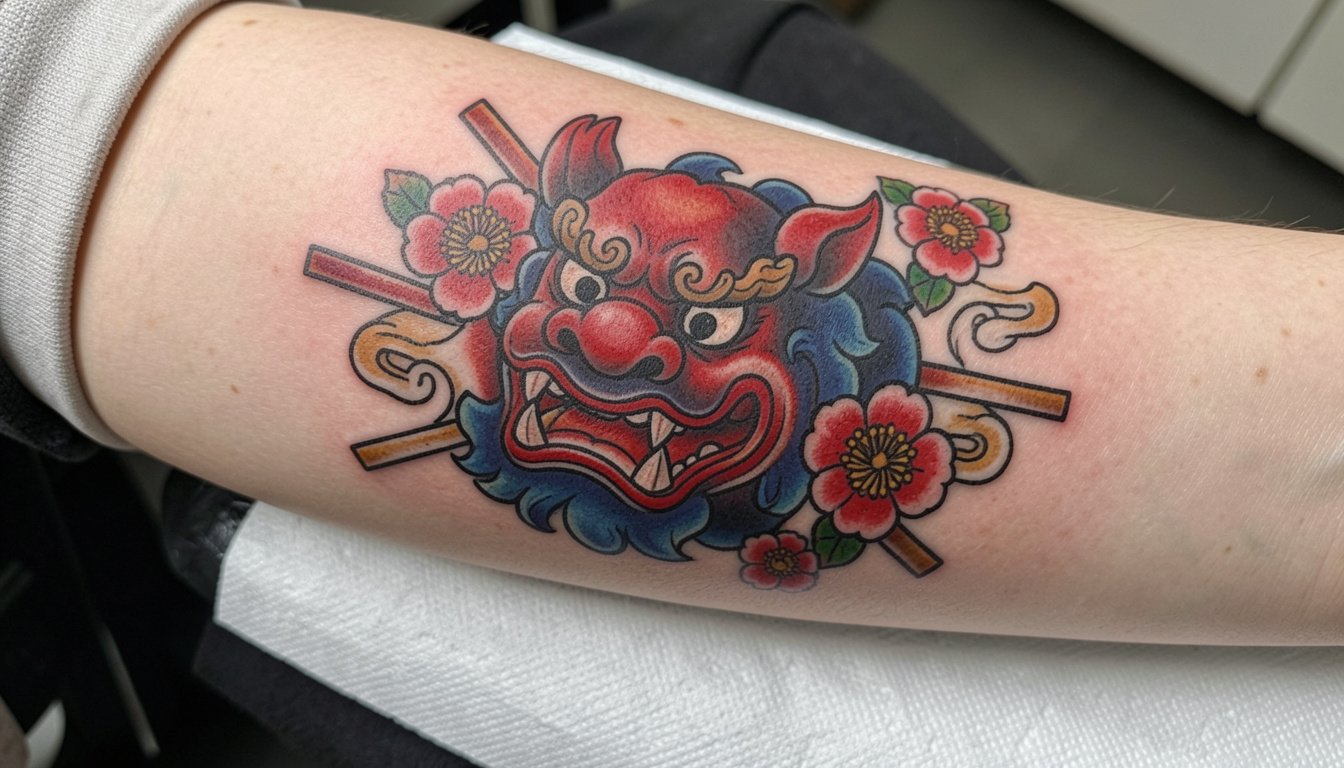
Traditional feeds make Foo Dog sleeves look effortless, but what keeps a guardian tattoo reading clearly after three years is deliberate scale, background planning, and lineweight choices. Collectors who plan for aging map out negative space and color placement before the first session. Read these saved sleeve approaches with practical notes on consultation details, session expectations, wardrobe for appointments, and how each layout behaves as it heals.
1. Traditional Foo Dog Sleeve with Peonies
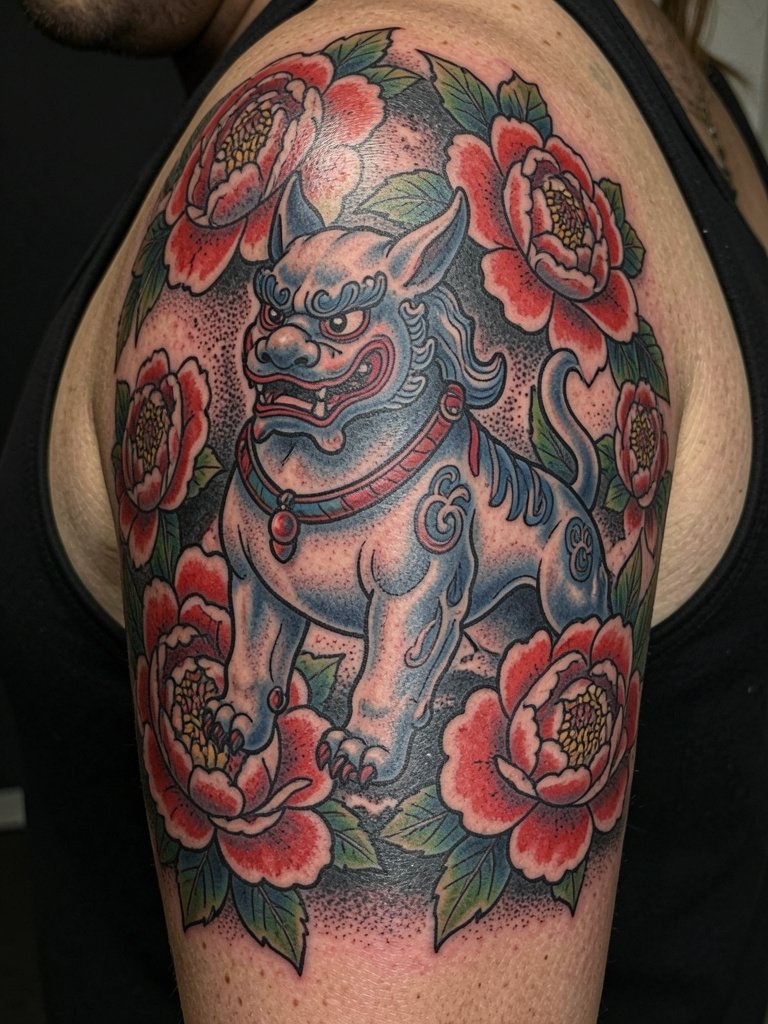
A full traditional sleeve anchors the Foo Dog as the centerpiece and uses peonies to soften the composition while keeping the subject readable. Recommend the guardian occupy at least the upper arm cap and mid-forearm so facial features and paw details do not compress. During the consult bring healed sleeve examples that show background flow at arm length and ask for lineweight samples scaled to your arm circumference. Expect multiple sessions across the shoulder and bicep, moderate pain on the inner arm, and a likely touch-up at the one-year mark to refresh saturation in the peonies. This is a design rooted in Japanese visual language, so discuss composition and cultural origin respectfully with your artist. For showing the sleeve, pair it with a short-sleeve heavyweight tee that frames the upper arm.
2. Paired Guardians, Mirrored Composition
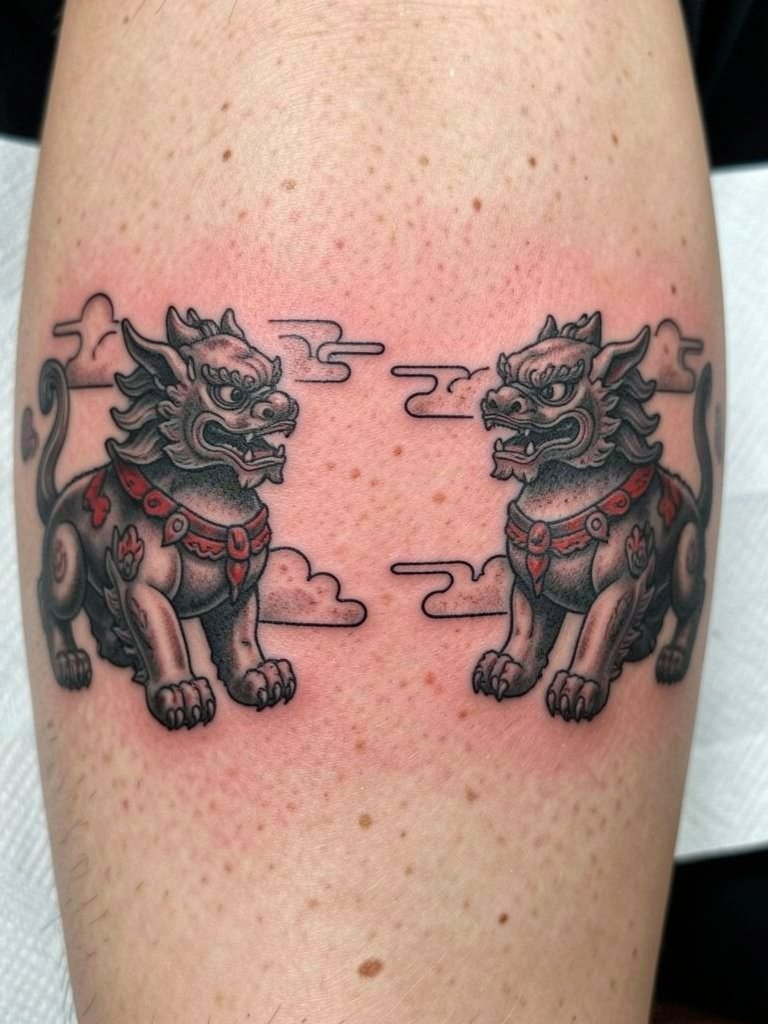
A paired-guardian sleeve balances the arm visually and supports the traditional open-mouth/closed-mouth symbolism. One camp prefers the pair for symmetry and narrative strength. The other camp argues a single guardian lets the sleeve breathe and adapts better when expanding into complementary panels. Name both positions during your consult and show the artist which you prefer for foreground dominance. A common mistake is mirroring small faces that end up too tight across the elbow crease. Aim for slightly larger scale so the expressions and mane carve remain crisp through healing. For session wear, a relaxed henley shirt with roomy sleeves makes shoulder access simple.
3. Komainu-Style Temple Guardian Sleeve
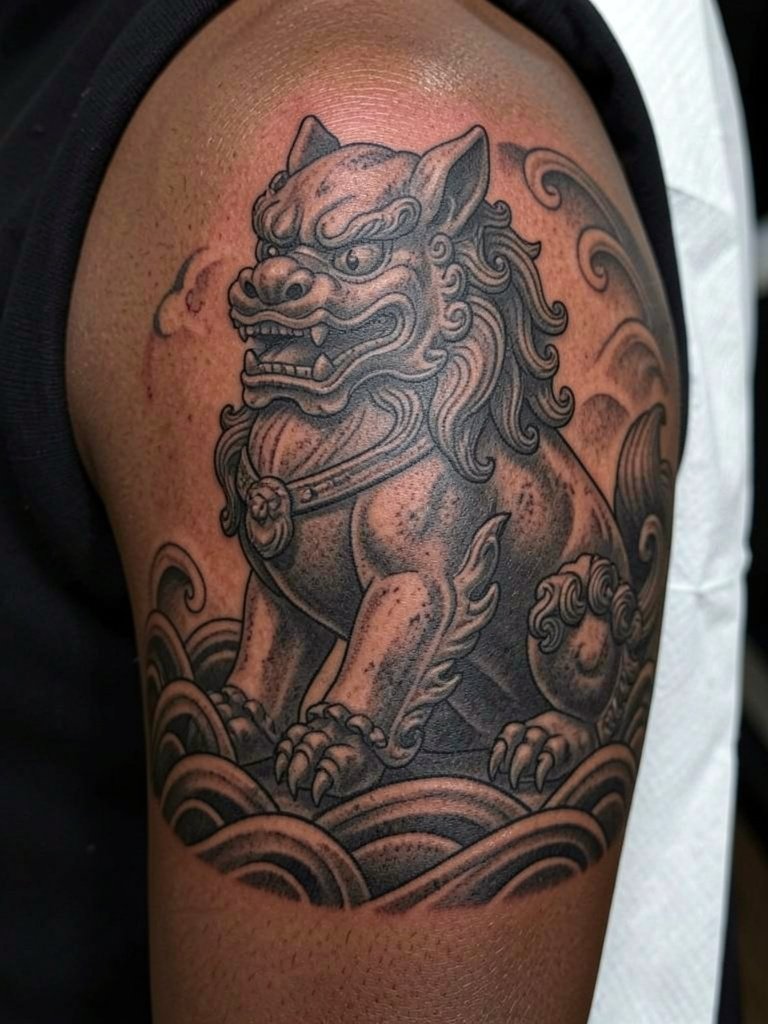
A komainu-styled sleeve leans into the carved-lion aesthetic and often reads like a stone guardian set against subtle waves. This composition works well if you want a more reserved palette that still reads as distinctly Japanese. Plan for heavier stipple shading and thicker outlines around the mane so details do not wash out. A frequent error is overworking fine texture at too small a scale, which flattens during healing. Ask the artist to show how the mane looks at three inches versus six inches on your arm. Expect moderate sessions and a likely one-year saturation check. For evening wear, the shoulder cap shows best with camp collar shirts that leave the upper arm clear.
4. Single Foo Dog Forearm Starter
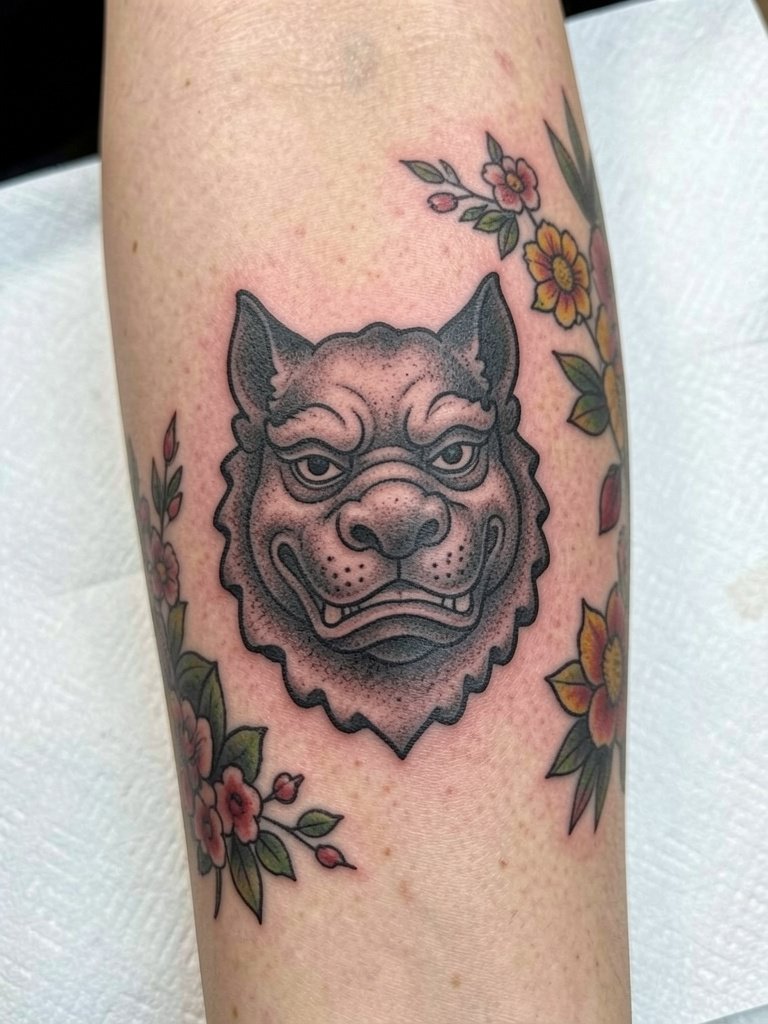
Starting with one forearm guardian is a practical way to begin a sleeve without committing to a full wrap. The forearm needs a strong silhouette to avoid looking busy at arm length. Specify a slightly heavier lineweight than your reference images so the face and whisker details hold through the first two years. The inner forearm eats fine detail faster than the outer forearm, so place the most delicate work away from the palm-up surface when possible. Session pain is low to moderate and most clients can handle a three-hour block. For the session wear, a linen short sleeve shirt that pulls easily above the elbow keeps the area accessible.
5. Bold Black-and-Gray Guardian Wrap
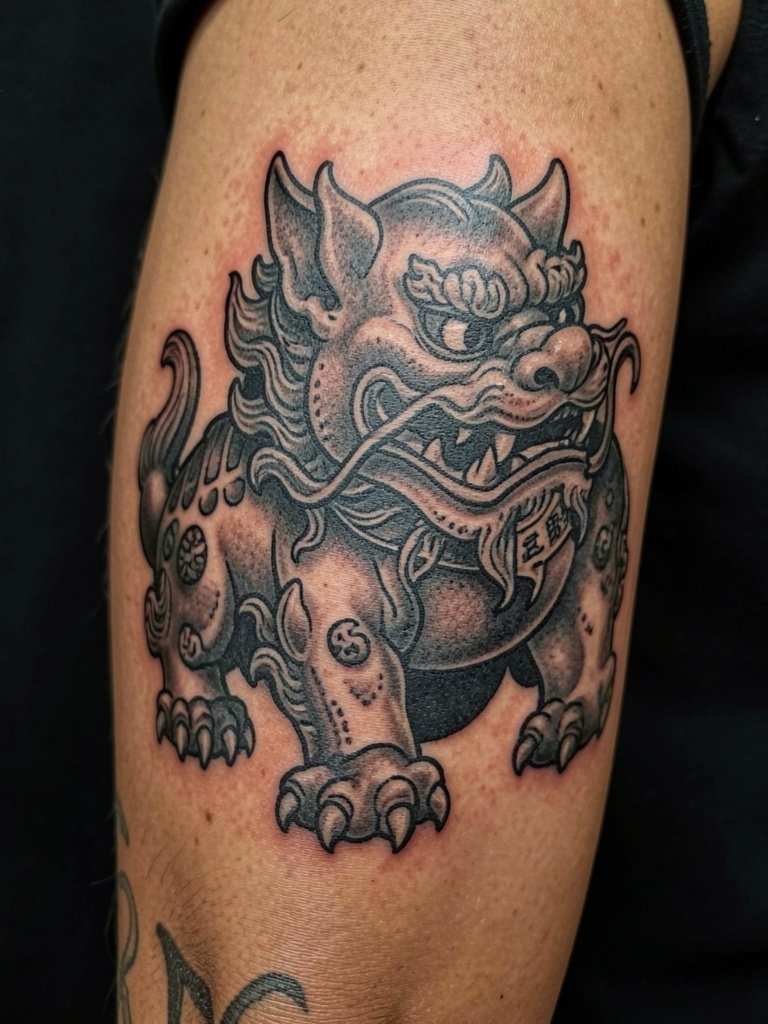
Collectors who prioritize longevity often favor black and gray for its clearer aging profile. One camp champions color because it gives the sleeve the classic Japanese visual punch. Another camp counters that black-and-gray stays legible longer and avoids saturation fade. State both positions when deciding and look at healed photos from at least three years out before committing. For this bold wrap ask for simplified shadow blocks and larger negative spaces between the mane and the floral elements. That approach lowers blowout risk on the forearm. Session time can run longer because of heavy shading, and a touch-up after a year is common. For daily wear, rolled denim sleeves or a rolled cuff shirt frames the wrap without hiding it.
6. Foo Dog with Large Negative Space
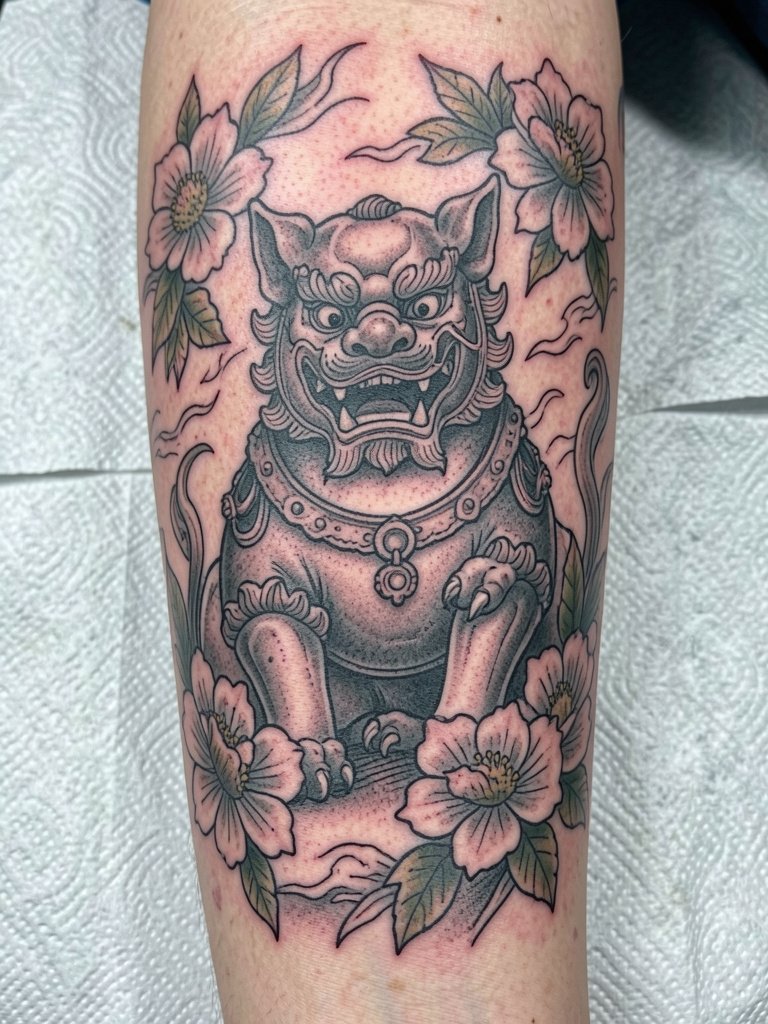
A sleeve that prioritizes large negative space avoids the visual collapse that happens when backgrounds merge into a dark mass. One camp defends dense backgrounds for the classic full-sleeve look and sense of depth. The opposing camp insists open skin breaks make the design legible and more resilient as the arm ages. Name both camps in your planning meeting so the artist can show you how each approach reads at arm scale. Negative-space layouts often require slightly larger focal elements so the guardian keeps presence without heavy filler. For appointment comfort wear an oversized button down shirt that opens fully for easy access.
Session Day Essentials
The first six ideas include forearm and upper-arm layouts, so these picks smooth the day-of logistics and the first week of healing.
-
Tattoo stencil transfer paper kit. Lets you preview placement on skin for complex sleeve panels, which is crucial when a Foo Dog has to curve around the arm.
-
Topical numbing cream. Applied as the artist recommends it eases longer shading sessions on the ribbed or inner-arm zones without compromising linework.
-
Thin protective film roll. Useful for keeping forearm sleeves clean during the first days of frequent hand washing.
-
Fragrance-free gentle body wash. Cleans the healing skin without stripping pigment in the first two weeks.
-
Aquaphor healing ointment. Thin applications during the initial days lock moisture without clogging needle channels, which helps fine details settle.
7. Foo Dog Half-Sleeve That Expands
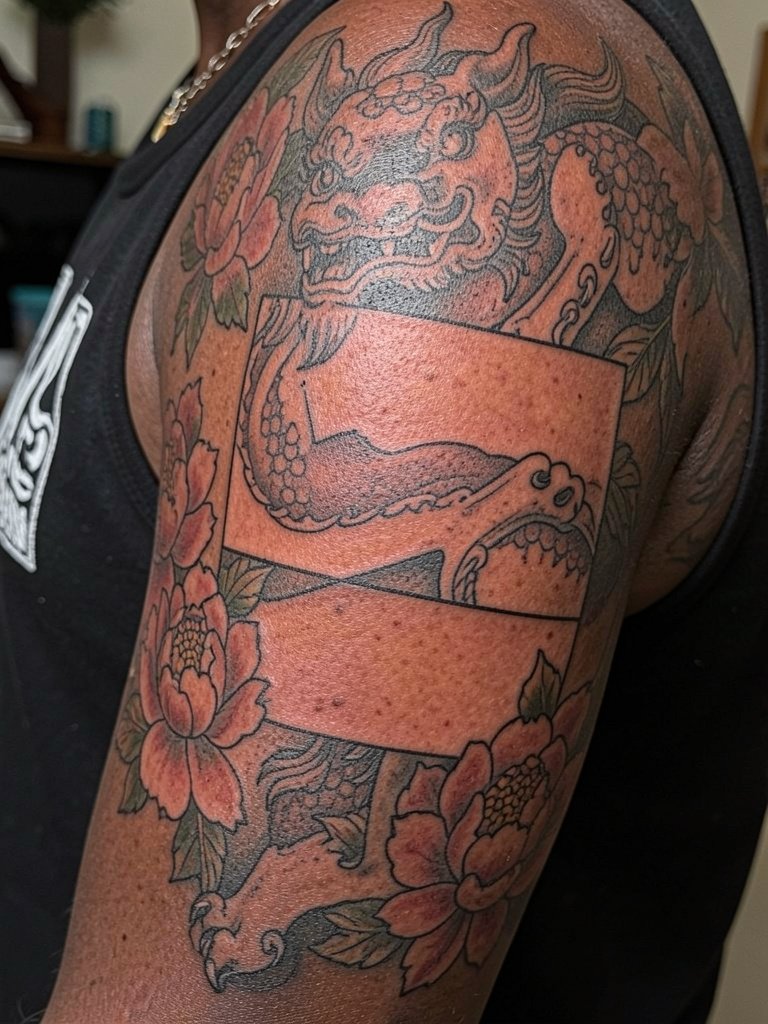
A half-sleeve that anticipates a future full-arm build is a smart collector move. Lay out blank panels and flow lines during the initial design so later panels match scale and motion. A common mistake is treating the starter as a standalone piece, which leads to awkward joins when expansion happens. Ask the artist to map connective wind bars and wave directions on the stencil so the extension will read seamless. Pain is moderate on the outer arm and sessions are easier to schedule in two-to-four blocks. For session wear, a loose short-sleeve or sleeveless top works well, and the look pairs with a fitted plain tee for show-off moments.
8. Foo Dog with Flower-First Filler
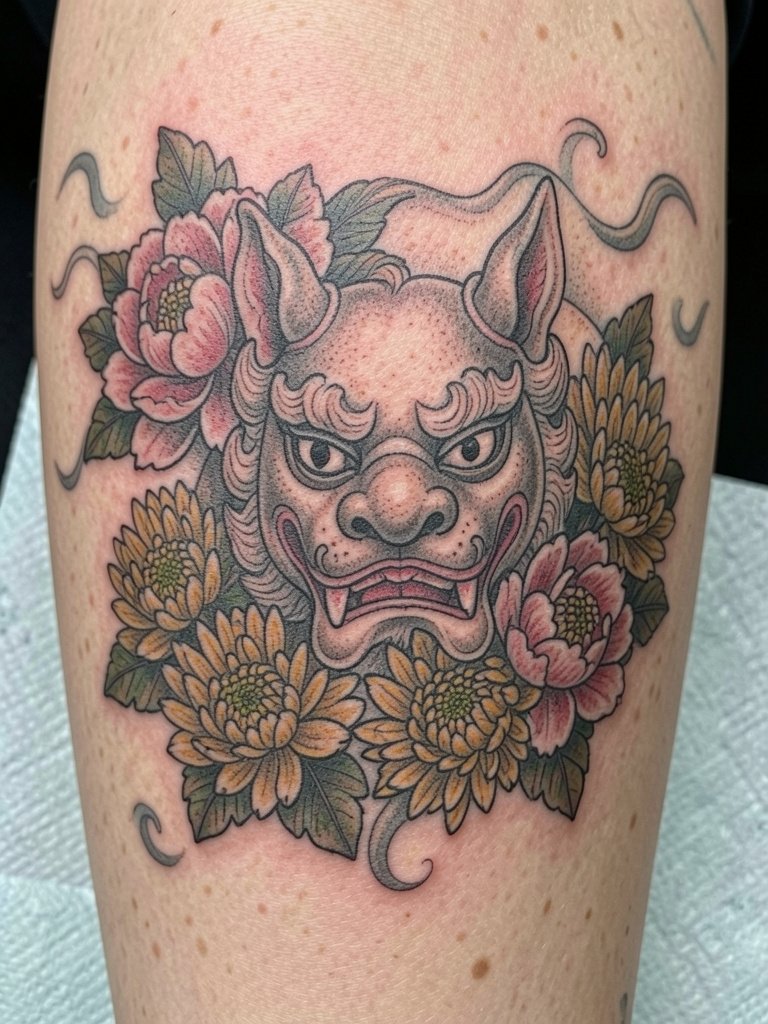
Using flowers as the primary filler softens the guardian and reduces heavy black backgrounds. Specify which blooms you prefer and where the petals should overlap the mane. A frequent error is placing small floral details too close to facial contours, which confuses the silhouette as it heals. Ask for flower shapes that read at arm distance and request color swatches if you plan a color sleeve. Expect finer color work to need a follow-up saturation pass in nine to twelve months. For appointments pick a relaxed henley that rolls easily for upper-arm access.
9. Imperial Stone-Lion Guardian Panel
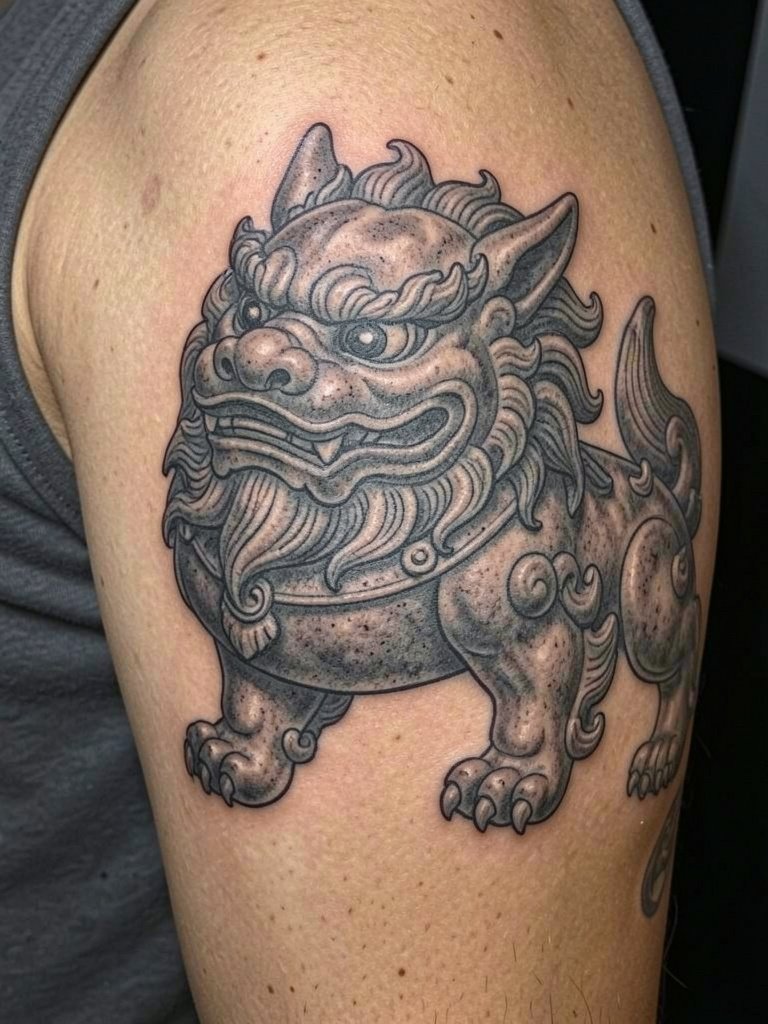
An imperial-style Foo Dog reads like a carved statue and benefits from heavier form shadow and restrained color. For this look specify strong silhouette separation and deeper stipple in the recesses so the texture reads with distance. A common mistake is relying on tiny surface cracks that merge into blotches during healing. Ask for reference photos of three-year healed stonework before you book. This style suits collectors who want a stately centerpiece and it shows well under a cuffed chore jacket for colder months.
10. Forearm Wrap with Vibrant Accent Colors
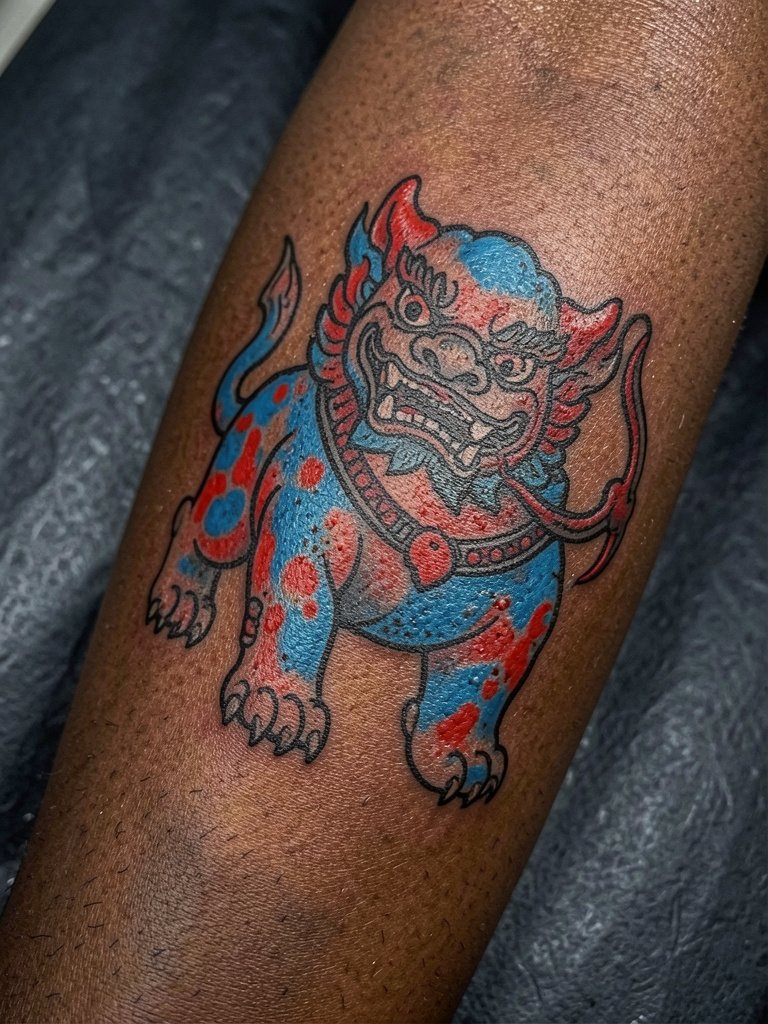
Red and blue accents help layered sleeves separate foreground figures from background motion. When choosing accent spots map where the color will be most visible at arm length. The trade-off is future fading in high-sun areas, so select pigment placement away from the outer elbow and the wrist if you want long-term punch. The most common aging issue is a muddy mid-tone where colors overlap without strong outlines. Ask the artist how they plan to protect color edges with black framing. For show-off outfits pick plain solid tones in shirts so the accent colors read cleanly.
11. Bold Outline Version for Better Aging
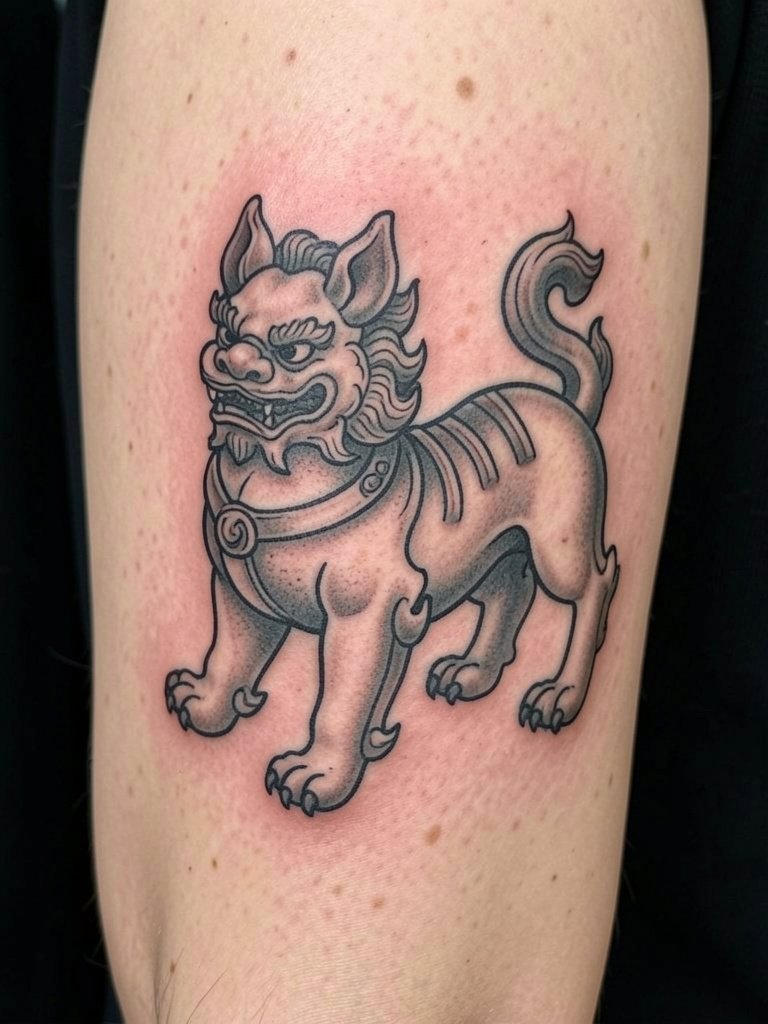
Thicker outlines and simplified shading are an intentional longevity strategy that reduces blowout risk and keeps features readable at distance. Ask the artist to show two stencil scales so you can compare how much outline thickness changes facial expression. A rookie mistake is keeping micro-detail while only increasing one outline, which leaves the interior features still at risk. Touch-ups are typically minimal for this approach because the bold edges maintain contrast. For everyday styling a clean black tank highlights the graphic quality without competing patterns.
12. Half-Sleeve with Temple Motifs
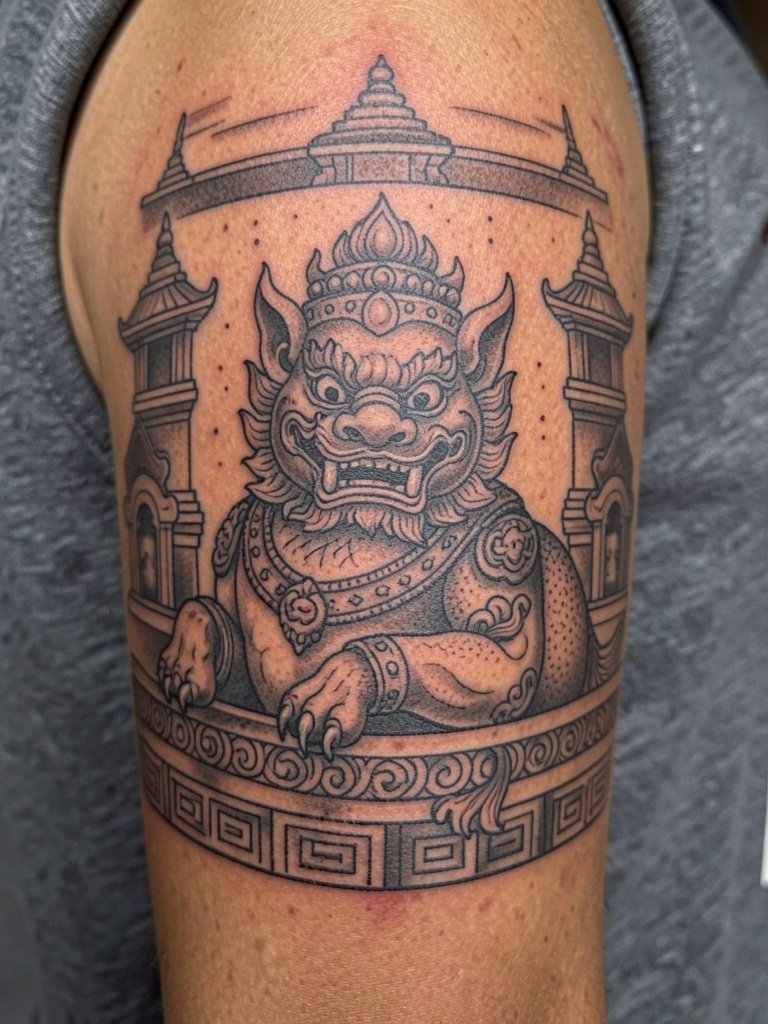
Temple motifs give the sleeve a grounded backdrop while keeping emphasis on the guardian. When using architectural elements keep them stylized and avoid tiny masonry details that blur. Discuss with the artist where perspective lines will sit relative to the shoulder cap so straps and clothing do not obscure key elements. Pain is lighter on the outer upper arm than near the armpit. This half-sleeve is easy to expand into a full wrap later because the motifs provide natural connection points.
13. Forearm Panel with Large Facial Focus
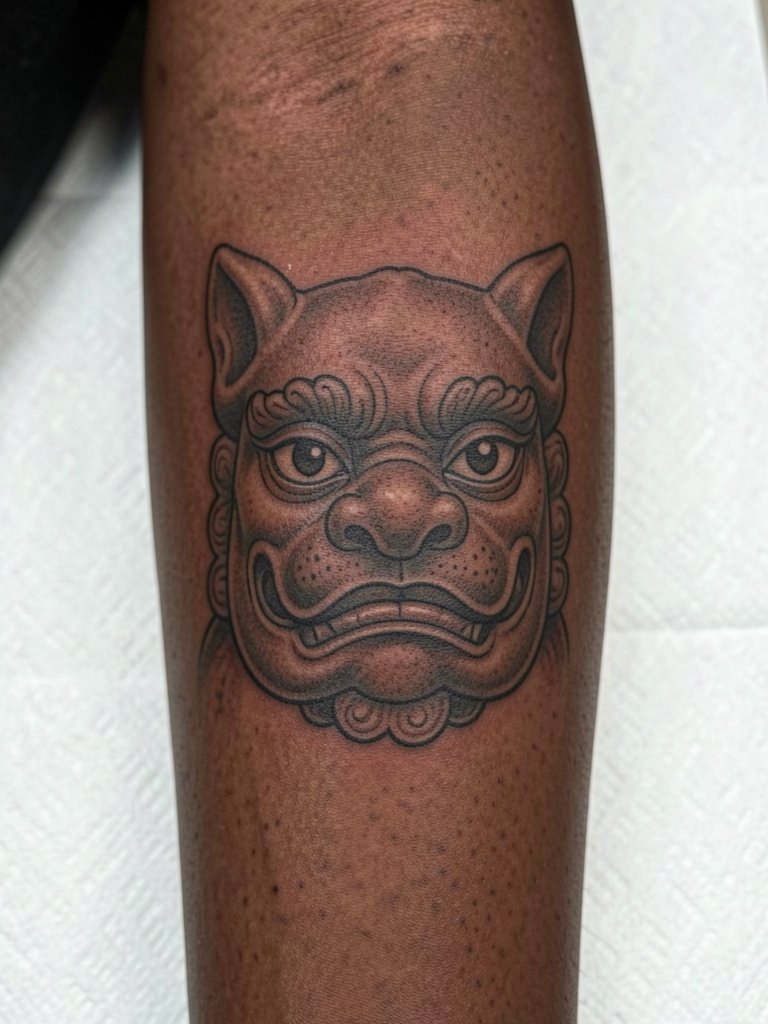
A composition that makes the face the focal panel reads strongly and is an efficient use of forearm real estate. The key is scale. If the face is too small you lose the sculpted mane detail. Plan the face to occupy roughly two-thirds of the forearm surface for best long-term clarity. Discuss spacing of teeth and whisker shadows at the stencil stage to prevent early softening. For showing off the piece in casual settings a minimalist watch on the opposite wrist balances the look.
14. Negative-Space Shoulder Cap Foo Dog
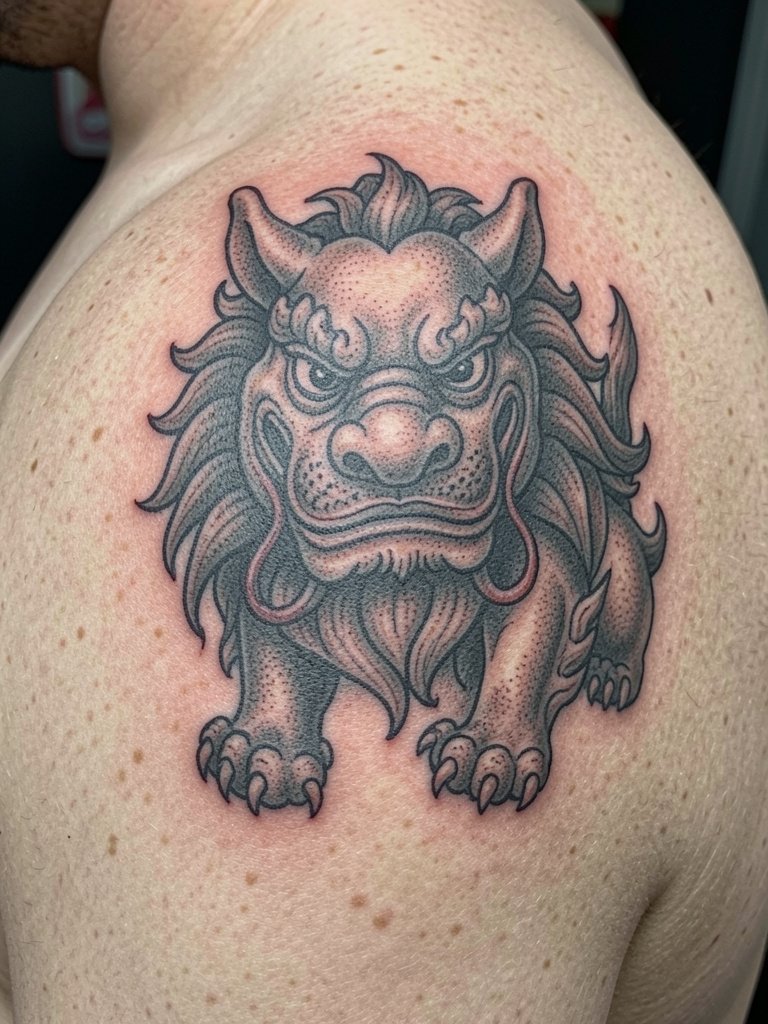
The shoulder cap benefits from generous negative space because clothing often covers and reveals the area. When planning, have the artist tape a mock stencil and check how the design reads with both a tank and a short-sleeve tee. A common oversight is compressing the mane too close to the deltoid crease where muscle movement can soften detail. Expect a session length appropriate for the area and a likely single touch-up. For summer show-off, sleeveless tanks and open camp collars pair well with this placement.
15. Sleeve That Balances Tradition and Modern Breathing
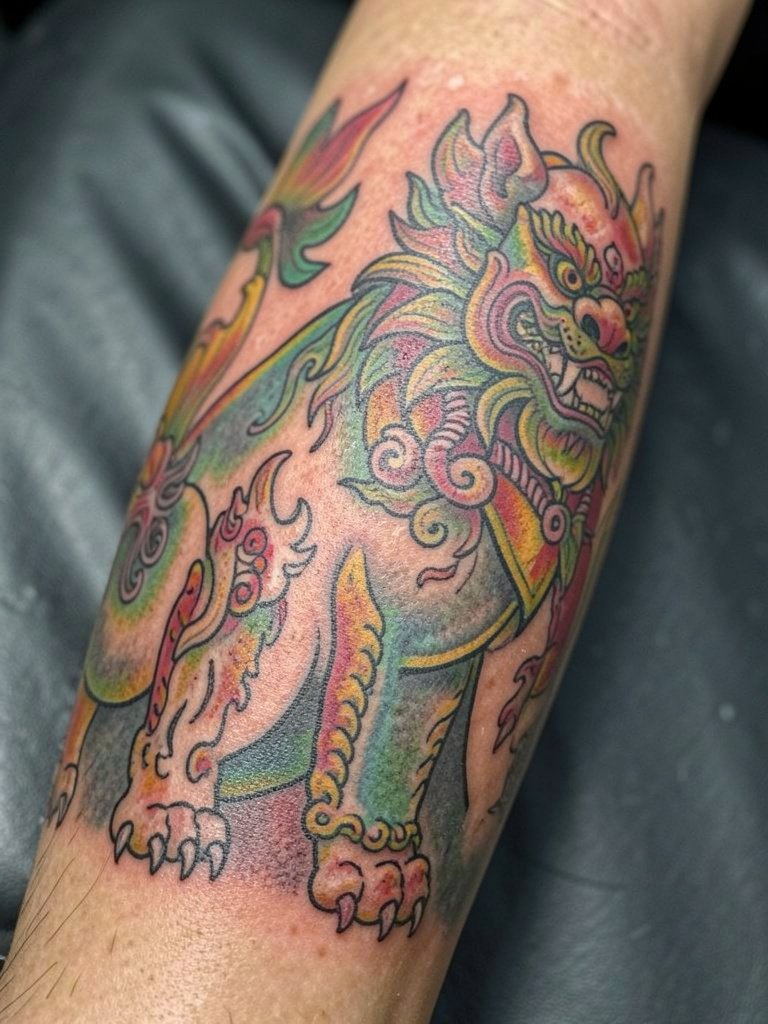
A hybrid sleeve that mixes classic motifs with breathing room addresses both the traditional look and modern aging concerns. During design, mark where future panels might sit and choose a color strategy that uses accents sparingly. A repeated mistake is over-layering decorative elements that compete with the guardian. Ask for a mockup showing the sleeve from three viewing distances so you can see which details survive at arm length. Session pacing for a full hybrid sleeve is stage-based and usually spread over multiple visits. For evening wear, a clean black blazer can frame the arm without hiding the composition.
Frequently Asked Questions
Q: How do I find an artist who actually builds Japanese sleeve flow without naming names?
A: Search hashtags like #irezumi, #japanesetattoo, #komainu, #foodogtattoo, and #japanesesleeve on Instagram and TikTok and then look for healed sleeve photos rather than fresh reels. Use location filters to find studios near you and check forum threads for healed images at one to three years. Guest-spot announcements from conventions are useful when your city lacks dedicated Japanese-style artists.
Q: Which ages better, full color or black and gray for Foo Dog sleeves?
A: Both camps have merit. Color delivers the classic visual language of Japanese sleeves and reads vibrantly in the first years. Black and gray keeps contrast higher as the skin ages and often needs fewer saturation touch-ups. Weigh how much sun exposure the area will get and ask to see three-year healed examples in the style you want before deciding.
Q: How much space should a Foo Dog face get to avoid losing detail?
A: Plan the face to occupy a medium-to-large area of the arm region you choose. On the forearm that means several inches of vertical space, and on the upper arm aim for two-thirds of the cap width. Specify scale during the stencil review and request side-by-side mockups at different sizes.
Q: What should I wear to multi-session appointments for a full sleeve?
A: Choose layers that open easily and avoid tight cuffs. For upper-arm and shoulder work pick a sleeveless tank top or an oversized short-sleeve shirt that you can remove or pull on without rubbing the freshly tattooed area. Comfortable, breathable fabrics let the artist access the arm with minimal movement.
Q: How often will I need touch-ups for a large Foo Dog sleeve?
A: Expect at least one touch-up around nine to eighteen months for saturation areas and any fine-detail softening. Bold-outline, negative-space designs usually need less frequent maintenance than heavily layered color work. The timeline depends on your skin type and sun exposure more than style alone.
Q: Are there cultural considerations I should know about before getting a Foo Dog sleeve?
A: Foo Dogs have roots in East Asian guardian imagery and are often connected to shrine and temple contexts. Approach the design with awareness by using authentic compositional spacing and respectful motifs, and discuss cultural meaning and terminology like komainu with your artist if you want a traditional framing.