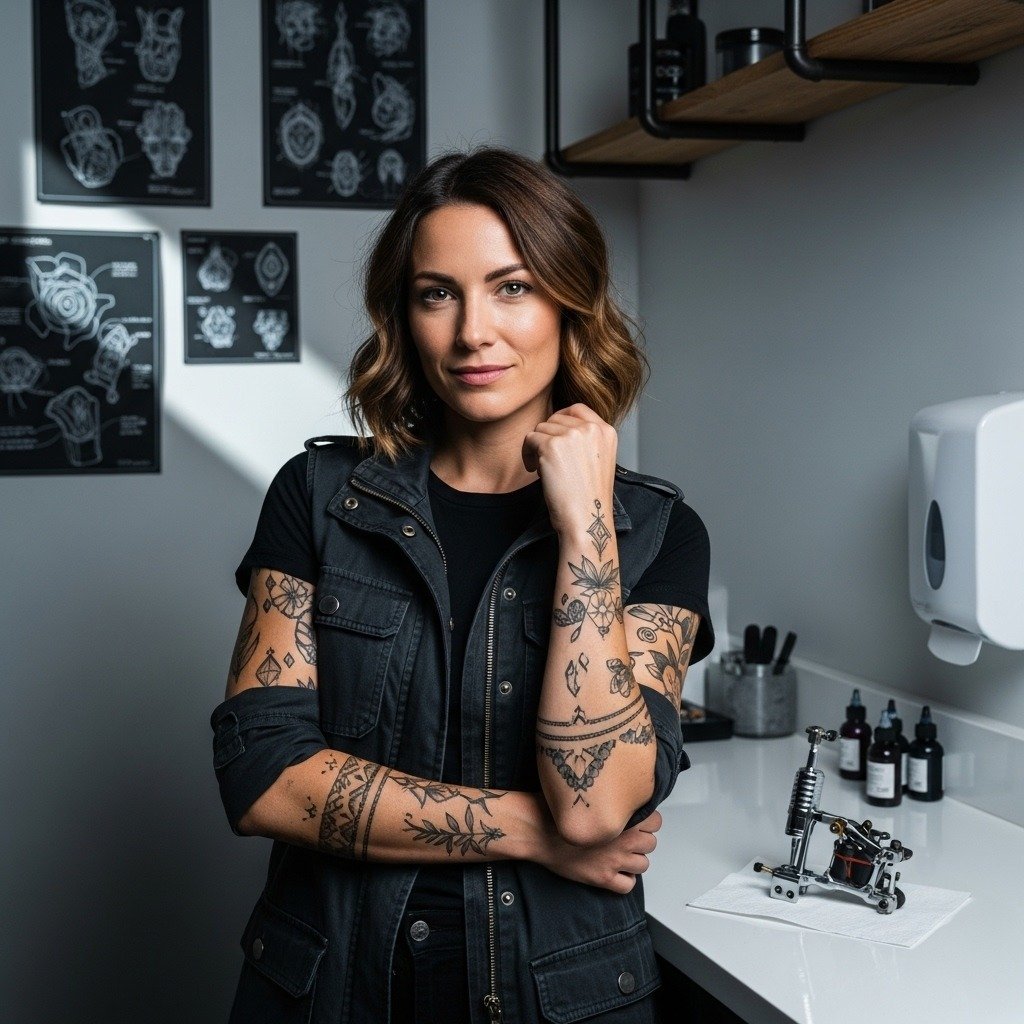
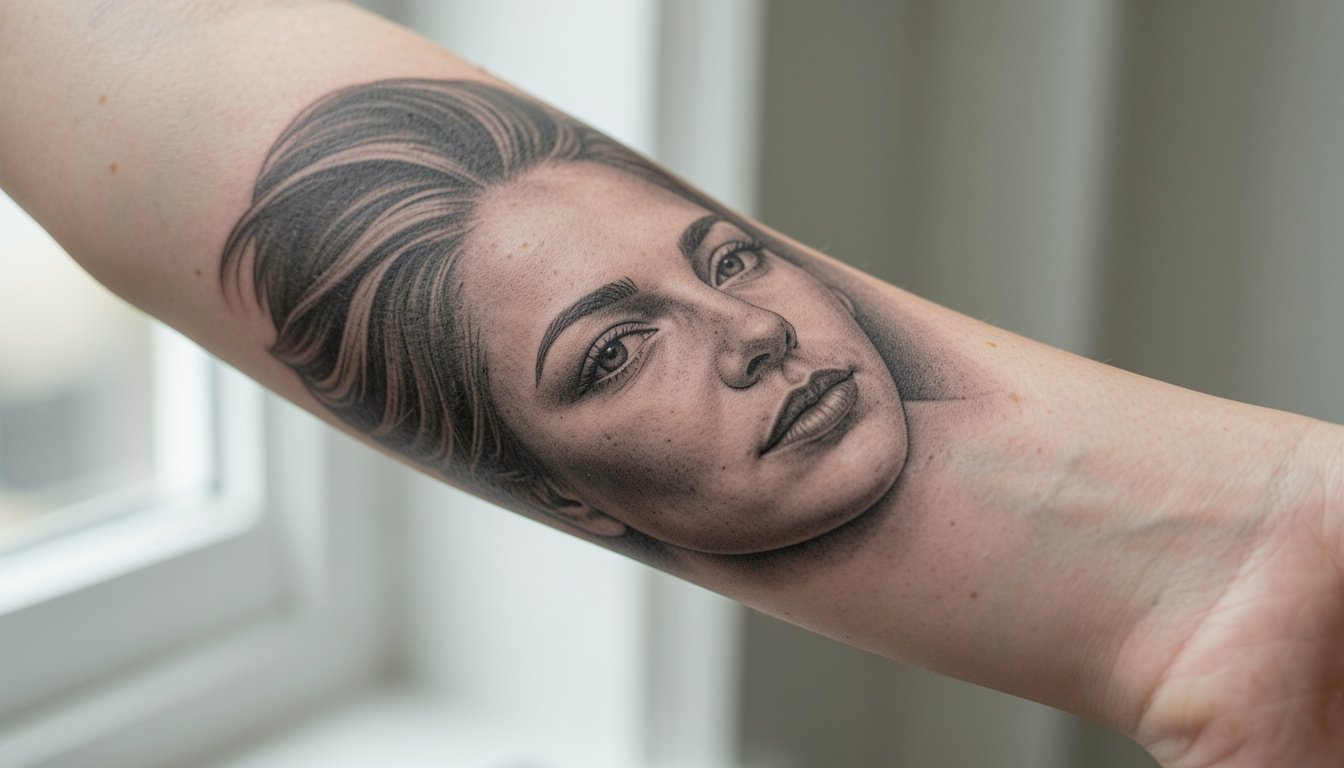
Fine single-needle portraits get likes the day they go up and often blur into an unreadable smudge after a few years. In practice, portraits that plan for spacing, saturated blacks, and gentle transitions between planes hold their likeness far longer. Read these portrait approaches with placement, session expectations, and styling notes that help the face keep its shape through healing and beyond.
1. Memorial Portrait on Outer Upper Arm
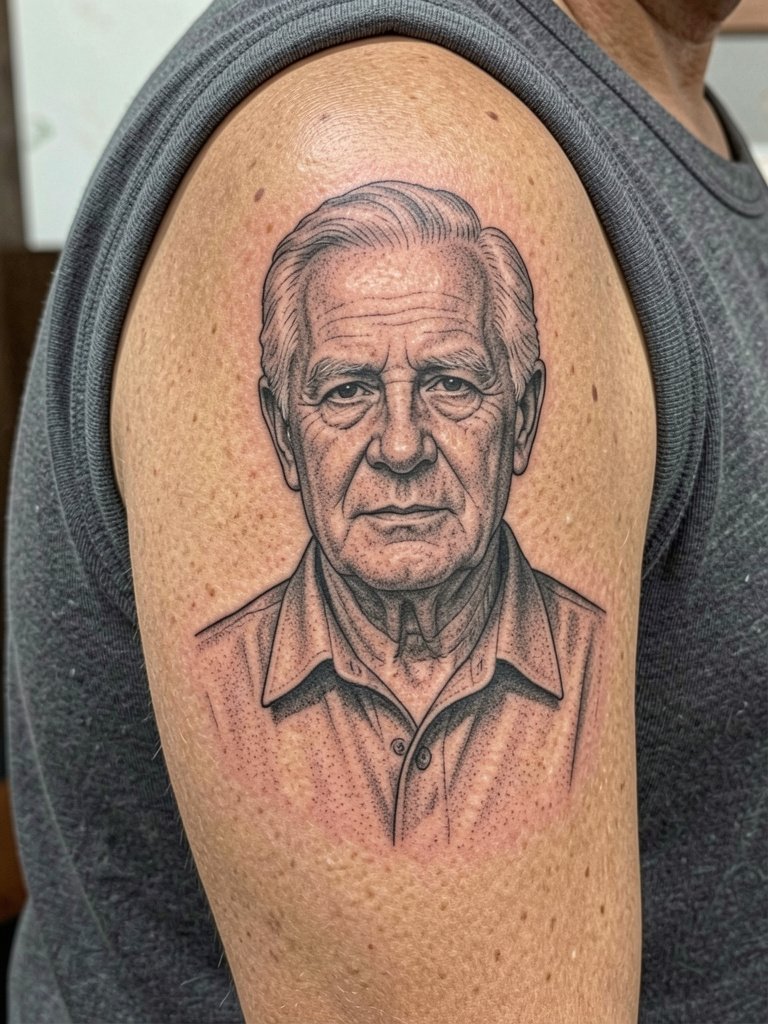
A rounded outer upper arm gives a portrait room to breathe so tiny nostril or eyelash marks do not vanish. Recommend medium to large scale here, because more negative space between features reduces blowout risk and preserves likeness at five years. For the consultation bring a headshot at two scales and a healed example of similar skin tone so the artist can plan contrast and saturation. Expect a two to three hour comfort window with moderate pain and regular position shifts. For showing off, a sleeveless muscle tank top frames the piece cleanly while session wear should be a loose button-front so the arm is free.
2. Female Portrait, Outer Forearm with High-Contrast Lighting
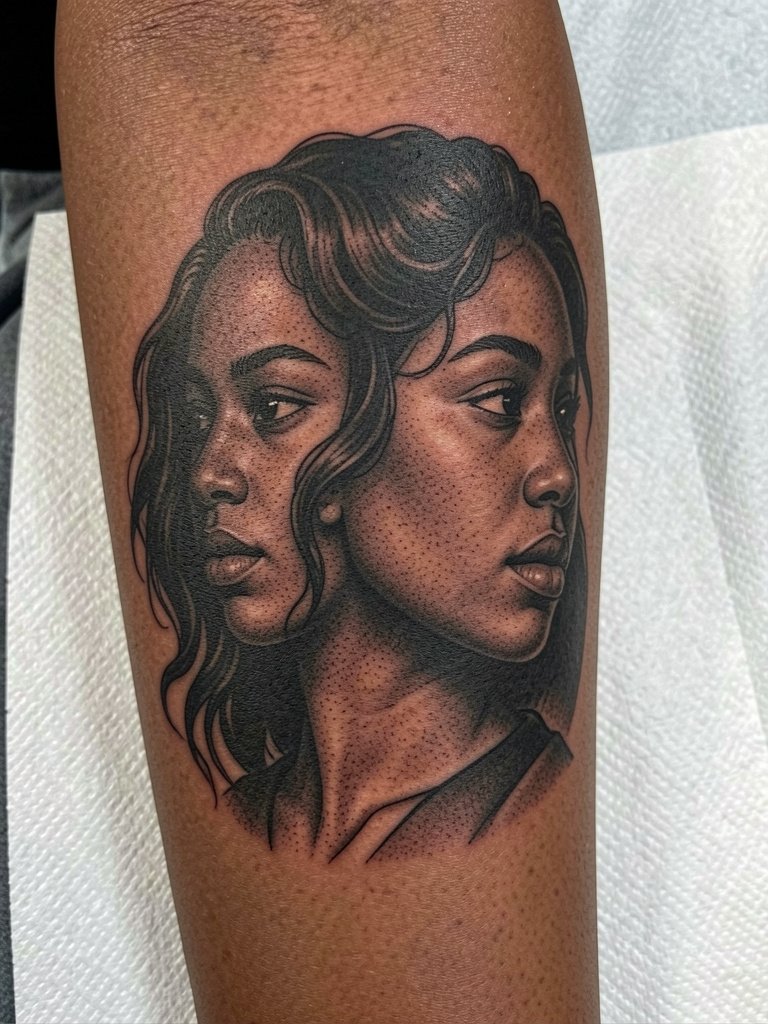
The outer forearm is a social placement that photographs well and holds medium detail without frequent touch-ups. Ask for stronger contrast in the reference so the darks stay dark through healing, and request healed shots on dark skin so you can see real saturation. A common mistake is asking for ultra-fine eyelashes at three inches of scale; those disappear. Session feel is mid-level pain with easy access for the artist and short breaks. Pair the final piece with a short-sleeve black tee for photos and wear a loose rolled-sleeve button-down to the appointment so the artist can work comfortably. Here is a black t shirt men women option to frame the forearm.
3. Geisha-Style Portrait with Ornamental Details on Upper Arm
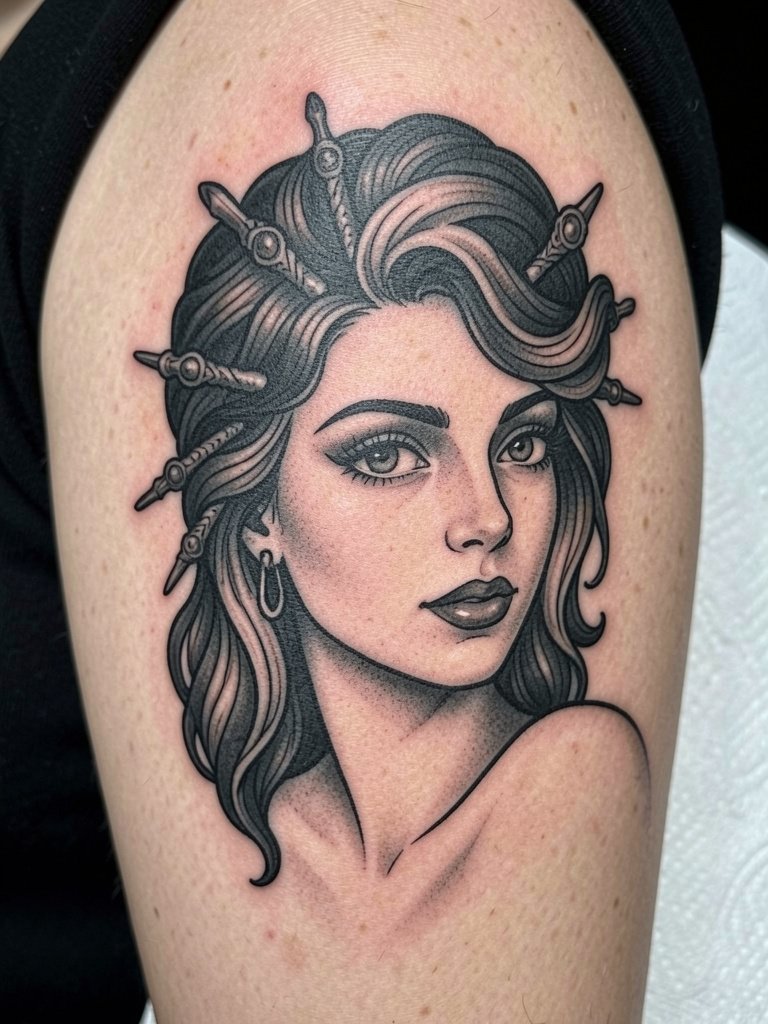
A Geisha-inspired portrait gives structure for high-contrast hairlines and ornaments that hold up better than ultra-fine facial detail. I recommend scaling the face slightly larger than you think so the hair ornament remains crisp rather than competing with tiny facial features. In the consult, show the artist the exact ornament reference you want and ask them to map it around the face so nothing overlaps critical features. Expect the session to feel like steady work on a low- to mid-pain zone with occasional pressure points near the deltoid. If you want the piece to read in casual outfits, a boxy tee and a snap-front overshirt set the composition without covering the art.
4. Surreal Portrait Blend, Forearm or Upper Arm
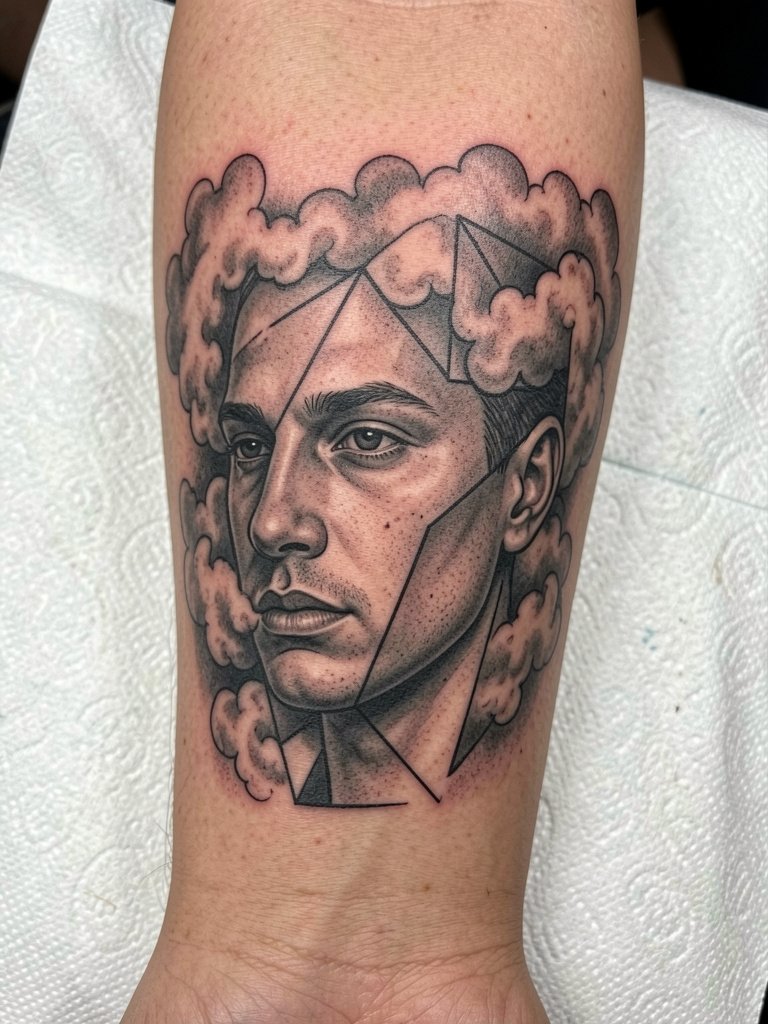
Surreal blends let you preserve a likeness while adding visual devices that obscure where aging will occur. For this approach ask the artist to place smoke or negative space at the edges so the portrait can breathe and not read like a tight sticker. The common aging failure is a hard rectangular border that gaps as skin stretches. Session time is usually two sessions if you want deep saturation in the dark smoke. When you show it off, cuffed denim jackets center attention on the forearm and provide a frame without covering the art. A quick session wear tip is a loose rolled-sleeve button-down so the forearm lies flat.
5. Traditional Black and Grey Portrait with Bold Framing, Calf or Outer Upper Arm
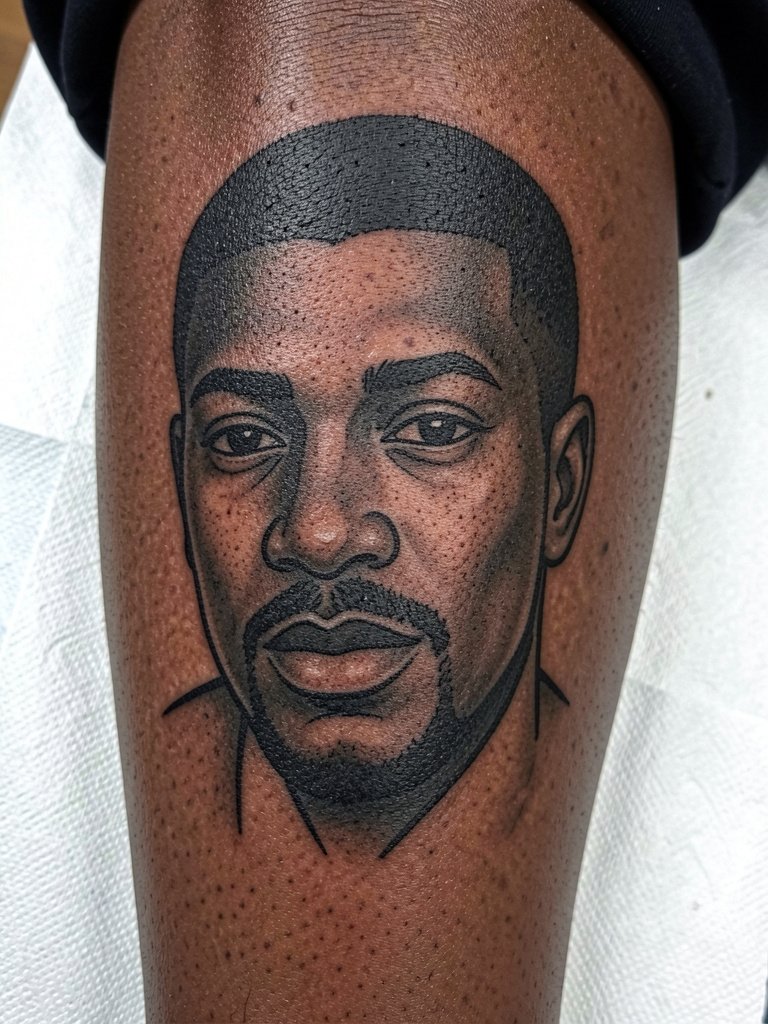
Traditional framing relies on thicker linework and simpler shading to maintain legibility as the tattoo ages. This is a good option if you want a likeness but prefer predictable long-term read. Discuss with the artist which outline thickness they consider the minimum for a five-year read. The session is lower pain on the calf and usually finished in a single or two sittings depending on size. A common mistake is asking for realism-level facial detail with traditional lineweight, which fights both approaches and blurs. Wear open overshirts or boxy tees when showing the tattoo in casual looks.
6. Portrait with Floral Framing on Outer Forearm or Shoulder
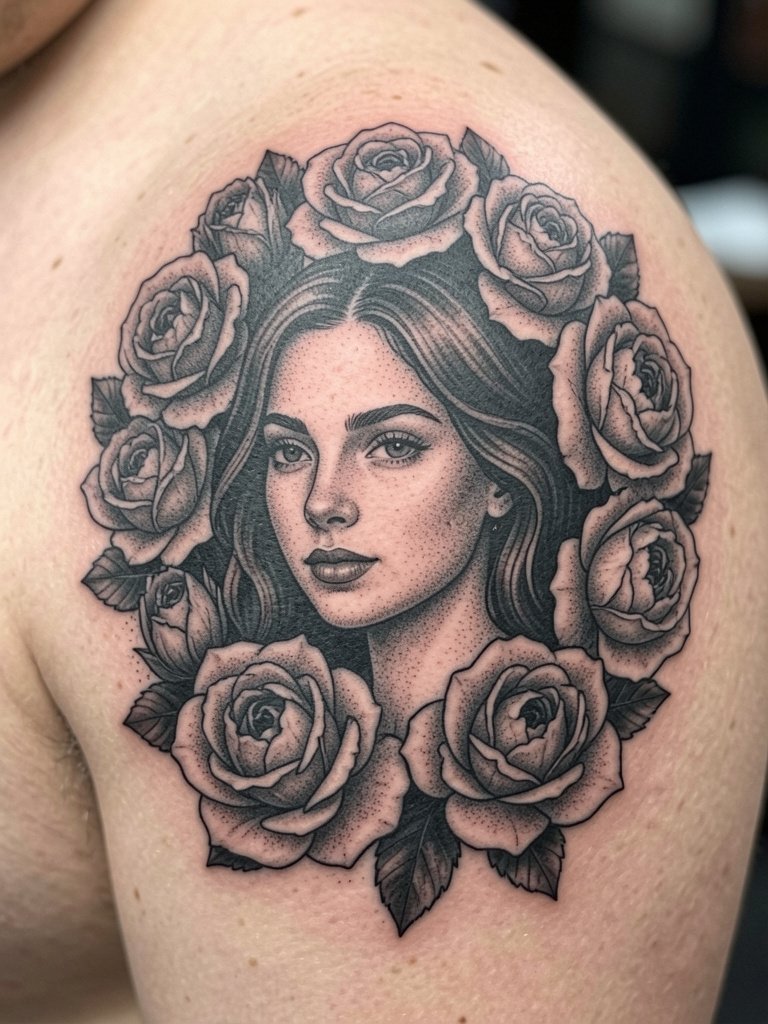
Flowers are useful compositional tools that soften realism and provide predictable areas for touch-ups later. When you bring references, identify which flowers must overlap the face and which should sit behind it, because overlap decisions change how the piece reads at three months. A common mistake is over-clustering small blossoms next to thin facial lines, which creates visual clutter as the tattoo settles. Expect moderate pain on the shoulder and one to two sessions. For showing off, rolled-cuff shirts and slim bracelets keep the focus on the framing. Try pairing with a rolled cuff shirt for everyday wear.
7. Portrait with Smoke, Clouds, or Abstract Shading on Ribcage
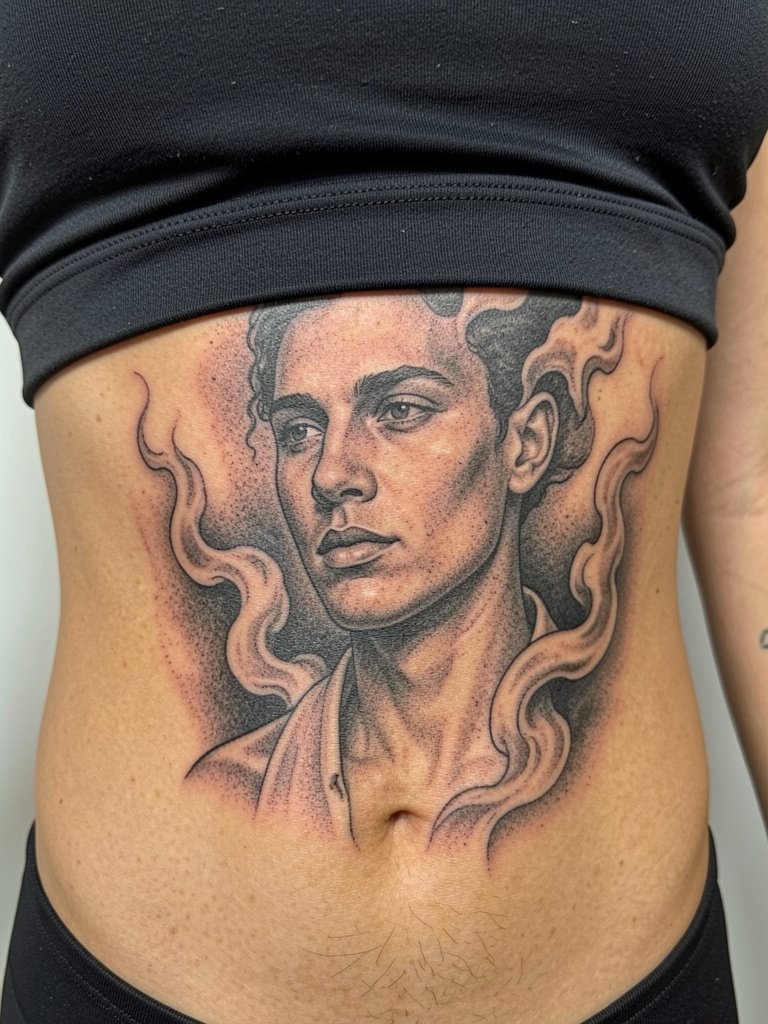
Ribcage pieces give dramatic canvas room but carry higher pain and movement concerns during healing. Artists split on fine line on ribs. One camp warns that thin lines on the rib area blur quickly because the skin stretches and the area sees friction from clothing. The other camp argues that with slightly wider spacing and correct needle depth, fine line can settle cleanly and they will point to healed photos as proof. If you choose a smoke background, ask the artist to design the darkest swaths away from fine facial detail so softening does not eat the face. Session pacing matters here; plan for breaks, numbing preferences, and a two- to four-hour block. For sessions, a loose sports bra or fitted cropped top keeps access simple.
8. Small Portrait Medallion on Inner Forearm
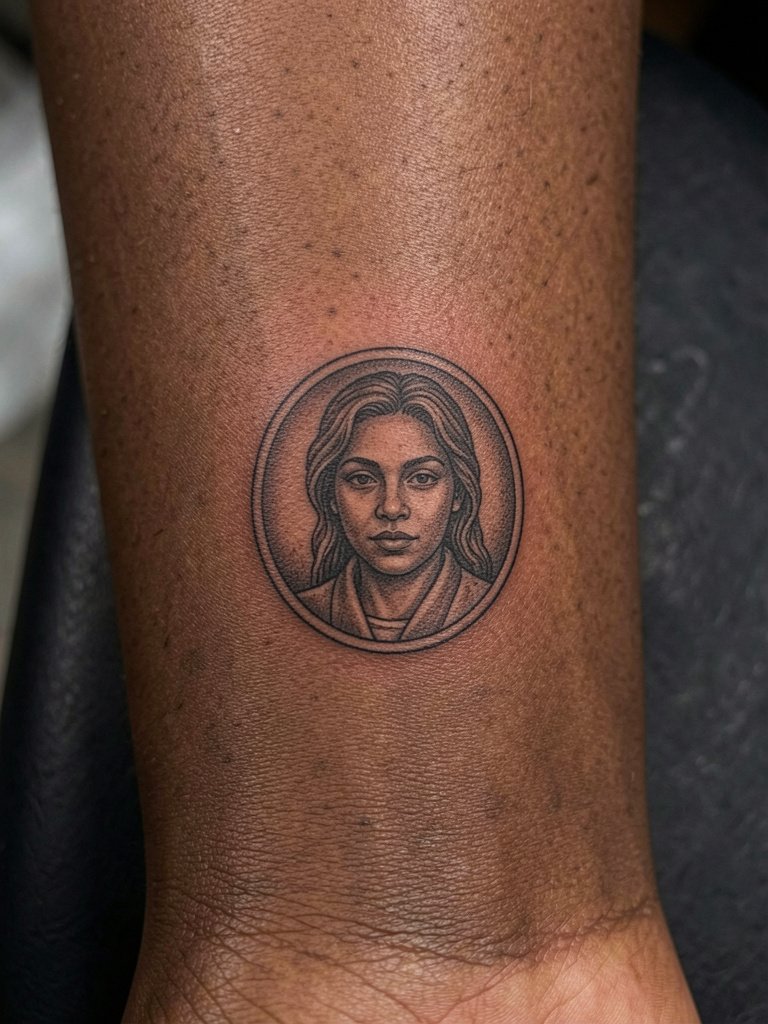
Small medallions can be elegant but they are controversial for longevity. One group says portraits under about three inches lose recognizable features as lines merge and saturation spreads. The other group says micro portraits work when the subject is simplified and contrast is prioritized, and they will show three- and five-year healed shots to back that up. If you want a medallion, insist the artist simplify hair and clothing and push contrast instead of tiny textures. Expect a quicker session but a higher chance of a touch-up within one to two years. For styling, rolled-cuff shirts and minimalist rings keep the medallion visible while staying understated. Here is a minimal rolled cuff shirt option.
9. Family Portrait Composition on Outer Upper Arm or Chest
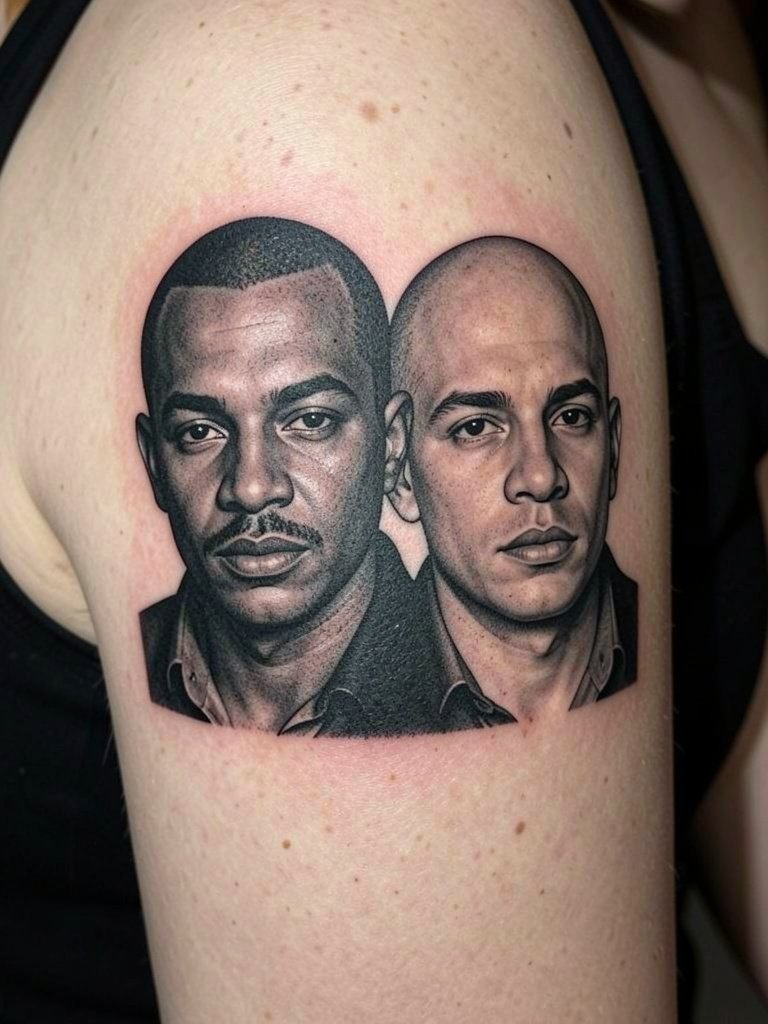
Combining multiple faces works best in black and grey because it keeps contrast unified across subjects. For a family composition have the artist map how the faces will scale relative to each other and request healed examples of multi-face pieces on similar skin tones. A common mistake is packing too many tiny faces into a small space. Plan for a multi-session booking so each face receives proper saturation and subtle touch-up passes. This placement reads well with sleeveless tanks and open overshirts that let the composition breathe. For session comfort wear a loose button-front so the artist can work across the arm and chest line.
10. Portrait with Script Banner or Dates on Outer Forearm
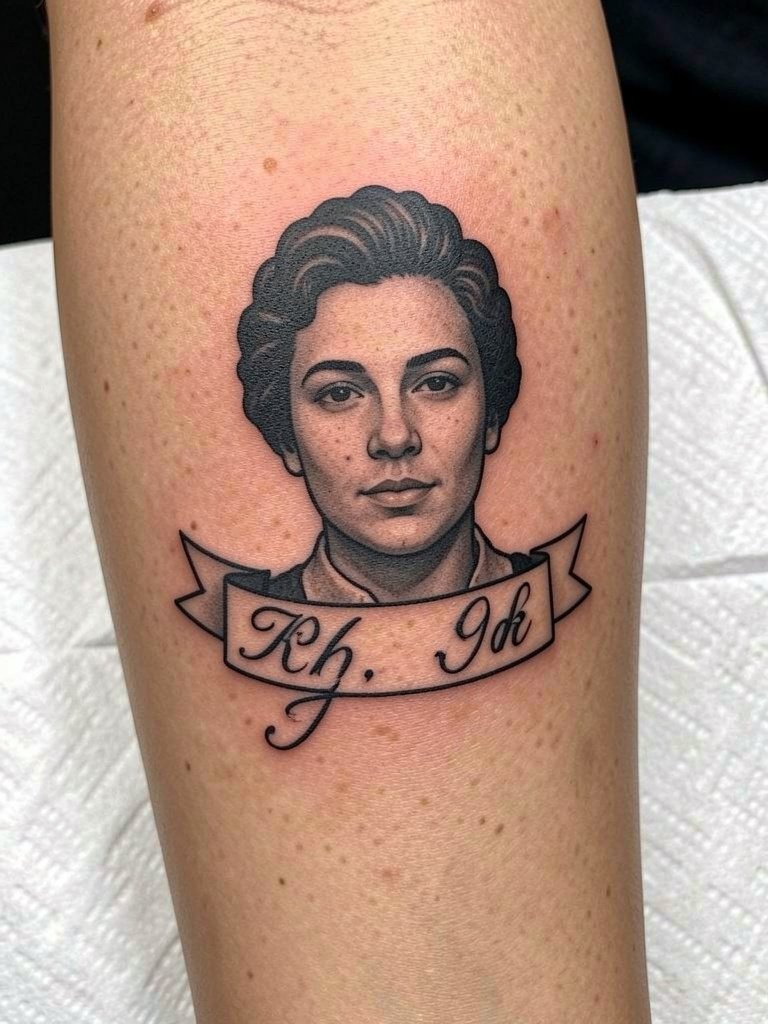
Adding script anchors a portrait and provides context without cluttering the face. Specify the exact lettering and its scale during the consult so the artist can proof the font at tattoo size; small script often blurs if it is too ornate. The usual mistake is using elaborate calligraphy under a tiny portrait. Expect a one- to two-session process depending on banner width. V-neck tees and scoop neck shirts frame chest-adjacent banners well and make the typography read with the portrait. A simple v neck tee complements the horizontal line.
11. Healed Single-Session Portrait for Collectors, Outer Arm or Calf
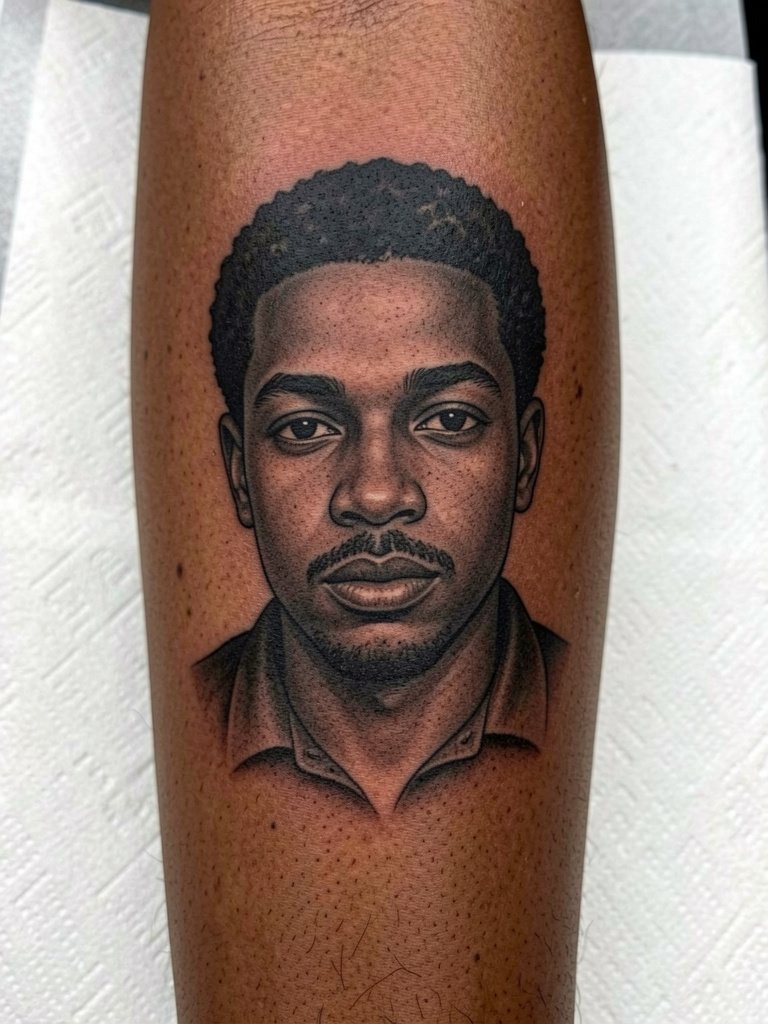
Some collectors want a polished look in a single session and that can work if the portrait is kept to a manageable scale and the artist prioritizes strong contrast. When you plan a single-session piece bring scaled references and agree on a realistic finish level ahead of time so expectations match the time booked. A common error is insisting on micro details at single-session scale, which forces compromises. Expect a longer single block with more breaks and plan for a touch-up six to twelve months later. This section skips a clothing link because the focus is session pacing and healed-read priorities.
12. Japanese-Inspired Portrait with Ornamental Structure on Shoulder or Thigh
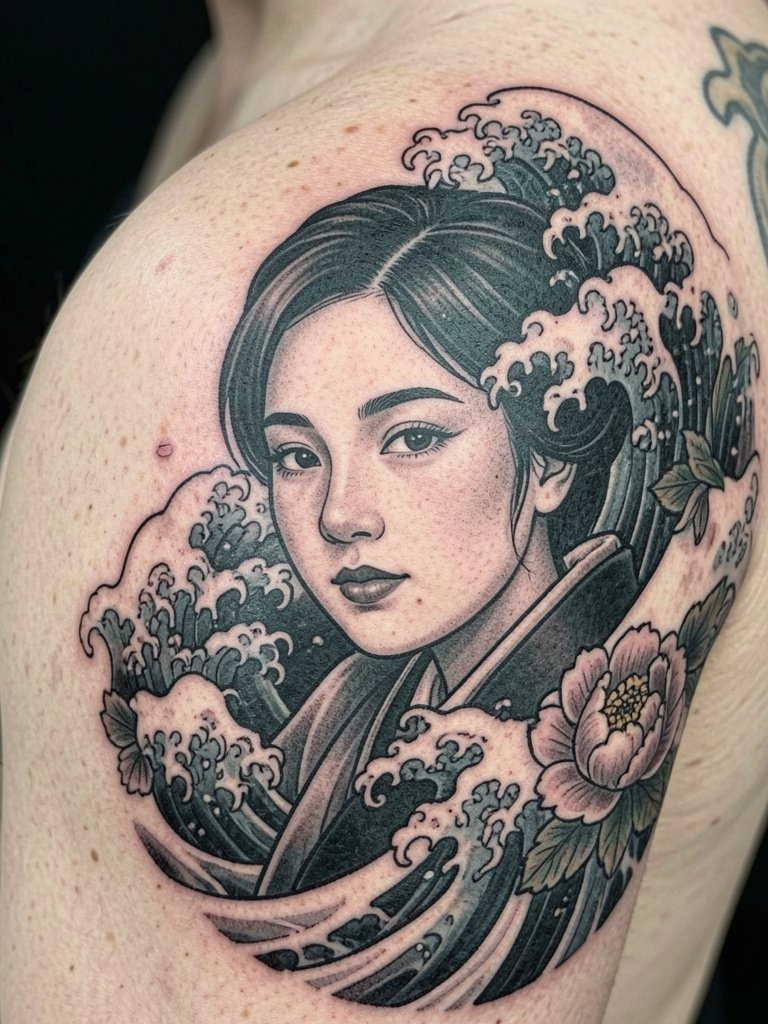
Japanese compositional structure helps anchor a portrait and makes the background predictable as the piece ages. Tell the artist if you want the portrait to sit inside an ornamental panel or to overlap the waves so they can plan lineweight transitions. A typical mistake is painting the portrait in extremely soft realism while using heavy ornaments without transitional shading, which makes the face recede. Shoulder and thigh locations take multiple passes for saturation, so book accordingly. For showing off, boxy tees and structured overshirts echo the large-scale look. Consider a snap front shirt for a casual reveal.
13. Portrait on a Patchwork Sleeve Panel, Outer Forearm or Upper Arm
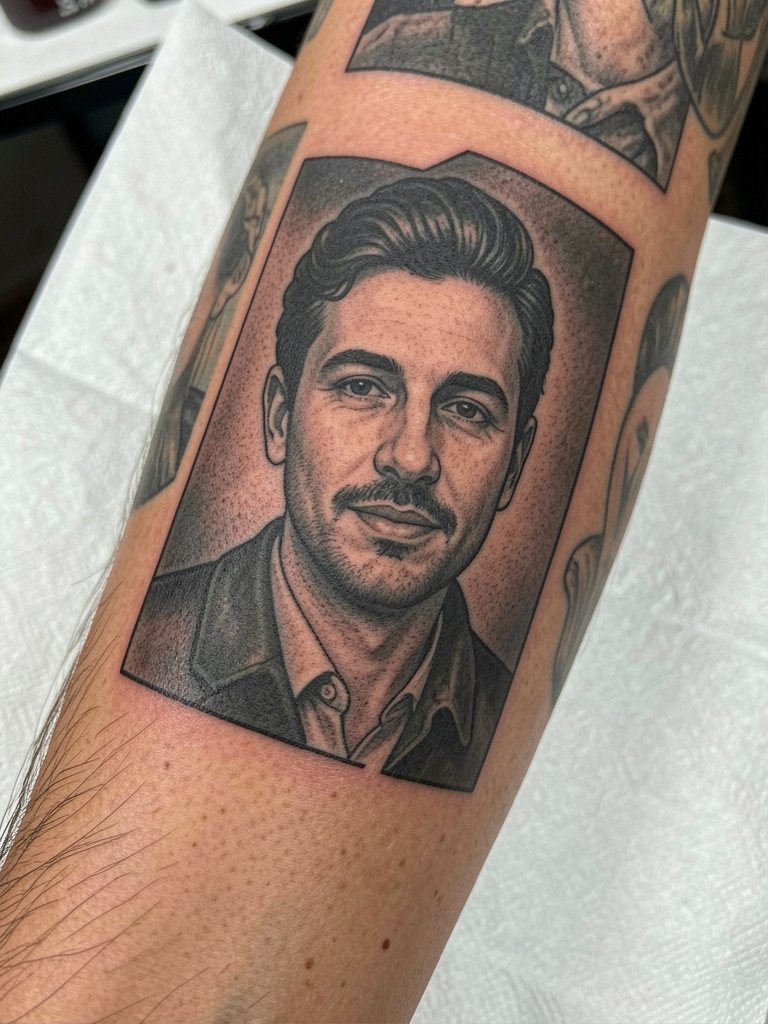
Patchwork panels let collectors build a portrait-driven sleeve without committing to a single marathon booking. When you plan a panel, agree on connecting elements such as smoke, dot work, or negative space so future pieces do not create awkward transitions. A frequent mistake is leaving mismatched backing tones between panels, which makes the overall sleeve feel disjointed. Sessions are shorter per panel but recurring, which changes budgeting and recovery rhythms. Keep session wear simple with roll-up sleeves and pack soft layers that can be removed without rubbing the healed skin.
14. Soft Surreal Background with Negative Space on Ribcage or Outer Thigh
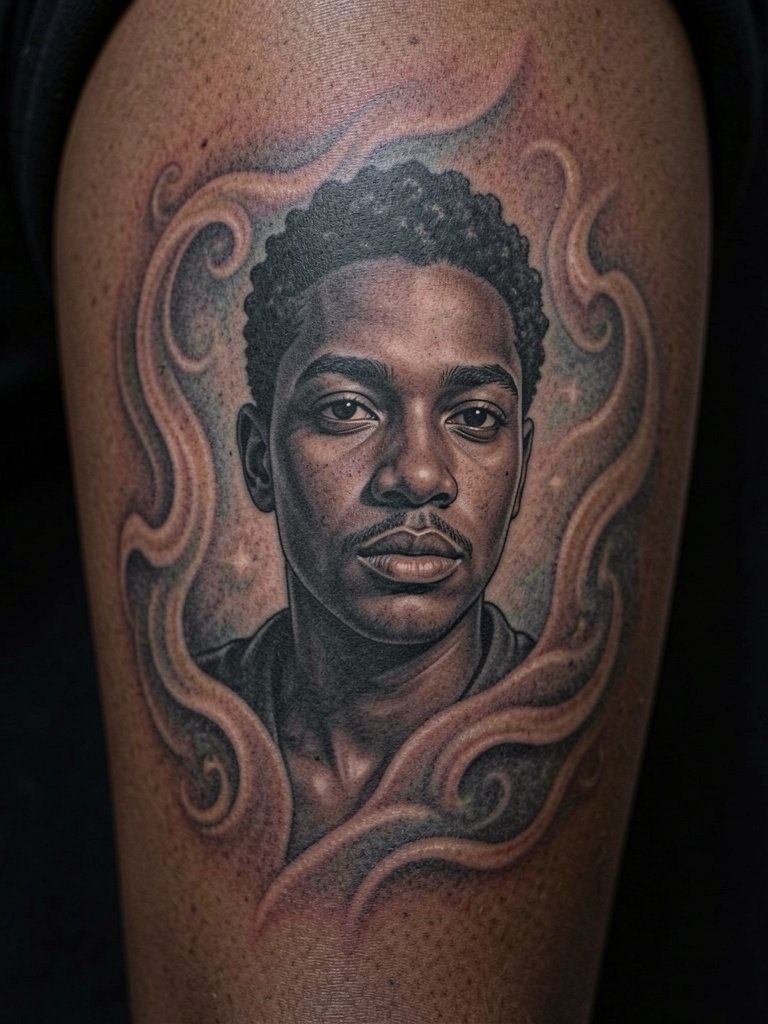
Negative space and soft surreal backdrops read more editorial than literal photo copies and they age more forgivingly because there is room for the skin to shift. When you go surreal, specify which areas must remain crisp and which can blend into texture so the artist can plan layering. The usual error is over-detailing background elements that compete with the face as contrast softens. Outer thigh sessions are lower pain and work well with multi-pass scheduling. For showing off, loose shorts or side-slit skirts reveal the thigh art elegantly. A helpful clothing option is a crop top women or high-waisted short to coordinate looks.
15. Small Memorial Portrait Just Below the Clavicle
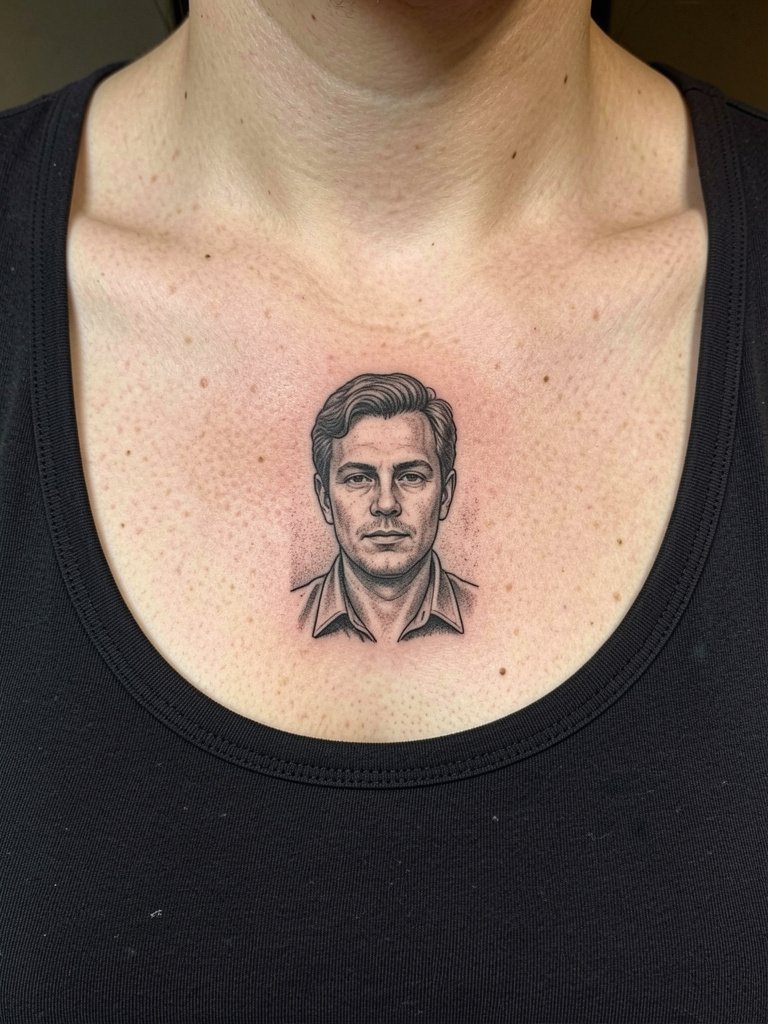
The upper chest is a delicate horizontal canvas that reads best with restrained composition and strong outline choices. For a clavicle portrait, insist on spacing between the eye and eyebrow lines and ask to see healed collarbone examples so you can judge how the area settles. A common mistake is compressing the portrait into a tiny rectangle that the collarbone movement distorts. Pain here is moderate and sessions should be planned around breathing and shoulder tension. For outfits, V-necks and scoop-neck tops show the horizontal line elegantly. Try a scoop neck shirt to present the piece.
Session Day Picks
The first six ideas cover placements that range from low-movement arms to tricky ribcage work, so a few tools smooth the booking and first week of healing.
- Tattoo artist directory guidebook. Helps you build a local shortlist when you are comparing portfolios and want a structured way to track healed examples and specialties for portrait realism.
- Portfolio organizer journal. Use this to collect reference photos, healed shots, and notes from consultations so your design goals are clear before the first needle.
- Photo display album. A simple physical album keeps healed comparison shots at hand when vetting artists in person or on video calls.
- Second skin tattoo bandage. Useful for larger rib or thigh portraits to reduce friction during the first 48 hours and keep crisp edges from catching on clothing.
- Tattoo aftercare balm. A thin, fragrance-free balm for the initial days helps maintain saturation on denser black-and-grey pieces without leaving a greasy film.
Frequently Asked Questions
Q: How large should a portrait be so it still reads at five years?
A: The readability threshold depends on placement and lineweight, but as a rule of thumb faces under three inches across on high-movement zones tend to lose detail. Ask the artist to show healed portraits of similar size and skin tone and plan for at least a touch-up window at the six- to twelve-month mark.
Q: How do black and grey portraits look on darker skin tones?
A: Black and grey can read beautifully on darker skin if the artist uses strong contrast and deeper saturation in shadow planes. Request healed examples on a comparable tone and ask the artist to adjust contrast rather than rely on very thin, pale shading that disappears into complexion.
Q: Where should I look to find portrait artists who actually show healed realism work?
A: Search hashtags like #blackandgreyrealism and #portraittattoo on Instagram and use the location filter, then move to Reddit threads for peer-vetted healed shots. Combine Google plus Facebook to find studio pages and then look through an artist’s older posts to find healed photos rather than fresh portfolio shots.
Q: What should I wear to a ribcage or sternum session?
A: For rib or sternum work wear a fitted sports bra or a bandeau that sits in its normal position so the artist can work without you needing to adjust clothing. This keeps fabric out of the way and avoids extra rubbing on fresh ink.
Q: How often do portrait tattoos need touch-ups?
A: Expect small touch-ups within one to three years for medium-detail portraits, especially if they sit on high-movement areas. Larger, well-contrasted portraits often go longer between touch-ups because more negative space and saturation reduce early blurring.
Q: Is black and grey always better than color for portrait longevity?
A: There are two views. One view says black and grey avoids color drift and preserves facial structure more predictably over time. The other view says color can enhance lifelike qualities and depth when planned right, especially around eyes and skin tones. The choice comes down to the look you want and an artist’s experience with portraits in that palette.
Q: Can I build a portrait sleeve over time without it looking patchy?
A: Yes, if you and your artist plan connecting elements like shared backgrounds, smoke, or a unifying grayscale palette so panels read as parts of a whole. Ask for a rough layout of future panels so each session fits the larger composition.