
A small spiral can feel like a quiet signature, but the choices you make about line weight, spacing, and placement decide if it reads clean for years. Tiny single spirals that follow a slightly heavier contour and have clear negative space usually keep shape through healing and occasional touch-ups. Read on for carefully chosen spiral ideas, where each one explains how it will age and what to wear to show it off.
1. Single Spiral Micro on the Inner Wrist
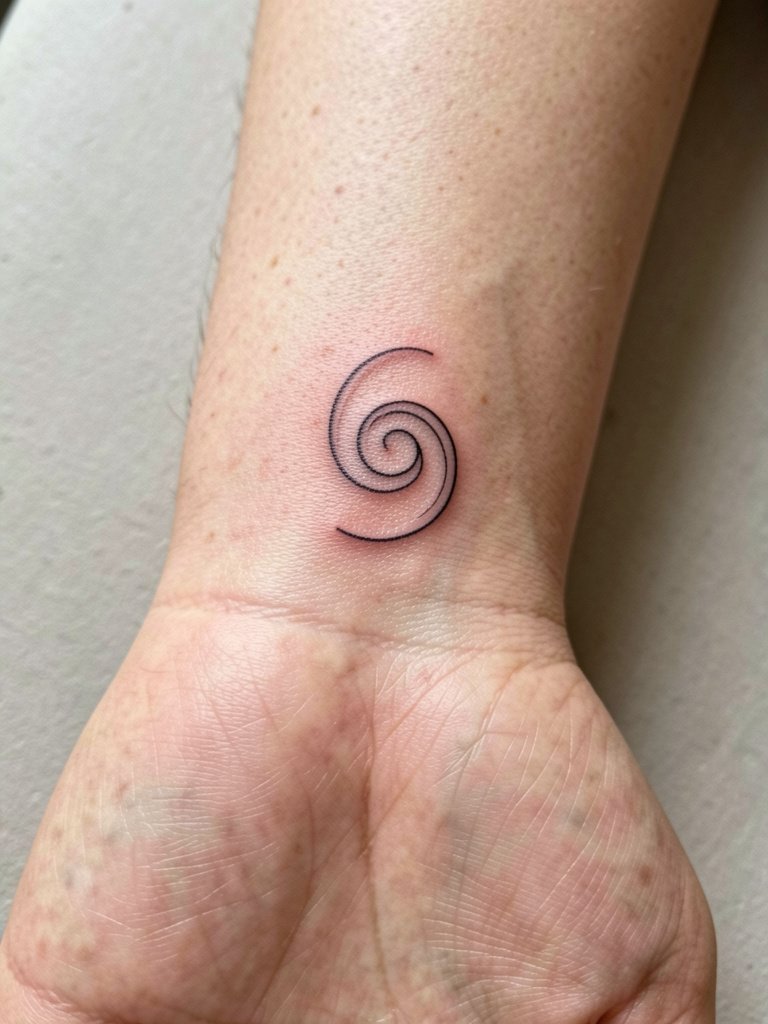
This is the classic first-tattoo pick for people who want an emblem that does not dominate a look. For longevity make the spiral line a hair thicker than the very thinnest single-needle reference. Expect a 20 to 40 minute session and mild wrist sensitivity described by most as a 3 out of 10 on common pain charts. A common mistake is asking for the smallest possible spiral with ultra-fine interior lines, which tends to blur into a blotch at year two. For the appointment wear a short sleeve or sleeveless top so the artist can position the arm easily and the stencil sits flat. Pair this placement with a thin chain bracelet set on the opposite wrist to frame the area without rubbing the fresh ink.
Fine line supporters argue tiny, delicate spirals feel modern and discreet. Bolder line supporters say a slightly heavier contour preserves the motif when the skin moves and ages.
2. Triple Spiral Triskelion on the Outer Upper Arm
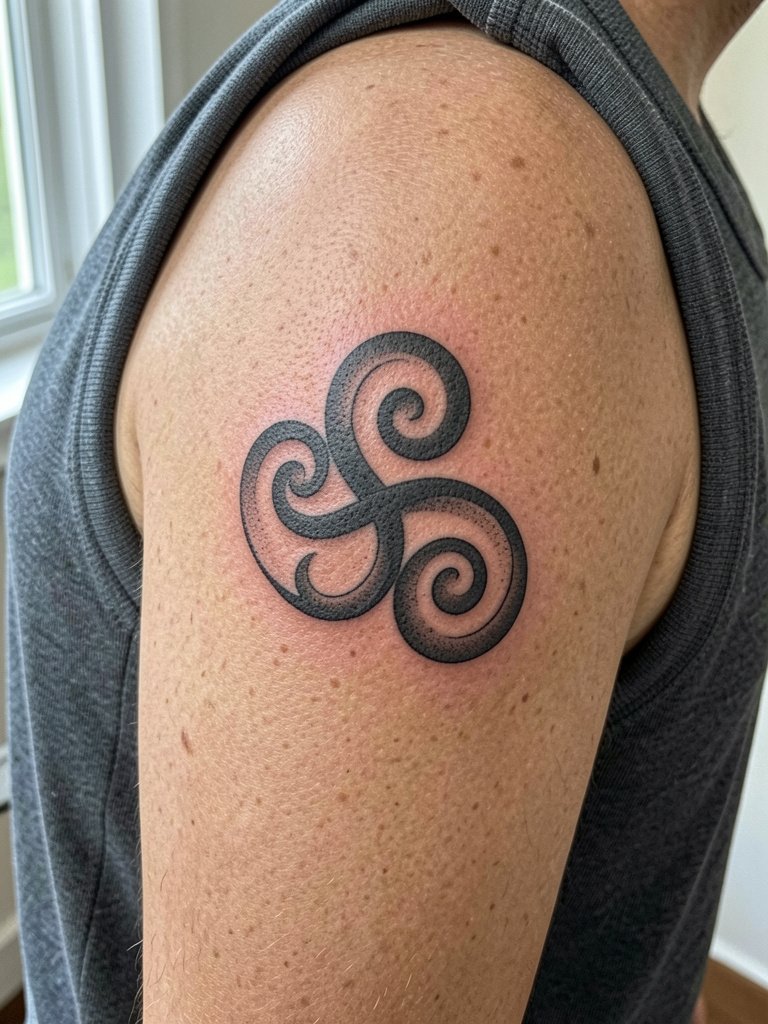
The triskelion reads well at medium sizes because the three arms give the design natural breathing room. It usually takes one session of 45 to 90 minutes depending on shading. Talk specifics about interior negative space and where each arm should point so the composition sits with your muscle curve. For showing off, this placement pairs with a ribbed tank top that exposes the shoulder line. Expect touch-up on the outer arm around year two to refresh the saturated black, especially if you spend lots of time outdoors.
3. La Tene Spiral Knot Fusion on the Inner Forearm
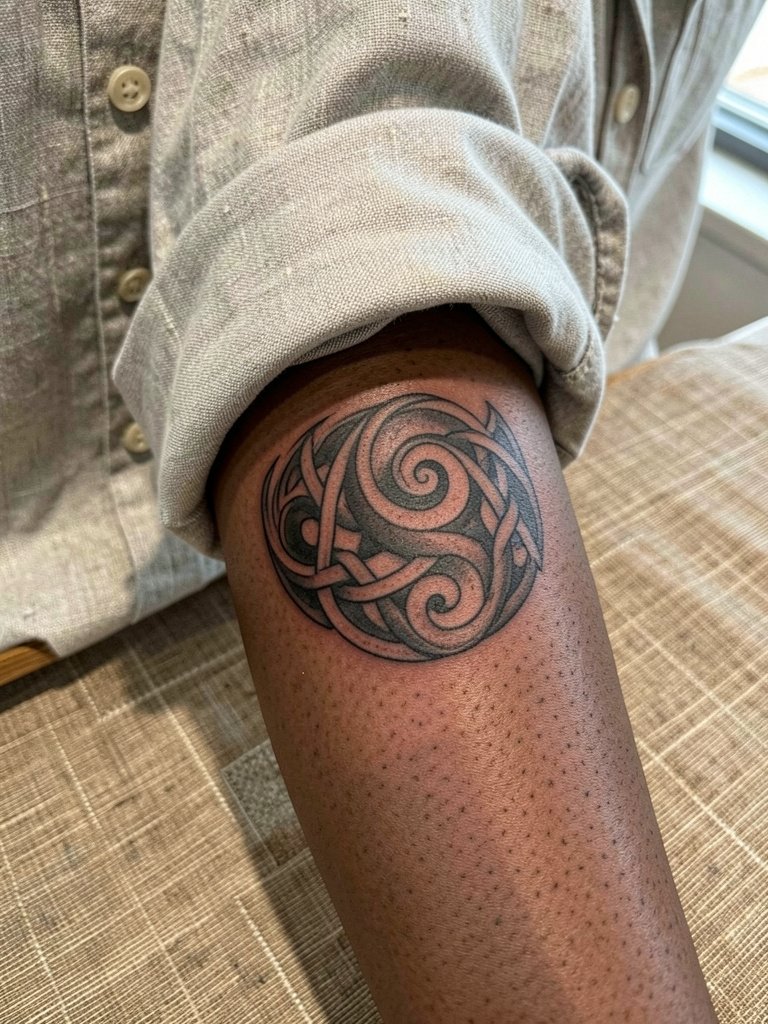
This fusion gives the spiral extra visual weight without crowding the forearm. If you want a knot element, ask for clear over-under crossings and slightly wider spacing so the knots do not collapse in three to five years. The session often runs 60 to 120 minutes because knotwork takes careful lining and crisp spacing. A real mistake is compressing knot detail into a piece that ends up smaller than three inches across. For the session wear a linen button down shirt you can roll cleanly to expose the inner forearm. Healed at six months the design keeps its shape when the knotwork crossings were drawn with even depth.
4. Triple Spiral with Shaded Negative Space on Outer Forearm
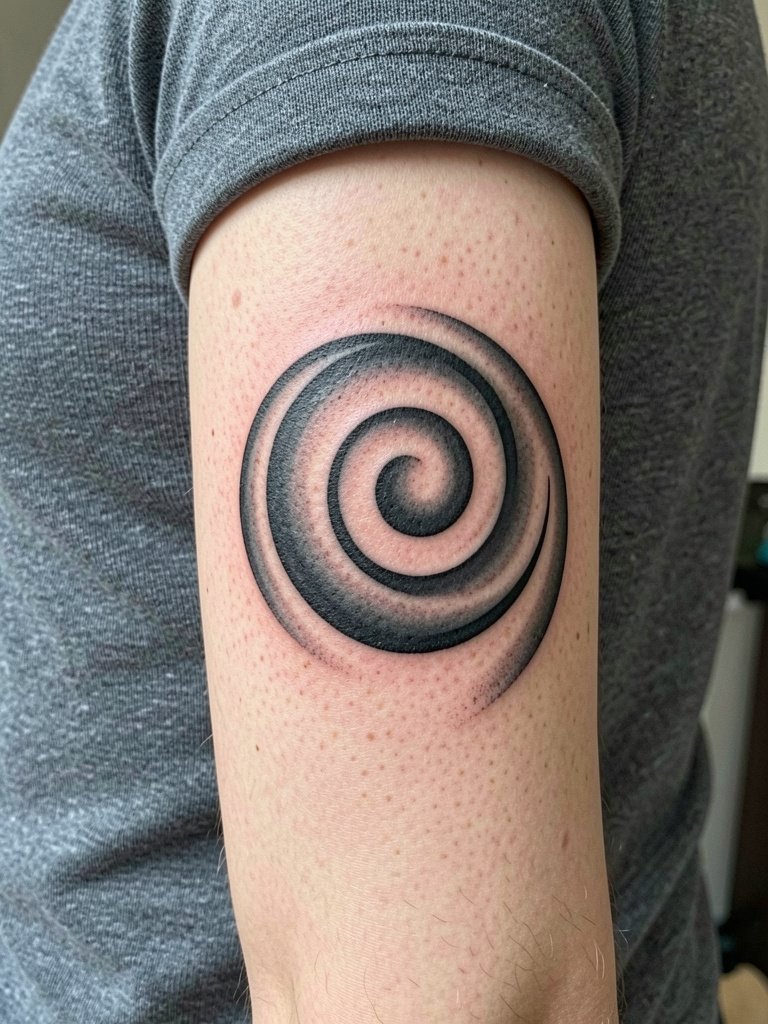
This version uses contrast to read at a distance. It is a good choice when you want the triskelion presence without heavy knot density. Ask for the gray wash to be applied with stipple or whip shading so it heals as soft gradient rather than a muddy patch. A typical session is 45 to 90 minutes. Outer forearm tattoos face lower blowout risk than hands but more sun exposure, so plan a yearly color check if you are outdoors often. For visibility consider a clean sleeve roll, but skip an affiliate link here to keep focus on the design.
5. Spiral and Tree of Life Combination on the Shoulder Blade
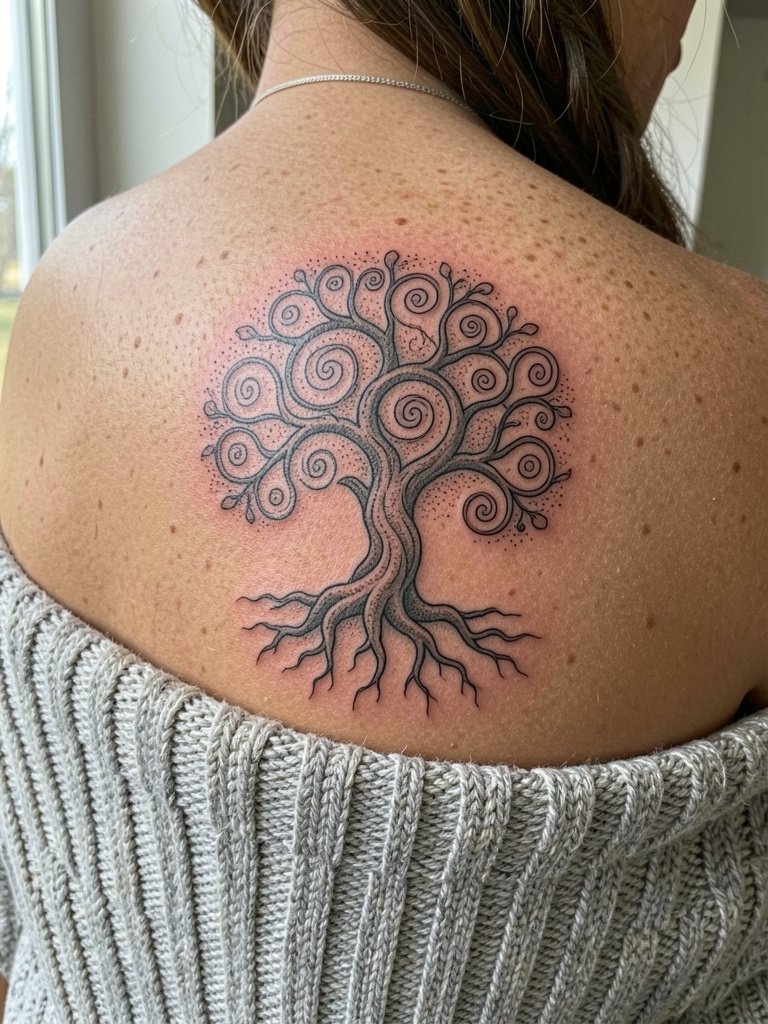
Combining the spiral with a Tree of Life lets you layer symbolism while keeping clarity. Because the piece sits on a flatter surface that moves with shoulder blades, ask for slightly increased spacing between root lines to prevent merging as the skin shifts. Usually done in 1 to 2 sessions, this area benefits from a healing period where you avoid rubbing against backpack straps. For showing off try an off-shoulder top that frames the shoulder blade without pressing into the healing skin. A common error is crowding the tree roots into tiny loops that lose identity once healed.
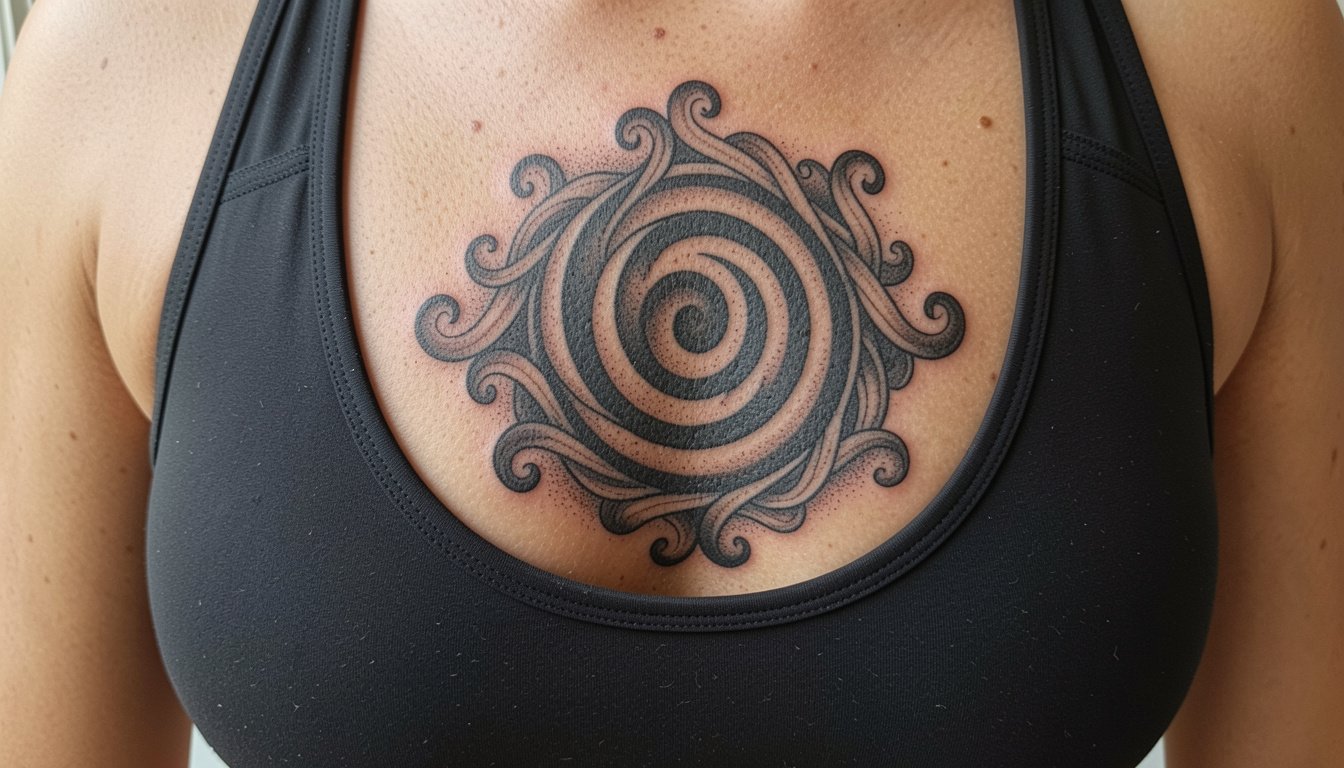
6. Large Central Spiral Sternum Piece
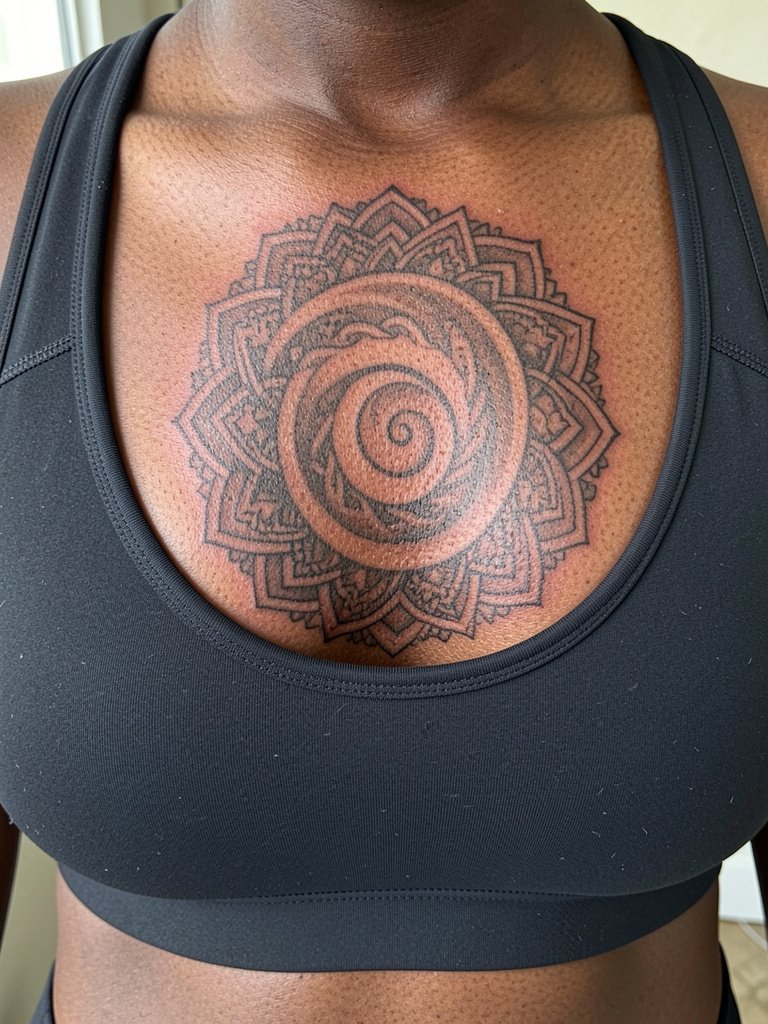
Large chest spirals need room to breathe so the motion does not read cramped. Expect multiple sessions totaling 2 to 4 hours depending on shading. Pain here is higher than forearm work for most people, often reported as a 6 to 8 on common pain charts, so plan session breaks. A frequent mistake is asking for dense interior detail on a narrow sternum area. If you plan clothing that often exposes the chest, wear a V-neck or button-front shirt to the appointment so the artist can access the area easily. Avoid adding small script inside the spiral unless you want to commit to annual touch-ups.
Heal Smart
The small wrist and ankle pieces above behave differently from larger knotwork, so a few items make the session and first week smoother.
- Stencil transfer paper kit. Lets you preview the spiral placement on skin and check how the curve reads before the needle starts.
- Topical numbing cream. Applied as directed before a higher-pain sternum or rib session can reduce anxiety during the first pass.
- Thin protective film roll. Helps guard small wrist or finger pieces from friction during the first 48 hours.
- Fragrance free gentle body wash. Cleanses healing skin without adding fragrance that irritates fresh linework.
- Aquaphor healing ointment. A widely used option for initial moisture that many artists suggest for the first few days before switching to a lotion.
7. Spiral Forearm Band Wrap
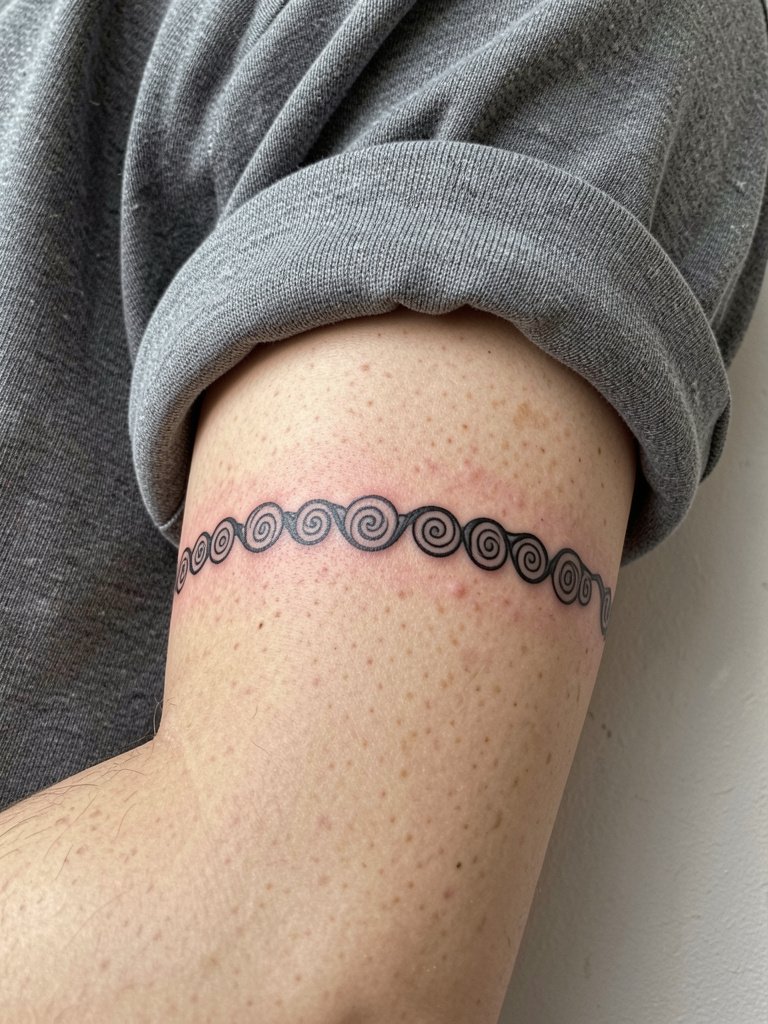
A band repeat lets you build a subtle sleeve starter without committing to dense black. Ask for uniform spacing between nodes so the rhythm does not warp with muscle. Typical session time is 60 to 120 minutes depending on circumference. Blowout risk is low on the forearm but increases if the wrap crosses thin scar tissue or very soft skin. For a simple daytime look pair the band with rolled linen shirt sleeves so the pattern peeks out naturally.
8. Celtic Spiral with Knot Border on the Ankle
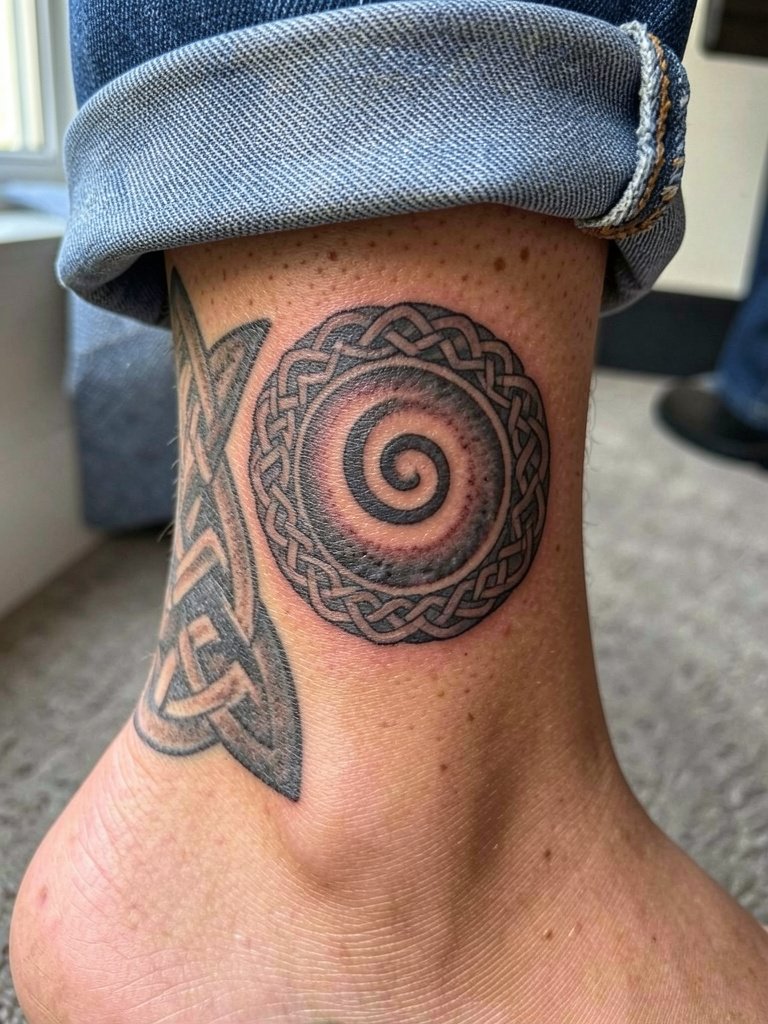
Ankle work faces high friction from socks and shoes, so thicker outlines and a clear knot border preserve legibility. Sessions are often under an hour for small pieces. A repeated mistake is requesting ultra-fine interiors that the shoe friction and daily washing cause to lose definition. For the appointment wear shorts or rolled pants so the artist can access the ankle easily. Avoid wearing tight boot socks during the first two weeks of healing.
9. Prehistoric Spiral Behind the Ear
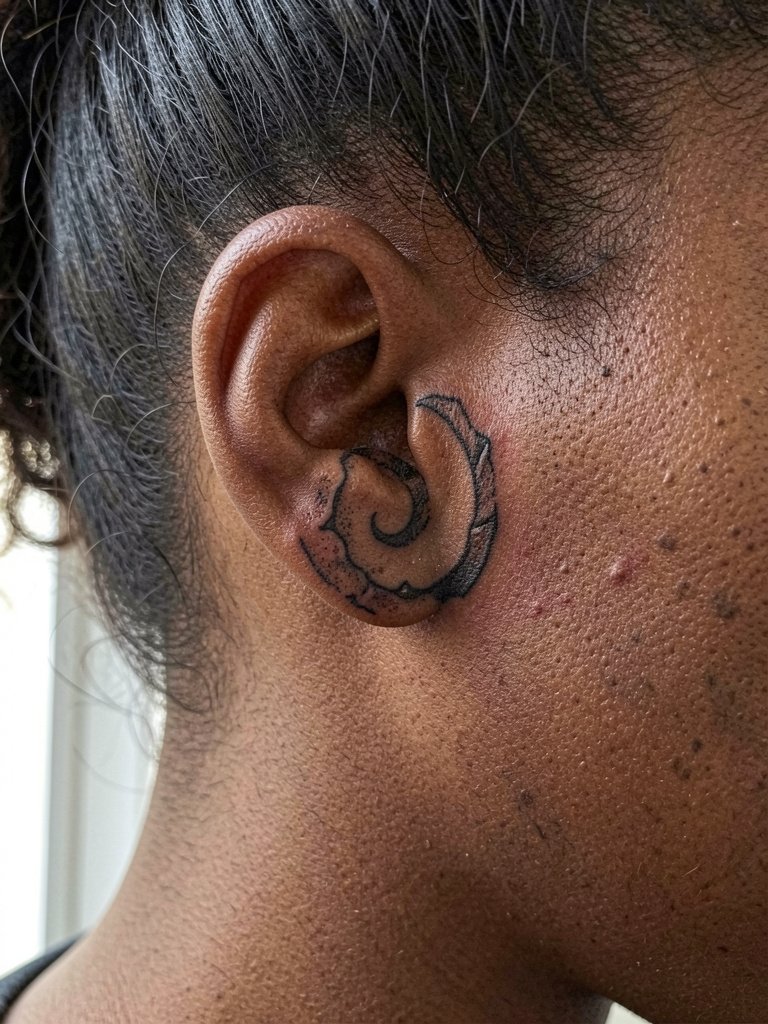
A behind-the-ear spiral is discreet and ages differently because hair and shampooing affect the area. Use a slightly bolder line so the motif remains visible under hair growth. Sessions are short, often 20 to 40 minutes, but healing can feel itchier because the spot gets rubbed by collars. For evenings out wear hair up to show the piece and during the session keep hair tied back with a simple hair claw clip. If you want a prehistoric angle, ask the artist to avoid ornamental Celtic flourishes and favor a single unembellished motion.
10. Spiral and Solar Motif on the Outer Shoulder
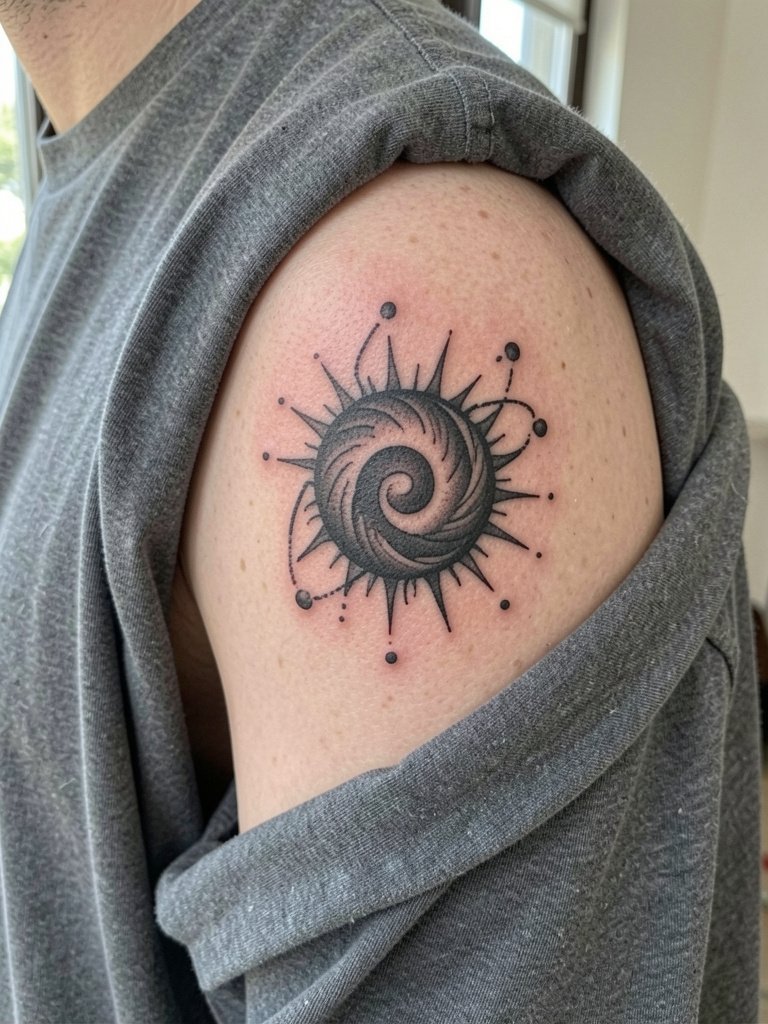
This approach gives the spiral a universal solar reference that reads across styles. It is a solid choice for people who want a visible seasonal show-off. Sessions vary from 45 minutes to two hours. Shoulder placements expand easily if you decide to add more orbiting elements later. For the session wear a sleeveless or loose short sleeve top to make access simple.
11. Triple Spiral with Color Accents on the Outer Calf
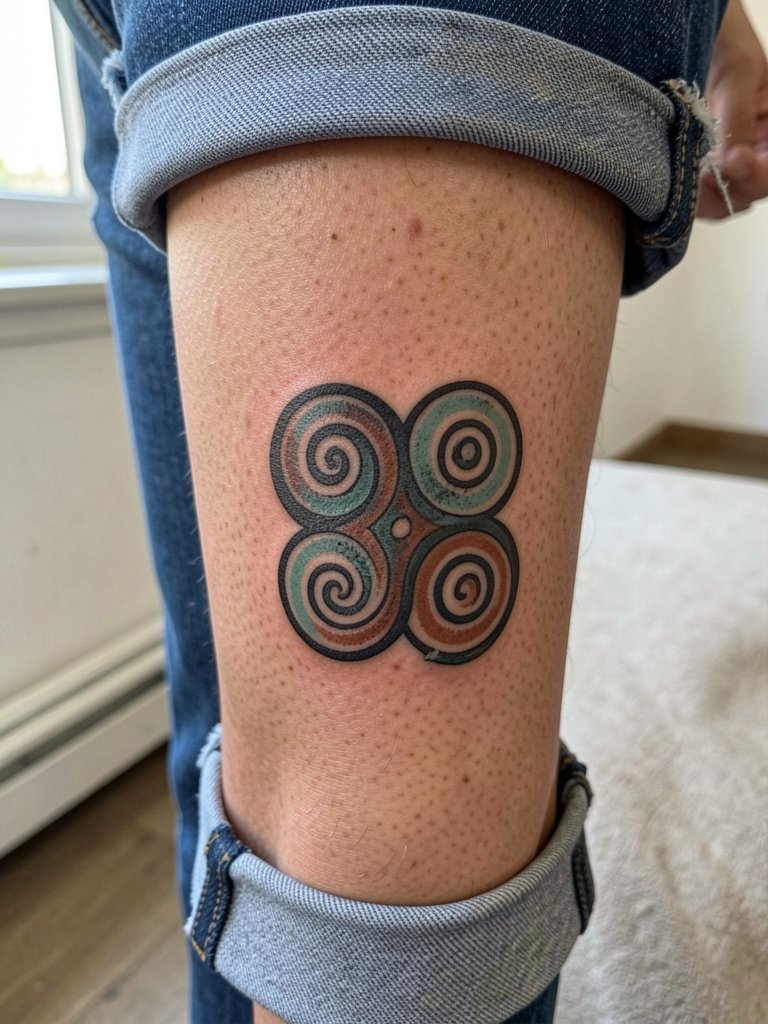
Adding restrained color can modernize a classic triskelion without compromising its motion. One camp favors black and gray only because those tones age with more predictable contrast. Another camp says a few muted color accents make the piece feel personal while preserving the structure. The first camp argues black and gray keep the symbol legible for longer, especially on smaller pieces. The second camp argues that careful color placement and limited saturation can work well, particularly at calf scale, and they show healed examples. Expect one to two sessions and plan for a color touch-up at year two if you spend lots of time in the sun. For showing off wear cropped jeans or strappy sandals.
12. Small Spiral Near the Collarbone
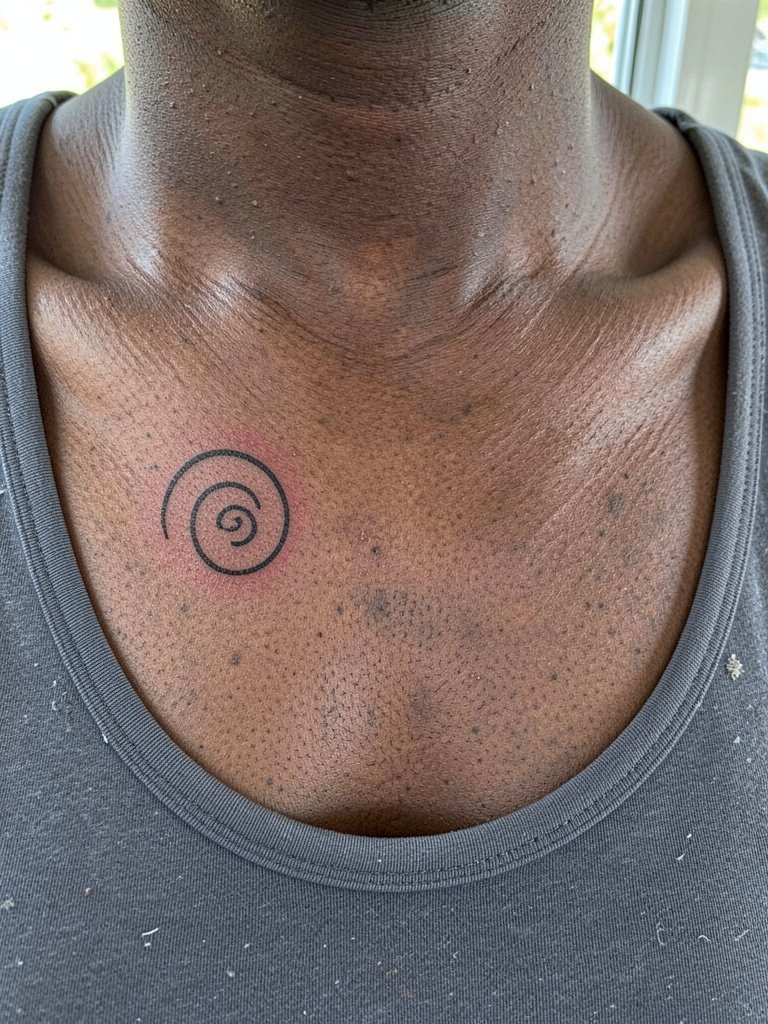
Collarbone placements look elegant because the bone helps frame the motif. The key decision is how thin the line should be. Tiny, ultra-fine spirals can disappear into skin texture over time, so opt for a slightly heavier contour if you want the mark visible after two to five years. Sessions are quick, usually 30 to 60 minutes. For the appointment wear a scoop-neck tee or open button-down to give the artist clear access. Avoid necklaces that sit directly over the fresh ink until it heals.
13. Ornamental Spiral on the Nape
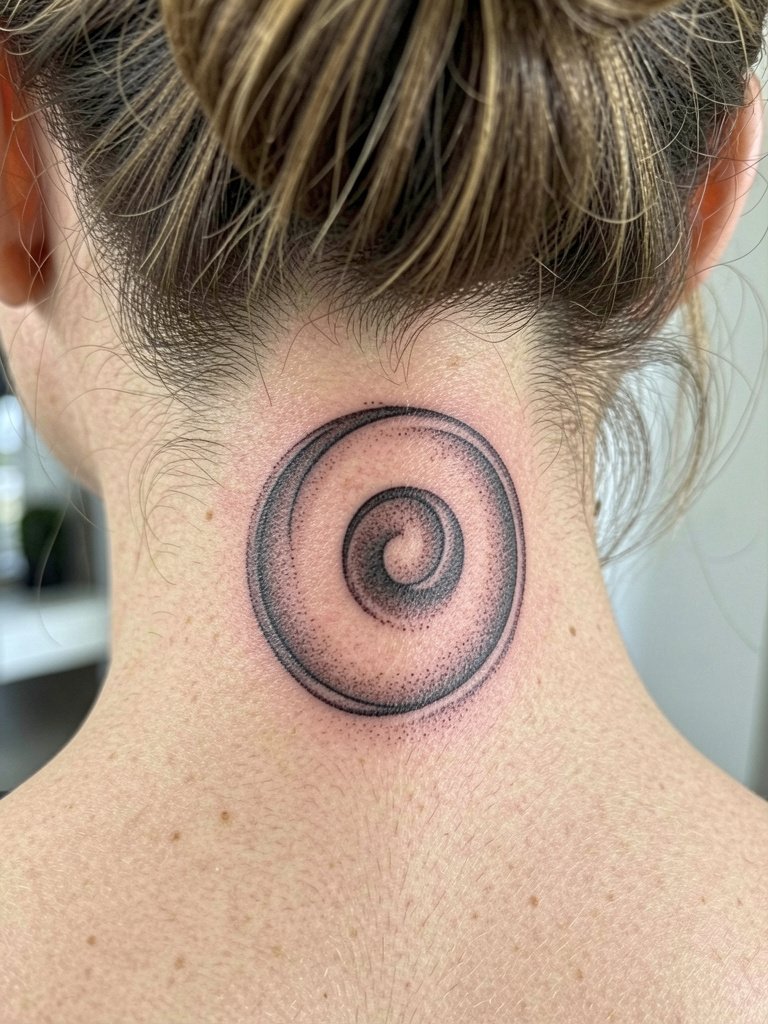
The nape is discreet unless you wear your hair up. It heals well when the area is not rubbed by collars. Ask for modest line thickness because the skin there can stretch as hair grows out and the piece needs to keep its contour. Sessions are short, often under an hour. For the session have a hair tie ready and a top that does not rub the back of the neck. For evenings out wear an open-back dress or square-neck top to show the placement.
14. Layered Spiral Knotwork Sleeve Starter on Outer Arm
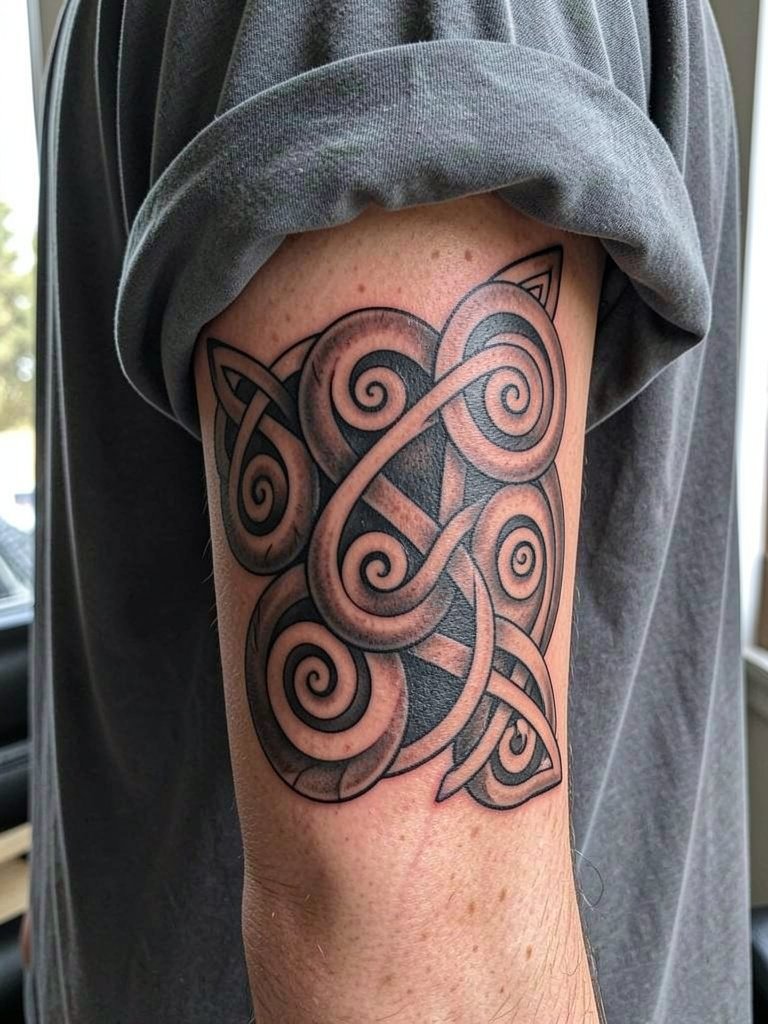
This is for collectors who plan to expand into a larger sleeve. The strategy is to place spiral nodes with consistent negative space between each so future fills sit naturally. Sessions are staged across multiple appointments, often two to five sessions depending on the expansion plan. A common error is starting with dense black that leaves no room for later additions. For showing off, this works with an oversized graphic tee with the sleeve cuff pushed up to reveal the outer arm nodes.
15. Small Spiral Mandala on the Calf
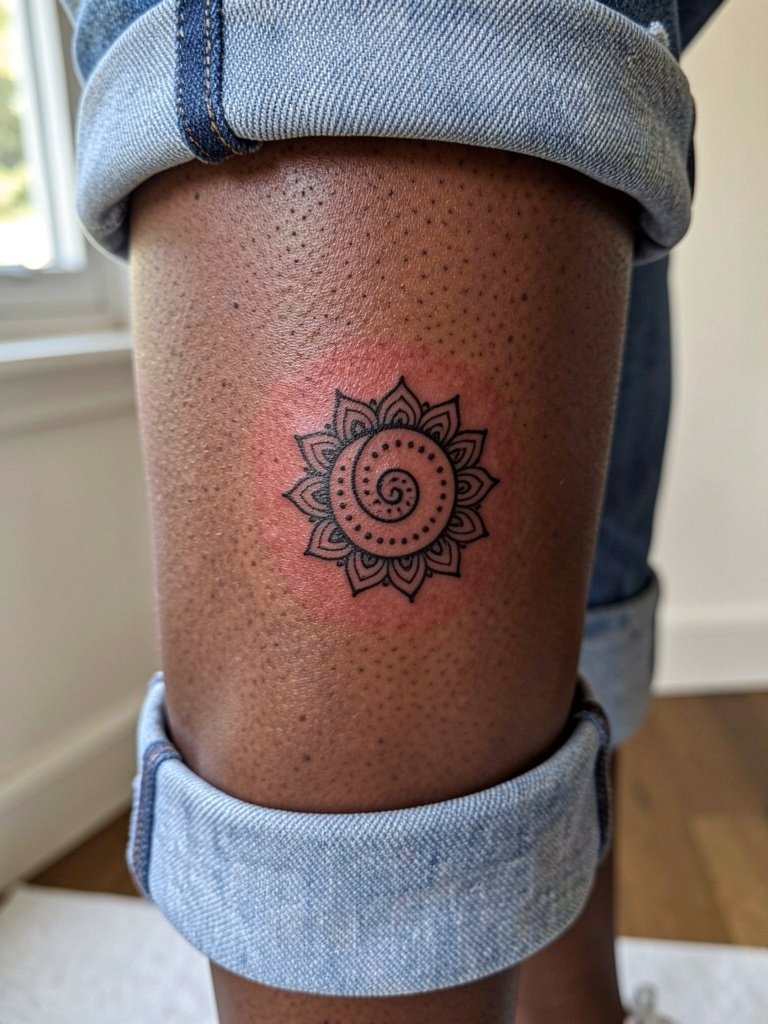
A mandala-like spiral reads nicely at calf scale because the flat area gives the geometry room. Dot work and stipple shading add texture without creating heavy mass. Typical session time is 45 to 90 minutes. A frequent mistake is cramming too many concentric rings into a piece under three inches. For the appointment wear shorts or jeans that roll easily so the artist can stencil and place the piece without fabric interference.
Frequently Asked Questions
Q: How do I pick between a fine-line spiral and a bolder blackwork spiral?
A: Think about how visible you want the piece to be after five years. Fine-line spirals look airy when new but can soften with skin texture and sun exposure. Bolder blackwork holds contrast longer and often needs fewer early touch-ups. If you are unsure, bring two scale options so the artist can show you how each reads at healed sizes.
Q: Where can I find portfolios and healed examples for Celtic spiral work without naming individual artists?
A: Search hashtags like #celtictattoo and #celticspiraltattoo on Instagram and TikTok and filter by location for nearby portfolios. Use booking platforms and directories with keyword searches for "blackwork," "knotwork," and "ornamental" to find artists who post healed photos. Reddit threads in r/tattoos and r/tattooadvice are useful for seeing real healed results and hearing appointment experiences.
Q: Will a tiny spiral on darker skin tones show up as well as on lighter skin tones?
A: Tiny spirals can be less legible on darker skin if the line is ultra-thin or the gray shading is too light. For medium to dark skin tones, request stronger contrast and avoid light gray fills on small motifs. Ask to see healed examples on similar skin tones so you can compare real results.
Q: What should I wear to my appointment for an inner forearm or shoulder blade piece?
A: For inner forearm wear a short sleeve or button-down you can roll cleanly. For shoulder blade wear an off-shoulder or wide-strapped top so the artist has direct access without fabric tugging. A practical option to bring is an extra loose top to change into after the stencil is set.
Q: How often do spiral tattoos need touch-ups?
A: Touch-up needs depend on placement and line weight. Small fine-line spirals often benefit from a touch-up around year two. Larger blackwork spirals might not need refreshes until year three or four, especially if you protect them from sun. Expect touch-ups sooner if the area sees heavy friction or frequent sun exposure.