
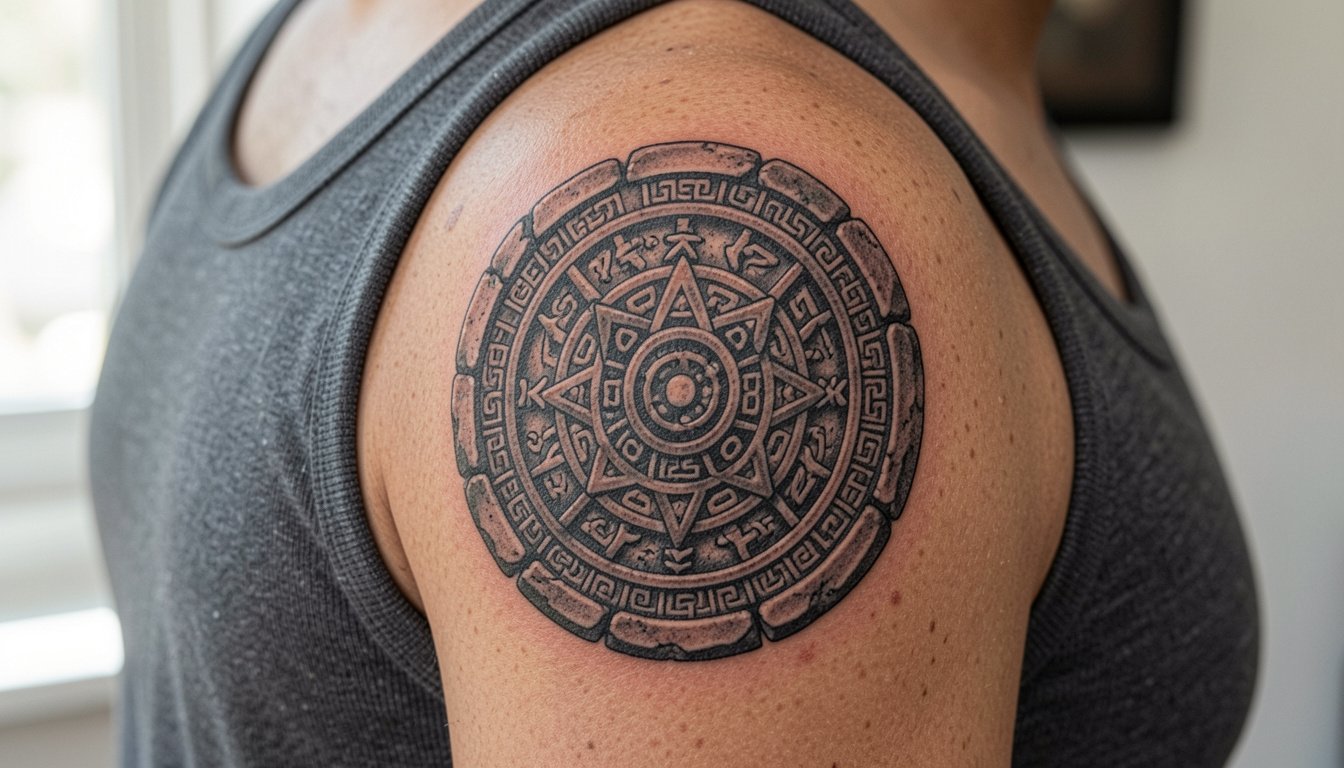
Black and gray Aztec sleeves often outlast the flashiest color attempts, and that lesson matters when you are planning a whole arm. Detail too fine, or contrast too weak, and the calendar glyphs and radial patterns blur within a few years. Finding an artist who posts healed sleeves, planning session breaks, and choosing which panels to build now versus later are the three decisions that actually change how a sleeve looks at year five. Start with anchor pieces that give flow and room for filler.
1. Aztec Calendar Centerpiece Panel
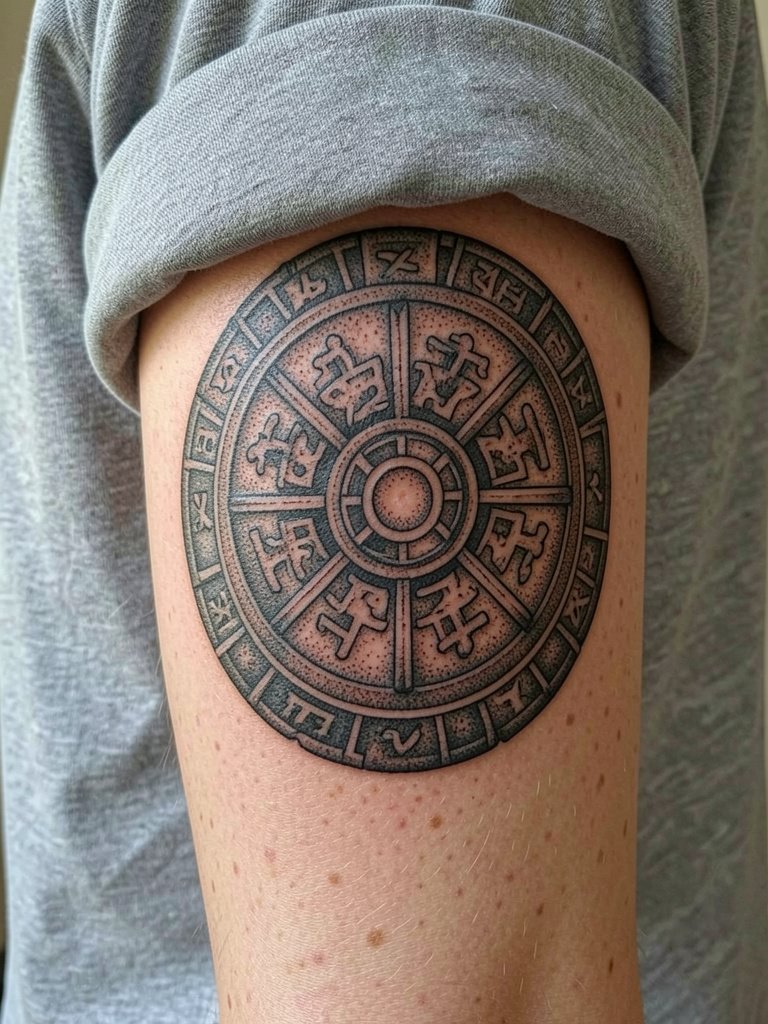
A calendar panel makes a sleeve read like a ringed centerpiece that the rest of the arm orbits around. I recommend sizing this piece so the glyphs keep space between one another, and tell the artist to show you the stencil at life size so you can judge negative space. One common mistake is shrinking the Sun Stone down to fit other elements, which causes the small details to merge after a couple of years. At six months the contrast will be high and crisp. At two years the thin inner glyphs begin to soften if linework was too faint. At five years the panel still reads when the artist uses bold linework and heavy black fields for separation. For session wear, bring a sleeveless tank so the shoulder and upper arm are fully accessible during long staging.
One camp favors strict black and gray because it ages like carved stone. The other camp argues for restrained color accents to highlight feathers or eyes and to prevent monotony.
2. Aztec Warrior Portrait with Headdress
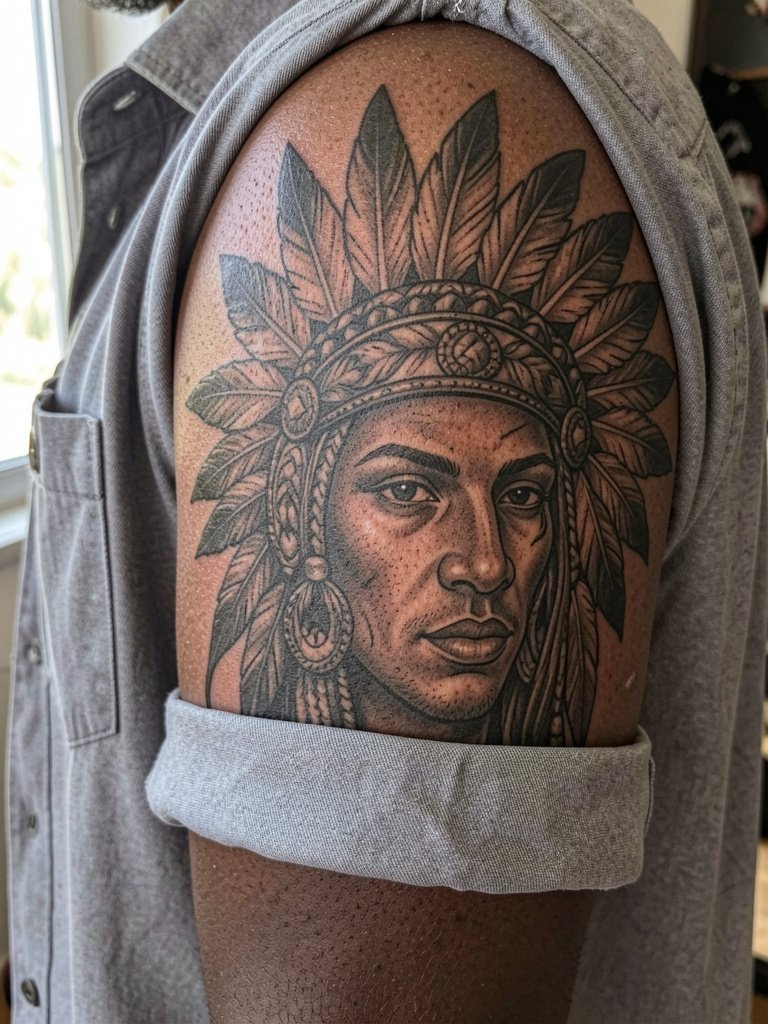
A warrior portrait is great when you want vertical flow down the bicep and strong facial focal points. Ask for reference photos that show healed portraits, and request the artist map how feathers will follow the shoulder curve so nothing appears chopped. Portraits that use too many micro details will melt into shadow on moving skin, which is why bolder planes and stipple shading work better long term. Expect the first session to be longer because of careful placement and contrast planning. The forearm view at six months should show clear facial planes. At five years, face definition will still read if saturation and lineweight were chosen to compensate for arm movement. For show-off outfits, this placement pairs well with a muscle tank that frames the shoulder and headdress cleanly.
3. Geometric Pattern Sleeve Filler Wrap
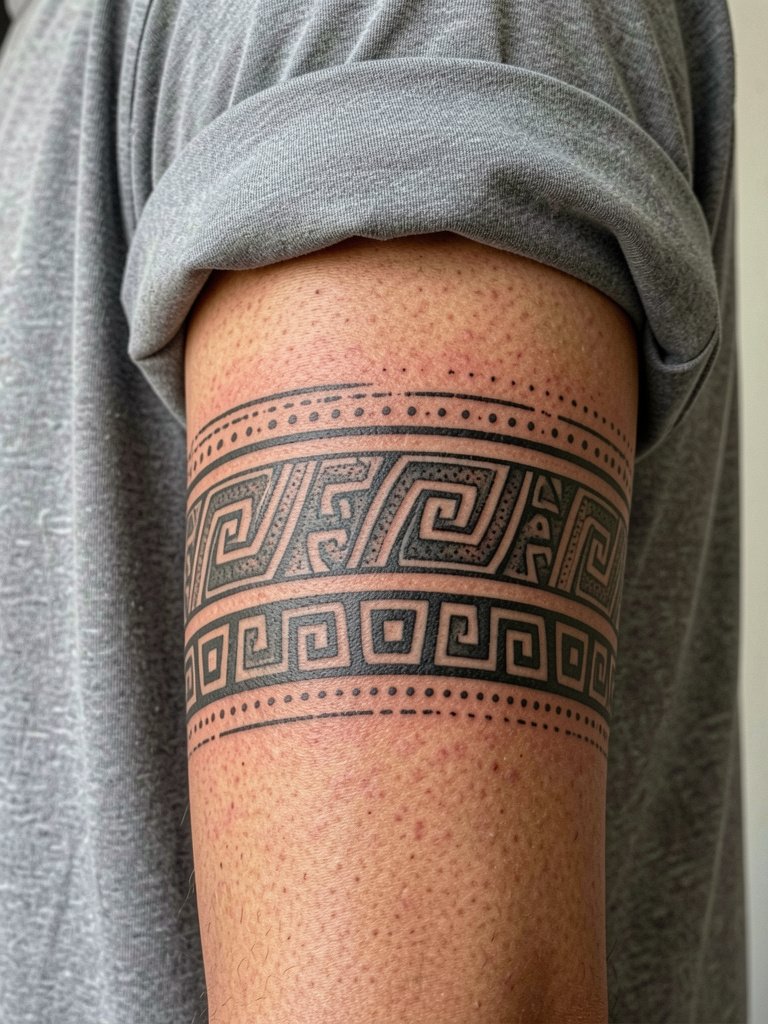
Geometric fillers are the practical answer to "how do I connect big Aztec pieces?" They can be designed as repeatable bands that avoid tiny repeat motifs, which means lower blowout risk. When you bring references, point to the exact line thickness you want and ask how that will translate at elbow transitions. A mistake is requesting extremely tight geometry in a high-motion area, which will blur faster. Six months in, the pattern should still look crisp if linework had slight breathing room. Two to five years later, the bands that used solid black anchors will remain distinct, while ultra-fine grids tend to gray out. For session comfort, wear a plain crew neck tee you can roll up without fabric rubbing the fresh ink.
4. Feathered Headdress Crown Over Shoulder
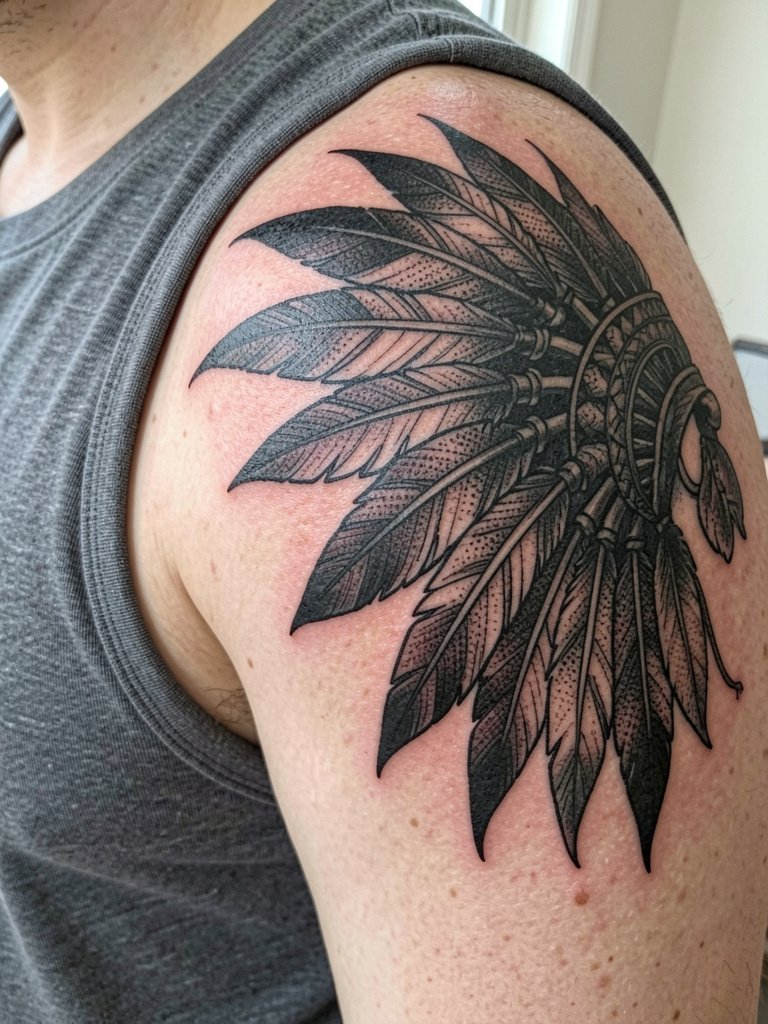
Feathers give a sleeve movement that helps the whole arm read from a distance. If you want the crown effect, plan the headdress so the longest feathers avoid the underarm crease and the artist spaces feather barbs so they do not blur into a single tone. A common aging error is over-detailing feather barbs too close to the shoulder joint. The session will include long shading passes across the deltoid, which feels like a steady vibration rather than sharp stabs. At two years, feather textures that were left slightly bolder will keep their separation. For showing off this placement, a solid tank top in neutral tones frames the shoulder without distraction.
5. Stone-Carved Temple and Ruin Motif
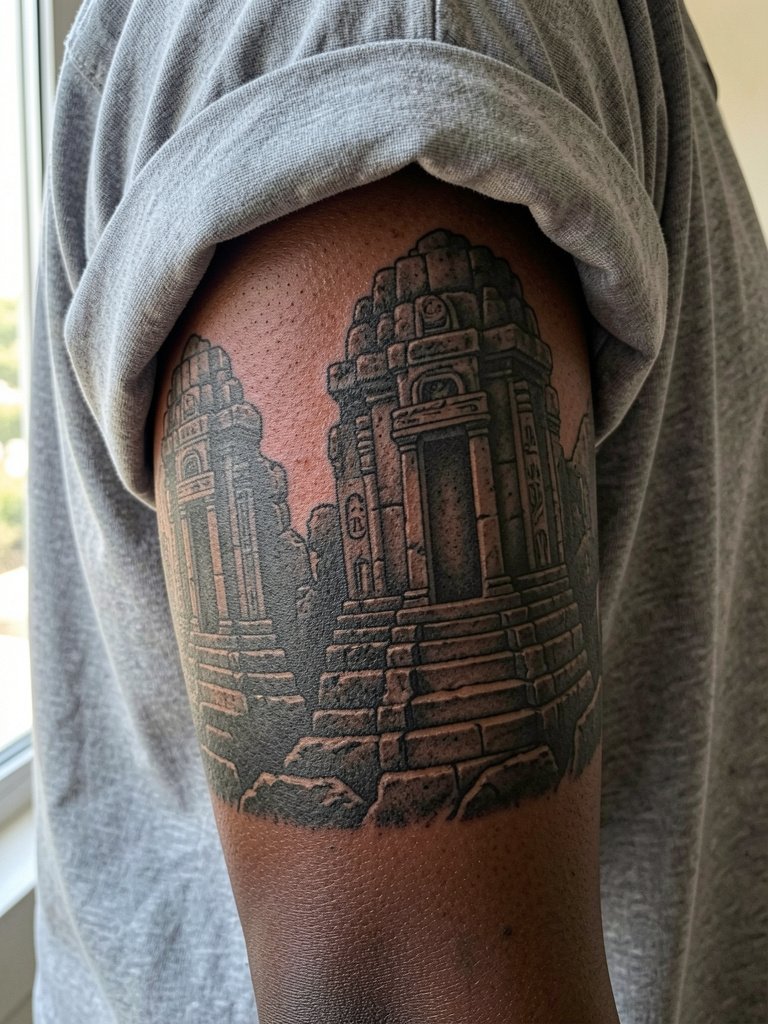
Stone textures add depth without relying on color, which is useful for a historical feel. Ask the artist to show how the texture reads at three inches and at six inches so you can see the distance effect. The most common mistake is packing too much micro-texture into a tiny panel, which flattens into gray. At six months the carved relief will still show crisp contrast if the artist used heavy blacks as anchors. At five years the panels that had decisive shadow fields will still look like relief. For appointment wear bring a loose short-sleeve button-up so the arm can be rolled and repositioned comfortably.
6. Radial Sun and Elbow Transition
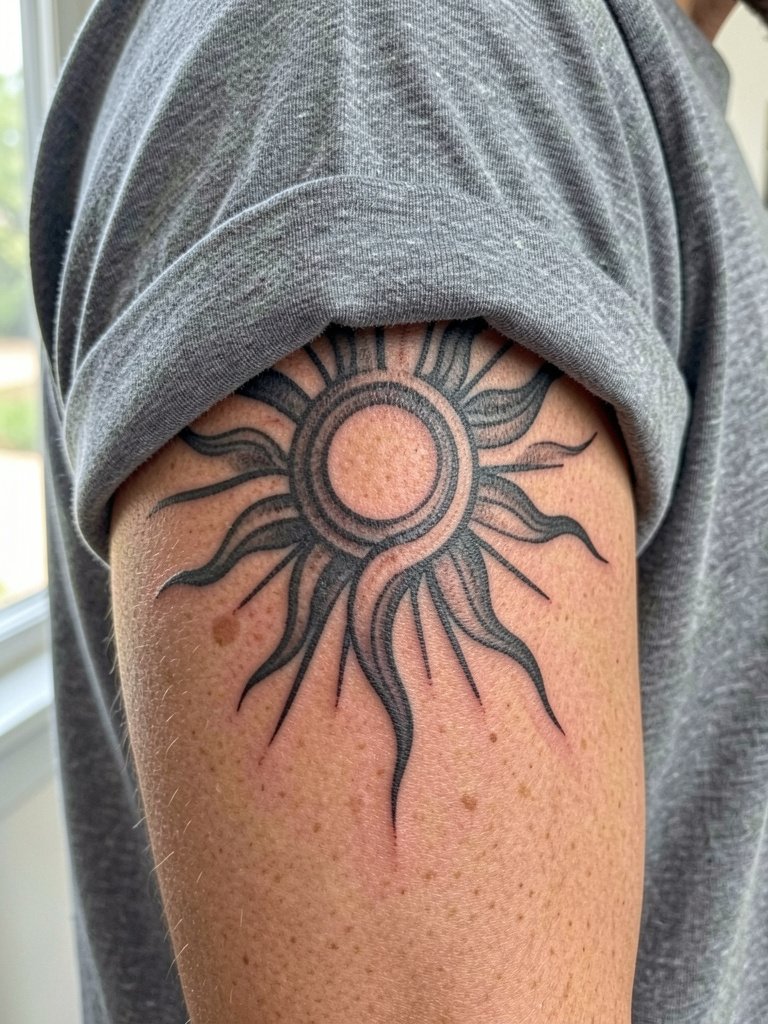
Using radial geometry for the elbow turns a problem into a feature by following the joint lines and avoiding tiny cross-hatching over the crease. Discuss with the artist how many concentric rings you want and whether to leave a solid black center for an anchor. A mistake is trying for dense micro-etching directly on the fold, which will break down quickly. Expect short, careful sessions when working the elbow because the skin moves and needs frequent brief pauses. At two years the radial lines that had adequate spacing will still read. For session comfort, choose a relaxed fit tee so the cuff does not rub while the elbow is bandaged.
Session Day Picks
These first six panels often require long sessions and elbow or shoulder planning, so a few items smooth the day and the first week.
-
Stencil transfer paper kit. Helpful for previewing the calendar and portrait placement on the arm before the needles start, which matters for wraparound pieces in ideas above.
-
Low-odor green soap substitute. A gentle cleanser that artists use during long sessions to keep the skin clean without stinging, useful on temple or portrait shading days.
-
Protective tattoo film roll. Keeps elbow and forearm panels clean during the first 24 to 72 hours of healing when friction can be an issue.
-
Disposable nitrile gloves pack. Artists and clients both benefit from fresh gloves for touch-ups and for comfort during longer contrast work.
-
Aquaphor healing ointment. A widely used option for the initial protective layer during the first few days of healing for bold blackwork.
7. Warrior Shield Motif with Patterned Border
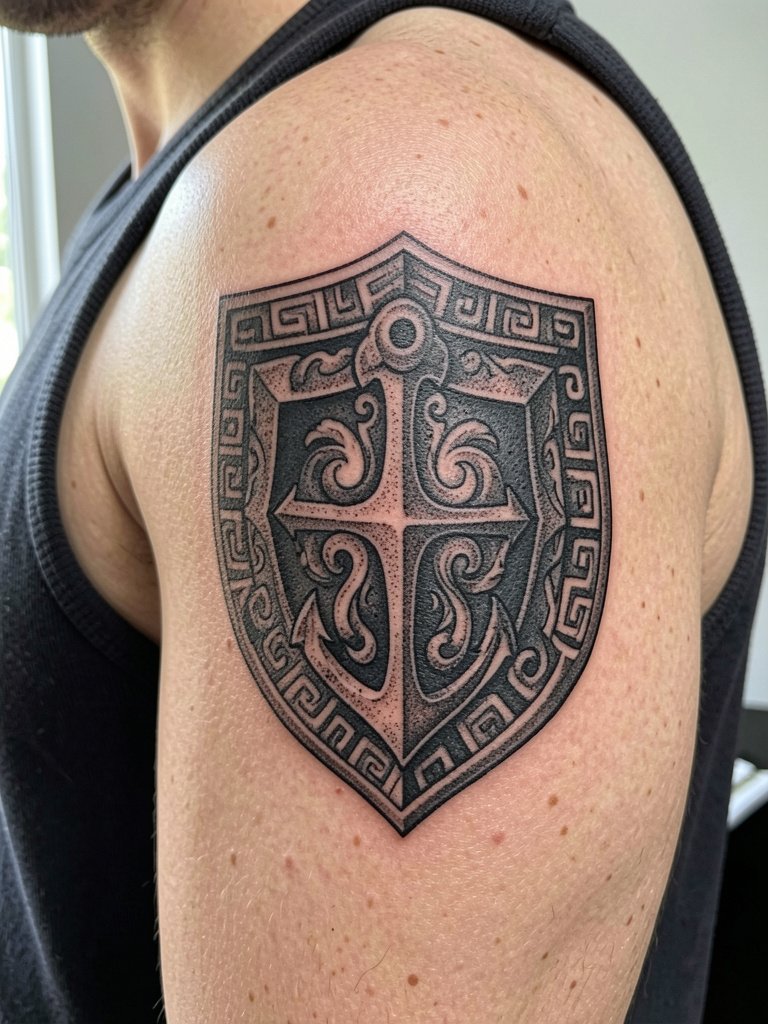
A shield gives the arm a solid center of mass that you can layer around later. Request mockups that show how future bands or filler will sit around the shield so the borders do not compete with additional symbols. People often make the shield too busy, which reduces its visual anchor when the arm is viewed from a distance. A heavy black border and open negative space inside the shield help it age well. During the session the bicep feels like medium pressure and long shading passes. For wearing this while showing it off, pair with a sleeveless tank so the clean line of the arm frames the shield.
8. Aztec Mask Portrait with Angular Shadow Work
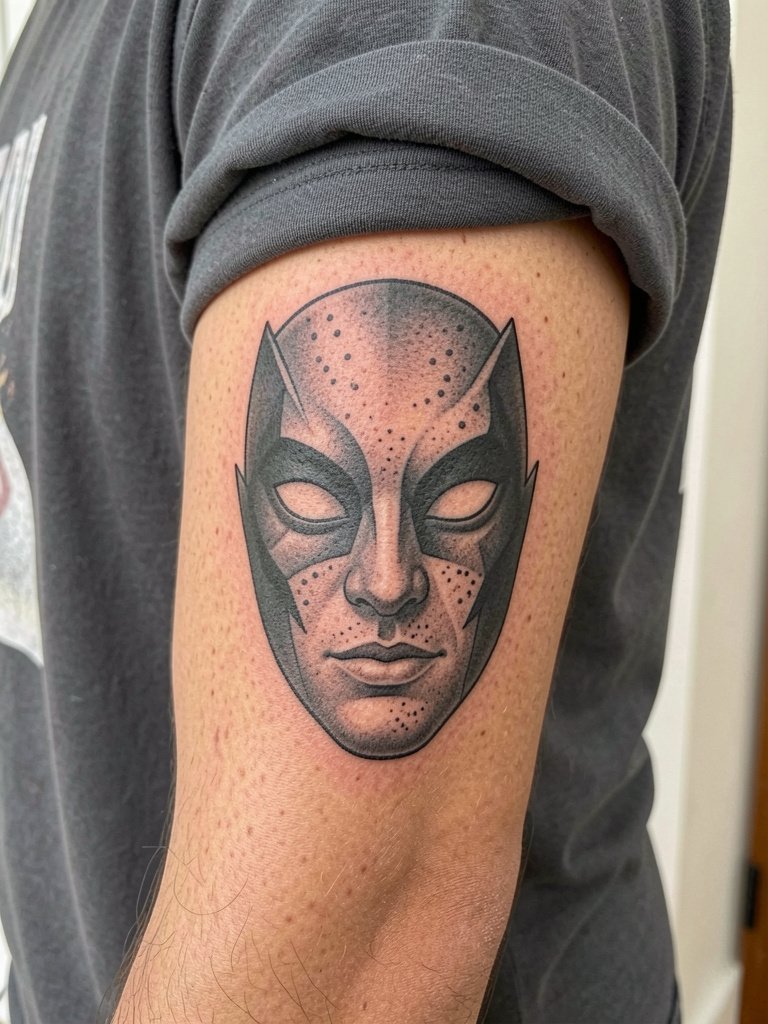
Masks read strongly in grayscale because the eye picks up the plane shifts and angular shadows. Ask the artist to plan where the deepest blacks will sit so you can see the mask's expression even at arm's distance. A common error is mirroring too much minute symmetry which looks mechanical once healed. The outer forearm will show crisp contour at six months if contrast was prioritized. Touch-ups for this kind of heavy shadow are usually a single session within 12 to 24 months. Session discomfort on the forearm is generally mild, but the inner forearm will be more sensitive. If you want to show this mask casually, roll a sleeve up or use a rolled-cuff Oxford shirt to keep focus on the panel.
9. Patchwork Aztec Sleeve with Buildable Symbols
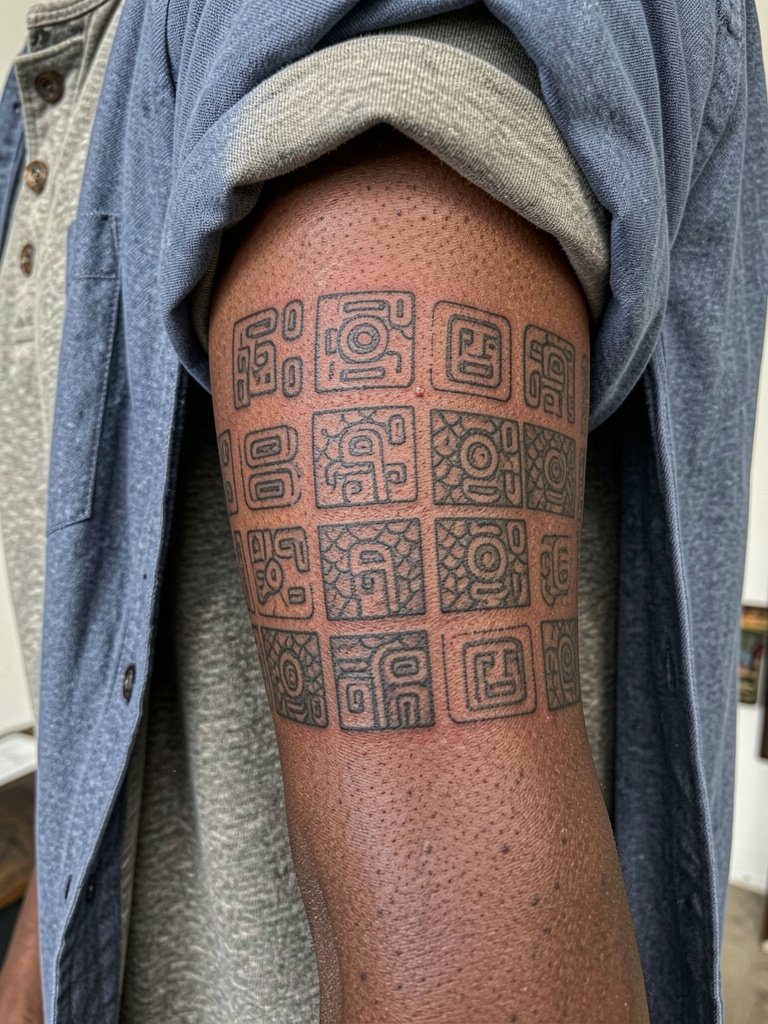
Patchwork lets you build a sleeve over years without committing to a single mural. If you take this route, pick at least two anchor shapes now so future additions can follow their line language. One mistake is adding random symbols without thinking about shared negative space, which makes the arm look busy and unplanned. The debate about single master plans versus patchwork is real. One camp says a master plan preserves flow and prevents awkward collisions of motifs. The other camp values the flexibility of patchwork, noting it reduces upfront cost and allows meaning to accrue over time. Both sides are valid so decide which trade-off matters more to you.
For session wear pick an overshirt or short-sleeve henley that lets panels peek through without forced exposure.
10. Aztec-Inspired Forearm Banding
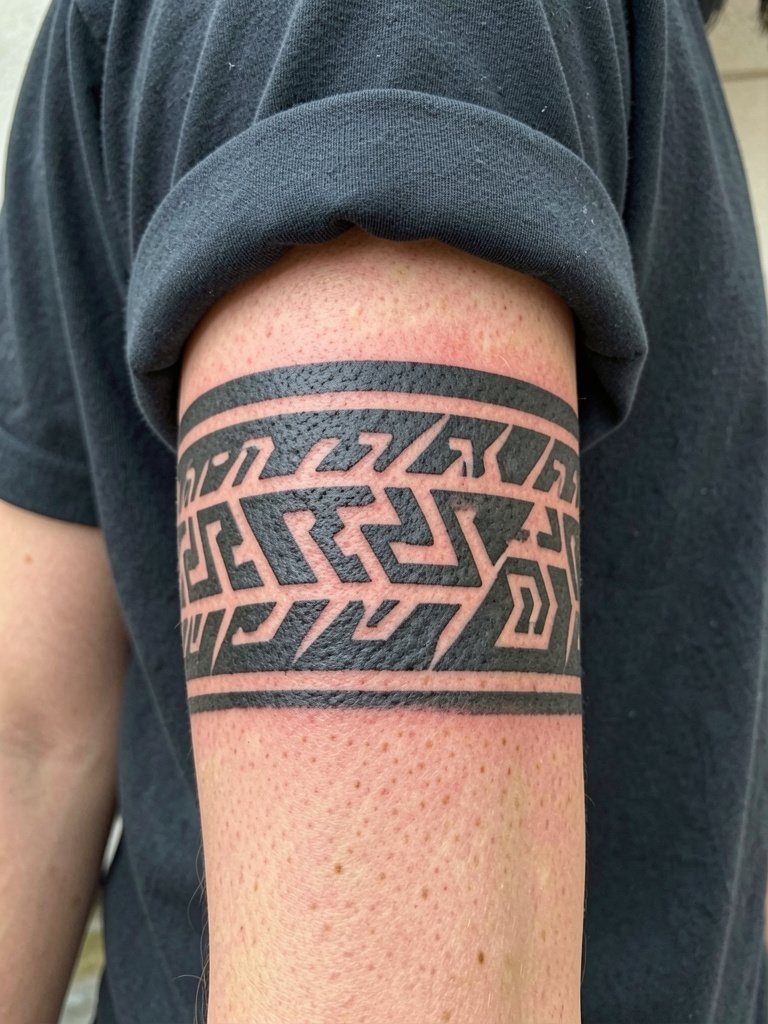
Banding is a smart way to make the forearm look fuller without filling every inch. Keep scale large enough so the pattern reads if you glance at the arm. Tiny repeats become muddied as the skin moves and the bands start to look like gray stripes. For durability, alternate patterned bands with solid black separators. The forearm heals quickly, so touch-up windows are usually within the first year if any gaps appear. For styling, rolling sleeves to show the banding works well with neutral tees and minimalist watches, so try a minimalist watch look if you like clean wrists.
11. Elbow-Centered Mandala Meets Aztec Geometry
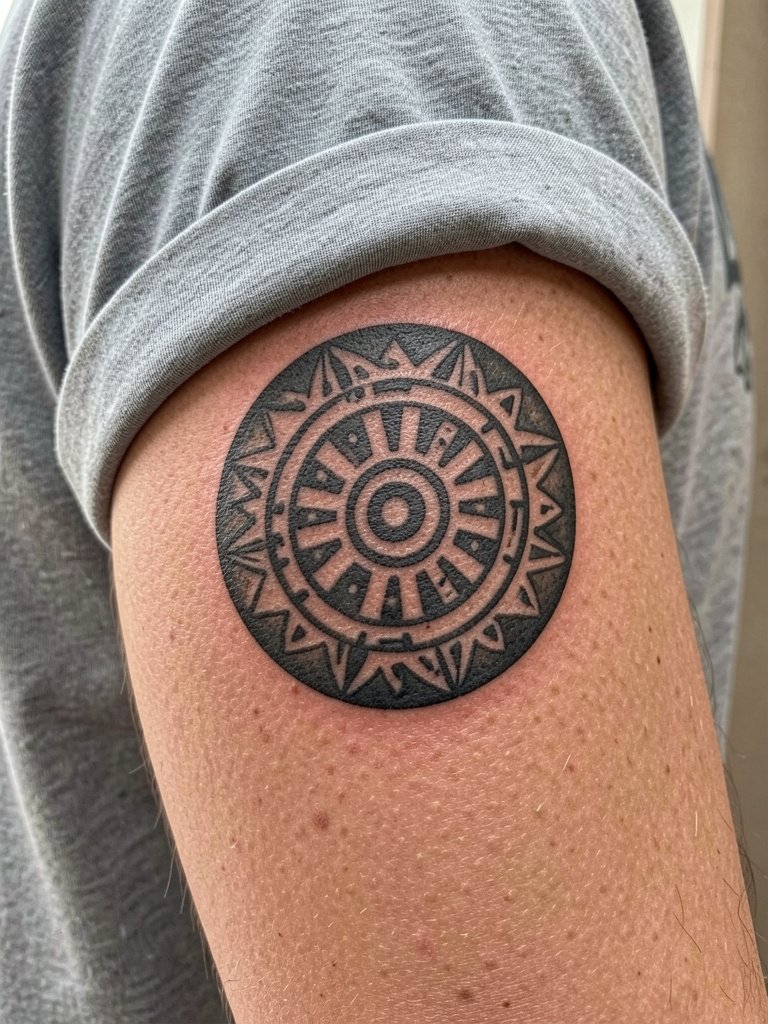
Treat the elbow as a design element rather than dead space by centering a mandala there. Ask for the plan to avoid tiny filigree over the joint. The biggest mistake is trying to force fine mandala lace directly on the crease, which fails quickly. Expect brief sessions across the elbow because the artist will often work in short bursts to check how the skin folds. At two years the rings that had deliberate spacing will still separate. This placement shows well with short sleeves that have a slightly wider cuff, so wear a wide cuff tee when you want it visible.
12. Aztec-Inspired Lion Hybrid Shoulder Panel
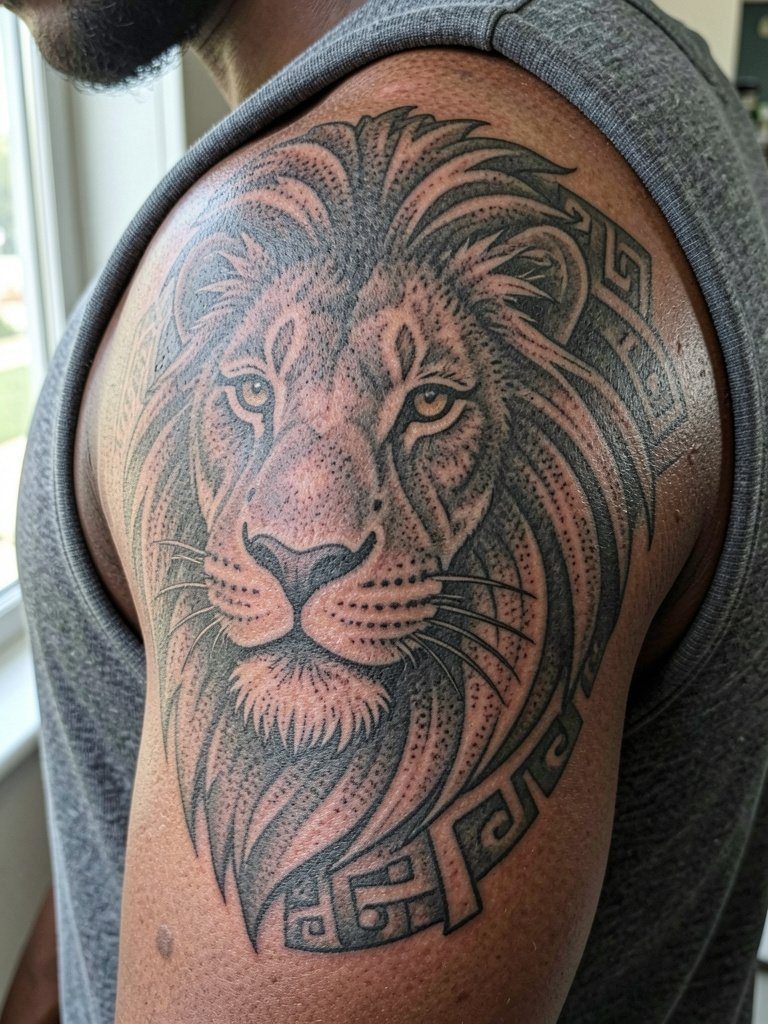
Mixing animal imagery with Aztec patterning gives you a recognizable focal figure without relying on literal calendar imagery. When you request this hybrid, ask which Aztec motifs will integrate into the mane so the artist can plan negative space. A common error is forcing small repeating symbols into the lion's face where they undermine facial clarity. The shoulder handles large scale well, so the piece will hold contrast longer than finer forearm details. For showing it off try a solid color muscle tank that leaves the shoulder silhouette clean.
13. Full Black and Gray Mythic Narrative Sleeve
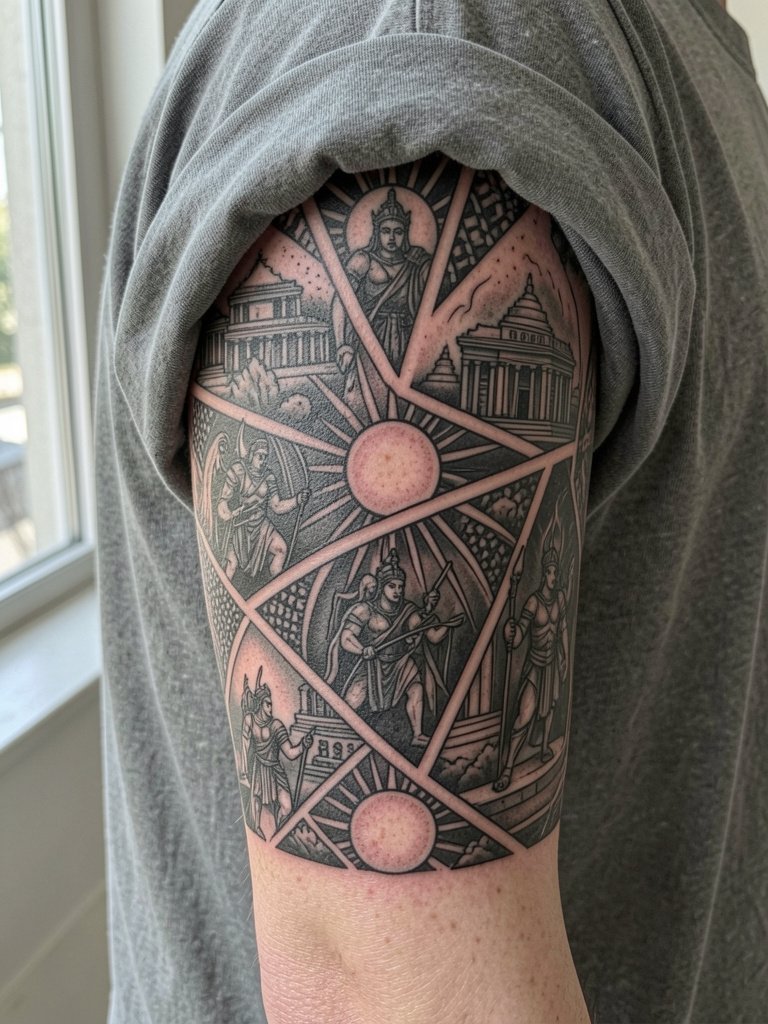
A full narrative sleeve is the obvious route when you want a cohesive story across the arm. If you choose this path, insist on a mapped master plan that shows how each scene connects around the elbow and shoulder. The controversy here is clear. One camp insists on a single master plan because Aztec motifs rely on consistent line language and flow. The other camp prefers a staged approach to allow new meaning and budget flexibility over time. Both positions are defensible but they lead to different scheduling and touch-up expectations. Expect four to eight sessions for a full illustration sleeve depending on realism and saturation.
14. Full Forearm Wrap with Solar Banding
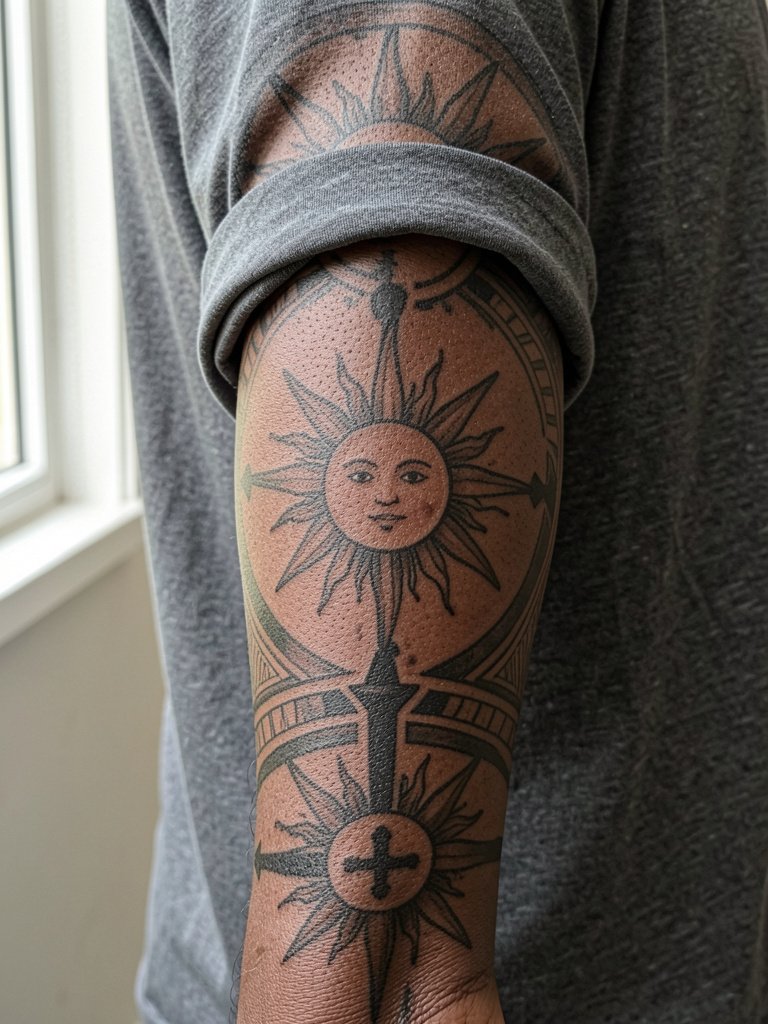
A forearm wrap reads well because the arm is a long, flat canvas that people see every day. Keep the sun and band patterns large enough to avoid graying as the skin ages. The typical mistake is compressing too many concentric lines into the wrist transition, which leads to early loss of definition. Healed results at six months will show whether the negative space strategy worked. For sessions on the forearm, a plain tee you can roll without pressure is best. If you want to highlight this wrap in daily wear, a rolled-cuff shirt keeps attention on the panels and a neutral watch avoids visual clutter.
15. Inner Upper Arm Panel for Hidden Detail
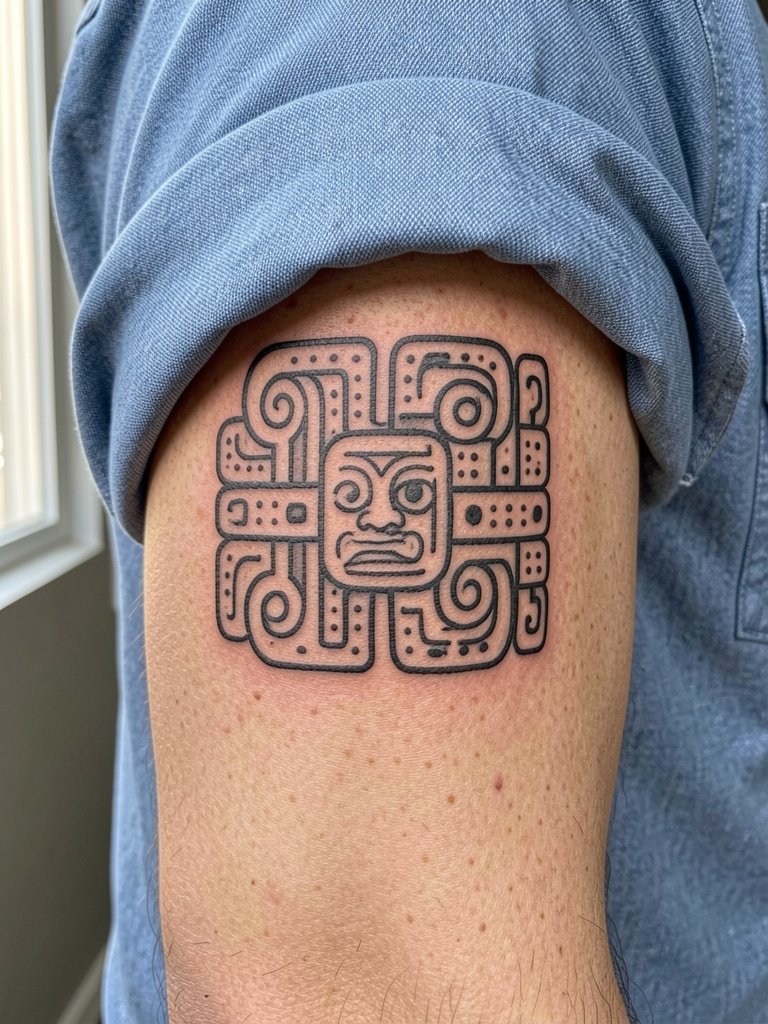
The inner upper arm is perfect for symbolic panels that you want mostly private. Because the skin there is softer, pick slightly bolder strokes than you might for an outer-arm detail. The most common error is trusting single-needle fine line that will not hold on that mid-arm surface. At six months the contrast should be even. At two to five years a slightly heavier lineweight will preserve the motifs better. For the appointment wear something easy to roll, like a loose button-up shirt so the artist can access the medial side of the bicep without fabric pressure.
Frequently Asked Questions
Q: How much should I budget for a half sleeve versus a full Aztec sleeve?
A: Expect a half sleeve or large panel project to fall in a lower-cost to mid-range bracket, noted as $ to $$. A full shoulder-to-wrist narrative sleeve usually sits in the mid-range to higher bracket, noted as $$. Session count, artist hourly rate, and level of realism drive where you land in those ranges.
Q: How do I find artists who actually show healed Aztec black and gray sleeves?
A: Search Instagram and TikTok with tags like #aztectattoo, #aztectattoos, #aztecsleeve, #blackandgreysleeve, and #geometrictattoo and filter by location. On TikTok look for "healed sleeve" and "day of tattoo" videos. Use Reddit threads to ask for healed examples in your city. Focus on portfolios that include healed photos, not only fresh reels.
Q: Will an Aztec sleeve work on darker skin tones and how should I adapt the design?
A: Yes, it can work well when designers use bold anchors and high contrast rather than lots of micro detail. On darker skin prioritize solid blacks, broader linework, and negative space to keep glyphs readable. Healed examples on a range of skin tones make a big difference when you are choosing a style.
Q: Should I build my sleeve piece by piece or plan it all at once?
A: Both approaches have merits. Planning everything at once helps ensure flow and consistent line language. Building patchwork lets you spread cost and add personal meaning over time. If you start patchwork, pick one or two anchor panels first so future work integrates smoothly.
Q: How long before I need a touch-up on bold blackwork Aztec elements?
A: Most bold blackwork keeps its core shape for several years. A common touch-up window is 12 to 36 months for areas that see friction or thin initial saturation. Elbow, wrist, and inner arm panels sometimes need earlier touch-ups because of movement and abrasion.
Q: Where should I look for reference images and community feedback without naming artists?
A: Use the hashtags above to build a reference board on Pinterest and archive healed shots you trust. Ask in Reddit communities like r/tattoos for feedback on composition and costs. Search "your city + black and gray tattoo studio" to find local portfolios that include healed sleeves.