
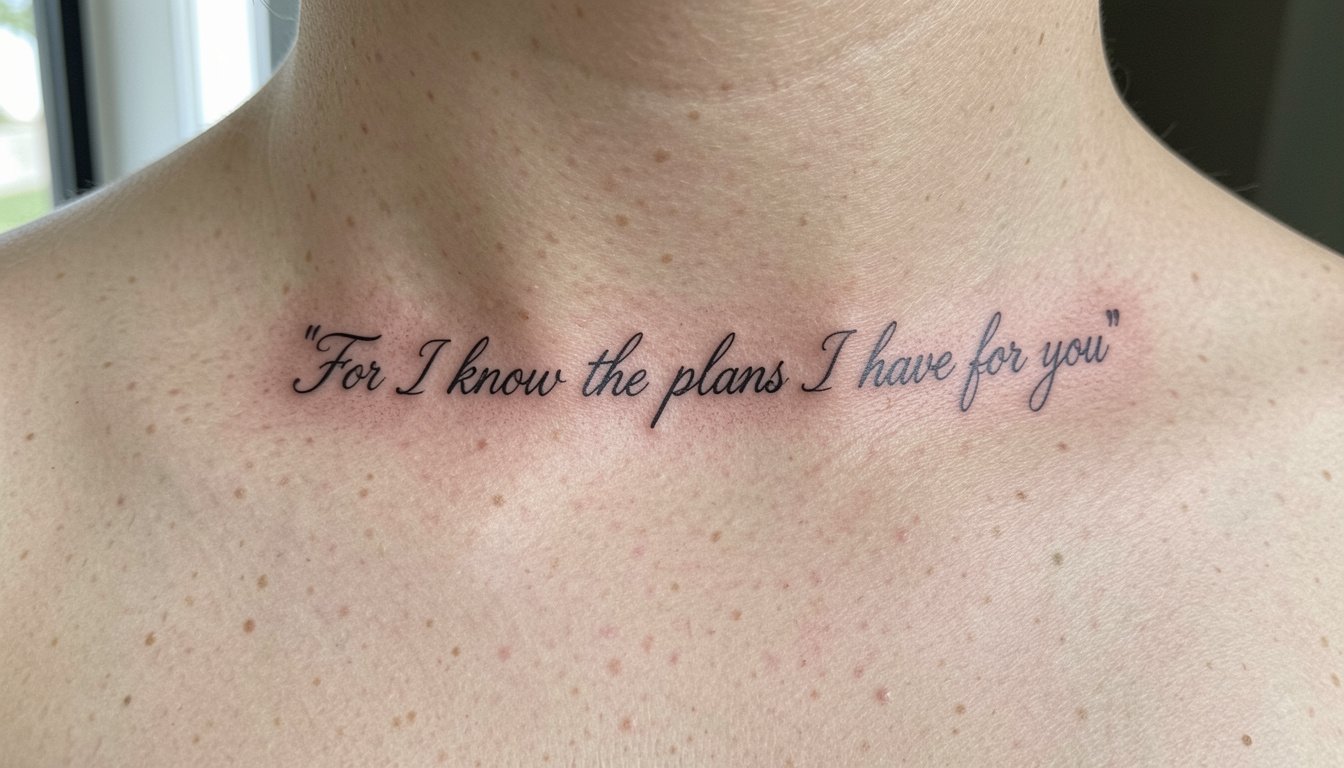
The way a scripture tattoo settles matters more than the snap of a saved image. Jeremiah 29:11 designs often start as a comforting line on a mood board, then become a tiny, tight script that blurs with time. Choose spacing, font weight, and placement with aging in mind, and pick a layout that still reads at year three. Below are 15 variations that keep the verse legible, wearable, and personal.
1. Inner Forearm Fine-Line Script, Stacked Line Breaks
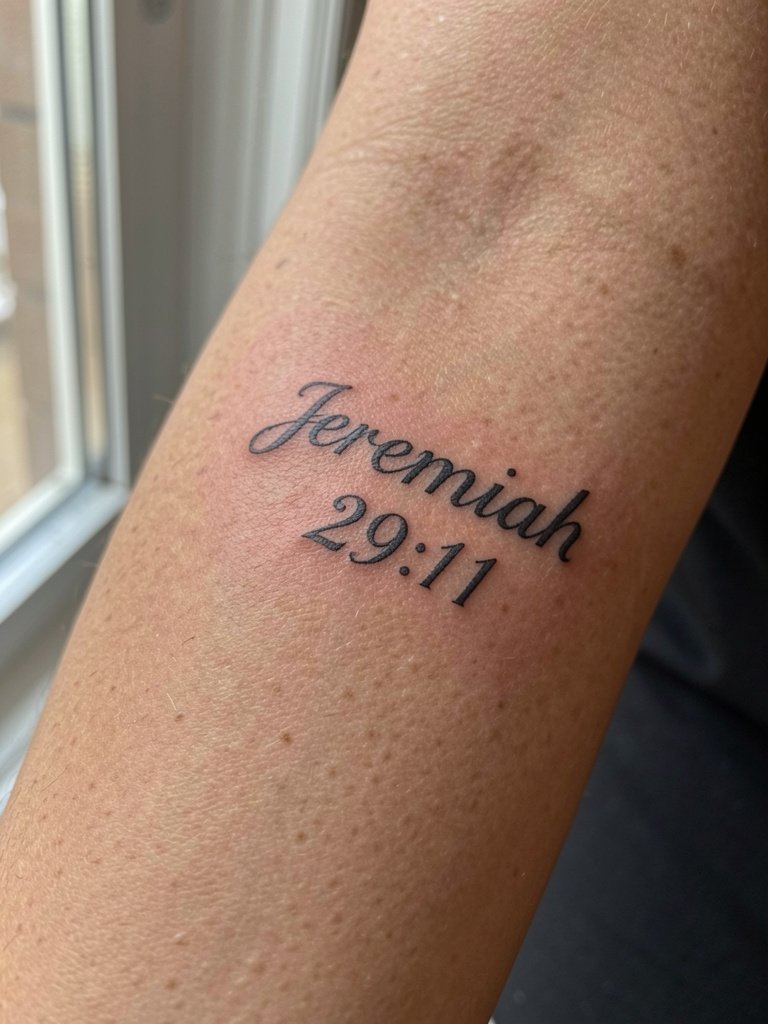
This is the most classic readable option for people who want daily visibility. Use slightly wider kerning than you think you need so the letters do not close up as the ink settles. For linework, request a single-needle script but ask for slightly heavier stroke weight than ultra-micros. Plan on a single session for a short stacked layout. Common mistake: cramming the entire verse into one tiny horizontal line, which often loses counterform and starts to blur. What to wear to show it off? Roll the sleeves of a linen button-down and pair with a thin gold bracelet on the opposite wrist so the forearm reads cleanly in photos.
2. Wrist Micro-Reference with Minimal Ornament
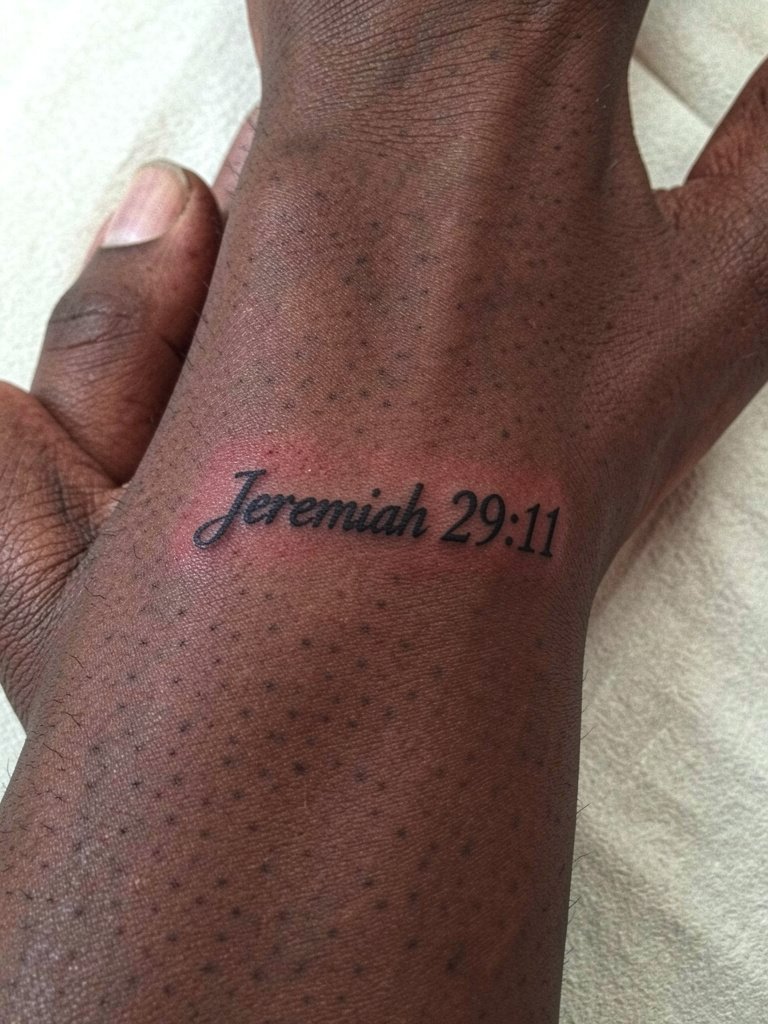
When space is tight on the wrist, use the reference only instead of the full verse. Numerals and a short label age better at that scale. Expect a faster session with less discomfort than ribs. The wrist sees lots of friction and washing, so prefer black ink and bold numerals rather than hairline cursive. For session wear pick sleeveless or short sleeves, and for display match the tattoo to a simple stacking ring on the other hand using simple stacking rings so the wrist still reads as intentional and not cluttered.
3. Forearm with Olive Branch Frame, Black and Gray
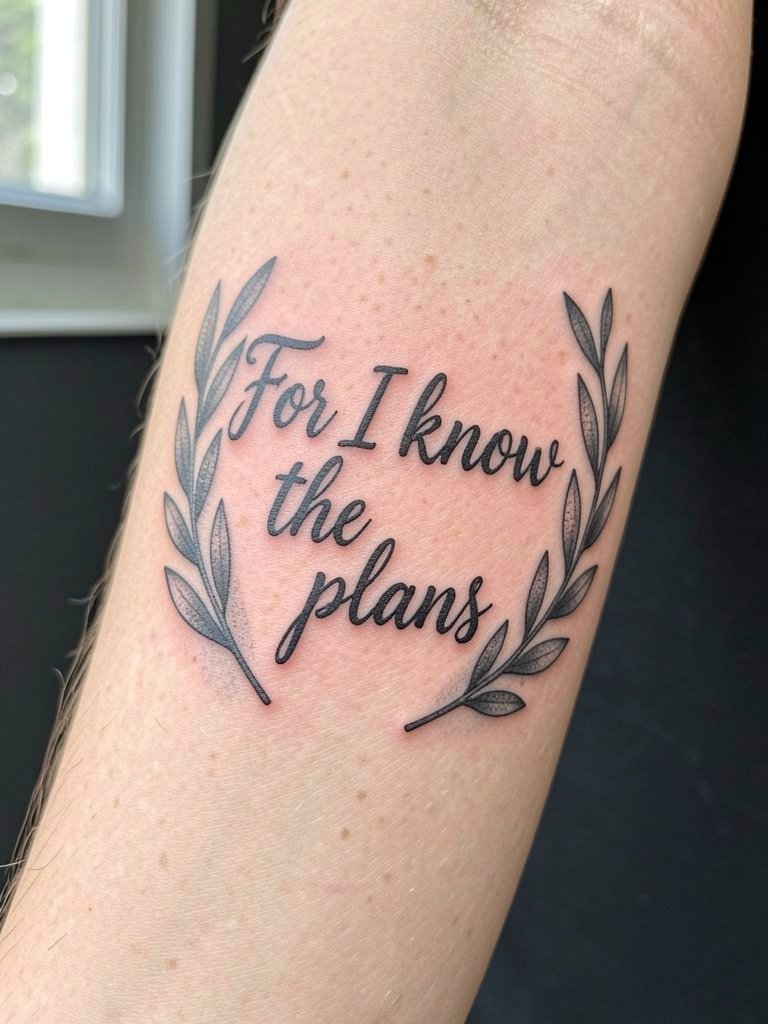
Pairing the verse with botanical markers keeps the layout grounded and symbolic without dominating the text. Designers often use thin olive branches to reinforce "hope" visually while leaving the lettering as the main focal point. The risk here is over-detailing the foliage at a small scale. Ask for light stipple shading and avoid heavy saturation so the verse remains crisp. Styling tip: cropped denim jackets expose forearm work nicely, so consider a cropped denim jacket for show-off looks.
4. Collarbone Script with Subtle Rays
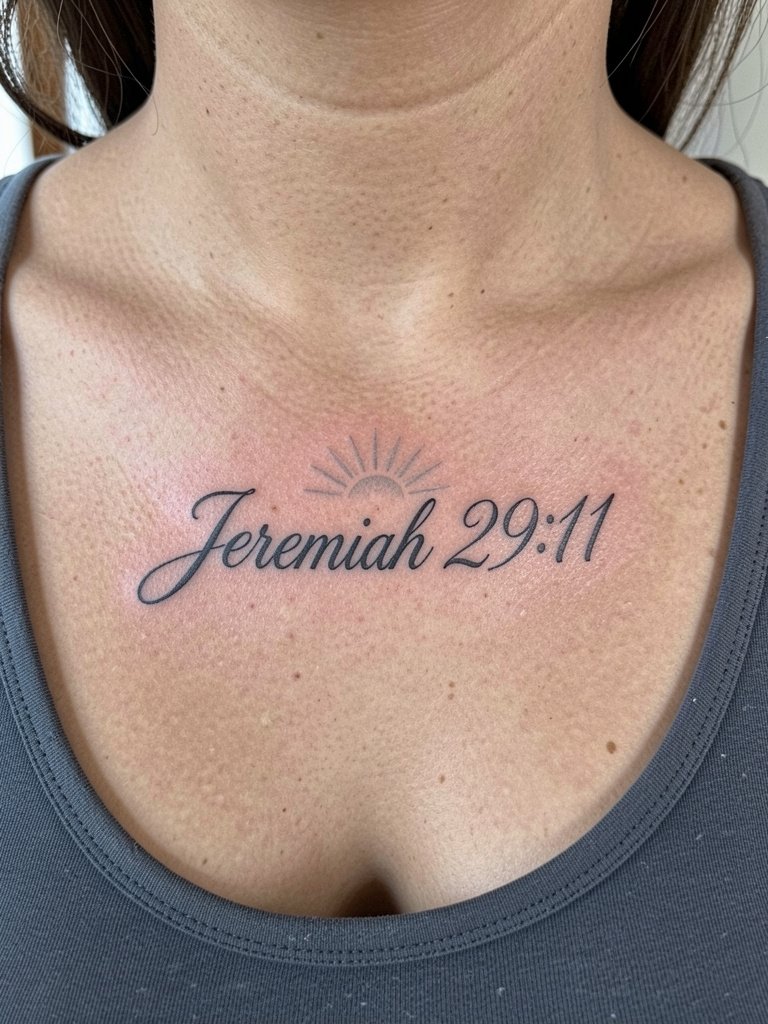
Collarbone text follows the body's natural sweep and reads softly. If you want a spiritual accent, tiny rays above the lettering add subtle emphasis without crowding the type. Make sure the script has breathing room from the clavicle notch so the lines do not compress with movement. Session wear: a button-up or a tank top with easy chest access keeps the artist agile. For evening looks, delicate layered necklaces pair well, try a layered necklace set that sits above the line of the tattoo.
5. Ribcage Vertical Script, Private Placement
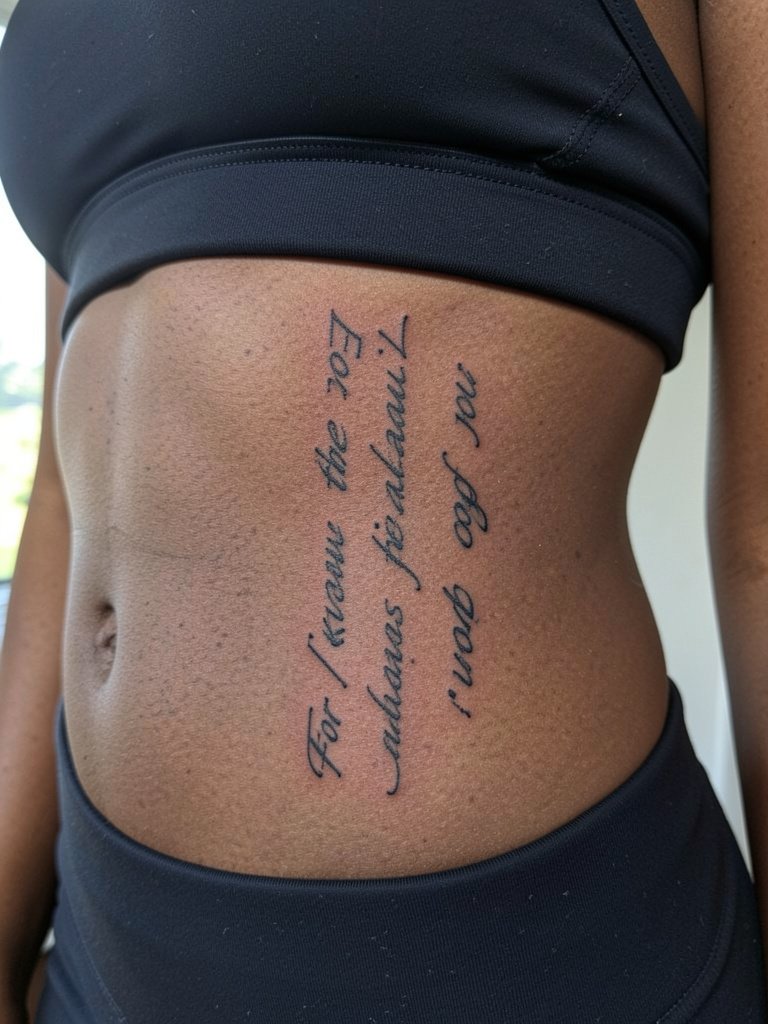
The ribcage lets you keep the full phrase at readable scale if you run it vertically. Expect higher pain and a longer session time than forearm work. Two camps form around ribs and fine line. One camp argues that ribs stretch and ultra-fine script blurs within two years. The other camp says that with slightly wider spacing and controlled needle depth, the lines settle cleanly and they will point to healed portfolios. If privacy is the goal, this placement wins. Wear a front-closing bra or loose button-down for the session.
6. Minimal Cross Undertext, Compact Sternum Pairing
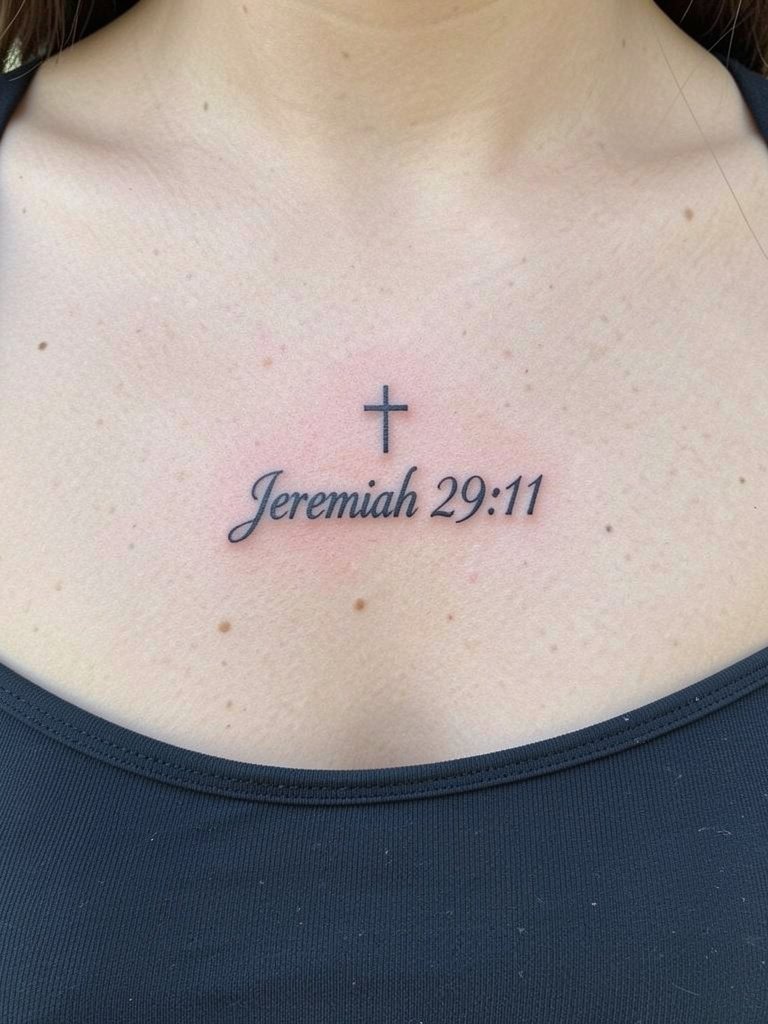
This is a compact faith-forward option that reads clean on the sternum without heavy ornament. Sternum skin moves with breathing, so use slightly bolder linework for the tiny cross and keep the script compact. Many request full verse here and regret tight spacing. If you want the full sentence, consider a rib or back piece instead. For the session, a front-opening bra or loose top gives the artist access while keeping modesty. Note about aftercare products: aftercare recommendations appear only in the product block below.
Heal Smart
The chest, wrist, and rib ideas above heal differently in the first week, so a few targeted products help the process.
-
Transparent second-skin dressing roll. Useful for sealing small forearm and sternum work when your artist recommends a protective film over the fresh lines.
-
Fragrance-free healing lotion. A light lotion keeps fine-line work from drying into crusts that can pull at hairline strokes.
-
Thin protective adhesive film strips. Handy for wrist and finger tattoos where constant washing wears at the scab stage.
-
Mineral-based tattoo sunscreen stick. After healing, sun protection stops premature fading for exposed forearm and collarbone pieces.
-
Aquaphor Healing Ointment. A mainstream, lightly occlusive option some artists use in the first 48 hours when they favor a thin barrier for delicate linework.
7. Back Piece Header with Framed Verse and Negative Space
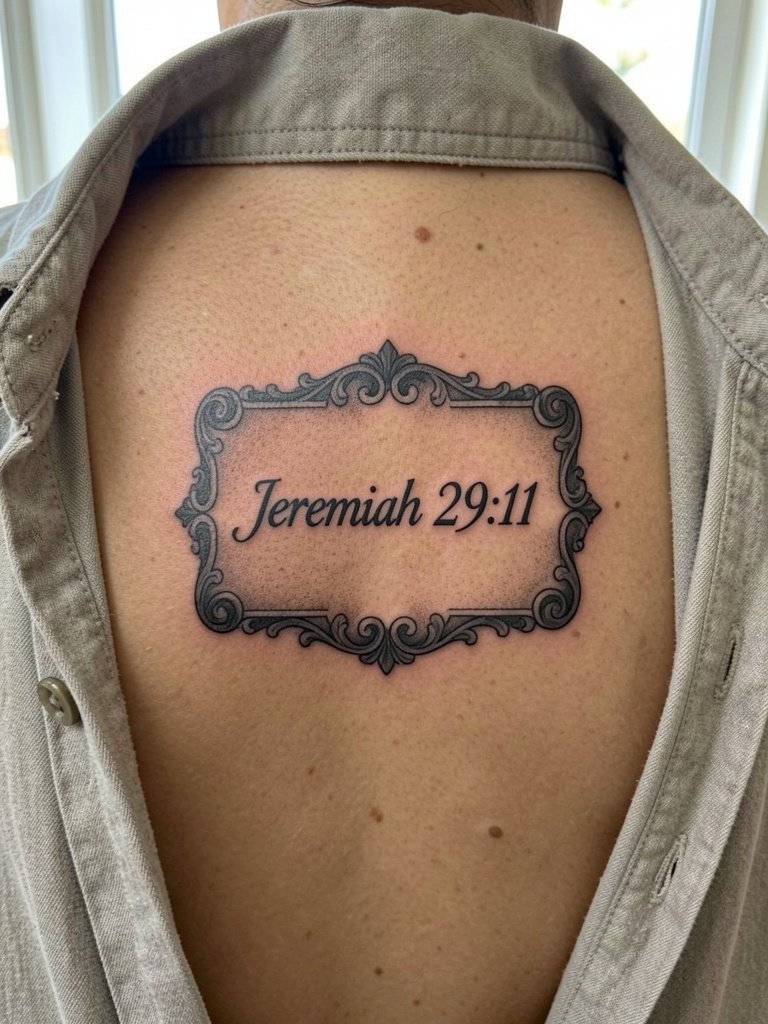
A larger back canvas lets you include the full verse with decorative framing and plenty of negative space. This ages well because spacing avoids congestion. Expect multiple sessions for saturation and shading. Real mistake: squeezing ornamental filigree too close to the letters. Instead, insist on a mockup scaled to the width of your back so the negative space protects the letterforms. For gallery-ready outfits after healing, open-back tops complement framed back pieces.
8. Compass Motif with Short Quote on Outer Forearm
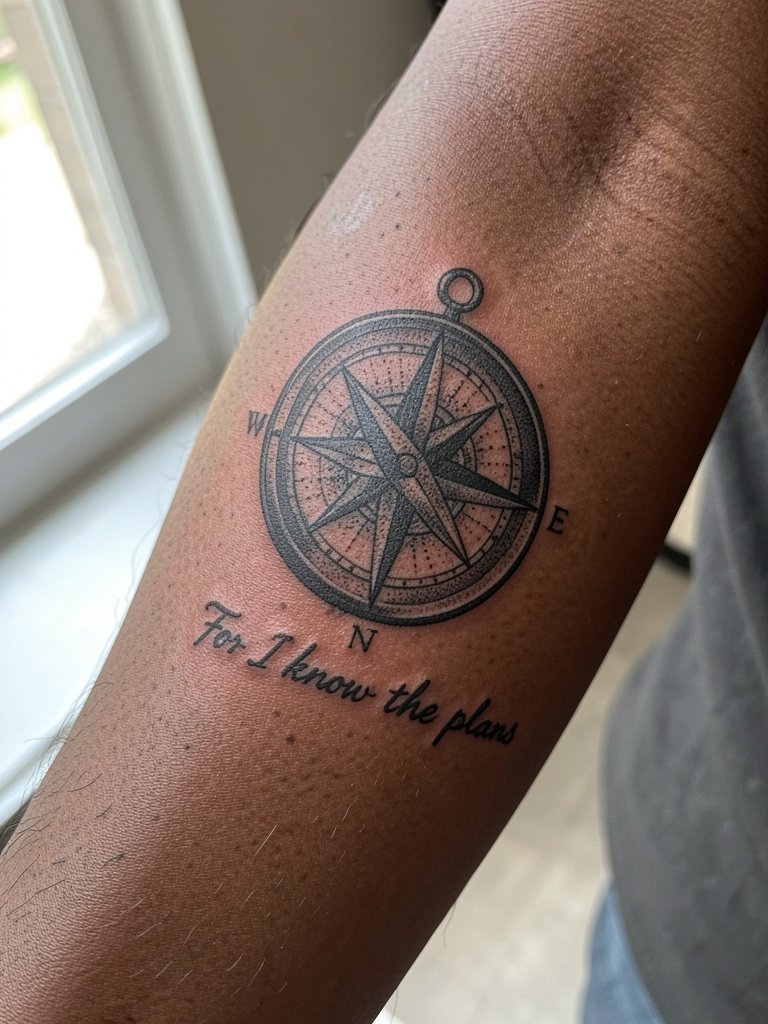
Symbol-plus-script helps translate the verse into direction and purpose. One camp favors script-only layouts for clarity. The other camp favors symbol pairings because a small illustration communicates the verse quickly to viewers. Both approaches are valid. If you pick a compass, use bolder linework in the compass and keep the text short to avoid crowding. Style pairing: cropped tees and a slim watch on the opposite wrist let the forearm design hold visual balance. Consider a minimal watch as an accessory.
9. Micro Realism Dove Above Small Script on Upper Arm
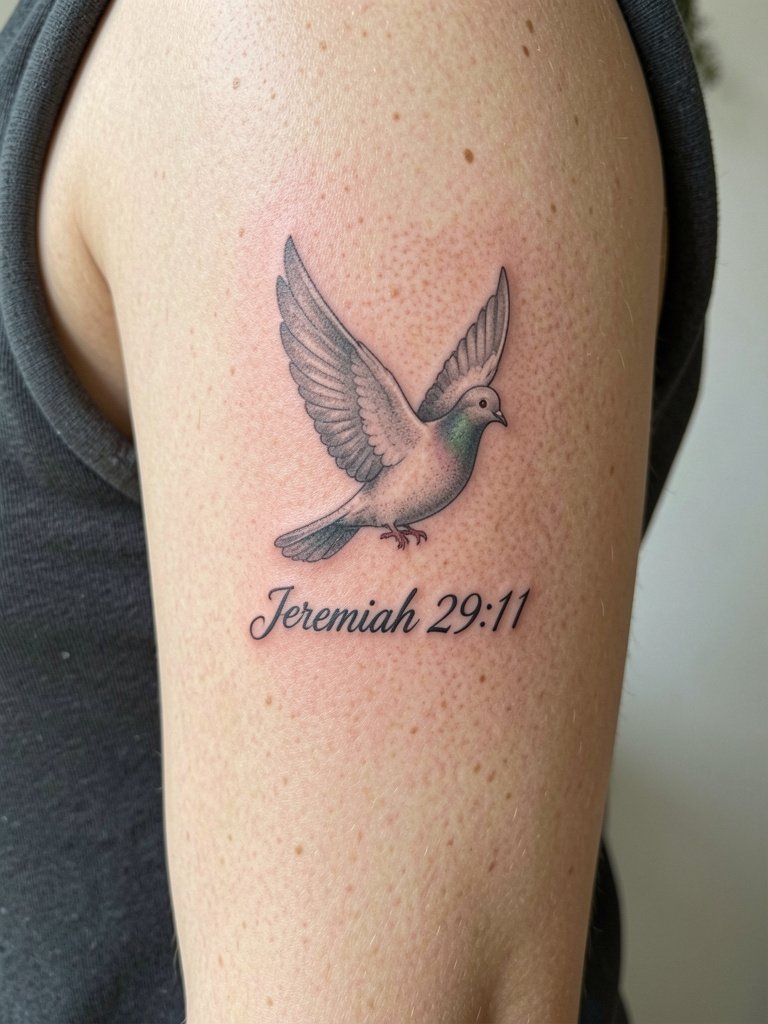
A tiny dove gives the verse a peaceful accent without turning the design into a full illustration. Inner upper arm shields the piece from daily abrasion and keeps it relatively private. Be realistic about touch-ups. Small gray wash elements may need a light touch-up at year two depending on your skin's saturation. Session feel: medium pain level and a steady two-hour window for micro realism. For showing the piece later, sleeveless tees or muscle tanks are ideal, and a muscle tank top works well.
10. Small Script Below a Minimal Cross on the Ankle
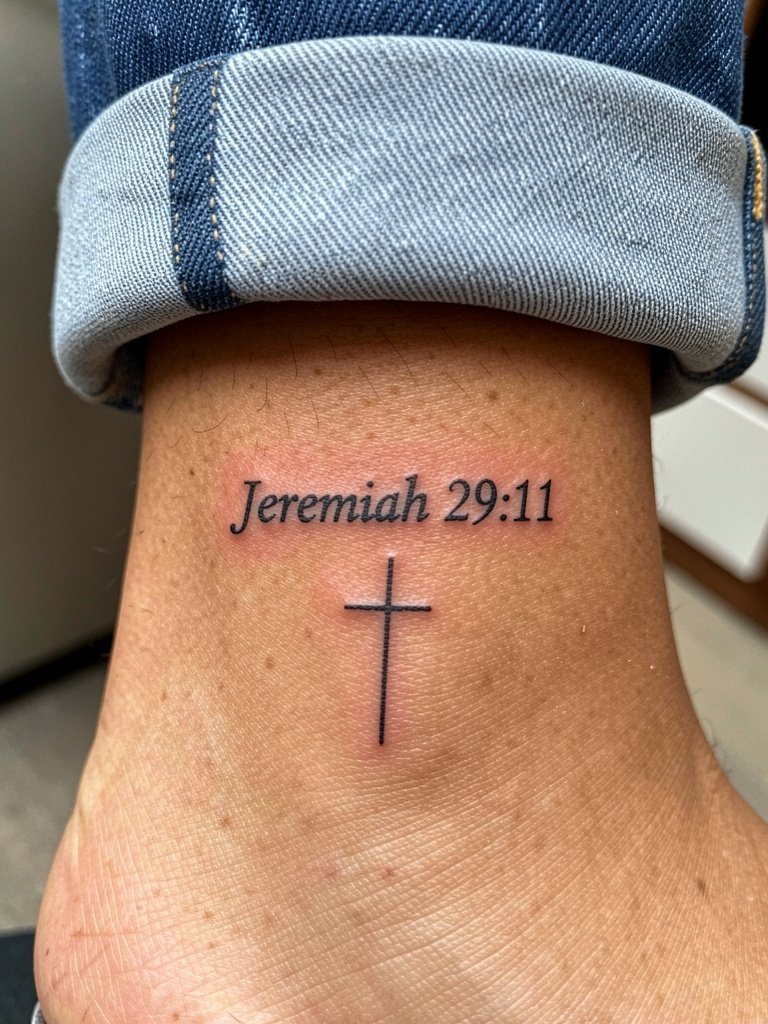
Ankle placements see a lot of friction from shoes and socks. Keep the script short and bold enough so washing and movement do not erase the counters. Common error: ultra-fine cursive here shrinks into an illegible smudge after a year. For sessions, roll jeans or wear shorts to give the artist clear access, and for display swap into sandals that frame the ankle line. Try a neutral pair of open sandals for healed reveals.
11. Vertical Chest Block Across Sternum for Statement Placement
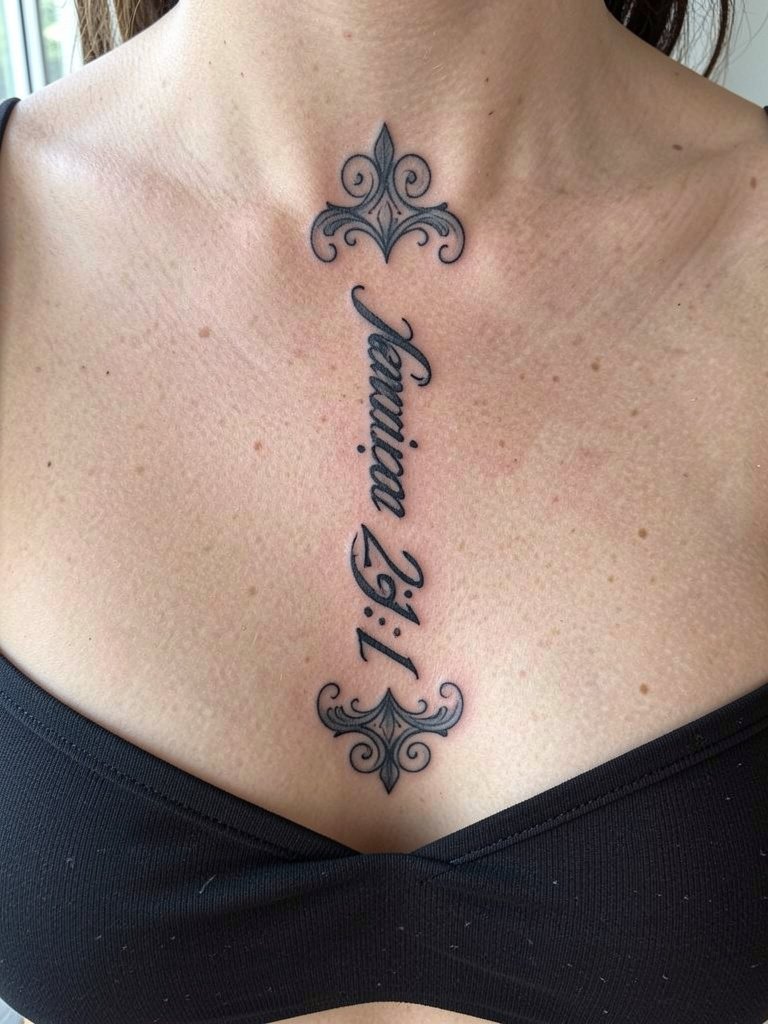
A sternum-centered block makes the verse a visual anchor. It is a bolder option than the minimal cross pairing and demands clear spacing. Pain is higher and session time can be longer. If you want a dramatic reveal in wardrobe, plan layered necklaces after healing. During the consult provide reference photos at the exact scale you want so the artist can mock up spacing and flourish weight.
12. Micro Script on the Side of the Hand, Subtle Reference
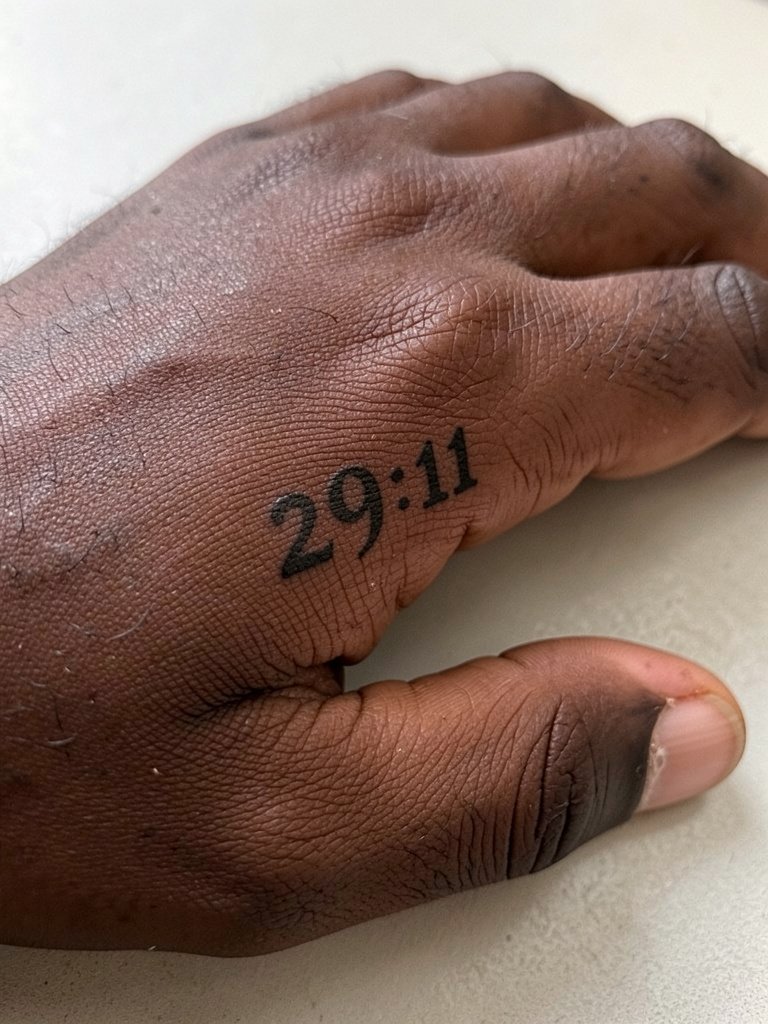
Hand placements age fast because of constant washing and sun exposure. For tiny references, numerals are better than full script and they carry the meaning for the wearer while staying subtle to others. Expect more frequent touch-ups on hands than forearms. When getting this, ask for compact bold numerals that read from arm scales of one to two inches so linework remains robust. Session wear should avoid rings on the tattooed hand.
13. Mixed-Media Collage on the Back Shoulder Blade
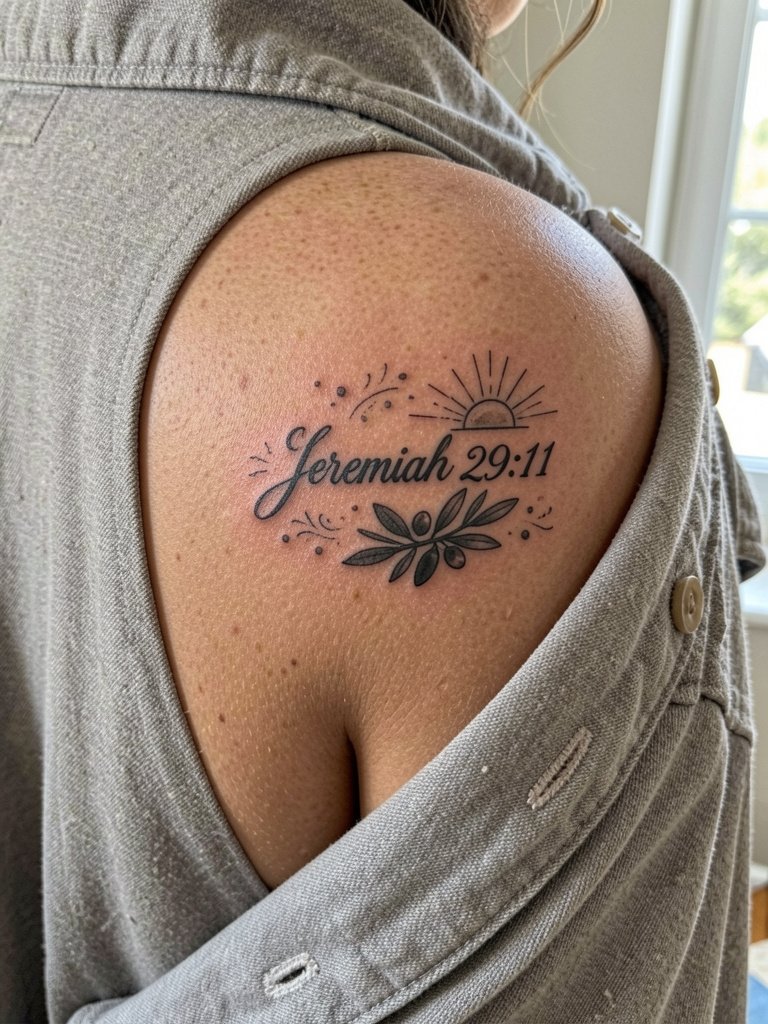
Pinterest-driven mixed collages let you combine symbols and the verse into a bespoke composition. The risk is overcrowding. Keep a single anchor word or reference line and let the motifs sit around it with breathing space. For clothing, open-back tops and tie-back dresses frame shoulder blade pieces after healing, so think about wardrobe integration early. During the consult, clarify which element should dominate the visual hierarchy so the design does not read chaotic.
14. Thin Script Along the Rib Line with a Single Olive Leaf Accent
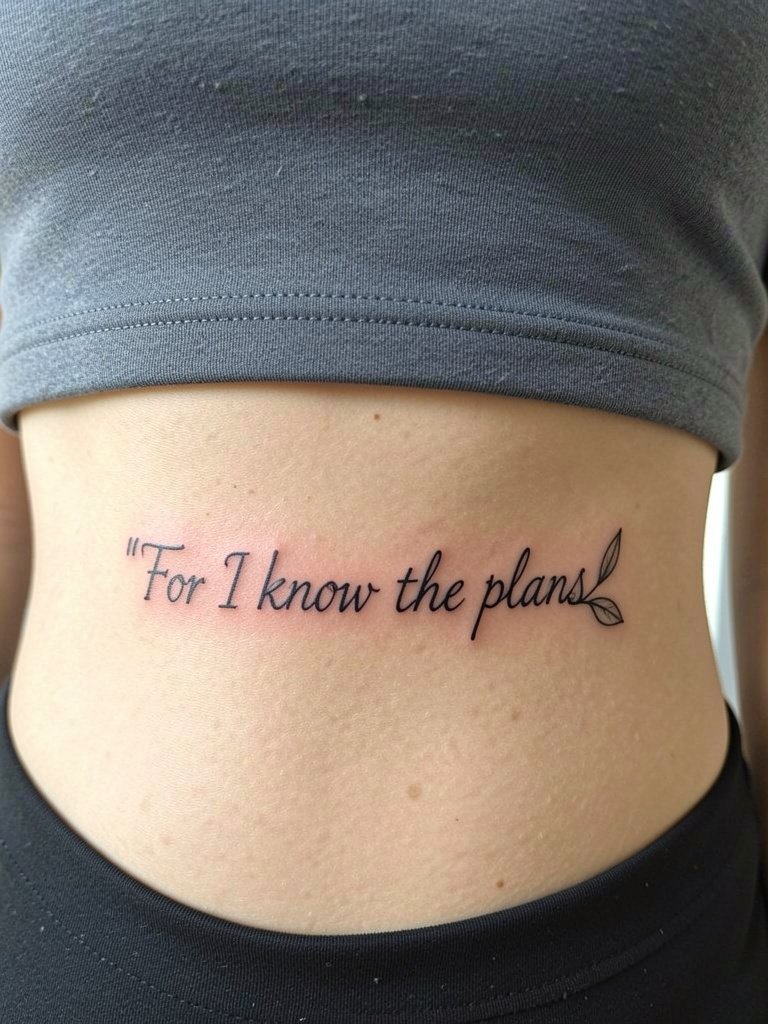
A one-leaf botanical finish is quieter than a full branch and keeps attention on the wording. The rib area is intimate and can be a good compromise between visibility and privacy. For session comfort, wear soft pants with a loose sports bra to avoid fabric rubbing during the appointment and the first week of healing. If you prefer to show less, plan outfits that reveal only a sliver at a time.
15. Large Chest Statement in Ornamental Cursive
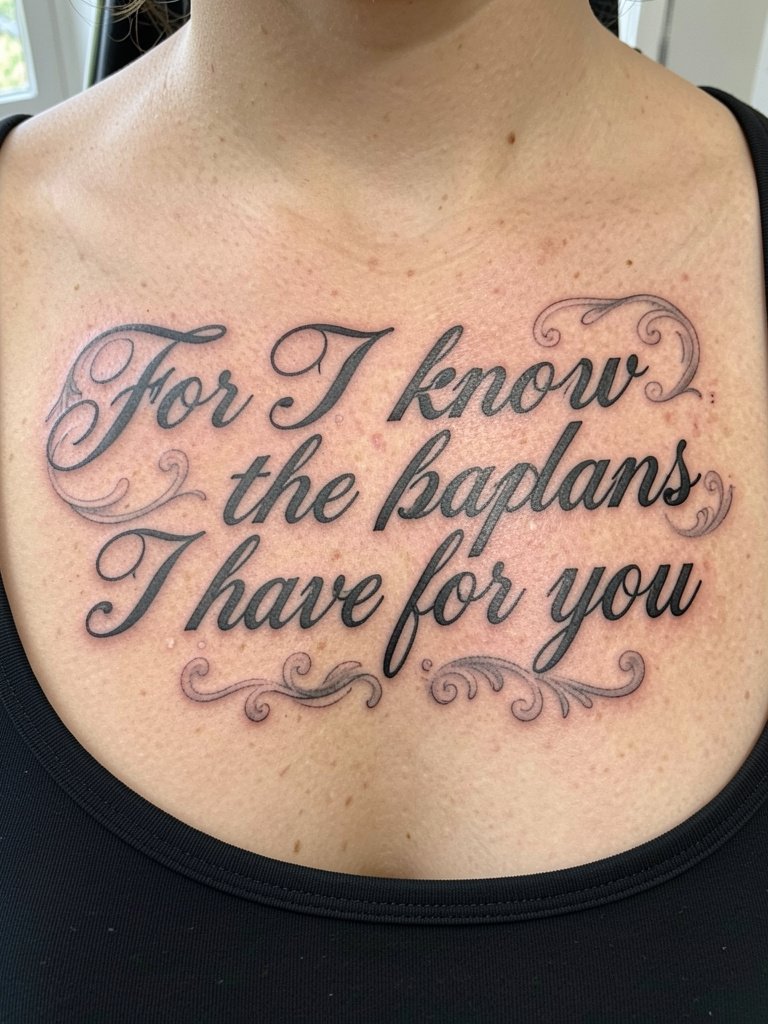
If you want the full sentence as a major piece, the chest gives the width to render it clearly and ornamentally. Make sure the script has generous counters and that filigree does not encroach on the letterforms. Large chest pieces can be a multi-session commitment and will need careful aftercare in the first fortnight. For show-off looks after healing, low-neckline tops and layered necklaces work well.
Frequently Asked Questions
Q: Should I get the full text of Jeremiah 29:11 or just the reference?
A: Designers split on this. Some people insist on the full passage because it preserves the complete message and personal nuance. Other people choose the reference or a short fragment because the full verse can look cramped in smaller placements and is more likely to lose legibility over time. If you want the whole verse, plan for a larger canvas like the back or chest and ask for wider spacing and slightly heavier line weight.
Q: How do I find artists or healed examples for Jeremiah 29:11 work without naming specific shops?
A: Use targeted hashtags and location filters. Search Instagram and TikTok hashtags such as #bibleversetattoo, #scripturetattoo, and #jeremiah2911tattoo and filter by your city to find portfolios with healed photos. Pinterest boards help gather layout ideas and font directions. Look for healed images in portfolios and ask to see work photographed months after healing rather than only fresh sessions.
Q: Will fine-line script blur on the wrist or ribs faster than on the forearm?
A: Yes, placement affects aging. The wrist and hands face higher abrasion and sun exposure so hairline script can soften faster there than on an inner forearm. Ribs move with breathing and garment friction, making ultra-fine single-needle scripts more susceptible to line loss unless the lettering is given extra spacing and slightly heavier stroke weight.
Q: What should I wear to my tattoo session for different placements?
A: Practical clothing makes sessions smoother. For forearm work wear a rolled-sleeve button-down or a short-sleeve tee. For sternum or chest pieces bring a front-opening bra or a loose button-up. For ribcage work wear a sports bra or a top that lifts easily without tugging. Session clothing that gives clear access reduces repositioning and keeps the stencil aligned.
Q: How often will script tattoos need touch-ups?
A: Touch-up timelines depend on placement, skin type, and aftercare. Micro wrist and hand pieces often need touch-ups sooner, commonly within one to three years. Forearm and chest scripts usually hold longer with proper spacing and sun protection. Expect to budget for a single touch-up at least once in the first two years if you want the crispest results.